Pip: There's a Peanuts cartoon that opens a sermon, and somehow it leads directly to eternal life — which is either a bold homiletical move or proof that Lucy van Pelt has always been theologically underrated.
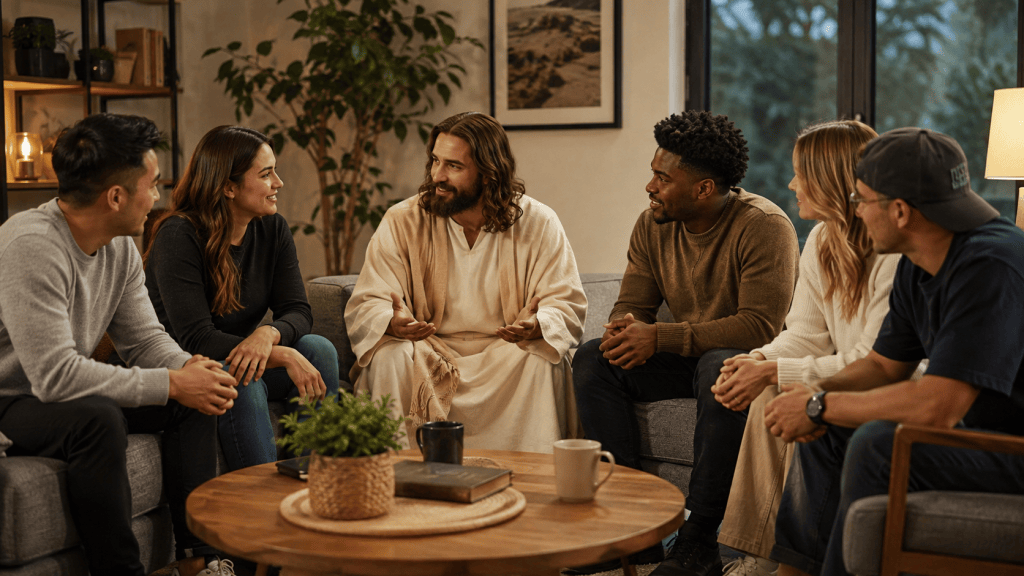
Mara: This episode covers one sermon from Fr. John, working through what it means to be part of a body where every gift counts — not just the ones delivered from a pulpit.
Pip: Let's start with the sermon itself, and the question of who actually does the work of the church.
Empowered for the Mission — Every Gift Counts
Mara: The sermon is built around a deceptively simple question: if not everyone is called to preach or heal or cast out demons, what exactly is everyone else doing in the mission of God?
Pip: The answer comes from the tail end of Matthew 10, Jesus wrapping up his instructions to the twelve before sending them out. The setup is that hardship is guaranteed — and so is help from unexpected quarters.
Mara: The sermon lands the key line directly from that passage: "Whoever receives you, receives me, and whoever receives me, receives the Father." The argument is that welcoming and supporting those who carry the mission makes you a participant in it.
Pip: Which is a genuinely generous theological claim — you don't have to be the one casting out demons to get credit for the demon-casting.
Mara: Two Old Testament figures anchor that claim. Elijah and the widow of Zarephath: she shares her last flour and oil, and the jar never empties. Later, her son dies and Elijah raises him. Elisha and the Shunammite woman: she feeds him whenever he passes through, and Elisha promises her a son she had stopped hoping for.
Pip: Both women receive what the sermon calls the prophet's reward — not because they prophesied, but because they made the prophet's work possible.
Mara: Paul's letter to the Corinthians supplies the structural argument: "There are varieties of gifts, but the same Spirit; and there are varieties of service, but the same Lord; and there are varieties of activities, but it is the same God who empowers them all in everyone. To each is given the manifestation of the Spirit for the common good."
Mara: The upshot is that no single gift runs the whole operation. The apostles need the widow's flour. The prophet needs the Shunammite's hospitality. The body needs every member.
Pip: And the sermon loops back to Lucy at this point — those five fingers, individually nothing, curled together into something formidable. It is, against all odds, the correct analogy.
Mara: Archbishop Michael Ramsey gets the closing description of what that body looks like across centuries: "Human lives united to Jesus, receiving his presence, and showing his goodness, his love, his sacrifice, his humility and his compassion. Living stones."
Pip: The sermon closes by naming the stakes beyond the prophet's reward — Christ's reward, forgiveness and resurrection, the food that does not perish. The call is direct: find where your gift fits, and get to work.
Mara: The harvest line from Luke lands as the final push: "The harvest is plentiful, but the laborers are few." Every laborer counts, regardless of what kind of laboring they do.
Pip: One sermon, but the argument keeps widening — from twelve apostles to a widow's jar to every person sitting in a pew wondering if they have anything to offer.
Mara: The answer the sermon gives is yes, unambiguously. The body needs what you have. More on that territory next time.
In a Peanuts cartoon, Lucy demands that Linus change the TV channel and then threatens him with her fist if he doesn’t. “What makes you think you can walk right in here and take over?” asks Linus. “These five fingers,” says Lucy. “Individually, they are nothing, but when I curl them together like this into a single unit, they form a weapon that is terrible to behold.” “What channel do you want?” asks Linus. Turning away, he looks at his fingers and says, “Why can’t you guys get organized like that?”
My initial reaction to today’s Gospel reading was to shake my head at the liturgical committee that chose it. There is no time, context, audience, or anything provided in the reading to help us understand. So let’s begin by setting the scene, which is a little easier if you were here last week, because this week’s reading is part of that same conversation.
The audience Jesus is speaking to is the twelve apostles, and he is giving them instructions because He is about to send them out.
At the beginning of the chapter, Matthew 10, where our reading is located, we are told, “Jesus called to him his twelve apostles and gave them authority over unclean spirits, to cast them out, and to heal every disease and every affliction” (Matthew 10:1). Jesus gives them instruction on their travels and what to expect: “Behold, I am sending you out as sheep in the midst of wolves, so be wise as serpents and innocent as doves” (Matthew 10:16), and also tells them to “have no fear” (Matthew 10:26) for they are of great worth to their Father in heaven.
Then comes our lesson from last week. Jesus tells them that the message they carry will not bring peace but division, saying, “I have not come to bring peace, but a sword” (Matthew 10:34b).
Today’s Gospel is the conclusion of the apostles’ marching orders, and it can be seen as encouragement, because Jesus tells them that as they go and experience the hardships along the way, there will be people who never preach a sermon, never cast out a demon, never heal the sick, yet by welcoming, encouraging, and supporting Christ’s servants they become participants in the very mission of God. “Whoever receives you, receives me, and whoever receives me, receives the Father.” Good. In other words, when someone receives you as my disciple, it will be like in times past when someone received and helped a prophet carry out their work. Elijah and Elisha provide two very good examples of this.
During the reign of King Ahab, he did evil in the eyes of the Lord, so the Lord brought a drought upon the land, as Elijah had proclaimed. Afterward, the Lord sent Elijah to Zarephath. There, Elijah encountered a widow and asked her for a little something to eat and a drink of water. She responded that she had only a little flour in a jar, enough to make one small cake for her and her son to eat, after which they would die because of their poverty and the drought. Yet Elijah said, “Do not fear… The jar of flour shall not be spent, and the jug of oil shall not be empty, until the day that the Lord sends rain upon the earth” (1 Kings 17:14), and it was done according to the word of Elijah. While the world around her suffered from the drought and went hungry, the widow and her son received the prophet’s reward and had plenty.
Later, the widow’s son died because of illness, yet because of her support and kindness to Elijah, the Lord raised the child from the dead through Elijah’s prayer.
Then there was Elisha, who frequently passed through the town of Shunem. A wealthy woman lived there, and each time Elisha passed through, she would feed and care for him. Elisha asked what could be done to repay her kindness. She would not say, but Gehazi, Elisha’s servant, told him that the woman was childless, even though she and her husband desired one. Hearing this, Elisha promised her the reward of a prophet: “At this season, about this time next year, you shall embrace a son.” (2 Kings 4:16) She was too afraid to believe it, but the following year she had a son.
When Jesus speaks to the disciples about the prophets’ reward and the righteous person’s reward, he says, “You will encounter hardships in following me and doing the Father’s will, but there will be those who help you. Because of their help, they too will receive a reward.”
Why? Not everyone can be called to be a prophet or a apostle, but all can assist the prophet or apostle in other ways.
Saint Paul tells us, “Now there are varieties of gifts, but the same Spirit; and there are varieties of service, but the same Lord; and there are varieties of activities, but it is the same God who empowers them all in everyone. To each is given the manifestation of the Spirit for the common good.” (1 Corinthians 12:4-7) And remember how, a little later, he asked a series of questions, “Are all apostles? Are all prophets? Are all teachers? Do all work miracles?” (1 Corinthians 12:29), and so on. The answer is no. Not all are this or that, but each one has been empowered with gifts “for the common good.” That’s exactly the point Lucy was making, “These five fingers… Individually, they are nothing, but when I curl them together like this into a single unit…” This same principle applies to Elijah and Elisha, the apostles, and on down through history to us gathered here today. Is this true?
Do you know how many people I’ve asked from this congregation to come up here and preach? Do you know how many times, when I ask that question, the person looks at me as though I didn’t have the sense God gave a turnip? Yet that same person may have taken on another ministry in the church or an act of hospitality. Something I had no clue how to do.
Paul again says, “For just as the body is one and has many members, and all the members of the body, though many, are one body, so it is with Christ. For in one Spirit we were all baptized into one body—Jews or Greeks, slaves or free—and all were made to drink of one Spirit.” (1 Corinthians 12:12-13) He is, of course, speaking of the church. When Jesus spoke of those who would receive a prophet’s reward or a righteous person’s reward, he was also speaking of the church, all of its members. This reward from God is not limited to the front person, the one in the dog collar and fancy robes. The reward is for the entire body of Christ, with each member exercising the gifts they have been empowered with.
A few weeks back, we spoke of our baptism and our entrance into the body of Christ. We then spoke of what it means to be loyal to God, not simply a passive relationship but one that is active in thought, word, and deed. Today, we understand that this active faith, as sons and daughters of God, is lived out in the Church, using the gifts we have been blessed with, both individually and corporately.
In The Canterbury Pilgrim, Archbishop of Canterbury Michael Ramsey speaks of the church as a building, which he then describes as a symbol of the Church formed by those who become the Body of Christ. Of this Body, Archbishop Ramsey captures exactly what Paul said, “Through the centuries this other Church—the Body of Christ—has stood: human lives united to Jesus, receiving his presence, and showing his goodness, his love, his sacrifice, his humility and his compassion. Living stones – what a mingling of metaphors! It tells of firm, solid, unmovable loyalty, and of persons alive in joy, in freedom, in creativity, in influence. This is the Church that Jesus Christ founded, the Church of which he said that the gates of death would never prevail against it.” (Glory Descending, Eerdmans, p.129)
This is the Church and the great work that takes place within these walls and within the Body of Christ. However, for our participation in it, there’s not just the prophet’s reward or the righteous person’s reward. Jesus says, “This is the will of my Father, that everyone who looks on the Son and believes in him should have eternal life, and I will raise him up on the last day.” (John 6:40) Therefore, Jesus says, “Do not work for the food that perishes, but for the food that endures to eternal life, which the Son of Man will give to you.” (John 6:27) For us, there is more than the prophet’s or righteous person’s reward, there is Christ’s reward, the food that does not perish—the forgiveness of sins and eternal life on the last day.
In your life with God and your life in the Church, use the gifts you have been empowered with and work for Christ’s reward. No gift is too small. No gift is unnecessary. And by combining them, we become the church God desires us to be. Ask yourself, where can I put my gifts to work in the Body of Christ, and then get busy. You are needed, for “The harvest is plentiful, but the laborers are few,” (Luke 10:2), and we may not all be apostles or prophets, but we are all laborers in this great Kingdom of our God.
Let us pray: Everliving God, whose will it is that all should come to you through your son Jesus Christ: Inspire our witness to him, that all may know the power of his forgiveness and the hope of his resurrection; who lives and reigns with you and the Holy Spirit, one God, now and forever. Amen
Pip: There's a word in Hebrew that English can't quite hold — and a bear in Aesop's fables that apparently had something to say about it.
Mara: This episode covers one sermon from Fr. John, working through the Hebrew word hesed — covenant loyalty, steadfast love, mercy — and what it asks of us in return. Let's start with that word and what it actually means.
Sermon: Proper 7 RCL A — The Weight of Hesed
Mara: The sermon opens with an Aesop's fable about two travelers and a bear — one climbs a tree, one plays dead — and uses it to frame a question about loyalty. That question leads straight into the Hebrew word hesed, which the sermon argues is the hallmark of God's covenantal character.
Pip: And the definition comes from Strong's Concordance, which pulls no punches: "chesed saturates the Hebrew Scriptures as the hallmark of God's covenantal character and the standard for covenantal response among His people… Of its approximately 247 occurrences, over half lie in the Psalms, yet it shapes every major section of the Old Testament, from the Torah to the Post-Exilic books."
Mara: The practical upshot is that no single English word carries it. The sermon lists steadfast love, loving kindness, mercy, faithfulness, and loyalty — all of them partial translations of the same Hebrew root.
Pip: Which explains why Psalm 23:6 keeps getting read as a gentle reassurance when it's actually something closer to a covenant guarantee. The sermon unpacks it that way — goodness and mercy become goodness and God's steadfast, faithful, loyal love. That's a different weight.
Mara: And the covenant dimension matters here. Hesed isn't just a quality God has in the abstract — it's specifically tied to relationship. Deuteronomy 7:9 is cited: "the faithful God who keeps covenant and steadfast love with those who love him and keep his commandments, to a thousand generations."
Pip: So it's not sentiment. It's a binding commitment with a track record. The sermon puts it plainly: God doesn't just say "I am faithful" — he shows it. The proof is John 3:16.
Mara: That's where the sermon turns the question around. God's hesed is costly, freely given, unearned. But the Matthew 10 passage — "whoever does not take up the cross and follow me is not worthy of me" — makes clear that covenant runs both directions.
Pip: The Luke version is even starker. "Hate" your father, mother, wife, children. The sermon reads that as deliberate exaggeration: not literal hatred, but the kind of total priority that makes real love of others possible in the first place.
Mara: And then comes the honest admission — we don't hold up our end. Adam, David, Peter, us. The sermon doesn't soften it. But hesed circles back: "His hesed endures forever," from Psalm 136. Covenant mercy covers covenant failure.
Pip: The bear gets the last word, really. Deserting a friend in danger is unwise — and the sermon asks whether we'd be that kind of friend to Jesus, or the other kind.
Mara: The closing prayer frames it as reliance: strength, wisdom, protection, grace — all asked from the same God whose hesed the sermon just spent a thousand words unpacking.
Pip: A word that takes five English words to translate, and still loses something in the transfer.
Mara: And a covenant that asks the same thing back from us that it promises. That tension doesn't resolve — it just keeps asking the question.
One of Aesop’s fables tells of two men who were traveling in company through a forest when, all at once, a huge Bear crashed out of the brush near them. One of the Men, thinking of his own safety, climbed a tree. The other, unable to fight the savage beast alone, threw himself on the ground and lay still, as if he were dead. He had heard that a Bear will not touch a dead body. It must have been true, for the Bear snuffed at the Man’s head awhile, and then, seeming to be satisfied that he was dead, walked away. The Man in the tree climbed down. “It looked just as if that Bear whispered in your ear,” he said. “What did he tell you?” “He said,” answered the other, “that it was not at all wise to keep company with a fellow who would desert his friend in a moment of danger.”
Reflecting on our Gospel lesson this morning led me to consider the loyalty we owe to God. This thought, in turn, brought me to the Hebrew word for loyalty: hesed.
To explore the meaning of hesed further, I turned to Strong’s Concordance. If you haven’t heard of it, Strong’s is essentially a very in-depth dictionary of the words in the Bible. It states, “חֵסֵד (chesed) saturates the Hebrew Scriptures as the hallmark of God’s covenantal character and the standard for covenantal response among His people… Of its approximately 247 occurrences, over half lie in the Psalms, yet it shapes every major section of the Old Testament, from the Torah to the Post-Exilic books.” (Source)
Despite at least 25 years of serious study of Holy Scripture, I would have come across such an important concept, but… not that I remember.
But as I dug in, I realized that the trouble with the word hesed is that there is no single English word that fully captures its meaning. Loyalty is only one aspect; so, in scripture, we often find it rendered as steadfast love, loving kindness, mercy, faithfulness, and loyalty. One of the most popular verses where the word appears is Psalm 23:6,
“Surely goodness and mercy shall follow me all the days of my life, and I shall dwell in the house of the Lord forever.”
Given the richness of hesed, we can now see that this verse offers far more than we may have realized at first. ‘Surely God’s goodness and God’s steadfast love, God’s loving kindness, God’s mercy, God’s faithfulness, God’s loyalty shall follow me all the days of my life.’ Still, for God’s mercy or faithfulness to count as hesed, it must not only reflect these qualities but also be specifically connected to the covenant relationship God has with his people. The covenant is beautifully expressed in Deuteronomy: ‘Know therefore that the Lord your God is God, the faithful God who keeps covenant and steadfast love with those who love him and keep his commandments, to a thousand generations.’ (Deuteronomy 7:9)
This all points towards the covenant relationship that God has made with his people. In other words, God’s mercy, loyalty, faithfulness, and the like are not just words. These attributes come with action and proof. God says, “I’m not only going to tell you that I am faithful, but I am also going to show you that I am faithful. I am not only going to tell you I am loyal, but I’m also going to show you. I’m not only going to tell you that I love you, but I will show you that I love you.” And we know that he has—“For God so loved the world, that he gave his only Son, that whoever believes in him should not perish but have eternal life.” (John 3:16)
That single verse, I believe, is at the heart of God’s hesed toward his people. It is love, faithfulness, mercy—in action. This action is not cheap; it is very costly. For us, it is not earned, bought, or demanded; instead, it is freely given as a grace because God chose us as recipients of his love and grace. That is the covenant he has made with us.
Yes, this week’s Gospel reading got me thinking about loyalty—just a few of the things I learned. We’ve been speaking of God’s hesed toward us, but what about our hesed toward God?
Our Gospel lesson from Matthew 10 does not use the word hesed, but as I learned more about its meaning, what Jesus describes looks remarkably like the covenant loyalty the Old Testament often calls hesed—showing steadfast love and kindness—in our relationship with him.
Jesus said, “Do not think that I have come to bring peace to the earth; I have not come to bring peace, but a sword…. Whoever loves father or mother more than me is not worthy of me; and whoever loves son or daughter more than me is not worthy of me; and whoever does not take up the cross and follow me is not worthy of me. Those who find their life will lose it, and those who lose their life for my sake will find it.”
Luke’s Gospel puts this in even harder words, “If anyone comes to me and does not hate his own father and mother and wife and children and brothers and sisters, yes, and even his own life, he cannot be my disciple. Whoever does not bear his own cross and come after me cannot be my disciple.” (Luke 14:26-27)
In both passages, Jesus insists our relationship with Him goes beyond lip service. It must be accompanied by real action and commitment.
Last week, we explored how our baptism brings us into a new allegiance, a new identity, and a new life with Christ Jesus as King, savior, and master. This week, we see what that covenant demands of us—it demands nothing less than what God demands of Himself. God says, ‘I will show you unwavering faithfulness; therefore, you must show me unwavering faithfulness.’ God says, ‘I will show you 100% loving kindness, loyalty, all these things; therefore, to be in a covenantal relationship with me demands that you show me 100% loving kindness, loyalty, etc.’
When Luke says we are to ‘hate’ father, mother, wife, and children, he is using exaggeration to emphasize a point: we must place God above all else. By doing this, God can then teach us and give us the grace necessary to ‘love one another,’ as He has loved us. So, being in this covenant relationship with God 100% also enables us to be in a covenant relationship with each other. In this way, hesed becomes not only a word that defines a relationship but also the defining characteristic of a life lived to the glory of God.
But here’s the rub. I said that God demands 100% loving-kindness, loyalty, and the rest from us, but the reality is we never do. I believe we try, but we fail. Adam and Eve failed, David failed, Peter failed, we fail. There’s no excuse, but when we fail to fulfill this covenant with God and one another, there is hesed again—there is mercy, God’s mercy to us. As the Psalmist says, God’s “mercy…His hesed endures forever.” (Psalm 136) As God shows us covenantal mercy, we show it to each other.
Aesop’s bear made a very good point: It is “not at all wise to keep company with a fellow who deserts his friend in a moment of danger.” This speaks to one aspect of what we should look for in a friend, but it also speaks to our understanding of God’s relationship with us, as proven time and again. Jesus has called us friends (John 15:15). Ask yourself, “Am I the kind of friend to Jesus who would abandon him under any circumstances, or regardless of the cost, would I remain faithful?”
In discovering the answer, we begin to see whether we are worthy of Him, whether we are His disciples. And, if necessary, we rely on His unfailing mercy to restore us to Him and seek to fulfill our part of the covenant—the hesed—we have entered into.
Let us pray:
May the Strength of God guide us. May the Power of God preserve us. May the Wisdom of God instruct us. May the Hand of God protect us. May the Way of God direct us. May the Shield of God defend us. May the Angels of God guard us. Against the snares of the evil one.
May Thy Grace, Lord, Always be ours, This day, O Lord, and forevermore. Amen.
Groucho Marx said, “If you find it hard to laugh at yourself, I would be happy to do it for you.” And the Tunisian Prime Minister, Habib Bourguiba, wrote, “Happy is the person who can laugh at himself. He will never cease to be amused.” We know that laughing at ourselves, or self-deprecating humor, can have a healthy side, but it can also become detrimental. We say something about ourselves that makes others laugh, but on the inside, we actually believe it. Example: “My romantic strategy is simple: I just wait for someone to make a terrible mistake and fall in love with me.” In addition, most of the time, we don’t need to laugh at ourselves, because the world can pour it on just fine. That is not only true of who we are, but also of our faith. In fact, the world has been great at ridiculing and laughing at those who act in faith.
There’s Noah. He’s an easy one. Can you imagine the grief they must have put him through? According to Scripture, it took him 50-100 years to build the Ark. All the while, everyone was watching, and I’m certain they were laughing. When he started gathering the animals, think of the ridicule. How stupid could a person be?
Then there was Abram, who became Abraham, whom we read about today. Can you imagine: Abram starts packing up his house. The neighbors stop by and ask, “Hey, Abe, what are you doing?” His response, “The Lord spoke to me and said, ‘Go from your country and your kindred and your father’s house to the land that I will show you. I will make of you a great nation, and I will bless you, and make your name great, so that you will be a blessing.’” Can you imagine the ridicule and laughter? “You can’t even pack your camel correctly, and the Lord is going to make a nation out of you? Please.”
When David was just a boy, he went up against the giant Goliath. His brother saw him coming and berated him. The King, Saul, said, “You’re just a boy. You’ve got no chance” (cf. 1 Samuel 17:33). Then, Goliath laughed and sneered. “Am I a dog, that you come to me with sticks?… Come to me, and I will give your flesh to the birds of the air and to the beasts of the field.” (1 Samuel 17:43) All of them rebuked him and, I’m certain, laughed at him, not only the Philistines but his own people. “You’re nothing but a child. Go home to mama.” But what St. Paul would later write to the Corinthians was just as applicable to these: “God chose what is foolish in the world to shame the wise; God chose what is weak in the world to shame the strong; God chose what is low and despised in the world, even things that are not, to bring to nothing things that are, so that no human being might boast in the presence of God.” (1 Corinthians 1:27–29)
Noah, his family, and the animals were saved from the flood, while the world perished around them. Abraham walked the earth 4,000 years ago, and we are part of the great nation established through him, which continues to grow and expand. David struck down Goliath with a single small stone and became the greatest King Israel has ever known, and his lineage produced Jesus. God chose the weak, the despised, the lowly, and the ridiculed to accomplish His work, so that it was clear to all that the victory was God’s alone.
If these three were the only examples in Scripture, we could say, “Everybody gets lucky on occasion,” but in truth, it is the way of God. And the pattern continues. Gideon’s 300 defeated an army. Esther saved her people. A young girl named Mary said yes to God and bore the Savior of the world.”
Again and again, God works through the foolish, the weak, and the ridiculed, overturning the expectations of the powerful.
In our Gospel reading, we find two more examples. First is the calling of Matthew. Jesus said, “Follow me,” and Matthew did. That evening, Jesus had dinner at Matthew’s house, and many other sinners were present. Seeing this, the Pharisees said, “Why does your teacher eat with tax collectors and sinners?” They ridiculed Jesus and, I imagine, laughed at his foolishness. I suspect their comments were like those of the Pharisee who invited Jesus to dinner. You’ll recall that the “sinful woman” came and washed Jesus’ feet with her tears, dried them with her hair, and then anointed them. The Pharisee thought, “If this man were a prophet, he would have known who and what sort of woman this is who is touching him, for she is a sinner.” (Luke 7:39) I can hear them saying the same thing about Matthew and his companions.
The second incident in the Gospel involves Jesus. The little girl has died, yet through her, Jesus intends to demonstrate the power of God. He says to the crowd, “‘Go away; for the girl is not dead but sleeping.’ And they laughed at him.” They believed that only God has power over life and death, and, in their understanding, Jesus was merely a man.
Remember how Jesus’ hometown ridiculed him? They said, “Where did this man get this wisdom and these mighty works? Is not this the carpenter’s son? Is not his mother called Mary? And are not his brothers James and Joseph and Simon and Judas? And are not all his sisters with us? Where then did this man get all these things?” (Matthew 13:54-56) “We know this kid. Who does he think he is? He’s Joe’s boy. He’s nothing.”
When Jesus said to those gathered around the dead little girl that she was only sleeping, they laughed at Him. They knew she was dead and that only God could raise the dead. They were saying, “Who do you think you are? You’re nothing.”
However, you would think that after witnessing all the miracles the people would have believed, but even then there was still ridicule and disbelief. “‘He is possessed by Beelzebul,’ and ‘by the prince of demons he casts out the demons.’” (Mark 3:22)
Writing in the second century, the philosopher Celsus spoke sarcastically about Christianity and those who followed Jesus. He described Christians as “the most uneducated and vulgar persons” and “like a swarm of bats–or ants creeping out of their nests–or frogs holding a symposium round a swamp–or worms in a conventicle in a corner of mud.” Not what I would call high praise, but it is what many thought of Christianity and Christians. 2,000 years later, not much has changed. Should we be surprised? No. Jesus said, “A disciple is not above his teacher, nor a servant above his master…. If they have called the master of the house Beelzebul, how much more will they malign those of his household.” (Matthew 10:24-25)
Throughout history, God’s people have been ridiculed and laughed at for their faith. Yet no word or sneer from the outside has stopped us from moving forward. Yet, there is ridicule and laughter that can and does bring everything to a halt—when we attack ourselves. When we laugh or sneer at the faith that is in us. What does that look like?
“I’m not good enough. My sins are too great for God to hear me.” “God is too busy to be bothered with the likes of me and my little problems.” “What I want to say or ask just isn’t all that important, so I shouldn’t bother God with it.” “I’m too weak. I’m too foolish. I’m laughable in my relationship with God.” These and all the other “reasons” we come up with are simply ways of degrading and ridiculing who we are in God and in our faith. We’re laughing at ourselves, but not in a healthy way, and it is detrimental to our life with God.
Jesus says, “If you abide in me, and my words abide in you, ask whatever you wish, and it will be done for you.” (John 15:7) There are no qualifiers in that statement like, “Ask whatever you want, as long as you’re as holy as me, and it better be important.” Jesus says, “Fear not, little flock, for it is your Father’s good pleasure to give you the kingdom.” (Luke 12:32) It is the Father’s pleasure to hear from us and to fulfill those things in accordance with His ways.
St. Paul says it so clearly: “Since then we have a great high priest who has passed through the heavens, Jesus, the Son of God, let us hold fast our confession… Let us then with confidence—let us boldly—draw near to the throne of grace, that we may receive mercy and find grace to help in time of need.” (Hebrews 4:12, 16)
There are plenty in the world who will gladly ridicule and laugh at your faith. And you know… so what. They’ve been doing it since the beginning. Wish them a nice day and keep moving. As St. Josemaria Escriva says, “Don’t waste your time and your energy — which belong to God — throwing stones at the dogs that bark at you on your way. Ignore them.” (The Way) But also don’t do their job for them. Don’t undermine your own faith through self-condemnation and self-abuse. Instead, come before God’s throne of grace with boldness and confidence, come as His beloved children, and lay your heart before Him. It is His good pleasure to hear you.
Let us pray: “Loving and Merciful Father, we come before You knowing that You are ever present and attentive to the voice of our prayers. In the quiet of our hearts, we trust that You hear every petition, joy, and sorrow we lay before You. We place our anxieties and needs into Your compassionate hands, confident that Your steadfast love endures forever. Strengthen our faith, Lord, and grant us the grace to always accept Your holy will. Amen.”
A man has been visiting a therapist because he has been afraid of monsters living under his bed. He has been seeing this doctor for months. Every time he came in, the doctor would ask, “Have you made any progress?” Every time, the man would say, “No.” The man decided to see another doctor. When he went back to his other doctor and the doctor asked, “Have you made any progress?” he said, “Yes, I am feeling all better now.” The doctor asked, “What happened?” The man said, “I went to another doctor, and he cured me in one session.” The doctor asked, “What did he tell you?” The man said, “He just told me to cut the legs off my bed.”
My friend Stephen King, in his book Danse Macabre, discusses the three types of fear and later, in a social media post, sums them up. There is the Gross Out, the slimy stuff slapping you in the face; the Horror, things like giant spiders and the walking dead; and his favorite, the Terror. He describes it as, “when you come home and notice everything you own had been taken away and replaced by an exact substitute. It’s when the lights go out, and you feel something behind you, you hear it, you feel its breath against your ear, but when you turn around, there’s nothing there…” The monster under the bed is a terror.
For me, I can go with a little gross-out, but if it becomes too predictable or gratuitous, I’ll turn it off; however, it is wildly popular. Just consider the number of ways Jason killed off some witless teenager in the Friday the 13th movies. The Horror, I can go either way. For example, Sharknado should have won an Oscar, but when it gets into giant spiders or magical creatures, not so much. However, give me a good (or even bad) zombie movie, and I’ll buy tickets for everyone. Yet, the Terror, the slow burn, I’m sucked into every time. I’m more than happy to have a movie or book mess with my head.
There are many who live for the good scare, but even for those who don’t, fear is an exceptional motivator. Those who have figured this out down to a science are the ones trying to sell us something.
Using Mr. King’s scale, the marketing people use the Gross Out by making us afraid of a fungus that can turn our toenails yellow. They appeal to the Horror by reminding us that each and every morning, our breath is so bad that we scare the cat. And they attempt to create the Terror by telling us that our current insurance company won’t really help us following the inevitable and ever-present disaster. Politicians are particularly adept at the Terror—a vote for me can save you from world domination under my opponent (and if they call or text me one more time, I’m going to pray they are visited in the middle of the night by some fantastic Gross Out Terror).
What is curious is that—based on how and why these fears are employed—they often motivate us to action. I’ve got a yellow toenail; I’d better tell my doctor I need that medicine. I may have cat-scaring breath; I’d better buy that mouthwash. I’m afraid of world domination; I’d better vote for that candidate. We do these things, yet they are all equivalent to saying, “I’m going to saw the legs off the bed because of the monster under there.”
Fear motivates, and if there is one organization that learned this very early on, it is the Church. We are very good at it. The book we are reading now for book club, The Sinner’s Guide, has a tremendous chapter on it. Speaking of those who will suffer the torments of damnation, the author writes, “What will they say when they will find themselves stretched upon a bed of fire, surrounded by sulfurous flames, not for one short summer night, but for all eternity?” “If one of these unhappy souls, says a Doctor of the Church, were to shed one tear every thousand years, and if these tears accumulated to such a flood as to inundate the world, he would still be as far as ever from the end of his sufferings. Eternity would only be at its beginning.” (p.76) That’s a good motivator right there. However, last week I was reading one of several short devotionals by St. Alphonsus Liguori, and he wrote, “Although no punishment awaited those who love Thee not, I would never leave off loving Thee, and I would do all I could to please Thee.” (The Love of Jesus Crucified, p.172) That really made me stop and think.
What if there were no punishment—no hell? Don’t misunderstand. There is a hell, and I firmly believe it will be far worse than anything we can imagine, but, momentarily setting Scripture and Doctrine aside, what if there wasn’t? What if it were like the monster under the bed, something we’re told as little kids to make us behave, but that everyone really knows isn’t real? What if you were free to choose God or not, with no painful consequences for not choosing?
If you choose God, you receive eternal life and all that Jesus offers. If you don’t, well, maybe you just blink out or something. No pain, no punishment, none of that. You are free to do whatever pleases you. If that were the case, would you still be here today? Would you still try to follow Jesus’ commandments? If that were the case, would your relationship with God mean anything to you?
For some, the answer is, “Heck, no. I’m out of here.” For them, their relationship is based solely on fear. For that person, if there is nothing to fear, there is no reason to be here at all, because that relationship is master and slave, yet instead of God being the Master, fear is. Dispense with the fear, and the slave does whatever he or she wants. It is a purely transactional relationship—I’ll do what you say, and you keep me out of hell.
For others, when asked why they are here, they might answer, “I don’t know that I would be here, but I would certainly hope so. I want what Jesus offers.” This person has begun to understand that fear may have brought them here and into the relationship in the first place, but they’re beginning to sense that there is something more they are being drawn to. A shift has begun to take place, and that shift marks the beginning of transformation.
Finally, the third group answers in a way that brings us back to what Liguori said, “Although no punishment awaited those who love Thee not, I would never leave off loving Thee, and I would do all I could to please Thee.” For them, it is not about fear or even hope. It is a declarative statement that says, “I desire nothing but to be with my God, so if I have to renounce everything of this world and all it has to offer, I will do it. I will seek God alone.” This goes beyond transformation and marks the beginning of transfiguration—living into the fullness of the image of God within, the Image we were created in. As we read,
“God created humankind in His image, in the image of God He created them; male and female He created them.” (Genesis 1:27)
It is a desire to walk with God as Adam and Eve did in the beginning.
So, back to the original question: why are you here? Fear? Hope? Desire? For me, a truthful answer is: it depends on the day. Ask me today, and I will tell you that I am 98% here out of desire and 2% because, well… I am a priest. However, if you had asked me earlier in the week, when my stomach wasn’t behaving, my air conditioner hadn’t been working for over a week, I couldn’t sleep at night because it was hot, and the repair folks were being unresponsive… Let’s just say that it is a good thing I believe in hell, otherwise I would have called down the same Gross Out Terror on them that I want to visit the politicians.
I suspect the same is true for all of us. The prayer is that the trajectory always seeks the higher place, always desiring God above all else—diminishing fear, then transformation, and finally transfiguration. This is what we should desire because it is what God desires for us. Is that true?
Today is Trinity Sunday, the day we celebrate our Triune God—Father, Son, and Holy Spirit. Speaking on behalf of the Trinity, Jesus said, “I no longer call you slaves… I call you friends.” (John 15:15) Jesus also said, “Anyone who loves me will obey my teaching. My Father will love them, and we will come to them and make our home with them.” (John 14:23) Jesus desires that we be friends, and the Holy Trinity desires to take up residence within our souls. God calls each of us to desire Him as much as He desires us. If we can do so, only a fraction as much as He desires us, it is a very good beginning.
If you are here because you fear the alternative, you have begun. If you are here because you hope for Heaven, your hope will never be in vain. And if you are here because you desire God, fan the flames of that desire to an even greater degree.
Gregory of Nyssa wrote, “The one who climbs never stops going from beginning to beginning, through beginnings that have no end.” Regardless of where you are, never stop climbing and always increase your desire for a deeper relationship with God: Father, Son, and Holy Spirit.
Let us pray: (a prayer of Saint Anselm) O Lord, my God, teach us to seek you, for we cannot seek you unless you teach us, or find you unless you show yourself to us. Let us seek you in our desire; let us desire you in our seeking. Let us find you by loving you; let us love you when we find you. Amen.
One of the great epic tales begins with the simple line, “Call me Ishmael.” It is Moby Dick by Herman Melville. In the opening paragraph, he writes, “Whenever I find myself growing grim about the mouth; whenever it is a damp, drizzly November in my soul; whenever I find myself involuntarily pausing before coffin warehouses, and bringing up the rear of every funeral I meet; and especially whenever my hypos [his melancholia] get such an upper hand of me, that it requires a strong moral principle to prevent me from deliberately stepping into the street, and methodically knocking people’s hats off-then, I account it high time to get to sea as soon as I can.”
As I read that, I’m thankful that my strong moral principles also prevent me from going out into the street and knocking people’s hats off… or even knocking a few blocks off. However, I do confess that there are days when I would not place a bet on those moral principles. At those times, something else helps me keep my peace and my sanity.
Last week, we talked about the Kingdom of Heaven: what it is like and where it is located. We concluded that it is glorious and beyond description, and that its location lies just beyond a thin veil, as near to us as our skin. Just on the other side of the veil is the very throne room of our God, our Savior, the Saints, and the holy angels. However, we cannot cross the veil or even see through it, so how can we participate in the Kingdom of our God?
You are familiar with the Venn Diagram, even if you may not know it by name. It uses overlapping labeled circles to compare groups, showing both what makes each group distinct and what they share in common in the overlapping sections. For example, there are three circles: one labeled “Killing Machine,” the second “Cuteness,” and the third “Eternal Sleep.” In the overlapping section between “Killing Machine” and “Eternal Sleep” is “Vampire.” The center, where all three—“Killing Machine,” “Cuteness,” “Eternal Sleep”—overlap, is “Cat.” I’m thinking of one in particular. Within our life with God, there is something similar.
If there is a Venn diagram of this life with God, God and the Kingdom of Heaven are in one circle, and we are in the other. There is also a point where the two circles overlap—where the veil is pulled back. What can we find there? The best answer is the Sacraments, and the Holy Eucharist makes this most evident.
The Eucharist begins with things that are entirely of Earth and made by us—bread and wine. The circle with God and the Kingdom of Heaven includes the Person of Jesus Christ. When these two circles overlap—Bread and wine with Jesus—when the veil is momentarily pulled back through the Sacrament and the words of institution, the result is the Body and Blood of Christ. Heaven and Earth share space and produce the blessing. However, this is one-sided. Everything is directed and given to us. Yes, we give God our praise and thanks, but God wants more of us. He says clearly, “I am a jealous God,” so He wants to participate wholly in our lives, and He wants us to participate wholly in His—remember Jesus’ great priestly prayer: “I in them and you in me, that they may become perfectly one.” (John 17:23) So, how is this accomplished? The answer lies in more fully understanding the Holy Trinity, and the first part of that understanding is knowing why three, and not just one or many.
We know that God—Father, Son, and Holy Spirit—is outside of time. God has always been and is uncreated. God is. Period. The one definitive statement we can make about God is, “God is love.” This love is perfect. However, for it to be perfect, it can’t be held within one person; it must be directed at another, but not just any other. God’s perfect love must be directed at one who can receive and return the same perfect love. Therefore, we have the Father and the Son. They can both give and receive each other’s perfect love. However, for this perfect love to be complete, a third is required who can share and participate in a community.
Richard of St. Victor, in his study De Trinitate, writes, “Love not only tends to another person, but also tends to sharing love. When two persons mutually love each other, they can love and be loved and communicate their riches, but they cannot share their love. For that, still another person is required, a companion of love… Thus, love can be realized by a duality of persons, but it can only be completed by a trinity of persons.”
We say in the Nicene Creed that the Spirit proceeds from the Father and the Son. In a way, and don’t take this too far or we’ll all burn at the stake for heresy, the Father and the Son are like a husband and wife who have a child. The husband and wife love one another, and the child receives their shared love and returns it. It is in the love of these three that love is perfected and completed. But then God did something funny, something that really makes no sense whatsoever—God created us, but not because He was bored and needed a plaything. God created us so that He might love us with the same love shared within the Holy Trinity, and so that we might love Him to the best of our abilities. Yet, in order for that to happen, a part of Who He is must become part of who we are. God had to create a means —a conduit that goes both ways: Heaven to Earth and Earth to Heaven. As above, so below. The placement of this conduit came in two steps. First, God sent His Son, Jesus, and “to all who did receive him, who believed in his name, he gave the right to become children of God, who were born, not of blood nor of the will of the flesh nor of the will of man, but of God.” (John 1:12-13)
Second, having become children of God, as we have been saying in the Eucharistic Prayer, “That we might live no longer for ourselves, but for him who died and rose for us, he sent the Holy Spirit, his own first gift for those who believe, to complete his work in the world, and to bring to fulfillment the sanctification of all.” (BCP 374) Through the giving of the Son and the sending of the Holy Spirit, the pathway from Heaven and Earth was established.
This pathway, which is the Holy Spirit, then allows us to participate in the love and life of the Triune God. It is the Holy Spirit who bears witness to our spirit, assuring us that we are indeed God’s children. It is the Holy Spirit who speaks to our spirit, enabling us to hear and receive the Word of God and to speak to God even when our own words fail us. It is the Holy Spirit who passes freely through the veil, both coming and going, so that God might dwell in us—so that the Kingdom of God is not only in our midst but within us as well. And it is the same Holy Spirit who holds us eternally to God, giving St. Paul the knowledge to say, “For I am sure that neither death nor life, nor angels nor rulers, nor things present nor things to come, nor powers, nor height nor depth, nor anything else in all creation, will be able to separate us from the love of God in Christ Jesus our Lord.” (Romans 8:38-39)
All this and more is the work of the Holy Spirit, including preventing me from going out into the street and knocking people’s hats off.
In a commentary on John, Saint Cyril of Alexandria summarized this work of the Spirit for us: “As long as Christ was with [the disciples] in the flesh, it must have seemed to believers that they possessed every blessing in him; but when the time came for him to ascend to his heavenly Father, it was necessary for him to be united through his Spirit to those who worshipped him, and to dwell in our hearts through faith. Only by his own presence within us in this way could he give us confidence to cry out, Abba, Father, make it easy for us to grow in holiness and, through our possession of the all-powerful Spirit, fortify us invincibly against the wiles of the devil and the assaults of men.”
Today, we celebrate the fire of the Spirit descending and lighting upon all God’s people, but this is not a one-time event. It is ongoing, a continuous giving and receiving of Heaven, of God working from within the soul of every believer.
On this Pentecost, give thanks for God’s presence in your life through the giving of His greatest gift, the Holy Spirit.
Let us pray:
O King of glory, send us the Promise of the Father, the Spirit of Truth. May the Counselor Who proceeds from You enlighten us and infuse all truth in us, as You have promised. Amen.
For this Season of Easter, the opening sentence of any Eucharistic service has been “Alleluia. Christ is Risen.” Following Pentecost, we’ll return to “Blessed be God: Father, Son, and Holy Spirit.” However, what follows, no matter the season of the church year, is always the same: “Almighty God, to you all hearts are open, all desires known, and from you no secrets are hid: Cleanse the thoughts of our hearts by the inspiration of the Holy Spirit, that we may perfectly love you, and worthily magnify your holy Name; through Christ our Lord.” It is known as the Collect for Purity.
It began as one of the many private prayers for clergy to be said before the Mass, yet it was deemed too meaningful to be locked away in the sacristy and was eventually introduced into the public prayers of corporate worship.
What does that have to do with today? We are celebrating Blessed Alcuin of Tours, born in the year 730, who preserved and incorporated that prayer into our worship. Just because we worship with the 1979 Book of Common Prayer does not mean it is an entirely modern invention. Over the centuries, many like Alcuin have contributed to that wonderful little red book that automatically falls open to page 355.
Alcuin was one of the great scholars. At the time, he was considered “The most learned man anywhere to be found.” Fr. John Julian says that “Alcuin’s work was seldom highly original, but his own commitment was rather to the protection, compilation, and promulgation of the words of others.” Through these efforts, he “was chiefly responsible for the preservation of the classical heritage of western civilization.” And if that weren’t enough, he is also credited with giving the world the punctus interrogativus. Is that true? Did he really? What could that possibly be? Why, the question mark.
Jesus said, “Every scribe who has been trained for the kingdom of heaven is like the master of a household who brings out of his treasure what is new and what is old.” There is a theological interpretation of this passage, as well as a practical one, and it is the practical one that we understand to apply to Alcuin. The “scribe,” according to Sirach, is one who “will seek out the wisdom of all the ancients.” Think of it in terms of the George Santayana quote, “Those who cannot remember the past are condemned to repeat it.” Alcuin not only sought out the wisdom of the ancients but, as Jesus taught, believed that the teachings of our fathers were worth preserving, not only for their historical value but for our collective benefit.
He died in the year 804, and a portion of his epitaph reads, “Dust, worms, and ashes now… Alcuin my name, wisdom I always loved, Pray, reader, for my soul.”
When we think of the lives of the Saints, we often think of the apostles, martyrs, or evangelists. So, in the midst of them all, did you ever imagine coming across a librarian? Alcuin’s life says to us, “It’s not about the specific gift that God has graced you with. It’s about how you employ that gift.”
God has graced each of us with gifts. Don’t squander them or leave them unused. Like Alcuin of Tours, practice them to your greatest ability in the work of God’s Kingdom.
For many, the idea of Heaven or a paradise after death is just a child’s fantasy. Something we tell ourselves so life has some purpose beyond mere survival. For others, Heaven is the reason for life itself, and they have given it a great deal of thought. Although not one who put much credibility in the faith, Mark Twain did, at times, share his views on Heaven, and, as you can imagine, they came with a side of humor.
“Heaven goes by favor. If it went by merit, you would stay out and your dog would go in. – Mark Twain, a Biography
“I don’t like to commit myself about Heaven and Hell, you see, I have friends in both places.”
Dying man couldn’t make up his mind which place to go to — both have their advantages, “heaven for climate, hell for company!” – Mark Twain’s Speechs, 1910 edition, p. 117.
When I reflect upon the number of disagreeable people who I know have gone to a better world, I am moved to lead a different life. – Pudd’nhead Wilson’s Calendar
It seems to me that for many, even if they believe in Heaven, their thoughts don’t go much further than wondering whether they’ll get in and how large their mansion will be. So today, I thought we would begin by taking a deeper look at Heaven.
First, what is it like? Throughout scripture, there are vivid visions and descriptions of Heaven. Daniel tells us,
“As I looked,
thrones were placed, and the Ancient of Days took his seat; his clothing was white as snow, and the hair of his head like pure wool; his throne was fiery flames; its wheels were burning fire.
A stream of fire issued and came out from before him; a thousand thousands served him, and ten thousand times ten thousand stood before him; the court sat in judgment, and the books were opened.” (Daniel 7:9-10)
That sounds exciting, but John, in his Revelation, surpasses them all. There is the throne room with a throne of jasper and carnelian, the sea of glass, and the four living creatures. Then, toward the end, John tells us he saw Heaven descending. It has twelve gates, each made of a single large pearl, streets of gold, and so many other amazing features.
Once past the description, we wonder where it might be located. Given all that we read in scripture, we know the general direction is up. In the Old Testament, we read how Elijah was carried up in a fiery chariot (2 Kings 2:11), and Jacob dreamed of a ladder upon which the angels of God ascended and descended (Genesis 28:10-19). Both of these lead us to believe Heaven is up.
The New Testament also points upward. Jesus said, “For I have come down from heaven, not to do my own will but the will of him who sent me” (John 6:38). And, as we read today, “a cloud took [Jesus] out of [the disciples’] sight.” Later, Paul, referring to himself, says, “I know a man in Christ who fourteen years ago was caught up to the third heaven—whether in the body or out of the body I do not know, God knows. And I know that this man was caught up into paradise” (2 Corinthians 12:2-3a). John also indicates this in his Revelation (Revelation 4:1).
So, we have this glorious description and a general location—up—but then Jesus comes along and says something that muddies the water. A Pharisee had asked Him about the coming of the Kingdom of God, and Jesus answered, “‘The kingdom of God is not coming in ways that can be observed, nor will they say, ‘Look, here it is!’ or ‘There!’ for behold, the kingdom of God is in the midst of you.” (Luke 17:20-21) To complicate matters further, the phrase “in the midst of you” can also be translated “within you” and “among you.” I suspect that if you asked Jesus which it is—in the midst of, within, or among—He would answer, “Yes.”
There is no solid consensus among the Church Fathers on the topic of Heaven, but most would agree that there is a location, though it isn’t the most important aspect. For them, the place is only the setting. The important part is that God is there and that we will have communion with Him, and this communion is not limited by time or space.
So, where does this leave us? Theologian J.I. Packer sums up our knowledge nicely: “We know very little about heaven,” he said, “but I once heard a theologian describe [Heaven] as ‘an unknown region with a well-known inhabitant,’ and there is not a better way to think of it than that. Richard Baxter expresses the thought in these lines…
‘My knowledge of that life is small, The eye of faith is dim, But it’s enough that Christ knows all, And I shall be with him.’”
Further, if you need one of our own for confirmation, N.T. Wright wrote, “‘Heaven’ is, in fact, one of the most misused religious words around today, with the possible exception of the word ‘God’ itself.” (Source)
Do you remember what God said when Moses asked, “If I come to the people of Israel and say to them, ‘The God of your fathers has sent me to you,’ and they ask me, ‘What is his name?’ what shall I say to them?” God said to Moses, ‘I am who I am.’ And he said, ‘Say this to the people of Israel: ‘I am has sent me to you.’” (Exodus 3:14-15) The Name “I AM” is beyond explanation. Say whatever you will, you will fail to describe God. I believe the same is true of Heaven. If we ask God, “What is Heaven?” He will answer, “It is.”
“What no eye has seen, nor ear heard, nor the heart of man imagined, what God has prepared for those who love him.” (1 Corinthians 2:9)
Heaven is a mystery, yet it is much closer than you think.
Why all this talk of Heaven? Today we celebrate the Ascension of Our Lord. We read about it in the Acts of the Apostles, and it is affirmed in the Nicene Creed:
“We believe in one Lord, Jesus Christ… He suffered death and was buried. On the third day He rose again in accordance with the Scriptures; He ascended into Heaven And is seated at the right hand of the Father.”
Forty days after Easter, Jesus ascended into Heaven. This is the exaltation of humankind, for now Heaven is not only the home of God and the angels but also home to one of our own—a flesh-and-blood human being. The significance of this cannot be overstated.
As Jesus ascended into Heaven in His body, He took us—the sons and daughters of Adam and Eve—with Him, for He is the Head and we are His body. Yet just as we are with Him there, He is with us here. A longer passage from N.T. Wright helps explain. “Heaven is God’s space, which intersects with our space but transcends it. It is, if you like, a further dimension of our world, not a place far removed at one extreme of our world… and the God who lives there is present to us, present with us, sharing our joys and our sorrows, longing as we are longing for the day when his whole creation, heaven and earth together, will perfectly reflect his love, his wisdom, his justice, and his peace.” (Source)
I’m not sure I like the word “dimension” in this context. Perhaps I’ve heard the opening credits of The Twilight Zone one too many times. Instead, I understand it as a veil that separates us from Heaven. This aligns with the Church Fathers. The veil is as near to us as our skin, yet we cannot see or pass through it in this lifetime. Still, just on the other side is our God and the Kingdom of Heaven.
Jesus prayed that we might be one with Him, the Father, and one another. He then prayed, “Father, I desire that they also, whom you have given me, may be with me where I am, to see my glory that you have given me because you loved me before the foundation of the world.” (John 17:24) He prayed not only that we be where He is when we’re dead, but also that we might be with Him now. And we are, because He is as near to us as the skin on our bodies, just on the other side of the thin veil.
King David prayed,
“Blessed be the Lord, the God of Israel, who alone does wondrous things.
Blessed be his glorious name forever; may the whole earth be filled with his glory! Amen and Amen!” (Psalm 72:18-19)
The life of a Christian is to live in such recognition of and reliance on the nearness of Heaven and the Risen Lord, this oneness with Jesus, that others can see it and be drawn into it. In doing so, the Kingdom of God, Heaven itself, is expanded until it fills the whole Earth, and the prayer of David is fulfilled.
You have the ability to do this great work within you because you are not working alone. All of Heaven is by your side, and the Church works alongside you. Together, we work to bring to fulfillment another great prayer:
“Thy kingdom come, Thy will be done, On Earth as it is in Heaven.”
At the Ascension, Jesus didn’t float away to some far-off place and now only looks down to see who has been naughty or nice. Instead, He is very near to us all, continuing the work He began in us until its final completion (cf. Philippians 1:6).
Let us pray: The light of God surrounds us, The love of God enfolds us, The power of God protects us, The presence of God watches over us, Wherever we are, God is, And where God is, all is well. Amen.