
Spent the morning with Birdy, the afternoon working at the church, and the evening eating Indian food… Oh, my! If anyone ever offers you Soan Papdi, just nod your head.
Soan Papdi is dangerously easy to keep eating. 😄 It’s an Indian sweet with a wonderfully strange texture: flaky, wispy, crisp, and almost cotton-candy-like, but richer and nuttier. It breaks apart into delicate threads and then practically dissolves in your mouth.
The traditional ingredients are usually gram flour (besan/chickpea flour), all-purpose flour, sugar, ghee, and milk or water, flavored with cardamom. Many versions are topped or mixed with pistachios and almonds, and sometimes saffron.
Melts in your mouth.
From the research project (it is above the main entrance of San Fiz.)
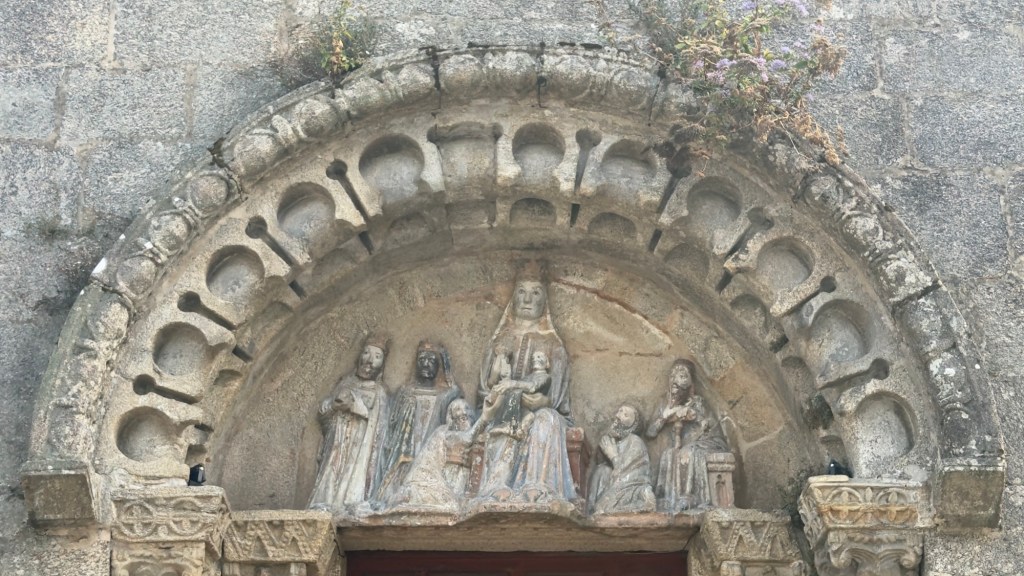
The Epiphany tympanum, dated 1316. The close view preserves the relationship between the sculpted scene, surviving polychromy, archivolts, and capitals.
The tympanum is one of the most securely documented medieval works at San Fiz. It represents the Epiphany: the Virgin and Child occupy the center; the Magi approach in adoration; St. Joseph sits opposite; and the kneeling donor, Xoán de Ben, appears in prayer. The lintel inscription dates the work to 1316 and names the enigmatic Master F. París.
The sculpture still preserves evidence of color, although the visible polychromy should not automatically be assumed to be original. Its importance lies not only in its age but in the fact that it belongs to a recognizable fourteenth-century sculptural milieu in Compostela. Related work has been associated with the same workshop.
And on the way back to the Casa this evening…
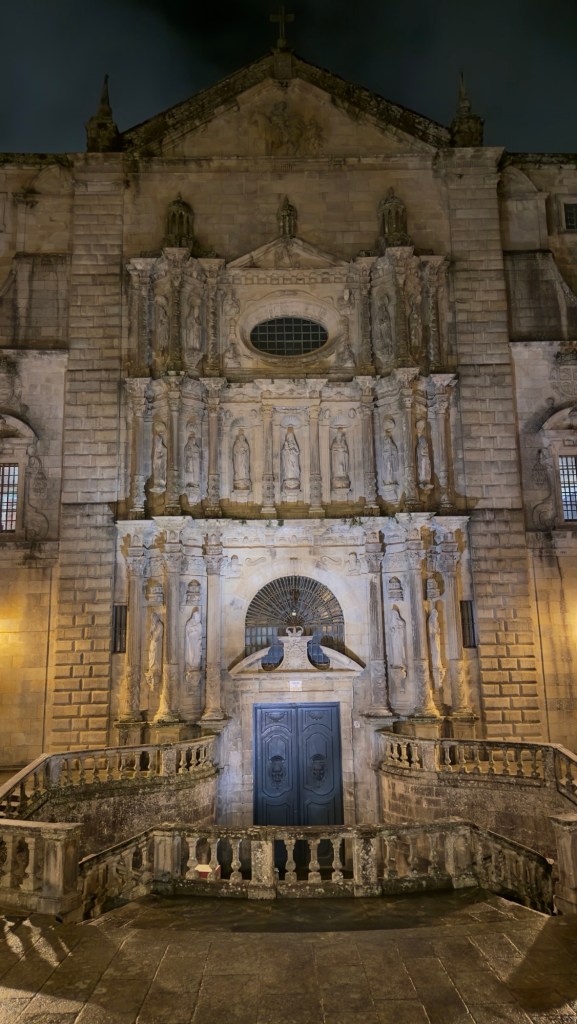
Time for sleep.
Blessings to you all.

