Spent the morning with Birdy, the afternoon working at the church, and the evening eating Indian food… Oh, my! If anyone ever offers you Soan Papdi, just nod your head.
Soan Papdi is dangerously easy to keep eating. 😄 It’s an Indian sweet with a wonderfully strange texture: flaky, wispy, crisp, and almost cotton-candy-like, but richer and nuttier. It breaks apart into delicate threads and then practically dissolves in your mouth.
The traditional ingredients are usually gram flour (besan/chickpea flour), all-purpose flour, sugar, ghee, and milk or water, flavored with cardamom. Many versions are topped or mixed with pistachios and almonds, and sometimes saffron.
Melts in your mouth.
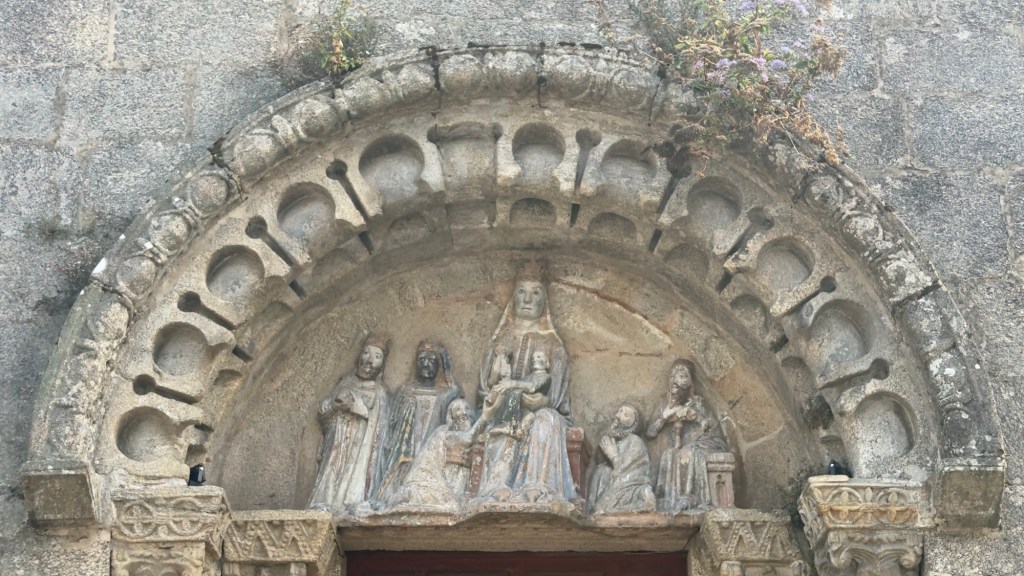
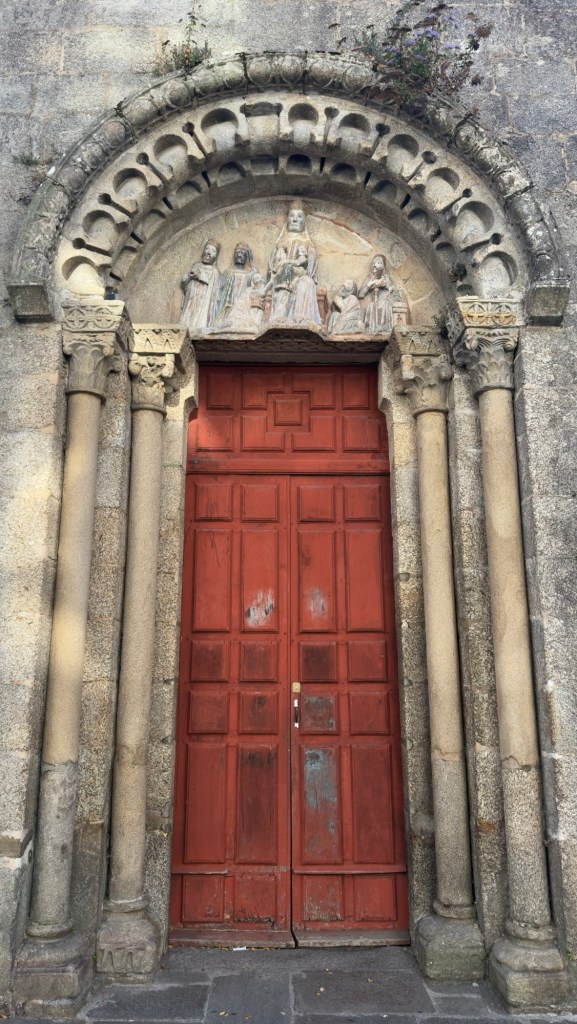
From the research project (it is above the main entrance of San Fiz.)
The Epiphany tympanum, dated 1316. The close view preserves the relationship between the sculpted scene, surviving polychromy, archivolts, and capitals.
The tympanum is one of the most securely documented medieval works at San Fiz. It represents the Epiphany: the Virgin and Child occupy the center; the Magi approach in adoration; St. Joseph sits opposite; and the kneeling donor, Xoán de Ben, appears in prayer. The lintel inscription dates the work to 1316 and names the enigmatic Master F. París.
The sculpture still preserves evidence of color, although the visible polychromy should not automatically be assumed to be original. Its importance lies not only in its age but in the fact that it belongs to a recognizable fourteenth-century sculptural milieu in Compostela. Related work has been associated with the same workshop.
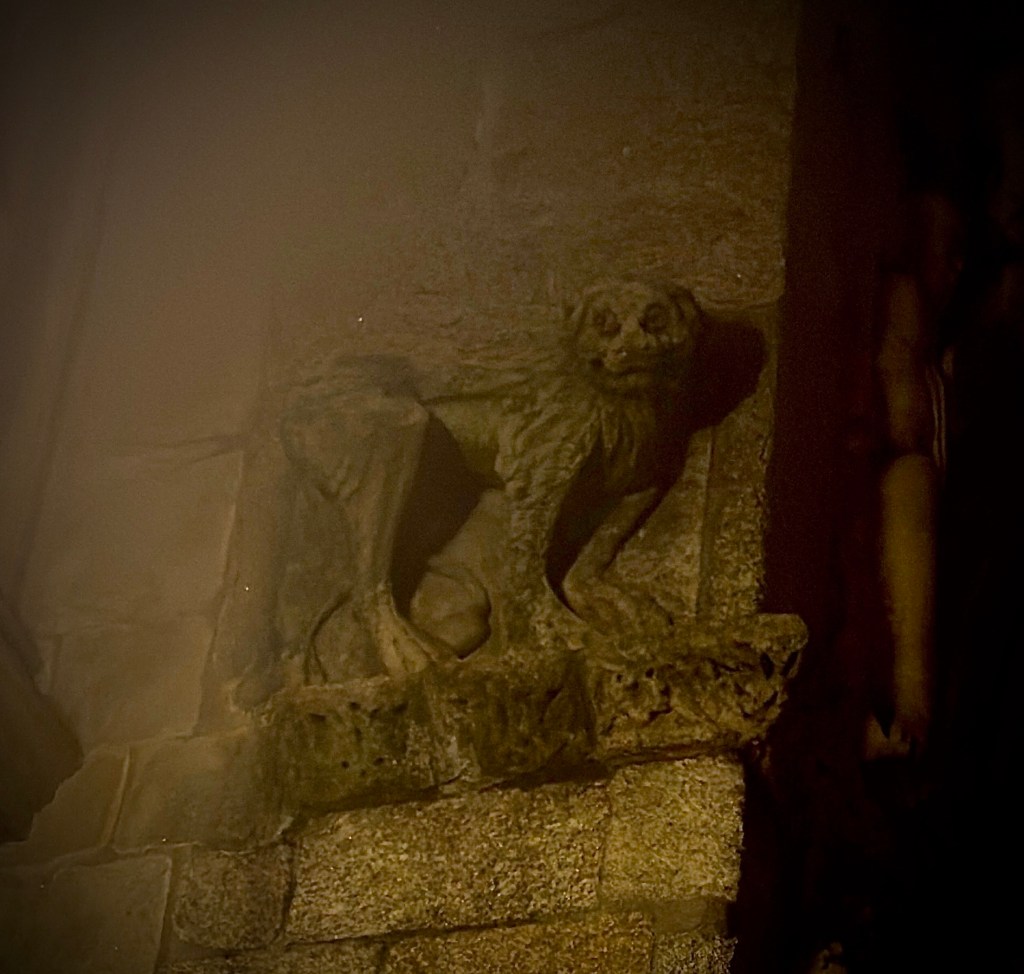
It was a very early start today so that I could get to the Cathedral of Santiago de Compostela when it opened and before all the other visitors. I was fourth in line and this little creature kept me company while I waited for the doors to open.
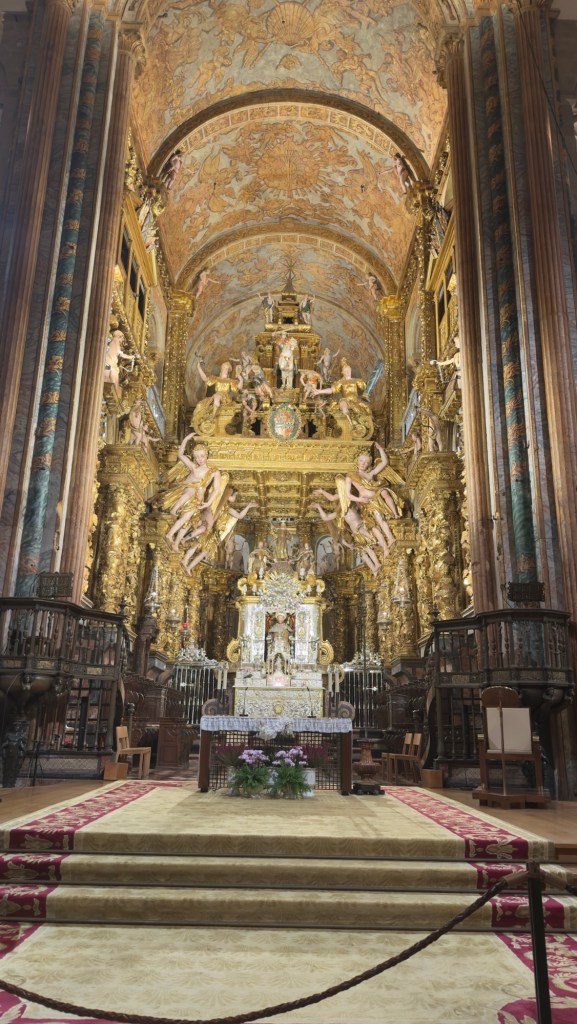
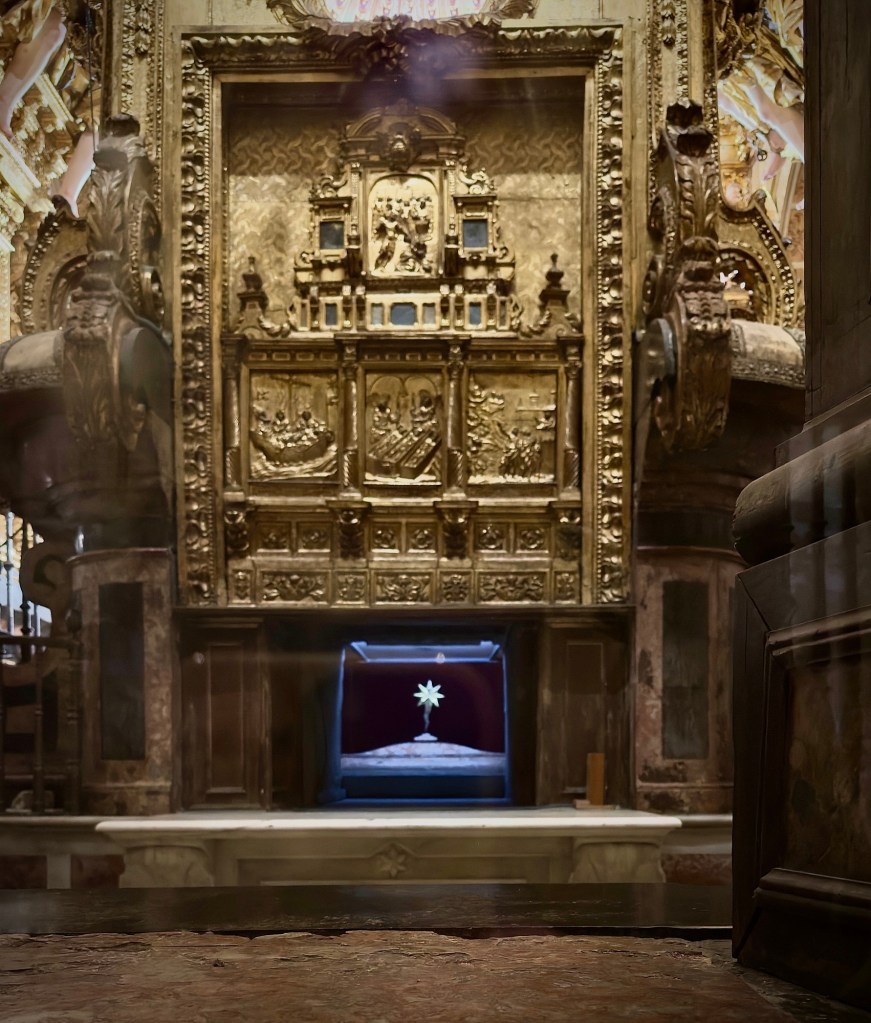
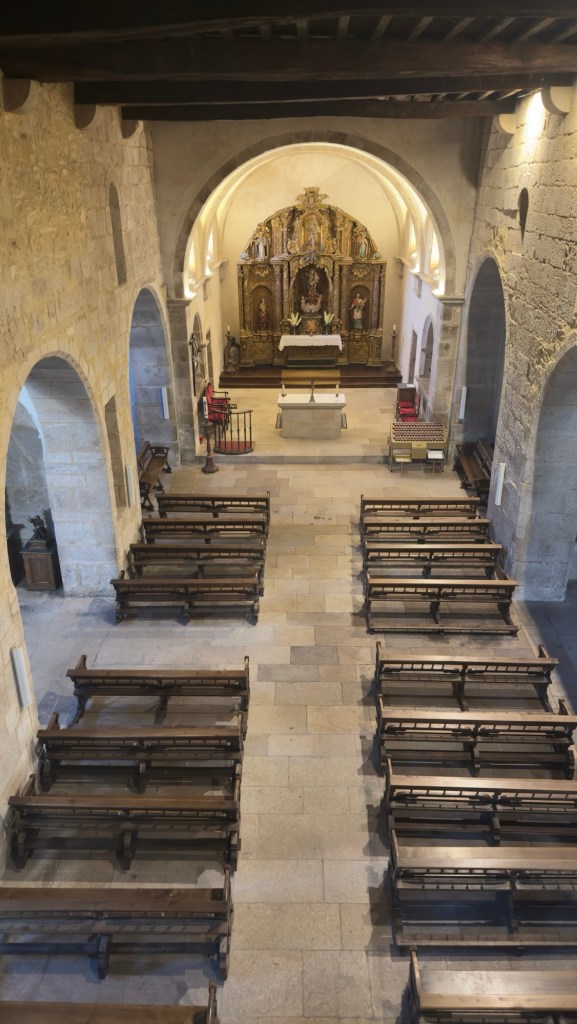
Promptly at seven, the doors opened and I made my way to the altar. It so much more glorious than this picture shows.
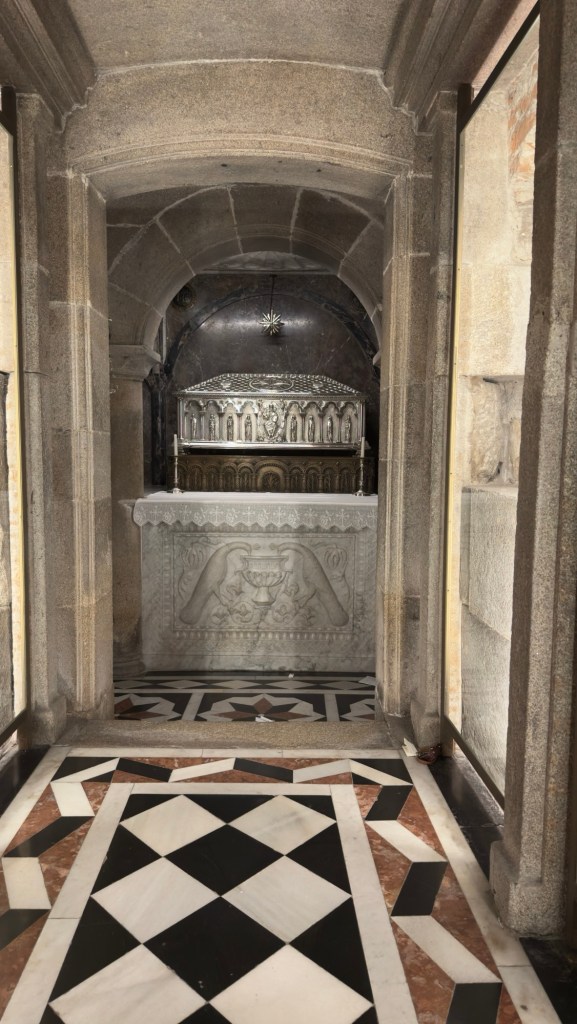
From the back, you get another hint of what you are searching for.
The little star is the clue…
According to medieval tradition, after his martyrdom in Jerusalem around AD 44, the body of St. James the Greater was carried by his disciples to Galicia in northwestern Spain and buried there. Over the centuries, the location of the tomb was forgotten.
Around AD 813, a hermit or monk named Pelayo (Pelagius) began seeing mysterious lights—often described as stars—shining over a wooded place called Libredón. He reported the phenomenon to Bishop Theodomir of Iria Flavia, who investigated and discovered an ancient tomb containing remains believed to be those of St. James and two of his disciples.
King Alfonso II of Asturias was informed and ordered a church built over the site. That shrine eventually developed into the great Cathedral of Santiago de Compostela and became one of medieval Christianity’s major pilgrimage destinations.
The famous explanation that Compostela means campus stellae, “field of the star,” comes from this tradition. It is beautiful and very old, although modern linguists generally think the actual origin of the name Compostela is different. The star, nevertheless, became one of Santiago’s enduring symbols—heaven itself, in the legend, pointing pilgrims toward the apostle’s resting place.
Taking several steps further down, you find the Apostle James. It is very moving.
I had about 30 seconds with him alone, then the other pilgrims began filing in, but for those 30 seconds… yeah.
I have now prayed before the remains of Peter, Paul, James, Josémaría Escrivá, John Paul II, and several others (and let’s not forget Fatima). It is always an experience and you feel the… what?… connection seems like such a weak word.
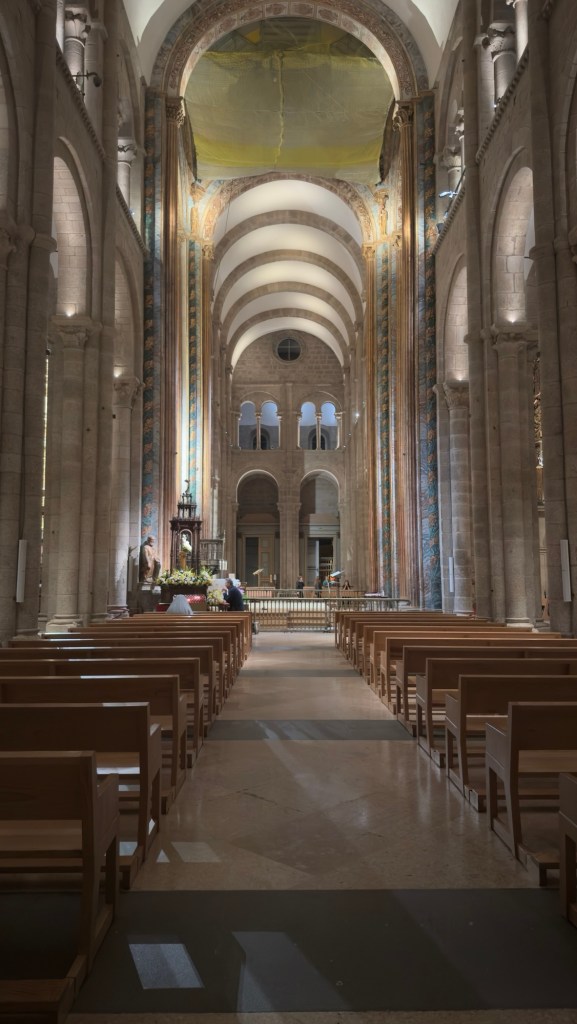
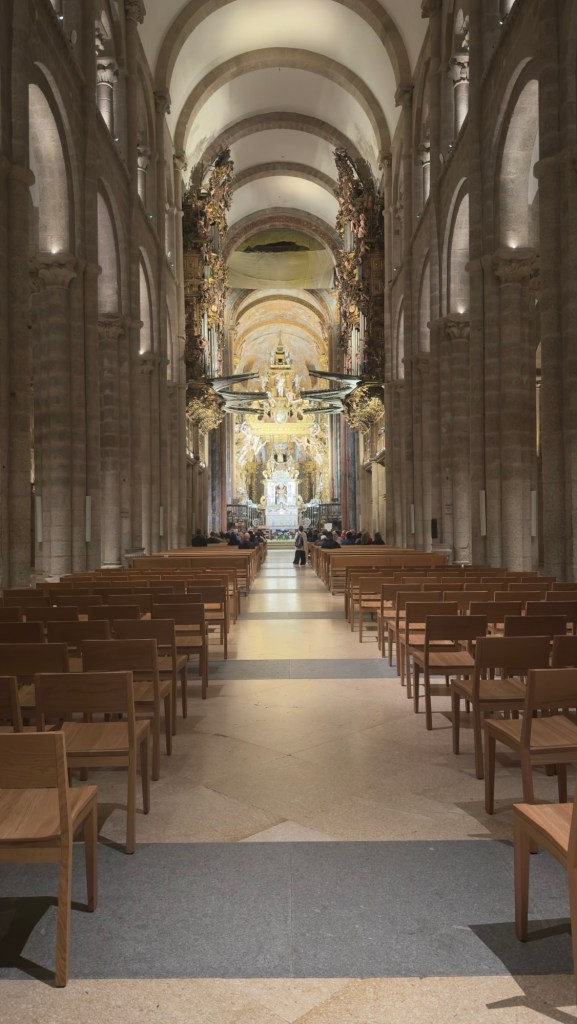
Different angles of the cathedral…
Side-to-sideBack-to-front
I came back and visited with a lady from Brazil. She is a lawyer and an author. All of her books are in Portuguese, but if you like…
From there, I was off to the “office.” I continued to work on my report on the artwork and other bits of San Fiz’s history while attending to the duties. Visitors come in singles or many at once. It is very rare that I’m in the church alone.
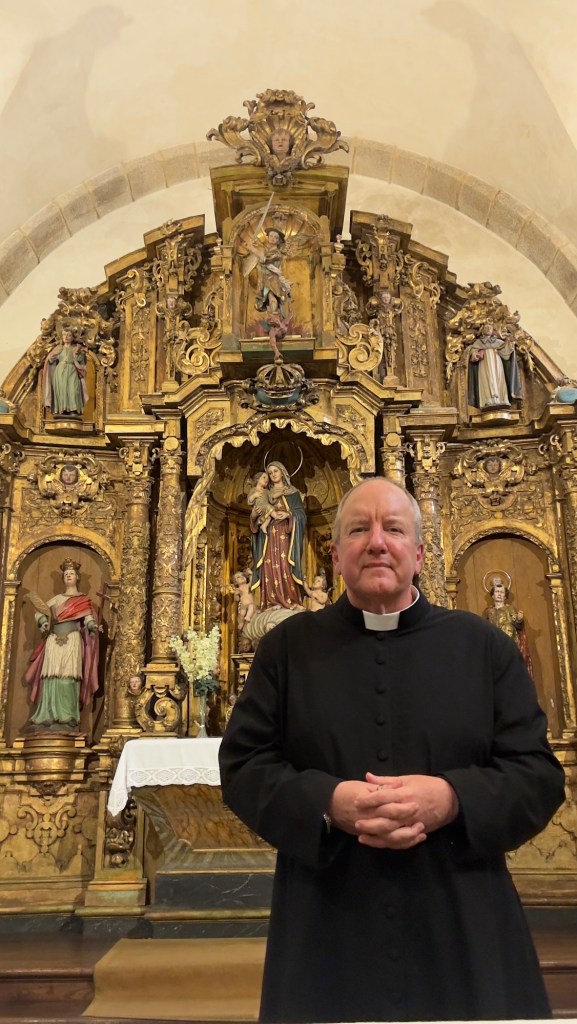
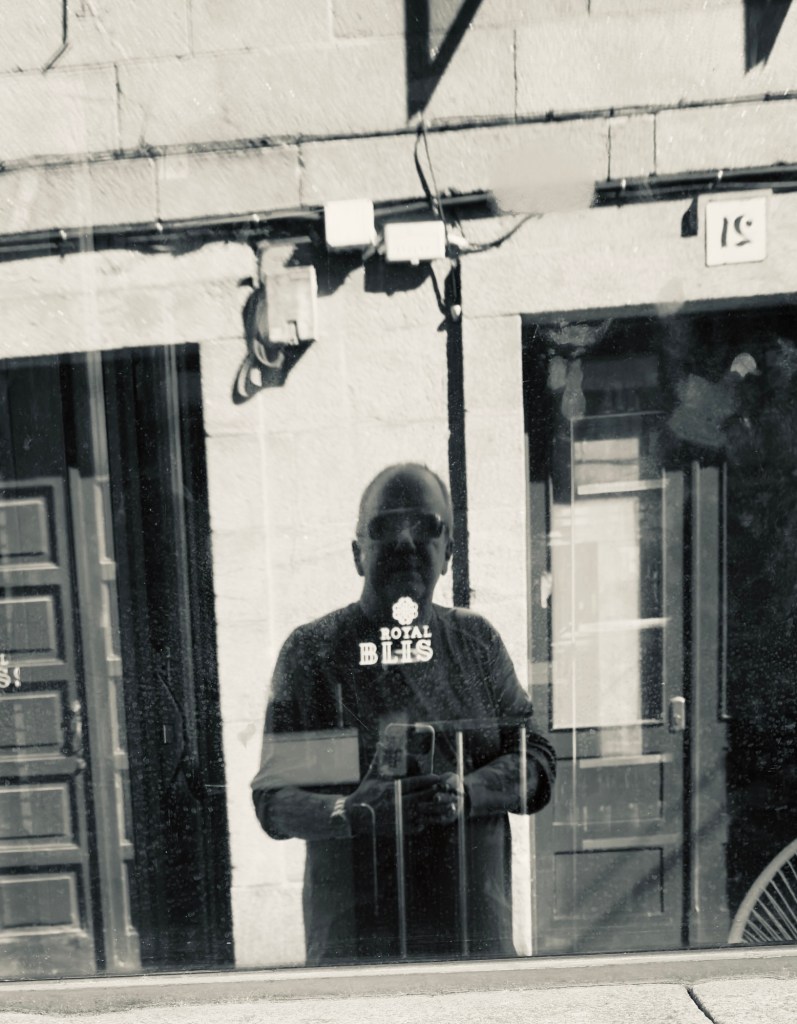
When I am, I take silly pictures (or proof that I’m actually here!)…
There was octopus for lunch with roasted potatoes and chips with chocolate-filled biscotti for dinner… just working the spectrum.
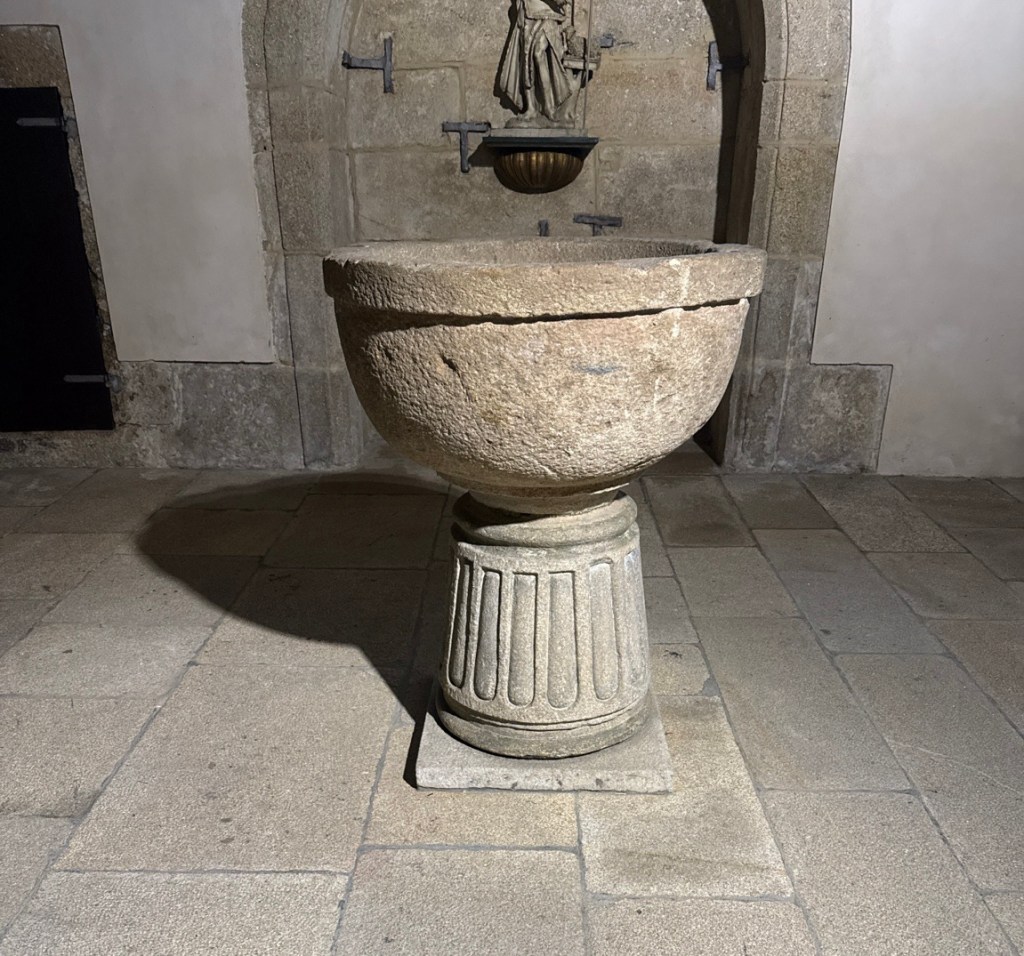
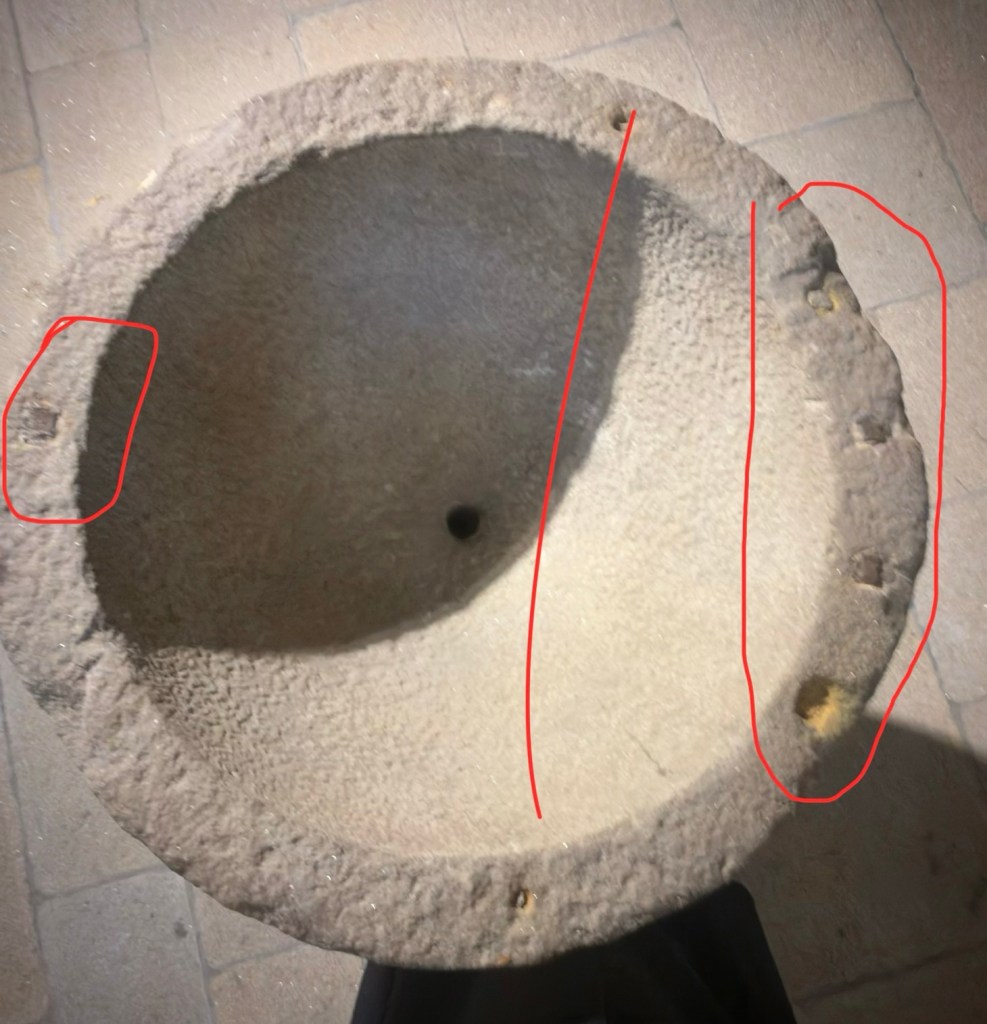
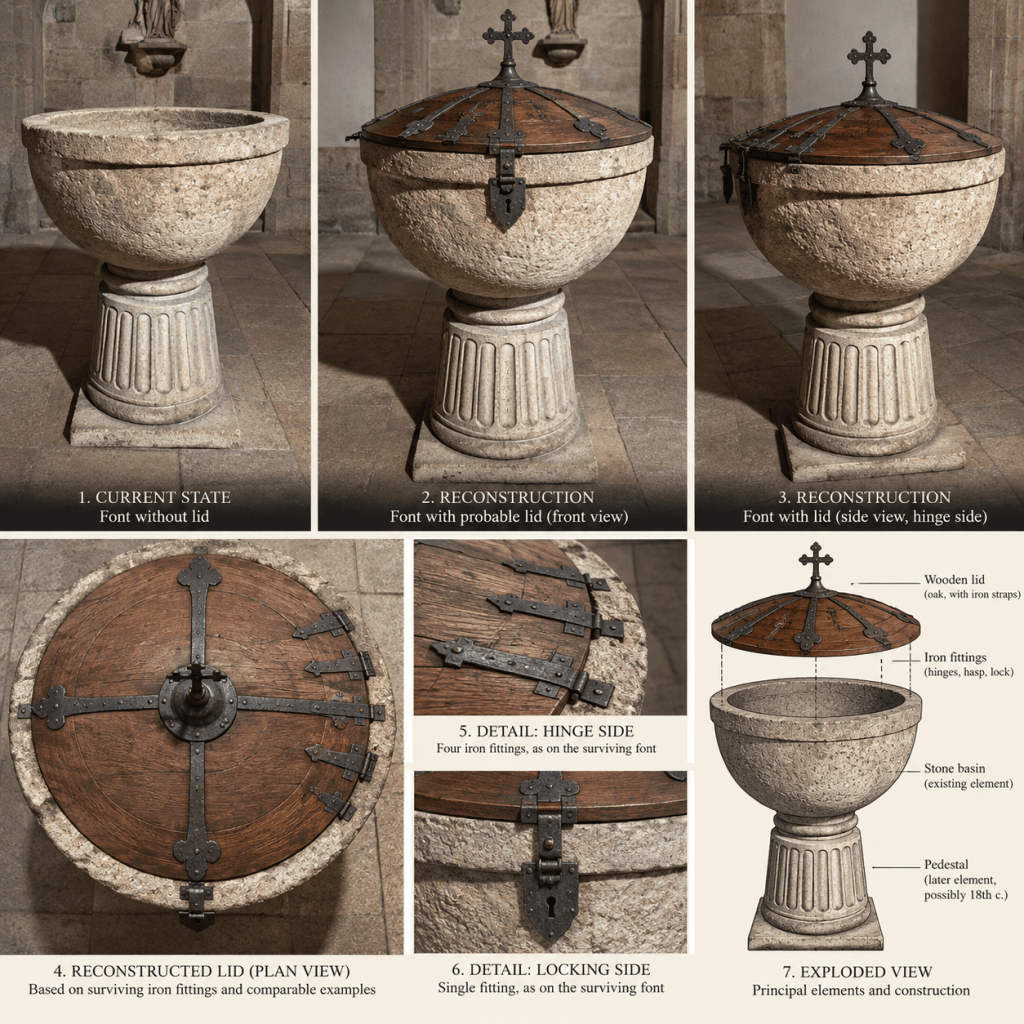
As a hint to the “research project”: this is the baptismal font located in the church. The base and pedestal are from two different centuries. I found the seven holes on the rim interesting and wondered what they were for. Research indicates that there was perhaps a locking lid (formally required) and several other instances could be found, so I asked to recreate what it may have looked like. How the font currently looks…
Based on intact examples, a rendering of the font may have looked something like this…
Is that what it would have looked like? I don’t know, but I’m making a fairly educated guess that it is close.
Something to do while I attend to the church and visitors.
I pray you are all well. I am happy to light a candle for you in the Church of San Fiz if you like. Just send me a note or comment on this post.
Blessings!
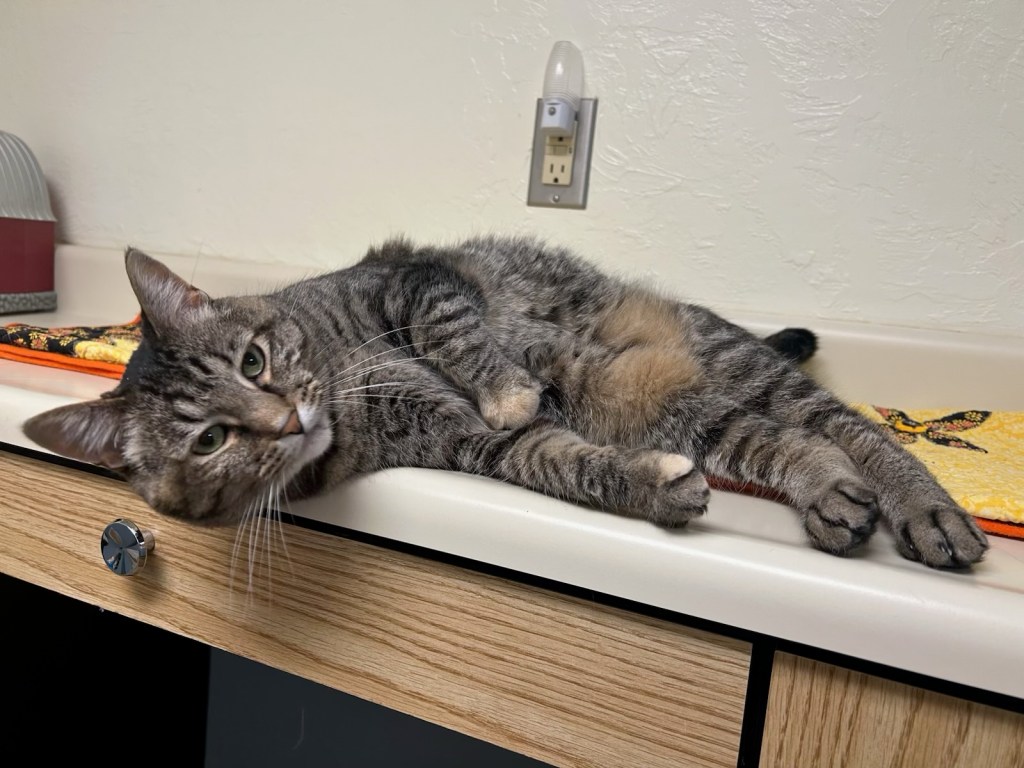
FYI: Her Royal Felineness seems a little less hissed off than a few days ago and also appears to be coming close to slinkying off the counter…
Sunday started a bit slower here than at home. The Mass wasn’t until 12:30 p.m. I may have to talk to the vestry about a new time for church! There were eight in attendance, but for a very Roman Catholic community, that was pretty good. Wasn’t quite as nervous today as I was the first time.
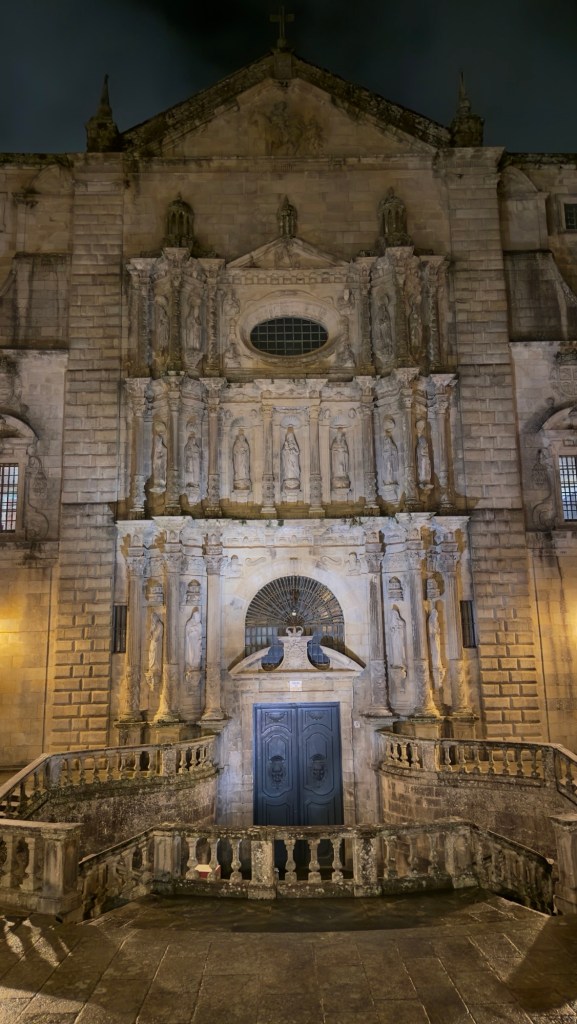
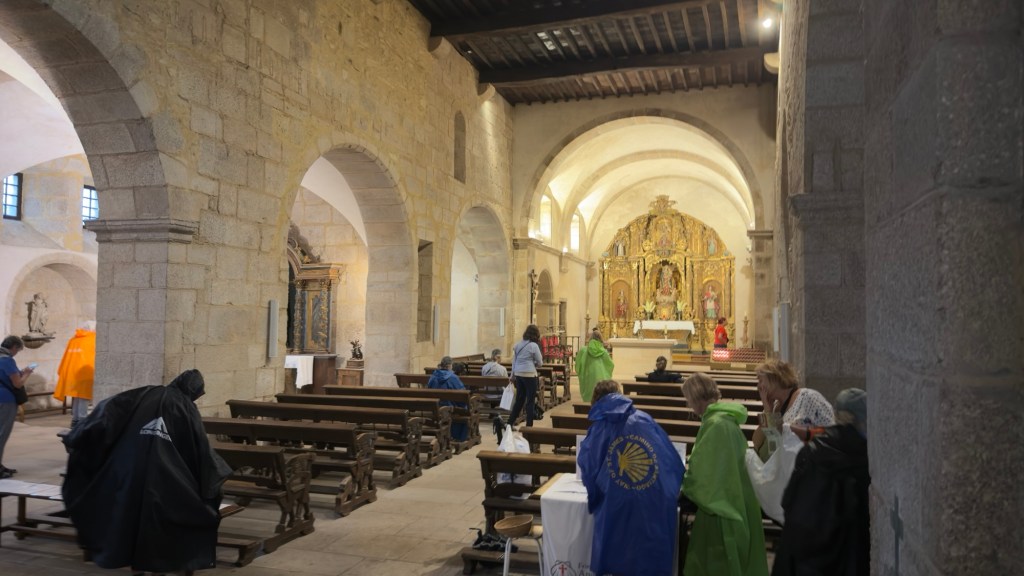
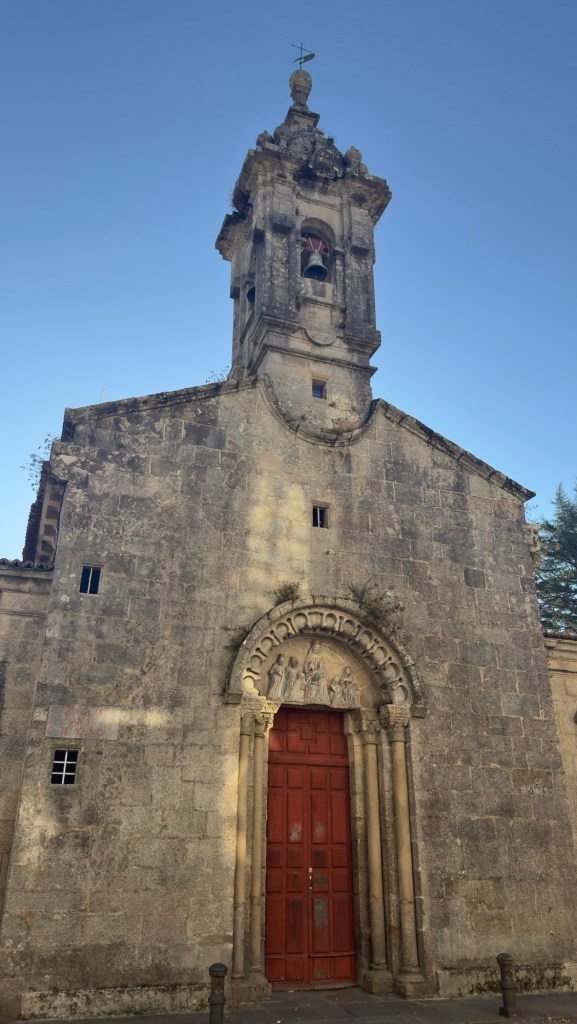
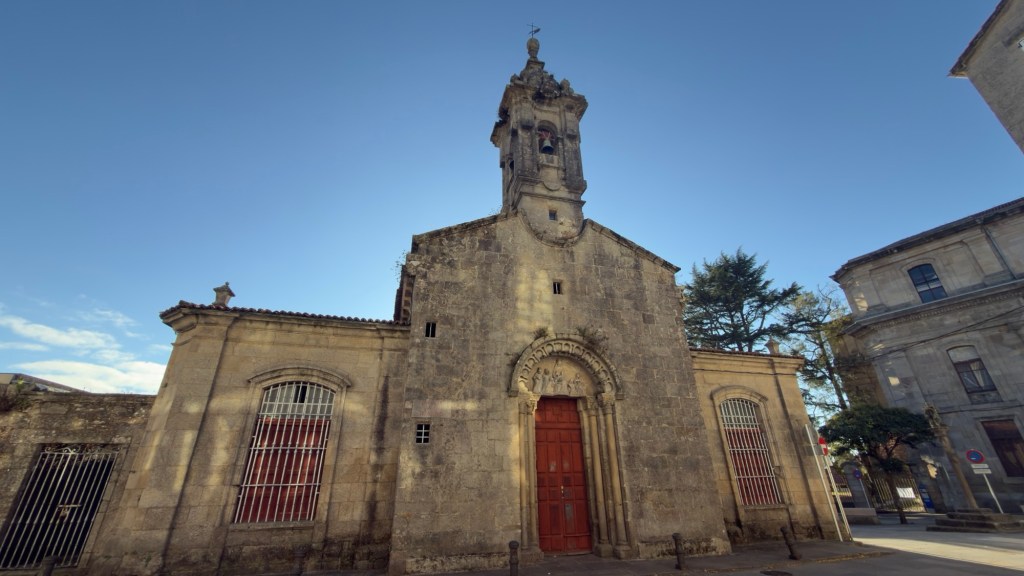
I did remember to take a picture of the church…
I also found my way to the small balcony…
It is quite lovely.
This afternoon I spent nursing a very sore back and editing six chapters of Birdy. This evening, the back is better after I located a pharmacy for a little something to salve it with.
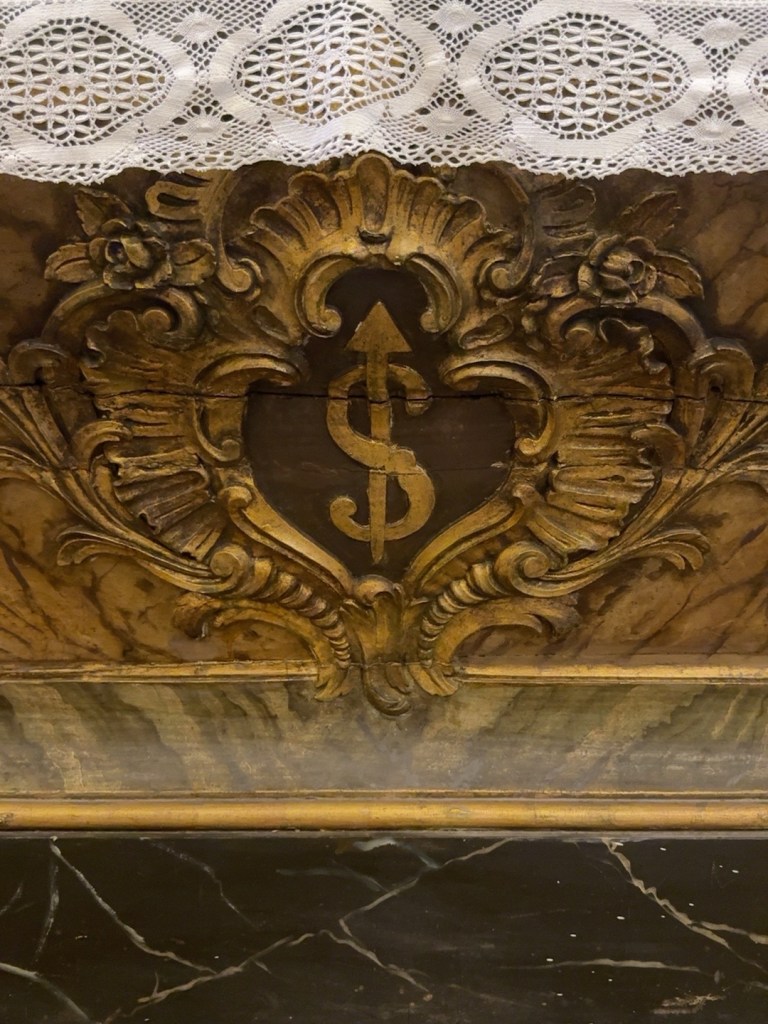
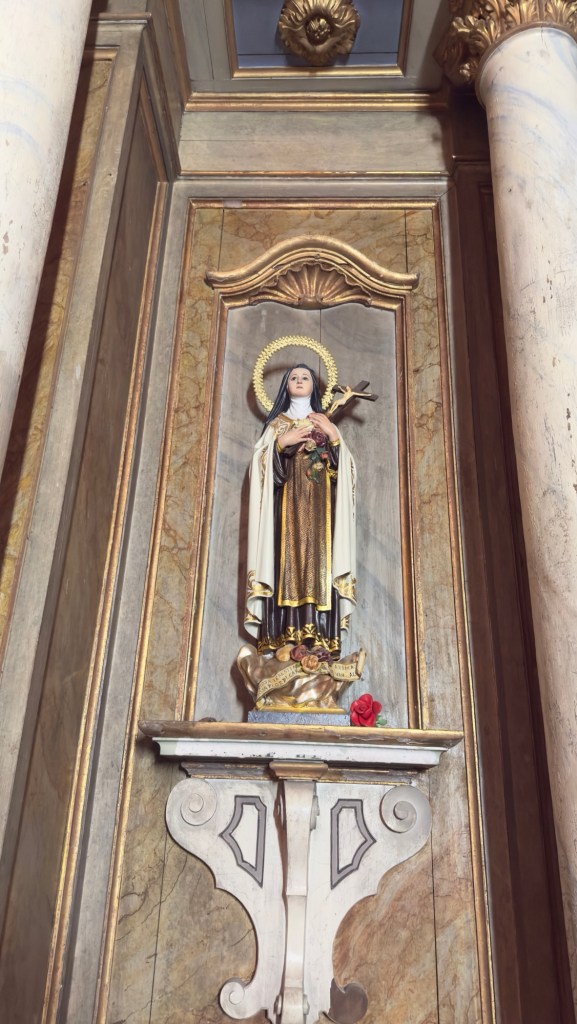
I also spent more time this afternoon researching the artwork in San Fiz. I’m planning on putting together a small booklet to share with the Anglican community so that others might benefit from it. In the process, I came across a very curious symbol at the bottom of the retable, just below the statue of Mary…
No. It is not, “Show me the money!”
An S pierced by what at first appears to be an arrow. The key is recognizing it as a nail—clavo in Spanish. Together they form a visual wordplay: S + clavo = esclavo, “slave.”
The emblem was used by Spanish religious confraternities whose members described themselves as esclavos of Christ, the Blessed Sacrament, or the Virgin Mary. Here “slave” expressed complete, voluntary devotional surrender rather than literal bondage. Examples of the S-and-nail device can be traced to Spanish religious practice at least as far back as the late sixteenth century, with particularly clear Marian examples in the seventeenth and eighteenth centuries.
Thus, what looks like a curious decorative mark at San Fiz is actually a small theological declaration: I belong entirely to God.
I like that! And I may need some ink.
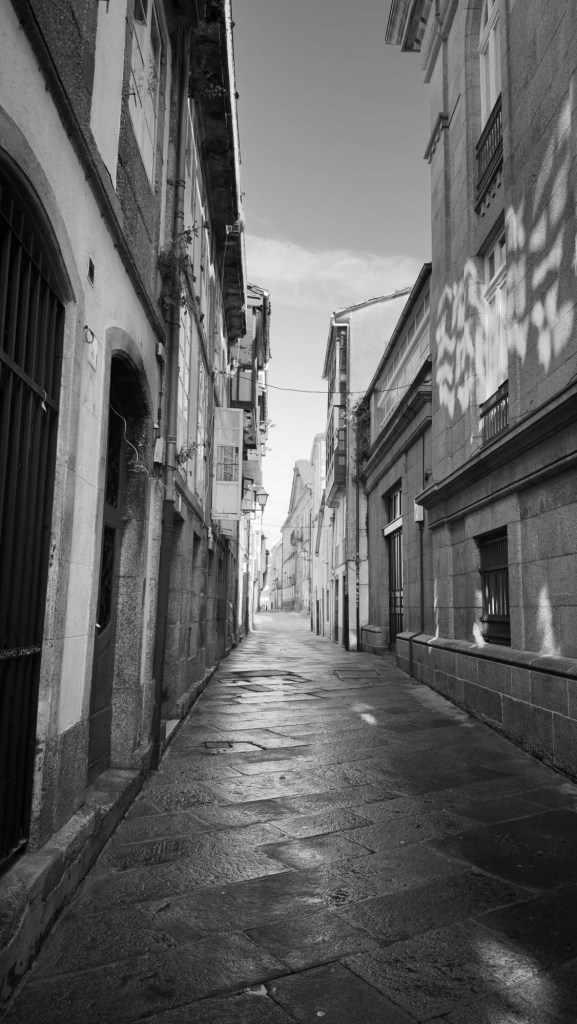
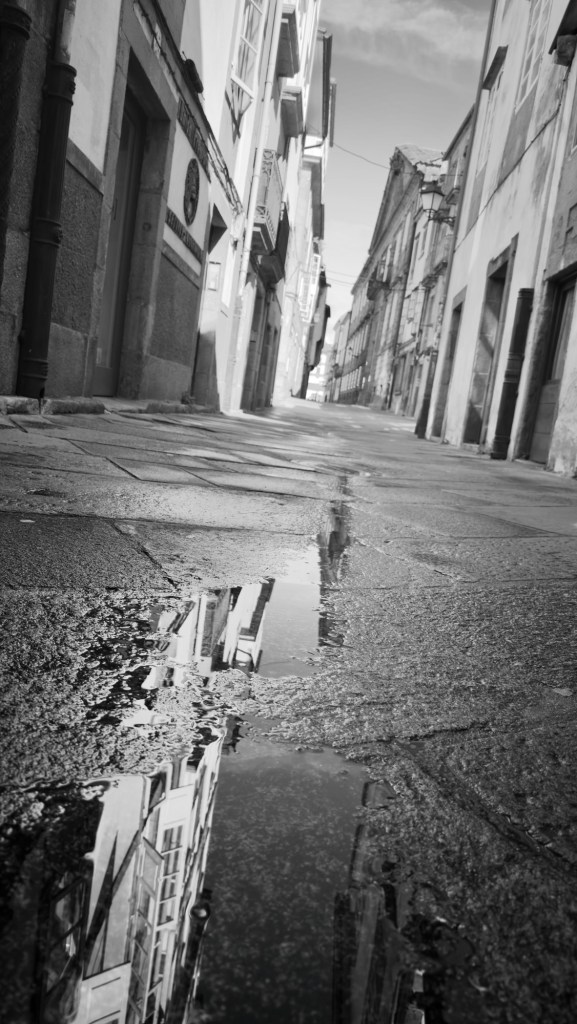
After a Middle Eastern lunch at Jerusalem, very tasty, I wandered around and attempted to be artsy.
Came back to the Casa to unload the pack and cassock and then back out for dinner. I had a real hankering for curry, but all the places I found were closed, so chose Ramen Okaeri. Guess what? They serve curry and it was delicious!
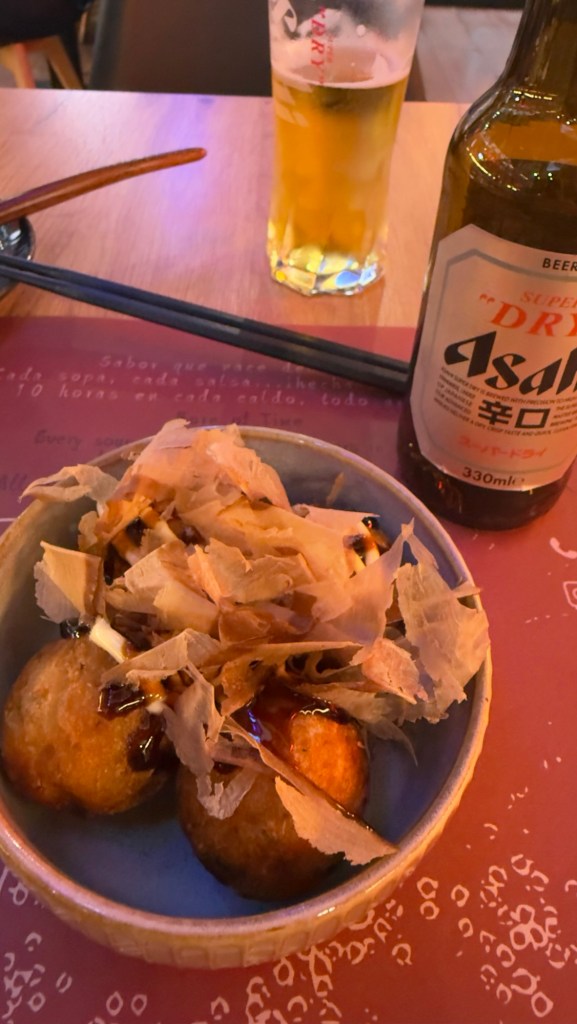
I started with an Asahi and the Takoyaki (octopus balls):
And finished up with Curry rice with prawn tempura:
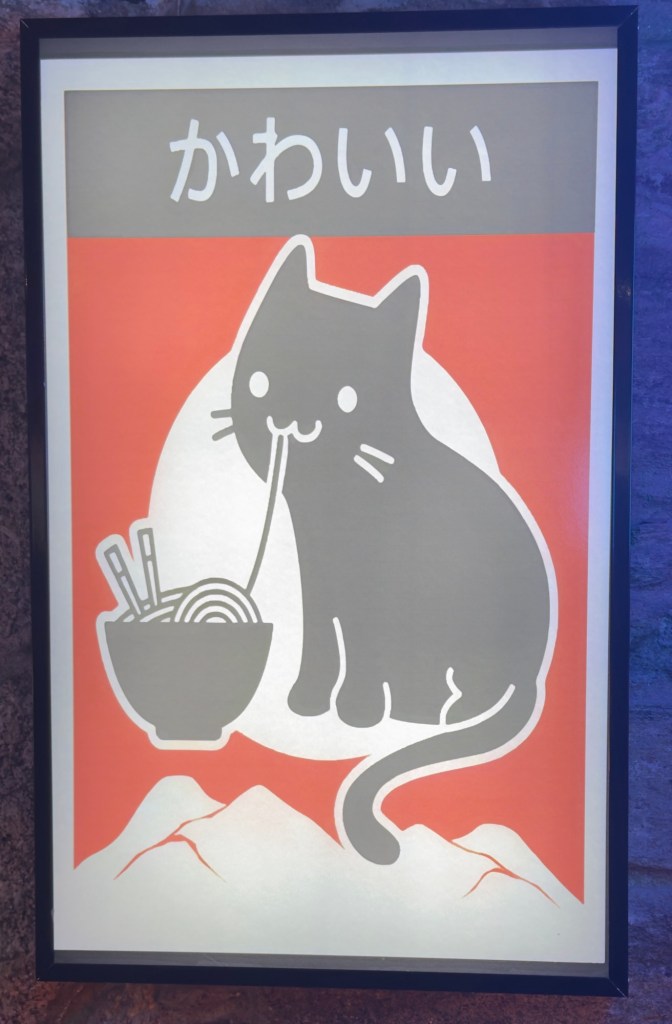
Feeling particularly fat and happy. Oh… and there was a “CUTE” cat that watched over it all:
That was my day. Tomorrow I am “off” and will be taking a tour through Finisterre, Muxía, Ézaro & Coast of Death (I’ve no idea what that is).
They are singing down in the garden here, so I may have to go see what the peregrinos are up to.
Looking out the window from my room.
And today’s selfie (it was taken in what will later be known as my artsy phase)…
This is definitely a working vacation. I am the only clergy serving the Casa Anglicana and St. Fiz Church (still forgot the photo). The Casa is full with 32 guests and the church…
From 11:30 a.m. to 5:30 p.m., I blessed many rosaries, heard confessions, prayed the midday office and the Mass, and welcomed over 400 visitors to the church. I also got chewed out on two separate occasions by little Spanish ladies who are not pleased with we Anglican apostates using their church (I survived both chewings and the bonus, I didn’t understand a word, but got the point). It was a very big day. Also a glorious one.
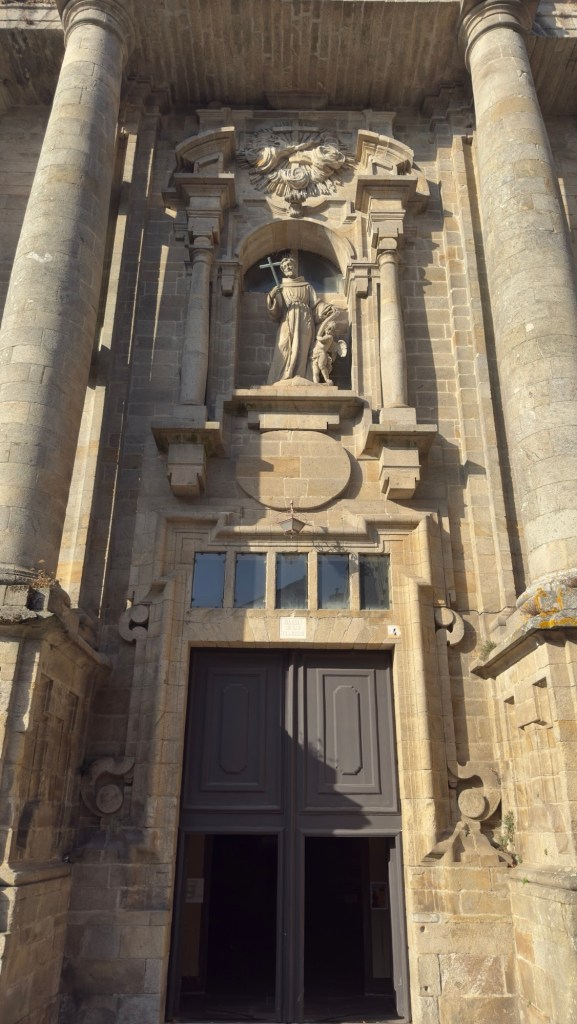
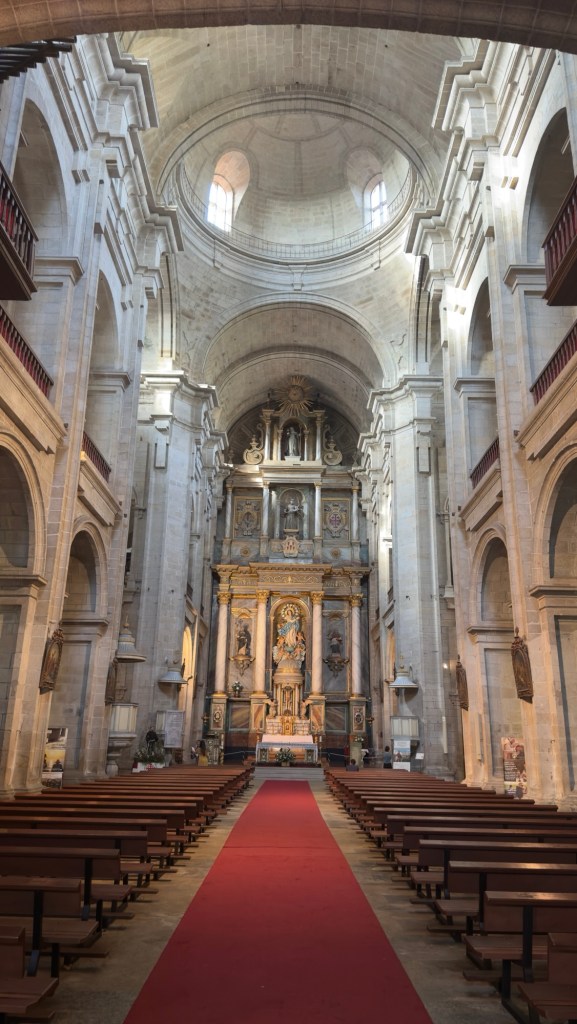
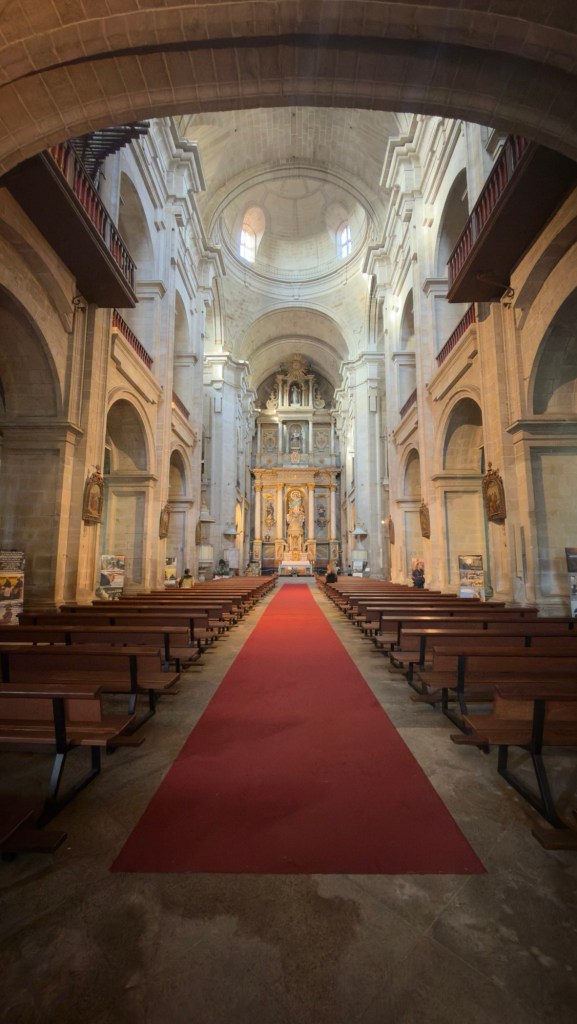
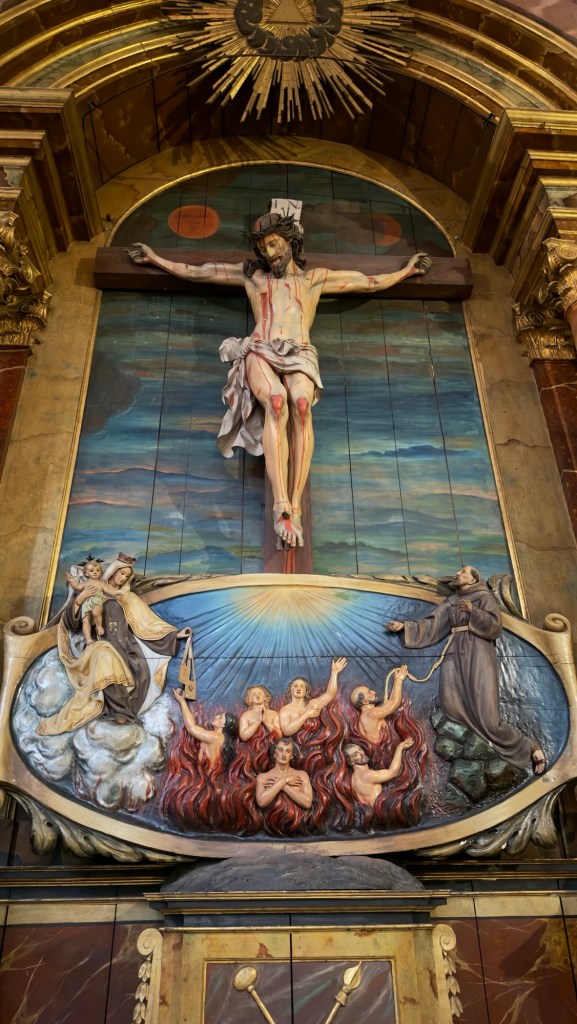
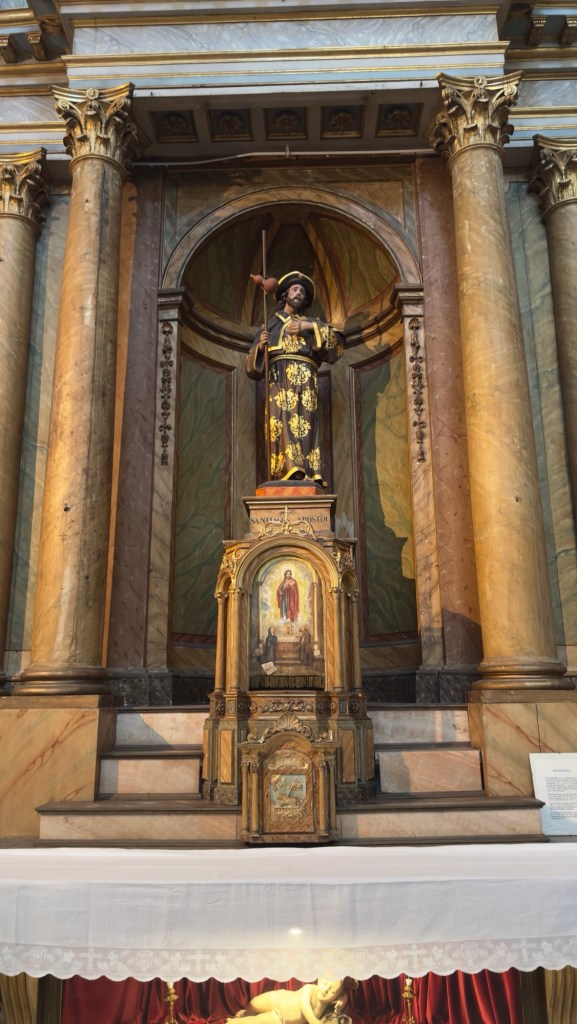
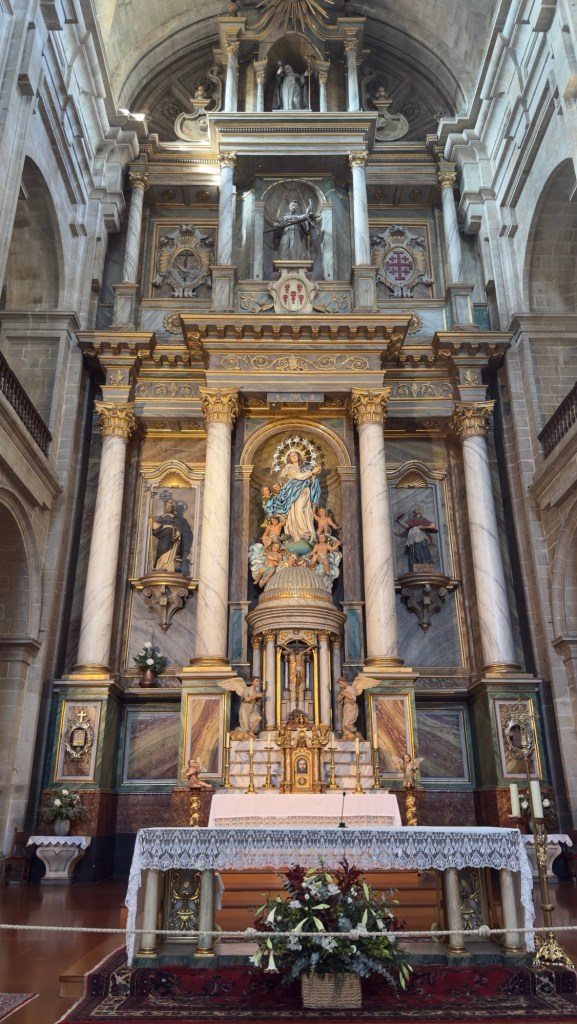
Afterward, I slipped off my cassock, grabbed a cold beer, and took in a few sights—first the church at the Convent of St. Francis was open. As it is not one of the big tourist hangouts, it was quiet and beautiful.
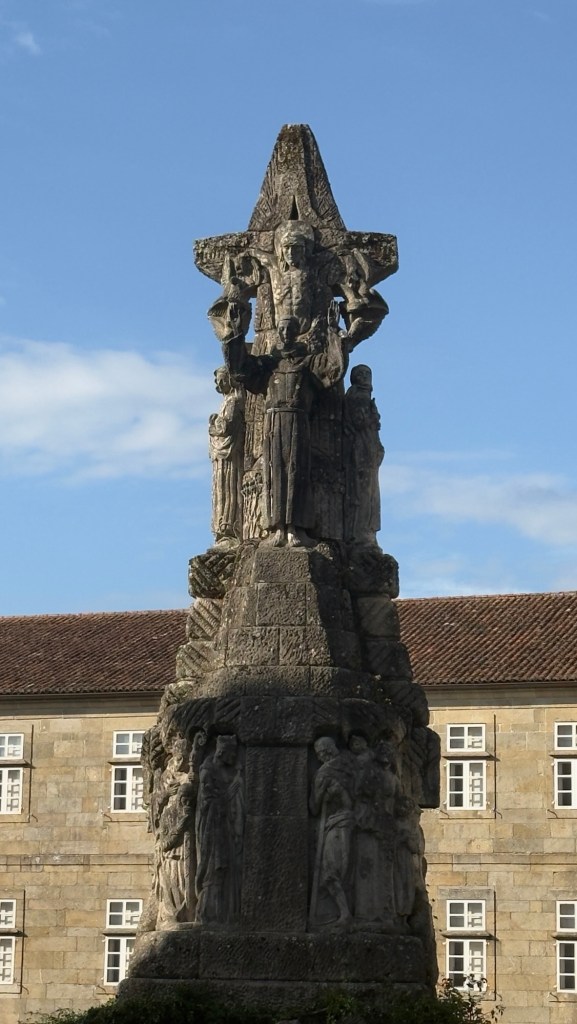
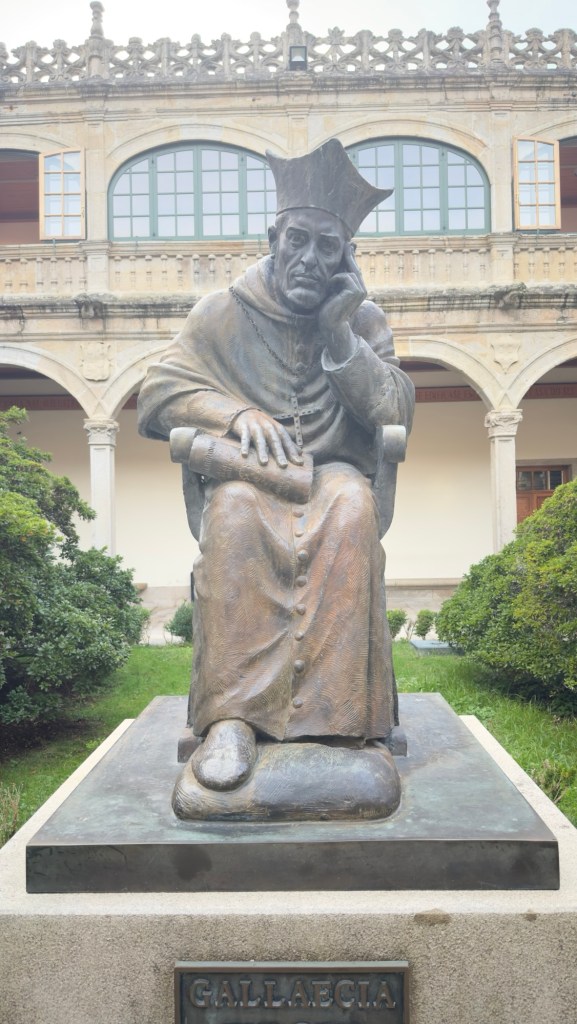
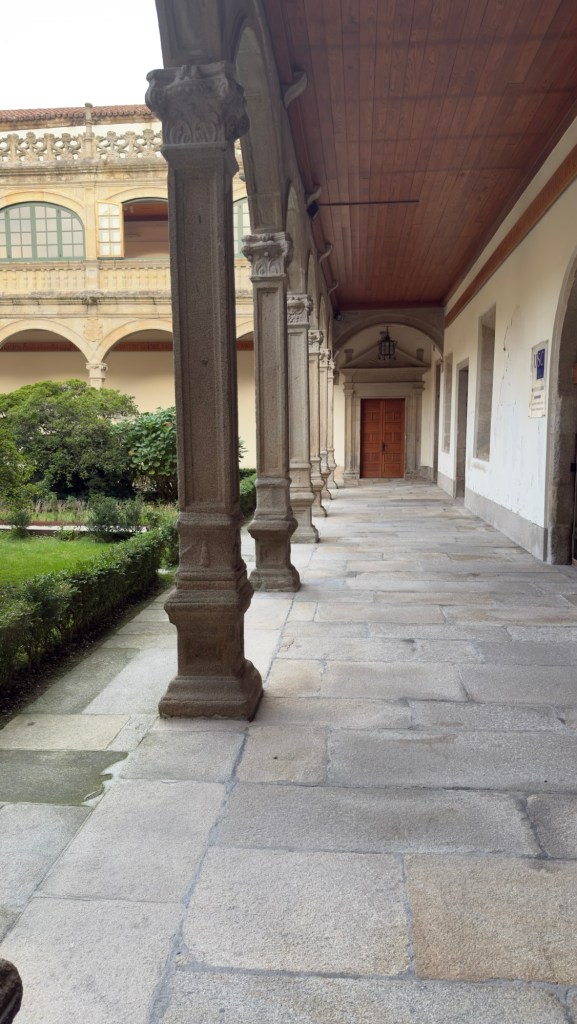
After that, I did some random people-watching, then stumbled into an even quieter courtyard. I can relate, Alonso III de Fonseca. I can relate.
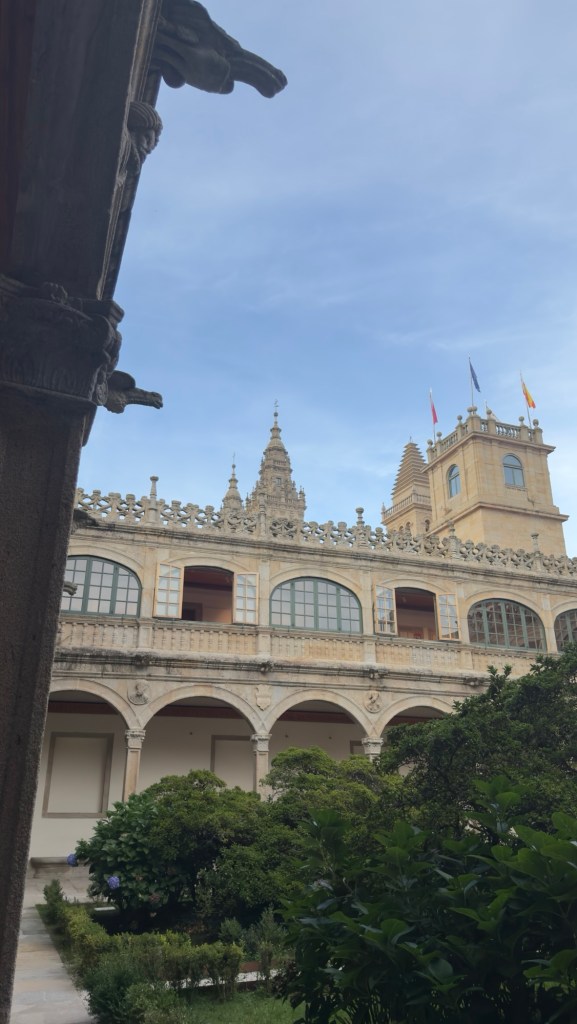
The courtyard was lovely.
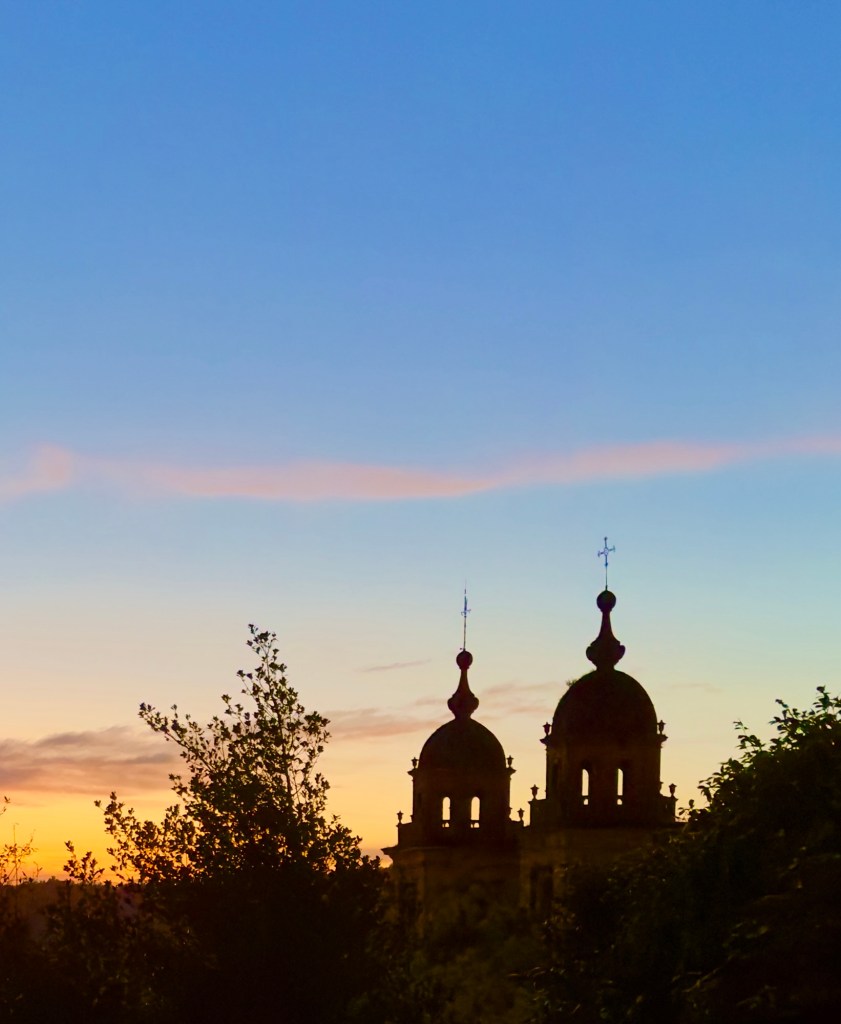
Coming back to the Casa, I passed in front of the Cathedral and watched the Martins swooping between the spires. Thinking they might have been Swallows, I was reminded of a passage from Treatise on the Love of God by St. Francis de Sales:
There are certain birds, Theotimus, which Aristotle calls apodes, because having extremely short legs, and feeble feet, they use them no more than if they had none.
And if ever they light upon the ground they must remain there, so that they can never take flight again of their own power… hence they remain there motionless, and die, unless some wind, propitious to their impotence… happen to seize upon and bear them up.
He then writes,
But we mortals rather resemble apodes…
And concludes,
The wind that raises the apodes blows first upon their feathers…
Yet, it is the wind of divine love that must blow upon us should we ever choose to “light upon the ground,” that is, step outside of God’s love and grace.
Lesson: never “light upon the ground,” but remain always in flight of God’s grace. However, if you choose to try and “walk” alone, and find that you can’t, pray for Wind. It will find you.
This also reminds me of someone I visited with today. I felt a breeze around them.