
Today was quieter and slower. It was museum day at the Museum voor Schone Kunsten Gent (MSK).
I’ll be honest, there are only so many landscapes and portraits that will remain interesting to me, and this place had its share, but there are several pieces of religious art (of course!) that got my attention. The pictures may be at weird angles or I’m only showing detail shots because the lighting in the museum was odd and there was a lot of glare.
First up is The Annunciation by Peter Paul Rubens.
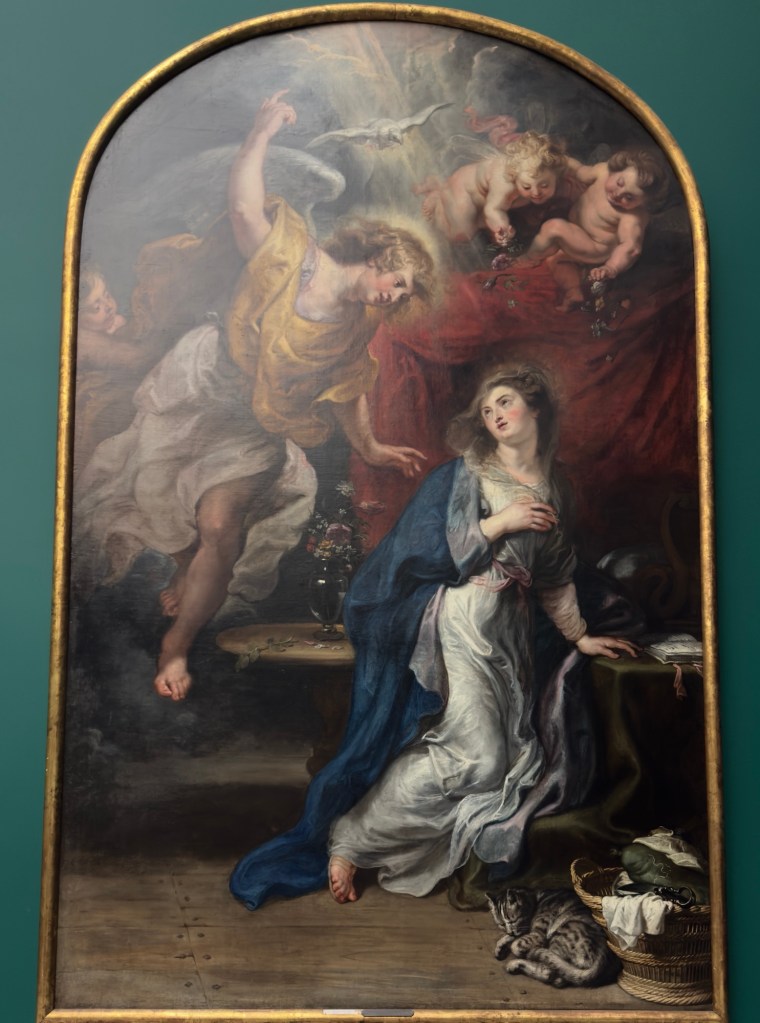
Honestly, I think the cat wanders from one painting to the next, as I saw it again in The Supper at Emmaus by Jean-Baptiste de Champaigne.
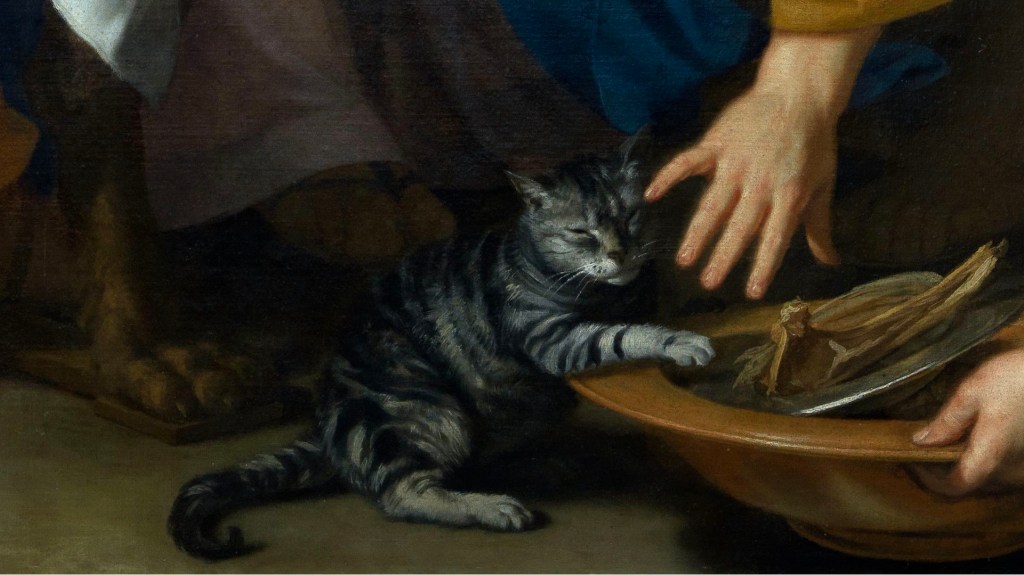
There’s actually an interesting history of cats in art. Definitely worth a bit more research.
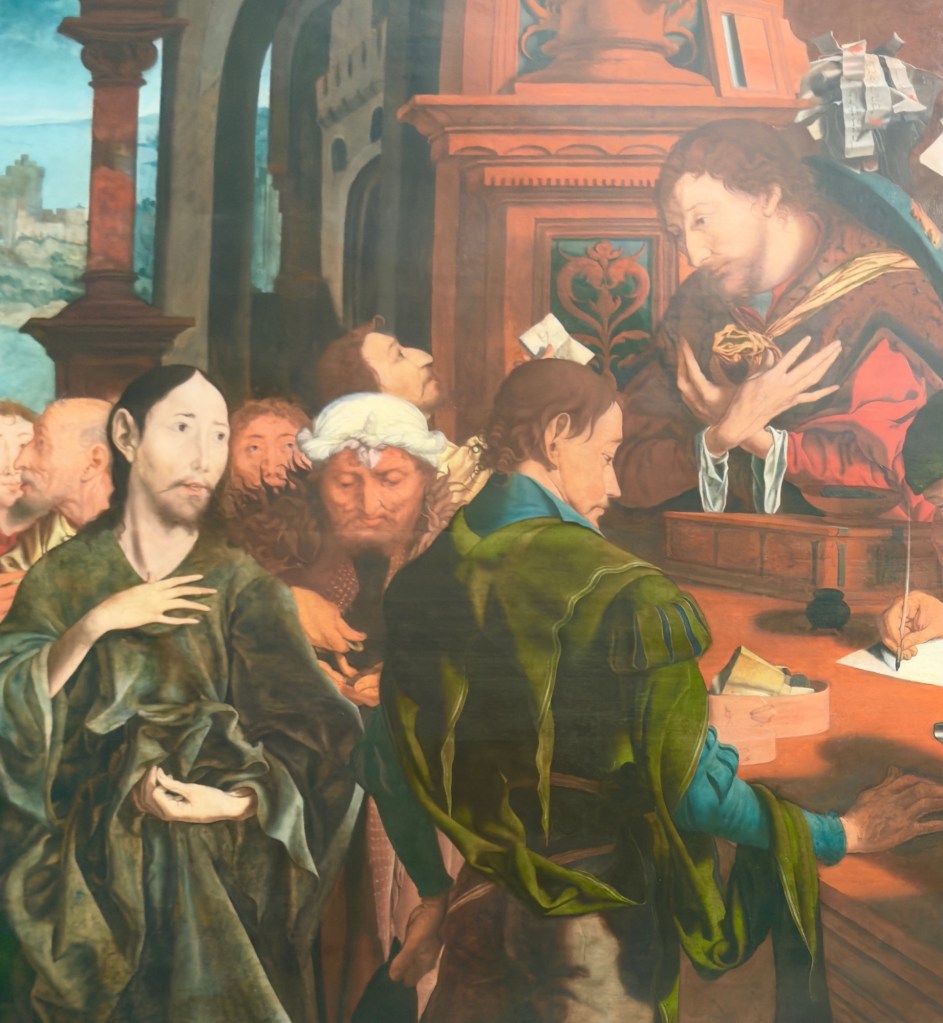
Next up is The Calling of St. Matthew by Marinus van Reymerswale. I’m quite certain you know why this one was selected. (Hint: I serve as priest at St. Matthew’s Episcopal Church.) It is clear from the painting, even with all the hustle and bustle going on around him, Matthew only has eyes for Jesus.
Next was a very large Last Judgment scene by Raphaël Coxcie, reminiscent of and compared to the Michelangelo in the Sistine Chapel (not a favorable comparison). It caught my eye because of the subject, but then there was this one little detail that got me to sit down and think. I’ve circled it below.
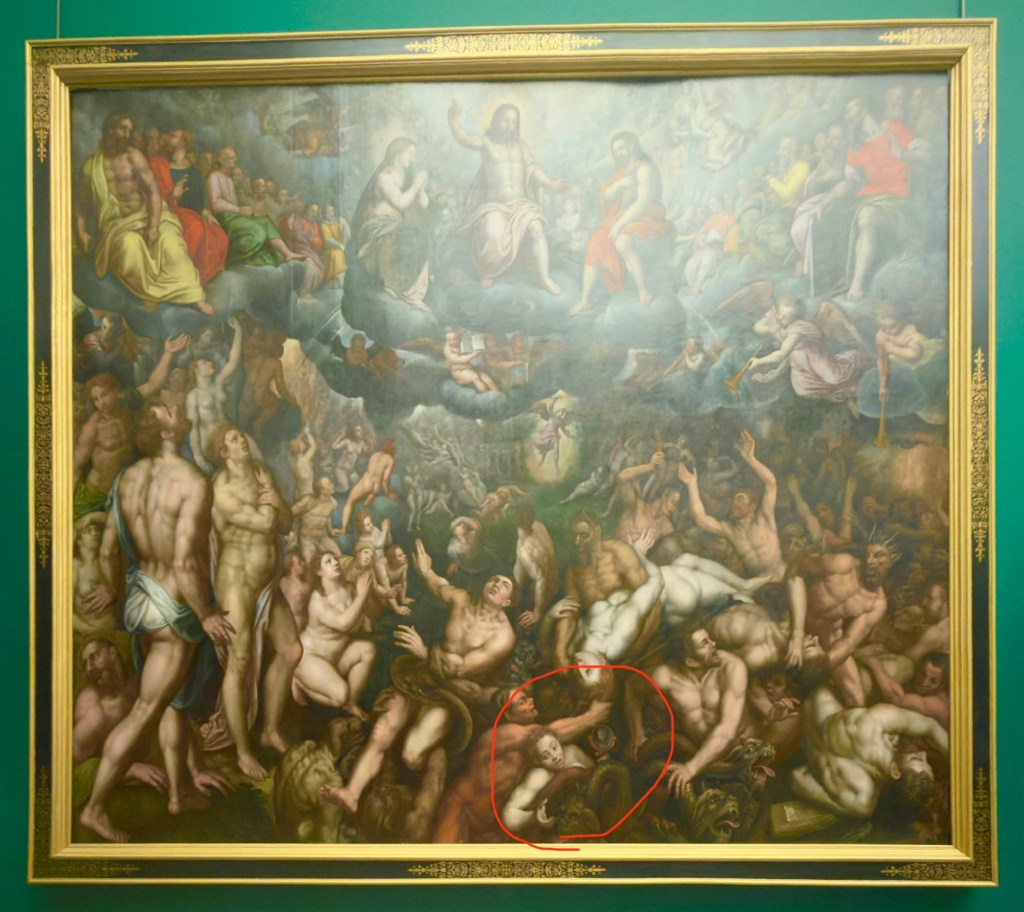
Perhaps the closeup will show my interest…
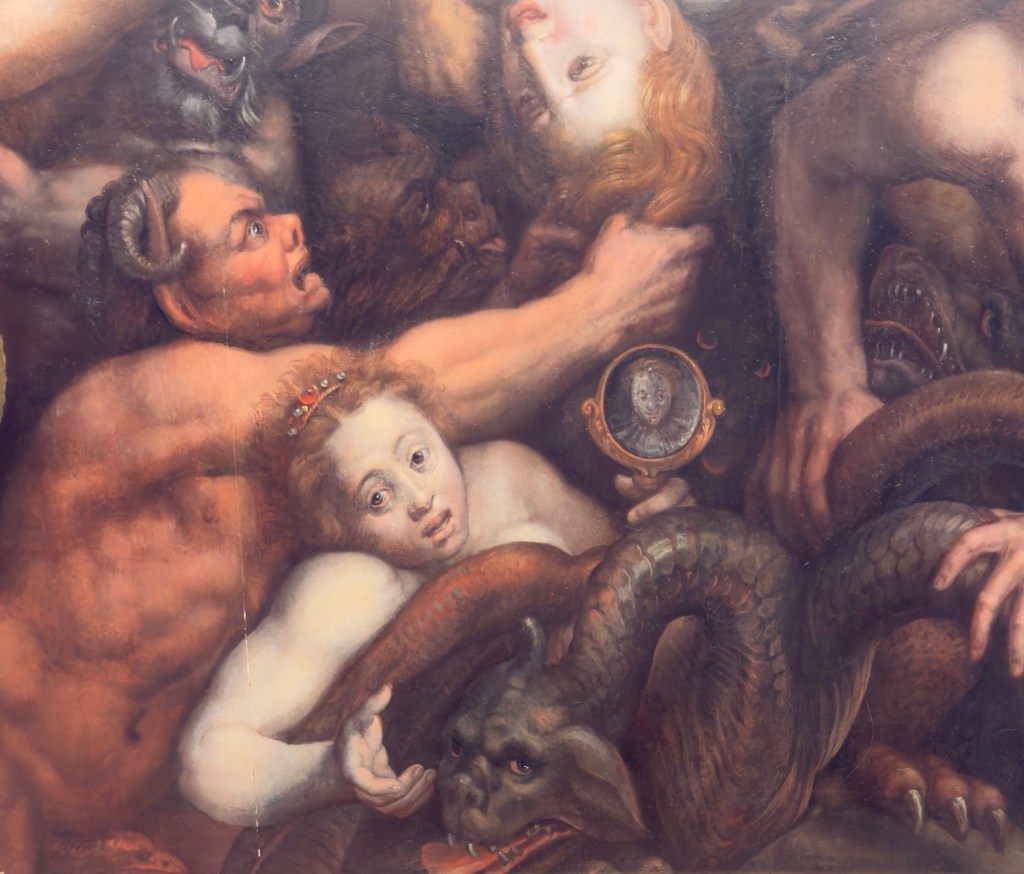
The painting was originally placed in the courtroom at the town hall in Ghent (apparently, many courtrooms held similar paintings of the Last Judgment as a reminder to the punishments in store for a life of crime—should we post more of these?) Question: Is the woman holding up a small mirror? The image in the mirror isn’t clear, so it could be anyone. Was Coxcie asking, “Do you see yourself? Will you end up here with us?” I stopped to consider that and prayed that I would be one of those on the left side of the canvas being called up to Paradise. Not related at all—for the Stephen King fans out there—doesn’t the image in the mirror look like Pennywise? I suppose they’ll float down there for sure!
Shut up, John, and show us some more pictures. Okay.
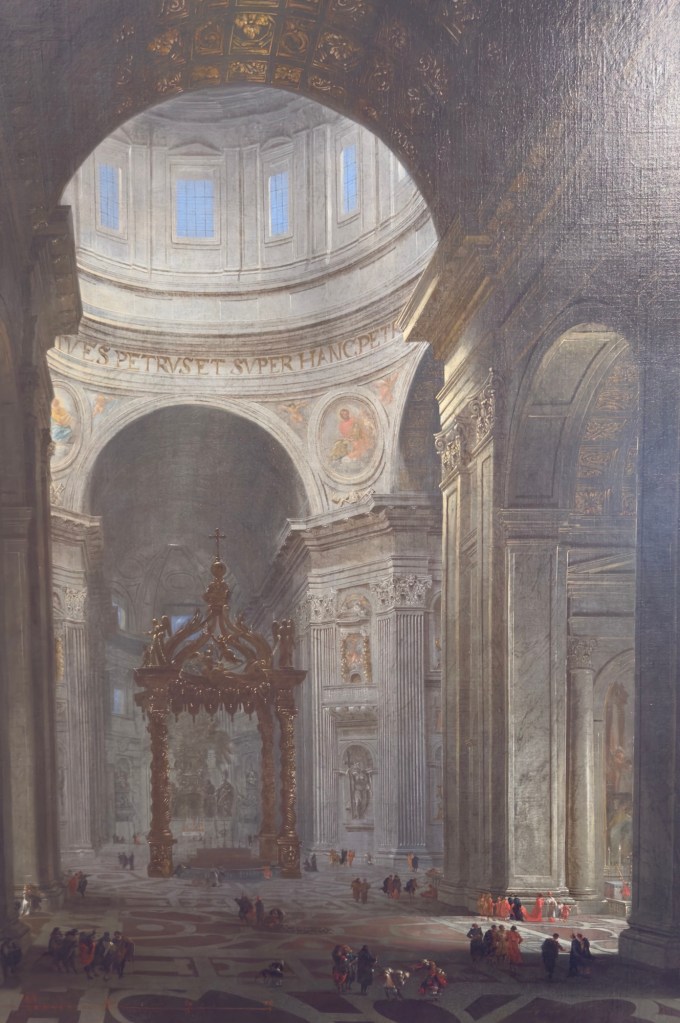
Detail photo of Interior of St. Peter’s Church in Rome by Wilhelm Schubert van Ehrenberg:
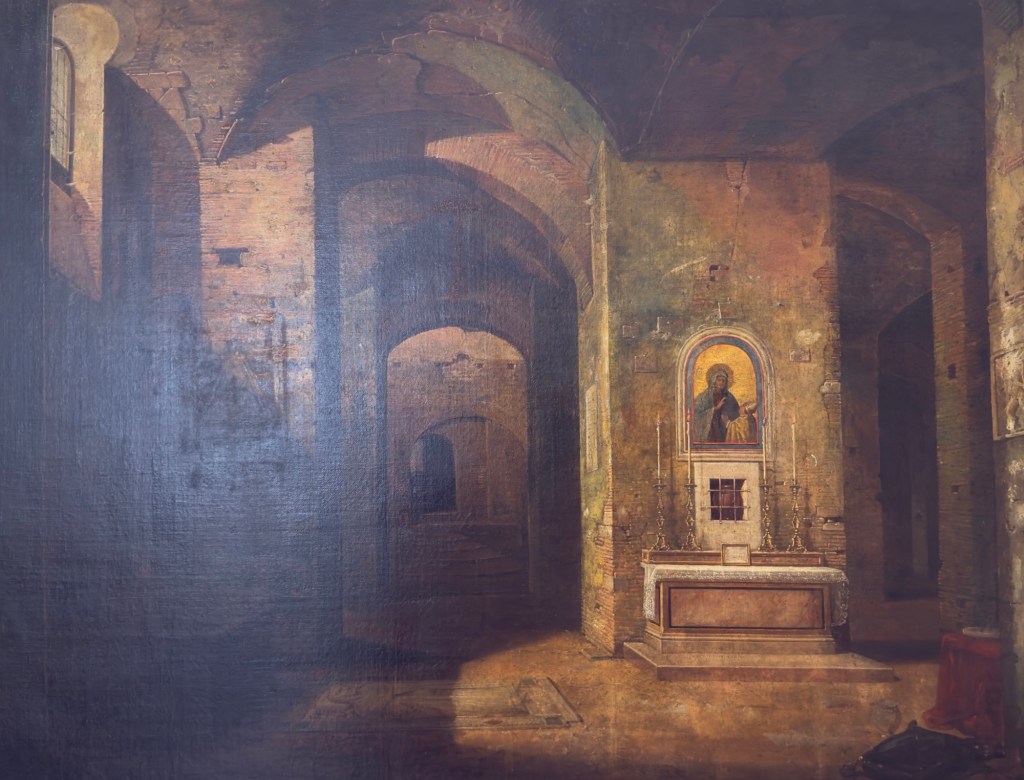
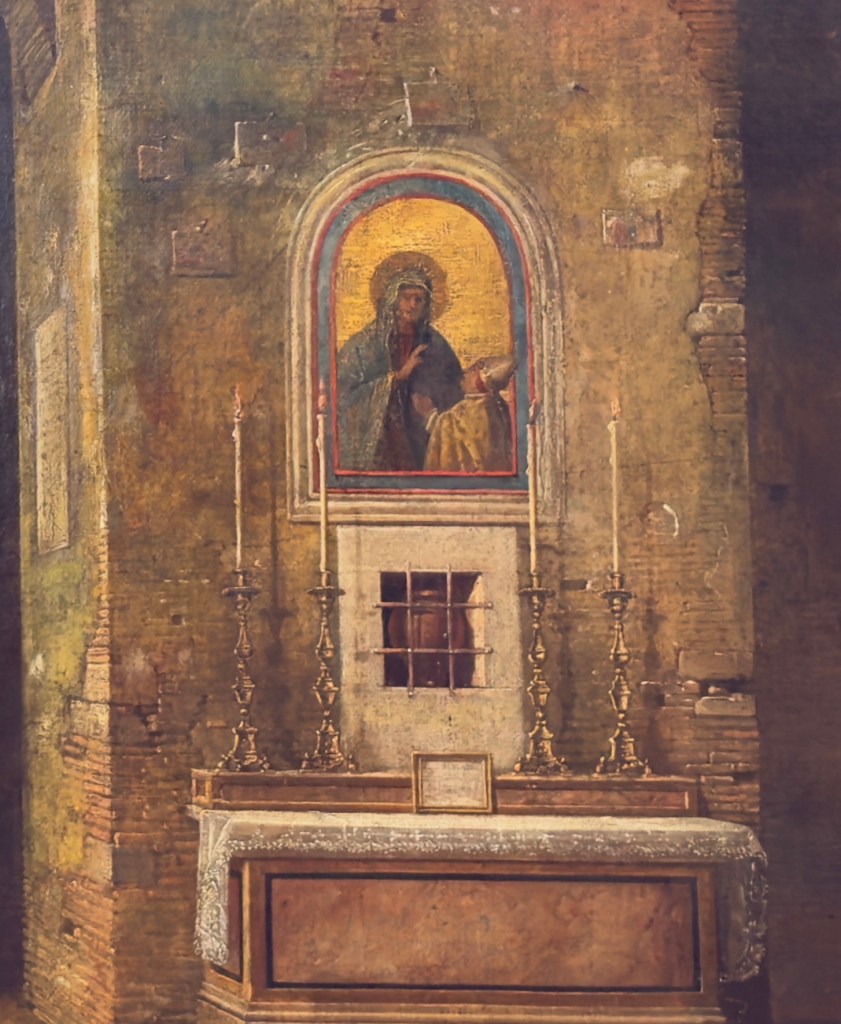
Detail of The Crypt of the San Martino ai Monti Basilica in Rome by François-Marius Granet:
Saint Sebastian released by the Roman widow Irene and her servant by Melchior de la Mars:
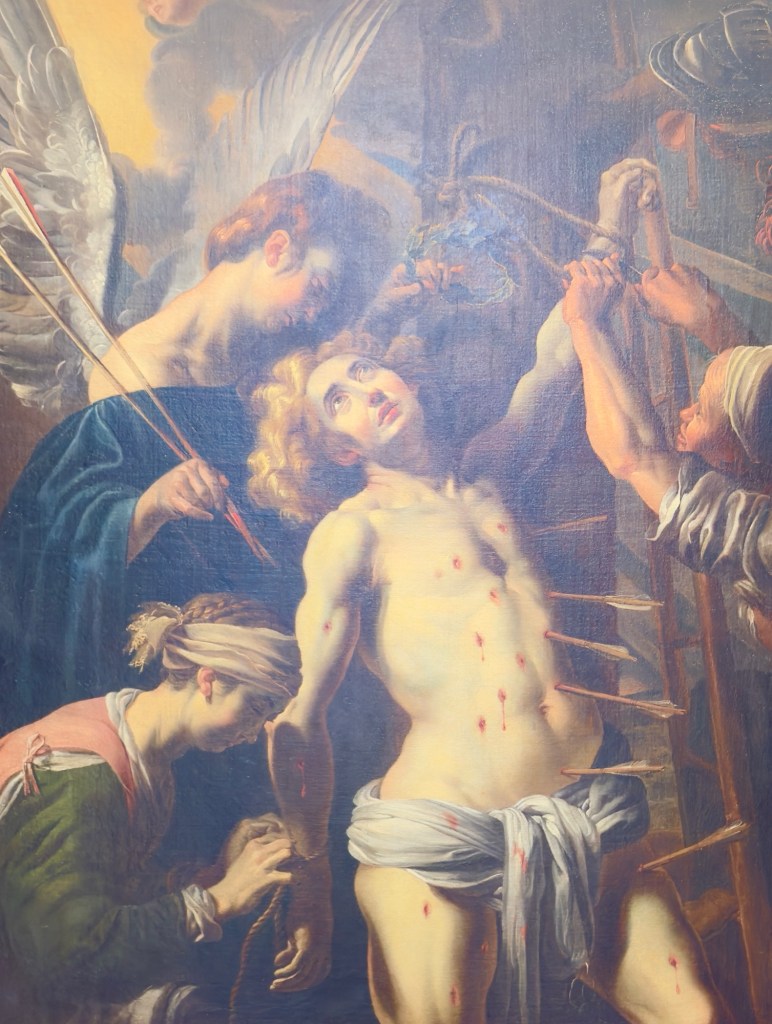
Interesting Saint fact: Although most frequently depicted as being shot by arrows, St. Sebastian survived this initial attempt at martyrdom. He was nursed back to health by Irene, but later would be clubbed to death under the orders of Emperor Diocletian (not a very nice guy.)
Finally, my favorite in the museum: Mary Magdalene by Alfred Stevens:
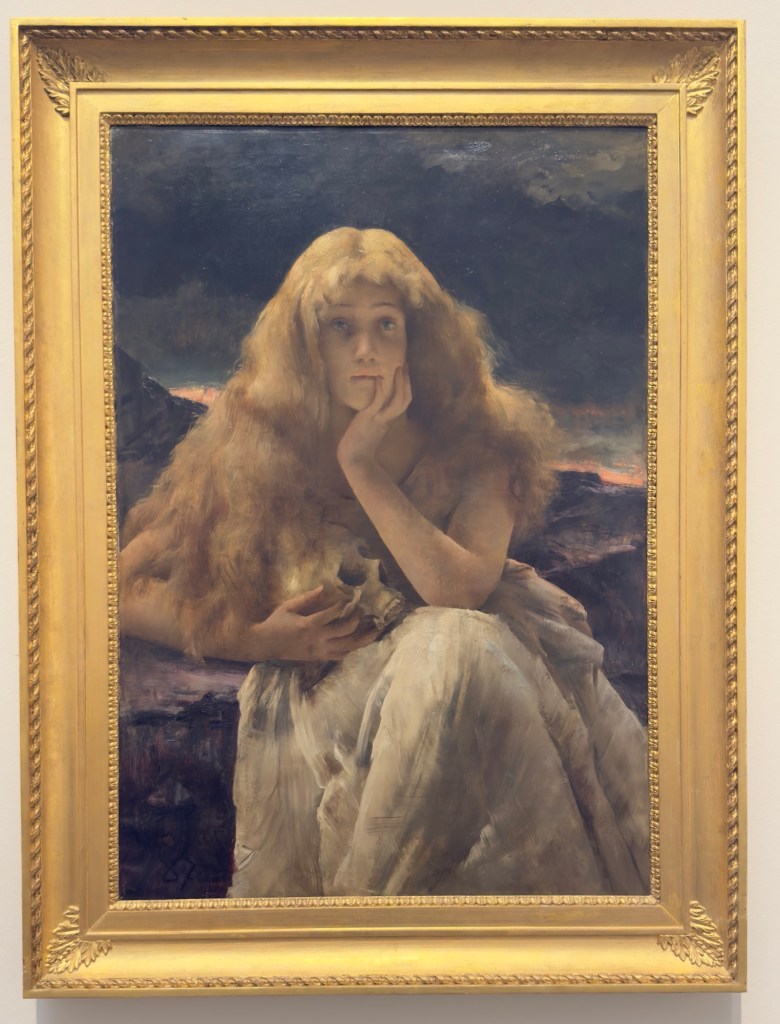
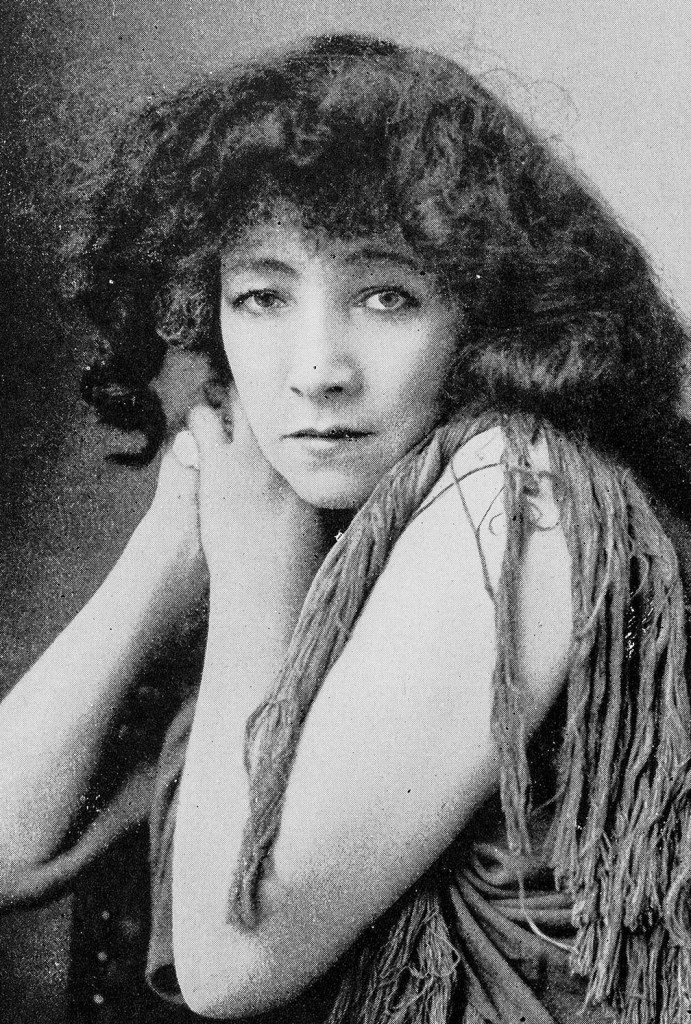
You be the judge: a young Sarah Bernhardt. She was Jewish, but early in her life, she wanted to become a nun.
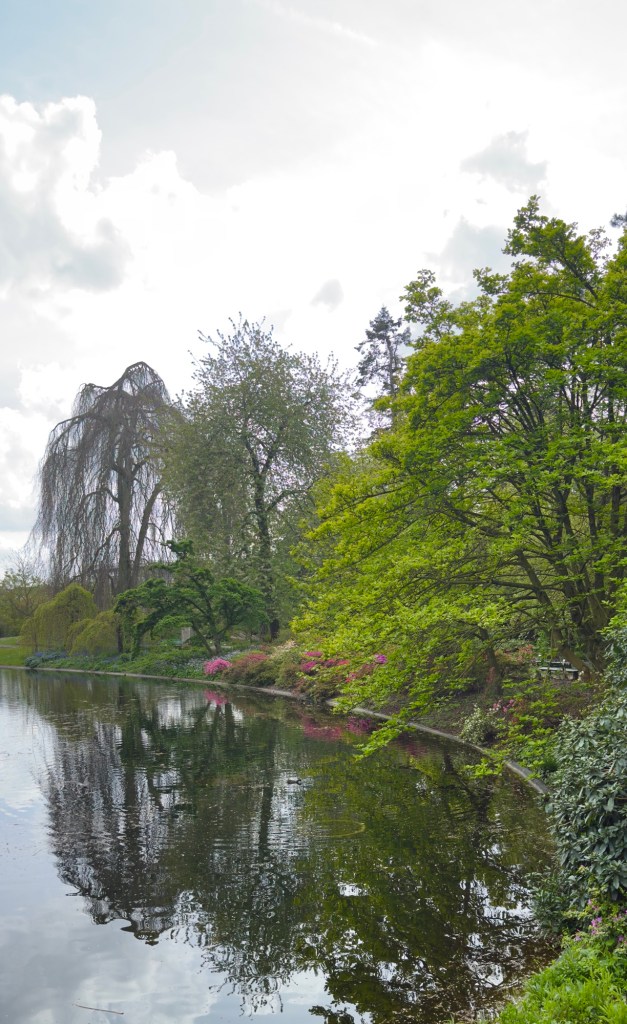
On my way back to the hotel, I saw where the Good Lord was creating His own art. Spring is springing in Belgium
Tomorrow is a travel day. I’m off to Rouen, France to see Joan of Arc. If you ever decide to travel to Ghent, I highly recommend picking up a CityCard Ghent (available at many places). You can get a 48- or 72-hour card. At first, the price seems high, but I got my money’s worth yesterday. It covers all public transportation, museums, water taxis, and many other places, if not completely, a large percentage. For example, I paid €49 for a 48 hour card. I took 12 bus rides yesterday. At €3/ride… yeah. Plus, all you have to do is show it to the driver and you’re good to go.
I’ll probably have a few travel pictures tomorrow, but will definitely see you in Rouen!

