Day of rest. Amen.
Blessings to you.

The Rev. Dr. John Toles
Day of rest. Amen.
Blessings to you.
Well, the day was a busy one. I got up, had some breakfast, packed the bags, and headed down to the church. After a full day, including the mass at 4 p.m., I came back to the Casa to discover that there were no taxis available in all of Santiago. Two and a half kilometers later, I arrived at the train station after a nice, slow walk. Along the way, I stopped at a pastry shop and picked up something for breakfast in the morning. Three hours on the train, and I am now at my hotel in Madrid. The Casa Anglicana had a nice little bathroom that was about two and a half by six feet, maybe. The hot water tank in my room held two gallons, so each morning was a mad dash to beat the hot water before it ran out. Arriving at the Crowne Plaza Madrid Airport Hotel, I may have drained their hot water tank. It was really nice. I do believe it’s time for some sleep.
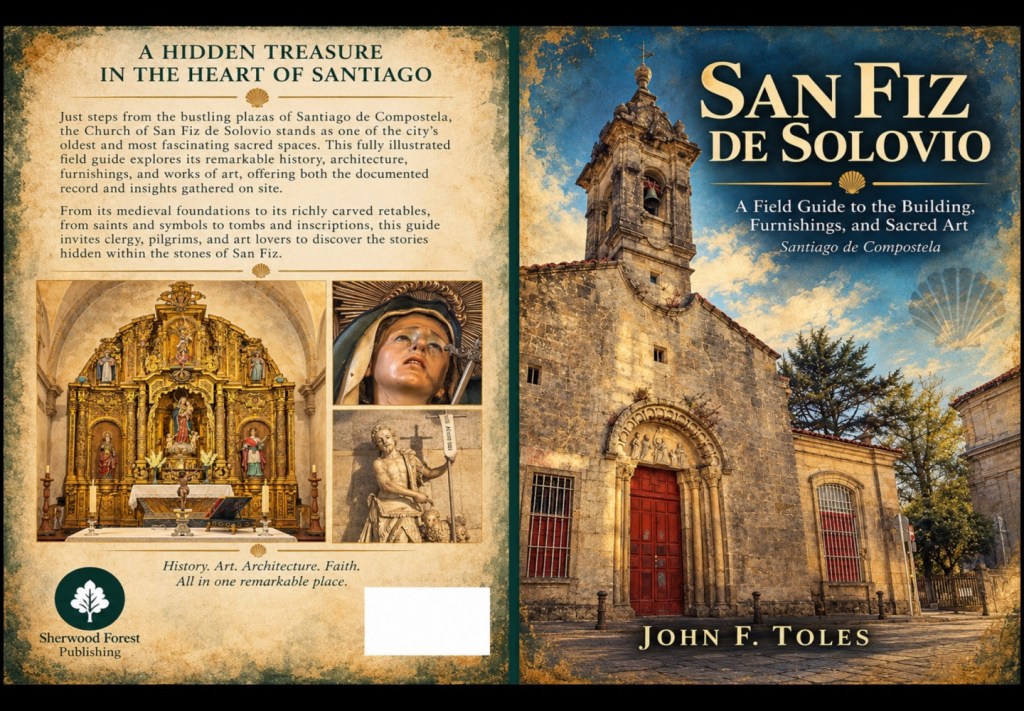
For those who are interested, here is a link to the book that I put together while I was here. I will tell you that the information is very interesting. The pictures are as good as I could take. And the layout—well, it’s a little wanting. It’s really difficult to publish books with pictures on Amazon. Anyhow, if it’s something you are interested in, you can go to Amazon and purchase a copy. Or, if you drop me a note, I will be more than happy to send you a free PDF version of it. The history of that one little church and all of the churches in Santiago is actually quite fascinating.
This was my day off and it was whirlwind tour day: Muros, Hórreo de Carnota, Xallas, Cape Finisterre, Fisterra, Muxia, and Ponte Maceira. Here we go…
Muros: a beautifully preserved Galician fishing town where granite arcades, narrow streets, and sea all come together. Its harbor still feels genuinely working rather than staged for visitors.
We only had 45 minutes here, so I headed straight for the Church of Santa Maria do Campo (the traditional name) / Igrexa San Pedro (current parish name).

The plate outside states: Currently, it is the parish church of Muros. From its original construction, in the 13th century, the Romanesque façade must be highlighted. Inside, there is an example of the Maritime Gothic style, with a single nave made of several wide pointed arches, which give the building the shape of an upturned ship. This building was converted into a Collegiate Church in the year 1500, thanks to the privilege granted to the town by the papal bull of Alexandre VI. After the conversion, successive improvement works were promoted, such as the creation of side chapels, a baptistery and a tower bell, which was built by the Guild of Fishermen, one of the main benefactors of the tempie. In 1851, surrounded by the political conflicts of the 19th century, the temple lost its status of Collegiate Church. Inside the church, the water font is remarkable due to its ubmerged sculpture of a snake that symbolizes triumph over sin.
Yeah. It’s a snake!

Inside…

Beautiful statues in the many side altars…


And then… the scariest Jesus I’ve ever seen! My goodness, these Spaniards have a way of making a point.


One of the primary “crops” of Muros is muscles. There are many farms. These long ropes are dangled below the floating farms and the muscles attach, grow, and are harvested.

Hórreo de Carnota: A hórreo is a traditional raised granary found especially in Galicia and Asturias in northern Spain. It was built to store corn, grain, potatoes, and other food while keeping them dry and safe from rodents.
Most are about this size…

The design is such that mice could climb up the pillars but the small round top of the pillars that the building sits on is flat and the little vermin couldn’t navigate them. The slats on the sides are for airflow. They are no longer used, but if one is on your property, you are required to keep it standing and repaired as they are considered part of the regional heritage.
As I said above, most are smaller, but we saw one of the largest…


Who would need such a large hórreo? Why the Church, of course. At the time, farmers were required to tithe 10% and the Church needed somewhere to store it all. See a big hórreo, look around… the church will not be far.

Xallas: Everything is big in Xallas and this was a big waterfall. Over 100 feet high. The water at the bottom is a combination of sweet water and salt water as the Atlantic Ocean is very near. In the past, the waterfall was much greater, but most of the water is now running a hydroelectric plant.


Cape Finisterra: We are now traveling along the the Costa da Morta (Coast of Death), getting its name from all the shipwrecks.

Enter the Raqueiros. These bandits supposedly put false lights along the shore—one famous version says lanterns were attached to cattle—so sailors would mistake them for safe harbor lights, steer toward shore, wreck on the rocks, and leave their cargo available for plunder. There were plenty of ships to plunder after they wrecked, but apparently an archbishop declared that all found property belonged to original owner and had to be returned. Yeah… and they also outlawed liquor in the USA for a while. I’ll let you figure out if said archbishop was obeyed. The actual lighthouse…

For many years, it was considered to be the end of the world, and it is easy to see why: no more beyond.

My artistic shot…

Fisterra: We stopped for lunch and I forgot to take pictures! It was good—Longueirón (Knives) from Fisterra and Galician Scallops. And then to the place I’ve been waiting for…
Muxia: I’ll let the pictures do the talking here, but will tell you that I was right down there below that big rock with red dot.


I posted a video on Facebook if you can get to it.
There is a church, but a lightning strike started a fire and it was gutted. Repairs are underway.


And just being weird here, but there was a large pile of rubble outside the building that the workers had been clearing out. Caught one of them on a smoke break and asked for a piece. He smiled and found me a good one. Yeah. It’s concrete, but it was close…

Last stop—Ponte Maceira: a bridge that spans the Tambre River on the Camino from Santiago toward Fisterra. According to medieval legend, Saint James’s disciples, Theodore and Athanasius, crossed an earlier bridge here while fleeing Roman soldiers after seeking permission to bury the Apostle. As their pursuers followed, the bridge miraculously collapsed, leaving the disciples safely across the river. The present medieval bridge came centuries later, but its seven stone arches still carry the memory of that miraculous escape.


That was nine hours of my life that I wouldn’t trade. Such an amazing and rich history here. Google these towns and ask about the legends surrounding them, especially regarding the Camino de Santiago and St. James. Fascinating.
I pray you are all well.

Sunday started a bit slower here than at home. The Mass wasn’t until 12:30 p.m. I may have to talk to the vestry about a new time for church! There were eight in attendance, but for a very Roman Catholic community, that was pretty good. Wasn’t quite as nervous today as I was the first time.
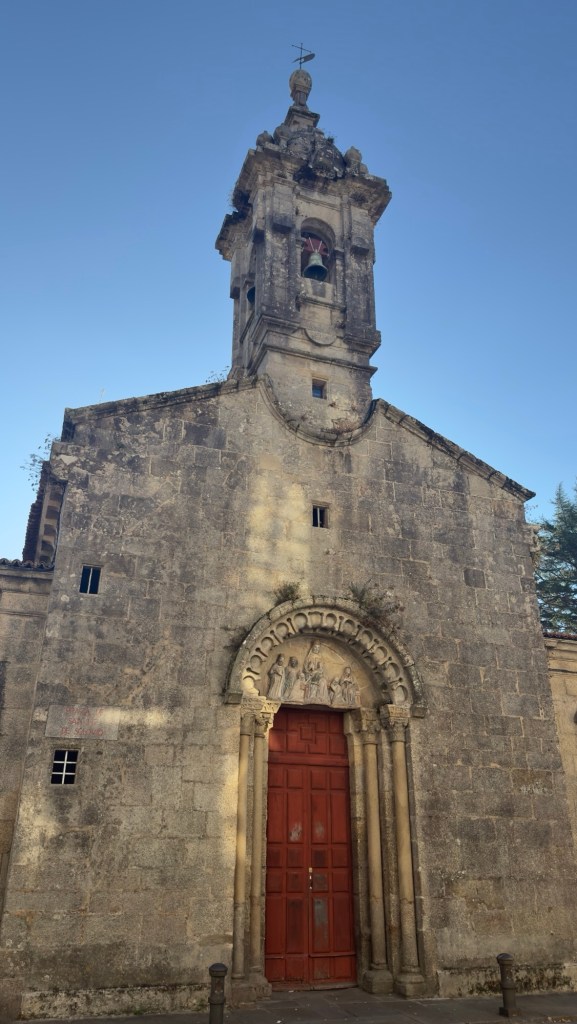
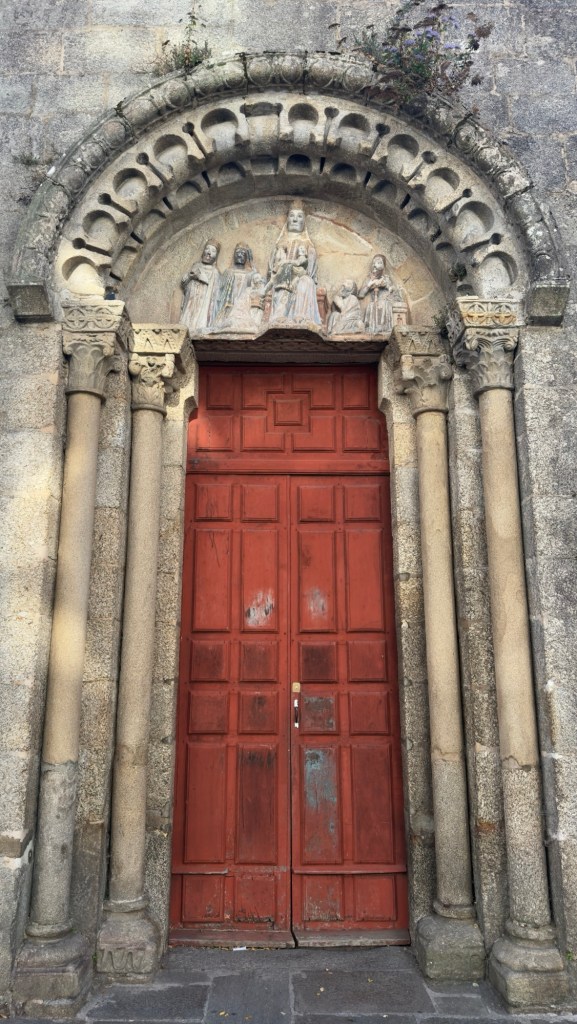
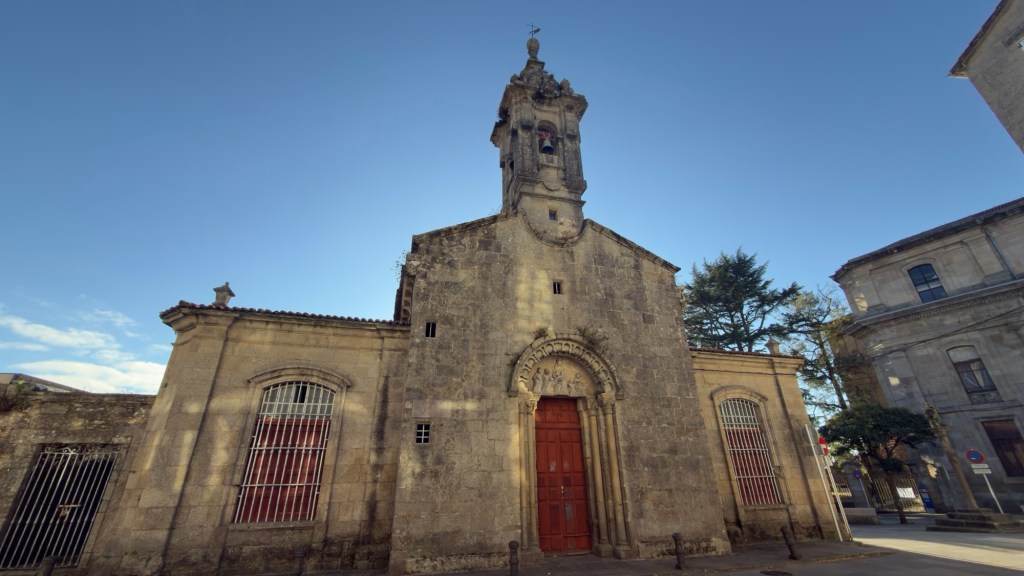
I did remember to take a picture of the church…
I also found my way to the small balcony…
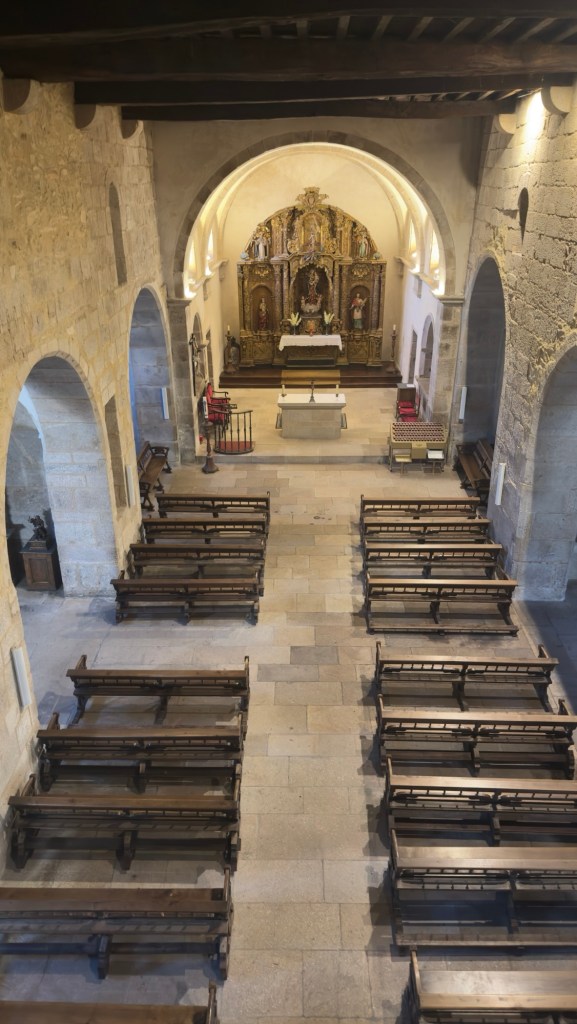
It is quite lovely.
This afternoon I spent nursing a very sore back and editing six chapters of Birdy. This evening, the back is better after I located a pharmacy for a little something to salve it with.
I also spent more time this afternoon researching the artwork in San Fiz. I’m planning on putting together a small booklet to share with the Anglican community so that others might benefit from it. In the process, I came across a very curious symbol at the bottom of the retable, just below the statue of Mary…
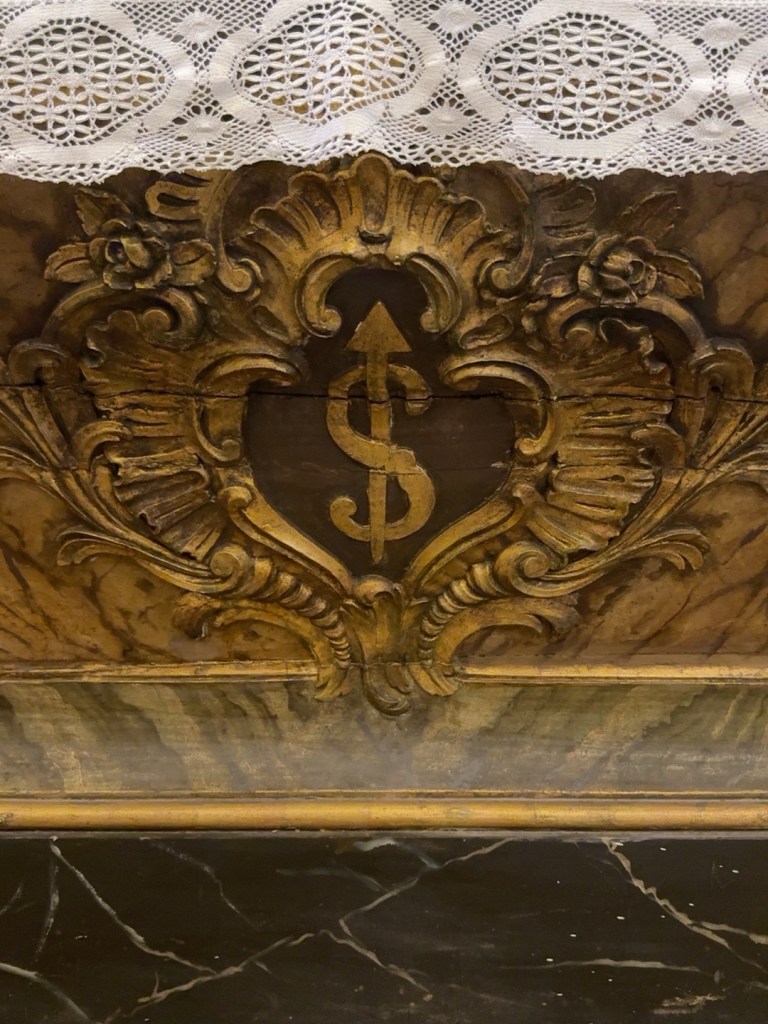
No. It is not, “Show me the money!”
An S pierced by what at first appears to be an arrow. The key is recognizing it as a nail—clavo in Spanish. Together they form a visual wordplay: S + clavo = esclavo, “slave.”
The emblem was used by Spanish religious confraternities whose members described themselves as esclavos of Christ, the Blessed Sacrament, or the Virgin Mary. Here “slave” expressed complete, voluntary devotional surrender rather than literal bondage. Examples of the S-and-nail device can be traced to Spanish religious practice at least as far back as the late sixteenth century, with particularly clear Marian examples in the seventeenth and eighteenth centuries.
Thus, what looks like a curious decorative mark at San Fiz is actually a small theological declaration: I belong entirely to God.
I like that! And I may need some ink.
After a Middle Eastern lunch at Jerusalem, very tasty, I wandered around and attempted to be artsy.
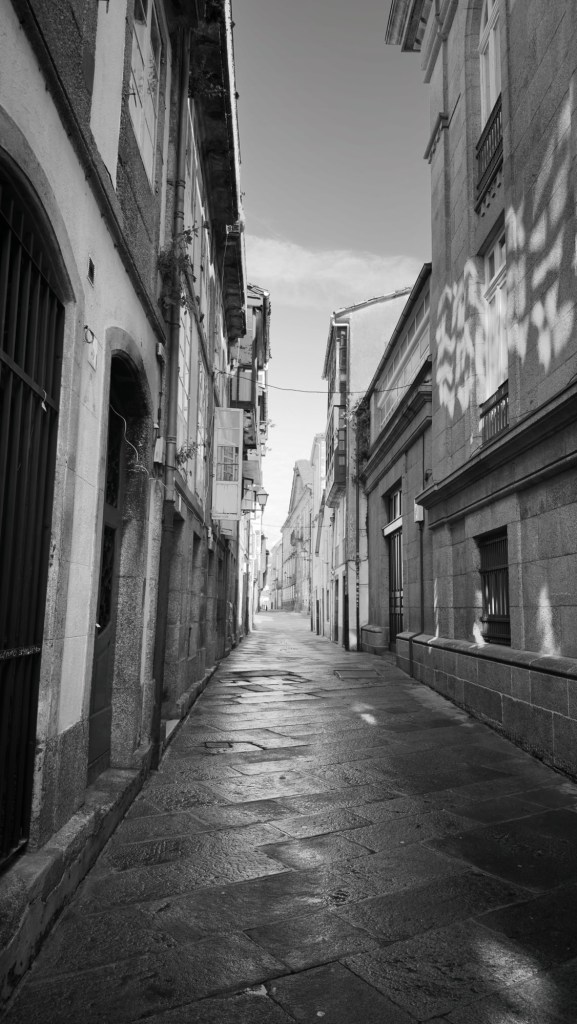
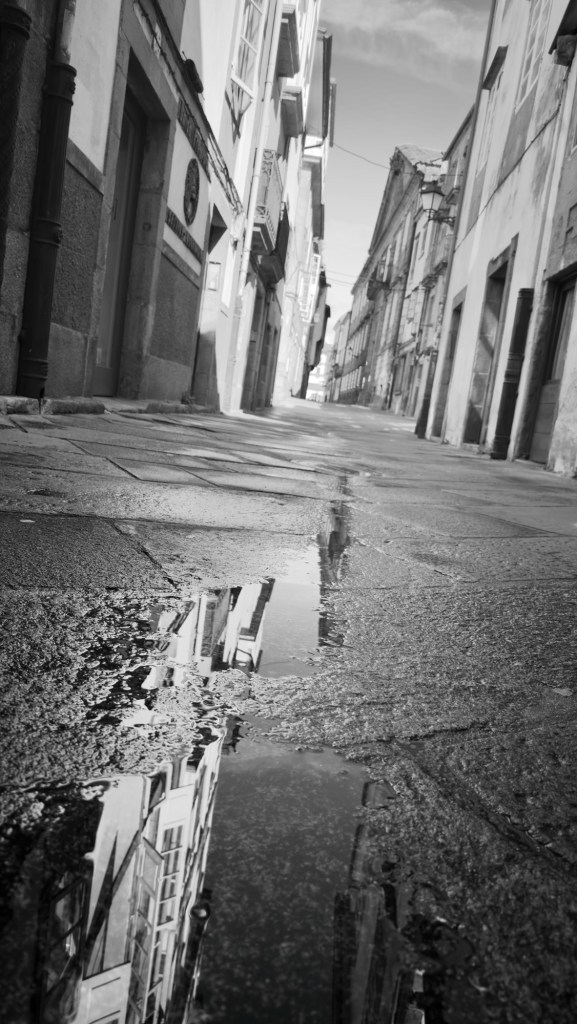
Came back to the Casa to unload the pack and cassock and then back out for dinner. I had a real hankering for curry, but all the places I found were closed, so chose Ramen Okaeri. Guess what? They serve curry and it was delicious!
I started with an Asahi and the Takoyaki (octopus balls):
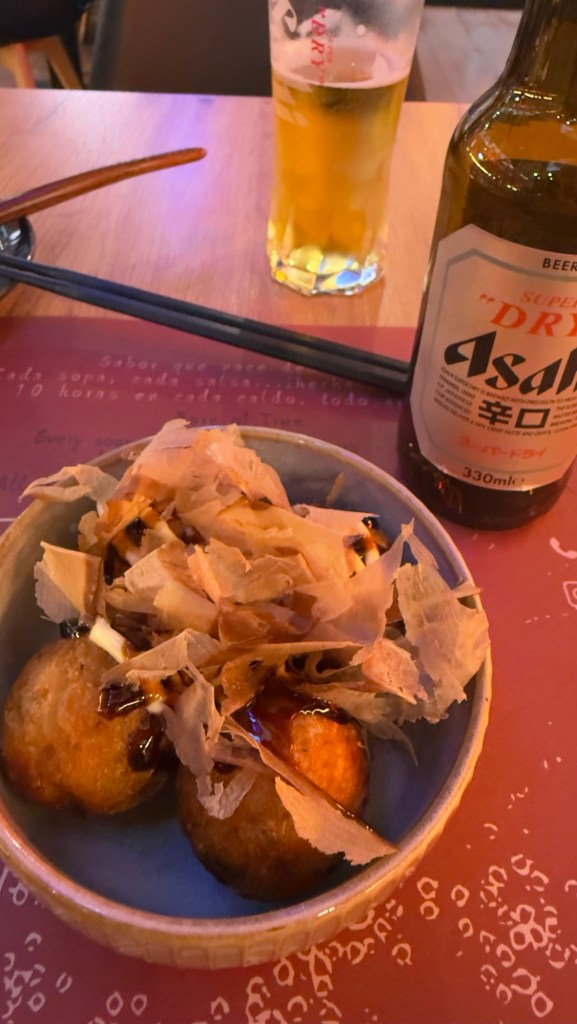
And finished up with Curry rice with prawn tempura:

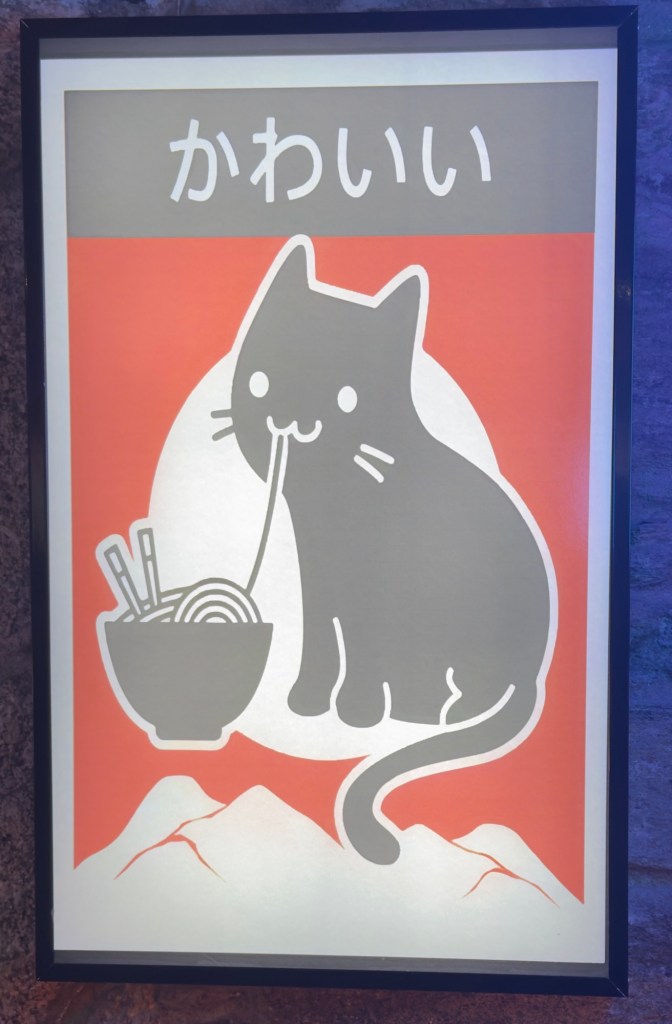
Feeling particularly fat and happy. Oh… and there was a “CUTE” cat that watched over it all:
That was my day. Tomorrow I am “off” and will be taking a tour through Finisterre, Muxía, Ézaro & Coast of Death (I’ve no idea what that is).
They are singing down in the garden here, so I may have to go see what the peregrinos are up to.
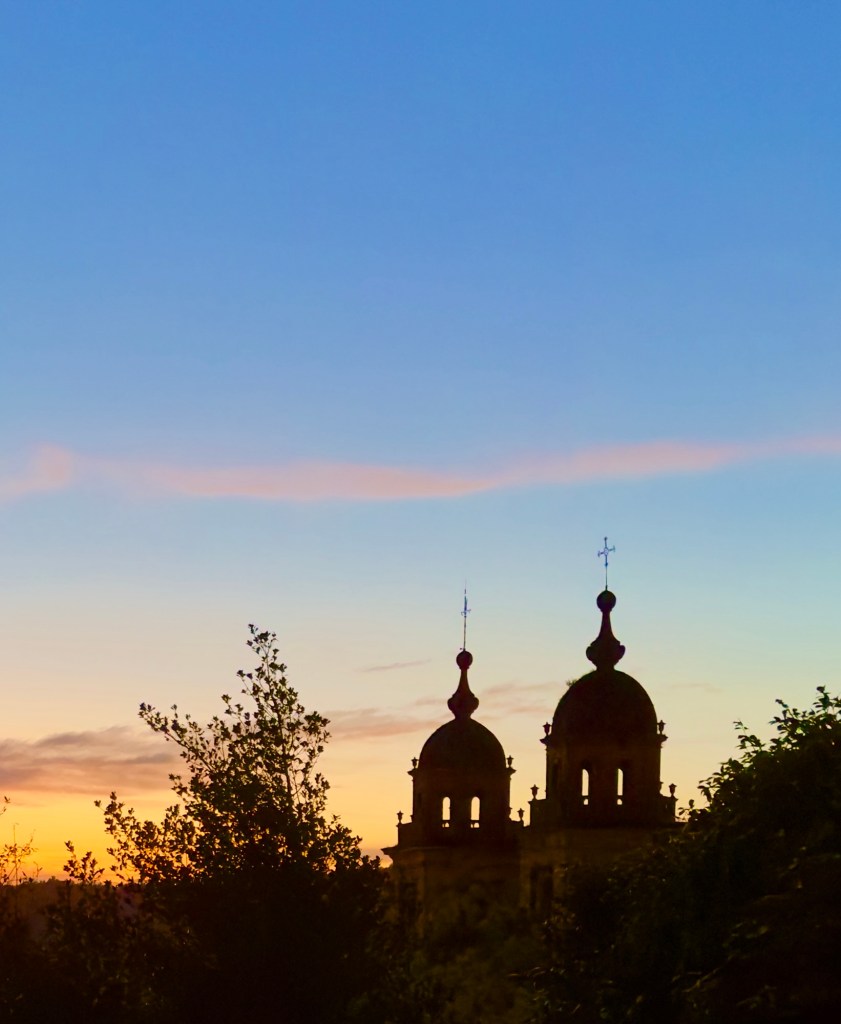
Looking out the window from my room.
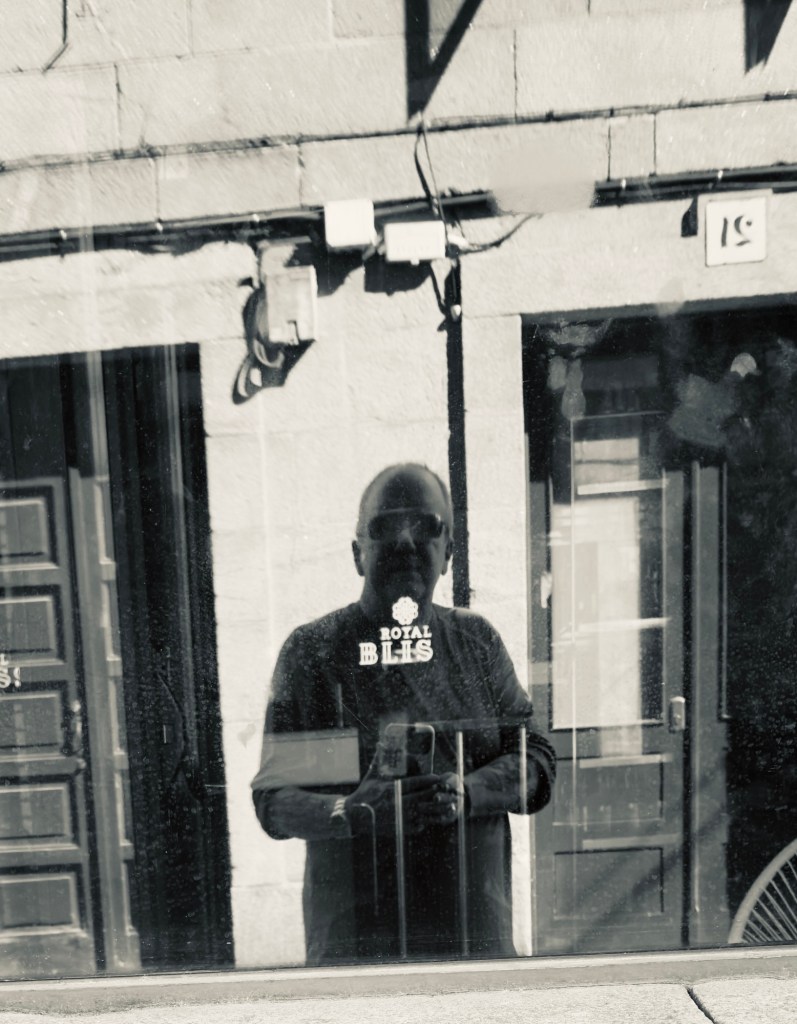
And today’s selfie (it was taken in what will later be known as my artsy phase)…
Have a blessed day.
This is definitely a working vacation. I am the only clergy serving the Casa Anglicana and St. Fiz Church (still forgot the photo). The Casa is full with 32 guests and the church…
From 11:30 a.m. to 5:30 p.m., I blessed many rosaries, heard confessions, prayed the midday office and the Mass, and welcomed over 400 visitors to the church. I also got chewed out on two separate occasions by little Spanish ladies who are not pleased with we Anglican apostates using their church (I survived both chewings and the bonus, I didn’t understand a word, but got the point). It was a very big day. Also a glorious one.
Afterward, I slipped off my cassock, grabbed a cold beer, and took in a few sights—first the church at the Convent of St. Francis was open. As it is not one of the big tourist hangouts, it was quiet and beautiful.
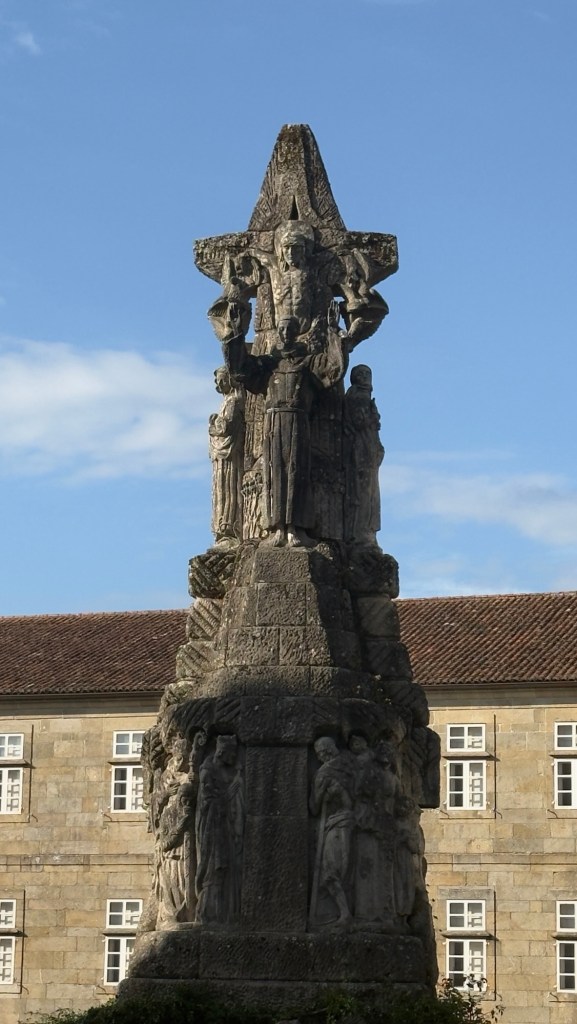
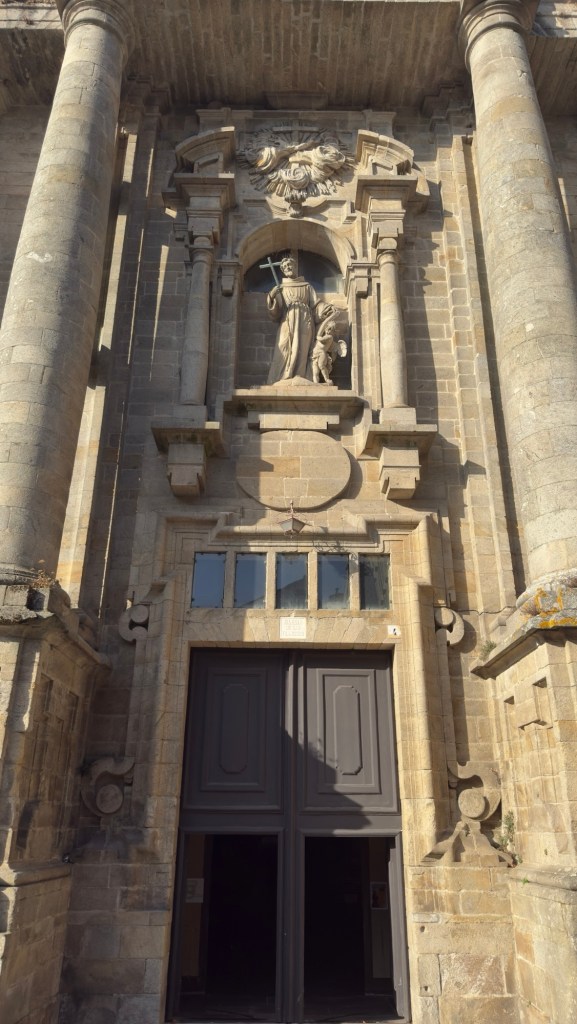
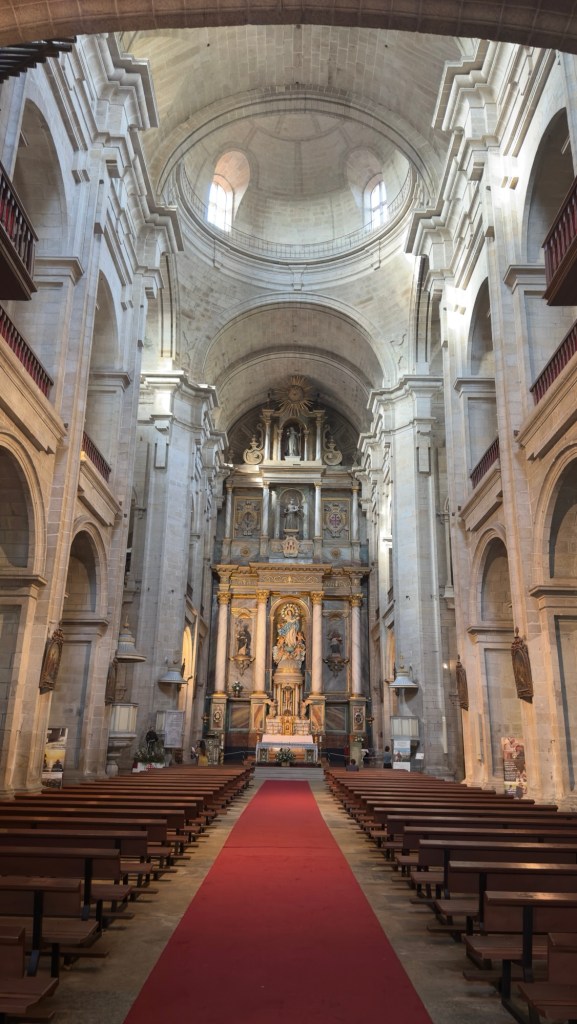
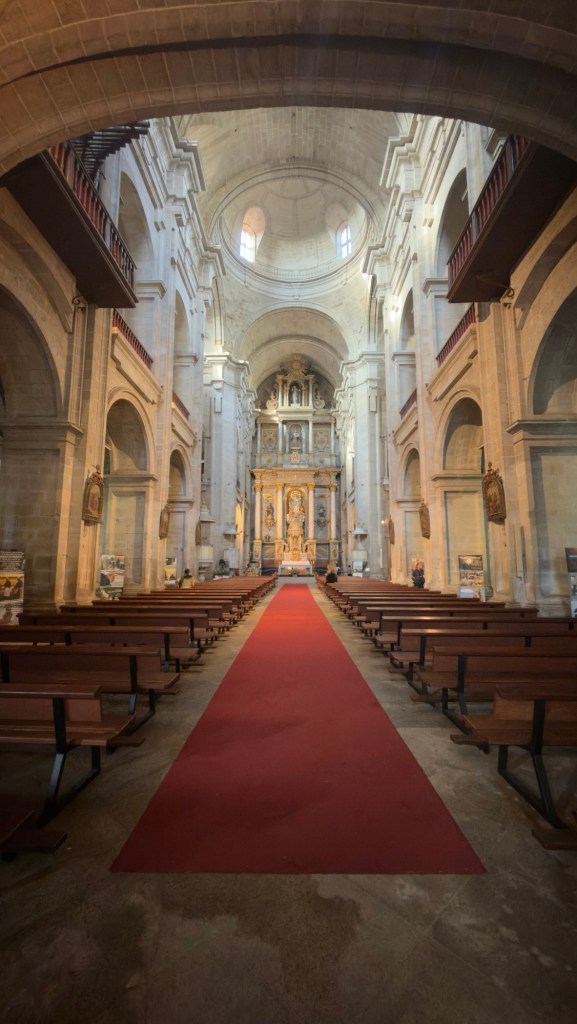
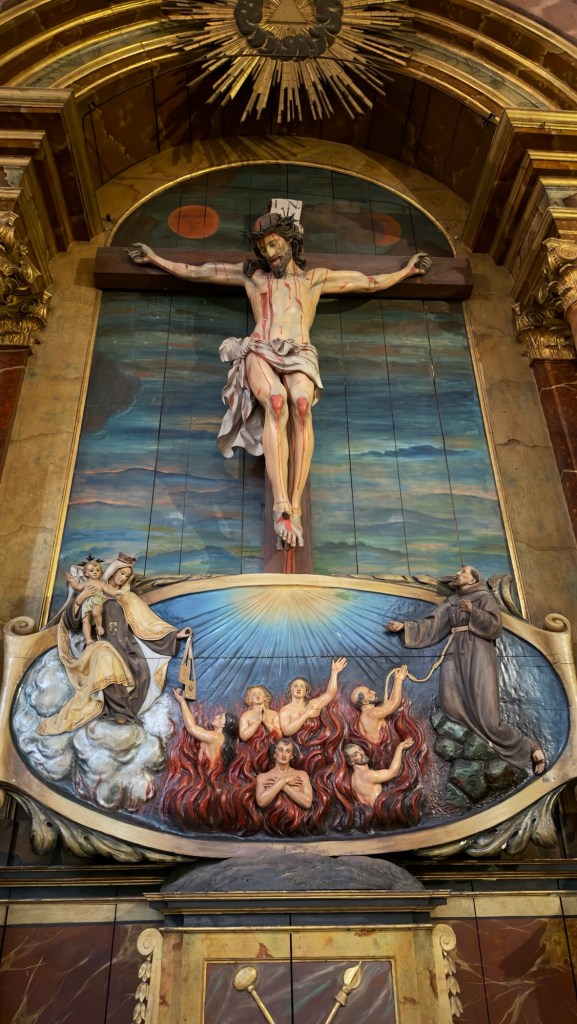
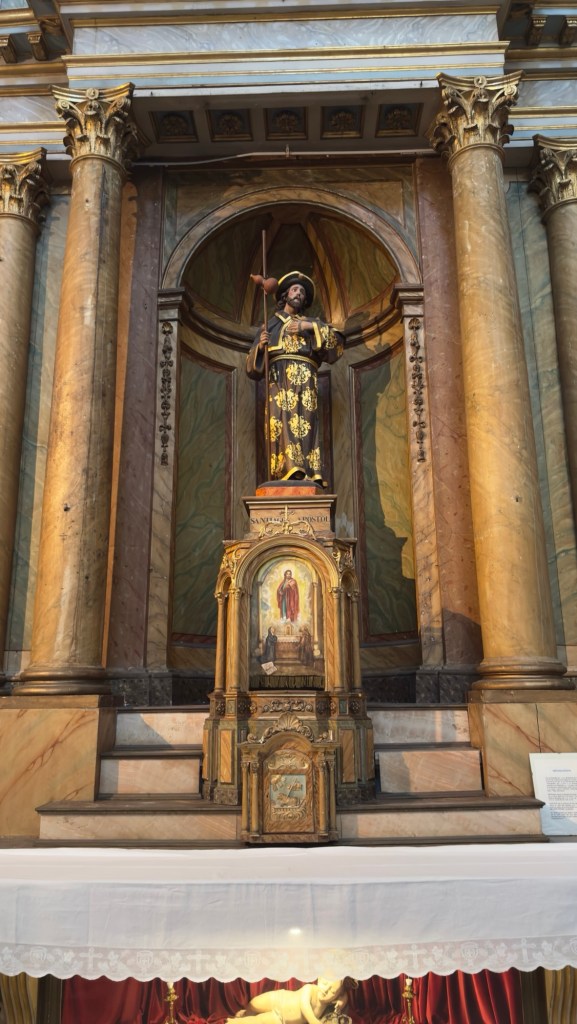
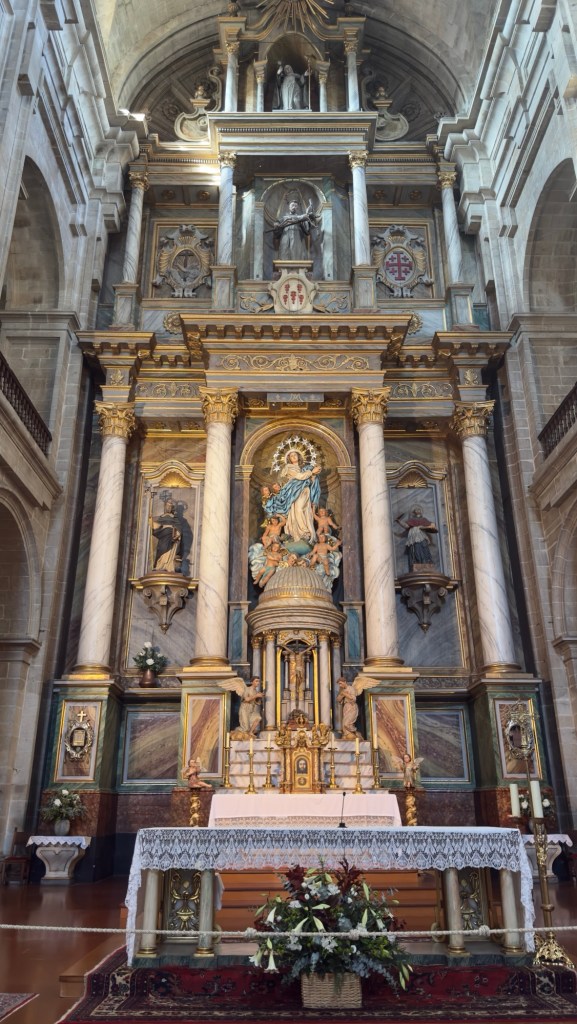
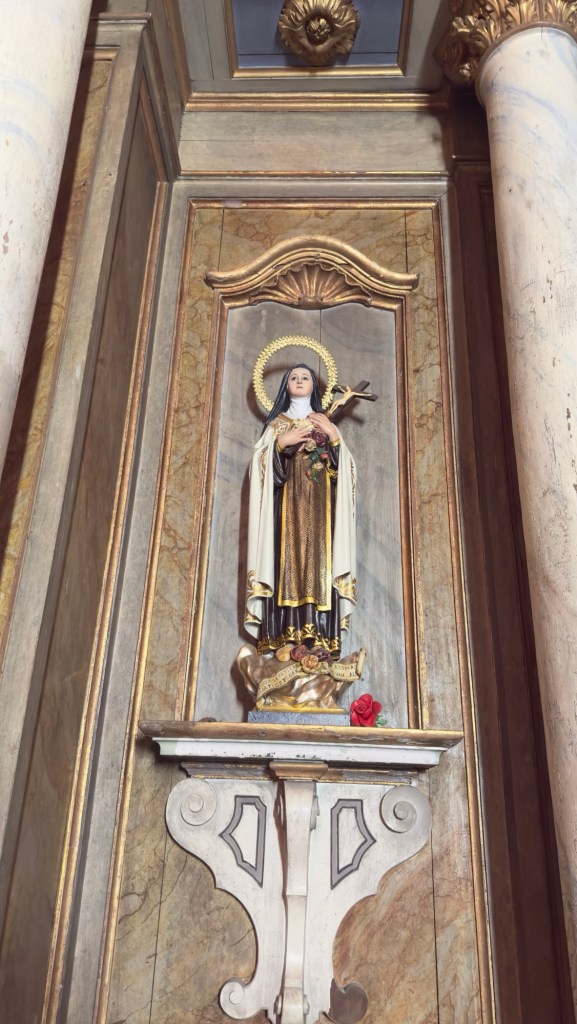
After that, I did some random people-watching, then stumbled into an even quieter courtyard. I can relate, Alonso III de Fonseca. I can relate.
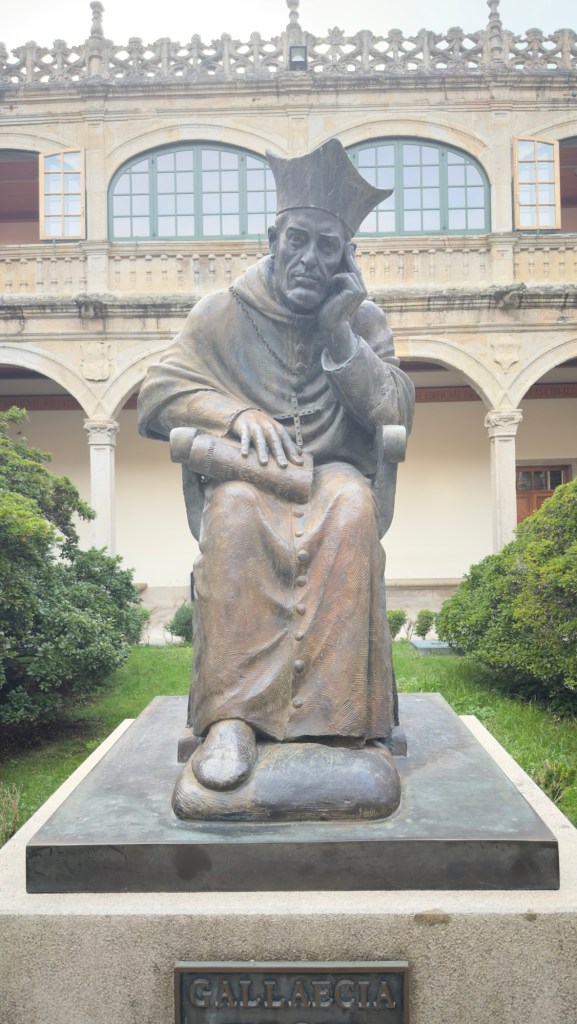
The courtyard was lovely.
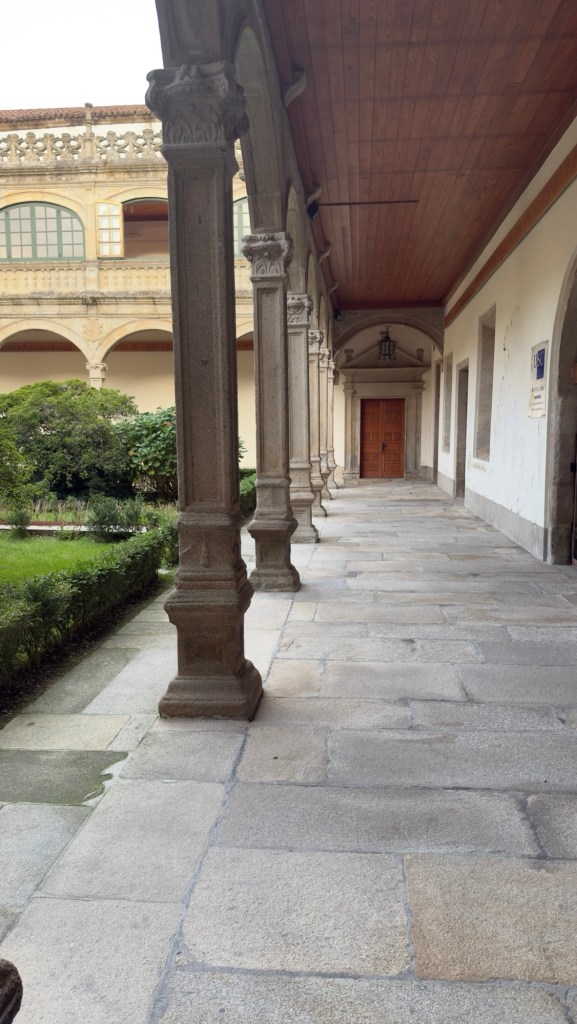
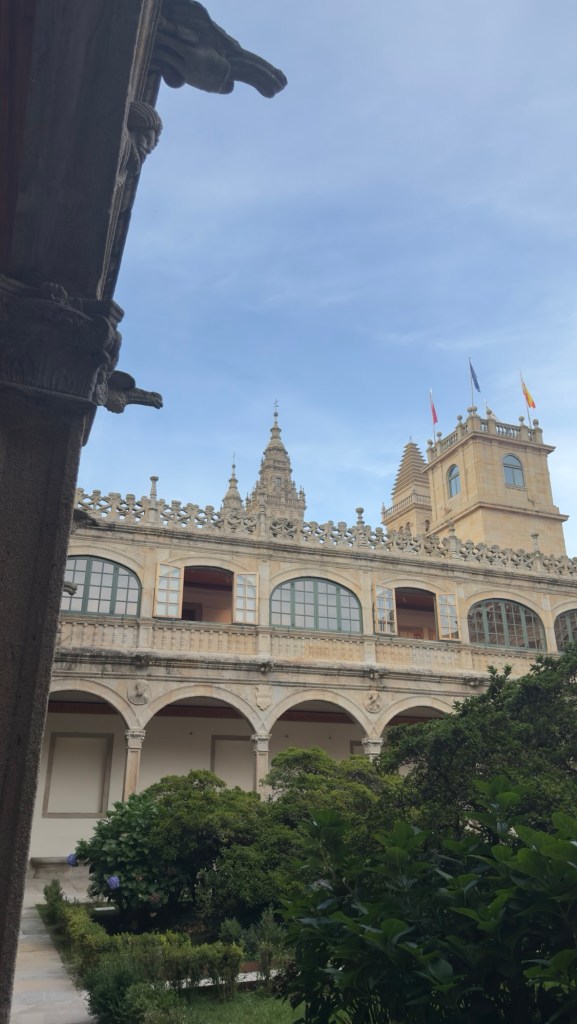
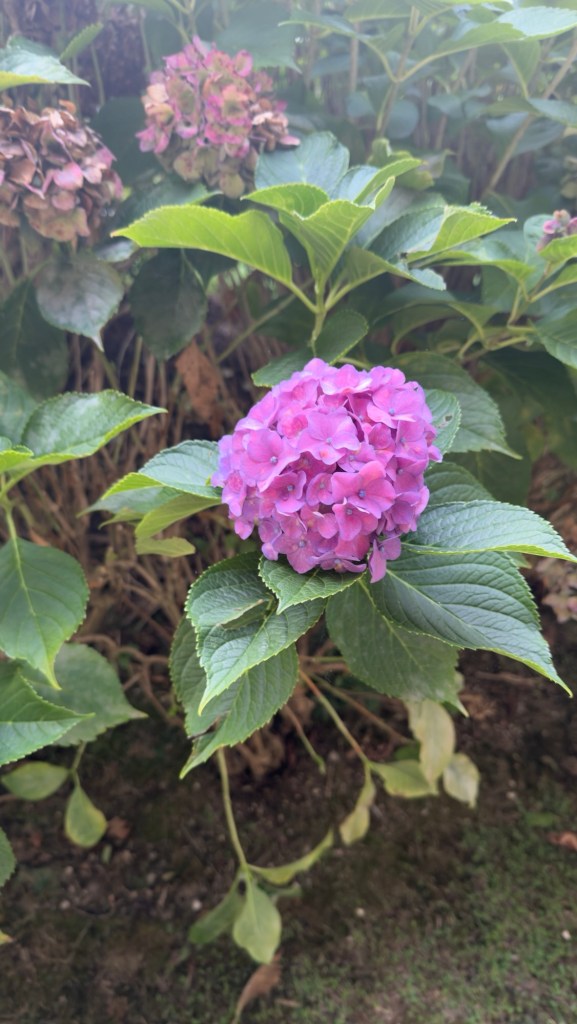
Coming back to the Casa, I passed in front of the Cathedral and watched the Martins swooping between the spires. Thinking they might have been Swallows, I was reminded of a passage from Treatise on the Love of God by St. Francis de Sales:
There are certain birds, Theotimus, which Aristotle calls apodes, because having extremely short legs, and feeble feet, they use them no more than if they had none.
And if ever they light upon the ground they must remain there, so that they can never take flight again of their own power… hence they remain there motionless, and die, unless some wind, propitious to their impotence… happen to seize upon and bear them up.
He then writes,
But we mortals rather resemble apodes…
And concludes,
The wind that raises the apodes blows first upon their feathers…
Yet, it is the wind of divine love that must blow upon us should we ever choose to “light upon the ground,” that is, step outside of God’s love and grace.
Lesson: never “light upon the ground,” but remain always in flight of God’s grace. However, if you choose to try and “walk” alone, and find that you can’t, pray for Wind. It will find you.
This also reminds me of someone I visited with today. I felt a breeze around them.
I pray you are well.
Exhibit: The Sense of Beauty: Six Centuries of Painting from Museo De Arte De Ponce. Flaming June is a painting I have loved since I first saw it… probably in my 20s. It made its way to the top of the things to do when I heard it would be showing in OKC. It was worth the wait!


It was a rather noisy beginning today—the renovation of the room above me started. I said, to myself, “Self, you need to do penance, so just endure,” but then my selfish self said, “Nope. Not while on vacation!” So, I did something very much unlike me, I asked for a new room. The staff was kind and understanding and understood that I can do penance when I return home, and gave me a new room. Very nice.
Once settled, I did something unusual for someone who is about 5,000 miles from home, I spent the day writing. The mind took an amazing journey and I put down many words (even ran out of ink in my pen and had to go in search of a new one!)
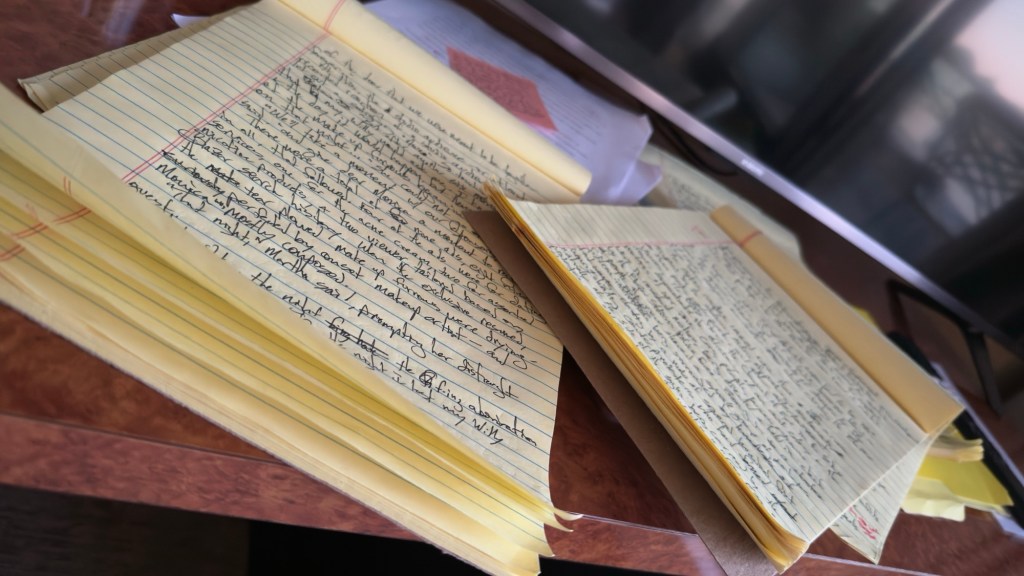
I do believe the next vaca will be a writing retreat. We shall see. The story (have I already mentioned this) is Execution Day. It will be a part of a collection of short stories—nothing like I’ve written/published before—titled Seven Deadly. At this point, they are all a bit weird, but too much fun to write. I’m always killin’ off somebody!
At about 7:30 p.m., I realized that I had only a light breakfast to eat and went in search of ramen. The ones near by were closed, but I found “Asian Soul” and had some delicious Thai food and beer… I think the second beer was actually from China.
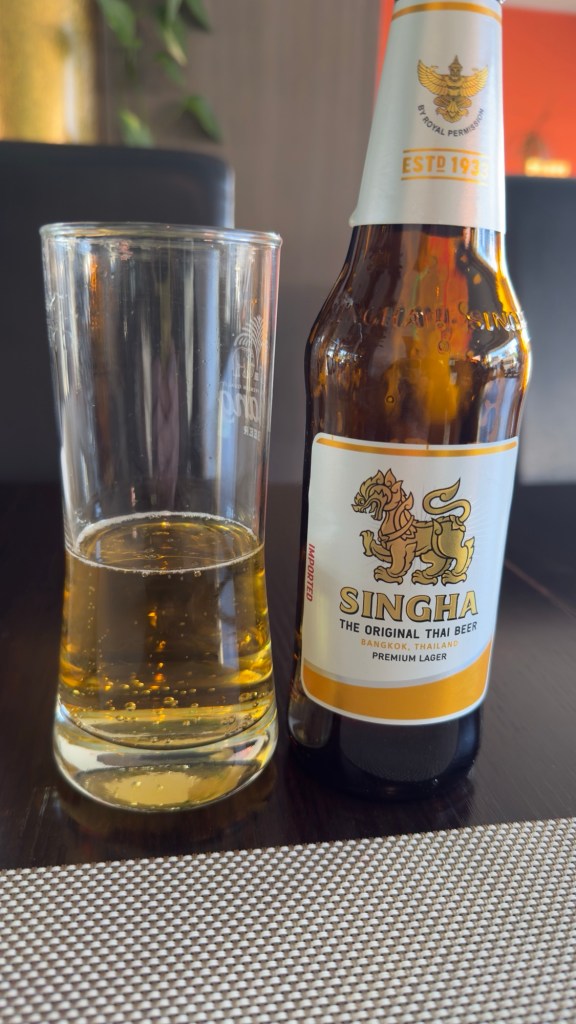
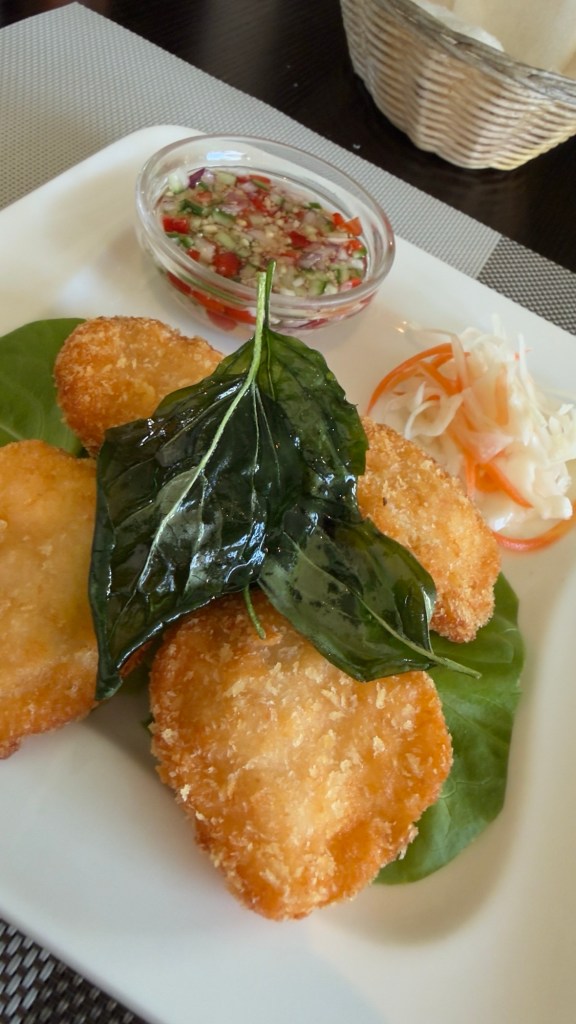
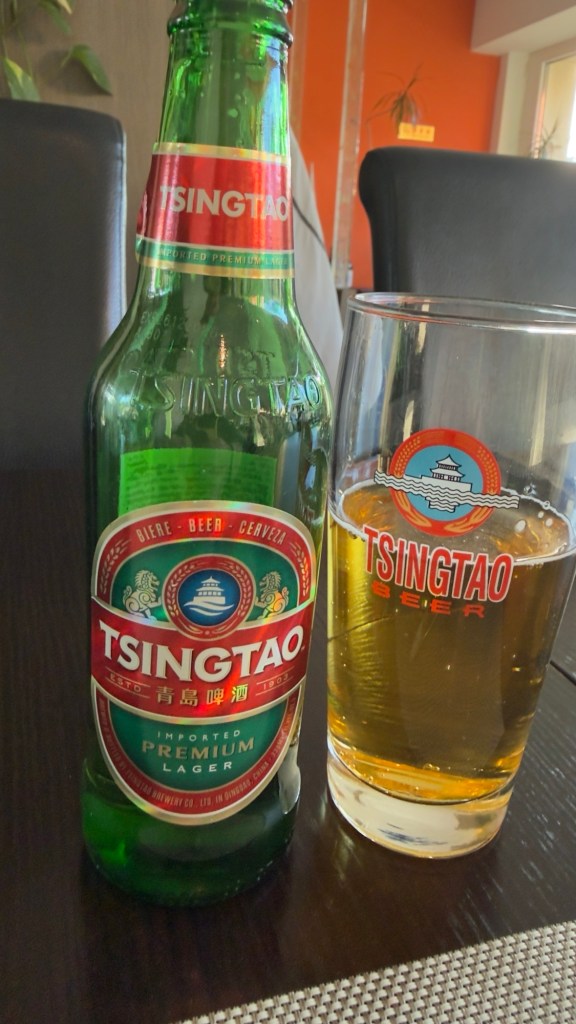
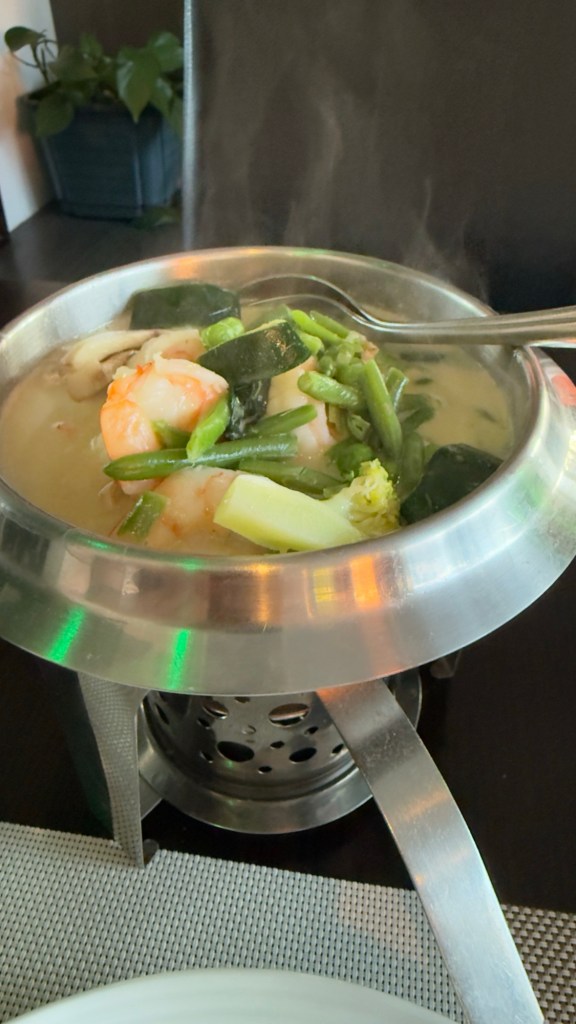
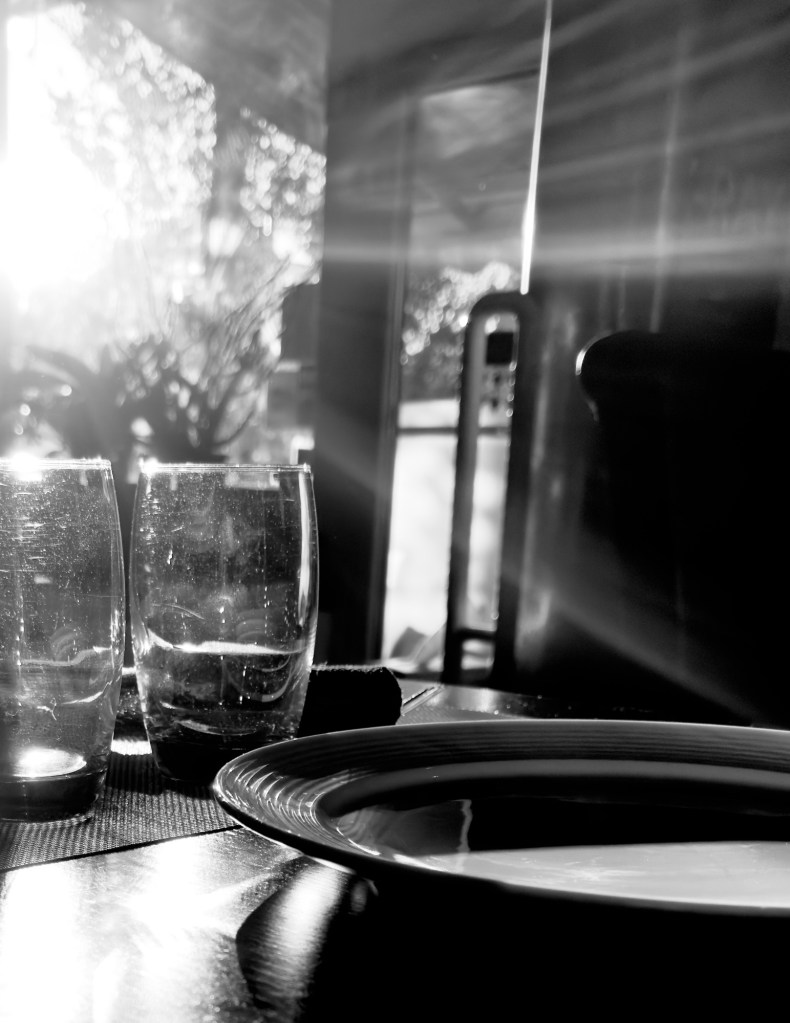
During and afterward, I stopped to take a few pictures. This first one is called “The Ordinary in Light” (doesn’t he think he is the artiste giving his pictures names!)
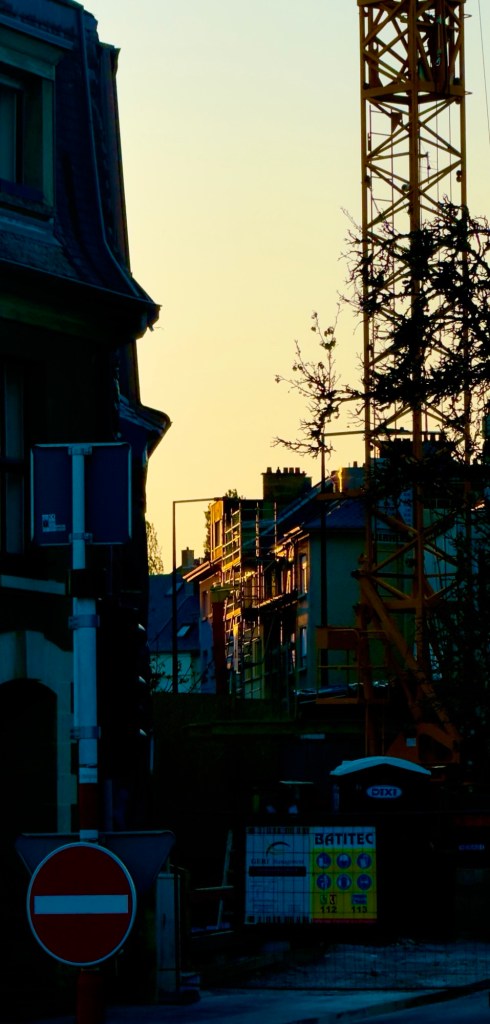
On the way back to the hotel, I saw the light playing off the buildings and…
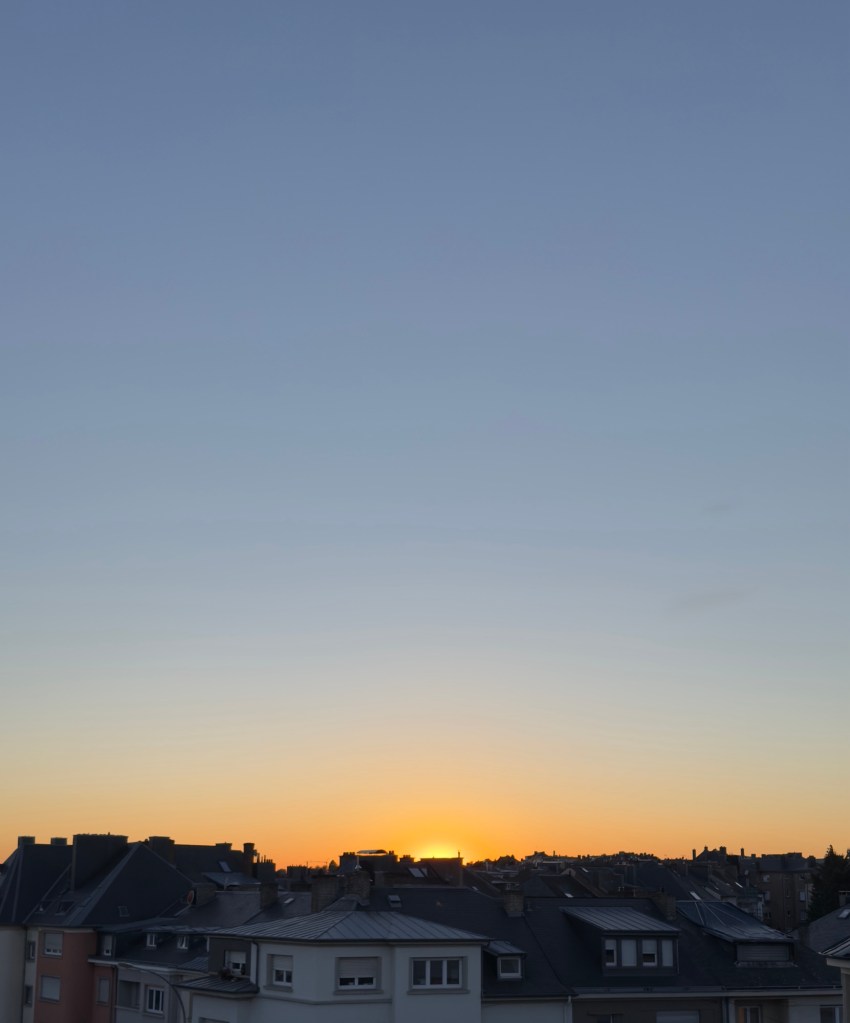
And from the balcony of the new room (sorry, brother, no more garden)…
Tomorrow will be a bit busier. Following breakfast, I will make my way to Adikt Ink where Matteo will give my new adult “sticker.” Something to remember this journey by and inspired by Joan, my hero in Rouen, France. Afterward, I will visit a local bookstore where I can find a Stephen King in some language other than English (I won’t be able to read it, but other than the new “sticker” it will be one of my few souvenirs. FYI: the exchange rate is miserable, so I’ve done little to no shopping.
During my occasional scroll today, I came across this from Fyodor Dostoevsky: “From the outside, you seem mature with a philosopher’s mind. But inside, you’re just a child lost in a sweet delusion.” Don’t be afraid to be a child. They are always curious and poking their little noses in all sorts of interesting places. Along the way, someone is bound to tell you “No!” or “It’s not possible!” Don’t you believe it. Even a sixty-one year old child is finding out those sweet delusions can, in fact, be reality.
May you have a blessed day, may your Grand Marnier always be a long pour, and may Our Lord and God bless you immensely. He does love all His silly children.
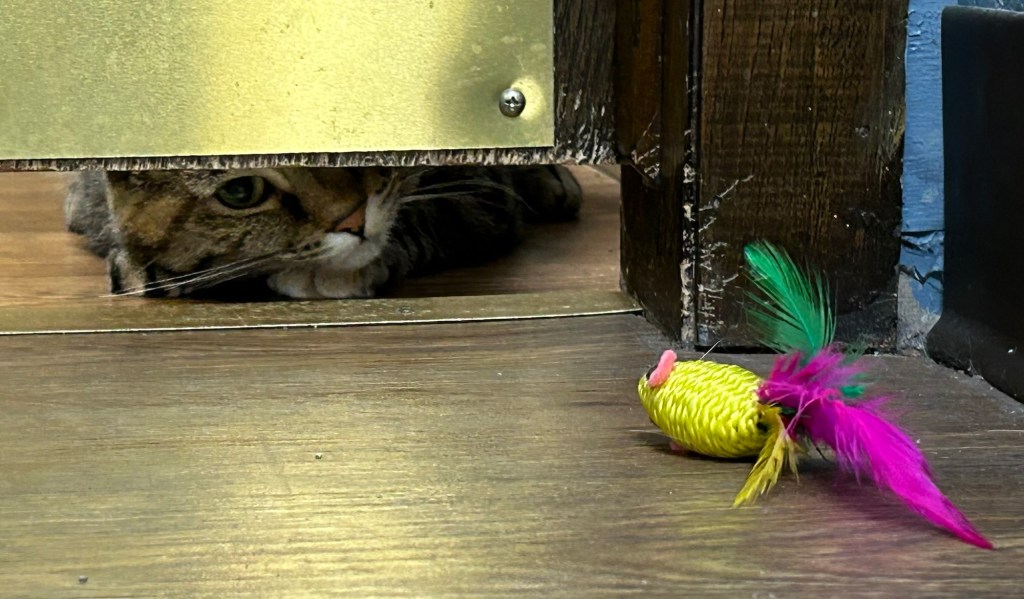
For those curious about The Queen, she apparently has a new favorite game at The Cat Resort…
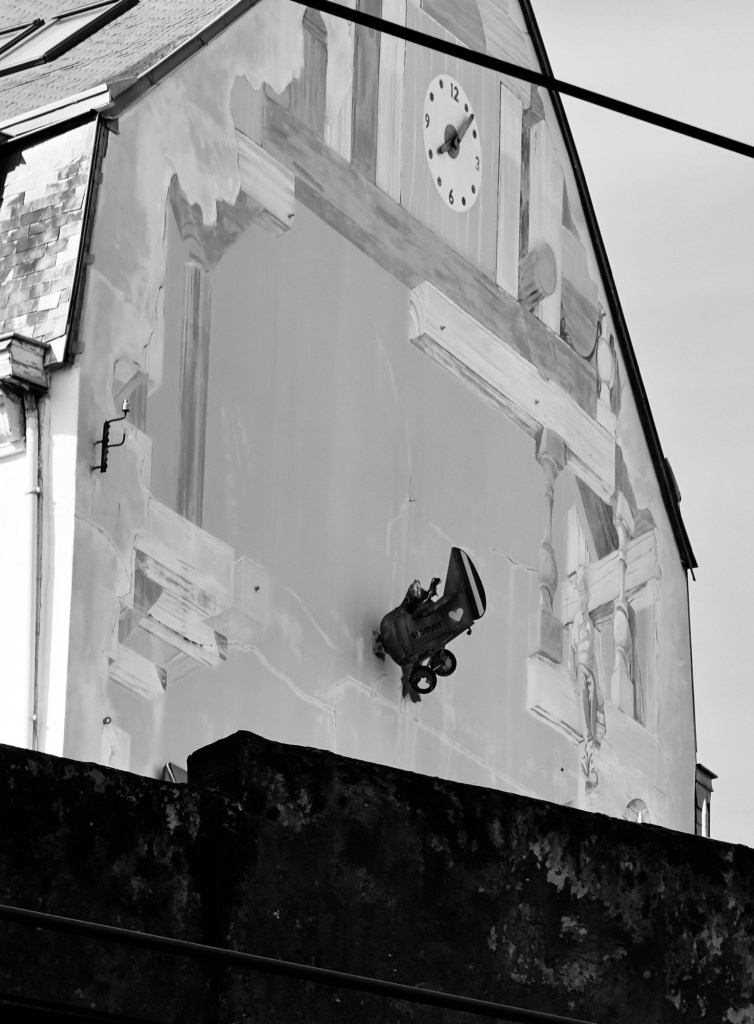
Yesterday was a much easier day of travel from Rouen to Luxembourg—took the train. We did not crash into any buildings.
After so many days of going, I took the day off. My only reason for getting up and dressed was breakfast and phone charger—I forgot to bring my converter for the outlets. The other hotels had USB ports, but this one did not. Glad to have brought my battery pack to charge the phone last night.
After returning to the hotel, I did the only logical thing: took a nap. Then got up and worked on a short story, Execution Day, which I hope will be part of a collection of short stories that I’ve been working on—Seven Deadly—although there will be more than seven stories, and they will not all be too deadly.
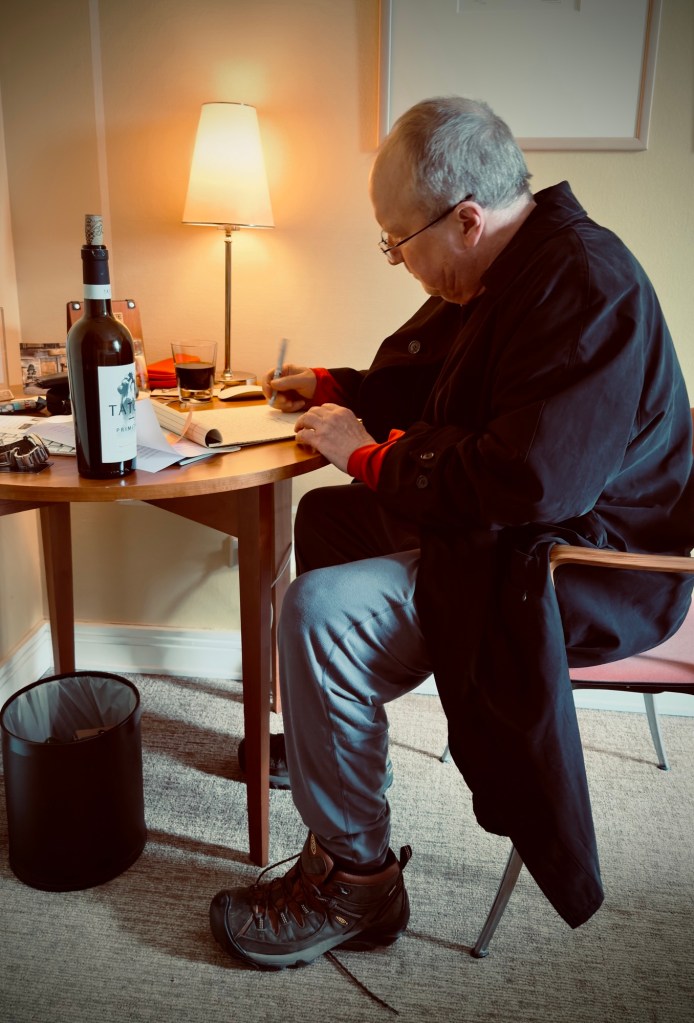
At one point, as I sat here in my PJs and writing, I got a bit chilly. I do not have a robe or slippers with me, so did the best I could. The result: me sitting in my PJs, wearing my overcoat (which I’m very glad I brought) and my hiking boots.
After such hard work, it was time for some food. I went for something completely different and will likely be sitting up in bed all night because my white-bread American stomach doesn’t handle spicy food too well, but it was so very good.
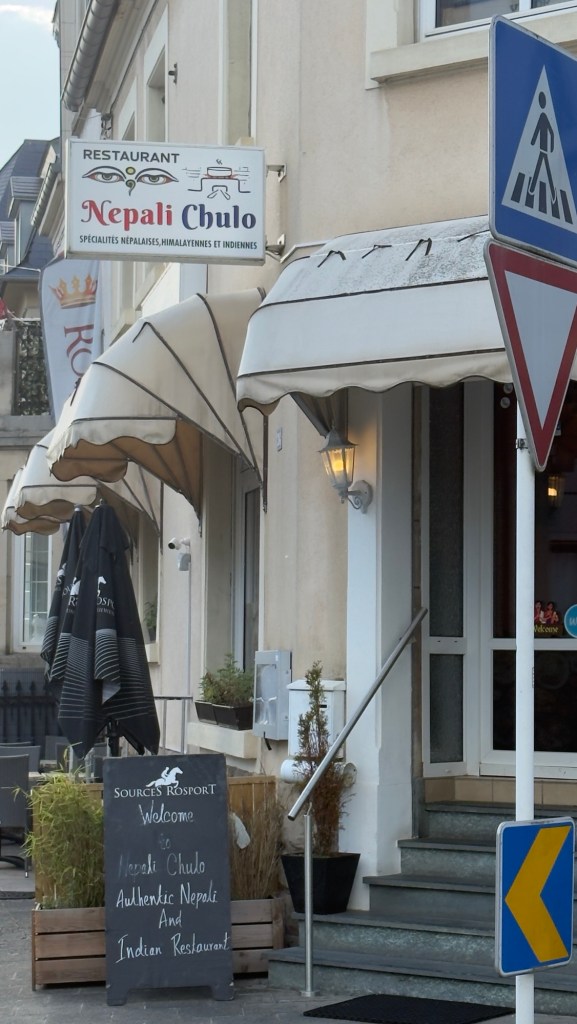
The meal…
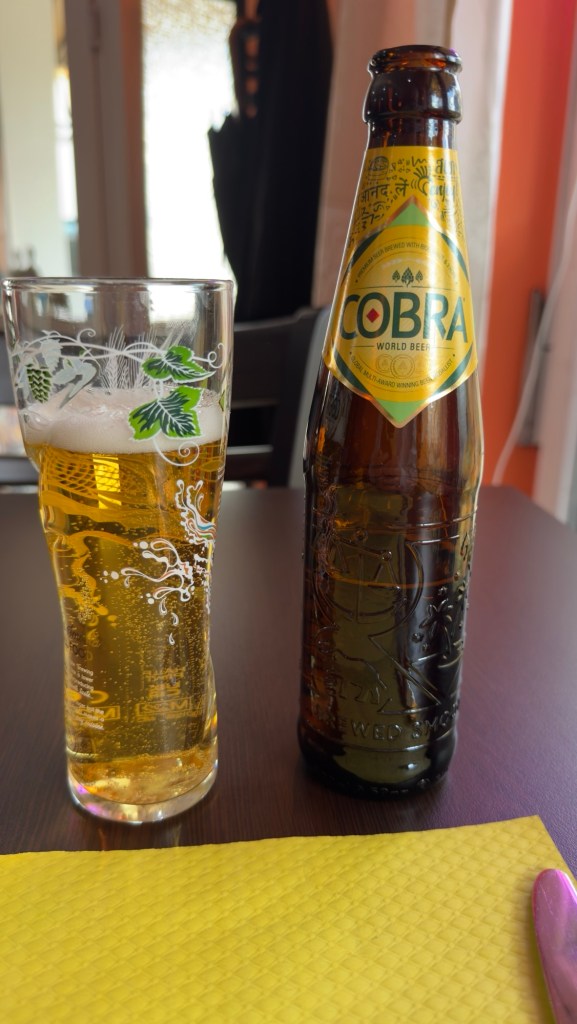
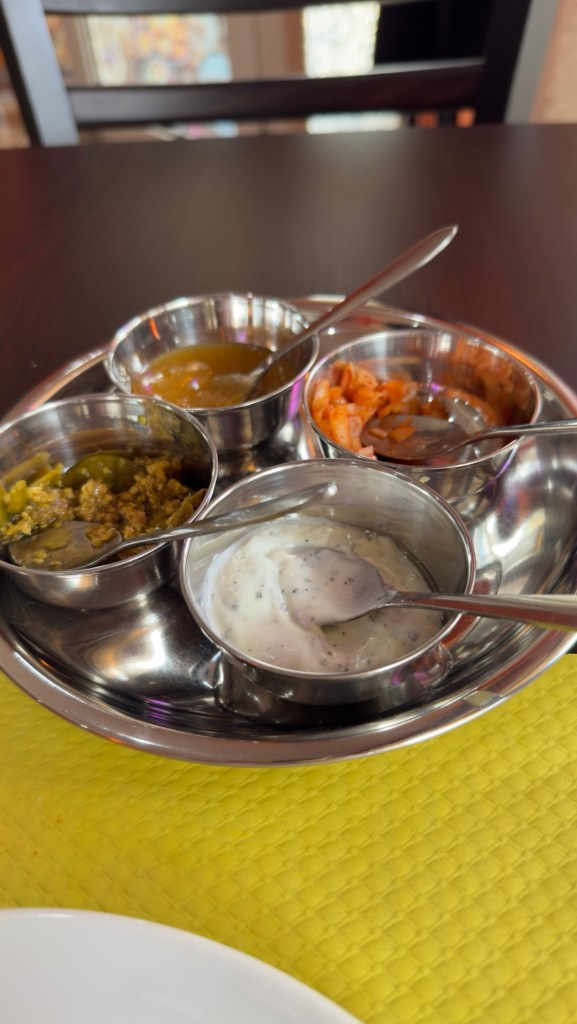
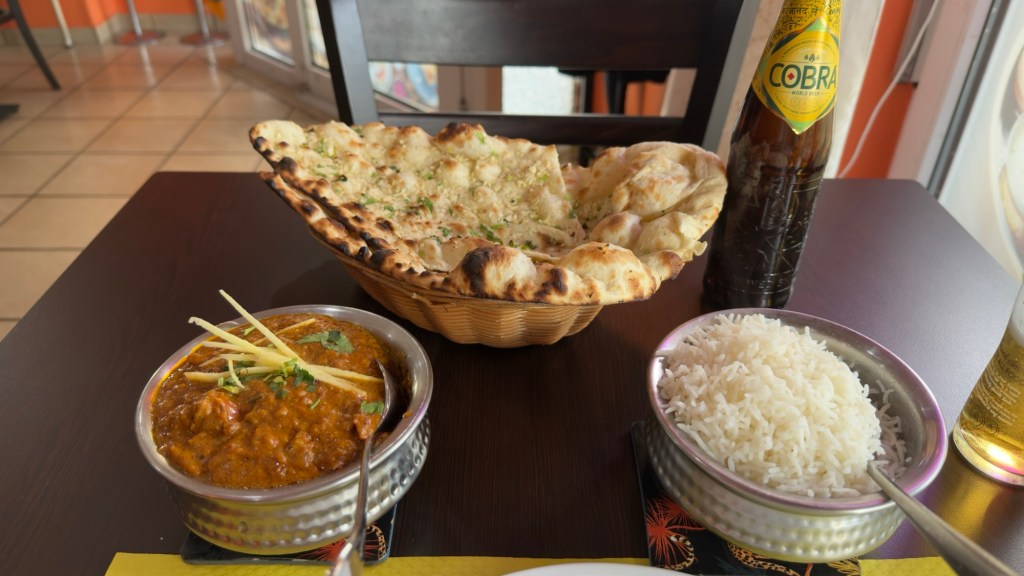
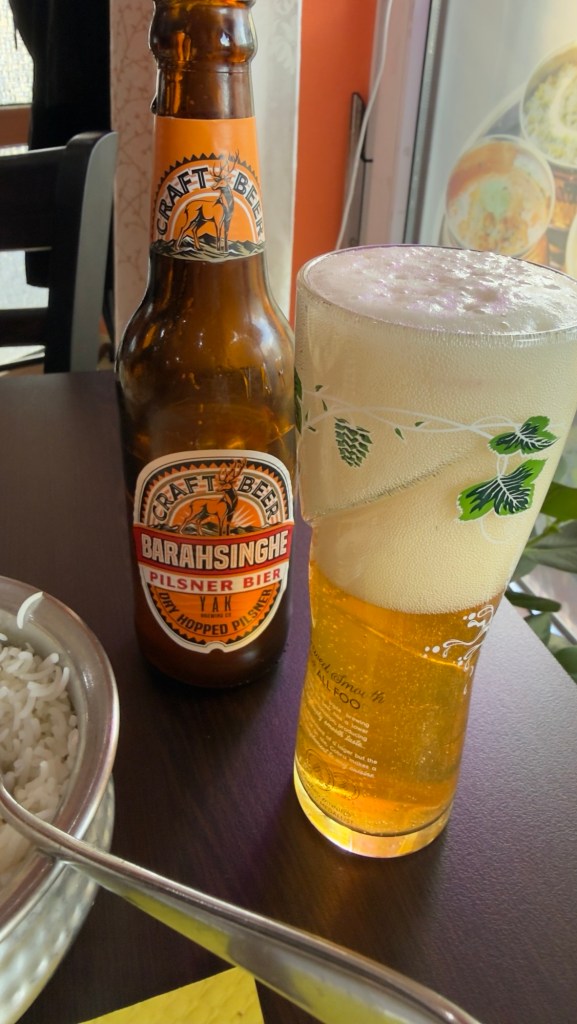
I had no idea what I was ordering, so relied on my very kind host to help me out. I had at first wanted to attempt one other dish, but it had three 🌶️🌶️🌶️ beside it. My host said it wasn’t possible to make it milder, so we agreed on a dish with 🌶️🌶️, and he said he could get it down to 🌶️. It was perfect! Timmuri with Sichuan pepper, onion, ginger, garlic, and Nepali spice. I added some lamb to get a bit extra. The nan was with garlic. He had me first try the Cobra beer from India (after getting it, I remembered that I had it once before in Lisbon) and then he said I must try a Nepalese beer… excellent. Much more carbonation and natural taste.
This is just an American talking here, but… it seems that when you eat out in various countries, if you eat at a “local” restaurant, you’ll likely get good food, but the attitude that comes with it really puts me off—they’re doing you a favor by deigning to have you seated in their establishment. However, if you choose an ethnic restaurant, well, like you, they are the foreigners. They know what it is like to be a stranger in a strange land and so, to me, they are so much kinder and helpful. Look, I willingly admit, I don’t know what I’m doing half the time and I sure as heck don’t know what I’m ordering, so when you ask, “What do you recommend?” the locals will roll their eyes, but the foreigners like you will smile and be so very helpful. Something about it in Leviticus (perhaps 19:33-34) but I won’t get preachy.
There is a park behind my hotel that I can see from the window…
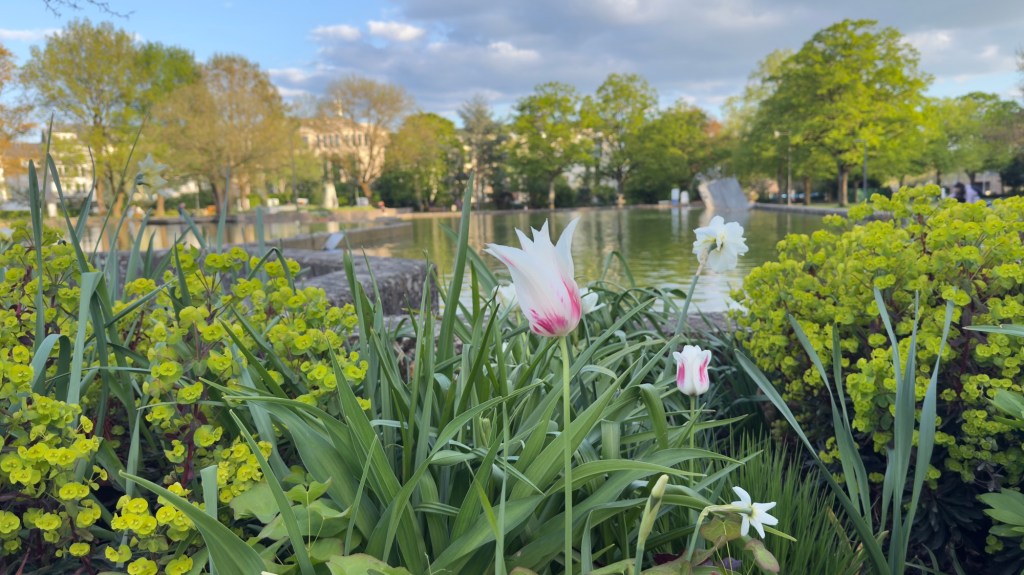
…so on the way, in an attempt to walk off some of that meal, I took a stroll. Beautiful flowers that my brother would be disgusted with me if I didn’t stop and smell. So, for the brother…
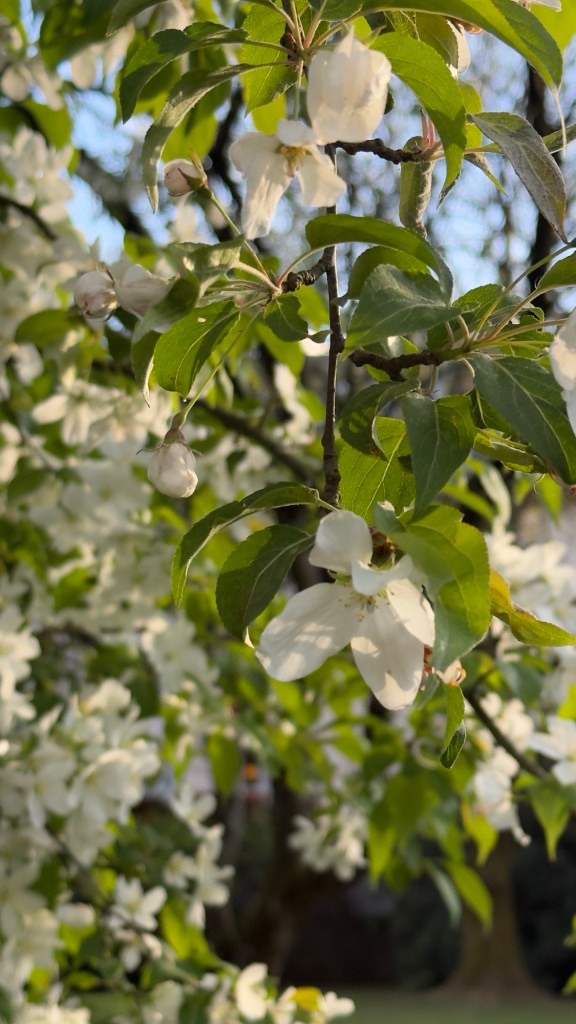
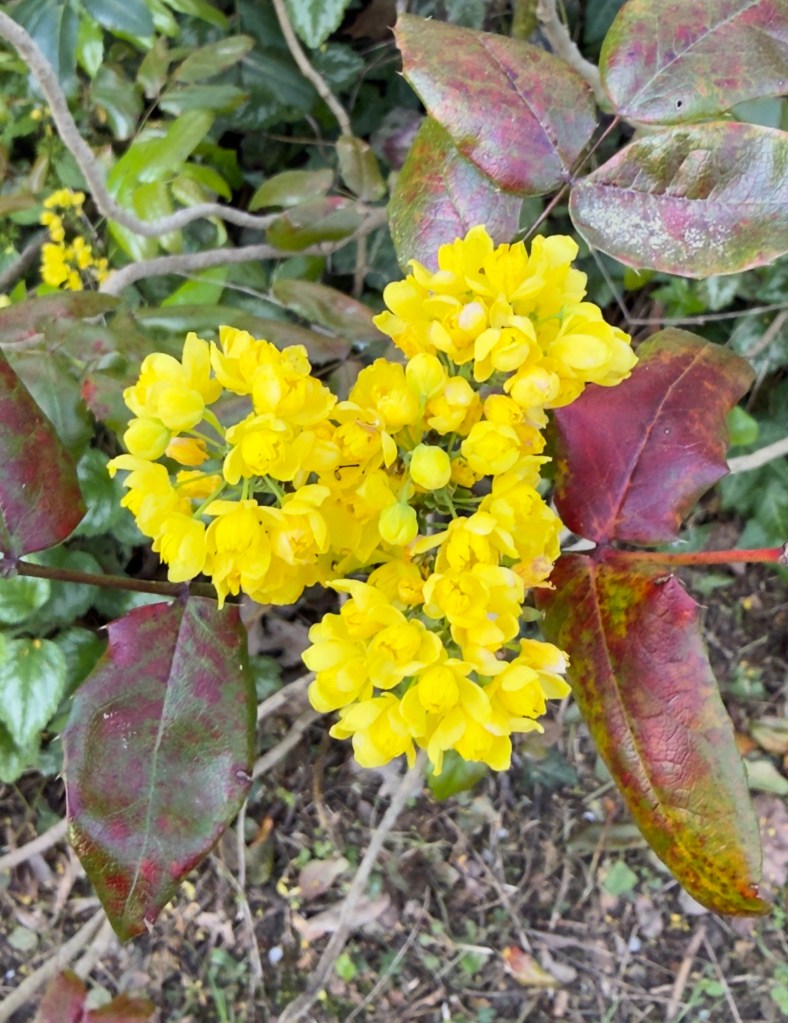
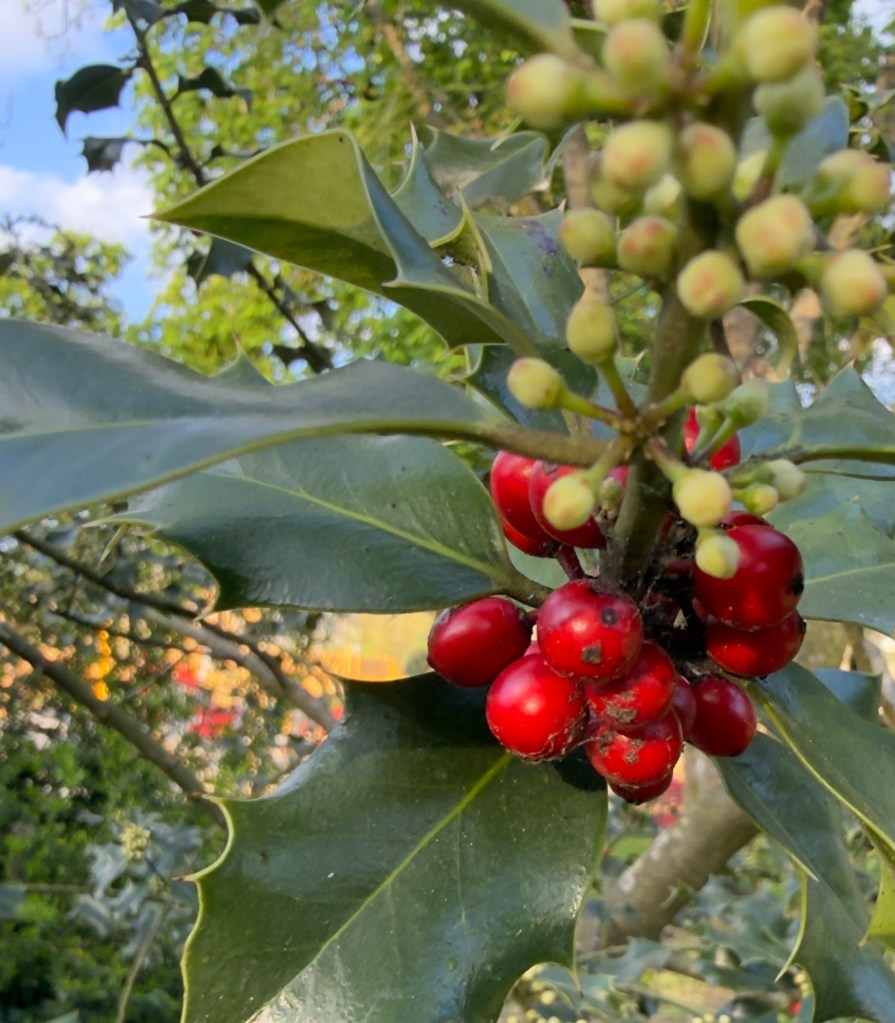
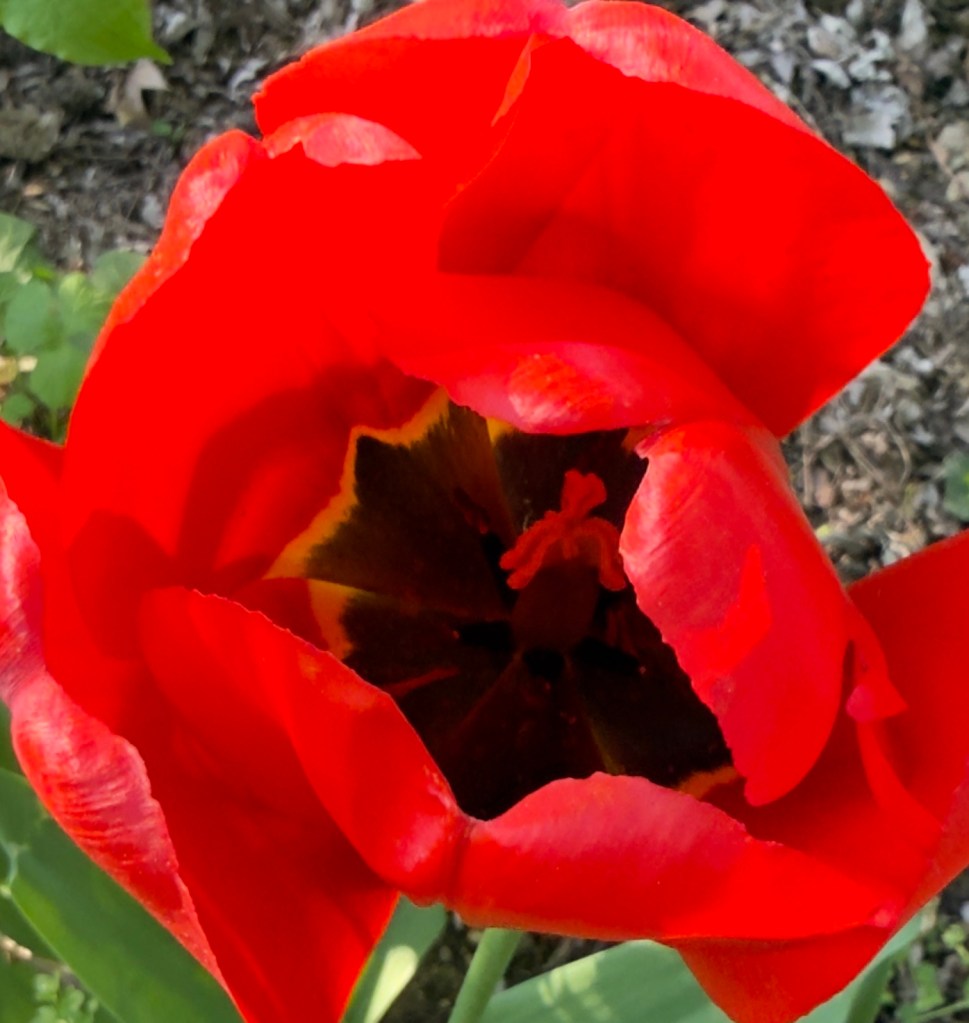
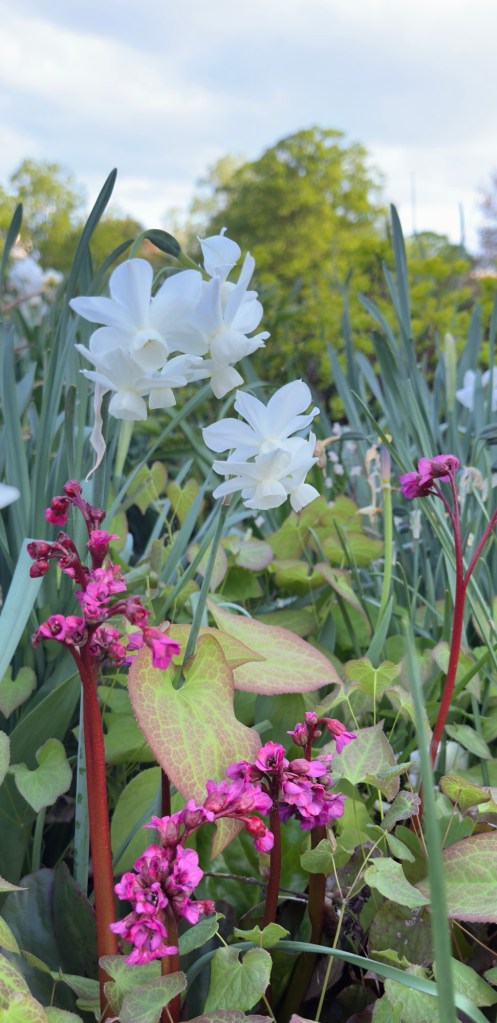
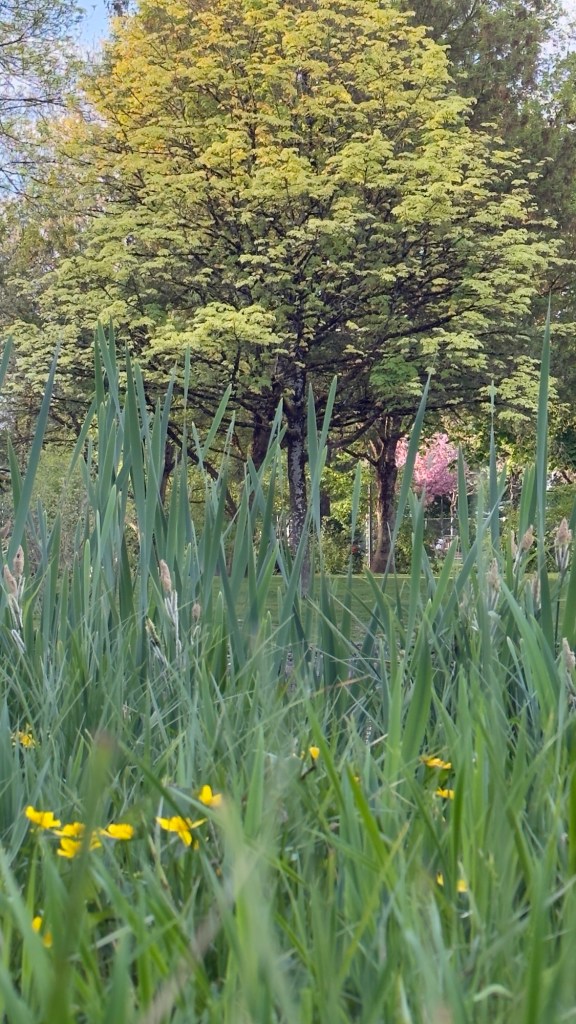
And don’t forgetting be the babbling fountain:
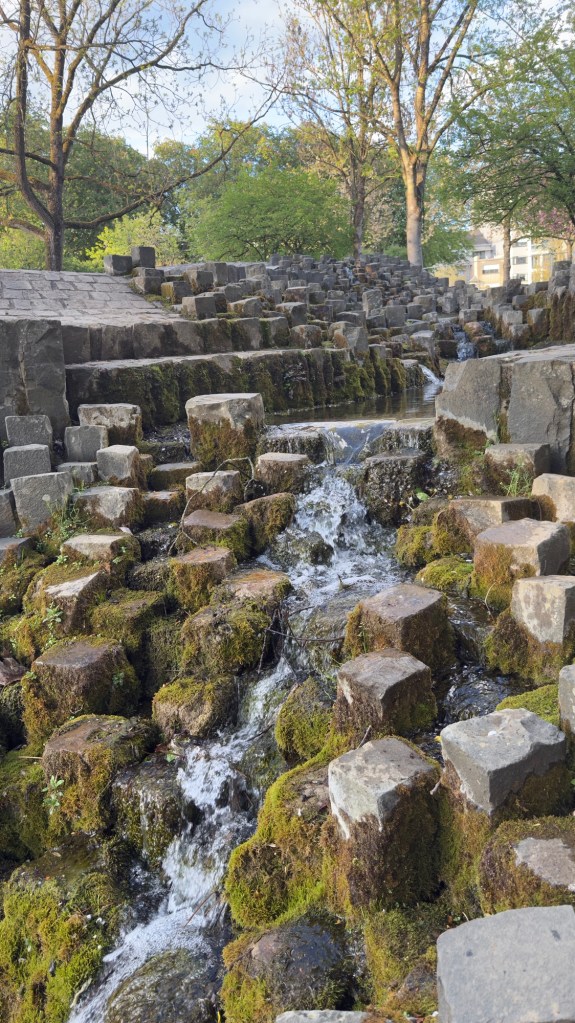
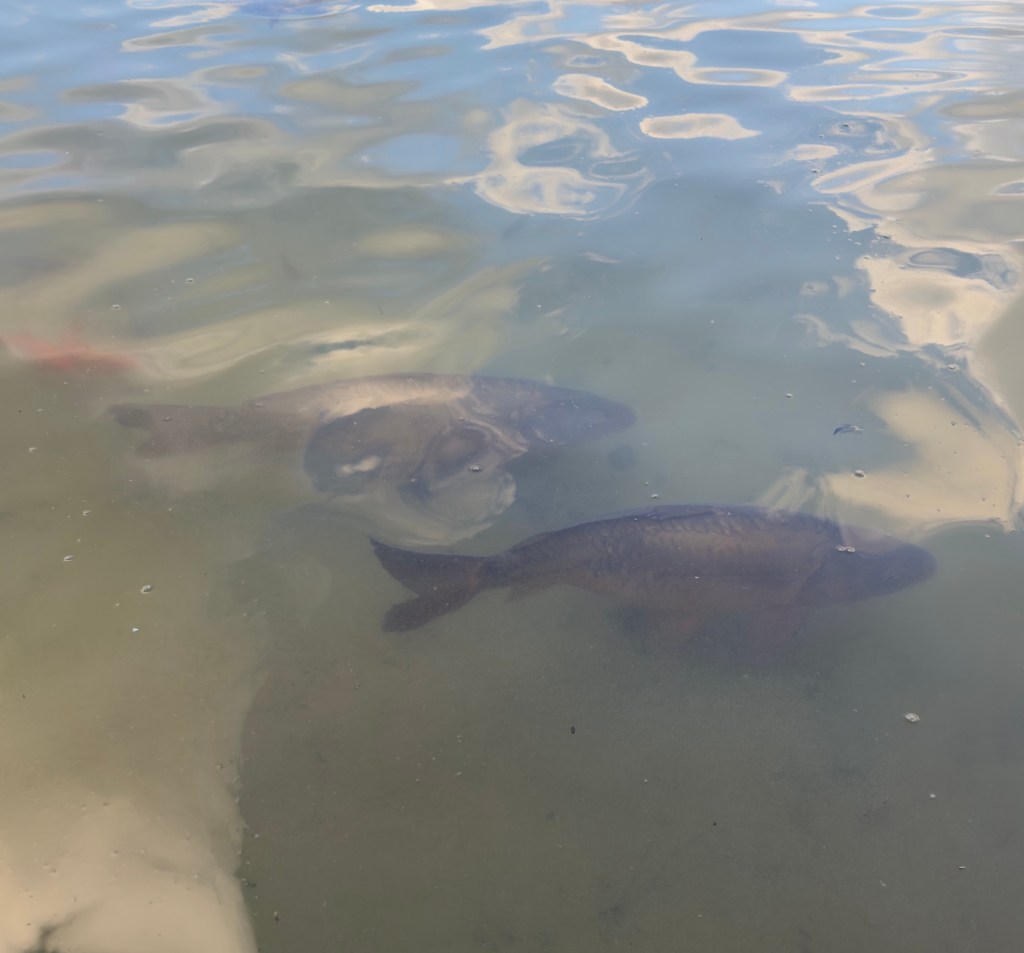
As I stood next to the water, these two came cruising by…
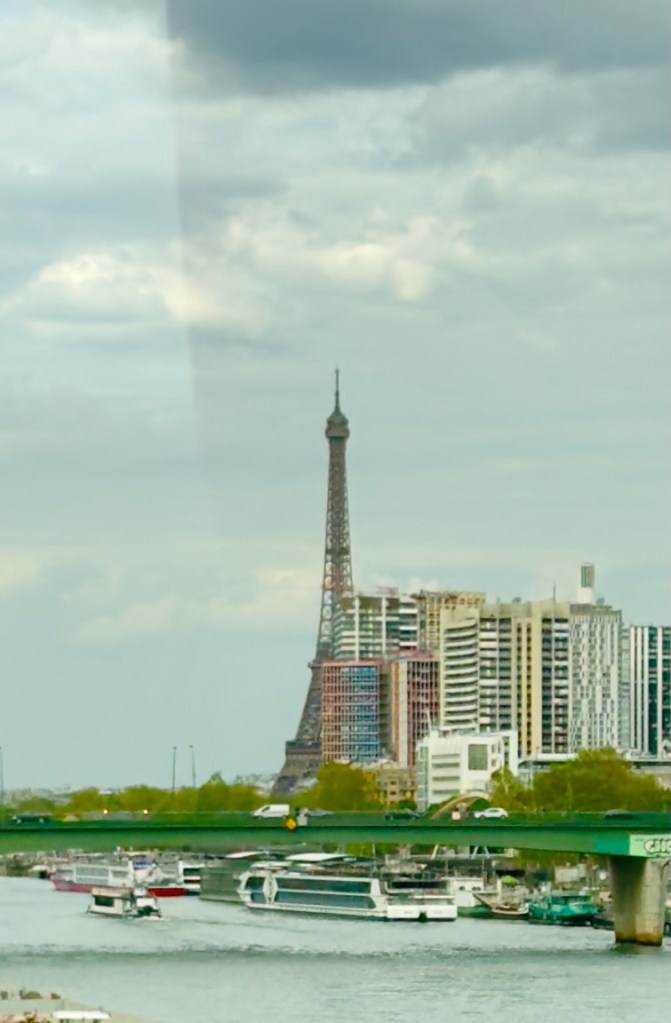
The last two days have been the most relaxing of the expedition (although I’ve loved it all—except maybe for the long bus trip, but I did get to see the Eiffel Tower and I was in Paris), and on several occasions, I have caught myself smiling for no dang reason at all. Those around me probably think they have a crazy person on their hands, but… No… just me. It is a good feeing to smile for no reason at all.
I think I’ll work on my short story for a bit longer, then do some reading. I’m very much into Haruki Murakami these days and have been working through 1Q84, which is delightfully Murakami.
My days may be off, but we are seeing the world. I hope this post is more than a photo dump like the other day, but… I’ve experienced so much. Let’s see what happens…
Yesterday was a travel day extraordinaire! Twelve hours from point A to point B. One of those hours was stupidity on my part in not knowing how to read my ticket, the other eleven hours were automobiles and buses (two of them to be exact). The first half of the trip was good, but when I hit Paris — OY! Note to self: when reading your bus ticket, don’t look for destination—look for bus number. I was probably standing directly next to my outbound bus for thirty minutes, but the board never said, “Rouen.” Instead, it said the next stop (whatever that was), and I missed it. Had to purchase a new ticket for the next bus. Dang near missed that one as well until I realized my mistake.
There was a fun sight along the way:
Paris traffic was c.r.a.z.y. and the bus driver headed down the wrong street twice and had to back up! but I finally arrived (two hours later than planned) in Rouen, France. Life is good! I’m in France for Pete sake! (Sorry, “Pierre sake!) The fella checking me in at the hotel was VERY French in attitude, but I smiled. It was dark, but I decided to see what I could see. It was so worth the 12 hours of traveling. I came around a corner… I don’t know that a tear ran down my cheek, but it was a close call.
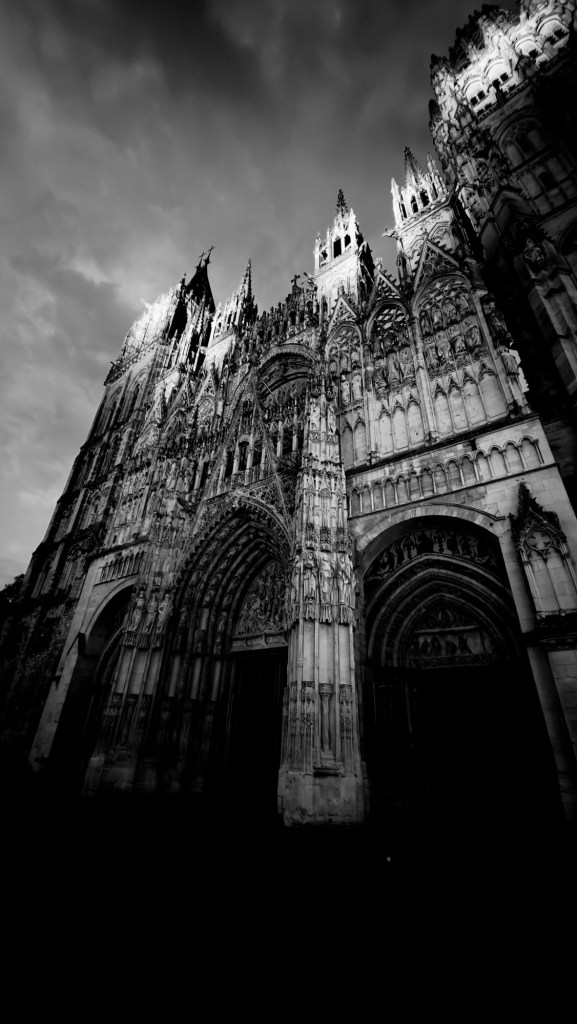
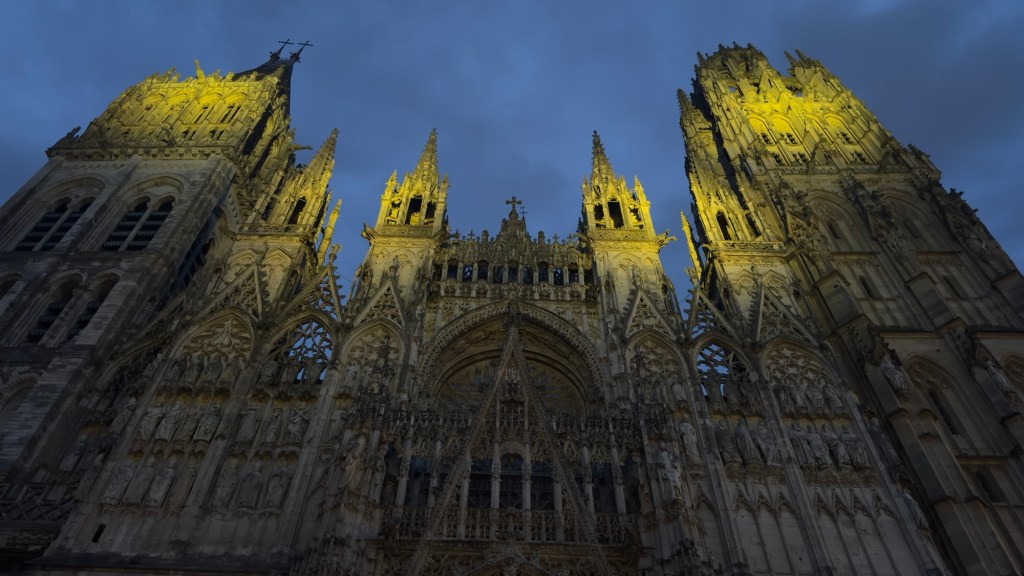
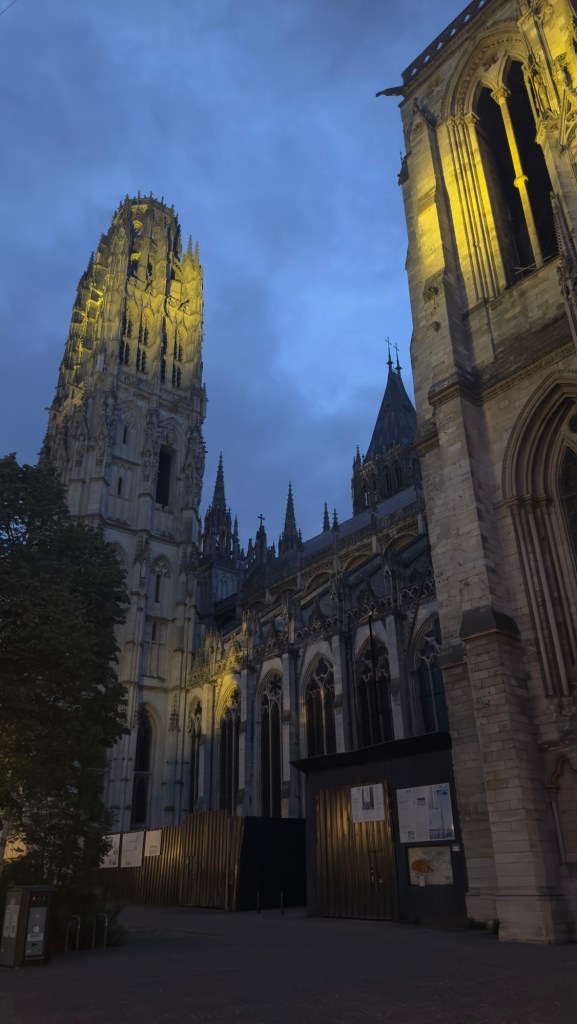
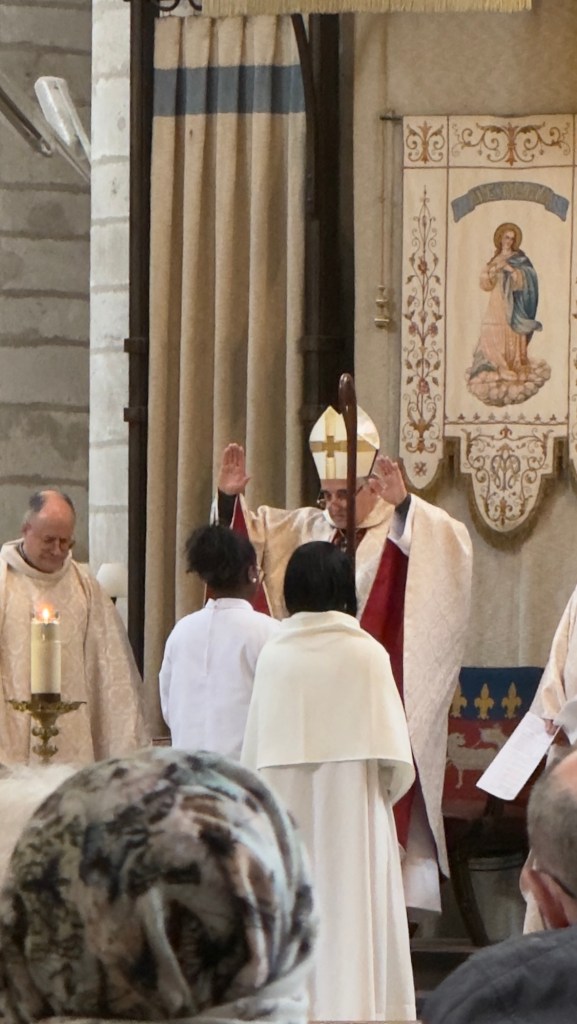
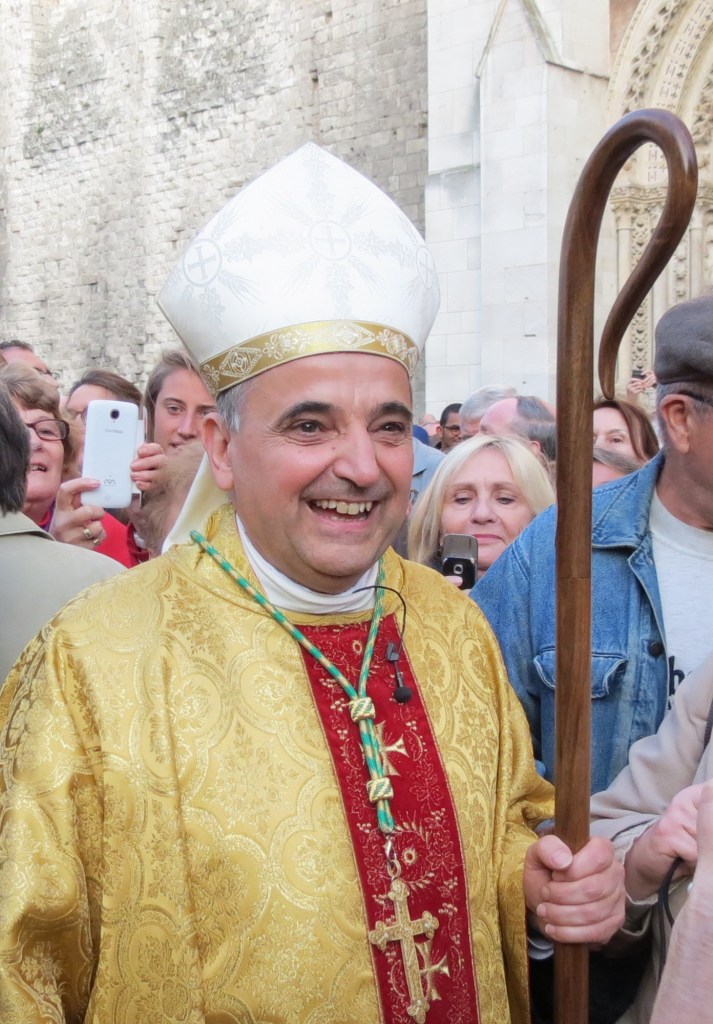
This morning, I woke up feeling refreshed and ready to see what the city offered, but I did have one destination in mind. First things first, though… I went back to the cathedral to see the inside, but no sooner had I arrived and they were ushering us all out. What? Turns out, Mass was about to begin. Well, my Anglican friends, I kept my mouth shut and had a seat. What a surprise and blessing for me: from my Facebook post… “When your heathen soul gets lucky and you show up on time to attend mass with the Archbishop of Rouen and Primate of Normandy, Monseigneur Dominique Lebrun. Second photo from web.”
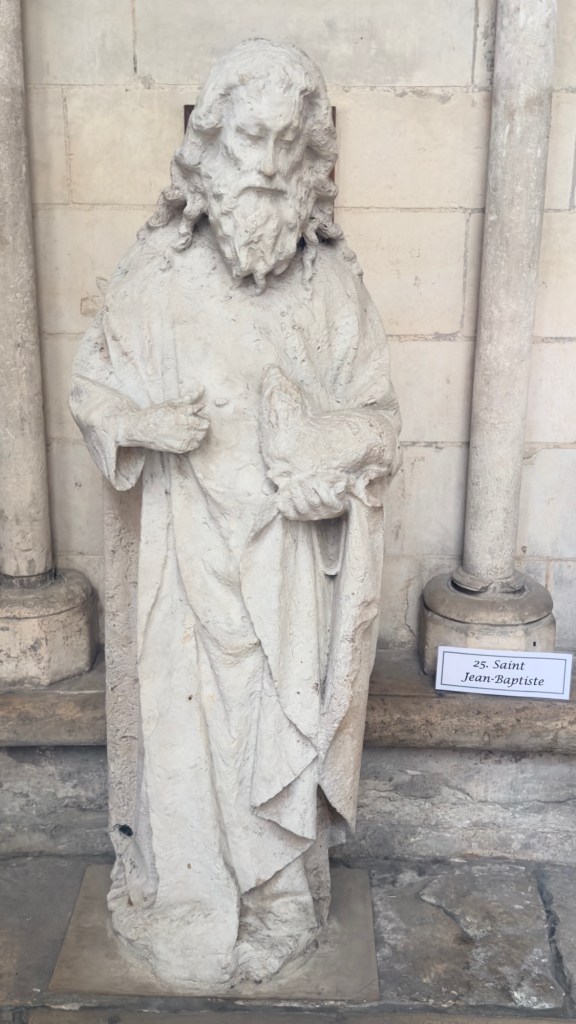
At this point I was feeling good. I continued with my tour, seeing what I could see. Only problem: so much of what I wanted to see was behind locked gates and I wasn’t allowed to get close. Just you wait! My first time through the 12-century gothic Cathédrale Notre-Dame de Rouen.
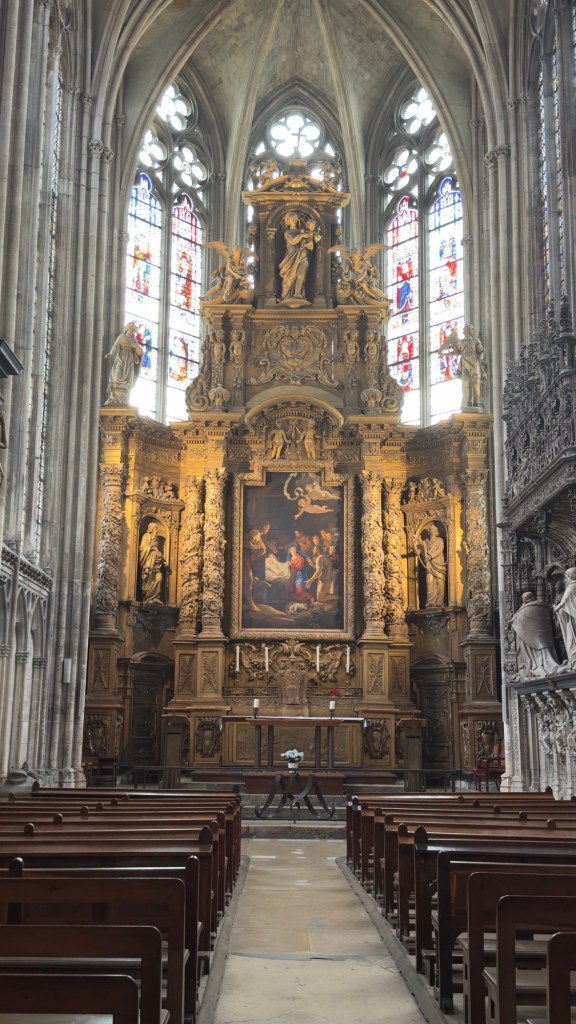
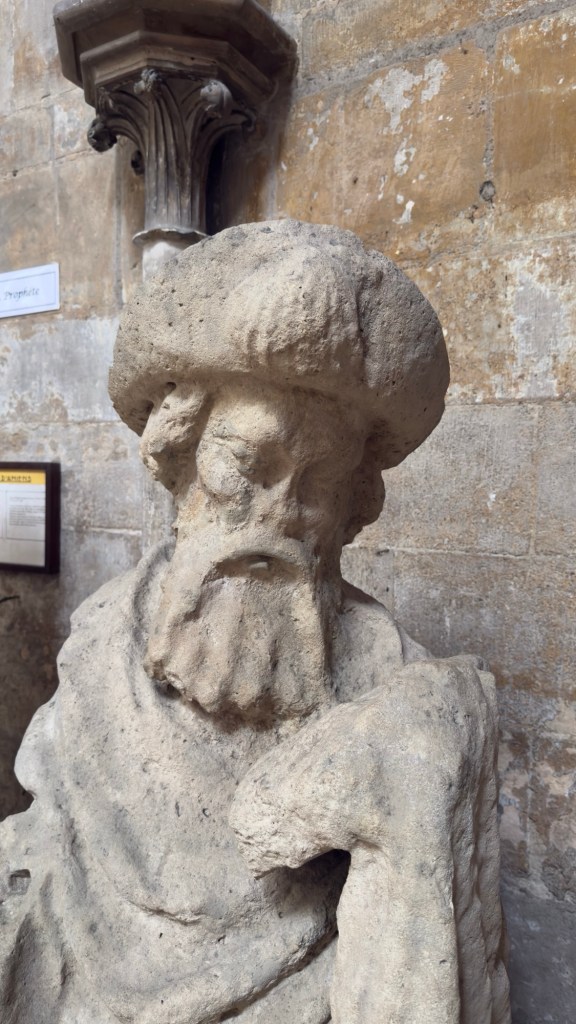
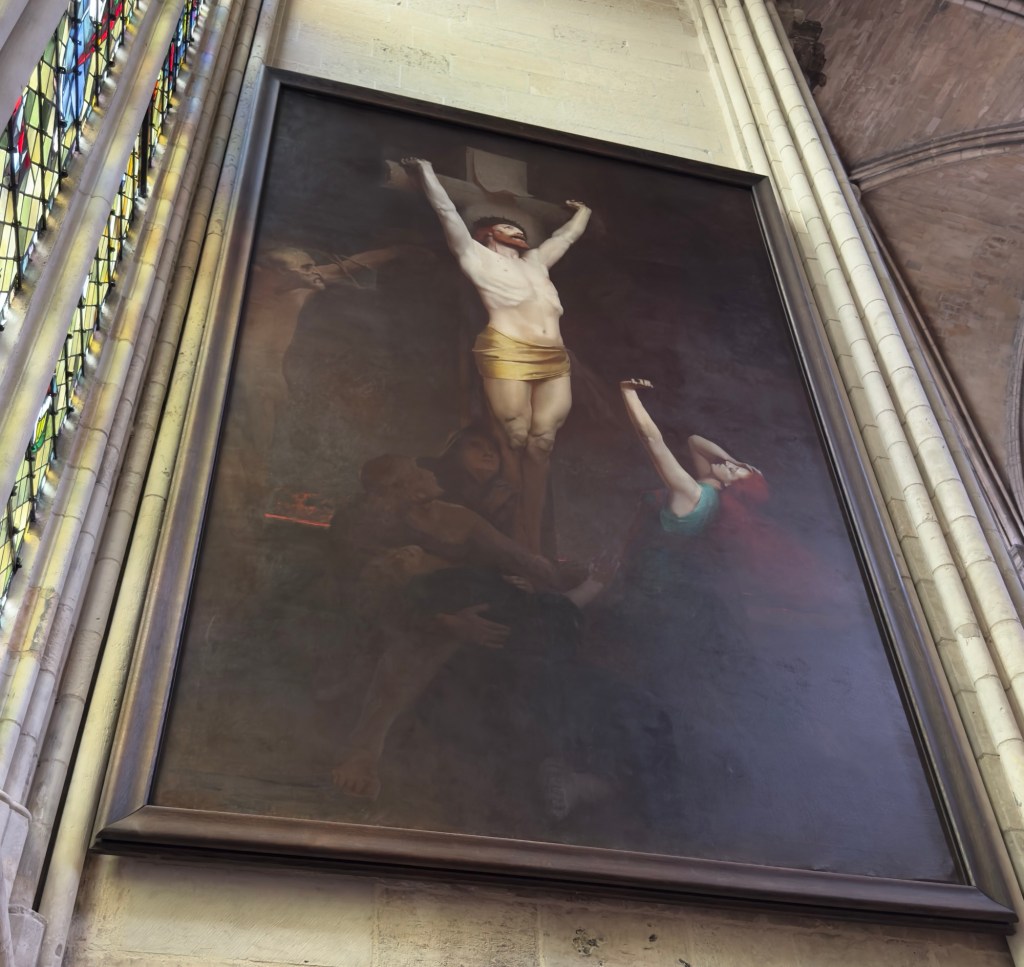

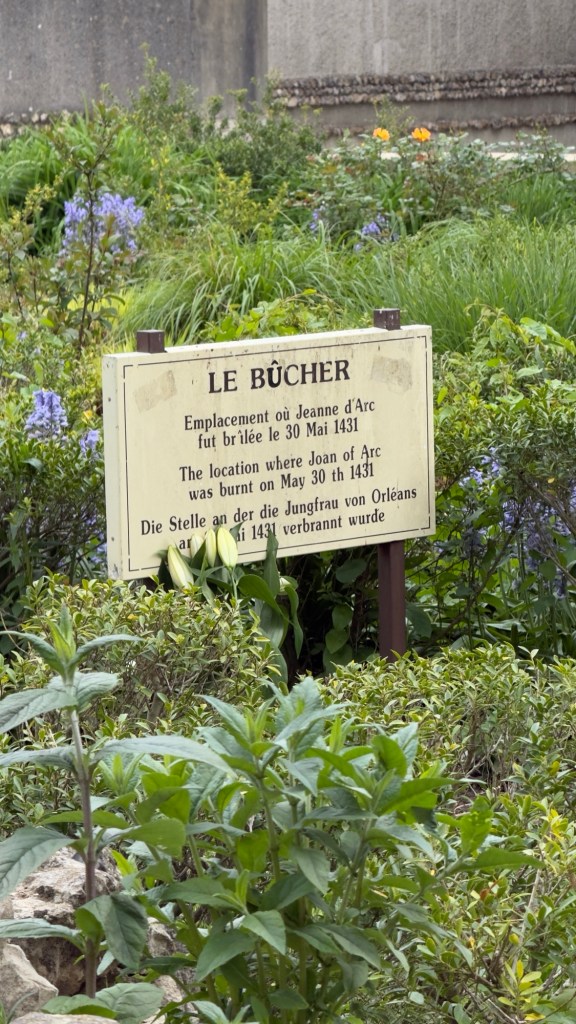
We’ll be back at 2:30 p.m. but for now, I headed to my next destination—and the point of coming to Rouen to begin with—the place where Joan of Arc was burned at the stake.
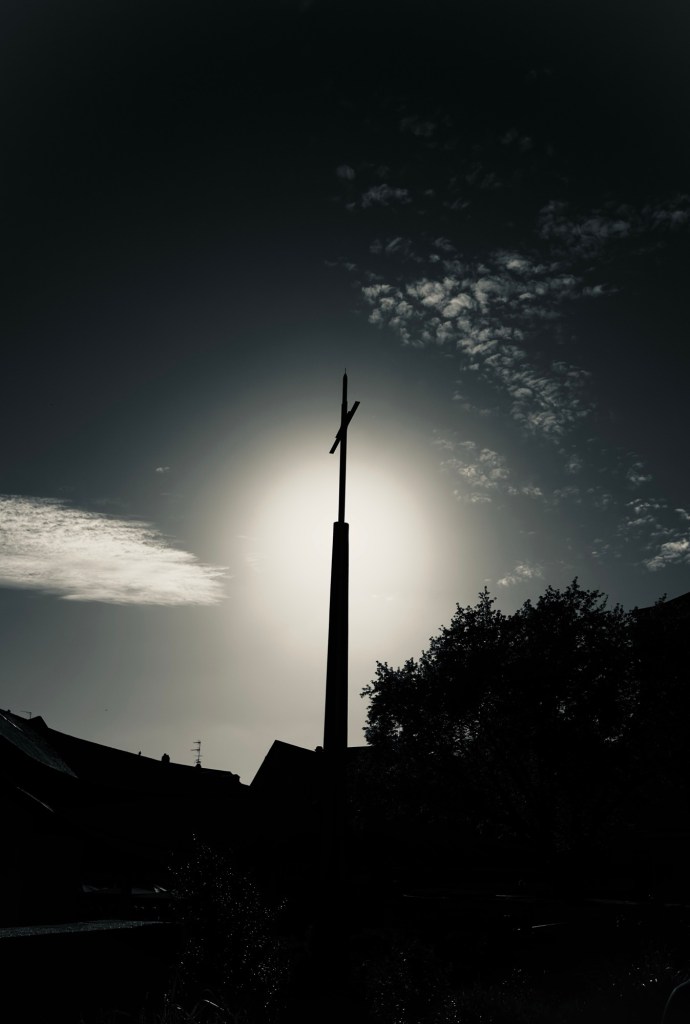
Friends, Joan of Arc has been a hero of mine forever. This was on the list of places to visit from the first time I came to Europe. It was simple, noisy, dirty, smelly, drunks being loud, people oblivious, none of it mattered… I pulled out my small rosary and rubbed it in the dirt of this place.
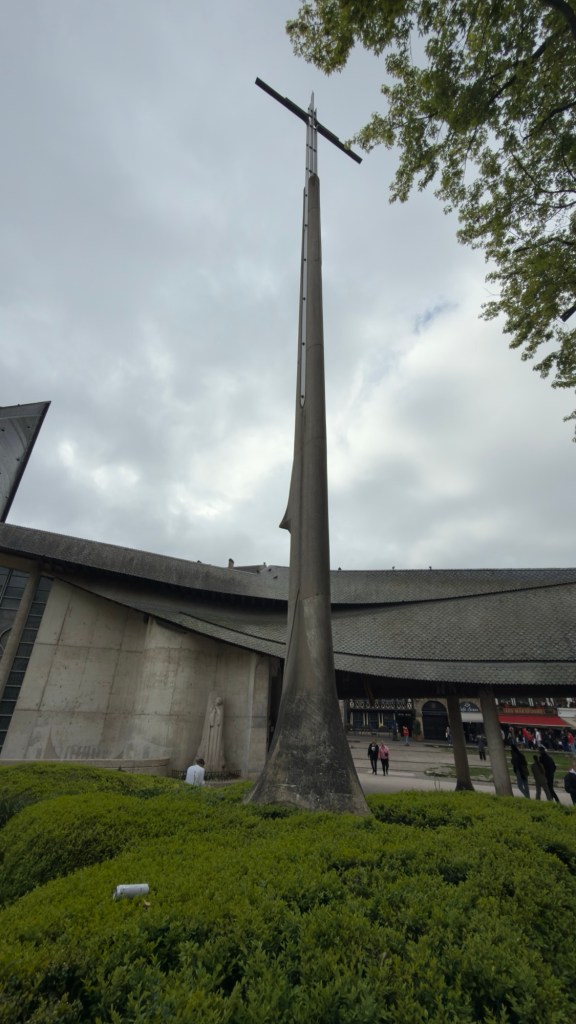
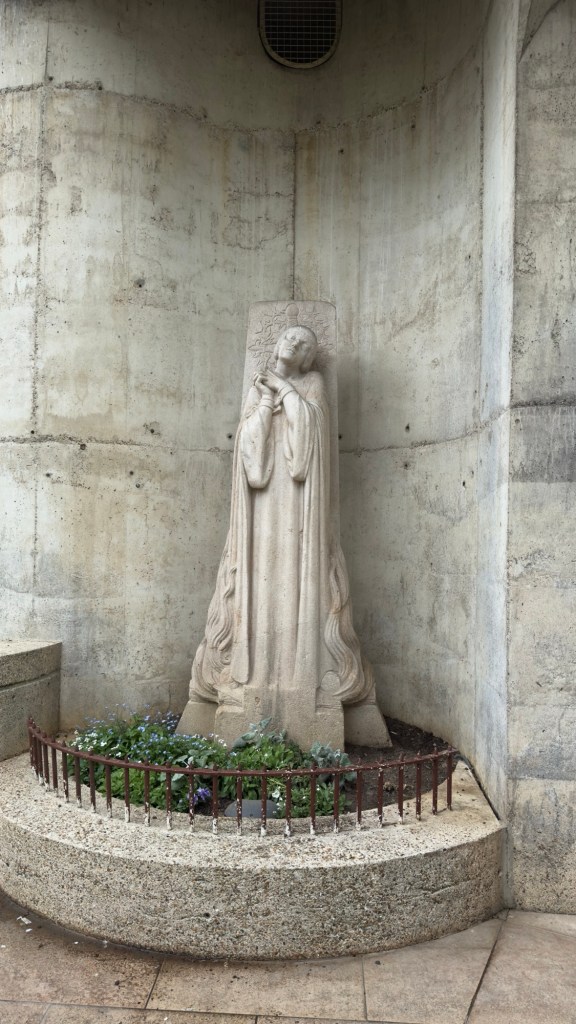
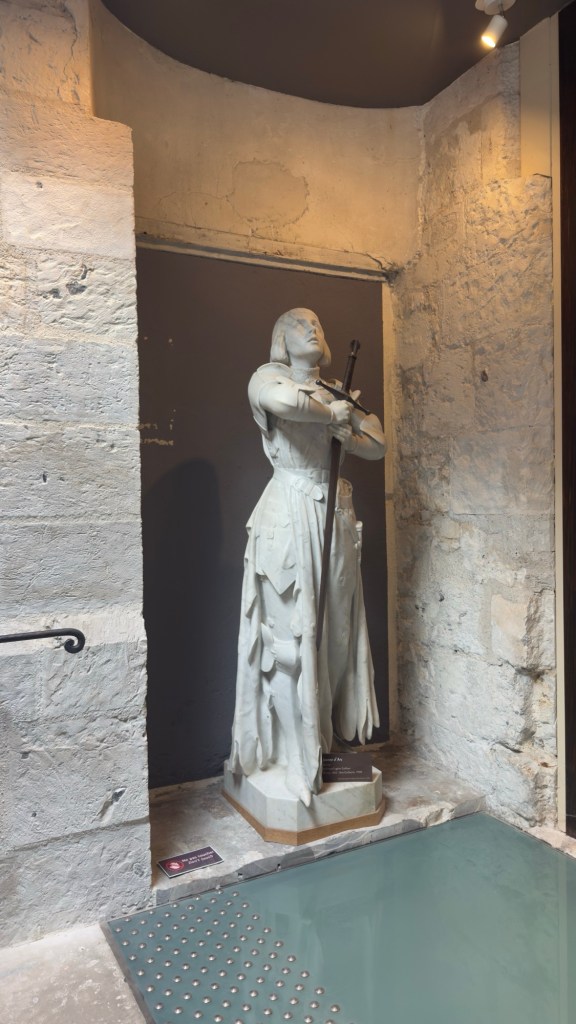
The small Joan of Arc medal on my rosary that came home to her ashes…
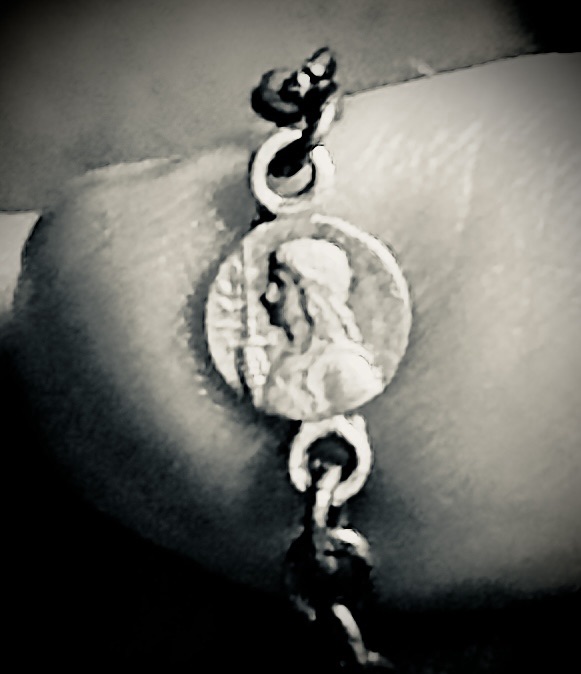
Sitting here shaking my head… don’t know how to explain.
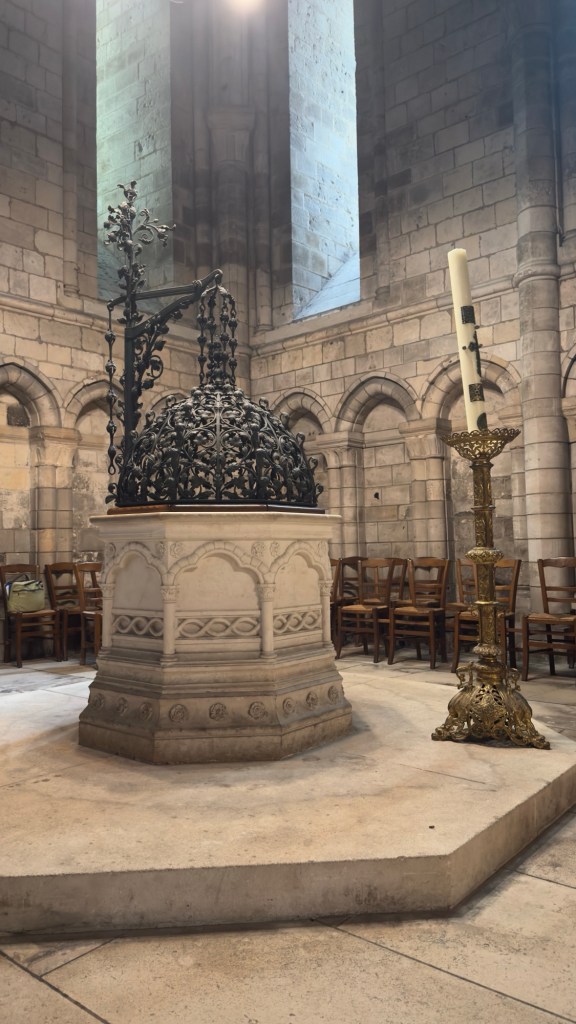
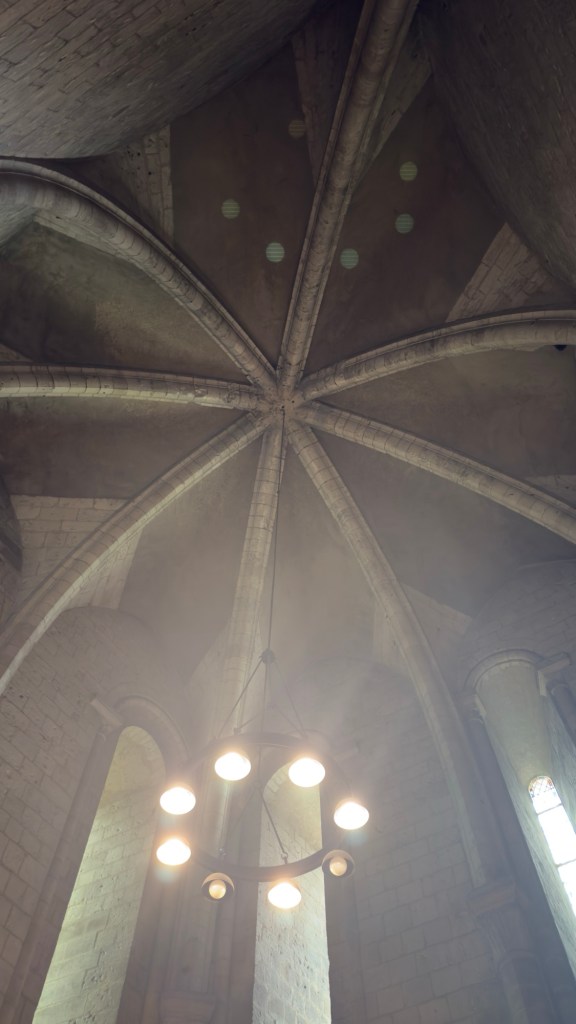
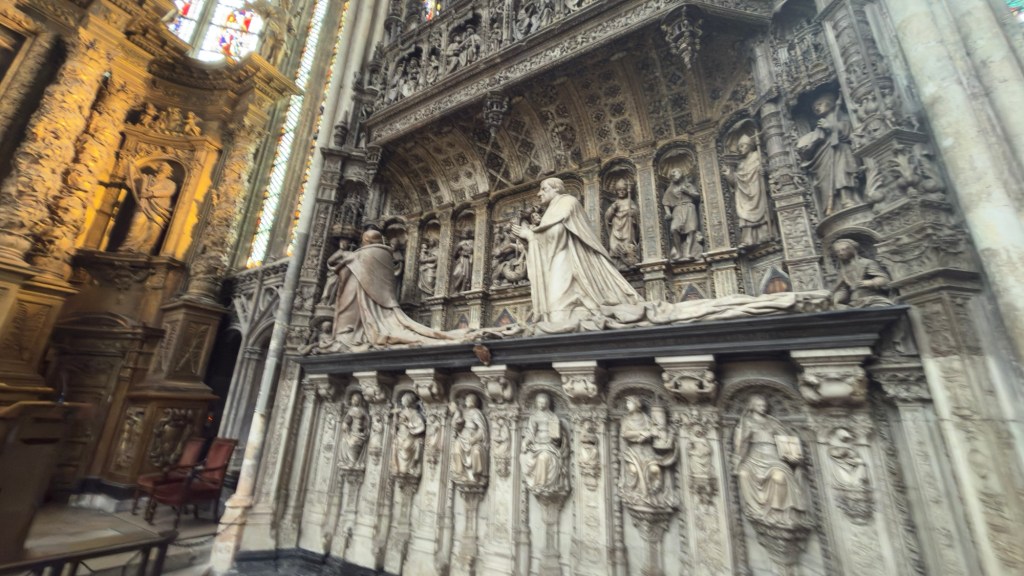
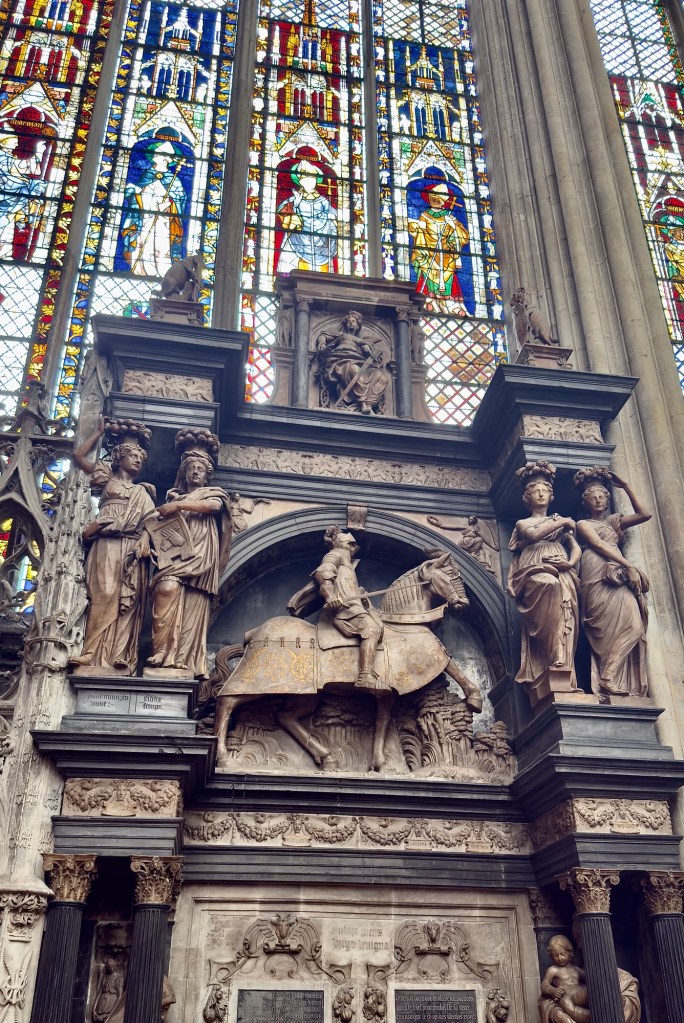
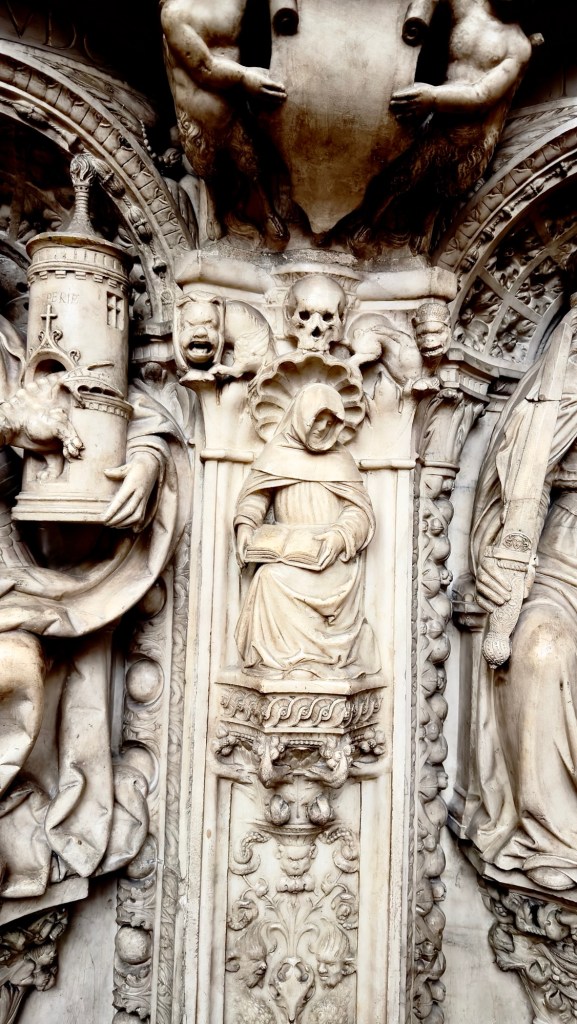
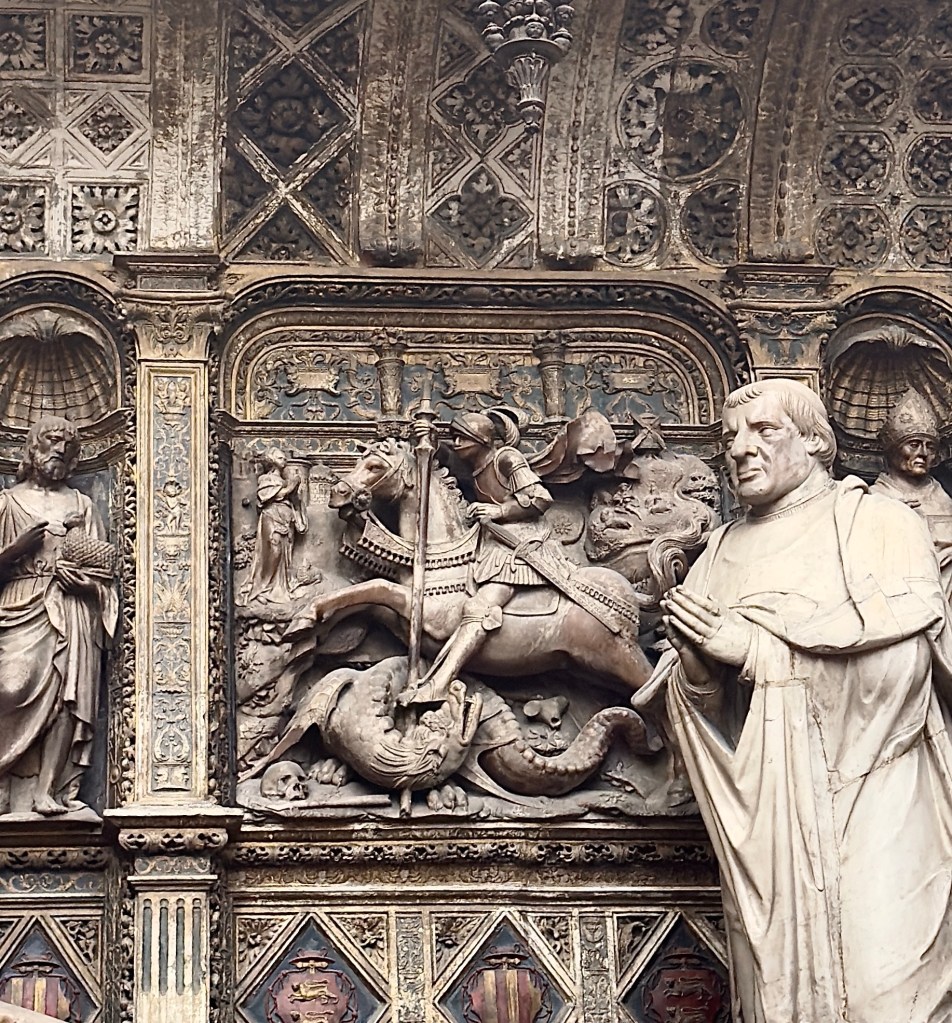
I stopped and had some lunch, seafood, then made my way back to the cathedral. I had read somewhere that there is a tour that begins at 2:30 on Saturday. It is not posted anywhere or publicized. Show up and join in. I did. For the next three hours, I visited the parts of the cathedral I wasn’t allowed to get close to and parts I didn’t even know existed! Amazing. There were only ten of us on the tour. Did I mention it was all in French? I didn’t understand a word said, but it was absolutely fascinating.
The Baptistry…
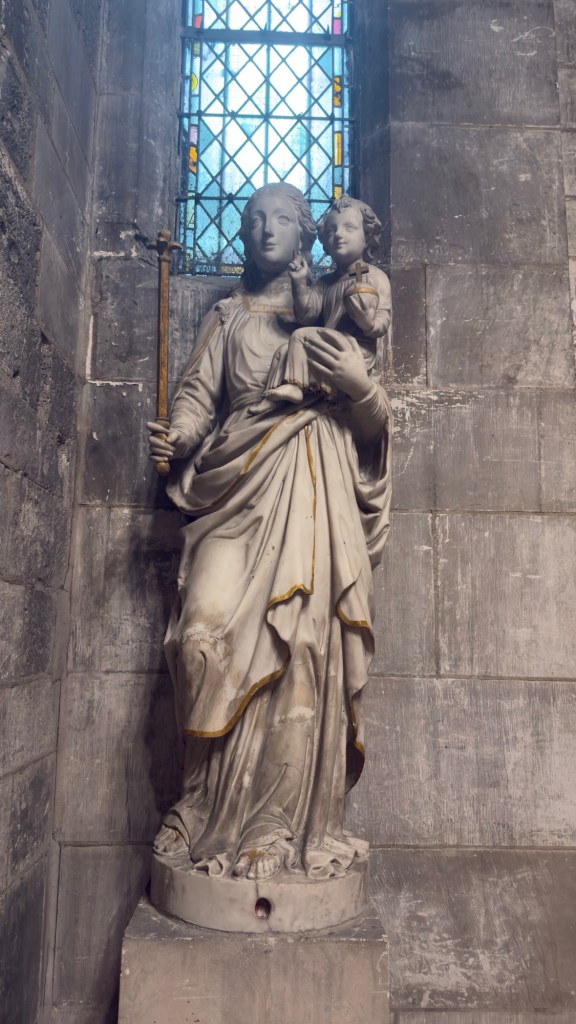
The Joan of Arc side chapel…
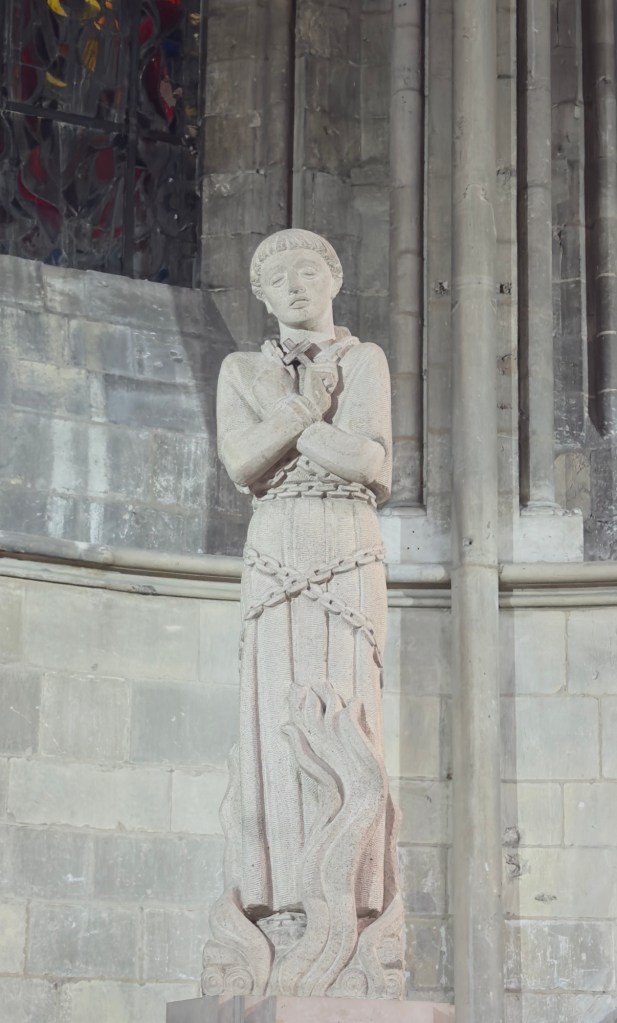
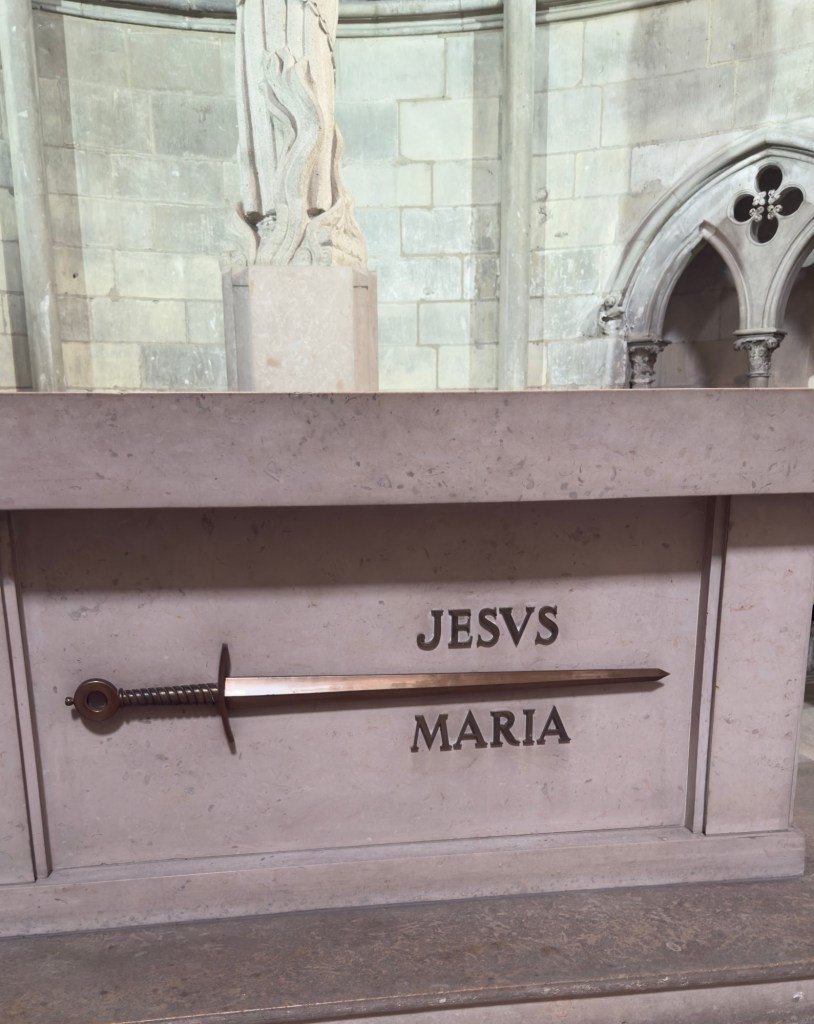
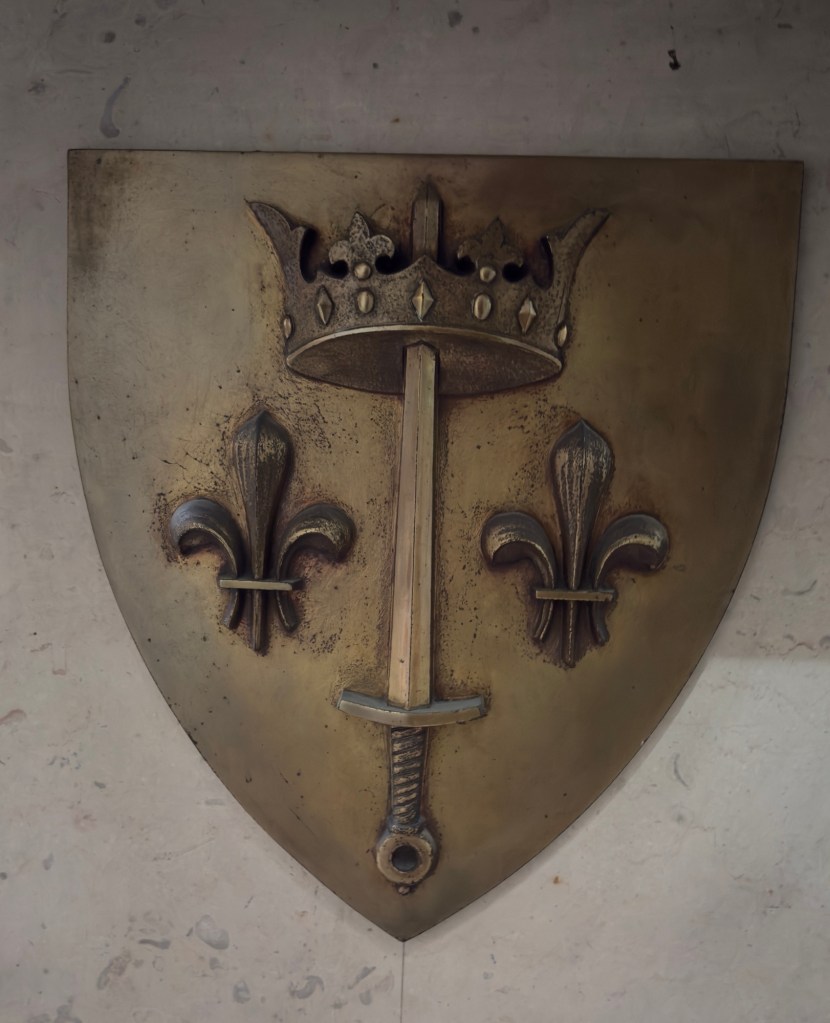
Chapelle de la Vierge (Chapel of the Virgin)…
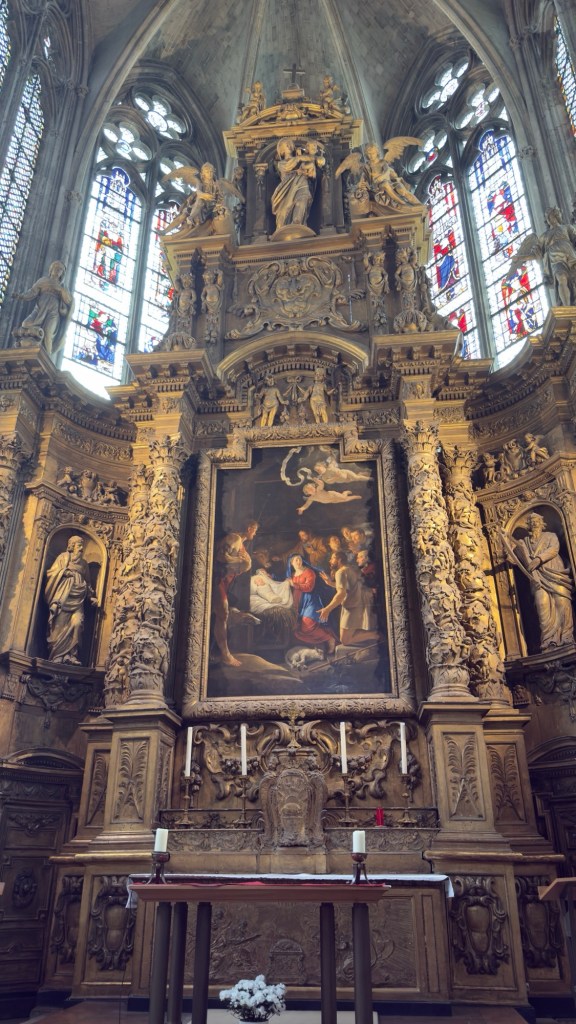
And I haven’t forgotten…
Some of you may remember this photo…
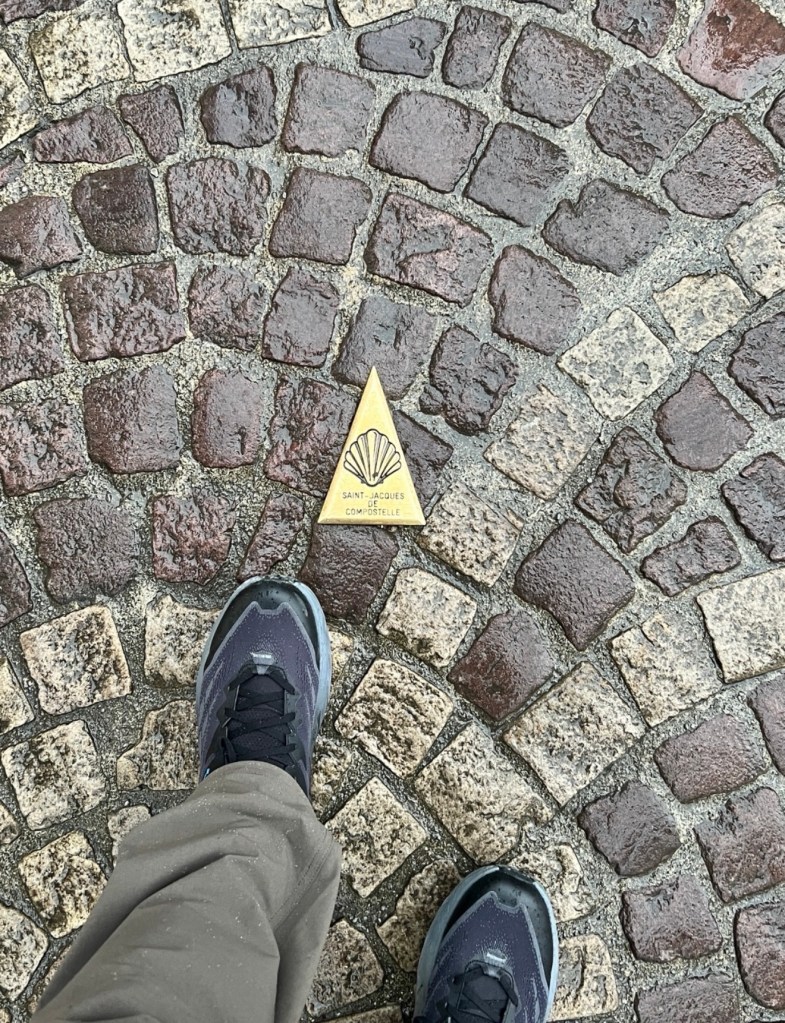
It was taken in St-Jean-Pied-de-Port, France, the starting point of the Camino de Santiago in 2024. Well, today, as I was walking along, I came across this…
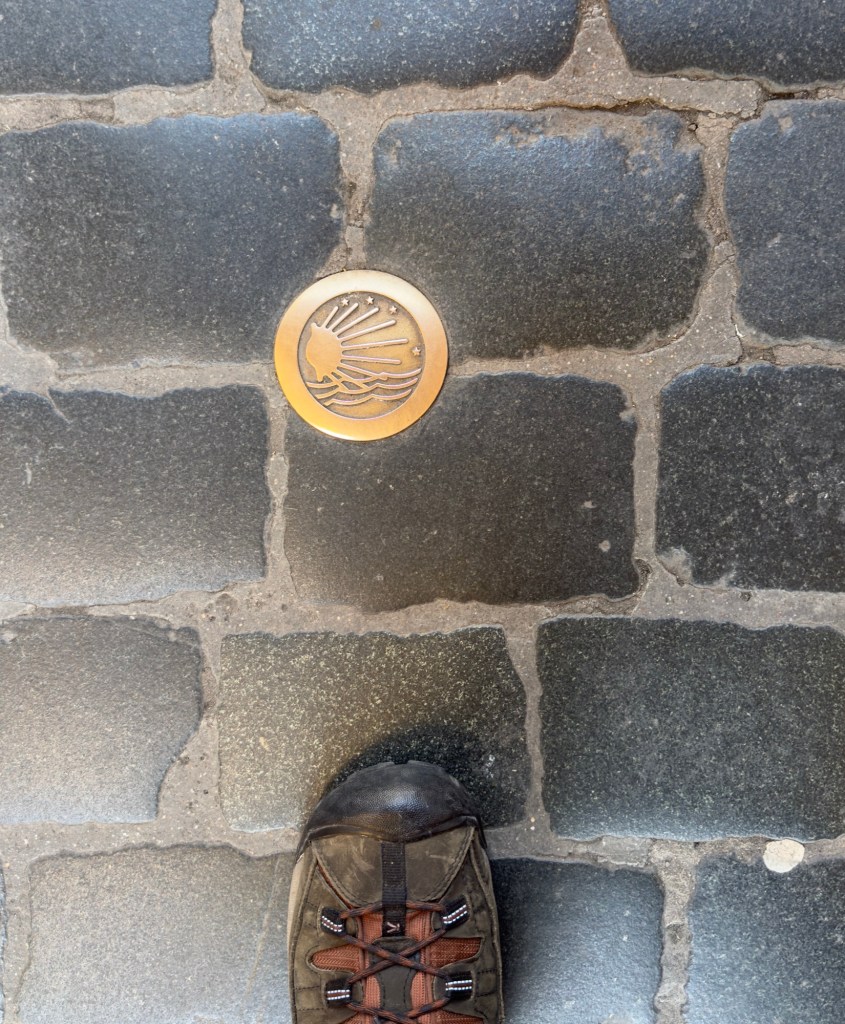
The Camino is not done with me. It keeps calling in the most remarkable ways. Just wait until this October! I’m still blown away by this development, but that’s later. For now… Yeah… “Buen Camino!” Mine continues! God is good.
My day and my life. It was and is a good one. Tomorrow, is another travel day. Back to Luxembourg. There are some places I want to see and I’m planning on a couple of “vacation” days where I look out the window of my hotel room, read my book, sip some wine, and not worry about the world too much.
Blessings to you all.

