Sermon: Proper 17 RCL C – “The Lord’s Possession”


A father told his daughter, โ€œYou graduated with honors; here is a car I bought many years ago. It’s quite old now. But before I give it to you, take it to the used car lot downtown and tell them I want to sell it to see how much theyโ€™ll offer.โ€ The daughter went to the used car lot, came back, and said, โ€œThey offered me $1,000 because it looks very worn out.โ€ The father then said, โ€œTake it to the pawnshop.โ€ The daughter went to the pawnshop, returned, and said, โ€œThey offered $100 because it is a very old car.โ€ The father then asked his daughter to show the car at a car club. The daughter took the car there, came back, and told her father, โ€œSome people in the club offered $100,000 because itโ€™s a Nissan Skyline R34, an iconic car thatโ€™s highly sought after.โ€ The father said, โ€œThe right place values you the right way. If you are not valued, donโ€™t be upset; it means you are in the wrong place. Those who recognize your worth are the ones who appreciate you. Never stay in a place where no one sees your value.โ€

While he was in Corinth, the Apostle Paul wrote a letter to the church in Romeโ€”The Letter to the Romans. He had not yet visited the city, but news of the church there had reached him.

Broken down, Romans provides guidance on several topics, but overall, Paulโ€™s main concern is the conflict between Jewish Christians and Gentile Christians. This was actually a common issue in the early Church. 

We know that the Israelites are God’s chosen people. The word “chosen” is defined as โ€œselected or marked for favor or special privilege.โ€ That very much describes the Covenant God made with Abraham and explains why the Israelites were chosen. When making the Covenant, God said, โ€œGo from your country and your kindred and your father’s house to the land that I will show you. And I will make of you a great nation, and I will bless you and make your name great, so that you will be a blessing. I will bless those who bless you, and him who dishonors you I will curse, and in you all the families of the earth shall be blessed.โ€ (Genesis 12:2-3)

It is easy to see the โ€œmarked for favor or special privilegeโ€ in those words. And it is also easy to overlook why the Israelites were so marked, but it is right there in the middleโ€”โ€œAnd I will make of you a great nation, and I will bless you and make your name great, so that you will be a blessing.โ€

Yes, God says, I am setting you apart for blessing and honor, but I am doing so for a very specific purpose. I am blessing you so that you will be a blessing to the world. The Lord stated it clearly through the Prophet Isaiah.

โ€œIt is too light a thing that you should be my servant
ย ย ย ย to raise up the tribes of Jacob”

(The โ€œtribes of Jacobโ€ is understood to be all the Jewish peopleโ€”the Israelites.)

โ€œIt is too light a thing that you should be my servant
ย ย ย ย to raise up the tribes of Jacob
ย ย ย ย and to bring back the preserved of Israel;
I will make you as a light for the nations,
ย ย ย ย that my salvation may reach to the end of the earth.โ€ (Isaiah 49:6)

God selected the Israelites to be His chosen people so they could bless others, and in return, He promised to bless them. However, somewhere along the way, it seems that the Israelites focused more on being blessed than on blessing others. They viewed their chosen-ness as a privilege and a right to look down on those around them.

Following the death and resurrection of Jesus, many Israelites became Christians and brought their Jewish practices with them. This wasnโ€™t a problem as long as they didnโ€™t impose these practices on the Gentiles. However, they also carried with them a false idea of being chosen and privileged. So, in his letter to the Romans, Paul asks, โ€œWhat then? Are we Jews any better off? No, not at all. For we have already charged that all, both Jews and Greeks, are under sin.โ€ (Romans 3:9) A few paragraphs later, he asks, โ€œIs God the God of Jews only? Is he not the God of Gentiles also? Yes, of Gentiles also, since God is oneโ€”who will justifyโ€ both by faith. (Romans 3:29-30) In other words, no one has any special privileges except those who come to God in faith. Therefore, Paul says in chapter 12 of Romans, โ€œLet love be genuine. Abhor what is evil; hold fast to what is good. Love one another with brotherly affection. Outdo one another in showing honor.โ€ (Romans 12:9-10) and โ€œLive in harmony with one another. Do not be haughty, but associate with the lowly.โ€ (Romans 12:16a)

This theme recurs often in Paulโ€™s letters. In his letter to the Philippians: โ€œDo nothing from selfish ambition or conceit, but in humility count others more significant than yourselves. Let each of you look not only to his own interests, but also to the interests of others.โ€ (Philippians 2:3-4) To the Ephesians, he says, โ€œIโ€ฆ urge you to walk in a manner worthy of the calling to which you have been called, with all humility and gentleness, with patience, bearing with one another in love, eager to maintain the unity of the Spirit in the bond of peace.โ€ (Ephesians 4:1-3)

This all connects back to and could have originated from the events in our Gospel reading today. 

Jesus was invited to the home of a Pharisee to share a Sabbath meal. As we know, most Pharisees were not real fond of Jesus and were happy to let him know. Usually, when they had Him around, they looked for ways to trap Him. This time is no different. 

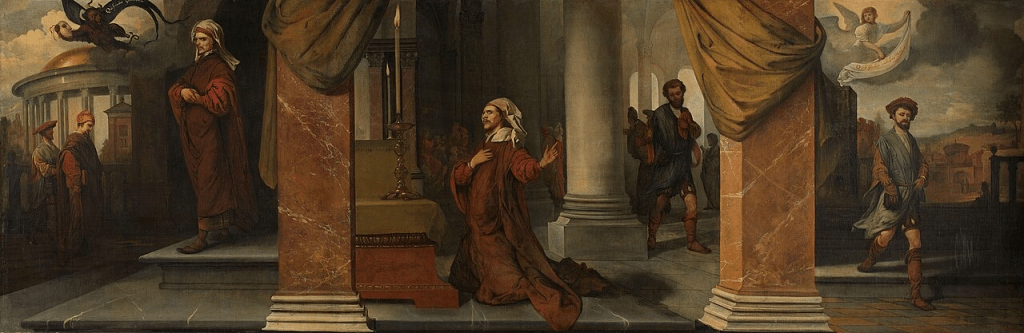
The Pharisees closely resembled the Jewish Christians of Paulโ€™s time. They, more than any other Israelites, were called to be the priestsโ€”if you will, the light of the lights of the world. Instead, they became a burden to the people and saw themselves as superior. In their eyes, they were the truly chosen. Remember the Pharisee and the tax collector praying in the Temple, and how the Pharisee prayed, โ€œGod, I thank you that I am not like other men, extortioners, unjust, adulterers, or even like this tax collector. I fast twice a week; I give tithes of all that I get.โ€ (Luke 18:11-12) 

And, in the time of Jesus, this one-upmanship wasnโ€™t limited to the religious leaders. Remember when Jamesโ€™ and Johnโ€™s momma got into the mix? โ€œSay that these two sons of mine are to sit, one at your right hand and one at your left, in your kingdom.โ€ (Matthew 20:21) Then there was the argument over who is the greatest. On and on and round and round. It all boils down to the same thingโ€”they all wanted the best seat at the party or, at the very least, a place at the head table. 

Youโ€™re probably thinking, I know where heโ€™s going with this one. Heโ€™s going to tell us how we wrongfully assign value to others based on influence, income, status, and similar factors. Thatโ€™s a sermon Iโ€™ve preached before, but today, I want you to focus on yourself. What value do you place on your own soul? 

I know many people who believe their worth to the world doesnโ€™t even reach 100 dollarsโ€”pocket change, if that. They think that not only are they unworthy of a good place at the table, but they shouldnโ€™t even be invited to the banquet. Yet, Jesus the Good Shepherd would leave the ninety-nine to find you. No matter how you see yourself, Jesus looked at you and said, You are worth dying for. Each individual soul is of the utmost value to God. To paraphrase St. Augustine, โ€œThe whole universe, with all its good things, is not worth as much as the soul of one humble person.โ€

St. Paul said, โ€œFor none of us lives for ourselves alone, and none of us dies for ourselves alone. If we live, we live for the Lord; and if we die, we die for the Lord. So, whether we live or die, we are the Lordโ€™s possession.โ€ (Romans 14:7-8)

We are given the freedom to set aside concerns about which seat we hold at the table. Why? Because we are all the Lordโ€™s possessions. He bought us with His very own blood. Therefore, our one and only concern should be whether or not we are living a life worthy of an invitation to the banquet. That is why Paul and Jesus both became upset about this argument. It was never about who was the greatest or who would sit at the head table. It has always been about who would be invited to the banquetโ€”who would attain salvation. 

Jesusโ€™ life, every word and action, proclaims to you, You are worth more to me than life itself. I invite you to the banquet. I have a seat set aside just for you. Here, He says, is your invitation. All you need to do is accept.

Let us pray: O God, source of all life and goodness, you fashion human lives in your image and likeness, and through your love, give each human life dignity, sacredness, and priceless worth; awaken in every heart new reverence for the least of your children, and renew among your people a readiness to nurture and sustain your precious gift of human life at all stages, and in all conditions. Amen.

Sermon: Bernard of Clairvaux


Born in 1090, Bernard of Clairvaux grew to become a force to be reckoned with.  Not only did he establish a monastery at Clairvaux, but through his teachings, sixty other monasteries were founded and linked with Clairvaux. That alone was a great achievement, but he was also a poet and hymn writer, a preacher of the Crusades, a priest to the Knights Templar, and an advisor to popes and kings. โ€œBy 1140, his writings had made him one of the most influential figures in Christendom.โ€

In his writings, especially those addressed to Pope Eugenius III, Bernard emphasized moderation in all things. He wrote to the overburdened pope, โ€œAs the Lord says, โ€˜What does it profit you to gain the whole world, but lose yourself alone?โ€™ Now since everyone posses you, make sure that you too are among the possessors.โ€  Yes, Bernard is saying, dedicate yourself fully to the work the Lord has called you to, but donโ€™t forget the Lord or yourself in the process. However, if there was one area where Bernard would not preach such moderation, it would be in โ€œlove,โ€ for when it comes to love, Bernard knows no limits. For Bernard, this understanding of love partly stems from his meditations on our Gospel reading.

Jesus said, โ€œIf you abide in me, and my words abide in you, ask for whatever you wish, and it will be done for you.โ€ Bernard understood โ€œin me,โ€ in God, to mean, in love with God. To be in God is to be in love with God. He believes we are called to be in love with God and were created for this purpose, writing, โ€œGod hath endowed us with the possibility of love.โ€ When someone asked him, โ€œWhy should we love God?โ€, he answered, โ€œYou want me to tell you why God is to be loved and how much. I answer, the reason for loving God is God himself; and the measure of love due to him is immeasurable love.โ€ He concludes by asking, โ€œIs this plain?โ€ A more modern way of saying โ€œIs this plain?โ€ could be something like, โ€œDuh!โ€ 

Not only should our love extend to God, but also to one another. Perhaps one of his most famous quotes states, โ€œLove me, love my dog.โ€ If you are going to be in a relationship with someone, then you have to love everything about them, including the goofy dog with fleas, bad breath, and all the other unfortunate and annoying aspects of their character.

In living a life of moderation and love, Bernard fulfilled his own definition of a holy person: โ€œseen to be good and charitable, holding nothing for himself, but using every gift for the common good.โ€

Centuries later, St. Josemarรญa Escrivรก wrote, โ€œLord: may I have due measure in everything… except in Love.โ€ Escrivรก wasnโ€™t speaking directly of Bernard, but those words clearly articulate the pattern of life that Bernard of Clairvaux would call us each to: a life of moderation and perpetual, unrestrained love.

Sermon: Proper 15 RCL C – “Crisis”


One day, when Vice President Calvin Coolidge was presiding over the Senate, one senator angrily told another to go โ€œstraight to hell.โ€ The offended senator complained to Coolidge, as presiding officer. Coolidge looked up from the book he had been leafing through while listening to the debate and wittily replied, โ€œIโ€™ve looked through the rule book. You donโ€™t have to go.โ€

Another short reading for you this morning. This one is an excerpt from the Prophet Micah.

โ€œThe godly has perished from the earth,
and there is no one upright among mankind;
they all lie in wait for bloodโ€ฆ
 
Their hands are on what is evil, to do it well;
the prince and the judge ask for a bribe,
and the great man utters the evil desire of his soulโ€ฆโ€จ
Put no trust in a neighbor;
have no confidence in a friendโ€ฆ
 
for the son treats the father with contempt,
the daughter rises up against her mother,
the daughter-in-law against her mother-in-law;
a man’s enemies are the men of his own house.โ€

It’s a different translation, but that last section is what Jesus was quoting in our Gospel reading today.

Micah prophesied from 742 to 687 BC, and his main complaintโ€”the Lordโ€™s complaintโ€”was directed against both the social and religious elites. His complaint was against the wealthy, who showed no regard for the poor, and the religious leaders who showed no regard for the poor in spirit. Therefore, Micah foresees a coming crisis.

The word crisis originally comes from the Greek and is a medical term. Merriam-Webster defines it as โ€œthe turning point for better or worse in an acute disease or fever.โ€ In this case, the โ€œbetter or worseโ€ means you either live or you die.

In the case of Micah, the evilโ€”the social and religious eliteโ€”will repent, or the evil will be destroyed. As for the latter, Micah speaks of the destruction of Jerusalem.

โ€œTherefore because of youโ€จ    Zion shall be plowed as a field;โ€จJerusalem shall become a heap of ruins,โ€จ    and the mountain of the house a wooded height.โ€
(Micah 3:12)

An unfortunate consequence of the punishment of evil is that the innocent often become caught up in the destruction. Today, we rely on the non-emotive term, collateral damage, to describe the death of innocent people, so we donโ€™t have to admit we killed them.

So, when the crisisโ€”the pivotal moment for better or worseโ€”arrives, A) the people will repent, return to the Lord, and live, or B) Jerusalem will fall, and the wicked, along with the collateral damage, will perish.

How did it all turn out? In 586 BC, Nebuchadnezzar and the Babylonian army sacked Jerusalem, destroyed the First Temple, and exiled the people.

Micah warned, โ€œThe path we are taking is leading to our destruction. We’re about to experience a certain hell on earth, but Iโ€™ve checked the rule book, and we donโ€™t have to go.โ€ The crisis arrived, and the people choseโ€ฆ wrongly.

By examining these events, we can find a pattern for any crisis.

  • A specific path is chosen, but there are early warning signs that it may be the wrong path.
  • A shrugging of shoulders, thinking itโ€™ll be OK, or the status quo rules.
  • The early warning signs begin to turn into real problems. Sirens are sounding.
  • The symptoms are addressed, but not the root problem. It begins to fester.
  • A catalyst or trigger of some sort pushes it all over the edge. Hell on Earth follows.
  • The crisisโ€”the turning point for better or worseโ€”blossoms.
  • Options: Strong corrective measures are implemented to prevent a disaster or destruction.

In our Gospel, Jesus said, โ€œYou know how to interpret the appearance of earth and skyโ€”a cloud rising in the west or a south wind blowingโ€”but why do you not know how to interpret the present time?โ€

Jesus said, โ€œYouโ€™ve chosen a certain path, but there are warning signs everywhereโ€”your country is occupied, there is trouble within, the religious system is broken, and there is no fear of God. Yet, in your arrogance, you shrug your shoulders, thinking everything is A-OK. The prophets, like John the Baptist, have sounded the alarm. You believe the solution is to ratchet up the requirements of the Law, but youโ€™re missing the point. Itโ€™s not the Law thatโ€™s the problem; itโ€™s you! All you’re doing is oppressing the people and further angering the Father. Youโ€™ve created Hell on Earth, so you can either turn and repent, or all this will be destroyed. โ€˜Truly, I say to you, there will not be left here one stone upon another that will not be thrown down.โ€™ (Matthew 24:2) But,โ€ Jesus said, โ€œIโ€™ve looked through the rule book, and you donโ€™t have to go that way.

How did everything turn out? In 70 AD, Titus and the Roman army sacked Jerusalem, destroyed the Second Temple, and enslaved or scattered the people. The exact same pattern and result of the crisis that occurred in the time of Micah.

Not only does this pattern of crisis occur on a large scale for nations, but it also applies to individuals.

I believe it has been at least a week since I last mentioned a Stephen King book, soโ€ฆ

In The Stand, one of the main characters, Larry Underwood, has been experiencing troubles in his life. As he reflects on it, he remembers another person who faced a time of trialโ€”Jory Baker.

Jory was a guitarist, and a good one at that. He even played in a band that looked as though they were going to make it big, but then Jory was involved in an accident. This was followed by intensive rehab and a little drug called Demerol. Jory got hooked, and when he no longer had access to Demerol, he turned to heroin. He ended up on the streets, begging for change and his next fix. Hell on Earth. Crisisโ€”the point where he could choose either life or destruction. Over eighteen months, Jory managed to get clean and stay clean. He chose life.

As he remembers this, Larry thinks, โ€œNo one can tell what goes on in between the person you were and the person you become. No one can chart that blue and lonely section of hell. There are no maps of the change. You just โ€ฆ come out the other side. Or you donโ€™t.โ€ (p.575)

We understand that all these crisesโ€”whether between nations, within individuals, or any type in betweenโ€”are the direct result of the conflict between Heaven and Hell, with the prize being the soul of Godโ€™s people. In C.S. Lewisโ€™ The Screwtape Letters, the demon writes, โ€œWe want cattle who can finally become food; He [God] wants servants who can finally become sons.โ€ Therefore, in every situation, we must be those who can properly โ€œinterpret the present time.โ€ And yes, we must be able to do this for the world and society around us, so we donโ€™t blindly follow the masses to destruction, but equally important, we must learn to unemotionally and honestly โ€œinterpret the present timeโ€ of our own lives. How do we achieve this?

We must learn to take a step back from our lives and unflinchingly scrutinize them, as if from the outside. Are there warning signs that we may be headed in the wrong direction? If so, are we glossing them over or pretending that theyโ€™re really no big deal? In our arrogance, are we convincing ourselves that weโ€™re right, even when evidence suggests otherwise? If we do recognize areas of concern, are we just treating the symptoms while ignoring the real problem? Is a crisis actually developing or already upon usโ€”Hell on Earth? To be blunt, if it looks like youโ€™re heading to hell, remember, thereโ€™s nothing in the rule book that says youโ€™ve got to go. Ask yourself, โ€œIf in my analysis of the present time and path, will I come out the other sideโ€ฆ or not?โ€ If the answer is โ€œYes,โ€ give thanks to the Lord your God. If the answer is โ€œNo,โ€ then pray for wisdom and courage to change. After all, โ€œWhat does it profit a man to gain the whole world and forfeit his soul?โ€ (Mark 8:36)

The life of a Christian person is often and mistakenly solely measured by emotions. Do I feel the joy of the Lord? Am I at peace? Do I sense Godโ€™s presence in my life? If you answer โ€œYesโ€ to these questions, then you feel like all is well. However, we canโ€™t rely only on our emotions. As Christians, we must sometimes sit down, like an academic, and study our livesโ€”properly interpreting the present timesโ€”and then be prepared to make the necessary course corrections. In doing so, with Godโ€™s help, we will safely come out the other side.

Let us pray: O Lord, mercifully receive the prayers of your people who call upon you, and grant that they may know and understand what things they ought to do, and also may have grace and power faithfully to accomplish them; through Jesus Christ our Lord, who lives and reigns with you and the Holy Spirit, one God, now and for ever. Amen.

Sermon: Proper 14 RCL C – “O My Jesus…”


A father reports that he used to have trouble getting his son to clean his room. The father would insist that he, โ€œDo it now,โ€ and the son would always agree to do so, but then he wouldnโ€™t follow throughโ€”at least not right away. After high school, the son joined the Marine Corps. When he came home for leave after basic training, his father asked him what he had learned.

โ€œDad,โ€ he said, โ€œI learned what โ€˜nowโ€™ means.โ€

For me, when it comes to cleaning house, โ€œNowโ€ generally means the day or a few hours before I expect company; otherwise, thereโ€™s a good chance that there will be dirty dishes in the sink, dirty socks on the floor, a pile of clean laundry waiting to be folded on the dining room table, and if the cat got sick on my desk, it would be in better shape than it is now. I guess I agree with Phyllis Diller and Erma Bombeck when it comes to housework. Phyllis says, โ€œHousework won’t kill you, but then again, why take the chance?โ€ And Erma writes, โ€œMy theory on housework is, if the item doesn’t multiply, smell, catch fire, or block the refrigerator door, let it be. No one else cares. Why should you?โ€ 

Iโ€™m guessing they werenโ€™t real keen on the word โ€œNowโ€ when it comes to housework, either. 

The Bureau of Labor Statistics reports that, on average, we spend 2.01 hours per day on household chores, and yes, women spend more time than menโ€”1.67 hours for men and 2.34 for women. (Source) Clearly, theyโ€™ve never been to my house. I eventually get everything nice and clean, but it doesn’t last. Give it a few days, and the dishes will start to stack up again, and the dirty socks will be on the floor. Before you know it, the whole place needs a solid napalm strike to clear it all up.

In our Gospel reading, Jesus talks about the servants in a house who remain awake and alert, and the owner of the house who guards against the thief. The servants fulfill their duties for the Masterโ€”taking care of his needs and propertyโ€”and the owner protects against the thief who wishes to break in and steal. In both cases, we understand that the home Jesus is speaking about is our soulโ€”the dwelling place for the Holy Spirit of God. As Godโ€™s children, we are to take care of our souls, keeping them pure and free of sin, and we need to guard them so that the devil cannot come in and destroy them. But for me, sometimes the inside of my soul looks a bit like my houseโ€”a little messy.

On July 13, 1917, Our Lady of Fatima appeared for the third time to the three childrenโ€”Lucia dos Santos, Jacinta Marto, and Francisco Marto. During the visitation, she gave them a brief but terrifying vision of hell. Lucia wrote, โ€œShe opened Her hands once more, as She had done in the two previous months. The rays of light seemed to penetrate the earth, and we saw as it were a sea of fire. Plunged in this fire were demons and souls in human form.โ€ She then goes on to describe what they saw.

It was so terrifying, she later wrote, โ€œHow can we ever be grateful enough to our kind Heavenly Mother, who had already prepared us by promising, in the first Apparition, to take us to Heaven. Otherwise, I think we would have died of fear and terror.โ€ 

During this same visitation, the Virgin Mary gave the children a prayer that we now know as the Fatima Prayer or O My Jesus.ย 

โ€œO my Jesus, forgive us our sins, save us from the fires of hell; lead all souls to heaven, especially those most in need of thy mercy.โ€

Mary asked that the children share with the world her desire for this prayer to be said at the end of each decade of the Rosary. It is also prayed just before starting the first decadeโ€”the Our Father and the first ten Hail Marys. 

When I pray my Rosary, it is during those opening prayers that I beginโ€”or at least tryโ€”to gain some sort of focus, and on one particular day, it was the same. I recited the Creed, prayed the Our Father, the first three Hail Marys, and the Gloria Patri, and then began the Fatima Prayer, โ€œO my Jesusโ€ฆโ€ I stopped. The next word, โ€œforgive,โ€ simply would not come out. I tried again. โ€œO my Jesusโ€ฆโ€ I couldnโ€™t go any further. Why?

There was a story circulating when I was in seminary. It told of a young man who had a vision of himself entering a room. Inside the room were all these small filesโ€”row after row of them. The drawers seemed to be large enough to hold a piece of paper no bigger than a note card. As he got closer, he saw that each of the file drawers had labels. These included such things as โ€œBooks I Have Readโ€ and โ€œTelevision Programs I Have Watched.โ€ There were othersโ€”โ€œLies I Have Toldโ€ and โ€œComfort I Have Given.โ€ There was one that read โ€œThings Done in Angerโ€ and one right next to it, โ€œThings I Have Said in Anger.โ€

He pulled that one out just to see what was inside, and to his horror, he found that written on each card was something he had said in anger. Then he realized he was standing in the record room of his life. Every single event, from the very best to the most sinful, had been recorded and filed. 

As he examined more of the file drawer labels, he became absolutely convinced that no oneโ€”not anyone!โ€”should be allowed to see what was written here. But, of course, there was One who would see, and that One, Jesus, was suddenly present, standing before the man. 

Without a word spoken, and instinctively, Jesus went to the drawer that held the cards depicting the most horrible of sins, pulled it out, and began to read each card. The man was horrified and heartbroken. He collapsed in shame, but as he watched, he witnessed the most remarkable thing: on each of the cards, Jesus wrote His Name, covering the sin. 

There I was, trying to pray my Rosary, โ€œO my Jesusโ€ฆ,โ€ but unable to ask for forgiveness. Why? Well, itโ€™s a bit like my house. When my house gets messy, it’s nothing new. Itโ€™s always the same mess. Dirty dishes, dirty socks, a messy desk, etc. My soul ends up the same way. When Jesus has to come in and go through the files of my life, itโ€™s not like He pulls out a card and says, โ€œWow, didnโ€™t see that coming,โ€ or โ€œHey, thatโ€™s original.โ€ No. Itโ€™s the same thing each and every time. Entire file drawers dedicated to my life with the same thing written time and time again, and Jesus signing over it again and againโ€ฆ O my Jesus. I found myselfโ€”not out of disobedience, but out of shame and frustrationโ€”simply unwilling to ask Him once more to forgive me for the same damn thing I asked Him to forgive me for the day or week before. O my Jesus.

I could imagine Him standing there, pen in hand, poised and ready to sign, and there I wasโ€ฆ O my Jesus.

In our Gospel reading, Jesus said, โ€œBe dressed for action and have your lamps lit; be like those who are waiting for their master to return from the wedding banquet, so that they may open the door for him as soon as he comes and knocks.โ€ Yet, Iโ€™m sitting there in the middle of a very dirty house, knowing I must do something but unable to act.

Joshua said, โ€œChoose you this day whom you will serve.โ€

Quoting what the Lord said to the Prophet Isaiah, Paul wrote, โ€œIn a favorable time I listened to you, and in a day of salvation I have helped you.โ€ Then Paul added, โ€œBehold, now is the favorable time; behold, now is the day of salvation.โ€ (2 Corinthians 6:2)

โ€œSon, what did the Marines teach you?โ€ 

โ€œDad, I learned what โ€˜nowโ€™ means.โ€

And I prayed, โ€œO my Jesus, forgive us our sins, save us from the fires of hell; lead all souls to heaven, especially those most in need of thy mercy.โ€

Iโ€™ll share something you might find hard to accept, but itโ€™s true: no matter how much effort you put in, your soul will get dirty. You can’t keep it clean; once it becomes dirty, you wonโ€™t be able to clean it with your own strength and power. So, when the Master comes backโ€”when Jesus returnsโ€”He will walk into the house of your soul and He will see the mess. Your only recourse is to say to Him todayโ€”right nowโ€”โ€œO my Jesus, forgive.โ€ And John tells us, โ€œIf we confess our sins, he is faithful and just to forgive us our sins and to cleanse us from all unrighteousness.โ€ (1 John 1:9) If we confess our sins, Jesus will sign His name on the card and cover our sins.

The Psalmist writes, โ€œFor you, O Lord, are good and forgiving, abounding in steadfast love to all who call upon you.โ€ Jesus stands ready to forgive all those who call on Him. Whatever reasons or excuses you may haveโ€”pride, shame, ignorance, stubbornness, or anything elseโ€”set it aside and humbly come before your God and King.

Let us prayโ€ฆ would you repeat after me: O my Jesus, forgive us our sins, save us from the fires of hell; lead all souls to heaven, especially those most in need of thy mercy. Amen.

Purpose Anxiety

I read an article this morning–Why the search for meaning can cause โ€˜purpose anxiety,โ€™ and what to do about it–on AP.

The article defines the issue: “This is ‘purpose anxiety’ โ€” the gnawing sense that oneโ€™s life should have an overarching purpose, but itโ€™s unclear how to discover it.” It then goes on to further explore the issue and point to possible solutions. However, in my opinion, the article clearly identifies the root cause, without noting any correlation to the problem.

Religion, for instance, often offered purpose and meaning to believers. But those who identify as religious has dropped significantly over the years (although that appears to beย leveling offย recently according to a 2025 survey by the Pew Research Center).

What do the numbers show?


I am smart enough to know that anxiety and depression have other causes and that there are multiple variables involved. That said, I think it would be quite interesting to see the anxiety/depression numbers for those who have found their purpose in God.

Sermon: Proper 13 RCL C – “Vanity Vanity”

Three individuals are about to be executed, put to death before the firing squad. One is a Japanese fella, one is from Oklahoma, and the third is a crazy Cajun named Boudreaux. The guard brings the Japanese fella forward, and the executioner asks if he has any last-minute requests. He replies, โ€˜No, I do not,โ€™ so the executioner sets him up and then turns and shouts to the firing squad: โ€œReady! Aimโ€ฆโ€ Suddenly, the Japanese fella yells out: โ€œTsunami! Run run run.โ€ While everyone is distracted and panicked, the Japanese fella runs away and escapes. The guard brings the next prisoner alongโ€”the Oklahoman. The executioner asks if he has any last-minute requests. He answers, โ€œI have nothing to sayโ€, so the executioner gets him ready, then barks his order to the firing squad: โ€œReady! Aim…โ€ Suddenly, the Oklahoman yells as loud as he can: โ€œTornado! Run run run!!!โ€ Everyone is again distracted, and the Oklahoman makes his getaway. By now, olโ€™ Boudreaux has got it all figured out. The guard escorts him forward and asks if he has any last-minute requests. Boudreaux replies, โ€œNo,โ€ but has a grin on his face. The executioner turns sharply to the firing squad and shouts: โ€œReady! Aim…โ€ And Boudreaux hollers out: โ€œFire!โ€

I do not believe the firing squad was distracted, Boudreaux.

When I drive, Iโ€™m not a speederโ€”maybe three or four miles over at most. Iโ€™ll set the cruise, and then I donโ€™t have to worry about it. The other day, as I was driving down the road, cruise set, I was listening to a book. Iโ€™m not sure which one, but I was fairly well engrossed. As I was going along, someone came up and passed me going at least 20-25 mph faster than me. I wished him well, but then another car came up on me pretty quick, and before you know it, there are about four cars behind me. I look in the rearview mirror and say, โ€œIโ€™m not getting a ticket for you folks, so just go around.โ€ At which point, I look at my speedometer. I had set the cruise as I was leaving the last town, but I was involved with my book. Unfortunately, when I set the cruise, I was in a 45 mph zone, but now I was in a 70. Iโ€™m not sure how many miles I had putted along at that speed, but Iโ€™m certain those stuck behind me were quite pleased when I figured it out.

When it comes to accidents, being distracted is the number one cause. Iโ€™ll try to do better.

Merriam-Webster defines distraction as: โ€œan object that directs one’s attention away from something else.โ€ Sometimes those distractions are not of our own making: youโ€™re sitting quietly reading your book, and a meteor crashes through the ceiling and obliterates the coffee table, sending the cat into a maniacal frenzy. Not your fault or your doing. At other times, you are supposed to be studying for an exam, but you choose to be distracted by playing video games.

Why do we do such things? It might be out of compulsion, a lack of discipline, or simply because sometimes we just arenโ€™t all that bright. Any number of reasons, but ultimately, weโ€™re looking for that one thing that will make us happy in the moment and distract us from what we should be focusing on.

Qoheleth is the author of the book of Ecclesiastes. In the third verse of chapter one, he writes, โ€œWhat does man gain by all the toil at which he toils under the sun?โ€ (1:3) In this context, the word โ€œtoilโ€ refers to all human efforts, whether they are noble, common, necessary, silly, or anything else. In our first lesson today, he discussed the toil of wisdom: โ€œI applied my mind to seek and to search out by wisdom all that is done under heaven.โ€ (1:13) His goal was to discover the worth of gaining wisdom in his life. Similarly, he explores the meaning behind the toil of gaining wealth, possessions, honor, pleasure, and labor. He did all, apparently knowing no limits.ย 

He concluded his discussion of each pursuit by declaring their purpose and value to be, “Utterly senseless, everything is senseless!” “Meaningless of meaninglessness! All is meaningless!” “Futility of futilities, all is futile.โ€ “Absolutely pointless! Everything is pointless.โ€ “Vanity of vanities, all is vanity.โ€ All of our wealth, wisdom, possessions, honor, pleasure, laborโ€”all of our toils and distractions are nothing. Are you depressed yet? โ€œThanks, Father John, so glad I came to church today for this uplifting and edifying message. Iโ€™ll be sure to sleep in next Sunday.โ€ If we left it there, we would all be more than a bit depressed, but Qoheleth does not leave it there, and neither shall we.

To work and seek only wealth and possessions solely for oneself is vanity and meaningless; however, building up treasures in heaven offers lasting and abundant rewards. Pursuing pleasure purely for pleasureโ€™s sake is the height of selfishness, but truly loving as Christ loved us and finding joy in God and others are among the many blessings of creation. Iโ€™m certain you see the difference. The issue is that we often seek these things apart from God, and anything apart from God is defined in one simple word: sin.

This is part of the message from the parable we read this morning. The man has worked hard, he has toiled year after year, and has become wealthy. Now, he has a bumper crop, and in his vanity, he decides that he is set and only needs to build barns large enough to hold everything. He thinks he can be done with all this toiling. Yet God says to him, โ€œYou fool! This very night your life is being demanded of you. And the things you have prepared, whose will they be?โ€ And Jesus adds, โ€œSo it is with those who store up treasures for themselves but are not rich toward God.โ€ The man became so distracted by earthly riches and toilโ€”โ€œVanity of vanities, all is vanityโ€โ€”that he lost sight of what he should have been focused on.

In the end, Qoheleth tells us, โ€œThe end of the matter; all has been heard. Fear God and keep his commandments, for this is the whole duty of man.โ€ (12:13) What should we focus on, and not let distractions steer us away? The fear of God and His commandments. What does it mean to fear God? Charles Spurgeon answers that for us. โ€œBy this we do not mean the servile fear which worketh dread and bondage, but that holy fear which pays reverence before the majesty of the Most High, and has a high esteem of all things sacred, because God is great, and greatly to be praised.โ€ (Sermon: Obadiah; or, Early Piety Eminent Piety) If that is the fear of God, what are His commandments? You know the answer; we talked about it a few weeks back:  โ€œA new commandment I give to you, that you love one another: just as I have loved you, you also are to love one another.โ€ (John 13:34) (I can assure you that I know more Bible verses than this, but I do not know of any that are more important.)

Qoheleth tells us that everything is vanity, meaningless, pointless, and futile except to remain in awe of God and His majesty and to love one another, and we know that loving one another is, in fact, loving God.

You have heard of Aleksandr Solzhenitsyn. In 1945, he was imprisoned for speaking out against the Soviet regime. After his release, he spent from 1958 to 1968 writing The Gulag Archipelago, a nonfiction book about life in a Soviet prison or gulag. As I studied these verses from Ecclesiastes, I was reminded of one of Solzhenitsynโ€™s conclusions. He wrote,

โ€œWhat about the main thing in life, all its riddles? If you want, I’ll spell it out for you right now. Do not pursue what is illusoryโ€”property and position: all that is gained at the expense of your nerves decade after decade, and is confiscated in one fell night. [He is thinking of his arrest when he lost everything.] Live with a steady superiority over lifeโ€”โ€”donโ€™t be afraid of misfortune, and do not yearn after happiness;โ€ฆ whom should you envy? And why? Our envy of others devours us most of all. Rub your eyes and purify your heartโ€”and prize above all else in the world those who love you and who wish you well. Do not hurt them or scold them, and never part from any of them in anger; after all, you simply do not know: it might be your last act before your arrest, and that will be how you are imprinted in their memory!โ€ (p.591-592)

We must work to care for ourselves and our families. We have possessions for the same reasons. We seek entertainment to bring joy, and even Qoheleth tells us this is from God. He says, โ€œThere is nothing better for a person than that he should eat and drink and find enjoyment in his toil. This also, I saw, is from the hand of God, for apart from him who can eat or who can have enjoyment?โ€ (2:24-25) Still, none of these things should take priority over or distract us from our fear of God and our love for one another. 

Do not sin. Keep in awe and fear of God, and love one another. From Jesus to Qoheleth to Solzhenitsyn to many others, there is no greater or nobler meaning to life.

Let us pray: Most holy Trinity, Godhead indivisibleโ€”Father, Son, and Holy Spiritโ€”our first beginning and our last end, You have made us in Your own image and likeness. Grant that all the thoughts of our minds, all the words of our tongues, all the affections of our hearts, and all the actions of our being may always be conformed to Your holy Will. Thus, after we have seen here below in appearances and in a dark manner by means of faith, we may finally come to contemplate You face-to-face In the perfect possession of You forever in heaven. Amen.

Sermon: Proper 12 RCL C – “The Lord’s Prayer”


President Jimmy Carter once told a joke during a speech in Japan that made the audience burst into laughter. Impressed, he asked how the interpreter managed to get such a big reaction. The interpreter admitted to saying, โ€œPresident Carter told a funny story. Everyone must laugh.โ€

Translating from one language to another isn’t always easy. When I travel, Iโ€™ve learned to use Google Translate, but Iโ€™ve also learned that the other person doesn’t always receive the same message you’re seeing because of translation issues. Some companies might have learned this lesson when entering new markets. 

Kentucky Fried Chicken: You know it and you love it. It is โ€œFinger-licking good,โ€ except in China, where it translates to โ€œEat your fingers off.โ€

Clairol: Some of you ladies may know of the curling iron named โ€œMist Stick.โ€ All is well and good in the USA, but in Germany, it translates as โ€œManure Stick.โ€ Also known as, How to End the Date Early.

Coors Beer: In the 1970s and 80s, they had an ad campaign with the slogan, โ€œTurn it loose.โ€ Sounds like fun, unless you’re in Spain, because it translates to โ€œSuffer from Diarrhea.โ€

Translating isn’t always an exact science, especially considering the complexity and nuances of the English language, so it’s best to consult those who might know a bit more than even Google Translate.  

True for marketing campaigns and also for the Bible.

Today, in our Gospel, we read the Lordโ€™s Prayer:

Father, hallowed be your name.
Your kingdom come.
Give us each day our daily bread.
And forgive us our sins,
for we ourselves forgive everyone indebted to us.
And do not bring us to the time of trial.

Question: When you heard that, how many of you thought, โ€œThatโ€™s not the Lordโ€™s Prayer I know. Seems they missed a few words.โ€ What about โ€œYour will be done on earth as it is in Heavenโ€ or โ€œdeliver us from evilโ€? Those are pretty important bits to just leave out.

I thought the same thing, and it got me to thinking about how the Gospels came through history to us. This is one of those technical lessons, so if you start to glaze over, Iโ€™ll try and wrap it up quickly.

First, how many Gospels are there? Four? Nope. There are actually over thirty books or parts of books that claim to be Gospels. Thereโ€™s the Gospel of Thomas, the Gospel of Mary Magdalene, The Gospel of Truth, and even one called the Gospel of Judas. But over time, the Church studied these closely and decided only four could be called true Gospelsโ€”Matthew, Mark, Luke, and John. Since Matthew, Mark, and Luke are so similar, theyโ€™re called the Synoptic Gospels, meaning they can be viewed together.

The Church has always believed that John was written independently of the others; however, itโ€™s generally thought that the authors of the synoptic Gospels copied parts of each otherโ€™s and then added their own original material. How does that work?

Initially, it was believed that Matthew was written first. This is known as the Primacy of Matthew. This view states that both Mark and Luke used Matthew as a guide for writing their Gospels. However, most scholars now believe this isnโ€™t correct and agree on the Primacy of Mark.

This is known as the Four-Source Hypothesisโ€”a hypothesis, it is, and itโ€™ll help if you have the diagram on the insertโ€”says that Mark was written first, and Matthew and Luke used it as a guide. Thereโ€™s a lot of reasoning behind it, which can cause you to glaze over, but Luke had a copy of Mark, then added some of his own material, which is known as โ€œL.โ€ Matthew also had a copy of Mark, and added his own material, known as โ€œM.โ€ Matthew and Luke were written independently of each other, but both contain similar sayings of Jesus (that are not included in Mark), which introduces a truly hypothetical document know as โ€œQ,โ€ which stands for the German word Quelle, meaning source. Q is said not to contain many of the stories of Jesus, but is primarily a collection of his sayings.

Putting all that together: if you take the Gospel of Mark, add L material, and then add Q, you end up with the Gospel of Luke. Clear as mud? It gets a lot more complicated, but we wonโ€™t go there today.

As I said, hypothetical Q is said to contain the sayings of Jesus. These sayings would includeโ€”the Beatitudes, Love Your Enemies, the temptation in the desert, andโ€”you guessed itโ€”the Lordโ€™s Prayer. The Lordโ€™s Prayer is only found in Lukeโ€™s and Matthewโ€™s Gospels, not in Mark or John. The version of the Lordโ€™s Prayer we read today is from the Gospel of Luke. What we are most familiar with is the version from the Gospel of Matthew. In other words, using the hypothesis we put forth, Luke may have only used Q material, but Matthew would have used Q plus some of his own M material to write his version. Why would they be different? Another theory here: Matthew was with Jesus, while Luke was not. Luke only had access to Q, but Matthew had access to Jesusโ€”he had been with Jesus. Perhaps Matthew heard the expanded version and included it in his Gospel. Ultimately, we donโ€™t really know.

What makes this even more confusing is that if you look at an older version of the Bible, such as the King James Version, youโ€™ll discover that the Lordโ€™s Prayer in Matthew and Luke is exactly the same. Why? A little thing called harmonization. At some point, someone decided they should be the same, and so, presto, they made it so.

Do you really need all this theory to pray the Lordโ€™s Prayer? Nope, but since the Bible contains so much of what we know and understand about God, itโ€™s important to have some knowledge of how it all works. More importantly, though, is knowing how to apply it to our lives. N.T. Wright provides us with a brief guide. He says, โ€œJesus intended this sequence of thoughtโ€”that is, the Lordโ€™s Prayerโ€”to act more like the scaffolding than the whole building, though of course the prayer is used as it stands by countless Christians every day.โ€ (Matthew for Everyone, Part One, p.58)

If the Lordโ€™s Prayer is like scaffolding, then itโ€™s truly the place where the work can take place. If I look up at the cross beams of this church building, I know they arenโ€™t the roof, but the means by which the roof can stand. The same is true with the Lordโ€™s Prayer. Itโ€™s an excellent prayer on its own, but itโ€™s also just the beginning of prayer. We need look no further than the very first wordโ€”Ourโ€”to realize that this is much bigger than a personal petition. Itโ€™s not just about me. In fact, nothing in the prayer is spoken in the singular; itโ€™s always in the plural. That one wordโ€”Ourโ€”tells us that when we pray, we are praying in the company of all Godโ€™s children, both the living and the dead, and those to comeโ€”the Church. Our gathers my prayers and your prayers together and brings them all into the very throne room of God, so that those prayers may be offered before the One who loves us and made us for Himself. Our binds us together as members of the very Body of Christ. Our is so much more, and itโ€™s only the first word. Itโ€™s one piece of the scaffolding, and from it, we build our prayer. 

I once heard it said that if we pray the Lordโ€™s Prayer rightly, then it should take us all day. Itโ€™s easy to see how true that is when we consider it as the scaffolding from which all our prayers flow.

Dietrich Bonhoeffer dedicates a chapter of his book, The Cost of Discipleship, to the Lordโ€™s Prayer, breaking down each line and explaining its significance. He also provides a summary of the prayer. โ€œJesus told his disciples not only how to pray, but also what to pray. The Lord’s Prayer is not merely the pattern prayer, it is the way Christians must pray. If they pray this prayer, God will certainly hear them. The Lord’s Prayer is the quintessence of prayer. A disciple’s prayer is founded on and circumscribed by it. Once again Jesus does not leave his disciples in ignorance; he teaches them the Lord’s Prayer and so leads them to a clear understanding of prayer.โ€ (Macmillan, 1979, p.184)

It can be a fun exercise to explore the more technical aspects of Scripture, but that might not be for everyone. However, learning to hear Godโ€™s voice through them and further understanding how to apply those words is a lifelong practice for us all. When you pray the Lordโ€™s Prayer, take time to meditate on the individual words and petitions, and enter into a richer prayer life.

Let us pray:

Our Father, who art in heaven,
hallowed be thy name;
thy kingdom come;
thy will be done;
on earth as it is in heaven.
Give us this day our daily bread.
And forgive us our trespasses,
as we forgive those who trespass against us.
And lead us not into temptation;
but deliver us from evil.
For thine is the kingdom,
the power and the glory,
for ever and ever.
Amen.

Sermon: Proper 11 RCL C – “Home for the Holy Spirit”


A woman decided to have her portrait painted. She said to the artist, โ€œPaint me with diamond rings, a diamond necklace, emerald bracelets, a ruby brooch, and a gold Rolex.โ€

โ€œBut you are not wearing any of those things,โ€ the artist replied.

โ€œI know,โ€ she said. โ€œItโ€™s in case I should die before my husband. I’m sure he will remarry right away, and I want his new wife to go crazy looking for the jewelry.โ€

The Golden Jubilee Diamond is the world’s largest cut and faceted diamond. It weighs 545.67 carats and is roughly the size of a golf ball. Its market value ranges from $4 million to $12 million, depending on the market. However, due to its color and clarity, it is not the most expensive diamond. That honor belongs to the Pink Star Diamond, which weighs 59.6 carats and sold for $71.2 million. Both diamonds were cut to maximize their carat weight.

When it comes to cutting diamonds, the round brilliant cut offers the most sparkle, with 57 or 58 facets. 57 if the bottom tip remains pointed, and 58 if the point is cut away. These facets are added to help the stone reflect and refract light, creating, in diamond terms, scintillation. 

Perhaps a lot of unnecessary detail, but the point is that our Gospel reading todayโ€”the story of Mary and Marthaโ€”appears only in Lukeโ€™s Gospel and, when studied, proves to be scintillating in all its facets. There are many ways to interpret it, most of which are true, while some are just silly.

One facet, and perhaps the most apparent one, is the difference between the busy and the prayerful life. Martha is rushing around, taking care of all the chores, while Mary sits at Jesus’ feet, listening to His words. Jesus says that Mary has chosen the better way, so we might say that a contemplative life is preferable to a busy one. It’s a good message, and I have preached it before. However, it does not capture the fullness of what is transpiring. 

To start with, if we claim that life is all about the contemplative, then no work gets done. We end up sitting around all day singing Kum ba Yah, letting someone else handle everything. That was similar to what happened in the time of Paul. Do you know what he said? โ€œIf anyone is not willing to work, let him not eat.ย For we hear that some among you walk in idleness, not busy at work, but busybodies.ย Now, such persons we command and encourage in the Lord Jesus Christ to do their work quietly and to earn their own living.โ€ (2 Thessalonians 3:10-12) When Jesus says that Mary chose the better, heโ€™s not saying that Martha chose the wrong. Something more is happening.

Another facet has us viewing this through a feminist lens, and Iโ€™m not being disrespectful when I say that. During the time of Jesus, within the Jewish home, there were only two places where men and women would mingle: outside or in the marital bedroom. The main public roomโ€”think of it as the living roomโ€”was the gathering place for visitors, but it was for men only. It was in this public room that Jesus was speaking. Yet, even though it was reserved for men, Mary was there, sitting with the menโ€”the little hussy. She is not fulfilling her duty as a woman by cooking and cleaning. Not only that, she is also sitting in the place of a man. Yet, when Martha complains, Jesus says that Mary has chosen the better part. For some, this interpretation highlights how Jesus leveled the playing field for men and women. It can be viewed as a type of liberation for women, placing them on equal ground with men. Another good sermon, and one Iโ€™ve preached before, but even though it makes a good point, it doesn’t capture the bigger picture.

Another facet would be to take this same idea and apply it to how Jesus crossed all boundaries. By making the Gospel accessible to Mary and speaking to her so openly, it can go further to suggest that Jesus is willing to cross all boundariesโ€”ethnic, social, political, cultural, and moreโ€”in order to bring the message of Godโ€™s love and redemption to everyone. An excellent point, and Iโ€™m sure at some point, Iโ€™ve preached it.

The ideas of elevating women or crossing boundaries are both valid understandings and teachings, but they are both lacking because they donโ€™t address all aspects of what is happening.

One of the silly interpretations comes from some who suggest that Martha and Mary were deeply in love with Jesus, and that Martha’s jealousy stemmed from Mary’s physical closeness to Jesus. Just for the record, that is not a facet, I havenโ€™t preached it, and Iโ€™m never going to. 

As you examine these events, youโ€™ll discover various other facets, but they are simply that, facets. So, this week, as I kept trying to grasp the message, I never felt truly satisfied with my understanding. I kept focusing on the individual charactersโ€”Mary, Martha, Jesus, the disciplesโ€”and realized I had been approaching it all wrong. Instead of seeking understanding through the facets, I needed to pull back and view the diamond as a whole. 

I believe that this is what Luke was pointing to in the opening sentence: โ€œAs Jesus and his disciples went on their way, Jesus entered a certain village, where a woman named Martha welcomed him into her home.โ€ To understand, we donโ€™t focus on the individual characters; instead, we consider the home and what is inside.

There is Jesus, our King and Redeemer. Like Mary, we are called to sit at His feet, learn from Him, and allow Him to guide our lives. At the same time, we are to be like Martha โ€” tending to our individual callings, whether that means being a homemaker, a priest, a clerk, a nurse, or whatever else Jesus has assigned us. In doing so, we find balance. Too much work and we neglect time with Jesus. Although sitting with Jesus is the best choice, we can’t spend all our lives just sitting; we must also do the work. Does that mean weโ€™ve abandoned Jesus? No. He is still in the house. He is still available to us. He is working alongside us.

In the Gospel of John, at the Last Supper, Jesus speaks to the disciples and says, โ€œWhoever has my commandments and keeps themโ€ฆโ€ (John 14:21). Clarification: What are Jesus’ commandments? He gave them to the disciples just a few minutes earlier: โ€œA new commandment I give to you, that you love one another: just as I have loved you, you also are to love one another. By this all people will know that you are my disciples, if you have love for one another.โ€ (John 13:34-35)

So, โ€œโ€˜Whoever has my commandments and keeps themโ€”that is, whoever lovesโ€”he is the one who loves me. And he who loves me will be loved by my Father, and I will love him and manifest myself to him.โ€™ย Judas (not Iscariot) said to him, โ€˜Lord, how is it that you will manifest yourself to us and not to the world?โ€™ย Jesus answered him, โ€˜If anyone loves me, he will keep my word, and my Father will love him, and we will come to him and make our home with him.โ€™โ€ (John 14:21-23)

The events that occur in Marthaโ€™s home are an embodiment of Jesusโ€™ words in the Gospel of John. 

Our bodies and our souls are a home. Within our home, we work, play, rest, and pray. We live. If we keep the commandment of Jesus to love one another, He and the Father, that is, the Holy Spirit, will come to us and become part of our home. There, guided by the very Spirit of God, we will live a life that is pleasing to Him.

Pitting Mary against Martha is the wrong approach when admiring this diamond. The former archbishop of Turin expressed it well: โ€œIn our house, there is room for Martha and room for Mary, and we must occupy both places. We must be Mary because we are welcoming the Word, and we must be Martha because we are receiving the Son of Man.โ€ We need to be Mary to learn about God’s love, and we need to be Martha to express that love to others. Itโ€™s not Mary or Martha, but Mary in Martha (cf. Sanctify Your Daily Life by Stefan Cardinal Wyszynski, p.100), and vice versa, with the Holy Spirit working in both.

When inviting the Holy Spirit into your home, donโ€™t just give it access to the โ€œspiritualโ€ aspects of your life, but instead, allow it to roam freely throughout every room, so you will have access to and benefit from this Gift from God.

Let us pray: Come, O Divine Spirit, fill our hearts with Your heavenly fruits: charity, joy, peace, patience, long-suffering, kindness, goodness, faith, meekness, modesty, self-control, and chastity, so that we may never grow tired in serving God. Through continued faithful submission to Your inspiration, may we be found worthy to be united forever with You in the love of the Father and the Son. Amen.

Sermon: Proper 10 RCL C – “Mercy”

Remember Otis Campbell? He was the town drunk on The Andy Griffith Show who would lock himself in jail rather than waiting for Andy or Barney to arrest him. Well, imagine another Otis-like character, let’s call him Boudreaux, who doesnโ€™t turn himself in but gets arrested for the umpteenth time and has to appear before the same judge, each and every time. However, on this most recent occasion, he makes a rather unusual request of the judge.

โ€œYour Honor,โ€ Boudreaux says, โ€œif you donโ€™t mind, I would like to try myself and judge myself.โ€

With nothing to lose, the judge says, โ€œOK, letโ€™s hear it.โ€

Well, olโ€™ Boudreaux lets loose on himself. โ€œBoudreaux, you are a low-down, no-good polecat of a man, who has abandoned every responsibility you ever had. You have spent your entire life thinking only of your own selfish desires. And now here you are, once again, throwing yourself on the mercy of this court. However, you will find no mercy today, because you do not deserve it.โ€ Then, turning to the judge, he says, โ€œYour Honor, I find myself guilty as charged, and I sentence myself to a $100.00 fine and 30 days in jail. And I pray that God will help me understand the wickedness of my ways.โ€

The judge nodded thoughtfully and said, โ€œBoudreaux, I think you really mean it this time. I commend you for your righteousness. Iโ€™ll accept your judgment.โ€ 

At which, Boudreaux interrupted the judge and said, โ€œYour Honor, I have one more thing. I suspend my sentence!โ€

Mercy. When we think of mercy, we often picture throwing ourselves on the mercy of the court. However, I doubt we often consider it as a Christian virtue, even though it is considered the greatest. St. Thomas Aquinas writes in his Summa Theologica, โ€œMercy is the greatest of the virtues, since it belongs to God to show mercy, and in this His omnipotence is manifested to the greatest degree.โ€ And more simply, Pope Francis wrote, โ€œMercy is the very foundation of the Churchโ€™s life.โ€ (Misericordiae Vultus, 2015) So, what is mercy?

Mercy comes from the Latin word misericordia, which literally means, โ€œhaving a miserable heart.โ€ Aquinas helps us understand more clearly what this means. He explains that there are two parts of mercy required for it to be considered a virtueโ€”affective mercy and effective mercy.

Affective mercy is an emotional responseโ€”how something makes you feel. You see someone suffering in some way, and you feel sympathy or compassion for them. However, simply having sympathy is not a virtue. Consider the words of St. James: โ€œWhat good is it, my brothers, if someone says he has faith but does not have works? Can that faith save him? If a brother or sister is poorly clothed and lacking in daily food, and one of you says to them, โ€œGo in peace, be warmed and filled,โ€ without giving them the things needed for the body, what good is that? So also faith by itself, if it does not have works, is dead.โ€ (James 2:14-17) What good is it if someone has an emotional response to someone’s suffering but doesnโ€™t act to ease that suffering? Affective mercy is good, but for it to be a true virtue, it must be accompanied by effective mercy.

Effective mercy is actually doing something about the suffering of others. Going back to James, โ€œIf a brother or sister is poorly clothed and lacking in daily food,โ€ and you provide them with good clothing and give them something to eat, then you are acting and actually doing something about their suffering. However, effective mercy, action alone is not a virtue. 

Remember the parable Jesus told about the persistent widow who kept coming to the judge seeking justice. Yet, the judge โ€œneither feared God nor respected man.โ€ (Luke 18:2b) The widow kept returning, but the judge didnโ€™t care anything about her; however, he ended up giving her what she wanted, saying, โ€œThough I neither fear God nor respect man, yet because this widow keeps bothering me, I will give her justice, so that she will not beat me down by her continual coming.โ€ (Luke 18:4b-5) I donโ€™t care anything about this widow, but so that sheโ€™ll leave me alone, Iโ€™ll give her what she wants. Itโ€™s like someone giving to a charity, not because they care about the cause but because they need a tax write-off. Affective mercy is action toward someone who is suffering, but without sympathy or compassion for them, it is not a virtue. 

For mercy to be a virtue, it must be both effective and affective. Mercy as a virtue is defined by Aquinas โ€œas the compassion in our hearts for another personโ€™s misery, a compassion which drives us to do what we can to help him.โ€ (Source)

The greatest act of mercy is witnessed in Christ upon the Cross. Through His compassion and sympathy for our fallen state, He submitted Himself to โ€œdeath, even death on a cross.โ€ And, from this example, we draw our inspiration. 

Perhaps Shakespeare expressed it most eloquently when he gave the words to Portia in The Merchant of Venice.

โ€œThe quality of mercy is not strain’d,
It droppeth as the gentle rain from heaven
Upon the place beneath: it is twice blest;
It blesseth him that gives and him that takes:
‘Tis mightiest in the mightiest: it becomes
The throned monarch better than his crown;
His sceptre shows the force of temporal power,
The attribute to awe and majesty,
Wherein doth sit the dread and fear of kings;
But mercy is above this sceptred sway;
It is enthroned in the hearts of kings,
It is an attribute to God himself;
And earthly power doth then show likest God’s
When mercy seasons justice.โ€
(Shakespeare, The Merchant of Venice, Act 4, Scene I)

Mercy is an attribute of God, and when we show mercy, combining affective and effective, we reflect Godโ€™s nature.

โ€œTeacher, what must I do to inherit eternal life?โ€ 

โ€œWhat is written in the law? What do you read there?โ€

โ€œYou shall love the Lord your God with all your heart, and with all your soul, and with all your strength, and with all your mind; and your neighbor as yourself.โ€ 

โ€œYou have given the right answer; do this, and you will live.โ€

โ€œAnd who is my neighbor?โ€

The Parable of the Good Samaritan answers the question. Your neighbor is the one who shows mercy. Your neighbor is the one who feels compassion and sympathy for you and acts to help alleviate, if not all, then at least part of your suffering. Jesus says, if that is indeed how your neighbor acts towards you, โ€œGo and do likewise.โ€

Yes, Jesus, I hear what youโ€™re saying, but they are not like us. I mean, just look at them. They certainly donโ€™t look or act like any of my neighbors. 

Jesus says, โ€œDid I stutter? Go and do likewise.โ€

From Thomas Merton, โ€œOur job is to love others without stopping to inquire whether or not they are worthy. That is not our business and, in fact, it is nobody’s business. What we are asked to do is to love, and this love itself will render both ourselves and our neighbors worthy.โ€ (Disputed Questions, p.122) Why are we not to put qualifiers on our love and who may or may not be our neighbor? In the same paragraph, Merton answers by referring to 1 John 4:19: โ€œWe love because [God] first loved us.โ€ St. Paul says something similar in his letter to the Romans. โ€œGod shows his love for us in that while we were still sinners, Christ died for us.โ€ (Romans 5:8)

God did not stop to question whether or not we were worthy of His love or whether or not He should show us mercy. He loved, and He was merciful. Go and do likewise. 

As Godโ€™s beloved children, redeemed by the blood of His Son, this is what is required of us. The Prophet Micah writes,

โ€œWith what shall I come before the Lord,
    and bow myself before God on high?
Shall I come before him with burnt offerings,
    with calves a year old?

Will the Lord be pleased with thousands of rams,
    with ten thousands of rivers of oil?
Shall I give my firstborn for my transgression,
    the fruit of my body for the sin of my soul?โ€

He has told you, O man, what is good;
    and what does the Lord require of you
but to do justice, and to love mercy*
    and to walk humbly with your God.โ€

If you feel sympathy and compassion for someone, then do something to help alleviate their suffering. This is how God loved us and how we should love others in return.

A prayer given to us by St. Ignatius. Let us pray: Dear Lord teach us to be generous; teach us to serve you as you deserve, to give and not to count the cost, to fight and not to heed the wounds, to toil and not to seek for rest, to labor and not to ask for reward, save that of knowing that we do your will. Amen. 

* The ESV translates ื—ึถืกึถื“ as kindness, but the Hebrew is written ื•ึฐืึทื”ึฒื‘ึทืช ื—ึถืกึถื“, which can rightly be translated as mercy andconveys the sense of undeserved compassion and covenantal faithfulness that Micah is emphasizing. All that to say, I like the ESV version, but tweaked it for what I believe is a better understanding.