Sermon: Proper 7 RCL B – “Storms”

The podcast can be found here.


pexels-photo-1118874


At church camp for children one of the counselors was leading a discussion on the purpose God has for all of his creation.

They began to find good reasons for the clouds and trees and rocks and rivers and animals and just about everything else in nature.

Finally, one of the children asked, “If God has a good purpose for everything, then why did He create poison ivy?” This made the discussion leader gulp and, as he struggled with the question, one of the other children piped up, “The reason God made poison ivy is that He wanted us to know that there are certain things we should keep our dang hands off of!”

We could have some remarkably good arguments here this morning if I started talking about how God, “In the beginning…,” created.  However, instead of delving into that quagmire, I just want to look at one particular element of creation: water.

“In the beginning when God created the heavens and the earth, the earth was a formless void and darkness covered the face of the deep, while a wind from God [read that: while the Spirit of God] swept over the face of the waters.”

There are many stories in Scripture regarding water, and in most of them there are consistent themes.  The water is an uncrossable barrier without the help of God.  The water swallows up the land in the time of Moses killing every living thing except those saved by the ark and the water allowed the Israelites to cross, but swallowed up the Egyptians.  The water is home to the greatest and most terrifying creatures: the behemoth and the leviathan.  It all comes down to the water being chaos, hell, and death.  The water is evil.  David writes in the Psalms: 

Save me, O God,
for the waters have come up to my neck.
I sink in deep mire,
where there is no foothold;
I have come into deep waters,
and the flood sweeps over me.

To go into the water was to go into the chaos, the evil, and death.  The Israelites believed this and were therefore people of the land.  Let others go off in their boats, we’ll tend the pastures.  Yet, there were a few fishermen and, as we know, many of the disciples were.  So when Jesus told them to put out on the water to go to the other side, they would not have hesitated, but they would have known not to take the waters for granted, especially the waters of the Sea of Galilee that they were crossing.

The Sea of Galilee is 700 feet below sea level and 200 feet deep. It is 12 miles long, and 8 miles wide at the widest point. Surrounded by mountains and desert brings in the cold and warm air.  We’re in Oklahoma.  You know what that means: storms.  Because the Sea of Galilee is so small and contained, extremely violent storms can come up very quickly, turning the waters into a roiling cauldron.  This is what occurred in our Gospel reading today.  “Jesus said to his disciples, ‘Let us go across to the other side.’ And leaving the crowd behind, they took him with them in the boat, just as he was. Other boats were with him. A great windstorm arose, and the waves beat into the boat, so that the boat was already being swamped.”  

The storm was so violent that even though the disciples were seasoned fishermen, they were terrified and believed they were going to die.  Jesus was asleep in the stern of the boat, but “they woke him up and said to him, ‘Teacher, do you not care that we are perishing?’”  Teacher, hell has come against.  Chaos is everywhere.  Death is near.

I think I’ve shared this with you: when I was in college, I worked dog kennel.  We boarded up to 200 dogs every weekend.  The workday started early – 5:30 a.m.  In the four years I worked there, I was only late once, but there was one other occasion when I almost didn’t make it at all.  Cold winter morning and me and my Datusn B-210 were tooling along nicely.  For the record, your cellphone puts out more light than the headlights on this car, but I managed fine until that morning.  The first thing I saw was a small glowing red dot in the middle of the road, about eye level.  It turned out to be the reflector in the middle of a flatbed trailer that was straddling the road.  When I saw it for what it was, I still had plenty of time to stop.  What I didn’t know was that there had been just enough of an ice storm that night to put a nice shine on the road.  I have few memories that actually scare me when I recall them.  That one does.  I can almost feel that flatbed hitting me right about here.  I did manage to stop before the big crunch, but… Teacher, hell has come against us.  Chaos is everywhere.  Death is near.

My friend in Montana has four wonderful daughters.  The oldest, in her mid-twenties, the twins in their early twenties, and Molly who came along a bit later and said, “Surprise!”  Well, on Wednesday afternoon about 4:45 p.m. I was sitting right up there, waiting in vain for one of you lot to come in for confession.  So that my time waiting on you won’t be wasted, I generally do some reading in preparation for the Sunday sermon.  I kid you not, I was reading a commentary by N.T. Wright and had truly just read the sentence that begins, “The forces of evil are roused, angry and threatening…” when the phone rings, it was my friend from Montana.  I’m happy to hear from him, but like the storms rising without warning on the Sea of Galilee… he called to tell me that his oldest daughter had been found dead that morning.  Hell.  Chaos.  Death.

He called me, his friend.  His priest.  He needed to know why.  Why would this happen?  He needed an answer from “the Big Book.”  I didn’t have one.  If you were to ask him, he probably would tell you that Jesus was sleeping in the stern of the boat, while the rest of us are facing the chaos.  He… heck, I wanted to cry out, ‘Teacher, do you not care that we are perishing?’”  Teacher, hell has come against us.  Chaos is everywhere.  Death is… not near… death is hear.  Don’t you care?

I didn’t have an answer for my friend and I don’t have an answer for you.  I don’t know why the storms come up like they do, so suddenly and so violently, but I’ll tell you what I do know.  First, there is hell, chaos, and death and these things are indiscriminate in who they effect.  Movie: The Help.  Deals with race and civil rights in 1963 Jackson, Mississippi. (If you haven’t seen it, rent it.)  At one point in the story, a tornado comes tearing through Jackson.  The main character, Aibileen tells us, “Eighteen people were killed in Jackson that night. Ten white and eight black. God don’t pay no mind to color once he decide to set a tornado loose.”  The first thing I know: there are storms in this world, there is evil, and it will come against anyone it chooses.

The second thing I know: there is evil, but then, there’s Jesus. (You should say, Amen.)  When the evil comes, we look for Jesus and find him asleep.  We wake him and cry out, “Don’t you care that we are dying?”  When he’s awake, Jesus says, “Why are you afraid? Have you still no faith?”  I always hear that and think I’m being reprimanded.  “Why are you afraid? Have you still no faith?”  But I’ve come to believe that they are words spoken with deep compassion and understanding.  “Why are you afraid? Have you still no faith?”  Why do I think that?

The incident in the boat: the storm, the evil, the fear, Jesus sleeping and rising, calming the storm… not only is this showing Jesus command over the natural world, but this is also a foreshadowing incident of what is happening and what is to come.  Jesus has been preaching, teaching, healing.  The people love him, but the religious leaders… remember from just a few weeks ago after Jesus rebuked the Pharisees?  “The Pharisees went out right away and began to plot with the Herodians against Jesus, trying to find a way to destroy him.” Jesus is doing the work of God, but the storm, the evil is rising against him.  Later, he is crucified, and instead of sleeping in a boat, he’s sleeping in the earth, in the grave.  On the boat, when in great fear the disciples wake Jesus, Scripture says, “[Jesus] woke up and rebuked the wind, and said to the sea, ‘Peace! Be still!’”  Three days after Jesus was crucified, the disciples were again afraid, hiding in the upper room, and Jesus came to them and said, “Peace be with you!”  “Why are you afraid? Have you still no faith?”

Jesus speaks those words  — “Why are you afraid? Have you still no faith?”—with compassion and understanding because he also knows the evil.  He has entered into the chaos.  He has experienced our greatest fear: death.  And he speaks those words to remind us that even though we also experience these things—evil, chaos, fear, death—he has conquered them once and for all.  He speaks to these thing as he did the sea and says, “Keep your dang hands off.  These are my mothers and brothers and sisters, for they are the ones who do the will of God.”

I don’t know why the storms rise.  I don’t know why the evil comes, but I do know that Jesus does not leave us to face it alone.  I know that he has gone before us and that where the chaos and evil speak death, Jesus speaks life.

The light of God surrounds us.
The love of God enfolds us.
The power of God protects us.
The presence of God watches over us.
Wherever we are, God is,
And where God is, all is well.

Amen.

Sermon: St. Alban

The podcast can be found here.


no-trespassing-798849_1280


“No Trespassing” signs: “No Trespassing: if you weren’t invited, you aren’t welcome.”  “No Trespassing: This is not Disneyland, Tourist are not welcome.”  “No Trespassing: Owner is armed at all times.”  “Is there life after death? Trespass here and find out.”

I read those kind of signs and I’m reminded of the joke about the man who complained to God, because a certain church did not think he was their type and would not let him come in.  God responded: “Don’t worry about it son; I’ve been trying to get into that church for years and haven’t made it yet.”  Yet, to welcome is part of our calling.  As the Lord said to Moses, “You shall also love the stranger, for you were strangers in the land of Egypt.” Alban, who we celebrate today, was one who understood this.  

Most of what believe about his life is legend.  There are few actual facts other than he lived in Britain and was martyred on June 22 in the year 302 a.d., but it wasn’t until the mid-sixth century that we find someone writing—only a paragraph—about him, which shed some light on why he was martyred.

A Christian priest, later named Amphíbalus (a Latin term meaning chasuble or cloak) was fleeing the pagans in the country north of present day London.  Coming to a house, he knocked and begged entry.  The owner of the house, Alban, who was not a Christian, welcomed him in and hid him for a time.  While there, the priest proclaimed to Alban the Good News and Alban believed, asking to be baptized, but they were betrayed.  A servant of Alban’s reported to the pagans who were searching for the priest and led them to the house.  And it is here that Alban’s hospitality extended to his very life.  He insisted that he and the priest exchange cloaks, clothes so that the priest could escape.  They did, and Alban later turned himself over to pagans.  The Venerable Bede records the trial:  

“Then,” said the judge, “of what family or descent are you?” “What does it concern you,” answered Alban, “of what family I am? But if you desire to hear the truth of my religion, be it known unto you, that I am now a Christian, and employ my time in the practice of Christian duties.” “I ask your name?” said the judge, “which tell me immediately.” “I am called Alban by my parents,” he replied, “and ever worship and adore the true and living God, who created all things.” Then the judge, in a rage, said, “If you will enjoy the happiness of eternal life, do not delay to offer sacrifice to the great gods.” To which Alban answered, “Those sacrifices, which you offer to devils, can neither avail the offerers any thing, nor obtain for them the effect of their petitions; on the contrary, whosoever offers sacrifices to these idols, shall receive the eternal pains of hell for his reward.” 

The judge was not pleased with Alban’s response.  Alban was taken, scourged, and beheaded, making him the first recognized Christian martyr in Britain.  That night, legend has it that a cross appeared in the sky and the angels sang:

“Alban, a man of rare renown,
Has won the martyr’s glorious crown.”

Jesus said, “Whoever welcomes you welcomes me, and whoever welcomes me welcomes the one who sent me.”  Alban, although a Christian for perhaps only a few hours, understood these words.  Through the words of the priest, he received the Good News, and no longer feared what the pagans would do to him.  He who knows that death has been conquered is not concerned with his own death, but only the will of God and the fulfillment of God’s command to love, not just the one you know, but the stranger as well.

The term “radical hospitality” gets batted around on occasion.  If we wish to practice it, then we can look to Alban to see how it is done properly.

Reflection: TAK IOC Bk. 4 Ch. 5

pexels-photo-941125


The beginning and end of the chapter Thomas à Kempis writes (primarily written for priests, but it was in the meditation following that I found a truth for us all):

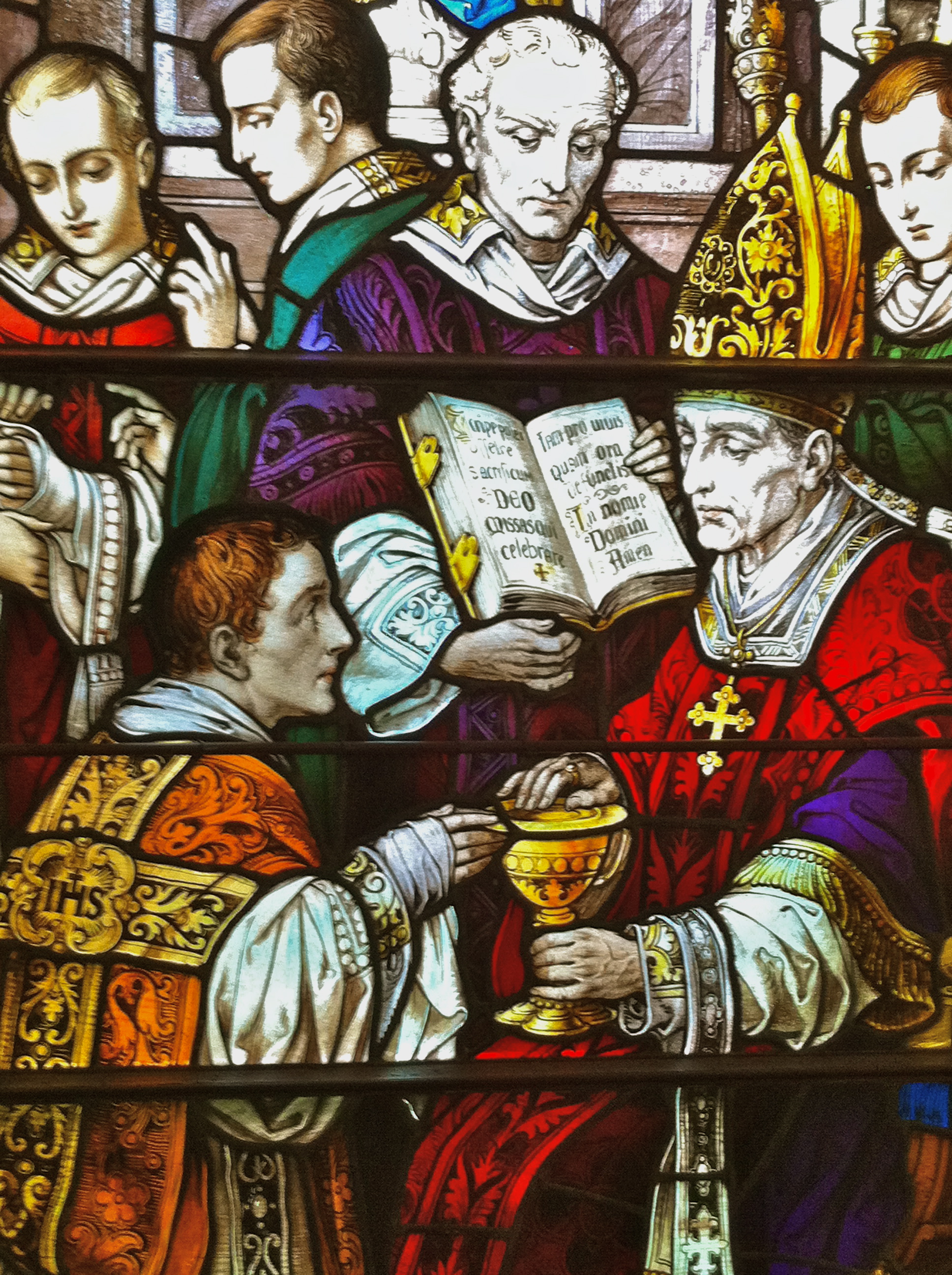
Had you the purity of an angel and the sanctity of St. John the Baptist, you would not be worthy to receive or administer this Sacrament. It is not because of any human meriting that a man consecrates and administers the Sacrament of Christ, and receives the Bread of Angels for his food. Great is the Mystery and great the dignity of priests to whom is given that which has not been granted the angels…. When the priest celebrates Mass, he honors God, gladdens the angels, strengthens the Church, helps the living, brings rest to the departed, and wins for himself a share in all good things.

Each and every time I consider that God has made me a priest through the laying on of hands by the Bishop, I shake my head in disbelief.

Here is my heart, Lord.  My mind.  My soul.  You only need glance upon the surface of each to know with certainty that filth covers them all.  Please, dear Savior, do not look to see what is within, my shame would crush me.  Yet, through the great mystery of grace, forgiveness… Love… You chose me.  So, there I stand, hands outstretched over the bread and the wine, praying for your presence.  Praying once more for you to come to us, your people.  I’ve seen the mist of Your Spirit upon the wine and the drops of Your blood on the bread and I’ve seen the wine “stirred up”, and I am… no words.  We bow before you.  We approach Thee.

When you approach the world, when you approach others…

Thine endeavor should be to cherish within thee throughout the day the same dispositions with which thou shouldst approach the altar.

We must seek to approach the world and others in the same manner, with the same reverence and holiness and awe and fear that we approach Jesus on the altar.  Here, in this one, in this many, is God.

Sermon: Proper 6 RCL B – “The Word”

The podcast can be found here.


pexels-photo-273936


If you are a fan of science-fiction or fantasy novels, you may be familiar with the author Robert Paul “Tad” Williams.  If you are not a fan of science-fiction or fantasy novels, then know that he is an international best selling author.  He has written a few series and one of them, Otherland, is a four book series.  All four of these books were dedicated to his father; however, his father, like some of you is apparently not a fan of science-fiction.

The inscription in book one (1996): “This Book is dedicated to my father Joseph Hill Evans with love. Actually Dad doesn’t read fiction, so if someone doesn’t tell him about this, he’ll never know.”

Book two (1998): “This Book is dedicated to my father Joseph Hill Evans with love. As I said before, Dad doesn’t read fiction. He still hasn’t noticed that this thing is dedicated to him. This is Volume Two – let’s see how many more until he catches on.”

Book three (1999): “This is still dedicated to you-know-who, even if he doesn’t.  Maybe we can keep this a secret all the way to the final volume.”

Book four (2001): “My father still hasn’t actually cracked any of the books – so, no, he still hasn’t noticed. I think I’m just going to have to tell him. Maybe I should break it to him gently. Everyone here who hasn’t had a book dedicated to them, take three steps forward. Whoops, Dad, hang on there for a second…”

From 1996 to 2001—five years—Dad did not crack one of his son’s books to see the dedication.  My recommendation, if someone you know publishes a book, take a few minutes and at least flip through it.  You never know.  Now, and don’t let this sting too much, but as astonishing as that story is, what is even more astonishing is that I know Christians who haven’t seen the inside of a Bible in the last five years—if not longer.  So today, and I don’t know if this is technically a sermon or not, I want to encourage you to do more with your Bible than just dust if off when you think I might be stopping by.

So, how do we begin?  My friend Thomas à Kempis writes, “Our curiosity often impedes our reading of the Scriptures, when we wish to understand and mull over what we ought simply to read and pass by.  If you would profit from it, therefore, read with humility, simplicity, and faith, and never seek a reputation for being learned.”

That is truth.  There are many mysteries contained within the words of Holy Scriptures and many of those mysteries are without answers.  Take for example, within the book of Daniel, there is a passage known as the Prophecy of the Seventy Weeks.  It speaks of sixty-two weeks here, desolation, a week of a covenant, a half week following where sacrifices cease, and so on.  It is fascinating.  People drown in this, seeking to know what it means and how to apply it to today, going as far as to predict the day of Jesus’ second coming.  As Brother Thomas pointed out, their curiosity at delving the mystery impedes them from seeing what God has revealed; therefore, we should read and know these passages, and then feel confident in moving on, knowing that God will reveal the meaning behind such passages when he chooses.  But there is a difference between something that is a mystery to us all that should be read with simplicity and faith, and a mystery or passage that can be understood with a bit of study.  And don’t say, “Oh, study!  That’s what we hired you for Fr. John.”  Nope.  That’s not how it works.  As we read today, even the disciples had to study and have tutoring lessons: Jesus only taught in “parables, but he explained everything in private to his disciples.”

Just using the first parable, I want to show you what a bit of study can do and further the understanding of Holy Scripture and of God—and trust me, I didn’t know all this before I sat down and started studying this week.

The parable: “The kingdom of God is as if someone would scatter seed on the ground, and would sleep and rise night and day, and the seed would sprout and grow, he does not know how. The earth produces of itself, first the stalk, then the head, then the full grain in the head. But when the grain is ripe, at once he goes in with his sickle, because the harvest has come.”

On the surface, this is a parable about the Kingdom of God and how much of the work is done in secret, in the soul of the one who would believe.  We don’t see this work—the germination of the seed, the putting down of roots, etc.—just as we don’t see the work of the Holy Spirit and how it begins within a person’s soul until, like the plant breaking the surface of the ground, the person’s faith becomes obvious and begins to grow.  As the plant matures, as the soul matures in faith, both produce good fruit.  When the harvest is ready, the farmer brings that fruit into his storehouse, just as God brings us into his eternal kingdom.  A careful reading shows us these things, but through our study, we can learn so much more.  

Consider this: at the end of the parable, Jesus said that the farmer “goes in with his sickle, because the harvest has come.”  Simple enough, that’s what a farmer does and we understand that’s what God will do, but through study, we discover that this is actually a quote coming from the book of the Prophet Joel.  What is the book of Joel about?  Briefly, a plague of locust had swarmed through the land and destroyed everything, which led to a great famine.  Joel says to the people, it is because of your sin, your turning from God, that has brought this plague upon you.  He uses it as a opportunity to tell the people how God will punish those who turn from him.  Then, towards the end of the book is the verse that Jesus quoted partially: 

“Put in the sickle,
for the harvest is ripe.
Go in, tread,
for the wine press is full.
The vats overflow,
for their wickedness is great.” (Joel 3:13)

Joel is saying, the Kingdom of God is at hand and your judgment is near.  And further, a student of the Scripture would then be reminded of other passages in Joel, in particular, the great message of hope and of the Messiah: 

“Then afterward
I will pour out my spirit on all flesh;
your sons and your daughters shall prophesy,
your old men shall dream dreams,
and your young men shall see visions.
Even on the male and female slaves,
in those days, I will pour out my spirit.

I will show portents in the heavens and on the earth, blood and fire and columns of smoke.  The sun shall be turned to darkness, and the moon to blood, before the great and terrible day of the Lord comes.  Then everyone who calls on the name of the Lord shall be saved.” (Joel 2:28-32a)

And then, the student of Holy Scripture, will also remember… St. Peter quoted that passage on the Day of Pentecost! (cf. Acts 2:21)  On the day that God poured out his Holy Spirit upon us all.

On the surface, you have this innocuous parable about a farmer planting seeds, but as you dig and study, you discover the entire Gospel message: the people have turned away from God, but the Kingdom of God is at hand and judgment is near, the Messiah is with us, God is giving himself and pouring out His Holy Spirit.  

That is only one example of where study can lead you with just this one short parable (don’t get me started on how the resurrection is also revealed in this passage or we’ll be here all day!)

Because we have such easy access to Holy Scripture (87% of Americans have a Bible in their homes and on average, these homes have three or more copies/source), we can sometimes take if for granted, but it is not like this everywhere.  In the mid-1980s  a large shipment of bibles entered Romania from the West, and the dictator’s lieutenants confiscated them, shredded them, and turned them into pulp. Then they had the pulp reconstituted into toilet paper and sold to the West.  That was thirty or so years ago, but there are plenty of stories like it still today.

In our church, we process the Book of the Gospels, we hold it high, the book can be censed, it is brought out into the midst of the congregation so that you can see it, it is sealed with the Cross of Christ, the text itself is kissed.  We do these things, not for tradition or for ritual.  We do these things because this is God’s Word to us.  It is His love letter to His people and just as you do or may have read and reread a love letter from a sweetheart until its falling apart because you’ve folded and unfolded it so many times,  so I encourage you to do the same with Holy Scripture and discover what God has to speak to you today.  

Let us pray: Blessed Lord, who caused all holy Scriptures to be written for our learning: Grant us so to hear them, read, mark, learn, and inwardly digest them, that we may embrace and ever hold fast the blessed hope of everlasting life, which you have given us in our Savior Jesus Christ; who lives and reigns with you and the Holy Spirit, one God, for ever and ever. Amen.

Reflection: TAK IOC Bk. 4, Ch.3.2

communion-2263987_1280


Then Jesus called his disciples to him and said, “I have compassion for the crowd, because they have been with me now for three days and have nothing to eat; and I do not want to send them away hungry, for they might faint on the way.” (Matthew 15:32)

Jesus had given so much of himself in the healing of the crowd, yet he continues to have compassion for them and their needs.  Therefore, he feeds the 4,000 with seven loaves of bread and a few small fish.

Jesus also has the same compassion for us as he did for that crowd.  Yet, the food he gives to us is himself.

While they were eating, Jesus took a loaf of bread, and after blessing it he broke it, gave it to the disciples, and said, “Take, eat; this is my body.”  Then he took a cup, and after giving thanks he gave it to them, saying, “Drink from it, all of you; for this is my blood of the covenant, which is poured out for many for the forgiveness of sins. (Matthew 26:26-28)

Brother Thomas writes:

Therefore must I often come to Thee, and receive Thee as the medicine of my salvation, lest perhaps I faint in the way, should I be deprived of this heavenly food.  For so thou, O most merciful Jesus, when thou hadst been preaching to the people and curing the various maladies, didst once say: I will not send them fasting to their home, lest they faint on the way.

The Lord does not send us away with our soul’s fasting.  He nourishes us with his body and blood.  No greater love.

Sermon: Proper 5 RCL B – “The Other”

The podcast can be found here.


man-person-people-emotions


A fellow had just been hired as the new CEO of a large corporation. The current CEO was stepping down and met with the new hire privately in his office, where he handed him three numbered envelopes.

“Open these if you run up against a problem you don’t think you can solve,” the first CEO said.

Things went along pretty smoothly for the first six months, but then sales took a downturn and the new CEO began catching a lot of heat. He went to his drawer and took out the first envelope. The message read, “Blame your predecessor.”

The new CEO called a press conference and tactfully laid the blame at the feet of the previous CEO. Sales began to pick up and the problem was soon behind him.

About a year later, the company was again experiencing a slight dip in sales, combined with serious product malfunctions. Having learned from his previous experience, the CEO opened the second envelope. The message read, “Reorganize.” This he did, and the company quickly rebounded.

After several consecutive profitable quarters, the company once again fell on hard times. The CEO went to his office, closed the door and opened the third envelope.

The message said, “Prepare three envelopes.”

About a week ago one of those funny memes circulated on Facebook.  I’ve no idea if Teddy Roosevelt actually said it, but he was quoted: “if you could kick the person in the pants responsible for most of your trouble, you wouldn’t sit for a month.”  It is easy to blame others, reshuffle, reorganize, put up smokescreens, but on many occasions, our problems arise from inside our own skin.

To my knowledge it was never required reading, but if you attend Deacon Janie’s class, you will most likely have to read Robert Louis Stevenson’s classic, Dr. Jekyll and Mr. Hyde.  It is a fun monster read, but it also explores this idea of the “other” person in us all.  That “other” who has a tendency to get us into trouble.

Dr. Jekyll writes: “With every day, and from both sides of my intelligence, the moral and the intellectual, I thus drew steadily nearer to the truth, by whose partial discovery I have been doomed to such a dreadful shipwreck: that man is not truly one, but truly two.”  Continuing on he says, “If each, I told myself, could be housed in separate identities, life would be relieved of all that was unbearable; the unjust might go his way, delivered from the aspirations and remorse of his more upright twin; and the just could walk steadfastly and securely on his upward path, doing the good things in which he found his pleasure, and no longer exposed to disgrace and penitence by the hands of this extraneous evil. It was the curse of mankind that these incongruous personas were thus bound together—that in the agonized womb of consciousness, these polar twins should be continuously struggling.”

St. Paul sums up the issue that Dr. Jekyll is experiencing: “I do not understand what I do. For what I want to do I do not do, but what I hate I do… For I have the desire to do what is good, but I cannot carry it out.  For I do not do the good I want to do, but the evil I do not want to do—this I keep on doing.”  Yet Jesus says, “If a kingdom is divided against itself, that kingdom cannot stand. And if a house is divided against itself, that house will not be able to stand.”  So within us all are these polar twins, Jekyll and Hyde, constantly divided and at war within us, however, in order for us to stand firmly in our faith, those divisions must cease.  So how do we evict the evil and remain righteous?

First, we must understand that until we are reborn through the resurrection, we will always have this battle with in us, but the battle within can be brought into some control.  

It is an old story, but one worth repeating:

One evening, an elderly Cherokee brave told his grandson about a battle that goes on inside people.

“My dear one, the battle between two ‘wolves’ is inside us all. One is evil. It is anger, envy, jealousy, sorrow, regret, greed, arrogance, self-pity, guilt, resentment, inferiority, lies, false pride, superiority and ego.

The other is good. It is: joy, peace, love, hope, serenity, humility, kindness, benevolence, empathy, generosity, truth, compassion and faith.”

The grandson thought about it for a moment and then asked his grandfather: “Which wolf wins?”

The old Cherokee replied, “The one you feed.”

To subdue this battle within, we must not feed or entertain the evil desires that spring up inside of us.  We must overcome them and perhaps one of the best ways of doing that is by practicing acts of righteousness, of good.  You want to rail against someone—pray for them instead.  You’re invited to participate in something that is not becoming—go and perform some act of charity instead.  Whatever the “other” Mr. Hyde is pressing you for, turn it into good.  When you fail, remember the words of Jesus, “Truly I tell you, people will be forgiven for their sins and whatever blasphemies they utter.”    As St. John tells us in his first epistle, “If we confess our sins, he is faithful and just and will forgive us our sins and purify us from all unrighteousness.”  There is only one catch to that statement.  Jesus continues, “Truly I tell you, people will be forgiven for their sins and whatever blasphemies they utter, but whoever blasphemes against the Holy Spirit can never have forgiveness, but is guilty of an eternal sin.”

“Guilty of an eternal sin.”  That one has confused and concerned people for centuries.  What did he mean?  Have I committed that sin?  Am I eternally damned?  Many have written on this topic, but it was Billy Graham who put it into words I can understand: “The unpardonable sin is rejecting the truth about Christ. It is rejecting, completely and finally, the witness of the Holy Spirit, which declares that Jesus Christ is the Son of God who alone can save us from our sins.”  The unpardonable sin is recognizing that Jesus is the only one who can redeem the Mr. Hyde in you, knowing for certain that he can and is willing to atone for your sins, and then rejecting him outright.  The eternal sin is the intentional and unwavering rejection of the Truth—of Jesus—for by refusing Him, He cannot save you.

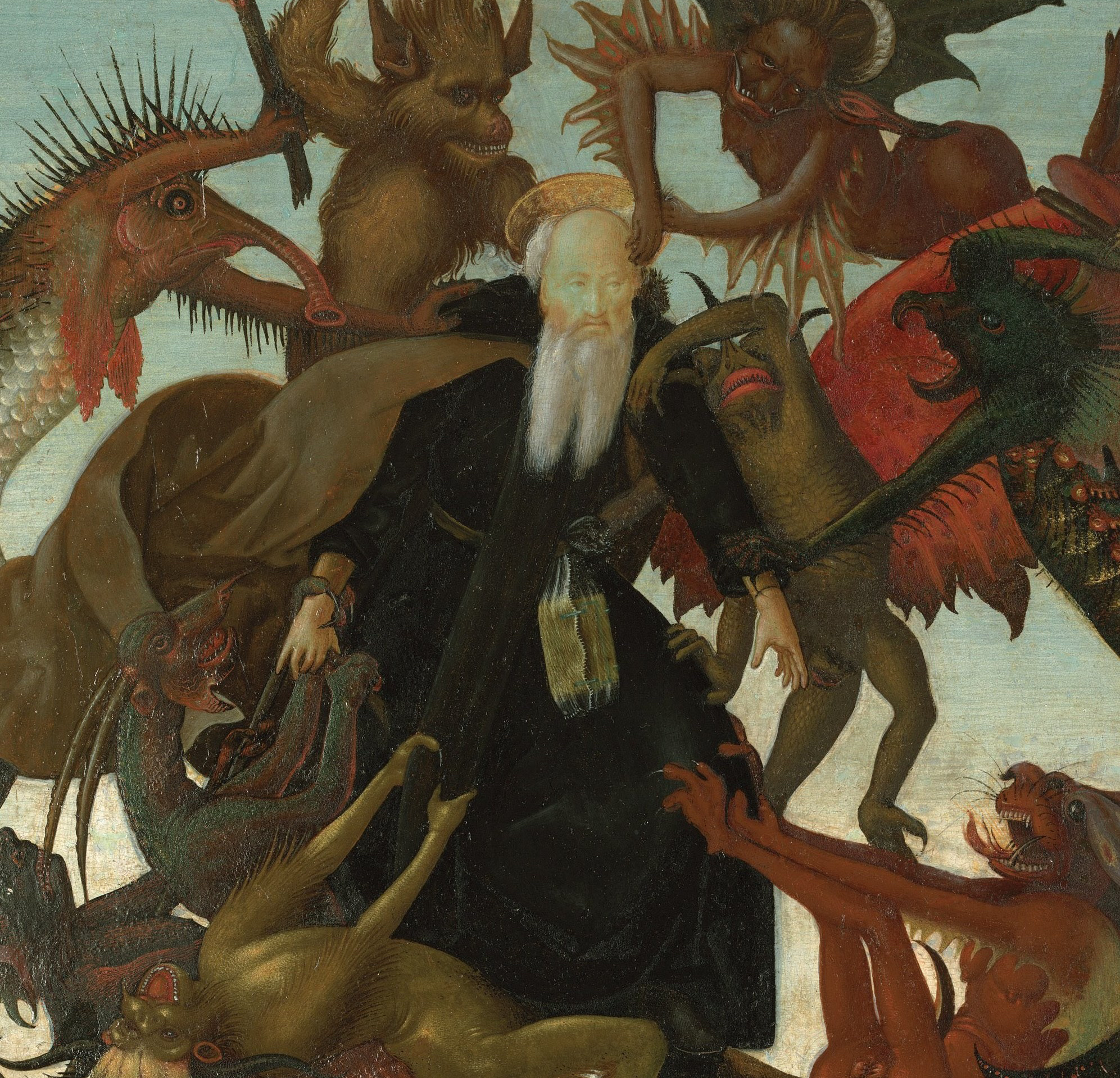
There is story of a magnificently handsome young man sitting in a congregation.  After service the young man stayed for confession.  He confessed so many terrible sins that the priest was horrified.  The priest says, “You must have lived long to have done all that.”  The young man replied, “My name is Lucifer and I fell from heaven at the beginning of time.”  “Even so,” said the priest, “say that you are sorry, say that you repent and even you can be forgiven.”  The legend has it that the young man looked at the priest for a moment and then turned and walked away.  In his pride, he could not ask for forgiveness.  He refused to try again to follow the ways of God and left that place eternally damned.

St. Josemaria writes, “You tell me that in your heart you have fire and water, cold and heat, empty passions and God: one candle lit to St. Michael and another to the devil [you are trying to be on good terms with both]…. Calm yourself.  As long as you are willing to fight there are not two candles burning in your heart.  There is only one: the archangel’s.”

There is a battle that rages within us all, but there is only one flame that burns: the flame of Truth.  Through the grace imparted to you, practice your faith and overcome evil with holiness, recognizing that nothing is possible without Jesus and the Holy Spirit working within you.  Do these things and in the day of trial, you will stand.

Let us pray: “Holy Michael Archangel, defend us in the day of battle; be our safeguard against the wickedness and snares of the devil. May God rebuke him we humbly pray; and do thou Prince of the heavenly host, by the power of God, thrust down to hell Satan and all wicked spirits who wander through the world for the ruin of souls. Amen.”

Reflection: TAK IOC Bk. 4, Ch.1.9

TAK = Thomas à Kempis

IOC = Imitation of Christ


IMG_0965


Last year I had the opportunity to visit the National Cathedral in Washington D.C.  It was spectacular and truly I could have spent several days there poking into the various rooms, chapels, and nooks.  I would have liked the time to stop and pray here and there and allow my soul to drift upwards.  It seemed, for whatever worldly reason, that I was nearer to my God.  I would not call it a religious experience, but it came close.

Many people travel far to honor the relics of the saints, marveling at their wonderful deeds and at the building of magnificent shrines. They gaze upon and kiss the sacred relics encased in silk and gold; and behold, You are here present before me on the altar, my God, Saint of saints, Creator of men, and Lord of angels!

Often in looking at such things, men are moved by curiosity, by the novelty of the unseen, and they bear away little fruit for the amendment of their lives, especially when they go from place to place lightly and without true contrition. But here in the Sacrament of the altar You are wholly present, my God, the man Christ Jesus, whence is obtained the full realization of eternal salvation, as often as You are worthily and devoutly received. To this, indeed, we are not drawn by levity, or curiosity, or sensuality, but by firm faith, devout hope, and sincere love.

I wonder and am ashamed.  Here in my church in Enid, Oklahoma, below the sanctuary lamp and within the chamber of the Tabernacle is my Lord!  Why is it that I do not desire and seek to know the Living God, to explore Him as I did that great building of wood, stone, and mortar?

Turn the eyes of my soul to Thee, my God, that I may behold the glory of Thy Presence.  That I may seek Thee where Thou truly are.