When you step away from all the “flash” you can see what’s really taking place.


The Rev. Dr. John Toles
When you step away from all the “flash” you can see what’s really taking place.
No podcast this week… Preacher done lost his voice!

A graduate of Harvard with his MBA was enjoying a vacation with his family in a small coastal Mexican village. As he walked the piers, a fisherman docked. He had caught several large yellowfin tuna. The MBA complimented the man on the fish and asked how long it took to catch them.
The Mexican replied, “Only a little while.”
The MBA asked why he didn’t stay at it longer and catch even more so that he could sell some, but the fishermen responded that he had enough to meet the needs of his family. The MBA didn’t quite get this attitude, so asked the fisherman what he did with the rest of his day.
The Mexican fisherman said, “I sleep late, fish a little, play with my children, take siestas with my wife, Maria, stroll into the village each evening where I sip wine, and play guitar with my friends. I have a full and busy life.”
The Harvard MBA was flummoxed. “Look,” he said. “I can help you.”
“How?”
“It starts with a bigger boat and more hours, but over time, you will have quite a business.” Over the next several minutes, the MBA outlines to the fisherman how he can go from a few fish a day, to a fleet of fishing trawlers all along the Mexican coast, shipping his catch all over the world. He concluded by saying, “We’re talking millions.”
“How long would this all take?”
“Fifteen… twenty years.”
“Then what?”
“Well there’s the best part, isn’t it. Then you’ll be able to relax. Sleep late, play with the children, take siestas, stroll in the village at night….”
It is clearly not true in all cultures, but in our western culture, there are many signs that point to a person’s success or—in the terms of our Gospel reading—greatness, which include items that we generally associate with it: the fancy car, big house, nice clothes. All signs that we have “made it” or at least signs that we are prepared to go into some serious debt trying to create the illusion that we are great. We work hard to be great, to increase our status in the eyes of others.
The marketing world, those who create all the slick ads, are keenly aware of desire for this elevated status, so they play to it and give us catch slogans like: “Just do it.” “Your only limit is you.” “Don’t call it a dream, call it a plan.” “Go hard or go home.” Well, I found my slogan a few weeks ago and it has been kicking me in the tail ever since: “The world promises you comfort, but you were not made for comfort. You were made for greatness.” That’s a bit too long to print on a T-shirt, but it is stuck in my head. It sounds like something Tony Robbins or Zig Ziglar might say, and it they had, it would be pushing us along the same lines of success as the world would have us pursue. However, it was said by Joseph Ratzinger (a.k.a. Pope Benedict XVI), so I’m guessing “Screamin’” Joe Ratzinger—as we referred to him in seminary—had something else in mind.
It should be noted that those who know a great deal more about translating German tell us that Benedict never said this, maybe something close. But, given the simplicity with which he has led his life, it seems that this was his intention. “The world promises you comfort, but you were not made for comfort. You were made for greatness.” So if this isn’t a motivational ad to try and persuade you to go out and buy Rolex, what is he getting at?
Believe it or not, in our reading of the Gospel of Mark, we are nearing the end. Jesus and the disciples are on their way to Jerusalem. Jesus’ arrival will be what we consider the triumphant entry, what we celebrate on Palm Sunday. Jesus has already predicted his death three times, but James and John’s question to him in today’s reading demonstrates to us that neither they nor anyone else understands what is about to take place. They are thinking perhaps it will be a rough go for awhile as they battle against the Romans and kick them out, but afterwards: Glory. Greatness . . . and they want a good seat.
What they have failed to understand is that Jesus’ glory, his greatness, is not going to arrive with a military and political victory, but with a cross. What did Isaiah say?
Surely he has borne our infirmities
and carried our diseases;
yet we accounted him stricken,
struck down by God, and afflicted.
But he was wounded for our transgressions,
crushed for our iniquities;
upon him was the punishment that made us whole,
and by his bruises we are healed.
All we like sheep have gone astray;
we have all turned to our own way,
and the Lord has laid on him
the iniquity of us all.
And a few verses later:
Therefore I will allot him a portion with the great,
and he shall divide the spoil with the strong…
Why?
Because he poured out himself to death,
and was numbered with the transgressors.
The glory, the greatness of Christ arrived when he was lifted up on the cross. James and John wanted to be the ones who were at Jesus’ left and right when he was raised up in his glory, but Jesus said, “To sit at my right hand or at my left is not mine to grant, but it is for those for whom it has been prepared.” And to whom was that “honor” of being on either side of Jesus prepared? “It was nine o’clock in the morning when they crucified [Jesus]. The inscription of the charge against him read, ‘The King of the Jews.’ And with him they crucified two bandits, one on his right and one on his left.” Jesus’ greatness was not a marble throne or a shimmering crown or servants serving His every whim. His greatness was a splintered tree and a crown of sharp thorns and soldiers feeding Him vinegar and waiting for Him to die. This was greatness, and neither James nor John ever expected this. The cross, the place where he drew all of humankind to himself by taking on their sin, that they… that we, might have eternal life through him. The idea that we might receive worldly greatness because of this act is appalling to many. Teresa of Avila wrote:
“Why must we want so many blessings and delights and so much endless glory all at the cost of the good Jesus? Shall we not at least weep with the daughters of Jerusalem since we do not … help Him carry His cross? How can we enjoy along with pleasures and pastimes what he won for us at the cost of so much blood? It’s impossible! And do we think that … we can imitate Him in the contempt He suffered so that we might reign forever? Such a road leads nowhere; it’s the wrong, wrong road; we will never arrive by it.”
James and John wanted to sit on the left and right of Jesus, but they wanted to be sitting on finely cushioned chairs with servants and pages running their errands, yet the throne of Jesus was the cross, so to be at his left and right they had to join him there, crucified with him. Suffering with him there. Dying with him there, so that they might rise with him.
“The world promises you comfort, but you were not made for comfort. You were made for greatness.” There comes a point when we need to change our vocabulary. We can often be like James and John wanting to be with Jesus and wanting greatness. But “serving” and “greatness” are not the same thing. In order to be with Jesus here in this life, we must be willing to serve, to set aside ourselves, our desires. We must know that we must look at the suffering and hold the broken.
In the next life, in the eternal Kingdom, we will receive our reward, but in this life, we were not made for cushioned chairs and servants, we were made to be servants and slaves, each day, at the right and left hand of Jesus, crucified with him. Not seeking our own glory and greatness, but seeking his and his alone.
We succeed in this greatness by bringing all that we do under his Lordship. No matter how great or small the person, menial or great the task; we serve them, we perform it as though we were serving Jesus, as though it were for Him, because it is for him. St. Paul says to the Colossians, “Whatever your task, put yourselves into it, as done for the Lord and not for your masters, since you know that from the Lord you will receive the inheritance as your reward; you serve the Lord Christ.”
“The world promises you comfort, but you were not made for comfort. You were made for greatness.” You were made to serve the Lord.
Let us pray:
Dearest Lord,
teach us to be generous;
teach us to serve You as You deserve;
to give and not to count the cost,
to fight and not to heed the wounds,
to toil and not to seek for rest,
to labour and not to ask for reward
save that of knowing we are doing Your Will.
Amen.
The podcast is available here.

“You are the light of the world.” Ever hear those words and think to yourself, “I sure hope the world can see off a 25 watt bulb, because that’s about all I’ve got.”
That is probably true for all of us at different times, while there are other seasons when we shine like the sun itself. Either way, it is about the light and the Light of the World, which is Jesus. He is our source.
St. Teresa of Avila who received many visions, in the XXIX chapter of her Autobiography describes what this light is and how she received it in herself. It was Bernini who captured the moment in the statue, The Ecstasy of St. Teresa which is located in the church, Santa Maria Della Vittoria in Rome. Teresa tells us that she rarely saw angels in bodily form, but on this occasion she did. Of the angel, she writes:
I saw in his hand a long spear of gold, and at the iron’s point there seemed to be a little fire. He appeared to me to be thrusting it at times into my heart, and to pierce my very entrails; when he drew it out, he seemed to draw them out also, and to leave me all on fire with a great love of God. The pain was so great, that it made me moan; and yet so surpassing was the sweetness of this excessive pain, that I could not wish to be rid of it. The soul is satisfied now with nothing less than God. The pain is not bodily, but spiritual; though the body has its share in it. It is a caressing of love so sweet which now takes place between the soul and God, that I pray God of His goodness to make him experience it who may think that I am lying.
The fire, the light, was love. The great love of God towards her and her love towards God. It is this same light that is within us—sometimes bright, sometimes dim—that allows us to be the light of the world that we are called to and even when it is only small, it accomplishes the work of the Lord.
A gentleman was walking one day in the east end of the city of Glasgow. The streets were so narrow, and the houses so high, that little direct sunshine ever reached the houses on one side. The gentleman noticed a ragged, barefooted boy trying, with a small piece of mirror, to catch the sun’s rays and direct them to a certain spot on one of the houses opposite. He became interested in the boy’s earnest efforts. “What are you trying to do, son?” he asked. “Do you see that window up there?” the boy replied. “Well, my little brother had an accident two years ago, and is always lying on his back in that room, and it is on the wrong side to get the sunshine, so I always try to catch the light in this little glass and shine it into his room.”
Sometimes 25 watts of light or just a small mirrors worth gathered from a greater source is about all the light we can muster—even with the love of God burning so brightly in our souls—so on such days, gather what you have and shine. It may only be seen by one small person in a dark room, but to that person, it is life.
“You are the light of the world. A city built on a hill cannot be hid. No one after lighting a lamp puts it under the bushel basket, but on the lampstand, and it gives light to all in the house. In the same way, let your light shine before others, so that they may see your good works and give glory to your Father in heaven.”
The podcast is available here.
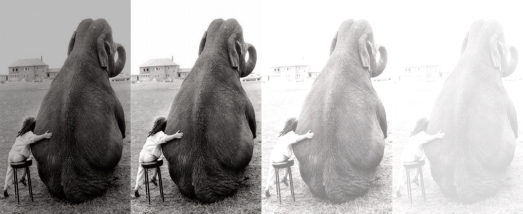
A very drunk patron at a bar is trying to impress everyone with his fighting ability. “I am trained in every hand-to-hand combat there is,” he says. To further prove his point, he walks up to Boudreaux, who happened to be in the bar, and whops him behind the neck! “Karate chop from China,” he says. Poor Boudreaux gets up off the floor and sits back in his seat, saying nothing. The big man hits him again. “Judo from Japan.” L’il ol’ Boudreaux once again picks himself up off the floor and continues sipping his beer. The man grabs him putting Boudreaux in a state of suspended animation. “That’s a nerve pinch from Korea.” After a few minutes, Boudreaux is able to move again. Instead of getting back on his bar stool he walks out. Ten minutes later he walks in with a large board in his hands and hits the drunk square in the head with the board, laying him flat out on the floor. Looking down at his tormenter, Boudreaux says, “Two-by-four from Home Depot.”
There are any number of things that “hit” us, but we still manage to get up from them. You lose a job: can be a blow, but you get up and find another one. A relationship falls apart: never pleasant, but we do move on. The death of someone dear: possibly devastating, but over time, we work through the grief and love them without their physical presence. No matter how hard the hit, as the saying goes, you’ve managed to survive 100% of the worst days you’ve ever experienced. In most cases, it is not the two-by-four to the back of the head that beats us. Instead, it is the day-to-day struggle of carrying around hurts, burdens in our souls that beat us down and we find it difficult to see past them.
Consider our Book of Common Prayer. Pick one up and hold it in one hand. How much does it weigh? Pound? Not much. Yet, the absolute weight of the book does not really matter. What matters is how long you hold it. Hold that book for a few minutes and you won’t even notice it. Hold it for an hour and you are going to have a pretty good ache in your arm and shoulder. Hold it for a day and your arm will be numb and the pain elsewhere will be severe.
It is the exact same weight that it was when you picked it up, but the longer you hold it, the heavier it becomes. The same applies to the mental, emotional, and spiritual burdens that we carry. If we hold them long enough, we will not be able to carry on. The weight of them is intolerable to us. Not only do they infect our souls, but we know that they can foster physical problems as well. Eventually, these burdens can also lead to a crisis of faith, effecting our relationship with Jesus. Consider our Gospel reading from today.
“Good Teacher, what must I do to inherit eternal life?” After asking why he called him “good” (an entirely different sermon), Jesus responded, “You know the commandments: ‘You shall not murder; You shall not commit adultery; You shall not steal; You shall not bear false witness; You shall not defraud; Honor your father and mother.’” The young man is pleased with himself, “Teacher, I have kept all these since my youth.” But not so fast, “‘You lack one thing; go, sell what you own, and give the money to the poor, and you will have treasure in heaven; then come, follow me.’ When he heard this, he was shocked and went away grieving, for he had many possessions.” Jesus then says to the disciples that it is difficult for the rich to enter the Kingdom of Heaven. Why? Because someone who can purchase what they need and lives in comfort and safety is far less likely to feel the hunger for God. “If I want something, I don’t have to rely on a God I cannot see or speak to. Instead, I go and get or take what I want.” Satisfied without God, what use is God to them? Why bother with the relationship with Him. So, for this rich young man: yes, he had kept all the commandments, it sounds as though he worked hard to be a “good little boy.” He’d done the right things while maintaining those possessions that kept him comfortable.
Hebrews tells us that the Word of God (Jesus) is sharper than any two-edged sword and judges the thoughts and intentions of the heart. Nothing is hidden and all is laid bare. For this man in our Gospel, his approaching Jesus was genuine. His heart was sincere. His intention was open, but that two-edged sword, Jesus saw through it all. Jesus said to him, “Yes, you are good. Your wealth, while it is a good thing, is actually your burden. It blocks you from a true relationship. Therefore, cast your burdens aside and follow me.”
Remember from a few weeks ago, Jesus said, “If your hand or your foot or your eye causes you to stumble, remove it.” The same principle applies here. If something brings a division between you and God, it should be removed, cast aside. Not because these things are necessarily harmful in and of themselves, but because they are detrimental to the relationship. Our burdens, like the rich young man’s wealth, have the same effect. They rob us of our faith and joy and passion, they beat us down and leave us feeling unworthy. Unsatisfied. Like the young man, Jesus offers all, but we go away grieving because of the burdens we carry.
So, let me ask you this: what happened? This episode just ends without resolution. Jesus normally does something miraculous: heals the sick, gives sight to the blind, feeds the hungry, but in this case, that young man went away grieving. What do you suppose happened to him?
Well, this is one of those cases that I’m going to tell you what I “think” instead of what I “know” (which I think we can all agree is quite significant!). I think this young man did exactly what Jesus told him to do. I think he walked home, looked around at his possessions, looked at his relationships, reflected on all those people in his neighborhood that he didn’t know or those he saw who were in need, and wondered why he grieved over what was actually weighing him down. Why do I think this? Our Gospel gave one small clue.
After Jesus had reaffirmed the commandments, the young man said to Jesus, “Teacher, I have kept all these since my youth.” Then Mark, the author of the Gospel, records Jesus’ feelings towards the young man, saying, “Jesus, looking at him… Jesus, looking at the young man, loved him.” Why do I think the young man followed every word Jesus said? Because you cannot experience the love of God and not be changed.
Consider Jesus and the cross. He was buried under the sins of the world. Buried under shame of the cross. Buried under the judgment of others. Buried under the expectations of others. Buried under the cross. Buried in the tomb. Yet, when the came to look for him on that first Easter morning, the angel of the Lord said, “Why do you look for the living among the dead? He is not here; he has risen!” Why are you looking for him here? Why are you looking for him buried? He is risen. He overcame all that buried him, that burdened him. And everybody says, “Yes! But that’s Jesus. That’s God. Of course he can overcome these things. But I’m not Jesus. I’m not God!” No. But therein lies the Good News. Jesus said, “In this world you will have trouble. But take heart! I have overcome the world.” It is through Christ that we can overcome those things that bury us, that burden us, but… and here comes the hard part… we must choose, because Jesus gives us a choice. Just like the rich young man: you can choose to remain as you are, weighed down by the burdens you carry in your soul, or you can experience this life changing love of Christ and choose to cast your burdens aside and be raised to new life through him.
The rich young man went home, looked around him, and chose Jesus. When you return home… what will you choose?
Let us pray: O Blessed Virgin Mary, in the depths of your heart you pondered the life of the Son you brought into the world. Give us your vision of Jesus and ask the Father to open our hearts, that we may always see His presence in our lives, and in the power of the Holy Spirit, bring us into the joy and peace of the kingdom, where Jesus is Lord forever and ever. Amen


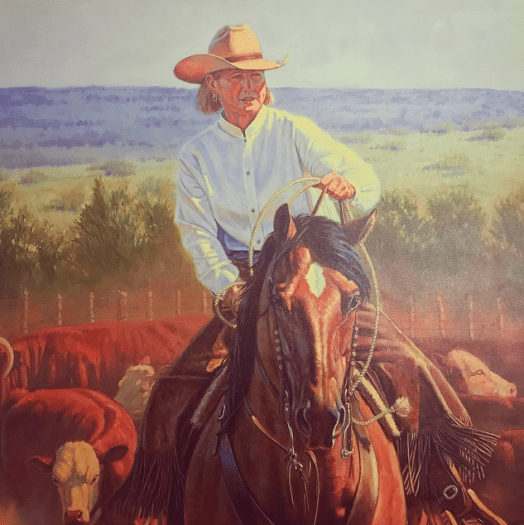
What my camera saw….





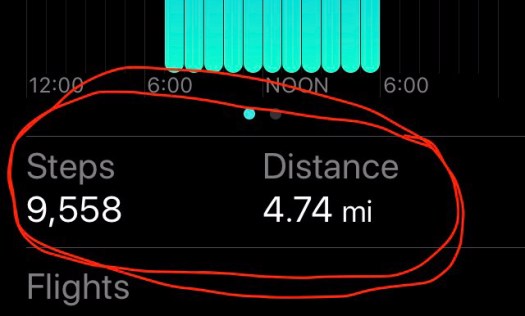
My feet are happy to be home…
The podcast is available here.

At the height of a political corruption trial, the prosecuting attorney attacked a witness. “Isn’t it true,” he bellowed, “that you accepted five thousand dollars to compromise this case?” The witness stared out the window, as though he hadn’t heard the question. “Isn’t it true that you accepted five thousand dollars to compromise this case?” the lawyer repeated. The witness still did not respond. Finally, the judge leaned over and said, “Sir, please answer the question.” “Oh,” the startled witness said to the judge, “I thought he was talking to you.”
You ever notice that when people start criticizing someone, we always assume that they are talking to someone else or, when we realize they are talking to us, we turn into Robert De Niro in Taxi Driver: “You talking to me!”
The same is true when hearing the words of Jesus. Jesus says, “Get behind me, Satan! For you are setting your mind not on divine things but on human things.” We think, “Whew! Thank goodness he was talking to Peter and not me.” When he says, “Woe to you, blind guides,” we are happy in knowing that he says that to the religious leaders, but not to us. When he says, “Whoever wants to be first must be last of all and servant of all…”… well, we probably know that he is speaking to us, but what does he really mean by “last” and “servant of all.” (hmm)? But today, there really is no way of escaping Jesus’ words, because he speaks very plainly, and I might add, in a very Stephen King-ish manner: “If your hand causes you to stumble, cut it off; it is better for you to enter life maimed than to have two hands and to go to hell, to the unquenchable fire. And if your foot causes you to stumble, cut it off… And if your eye causes you to stumble, tear it out.”
I suppose there have been a few—mentally deranged—individuals who have taken this saying of Jesus literally and set out to follow it to the letter, however, to do so is to miss the point. Yes, if you have sin in your life, cut it out, remove it, but the foot, the hand, the eye are not sinful in and of themselves. They are in fact good, as they were created by God. So if we are not to take this literally, then what is Jesus speaking to us about?
Back in 1967, the philosopher Philippa Foot came up with the moral problem that has become known as the “trolley dilemma.” It is a fairly simple scenario: you are standing next to a trolley line and in front of you is the switching lever that if pulled will divert the trolley from the main line onto a secondary line. There is only one problem. On the mainline are five workers who do not hear the trolley approaching and even if they did they would not have time to escape. They will all five be killed unless you switch the train onto the secondary line, which brings about a second issue: there is one other worker on that line who is also unaware of the oncoming train and will not have time to respond. So the dilemma: you can let the train remain on the mainline and five individuals will die or you can switch the track and only one individual will die. What do you do? Ok. Let’s complicate it a bit more: the one individual on the sidetrack is not a worker. It is your child. What do you do? And everybody says, “Sorry, five guys I don’t know, but your toast.” That is the trolley dilemma. So how does this apply to what Jesus is talking about?
Well, as you are already aware, Jesus is all about upping the ante. If Jesus were proposing the trolley dilemma to us, the mainline of the trolley system would be the same, but your place would be different. If Jesus were making the rules, you would be the one on the secondary line, but… and here’s the fun part… you would also still be in charge of the switch. Let the trolley stay on the mainline and five people die. Switch it… and you die. And you know what our minds immediately go to: not quantifying, but qualifying. Not, five live, one dies, but what if those five on the mainline are say, participating in a gay pride parade? What if they’re Muslim? Atheist? Hmm. Switch the tracks or not?
It hasn’t been too long before that Jesus said to his disciples, “If any want to become my followers, let them deny themselves and take up their cross and follow me. For those who want to save their life will lose it, and those who lose their life for my sake, and for the sake of the gospel, will save it.”
Just prior to our Gospel today was the reading we had last week: Jesus told the disciples that he was to be killed, yet a short while after hearing this, the disciples argued over who was the greatest. In the beginning of our reading today, the disciples are upset because someone else is casting out demons in Jesus’ name, they are doing the work of God. Finally, Jesus has had enough. He says, “Look! You are setting up obstacles to people coming to faith. You’re trying to set up a club where someone gets elected president and then you all get to choose whose in and whose not. That’s what the religious leaders are already doing! You are to be different. I am calling on you to… switch the tracks.” And, yes, he is talking to us. And unlike so many leaders today, Jesus is not asking us to do something that he is not prepared to do himself. “For this reason the Father loves me, because I lay down my life in order to take it up again. No one takes it from me, but I lay it down of my own accord.” And he is not doing this for the righteous alone. “For I have come to call not the righteous but sinners.” Through his death on the cross, Jesus “switched the tracks” so that he could become “the atoning sacrifice for our sins, and not for ours only but also for the sins of the whole world.” Jesus did not quantify or qualify. He did it for the whole world, regardless of whatever preconditions we might place on someone. He placed no stumbling blocks before the little ones, so that all might come to the saving knowledge of God.
Jesus said to the disciples and he says to us, “This isn’t a club. I want you fully committed, prepared to ‘switch the tracks.’” And he asks, “What is a foot, or a hand or an eye, compared to the Kingdom?” Foot, hand, eye: good! But sometimes, even that which is good can be a hindrance to some and needs to be sacrificed. Sometimes those things that are good and which we hold most dear, need to be cut out—sacrificed—so that the work of the Kingdom can be accomplished through us. What does that look like? I think it is different for everyone, but you’ll know it when it comes.
I know of someone who debated long and hard over going to seminary. Finally, a day arrived that they were determined to make a decision, so they travelled out to a friends house, climbed up a mountain, and took a seat. After awhile they said to God, “Look at how beautiful this place is. I’ve never been anywhere as beautiful as this.” And God the Father said to them, “I’ll show you things more beautiful than this.” After more time passed, they said to God, “But I have friends here. I’ve never really had that many friends, and You know it. I don’t want to leave my friends.” And God the Son said, “In order to do the Father’s will, I had to leave my friends as well.” I’ve probably shared that with you before, but after those words, I was out of arguments. I switched the tracks. Trust me, that doesn’t make me a saint and, looking back on it, it wasn’t a sacrifice, but the point is, we must be prepared to offer up the hand, foot, eye… our very lives, so that God’s will can be accomplished through us.
Our friend St. Josemaría Escrivá wrote, “Lord, if it is your will, turn my poor flesh into a Crucifix.” Switch the tracks. Make yourself a living sacrifice to God and serve Him and His will without reserve.
Let us pray: Gracious Father, you gift us with all the good gifts that make us who you created us to be. Help us to know and find your will and to trust that you will help us to understand the path you call us to journey in life. Where there is doubt give us courage. Give us hearts open to your quiet voice so we can hear your call. Help us to know your faithfulness and help us to be faithful to that which you call us. Amen.
The podcast is available here.

Vouchsafe, o Lord, to remember
according to the multitude of thy mercies
mine unworthiness,
the inveterate sinner,
thine unworthy and unprofitable servant:
condescend, o Lord, to mine infirmities,
and cast me not away from thy presence,
neither loathe my filthiness;
but after thy graciousness
and thine unspeakable love towards mankind,*
remove mine iniquities:
do not by reason of me and of my sins
refrain thy readiness to hear
and thy grace from
my service and prayer:
do not so, o Lord, but account me worthy,
o sovran Lord, which lovest mankind,
without condemnation, with clean heart and contrite soul,
with face unashamed and hallowed lips,
to make bold to call upon Thee
the holy God and Father which art in heaven
and to say… Our Father, which art in heaven…
I wonder how many pray before they pray? Those words leading up to the opening verse of the Lord’s Prayer come from the Private Devotions of Lancelot Andrewes. It was a work that was never intended to be published, but was instead for his own private use.
Andrewes was born in the year 1555 and after studying at Cambridge, became a professor there. He would also be the court preacher under Queen Elizabeth I and James VI. He was by far Elizabeth’s favorite preacher as he provided the intellectual stimulus that she so desired. And, for the record, I try and keep my Sunday sermons between 1,400 and 1,500 words – Andrewes averaged about 7,000! As Queen Elizabeth couldn’t tolerate a sermon over an hour long, I’m guessing he talked fast! Andrewes would later go on to become the Bishop of Chichester, Ely and Winchester under King James. In his spare time, he was one of the few Divines appointed to the creation of the King James Bible and would essentially become the chief editor of the entire work. Was he busy? Most certainly, but that did not stop him from spending on average – five hours a day in prayer and devotion.
Bishop. Academic. Translator. But he placed his life of prayer above all else. Of prayer he wrote, “‘Let our prayer go up to Him that His grace may come down to us,’ so to lighten us in our ways and works that we may in the end come to dwell with Him, in the light ‘whereof there is no even-tide.’”
With our busy schedules, it seems that the first thing to be eliminated from our lives is prayer, time with God where we can lay it all before Him, and that’s a bit crazy if you think on it. Jesus says to us, “Come to me, all you who are weary and burdened, and I will give you rest. Take my yoke upon you and learn from me, for I am gentle and humble in heart, and you will find rest for your souls. For my yoke is easy and my burden is light.” Even though Jesus says to lay down our own yokes – burdens – we turn and say to him, “No, that’s OK. I’ve got it,” even though we are staggering under the weight of it all. Andrewes says, “prayer goeth up, pity cometh down,” but for that to happen we must commit ourselves to prayer.
The Psalmist wrote:
O God, you are my God; eagerly I seek you;
my soul thirsts for you, my flesh faints for you,
as in a barren and dry land where there is no water.
It is in Jesus that we will find the living water that quenches our thirst and it is in prayer that we will encounter Him.
The podcast is available here.
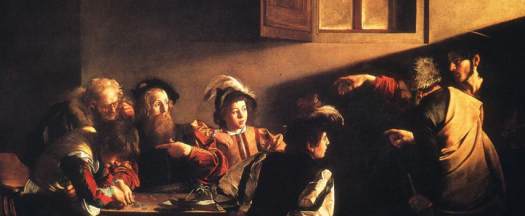
Bassanio is in love, but he does not have the money to woo Portia, so he goes to his good buddy Antonio and asks for a loan. Antonio is a shipping merchant, but all his money is currently tied up, so he asks for a loan from Shylock, who only demands that the money be paid back in three months. If is Antonio is late, it won’t cost him much… only a pound of his flesh. Antonio is confident in his ability to repay, so he agrees. Then comes a storm at sea and two of his three ship are lost. Three months are up and Shylock is demanding payment. Antonio doesn’t have the money, so Shylock demands his pound of flesh. Portia arrives on the scene and pleads for mercy for Antonio. She says to Shylock:
“The quality of mercy is not strained.
It droppeth as the gentle rain from heaven
Upon the place beneath. It is twice blessed:
It blesseth him that gives and him that takes.
‘Tis mightiest in the mightiest. It becomes
The throned monarch better than his crown.
His scepter shows the force of temporal power,
The attribute to awe and majesty
Wherein doth sit the dread and fear of kings,
But mercy is above this sceptered sway.
It is enthroned in the hearts of kings.
It is an attribute to God himself.
And earthly power doth then show likest God’s
When mercy seasons justice.”
That is from Act IV, Scene 1 of William Shakespeare’s, The Merchant of Venice, and I’m always reminded of it when I read those words of Jesus: “Those who are well have no need of a physician, but those who are sick. Go and learn what this means, ‘I desire mercy, not sacrifice.’ For I have come to call not the righteous but sinners.”
Our patron Saint, Matthew, who we celebrate today, was likely despised by everyone. He was a tax collector. The Jews hated him because he worked for the Romans and collected from them. The Romans hated him because he was a Jew and collected from them. When he was growing up, I can’t imagine that he said to himself, “Ya know, when I grow up, I want a job where everyone hates me,” but circumstances led him to it. Yet, those same circumstances placed him in the exact place he needed to be in order to have an encounter with Jesus and Jesus said to him, “Follow me.”
That evening, Matthew and other tax collectors and sinners sat at the table for a meal with Jesus. When the religious leaders saw this, they wanted to know why Jesus spent time with them instead of condemning them. Why he didn’t force them into the religious system that would bind them to the law and the sacrifices, and Jesus responded, “I desire mercy, not sacrifice.” Jesus said, “I have this radical idea: why don’t we just forgive them? Why don’t we just love them, because they are in the image of the Father?” Ultimately, the religious leaders gave their answer to this radical idea: “Crucify Him! Crucify Him!”
As we consider ourselves, we can come to believe that the religious leaders are correct. Our circumstances can be similar to Matthew’s, where we intentionally or unintentionally find ourselves in a life apart from God, and when we consider God, we can believe that there really is no chance for us, so we condemn ourselves. Instead of, “Crucify Him!” It is “Crucify me!” I deserve to give up my pound of flesh. I am deserving of my punishment. But like Matthew, it is there that Jesus finds us and calls to us, “Follow me.” When you hear his call, don’t hang your head thinking you are forever lost. Instead, go. Sit at the table with Matthew, the other tax collectors, and the sinners—sit at the table with them and with Jesus and “Taste and see that the Lord is good.” Understand that the Lord desires to show you mercy.
 Candle in a Cave