
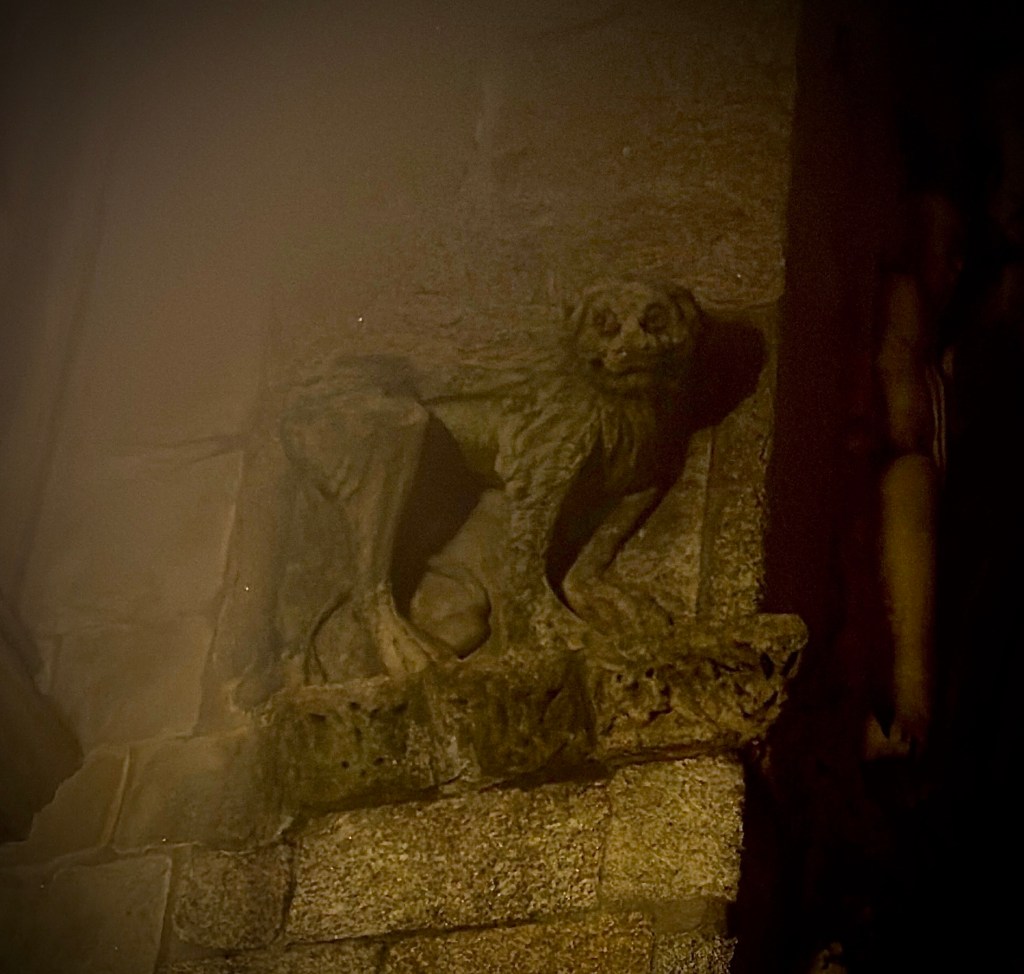
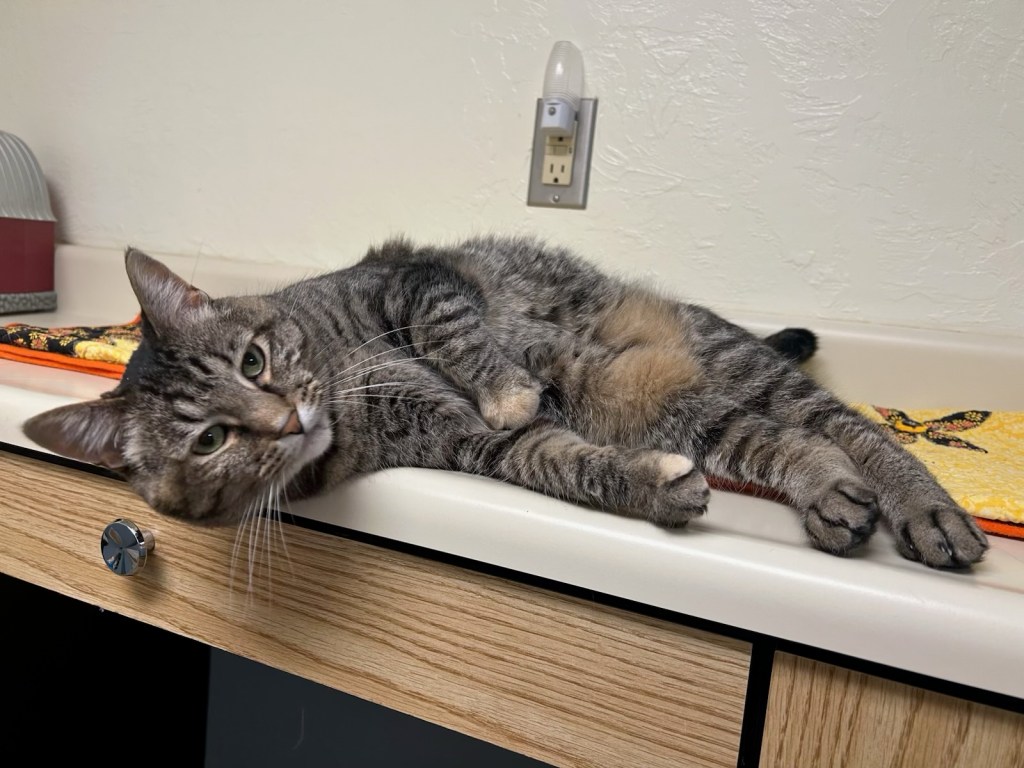
It was a very early start today so that I could get to the Cathedral of Santiago de Compostela when it opened and before all the other visitors. I was fourth in line and this little creature kept me company while I waited for the doors to open.
Promptly at seven, the doors opened and I made my way to the altar. It so much more glorious than this picture shows.
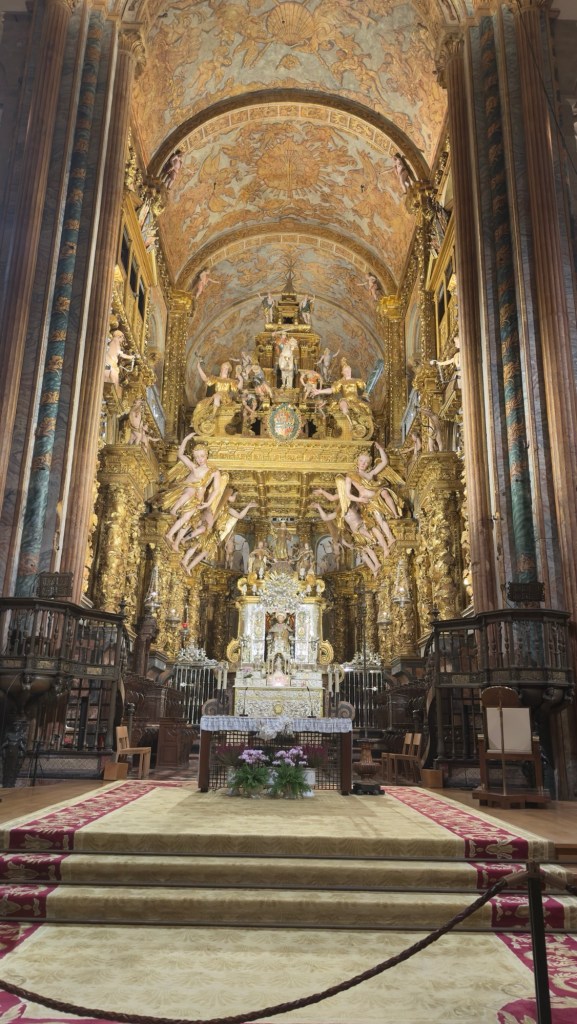
From the back, you get another hint of what you are searching for.
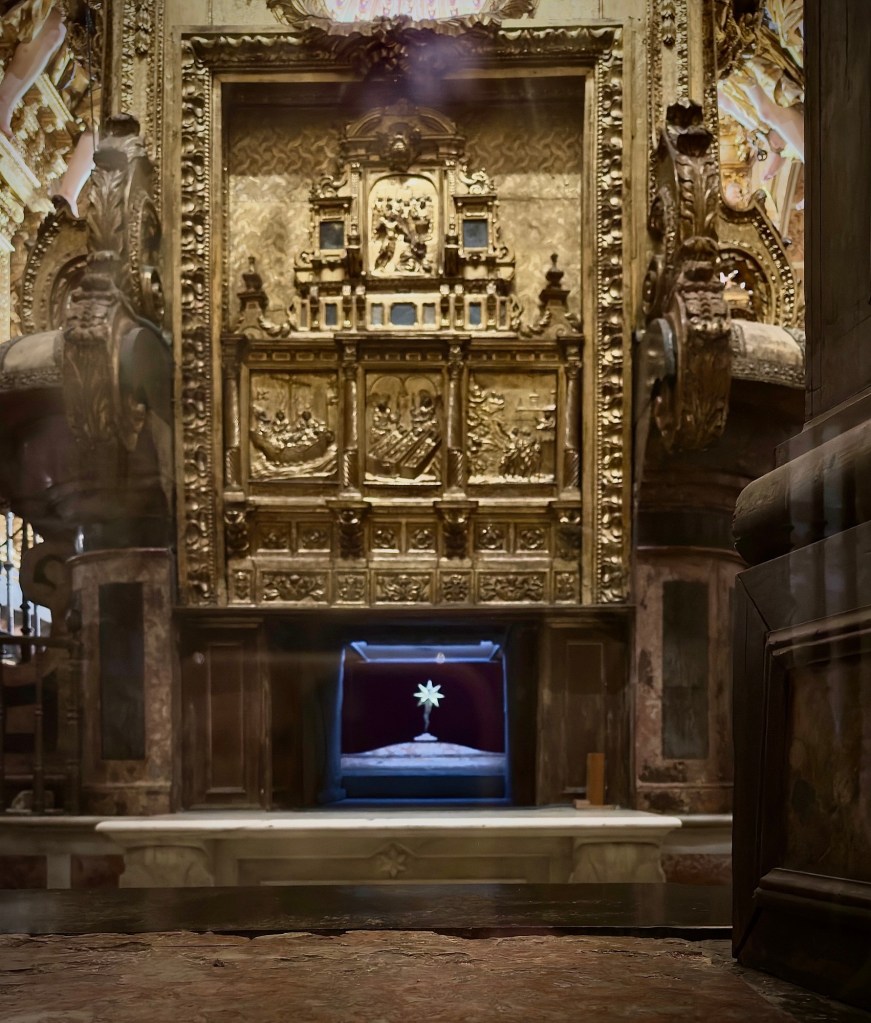
The little star is the clue…
According to medieval tradition, after his martyrdom in Jerusalem around AD 44, the body of St. James the Greater was carried by his disciples to Galicia in northwestern Spain and buried there. Over the centuries, the location of the tomb was forgotten.
Around AD 813, a hermit or monk named Pelayo (Pelagius) began seeing mysterious lights—often described as stars—shining over a wooded place called Libredón. He reported the phenomenon to Bishop Theodomir of Iria Flavia, who investigated and discovered an ancient tomb containing remains believed to be those of St. James and two of his disciples.
King Alfonso II of Asturias was informed and ordered a church built over the site. That shrine eventually developed into the great Cathedral of Santiago de Compostela and became one of medieval Christianity’s major pilgrimage destinations.
The famous explanation that Compostela means campus stellae, “field of the star,” comes from this tradition. It is beautiful and very old, although modern linguists generally think the actual origin of the name Compostela is different. The star, nevertheless, became one of Santiago’s enduring symbols—heaven itself, in the legend, pointing pilgrims toward the apostle’s resting place.
Taking several steps further down, you find the Apostle James. It is very moving.
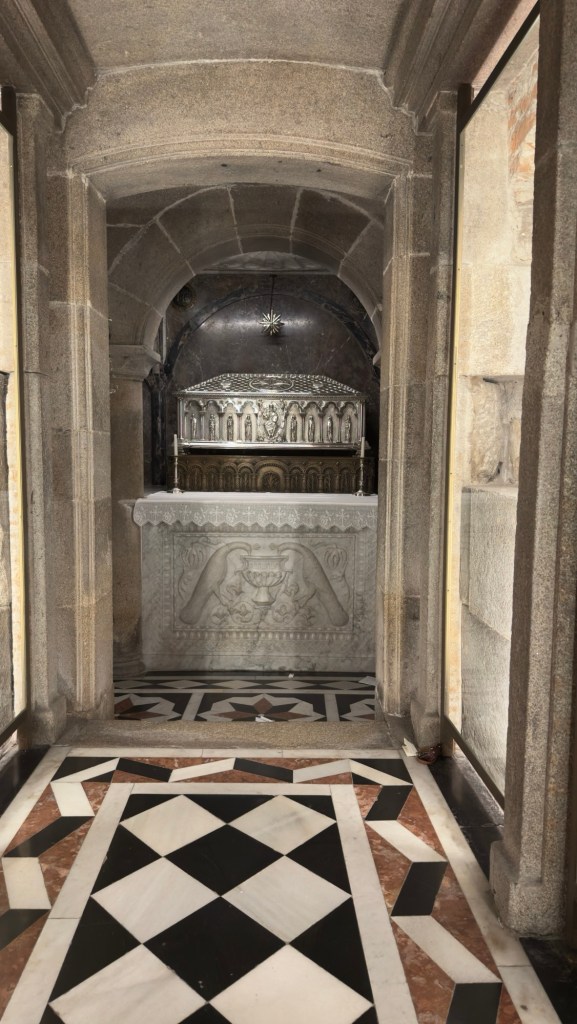
I had about 30 seconds with him alone, then the other pilgrims began filing in, but for those 30 seconds… yeah.
I have now prayed before the remains of Peter, Paul, James, Josémaría Escrivá, John Paul II, and several others (and let’s not forget Fatima). It is always an experience and you feel the… what?… connection seems like such a weak word.
Different angles of the cathedral…
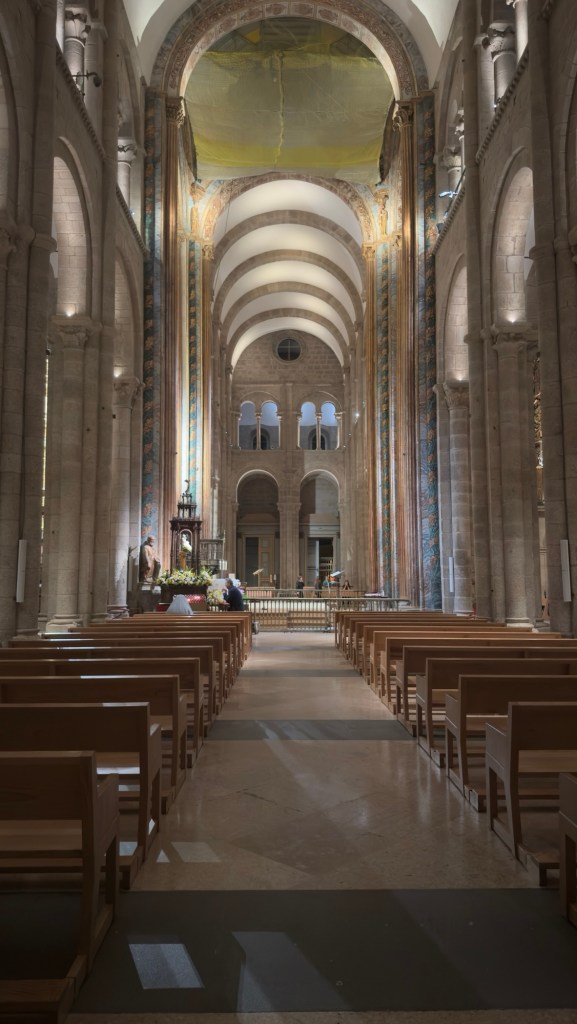
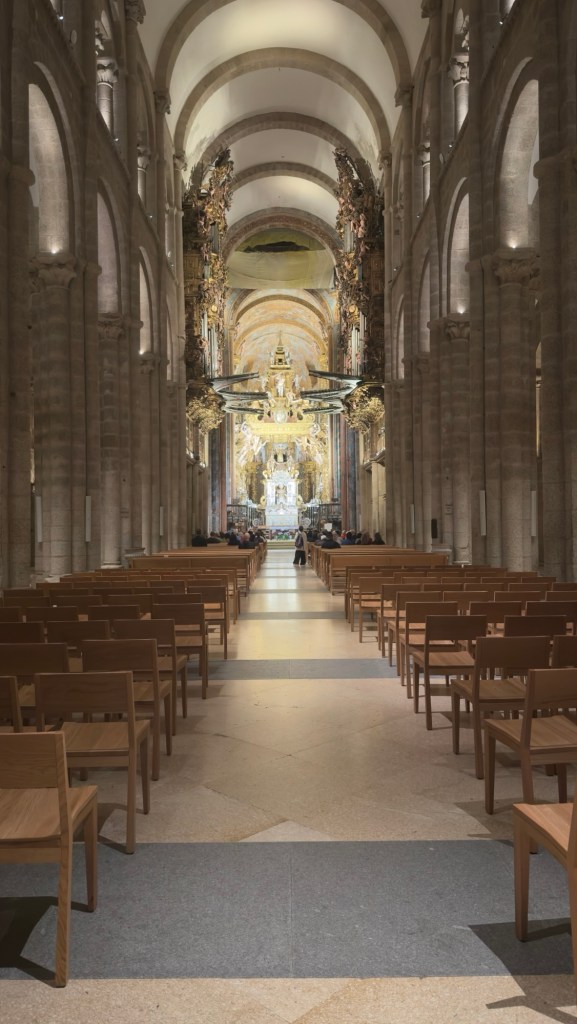
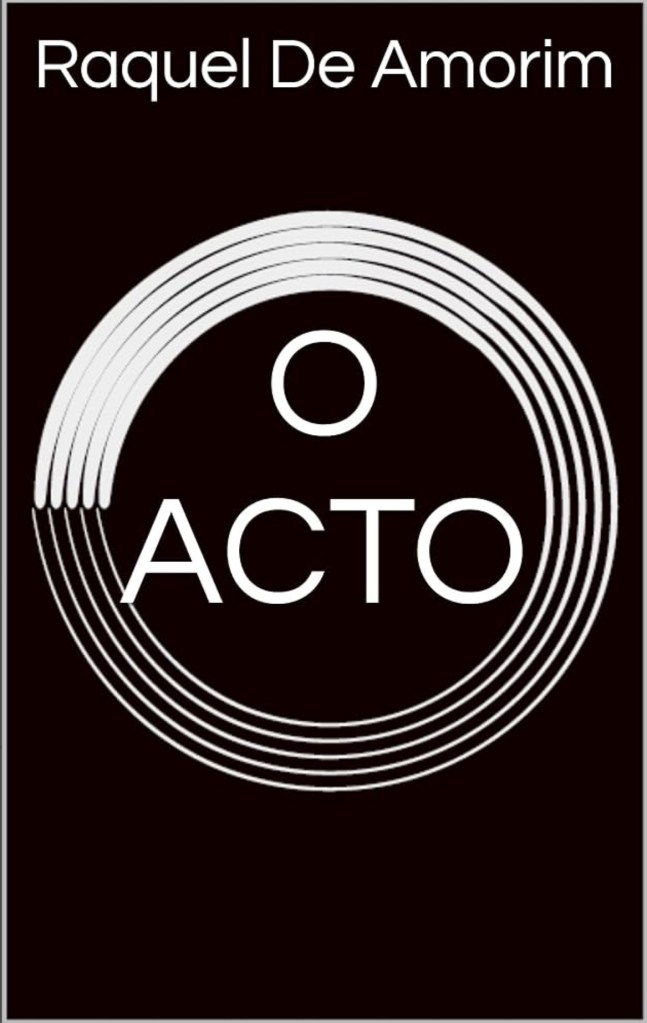
I came back and visited with a lady from Brazil. She is a lawyer and an author. All of her books are in Portuguese, but if you like…
From there, I was off to the “office.” I continued to work on my report on the artwork and other bits of San Fiz’s history while attending to the duties. Visitors come in singles or many at once. It is very rare that I’m in the church alone.
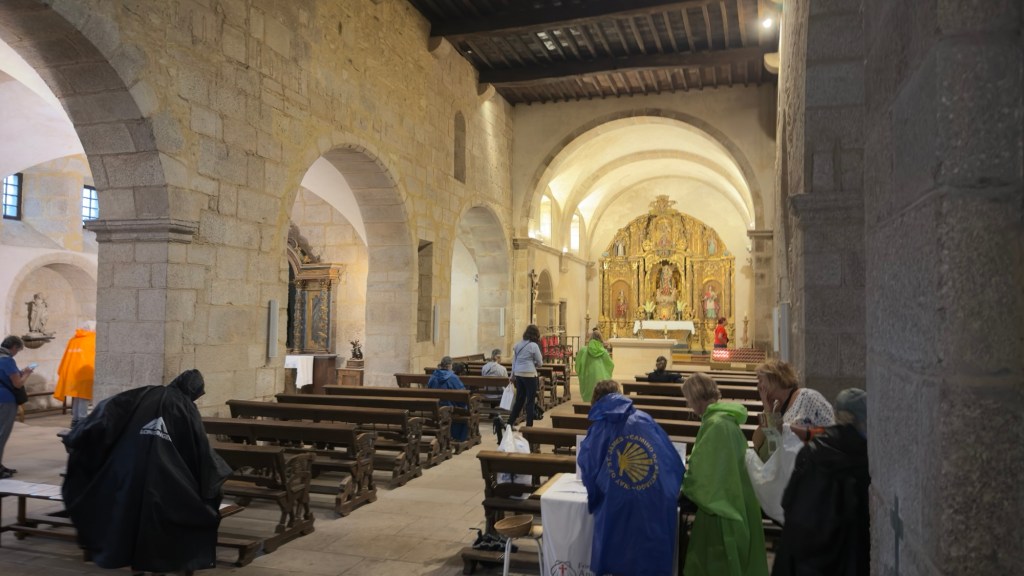
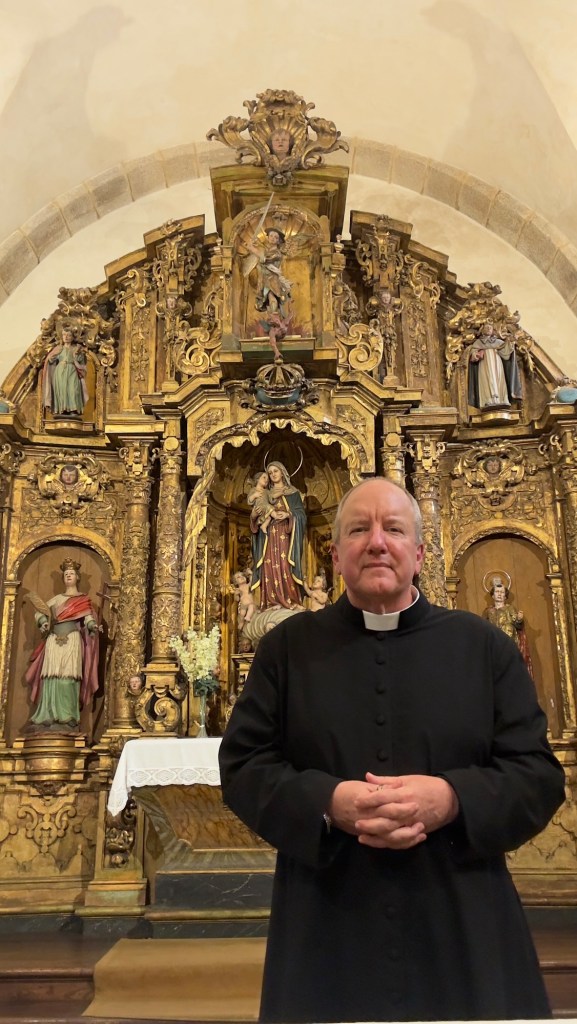
When I am, I take silly pictures (or proof that I’m actually here!)…
There was octopus for lunch with roasted potatoes and chips with chocolate-filled biscotti for dinner… just working the spectrum.
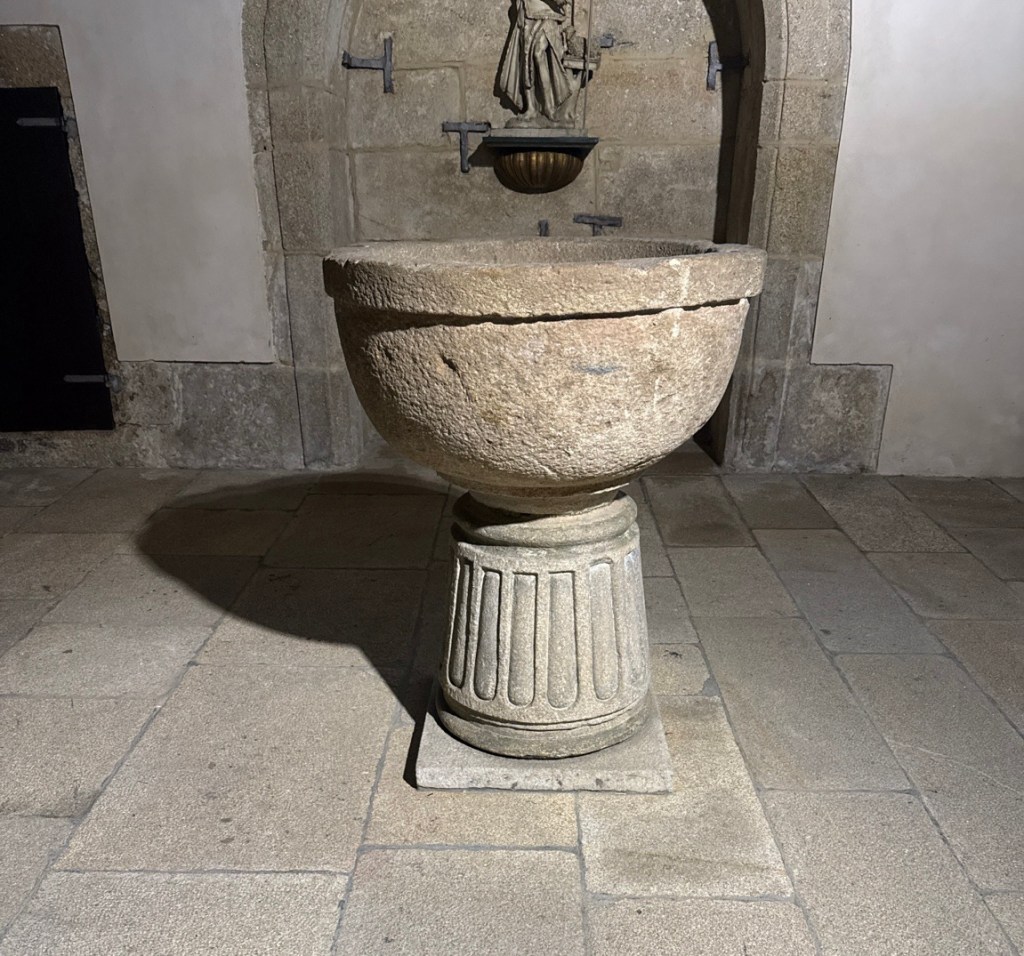
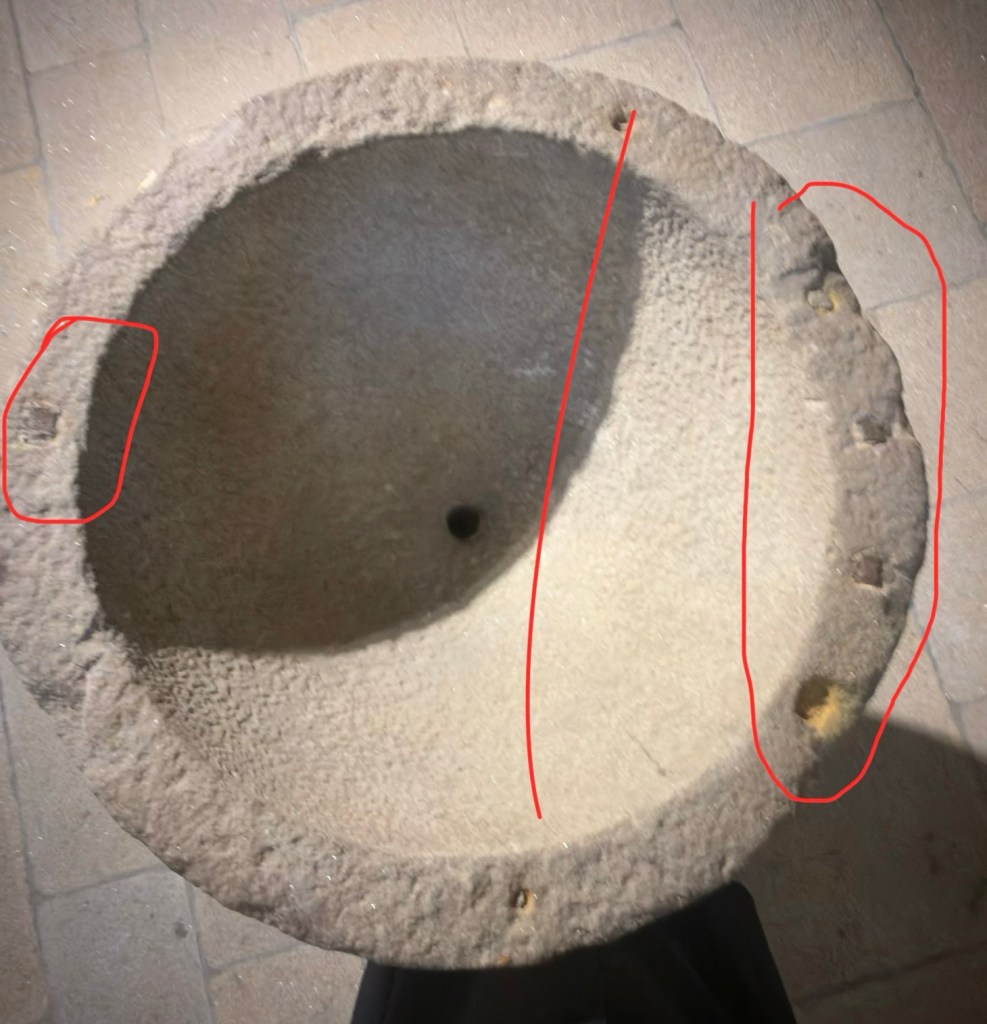
As a hint to the “research project”: this is the baptismal font located in the church. The base and pedestal are from two different centuries. I found the seven holes on the rim interesting and wondered what they were for. Research indicates that there was perhaps a locking lid (formally required) and several other instances could be found, so I asked to recreate what it may have looked like. How the font currently looks…
Based on intact examples, a rendering of the font may have looked something like this…
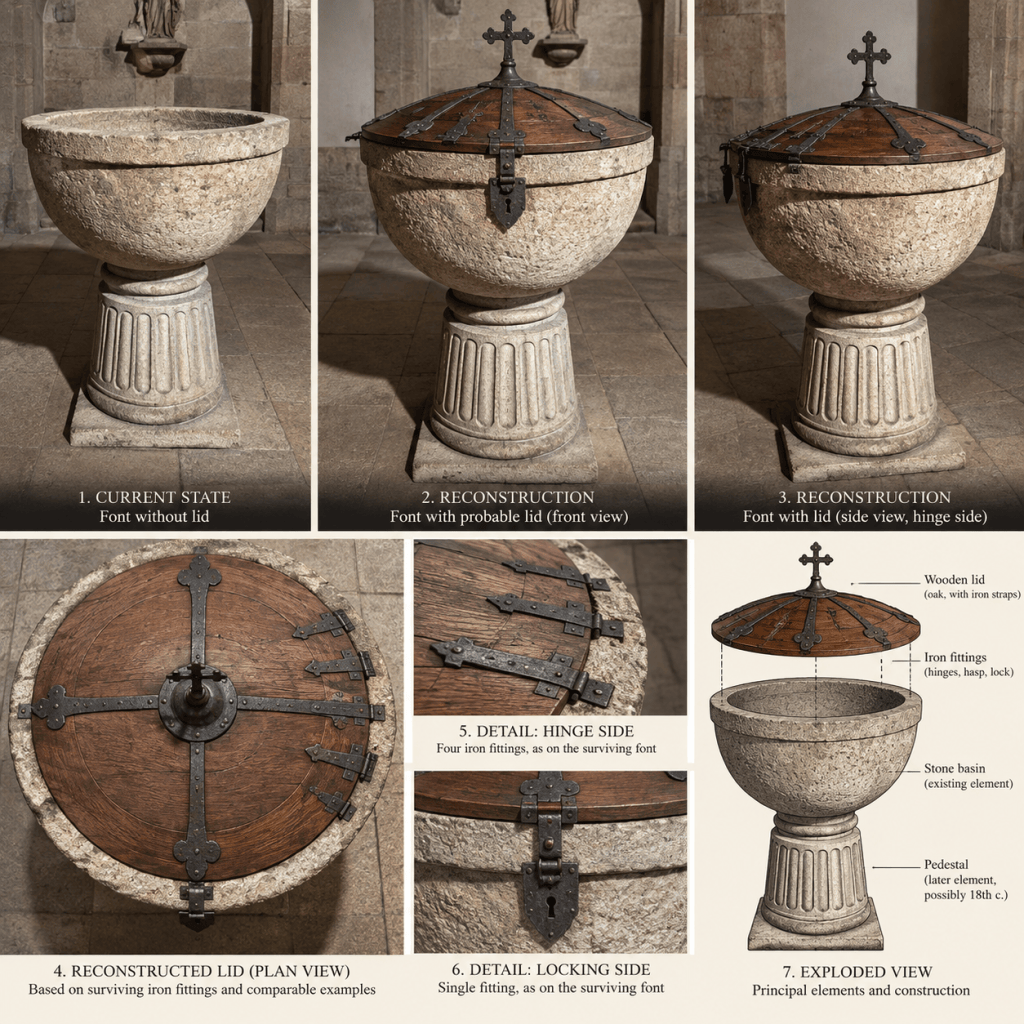
Is that what it would have looked like? I don’t know, but I’m making a fairly educated guess that it is close.
Something to do while I attend to the church and visitors.
I pray you are all well. I am happy to light a candle for you in the Church of San Fiz if you like. Just send me a note or comment on this post.
Blessings!
FYI: Her Royal Felineness seems a little less hissed off than a few days ago and also appears to be coming close to slinkying off the counter…


One Reply to “”