
Two brothers went to an elder monk who lived alone in Scete. The first one said, “Father, I have learned all of the Old and New Testaments by heart.” The elder replied, “You have filled the air with words.” The other brother said, “I have copied out the Old and New Testaments and have them in my hut.” To this, the elder responded, “You have filled your window with parchment, but do you not know Him who said, ‘The kingdom of God is not in words, but in power?’ and again, ‘Not those who hear the law will be justified before God, but those who carry it out.’”
As holy as scripture is and as life-giving as the sacred texts are, they remain limiting, for if we find Jesus only in the words, He is confined to our intellectual ability to understand that which cannot truly be understood. But, as we know, Jesus is not just a figure in a book, nor a distant memory of ancient events; He is a living presence. Therefore, we are not only called to know about Jesus, but more importantly, we are called to know Jesus. We do this not only by listening to the voices of others, but also by hearing the voice of Jesus for ourselves.
My favorite monk, Thomas a Kempis, wrote, “O God, You Who are the truth, make me one with You in love everlasting. I am often wearied by the many things I hear and read, but in You is all that I long for. Let the learned be still, let all creatures be silent before You. You alone speak to me.”
Unless the Lord speaks to us and writes the words of scripture on our hearts, we are merely engaging in an academic exercise.
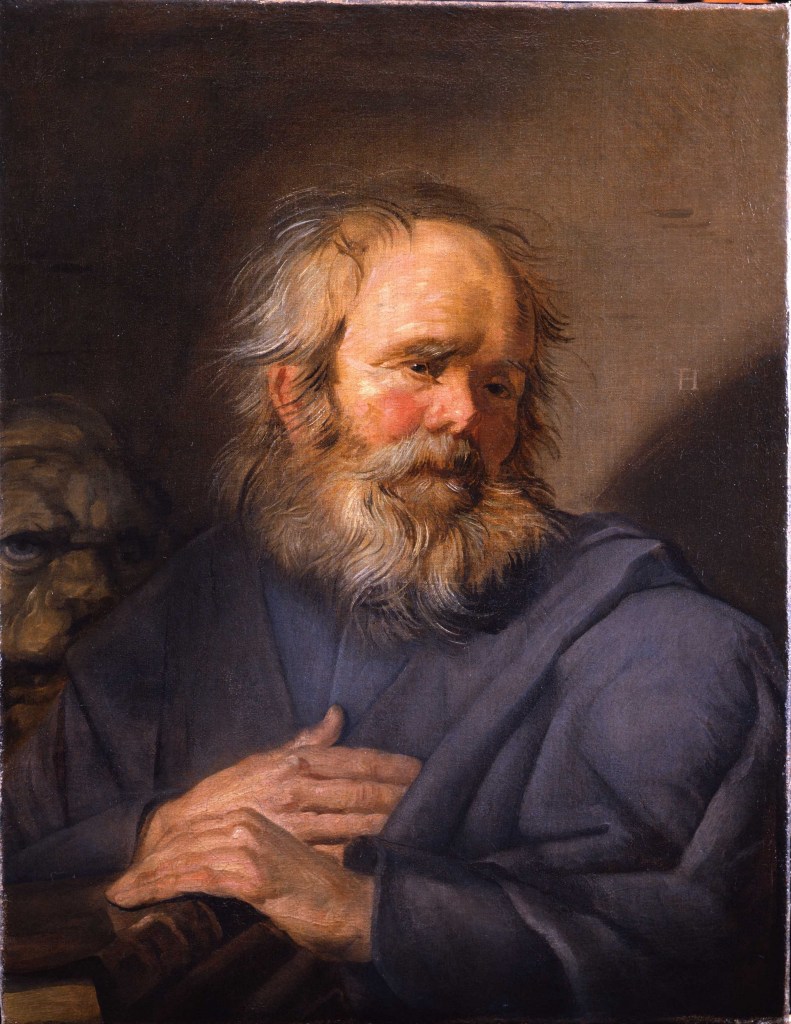
Holy Scripture does not say it specifically, but I feel as though St. Mark was someone who met Jesus, talked with Him, and so on. Scripture also indicates that he went on missions with Paul and Barnabas, and that he sat at the feet of the great Apostle Peter, learning much from him. Yet, even with all this, there had to come a day in his life when he set aside the writings and said, “Lord, You alone speak to me.” There must have been a day when he encountered and witnessed the crucified and resurrected Lord for himself, because his Gospel is a testimony to that encounter and a desire for you to have a similar experience.
The first words of his Gospel are, “The beginning of the good news of Jesus Christ, the Son of God.” From there, he narrates the story of Jesus in very succinct language.
In his Gospel, Mark tells the story of the Good News of Jesus Christ. After the apostles had encountered Jesus for themselves, they went out and proclaimed salvation so that others might experience Jesus—so that you and I might experience Jesus, not just in the words of the text but in our lives.
I encourage you, in your times of prayer and study, to set aside the scriptures and the prayer book—to set aside all those other voices, including your own—and say, “Lord, You alone speak to me,” allowing the One who has been handed down to us in the texts to speak to you personally.
 Candle in a Cave