Sermon: Easter 6 RCL A – “Rightly Ordered Love”


A new priest came to town. On the first Sunday, he preached one of the best sermons folks had ever heard. Everyone was excited, believing things were looking up for their church. They all complimented him on his wonderful, inspiring words. The following Sunday, the new priest preached the exact same sermon, to the letter. Folks looked a bit bewildered, but since it was so good, they all thought it was worth hearing a second time, just not two Sundays in a row. However, since he was new, no one said anything other than that they enjoyed the sermon. The third Sunday, once again, the priest preached the exact same sermon. The Sr. Warden didnโ€™t think they could take a fourth Sunday, so after everyone had exited the church, he had a word with the priest. โ€œFather,โ€ he said, โ€œthatโ€™s a good sermon you preached.โ€ โ€œThank you,โ€ he replied. โ€œHowever,โ€ continued the Senior Warden, โ€œyou have preached the same sermon three times now. Weโ€™ve all heard it and were wondering when you were going to go on to a different subject.โ€ โ€œSir,โ€ he responded, โ€œwhen you all start acting like youโ€™ve heard it, Iโ€™ll preach something else.โ€

In the opening words of our Gospel lesson, Jesus said something curious: โ€œIf you love me, you will keep my commandments.โ€ Earlier, He said, โ€œDo not think that I have come to abolish the Law or the Prophets; I have not come to abolish them but to fulfill them. For truly, I say to you, until heaven and earth pass away, not an iota, not a dot, will pass from the Law until all is accomplishedโ€ (Matthew 5:17-18). What is curious is that we are also taught that we are no longer under the law or its commandments. St. Paul, in his letter to the Romans, said, โ€œWhile we were living in the flesh, our sinful passions, aroused by the law, were at work in our members to bear fruit for death. But now we are released from the law, having died to that which held us captiveโ€ (Romans 7:5-6a).

So, whatโ€™s it going to be, law or no law? The answer, of course, is both, and the reason this sermon may sound like a repeat of so many others Iโ€™ve given is that the only way the answer can be both is if the solution is love. Therefore, I can stop preaching on love if we all start acting as if weโ€™ve heard it. The problem is, one quick glance around the world today tells me Iโ€™ve got to continue preaching on the topic. So, with that, how is the answer โ€œbothโ€? How can we be under the law and not under the law? Jesus provides the answer when He was questioned by a lawyer who asked Him, โ€œTeacher, which is the great commandment in the Law?โ€ Jesusโ€™ answer, I hope you all know by heart: โ€œYou shall love the Lord your God with all your heart and with all your soul and with all your mind. This is the great and first commandment. And a second is like it: You shall love your neighbor as yourself. On these two commandments depend all the Law and the Prophetsโ€ (Matthew 22:36-40).

We understand this to mean that behind the law lies a single guiding principle: love. Love is also the defining mark of a Christian. Jesus said, โ€œA new commandment I give to you, that you love one another: just as I have loved you, you also are to love one another. By this all people will know that you are my disciples, if you have love for one anotherโ€ (John 13:34-35). You know this as well. Together, these point back to the first line of our Gospel, โ€œIf you love me, if you are My disciples, then you will keep this summary of the law, which is to love God and to love one another.โ€

Here endeth the sermon. Go and love God and your neighbor. Amen? You should be so lucky. It would be that easy if we actually knew what it means to love like this, to love as Jesus loves us. But our idea of love often comes from a cherub named Cupid and a greeting card company with estimated revenues of about $5 billion, neither of which teaches us to love as Jesus loves. Letโ€™s see if we can begin to sort it out. Weโ€™ll start by looking at a law: #10 of the top tenโ€”โ€œThou shall not covet.โ€

To covet has two sides. The first is a lack of gratitude. When we covet, we are not satisfied or thankful for what we have. There is a constant need for more and more. Second, to covet is to become jealous of another for what they have and to want it for ourselves. To covet a thing or person is to desire it, andโ€”whether we would define it as suchโ€”the things we desire are the things we love. Yet this love is disordered, because in it there is no love of God or of neighbor. In that disordered love, we become angry, anxious, and restless. Our souls are in turmoil over a desire, a love that cannot be fulfilled. Therefore, St. Augustine was correct when he wrote, โ€œOur hearts are restless until they rest in God.โ€

To love instead of covet is to be thankful for the blessings and things God has provided us with, and to give thanks for the blessings others have. In your eyes, it may not seem fair that so-and-so has such-and-such, but that is not your concern. If they have sinned in order to gain what they have, that is between them and God. Donโ€™t allow their sin to cause you to sin. If God, out of His goodness, has chosen to bless them, then be happy for them. You, you are to follow the commandment and love.

If that makes sense, then we understand that we donโ€™t love as we should because our love is disordered. Our desire is elsewhere rather than on God, and this is sin in its most basic form. This disordered love has been with us since the very first day, when Adam and Eve desired a piece of forbidden fruit more than they loved God. It is also this disordered love that Jesus came to heal. The Lord said through the Prophet Ezekiel, โ€œI will give you a new heart, and a new spirit I will put within you. And I will remove the heart of stone from your flesh and give you a heart of flesh. And I will put my Spirit within you, and cause you to walk in my statutes and be careful to obey my rulesโ€ (Ezekiel 36:26-27). The healing that Jesus brings to our souls fulfills this great work. In doing so, Jesus gives us freedom from the law, because we are no longer trying and failing to obey a set of statutes. Instead, we are living a transformed life. No longer will we say, โ€œI canโ€™t do ____ or Iโ€™ll go to hell.โ€ Instead, we say, โ€œI want, I desire to do or not do this, because I love God and I love my neighbor.โ€ 

In Johnโ€™s first epistle (John is the great preacher of love), he writes, โ€œBeloved, let us love one another, for love is from God, and whoever loves has been born of God and knows Godโ€ (1 John 4:7). Preaching on this and the verses that followed, St. Augustine said some radical things: โ€œLove, and do what you will: whether you hold your peace, through love hold your peace; whether you cry out, through love cry out; whether you correct, through love correct; whether you spare, through love do you spare: let the root of love be within, of this root can nothing spring but what is goodโ€ (Homily 7.8 on the First Epistle of John). โ€œLove, and do what you will.โ€ That sounds very permissive. โ€œI loves you, baby, and I can do whatever I want.โ€ No. That is not what Augustine is saying. He is saying, โ€œIfโ€”and that is a mighty big โ€˜ifโ€™โ€”if my love is rightly ordered, if I truly love God, and if I truly love my neighbor as Jesus has loved me, then I am free from the law, because in my heart I will desire to do the right thingโ€”I will fulfill both the law and the commandments of Jesus.โ€ No longer will I have to do something. Iโ€™ll want to do it out of my love of God and neighbor.

I will have to preach a variation of this sermon time and time again. Why? Because weโ€™ve been trying since day one to get it right, and only One, only Jesus, has succeeded. However, in Him and through Him, we are learning. And with the help of the Holy Spirit, whom Jesus has sent, we will continue to do so.

Are you loving as Jesus loves? No? If you work on only one thing in your life, work on that. By doing so, you canโ€™t help but walk closer with God.

Let us pray: Grant, almighty God, that we may celebrate with heartfelt devotion these days of joy, which we keep in honor of the risen Lord, and that what we relive in remembrance we may always hold to in what we do. Through our Lord Jesus Christ, your Son, who lives and reigns with you in the unity of the Holy Spirit, God, for ever and ever. Amen.


Sermon: Julian of Norwich


In the final two verses of our Psalm, we read:

Hearken to my voice, O Lord, when I call;
have mercy on me and answer me.
You speak in my heart and say, โ€œSeek my face.โ€
Your face, Lord, will I seek.

I love to read, but Iโ€™ll occasionally go through a phase when I donโ€™t even want to pick up a book, so Iโ€™ll end up binge-watching something on TV for a few weeks. Then Iโ€™ll get tired of that and go back to reading. Itโ€™ll happen with other things as well, butโ€ฆ the Psalmist said, โ€œYou speak in my heart and say, โ€˜Seek my face.โ€™ Your face, Lord, will I seek.โ€ Have you ever gone through a phase when you just didnโ€™t feel like seeking His face? Iโ€™m not going to ask you to raise your hand if you have, because that is not the kind of thing good Christian folk like to confess, but do you occasionally find yourself a bit tired of seeking Him, wondering about His will, and all that? As I said, I wonโ€™t ask you to confess, but if you say youโ€™ve never experienced those feelings, I would say you need to go to confession for fibbing. It is something we all experience at times, and in those moments, our faith is truly demonstrated.

A mature Christian will continue in their faith and practices, knowing that these are times of wilderness rather than abandonment by God.ย  However, others will begin to drift away, and perhaps one of the first things to go is prayer.ย  When it seems weโ€™re filling the air with words that are unheard and accomplish nothing, why bother?ย  But it is the prayers in the wilderness that will see us through, because it is through them that we maintain the relationship with the Father.

Julian of Norwich, whom we celebrate today, spoke about this in the second part of her fourteenth revelation, contained in her Revelations of Divine Love. โ€œOur Lord is very glad and happy that we should pray, and he expects it and wants itโ€ฆ for this is what [the Lord] says, โ€˜Pray earnestly even though you do not feel like praying, for it is helping you even if you do not feel it doing you any good, even if you see nothing, yes, even if you think you cannot pray; for in dryness and in barrenness, in sickness and weakness, then your prayers give me great pleasure, even if you feel that they are hardly pleasing to you at all.ย  And it is so in my sight with all your trustful prayers.โ€™โ€ย  Julian says, โ€œGod accepts the good intentions and the effort of those who serve him, whatever we are feeling.โ€ (p.100)

To us, it may seem fruitless, but in a time of barrenness, when we feel the absence of God, stopping prayer is to break off from the relationship. So, regardless of how we feel, we must stay engaged because it is through our faithfulness and this engagement that we will once again feel the presence of God.

If you say, โ€œI just donโ€™t feel like praying. I donโ€™t have anything to say,โ€ then take the good advice of Archbishop Michael Ramsey, โ€œPray that you could pray,โ€ but donโ€™t stop praying.

Sermon: Easter 5 RCL A – “Coxie’s Mirror”


When I travel, especially by myself, I donโ€™t always have a set agenda. There are places I want to see, but Iโ€™m not rushing from one to the next just to tick them off a list, and I donโ€™t try to fill every moment. For me, that makes things more relaxing and leaves time to fit in the unexpected. I learned about one unexpected place while taking a cab from the airport in Luxembourg to my hotel (I quickly learn to use public transportation because itโ€™s much less expensive, but when Iโ€™m schlepping bags, it’s just easier to take the cab).

When the cab driver learned I was an American, he said, โ€œYou know, your General Patton is buried here.โ€ I didnโ€™t know that, so I added it to my list of possibilities. A few days later, when one of the places I wanted to visit was closed, I decided to take the trip out to the Luxembourg American Cemetery. General Patton is there, set apart from the others, but he is only one of many, and his grave marker is the same as all the others.

What I never expect when entering places like this is the emotional response. Even before you walk through the main gates, it starts to hit you, so I was intentional about not looking up until my heart was readyโ€ฆ and then I did.

There is General Pattonโ€™s cross, and then there are 4,958 other crosses for known individuals, 371 crosses for the unknown, and 119 Stars of David. Of those buried there, you will also find 22 sets of brothers. It is a sea of white markers for those who died near that place.

At one point, I was the only person in the entire cemetery. As I slowly passed among the markers, I read the names, but I was specifically looking for anyone from Oklahoma. I found Roy W Roe, Private First Class, 319th Infantry, 80th Division. He died on March 15, 1945. Based on what Iโ€™ve learned so far, he was twenty-four years old and married to Marion.

As I stood looking at his marker, I said to him, โ€œToday, I see you.โ€ For me, that meant, โ€œI see you as a person, as a young man who had a life ahead of him but died so far from home, and as someone so very young. I see you, not as a memory or a marker, but as a person.โ€

As I continued to walk among them, I read their names and told each of them, โ€œI see you.โ€ I donโ€™t know if that makes sense to anyone, but it did to me. It was the only way I had to honor them and the sacrifice they made.

In truth, all of us like to be seen, maybe not in the spotlight, but acknowledged. Being seen validates who we are as human beings and affirms that our existence counts for something, even if only to a very few. However, knowing that we will be seen raises an important question: When someone sees us, who or what do they see? There, I saw brave men and one woman who gave so much, but what do others see when they see me? What do others see when they see you?

A lot of time and money goes into appearanceโ€”clothes, hair, fitness, etc.โ€”but that is like the cover of a book. You can look like a million bucks and still be a Cruella De Vil. Yet when we are truly seen, who or what do people see? This is a question that relates to one of the many lessons in todayโ€™s Gospel reading.

Philip said to Jesus, โ€œLord, show us the Father, and we will be satisfied.โ€ You can hear the exasperation in Jesusโ€™ voice as he responds, โ€œHave I been with you all this time, Philip, and you still do not know me? Whoever has seen me has seen the Father. How can you say, โ€˜Show us the Fatherโ€™? Do you not believe that I am in the Father and the Father is in me?โ€

Jesusโ€™ answer provides part of the foundation for our understanding of the Holy Trinityโ€”Father, Son, and Holy Spirit. If you see Jesus, you see the Father. If you witness the works of the Holy Spirit, you witness the works of God, and so on.

In part of Jesusโ€™ great priestly prayer on the night before He was crucified, He prays, โ€œAs you, Father, are in me, and I in youโ€ (John 17:21). There are the Father, the Son, and the Holy Spirit, and although separate, they are one. See one, and you see the others. So, what about us? What about you? If I pass you on the street and say to you, โ€œI see you,โ€ who or what do I see? Who or what do you want me to see?

St. Paul says to us in his letter to the Galatians, โ€œI have been crucified with Christ. It is no longer I who live, but Christ who lives in meโ€ (Galatians 2:20). If we are alive to Christ, we have died to ourselves; therefore, when I say, โ€œI see you,โ€ I should see Jesus. Question: Do I?

At the east end of the Sistine Chapel, on the altar wall, is Michelangeloโ€™s great painting of the Last Judgment. At the top is the figure of Christ. With His right hand, He is calling the righteous up to the Kingdom of God, while with His left He is casting out the wicked. The righteous are escorted by angels, and the wicked are greeted by demons.

Since the painting’s unveiling in 1541, there has been high demand for copies and similar works. One of those who created a similar work was Raphaรซl Coxie (COKE-see). In his painting, the figures are near life size, so the painting is large, approximately ten feet by twelve feet. It hangs in the museum in Ghent, Belgium. However, as with many similar paintings of judgment, it originally hung in a courtroom as a reminder to the criminally inclined of the consequences should they continue down such a path.ย 

Given the size and subject matter, it really caught my attention, but it was so large that it was difficult to focus on one thing. Still, after studying it, my eye fell on the figure on the cover of your bulletin. She is located at the bottom center of the paintingโ€”the woman with her jeweled tiara. Yet it wasnโ€™t so much her as what she is holding. I looked at it for a good long while, then realized she was holding up a mirror and that there is a face in the mirror. However, unlike the other images in the painting, the image in the mirror is vague. It was then that I thought I understood. Coxie kept the image in the mirror vague because he wanted us to see ourselves.

Imagine you are on trial and you see this painting. You are reminded that some are called to Heaven while others are cast down into hell, and here is this woman, saying to you with her eyes, her expression, and her gesture, โ€œLook in the mirror and judge yourself. Which one will you be? Called up or cast down?โ€

If we are alive in Christ, we have died to ourselves. When people see us, they should see Jesus. Do they? Well, answer this: When you look in Coxieโ€™s mirror, who or what do you see? Do you see Jesus? Do you see someone being called up or someone being cast down?

Philip said to Jesus, โ€œShow us the Father,โ€ and Jesus replied, โ€œIf you have seen me, you have seen the Father.โ€ If someone said to you, โ€œShow us Jesus,โ€ would you even in the smallest way be able to say, โ€œIf you have seen me, you have seen something of Jesusโ€? The scary part is that we should be able to say that. If that is not true, why did Jesus go on to say to Philip, โ€œVery truly, I tell you, the one who believes in me will also do the works that I do and, in fact, will do greater works than these, because I am going to the Fatherโ€? If we are to do the same work Jesus did, we should look like Him. Right? When we look in Coxieโ€™s mirror, we should see something of the Imago Dei, the Image of God. It wonโ€™t be perfect; only One was perfect, but Jesus should be recognizable in each of us.

When we look in a regular mirror, we look for all sorts of thingsโ€”do I have something caught in my teeth, is my hair combed, am I getting old, etc.? I would challenge you to look in Coxieโ€™s mirror and ask, โ€œDo I look like Jesus? Will I be called up or will I be cast down?โ€

In seeing Jesus, we can see the Father. In seeing you, others should be able to see Jesus. Perhaps it is only as one sees in a mirror dimly, but there should be something of Jesus that is visible.

You are seen by others. Who or what do they see?

Let us pray:
God, our Father,
You redeemed us
and made us Your children in Christ.
Through Him, You have saved us from death
and given us Your Divine life of grace.
By becoming more like Jesus on earth,
may we come to share His glory in Heaven.
Give us the peace of Your kingdom,
which this world does not give.
By Your loving care, protect the good You have given us.
Open our eyes to the wonders of Your Love
that we may serve You with a willing heart.
Amen.

Sermon: Catherine of Siena

Saint Catherine of Siena by Franceschini Baldassare, 17th century

Catherine of Siena was born in 1347, the twenty-fourth of her parentsโ€™ twenty-five children. At the age of seven, she vowed her life to Christ. At the age of fifteen, she cut her hair in defiance of her parents, who were pressing her to marry. At the age of eighteen, she joined the Dominicans. At the age of twenty-one, she had a mystical experience in which she became spiritually espoused to Christ. Those events alone are enough, but through her work, particularly her writings, she became a force in her community and beyond, even with Popes.

In her letters and her Dialogue, perhaps the greatest of her writings, she recounts a soulโ€™s journey through the mystical experience of God. There is much to discuss in her writings, so Iโ€™ll focus on one idea: she writes a prayer to Christ, speaking to Him about His great love for Godโ€™s people and asking what could drive the Creator of all to pursue His creation so recklessly.

โ€œO priceless Love! You showed your flamed desire when you ran like a blind and drunk man to the opprobrium [the disgrace] of the cross. A blind man canโ€™t see, and neither can a drunk man when he is fast drunk. And thus he [Christ], almost like someone dead, blind and drunk, lost himself for our salvation.โ€ Continuing this theme of drunkenness in her Dialogue, she says, โ€œO mad lover! Why then are you so mad? Because you have fallen in love with what you have made! You are pleased and delighted over her within yourself, as if you were drunk for her salvation. She runs away from you, and you go looking for her. She strays, and you draw closer to her. You clothed yourself in our humanity, and nearer than that you could not have come.โ€

Continuing elsewhere, she writes, โ€œO unutterable love, even though you saw all the evils that all your creatures would commit against your infinite goodness, you acted as if you did not see and set your eye only on the beauty of your creature, with whom you fell in love, like one drunk and crazy with love. And in love you drew us out of yourself, giving us being.โ€

I am certain that weโ€™ve all been in love before, or at least thought we were, and in that state, I feel certain weโ€™ve all done some pretty stupid things. Iโ€™m also fairly certain that most have overindulged in some intoxicating beverage and done some rather stupid things then as well. If you have had the fortune (or misfortune) of being both in love and intoxicated, the level of stupidity can reach even higher levels. That is how Catherine says that Jesus loves us, as though He were drunk and in stupid love with us. That may sound crazy and, to some, irreverent if not blasphemous, but how would you describe a love that lays down his life for you? Logic canโ€™t explain it. Duty doesnโ€™t come close. I suppose we could just say He was crazy, but if we have faith, if we believe that it is the Fatherโ€™s desire that all should be saved even if we are wicked, then we must at least consider that Catherine was onto something: a love that appears to be a drunken insanity, but which is in fact pure and true.

You donโ€™t have to agree with Catherineโ€™s images of Godโ€™s love for us, but take some time to reflect on that love. Jesus was not intoxicated by wine, but how would you describe and explain His actions? You might just discover that a crazy, drunken lover is the best you can do.

Sermon: Easter 2 RCL A – “Thomas”


Perhaps youโ€™ve seen the letter to Jesus from Jordan Management Consultants.

It appears Jesus used these consultants to help identify potential leaders among his followers. The letter states that JMC has conducted extensive research on the candidates and then offers its recommendations:

โ€œSimon Peter is emotionally unstable and prone to fits of temper. Andrew has absolutely no leadership qualities. The two brothers, James and John, the sons of Zebedee, place personal interests above loyalty to the company. Thomas demonstrates a questioning attitude that would tend to undermine morale.

โ€œWe feel it is our duty to inform you that Matthew has been blacklisted by the Greater Jerusalem Better Business Bureau. James, the son of Alphaeus, and Thaddaeus definitely have radical leanings and both registered high scores on the manic-depressive scale.

โ€œOne of the candidates, however, shows great potential. He is a man of ability and resourcefulness, meets people well, has a keen business mind, and has contacts in high places. He is highly motivated, ambitious, and responsible. We recommend Judas Iscariot as your controller and right-hand man.โ€

Did you ever notice how easy it is to pull a snippet from a personโ€™s life and, from then on, judge and label them according to that snippet? We hear the stories of many of the characters in the Bible and do the same thing.

In the Old Testament, Abraham lied, David was an adulterer, Moses argued with God, and Jonah was flat-out disobedient. Those are only a few. Those in the New Testament arenโ€™t any better. The apostles questioned Jesusโ€™ methods. They argued amongst themselves. They wanted to call down fire from heaven and destroy cities (I actually kind of like that one). They abandoned Christ in his time of need. They denied him, and so on.

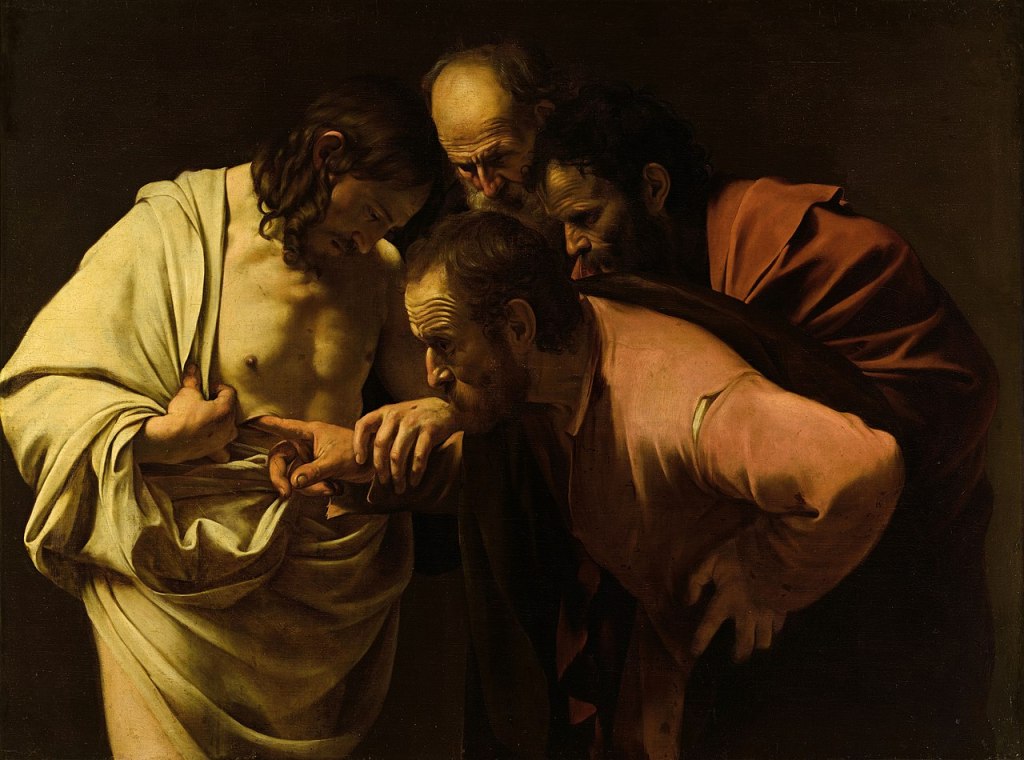
And then there is poor old Thomas. It is easy to understand why grade schoolers think his last name was Thomas and his first name was โ€œDoubting.โ€ Doubting Thomas. To tell you the truth, I think he gets a bad wrap, so today I would like to try to remedy that a bit.

Thomas is mentioned in all four gospels and the Acts of the Apostles, but in Johnโ€™s gospel, he receives the most attention.

In Johnโ€™s gospel, he is first mentioned as Jesus plans to return to Judea, where he would later raise Lazarus from the dead. The disciples are concerned because it was in Judea that the Jews had tried to stone Jesus just a short time earlier. Despite their concerns, Jesus says, โ€œLet us go to Lazarus.โ€

I love the quote and have probably shared it with you before, but have you seen The Lord of the Rings? Great films. Gimli is a main character and a dwarf. A huge battle is about to take place, with slim chances of victory, so there is an argument over what to do. Stand and fight, or flee and possibly fight another day. Gimli settles the argument when he says, “Certainty of death, small chance of success- what are we waiting for?โ€

When Jesus said, โ€œLet us go to Lazarus,โ€ even though there was the possibility of death and everyone else wanted to stay put, Thomas said, โ€œLet us also go, that we may die with him.โ€

Note to the wise: if you can find a friend like this, donโ€™t let them go. In this situation, Thomas demonstrates bravery, loyalty, and dedication. While the rest were โ€œdoubting,โ€ Thomas was prepared to lay down his life for the Lord.

In a later event, Jesus cryptically explained to the disciples that he would be killed and go to the Father. He went on to tell them that they knew the way to where he was going, yet Thomas said, โ€œLord, we donโ€™t know where you are going, so how can we know the way?โ€ Jesus then explained that he is โ€œthe way and the truth and the Life.โ€

No one else understood either, but Thomas demonstrated simple honesty by not pretending to understand what Jesus was trying to tell them.

Brave, loyal, dedicated, honest, and now, from todayโ€™s text, doubting.

When Jesus first appeared to the disciples, ten were there who saw and believed. Thomas was not.

Some have suggested that Thomasโ€™ greatest mistake was not his doubting but his absence. After the death of Jesus, instead of remaining in the Christian community, he is postulated to have withdrawn and sought loneliness. By isolating himself from the community of faith, he failed to witness Christ’s appearance.

Whatever the case, Thomas doubts. The Lord appears again, and Thomas is present. At this appearance, Thomas redeems himself from his initial doubt. After laying eyes on, and possibly even touching, the Risen Lord, he makes a confession of faith regarding Jesus. This confession is greater than what all the rest have said to this point. Thomas declares, โ€œMy Lord and my God.โ€

From a distance, it is easy to criticize Thomas, but his doubt seems to have stemmed from a need for facts. Once he was certain, Thomas committed himself fully to Jesus, declaring him Lord and God.

Brave, Loyal, Dedicated, Honest, Doubting, Fully Committed. Thatโ€™s a better first name than โ€œdoubting.โ€

The beginning of the Acts of the Apostles records Jesusโ€™ last appearance to the apostles, and his final words to them were, โ€œYou will be my witnesses in Jerusalem, and in all Judea and Samaria, and to the ends of the earth.โ€ It is clear from the rest of Acts that several of the apostles did as Jesus commanded; however, we donโ€™t hear about them all, and Thomas is one for whom scripture is silent.

There is, however, what is known as the New Testament Apocrypha. It is not considered scripture or even true, but this collection includes a book titled โ€œThe Acts of Thomas.โ€ According to this book, regarding being โ€œwitnesses to the end of the earth,โ€ we learn that the apostles divided the earth and went out into the world to spread the Gospel message, as Jesus had commanded. Thomas, as legend has it, was assigned to the area we know as India.

When he arrived in India, he was enslaved, but it came to the attention of Gustafor, an Indian king, that Thomas was a carpenter. Learning this, Gustafor commanded Thomas to build him a palace. The king gave Thomas a considerable sum to buy materials and pay the workers; however, every time the king gave him money, Thomas gave it all to the poor. The king grew suspicious and sent for Thomas, asking, โ€œHave you built my palace?โ€ Thomas answered, โ€œYes.โ€ The king asked when he could go and see the palace, and Thomas replied, โ€œYou cannot see it now, but when you depart this life, then you will see it.โ€ Through his good works, Thomas was building a palace in heaven for the king. At first, the king was furious, and Thomas was nearly put to death. Yet through this situation, Thomas won the Indian king to Christ. Legend has it that this is how Christianity came to India.

True or false? Itโ€™s hard to say, but hereโ€™s a fact: To this day, Syrian Christians in India call themselves the Mar-Thoma Church, or โ€œFather Thomasโ€ Church, and are in communion with The Episcopal Church.

What can we gain from this apostle with the unfortunate first name? One theologian wrote, โ€œWhat this church needs is what every church needs: a man who knows God at more than second-hand knowledge.โ€

When Jesus first appeared, Thomas wasnโ€™t willing to take the other apostlesโ€™ word for it. He didnโ€™t want second-hand knowledge. He wanted proof for himself. He wanted to see, hear, and lay his hands on the risen Lord.

That is what we should all want. Jesus says to Thomas, “Have you believed because you have seen me? Blessed are those who have not seen and yet have come to believe.โ€ It is true. Faith is believing in the things we cannot see, but bouncing along in unsubstantiated faith is foolish, for when the trials come, that kind of faith can abandon us.

Therefore, we must also lay hold of the Risen Lord, and we can do so through prayer, study of Holy Scripture, meditation, our own experiences of Jesus, and the witness of others. It is then that the roots of our faith will be grounded in the Rock who is our Lord and our God. When trials blow through our lives, they may knock us around a bit, but we will not be uprooted. Like Thomas, we will learn never to doubt the one who saves us.ย 

Let us pray: St. Thomas, you surrendered your doubts and placed your faith completely in the Resurrected Lord. Teach us to surrender ourselves fully to God’s will, trusting in His providence and love. May we let go of our fears and uncertainties, knowing that God is always with us. Pray for us, St. Thomas, that we may surrender our hearts to the Lord and find true peace in Him. Amen.

Sermon: Wednesday in Easter Week


Do you think God ever looks down from heaven, shakes his head, and asks himself, โ€œYou know I buy them books and send them to school, so why are they still doing foolish things?โ€

In our gospel reading today, when Jesus catches up to the two on the road, he declares the same thing, โ€Oh, how foolish you are, and how slow of heart to believe all that the prophets have declared! Was it not necessary that the Messiah should suffer these things and then enter into his glory?”

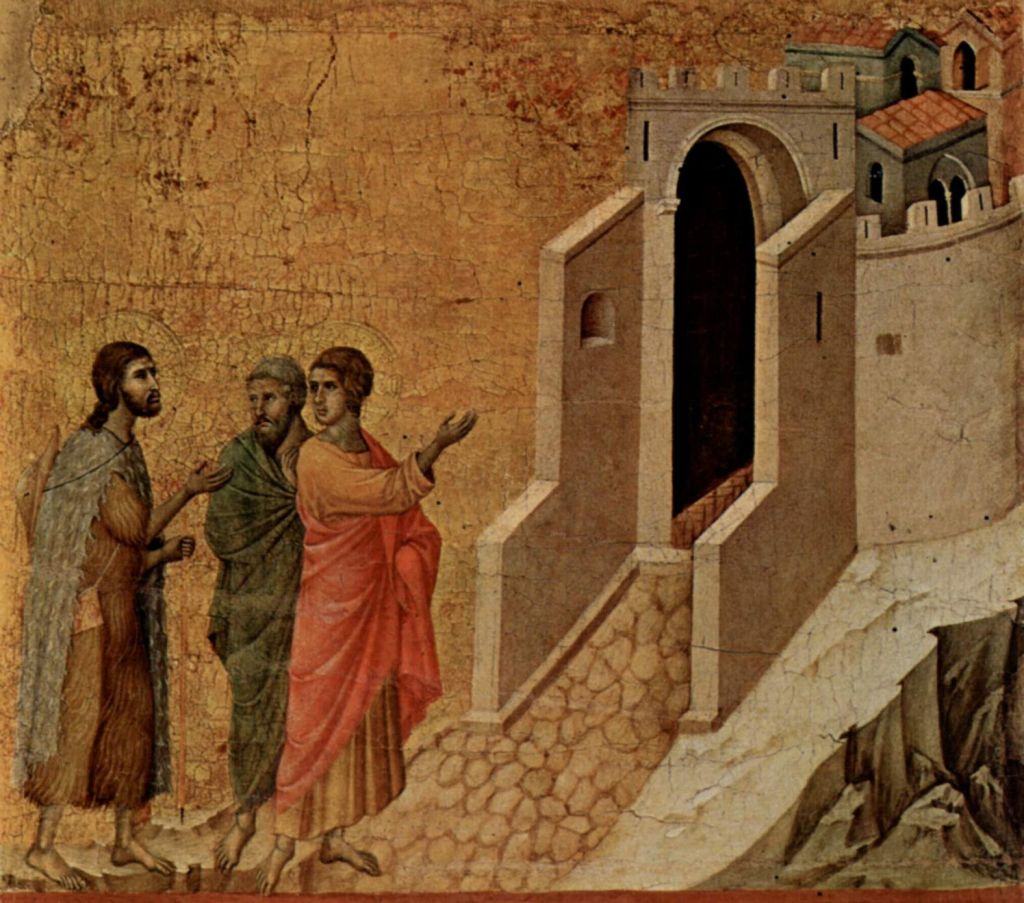
The Gospels do not explain why the two are traveling to Emmaus, but I am willing to make an educated guess.

As the two walk along the road, Jesus joins them and asks what they are discussing. Not realizing that it is Jesus who has asked, they answer him as if he had spent the last three days in a cave or something. They tell Jesus that the greatest prophet Israel ever knew, the long-awaited Messiah who was going to deliver the people, had finally come, but the chief priests had him put to death. All their hopes and dreams crumbled with his death. In other words, they say, โ€œO woe is us. All is lost.โ€ ย 

Why are the two headed to Emmaus? They are going home. In their minds, they are defeated, and there is no point in hanging out in Jerusalem any longer. Even the direction they are traveling is telling. Emmaus is almost directly west of Jerusalem, the sun is setting, the day is ending, and the sun has set on the Messiah. Where they once walked in the light, now everything is turning dark. Then Jesus speaks, โ€œStop being so foolish and let me explain it to you. Let me show you how you are wrong,โ€ and he proceeds to reveal the truth about the Savior, about himself, and he does so in two very important ways.

First, He opens the scripture for them and explains it in such a way that their hearts burn within them. Second, he breaks bread with them just as he had done at the Last Supper. Jesus reveals the truth about Himself through His words, the explanation of Holy Scripture, and the sacramentโ€”the breaking of bread. Through both word and sacrament, He reveals Himself to them, and in that instant, they knew Him.

It remains the same today, and there is only one place where we can find both: the church. Archbishop Rowan Williams declares, โ€œThe Church is the new creation, it is life and joy, it is the sacramental fellowship in which we share the ultimate purpose of God, made real for us now in our hearing the Word and sharing the Sacrament.โ€

My good friend Thomas a Kempis writes, โ€œYou have given me in my weakness Your sacred Flesh to refresh my soul and body, and You have set Your word as the guiding light for my feet. Without them, I could not live aright, for the word of God is the light of my soul and Your Sacrament is the Bread of Life.โ€ These two life-giving and soul-lighting gifts are found only in the Church.ย 

The two travelers on the road to Emmaus had lost hope, but Jesus revealed to them that He is present to all of us in word and sacrament, found only in Christโ€™s one holy catholic and apostolic church.

Sermon: Easter Sunday RCL A – Heavenly Virtues: Love


โ€œLove is awful. Itโ€™s awful. Itโ€™s painful. Itโ€™s frightening. It makes you doubt yourself, judge yourself, distance yourself from the other people in your life. It makes you selfish. It makes you creepy, makes you obsessed with your hair, makes you cruel, makes you say and do things you never thought you would do.โ€

This is the moment when the camera shifts from the priest to two women in the congregation. The woman with black hair turns to the brunette and says, โ€œThereโ€™s something wrong with your priest.โ€ 

Then the camera shifts back to the priest, who continues, โ€œItโ€™s all any of us want, and itโ€™s hell when we get there. So no wonder itโ€™s something we donโ€™t want to do on our own. I was taught that if weโ€™re born with love, then life is about choosing the right place to put it. People talk about that a lot, feeling right, when it feels right, itโ€™s easy. But Iโ€™m not sure thatโ€™s true. It takes strength to know whatโ€™s right. And love isnโ€™t something that weak people do. Being a romantic takes a hell of a lot of hope. I think what they mean is, when you find somebody that you love, it feels like hope.โ€ (Credit: BBCโ€™s Fleabag, written by Phoebe Waller-Bridge)

We know that Jesus was without sin. This is true, but He was a criminal; otherwise, why would He have been crucified? In his meditations, St. Bernard asked the same question: โ€œWhat crime hast Thou committed that Thou shouldest have to be condemned to death, and that death the death of the cross? Ah, I will understand, replies the saint, the reason for Thy death; I understand what has been Thy crime: โ€˜Thy crime is Thy love.โ€™ Thy crime is the too great love which Thou hast borne to men: it is this, not Pilate, that condemns Thee to dieโ€ (The Love of Jesus Crucified, p.20). 

Jesus was a criminal, and his crime was โ€œthe superabundance of loveโ€ (Ibid.) that He holds for youโ€”for us all. But how did Bernard and others come to such a conclusion?

It doesnโ€™t take much imagination to picture the horrors Jesus endured after His trial and ending with His crucifixion. Authors have written about it, filmmakers have made movies, scientists and doctors have analyzed it, and historians have provided the facts. There are many ways to be put to death, but crucifixion ranks among the most gruesome and painful. Yet, the question that saints asked was โ€œWhy?โ€ In asking this, they werenโ€™t questioning from a theological perspective. They all knew Jesus was the only one who could save us. Instead, they were asking, โ€œWhy couldnโ€™t a different, less horrific way be found?โ€ (Ibid., 21) There are two parts to the answer.

In the first part, St. Alphonsus Liguori asked, โ€œWould it not have sufficed for him to have offered to his eternal Father one single prayer for the pardon of man? For this prayer, being of infinite value, would have been sufficient to save the world and infinite worlds besides. Why, then, did he choose for himself so much suffering and a death so cruel?โ€ (Ibid.) St. John Chrysostom asked the same question, but also provides the beginning of an answer: โ€œA single prayer of Jesus would indeed have sufficed to redeem us; but it was not sufficient to show us the love that our God bore us: โ€˜That which sufficed to redeem us was not sufficient for loveโ€™โ€ (Ibid.). Jesus did not believe that a simple prayer was enough to show us how much he loved us. Chrysostom continues, โ€œThis was the principal cause of the Passion of our Lord; he wished it to be known how great was the love of God for man,โ€”of God, who would rather be loved than fearedโ€ (Ibid., 23). Jesus could have prayed, and we would have been forgiven and restored to God, but Jesus wanted to express His love for us in a way that would be beyond doubt. โ€œThis,โ€ Jesus said from the Cross, โ€œis how much I love you.โ€ โ€œGreater love has no one than this, that someone lay down his life for his friendsโ€ (John 15:13).

The second part of the answer to โ€œWhy?โ€ is more about us than about Jesus.

Imagine that Jesus prayed, not from the Cross, but from the upper room, โ€œFather, forgive them.โ€ And suppose there was a voice from Heaven, unmistakably the Fatherโ€™s, who responded, โ€œMy Son, their sins and the sins of the whole world are forgiven.โ€ Then see Jesus as He turns to the disciples and to us and says, โ€œYour sins are forgiven. See what great love I have for you.โ€ 

Perhaps Iโ€™ve become too cynical, but I think most people would say, โ€œThanks, but one little prayerโ€ฆ is that really love? I mean, yeah, I appreciate it and all, but how does that prove you actually love me?โ€

If for no other person, Jesus knew my cynicism and declared, โ€œNot only will I tell you that I love you, but I will show you to what extent I am willing to go so that you will know, without question, that I love you so that you can be with me. St. Thomas Aquinas wrote, โ€œโ€˜By thisโ€”that is the Passionโ€”man understands the greatness of the love of God to man.โ€™ And St. John had said before, โ€˜In this we have known the love of God, because He hath laid down his life for us (1 John 3:16)โ€™ (Ibid., 23).โ€

The priestโ€™s words, โ€œLove is awful. Itโ€™s painful. Itโ€™s frightening.โ€ I think Jesus could have written something similar. โ€œLove is awful,โ€ He would say. โ€œIt is painful. It is frightening. It makes you say and do things you never thought you would doโ€”offer your face to be spit upon, your brow for a crown of thorns, your back to be whipped, your hands, feet, sideโ€ฆ your very life.โ€ Jesus says, โ€œIt takes a lot of courage to love, but I look at you, and I know nothing but love. I look at you, and I have such great hope. Hope that you will believe and receive my love so that we may be one.โ€

Jesus was a criminal, but Jesus was also a romantic through and through, and as St. Bernard tells us, โ€œThe secrets of his heart are revealed through the wounds of his bodyโ€ (Ibid., 24). However, the saint adds, โ€œSuch love, wholly claims for itself our loveโ€ (Ibid., 25). If Jesus loves you with such a superabundance of love, how will you love Him? And if this is how you have been loved, how will you love others?

During this past Season of Lent, we embarked on a study of the seven Heavenly Virtues. We learned that these include the four Cardinal Virtues and the three Theological Virtues. The Cardinal Virtues are fortitude (spiritual courage), justice (seeking the common good), prudence (establishing rules), and temperance (moderation and balance). The first two Theological Virtues are faith, which is the loving and protective relationship with the Father, and hope, which informs our souls that this relationship is eternal. Love is the third Theological Virtue. It is the essence of the relationship, for โ€œGod is loveโ€ (1 John 4:7). Supporting all seven virtues is humility. If humility is lacking, we will fail. Finally, St. Padre Pio reminds us, โ€œHumility and love are the main supports of the whole vast building on which all the rest depends. Keep firmly to these two virtues, one of which is the lowest and the other the highest.โ€ In our Christian walk, if we begin with humility and love, all these others will follow.

This is the Sunday of the Resurrection. It is the day that Jesus conquered death and gave us, through His love for us, eternal life. Live a life that writes your own sermon: โ€œLove is awful. It is painful. It is frightening. Love gives me hope. Love gives me the power to love, not only my neighbor, but my enemy as well. Love gives me the strength to overcome my sins, faith that I might stand and be true, compassion that I may care. Love makes me do things that I never imagined I could do.โ€ Jesus endured much so that you might know the great love He has for you. Receive that love, and then, like Jesus, be a criminal, be a romantic, and through your practice of the Heavenly Virtues, express that love to God and the world.

Love is awful. Itโ€™ll make you do some crazy things, but these days, the world can use that kind of crazy.

Let us pray: Our most sweet Lord, we desire to do whatever You ask of us. We pray, help us, and grant that we may please You entirely and continually, now and forever. Mary, our Mother, entreat Jesus for us, so that He may give us His holy love; for we want nothing else in this world or the next but to love Jesus. Amen.

Sermon: Great Vigil of Easter


This is the night. Although this night has traditionally been the night to bring new members into the Body of Christ, it now seems to be mainly a night for the Church. So, since I believe you are โ€œall on the team,โ€ Iโ€™ll speak openly and dare to tell you what I donโ€™t like about the Church these days. Simply put, we have set aside the authority of God, the Scriptures, and the Church and replaced that authority with being โ€œniceโ€ and always trying to do โ€œniceโ€ things. When I say โ€œnice,โ€ donโ€™t confuse this with being kind or polite. That is not what I mean. Instead, when I say โ€œnice,โ€ think soft and squishy.

For example, we might say that itโ€™s enough for me to be a good person, which we often interpret as not hurting others, being accepting of everyone, helping out when I can, and similar actions. All these things are good. Thereโ€™s no issue with them, but they also fall into the category of being nice. So, why are they a problem? Jesus never said, โ€œBe nice as your Heavenly Father is nice.โ€ Jesus said, โ€œBe holy as your Heavenly Father is holy,โ€ and thereโ€™s a vast difference between being nice and being holy. For starters, I can be nice and polite all day long, and it wonโ€™t cost me a single thing. But if Iโ€™m going to be holy, it will cost me. I will have to sacrifice myself. I will need to set aside who I am, my wants, my desires, my egoโ€ฆ all of it, and do so for the good of the other. Donโ€™t believe me? Ask Jesus as He hung upon the Cross.

Being a nice church and nice Christians means we do not talk about sin, repentance, or judgment. Being kind suggests that as long as you feel good about yourself, then thereโ€™s no need for you to be changed or transformed. However, Scripture says, โ€œIf anyone is in Christ, he is a new creation. The old has passed away; behold, the new has comeโ€ (2 Corinthians 5:17). St. Paul says, โ€œHe who began a good work in you will bring it to completion at the day of Jesus Christโ€ (Philippians 1:6), and to the Romans, โ€œDo not be conformed to this world, but be transformed by the renewal of your mindโ€ (Romans 12:2). These are calls, not to remain stagnant, but to set aside the old self and take on the new. To be crucified with Christ and rise in glory.

Furthermore, a nice Christianity has attempted to soften Jesus, making Him something warm and cuddly, because warm and cuddly can be controlled, but that was never Jesus and never will be. Do you remember the Chronicles of Narnia by C.S. Lewis? There are two children, Susan and Lucy, who ask Mr. and Mrs. Beaver to describe Aslan, the Christ figure in the story. They ask if Aslan is a man. Mr. Beaver replies, โ€œAslan a man? Certainly not. I tell you, he is the King of the wood and the son of the great Emperor-beyond-the-Sea. Don’t you know who is the King of Beasts? Aslan is a lionโ€”the Lion, the great Lion.โ€ “Ooh!” said Susan. “I’d thought he was a man. Is heโ€”quite safe? I shall feel rather nervous about meeting a lion.” โ€œThat you will, dearie, and make no mistake,” said Mrs. Beaver, “if there’s anyone who can appear before Aslan without their knees knocking, they’re either braver than most or else just silly.โ€ “Then he isn’t safe?” said Lucy. “Safe?” said Mr. Beaver. “Don’t you hear what Mrs. Beaver tells you? Who said anything about being safe? ‘Course he isn’t safe. But he’s good. He’s the King, I tell you.โ€

Jesus is many things, but warm, cuddly, and controllable are definitely not part of His nature. He is good, but He is far from safe. As Paul tells us, โ€œIt is a fearful thing to fall into the hands of the living Godโ€ (Hebrews 10:31).

There is more, but you understand. This is the night, the night we hear of Godโ€™s saving historyโ€”how He waged war against our enemies and gave us a mighty victory. However, He did these things not so we could be โ€œniceโ€ little Christians. Instead, He did them so that we might be โ€œa chosen race, a royal priesthood, a holy nation, a people for His own possession, that [we] may proclaim the excellencies of Him who called [us] out of darkness into His marvelous lightโ€ (1 Peter 2:9).

Stop making excuses for sin in the world or your life. Don’t refuse to be transformed because itโ€™s easier to remain who you are. Donโ€™t try to tame the Lion. Stop being nice. Come into the presence of your unsafe but good King and be holy.

Sermon: Good Friday


Today, after the Solemn Collects, there is the Veneration of the Cross. Three times, the person presenting the Cross will chant, โ€œBehold the hard wood of the Cross on which was hung the worldโ€™s salvation.โ€ It is a time to meditate on these great acts.

Iโ€™m sure there are others, but I have read several different meditations on that scene. Thomas ร  Kempis, St. Alphonsus Ligouri, and Catherine Emmerich are among the authors who have stayed with me, but they are all quite graphic. You need to prepare your soul a bit before engaging with them. However, I wonder, have you ever truly considered what you would have witnessed, how it would make you feel, and, more importantly, how you would respond? Itโ€™s not an easy thing to do, but many saints point out that it is an edifying practice. As we have been studying the virtues during this Season of Lent, St. Bonaventure wrote, โ€œHe who desires to go on advancing from virtue to virtue, from grace to grace, should meditate continually on the Passion of Jesus. There is no practice more profitable for the entire sanctification of the soul than the frequent meditation of the sufferings of Jesus Christ.โ€ So, without making you squeamish by sharing some of the other writings, consider these things.

The head of Jesus was often lifted to look into the crowds as He taught them about the things of God. And, perhaps as often, it was bowed in prayer, talking with His Father. Now, it is pierced with the thorns of the crown that the soldiers so roughly pressed upon Him.

The hands of Jesusโ€”how many people did He touch and heal? Imagine Him reaching down and making the mud He would use to give sight to the man born blind. How gentle He was with the child that He picked up and placed in His lap. See Him writing in the dust, turning back those who accused and wanted to stone the adulterer. See them raised as He gave thanks over the few loaves of bread and fish that would then feed thousands. Now, they are pierced with two nails and fixed to the Cross.

His feet were washed by the hands of the unclean woman, and later anointed with costly perfume by Mary of Bethany. Those same feet walked on the waters and traveled many miles, bringing God’s message of love to a dying world. Yet, like His hands, those feet are now nailed to the Cross.

We could look upon Him, seeing His back, born to carry the sins of the world, now whipped and bruised, or His chest, where within that most Sacred Heart beats with the fire of the Spirit, is now pierced. Christ is upon the Cross. St. Alphonsus Liguori wrote, โ€œBehold Jesus, at length, actually dying. Behold him, my soul, how he is in his agony amid the last respirations of his life. Behold those dying eyes, that face so pale, that feebly palpitating heart, that body already wrapped in the arms of death, and that beautiful soul now on the point of leaving that wounded body. The sky shrouds itself in darkness; the earth quakes; the graves open. Alas, what portentous signs are these! They are signs that the Maker of the world is now dying.โ€

Seeing these things isnโ€™t easy, but seeing is necessary. As difficult as it is to witness, donโ€™t turn away. Stay with Him for a while and see with your eyes and your soul. This is Godโ€™s love story. St. Thomas Aquinas once asked Bonaventure which book he used to learn about the great love of Jesus. Taking a crucifix from the wall, Bonaventure replied, โ€œThis is my book whence I receive everything that I write; and it has taught me whatever little I know.โ€ 

Jesus tells us, โ€œGreater love has no one than this, that someone lay down his life for his friendsโ€ (John 15:13). You are Jesusโ€™ friend and His love. The Cross is the love story Jesus wrote. He wrote it for you, and He wrote it in His own Blood.