Sermon: Lent 1 RCL A – Agony in the Garden

This is part one of a five part series on the Sorrowful Mysteries of the Rosary.


The podcast is available here.
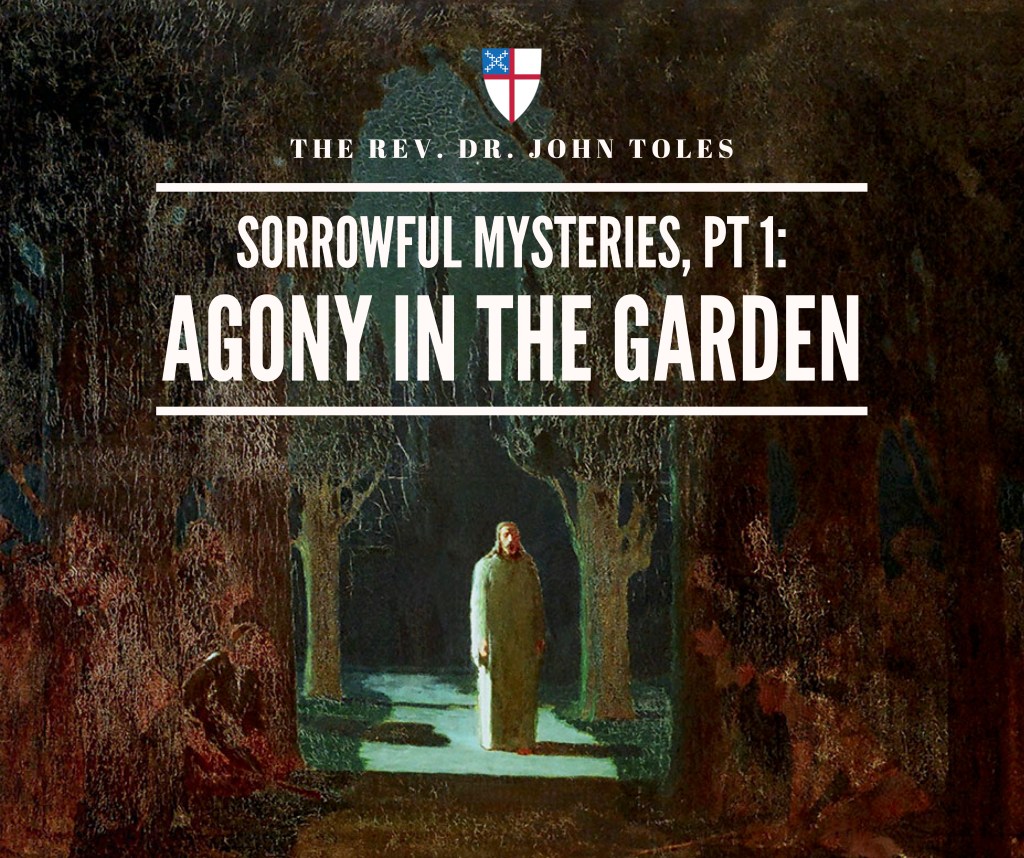


First Sorrowful Mystery: Agony in the Garden

“Pray that you may not enter into temptation”. —And Peter fell asleep. —And the other apostles. —And you, little friend, fell asleep…, and I too was another sleepy headed Peter.

Jesus, alone and sad, suffers and soaks the earth with His blood.

Kneeling on the hard ground, He perseveres in prayer… He weeps for you… and for me: the weight of the sins of men overwhelms Him.

Father, if Thou wilt, remove this chalice from me… Yet not my will, but Thine be done (Luke 22:42).

An Angel from Heaven comforts Him. —Jesus is in agony. —He continues, praying more intensely… —He approaches us, who are asleep: Arise, pray —He says again—, lest you enter into temptation (Luke 22:46).

Judas the traitor: a kiss. —Peter’s sword gleams in the night. —Jesus speaks: Are you come, as to a robber, to apprehend Me? (Mark 14:48)

We are cowards: we follow Him from afar, but awake and praying. —Prayer… Prayer…

(Source: Holy Rosary by St. Josemaría Escrivá)

Meditation:

On that night, following the Last Supper, the apostles went with Jesus to the Garden of Gethsemane. Most stayed further away, but Jesus took Peter, James and John a little deeper into the garden. Before going on alone even further into the darkness, Jesus said to these three, “Sit here while I go over there and pray. My soul is overwhelmed with sorrow to the point of death. Stay here and keep watch with me.” We know that after awhile, Jesus came back and found them sleeping. Waking them, he said, “Couldn’t you men keep watch with me for one hour? Watch and pray so that you will not fall into temptation. The spirit is willing, but the flesh is weak.” He went away a second time to pray then returned, only to find them again asleep. “Are you still sleeping and resting? Look, the hour has come, and the Son of Man is delivered into the hands of sinners. Rise! Let us go! Here comes my betrayer!” The betrayer was Judas, who had left the Last Supper early to find the soldiers who would arrest Jesus, because he had earlier betrayed Jesus to the religious leaders for thirty pieces of silver.

If I had been there, do you know who I would have been talking about before I fell asleep? Hint: not Jesus. Judas. Yes, Judas. It is the middle of night. I’m tired and a little scared. Jesus was talking about all sorts of things, including betrayal, none of which I fully understood. I’m not sure about what I’m supposed to be doing, because Jesus is over there somewhere and we are simply lost when he is not around. So instead of thinking about all that: “Hey, guys, can you believe Judas tonight? The man is always a bit flaky, but he was so dang nervous tonight he was starting to make me more nervous than I already was. And did you see his face when Jesus washed his feet? He went as white as Lazarus that day when Lazarus stepped out of the tomb after being dead for a couple of days.” Yeah. I would have been talking about Judas.

Do you know who I would have thought about when Jesus woke me up? Yep. Judas again. I mean, let’s be honest, we may have fallen asleep, but we’re here, aren’t we? Who knows where that thief is. Probably out there spending some of the purse. He doesn’t think we noticed that he was running around in new sandals, but we saw and they looked expensive, had those fancy camel knee soles on them. Yeah, we’re here. That’s what really counts.

As I was running through the garden after Jesus was arrested… Judas on my mind. Can you believe the nerve of him. Kissed him! Called him, Teacher! Betrayer! I’ll tell you what—I think I lost those guards who were chasing me, I can slow down some—I’ll tell you, when I get my hands on Judas, I’m going to string him up.

In all these events, Judas is my guy. He makes me look good and I don’t have to think about my own failings. My own betrayals. My own sins.

The Lord told Moses and Aaron how they were to go about making the annual sacrifice during Yom Kippur for the people’s sins, part of which involved two goats. The two goats would be brought before Aaron, he would cast lots and the one selected was sacrificed, but from the sounds of it, the one sacrificed may have been the lucky goat. With the second goat, Aaron would lay his hands on it, thereby transferring all the sins of the people onto the goat. The goat was then taken deep into the wilderness where it was set free to return to Azazel, a demon. A spirit of desolation and ruin. It was believed that the goat was returning all the sins of the people back to their source, Azazel, the demon. This is, of course, where we get the idea of scapegoat. Someone or thing that we can lay our hands upon, thereby transferring all the blame and ridicule for all that has gone wrong, leaving everyone else free of all culpability, blame.

Following the events in the Garden of Gethsemane, Judas is our second goat, our scapegoat. We can lay our hands on him and transfer all the sins to him and then set him loose in the wilderness to carry them away to Azazel. We never betrayed Jesus, we never fell asleep on Jesus, we never abandoned Jesus. We are innocent. So we think, but we are still in our sin. Therefore, we must be honest with ourselves and with sincere hearts and minds, confront our own failings, understanding that this is not an easy task. It is far easier to deny, to blame, to compare, than it is to admit we were wrong. And we are honest, not so that we can run around whipping ourselves, but so that we can rightly confess and allow the Lamb of God to take those sins with him to the cross, that through his great love for us, we might be redeemed.

The garden is the place where Jesus was left alone, betrayed, abandoned, not just by Judas, but by us all. And the garden is the place where Jesus made his final resolve to redeem all those failings: “Yet not my will, but Thine be done.” And it is God’s will that none of us should perish, but be redeemed and share in eternal life with him. “If we confess our sins, he is faithful and just to forgive us our sins and to cleanse us from all unrighteousness.”

Let us pray (based on Psalm 51:1-7):
Have mercy on us, O God,
according to your steadfast love;
according to your abundant mercy
blot out our transgressions.
Wash us thoroughly from our iniquity,
and cleanse us from our sin!
For we know our transgressions,
and our sin is ever before us.
Against you, you only, have we sinned
and done what is evil in your sight,
so that you may be justified in your words
and blameless in your judgment.
Behold, we were brought forth in iniquity,
and in sin were we conceived.
Behold, you delight in truth in the inward being,
and you teach us wisdom in our secret heart.
Purge us with hyssop, and we shall be clean;
wash us, and we shall be whiter than snow.
Amen.

Sermon: Boniface


The podcast is available here.


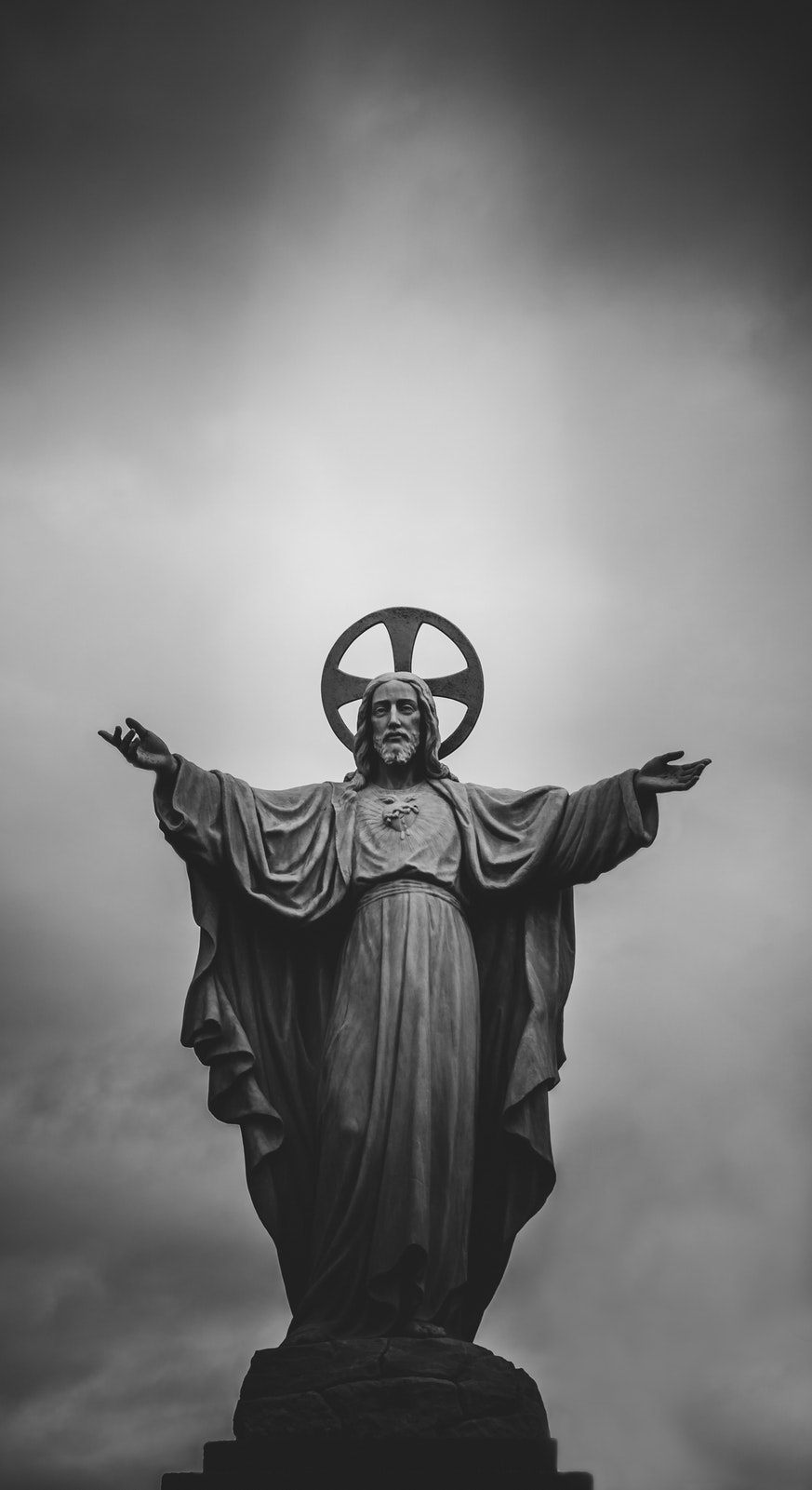
Photo by Bethany Laird on Unsplash

Boniface was born in the year 675 and served as a missionary to Frisia (Netherlands) and later, Germany, where he would rise to the position of Archbishop.  He was held in high esteem by the German princes and came often to give counsel, leading to one of his crowning achievements (no pun intended here) when he anointed Pippin as King of the Franks.  Pippin’s son was Charlemagne, who’s efforts brought Christianity back to western Europe.  Later, when Boniface retired as Archbishop, he returned to Frisia as a missionary.  The following year, as he was waiting on a large group of converts to arrive for baptism and confirmations, he and his party were attacked by pagans and Boniface was martyred.

St. Willibald, Bishop in Germany, is the one who recorded much of Boniface’s life in a short book, The Life of St. Boniface.  It is a fascinating read (you can find it online).  In it, Willibald points to one of the primary reasons behind Boniface’s successes: the study of Holy Scripture.  Willibald writes:

To such a degree was [Boniface] inflamed with a love of the Scriptures that he applied all his energies to learning and practicing their counsels, and those matters that were written for the instruction of the people he paraphrased and explained to them with striking eloquence, shrewdly spicing it with parables. His discretion was such that his rebukes, though sharp, were never lacking in gentleness, while his teaching, though mild, was never lacking in force. Zeal and vigor made him forceful, but gentleness and love made him mild. Accordingly he exhorted and reproved with equal impartiality the rich and powerful, the freedmen and the slaves, neither flattering and fawning upon the rich nor oppressing and browbeating the freedmen and slaves but, in the words of the apostle, he had “become all things to all men that [he] might by all means save some.” (Source)

Through his love and study of Scripture, Boniface learned that the most effective way to speak to people was through the language of God that he read in the Bible and the same can be true for us, but in order for this to happen, we need to pick up the Good Book.  A recent “study found only 45 percent of those who regularly attend church read the Bible more than once a week. Over 40 percent of the people attending read their Bible occasionally, maybe once or twice a month. Almost 1 in 5 churchgoers say they never read the Bible—essentially the same number who read it every day.” (Source)

Even if it is only a short devotional, we all need to be in the Word daily.  You don’t have to become a Bible scholar and you don’t have to memorize every verse.  You only have to take the time and allow God to speak to you in his own words.  What you will discover in the process is what Boniface discovered: the wisdom and grace you find within the Sacred Text will begin to find its way into your life and into your communication and relationships.  You will become a greater reflection of God.

The Imitation of Christ Project: Bk. 3, Ch. 11

It has been several years since I’ve worked on this project, but…


THE LONGINGS OF OUR HEARTS MUST BE EXAMINED AND MODERATED

THE VOICE OF CHRIST

MY CHILD, it is necessary for you to learn many things which you have not yet learned well.

THE DISCIPLE

What are they, Lord?

THE VOICE OF CHRIST

That you conform your desires entirely according to My good pleasure, and be not a lover of self but an earnest doer of My will. Desires very often inflame you and drive you madly on, but consider whether you act for My honor, or for your own advantage. If I am the cause, you will be well content with whatever I ordain. If, on the other hand, any self-seeking lurk in you, it troubles you and weighs you down. Take care, then, that you do not rely too much on preconceived desire that has no reference to Me, lest you repent later on and be displeased with what at first pleased you and which you desired as being for the best. Not every desire which seems good should be followed immediately, nor, on the other hand, should every contrary affection be at once rejected.

It is sometimes well to use a little restraint even in good desires and inclinations, lest through too much eagerness you bring upon yourself distraction of mind; lest through your lack of discipline you create scandal for others; or lest you be suddenly upset and fall because of resistance from others. Sometimes, however, you must use violence and resist your sensual appetite bravely. You must pay no attention to what the flesh does or does not desire, taking pains that it be subjected, even by force, to the spirit. And it should be chastised and forced to remain in subjection until it is prepared for anything and is taught to be satisfied with little, to take pleasure in simple things, and not to murmur against inconveniences.

Sermon: Easter 5 RCL C – “To be a Disciple”

The podcast is available here.


Photo by Leighann Renee

A soldier fighting over in Iraq received a letter from his girl friend that said she was breaking up with him. She also asked him to send the picture she had given him when he left because she needed it for her bridal announcement. The soldier was heart broken and told his friends of his terrible situation. After discussing it with them, he eventually just got angry about it.  So his whole platoon got together and brought all their pictures of their girlfriends and sisters, and put them in a box and gave them to him. So he put her picture in the box with the rest along with a note that said, “I’m sending back your picture to you.  Please remove it and send back the rest. For the life of me I can’t remember which one you are.”

If you were to ask a room full of people to provide you a Bible verse to use at a wedding, I’m guessing many would quote you 1 Corinthians 13 (4-8b) “Love is patient and kind; love does not envy or boast; it is not arrogant or rude. It does not insist on its own way; it is not irritable or resentful; it does not rejoice at wrongdoing, but rejoices with the truth.  Love bears all things, believes all things, hopes all things, endures all things.  Love never ends.”  And the bride and the groom look deeply into each others eyes and say, “I do.”

How was it that this bride and groom fell in love?  Robert Fulghum of All I Really Need to Know I Learned in Kindergarten also wrote, True Love.  In it, he tells how many brides and grooms come to find themselves standing in front of friends and family, declaring their love.  He writes, “We’re all a little weird. And life is a little weird. And when we find someone whose weirdness is compatible with ours, we join up with them and fall into mutually satisfying weirdness—and call it love—true love.”  I like that.  Go find someone who is your flavor of weird, fall in love, and be happy.  Not bad advice.

But those who have been in relationships for many years can tell us: It ain’t easy.  Why?  The love of Jesus is always patient, our love… not so much.  The love of Jesus bears all things, but forget to take out the garbage on garbage day… you in big trouble.  The love of Jesus never dies, but we know with certainty that our love can die, and it is never really pretty when it does.  From her diary, Anaïs Nin, friend of Henry Miller, writes, “Love never dies a natural death. It dies because we don’t know how to replenish its source. It dies of blindness and errors and betrayals. It dies of illness and wounds; it dies of weariness, of witherings, of tarnishings.” 

That is true with our most intimate relationships, our relationship with God, family, friends, and the world in general.  Love dies.  And just like in relationships, when it dies in all these other situations, it is not very pretty.  For what was once love has turned into bitterness.  What was compassion slides into indifference, kindness into cruelty, patience into intolerance, hope into despair.  

It is in the midst of all this: falling into love, being in love, the death of love—whether in relationships or in our work in the world—that Jesus speaks to us: “I give you a new commandment, that you love one another. Just as I have loved you, you also should love one another. By this everyone will know that you are my disciples, if you have love for one another.”  So how do we do this?  

Before we can begin, we must recognize that our ability to love one another does not start with us.  St. John teaches us in his first epistle: “Beloved, let us love one another, for love is from God, and whoever loves has been born of God and knows God.”  And then, a few verses further he states, “We love because he first loved us.”  The love that we have for one another does not begin with us.  It begins with God and it is a grace that he pours out on his people who love him in return for His love.  He loved us.  We love him.  He gives us the grace of love so that we might love others.  His love for us never dies, but ours… remember the words of Anaïs Nin, love “dies because we don’t know how to replenish its source. It dies of blindness and errors and betrayals. It dies of illness and wounds; it dies of weariness, of witherings, of tarnishings.”  Our love for others dies, because our love for God fades.

We enter into a relationship with Him and we experience this overwhelming goodness and love of God, but over time, we drift.  God doesn’t drift, but we do.  Through our indifference to his calling on our lives.  Through our neglect of maintaining a closeness with him through prayer, study, and meditation.  And finally through our sin, which tarnishes and breaks the relationship we have.  When we limit or cut ourselves off from the source—God—then we cut ourselves off from the replenishing grace of love.  When it dries up, not only are we no longer able to love God as we should, but we fail in our other relationships, because we no longer have the capacity, the grace, to love one another as Jesus has commanded.

So how do we begin?  How do we learn how to practice this commandment to love?  The only answer I have is to point to the cross.  A few chapters on in John’s Gospel, Jesus will restate this commandment to the disciples: “This is my commandment, that you love one another as I have loved you.”  Jesus then says, “Greater love has no one than this, that someone lay down his life for his friends.”  And he lived this greater love out on the Cross.  In order to love as Jesus commanded, we must ever keep this love, his cross, before us.

I think that this is one of the holy ironies of the Eucharist that we celebrate every week, but especially at the Great Vigil and during the Season of Easter, because no sooner have we said, “Alleluia, Christ is Risen” and then a short time later, within the context of the service we read those words, “He stretched out his arms upon the cross, and offered himself, in obedience to your will, a perfect sacrifice for the whole world.”  Alleluia, Christ is Risen… but remember, he was crucified.   We’re never allowed to forget—thanks be to God—that he died for us and in the process, we never forget the cross.  It is in keeping the singular event of the cross ever before us, that will allow us to love as we are commanded, because the moment we truly see it is the moment that we finally understand how to love.  And from there, if you will continually see the cross and understand it, then you will take that vision and understanding into every aspect and relationship of your life and your love will be patient, and kind, and filled with hope.

Jesus said, “I give you a new commandment, that you love one another. Just as I have loved you, you also should love one another. By this everyone will know that you are my disciples, if you have love for one another.”  Prove to all that you are his disciple.  Through the Cross of Christ, love one another.

Let us pray: God, our Father, You have promised to remain forever with those who do what is just and right. Help us to live in Your presence. The loving plan of Your Wisdom was made known when Jesus, your Son, became man like us. We want to obey His commandment of love and bring Your peace and joy to others. Keep before us the wisdom and love You have made known in Your Son. Help us to be like Him in word and deed.  Amen.

Sermon: Easter 3 RCL C – “The Invitation”

The podcast is available here.


Relationships and marriage can be a bit tricky, just ask any kid. For example: What is the right age to get married? According to Camille, age 10: Twenty-three is the best age because you know them FOREVER by then. Freddie, age 6 sees it a bit differently: No age is good to get married at. You got to be a fool to get married. How can you tell if two people are married? Derrick, age 8 has a good system: You might have to guess, based on whether they seem to be yelling at the same kids. How would the world be different if people didn’t get married? Kelvin, age 8 says, There sure would be a lot of kids to explain, wouldn’t there? Finally, Ricky, age 10, has it all figured out for how the fellas can make a marriage work: Tell your wife that she looks pretty, even if she looks like a truck. (Source)

Relationships are tricky and when we begin to talk about our relationship with God, it becomes even more difficult. As we’ve talked about in the past, we have a tendency to apply human characteristics to God: we can be petty and grouchy, so we expect God to be petty and grouchy. The same principle applies to our relationship with God, we apply human relationship characteristics to it. William Paul Young is the author of the novel The Shack that came out several years ago. We could spend a lot of time poking holes in his theology, but the man has some really great points in his writings and interviews, and in one interview on NPR, speaking of his relationship with God, he says, “My dad was a preacher. My relationship, for example, with my father—very difficult, and very painful, and it took me 50 years to wipe the face of my father off the face of God.” We look at our earthly relationships and believe our relationship with God works in the same way. We forget that “God is love” and that he is “the same yesterday, and today, and forever.” Which means that God is not out looking for ways to smite you. Instead, God is seeking ways to reconcile you, to draw you closer, to love you, and to invite you to participate in this great work of love. And that is exactly what our Gospel reading is about.

Peter and the gang have seen Jesus twice, but they’re still floundering a bit. They know what Jesus taught and what he did. They also know that he died and rose again. They believe, but they don’t know what to do with their belief, so they go back to what they do know: fishing. All night they fish and with no luck, but then someone calls out to them from the shore, “Try the other side of the boat.” They do and catch a great haul of fish. This immediately reminded John of the last time someone told them to try again and they had a miraculous catch: it was when Jesus called them in the very beginning of the ministry. John put two and two together: “It is the Lord!”

Peter, being the impulsive one that he is, doesn’t wait for the boat to take him back. He dives in and swims to shore (ever wonder why Peter didn’t try running on the water? He walked on it once before. Anyhow…) He swims to shore, they all have breakfast, and then we have the three questions: “Simon son of John, do you love me more than these?”, “Simon son of John, do you love me?”, “Simon son of John, do you love me?”. One question for each time Peter had denied him. Was Jesus trying to rub Peter’s nose in it? “You’ve been a bad bad boy, Peter!” No. Jesus was reconciling Peter to himself. The three questions were not for Jesus’ sake, they were for Peter’s, so that he would know that Jesus had forgiven him and so that Peter would know that Jesus still wanted… desired him to be a part of God’s ongoing mission in the world. And in saying to Peter after the three questions: “Feed my lambs.”, “Tend my sheep.”, “Feed my sheep.”, and finally, “Follow me.”, Jesus wasn’t commanding Peter to do these things, he was inviting him to join him, to be a part of him in this resurrected life. As we said, the disciples were floundering, they weren’t sure what all everything meant, or what to do; so Jesus answered the question for them: be reconciled to me and accept the invitation to join me, to follow me. Why?

We have this idea that God wants us to join him so that he can use us in some way. That almost sounds like God wants to play us out on a chess board and that we’re as expendable as any other pawn, but that simply is not the case. Remember, God seeks us so that he might love us, not so that he can mark one more point up for the good guys, use us up, and then move on to the next person who chose to follow. God invites us to participate in love because it is truly about the relationship. William Young – The Shack – in his book, Lies We Believe About God, put it this way:

“God is a relational being; that is who God is. The language of God is about partnering, co-creating, and participating; it’s about an invitation to dance and play and work and grow.

“If God uses us, then we are nothing but objects or commodities to God. Even in our human relationships, we know this is wrong.

Would any of us ever say to our son or daughter, “I can’t wait for you to grow up so that I can use you. You will be Daddy’s tool to bring glory to me”?

“The thought is abhorrent when we think of those words in relationship to our own children, so why do we ascribe that language to God and how God relates to us? Have we so soon forgotten that we are God’s children, not tools? That God loves us and would never use us as inanimate objects? That God is about inviting our participation in the dance of love and purpose?

“God is a God of relationship and never acts independently. We are God’s children made in God’s image! God does not heal us [… reconcile us to himself…] so that we can be used. God heals us because God loves us, and even as we stumble toward wholeness, God invites us to participate and play.”

How brilliant is that! Got invites you into a relationship so that you may participate in his great act of love and God invites you to play, to enjoy the blessings and richness of heaven and earth. It is a tough life, but someone’s got to live it. Might as well be you!

Jesus says, “Follow me.” Accept the invitation. Be reconciled to God and the resurrected Lord and joyfully participate in God’s love and mission.

Let us pray:
Father of love, hear our prayers.
Help us to know Your Will
and to do it with courage and faith.
Accept the offering of ourselves,
all our thoughts, words, deeds, and sufferings.
May our lives be spent giving You glory.
Give us the strength to follow Your call,
so that Your Truth may live in our hearts
and bring peace to us and to those we meet,
for we believe in Your Love,
the Christ you sent into the world,
Your one and only Son,
Jesus.
Amen.

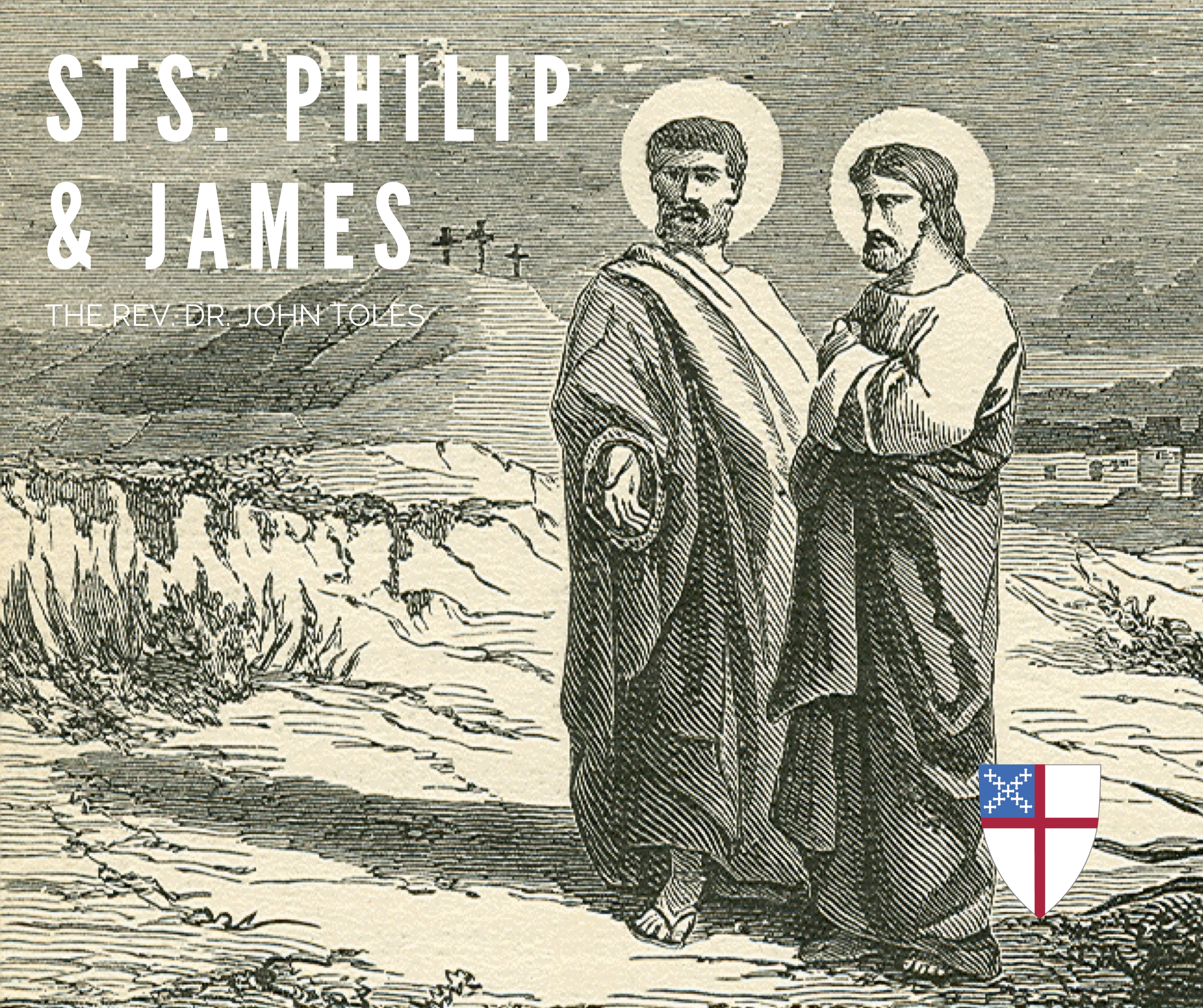
Sermon: Sts. Philip & James

The podcast is available here.


You’ve probably already picked up on the fact that I’m not Mr. Sportsman.  I played football and basketball up through junior high and I was on the fencing team while in high school, but that was really about it.  Fencing I was pretty good at, but for the rest… not so much, except for one of my last games before I aged out in Little League baseball.

In the town I grew up in, Springhill, Louisiana—it was a paper mill town—every summer you signed up for Little League.  My team was the Indians and I played right field (that’s where the put the guy with the least amount of talent).  Games were on Saturday and every Sunday following the game, the newspaper would write them up, however, you only got your name in the paper if you did something remarkable. Well, my name got a mention maybe once per summer, but the last time, I got an entire sentence to myself.  I remember it to this day: “Big Bat John Toles hit three doubles.”  Can I get an ‘Amen.’  

It seems it is that way in most team sports.  We can read all day about Tom Brady and how many touchdowns he threw and yards he passed—and good on him—but the left guard on the front line who protected Tom Brady all the way through the game… you would be lucky to even know his number, much less his name, however, I would put money on this one: we may not know that left guard, but Tom Brady—Tom Brady knows his name, he also knows his wife and kids’ names, all their birthdays, what his favorite drink is, the color of his eyes, and what day of the week he prefers to cut his toenails on.  Why?  Because Tom Brady knows that he is absolutely nothing without that left guard and Brady wants to be able to show that left guard all the appreciation he has earned for taking such good care of him.

Why the talk about football and the left guard?  In reading through the New Testament, you are going to hear about Jesus, Peter, Paul, James, John, and a few others, but the two we celebrate today, Philip and James, and so many others are rarely even mentioned. 

Philip is number five in the lists of Apostles that we receive and he shows up a few times in John’s Gospel, but James (and this is James the Less / James the Younger, meaning he is not James of Jerusalem or John’s brother) other than a possible mention of him Mark’s Gospel, simply disappears from the records.  Because they are so rarely mentioned, it is easy to think of them in the same way we think of that left guard, which means, we don’t think of them much, but ask Jesus.  Ask Jesus what significance they played in the early Church and I’m guessing you will hear a very different story.

When it comes to our work in the Church, we may at times see ourselves as the right fielders and one of us may occasionally get the ‘Big Bat’ mention or we may see ourselves at that left guard, but in the eyes of Jesus, we can be seen as the Philips and the James, or the Phoebe and the Joanna.  We can be seen as servants of our God, faithfully fulfilling the individual call Jesus has placed on each of our lives.  And remember, we are not alone in this great work.  We have Jesus and we have one another.  As St. Josemaría Escrivá writes, “Do you see? One strand of wire entwined with another, many woven tightly together, form that cable strong enough to lift huge weights.  You and your brothers, with wills united to carry out God’s will can overcome all obstacles.”  (The Way #480)  Together, accomplishing the will of God.

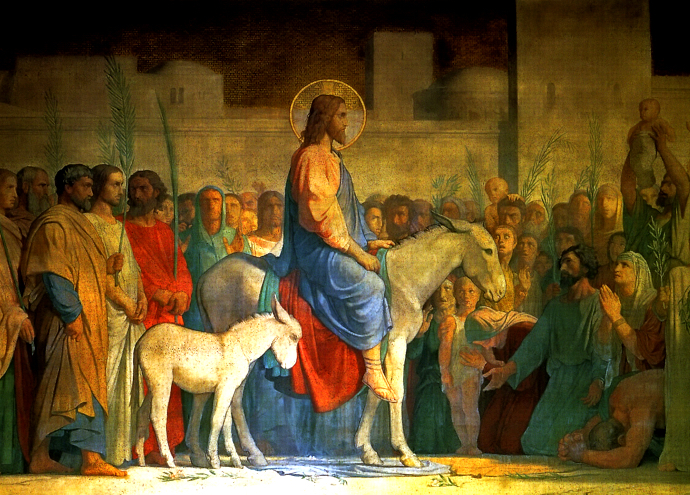
Sermon: Palm Sunday RCL C

The podcast is available here.


The Judge, a character in The Stand by Stephen King, talks about his life and gives his thoughts on encountering God: “I like to creep through my daily round, to water my garden… to read my books, to write my notes for my own book… I like to do all those things and then have a glass of wine at bedtime and fall asleep with an untroubled mind. Yes. None of us want to see portents and demons, no matter how much we like our ghost stories and the spooky films. None of us want to really see a Star in the East or pillar of fire by night. We want peace and rationality and routine. If we have to see god… it’s bound to remind us that there’s a devil for every god—and our devil may be closer than we like to think.”

I think the Judge is onto something there. A Star in the East, pillar of fire, virgin birth, water into wine, sight to the blind, crucifixion, empty tomb… life is much simpler without all these things. We live and we die and whatever we choose to do between those two events is of our own making. But if these things do exist, then we are obligated to try and make some sense of the events that will unfold over the next week in the life of our Savior. In order to make some sense of them, we can’t just be passive observers. We must enter into the story and walk with Jesus.

My friend St. Josemaría Escrivá writes, “We can’t let Holy Week be just a kind of commemoration. It means contemplating the mystery of Jesus Christ as something which continues to work in our souls.” (Christ is Passing By, #96) Therefore, today, I invite you to join in this most sacred time of the Christian year and walk with Jesus as he enters the Holy City of Jerusalem, institutes the Holy Eucharist, lays down his life, and rises to Glory.

Let us pray: Assist us mercifully with your help, O Lord God of our salvation, that we may enter with joy upon the contemplation of those mighty acts, whereby you have given us life and immortality; through Jesus Christ our Lord. Amen.

Sermon: Tikhon

The podcast is available here.


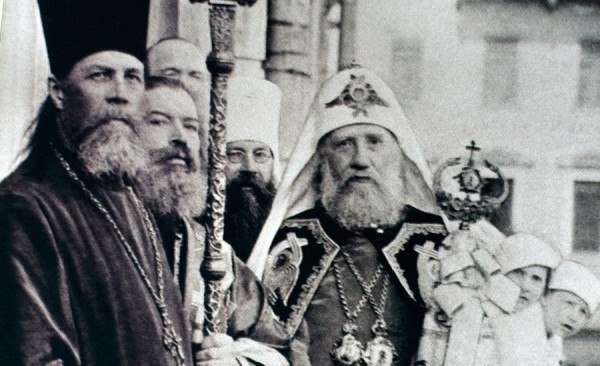
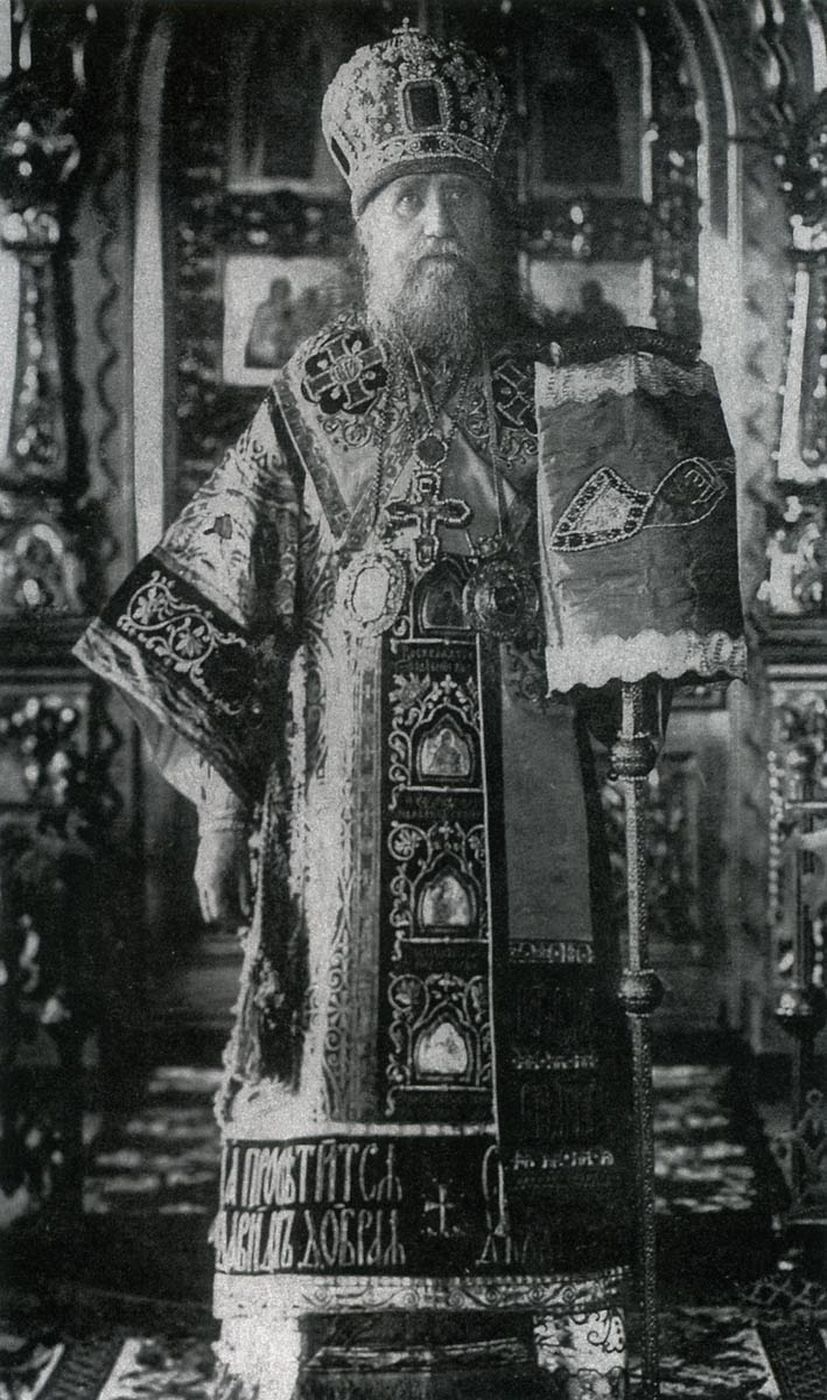
This past Sunday, I shared with the congregation that Fr. Matthew of St. Nino’s Russian Orthodox Church presented our church with an icon of St. Edward the Martyr and King of England in thanks for us allowing them to meet here on the last Friday of the month; and it just so happens that this coming Sunday is the feast day of one of the most significant Russian Saints to have been active in the Russian Orthodox Church in America: St. Tikhon the Patriarch of Moscow, and Enlightener of North America. In light of our relationship with St. Nino’s, it seems only right that we should know more about them.

Tikhon was born Vasily Ivanovich Belavin on January 19, 1865 in far northwest Russia.  He was the son of a priest and grew up as a well loved child, which carried on into his seminary years where he was known by the nickname of ‘bishop’ and ‘patriarch.’  I doubt his classmates knew how prophetic those names actually were, but on November 5, 1917, Tikhon became the Patriarch of the Russian Orthodox Church, which included the church in the United States.  Regardless of the high position he held, he was seen as very humble, simple and modest.  Perhaps it was these traits that assisted him in navigating the times, for this was also the time of the Russian Revolution and the rise of the Communist and Soviet Union.

Speaking of these days, Archpriest Vladimir Vorobiev said, “There are firm grounds for speaking about the universal significance of Patriarch Tikhon’s heroic labor. The twentieth century is one of the most difficult epochs in human history, when materialism, atheism, and communism spread all over the entire globe, like a plague; when revolutions and antichristian persecutions started happening everywhere. Science claimed that Christ was a legend, a myth, that He never existed. And during this very time a giant of the Christian faith arises! A true Christian, who manifests Christian sanctity on the Patriarchal throne! A flame of confessing faith stood on a candle stand seen by the whole world, and glorified our Heavenly Father.

“Patriarch Tikhon is the image of an Orthodox saint, who stood alone against the hurricane of bloody evil: revolution, civil war, mass violence, executions, and murders. They threatened to kill him also, and sent assassins on several occasions. He did not run away from death.” (Source)

Jesus said, “You are the light of the world. A city built on a hill cannot be hid. No one after lighting a lamp puts it under the bushel basket, but on the lampstand, and it gives light to all in the house. In the same way, let your light shine before others, so that they may see your good works and give glory to your Father in heaven.”

Today we give thanks for the witness of Tikhon, who in the midst of the chaos, when tens of thousands of believer were being executed, stood as a symbol of that bright burning Light of Christ and through his witness and faith, gave others the strength they needed in order to stand firm.

Sermon: Absalom Jones


Prior to the Revolutionary War, our denomination and the Methodist were still a part of the Church of England, so all the clergy, whether they practiced as a Methodist or not, were also a part of the Church of England. However, during the war, it became very unpopular to be associated with anything English, and so many of the Anglican / Church of England clergy fled back to England or to Canada. This left a void in the colonies, because there were so few priest who could provide the sacraments; therefore, some of the Methodist who opted to remain in the colonies—in the words of an Anglican priest—began, “to ordain themselves and make priests of one another. This I remember,” he recalls, “they called a step—but I considered it a prodigious stride; a most unwarrantable usurpation, and a flagrant violation of all order.” He didn’t like it, but this set into motion the eventual formation of the Methodist Church as a separate denomination in 1795.

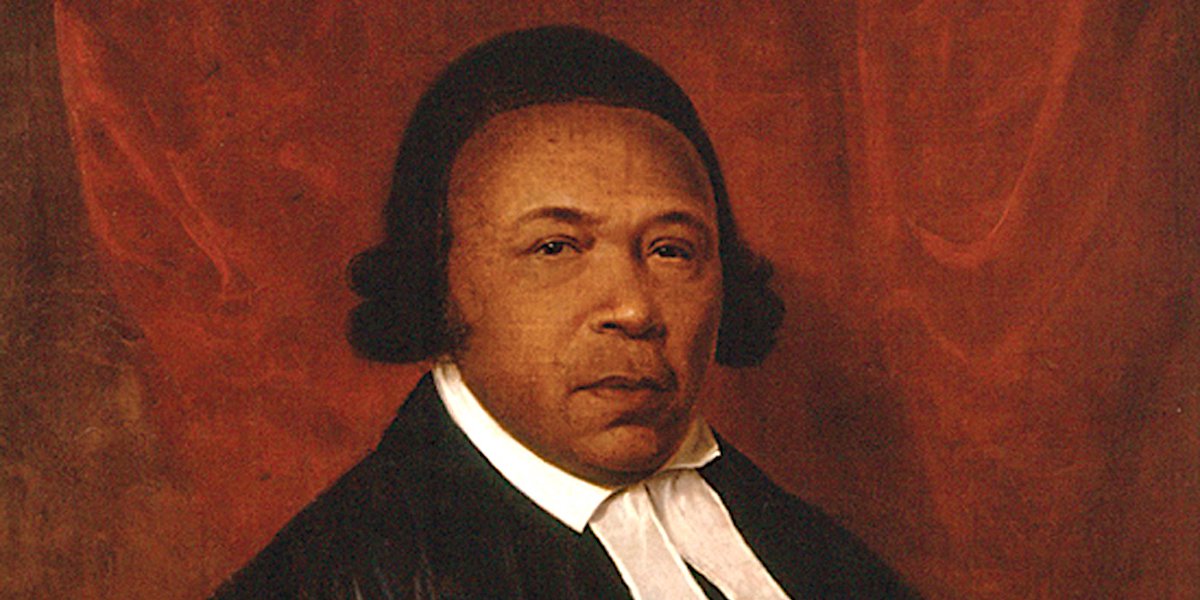
In the midst of all this, a former African slave, Absalom Jones, and his friend, Richard Allen, began ministering to the needs of the black population of Philadelphia, utilizing St. George’s Church as home base. They were successful… too successful in the eyes of the white members, who eventually forced the black congregation to sit in a section of the balcony. However, one day, Absalom and Richard sat in the wrong section and were forcibly removed, so they left St. George’s and took the entire black congregation with them. They went on to form the Free African Society. At the same time, the Church of England in America was breaking away and in 1789, became the Episcopal Church. So, the Free African Society was a part of the Episcopal Church as were the Methodist, but just to make sure you’re thoroughly confused now, this is also the time when the Methodist began their formal break from the Church of England and from the Episcopal Church, once again, leaving everyone to decide who’s side the would join: the Methodist Church or the Episcopal Church.

The Free African Society also had to decide, but even here there was a split. Richard Allen wanted to stay with the Methodist and Absalom Jones wanted to go with the Episcopal. They agreed to go their separate ways on this decision, but continued to work together.

All of this left Absalom Jones in charge of the Free African Society. So he petitioned the Episcopal Church to become a church of the denomination and this was granted. The following year, he was ordained a deacon and in 1802 he was priested. The first black priest in the Episcopal Church. He remained a priest at the church that was formed, St. Thomas’, and while there, doubled the size of the congregation and baptized 1,195 individuals.

Also of interest: Richard Allen would eventually leave the Methodist Church with several members, along with a few members from Absalom Jones’ Episcopal Church and go on to form the first African Methodist Episcopal (AME) church, the denomination of our friends over at St. Stephen’s.

Clear as mud?

Jesus said, “This is my commandment, that you love one another as I have loved you.” Given the amount of fracturing we see in the Church, you would think that we don’t do a very good job at loving one another, but running through the veins of every denomination is the blood of Christ. We may appear different in so many ways, from the color of our skin to the ways we worship, but together, we are The Church, the mystical Body of Christ.