Sermon: Gregory of Nyssa

The podcast can be found here.


434px-Relieftafel_40_Märtyrer_von_Sebaste_Bodemuseum

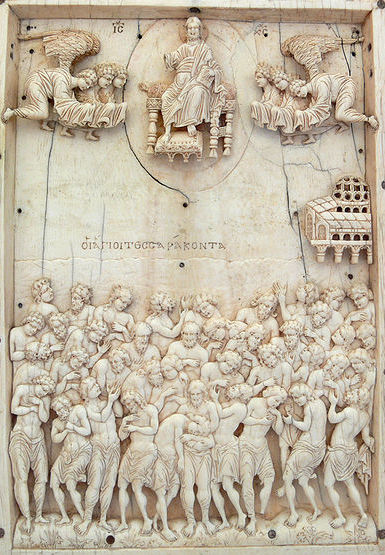
The Forty Martyrs of Sebaste; ivory relief panel; Constantinople, 10th century AD.


St. Basil tells the story of the Forty Martyrs of Sebaste who’s feast day is Saturday. Their death occurred in the year 313 during one of the many persecutions of Christians.

According to Basil, these martyrs were Roman soldiers who refused to renounce their faith, so they were stripped naked and led out onto a frozen pond. Nearby, a hot bath was setup as a temptation and the naked soldiers were told that if they renounced, they would be brought to the bath and allowed to warm and return to the ranks. Of the forty, one renounced (he dropped dead immediately after crossing the threshold of the bath); however, one of the soldiers sent to guard them, Aggias, saw a miraculous sight: a brilliant glowing crown appeared over the heads of the thirty-nine who remained. Seeing this, he understood that it was God, so waking the other guards, he stripped his clothes off and said to them, “I too am a Christian,” then he prayed, “Lord God, I believe in You, in Whom these soldiers believe. Add me to their number, and make me worthy to suffer with Your servants.” Immediately, the fortieth crown appeared over Aggias and he froze to death with the others.

Now, our saint for today, Gregory of Nyssa, some fifty years later was planning a hiking/camping trip with some of his friends, but his mother convinced him to stay the night and attend the celebration of these Forty Martyrs of Sebaste. He was a Christian and agreed. The service began at sundown and it was long. As it was the beginning of summer and there were many people crowded into the church, it became very warm and Gregory became drowsy and eventually fell asleep and dreamed. He dreamed that he was still in the church, but that it was empty, when suddenly the doors of the church opened and forty naked men who were blue, as from the cold, came walking in, each carrying a wooden rod. As these men began to surround him, Gregory understood who they were – the Forty Martyrs of Sebaste who had frozen to death. After they had gathered around, they began to beat him with the rods and shouted at him:

“We died for love of Christ,” said one of the men. The voice was dull and hollow, filled with sorrow.

“You sleep through the prayers to God,” said another.

“Wake and give thanks that you may pray in peace, unafraid of the torment we suffered gladly,” said a third.

“Give glory to the Maker of all, and remember our example. Give your life to God, live for him and serve him all the days you live and breathe!” exclaimed another.

“I will, I will!” Gregory cried. “Stop, please. I will serve God, I will keep your memory fresh and I will honour you all my life for your steadfast faith!”

The men stopped beating him, vanished, and then Gregory woke up, back in the church with the service still going. Let’s just say that he rejoined the celebration with a renewed fervency and went onto serve God faithfully as he had promised.

We can let Gregory be a reminder to us that we should not become bored or complacent in our faith and in our worship. We must not take our freedom to worship for granted, because in doing so, we take God for granted.

Jesus said, “The Advocate, the Holy Spirit, whom the Father will send in my name, will teach you everything, and remind you of all that I have said to you.” Allow that same Spirit to fill you with a holy fire and then worship Him with a renewed zeal.

Sermon: George Herbert

The podcast can be found here.


pexels-photo-261626


John Houseman was a producer for CBS Radio. He made the following comments regarding a program that played live in 1938: “The following hours were a nightmare. The building was suddenly full of people and dark-blue uniforms. Hustled out of the studio, we were locked into a small back office on another floor. Here we sat incommunicado while network employees were busily collecting, destroying, or locking up all scripts and records of the broadcast. Finally, the Press was let loose upon us, ravening for horror. How many deaths had we heard of? (Implying they knew of thousands.) What did we know of the fatal stampede in a Jersey hall? (Implying it was one of many.) What traffic deaths? (The ditches must be choked with corpses.) The suicides? (Haven’t you heard about the one on Riverside Drive?) It is all quite vague in my memory and quite terrible.” What was the program? Orson Welles’ version of H.G. Wells’, War of the Worlds.

Perhaps the world’s first major case of “fake news,” but nonetheless, words that had the masses running scared.

If you have the right words, lined up in the proper order, spoken with the right amount of inflection here, a little pause there, and an increase or decrease in volume at the correct moment, then you can convince many to do both great and terrible things. Words can also inspire and teach, and this is where our saint for today, George Herbert, a 16th century Anglican priest, excelled, particularly in writing poetry. He described his poems as “a picture of the many spiritual conflicts that have passed betwixt God and my soul, before I could submit mine to the will of Jesus my Master; in whose service I have found perfect freedom.”

If you enjoy poetry, then I can recommend to you the collection of his poems titled, The Temple, which was published posthumously. It is a lyrical walk through the church, the church year, and Herbert’s joys and challenges.

One of my favorite Herbert poems is “The Call.” It is also number 487 in our hymnal.

Come, my Way, my Truth, my Life:
Such a Way, as gives us breath:
Such a Truth, as ends all strife:
Such a Life, as killeth death.

Come, my Light, my Feast, my Strength:
Such a Light, as shows a feast:
Such a Feast, as mends in length:
Such a Strength, as makes his guest.

Come, my Joy, my Love, my Heart:
Such a Joy, as none can move:
Such a Love, as none can part:
Such a Heart, as joyes in love.

As meaningful as those words are, there are others that were spoken 1,500 years prior. Words, that to this day, continue to inspire, challenge, and move individuals to great faith and works:

“Blessed are the poor in spirit, for theirs is the kingdom of heaven.
“Blessed are those who mourn, for they will be comforted.
“Blessed are…

Blessed. Those words of our Savior upended everything we thought we knew about God and literally changed the world forever.

Today, instead of making a theological point about the words of Jesus or Herbert, I invite you to consider your own words. The words we speak have the ability to tear down, enrage, discourage, to end the good; or our words can create unity and relationships, give hope, extend peace, express love…

The Apostle Paul wrote to the Philippians, “Beloved, whatever is true, whatever is honorable, whatever is just, whatever is pure, whatever is pleasing, whatever is commendable, if there is any excellence and if there is anything worthy of praise, think about these things.” And after you have thought about these things, then allow them to form the words you speak to others, because our words have the ability to say to a hurting world, blessed are you, you are God’s own people. This is something that George Herbert understood and practiced. I pray that we will also practice this gift, this grace from God.


Sermon: Ash Wednesday – “Sacred Dust”

The podcast can be found here.


horsedrawn-vacuum-machine

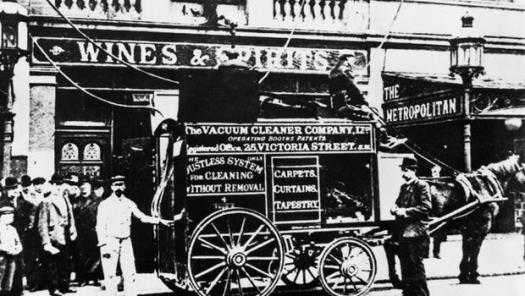
The 1901 Hubert Cecil Booth Vacuum Cleaner (bet they didn’t sell these door to door!)


Dust. People have always been trying to eliminate the problem of dust. The first vacuum cleaner was invented in 1901, and was so large that it had to be hauled on a horse drawn wagon and parked outside. It ran off of gasoline. Well, the vacuum may have gotten smaller but the problem of dust still exist and it always will.

If you are tired of dusting, consider these facts:
– The average household generates 40 pounds of dust each year.
– It is no surprise that you can dust the entire house and turn around and do it all over again. Why? A particle of dust can hang in the air for about five days. And they just keep raining down at that leisurely pace.
– Every year, 40,000 tons of dust falls from outer space.
– The largest source of dust is the Sahara Desert. It produces 770 million tons on an annual basis that then drifts as far as South America and fertilizes the Amazon Rain Forest.
– And, yes, we humans contribute to the problem. The average human creates about 1/3 of an ounce (about the weight of a key) of dust each week.

You can purchase all the new fangled dusting products you want, but no matter what the manufacturer claims, you are not winning the war on dust. You’re just keeping it at bay. As pesky as it is, there is still some dust that is holy. That is sacred. That God cares dearly for. You know the story:

In the day that the Lord God made the earth and the heavens, when no plant of the field was yet in the earth and no herb of the field had yet sprung up—for the Lord God had not caused it to rain upon the earth, and there was no one to till the ground; but a stream would rise from the earth, and water the whole face of the ground—then the Lord God formed man from the dust of the ground, and breathed into his nostrils the breath of life; and the man became a living being.

God breathed into the dust and gave it life and from that day forward, He has loved His creation, but sometimes, when I hear those words, “Remember that you are dust, and to dust you shall return,” I hear those words and they almost sound like a threat. Like God saying, “Don’t forget, you misbehave and I’ll send you right back where you came from.” But instead, “Remember that you are dust, and to dust you shall return,” is simply an undeniable fact. Today is Valentine’s day and I jokingly put up on Facebook that today’s sermon was going to begin, “Happy Valentine’s Day, you’re going to die.” But to say that we will return to the dust is simply saying the same thing—minus the Happy Valentine’s Day bit. We will return to the dust, but we are sacred dust. We are God’s dust.

Karl Rahner, a Jesuit priest who is considered to be one of the most influential theologians of the 20th century in his book, The Eternal Year, wrote, “When on Ash Wednesday we hear the words, ‘Remember, you are dust,’ we are also told that we are brothers and sisters of the incarnate Lord. In these words we are told everything that we are: nothingness that is filled with eternity; death that teems with life; futility that redeems; dust that is God’s life forever.”

We are dust. Yet, through the redeeming sacrifice of Christ we have eternal life. We are God’s life forever, because through Jesus, we become one with Him and one with the Father. And as the Psalmist wrote:

As a father cares for his children,
so does the Lord care for those who fear him.
For he himself knows whereof we are made;
he remembers that we are but dust.

During these days of Lent, remember that you are but dust, but also remember Whose dust you are. And remember the price that was paid so that you might return to Him.


Sermon: Epiphany Last RCL B – “Silence”

The podcast can be found here.


pexels-photo-301409


Ever know someone who just doesn’t know when to shut up? Thibodeaux was walking down the road one day and spotted Boudreaux walking towards him carrying a sack over one shoulder and a shotgun over the other. Thibodeaux knew old Boudreaux had been out duck hunting so when they met, he asked him, “What you got in the sack?” Boudreaux replies with a smile, “I got me some ducks in this sack.” Thibodeaux then says to Boudreaux, “If I guess how many ducks are in yo sack, can I have one?” Boudreaux knows that Thibodeaux can barely count to ten, much less guess how many ducks he’s got, so he confidently says, “If you can guess how many ducks I have in this sack, I’ll give you both of them!” Thibodeaux guessed three.

The Psalmist writes, “For God alone my soul in silence waits”

It is said of Abbot Agatho, one of the desert monks, that he carried a stone in his mouth for three years until he learned to be silent, however, for us today, to go for more than a few hours of silence is enough to make us nervous.

In seminary we had silent retreats that lasted up to three days. There would be times of instruction – listening – but no talking. The goal: listen to God. I did enjoy them for the most part, but by the end of the day I would snap and end up talking to a dog or a tree.

When you are alone it is much easier to maintain the silence, but in a group, all that changes. During those retreats in seminary, we were all fairly successful on the first day and everyone obeyed the rules: head down, walking quietly, meditating, etc. However, we lacked discipline and we are by nature social creatures, so by day two, when you were certain none of the professors were looking, you would spot your buddy and give them a nod and a smile. They would then furtively look around and respond in kind. By day three, the entire seminary had worked out such an elaborate set of hand signals and gestures that we all looked like a third base coach giving instructions to the batter. Sure, no one is talking, but the silence is the equivalent of a high school marching band after the team wins the big game. But it’s not just us non-cloistered folks that can’t maintain the silence. The Trappist Monks live a life of silence and their most noted brother, Thomas Merton, writes that even the overuse of sign language within the material silence of the monastery promotes the busy mind.

The culture in which we live does not value silence. We like to have some kind of stimulation going on around us. It becomes habitual to turn on the TV or radio as one of the first things we do when we get home, just to have a bit of noise in the background. One author even refers to the negative aspect of this practice as “stimulation pollution,” and observes how it comes in many different forms: from the radio and TV to cell phones and computers, but then there are also books, magazines, billboards. There can be incessant talking as we flit from one person to the next. We find ourselves internally formulating our responses to the person who is speaking instead of listening. Interaction becomes a way to acknowledge that we really exist. If we are talking, worrying, giving our opinion, saying what we’ve done, what we own, we must be alive, we must have worth! But, there generally isn’t any space between the words to absorb what has been said. As a result, many of our conversations are superficial. Thomas Merton: “It is not speaking that breaks our silence, but the anxiety to be heard.”

Not only does this “stimulation pollution” effect our natural life, it also has a dramatic impact on our spiritual life. We become as equally anxious with the silence during our time with God as we do when the world becomes silent around us, so during those times when we should be still during our prayers, we will often respond in one of two ways: we either just keep rambling on or we stop, say “Amen,” and go about our business, believing that we are done. In truth, we are only beginning.

In our spiritual life, silence is not just the absence of talk—silence has substance. Silence is being in the presence of God. Merton claims that silence is our admission that we have broken communication with God and are now willing not only to listen to God, but to hear his voice. To be silent before God allows us to truly see Him in his glory and to hear what it is he has to say.

We read today: the three apostles who were closest to Jesus, Peter, James, and John, were allowed to go up on the mountain with him. As we have read many times before, Jesus would often go off to a secluded place where he could spend time with His Father. He would get away from all the “stimulation pollution,” which could even effect him, but on this occasion, he took the three with him so that they might experience something of the true nature of God. And they did.

Before their eyes the Lord was transfigured. The light that surrounded the Lord was not from outside of Jesus. It was from within. It was his glory radiating out, and so in the solitude and silence upon the mountain with Jesus—fully man—they came into relation with Jesus—fully God. And God love Peter, because he did just what so many of us do when we come to that point, he just couldn’t keep it shut: “Rabbi, it is good for us to be here; let us make three dwellings, one for you, one for Moses, and one for Elijah.”

Peter is standing in the very presence of God, the great deliverer Moses, and the Prophet of all prophets Elijah; yet, instead of being silent, instead of listening, he wants to know if he should put up a tent for everyone. It is easy to dig on Peter, but would we have done any better? Most likely we would have all pulled out our cellphones and taken a selfie, with Jesus, Moses, and Elijah in the background.

Most of you have probably figured out by now that I don’t hear so well even with hearing aids. One-on-one I’m pretty good, but put me in a room with a lot of voices and I just smile instead of being able to join in. These little devices are pretty amazing though. I didn’t realize how much I was missing until I got them, but when you first start wearing them—sound overload. You hear everything, all the way down to the sound of the grit under your shoes as you walk. It is too much stimulation pollution. Over time, your brain learns what’s important and what’s extraneous and then filters out the unnecessary. However, even then, there is still a lot of sound out there. I wouldn’t wish hearing loss on anyone, but I will tell you that one of the most satisfying moments of my day is taking them out. Not only is it an auditory sensation, in a way it is also physical, like being wrapped in a warm blanket on a cool evening.

The same thing is true in our times of silence before God. We’ve got a lot we want to say. Our minds race with the days activities, hurts, joys, things that we have done and left undone. It is our own personal cacophony of “stimulation pollution,” but in order to hear that still small voice, we must bow our heads and silence the extraneous, so that when God the Father says to us, “This is my Son, the Beloved; listen to him!”—we will actually be able to hear what he says.

Thomas Merton wrote: “Lord, it is nearly midnight and I am waiting for you in the darkness and the great silence. I am sorry for all my sins. Do not let me ask any more than to sit in the darkness and light no lights of my own, and be crowded with no crowds of my own thoughts to fill the emptiness of the night in which I await You.

“In order to remain in the sweet darkness of pure Faith, let me become nothing to the pale, weak light of sense. As to the world, let me become totally obscure from it forever. Thus, through this darkness, may I come to Your brightness at last. Having become insignificant to the world, may I reach out towards the infinite meanings contained in Your peace and Your glory.

“Your brightness is my darkness. I know nothing of you and, by myself, I cannot even imagine how to go about knowing You. If I imagine you, I am mistaken. If I understand You, I am deluded. If I am conscious and certain I know you, I am crazy. Darkness is enough.”

The “Alleluias” end this week and the silence of Lent begins. It takes practice and patience, but I pray during this season you will experience the stillness of God. I pray that you hear the voice of God speak words of comfort and love to your soul. I pray that you experience the deep silence and peace of his presence. I pray that the light of his glory fills you with an abundance of his Holy Spirit and that you are able to walk nearer to your God.

Let us pray: Lord, speak to us in the quiet moments of this day. Touch our lives and remind us to turn and choose Your way instead of ours. Encourage us to exercise the gifts and graces You have given us as your children. Walk with us along the pathways of our lives and teach us according to Your Wisdom and Love. Lord, speak to us, so that we will be ready to do Your will. Amen.

Sermon: Absalom Jones

The podcast can be found here.


Absalom-Jones_web


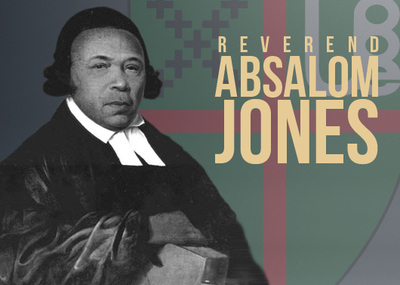
The history of Absalom Jones is quite well documented. He was born a slave in 1746 in Delaware. At the age of sixteen he was sold to a merchant in Philadelphia; however, he was able to earn an income for himself working in the evenings. Using the New Testament he was able to teach himself to read and continued his education at a school run by Quakers. In 1770 he was married and upon completion of his schooling, along with the help of Richard Allen, he formed the Free African Society, which provided assistance to widows and orphans. It wasn’t until 1784 that he was able to purchase his freedom.

Later he would become a lay preacher at St. George’s Methodist Episcopal Church. Given the popularity of the services he conducted, the church grew ten times what it had been; however, there was a great deal of racial tension because the growth was through the addition of African-Americans members, which, due to the tension, prompted those members to withdraw and form the African Episcopal Church, with Absalom continuing as their lay minister. This work culminated in Absalom making application for Holy Orders, to become a priest, and he was first ordained a deacon in 1795 and a priest in 1802 making him the first African American priest in the Episcopal Church.

F. Scott Fitzgerald wrote, “I don’t want just words. If that’s all you have for me, you’d better go.” When I read about the lives of great Christian women and men, like Absalom Jones, I’m often drawn to their words, what they said or wrote, but I also want to see that they have put that faith – those words – into action. All of Absalom’s work spoke clearly to me of a man intent on fulfilling the Gospel message as he understood it, but there was one event that solidified it all in my mind: in 1770 he was married to Mary Thomas, who was a slave in the home next-door to his owner. With the money he earned working for himself at night he purchased his wife’s freedom; however, it wasn’t until 1784 that he was able to purchase his own freedom. He bought his wife’s freedom 14 years before he was able to buy his own. Jesus said in our Gospel, “This is my commandment, that you love one another as I have loved you. No one has greater love than this, to lay down one’s life for one’s friends.” There is no question that his work in the African-American community is exemplary. Given the timeframe and the state of the nation at that time, it is truly amazing, but this one action, purchasing another’s freedom before his own, speaks the loudest to me about the character of Absalom Jones.

In our Gospel today, Jesus continued by saying, “You are my friends if you do what I command you. I do not call you servants any longer, because the servant does not know what the master is doing; but I have called you friends, because I have made known to you everything that I have heard from my Father.” Absalom is one who is called “friend” by Jesus. Friend because of the work he did for the many and friend because of the work he did for the one.

Absalom Jones did not allow the chains of slavery to prevent him from carrying out the work that Christ had called him to, so we can look to him for inspiration in overcoming the barriers that might prevent us from doing the same and to more fully understand what it means to lay down ones own life for the sake of another.

The Presiding Bishop has invited Episcopalians “to deepen our participation in Christ’s ministry of reconciliation by dedicating offerings at observances of the Feast of Absalom Jones to support the two remaining Episcopal Historically Black Colleges and University (HBCUs): St. Augustine’s University in Raleigh, NC, and Voorhees College in Denmark, SC,” so today’s offering will go to support this work.


Sermon: Epiphany 5 RCL B – “Holy Purpose”

The podcast can be found here.


Retro Typewriter Machine Old Style


A sports article that came out yesterday began, “First things first, you should try to sack Tom Brady if you can. Brady is very good at throwing the ball — perhaps the best ever — when he’s standing up. But curiously, he’s less good when he’s prostrate on the ground.” I never have been a big sports fan, that’s why you don’t hear too many sports analogies during the sermon—I wouldn’t really know what I was talking about. In addition, I haven’t seen a football game in at least four years if not more, but when I read the opening paragraph of that article, even I knew the proper response, “Well, duh!”

Let’s compare two different individuals. The first is Tom Brady (for those like me, he’ll be playing in the Super Bowl later today). This, however, will not be Tom’s first Super Bowl, it will be his eighth and he’s already the proud owner of five Super Bowl rings. The big question: will he lead the Dallas Cowboys to another… I know he doesn’t play for the Cowboys, just seeing if you’re paying attention—It’s the Steelers. Right? The big question: will he get that sixth Super Bowl ring today? Whether you like him or not, his accomplishments are impressive, but what does he think about them?

Go back in his career to February 2005. He had just won his third Super Bowl ring playing against the Seattle Seahawks. All the hoopla was still going on around him and the win, when Brady sat down for an interview. Here is a portion of that interview:

INTERVIEWER: This whole experience – this whole upward trajectory – what have you learned about yourself? What kind of an effect does it have on you?
TOM BRADY: I mean, there’s a lot of pressure. A lot of times I think I get very frustrated and introverted, and there’s times where I’m not the person that I want to be. Why do I have three Super Bowl rings and still think there’s something greater out there for me? I mean, maybe a lot of people would say, “Hey man, this is what it is. I’ve reached my goal, my dream, my life.” Me? I think, “God, it’s gotta be more than this.”
INTERVIEWER: What’s the answer?
TOM BRADY: I wish I knew. I wish I knew.

I know nothing about Tom Brady and perhaps his views have changed, so I’m not going to judge him based on those comments, but the comments alone are truly sad. For someone to have accomplished so much, yet not think it is enough. Again, I don’t know about Tom Brady, but I know myself. I’ve shared parts of this before, but I remember sitting in my office in Dallas before I moved to Montana and thinking something close to the same thing. I was young, I had a good job with growth potential, the money wasn’t bad, but… “God, it’s gotta be more than this.” It wasn’t about the lack of success, it was about the lack of purpose. It was a nagging question about what kind of a difference I was making in the world. The answer for me was: not much. As an aside, it is a question that churches should ask themselves on a regular basis: if St. Matthew’s was to suddenly disappear over night, would the community miss us? Would they even notice? I believe the answer is a resounding, “Yes!,” but we have to keep asking, just in case we become complacent or lose our way. Bottom line: no matter the perceived success of the endeavor, unless it serves a purpose, if nothing else, it is not fulfilling.

Now, let’s consider our second individual. Many know the story of Corrie ten Boom. During World War II, she was arrested and placed in a concentration camp for harboring Jews. She survived those days, but that was not the end of her work. Following the war, she travelled the world telling her story and sharing her faith.

On one trip, she was smuggled into Lithuania when it was still a part of the former USSR. She was then taken to a small apartment where she was introduced to an elderly couple. The husband was the only caregiver for his wife who had advanced multiple sclerosis. The disease had progressed so far, that the woman was only able to move her eyes and her right hand. Upon meeting her, Corrie went over and kissed the index finger of the woman’s right hand. Why?

Every day, the husband would help his wife get up and get dressed and then fix them a small breakfast. He would then take her to a couch, prop her up, and roll an old manual type writer within reach of that one good hand. Hidden in a cupboard was the yellow paper and after feeding it into the typewriter for his wife, she would begin – with the index finger on her right hand – to type, one letter at a time. All day, she would pray and she would type. What was so important? During this time in Lithuania, the distribution of Bibles was illegal and there were no copies available in Russian or the Lithuanian language. The woman, one letter at a time, was translating a version the Bible for her people in their own language.

Corrie understood the tremendous contribution that the woman was making, but she was still drawn to tears by the suffering the woman endured. The husband sensing this, said to Corrie, “God has a purpose in her sickness. Every other Christian in the city is watched by the secret police. But because she has been sick so long, no one ever looks in on her. They leave us alone, and she is the only person in all the city who can type quietly, undetected by the police.”

Some under the same conditions might—and I couldn’t blame them!—say, “God, it’s gotta be more than this,” but this woman saw through her circumstances and her condition and found true purpose, and she fulfilled that purpose one letter stroke at a time.

“After Jesus and his disciples left the synagogue, they entered the house of Simon and Andrew, with James and John. Now Simon’s mother-in-law was in bed with a fever, and they told him about her at once. He came and took her by the hand and lifted her up. Then the fever left her, and she began to serve them.” I suppose you could read that and say that this only proves that Jesus and the disciples were a bunch of lazy misogynist. We could look at her as Corrie ten Boom looked at the woman with multiple sclerosis with despair. We could put words in the mother-in-laws mouth, “God, it’s gotta be more than this,” but I do not believe her actions would have been preserved in Holy Scripture if that is what it was all about. Instead, I think she began to serve them in thanksgiving for what God had done for her by restoring her to health. She did not base the fulfillment of her life on her accomplishments or status, she base it on a purpose that found its completion in God.

Jesus too had purpose. He healed the sick and cast out the demons. That night, the entire city was gathered outside the doors of the house; however, very early in the morning, before anyone woke up, he slipped off to a quiet place. When everyone began moving about, they started looking for him. They wanted more miracles, more healings, more exorcisms. When the disciples found him they said, “Everyone is looking for you, so that you can get back to the healings, miracles, and exorcisms,” but Jesus answered, “Let us go on to the neighboring towns, so that I may proclaim the message there also; for that is what I came out to do.”

His fame was beginning to spread far and wide. He could have set up shop right there and they would have come from… all over the world! to have him perform his miracles, healings, and exorcisms. I would wager that if he had, the devil would have left him alone and he would have lived a very long life, but… that was not his purpose. “Let us go on to the neighboring towns, so that I may proclaim the message there also; for that is what my purpose is.” It is not about the Super Bowl, the fame, the whatever, it is about the purpose that finds its completion in God alone.

My friend St. Josemaría Escrivá writes, “Faced by all those men without faith, without hope; by minds desperately near the borders of anguish, seeking for a meaning in their life, you found your purpose: Him! This discovery will permanently inject a new happiness into your existence, it will transform you, and present you with an immense daily hoard of beautiful things of which you were unaware, and which show you the joyful expanse of that broad path that leads you to God.”

Each of us has a purpose in God. Sometimes that purpose is to preach the Gospel and sometimes it is to translate it one letter at a time. But for others, that purpose in God is to teach school, raise children, be a good father; and still for others it is to smile at a stranger, touch the untouchable, be present to the lonely. Seek that purpose God has for your life, and when you have found it, serve Him with a holy joy, knowing that it is for this that you were created.

Let us pray: O Christ Jesus, when all is darkness and we feel our weakness and helplessness, give us the sense of Your presence, Your love, and Your strength. Help us to have perfect trust in Your protecting love and strengthening power, so that nothing may frighten or worry us, for in living close to You, we shall see Your hand, Your purpose, and Your will through all things. Amen.

Sermon: St. Brigid

The podcast can be found here.


St._Bride,_John_Duncan_-_1913

St. Bride/Brigid by John Duncan (1913)


If your dad owns a jewel encrusted sword worth a great deal of money, what would you do with it if you could lay your hands on it? Lock it up in a vault? Donate it to a museum? Insure if for everything its worth and hang it over the fireplace, secretly hoping someone steals the gaudy thing so you can get the cash? All sorts of options, but if you’re saint, you give it to a beggar so that he can trade it for food for his family.

Brigid had been living with her mother who was a slave in Ireland, but at the age of ten, she was sent away to live with her father. Once there, she started giving away all his possessions to the poor. He became so tired of the practice that he took her to the king to be sold and it was while there that she came across his jewel encrusted sword and gave it away. Dad turned to the king and basically said, “See! This is exactly what I was talking about!” But the king, also a Christian, said to Brigid’s father, “Her merit before God is greater than ours,” and convinced the father to allow Brigid to return to her mother.

Later her mother would be freed and then pledged Brigid to be married, but Brigid desired to remain chaste and serve the Lord, so she prayed that her beauty would be taken from her to make her less desirable. Her prayer was answered, but her beauty was restored once she made her final vows as religious. Who was it that heard her final vows? None other than St. Patrick; however, something curious occurred during the ceremony that was pointed out to Patrick following the service. An attendant informed Patrick that he had used the prayers for making a priest and not a religious, to which Patrick is reported to have responded, “So be it, my son, she is destined for great things.” Brigid and Patrick would go on to become the greatest of friends. Of this friendship, one early biographer wrote, “Between St. Patrick and Brigid, the pillars of the Irish people, there was so great a friendship of charity that they had but one heart and one mind. Through him and through her Christ performed many great works.”

She died of natural causes on February 1st in 525 a.d. and was buried at Kildare Cathedral, likely horrified that her tomb was “adorned with gems and precious stones and crowns of gold and silver.”

St. Brigid is one who did not worry about the things of this world, in fact she gave them all away. Perhaps God does not call us all to give away every possession, but he does call us each to care for the widows and orphans and the poor in our midst. To learn what this means and how to accomplish it, we need only look to St. Brigid as a teacher.

The Saint Brigid Hearth Keeper prayer is written to her. I close with it.

Let us pray:
Brigid of the Mantle, encompass us,
Lady of the Lambs, protect us,
Keeper of the Hearth, kindle us.
Beneath your mantle, gather us,
And restore us to memory.
Mothers of our mother, Foremothers strong.
Guide our hands in yours,
Remind us how to kindle the hearth.
To keep it bright, to preserve the flame.
Your hands upon ours, Our hands within yours,
To kindle the light, Both day and night.
The Mantle of Brigid about us,
The Memory of Brigid within us,
The Protection of Brigid keeping us
From harm, from ignorance, from heartlessness.
This day and night,
From dawn till dark, From dark till dawn.
Amen.