Sermon: Trinity Sunday RCL A

The podcast is available here.


“If love is the answer, could you please rephrase the question?” — Lily Tomlin

“I was married by a judge. I should have asked for a jury.” — Groucho Marx

“Marriage has no guarantees. If that’s what you’re looking for, go live with a car battery.” — Erma Bombeck

“Before you marry a person, you should first make them use a computer with slow Internet service to see who they really are.” — Will Ferrell

Finally, my friend, Henry Miller, writes, “The one thing we can never get enough of is love. And the one thing we never give enough of is love.”

And everyone replies, “Lord, he’s talking about love again.” Yes. Yes, I am, but you have to admit, Jesus was pretty big on it. So were the Apostles and it was Paul that gave us the big speech on it (You all know it): “Love is patient and kind; love does not envy or boast; it is not arrogant or rude. It does not insist on its own way; it is not irritable or resentful; it does not rejoice at wrongdoing, but rejoices with the truth.  Love bears all things, believes all things, hopes all things, endures all things.  Love never ends.” But why the topic of ‘love’ on Trinity Sunday. Well, have you ever wondered why the Godhead is a Trinity? Why there are three instead of one, two, four or more? The answer, at least as I have come to understand it, is because of love. What brought about this understanding? When I was in seminary, I wrote a paper on De Trinitate by Richard of St. Victor (he died in 1173) in which Richard puts forth his ‘theory’ — and theory is the best we can say when it comes to the Trinity — and it begins with that statement in St. John’s first epistle, “God is love.”

God is love and the love of God is perfect and unchanging. However, in order for love to be perfect, it must be expressed, otherwise it becomes self-absorbed. Yet, in order for God’s perfect love to be expressed, there must be one who can not only receive that perfect love, but also return it. So, God the Father gives and receives perfect love from God the Son. Richard then goes onto explain that the perfect love of the Father and the Son, must also be shared with another, but that since it is perfect love, that other must be of the same divine nature as the Father and the Son, thus the Holy Spirit. This is where I probably fall into heresy, but it is a way to think about it: boy meets girl, boy and girl fall mutually in love with one another. Boy marries girl and they have a child, who is an expression of their love and also one with whom they may share their love, and who loves them in return.

In a similar, but perfect way, the Father and the Son have perfect love and find joy in sharing it with the Holy Spirit, and it is this perfect love that necessitates the Trinity of Persons and binds them together. Clear as mud? Good. Don’t worry if it makes no sense how the Trinity operates. Salvation is not dependent upon that knowledge, besides, the main question for us is: how do we fit in? If the three of them are having this perfect love, how can we, who are imperfect, participate in their existence? This we celebrated last Sunday on the Day of Pentecost.

Jesus said, “I will not leave you as orphans; I will come to you. …Whoever has my commands and keeps them is the one who loves me. The one who loves me will be loved by my Father, and I too will love them and show myself to them…. Anyone who loves me will obey my teaching. My Father will love them, and we will come to them and make our home with them.” Did you hear that? “… and we will come to them…” and make our home. The Father will send the Holy Spirit and in doing “we” — Father, Son, and Holy Spirit — will make their home in us. And what must we do to receive them? Jesus provides a very concise explanation: “You shall love the Lord your God with all your heart and with all your soul and with all your mind. This is the great and first commandment. And a second is like it: You shall love your neighbor as yourself. On these two commandments depend all the Law and the Prophets.” Everything that God has ever commanded — from don’t eat the fruit to the most obscure of the 613 Mosaic Laws — and everything that the prophets ever spoke about God, is summarized in those two commandments: love God. Love neighbor. We participate in the Holy Trinity by loving God and loving neighbor.

It began with love in the existence of the Holy Trinity and it ends with that same perfect love working in us. Yes, that same perfect love is within us, but…

Perhaps the science is outdated, I’m not sure, but the idea is good. George Stephenson, he died in 1848, was a British civil engineer and is considered to be the “Father of Railways.” One day, he and several others were watching a train billowing smoke and steam as it came down the tracks. Stephenson asked one of his companions if he knew what powered the train. There were a few good answers, but then Stephenson said, “What do you say to the light of the sun?” Implying that sunlight powered the train. His companions said that it couldn’t be. Stephenson explained: “It is light bottled up in the earth for tens of thousand so years, light absorbed by plants and vegetables being necessary for condensation of carbon during the process of their growth, if it be not carbon in another form; and now, after being buried in the earth for long ages in fields of coal, that latent light is again brought forth, and liberated,—made to work, as in that locomotive, for great human purposes.”

We have latent, that is, hidden light, concealed love within us. It is the perfect love of the Holy Trinity, bottle up as it were, and ready to be consumed and fulfilled in the great purposes of God, but… but… unlike the coal that is thrown into the fire, we — through our free will — choose not to be set aflame or to be used for the purposes we were created. We prefer to lie peacefully in the earth rather than being ‘set aflame’ and releasing this perfect love on those around us. By doing so, we allow the hate of the world to gain a foothold, which dampens the flame of hope, the burning love of the Holy Trinity.

I suppose this all comes back to what we said last week. We are here to shine. To set aflame the world around us with love of God: Father, Son, and Holy Spirit. Some might say, “That sort of thing is not for me” or “now is not a good time,” but to quote the often used paraphrase statement of Rabbi Hillel: “If not us, who? If not now, when?” What is stopping us? I’ll answer it for myself. What is stopping me from being set aflame with the perfect love of God? What is stopping me… me. I am. How would you answer?

There is the Holy Trinity, which at its very core is love and through the giving of the Holy Spirit, we have received and been incorporated into that Trinity, into that love. And just as God could not be self-absorbed by holding that love within himself, neither can we. Don’t let the hate win. Burn. Shine. Love.

Let us pray: Glory be to the Father, Who by His almighty power and love created us, making us in the image and likeness of God. Glory be to the Son, Who by His Precious Blood delivered us from hell, and opened for us the gates of heaven. Glory be to the Holy Spirit, Who has sanctified us in the sacrament of Baptism, and continues to sanctify us by the graces we receive daily from His bounty. Glory be to the Three adorable Persons of the Holy Trinity, now and forever. Amen.

Between

Photo by Jr Korpa on Unsplash

Not one… no, not one

Take your pound from my flesh

Split the cord and drink the rest

Raise your finger in the heart of my soul

Last one out

dies without breath

Only one

Only One

Perchance to…

That’s not an acceptable answer

So we sleep a bit more

Ravaging the spaces

Between this life

and…

and…

Sermon: Easter 4 RCL A – The Shepherd

The podcast is available here.

The service via YouTube is available here.


As we are in the great outdoors today, I thought I would share with you a recent environmental event and study that comes out of California.

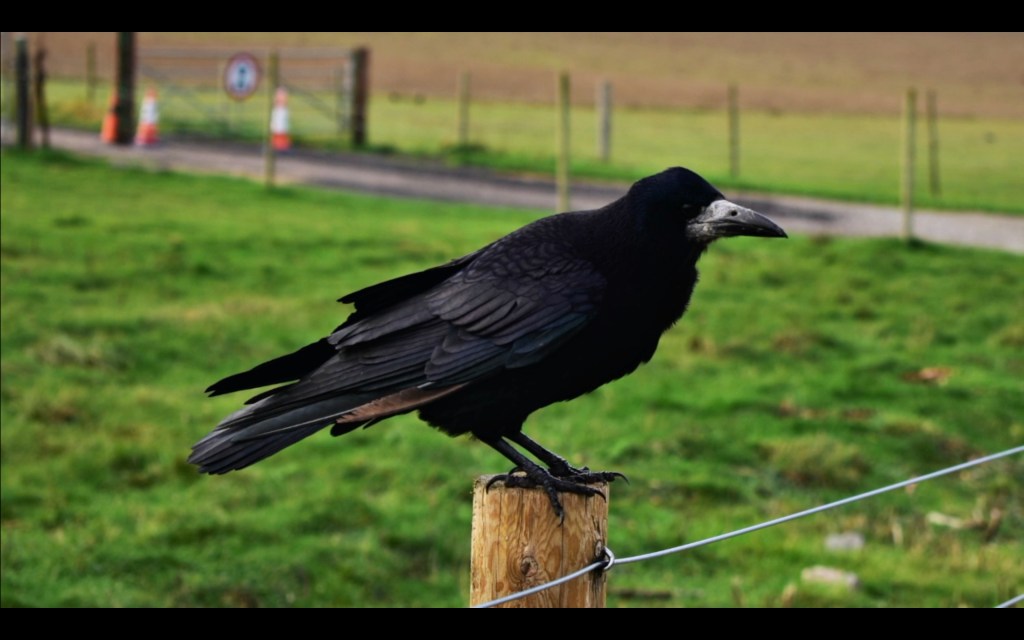
It seems that the California Department of Transportation recently found over 200 dead crows on the highways and given that we already dealing with one pandemic there was real concern that the crows may have died from Avian Flu. A Pathologist examined the remains of all the crows, and, to everyone’s relief, confirmed the problem was not Avian Flu. The cause of death appeared to be from vehicular impacts. However, during analysis it was noted that varying colors of paints appeared on the bird’s beaks and claws. By analyzing these paint residues it was found that 98% of the crows had been killed by impact with motorcycles, while only 2% were killed by cars.

The Agency then hired an Ornithological Behaviorist to determine if there was a cause for the disproportionate percentages of motorbike kills versus car kills. The Ornithological Behaviorist quickly concluded that when crows eat road kill, they always have a look-out crow to warn of danger. They discovered that while all the lookout crows could shout “Cah!”, not a single one could shout “Motorcycle!”

At this point, I am beginning to wonder if all this isolation is effecting my mental stability.

So we are getting back to nature today. We don’t have any crows around and I’m fairly certain that if a sheep showed up in Mary’s backyard we would be having a bit of mutton alongside that big ol’ fish I caught last weekend.

Ok… enough silliness for one day. Sheep and shepherds.

Today, the closest time most of us come into contact with sheep is when we put on a wool sweater. As for the shepherd, it is imagery that we know from pastoral paintings, but it is a role that we know very little about. Yet, in the time of Jesus and even today in the Middle East, the shepherd still plays a very vital role, which accounts for the high number of times sheep and shepherd are mentioned in Holy Scripture. We are most familiar with the appearance of the shepherds in at the nativity, but they appear 246 more times.

I’ve always thought of the sheep as being a relatively stupid animal, but it turns out they are extremely intelligent. After being separated for years they can remember individual sheep and humans. They display emotion, primarily with their ears (although they will wag their tails like a dog when happy). They form very close bonds with one another and even have best friends/sheep. If they get to feeling ill, they know which plant to eat to make themselves feel better. They are highly independent, but love to socialize. And they do in fact know the sound of their masters voice. You can go online and watch videos of a flock of sheep with person after another calling to them and the sheep could care less, but when the master calls, they stop and come running. It is quite impressive. (I would show it to you, but the copyright police would come after me.)

When the weather is good, the sheep are allowed to graze the countryside and the shepherd watches over them with his rod (“Your rod and your staff they comfort me”), a long stick with a knot on the end, which is good for bonking wolves on the head and protection from would be thieves. However, when the weather turns bad, the sheep are taken to the sheepfold. This is an enclosure that is surrounded by a rock wall (about three feet wide at the base and narrowing at the top) that is about six feet tall. At the top of the wall are placed very thorny vines to keep out thieves and predatory animals. There is a low building on the inside for when the weather gets worse. Finally, there is one entrance, one gate into the fold. At night, the gate is where the shepherd sleeps in order to keep the sheep in and the riff-raff out.

Now, hear the lesson again: Jesus said, “Very truly, I tell you, anyone who does not enter the sheepfold by the gate but climbs in by another way (who climbs over the wall and through the thorny vines) is a thief and a bandit. The one who enters by the gate (the only gate) is the shepherd of the sheep. The gatekeeper opens the gate for him, and the sheep hear his voice. (They are very intelligent animals, remembering a human for years after they have been absent) He calls his own sheep by name and leads them out. When he has brought out all his own, he goes ahead of them, and the sheep follow him because they know his voice. (In the video – that I can’t show you – the sheep do not listen to anyone else.)

Jesus said, “I am the gate. (I am the one place where you may enter into the safety of the sheepfold.) Whoever enters by me will be saved, and will come in and go out and find pasture. (He makes me lie down in green pastures and leads me beside still waters.) The thief comes (climbing the wall and breaking in) only to steal and kill and destroy. I came that they may have life, and have it abundantly. (“…and my cup is running over.”)

The Lord accomplishes all this. He is the gate. Through his life, he gives us water to drink, nourishment, one another, green pastures, security, and more. As he said, “I came that they may have life, and have it abundantly.” He came so that we could declare with the Psalmist, “The Lord is my shepherd; I shall not be in want.” But here’s the funny bit (but not, Haha funny). The atheist philosopher, Friedrich Nietzsche, stated it best, “If Christians want me to believe in their redeemer, they need to look more redeemed.” The author, Marcellino D’Ambrosio, reflected on this statement: “To Nietzsche most Christians looked just as burdened, clueless and lost as everybody else. When he looked into their eyes, he did not see hope, excitement, joy, and a sense of purpose. They seemed to be still wandering around the Sinai desert, emaciated and anemic; their faces full more of impossibilities than possibilities.” (Source) http://www.integratedcatholiclife.org/2011/04/abundant-life-from-the-good-shepherd/

The Lord is my shepherd, I shall not be in want. Jesus came that we may have life and have it abundantly. Nietzsche would ask, if that is true, why do so many Christians appear to be in great want? Why do their lives not reflect abundance, fullness? Maybe Jesus gave us a clue: “All who came before me are thieves and bandits; but the sheep did not listen to them… The thief comes only to steal and kill and destroy.” Why do we, though we are in fact very rich, appear to be paupers? Answer: I think, on occasion, we listen to the thieves and the bandits. Jesus says that he gives us all we need in order to live in abundance and joy, but then a thief comes along and says, “You would have a better life, if….” “You could experience joy, if….” “You could live in abundance of life, if….” That “if” works itself out in flagrant and subtle ways. Whichever the case, that “if” drives you to grab for more, instead of finding joy in what you have. That “if” pushes your eye to the future and what could be, instead of now and the blessings of today. That “if” does so many things: drives wedges in happy relationships, brings addiction, robs time, destroys families, conquers the joy of the present moment, and ultimately, that “if” bankrupts any possibility of an abundant life.

I shared this with you several years ago, but it is worth hearing again: Brennan Manning, in the Ragamuffin Gospel, writes about Rabbi Abraham Joshua Heschel. The Rabbi had a heart attack and was near death. A good friend came to see him who reports that the Rabbi, with great effort, said to him, “Sam, I feel only gratitude for my life, for every moment I have lived. I am ready to go. I have seen so many miracles in my lifetime.” After a pause while he caught his breath, the Rabbi continued, “Never once in my life did I ask God for success or wisdom or power or fame. I asked God for wonder, and He gave it to me.”

The Rabbi never had much time for the “ifs” in his life and at the end of life, he had nothing but gratitude.

The “if”… the thief is no shepherd. That bandit comes into our lives only to steal and kill and destroy. Therefore, turn to the Shepherd of your life and follow him. In him and in the life he gives is true happiness, abundance, wonder; for when we no longer want, we’ll discover that we have all we need.

And on that, I hope that I can practice what I preach.

Let us pray: Father of Heaven and earth, hear our prayer and show us the way to peace. Guide each effort of our lives so that our faults and sins may not keep us from the peace You promise. May the new life of grace You give through the Eucharist make our love for You grow and keep us in the joy of Your Kingdom. Amen.

Sermon: Easter 3 RCL A – Road to Emmaus

The podcast is available here.

The YouTube service is available here.


We are in an argument with North Dakota. They say they have it and we say that we have it. They’re wrong. What is the argument about? Who has the longest and straightest stretch of road. Well, I’m here to report to North Dakota that facts are facts. Their highway 46 can only offer up 31 miles, where as our highway 412 between Slapout and Hardesty boasts over 65 miles of razor edge straight, which, by the way, pales in comparison to a road in Saudi Arabia that has 162 miles of… I’m guessing, nothing.

One of my favorite films is The Way with Martin Sheen. It is about the Camino de Santiago, the pilgrimage across Spain. Sheen and two others meet “Jack from Ireland” for the first time. Jack writes for travel magazine and at this meeting he’s having a bit of crisis and goes into a bit rant about the Way and roads in general. He says, “The idea of a pilgrim’s journey on this road, is a metaphor bonanza! Friends, the road itself is amongst our oldest tropes. The high road and the low. The long and winding, the lonesome, the royal, the open road and the private, the road to hell, the tobacco road, the crooked, the straight and the narrow. There’s the road stretching into infinity, bordered with lacy mists favored by sentimental poets. There’s the more dignified road of Mr. Frost. And for Yanks, every four years, there’s the road to the White House. Then you have the road which most concerns me today, the wrong road, which I fear I must surely have taken.”

The Bible also has many metaphors of the road. Isaiah 40:3, which will later be picked up by John the Baptist: “A voice cries: ‘In the wilderness prepare the way of the Lord; make straight in the desert a highway for our God.’” John 14:6: “Jesus answered, ‘I am the way and the truth and the life.’” And, of course, Psalm 23: “He leads me in paths of righteousness for his name’s sake. Even though I walk through the valley of the shadow of death, I will fear no evil.”

And then there are the stories of those on journeys: the Israelites through the wilderness, the roads into exile, Jesus road to Jerusalem, and—in the words of Jack from Ireland—you have the road which most concerns us today: the road to Emmaus, which is a biblical event, but also a metaphor.

As for the event: it takes place on the same day that the holy women discovered the empty tomb, so Easter Sunday. We are told that two of Jesus’ disciples, one of them is named Cleopas, are walking the seven miles from Jerusalem to Emmaus. It would seem that they had been in Jerusalem on Friday when Jesus was crucified, so they most likely were present at his triumphal entry. As it was late in the day on Friday when Jesus died, the would have stayed in Jerusalem through Saturday night, because Saturday was the Sabbath and the Law would not have allowed for such a long walk on the Sabbath. As they could have walked the seven miles to Emmaus in less than three hours and it was almost dark when they arrived, then they probably didn’t leave Jerusalem until late afternoon on Sunday. They knew that some of their companions who had been with Jesus were reporting that they had seen the Lord, that he had risen, but that wasn’t enough to keep them in Jerusalem. Maybe they weren’t convinced or maybe they just couldn’t believe. Maybe they were just going home. Whatever the case, they met Jesus along the way.

Jesus asked them what they had been discussing along the way and their initial response was the equivalent of asking him what rock he had just crawled out from under. (You saw what I did there… right? What rock… stone rolled away… never mind.) They go into detail of all the events and then Jesus goes into detail: “beginning with Moses and all the prophets, he interpreted to them the things about himself in all the scriptures.” And this was no short list.

Once they arrived at Emmaus, Jesus, although the two disciples had not yet recognized him, appears as though he is going to continue on, but the two invite him in to supper and to stay the evening with them. “When he was at the table with them, he took bread, blessed and broke it, and gave it to them. Then their eyes were opened, and they recognized him; and he vanished from their sight.” Whether it was the prayer or the way he broke the bread or just flashback to a few evenings before at the Last Supper, they recognized him. To say that they recognized him is just another way of saying that they finally got it. Remember, all the time they spent with Jesus before the crucifixion, they never really understood the things he was telling them. In recognizing him in Emmaus, they finally put it all together and returned to Jerusalem to tell the others.

There are many Sundays worth of sermons in these events, so instead of preaching them all today, I want to go back to the idea of the road, because the road to Emmaus is a metaphor, it is symbolic in many ways of the road we travel, and today I would like for us to see it as means of hope.

Rev. Martyn Lloyd-Jones is considered one of the most influential reformed / protestant preachers of the 20th century. In one of his more famous sermons, he teaches about these two disciples and tells the story of the time he was asked to assist with a man who was very devout and involved in the church, but over the years, lost his faith and left the church, due to an increasing depression. Martyn agreed and met with the man. As the conversation progressed, Martyn asked the fella if he knew the source of the depression and together, they eventually found it. The man reports that in 1914 he was serving on submarine in the Mediterranean. A naval battle ensues: “We were submerged in the sea, and we were all engaged in our duties when suddenly there was a most terrible thud and our submarine shook. We’d been hit by a mine, and down we sank to the bottom of the Mediterranean. You know, since then I’ve never been the same man.” (Source) https://banneroftruth.org/us/resources/articles/2013/a-famous-illustration-of-dr-martyn-lloyd-jones/ What Martyn went on to discover was that it wasn’t the sinking that was the source of the man’s depression, it was that he had remained at the bottom of the Mediterranean all his life. You see, Martyn kept asking him, “What happened next? What happened after the submarine sank? What was the rest of the story?” But the man kept saying, that was it. They sank. He never talked about how they were rescued. How he survived. It was all about the sinking to the bottom.

The two individuals on the road to Emmaus could only talk about what happened and what had gone wrong. “This Jesus was a great prophet. We loved him. We thought he was going to redeem Israel, set us free from the Romans. But the people turned against him. The religious leaders had him put to death. We… we sank to the bottom of the Mediterranean.” Martyn says this is a problem for many. He said, “We are so aware of the problems, so immersed in them, that we have forgotten all of the glory that is around us and have seen nothing but the problems that lead to this increasing dejection. That is my analysis of these men on the road to Emmaus.”

We can be like that and these days, it is easy to do. All the things we can’t do, can’t buy, people we can’t be with, events we can’t attend… can’t, can’t, can’t… my goodness, we’ve sunk to the bottom of the Mediterranean! But then…. then there’s Jesus, who says, “Walk with me for awhile. Let me help you to understand. What you are experiencing does not have the final say, for I have overcome it all.”

For those two disciples, N.T. Wright explains the problem: “It had been, a matter of telling, and living, the wrong story-or, at least the right story in the wrong way. But now, suddenly, with the right story in their head and hearts, a new possibility-huge, astonishing, and breathtaking-started to emerge before them.”

The same is true with us. We keep telling ourselves the wrong story. “We can’t. We’re sunk to the bottom of the sea. All is lost.” Yet, along that road, at the bottom of the sea, however you want to see it—there is Jesus, and in the midst of our can’t and fears, he speaks a message of hope that is huge, astonishing, and breathtaking. He speaks of new life. Resurrection from death and despair and can’ts.

When it seems that the road you are traveling is fraught with problems and impossibilities, stop and look around. In doing so, you’ll find that the One who is resurrection and life, is traveling with you.

Let us pray:
Father of love, hear our prayer.
Help us to know Your Will
and to do it with courage and faith.
Accept the offering of ourselves,
all our thoughts, words, deeds, and sufferings.
May our lives be spent giving You glory.
Give us the strength to follow Your call,
so that Your Truth may live in our hearts
and bring peace to us and to those we meet,
for we believe in Your Love.
Amen.

Sermon: Easter 2 RCL A / Sunday, April 29, 2020

The podcast is available here.

The Youtube service is here.


Paddy O’Sulluivan was in New York .  He was patiently waiting and watching the traffic cop on a busy street crossing. The cop stopped the flow of traffic and shouted, ‘Okay, pedestrians.’ Then he’d allow the traffic to pass.  He’d done this several times, and Paddy still stood on the sidewalk.  After the cop had shouted, ‘Pedestrians!’ for the tenth time, Paddy went over to him and said, ‘Is it not about time ye let the Catholics across?’

I tell you that one, not because it has anything to do with the sermon, but because of our current circumstances.  Many of our Protestant friends have been doing video and streaming their services for quite some time, but for most of us in the more catholic / liturgical traditions, this is all new ground.  I’m delighted that you are watching and that you’ve enjoyed the services, but I do want to let you know that we are working at getting better.  As parts of this service were recorded at different times, you’ll already notice that some parts – including the music – have a better sound quality and we’re looking at ways to get even better.  If you have an idea, let us know.

Ok… Sermon…

On the first Sunday after Christmas (yes, Christmas), we always read the Prologue from John’s Gospel.  On the first Sunday after Easter (today), we always read the passage from John about Jesus appearing to the disciples and the incident with the Apostle Thomas.  It is these two passages that bookend the Gospel of John (some scholars believe that chapter 21 of John’s Gospel was added later, although this doesn’t not effect the the reliability of the message.)  John, when writing his prologue, had this ending of his Gospel that we read in mind.  The Prologue reads, “In the beginning was the Word, and the Word was with God, and the Word was God.”  The Word was God, and what did Thomas say to Jesus in today’s Gospel?   “My Lord and my God!”  In John’s Gospel, Thomas’ declaration, “My Lord and my God” is the first time anyone refers to Jesus as God.  John takes us from God and the Word, Jesus, who were in the beginning before time began, and he takes us all the way through to this Jesus who was prophesied about by the prophets, born in a manger, lived, proclaimed, died, and rose from the dead, and in doing so he is proving to us that this Jesus is in fact God… the God who was in the beginning.  And it is this God who is standing before Thomas and the others.  But he is also showing the Apostles, and thus us, that this Jesus they knew prior to his crucifixion is different, for he is no longer constrained to the same physical limitations that we are and that he was. 

We see this in two passages in today’s Gospel: “When it was evening on that day, the first day of the week, and the doors of the house where the disciples had met were locked for fear of the Jews, Jesus came and stood among them.”  And then, “A week later his disciples were again in the house, and Thomas was with them. Although the doors were shut, Jesus came and stood among them.”  The resurrected Jesus is making these appearances as though “out of thin air.”  That may sound a bit strange to us, but let me ask you this, is it any more strange than turning water into wine, feeding 5,000 people with a few loaves of bread and a couple of fish, or walking on the water?  No.  These appearances of Jesus are more signs of his divinity, and the signs point to the fact that through Jesus, the Kingdom of God – Heaven – has come very near to us.

Now, bear with me a minute and don’t go thinking I’ve gone and slid off the cracker.  Throughout the Old and New Testament, there are many references to when God is very near to His people.  Consider Jacob who had a dream about the angels ascending and descending on a ladder.  Scripture says, “Jacob awoke from his sleep and said, ‘Surely the Lord is in this place, and I did not know it.’”  He believed that the place where he slept was much more near to the Kingdom of God than other places.  Then there was Moses.  He sees the burning bush and goes up the mountain and the Lord says to him, “Do not come near; take your sandals off your feet, for the place on which you are standing is holy ground.”  The ground is holy, because of its nearness to God.   And remember Elijah.  He was afraid and ran to the wilderness where he hid in a cave.  God said to Elijah, “Go out and stand on the mount before the Lord.”  And then there was a great wind that tore the mountains, but God was not in the wind, then an earthquake and a fire, but God was not in them either, but “after the fire the sound of a low whisper.  And when Elijah heard it, he wrapped his face in his cloak and went out and stood at the entrance of the cave.”  God was very near and spoke to him in the whisper.

Way back in the 5th century, Celtic Christianity/spirituality began to arise in Ireland and Scotland, and within their practices and understanding, the places where Jacob, Moses, Elijah and others had these experiences of God would be called “thin places.”  Locales where Heaven, God is much more near to this world and his people than he is in other places.  These are places where heaven and earth seem to mingle and share the same space.  I tell you this because I think it is one of the best ways of understanding how Jesus could have appeared to his apostles as though “out of thin air.”  For a brief time, Heaven and Earth came together, mingled in that place where Thomas and the other Apostles were gathered and Jesus appeared.  It is dramatically different from the appearances in the Old Testament, because God did not simply appear in a dream, or a burning bush, or even a whisper.  Instead, with Jesus, God appeared in the flesh, but it is still a time when Heaven and Earth came together.  Now, within Celtic spirituality, these types of places, these thin places don’t only exist in Biblical times.  They believe that these places, where Heaven and Earth meet, can exist anywhere or at anytime.  

That was something that the Desert Fathers and Mothers, those who went out in the deserts of northern Egypt in the third century, understood.  Although they didn’t call it a thin place, they did understand the desert to be such place.  Italian author Alessandro Pronzato said, “The desert is the threshold to the meeting ground of God and man.”  Elizabeth Hamilton, who wrote a biography on Charles de Foucauld, one of the great desert fathers, said it in a similar way: “The desert is a place where the soul encounters God.”  The desert then, for them, can be understood as a thin place, but Hamilton went onto add, “The desert… can be anywhere.”  And that is what is most important for you and I to understand, especially while we are separated like this.  The desert can be anywhere.  The thin place can be anywhere.  The place where Heaven and Earth come together can be anywhere.   It is the mountain where Moses encountered God.  Behind locked doors where Thomas and the Apostles encountered Jesus.  In this building (Oh, I do certainly believe this is one of those places), where we so often come to worship.  But it doesn’t end there, because these places can also be in your home, where you are sitting at this very moment.

It is very difficult not to be with one another and worship together in this thin place, but I tell you: if you seek him, wherever you are, you will encounter him.  And just as Thomas reached out his hand and touched God, you too can reach out the hands of your soul and do the same.  Whether here or wherever you are.  Doesn’t mean you shouldn’t come back here when we all can, but it does mean that He is with you and that you, where you are at this very moment are near to the Kingdom of God, to Heaven, and God himself.  

Let us pray: Jesus, our Lord, save us from our sins.  Come, protect us from all dangers and lead us to salvation.  Come, Lord Jesus, do not delay; give new courage to Your people who trust in Your love.  By Your coming, raise us to the joy of Your Kingdom, where you live and reign with the Father and the Holy Spirit, one God, forever.  Amen.

In Her Pocket…

I know a man who was walking down an old country road looking for his Mother. He searched up and down the road not seeing Her, but then, off in the distance, in the opposite direction he had been traveling he sees Her. The man tells me…

I began to run toward her as She began to run toward me. She was so much faster and as we approached, I realized She was so much larger. When She was with me, She had become so much larger that she simply scooped me up in the palm of Her hand and…

He was laughing as he told me this and I couldn’t help but join in his joy.

Photo by Jason Leung on Unsplash

…she placed me in the pocket of Her dress. She was not angry that I had wandered off, but neither did She speak. She only continued Her walk down the road.

From inside Her pocket, I tried to see through the weave of the fabric as to where we were going, but could not make out any details. For now we see in a mirror dimly, but then face to face. Now I know in part; then I shall know fully, even as I have been fully known. Eventually, I settled back and was simply comforted to be safe in Her pocket. Then a series of changes began to occur…

I soon realized that where She had placed me was not in Her pocket, but instead, was the wound in His side. She had placed me into Her Son. I entered more deeply and heard so clearly the beating of His heart. I rested there. Such peace. I actually began to wonder if I had been here when the spear had pierced His side… and then it did! As though a second time, but as it retreated, the wound was healed. The Son spoke, “You have always been with me.” In the beginning was the Word, and the Word was with God, and the Word was God.  He was in the beginning with God.  All things were made through him, and without him was not any thing made that was made.  In him was life, and the life was the light of men.  The light shines in the darkness, and the darkness has not overcome it. We were made in Him.

We have always been with Him. We have always been in Him and He in us. He showed me how, as we travelled further back, to when he was a child. And further to when He was conceived by the Holy Spirit. I entered more deeply into Him, until I was clinging to His Heart. His heartbeat was mine. I would die should His heartbeat stop.

He took me even further back — and this happened so quickly — to when He was Light… and then it all abruptly stopped, and in a great reversal of those scenes, I was returned to the road.

“Oh, to have gone further into that Light!” He said this with such deep longing.

I had so many questions for this man, but not enough words to ask them. So when he had finished his story, I came back to the spear. “We were in Him when the spear pierced His side?” I asked, trying to more fully understand. “Yes! As I said, while clinging to his heart, I realized that I would die should he die. And that’s just it. He died and I died with Him. And His Mother took me out of her pocket, and I was alive again to continue to walk the road until its end.

“Where does that road lead?”

“The Light.”