Sermon: Christ the King

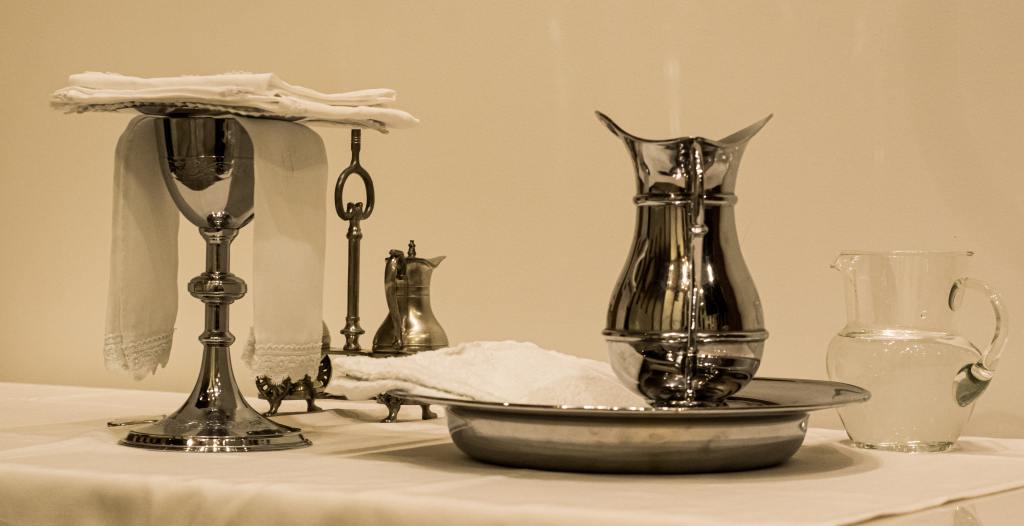
Photo byย Stephanie LeBlancย onย Unsplash

The original is a bit longer than this, but when I read this story, I didnโ€™t know if it was funny or sadโ€ฆ both perhaps, but the โ€˜gotchaโ€™ line isโ€ฆ

The king and his entourage were out riding horses, when not too far off the king saw his jester riding as on some errand.

The king wanted to catch the court jesterโ€™s attention, and so he called out, โ€œHey! Hey!โ€ The court jester brought his horse to a halt and walked towards the king. The king said to him, โ€œYou are so short, you are so thin, you are so slight โ€” you do not seem to be strong at all. But your horse is so strong, so stout, so beautiful and powerful. How do you keep him so beautiful, powerful, strong and stout? What is the secret to his excellent condition?โ€

The court jester said to the king, โ€œI feed my horse, your Highness, but you feed me. This is the difference between my appearance and that of my horse.โ€ (Source)

Throughout history, we have witnessed both the good and bad of monarchs and other leaders. Some are those who tend to their horses more than to the people, while others have given their all for the people. The bad ones are easy to spot, but even the good ones are not always so noble. There are plenty of books and movies about them all, and a movie Iโ€™ve recently watched (again) is the Kingdom of Heaven.

Letโ€™s just say that is very loosely tied to the actual history, but a fantastic story just the same. It revolves around the Battle of Jerusalem in the 12th century between the crusaders and Saladin. I wonโ€™t ruin the story, but it has some great lines, one of which speaks to what it is to be noble.

Godfrey of Ibelin is passing his titles and holdings onto his son, Balian. In doing so, he says, โ€œBe without fear in the face of your enemies. Be brave and upright, that God may love thee. Speak the truth always, even if it leads to your death. Safeguard the helpless and do no wrong; that is your oath.โ€ He then slaps his son, saying, โ€œAnd that is so you remember it. Rise a knight and Baron of Ibelin.โ€

Later, Balian will have the opportunity to become close with King Baldwin IV, the King of Jerusalem. In one conversation, the King says to Balian, โ€œA King may move a man, a father may claim a son. That man can also move himself. And only then does that man truly begin his own game. Remember that howsoever you are played, or by whom, your soul is in your keeping alone, even though those who presume to play you be kings or men of power. When you stand before God, you cannot say, โ€˜But I was told by others to do thusโ€™ or that โ€˜Virtue was not convenient at the time.โ€™ This will not suffice. Remember that.โ€

I know, too much reading of other peopleโ€™s words this morning, but today is the celebration of Christ the King, and those two quotes spoke to me about who we are to be a noble in Godโ€™s court and His Kingdom, and it begins with a particular understanding of who Jesus is.

We know Jesus as Savior, friendโ€”what a friend we have in Jesusโ€”advocate, Redeemer, and so on. I doubt Iโ€™m the only one, but for me, I always see Jesus as my King. Yes, I understand him as those others, but at the end of the day, he is my King, which gives him absolute authority over my life. My disobedience knows no bounds, but his rule is without question and to the best of my abilities, I am here to serve and follow him. You may not see Jesus as King in such a way, but we must all learn to follow him rightly, and it begins by imitating how he lived. By loving God just as He loves His Father. By loving our neighbors, just as He loves us. As Balian took the oath from his father, we have also been given our directions. St. Paul stated it clearly in his epistle to the Church at Ephesus, โ€œBe imitators of God, as beloved children. And walk in love, as Christ loved us and gave himself up for us, a fragrant offering and sacrifice to God.โ€ (If you need a good reminder of that, let me know and Iโ€™ll give you a good slap.)

This is how we live as nobles in Godโ€™s court and His Kingdom, but we cannot be compelled to such life. The King of Jerusalem said, โ€œYour soul is in your keeping alone, even though those who presume to play you be kings or men of power.โ€ Even God the Holy Trinity cannot compel you to live such a life and in truth, we cannot even compel ourselves to live such a life, because such a life is not about what we do. It is about who we are. C.S. Lewis: โ€œThe Son of God became a man to enable men to become sons of God.โ€ We live in Godโ€™s court and His Kingdom, not by doing, but by becoming, being transformed into His image. Paul said to the Corinthians, โ€œWe allโ€ฆ beholding the glory of the Lord, are being transformed into the same image from one degree of glory to another.โ€ It is through this process of transformation that we are allowed to enter our Kingโ€™s courts as sons and daughters:

Free to worship him without fear.
holy and righteous in his sight
all the days of our life.

We are given the opportunity to live as royals in the Kingdom of Heaven and to serve a King whose love for us is endless. To live as courtiers in that Kingdom is not always easy. It comes with trials and blessings, but if we are faithful in following and serving our King in this life, then at the moment of our last breath, we will hear the words that we all desire to be spoken: โ€œCome, you that are blessed by my Father, inherit the kingdom prepared for you from the foundation of the world.โ€

Let us prayโ€”this is a portion of Psalm 47:
God has ascended amid shouts of joy,
    the Lord amid the sounding of trumpets.
Sing praises to God, sing praises;
    sing praises to our King, sing praises.
For God is the King of all the earth;
    sing to him a psalm of praise.
God reigns over the nations;
    God is seated on his holy throne.
The nobles of the nations assemble
    as the people of the God of Abraham,
for the kings of the earth belong to God;
    he is greatly exalted.
Amen.

Sermon: Proper 28 RCL A – “Attitude of Hope”

Photo byย Andrey Metelevย onย Unsplash

A lawyer purchased a box of very rare and expensive cigars, then insured them against, among other things, fire.  Within a month, having smoked his entire stockpile of these great cigars and without yet having made even his first premium payment on the policy the lawyer filed a claim against the insurance company.  In his claim, the lawyer stated the cigars were lost ‘in a series of small fires.’ The insurance company refused to pay, citing the obvious reason, that the man had consumed the cigars in the normal fashion.  The lawyer sued and won!  Delivering the ruling, the judge agreed with the insurance company that the claim was frivolous.  The judge stated nevertheless, that the lawyer held a policy from the company, which it had warranted that the cigars were insurable and also guaranteed that it would insure them against fire, without defining what is considered to be unacceptable ‘fire’ and was obligated to pay the claim.  Rather than endure lengthy and costly appeal process, the insurance company accepted the ruling and paid $15,000 to the lawyer for his loss of the cigars lost in the โ€˜fires’.

Mark Twain said, โ€œTo succeed in life, you need two things: ignorance and confidence.โ€  Iโ€™m thinking this particular lawyer easily had both.  We live in a society that thrives on success.  From our sports to our jobs to who has the prettiest wife or shoots the biggest elk.  Success rules.  Walt Disney says, โ€œIf you can dream it, you can do itโ€ and the rapper Eminem declared, โ€œSuccess is the only option, failureโ€™s not.โ€

When you succeed, folks will call you names like: Ace, big man on campus, big brain, winner, the bomb, numero uno, presidential, maniac, and my personal favorite, The Big Gahuna.  When words fail, there is always the fist pump, โ€œWhoot, whoot, whoot!โ€  Iโ€™m sure our lawyer friend with the cigars received a few of those accolades when he arrived at the Scheisterโ€™s Lounge and Bordello, but perhaps not so much the next day.

You see, as it turned out, after the lawyer cashed the check, the insurance company had him arrested on 24 counts of arson!  With his own insurance claim and testimony from the previous case being used against him, the lawyer was convicted of intentionally burning his insured property and was sentenced to 24 months in jail and a $24,000 fine.  The Big Gahuna had turned into the big loser.

As with winners, we also have wonderful quotes for those who fail.  Baseball player Leo Deroucher, โ€œShow me a good loser and Iโ€™ll show you an idiot.โ€  And of course no sermon would be complete without the wisdom of Homer Simpson, โ€œTrying is the first step towards failure.โ€  For anyone unfortunate enough to fail, we have all sorts of effigies: stupid, loser, dodo, jerk, zombie, goofball, nutter, a sandwich short of a picnic, twit, geek, out-to-lunch, and on and on the list goes.

When we read our parable today, the parable of the talents, we have a tendency to read it in terms of success and failure.  The two with the five and two talents both went out and doubled the kings money.  The King was pleased.  Success.  Two Big Gahunas!  Whoot, whoot, whoot.  The namby pamby little whiner who did nothing but bury his talents in the backyard displeased the king.  Failure.  Big โ€œLโ€ to the forehead loser.

But here is the question that came to my mind while thinking on this parable: What if Mr. Five Talents and Mr. Two Talents went out and invested in various options, a bit here and bit there, solid investments, but on Black Friday they lost it all?  The price of camels plummeted, there was a margin call on fish futures, and the shekel was seriously devalued.  When the dust settled these two were wiped out.  How do you think the king would have reacted when these two arrived and reported that all was lost?  Well, if Mr. One Talent was cast out into the darkness where there was weeping and gnashing of teeth, then these two would likely be flogged, filleted, quartered, and cast into a place where they would never be seen or heard from again.  These two would be the losers and Mr. One Talent would be the hero.  

From the worldโ€™s perspective, this is true.  Lose like that and you are punished and shunned, but a parable of Jesus should never be looked at from the worldโ€™s perspective.  It should be looked at from Godโ€™s.  Yes, the world would have thrown these two out on their ears, but not God.

From the Ragamuffin Gospel by Brennan Manning: โ€œIn the parable of the talents, the three servants are called to render an account of how they have used the gifts entrusted to them.  The first two used their talents boldly and resourcefully.  The third, who prudently wraps his money and buries it, typifies the Christian who deposits his faith in a hermetic container and seals the lid shut.  He or she limps through life on childhood memories of Sunday school and resolutely refuses the challenge of growth and spiritual maturity.  Unwilling to take risks, this person loses the talent entrusted to him or her.  โ€˜The master wanted his servants to take risks.  He wanted them to gamble with his money.โ€™โ€

God does not want us to run off to the tracks and bet everything on the ponies, but God also does not want us to sit hunkered down with the talents, gifts and blessings he gives us.  He wants us to have a bit of faith โ€“ faith the size of a mustard seed will do โ€“ and try.  What happens if we fail?  Is he going to smite us out of existence?

Consider this: After Jesus was crucified and rose from the dead he appeared to his disciples on several occasions.  We read in Johnโ€™s Gospel, โ€œJesus appeared again to his disciples, by the Sea of Galilee.  It happened this way: Simon Peter, Thomas, Nathanael from Cana in Galilee, the sons of Zebedee, and two other disciples were together.  โ€˜Iโ€™m going out to fish,โ€™ Simon Peter told them, and they said, โ€˜Weโ€™ll go with you.โ€™  So they went out and got into the boat, but that night they caught nothing. โ€“ they failed โ€“ Early in the morning, Jesus stood on the shore, but the disciples did not realize that it was Jesus.  He called out to them, โ€˜Friends, havenโ€™t you any fish?โ€™  โ€˜No, weโ€™re a bunch of losers,โ€™ they answered.  He said, โ€˜Throw your net on the right side of the boat and you will find some.โ€™โ€ When they did, they were unable to haul the net in because of the large number of fish.โ€ โ€“ Success!

When we fail God does not smite us.  When we fail God says, โ€œCast your net on the other side of the boat!  Try again.โ€  The sin of Mr. One Talent wasnโ€™t that he didnโ€™t go out and earn more money for the master.  In the words of my grandfather, Mr. One Talent sinned by sitting there like a bump on a log and doing nothing.

When we fail we have a tendency to think that all is lost.   That we have no recourse, but that simply is not the way with God. Speaking of the Lord, Thomas a Kempis writes, โ€œBelieve in Me, and trust in my mercy.  When you think I am far from you, I am often nearest to you.  When you judge that almost all is lost, then oftentimes it is that you are in the way of the greatest gain of merit.  All is not lost when anything falls out contrary to how you would have it.  You must not judge according to your present feeling, nor give up in any trouble, however it comes, nor think that all hope of deliverance is gone.โ€  No, when we fail, we are to cast on the other side of the boat, not just leave the net at the bottom of the boat to rot from lack of use.

In our Christian walk, there are many things that we fail at.  Sometimes, we gloriously fail at things like holiness, a consistent prayer life, study, blessing, moderation, church attendance (Donโ€™t get me started with that one) forgiving, being forgiven – just to name a few – and we think because we have failed one time or even a hundred times, that all is lost.  Jesus doesnโ€™t want us and plans to cast us into the outer darkness where there will be weeping and gnashing of teeth, but nothing could be further from the truth.  Instead, all he asks is that we cast our nets on the other side of the boat and try again.  If you want to say, โ€œFr. John, Iโ€™ve fished this entire lake and there isnโ€™t a dang thing in it but weeds and sticks!,โ€ then try a different lure, but donโ€™t just give up.

I donโ€™t know if youโ€™ve seen the movie The Lord of the Rings, but just before one of the epic battles when it appears that all the good guys are going to die and they are trying to decide on whether to stay and fight or retreat, Gimli the dwarf says to the group, โ€œCertainty of death, small chance of successโ€ฆ what are we waiting for?โ€  Why just give up?  Even our smallest efforts can accomplish much.  It may not seem that a tiny pebble can accomplish anything, but cast it into a pond and it will transform the entire surface.

You have not lost simply because you have failed.  Instead, you have been given the opportunity to try again.  Cast your net on the other side of the boat, there is a catch of immeasurable blessing waiting there for you.

Sermon: Proper 27 RCL A – “The Light”


An older lady entered the bank, approached the teller, handed her bank card to the teller, saying, โ€œI would like to withdraw $10.โ€  The teller told her, โ€œFor withdrawals less than $100, please use the ATM.โ€ โ€ฆ The lady wanted to know why.  The teller returned her bank card and irritably told her, โ€œThese are the rules, please leave if there is no further matter. There is a line of customers behind you.โ€ โ€ฆ The lady remained silent for a few seconds and handed her card back to the teller and said, โ€œPlease help me withdraw all the money I have.โ€  The teller was astonished when she checked the account balance. She nodded her head, leaned down and respectfully told her, โ€œYou have over $300,000 in your account but the bank doesnโ€™t currently have that much cash. Could you make an appointment and come back again tomorrow?โ€ โ€ฆ The lady then asked how much she could withdraw immediately. The teller told her any amount up to $3,000. โ€œWell, please let me have $3,000 now.โ€  The teller kindly handed $3,000.  All friendly and with a pleasant smileโ€ฆ. The lady pulled a $10 bill from the stack, placed it in her purse, and then told the teller she would like to make a $2,990 deposit. 

In this day and age it may seem a bit odd, butโ€ฆ I confess to not owning a TV set.  If I want to watch a movie, I just pull one up on the computer.  And if I want to get the news, I read it; however, while on vacation, I stayed in a hotel for a few nights and had access to all the television networks have to offer.  It ainโ€™t much and the news channelsโ€ฆ not really news.  When it was news, it was angry.  There was no courtesy or respect.  Everyone and everything was treated like that lady who only wanted $10 from her account: unless you can do something for me or are worth something, you serve no purpose and Iโ€™ve got no use for you.  Thatโ€™s a fairly sad state of affairs, but I believe we can do something about it, and our parable of the foolish bridesmaids help us to understand what that is.

To this day, a wedding celebration in the Middle-East can take quite some time.  Following the ceremony, the newlyweds go to different houses to receive well wishes and all, so you never really know exactly when they are going to arrive for the wedding feast.  Everyone is accustomed to the wait, itโ€™s just a part of the celebration.

In the parable, we have ten bridesmaids who are waiting for the couple to arrive and, while they wait, they fall asleep.  Later, the cry comes out: the couple is on the way, but when the bridesmaids wake up, five have run out of oil for their lamps.  No proper woman is going out in the dark without a lamp, so the five ask the ones who prepared for oil.  Thereโ€™s not enough to go around, so the five send off the โ€œfoolishโ€ bridesmaids to find more oil for themselves (exactly where they will find oil in the middle of the night is not addressed, but it is an issue).  Finally, the foolish five arrive, knock on the door, only to be turned away by the groom: โ€œTruly I tell you, I do not know you.โ€  From this, we understand the need to be prepared for the return of the Churchโ€™s groom: Jesus.

That is perhaps the more traditional view of the parable and it is true.  N.T. Wright points out that many give meaning to the oil, but he believes that is an incorrect interpretation, soโ€ฆ well, heโ€™s probably not going to like my take on the parable either, but it is not likely heโ€™ll be clamoring for a copy.

As I was praying a rosary and meditating on this, I kept coming back to the oil, not for itself, but what it meant to run out.  If those bridesmaids had no oil, they had no light.  And everybody says, โ€œDuh.โ€  But we know that light is one of the most important images in Holy Scripture.  โ€œGod is light.โ€  โ€œI am the light of the world.โ€  Yet, the imagery of light does not only speak of God, it speaks of how God gives us this light, as the Psalmist tells us, โ€œIt is [God] who lights my lamp; the Lord my God lightens my darkness.โ€  So, just as he illumined the wilderness as a pillar of fire when the Israelites wandered in the desert, God gives us light that we might see, and as the Apostle John teaches us, that we may be one: โ€œIf we walk in the light, as he is in the light, we have fellowship with one another, and the blood of Jesus his Son cleanses us from all sin.โ€

God is light, we are to walk in this light, but then we are to reflect this light.  Saint Paul: โ€œDo all things without grumbling or disputing, that you may be blameless and innocent, children of God without blemish in the midst of a crooked and twisted generation, among whom you shine as lights in the world.โ€

Our lady at the bank demonstrates to us that many have grown callous and uncaring, rude and disrespectful.  I told you that what I saw on the news portrayed a sad state of affairs.  Why?  The darkness will never overcome the light, the evil will never overcome good: God wins, but right now, the lamp of this world is low on oil and the flame is flickering dimly.  God is doing His part and we must do ours.  We can do something about it.

Those of you who are friends with Jean McCollough on Facebook know that she is posting something all the time.  You donโ€™t really see anyone elseโ€™s posts because Jean puts so much out thereโ€ฆ actually itโ€™s just the opposite, so when I came a cross something she felt needed to be shared, I stopped and read it.  It was the story of Irena Sendler who died on May 12, 2008 in Warsaw, Poland at the age of 98.

She was a Roman Catholic and a part of the the Polish underground during WWII.  Aware of the atrocities committed by the Nazis against the Jews in the Warsaw ghetto, she knew she had to help, so she got a job as a plumbing / sewer specialist, which allowed her free access in and out.  In her comings and goings, she smuggled out babies in the bottom of her tool box and she had a burlap sack that she used for larger children.  She also had a dog in the back of the truck.  The dog was trained to bark at Nazi soldiers, which served two purposes: it masked the sounds of a crying baby or child and if a soldier got too close, the fierceness of the dog discouraged them. 

With such a plan, you would think that she might have been able to get out a few dozen children, but before she was caught, she managed to smuggle out some 2,500 infants and children.

When they caught her, they tortured her, breaking both her arms and legs.  She managed to escape the death sentence she was given.

Having kept a record of the children and following the war, she attempted to reunite the families, but most of the parents had been murdered by the Germans.  She worked tirelessly to find homes for the orphans.

The lamp of this world is low on oil and the flame is flickering dimly, but we can do something about it.  How?  One baby at a time in the bottom of a toolbox.  By assisting the little lady make a $10 withdrawal, regardless of how much sheโ€™s worth.  By defying a culture that is callous, uncaring, rude, and disrespectful.  By discovering those things we hold in common and not always looking for just one more thing to divide us.  By setting aside pettiness and our endless defensiveness.  By showing and giving one another grace, knowing that none is perfect except One, and by recognizing the fact that we are not that One.  By being who we were created to be: the light of the world.  You can do these things, because where the lamp of the world may be dim, the light of Christ that guides you and that is in you is the noonday sun.

You can change the worldโ€ฆ you can brighten the world, because โ€œhe who is in you is greater than he who is in the world.โ€

Let us pray: God of wisdom and love, you have sent your Son Jesus to be the light of the world, and continue to send your Holy Spirit among us to guide us into the way of truth. Open our hearts to your word and let us ponder your actions among us. Give us your Spirit of wisdom and knowledge, of understanding and counsel. With Mary, may we rejoice in your gifts, and walk in the way of truth and love. With all your people on earth and in eternity, we ask this prayer through our Lord Jesus Christ, in the unity of your loving Spirit, one holy God, for ever and ever.  Amen!

Dominicans: Term One / Week Six

portrait by the Spanish painterย Claudio Coelloย in 1670

Essay on St. Dominic


A man curious about Catholicism approached a Dominican friar.  He asked the Dominican about various subjects and eventually the conversation turned to religious orders. โ€œSo you are a Dominican?โ€

โ€œYes.โ€

โ€œWhat can you tell me about the Dominicans?โ€

โ€œWell, in short, we were founded by St. Dominic in the 13th century, in part to counter the Albigensian heresy.โ€

โ€œI see. What about the Jesuits I keep hearing about?โ€

โ€œThey were founded by St. Ignatius of Loyala in the 16th century, in part to counter the Protestant Reformation.โ€

โ€œHmmm … so which is the greater order?โ€

The Dominican pondered this question for a moment and then replied: โ€œWell, when was the last time you met an Albigensian?โ€

As many of you are aware, I recently became a Postulant in the Anglican Order of Preachers (a.k.a. The Dominicans).  So that you donโ€™t get the impression that Iโ€™m about to run off and join a monastery, Iโ€™ve decided to write a short series of articles about St. Dominic Guzman, the founder of the Order, and the Dominicans.  Weโ€™ll come back to the Albigensians in a moment, but we must begin at the beginning and the beginning of this story was a dream.  Not mine, but the dream of Jane of Aza.

In 1170 a.d., Jane dreamed โ€œthat she carried a dog in her womb, and when it was born it broke away from her and ran with a burning torch in its mouth to set the whole world aflame.โ€  Such dreams might seem to spring from the mind of Stephen King, but this one was prophetic in nature and spoke of Jane’s unborn son, Dominic.  (Hint: Dominic would become the hound and the flame was the truth of the Gospel message.)

Dominic was born in the rural community of Caleruega, Spain.  There he began to receive a formal education, but also an education of faith and charity that was provided by his mother, who was โ€œfull of compassion toward the unfortunate and those in distress.โ€  Witnessing such lessons from his mother, led Dominic to later sell his books to aid the poor stating, โ€œHow can I keep these dead skins when living skins are dying for hunger?โ€  Perhaps this lesson and others like it laid the groundwork for Dominicโ€™s greater mission of charity towards those who were poor in spirit, for following his university studies and ordination to the priesthood, he began to discern the need for the truth to be preached, particularly amongst those who were either ignorant of that truth or in error, specifically the error of the Albigensians that he first encountered while traveling through southern France.

The error of the Albigensians was the Manichaean Heresy, which taught that there were two gods: the god of the Old Testament (evil) and the god of the New Testament (good).  As the god of the Old Testament is the creator god, then the Manichaes taught that the physical worldโ€”our bodies includedโ€”were evil, therefore, the Albigensians denied the Incarnation of Jesus (how can anything created be good?), insisted on a very austere life, and denied themselves the sacraments, including marriage, amongst other issues.  Dominic could not comprehend how anyone could view creation as evil and ignore the teachings of the Church, so he set about the mission of correcting the Albigensians, and in doing so, set aflame, not just that small region of France, but the entire world with the truth of the Gospel and the teachings of the Church.  At the heart of the missionโ€”one that continues to this dayโ€”is preaching, preaching that finds its inauguration in study and prayer.

The study and learning was so that the friar would become someone who โ€œproclaims with integrity the Word of God as received from the Churchโ€ for the purpose of evangelization, and prayer served much the same purpose.  To paraphrase Thomas Aquinas, a later Dominican, the purpose of prayer in the life of the Dominican is โ€œto contemplate and to hand on to others the fruits of oneโ€™s contemplation.โ€  In other words, for Dominic and the Dominicans, study and prayer are tools and a means to an end, the end being the sermon and the preaching.  This may seem odd to us today.  We so often see our prayer as a time for petition, intercession, and thanksgiving, but for the Dominican, prayer is very much a tool in the preacherโ€™s tool belt.  Those things God shows the Dominican are not only for private consumption, but given to be shared, that others might benefit in their walk with God.  So that the friar might focus all of his energies (and her in the Anglican Order of Preachers!) on the โ€œOrderโ€™s jobโ€ of preaching, Dominic established the three vows of the friar: poverty, chastity, and obedience.  The Anglican Order of Preachers translates these into the context of the 21st century: simplicity, purity, and obedience, all three of which are designed to free the life and mind of the Dominican so that there is more space for fulfilling the calling and mission of the Order. 

At some point, a Latin pun on the name Dominican was introduced: domini canes or โ€œhounds of the Lord.โ€ย  Not only does this reference the dream of St. Dominicโ€™s mother, but it also points to the loyal and obedient nature of the Order.ย  An Order that today, combining the Roman and Anglican Churches, consists of over 6,000 members. ย  The Lord has greatly used Dominicโ€™s passion for preaching to indeed set the world aflame with the Gospel.


Bibliography

Deanesly, Margaret. A History of the Medieval Church, 590-1500. London New York: Routledge, 1969.

Goergen, Donald. St. Dominic: the Story of a Preaching Friar. New York: Paulist Press, 2016.

John-Julian. Stars in a Dark World: Stories of the Saints and Holy Days of the Liturgy : with Supplementary Readings According to the use of the Order of Julian of Norwich. Denver, Col: Outskirts Press, 2009.

Jones, Cheslyn, Geoffrey Wainwright, and Edward Yarnold. The Study of Spirituality. New York: Oxford University Press, 1986.

Zagano, Phyllis, Thomas C. McGonigle, and Augustine. The Dominican Tradition. Collegeville, Minn: Liturgical Press, 2006.

Dominicans: Term One / Week Five

Reading and answering question from: Paul Murray O.P. The New Wine of Dominican Spirituality: A Drink Called Happiness. New York, NY: Bloomsbury Publishing, 2006.


Chapter two describes Dominicans in the early days as promoting the idea of happiness; this is often linked to the Beatitudesย  (Matthew 5:1-12) and describe briefly what struck you most about their experiences and teaching on happiness.ย  What do you think about the idea of happiness in Dominican life as you consider your own calling?

The Name of the Rose by Umberto Eco: I enjoyed both the book and the movie.ย  From the movie: William of Baskerville: โ€œBut what is so alarming about laughter?โ€ย  Jorge de Burgos: โ€œLaughter kills fear, and without fear there can be no faith, because without fear of the Devil there is no more need of God.โ€ย  Murray is absolutely correct, the faithful have become those with โ€œbowed heads and sad facesโ€ (p.55) when we should in fact be the happiest and most joyful of all.ย  In our preaching, folks need the opportunity to โ€œbreathe,โ€ not just for a moment during the sermon (cf. p.69), but I think sometimes for the entirety of the sermon.ย  Not a stand up comicโ€™s routine, but a message that conveys how we are to โ€œhave life and have it abundantly.โ€ (John 10:10)ย  An opportunity to experience joy in God, worship, and fellowship.ย  The โ€œWhy?โ€ behind this thought was summed up nicely by Thomas of Cantimprรฉ: so that we all may โ€œsurvive unbrokenโ€ (p.57) this world and all it throws at usโ€”weโ€™ll still end up with a few chips and cracks, but hopefully not completely broken.

Perhaps too much information, but for myself and a life as a Dominican, Iโ€™m trying to learn (thatโ€™s not the right word for itโ€ฆ experience?) this joyful Dominican characteristic.  I have been a student of Thomas ร  Kempis and the Imitation of Christ for almost twenty years, but a few months ago, I set him aside.  There is so very much to learn from him, but I tired of keeping my death ever before me as he taught.  There is benefit in the practice, but I discovered that I was trying so hard to be a serious saint, that I did not live.  That may only make sense to me, but I want to not only share the message of the joy of the Lord, but know it for myself as well.


Reading and answering question from: Thomas C. McGonigle, O.P. & Phyllis Zagano, Ph.D. The Dominican Tradition: Spirituality in History. Collegeville, Minnesota: Liturgical Press, 2006.

Professed Anglican Dominicans take vows of obedience, purity, and simplicity. Using information from The Dominican Tradition (p. xiii-xxi), describe your vision of living out these vows. What challenges do you expect to face? What can you do to address these challenges before they become a problem?

Dominic:ย  He asked God for โ€œdelight and enjoymentโ€ (Murray p.58), while at the same time he was would โ€œdiscipline himself with an iron chain.โ€ (M&Z p.7)ย  Such extremes of thought and action seem to be presenting two separate individuals, but Dominic has often demonstrated how he embodies the fullness of the Scriptural teachings.ย  I believe his life was a joyful living out of those words we so often read in Ecclesiastes, which begin: โ€œFor everything there is a season, and a time for every matter under heaven: “a time to be born, and a time to die; a time to plant, and a time toโ€ฆโ€

Aquinas: There are many forms/styles of preaching, but not all forms are suitable for every occasion.  A deeply technical sermon/teaching would be appropriate for a seminar, but not necessarily for a Sunday morning.  The preacher must take what theyโ€™ve learned through prayer/study/meditation and โ€˜translateโ€™ the information and insights for the listenersโ€™ edification.  The analogy of the iceberg is true: 10% of the iceberg is above the surface, that is the sermon, the other 90%, what is below the surface is what went into the crafting of the sermon.  M&Z show us the 90% of Aquinas whereas Murray gives us the 10%.

Eckhart: Of the three, Eckhart was the most difficult.  He seems rather elusive in trying to nail down, but as with Aquinas, M&Z focus on the philosophical thinking of Ekhart, while Murray shares the โ€œfruitsโ€ of Ekhartโ€™s labors.  No disrespect toward Eckhart, but M&Z and the selection of Eckhartโ€™s writings gave me the impression of an individual who never stopped moving, but ceaselessly bounced around.  I think he would make you either nervous or agitated (perhaps both!) to be around.

Dominicans: Term One / Week Four

Reading and answering question from: Paul Murray O.P. The New Wine of Dominican Spirituality: A Drink Called Happiness. New York, NY: Bloomsbury Publishing, 2006.


Chapter one describes Dominican spirituality in terms of contemplation, mysticism, liturgy โ€“ and preaching.  How do you see these working together to create a Dominican way of life?  How do they fit your own spiritual life at this time?

Murrayโ€™s discussion of God as object and/or subject (p.21) and then as โ€œlink for [Godโ€™s] activity,โ€ (p.22) reminded me of something I must surely have heard before: preaching as sacrament.  The BCP defines the sacraments as โ€œoutward and visible signs of inward and spiritual grace, given by Christ,โ€ (BCP 857)  The contemplation, mysticism, and liturgy are beneficial gifs in and of themselves, but for the Dominican, they are โ€œtoolsโ€ for the communication of Godโ€™s Word: preaching.  In reading this chapter, I felt like I had come home, for so much of the work my position (leading worship, studies, personal prayer, praying the Rosary, attending meetings, and even pastoral care) have as their backdrop, the sermon: the brief ones given during Morning Prayer and the more prepared for Holy Eucharist.  The extent to which the preaching becomes a sacrament is truly dependent upon the amount of spiritual work I put into the writing, and the test is always the end result: a sermon done properly accomplishes the โ€œsimple intention,โ€ (p.24) whereas one that has not been properly vetted out by the spiritual practices, although perhaps good for the souls of those listening, can be categorized as โ€œright intention.โ€  I do not know if my congregation feels the difference, but I can.  Right intention is work.  Simple intention is not really me.  The difference is that the first is me speaking, the latterโ€”I prayโ€”is โ€œdivine praise.โ€ (p.39)  This then also supports the idea that the Dominican vocation is a โ€œdynamic vocationโ€ (p.43) in that the sermon is not only formed through study and prayer, but also life, as God โ€œcontemplates the worldโ€ (p.22) through the one preaching, for if we are to speak Godโ€™s word instead of our own, we must not only know the One we speak of, but also the ones we speak to.


Reading and answering question from: Thomas C. McGonigle, O.P. & Phyllis Zagano, Ph.D. The Dominican Tradition: Spirituality in History. Collegeville, Minnesota: Liturgical Press, 2006.

Professed Anglican Dominicans take vows of obedience, purity, and simplicity. Using information from The Dominican Tradition (p. xiii-xxi), describe your vision of living out these vows. What challenges do you expect to face? What can you do to address these challenges before they become a problem?

My vision of living out the vows of obedience, purity, and simplicity: I see myself, fully vested, prostrate before the Tabernacle, in unitive prayerโ€ฆ who am I kidding.  Over the portico of the Temple of Apollo at Delphi is the Greek maxim, โ€œKnow thyself.โ€  Perhaps I donโ€™t know myself fully, but enough to know that my vision of these vows will closely resemble a tug-of-war between two equal teams.  One pulling me toward holiness and fulfillment of the vows and the otherโ€ฆ the other likes single malt scotch and women.  I cheered at Dominicโ€™s โ€œconfessionโ€ about being โ€œexcited by the conversation of young women.โ€ (Goergen, p.97)  So how do I make this work?

Obedience โ€” If there is one vow that I will not struggle with, it is this.  My good friend, Thomas ร  Kempis, writes, โ€œIt is a very great thing to obey, to live under a superior and not to be one’s own master, for it is much safer to be subject than it is to command.โ€  (Imitation of Christ, Book 1, Chapter 9)  McGonigle confirms Thomasโ€™ understanding: one who loves his/her superior is one who will allow themselves to be lead and directed.  If not out of love, I will serve and obey out of loyalty.

Simplicity โ€” I have no spouse or children (unless you count the Queenโ€”a.k.a. Rainโ€”who is a six month old feline.)  After the normal bills, my life is my own.  I do tithe and have begun to look for other ways that I might share my blessings.  In addition, I have taken to wearing a cassock during the work week.  For me it is a testimony of a different way.  A way that, amongst other benefits, demonstrates a setting aside of excess.

Purity โ€” See โ€œObedience.โ€  Out of love for my Savior and loyalty to my calling as a priest (and Dominican postulant), I will not become a slave to the callings of the world.  I will continue striving to find others as brothers and sisters in Christ.

Above all else, there will be prayer and the sacraments. 

Politics

A piece I wrote for October 2020 Connections, the newsletter of St. Matthew’s.


Photo byย Markus Spiskeย onย Unsplash

When I was nine or ten, I remember coming home from school and wanting to watch cartoons and Star Trek, but every day and every channel was the same boring show.  All these people talking.  And talking.  Sometimes they would become very animated in their talking, but it was always the same.  Even though I had no idea what was going on, I would sit and wait, hoping they would get tired of all that talking so that I could see what Captain Kirk was up to (I always hoped for the Klingons to arrive.  Very exciting.)  What were these folks talking about?  At the time, all I knew was that somebody had broken in and stolen a gate from a water building.  Who knew they had such valuable things at the waterworks.  Months later, we had a new president, the former resigning in shame.

Iโ€™ve shared with you in the past: I donโ€™t preach politics.  Never have.  Never will.  Instead, I choose to preach the Gospel, because as Iโ€™ve also shared with you, I believe that the Gospel Message is the most radical and revolutionary message every spoken.  Politicians come and go and nations do the same, โ€œโ€˜but the word of the Lord remains forever.โ€™  And this word is the good news that was preached to you.โ€ (1 Peter 1:25)  

In such heated political times as this, you may be wondering if Iโ€™m going to change my โ€œpolicyโ€ on preaching politics.  The answer is: absolutely not, but I would be a poor priest if I did not provide some guidance through it, and the question that keeps running through my mind is: How should we as a Christian people respond?  Scream a little louder?  Sign another petition?  Join a protest?  Make nasty comments on social media (the equivalent of doing nothing)?  Vote (always a good idea)?  Not to be the pessimist in the group, but all of these have been tried and all theyโ€™ve really produced are people shouting even more loudly, paper wasted, more violence, a disintegration of tolerance and respect, and politicians who, once in office, end up being no better than their predecessors.  

Thank you for the commentary, Fr. John, but you still havenโ€™t answered the question: what should the Christian response look like?

Iโ€™m glad you asked!

โ€œYou are a chosen race, a royal priesthood, a holy nation, a people for his own possession, that you may proclaim the excellencies of him who called you out of darkness into his marvelous light.โ€ (1 Peter 2:9)  What are we to do?  We are to be the royal priesthood, proclaiming the Kingdom of God.  Not as our earthly leaders do, but as our Lord and Savior has taught us.  We are to be a nation, a Christian race that is set apart, not indulging in the sins of the world, but demonstrating the path of righteousness.  We are to be the Lordโ€™s possession, not giving our allegiance to things that are passing away, but to Him who was, who is, and who will come again.  We are to be all these things, witnessing not to a campaign slogan, but to the eternal Love of God.  Unlike everything else that makes the news these days, what we do for the Kingdom wonโ€™t make good TV, it wonโ€™t draw large crowds, and it will likely only change the lives of a very few, butโ€ฆ Youโ€™ve all heard the story before:

A young girl was walking along a beach upon which thousands of starfish had been washed up during a terrible storm. When she came to each starfish, she would pick it up, and throw it back into the ocean. People watched her with amusement.

She had been doing this for some time when a man approached her and said, โ€œLittle girl, why are you doing this? Look at this beach! You canโ€™t save all these starfish. You canโ€™t begin to make a difference!โ€

The girl seemed crushed, suddenly deflated. But after a few moments, she bent down, picked up another starfish, and hurled it as far as she could into the ocean. Then she looked up at the man and replied, โ€œWell, I made a difference for that one!โ€

That is the ending Iโ€™ve always heard, but recently I came across another:

The old man looked at the girl inquisitively and thought about what she had done and said. Inspired, he joined the little girl in throwing starfish back into the sea. Soon others joined, and all the starfish were saved.* 

Perhaps thatโ€™s just a bit too naรฏve, too optimistic, but Iโ€™m really not a pessimist. 

Make a differenceโ€ฆ be the light for one person.  This is our politics.  Be the leader, the royal priest to one person, pointing them to the path of eternal life, so that they may do the same for another.  It is through this great work of the Gospel that we will affect eternal change in the lives of many and that we may affect change in our society.

*โ€œThe Starfish Storyโ€ is adapted from The Star Thrower by Loren C. Eiseley

Dominicans: Term One / Week Three

Reading and answering question from: Donald J. Goergen O.P. St. Dominic: The Story of a Preaching Friar. New York, NY: Paulist Press, 2016.


This book gives you a good foundation for your essay on St. Dominic.  In responding to this question, however, please focus on Chapter 4, and be selective rather than comprehensive. 

Following the meeting with Pope Innocent in 1215, the scope of the OP mission grew from a diocesan program to an organization that now spans the globe and even though Dominic would lead the order in its infancy and early growth, I believe that he always viewed himself as the โ€œhumble servant of preaching.โ€ (p.56)  โ€œFor him it was always the preaching, not the preacher, who was never to get in the way of the Word.โ€ (P.63)  From this view and mission, the order developed multiple elements and characteristics which are seen in the AOP.

Organization – The AOP maintains the structure of the order as established by Dominic.  โ€œThere existed in the Order the two primary instruments of governance: the general chapter, legislative in nature, and the head of the Oder along with local superiors, executive in character.โ€ (P.87)  This also is evident in the AOP through the Master, Chapter, Houses, Priors, etc.

Study – โ€œAs witness to the value that Dominic placed on study, these first friars in Toulouse began to attend lectures.โ€ (P.50)  โ€œThe preacher was to be an ongoing student of theology.  The order was to be an order of students.โ€ (P.88)  As with Dominic, the AOP recognizes that any good preacher will be an educated preacher, so as to preach the truth and recognize error.

Dispersed – From Toulouse he sent the friars out.  โ€œThe decision to disperse the men was both to protect the preaching and to expand it.โ€ (P.67)  โ€œHow then will they call on him in whom they have not believed? And how are they to believe in him of whom they have never heard? And how are they to hear without someone preaching?  And how are they to preach unless they are sent? As it is written, โ€˜How beautiful are the feet of those who preach the good news!โ€™โ€ (Romans 10:14-15)  The AOP is dispersed, even to far off lands like Oklahoma!

Rule – The rule for Dominic and his friars would be โ€œthat of St. Augustine.โ€ (P.59)ย  The AOP also lives under an established rule, that guides daily life of prayer and study, which are set to enhance the preaching.


How did the life and work of St. Dominic lay a foundation upon which the Anglican Order of Preachers is built?ย  What elements or characteristics do you find in this chapter that you can see in our own Order?ย  Be specific, and give at least one reference, with page number or Kindle reference number, for each element or characteristic that you describe.

โ€œTo contemplate and to hand on to others the fruits of oneโ€™s contemplation,โ€ (P.6/P.134) sums up what it means to be an active Dominican, which finds it roots in the Orders founder, who was โ€œa man of prayer with a mission, a contemplative missionary.โ€ (P.74)  Whereas other religious orders find their calling hidden behind the cloister walls, Dominic believed that the purpose behind the contemplative prayer was to be able to share what was learned.  โ€œThere could be no authentic contemplation without the handing on of it to others and vice versa.โ€ (P.103)  Dominic โ€œpreached his prayer and prayed his preaching.โ€ (P.102) 

To assist in his prayer, โ€œDominic trusted Mary in his prayer from the beginning.โ€ (P.136)  โ€œAs Mary gave brith to the Word in her womb, so the Preacher gives birth to the Word in the world.โ€ (P.136)  This deep devotion to Mary was of great benefit to Dominic and the Order and it is to her that the Order has been given over to for motherly care (cf. P.137)  

Contemplation with the assistance of Mary is and will be a great source of strength and intimacy with Jesus in my life.ย  As I pray / contemplate, if I will first walk with Mary, she will lead me to moments of great communion with Jesus.ย  Dermot Power, in The Spiritual Theology of the Priesthood (1998), discusses the works of Hans Urs von Balthasar.ย  Power writes, โ€œMary is the prototype of the Churchโ€™s responsive faithful love and is the real type and abiding centre of holiness which encompasses the Petrine and ministerial function within the Church.ย  According to Balthasar, the priesthood exists only to nurture, safeguard and make transparent this spousal love of Christ for his Church.โ€ (P.50)ย  Where Power speaks of Church and Priesthood, I believe we can insert the word โ€œpreacher,โ€ because the making knownโ€”or to use the words of Dominic: the โ€œhanding onโ€โ€”of the message of the love of Christ is the raison dโ€™รชtre of preaching just as preaching is โ€œthe raison dโ€™รชtre of the Order.โ€ (P.62)ย  If we are to hand on this message, we must first spend time in contemplation with Him who is Love.