Today we are celebrating the Eve of the Ascension. Preaching on the Ascension, St. Augustine of Hippo states: “Today our Lord Jesus Christ ascended into heaven; let our hearts ascend with him. Listen to the words of the Apostle: If you have risen with Christ, set your hearts on the things that are above where Christ is, seated at the right hand of God; seek the things that are above, not the things that are on earth. For just as he remained with us even after his ascension, so we too are already in heaven with him, even though what is promised us has not yet been fulfilled in our bodies.
“Christ is now exalted above the heavens, but he still suffers on earth all the pain that we, the members of his body, have to bear. He showed this when he cried out from above: Saul, Saul, why do you persecute me? and when he said: I was hungry and you gave me food. Why do we on earth not strive to find rest with him in heaven even now, through the faith, hope and love that unites us to him?”
Augustine is teaching us of two ‘states’ of the Ascension as they relate to our union with Christ, and he is basing this teaching on what we learn from St. Paul’s writings to the church in Corinth: “For just as the body is one and has many members, and all the members of the body, though many, are one body, so it is with Christ.” (1 Corinthian 12:12). What does this mean for us?
We are the Body of Christ and Christ is the head of the Body, so no matter where he is, he is with us always unto the end of the age, because we are one. Through his death and resurrection, we become members of him. Therefore, since he has ascended into heaven, we too have ascended into heaven. If we are on earth and we suffer, he is on earth suffering with us. We see Christ in everyone we meet, because he is in everyone we meet. We worship him as he sits at the right hand of the Father, because he is there also.
Bottom line: the Ascension is a mystery, that said, this is probably some sort of heresy, so just forget it after I’ve said it, but as I was thinking on this, I remembered Jacob and his ladder. You’ll recall that Jacob laid down, fell asleep, and had a dream: “there was a ladder set up on the earth, and the top of it reached to heaven. And behold, the angels of God were ascending and descending on it! And behold, the Lord stood above it and said, “I am the Lord, the God of Abraham your father and the God of Isaac.” He then speaks to Jacob about the land that is promised and then says, “Behold, I am with you and will keep you wherever you go, and will bring you back to this land. For I will not leave you until I have done what I have promised you.” When Jacob woke, he said, “How awesome is this place! This is none other than the house of God, and this is the gate of heaven.”
Jesus said, “I am the gate; whoever enters through me will be saved. They will come in and go out, and find pasture.” Jesus also says, “‘Truly, truly I say to you, you will see heaven opened, and the angels of God ascending and descending on the Son of Man.'”
This is the possible heresy bit: it seems to me that the Ascension is the permanent placement and perfection of Jacob’s ladder, giving everyone access to the Gate of Heaven, to Jesus, following his departure. And it is through this ladder that we have access to the head of the Body, Jesus, and the very throne room of God. Maybe something to think on… or maybe not.
It has been several years since I’ve worked on this project, but…
THE LONGINGS OF OUR HEARTS MUST BE EXAMINED AND MODERATED
THE VOICE OF CHRIST
MY CHILD, it is necessary for you to learn many things which you have not yet learned well.
THE DISCIPLE
What are they, Lord?
THE VOICE OF CHRIST
That you conform your desires entirely according to My good pleasure, and be not a lover of self but an earnest doer of My will. Desires very often inflame you and drive you madly on, but consider whether you act for My honor, or for your own advantage. If I am the cause, you will be well content with whatever I ordain. If, on the other hand, any self-seeking lurk in you, it troubles you and weighs you down. Take care, then, that you do not rely too much on preconceived desire that has no reference to Me, lest you repent later on and be displeased with what at first pleased you and which you desired as being for the best. Not every desire which seems good should be followed immediately, nor, on the other hand, should every contrary affection be at once rejected.
It is sometimes well to use a little restraint even in good desires and inclinations, lest through too much eagerness you bring upon yourself distraction of mind; lest through your lack of discipline you create scandal for others; or lest you be suddenly upset and fall because of resistance from others. Sometimes, however, you must use violence and resist your sensual appetite bravely. You must pay no attention to what the flesh does or does not desire, taking pains that it be subjected, even by force, to the spirit. And it should be chastised and forced to remain in subjection until it is prepared for anything and is taught to be satisfied with little, to take pleasure in simple things, and not to murmur against inconveniences.
I am passing this on to you because it has definitely worked for me. By following the simple advice I read in an article, I have finally found inner peace.
The article read: “The way to achieve inner peace is to finish all the things you’ve started.” Such simple advice. So, I looked around to see all the things I started and hadn’t finished.
Today I finished one bottle of red wine, a bottle of Jack Daniel’s, my Prozac, a box of chocolates and a half gallon of rocky road ice-cream.
You have no idea how good I feel.
The words we hear from Jesus in our Gospel reading today take place at the very end of the Last Supper, on the night before he was crucified, and the first question that came to my mind: didn’t we just cover this? Didn’t we already hear this about six weeks ago? The answer is, Yes, but come this Thursday we have the Ascension and in two weeks we have Pentecost, so our lectionary readings have switched the focus from Easter and the Resurrection to Pentecost, which means we have to go backwards in the story. Therefore, leading up to our reading today is the discussion that took place around the table of the Last Supper following the foot washing and Passover meal.
Even though we are only hours away from Jesus’ arrest and his crucifixion we know that the disciples still do not understand what is about to take place. For example, a few minutes before, Jesus said, “I go and prepare a place for you, I will come again and will take you to myself, that where I am you may be also. And you know the way to where I am going.” And Thomas asked, “How can we know the way?” And then Philip says, “Lord, show us the Father, and it is enough for us.” They don’t get it and Jesus is very much aware of their confusion and lack of understanding, and he knows that it is only through showing them—through his death and resurrection—that they’ll finally see. But he also knows that when the events unfold over the next several hours, they will be lost and afraid, so Jesus tells them, “The Advocate, the Holy Spirit, whom the Father will send in my name, will teach you everything, and remind you of all that I have said to you. Peace I leave with you; my peace I give to you. I do not give to you as the world gives. Do not let your hearts be troubled, and do not let them be afraid.” In saying these things, he is trying to reassure them that he is not leaving them alone and they should not be afraid.
Following this, he says, “And now I have told you this before it occurs, so that when it does occur, you may believe. I will no longer talk much with you, for the ruler of this world is coming. He has no power over me; but I do as the Father has commanded me, so that the world may know that I love the Father.” And then, he says, “Rise, let us be on our way.” The Last Supper is over and they leave and make their way to the Garden of Gethsemane where Jesus will pray and ultimately be arrested.
When they make this final journey together, it is night, which is very symbolic of what is ahead for them all. Jesus to face his cross and the disciples to face the unknown world without Jesus. I think we can say with certainty that all experienced fear of what was coming. Remember Aristotle’s definition of fear: “Fear is pain arising from the anticipation of evil.” They are headed off into the darkness to face the fear and the evil.
We know how the story ends, we just walked this road with Jesus. Yet, for us, each day and with many of the choices we make, we are stepping out into the dark and traveling unknown roads, and each of those roads can produce a wide variety of outcomes. We may have our hopes and dreams as to where they may lead, but in truth, it is all unknown. This very moment is all that is known, and at times, that unknown can lead us to fear. Not a Stephen King kind of fear, but a fear that raises our anxieties and our blood pressure. A fear that brings on excessive worry and a disquietness in our souls. It is into this darkness and the fears that follow that Jesus speaks to us as he did the apostles: “Peace I leave with you; my peace I give to you. I do not give to you as the world gives. Do not let your hearts be troubled, and do not let them be afraid.” Jesus says, through the giving of the Holy Spirit, I am with you always, to the very end of the age. What does this kind of peace look like?
My friend St. Josemaría Escrivá: we read his biography, 40 Years with a Saint, Blessed Alvaro Del Portillo who wrote it, tells of an incident when Josemaría was not feeling well, turned ashen yellow, and passed out (related to his diabetes), so they called the doctor, who came, checked over the Saint and told them what needed to be done. When the doctor was finished, the Saint asked the doctor if he had had any lunch. The doctor said, No, so Josemaría insisted that he eat before he left. The doctor did so and they had a leisurely conversation. After the doctor left, the Saint said to Blessed Alvaro, “My son, I have gone blind; I can’t see a thing.” Alvaro asked him, “Father, why didn’t you tell the doctor?” The Saint responded, “I didn’t want to cause him any unnecessary worry; this might be just something temporary.” It was several hours before he began to recover his sight, all the while, looking very rough. When he could finally see a little, he looked into a mirror and said, “Now I know what I will look like when I’m dead.” In fact, that incident nearly was his death, yet in the midst of it all there was this peace… peace that said, “I would rather you have a nice lunch and a friendly conversation than worry about me going blind or dying.” All shall be well.
We can take the advice of the fella who downed all his Jack Daniels, Prozac and everything else in the house in order to feel peace (although what he felt was numb, not peace) or we can try something a bit less risky and much more sustainable: the Peace of Christ.
Like Josemaría, you have the knowledge of the Gospel, which has informed you of salvation and eternal life. You have also been filled with the Holy Spirit, which gives you access to the Holy Trinity of God—the throne room of God itself. And finally, you have been given choice, the opportunity to choose to accept this gift of peace. Pray on these things. Some of our anxieties and fears are real, but many are simply the devil’s way of robbing us. Set aside those unnecessary anxieties and fears and allow God to speak His peace into the others. “Do not let your hearts be troubled, and do not let them be afraid.” All shall be well.
Remember the words of that old hymn:
When peace like a river attendeth my way, when sorrows like sea billows roll; whatever my lot, thou hast taught me to say, “It is well, it is well with my soul.” Though Satan should buffet, though trials should come, let this blest assurance control: that Christ has regarded my helpless estate, and has shed his own blood for my soul. It is well with my soul; it is well, it is well with my soul. (Horatio Gates Spafford / 1828-1888)
Claim that peace for yourself and let there be peace in your soul.
Let us pray: Gracious Father, fortify us with the grace of Your Holy Spirit and give Your peace to our souls that we may be free from all needless anxiety, solicitude and worry. Help us to desire always that which is pleasing and acceptable to You so that Your will may be our will. Amen.
A soldier fighting over in Iraq received a letter from his girl friend that said she was breaking up with him. She also asked him to send the picture she had given him when he left because she needed it for her bridal announcement. The soldier was heart broken and told his friends of his terrible situation. After discussing it with them, he eventually just got angry about it. So his whole platoon got together and brought all their pictures of their girlfriends and sisters, and put them in a box and gave them to him. So he put her picture in the box with the rest along with a note that said, “I’m sending back your picture to you. Please remove it and send back the rest. For the life of me I can’t remember which one you are.”
If you were to ask a room full of people to provide you a Bible verse to use at a wedding, I’m guessing many would quote you 1 Corinthians 13 (4-8b) “Love is patient and kind; love does not envy or boast; it is not arrogant or rude. It does not insist on its own way; it is not irritable or resentful; it does not rejoice at wrongdoing, but rejoices with the truth. Love bears all things, believes all things, hopes all things, endures all things. Love never ends.” And the bride and the groom look deeply into each others eyes and say, “I do.”
How was it that this bride and groom fell in love? Robert Fulghum of All I Really Need to Know I Learned in Kindergarten also wrote, True Love. In it, he tells how many brides and grooms come to find themselves standing in front of friends and family, declaring their love. He writes, “We’re all a little weird. And life is a little weird. And when we find someone whose weirdness is compatible with ours, we join up with them and fall into mutually satisfying weirdness—and call it love—true love.” I like that. Go find someone who is your flavor of weird, fall in love, and be happy. Not bad advice.
But those who have been in relationships for many years can tell us: It ain’t easy. Why? The love of Jesus is always patient, our love… not so much. The love of Jesus bears all things, but forget to take out the garbage on garbage day… you in big trouble. The love of Jesus never dies, but we know with certainty that our love can die, and it is never really pretty when it does. From her diary, Anaïs Nin, friend of Henry Miller, writes, “Love never dies a natural death. It dies because we don’t know how to replenish its source. It dies of blindness and errors and betrayals. It dies of illness and wounds; it dies of weariness, of witherings, of tarnishings.”
That is true with our most intimate relationships, our relationship with God, family, friends, and the world in general. Love dies. And just like in relationships, when it dies in all these other situations, it is not very pretty. For what was once love has turned into bitterness. What was compassion slides into indifference, kindness into cruelty, patience into intolerance, hope into despair.
It is in the midst of all this: falling into love, being in love, the death of love—whether in relationships or in our work in the world—that Jesus speaks to us: “I give you a new commandment, that you love one another. Just as I have loved you, you also should love one another. By this everyone will know that you are my disciples, if you have love for one another.” So how do we do this?
Before we can begin, we must recognize that our ability to love one another does not start with us. St. John teaches us in his first epistle: “Beloved, let us love one another, for love is from God, and whoever loves has been born of God and knows God.” And then, a few verses further he states, “We love because he first loved us.” The love that we have for one another does not begin with us. It begins with God and it is a grace that he pours out on his people who love him in return for His love. He loved us. We love him. He gives us the grace of love so that we might love others. His love for us never dies, but ours… remember the words of Anaïs Nin, love “dies because we don’t know how to replenish its source. It dies of blindness and errors and betrayals. It dies of illness and wounds; it dies of weariness, of witherings, of tarnishings.” Our love for others dies, because our love for God fades.
We enter into a relationship with Him and we experience this overwhelming goodness and love of God, but over time, we drift. God doesn’t drift, but we do. Through our indifference to his calling on our lives. Through our neglect of maintaining a closeness with him through prayer, study, and meditation. And finally through our sin, which tarnishes and breaks the relationship we have. When we limit or cut ourselves off from the source—God—then we cut ourselves off from the replenishing grace of love. When it dries up, not only are we no longer able to love God as we should, but we fail in our other relationships, because we no longer have the capacity, the grace, to love one another as Jesus has commanded.
So how do we begin? How do we learn how to practice this commandment to love? The only answer I have is to point to the cross. A few chapters on in John’s Gospel, Jesus will restate this commandment to the disciples: “This is my commandment, that you love one another as I have loved you.” Jesus then says, “Greater love has no one than this, that someone lay down his life for his friends.” And he lived this greater love out on the Cross. In order to love as Jesus commanded, we must ever keep this love, his cross, before us.
I think that this is one of the holy ironies of the Eucharist that we celebrate every week, but especially at the Great Vigil and during the Season of Easter, because no sooner have we said, “Alleluia, Christ is Risen” and then a short time later, within the context of the service we read those words, “He stretched out his arms upon the cross, and offered himself, in obedience to your will, a perfect sacrifice for the whole world.” Alleluia, Christ is Risen… but remember, he was crucified. We’re never allowed to forget—thanks be to God—that he died for us and in the process, we never forget the cross. It is in keeping the singular event of the cross ever before us, that will allow us to love as we are commanded, because the moment we truly see it is the moment that we finally understand how to love. And from there, if you will continually see the cross and understand it, then you will take that vision and understanding into every aspect and relationship of your life and your love will be patient, and kind, and filled with hope.
Jesus said, “I give you a new commandment, that you love one another. Just as I have loved you, you also should love one another. By this everyone will know that you are my disciples, if you have love for one another.” Prove to all that you are his disciple. Through the Cross of Christ, love one another.
Let us pray: God, our Father, You have promised to remain forever with those who do what is just and right. Help us to live in Your presence. The loving plan of Your Wisdom was made known when Jesus, your Son, became man like us. We want to obey His commandment of love and bring Your peace and joy to others. Keep before us the wisdom and love You have made known in Your Son. Help us to be like Him in word and deed. Amen.
The closest feast day we have to today isn’t until Sunday, so I opted to treat today as a feria, which is a weekday where no feast is celebrated, that is why we heard the same readings today as we heard on Sunday. As we said on Sunday, this Gospel uses the imagery of sheep and shepherd, but it is anything but tame.
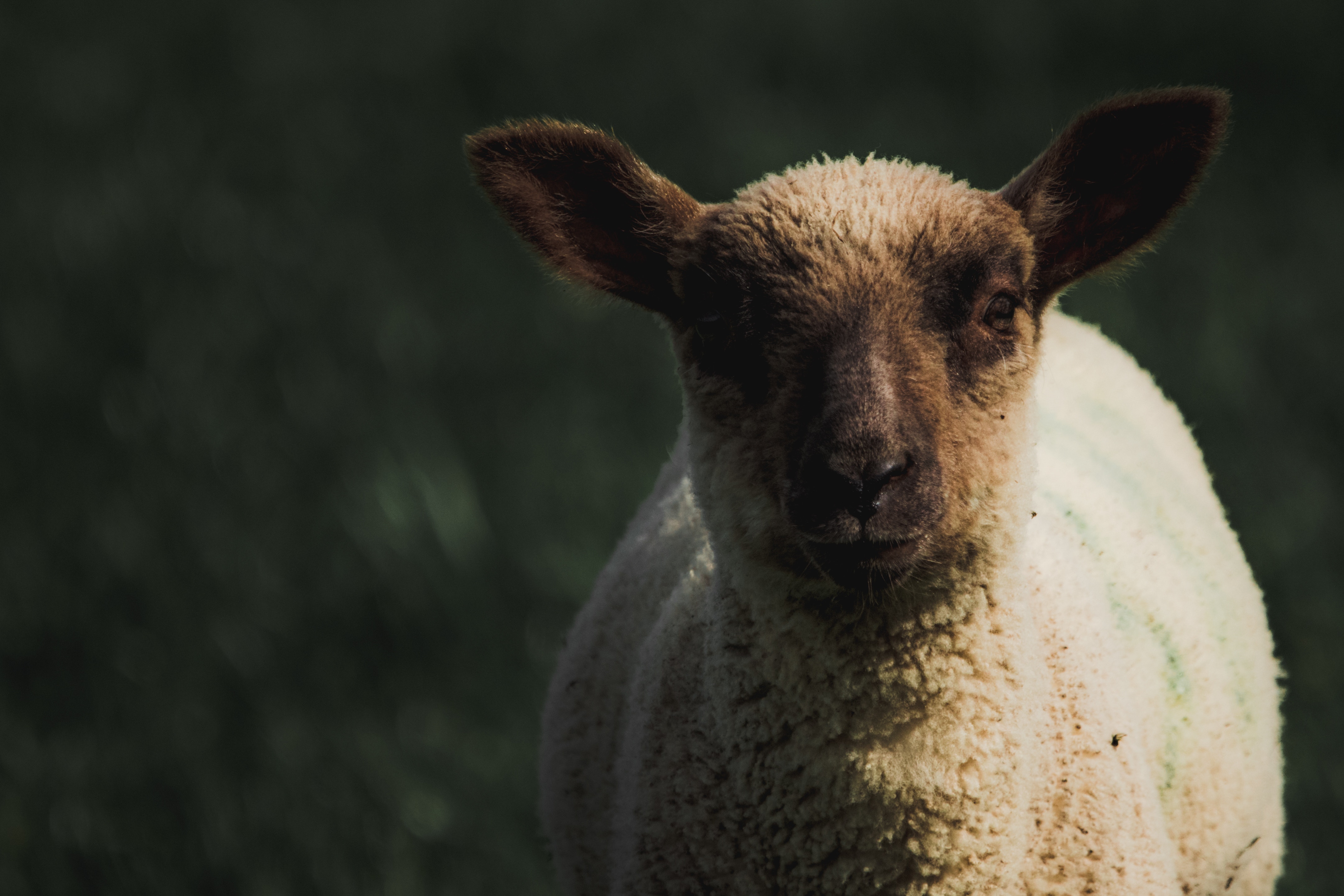
What is so fascinating about this imagery is that, most often, when it is depicted in art, we see a heavenly pastoral scene with Jesus carrying a little lamb, whose fleece is white as snow. However, today’s lesson is no such a scene. Today’s lesson is that of a shepherd entering a den of wolves.
In my preaching, I often stay focused on the New Testament teachings: God is Love, peace, joy, etc. When we think of the Old Testament, we can almost begin to believe that it is an entirely different god, but they are one in the same (to believe differently is actually the heresy of Marcionism). Even so, it is our impressions of the God of the Old Testament that steps out of the shadows in this reading. This is He of the ten plagues of Egypt, the God of Mt. Sinai, the God of Abraham, Isaac and Joseph and he has just made his intentions known to the enemies of his people and that he is there to fight for them. It is this same type of boldness that we are to possess.
You and I come into these beautiful churches built to the glory of God. They have their brass candle sticks and silver chalices, we wear our best clothes and put on our best behavior to honor our God, and it is only fitting that we do these things, but the truth is, being a Christian can be a messy, hard fought business. There are sometimes clear enemies of God’s people and His Church, but there are also those wolves in sheep’s clothing: criminals, abusers, drugs, those who cause children to be endangered, disease, poverty. All sorts of evil in this world that we cannot see or escape.
This should be no surprise to any of us, because Jesus himself said to those first apostles, “I am sending you out like sheep among wolves. Therefore be as shrewd as snakes and as innocent as doves.” And it is in the encounter of these wolves where we must be bold, standing in our faith as Jesus did before the wolves in the Temple. We do this by remembering that the God of the Resurrection is no weak God. He is the God that endured and overcame the sins of the world, he is the God that walked through the valley of the shadow of death and lived, and he is the God that walked in the portico of the Temple of Jerusalem and told the wolves to their faces, I am King.
St. John wrote in his Revelation, “They will make war against the Lamb, but the Lamb will overcome them because he is Lord of lords and King of kings” and with him will be his called, chosen, and faithful followers.
Those who are called, chosen, and faithful are you and I. We are those that have heard his voice, we know him, we follow him, and we have been given eternal life through him. Nothing shall ever snatch us from him, therefore, as you stand before the wolves in your lives, as Joshua said to the Israelites, “Be strong and courageous. Do not be frightened, and do not be dismayed, for the Lord your God is with you wherever you go.”
After having dug to a depth of 10 feet last year, New York scientists found traces of copper wire dating back 100 years and came to the conclusion that their ancestors already had a telephone network more than 100 years ago.
Not to be outdone by the New Yorkers, in the weeks that followed, a California archaeologist dug to a depth of 20 feet, and shortly after, a story in the LA Times read, “California archaeologists find 200-year-old copper wire: They have concluded that their ancestors already had an advanced high-tech communications network a hundred years earlier than the New Yorkers.”
One week later, a local newspaper in Louisiana reported the following: “After digging as deep as 30 feet in his pasture near Lafitte, Louisiana, Boudreaux, a self-taught archaeologist, reported that he found absolutely nothing. Boudreaux has therefore concluded that 300 years ago,”Louisiana had already gone wireless.”
Today’s Gospel reading needs a bit of a history lesson to get the full meaning and we’ve got to go back further than Boudreaux to get at the heart of it.
The lesson seems innocent enough, Jesus is once again using the shepherd and sheep imagery, so how bad could it really be? So it is a bit surprising to discover that in the verses immediately preceding our reading, the religious leaders said of Jesus, “He has a demon, and is insane.” And in the verse immediately following our reading, Scripture says, “The Jews picked up stones again to stone him.” Shepherd and sheep sounds innocent, but clearly something more is going on. The clue to understanding it lies in the history of the Jewish people and our clue as to where begin is in that first verse of the lesson: “At that time the Feast of Dedication took place at Jerusalem.”
Alexander the Great, the architect behind the Greek Empire died in the year 323 a.d. Following his death, three of his generals began to fight for control, and is the case in so many of these struggles in that region of the world, Israel was in the middle. The armies battled and eventually Antiochus III prevailed. At first he allowed the Jews to practice their faith, but would then attempt a Hellenization of the empire, forcing the Jews to worship the Greek God’s. A rebellion ensued leading Antiochus to withdraw the Hellenization orders, but following his death, his son, Antiochus IV restored them and did so forcibly. Eventually, Antiochus conquered Jerusalem and ended all Jewish practices. He desecrated the Temple by erecting an altar to Zeus within it and sacrificing pigs (as you know, that area of the world is not fond of bacon).
In the year 167 a.d. under Antiochus rule, a Greek official attempted to force a Jewish priest named Mattathias to make a sacrifice to Zeus. Mattathias said, “I don’t think so,” and ended up killing the Greek official, which led to an open rebellion against the Greeks, led by Mattathias and his five sons. That family became know as the Maccabees, taken from the Hebrew word ‘hammer,’ referring to the fact that Mattathias and his sons and the army they raised hit the enemy like a hammer. Antiochus attempted to put down the rebellion, but like so many others, he misjudged the will and strength of the Jewish people. It took two decades, but the Maccabees eventually forced the Greeks out of Israel.
Going back earlier in the battle, in 165 a.d., when the Maccabees had recaptured the Temple, Mattathias ordered it to be cleansed and rededicated, but as part of the rededication, the menorah (sacred candle stand a.k.a. hanukkiah) had to be lit, but there was only enough of the pure oil, consecrated by the priest, remaining to last a single day. They proceeded anyway and the oil that was only to last a day, lasted eight days, which was long enough for the preparation of more oil. This is the miracle of the Dedication of the Temple. It is also known as the Festival of Lights or Hanukkah.
Now, when the Maccabees had forced out the Greeks, it was Mattathias who became king, followed by his sons. Their rule of Israel lasted eighty years until the Romans showed up and it all started over again.
I will exalt you, O Lord,
because you have lifted me up *
and have not let my enemies triumph over me.
O Lord my God, I cried out to you, *
and you restored me to health.
You brought me up, O Lord, from the dead; *
you restored my life as I was going down to the grave.
To the Jewish people, they had essentially been dead under the rule of the Greeks, but under the kingship of the Maccabees, their life was restored to them. So every time the festival comes around, the people are reminded of how God miraculously restored the Temple and their nation. Not only that, they are also reminded of the role that the kings of Israel played in this great restoration.
“At that time the festival of the Dedication took place in Jerusalem. It was winter, and Jesus was walking in the temple, in the portico of Solomon.”
When Jesus went walking through the Temple, the people were being reminded of their freedom and their kings during the reign of the Maccabees, but even as they celebrated, they know that they are once again oppressed, this time by the Romans. So there is this great tension in the air. People are on edge. People are wondering if another ‘Hammer’ will rise up and free them once again. It is into this tense atmosphere that Jesus walks.
In his wake is this new teaching about God and the word of the miracles he has been performing. The religious leaders say he is demon possessed, because only a demon possessed person would say such things about God and certainly only a demon possessed person could perform such miracles. Someone, one of Jesus followers, points out that no demon could speak such wise words and certainly no demon could perform such miracles.
Tension around the feast day and tension around Jesus. A single spark and the entire thing blows. Jesus is happy to oblige.
The statement seems innocent: “My sheep hear my voice. I know them, and they follow me. I give them eternal life, and they will never perish. No one will snatch them out of my hand. What my Father has given me is greater than all else, and no one can snatch it out of the Father’s hand. The Father and I are one.”
Rephrase: You are looking for a king like the Maccabees, but when the people hear my voice, they are hearing the voice of the One True King, and they follow me. Through me, they will receive eternal life, my Father has seen to it. And, by the way, my Father is God and… I am God’s Son. Boom! “The Jews picked up stones again to stone him.”
What does this mean for us? This past Wednesday was the Feast of Dame Julian of Norwich and we discussed her “All shall be well, and all shall be well, and all manner of things shall be well” statement. I won’t re-preach that sermon, but in that revelation to Julian, Jesus summarized what he meant by saying “All shall be well,” and it is actually quite simple: “I [the Lord] am keeping you very safe.”
We live in a world that is fraught with tensions. The Psalmist speaks true:
Why do the nations conspire,
and the peoples plot in vain?
The kings of the earth set themselves, and the rulers take counsel together,
against the Lord and his anointed, saying,
“Let us burst their bonds asunder,
and cast their cords from us.”
However, the Psalmist answers those who would plot against the Lord and His people:
He who sits in the heavens laughs;
the Lord has them in derision.
All shall be well. I, the Lord, your Shepherd King, am keeping you very safe.
In the midst of trials both great and small and even in death itself, I, the Lord, am keeping you very safe, and no one and no thing will snatch you out of my hands.
The words of that very familiar Psalm that we read today only confirm this message of eternal salvation, so to close, let’s once again read… proclaim the promises contained within.
The Lord is my shepherd; *
I shall not be in want.
He makes me lie down in green pastures *
and leads me beside still waters.
He revives my soul *
and guides me along right pathways
for his Name’s sake.
Though I walk through the valley of the shadow of death,
I shall fear no evil; * for you are with me;
your rod and your staff, they comfort me.
You spread a table before me
in the presence of those who trouble me; *
you have anointed my head with oil,
and my cup is running over.
Surely your goodness and mercy shall follow me
all the days of my life, *
and I will dwell in the house of the Lord for ever.
Alleluia! Christ is risen. The Lord is risen indeed. Alleluia!
Relationships and marriage can be a bit tricky, just ask any kid. For example: What is the right age to get married? According to Camille, age 10: Twenty-three is the best age because you know them FOREVER by then. Freddie, age 6 sees it a bit differently: No age is good to get married at. You got to be a fool to get married. How can you tell if two people are married? Derrick, age 8 has a good system: You might have to guess, based on whether they seem to be yelling at the same kids. How would the world be different if people didn’t get married? Kelvin, age 8 says, There sure would be a lot of kids to explain, wouldn’t there? Finally, Ricky, age 10, has it all figured out for how the fellas can make a marriage work: Tell your wife that she looks pretty, even if she looks like a truck. (Source)
Relationships are tricky and when we begin to talk about our relationship with God, it becomes even more difficult. As we’ve talked about in the past, we have a tendency to apply human characteristics to God: we can be petty and grouchy, so we expect God to be petty and grouchy. The same principle applies to our relationship with God, we apply human relationship characteristics to it. William Paul Young is the author of the novel The Shack that came out several years ago. We could spend a lot of time poking holes in his theology, but the man has some really great points in his writings and interviews, and in one interview on NPR, speaking of his relationship with God, he says, “My dad was a preacher. My relationship, for example, with my father—very difficult, and very painful, and it took me 50 years to wipe the face of my father off the face of God.” We look at our earthly relationships and believe our relationship with God works in the same way. We forget that “God is love” and that he is “the same yesterday, and today, and forever.” Which means that God is not out looking for ways to smite you. Instead, God is seeking ways to reconcile you, to draw you closer, to love you, and to invite you to participate in this great work of love. And that is exactly what our Gospel reading is about.
Peter and the gang have seen Jesus twice, but they’re still floundering a bit. They know what Jesus taught and what he did. They also know that he died and rose again. They believe, but they don’t know what to do with their belief, so they go back to what they do know: fishing. All night they fish and with no luck, but then someone calls out to them from the shore, “Try the other side of the boat.” They do and catch a great haul of fish. This immediately reminded John of the last time someone told them to try again and they had a miraculous catch: it was when Jesus called them in the very beginning of the ministry. John put two and two together: “It is the Lord!”
Peter, being the impulsive one that he is, doesn’t wait for the boat to take him back. He dives in and swims to shore (ever wonder why Peter didn’t try running on the water? He walked on it once before. Anyhow…) He swims to shore, they all have breakfast, and then we have the three questions: “Simon son of John, do you love me more than these?”, “Simon son of John, do you love me?”, “Simon son of John, do you love me?”. One question for each time Peter had denied him. Was Jesus trying to rub Peter’s nose in it? “You’ve been a bad bad boy, Peter!” No. Jesus was reconciling Peter to himself. The three questions were not for Jesus’ sake, they were for Peter’s, so that he would know that Jesus had forgiven him and so that Peter would know that Jesus still wanted… desired him to be a part of God’s ongoing mission in the world. And in saying to Peter after the three questions: “Feed my lambs.”, “Tend my sheep.”, “Feed my sheep.”, and finally, “Follow me.”, Jesus wasn’t commanding Peter to do these things, he was inviting him to join him, to be a part of him in this resurrected life. As we said, the disciples were floundering, they weren’t sure what all everything meant, or what to do; so Jesus answered the question for them: be reconciled to me and accept the invitation to join me, to follow me. Why?
We have this idea that God wants us to join him so that he can use us in some way. That almost sounds like God wants to play us out on a chess board and that we’re as expendable as any other pawn, but that simply is not the case. Remember, God seeks us so that he might love us, not so that he can mark one more point up for the good guys, use us up, and then move on to the next person who chose to follow. God invites us to participate in love because it is truly about the relationship. William Young – The Shack – in his book, Lies We Believe About God, put it this way:
“God is a relational being; that is who God is. The language of God is about partnering, co-creating, and participating; it’s about an invitation to dance and play and work and grow.
“If God uses us, then we are nothing but objects or commodities to God. Even in our human relationships, we know this is wrong.
Would any of us ever say to our son or daughter, “I can’t wait for you to grow up so that I can use you. You will be Daddy’s tool to bring glory to me”?
“The thought is abhorrent when we think of those words in relationship to our own children, so why do we ascribe that language to God and how God relates to us? Have we so soon forgotten that we are God’s children, not tools? That God loves us and would never use us as inanimate objects? That God is about inviting our participation in the dance of love and purpose?
“God is a God of relationship and never acts independently. We are God’s children made in God’s image! God does not heal us [… reconcile us to himself…] so that we can be used. God heals us because God loves us, and even as we stumble toward wholeness, God invites us to participate and play.”
How brilliant is that! Got invites you into a relationship so that you may participate in his great act of love and God invites you to play, to enjoy the blessings and richness of heaven and earth. It is a tough life, but someone’s got to live it. Might as well be you!
Jesus says, “Follow me.” Accept the invitation. Be reconciled to God and the resurrected Lord and joyfully participate in God’s love and mission.
Let us pray:
Father of love, hear our prayers.
Help us to know Your Will
and to do it with courage and faith.
Accept the offering of ourselves,
all our thoughts, words, deeds, and sufferings.
May our lives be spent giving You glory.
Give us the strength to follow Your call,
so that Your Truth may live in our hearts
and bring peace to us and to those we meet,
for we believe in Your Love,
the Christ you sent into the world,
Your one and only Son,
Jesus.
Amen.









 Candle in a Cave