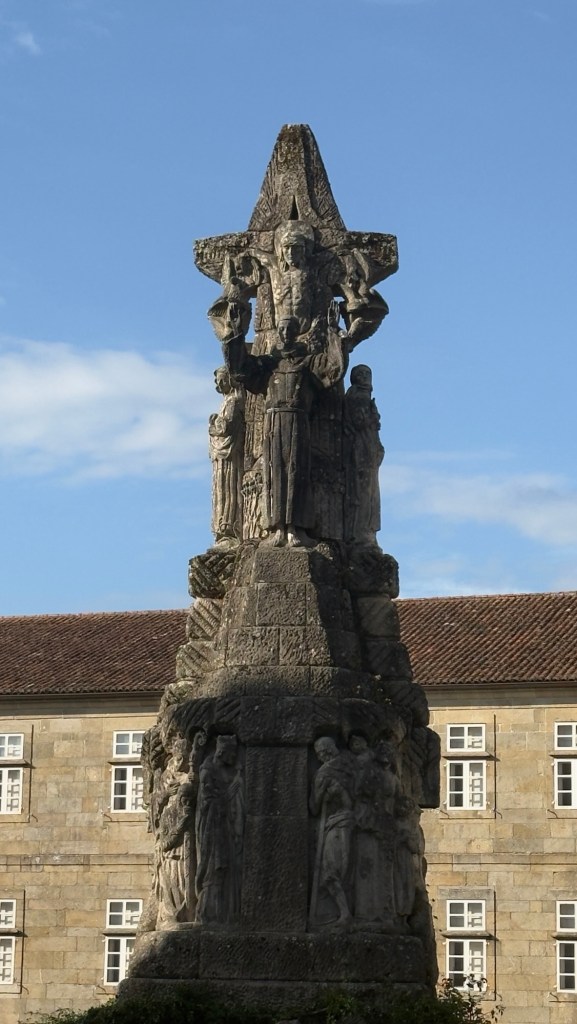
For this Season of Easter, the opening sentence of any Eucharistic service has been โAlleluia. Christ is Risen.โ Following Pentecost, weโll return to โBlessed be God: Father, Son, and Holy Spirit.โ However, what follows, no matter the season of the church year, is always the same: โAlmighty God, to you all hearts are open, all desires known, and from you no secrets are hid: Cleanse the thoughts of our hearts by the inspiration of the Holy Spirit, that we may perfectly love you, and worthily magnify your holy Name; through Christ our Lord.โ It is known as the Collect for Purity.
It began as one of the many private prayers for clergy to be said before the Mass, yet it was deemed too meaningful to be locked away in the sacristy and was eventually introduced into the public prayers of corporate worship.
What does that have to do with today? We are celebrating Blessed Alcuin of Tours, born in the year 730, who preserved and incorporated that prayer into our worship. Just because we worship with the 1979 Book of Common Prayer does not mean it is an entirely modern invention. Over the centuries, many like Alcuin have contributed to that wonderful little red book that automatically falls open to page 355.
Alcuin was one of the great scholars. At the time, he was considered “The most learned man anywhere to be found.” Fr. John Julian says that โAlcuinโs work was seldom highly original, but his own commitment was rather to the protection, compilation, and promulgation of the words of others.โ Through these efforts, he โwas chiefly responsible for the preservation of the classical heritage of western civilization.โ And if that werenโt enough, he is also credited with giving the world the punctus interrogativus. Is that true? Did he really? What could that possibly be? Why, the question mark.
Jesus said, โEvery scribe who has been trained for the kingdom of heaven is like the master of a household who brings out of his treasure what is new and what is old.โ There is a theological interpretation of this passage, as well as a practical one, and it is the practical one that we understand to apply to Alcuin. The โscribe,โ according to Sirach, is one who โwill seek out the wisdom of all the ancients.โ Think of it in terms of the George Santayana quote, โThose who cannot remember the past are condemned to repeat it.โ Alcuin not only sought out the wisdom of the ancients but, as Jesus taught, believed that the teachings of our fathers were worth preserving, not only for their historical value but for our collective benefit.
He died in the year 804, and a portion of his epitaph reads, โDust, worms, and ashes nowโฆ Alcuin my name, wisdom I always loved, Pray, reader, for my soul.โ
When we think of the lives of the Saints, we often think of the apostles, martyrs, or evangelists. So, in the midst of them all, did you ever imagine coming across a librarian? Alcuinโs life says to us, โItโs not about the specific gift that God has graced you with. Itโs about how you employ that gift.โ
God has graced each of us with gifts. Donโt squander them or leave them unused. Like Alcuin of Tours, practice them to your greatest ability in the work of Godโs Kingdom.
For many, the idea of Heaven or a paradise after death is just a childโs fantasy. Something we tell ourselves so life has some purpose beyond mere survival. For others, Heaven is the reason for life itself, and they have given it a great deal of thought. Although not one who put much credibility in the faith, Mark Twain did, at times, share his views on Heaven, and, as you can imagine, they came with a side of humor.
โHeaven goes by favor. If it went by merit, you would stay out and your dog would go in. – Mark Twain, a Biography
โI don’t like to commit myself about Heaven and Hell, you see, I have friends in both places.โย
Dying man couldn’t make up his mind which place to go to — both have their advantages, “heaven for climate, hell for company!โ – Mark Twain’s Speechs, 1910 edition, p. 117.
When I reflect upon the number of disagreeable people who I know have gone to a better world, I am moved to lead a different life. – Pudd’nhead Wilson’s Calendar
It seems to me that for many, even if they believe in Heaven, their thoughts donโt go much further than wondering whether theyโll get in and how large their mansion will be. So today, I thought we would begin by taking a deeper look at Heaven.
First, what is it like? Throughout scripture, there are vivid visions and descriptions of Heaven. Daniel tells us,
โAs I looked,
thrones were placed, ย ย ย ย and the Ancient of Days took his seat; his clothing was white as snow, ย ย ย ย and the hair of his head like pure wool; his throne was fiery flames; ย ย ย ย its wheels were burning fire.
A stream of fire issued ย ย ย ย and came out from before him; a thousand thousands served him, ย ย ย ย and ten thousand times ten thousand stood before him; the court sat in judgment, ย ย ย ย and the books were opened.โ (Daniel 7:9-10)
That sounds exciting, but John, in his Revelation, surpasses them all. There is the throne room with a throne of jasper and carnelian, the sea of glass, and the four living creatures. Then, toward the end, John tells us he saw Heaven descending. It has twelve gates, each made of a single large pearl, streets of gold, and so many other amazing features.
Once past the description, we wonder where it might be located. Given all that we read in scripture, we know the general direction is up. In the Old Testament, we read how Elijah was carried up in a fiery chariot (2 Kings 2:11), and Jacob dreamed of a ladder upon which the angels of God ascended and descended (Genesis 28:10-19). Both of these lead us to believe Heaven is up.
The New Testament also points upward. Jesus said, โFor I have come down from heaven, not to do my own will but the will of him who sent meโ (John 6:38). And, as we read today, โa cloud took [Jesus] out of [the disciplesโ] sight.โ Later, Paul, referring to himself, says, โI know a man in Christ who fourteen years ago was caught up to the third heavenโwhether in the body or out of the body I do not know, God knows.ย And I know that this man was caught up into paradiseโ (2 Corinthians 12:2-3a). John also indicates this in his Revelation (Revelation 4:1).
So, we have this glorious description and a general locationโupโbut then Jesus comes along and says something that muddies the water. A Pharisee had asked Him about the coming of the Kingdom of God, and Jesus answered, โโThe kingdom of God is not coming in ways that can be observed,ย nor will they say, โLook, here it is!โ or โThere!โ for behold, the kingdom of God is in the midst of you.โ (Luke 17:20-21) To complicate matters further, the phrase โin the midst of youโ can also be translated โwithin youโ and โamong you.โ I suspect that if you asked Jesus which it isโin the midst of, within, or amongโHe would answer, โYes.โ
There is no solid consensus among the Church Fathers on the topic of Heaven, but most would agree that there is a location, though it isnโt the most important aspect. For them, the place is only the setting. The important part is that God is there and that we will have communion with Him, and this communion is not limited by time or space.
So, where does this leave us? Theologian J.I. Packer sums up our knowledge nicely: โWe know very little about heaven,โ he said, โbut I once heard a theologian describe [Heaven] as โan unknown region with a well-known inhabitant,โ and there is not a better way to think of it than that. Richard Baxter expresses the thought in these linesโฆ
โMy knowledge of that life is small, The eye of faith is dim, But itโs enough that Christ knows all, And I shall be with him.โโ
Further, if you need one of our own for confirmation, N.T. Wright wrote, โโHeavenโ is, in fact, one of the most misused religious words around today, with the possible exception of the word โGodโ itself.โ (Source)
Do you remember what God said when Moses asked, โIf I come to the people of Israel and say to them, โThe God of your fathers has sent me to you,โ and they ask me, โWhat is his name?โ what shall I say to them?โ God said to Moses, โI am who I am.โ And he said, โSay this to the people of Israel: โI am has sent me to you.โโ (Exodus 3:14-15) The Name โI AMโ is beyond explanation. Say whatever you will, you will fail to describe God. I believe the same is true of Heaven. If we ask God, โWhat is Heaven?โ He will answer, โIt is.โ
โWhat no eye has seen, nor ear heard, ย ย ย ย nor the heart of man imagined, what God has prepared for those who love him.โ (1 Corinthians 2:9)
Heaven is a mystery, yet it is much closer than you think.
Why all this talk of Heaven? Today we celebrate the Ascension of Our Lord. We read about it in the Acts of the Apostles, and it is affirmed in the Nicene Creed:
โWe believe in one Lord, Jesus Christโฆ He suffered death and was buried. On the third day He rose again in accordance with the Scriptures; He ascended into Heaven And is seated at the right hand of the Father.โ
Forty days after Easter, Jesus ascended into Heaven. This is the exaltation of humankind, for now Heaven is not only the home of God and the angels but also home to one of our ownโa flesh-and-blood human being. The significance of this cannot be overstated.ย
As Jesus ascended into Heaven in His body, He took usโthe sons and daughters of Adam and Eveโwith Him, for He is the Head and we are His body. Yet just as we are with Him there, He is with us here. A longer passage from N.T. Wright helps explain. โHeaven is Godโs space, which intersects with our space but transcends it. It is, if you like, a further dimension of our world, not a place far removed at one extreme of our worldโฆ and the God who lives there is present to us, present with us, sharing our joys and our sorrows, longing as we are longing for the day when his whole creation, heaven and earth together, will perfectly reflect his love, his wisdom, his justice, and his peace.โ (Source)
Iโm not sure I like the word โdimensionโ in this context. Perhaps Iโve heard the opening credits of The Twilight Zone one too many times. Instead, I understand it as a veil that separates us from Heaven. This aligns with the Church Fathers. The veil is as near to us as our skin, yet we cannot see or pass through it in this lifetime. Still, just on the other side is our God and the Kingdom of Heaven.
Jesus prayed that we might be one with Him, the Father, and one another. He then prayed, โFather, I desire that they also, whom you have given me, may be with me where I am, to see my glory that you have given me because you loved me before the foundation of the world.โ (John 17:24) He prayed not only that we be where He is when weโre dead, but also that we might be with Him now. And we are, because He is as near to us as the skin on our bodies, just on the other side of the thin veil.
King David prayed,
โBlessed be the Lord, the God of Israel, ย ย ย ย who alone does wondrous things.
Blessed be his glorious name forever; ย ย ย ย may the whole earth be filled with his glory! Amen and Amen!โ (Psalm 72:18-19)
The life of a Christian is to live in such recognition of and reliance on the nearness of Heaven and the Risen Lord, this oneness with Jesus, that others can see it and be drawn into it. In doing so, the Kingdom of God, Heaven itself, is expanded until it fills the whole Earth, and the prayer of David is fulfilled.
You have the ability to do this great work within you because you are not working alone. All of Heaven is by your side, and the Church works alongside you. Together, we work to bring to fulfillment another great prayer:
โThy kingdom come, Thy will be done, On Earth as it is in Heaven.โ
At the Ascension, Jesus didnโt float away to some far-off place and now only looks down to see who has been naughty or nice. Instead, He is very near to us all, continuing the work He began in us until its final completion (cf. Philippians 1:6).
Let us pray: The light of God surrounds us, The love of God enfolds us, The power of God protects us, The presence of God watches over us, Wherever we are, God is, And where God is, all is well. Amen.
Today we are celebrating the Eve of the Ascension. In his preaching on the Ascension, St. Augustine of Hippo states: โToday our Lord Jesus Christ ascended into heaven; let our hearts ascend with him. Listen to the words of the Apostle: If you have risen with Christ, set your hearts on the things that are above where Christ is, seated at the right hand of God; seek the things that are above, not the things that are on earth. For just as he remained with us even after his ascension, so we too are already in heaven with him, even though what is promised us has not yet been fulfilled in our bodies.โ
โChrist is now exalted above the heavens, but he still suffers on earth all the pain that we, the members of his body, have to bear. He showed this when he cried out from above: Saul, Saul, why do you persecute me? and when he said: I was hungry and you gave me food. Why do we on earth not strive to find rest with him in heaven even now, through the faith, hope, and love that unites us to him?โ
Augustine is teaching us about two โstatesโ of the Ascension as they relate to our union with Christ, and he bases this teaching on what we learn from St. Paulโs writings to the church in Corinth: โFor just as the body is one and has many members, and all the members of the body, though many, are one body, so it is with Christ.โ (1 Corinthians 12:12) What does this mean for us?
We are the Body of Christ, and Christ is the head of the Body. So no matter where he is, he is with us always unto the end of the age, because we are one. Through his death and resurrection, we become members of him. Therefore, since he has ascended into heaven, we too have ascended into heaven. If we are on earth and we suffer, he is on earth, suffering with us. We see Christ in everyone we meet, because he is in everyone we meet. We worship him as he sits at the right hand of the Father, because he is there as well.
Bottom line: the Ascension is a mystery. That said, this is probably some sort of heresy, so just forget it after Iโve said it. As I was thinking about this, I remembered Jacob and his ladder. Youโll recall that Jacob lay down, fell asleep, and had a dream: โThere was a ladder set up on the earth, and the top of it reached to heaven. And behold, the angels of God were ascending and descending on it! And behold, the Lord stood above it and said, โI am the Lord, the God of Abraham your father and the God of Isaac.โ He then speaks to Jacob about the land that is promised and then says, โBehold, I am with you and will keep you wherever you go, and will bring you back to this land. For I will not leave you until I have done what I have promised you.โ When Jacob woke, he said, โHow awesome is this place! This is none other than the house of God, and this is the gate of heaven.โ
Jesus said, โI am the gate; whoever enters through me will be saved. They will come in and go out, and find pasture.โ Jesus also says, โTruly, truly, I say to you, you will see heaven opened, and the angels of God ascending and descending on the Son of Man.โ
This is the possible heresy bit: it seems to me that the Ascension is the permanent placement and perfection of Jacobโs ladder, granting everyone access to the Gate of Heaven, to Jesus, after his departure. And it is through this ladder that we have access to the head of the Body, Jesus, and to the very throne room of God. Maybe something to think onโฆ or maybe not.
A new priest came to town. On the first Sunday, he preached one of the best sermons folks had ever heard. Everyone was excited, believing things were looking up for their church. They all complimented him on his wonderful, inspiring words. The following Sunday, the new priest preached the exact same sermon, to the letter. Folks looked a bit bewildered, but since it was so good, they all thought it was worth hearing a second time, just not two Sundays in a row. However, since he was new, no one said anything other than that they enjoyed the sermon. The third Sunday, once again, the priest preached the exact same sermon. The Sr. Warden didnโt think they could take a fourth Sunday, so after everyone had exited the church, he had a word with the priest. โFather,โ he said, โthatโs a good sermon you preached.โ โThank you,โ he replied. โHowever,โ continued the Senior Warden, โyou have preached the same sermon three times now. Weโve all heard it and were wondering when you were going to go on to a different subject.โ โSir,โ he responded, โwhen you all start acting like youโve heard it, Iโll preach something else.โ
In the opening words of our Gospel lesson, Jesus said something curious: โIf you love me, you will keep my commandments.โ Earlier, He said, โDo not think that I have come to abolish the Law or the Prophets; I have not come to abolish them but to fulfill them. For truly, I say to you, until heaven and earth pass away, not an iota, not a dot, will pass from the Law until all is accomplishedโ (Matthew 5:17-18). What is curious is that we are also taught that we are no longer under the law or its commandments. St. Paul, in his letter to the Romans, said, โWhile we were living in the flesh, our sinful passions, aroused by the law, were at work in our members to bear fruit for death. But now we are released from the law, having died to that which held us captiveโ (Romans 7:5-6a).
So, whatโs it going to be, law or no law? The answer, of course, is both, and the reason this sermon may sound like a repeat of so many others Iโve given is that the only way the answer can be both is if the solution is love. Therefore, I can stop preaching on love if we all start acting as if weโve heard it. The problem is, one quick glance around the world today tells me Iโve got to continue preaching on the topic. So, with that, how is the answer โbothโ? How can we be under the law and not under the law? Jesus provides the answer when He was questioned by a lawyer who asked Him, โTeacher, which is the great commandment in the Law?โ Jesusโ answer, I hope you all know by heart: โYou shall love the Lord your God with all your heart and with all your soul and with all your mind. This is the great and first commandment. And a second is like it: You shall love your neighbor as yourself. On these two commandments depend all the Law and the Prophetsโ (Matthew 22:36-40).
We understand this to mean that behind the law lies a single guiding principle: love. Love is also the defining mark of a Christian. Jesus said, โA new commandment I give to you, that you love one another: just as I have loved you, you also are to love one another. By this all people will know that you are my disciples, if you have love for one anotherโ (John 13:34-35). You know this as well. Together, these point back to the first line of our Gospel, โIf you love me, if you are My disciples, then you will keep this summary of the law, which is to love God and to love one another.โ
Here endeth the sermon. Go and love God and your neighbor. Amen? You should be so lucky. It would be that easy if we actually knew what it means to love like this, to love as Jesus loves us. But our idea of love often comes from a cherub named Cupid and a greeting card company with estimated revenues of about $5 billion, neither of which teaches us to love as Jesus loves. Letโs see if we can begin to sort it out. Weโll start by looking at a law: #10 of the top tenโโThou shall not covet.โ
To covet has two sides. The first is a lack of gratitude. When we covet, we are not satisfied or thankful for what we have. There is a constant need for more and more. Second, to covet is to become jealous of another for what they have and to want it for ourselves. To covet a thing or person is to desire it, andโwhether we would define it as suchโthe things we desire are the things we love. Yet this love is disordered, because in it there is no love of God or of neighbor. In that disordered love, we become angry, anxious, and restless. Our souls are in turmoil over a desire, a love that cannot be fulfilled. Therefore, St. Augustine was correct when he wrote, โOur hearts are restless until they rest in God.โ
To love instead of covet is to be thankful for the blessings and things God has provided us with, and to give thanks for the blessings others have. In your eyes, it may not seem fair that so-and-so has such-and-such, but that is not your concern. If they have sinned in order to gain what they have, that is between them and God. Donโt allow their sin to cause you to sin. If God, out of His goodness, has chosen to bless them, then be happy for them. You, you are to follow the commandment and love.
If that makes sense, then we understand that we donโt love as we should because our love is disordered. Our desire is elsewhere rather than on God, and this is sin in its most basic form. This disordered love has been with us since the very first day, when Adam and Eve desired a piece of forbidden fruit more than they loved God. It is also this disordered love that Jesus came to heal. The Lord said through the Prophet Ezekiel, โI will give you a new heart, and a new spirit I will put within you. And I will remove the heart of stone from your flesh and give you a heart of flesh. And I will put my Spirit within you, and cause you to walk in my statutes and be careful to obey my rulesโ (Ezekiel 36:26-27). The healing that Jesus brings to our souls fulfills this great work. In doing so, Jesus gives us freedom from the law, because we are no longer trying and failing to obey a set of statutes. Instead, we are living a transformed life. No longer will we say, โI canโt do ____ or Iโll go to hell.โ Instead, we say, โI want, I desire to do or not do this, because I love God and I love my neighbor.โ
In Johnโs first epistle (John is the great preacher of love), he writes, โBeloved, let us love one another, for love is from God, and whoever loves has been born of God and knows Godโ (1 John 4:7). Preaching on this and the verses that followed, St. Augustine said some radical things: โLove, and do what you will: whether you hold your peace, through love hold your peace; whether you cry out, through love cry out; whether you correct, through love correct; whether you spare, through love do you spare: let the root of love be within, of this root can nothing spring but what is goodโ (Homily 7.8 on the First Epistle of John). โLove, and do what you will.โ That sounds very permissive. โI loves you, baby, and I can do whatever I want.โ No. That is not what Augustine is saying. He is saying, โIfโand that is a mighty big โifโโif my love is rightly ordered, if I truly love God, and if I truly love my neighbor as Jesus has loved me, then I am free from the law, because in my heart I will desire to do the right thingโI will fulfill both the law and the commandments of Jesus.โ No longer will I have to do something. Iโll want to do it out of my love of God and neighbor.
I will have to preach a variation of this sermon time and time again. Why? Because weโve been trying since day one to get it right, and only One, only Jesus, has succeeded. However, in Him and through Him, we are learning. And with the help of the Holy Spirit, whom Jesus has sent, we will continue to do so.
Are you loving as Jesus loves? No? If you work on only one thing in your life, work on that. By doing so, you canโt help but walk closer with God.
Let us pray: Grant, almighty God, that we may celebrate with heartfelt devotion these days of joy, which we keep in honor of the risen Lord, and that what we relive in remembrance we may always hold to in what we do. Through our Lord Jesus Christ, your Son, who lives and reigns with you in the unity of the Holy Spirit, God, for ever and ever. Amen.
Hearken to my voice, O Lord, when I call; have mercy on me and answer me. You speak in my heart and say, โSeek my face.โ Your face, Lord, will I seek.
I love to read, but Iโll occasionally go through a phase when I donโt even want to pick up a book, so Iโll end up binge-watching something on TV for a few weeks. Then Iโll get tired of that and go back to reading. Itโll happen with other things as well, butโฆ the Psalmist said, โYou speak in my heart and say, โSeek my face.โ Your face, Lord, will I seek.โ Have you ever gone through a phase when you just didnโt feel like seeking His face? Iโm not going to ask you to raise your hand if you have, because that is not the kind of thing good Christian folk like to confess, but do you occasionally find yourself a bit tired of seeking Him, wondering about His will, and all that? As I said, I wonโt ask you to confess, but if you say youโve never experienced those feelings, I would say you need to go to confession for fibbing. It is something we all experience at times, and in those moments, our faith is truly demonstrated.
A mature Christian will continue in their faith and practices, knowing that these are times of wilderness rather than abandonment by God.ย However, others will begin to drift away, and perhaps one of the first things to go is prayer.ย When it seems weโre filling the air with words that are unheard and accomplish nothing, why bother?ย But it is the prayers in the wilderness that will see us through, because it is through them that we maintain the relationship with the Father.
Julian of Norwich, whom we celebrate today, spoke about this in the second part of her fourteenth revelation, contained in her Revelations of Divine Love. โOur Lord is very glad and happy that we should pray, and he expects it and wants itโฆ for this is what [the Lord] says, โPray earnestly even though you do not feel like praying, for it is helping you even if you do not feel it doing you any good, even if you see nothing, yes, even if you think you cannot pray; for in dryness and in barrenness, in sickness and weakness, then your prayers give me great pleasure, even if you feel that they are hardly pleasing to you at all.ย And it is so in my sight with all your trustful prayers.โโย Julian says, โGod accepts the good intentions and the effort of those who serve him, whatever we are feeling.โ (p.100)
To us, it may seem fruitless, but in a time of barrenness, when we feel the absence of God, stopping prayer is to break off from the relationship. So, regardless of how we feel, we must stay engaged because it is through our faithfulness and this engagement that we will once again feel the presence of God.
If you say, โI just donโt feel like praying. I donโt have anything to say,โ then take the good advice of Archbishop Michael Ramsey, โPray that you could pray,โ but donโt stop praying.
When I travel, especially by myself, I donโt always have a set agenda. There are places I want to see, but Iโm not rushing from one to the next just to tick them off a list, and I donโt try to fill every moment. For me, that makes things more relaxing and leaves time to fit in the unexpected. I learned about one unexpected place while taking a cab from the airport in Luxembourg to my hotel (I quickly learn to use public transportation because itโs much less expensive, but when Iโm schlepping bags, it’s just easier to take the cab).
When the cab driver learned I was an American, he said, โYou know, your General Patton is buried here.โ I didnโt know that, so I added it to my list of possibilities. A few days later, when one of the places I wanted to visit was closed, I decided to take the trip out to the Luxembourg American Cemetery. General Patton is there, set apart from the others, but he is only one of many, and his grave marker is the same as all the others.
What I never expect when entering places like this is the emotional response. Even before you walk through the main gates, it starts to hit you, so I was intentional about not looking up until my heart was readyโฆ and then I did.
There is General Pattonโs cross, and then there are 4,958 other crosses for known individuals, 371 crosses for the unknown, and 119 Stars of David. Of those buried there, you will also find 22 sets of brothers. It is a sea of white markers for those who died near that place.
At one point, I was the only person in the entire cemetery. As I slowly passed among the markers, I read the names, but I was specifically looking for anyone from Oklahoma. I found Roy W Roe, Private First Class, 319th Infantry, 80th Division. He died on March 15, 1945. Based on what Iโve learned so far, he was twenty-four years old and married to Marion.
As I stood looking at his marker, I said to him, โToday, I see you.โ For me, that meant, โI see you as a person, as a young man who had a life ahead of him but died so far from home, and as someone so very young. I see you, not as a memory or a marker, but as a person.โ
As I continued to walk among them, I read their names and told each of them, โI see you.โ I donโt know if that makes sense to anyone, but it did to me. It was the only way I had to honor them and the sacrifice they made.
In truth, all of us like to be seen, maybe not in the spotlight, but acknowledged. Being seen validates who we are as human beings and affirms that our existence counts for something, even if only to a very few. However, knowing that we will be seen raises an important question: When someone sees us, who or what do they see? There, I saw brave men and one woman who gave so much, but what do others see when they see me? What do others see when they see you?
A lot of time and money goes into appearanceโclothes, hair, fitness, etc.โbut that is like the cover of a book. You can look like a million bucks and still be a Cruella De Vil. Yet when we are truly seen, who or what do people see? This is a question that relates to one of the many lessons in todayโs Gospel reading.
Philip said to Jesus, โLord, show us the Father, and we will be satisfied.โ You can hear the exasperation in Jesusโ voice as he responds, โHave I been with you all this time, Philip, and you still do not know me? Whoever has seen me has seen the Father. How can you say, โShow us the Fatherโ? Do you not believe that I am in the Father and the Father is in me?โ
Jesusโ answer provides part of the foundation for our understanding of the Holy TrinityโFather, Son, and Holy Spirit. If you see Jesus, you see the Father. If you witness the works of the Holy Spirit, you witness the works of God, and so on.
In part of Jesusโ great priestly prayer on the night before He was crucified, He prays, โAs you, Father, are in me, and I in youโ (John 17:21). There are the Father, the Son, and the Holy Spirit, and although separate, they are one. See one, and you see the others. So, what about us? What about you? If I pass you on the street and say to you, โI see you,โ who or what do I see? Who or what do you want me to see?
St. Paul says to us in his letter to the Galatians, โI have been crucified with Christ. It is no longer I who live, but Christ who lives in meโ (Galatians 2:20). If we are alive to Christ, we have died to ourselves; therefore, when I say, โI see you,โ I should see Jesus. Question: Do I?
At the east end of the Sistine Chapel, on the altar wall, is Michelangeloโs great painting of the Last Judgment. At the top is the figure of Christ. With His right hand, He is calling the righteous up to the Kingdom of God, while with His left He is casting out the wicked. The righteous are escorted by angels, and the wicked are greeted by demons.
Since the painting’s unveiling in 1541, there has been high demand for copies and similar works. One of those who created a similar work was Raphaรซl Coxie (COKE-see). In his painting, the figures are near life size, so the painting is large, approximately ten feet by twelve feet. It hangs in the museum in Ghent, Belgium. However, as with many similar paintings of judgment, it originally hung in a courtroom as a reminder to the criminally inclined of the consequences should they continue down such a path.ย
Given the size and subject matter, it really caught my attention, but it was so large that it was difficult to focus on one thing. Still, after studying it, my eye fell on the figure on the cover of your bulletin. She is located at the bottom center of the paintingโthe woman with her jeweled tiara. Yet it wasnโt so much her as what she is holding. I looked at it for a good long while, then realized she was holding up a mirror and that there is a face in the mirror. However, unlike the other images in the painting, the image in the mirror is vague. It was then that I thought I understood. Coxie kept the image in the mirror vague because he wanted us to see ourselves.
Imagine you are on trial and you see this painting. You are reminded that some are called to Heaven while others are cast down into hell, and here is this woman, saying to you with her eyes, her expression, and her gesture, โLook in the mirror and judge yourself. Which one will you be? Called up or cast down?โ
If we are alive in Christ, we have died to ourselves. When people see us, they should see Jesus. Do they? Well, answer this: When you look in Coxieโs mirror, who or what do you see? Do you see Jesus? Do you see someone being called up or someone being cast down?
Philip said to Jesus, โShow us the Father,โ and Jesus replied, โIf you have seen me, you have seen the Father.โ If someone said to you, โShow us Jesus,โ would you even in the smallest way be able to say, โIf you have seen me, you have seen something of Jesusโ? The scary part is that we should be able to say that. If that is not true, why did Jesus go on to say to Philip, โVery truly, I tell you, the one who believes in me will also do the works that I do and, in fact, will do greater works than these, because I am going to the Fatherโ? If we are to do the same work Jesus did, we should look like Him. Right? When we look in Coxieโs mirror, we should see something of the Imago Dei, the Image of God. It wonโt be perfect; only One was perfect, but Jesus should be recognizable in each of us.
When we look in a regular mirror, we look for all sorts of thingsโdo I have something caught in my teeth, is my hair combed, am I getting old, etc.? I would challenge you to look in Coxieโs mirror and ask, โDo I look like Jesus? Will I be called up or will I be cast down?โ
In seeing Jesus, we can see the Father. In seeing you, others should be able to see Jesus. Perhaps it is only as one sees in a mirror dimly, but there should be something of Jesus that is visible.
You are seen by others. Who or what do they see?
Let us pray: God, our Father, You redeemed us and made us Your children in Christ. Through Him, You have saved us from death and given us Your Divine life of grace. By becoming more like Jesus on earth, may we come to share His glory in Heaven. Give us the peace of Your kingdom, which this world does not give. By Your loving care, protect the good You have given us. Open our eyes to the wonders of Your Love that we may serve You with a willing heart. Amen.
Saint Catherine of Siena by Franceschini Baldassare, 17th century
Catherine of Siena was born in 1347, the twenty-fourth of her parentsโ twenty-five children. At the age of seven, she vowed her life to Christ. At the age of fifteen, she cut her hair in defiance of her parents, who were pressing her to marry. At the age of eighteen, she joined the Dominicans. At the age of twenty-one, she had a mystical experience in which she became spiritually espoused to Christ. Those events alone are enough, but through her work, particularly her writings, she became a force in her community and beyond, even with Popes.
In her letters and her Dialogue, perhaps the greatest of her writings, she recounts a soulโs journey through the mystical experience of God. There is much to discuss in her writings, so Iโll focus on one idea: she writes a prayer to Christ, speaking to Him about His great love for Godโs people and asking what could drive the Creator of all to pursue His creation so recklessly.
โO priceless Love! You showed your flamed desire when you ran like a blind and drunk man to the opprobrium [the disgrace] of the cross. A blind man canโt see, and neither can a drunk man when he is fast drunk. And thus he [Christ], almost like someone dead, blind and drunk, lost himself for our salvation.โ Continuing this theme of drunkenness in her Dialogue, she says, โO mad lover! Why then are you so mad? Because you have fallen in love with what you have made! You are pleased and delighted over her within yourself, as if you were drunk for her salvation. She runs away from you, and you go looking for her. She strays, and you draw closer to her. You clothed yourself in our humanity, and nearer than that you could not have come.โ
Continuing elsewhere, she writes, โO unutterable love, even though you saw all the evils that all your creatures would commit against your infinite goodness, you acted as if you did not see and set your eye only on the beauty of your creature, with whom you fell in love, like one drunk and crazy with love. And in love you drew us out of yourself, giving us being.โ
I am certain that weโve all been in love before, or at least thought we were, and in that state, I feel certain weโve all done some pretty stupid things. Iโm also fairly certain that most have overindulged in some intoxicating beverage and done some rather stupid things then as well. If you have had the fortune (or misfortune) of being both in love and intoxicated, the level of stupidity can reach even higher levels. That is how Catherine says that Jesus loves us, as though He were drunk and in stupid love with us. That may sound crazy and, to some, irreverent if not blasphemous, but how would you describe a love that lays down his life for you? Logic canโt explain it. Duty doesnโt come close. I suppose we could just say He was crazy, but if we have faith, if we believe that it is the Fatherโs desire that all should be saved even if we are wicked, then we must at least consider that Catherine was onto something: a love that appears to be a drunken insanity, but which is in fact pure and true.
You donโt have to agree with Catherineโs images of Godโs love for us, but take some time to reflect on that love. Jesus was not intoxicated by wine, but how would you describe and explain His actions? You might just discover that a crazy, drunken lover is the best you can do.
It was a rather noisy beginning todayโthe renovation of the room above me started. I said, to myself, โSelf, you need to do penance, so just endure,โ but then my selfish self said, โNope. Not while on vacation!โ So, I did something very much unlike me, I asked for a new room. The staff was kind and understanding and understood that I can do penance when I return home, and gave me a new room. Very nice.
Once settled, I did something unusual for someone who is about 5,000 miles from home, I spent the day writing. The mind took an amazing journey and I put down many words (even ran out of ink in my pen and had to go in search of a new one!)
I do believe the next vaca will be a writing retreat. We shall see. The story (have I already mentioned this) is Execution Day. It will be a part of a collection of short storiesโnothing like Iโve written/published beforeโtitled Seven Deadly. At this point, they are all a bit weird, but too much fun to write. Iโm always killinโ off somebody!
At about 7:30 p.m., I realized that I had only a light breakfast to eat and went in search of ramen. The ones near by were closed, but I found โAsian Soulโ and had some delicious Thai food and beerโฆ I think the second beer was actually from China.
Fried shrimp cakes with an onion, garlic, and pepper pickled for dipping.Shrimp in green curry, toned down for me. Perfect amount of spice and so very good.
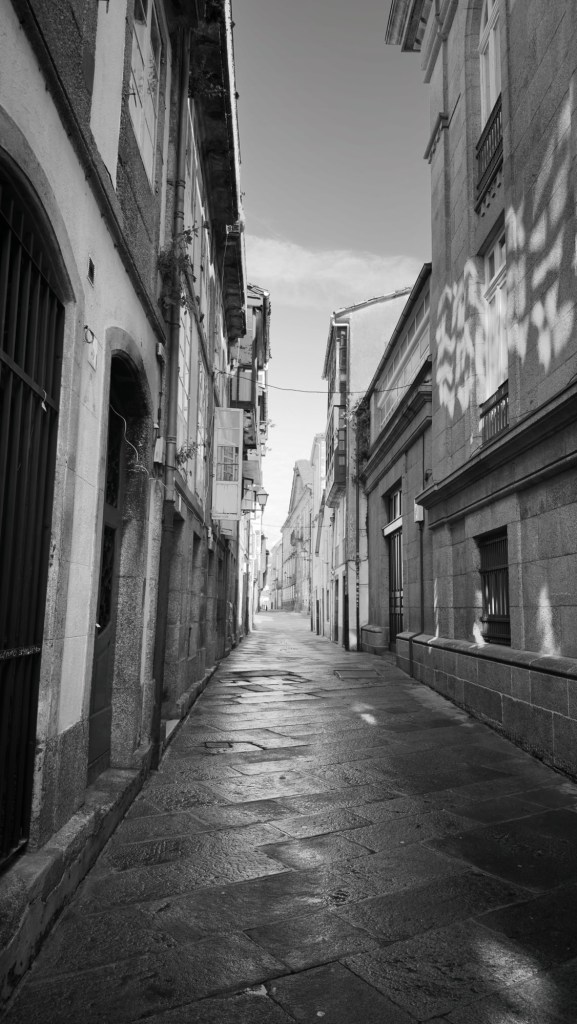
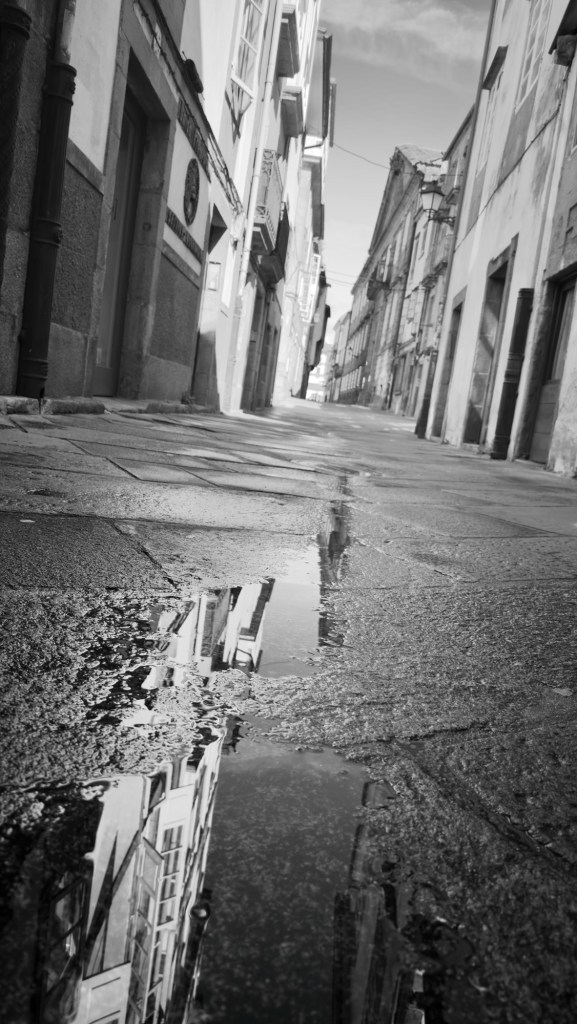
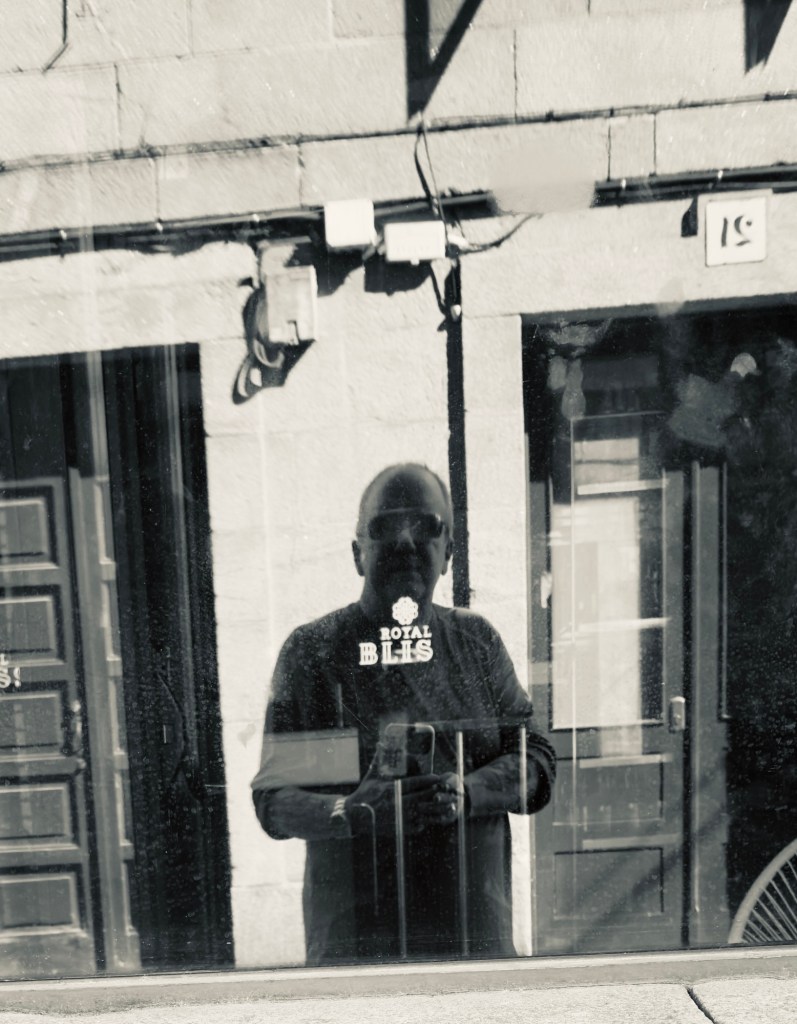
During and afterward, I stopped to take a few pictures. This first one is called โThe Ordinary in Lightโ (doesnโt he think he is the artiste giving his pictures names!)
On the way back to the hotel, I saw the light playing off the buildings andโฆ
And from the balcony of the new room (sorry, brother, no more garden)โฆ
Tomorrow will be a bit busier. Following breakfast, I will make my way to Adikt Ink where Matteo will give my new adult โsticker.โ Something to remember this journey by and inspired by Joan, my hero in Rouen, France. Afterward, I will visit a local bookstore where I can find a Stephen King in some language other than English (I wonโt be able to read it, but other than the new โstickerโ it will be one of my few souvenirs. FYI: the exchange rate is miserable, so Iโve done little to no shopping.
During my occasional scroll today, I came across this from Fyodor Dostoevsky: โFrom the outside, you seem mature with a philosopher’s mind. But inside, you’re just a child lost in a sweet delusion.โ Donโt be afraid to be a child. They are always curious and poking their little noses in all sorts of interesting places. Along the way, someone is bound to tell you โNo!โ or โItโs not possible!โ Donโt you believe it. Even a sixty-one year old child is finding out those sweet delusions can, in fact, be reality.
May you have a blessed day, may your Grand Marnier always be a long pour, and may Our Lord and God bless you immensely. He does love all His silly children.
For those curious about The Queen, she apparently has a new favorite game at The Cat Resortโฆ
I debated on whether or not to bring a coat with me. Iโm glad the warm natured John lost that bet. It was a chilly day with wind. Still, that did not stop me from getting out. First stop: Notre Dame Cathedral at Luxembourg. FYI: Notre Dame means โOur Lady,โ so there are many churches named Notre Dame.
A view from the outsideโฆ
This is the only view I got. Why? Because it is closed for the next three days. Oh, well. I crossed the street and went undergroundโฆ literally.
Welcome to the Pรฉtrusse Casemates, the underground portion of the fortifications. Once you enter, it is all down hill.
AUSTRIAN STAIRWAY This impressive stairway, hewn into the rock, was constructed in 1728 under the Austrians. Via 131 steps, it leads down into the Pรฉtrusse valley. Through a double door, the passageway went on up to the fort on the opposite side. A direct underground connection was thus created between the inner and outer fortifications.ILLUMINATION Four kinds of illumination were deployed in the underground fortifications, just as they were in the mines up until the 19th century: candles, pinewood spills, oil lamps, and tallow dips with animal fats. Inventories show that in the Luxembourg fortress it was mainly oil lamps and candles that were used for illumination in the casemates.
I actually thought the sign over this doorway said something of interest, but after arriving back at the hotelโฆ โSmoking Prohibited.โ
RAVELIN DU PรTร The so-called Ravelin du pรขtรฉยฎ (from the French โขpรขtรฉ”, an irregular platform] was built by the Spaniards in about 1673/74 to protect the main wall of the fortress. The interior consists of two artillery galleries, one above the other, with embrasures for the defence of the valley. There is a small platform on the top for the placement of artillery.
Once at the bottom of the valley, you have an excellent view of the bridge. Carved into the stone a little further down the river was a beautiful church, also closed, but I tried to get a few photos through the windows.
Chapel of St Quirinus (Grรคinskapell) The Chapel of St Quirinus is situated in the valley of the Pรฉtrusse, close to a spring that is said to work miracles. Its water is indeed said to have a beneficial effect on diseases of the eye. Originally, this was probably the site of a pagan cult, which was then converted into a Christian place of worship under the Romans. The chapel is dedicated to St Quiri-nus, who until 1666 was the patron saint of the city. The inside of the chapel consists of a double grotto, the larger being the church and the other the sacristy. The Gothic-style faรงade was probably erected around 1350 by the Knights of the Teutonic Order. The little steeples and roof of this pilgrimage site were added in 1885 during a restoration carried out by the State architect Charles Arendt (1825-1910). The miracle-performing spring situated at the bottom of the chapel can no longer be accessed. It has been closed over by a grid.
At this point, I stood staring and wondering where to go. Pulling out my trusty map, the decision wasnโt difficult and only a 30 minute bus ride. It is not something I am generally drawn to, but Iโm so very glad I took the trip. It was very moving. Something in your soul will ache.
5,076 Headstones
4,958 Latin Crosses
119 Stars of David
371 markers of the Unknown
22 sets of brothers
Luxembourg American Cemetery is the only American military cemetery in Luxembourg.When I get home, I would like to try and find out more about him. Maybe send his family the picture.
At the time, I was the only one here. I thought that was sad.
As I walked through, I couldnโt help but touch the markers and read the namesโฆ it seemed to be the only way I could honor them. I kept thinking, โToday, I see you.โ
Among those buried hereโฆ
A truly sacred place.
That it may please Thee to make wars to cease in all the world; to give to all nations unity, peace, and concord; and to bestow freedom upon all peoples, We beseech thee to hear us, good Lord.
Okayโฆ breathe. I donโt know where I saw this, but I thought it was important:
After today, my soul needs sushi. Be back shortly with pictures of food and beer.
So goodโฆ
And, as I did not get one of the beer (Sapporo, naturally), you get yourโs truly with his Grand Marniner.