Camino: Coming together…

When things begin to happen, they happen fast.

I’ve been nervous all along about purchasing the ticket. This airline or that. Start here and then book my domestic flights later. Well, the card I do business with said, “Book through us” so I gave them a shot. How did they do? Flying first class or business from OKC to Madrid for less than what I could book ‘comfort’ on my own. Guess how I’ll be booking all my future travels! Jack may never think a “true pilgrim” would travel first or business class, but this particular pilgrim is delighted, having never travelled either!

The Credencial del Peregrino also arrived this week. “The Credencial does not generate any rights to the pilgrim. It has two practical purposes: 1) access to hostels offered by the Christian hospitality of the Way, 2) serve as certification in applying for the “Compostela” at the Cathedral of Santiago, which certifies you have made the pilgrimage. The “Compostela” is only granted to those who make the pilgrimage with Christian sentiment: devotionis affectu, voti vel pietatis causa (motivated by devotion, vote or mercy). And it is only granted to those who make the pilgrimage to reach the Tomb of the Apostle, doing in full at least the last 100 kilometres on foot or horseback, or the last 200 km by bike or 100 nautical miles and last km on foot.” (Source) Although I received a Credencial from the American Pilgrims on the Camino, I may still stop in the office in St-Jean-Pied-de-Port and get one there.

And then there is the training: yesterday five miles and today six. It continues. Back on July 30, I weighed in at 247.2. Today… drum roll please… 217.5. I’m not sure that I’ll make the 200 I’m going for by departure date, but I’m guessing I can at least make 207.

If things go according to plan, which I’m not really counting on, I should arrive at the Cathedral in late June. After a day or so of resting, I’m planning the additional sixty miles to Muxia. From there… Rome, but that is a different thing all together.

Oh… and I’ve been using the app Duolingo to learn a little Spanish, because I’m guessing, “Casa de pepe” will not get me a restroom.

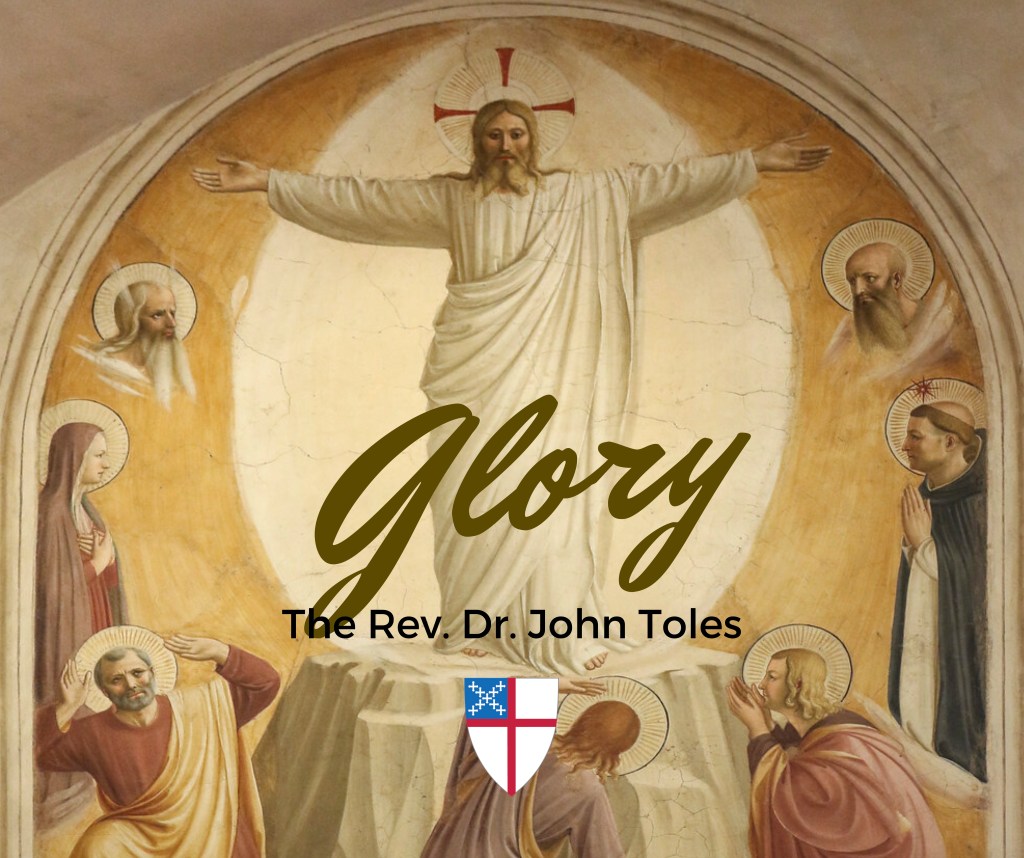
Sermon: Last Epiphany RCL A – Glory

The podcast is available here.


Visiting Ireland, Boudreaux walked into a bar in Dublin, ordered three pints of Guinness and sat in the back of the room, drinking a sip out of each one in turn. When he finished them, he came back to the bar and ordered three more.

The bartender said, “You know, Boudreaux, a pint goes flat after I pour it. Wouldn’t you rather I pour fresh pints for you, one at a time?” Boudreaux replied, “Well, you see sha, I have two brothers. One is now in Nova Scotia and the other in France, and me, mais, I’m from Louisiana. When we all left home, we promised we’d drink this way to remember the days when we drank together.” The bartender admitted that this was a nice custom and left it there.

Boudreaux became a regular in the bar and always drank the same way: He ordered three pints and drank them in turn. One day he came in and ordered two pints. All the regulars noticed and fell silent, speculating about what might have happened to one of the absent brothers.

When Boudreaux went back to the bar for a second round, the bartender said, “Hey, Boudreaux, I don’t want to intrude on your grief, but I wanted to offer my condolences on your great loss.”

Boudreaux looked confused for a moment and then a light dawned in his eye, and he laughed and said, “Oh, no, no, no, arrybody’s fine. I’ve just given up drinkin’ for Lent!”

The week before last I had the opportunity to go down to New Orleans and do a bit of Mardi Gras.

This past week I had influenza A also known as the flu which of course was my penance for going down to New Orleans and doing a bit of Mardi Gras. Fear not, I am medically cleared to once again be among the living.

If you think back to Christmas, you will recall that we heard the opening prologue of John’s Gospel: “In the beginning was the Word, and the Word was with God, and the Word was God. He was with God in the beginning.” A bit further, John writes, “The Word became flesh and made his dwelling among us. We have seen his glory, the glory of the one and only Son, who came from the Father, full of grace and truth.” Since Christmas, we have been hearing about how this “glory of the one and only Son” was further revealed, and it began with the Epiphany (it takes place on January 6th each year), which celebrates the visitation of the wisemen and the revealing of the glory of God to the Gentiles.

Following the Epiphany, we read about Jesus’ Presentation in the Temple, where the Prophet Simeon also declared Jesus glory:

“Lord, you now have set your servant free
To go in peace as you have promised;
For these eyes of mine have seen the savior,
Whom you have prepared for all the world to see:
A light to enlighten the nations,
And the glory of your people Israel.”

Then there was his baptism. The dove, the Holy Spirit descended and rested upon him and the Father declared Jesus’ glory to all who were present: “This is my Son, the Beloved, with whom I am well pleased.”

Jesus further revealed his glory in the calling of the disciples and in the great wisdom he showed through his teachings.

Think also about how Jesus said, “A city on a hill cannot be hid.” Ask yourself this, in saying that, could Jesus have been alluding to his own crucifixion and the glory to come? A city on a hill… a cross on a hill that all can see. A city built with Jesus as the cornerstone and the cross as the very foundation. A city which gives light, gives glory to all the world. And not only that, but a city of which you are a part, not only of the building, but of the glory itself, and like Jesus, you are called to “let your light shine before others, so that they may see your good works and give glory to your Father in heaven.”

You know how when you’re sitting out on a lake on a bright sunny day and there’s just enough of a breeze to cause a few small waves across the water. And on occasion, one of those small waves reflects the sunlight back to you perfectly and there is this sudden flash of light. It’s really all you can see. That’s what our readings have been like since Christmas. These sudden flashes of Jesus’ glory, but today: “Jesus took with him Peter and James and his brother John and led them up a high mountain, by themselves. And he was transfigured before them, and his face shone like the sun, and his clothes became dazzling white.” Not a quick flash of light, but a full revealing.

What can be confusing is that we are so close on Christmas, that we can mistakenly believe that the Transfiguration of Jesus took place early in his ministry, but in the life of Jesus, he has already turned toward Jerusalem. Not only is this day a day when the glory of Christ is fully revealed, it is also the beginning of the journey to the Cross: for Jesus, the disciples, and for us, so what significance would the Transfiguration have had on the disciples and how can it assist us as we begin?

The African Impala is one of those amazing creatures in God’ creation. A bit like a deer in build. They can get up to 40 miles per hour when in a flat out run. That’s a pretty good clip, except when you are in a foot race with a cheetah who can hit 75 miles per hour in short burst. Given the cheetah likes a little venison for supper, it would seem that the Impala wouldn’t have a chance, but the Impala has learned a couple of tricks. One, stop on a dime and make a sharp turn. Cheetah’s have breaks, but they’re not that good. Second trick of the Impala, the ability to jump up to ten feet in the air. I think they rely more on the quick turn when in a race for their life, but I can see where jumping ten feet in the air might come in handy. Either way, the “supper time” routine has played out between these two since the beginning. What’s interesting about the Impala is that placed in a zoo, even though they can jump ten feet high, they can be confined to an enclosure that has only a three foot wall. Why? They won’t jump anywhere if they can’t see where their feet will land. They are confined by what they can’t see.

At the time leading up to the Transfiguration, perhaps Jesus understood this same issue with the disciples. Perhaps he knew they would follow, but in order to do so, to get through the trials and suffering and sorrows that were to come, they would need to see where their feet would land, they would need to see the glory that was to be revealed… not just a flash, but the glory in all its fullness. Archbishop Michael Ramsey wrote, “The Transfiguration is the revelation of the potential spirituality of the earthly life in the highest outward form. Here the Lord, as Son of Man, gives the measure of the capacity of humanity, and shows that to which he leads all those who are united with him.” In the Transfiguration, Jesus makes known to us, not only his glory, but our glory that is to come, and it is in that glory that we find our hope. A hope that sees us through trials and a hope that walks with us as we go the way of the Cross. As St. Paul said to the Romans, “I consider that our present sufferings are not worth comparing with the glory that will be revealed in us.”

Since Christmas, we have been walking up the mountain and now Jesus has fully revealed himself and who we will become. Now… now we must begin the descent into the valley of the shadow of death. It is a place of great trials, so as you go, listen for the voice of the Shepherd, watch for signs of his glory, and keep his revealed glory ever before you, knowing that where he is, you will be also.

Let us pray: O God, who before the passion of your only begotten Son revealed his glory upon the holy mountain: Grant to us that we, beholding by faith the light of his countenance, may be strengthened to bear our cross, and be changed into his likeness from glory to glory; through Jesus Christ our Lord, who lives and reigns with you and the Holy Spirit, one God, for ever and ever. Amen.

Louise at Sixteen

I’m always early. Always have been. Not entirely sure why, but it comes with a couple of perks, especially when traveling through airports. The best seat at the gate, no rushing about, and an outlet should you need to charge a phone. It also gives you the opportunity to watch everyone else running about.

Today, I watched folks jockeying for positions in lines so that they could get through security faster, chatting up airline desk attendants attempting to score an upgrade, and the occasional grouch, who no matter the situation, is going to find that one thing. And then there was… well, I don’t know her name, but she looked like a Louise, so Louise it is.

Louise was at least seventy, she appeared to have difficulties with balance–her gait was almost a stumble at every step–hair gray, and a bit overweight, but who am I to talk about that one. I watched Louise and I watched all the other travelers around me. What struck me about Louise is that, unlike everyone else, Louise wasn’t catching a flight this morning. Louise was cleaning. Going behind all of us, wiping up our spills, picking up our trash, wiping our fingerprints off the windows, mopping floors that we had tracked up, etc. As I watched her, I wondered if anybody else actually saw her (the fact that I did does not make me special, it was just me doing the people watching thing). What I wondered about Louise: I wondered what she was like at sixteen.

I saw a young girl in a pastel dress, with white socks (a bit of lace around the top), and shiny black shoes. I saw a girl trying to be a woman with her hair pulled back, a bit of color on her cheeks, and a smile to break the boys’ hearts. I saw a future unfolding and then I wondered again: when she was sixteen, did she see herself at seventy cleaning up after me as I passed through some random airport? Don’t get me wrong, there is nothing wrong with a custodial job. Had one myself for three years before going off to seminary. It is honest “clean” work, but I just wondered about Louise at sixteen. Is this how she saw life working out for her? I doubt it. Would she like to be boarding one of the hundreds of planes she sees departing everyday? Taking some exotic trip? Getting away from it all if for only a few days? I’m certain of it.

I saw a young girl in a pastel dress. She pushed her cleaning cart through an “Employees Only” door and disappeared. That young girl disappeared. I wonder if she thinks the same thing.

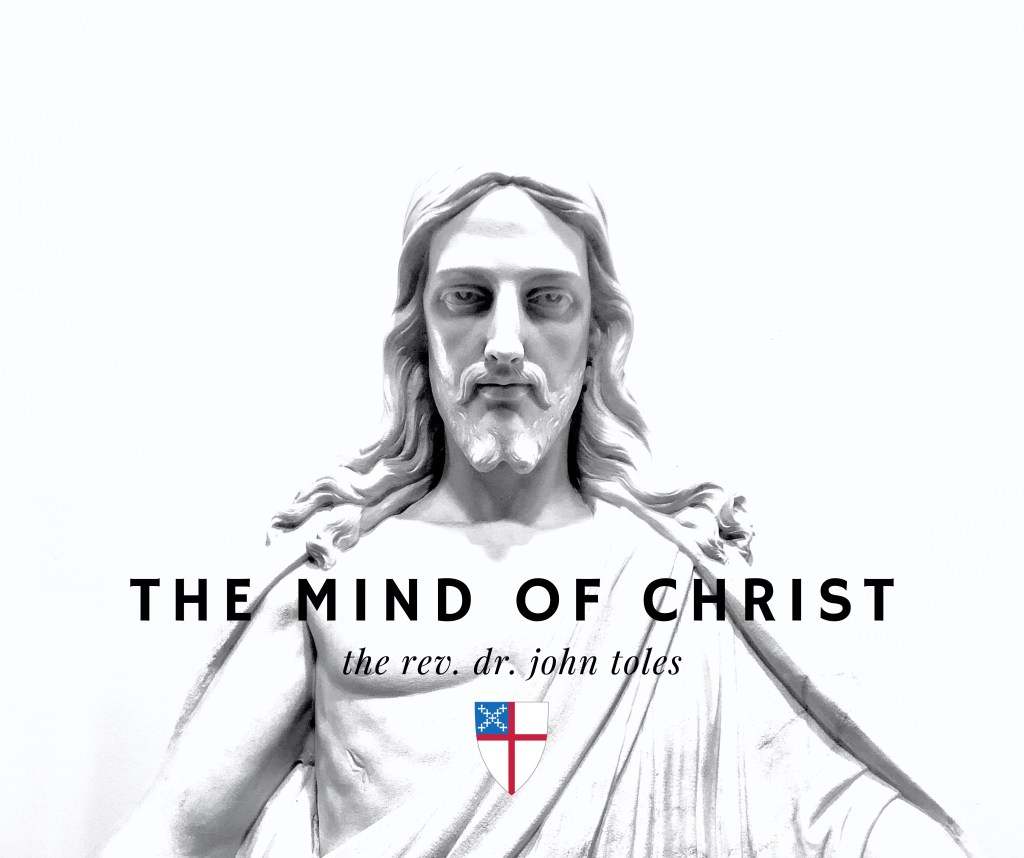
Sermon: Epiphany 5 RCL A – Mind of Christ

The podcast is available here.


Photo by Joshua Eckstein on Unsplash

The local sheriff in Terrebonne Parish, Louisiana was looking for a deputy, so Boudreaux – who was not exactly the sharpest nail in the bucket went in to try out for the job.

“Okay,” the sheriff drawled, “Boudreaux, what is 1 and 1?”

“11,” he replied.

The sheriff thought to himself, “That’s not what I meant, but he’s right.”

“What two days of the week start with the letter ‘T’?”

“Today and tomorrow.”

He was again surprised that Boudreaux supplied a correct answer that he had never thought of himself.

“Now Boudreaux, listen carefully: Who killed Abraham Lincoln?”

Boudreaux looked a little surprised himself, then thought really hard for a minute and finally admitted, “I don’t know.”

“Well, why don’t you go home and work on that one for a while?”

So, Boudreaux wandered over to the pool hall where his pals were waiting to hear the results of the interview. Boudreaux was exultant.

“It went great! First day on the job and I’m already working on a murder case!”

The Intelligence Quotient (aka: IQ) can be defined as: “The whole of cognitive or intellectual abilities required to obtain knowledge, and to use that knowledge in a good way to solve problems that have a well described goal and structure.” (Source) Boudreaux I don’t know about, but the average person (68% of us) has an IQ between 85 and 115, and you have to be in the top 2% (IQ ~140 or above) to be admitted into Mensa—think Genius club.  Currently, the youngest member of Mensa is 3, with an IQ of 142.  Are you a genius?  Well, according to one genius, Albert Einstein, you are: “Everybody is a genius, but if you judge a fish by its ability to climb a tree, it will live its whole life believing it is stupid.” (Source)  

Even though a person has a high IQ, as much as genius level, they can still be an idiot.  High IQ means you can quickly take in large amounts of information and utilize it in the given setting, but wisdom (not being an idiot) is something completely different.  Charles Duhigg, author of The Power of Habit, says, “Typically people who can see beyond the information they’ve learned and apply it through analogies to other situations in their life or see other insights from it, those are the people we typically refer to as being exceptionally wise.” (Source)  So, not being an idiot isn’t dependent upon your IQ, it is dependent upon your wisdom.  

Why this talk of IQ, intelligence, and wisdom? St. Paul wrote in his First Epistle to the Corinthians that we read, “Among the mature we do speak wisdom, though it is not a wisdom of this age or of the rulers of this age… But we speak God’s wisdom, secret and hidden, which God decreed before the ages for our glory.”  What does that mean for us?

A few weeks ago we wrapped up our study of St. Paul’s Epistle to the Romans.  I had a number of folks say how confusing and difficult it was.  I went to seminary, have access to all these additional resources and even I had to stop and ask, “For the love of all things holy, what in the heck are you talking about?”  The ability to compare and contrast N.T. Wright’s to Gordon Fee’s views of Pauline Christology takes a higher IQ and intelligence than everyone I know, but to say that we are the body of Christ and Jesus is the head of the body, that is something most of us can get our heads around, and can understand, based on the information we have learned about our own bodies.  That is approaching wisdom, but we’re not quite there, because “God’s wisdom” that Paul referred to is our ability to take that and not only know it, but apply it—live it, because intelligence tells me that Jesus is the head, but wisdom directs me—the body—to submit to the mind of Christ instead of my own.  Which leads to one more question: where does that mind of Christ come from and how to we attain it?  St. Paul answers, “We have received not the spirit of the world, but the Spirit that is from God, so that we may understand the gifts bestowed on us by God.”  Through the Spirit of God, we have received the wisdom of God. As the author of Proverbs states, “For the Lord gives wisdom; from his mouth come knowledge and understanding.” (Proverbs 2:6)  We have the ability to understand what God expects of us, just as Jesus understood, because—and this is that mind blowing statement that we read—because “We have the mind of Christ.”  We can know what God expects of us, not because we have some high IQ and understand all things, but because we have the mind of Christ or put another way, we have the same Spirit of God within us that Jesus had in himself.  It is knowledge to be able to say it, but God’s wisdom to believe it, “We have the mind of Christ.”

When Jesus began to teach the things of God, what God expected of us, he spoke of the difference between intelligence in wisdom.  For example: Jesus said, “You have heard that it was said to those of old, ‘You shall not murder; and whoever murders will be liable to judgment.’  But I say to you that everyone who is angry with his brother will be liable to judgment.”  “You shall not murder” is intelligence.  It comes from the Book and can be learned, but to take it the next step and apply it to the attitude of the heart is wisdom.

Again, Jesus said, “You have heard that it was said, ‘You shall not commit adultery.’  But I say to you that everyone who looks at a woman with lustful intent has already committed adultery with her in his heart.”  To know, “You shall not commit adultery,” is intelligence.  To understand that lusting in your heart is also adultery, that is wisdom.  You’ve taken the information and applied it to your life.

The Israelites were to be the salt of the earth.  They were to ‘season’ this life with God.  God and his teachings were to permeate every aspect of their lives.  They were also supposed to be the light of the world.  They were to draw others to God so that this ‘seasoning’ of God would be a part of others’ lives as well.  Why did Jesus judge the religious leaders—those who were to teach about being salt and light—why did he judge them so harshly?  Because they only taught and practiced ‘intelligence.’  They cared about outward/external things, but not internal, things of the heart.  As Jesus will later say, “Now you Pharisees cleanse the outside of the cup and of the dish, but inside you are full of greed and wickedness.”  Therefore he goes onto say to them, “You fools! Did not he who made the outside make the inside also?”  He wants them to take what they know of God through all their studies and understanding and then apply it, not only to their bodies, but to their hearts and souls as well.  And that message is the same for us, because at the end our Gospel reading, Jesus said to those who were listening, “For I tell you, unless your righteousness—your wisdom—exceeds that of the scribes and Pharisees, you will never enter the kingdom of heaven.”  Just about anyone can appear to be a ‘good’ Christian, while at the same time have a heart shrouded in darkness.  My friend St. Josemaría Escrivá said that to be like this is not to have the mind of Christ, but the “mask of Christ.” (cf. The Furrow #595)

We have been grafted into the people of God, so we are now also to be the ones who are salt and light.  With the mind of Christ, we are to have wisdom that teaches and guides us, so that others may see our good works—so that others may see God and give glory to our Father in heaven.  To accomplish this, we don’t need a Mensa level IQ, we need the mind of Christ, the wisdom of Christ, which is given to us all through the Spirit of God, for as Paul said, “These things God has revealed to us through the Spirit.”  Pray that the mind of Christ, the Spirit of God may enter you more fully and fill you with God’s wisdom.

Let us pray: Loving Father, faith in Your Word is the way to wisdom. Help us to think about Your Divine Plan that we may grow in the truth. Open our eyes to Your deeds, our ears to the sound of Your call, so that our every act may help us share in the life of Jesus. Give us the grace to live the example of the love of Jesus, which we celebrate in the Eucharist and see in the Gospel. Form in us the likeness of Your Son and deepen His Life within us.  Amen.

Camino: Training Continues

In order to complete the Camino in the time allotted, I need to average 12.5 miles (20km) per day. Each day I become more confident in my ability to do that, but I’ve definitely been training for it by walking, walking, walking. For this, I utilize the trail system that was integrated into my neighborhood along with a few drainage routes to get around. The end result resembles a Beatles song. Keeping me company these days has been The Hanging Girl: A Department Q Novel (Book #6) by Jussi Adler-Olsen.

Sermon: Epiphany 2 RCL A – “Entering the Story”

The podcast is available here.


Photo by Jan Tinneberg on Unsplash

Billy Graham says, “I was coming down on an elevator with some friends of mine and a man got on about the fifth floor and said, ‘I hear Billy Graham is on this elevator,’ and one of my friends pointed in my direction and said, ‘Yes, there he is.’”

Graham reports, “The man looked me up and down for about 30 seconds and he said, ‘My, what an anticlimax.’”

In today’s Gospel reading, we begin the story again.  Jesus has been baptized and now he is calling the disciples.  According to the Apostle John, John the Baptist saw Jesus walking by and said, “Look, here is the Lamb of God!”  When two of John’s disciples heard this, they began following Jesus who then asked them “What are you looking for?”  They don’t exactly answer him: “Rabbi, where are you staying?” He said to them, “Come and see.”  So they did and ended up spending the afternoon with Jesus.  Later, one of the two disciples, Andrew, went and found his brother, Simon, and brought him to Jesus, who said Simon was to be called Peter.  This is the calling of Andrew and Peter.  Right.  But, who was the other disciple that followed Jesus that day?

The reading said, “One of the two who heard John [the Baptist] speak and followed [Jesus] was Andrew.”  “One of the two,” but nowhere is the second disciple named.  So who is this unnamed person?

Most scholars agree that it is actually John, the author of the Gospel, writing himself into the story without actually naming himself.  That would make sense and provide readers with an understanding as to how John could have known so much about the ministry of Jesus.  If in fact this is John, he’ll use this technique several more times.  On the night of Jesus’ arrest: “Simon Peter and another disciple were following Jesus. Because this disciple was known to the high priest, he went with Jesus into the high priest’s courtyard, but Peter had to wait outside at the door.”  “Simon Peter and another disciple… this disciple was known….”   At the Last Supper: “…the disciple whom Jesus loved, was reclining next to him.”  And on the Sunday of the Resurrection: “So Peter and the other disciple started for the tomb.  Both were running, but the other disciple outran Peter.”  All of these are details that not just anyone would know.  So, it can be reasonably argued that this is John speaking about his part in the story.

For us, that is an interesting theory/fact about the Gospel of John, but can it serve us in our understanding.  Is there a way that this unnamed Apostle can deepen our faith.  St. Ignatius of Loyola would say, “Yes.”  

One of the exercises that the aspirants for Holy Orders are practicing is what is known as Ignatian Contemplation.  It is a way of engaging our senses and imagination in the reading of Holy Scripture. Instead of reading the text in a two dimensional way, we enter into it.  Instead of simply seeing the words on the page, we let our imagination enter into our reading and then ask ourselves, what would I be seeing, smelling, hearing, tasting, etc.  You don’t make things up or put words in the mouth of anyone, but you do put yourself there.  For example, I can read a sentence about someone walking on a beach, but in Ignatian Contemplation, I would enter into that: I would feel the warmth of the sand against my feet and how the sand gave way as I put my weight down, I would hear the waves crashing in and seagulls crying above me, I would smell the salt in the air, feel the sun.  I only read about someone walking on a beach, but then I allowed my self to experience that based on my knowledge of what walking on a beach is really like.

So, when it comes to the Gospel of John and his unnamed Apostle, instead of simply allowing my intellect to say, “Oh, that’s John writing himself into the story,” I can allow myself to enter the story and let the unnamed Apostle be me.  Take the one we just read about: “So Peter and the other disciple started for the tomb.  Both were running, but the other disciple outran Peter.”  From the rest of that passage, we can assume that Peter and John were somewhere hidden away in Jerusalem, when suddenly Mary Magdalene comes rushing in and tells them that the stone was rolled away and someone has taken the body of Jesus.  Upon hearing this, Peter and John take off, racing to the tomb.  Take that one little bit: early in the morning, before the city has come alive, you and Peter are racing through the streets of Jerusalem.  All you can hear is the fall of your own footsteps.  Peter is ahead of you, but you catch him and pass him, but in that moment when you are side-by-side, you catch each others’ eyes.  Neither of you speaks, but you don’t have to.  Question: you are that unnamed Apostle running along side Peter: what do you see, hear, feel, and even better, what are you thinking?  

Are you afraid that they really have stollen his body or is there something in the back of your mind, something Jesus said about rising on the third day.  

There is a way to read Holy Scripture and simply see the words on the page and there is a way to read Holy Scripture and enter into and ask, “What does this mean?” and “What does this mean for me?”

Now, all this may just sound like an interesting exercise to maybe try out sometime, but it is an exercise that is really quite necessary in order to fully grasp the implications of this week’s Gospel reading, because this week’s Gospel reading actually asks us to answer why we are here.  Why we gather.  Why we worship.  All of it.

So, enter into the story: you and Andrew have been disciples of John the Baptist for quite some time.  You have heard John speak often of this one who is to come, one whose sandals he is unworthy to untie.  One who will baptize with fire and the Holy Spirit.  You have heard him speak of this one as the Lamb of God, and then one day, as you are standing along the banks of the Jordan, a man walks by and John the Baptist points at him and says, “Look, here is the Lamb of God!”  Is this really the one John has been speaking about all this time?  Could it be the Messiah?  The Savior?  The Son of God?  You and Andrew follow this man.  He hears you behind him, stops, turns and asks, “What are you looking for?”  

That is a fairly simple question: What are you looking for? but for you, when asked by Jesus, the answer really defines why you are here today.

It is not one of those questions that I can answer for you, but there is more than one answer or should I say, more than one level of answer.  For example: on one level, I think we are here for simple fellowship, community, a sense of belonging to something and belonging somewhere.  On another level, we come to engage with our faith: to learn more about God’s word, how to pray, about the work of the Church, which also brings in a level of service to others, reaching out.  Again, there are many different levels of answers and those answers are all correct and may change on a daily basis.  One week you may come with a desire to serve and minister with others, while other times, you may come in hopes of being ministered to and supported, but what is the ultimate cause, the first answer that everything else comes from?

Truthfully, you may not have an answer, but as we said earlier, this is the beginning of the Gospel, of the story and the disciples are just now meeting Jesus for the first time.  When Jesus asked them what they were looking for, they answered, “Teacher, where are you staying.”  They didn’t have an answer either, so to their question, Jesus said, “Come and see.”  To me, Jesus is saying, “Come and see and I will show you what you’ve been looking for all your life.  Come and see and I will show you life, purpose, joy, faith, hope, love.”  So, today, instead of trying to answer the question, What are you looking for?, let’s walk with him and see what he will show us.  Unlike the fellow who saw Billy Graham for the first time, I don’t think what Jesus will show us will be anticlimactic.  

Let us pray:
Grant us, O Lord our God,
minds to know you,
hearts to seek you,
wisdom to find you,
conduct pleasing to you,
faithful perseverance in waiting for you,
and a hope of finally embracing you.
Amen.

Sermon: Ordination of Jim Gorton to the Sacred Order of Priests


Daniel Sylvester Tuttle was the first missionary bishop to the Missionary District of Montana, Idaho, and Utah.  It was an area of 340,000 square miles (by comparison, Oklahoma is about 70,000). As Montana was my sending Diocese, Tuttle was a hero of mine while in seminary, and still is. The very first evening he crossed the Montana line, coming up from Salt Lake City, he woke up to two inches of snow on the ground. It was July 18th. Ministry can present some interesting challenges. After a period of time there, he learned even more what it was to be like. Writing home to his wife, he told her about the vestry at St. Paul’s in Virginia City: “Of the vestry of St. Paul’s church which we got together, one vestryman, high in civil office, got into an altercation with a lawyer over some matters retailed by gossip, and would have shot him dead had not a friend near by struck up the pistol. One was a Unitarian. Another, the most godly of them all, and the one on whom I most leaned for Christian and churchly earnestness, became involved in a dispute, and missed, by the smallest margin, the fighting of a duel. Still another was an appallingly steady drinker.” Of that same vestry, he later wrote: “We mean to cut down the number [of vestry members] from nine to seven. We mean to throw out at least drunkards and violent swearers.” Jim… welcome to ordained ministry. And, if you think the laity are a bit rough around the edges, just wait until you find yourself in a room full of clergy! And… one more and… if you begin to think that you are better than any of them, hang up your stole and find yourself another profession, for there really is only one Good Shepherd.

Our role as clergy is not to think or even pretend that we are the Good Shepherd that John spoke of in the Gospel, for the truth is, we can easily say with St. Paul, “Christ Jesus came into the world to save sinners—of whom I am the worst.” Instead, our role is the same role as it is for every member of the Church and that is to point to Christ Jesus and make Him known.

The Isenheim Altarpiece is considered to be Matthias Grünewald’s masterpiece. In the center is portrayed the crucifixion of Jesus. On the left is the Blessed Virgin Mary, the Apostle John, and Mary Magdalene. On the right is John the Baptist. John holds the Holy Scriptures in his left hand and his right hand is pointing to Jesus. The Latin words next to John are those of John 3:30: “He must become greater, I must become less.” That is the role of the priest: point to Jesus and get yourself out of the way. Why?

Perhaps I’m not supposed to, but I really enjoy the teachings of the former Roman Catholic priest, Brennan Manning. He died in 2013. At an event in Missouri he gave one of the most inspired sermons I’ve heard—no, I’m not going to read it all to you, but he said, “Do you remember the famous line of the French philosopher, Blaise Pascal? ‘God made man in his own image, and man returned the compliment’? We often make God in our own image, and He winds up to be as fussy, rude, narrow minded, legalistic, judgmental, unforgiving, unloving as we are.”

Why do you need to point to Jesus and then get out of the way? Because so many people think of God in just that same way. He’s just up there looking for ways to smite me! In addition, so many people are hurt, doubt their faith, believe they are unworthy, unsaveable, and unloved and it is not your voice that is going to bring them to a place of grace, forgiveness, healing, faith, worthiness, love… it is His. It is his voice. It is his voice that they need to hear and in hearing it, they will know that they are loved by a God who truly desires them and wants to enter into a relationship with them. Jim, point to Jesus and get out of the way.

And for those who Jim will work in the midst of… show him a bit of grace. He ain’t perfect and he doesn’t have all the answers, but he is faithful—I wouldn’t be up here today preaching if I didn’t believe that. He is a faithful man, who like you, is trying to navigate this world, and the grace you show and the prayers you support him with, will go so much further than any bit of criticism of him you will ever speak. Through Holy Orders, he is being set apart to serve God, but just as you will ask him for prayers, forgiveness, healing, mercy… you must remember that he also needs all those things as well.

Ultimately, we must all—laity and clergy—remember that this work of the ministry of the Gospel is not about any single one of us. It is about us all, for as St. Peter teaches, “You are a chosen people, a royal priesthood, a holy nation, God’s special possession, that you may declare the praises of him who called you out of darkness into his wonderful light.” Not just Jim or just me or even just the Bishop… we are the royal priesthood and we are the ones called to make Christ Jesus known.

I’ll conclude by saying to for what St. Paul said to Timothy, “In the presence of God and of Christ Jesus, who will judge the living and the dead, and in view of his appearing and his kingdom, I give you this charge: Preach the word; be prepared in season and out of season; correct, rebuke and encourage—with great patience and careful instruction.… keep your head in all situations, endure hardship, do the work of an evangelist, discharge all the duties of your ministry. The Lord be with your spirit. Grace be with you all.” Amen.

Sermon: The Baptism of Our Lord RCL A


Bill “The Old Arbitrator” Klem was the umpire behind home plate.  He called pitches for thirty-seven years, including eighteen World Series, and is also credited with being the first umpire to use hand signals so that the fans could see how he called a pitch.  Not everyone always agreed with the pitches he called, but everyone knew that whatever he did call—ball, strike, out—was gospel.  Klem also had an annoying habit of making everyone wait while he decided whether a pitch was a ball or a strike.  You would think it was obvious, but Klem must have let it play out in his head a couple of times before calling the pitch.  Losing patience, one batter turned to Klem and asked, “So what was it, a ball or strike?” Klem responded, “Sonny, it ain’t nothin’ till I call it.” (Source

Our Gospel reading today is from chapter three of Matthew’s Gospel and the chapter begins, “In those days John the Baptist came preaching in the wilderness of Judea, ‘Repent, for the kingdom of heaven is at hand.’”  We are told, “Then Jerusalem and all Judea and all the region about the Jordan were going out to him, and they were baptized by him in the river Jordan, confessing their sins.”  John is baptizing those who come to him and confessed their sins.  A spiritual washing.  But why did Jesus need that washing?  St. Peter, referencing the prophecy of Isaiah:

“He committed no sin,
and no deceit was found in his mouth.”

So, we can understand John the Baptist’s confusion at Jesus coming to him to be baptized: Jesus has not sinned and has no need for repentance, so why is he needing this baptism?

The Ascent of Isaiah is one of those beautiful deuterocanonical books of the Bible (those books that are not included in the canon of scripture).  It is the story about how the prophet Isaiah ascended into heaven to the seventh level of heaven, and while there learned many things, one of which is how the Lord, Jesus, descended through the seven levels of heaven and was born of a woman, yet as he descended was not recognized by the other angels or demons as being the very Son of God.  Isaiah records the words of God the Father: I heard the voice of the Most High, the Father of my Lord, saying to my Lord Christ who will be called Jesus: “Go forth and descent through all the heavens, and thou wilt descent to the firmament and that world: to the angel in Sheol thou wilt descend, but to Haguel thou wilt not go.  And thou wilt become like unto the likeness of all who are in the five heavens.  And thou wilt be careful to become like the form of the angels of the firmament [and the angels also who are in Sheol].  And none of the angels of that world shall know that Thou art with Me of the seven heavens and of their angels.” (Source)  And eventually, he would descend into Mary and be born of a woman.  Following his death and resurrection, Jesus ascended back into the seventh heaven and as he went, all the angels praised him, but also failed to understand how he could have passed through their midst, undetected, as he descended.  

Yes, a story that is attempting to explain the unexplainable, but that also conveys a truth, for St. Paul teaches us in his letter to the Philippians, “though [Jesus] was in the form of God, [he] did not count equality with God a thing to be grasped, but emptied himself, by taking the form of a servant, being born in the likeness of men. And being found in human form, he humbled himself by becoming obedient to the point of death, even death on a cross.” (Philippians 2:6-8)

Why was Jesus baptized by John, even though he was without sin?  It was so that he could fully identify with us.  To redeem us, he had to become one of us.  Our God is not a god that sits in the heavens like Zeus or Baal and waves his hands this way and that to bring about the desired results.  Our God is one that not only created us, but also became one of us.  Why?  So that he could fully identify with us that he may redeem us.  There was no other way, because we were not going to be redeemed through the blood of a bull or goat.

Remember how the Temple priests made the daily sacrifices and that they did it for the forgiveness of sins?  But why did they have to make these same sacrifices day after day?  St. Paul answers, “It is impossible for the blood of bulls and goats to take away sins.” (Hebrews 10:4)  We couldn’t be fully redeemed by the blood of bulls and goats.  We had to be redeemed by one who was without sin, but who would fully identify with us as flesh and blood human beings, and that was Christ Jesus: “When Christ had offered for all time a single sacrifice for sins, he sat down at the right hand of God… For by a single offering he has perfected for all time those who are being sanctified. (Hebrews 10:12, 14)  To redeem us, he had to live as one of us: humbling himself, being born, falling down and skinning his knee, learning a trade, being baptized, fulfilling God’s purposes, betrayed, suffering, separation, dying.  All of that, so that you could be with him where he is.  All of that, so that we too could hear the words of our Father, not only spoken to and of Jesus, but also spoke to and of us: “This is my Son, the Beloved, with whom I am well pleased.”  What did Klem the umpire say?  “Sonny, it ain’t nothin’ till I call it.”  And through Christ’s actions, including his baptism, God has called it.  He has called us: His sons and daughters, with whom he is well pleased.  “See what kind of love the Father has given to us, that we should be called children of God; and so we are… Beloved, we are God’s children now.” (1 John 3:1a, 2)

Jesus identified with us through his baptism so that we might identify with him as sons and daughters of God.  Funny thing is… or perhaps it is a sad thing, I look in the mirror and I don’t see a child of God.  

So many Sundays I have stood up here and preached about how we are to see God in the eyes of our neighbor, the stranger, our enemies.  We are to see God in all that we meet, and I think you do or at least you are working on it, but I would wager, if you were to ask anyone here, “Do you see a child of God when you look in the mirror?”  I think, most of the time, the answer would be, “No.”  What do we see?  We see a failure, a fake, a liar, a hypocrite, a sinner.  We see someone who we believe unworthy of the promises of God and not very likely to attain them.  Perhaps this is the reason there is so little love in the world, for scripture says, “Love your neighbor as you love yourself,” and since we have so little love for ourselves… 

It ain’t nothin’ until Klem calls it and we ain’t nothin’ until God calls it, but God has called it: “This is my Son, the Beloved, with whom I am well pleased,” and through him, you are my children, with whom I am also pleased.  What would your life be like if you could live into that?  How greatly could you love, if you loved yourself—if you understood that Jesus endured it all so that not only could he identify with you, but so that you could identify with him.

You are loved by God.  You are his daughters, his sons.  Everything he did, from the manger to the tomb, including stepping into the waters of the Jordan to be baptized by John, was done so that you could become and believe that you are his child: his beloved.  

Let us pray:
Father in Heaven,
when the Spirit came down upon Jesus
at His Baptism in the Jordan,
You revealed Him as Your own Beloved Son.
Keep us, Your children,
born of water and the Spirit,
faithful to our calling.
May we, who share in Your Life
as Your children through Baptism,
follow in Christ’s path of service to people.
Let us become one in His Sacrifice
and hear His Word with faith.
May we live as Your children,
following the example of Jesus.
Amen.