Politics

A piece I wrote for October 2020 Connections, the newsletter of St. Matthew’s.


Photo by Markus Spiske on Unsplash

When I was nine or ten, I remember coming home from school and wanting to watch cartoons and Star Trek, but every day and every channel was the same boring show.  All these people talking.  And talking.  Sometimes they would become very animated in their talking, but it was always the same.  Even though I had no idea what was going on, I would sit and wait, hoping they would get tired of all that talking so that I could see what Captain Kirk was up to (I always hoped for the Klingons to arrive.  Very exciting.)  What were these folks talking about?  At the time, all I knew was that somebody had broken in and stolen a gate from a water building.  Who knew they had such valuable things at the waterworks.  Months later, we had a new president, the former resigning in shame.

I’ve shared with you in the past: I don’t preach politics.  Never have.  Never will.  Instead, I choose to preach the Gospel, because as I’ve also shared with you, I believe that the Gospel Message is the most radical and revolutionary message every spoken.  Politicians come and go and nations do the same, “‘but the word of the Lord remains forever.’  And this word is the good news that was preached to you.” (1 Peter 1:25)  

In such heated political times as this, you may be wondering if I’m going to change my “policy” on preaching politics.  The answer is: absolutely not, but I would be a poor priest if I did not provide some guidance through it, and the question that keeps running through my mind is: How should we as a Christian people respond?  Scream a little louder?  Sign another petition?  Join a protest?  Make nasty comments on social media (the equivalent of doing nothing)?  Vote (always a good idea)?  Not to be the pessimist in the group, but all of these have been tried and all they’ve really produced are people shouting even more loudly, paper wasted, more violence, a disintegration of tolerance and respect, and politicians who, once in office, end up being no better than their predecessors.  

Thank you for the commentary, Fr. John, but you still haven’t answered the question: what should the Christian response look like?

I’m glad you asked!

“You are a chosen race, a royal priesthood, a holy nation, a people for his own possession, that you may proclaim the excellencies of him who called you out of darkness into his marvelous light.” (1 Peter 2:9)  What are we to do?  We are to be the royal priesthood, proclaiming the Kingdom of God.  Not as our earthly leaders do, but as our Lord and Savior has taught us.  We are to be a nation, a Christian race that is set apart, not indulging in the sins of the world, but demonstrating the path of righteousness.  We are to be the Lord’s possession, not giving our allegiance to things that are passing away, but to Him who was, who is, and who will come again.  We are to be all these things, witnessing not to a campaign slogan, but to the eternal Love of God.  Unlike everything else that makes the news these days, what we do for the Kingdom won’t make good TV, it won’t draw large crowds, and it will likely only change the lives of a very few, but… You’ve all heard the story before:

A young girl was walking along a beach upon which thousands of starfish had been washed up during a terrible storm. When she came to each starfish, she would pick it up, and throw it back into the ocean. People watched her with amusement.

She had been doing this for some time when a man approached her and said, “Little girl, why are you doing this? Look at this beach! You can’t save all these starfish. You can’t begin to make a difference!”

The girl seemed crushed, suddenly deflated. But after a few moments, she bent down, picked up another starfish, and hurled it as far as she could into the ocean. Then she looked up at the man and replied, “Well, I made a difference for that one!”

That is the ending I’ve always heard, but recently I came across another:

The old man looked at the girl inquisitively and thought about what she had done and said. Inspired, he joined the little girl in throwing starfish back into the sea. Soon others joined, and all the starfish were saved.* 

Perhaps that’s just a bit too naïve, too optimistic, but I’m really not a pessimist. 

Make a difference… be the light for one person.  This is our politics.  Be the leader, the royal priest to one person, pointing them to the path of eternal life, so that they may do the same for another.  It is through this great work of the Gospel that we will affect eternal change in the lives of many and that we may affect change in our society.

*“The Starfish Story” is adapted from The Star Thrower by Loren C. Eiseley

Dominicans: Term One / Week Three

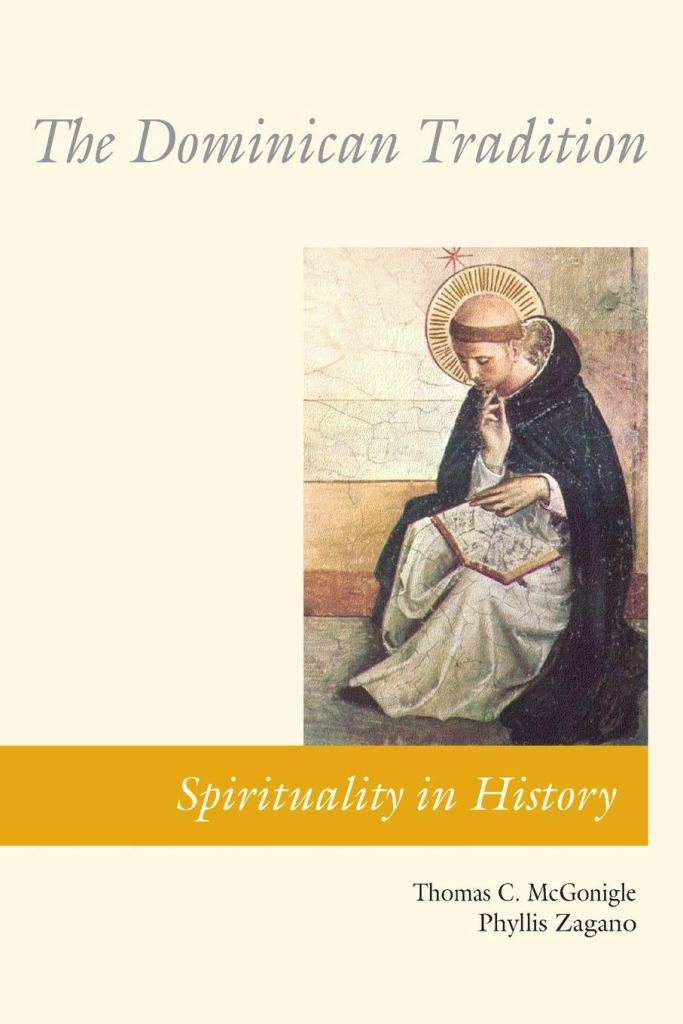
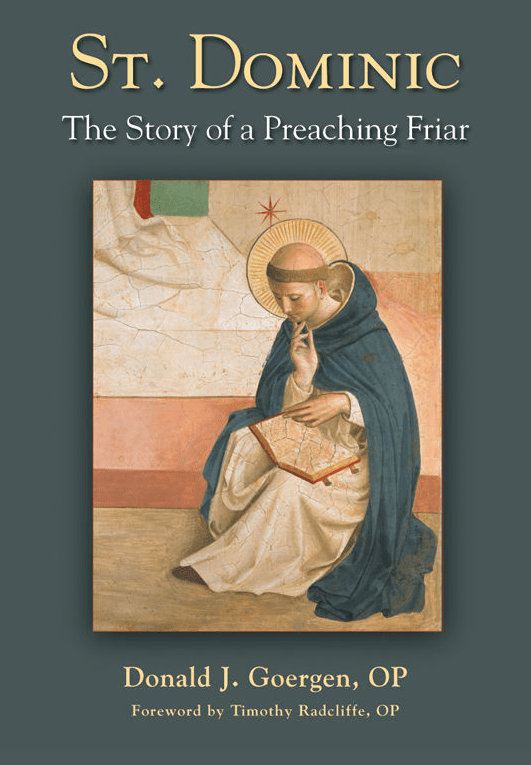
Reading and answering question from: Donald J. Goergen O.P. St. Dominic: The Story of a Preaching Friar. New York, NY: Paulist Press, 2016.


This book gives you a good foundation for your essay on St. Dominic.  In responding to this question, however, please focus on Chapter 4, and be selective rather than comprehensive. 

Following the meeting with Pope Innocent in 1215, the scope of the OP mission grew from a diocesan program to an organization that now spans the globe and even though Dominic would lead the order in its infancy and early growth, I believe that he always viewed himself as the “humble servant of preaching.” (p.56)  “For him it was always the preaching, not the preacher, who was never to get in the way of the Word.” (P.63)  From this view and mission, the order developed multiple elements and characteristics which are seen in the AOP.

Organization – The AOP maintains the structure of the order as established by Dominic.  “There existed in the Order the two primary instruments of governance: the general chapter, legislative in nature, and the head of the Oder along with local superiors, executive in character.” (P.87)  This also is evident in the AOP through the Master, Chapter, Houses, Priors, etc.

Study – “As witness to the value that Dominic placed on study, these first friars in Toulouse began to attend lectures.” (P.50)  “The preacher was to be an ongoing student of theology.  The order was to be an order of students.” (P.88)  As with Dominic, the AOP recognizes that any good preacher will be an educated preacher, so as to preach the truth and recognize error.

Dispersed – From Toulouse he sent the friars out.  “The decision to disperse the men was both to protect the preaching and to expand it.” (P.67)  “How then will they call on him in whom they have not believed? And how are they to believe in him of whom they have never heard? And how are they to hear without someone preaching?  And how are they to preach unless they are sent? As it is written, ‘How beautiful are the feet of those who preach the good news!’” (Romans 10:14-15)  The AOP is dispersed, even to far off lands like Oklahoma!

Rule – The rule for Dominic and his friars would be “that of St. Augustine.” (P.59)  The AOP also lives under an established rule, that guides daily life of prayer and study, which are set to enhance the preaching.


How did the life and work of St. Dominic lay a foundation upon which the Anglican Order of Preachers is built?  What elements or characteristics do you find in this chapter that you can see in our own Order?  Be specific, and give at least one reference, with page number or Kindle reference number, for each element or characteristic that you describe.

“To contemplate and to hand on to others the fruits of one’s contemplation,” (P.6/P.134) sums up what it means to be an active Dominican, which finds it roots in the Orders founder, who was “a man of prayer with a mission, a contemplative missionary.” (P.74)  Whereas other religious orders find their calling hidden behind the cloister walls, Dominic believed that the purpose behind the contemplative prayer was to be able to share what was learned.  “There could be no authentic contemplation without the handing on of it to others and vice versa.” (P.103)  Dominic “preached his prayer and prayed his preaching.” (P.102) 

To assist in his prayer, “Dominic trusted Mary in his prayer from the beginning.” (P.136)  “As Mary gave brith to the Word in her womb, so the Preacher gives birth to the Word in the world.” (P.136)  This deep devotion to Mary was of great benefit to Dominic and the Order and it is to her that the Order has been given over to for motherly care (cf. P.137)  

Contemplation with the assistance of Mary is and will be a great source of strength and intimacy with Jesus in my life.  As I pray / contemplate, if I will first walk with Mary, she will lead me to moments of great communion with Jesus.  Dermot Power, in The Spiritual Theology of the Priesthood (1998), discusses the works of Hans Urs von Balthasar.  Power writes, “Mary is the prototype of the Church’s responsive faithful love and is the real type and abiding centre of holiness which encompasses the Petrine and ministerial function within the Church.  According to Balthasar, the priesthood exists only to nurture, safeguard and make transparent this spousal love of Christ for his Church.” (P.50)  Where Power speaks of Church and Priesthood, I believe we can insert the word “preacher,” because the making known—or to use the words of Dominic: the “handing on”—of the message of the love of Christ is the raison d’être of preaching just as preaching is “the raison d’être of the Order.” (P.62)  If we are to hand on this message, we must first spend time in contemplation with Him who is Love.

Sermon: Proper 21 RCL A – “That’s not fair!”

The complete service is available here


Photo by Ray Fragapane on Unsplash

R. C. Sproul, he died in 2017, was a Presbyterian theologian. I figure if they can quote C.S. Lewis, we can quote Sproul. He tells the story of when he was a college professor.

At the start of the semester, the class of about one hundred and fifty students had three papers due, equally spaced through the semester. The penalty for a late paper was a zero grade.

When the first paper was due, one hundred and forty students strolled in and put their papers on his desk. Sproul asked the ten students whose papers were late, “Where are your papers?”

“Oh, Professor Sproul,” they pleaded, “we have had so much work, and we are having such a hard time adjusting to college. Please give us an extension.”

“Okay,” said Dr. Sproul, “but the next time your papers are late, you will receive a zero grade. Agreed?”

“Yes,” they all replied.

When the second paper was due, one hundred and twenty five students arrived and put their papers on his desk. Sproul asked the twenty five students whose papers were late, “Where are your papers?”

“Oh, Professor Sproul, we had mid-terms, and we just did not get time to write the papers. Please give us an extension.”

“Okay,” said Dr. Sproul, “but this is your final warning. The next time your papers are late, you will receive a zero grade. Understand?”

“Yes,” they all replied.

During the last class, the final paper was due and only one hundred students put their papers on his desk. Sproul asked the fifty students whose papers were late, “Where are your papers?”

“Oh, Professor Sproul, it’s not a problem! Don’t worry about it! We’ll get the paper to you in a day or two!”

“Each of you will get a one letter grade reduction!” said Dr. Sproul.

Enraged, the students shouted, “That’s not fair!”

“Oh, you want me to be fair!” said Sproul, “I will be fair. I said that if your papers were not on my desk by noon today, you would receive a zero grade. Since they are not here, I will be fair and just, and you will receive a zero grade.”

I have shared with you in the past Portia’s monologue from William Shakespeare’s, Merchant of Venice: “The quality of mercy is not strained. It droppeth as the gentle rain from heaven upon the place beneath.” Portia speaks of how mercy blesses both the giver and the receiver, that it can be used by kings to show love, and that “It is an attribute of God Himself.” She concludes, “And earthly power doth then show likest God’s, when mercy seasons justice.”

With those students, the full enforcement of justice, would have been to give the zeros from the beginning, but mercy was something that Professor Sproul fully understood, even when the students failed to turn in their papers the third time, for where he could have given them the promised zero, he applied justice—lowering the grade—seasoned with mercy—only lowering it one letter. Justice was the full application of the rule: no work, zero grade, which Sproul was within his rights to give: his class, his rules. Yet he chose to show mercy. However, when he did not extend to them 100% mercy, when there were consequences for failure to abide by the rules, the students shouted, “That’s not fair!”

These days, we have come to understand fair in the same manner as those students: fair means we can bend the rules to our liking, so that even though I may have failed, I will be accepted and even rewarded. However, that’s not how fair is defined. Merriam-Webster Dictionary: “fair — marked by impartiality and honesty : free from self-interest, prejudice, or favoritism : conforming with the established rules.” Fair is not the bending or negating of rules to benefit every infraction. Fair… are you ready for this… fair is the application of justice. No deviation from the rules, so when the students cried out, “That’s not fair!”, Sproul responded, “Oh, you want me to be fair!” They didn’t know what the word really meant, but Sproul did and was 100% fair by applying justice minus the mercy he had been showing. No paper, zero grade. “And earthly power doth then show likest God’s, when mercy seasons justice.” But there does come a time when fairness… justice will be applied without mercy, and that is the point Jesus was making today in our Gospel and it made the people very angry. How did that work? It begins with our reading from Ezekiel.

The Lord said, “When the righteous turn away from their righteousness and commit iniquity, they shall die for it; for the iniquity that they have committed they shall die. Again, when the wicked turn away from the wickedness they have committed and do what is lawful and right, they shall save their life. Because they considered and turned away from all the transgressions that they had committed, they shall surely live; they shall not die.” That is God’s fairness. His justice. He says, “I have no pleasure in the death of anyone,” but his justice is such that there is no deviation.

Is there mercy? Of course there is mercy. Basically the entirety of the Old Testament is the telling and retelling of the same story. The people walked with God. The people sinned against God. God may have punished the people, but he didn’t wipe them out, except the one time in the flood. God sent a judge or prophet to tell the people, “You’re sinning in the eyes of the Lord.” The people heard the words of the prophet, repented, returned to the Lord. For his part, the Lord showed mercy and gave them his love and protection once again. What happened next? Rinse and repeat. It was the same with John the Baptist.

When Jesus arrived, the religious leaders came to him and asked by whose authority he was saying and doing these things. Jesus asked them about the baptism of John, but this was just a way of saying to them, here’s another example of the Father calling on you to turn and you ignored Him once again.

But now Jesus comes on the scene and tells the people, the Father is about to apply his justice. In the parable of the two sons, Jesus reminds the people of what the Lord’s justice is all about and they even agree that it is correct: the first son said he would not go into the fields and work (he would be disobedient to the Father), but he repented and went to work. The second son said he would go (he would be obedient to the Father), but he did not. He knew the Father’s desire, but he ignored it. Jesus concludes, “Truly I tell you, the tax collectors and the prostitutes are going into the kingdom of God ahead of you. For John came to you in the way of righteousness and you did not believe him, but the tax collectors and the prostitutes believed him; and even after you saw it, you did not change your minds and believe him.”

The Lord, through John, called you to repentance, and the first son—the one who disobeyed at first—the tax collectors and sinners, heard the call to repent. What did the Lord say through the prophet Ezekiel? “When the wicked turn away from the wickedness they have committed and do what is lawful and right, they shall save their life.” Yet, the second son—the one who said he would obey, but did not—the one who agreed to obey but failed to repent and continued in sin: “When the righteous turn away from their righteousness and commit iniquity, they shall die for it.”

Jesus is saying, “You know the rules. You’ve been warned. God has shown you mercy… time and time again, but now, He is going to apply fairness, a 100% application of justice.” How do the people respond? “That’s not fair!” Yet: God’s house. God’s rules.

He loves us. He wants us to repent. He does not want us to die. But he is going to apply the fullness of his justice to all. Is it any wonder that Paul says to us, “Work out your own salvation with fear and trembling.”

We are called to be like the first son. Repent and return, but there is a problem with that, like the Israelites, we will fall away, and like the Israelites, we are no better off than we were when we were still tax collectors and prostitutes. God the Father will apply 100% of his justice to us and we will die. Something else is needed. “With man this is impossible, but with God all things are possible.” Where there is a 100% application of justice, we need a 100% application of mercy. Where do we find this mercy? “For the Scripture says, ‘Everyone who believes in him will not be put to shame.’ For there is no distinction between Jew and Greek; for the same Lord is Lord of all, bestowing his riches on all who call on him.  For ‘everyone who calls on the name of the Lord will be saved.’”

The Lord will apply 100% of his justice to us all and for those who believe in his Son, the Lord will apply 100% of his mercy. That’s not fair… no. That’s love.

Let us pray: O My Jesus, forgive us our sins, save us from the fires of Hell and lead all souls to Heaven, especially those who are in most need of Thy mercy. Amen.

Dominicans: Term One / Week Two

Reading and answering question from: Donald J. Goergen O.P. St. Dominic: The Story of a Preaching Friar. New York, NY: Paulist Press, 2016.

In Chapter 1 we learn about Dominic the man and preacher. “To be a preacher was to mediate God’s Word in human words: a word of love, mercy, and compassion. Mercy (misericordia), truth (veritas), and brotherhood (fraternitas), or the vita communis—the common life—were all sacred words for Dominic, that man of the Lord who was filled with God”. Describe the manifestation of Dominic’s sacred words in his mission as a preacher, using examples. What are your own sacred words that guide your life as a Christian? How might they guide you in your preaching life as a Dominican?


The three sacred words of Dominic—mercy, truth, and common life—seem to closely resemble the “three-legged stool” of Anglicanism—Scripture, tradition, and reason—in that they are dependent and integral to the other; for example, can you have a common life without mercy and truth?  Therefore, the examples of these sacred words in Dominic’s life have one dominant trait, but are supported by the other two.

With regard to mercy, I was struck by Dominic’s selling of his parchments during the famine.  “How can I keep these dead skins when living skins are dying of hunger?” (p.14)  Truth can be seen in his willingness to remain up all night seeking the conversion of a single sinner (p.21) and the common life is made evident in not just the need for traveling companions, but also in discerning the need for the common life in others as in the time when land and housing were purchased for the many Cathar women converts so that they would be able to maintain their austere lives. (p. 33)  Such actions demonstrate that these sacred words were lamps on the work, guiding Dominic and the others to “live what they preached.” (p.29)

For my own sacred words, I reflected back on my preaching.  From there, I chose loyalty, peace, and transformation, all of which stem from the first and second greatest commandments: love God, love neighbor (to which I like to add, “Until you figure out how to do these two things, leave the details alone.”)  Of these three, loyalty may be the most difficult for others to understand why I chose, but I have always understood Jesus as King, so even when I fail him or do not love him as I should, I am always loyal.  Although I may not say it directly, this is a trait that I would like to instill in others through preaching.  I’m always struck by Richard Burton’s prayer following his consecration in Becket: “Please, Lord, teach me now how to serve you with all my heart, to know at last what it really is to love, to adore.”


Historical events, politics, culture and the guiding hand of the Holy Spirit impacted Dominic’s formative years in much the same way that they will guide your own formation. Describe an example of how each of these four factors influenced Dominic’s early formation. How will these factors impact your own formation as a Dominican preacher?

September 11 occurred during my first week of seminary.  We all knew the world would never be the same and it set the stage for things to come.  Dominic also experienced such life / world altering events.  

The rise of the Cathars / Albigensians (p.19ff) was a significant historical event in the life of Dominic.  It was from witnessing the heresy firsthand that Dominic was inspired to consider and then begin the mission for correcting the error.  The way into the culture and the fulfillment of the mission was not to adopt the practices of the Catholic Church, but those of the Cathars instead.  “If they were to convey the truth of the Catholic faith, their primary witness to that faith would have to be in their way of life,” (p.28) which would closely resemble that of the Apostles.  

The passion for such a mission does not derive itself from politics or dogma, but through the Holy Spirit.  Dominic was guided by his desire to convert souls to God.  He is said “to have agonized about the fate of sinners in general as well as the heretics,” praying “Lord, have mercy on your people, what will become of sinners?” (p.37)  These words communicate to me the same message as the Fatima Prayer: “O My Jesus, forgive us our sins, save us from the fires of Hell and lead all souls to Heaven, especially those who are in most need of Thy mercy.”  

Finally: politics.  Politics had as much influence on Dominic as they do us today, but they did not seem to effect his mission or draw him in.  For example, “Whatever he thought of the crusade, we will never know for sure… he never preached it.” (p.38)  Instead, even when he was surrounded by the crusaders, he was “constantly preaching the word of God.” (p.42)

Such a commitment to the Gospel in the face of so many factors will certainly be a guide for me.  The Gospel message is without a doubt the most radical message ever proclaimed and will go much further in converting sinners and sustaining the faithful than any other message.

Sermon: Proper 19 RCL A – “Beloved”

The complete service can be found here.


The only time I’ve really ever thought about suing someone was because they were being a complete and total jerk. I just think if you’re going to act like that, you should be treated like that. However, there are some who are very creative in their search for suing and the easy dollar.

You’ve probably heard of the energy drink “Red Bull.” Their original ad campaign was pretty clever, “Red Bull gives you wings.” Well, some smart fella discovered that Red Bull actually does not give you wings, literally or figuratively, so he sued. Red Bull settled out of court for $640,000.

Or take the judge who lived in the Washington D.C. area. He took his pants to the dry cleaners, but when he came to pick them up, they weren’t there. Turns out that the dry cleaners has multiple locations and the pants had been delivered to the wrong one. The pants were found and presented to the judge; however, he claims the pants were not his and stating that dry cleaners promoted “satisfaction guaranteed,” he sued them for damages. What did he decide that his pants and time were worth? $67 million. Given the fact that this man was a judge in D.C. should have told us something about his character, but he is also one that I would sue for “being a jerk.”

I don’t really know what it is about some folks who feel the need to sue every time someone sneezes in their direction, but it seems there is no end to it. I would say that there are some cases that are truly legitimate, but others not so much. These are surely for the easy money, but I also think these are oftentimes about being right or a “legal” vindictiveness.

In our Gospel reading last week, Jesus said, “If another member of the church sins against you, go and point out the fault when the two of you are alone. If the member listens to you, you have regained that one. But if you are not listened to, take one or two others along with you, so that every word may be confirmed by the evidence of two or three witnesses. If the member refuses to listen to them, tell it to the church; and if the offender refuses to listen even to the church, let such a one be to you as a Gentile and a tax collector.”

When someone sins against us, there can be times in our need to be right or simply out of vindictiveness, that we want to or even will skip those first two steps and go directly to “telling the church” or just expelling them all together. In these cases, telling the church isn’t really about an attempt at reconciliation or to bring someone back into the fold. No. It’s about gossip and it’s about getting people on our side. A judging in the court of public opinion. Get enough people to side with you and regardless if you’re right or wrong, you win. Again, it never was about reconciliation, it was vindictive. Getting even with them for what you perceived they did to you. Jesus provides us a roadmap on how to seek and hopefully find reconciliation, but this passage from last week was not the end of Jesus’ teachings on reconciliation, because this week, he dials it up.

Immediately after saying these things, Peter asked, “Lord, if another member of the church sins against me, how often should I forgive? As many as seven times?” Peter is wanting to do the math and Jesus response is a formula that goes beyond our understanding. “Not seven times, but, I tell you, seventy-seven times.” That can also be translated, “Not seven times, but, I tell you, seventy times seven.” The number of times we are to forgive is inexhaustible. Seriously? Now, not only can’t we be vindictive, but we have to forgive them, time and time again. This is all that turn the other cheek business and it is so annoying. It is much more fun to get even. Isn’t it? We can plot, scheme, imagine…. “Oh, if they do this, then I’ll do that. If they say this, then I’ll say that. I’ll stick it to ‘em good.” Isn’t that far more entertaining than just forgiving them? Anger. Vindictiveness. These things are exhausting. In addition, you are allowing someone else’s sin, something they did against you, to cause you to sin through your own anger.

Yes, it is OK to go to someone and say, “You hurt me by doing such-and-such.” That’s being an adult. That’s building relationship. And, forgiving someone does not mean staying in an abusive situation. There are a few folks that I have forgiven and I want absolutely nothing to do with them. I’m not going to walk back into something where I know I’m just going to get smacked around again and neither should you. But in our lives, there are many minor hurts that we hang onto and that fester into severe wounds, when we should have simply forgiven. So, how do we go from vengefulness to forgiveness?

Henri Nouwen, one of those beautiful spiritual thinkers and writers, addresses this in an article he wrote for Weavings, a spiritual journal and he further developed in the book, Life of the Beloved. The title comes from the words of the Father to Jesus, when Jesus came up out of the water at his baptism, “You are my beloved Son; with you I am well pleased.” Beloved is also how John and Paul began to refer to the believers. Nouwen writes that the statement, “You are my Beloved,” “reveals the most intimate truth about all human beings.” What is that truth? That just as Jesus was the Beloved, so are we. If that is not true, if you do not believe that you are also the Beloved, then ask yourself why else Jesus would have died on the cross.

When it is revealed to us and we accept the fact that we are the Beloved of God, then we understand that there is no barrier that will separate us from the love of the one who calls us. It consumes and then it transforms, not into something alien or foreign, but the Father’s love begins the process of transforming us into his image. Yet, the gift of being the Beloved is not something that we hold solely for ourselves. It must be shared.

In speaking to another, Nouwen says, “The greatest gift my friendship can give to you is the gift of your Belovedness. I can give that gift only insofar as I have claimed it for myself. Isn’t that what friendship is all about: giving to each other the gift of our Belovedness.” What does that look like as it pertains to forgiveness? In the article from Weavings, Nouwen writes, “Forgiveness is the name of love practiced among people who love poorly. The hard truth is that all people love poorly. We need to forgive and be forgiven every day, every hour increasingly. That is the great work of love among the fellowship of the weak that is the human family.” Forgiveness is the name of love, the great work practiced among the Beloved.

There was a king who had suffered much from his rebellious subjects. But one day they surrendered their arms, threw themselves at his feet, and begged for mercy. He pardoned them all. One of his friends said to him, “Did you not say that every rebel should die?”…. “Yes,” replied the king, “but I see no rebels here.”

How do we go from vengefulness to forgiveness? How do we go from wanting to seek the deaths of the rebels? By recognizing the Beloved in the other. By recognizing that we all rebelled against God, yet he does not desire our death. “As I live, declares the Lord God, I have no pleasure in the death of the wicked, but that the wicked turn from his way and live; turn back, turn back from your evil ways, for why will you die.”

Instead of beginning by taking someone to court, judging them before others, or calculating the number of times you’ve forgiven—whether it be seven times, seventy-seven times, or seventy times seven times—instead of doing these things, see them as the Beloved, just as you are seen by God as the Beloved, and forgive them, just as you have been forgiven.

Let us pray:
Lord, make me an instrument of your peace:
where there is hatred, let me sow love;
where there is injury, pardon;
where there is doubt, faith;
where there is despair, hope;
where there is darkness, light;
where there is sadness, joy.
O divine Master, grant that I may not so much seek
to be consoled as to console,
to be understood as to understand,
to be loved as to love.
For it is in giving that we receive,
it is in pardoning that we are pardoned,
and it is in dying that we are born to eternal life. Amen.

Sermon: Proper 17 RCL A – “Silk Thread”

The complete YouTube service is here.


Photo by Zdeněk Macháček on Unsplash

Chief of police Thibodeaux gets a call from one of his deputies on the police band radio:

Deputy: “Chief, we have a case dat we need you to be aware of.”
Thibodeaux: “Mais, what you got deputy?”

Deputy: “Dere has been a shooting at you friend’s house. Boudreaux is in bad shape. Da ambulance just left wit him on da way to da emergency room.”

Chief Thibodeaux: “Oh no, mon ami!! What happened deputy? How did Boudreaux him he get shot?”

Deputy: “His wife chief. Marie shot Boudreaux.”

Chief: “What?!? What in da world is going on? Why for did she shoot him deputy?”

Deputy: “She say he came in from da crawfish pond and walked all over da floor she had just mopped. She say she told him if he ever done it again, she’d shoot him… so she did.”

Chief Thib: “I can’t believe dat me!!! Dat women done gone off da deep end of da bayou!!! I can’t wait to talk to dat crazy lady! Did you arrest her yet deputy?”

Deputy: “No sir, not yet, Chief”

Thibodeaux: “Well son, you got a job to do!! Get on wit it. Get in dere and arrest her right now!”

Deputy: “No chief. Can’t arrest her just yet.”

Thib: “And why not deputy?!?”

Deputy: “Da floor is still wet, Chief.”
Some folks are fast learners like that deputy, where as the rest of us are like ol’ Boudreaux: eventually we end up getting shot. One of my friends use to tell me that the devil is stupid, he’s only got so many tricks. Only problem: we keep falling for them time and time again.

I believe I shared a portion of this during a Wednesday night study, but I also said I was going to preach it sometime, so if you know the story, bear with me. Also, if spiders give you the willies, you may want to plug your ears up for a few minutes.

During my studies at Nashotah House seminary, I would go for some two week summer intensive programs. During those weeks I would stay in the rooms above the classrooms. At night, except for the weekends, there was a good bit of reading and studying that took place, so not much happened. One evening I was out walking along the cloister. It was very warm and the bats were having fun, then I noticed a very large moth caught in a spiders web. I looked a little closer and saw that it was actually caught by only one strand of the spider’s silky web, but it could not get free. The spider was tucked away in a corner just watching, but then, after the moth settled down a bit, the spider came creeping out. The moth was four to five times larger than the spider, but the spider was undaunted. She had played this game before.

I thought the spider would rush the moth and try and wrap it up, but instead, it came very close to the moth and reached out with one leg and—I mean this—gently touch the moth. The moth lost it’s mind and started flapping around again, but was still unable to get loose. Once it tired and settled again, the spider reached out and touched the moth again. Same reaction. This took place several times: touch, lose it, touch, lose it, but then there was a touch and the moth didn’t lose it. The moth remained still, so after a moment, the spider reached out with a second leg and touched the moth. That sent the moth off again, but the spider was patient.

I don’t know how long this went on, I was actually horrified and fascinated. Horrified that I was going to stand there and watch this spider kill the moth and fascinated by the entire process. A short time later it ended. The moth eventually became accustomed to being touched by the spider and so after much patient work, the spider was able to completely crawl up on the moth without the moth reacting at all. At that point, the spider did what spiders do and the moth that was caught by only a single strand of silk was dead.

Just a few minutes ago, Jesus said to Peter, “Blessed are you, Simon son of Jonah! For flesh and blood has not revealed this to you, but my Father in heaven. And I tell you, you are Peter, and on this rock I will build my church, and the gates of Hades will not prevail against it.” And now, Jesus rebukes the one on whom he will build his church: “Get behind me, Satan! You are a stumbling block to me; for you are setting your mind not on divine things but on human things.”

As I considered this passage, I kept coming back to the idea of the stumbling block. We know that Peter was acting as a stumbling block before Jesus. Trying to draw him away, tempt him into not fulfilling his purpose. That tells us that we too can be stumbling blocks to other people. Have a friend that’s an alcoholic and you invite them over for a drink, you’ve become a stumbling block. No someone that struggles with gossip and you drop them a tasty morsel: stumbling block.

Just as we can be stumbling blocks to others, they can do the same to us. Then there are the stumbling blocks we didn’t see coming. Someone says or does something to you. Under most circumstances you would just let it go, but on this occasion, anger, this rage bubbles out of you. I believe that most folks who follow the Way of Jesus, strive daily to avoid these types of stumbling blocks, but there is another stumbling block that is far more insidious. These are the ones that we are aware of. It is the one that we keep falling over time and time again. We don’t think much of them, because… well, they resemble a single strand of silk. And when we see it, something of a spiritual amnesia comes over us, or even worse, a desire on our parts to keep it, naively believing that we can control it. We’re slow learners. Like ol’ Boudreaux, we’ve walked over that wet kitchen floor many times, we’ve stumbled over that same obstacle time and time again. And even though we’ve been warned, time and time again, we just can’t remember that this single strand of silk is going to kill us, so we end up getting shot. We get trapped by a single silky thread, and instead of cutting it, removing it from our lives, we allow it to remain. As with the moth, the devil, seeing our predicament patiently waits for us to tire of the struggle, then at a more opportune time, he shows up and gently reaches out and touches us. At first, we resist, but he waits. He whispers, “Surely you will not die.” And he touches us again. We eventually become accustomed to being touched, touched by the devil, sin, and even death, and it is at that point, we are lost. We knew the stumbling block was there. We know it will cause us to fall. And yet, we are surprised when we find ourselves sprawled out on our faces, banged up and bleeding.

My friend, St. Josemaría Escrivá, writes, “How clear the way! How easily seen the obstacles! What good weapons to overcome them!…” We know where God would have us go and we are aware of the stumbling blocks along that way that will bring us down. God has also given us the necessary tools to overcome those obstacles, “Nevertheless,” Escrivá continues, “what side-tracking and what stumbling! Isn’t it true? That fine thread — that chain: that chain of wrought iron — of which you and I are conscious and which you don’t want to break, that is what draws you from your way and makes you stumble and even fall.”

We believe it is a single silky thread that binds us, but we have deceived ourselves. It is in fact a sturdy chain that binds us to death. Escrivá concludes, “Why do you hesitate? — Cut it… and advance!” How do you cut it? Jesus said, “If any want to become my followers, let them deny themselves and take up their cross and follow me. For those who want to save their life will lose it, and those who lose their life for my sake will find it.” You cut the silky thread that chains you to death, by taking up your cross and following Jesus, by allowing him to break the chains that bind you, just as he broke the chains of death that attempted to hold him. Easy? No. Painful? Possibly. Impossible? Jesus said, “All things are possible for one who believes.”

For the record: I put the moth out of its misery and after a bit of chasing around, I killed that dang spider. Yeah, I know. It was only doing what spiders do, but it made me mad. It was only a moth, but I should have cut that single thread of silk and set it free (there’s a sermon in that also on how we are to help one another). I should have set it free, just as, through Jesus, we can be set free from the chains that bind us. “Why do you hesitate?”

Let us pray:
The light of God surrounds us,
The love of God enfolds us,
The power of God protects us,
The presence of God watches over us,
Wherever we are, God is,
And where God is, all is well.
Amen.

Moon

I know I talk about the moon.

I keep waiting for it to bleed.

There is no satisfaction…

There is no pain…

There is only the bleeding moonand our hope for some solace. That is not likely to come either. To breathe and sigh and breathe and sigh…

The moon bled.

The stars cried.

And you were left with an empty glass in your hand.

Answers? There are none.

Sermon: Proper 15 RCL A – “Lord…”

The sermon podcast is available here.

The entire service is available on YouTube.


Photo by Sara Kurfeß on Unsplash

Monasteries…

The story is told of a monastery in Portugal, perched high on a 3,000 foot cliff and accessible only by a terrifying ride in a swaying basket. The basket is pulled with a single rope by several strong men, perspiring under the strain of the fully loaded basket. One American tourist who visited the site got nervous halfway up the cliff when he noticed that the rope was old and frayed. Hoping to relieve his fear he asked, “How often do you change the rope?” The monk in charge replied, “Whenever it breaks.”

Another story tells of two monks, Brother Matthew and Brother James, who encountered each other while out for a walk. They look at each other and without saying a word, go in separate directions. Later that day, Brother Matthew goes to the Abbot of the monastery and complains. Seems he didn’t appreciate all the gossip that Brother James had shared.

Monasteries are interesting places and I’m speaking from my brief experience of them. Most of you probably know that this past week I spent some time in a monastery in the eastern part of the state. I was scheduled for eight days, but only lasted six. For me, in an experience like that, you reach a point where you realize there is nothing more to be gained, so you can continue for the sake of continuing, or you can call it a day and sleep in your own bed. I chose the latter, because, as I noted in one of the blog posts I put up, I’m spoiled.

For the full days that I was there, I would get up at 4:00 a.m. and be in chapel before 5:00 a.m., and for the next three hours, we would pray. Most of the praying consisted of reading the Psalms, which I truly love, but this was also about the only part of the service I was able to follow, because it was all in Latin. (The English was there, right alongside the Latin, but there were no cues as to where you were if you got lost.) For me, if I was at the wrong place to start with or I got lost along the way, the rest of the service was a wash. And it would seem that not even the brothers were able to get it right all the time, because for every mistake they made, they had to do penance: step forward, kneel on both knees, and bow for every mistake. If I had been up there with them, I would have gotten on my knees at the beginning of the service and not bothered standing back up again. The entire process was amazing to watch and even more so to listen to. The upside was that if you got that time of prayer wrong, there were going to be six more services (two to three more hours) during the day where you could try and get it right. In six days, there was only one service that I made it all the way through without losing where we were. Perhaps, if you know what you are doing, it would be easier, but it was exhausting work, and all I really wanted to do was pray.

That’s not to say that prayer isn’t work, but when I’m so focused on how to pray, I don’t actually end up praying. So, between services, when it wasn’t a meal time, I would either take a nap, read, or go sit in the darkened chapel and pray as I knew how. It was then that I could draw near to God and my prayer was not work, but joy. I believe this is true for many.

I know a fella who began his deepest prayers by first seeking the Blessed Virgin Mary. He would look for her along an old country road and they would go for walks together. She would then lead him to Jesus. But one day, when he found her along the way, she was not wanting to walk… she wanted to dance. She took both his hands in hers and like children, they danced in great skipping circles. They smiled, then they began to laugh. Jesus joined them. Mary was on his right and the fella was on his left. All three holding hands in a circle. They danced, but after awhile, Mary left the two alone and the fella and Jesus sat in the long green grass. When he looked in Jesus’ eyes, the fella confessed his sins and spoke the things of his heart.

This past week, I also had the opportunity to sit with Jesus in the green pasture during the cool of the day, and the words of David came to my mind:

“Thou anointest my head with oil; my cup runneth over.
Surely goodness and mercy shall follow me all the days of my life:
and I will dwell in the house of the Lord for ever.”

That encounter came about, not because of the hours of prayer that I spent praying with the monks, or because I spoke in Latin (which I didn’t), or because I’m all that holy (which I’m not.) That encounter came about because Mary led me to my Savior who seemed to have nothing else to do but sit and talk with me.

Do not think that I am criticizing the prayers of the monks or the way they go about it. I’m not. They are quite remarkable in the practice of their faith, but not all are called to that kind of life. But I’m also in agreement with St. Teresa of Avila: “Much more is accomplished by a single word of the Our Father said, now and then, from our heart, than by the whole prayer repeated many times in haste and without attention.” Our prayer is heard, not because of its length, language, or number of times repeated. Our prayer is heard—no matter how it expressed—when it is spoken from the heart.

There is a great deal taking place in our Gospel reading and much that needs ‘unpacking’ with the incident involving the Canaanite woman, but it is also demonstrates this this topic of prayer.

“A Canaanite woman from that region came out and started shouting, ‘Have mercy on me, Lord, Son of David; my daughter is tormented by a demon.’ But he did not answer her at all. And his disciples came and urged him, saying, ‘Send her away, for she keeps shouting after us.’ He answered, ‘I was sent only to the lost sheep of the house of Israel.’ But she came and knelt before him, saying, ‘Lord, help me.’”

Regardless, of how it may have appeared to the people then or us today, this woman was praying. “Have mercy on me, Lord… Lord, help me.” For the sake of the crowd, mimicking their prejudices, Jesus at first refused her, knowing all along that he would answer her, but why did he answer? She was of the wrong creed, not even Jewish. She was a woman speaking to a man. She was not in a synagogue, but out on the street, making a scene out of it all. She did not use fancy words, but spoke her need simply and concisely. All this against her, yet the Lord heard her cry and answered her. Why? Because her prayer was from the heart. “Have mercy on me, Lord… Lord, help me.” She cried out to the Lord and he heard her.

Christogram with the Jesus Prayer in Romanian: Doamne Iisuse Hristoase, Fiul lui Dumnezeu, miluieşte-mă pe mine păcătosul (“Lord Jesus Christ, Son of God, have mercy on me, the sinner”) Source

I would not change one thing about the way the brothers at the monastery pray and I would not change one thing about how we pray when we come here to worship. I love our traditions, rituals, prayers… all of it. As I’ve said to you before, I am never nearer to God than when I am able to stand up there behind the altar and pray the Mass. It is an incredible feeling. I was jealous of Fr. Jim last week, because he was in my church doing what I so love to do, but… in the prayers of our heart, we can set aside all the prayer books, vestments, liturgical prayers, and simply say, “Have mercy on me, Lord… Lord, help me.” And we can know that our prayers are heard, not necessarily answered according to our will, but during those times, Jesus sits with us in the green grass during the cool of the day and listens… he hears the cries of our hearts.

I knew it before I took my trip this past week, but it was a good reminder: you don’t have to be a monk or run off to a monastery in oder to pray, to be heard by God. You only need open your heart to him. Again, St. Teresa of Avila: “We need no wings to go in search of Him, but have only to look upon Him present within us.” Regardless of location, language, form, whatever, speak to God from your heart and you will be praying and he… he will hear.

Let us Pray (St. Teresa of Avila):
Let nothing disturb you, 
Let nothing frighten you, 
All things are passing away: 
God never changes. 
Patience obtains all things
Whoever has God lacks nothing; 
God alone suffices.
Amen.