Dominicans: Term 2, Week 2

Radcliffe: Part One, 4-6

In these chapters, Radcliffe describes his life as Master of the Order. What are two or three major characteristics of Dominican life in the Order that he prizes? How do you envision opportunities for these characteristics to be manifested in the Anglican Order of Preachers?

There was one sentence in these three chapters that summed them all up and seemed to me to be an overarching characteristic, it was: “We must not be afraid!” (p.57-8)  We must not be afraid to be friends.  We must not be afraid to love.  We must not be afraid to trust.  We must not be afraid (and here it is again) of the other.

Friends: with friends, the competition is set aside and each is given the opportunity, support, and encouragement to succeed, and that success is celebrated. True friends are not easy to come by, but within the AOP, we can follow the example of those whom Jesus called friends. These had a common mission, which was the proclamation of the Kingdom for the greater good.

Love: not the type of love that show’s up in a Hallmark card (or movie), but the kind of love that allows the other to be. This allows the AOP to provide many different creative expressions of the Gospel and draws people to it instead of pushing them away.

Trust: “Thy will be done.” I heard that petition when I read of Radcliffe accepting the election to Master and again when he stated that Dominicans place themselves in the hands of the Order, “without knowing what they will do with him.” (p.54) It is faith / trust that the Order has properly discerned the call on an individuals life and will act in the best interest of all.

The Other: I am beginning to get the impression that for the Dominican, ‘the other’ is the raison d’être behind all we do. The AOP will do great work if continues to serve the other instead of the self.


Verboven: Ch. 4-6

In these chapters, we learn about three people who had to deal with violence in their Dominican lives.  How can tales of violence in these countries, and sadly in the USA and in your own country affect our own lives and mission as Dominicans?

As a priest, I have attended more than a few deaths.  None are ever easy, but some are more difficult than others.  A teenager killed in an avalanche while snowmobiling and a very violent suicide were days when you just want to go home, turn off the lights, and sit quietly in a room with a stiff drink.  However, the four-year-old little girl who died from her injuries after being thrown against a wall by a babysitter because she wouldn’t stop crying… violence.  

Violence breeds violence and even as the priest, my heart was not pure when it came to thoughts of the young man that committed the crime.  It was as Pierce said, “a wound came in me that I didn’t know what to do with.” (p. 43)  So the question that arises is: How do we respond?  We can respond with ever-escalating violence or like Pierce’s parents, Pierce himself, Maria Hanna, and Henri, we can respond with respect, patience, love, hope, an unshakeable perseverance—even in the face of death—and laugh when the bounty on our heads is lowered.  These characteristics are all summed up in the questions of the 1511 Dominican sermon: “Are these not human beings?  Are you so blind that you do not see the other person?”  (p. 51)  Those two questions direct us to the mission of a Dominican when confronted with or witness to violence: to open the eyes of the blind and to make the invisible visible.

I can honestly say that I have struggled over this question more than any other we’ve addressed.  There is a passion for God and God’s people and an unswerving faith, and I’ve never been “tested” in such a way.  It is that same question that many have asked me about themselves, “Would I be able to stand in the day of trial.”  I’m good with the cheerleader answer, but to stand with the gun ‘truly’ to my head or in the face of a real trial… these people are rockstars and I don’t even know how to play an air guitar.

Sermon: Epiphany 2 RCL B – “Under the Fig Tree”

Photo by Jametlene Reskp on Unsplash

Ol’ Boudreaux was visiting Washington, DC, for the first time. Unable to locate the Capitol, he asked a police officer for directions, “Excuse me, officer, how do I get to the Capitol building?”

The officer replied, “Wait here at this bus stop for the number 54 bus. It’ll take you right there.”

Three hours later, the police officer returned to the same area and, sure enough, Boudreaux was still waiting at the same bus stop.

The officer got out of his car and said, “Excuse me, but to get to the Capitol building, I said to wait here for the number 54 bus, and that was three hours ago! Why are you still waiting?”
Boudreaux replied, “Don’t worry, officer, it won’t be long now. The 45th bus just went by!”

Waiting around for something is always difficult, but we do it a lot. And there are some who spend their entire lives waiting for the perfect moment or perfect place or perfect person, which is probably what led Voltaire to declare, “We never live; we are always in the expectation of living.” There’s a good bit of truth in that.

Here recently, I’ve been thinking about how we’ve all been waiting for the pandemic to be over so that we can “get back to normal,” but in the meantime, we’re missing the now, but that’s a rabbit trail for another day. However, we do spend a good deal of time waiting, and there are certain things that are worth waiting for. In these cases, waiting is best understood as patience. Of patience, the Venerable Fulton Sheen said:

“Patience is power.
Patience is not an absence of action;
rather it is ‘timing’
it waits on the right time to act,
for the right principles
and in the right way.”

The parent never waits on the child to learn to walk or to speak. The parent is patient, allowing the child to grow and develop. The vintner doesn’t impatiently wait for the fermentation of the wine to be complete, but is patient in allowing the yeast to do its work.

Today in our Gospel, we are told “When Jesus saw Nathanael coming toward him, he said of him, ‘Here is truly an Israelite in whom there is no deceit!’ Nathanael asked him, ‘Where did you get to know me?’” In other words, Jesus says to Nathanael, “I know you,” and in response to him Nathanael says, “I’ve never met you before, so how can you know me?” To which Jesus replies, “I saw you under the fig tree before Philip called you.”

“I saw you under the fig tree” has a few different meanings, but one that is more supported by scripture than the others defines it as waiting on the Messianic Age. Waiting on the Savior. Nathanael asked, “How can you know me?” And Jesus responded by saying, “I know you as one who has been waiting on me.” That was all Nathanael needed. Someone to speak to him about his heart’s desire: the coming of the Kingdom of God. Realizing that his waiting was over, Nathanael shouted, “You are the son of God!” But then Jesus gave one more semi-cryptic message: he said to him, “Very truly, I tell you, you will see heaven opened and the angels of God ascending and descending upon the Son of Man.” This is a reference back to the story of Jacob’s Ladder.

Jacob had been traveling and when it got late, he set up camp for the night. When he fell asleep, he had a dream about the place he was camping and in the dream he saw angels ascending and descending a ladder. The angels are those who go about the business of God, so that was a place where the work of God was taking place. God then spoke to Jacob in the dream, reaffirming the covenant that he had made with Abraham. When he awoke, Jacob said, “‘Surely the Lord is in this place, and I did not know it.’ And he was afraid and said, “‘How awesome is this place! This is none other than the house of God, and this is the gate of heaven.’” And Jacob named that place, Bethel, which means, the house of God.

Nathanael, was one who was waiting on the Messianic Age and a savior, which like everyone else meant that he was looking for a Savior like King David, one who would establish his kingdom—his house—for all people, but Jesus says, The new kingdom will not be established in a place, but in himself. Jesus is saying that he is a new Bethel, a place where the angels are ascending and descending, that is, in him, the work of God is being accomplished and the covenant is being fulfilled.

Through our baptism and our faith, we are joined with Christ—one, as he and the Father are one—therefore, we too are a part of Bethel—the house of God—that Jesus established. The angels of heaven ascend and descend upon us. The work of God is set in motion within us, but it is here that the patient waiting continues, because this work of God is made perfect in us through Jesus, but it is also not yet complete, which means, I can say with confidence that God’s work has been accomplished in me, but I also know that there is much left to be done (just ask anybody who knows me!) Think of it in terms of a sculptor. The sculptor has before him a large block of marble and a picture in his mind of how he will transform this piece of raw stone into a work of art. The stone in the one hand and the image in the other, but before he makes the first chip, the stone and the image come together in his mind, that is, the sculptor sees the masterpiece inside the raw stone and he goes about the work of revealing it. We are the same. The perfect work of God is accomplished in you, there’s just more patient work to be done.

You are a temple—a house of God. The angels of God ascend and descend upon you and the work of God is accomplished in you, allowing us all to say with Jacob and about ourselves, “Surely the Lord is in this place, and I did not know it. How awesome is this place! This is none other than the house of God.” Rejoice and be thankful, for you are God’s masterpiece.

Let us pray:
Gracious and Holy Father,
Please give us:
intellect to understand you,
reason to discern you,
diligence to seek you,
wisdom to find you,
a spirit to know you,
a heart to meditate upon you,
ears to hear you,
eyes to to see you,
a tongue to proclaim you,
a way of life pleasing to you,
patience to wait for you
and perseverance to look for you.

Grant us a perfect end,
your holy presence,
a blessed resurrection
and life everlasting.

Amen.

Sermon: Hilary of Poitiers


In Spain there is a statue honoring Christopher Columbus who died in 1506. One of the features of the memorial is a statue of a lion destroying one of the Latin words that had been part of Spain’s motto for centuries. Before Columbus made his voyages, the Spanish thought they had reached the outer limits of the earth. Thus their motto had been “Ne Plus Ultra,” which means “No More Beyond.” The word being torn away by the lion is “Ne” or “no,” making it read “Plus Ultra.” Columbus had proven that there was indeed “more beyond.”

It seems that there was also such a spirit of discovery in our saint for today, Hilary of Poitiers, yet instead of searching for new worlds, Hilary was searching for God and every time someone tried to tell him that there was no more, he kept searching.

He grew up worshiping the pagan gods, but one day, as he tells us, he “chanced upon” the Hebrew Scriptures. It was here that he discovered God’s Name that God had spoken to Moses: “I AM WHO I AM.” Hilary says, “I was frankly amazed at such a clear definition of God, which expressed the incomprehensible knowledge of the divine nature in words most suited to human intelligence.” He had begun his search, but also believed that the God of creation would not leave that creation to simply return to the dust, so he continued the search and in doing so, discovered the readings of the New Testament, and it was in reading the prologue to John’s Gospel that he found the truth he had been searching for: “In the beginning was the Word, and the Word was with God, and the Word was God. He was in the beginning with God….” His soul found peace in Jesus. “No longer did [my soul] look upon the life of this body as troublesome or wearisome, but believed it to be what the alphabet is to children… namely, as the patient endurance of the present trials of life in order to gain a blissful eternity.”

With that knowledge, he would go on to become a bishop of the Church and a defender of the Nicene Creed against the Arians. This led to a three year exile, but he seems to have been relatively unconcerned, but definitely not silent. He wrote letters to the Emperor, argued with the Arian Bishops and produced a great deal of poetry and some of the earliest hymns of the church, one of which is contained in our hymnal.

Hail this joyful day’s return,
Hail the Pentecostal morn,
Morn when our ascended Head
On His Church His Spirit shed.
Like to cloven tongues of flame
On the twelve the Spirit came;
Tongues, that earth may hear the call;
Fire, that love may burn in all.

Hilary died on this day in the year 368, but it is clear that the Spirit and love of God burned brightly in him. Augustine called him “the illustrious doctor of the Churches.” Jerome considered him “the trumpet of the Latins against the Arians.” Today, we remember him as such, but also as one who was willing to put in the work to discover the truth. I encourage you to join with Hilary in seeking the truth and deeper knowledge of God through the reading and study of Holy Scripture.

Sermon: Epiphany 1 RCL B – The Baptism of Our Lord


Photo by Ryan Loughlin on Unsplash

Remember how, just ten days ago, we were so excited to be done with 2020? The worst year ever, we thought. Well, 2021 showed up and said, “Hold my beer.” This past week, with all the happiness going on, the internet produced some fairly humorous thoughts. One person wrote, “I’d like to cancel my subscription to 2021… the 7-day trial was enough.” Another illustrated 2020 and 2021 as the twins from The Shining by Stephen King. And another said, “Seems like 2021 keeps asking, ‘What would 2020 do?’” But it was Mike Rowe who made a sip of coffee come out my nose: Holding up a scotch, he said, “Well, that was fun. Here’s to 2022.” Please, don’t anybody say, “It can’t get any worse.”

Surprisingly, and all joking aside, there is a very simple answer why all these things have happened and will continue to happen, and it has nothing to do with Democrats or Republicans or COVID-19 or anything else of that nature. Would you like to know what that is? St. Paul writes in his letter to the Romans, “The creation was subjected to futility, not willingly, but because of him who subjected it, in hope that the creation itself will be set free from its bondage to corruption and obtain the freedom of the glory of the children of God.  For we know that the whole creation has been groaning together in the pains of childbirth until now.” (Romans 8:20-22)

All creation groans. Creation groans in the physical world around us we have storms, earthquakes, etc, it groans in our bodies through the diseases we suffer and in the way we age, and it groans in our souls through our brokenness and our sin. If this were our eternal state, I don’t know that it would be worth it, but through Jesus, this groaning is only temporary, and Jesus, through his baptism shows us the way out, but in order to see it, we need to go back over a thousand years in the history to understand it, back to the day when the Israelites first crossed over the Jordan River, the same river that Jesus was baptized in.

You’ll recall that the Israelites had freely gone into the land of Egypt when Joseph, the son of Jacob was second only to Pharaoh. They lived a pleasant life, but after many years, they became numerous and the more numerous they became the more nervous the Egyptians became, eventually leading the Egyptians to place them into slavery. For over 400 years they were slaves, then Moses came and said to Pharaoh, “Let my people go.” They had their freedom, crossed through the Red Sea on dry land, received the Commandments, wandered in the desert for 40 years (except for Moshe and Sadie you’ll remember, it took them 41 years because Moshe took an alternate root), and then came to the Jordan River, the last remaining barrier between them and the Promised Land, which was on the west side of the river. The priests, carrying the Ark of the Covenant stepped into the waters on the east shore, the waters drew back, and the Israelites crossed on dry land into the Promised Land. Yet, after all that God had done for them, it still was not enough to heal the brokenness.

God said to the people, if you follow my Law, then this Promised Land will always be yours and if you break my Law and will make the appropriate sacrifices, then I will restore you. But, the land was not enough to inspire them, the sacrifices were not enough to clean them, and the Law only succeeded in pointing out the fact that no matter how hard they tried or didn’t try, they were sinners. The brokenness, the groaning remained.

On the day of Jesus’ baptism, we once again find the Israelites gathered on the banks of the Jordan. “John the baptizer appeared… proclaiming a baptism of repentance for the forgiveness of sins.” Many came and listened and were baptized and then Jesus arrived.

John and Jesus were cousins. We are told that even before John was born, he leapt in his mother’s womb at the sound of Mary’s voice, because Mary’s voice was a sign to him even then that the Savior was present. The scripture indicates that when Jesus arrived, John knew him, and as I thought on this, I could almost imagine a questioning look on John’s face as he looked into his cousin’s eyes: “Do you really mean to go through with this? Do you know what they will do to you?” Jesus did and he submitted to it and to the Father’s will.

God gave the people the Law and the sacrifices and after crossing the barrier of the Jordan River, God gave the people the Promised Land, but there was still this brokenness that we are all born with and born into. So, to heal this brokenness, on the day of his baptism, God the Son didn’t dam up the waters as had been done when the Israelites had crossed the first time, instead, he waded into them. Through his baptism, he became fully immersed into this world all the way to death and when he came up out of those waters, God the Father declared, “You are my Son, the Beloved; with you I am well pleased.”

Origen, one of the great Saints of the third century, tells us, “Baptism means crossing the Jordan.” Jesus showed us the way to cross the Jordan, to cross the barrier. He showed us a way out of the brokenness and groaning and that way is through our own baptism. We still wait for the final restoration of all things, but we know that through our baptism, we are baptized into the death and resurrection Jesus. As we come out of the waters of this world, as we come out of our own Jordan River, we exit our spiritual Egypt—a place of slavery and death—and are given entry into the Promised Land, which is the Kingdom of Heaven—a place of freedom in Christ and eternal life.

Today, as we renew our Baptismal Vows, remember your life in Egypt. Recall how you were once held as a slave in a foreign land, then allow your soul to once again step into the waters of the Jordan and come up a citizen of the Kingdom. If you will and if you will listen, you will hear a voice say to you, “You are my daughter… you are my Son, the Beloved; with you I am well pleased.”

Would you please turn to page 292 of the BCP for the Renewal of our Baptismal Vows.

Dominicans: Term 2, Week 1

READING:


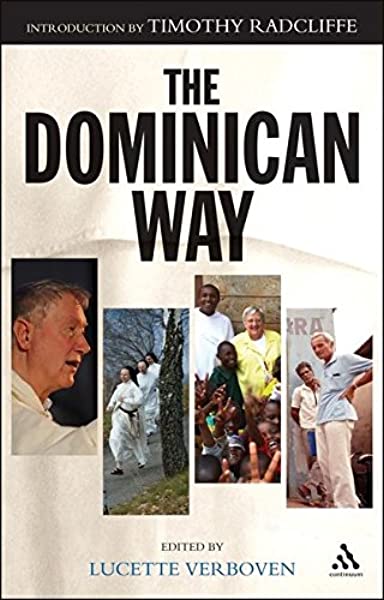
Radcliffe: Part One, 1-3; Verboven Ch. 1-3

In his book (p. 31), Radcliffe writes, “theology is always rooted in a particular cultural and social context.”  In these first six chapters, identify two or three aspects of Dominican spirituality that support this idea. 

The proclamation of the Gospel remains central to Dominican Spirituality as witnessed in the lives of these three individuals and although it is certain that this included proclamation through preaching, for them, the proclamation of the Gospel is in no way limited to preaching, and it is through this non-verbal proclamation that the Dominican Spirituality is most evident.

Radcliffe, Pérennès, and MacMillan each speak of seeking the truth, yet their seeking comes with great humility because they do not seek the truth to be right, but to understand ‘the other.’ This has given them great self-actualization, which in turn has given them freedom to impact the culture through their Christian lives, without having the need to convert the culture. This can be seen in the work in Rwanda and amongst the Muslims. The goal of ‘getting the heathen saved’ has been set aside and in its place the new goal is established: relationship. This is a particularly wise approach given the hostilities towards Christianity that were expressed by all. This then leads to a second aspect of Dominican Spirituality: mediation.

It was in my final assignment for last term that I was able to see this particular trait, but these readings help to further refine it. Then, I had in my mind the trait of mediation more closely associated with arbitrator, but the mediation of the Dominicans is more a mediation of presence than of mediator / arbitrator of formalized agreements. Instead of focusing on our differences, we identify that which we have in common. An excellent example of this is IDEO. A tremendous endeavor, seeking to impact culture by simply living out a Christian life while respecting and honoring ‘the other.’ (This is so contrary to the crusader evangelism of most western churches: conquer and convert!) MacMillan also painted the perfect picture of this in action with Rostropovich playing in the White House and the soldiers not shelling the building, simply because he was present.

The freedom to be and the freedom to allow ‘the other’ to be.

Sermon: The Epiphany RCL B

Photo by Dieter K on Unsplash

There are far too many quotes in this to call it a sermon, but I was chasing a thought and wanted to share the journey with you.

As we read this Gospel of the Epiphany, we see these two great contrasting approaches to this child lying in a manger. With Herod, there is fear, special advisors, secret meetings, plots, treachery. With Jesus, there is a star for all to see and leading the way, fulfillment of prophecy, homes open and invitations to enter, honor, worship, joy, and more. A king who is terrified and a baby (who is also a king) who welcomes all. That wonderful quote of Dietrich Bonhoeffer proves itself true: “For the great and powerful of this world, there are only two places in which their courage fails them, of which they are afraid deep down in their souls, from which they shy away. These are the manger and the cross of Jesus Christ. No powerful person dares to approach the manger, and this even includes King Herod. For this is where thrones shake, the mighty fall, the prominent perish, because God is with the lowly. Here the rich come to nothing, because God is with the poor and hungry, but the rich and satisfied he sends away empty. Before Mary, the maid, before the manger of Christ, before God in lowliness, the powerful come to naught; they have no right, no hope; they are judged.”

As we’ve noted a few times these past couple of weeks, this is the way all through Jesus’ life, even on his last day. When they came to arrest him in the Garden of Gethsemane: there was fear, anger, they came at night and in secret. Jesus response, “Have you come out as against a robber, with swords and clubs?  When I was with you day after day in the temple, you did not lay hands on me. But this is your hour, and the power of darkness.” However, “Nothing is covered up that will not be revealed, or hidden that will not be known.” And so it was.

These two contrasting approaches led me to the Psalm we had a little while back: Psalm 2. You can hear the sarcasm in the Psalmist’s voice as he asks his question and declares the Lord’s response:

Why do the nations rage
    and the peoples plot in vain?
The kings of the earth set themselves,
    and the rulers take counsel together,
    against the Lord and against his Anointed, saying,
“Let us burst their bonds apart
    and cast away their cords from us.”
He who sits in the heavens laughs;
    the Lord holds them in derision.
Then he will speak to them in his wrath,
    and terrify them in his fury, saying,
“As for me, I have set my King
    on Zion, my holy hill.”

God set the King, His Son, Jesus, on the throne of the Cross atop a hill outside of Jerusalem. In doing so, Jesus conquered the enemy of us all and gave us life. Then, following the resurrection and the ascension, God set His Son, Jesus, on the throne at His right hand. In time, “He will come again in glory to judge the living and the dead, and his kingdom will have no end.”

We know all this, yet even today, we still ask the Psalmist’s question:

Why do the nations rage
    and the peoples plot in vain?

The answer lies in Herod’s attitude and Bonhoeffer’s quote: fear. Fear in knowing that they are wrong, but unwilling to change. Fear in giving up themselves and their pride and turning to God. Fear in sacrifice, believing they will lose it all. Fear of so many things. Yet, if like the the Magi, we will enter into the house of God and along with Mary, kneel before this child, giving him our very best gifts, then we will discover the joy and peace and life that he has always desired to give us. Do not be afraid. As the Psalmist also says,

I sought the Lord, and he answered me
    and delivered me from all my fears.
Those who look to him are radiant,
    and their faces shall never be ashamed.
This poor man cried, and the Lord heard him
    and saved him out of all his troubles.
The angel of the Lord encamps
    around those who fear him, and delivers them.

Amen.

Sermon: Christmas 2 RCL B – “Candy Counter”


The headline read, “Jacking Jesus.” The story began by saying, “’Tis the season to be Jesus stealing? Away in a manger, no Christ for the bed? It has become a new Christmas fetish – neutering nativities by jacking the Jesus. Just over the past week, dozens of mini-messiahs have been nabbed from nativities across the country.” I’m not real sure why anyone would get their jollies by stealing Jesus statues from manger scenes, but I suppose it takes all types; however, many churches are fighting back. One church placed a sign in the crib after their Jesus was stolen that read, “Bring Back Baby Jesus and no one will get hurt – signed… God.” But there is a more high-tech approach.

The New York-based firm BrickHouse Security offers free, short term loans of global positioning system to religious institutions. The systems are designed to give a pinpoint location of where Jesus is based on satellite tracking. The ones from BrickHouse Security will notify immediately if the display is moved. Reverend Bob Gorman of St. Ambrose Church in Old Bridge, New Jersey told The Star-Leger, “It’s not a global positioning system. We call it God’s Positioning System.” Their church drilled a hole in Baby Jesus’ backside to slip in the GPS device before the figure was placed in the manger on Christmas Eve. From the sounds of our gospel reading today, Mary and Joseph could have benefited from such a system.

The story begins by telling us that it was Passover. This is the eight day celebration that falls in the Spring and is a festival commemorating God sparing the Jews when he killed the first born of Egypt during the Israelites final days of captivity. The festival is always marked by making a pilgrimage to Jerusalem and this was the trip that Mary, Joseph and Jesus were taking.

In their day, it would have been very common for the entire family or even village to travel together. Safety in numbers. So the Holy Family, they would have been in a large group and it wouldn’t have been uncommon for Mary and Joseph not to see each other at times, much less keep up with an energetic twelve year-old. They knew where he was: he was with friends and family and he was safe. Perhaps there’s a lesson we can keep in mind: everyone looked out for one another and they all looked out for the children.

After the festival had ended, it would have been very natural for Mary and Joseph to assume that Jesus was with the group. They were n’t irresponsible parents. It’s just how things worked and they never thought twice about it. The scripture seems to indicate that they did not start looking for him until the end of the first day—“You be home in time for dinner”—or something along those lines. When he was a no show, they probably didn’t worry much, but after a short time of looking, they went into full parental panic. Realizing he wasn’t with the group, they returned to the big city to search for him. Three days later, they find him, sitting in the temple and asking questions. Mary said to him, “Child, why have you treated us like this? Look, your father and I have been searching for you in great anxiety.” Jesus response, “Why were you searching for me? Did you not know that I must be in my Father’s house?”

We often read this as Jesus rebuking his parents, but when we do, we are putting words and the attitude of an insolent teenager in the mouth of Jesus and assume he is saying, “Duh. Where else would I be?” A more accurate take would be to say that Jesus was surprised. He did not intentionally distress his parents and he wasn’t wising off to them. He honestly thought they would know that if he was not in the house of his father Joseph, then he would be in the house of his Father in Heaven.

So, here’s a question: have you ever had Jesus go missing on you? Said with Mary and Joseph, “He’s lost!” Have you ever needed him and gone looking for him, but without success? We all have, but… did you ever stop to consider that maybe he’s not the one that’s lost? “Jesus, we’ve been searching all over for you!” “Why? I’ve been right here all along. I never left.” You… We are the ones that wandered off. We are the ones that were lost and the—not “Ha ha”—funny thing is: we never even knew it.

Pastor Joseph Stowell talked about going with his wife, three-year-old, and parents to Chicago for the annual Christmas trek at one of those massive malls. At one point, in the midst of all the fun and excitement, the adults suddenly noticed that little three-year-old Matthew was gone. Terror immediately struck everyone’s heart. They had heard the horror stories: little children kidnapped in malls, rushed to a rest room, donned in different clothes and altered hairstyle, and then swiftly smuggled out, never to be seen again. They split up, each taking an assigned location. Joseph’s was the parking lot. He said, “I’ll never forget that night—kicking through the newly fallen snow, calling out his name at the top of my lungs. I felt like an abject fool, yet my concern for his safety outweighed all other feelings.”

Unsuccessful, Joseph trudged back to the designated meeting point. His wife had not found him, nor had his mother. And then his dad appeared, holding little Matthew by the hand. Their hearts leapt for joy. Interestingly enough, Matthew wasn’t the slightest traumatized. He hadn’t even been crying. To him, there had not been a problem. Joseph asked his father where he had found him. “The candy counter,” he replied. “You should have seen him. His eyes came just about as high as the candy. He held his little hands behind his back and moved his head back and forth, surveying all the luscious options.” Matthew hadn’t looked lost. Why? Because he hadn’t even known he was lost. He was oblivious to the phenomenal danger he was in. Joseph concluded by saying, “This is a candy-counter culture, where people don’t look lost and don’t even know they’re lost.” 

When Jesus seems lost or missing to you and when you go looking for him, remember: he’s not the one that’s lost. He is very near to the Father and that is where you will find him. When we do finally find him, I bet he speaks the exact same words to us as his mother spoke to him: “Child, why have you treated us like this? Look, your father and I have been searching for you in great anxiety.”

Let us pray: Almighty God and Father of light, a child is born for us and a son is given to us. Your eternal Word leaped down from heaven in the silent watches of the night, and now your Church is filled with wonder at the nearness of her God. Open our hearts to receive his life and increase our vision, that our lives may be filled with his glory and his peace, who lives and reigns for ever and ever. Amen.

Sermon: Advent 4 RCL B – “The Tabernacle”

As slaves in the land of Egypt, the Israelites did not have access to much food, so they ate whatever they could, and a regular staples on the table was the hard and woody horseradish, so when the great Exodus came, nearly all the fleeing Israelites took horseradish with them. Moshe and Sadie, however, while gathering up their scant belongings, found to their dismay that they had run out of horseradish. Sadie immediately sent Moshe into the field to dig up a large horseradish root to take with them. However, because it was dark and everyone was running around in panic, Moshe dug up a ginger root by mistake.

Photo by Joshua Eckstein on Unsplash

After forty years in the desert, the Israelites finally entered the Promised Land – all, that is, except Moshe and Sadie. It took them forty-one years to arrive. When asked where they had been, Sadie, now grown old, shrugged her shoulders and replied, “Moshe insisted on taking an alternate root.”

Prior to that great 40 years of wandering in the desert, God gave Moses and the people instruction on how, when, and where they were to worship, a good part of which revolved around the Ark of the Covenant (the golden box that the Nazis stole from Indiana Jones). In Exodus chapter 25, we are provided with considerable detail on how the Ark was to be constructed, which included rings on either side so that poles made of Acacia wood and covered in gold could be slipped in to carry the Ark from place to place, which came in handy with all that wandering.

Because the Ark was to be moved as the people moved, then the “house” for it also had to be transportable; hence, a tent. In chapters 26 and 27 we are told all about this particular tent and it was in no way a two man pup tent. It would have been stunning to see: bronze and gold clasps, fine linen of purple and blue, poles covered in gold, and more. When assembled, it would have been 45 feet deep and 15 feet wide. The courtyard surrounding it was 150 deep and 75 feet wide. Roughly, it would have covered 12,000 square feet. The entire complex was called the Tabernacle and it was the place of the presence of God. (As an aside, the cabinet beneath the sanctuary lamp is called the Tabernacle, because it too is the place of the presence of God found in the Eucharist.)

It is over 400 years since the Exodus to the time of King David and all this time, God has been “living” in this tent, and in our reading today from second Samuel, when King David said, “See now, I am living in a house of cedar, but the ark of God stays in a tent.”—this is the tent he was referring to.

After David had sorted out the country and the enemies, built himself a nice place, he thought that maybe—after 400+ years—it might be a good thing if God had a permanent place of his own.

Initially, the Prophet Nathan agreed, but then the Lord spoke to David through Nathan and essentially said, “This task is not for you.” In first Chronicles we learn the reason, for the Lord God said to David, “You may not build a house for my name, for you are a man of war and have shed blood.” Therefore, the task went to David’s son, Solomon. Apparently God did not mind living in a tent. However, back when David made the offer, the Lord said several other things to David through Nathan.

God begins by reminding David about all the things he has already done for him. Raised him up from a shepherd to be a mighty warrior, brought the people into a land of their own, and given them peace. Then the Lord says, “Moreover the Lord declares to you that the Lord will make you a house. Your house and your kingdom shall be made sure forever before me; your throne shall be established forever.” David says he wants to build the Lord a house. The Lord says, “No, but here’s what I’m going to do: I’m going to build you a house.” David understood this as the establishment and eternal rule of his earthly Kingdom, but that was really only a temporal understanding. God had something eternal in mind.

In our Gospel reading today, we see the final pieces of this eternal plan come together. The angel of the Lord said to the Blessed Virgin Mary, “Do not be afraid, Mary, for you have found favor with God. And now, you will conceive in your womb and bear a son, and you will name him Jesus. He will be great, and will be called the Son of the Most High, and the Lord God will give to him the throne of his ancestor David. He will reign over the house of Jacob forever, and of his kingdom there will be no end.” Through these actions of God, Mary becomes the new Tabernacle. The one in whom the very presence of God was conceived and her child will fulfill the promises that God made to David and even further back, to Abraham. In Jesus, the covenant is fulfilled and the eternal Kingdom is established, but again, God has more than a temporal Kingdom being established through Jesus.

On the night before Jesus was crucified, he said, “If anyone loves me, he will keep my word, and my Father will love him, and we will come to him and make our home with him.” The phrase “make our home” can also be translated as abide. If we love Jesus, he and the Father, through the giving of the Holy Spirit, will come and abide with us. In the Greek, the word “abide” and the word “Tabernacle” have the same root word μονή (mo-na’). If we love God, he will abide with us, he will set up his Tabernacle within us.

The tent was the Tabernacle for the presence of God. The cabinet in our church is the Tabernacle for the presence of God. The Blessed Virgin Mary was a Tabernacle for the presence of God; all this so that we could be transformed into Tabernacles for the presence of our God. When God said to David, “I will build you a house,” David had only limited understanding of what God intended. For where David saw this “house” as an earthly temporal kingdom, God saw this “house” as the soul of the believer.

The promised eternal Kingdom is your very soul.

God does not require a permanent Temple / Tabernacle, because God’s Temple / Tabernacle / Kingdom / presence is established in you. “I am with you always unto the very end of the age.” He didn’t need David or anyone else to build him a permanent home. Why? Because he goes where we go. He is where we are.

Let us pray: Come, Holy Spirit, fill the hearts of Thy Faithful; and enkindle in them the fire of Thy love. Send forth Thy Spirit and they shall be created, and thou shalt renew the face of the earth. Amen.

Sermon: Advent 3 RCL B – “Part Two”


Photo by Daniel Olah on Unsplash

A few older couples used to get together to talk about life and to have a good time. One day one of the men, Harry, started talking about this fantastic restaurant he went to the other night with his wife. “Really?”, the other of the men said, “What’s it called?” After thinking for a few seconds Harry said, “What are those good smelling flowers called again?” “Do you mean a rose?” the first man questioned. “Yes, that’s it,” he exclaimed. Looking over at his wife he said, “Rose, what’s that restaurant we went to the other night?”

So far, I still have a pretty good memory—I think—except for names. I’ve always had a hard time with them, but what I’m miserable about is timeframes. I know something happened, but I have a terrible time remembering when it happened.

The brain is a complicated thing and memory is even more illusive in understanding, but what scientist have come to learn is that when we remember something, we’re not always remembering the original event, but instead are remembering the last time we remembered it, which means, we can drop a few details.

Neuroscientist Donna Bridge writes, “A memory is not simply an image produced by time-traveling back to the original event—it can be an image that is somewhat distorted because of the prior times you remembered it. Your memory of an event can grow less precise even to the point of being totally false with each retrieval.”  (Source)

Put all that together: I remember talking about this in the past, but being bad with timeframes, I don’t remember if I have already told you. What are you going to do? Get to the point, Father John.

Today, in our reading from Isaiah, we hear those very familiar words. They are familiar, not because of reading them in Isaiah, but because they are the words that Jesus spoke at the beginning of his ministry.

“And Jesus came to Nazareth, where he had been brought up. And as was his custom, he went to the synagogue on the Sabbath day, and he stood up to read.  And the scroll of the prophet Isaiah was given to him. He unrolled the scroll and found the place where it was written,

‘The Spirit of the Lord is upon me,
    because he has anointed me
    to proclaim good news to the poor.
He has sent me to proclaim liberty to the captives
    and recovering of sight to the blind,
    to set at liberty those who are oppressed,
to proclaim the year of the Lord’s favor.’”

Because this is where we remember these verses from, then we don’t really remember all that Isaiah actually said. You see, after the last statement that Jesus reads, “to proclaim the year of the Lord’s favor,” there’s actually a comma, not a period. There’s more to it. Isaiah goes on, where Jesus did not:

“The Spirit of the Lord is upon me…
to proclaim the year of the Lord’s favor,
 and the day of vengeance of our God.”

There’s a semicolon after that, but why would Jesus end with, “to proclaim the year of the Lord’s favor,” and not add the bit about vengeance? Was Jesus simply proof-texting? Picking the bits he liked and ignoring the rest? Or, was there even some deeper meaning behind stopping there? Inquiring minds want to know, but you already know the answer. Jesus was making a point.

During the Season of Advent, we spend the first two Sundays looking ahead to Jesus second coming and the last two are focused on his first coming. Jesus, by leaving off “the day of vengeance of our God” was basically doing the same thing. By ending with “to proclaim the year of the Lord’s favor,” Jesus was declaring the work of his current mission. We see this in John 3:17—“For God did not send his Son into the world to condemn the world, but in order that the world might be saved through him” and again in John 12:47—“If anyone hears my words and does not keep them, I do not judge him; for I did not come to judge the world but to save the world.” With our understanding of what Isaiah said and how Jesus used it, Jesus very well could have been saying, “God did not send his Son into the world this time to condemn” and “I did not come this time to judge.” All of which points us to the two focuses of Advent, Jesus first coming was the time of of repentance and forgiveness and his second coming will be “The day of vengeance.”

However, what Jesus did not say, was the backdrop to everything else that he did, which was a call to faith and discipleship. As St. Paul taught us in his second letter to the Corinthians: “Behold, now is the favorable time; behold, now is the day of salvation,” for there is a day coming when… well, when it will be too late.

Jesus was not proof-texting when he stopped at “the year of the Lord’s favor,” but in a sense, we are when we remember that passage of scripture. We see something so many times in a certain way that we no longer remember it or understand it in its proper context.

I just recently moved and after I got everything out of the old place, I went in and gave it a good cleaning. Everything was out and everything was clean. Someone stops by for a visit afterwards and walks through with me. They took a good look around and then asked me if I planned on leaving a certain picture hanging on the wall, but there were no pictures on the wall. Yet they pointed to it and as if by casting some spell from Harry Potter, there it was, hanging right next to the front door. I had seen that picture so many times in the exact same place, that I literally no longer saw it or remembered it. Memory is a funny thing. Sometimes it’s intentionally selective, while at other times… memories just “drop off.”

Our immortal souls cannot afford to forget that what we celebrate at Christmas—the year of the Lord’s favor—is only part one of two. Part two, we declare it every week: we believe that “He will come again in glory to judge the living and the dead, and his kingdom will have no end.” He will come again to judge. Don’t get so caught up in part one that you no longer remember or see part two. They are both of equal importance.

Let us pray: Father of our Lord Jesus Christ, ever faithful to your promises and ever close to your Church: the earth rejoices in hope of the Savior’s coming and looks forward with longing to his return. Prepare our hearts and remove the sadness that hinders us from feeling the joy and hope which his presence will bestow, for he is Lord for ever and ever. Amen.