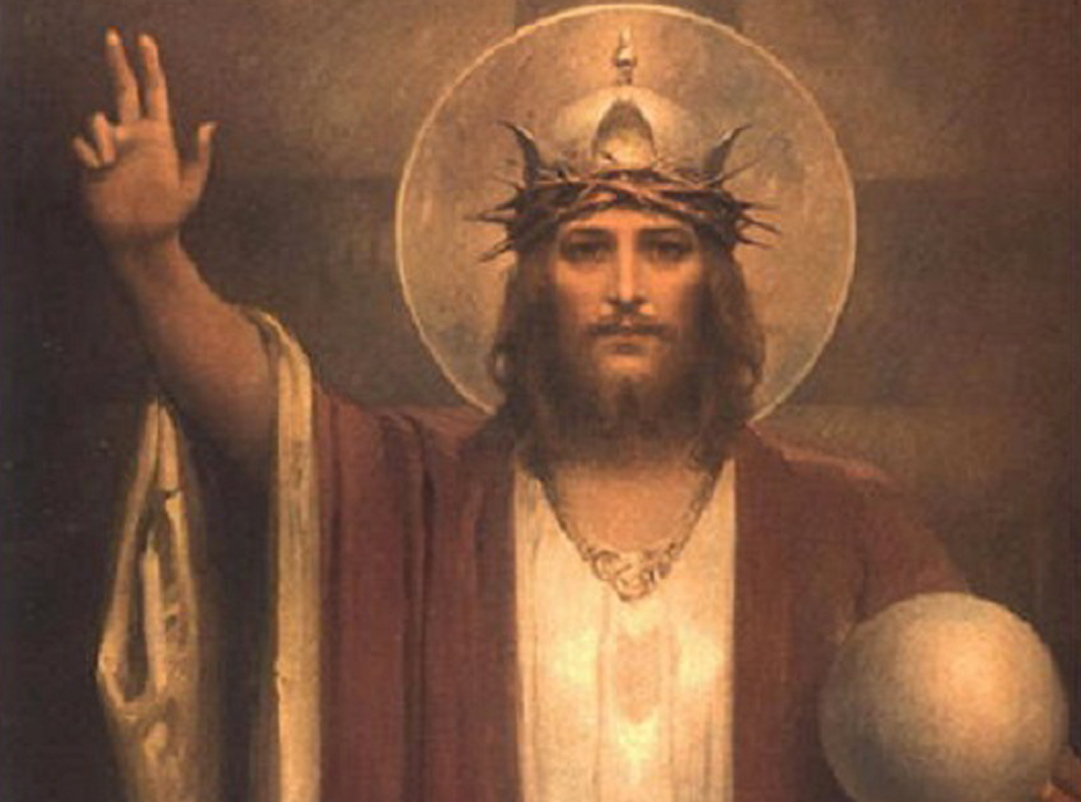
Sermon: Bartholomew

From Paul’s first letter to the church at Corinth:

I think that God has exhibited us apostles as last of all, as though sentenced to death, because we have become a spectacle to the world, to angels and to mortals. We are fools for the sake of Christ, but you are wise in Christ. We are weak, but you are strong. You are held in honor, but we in disrepute. To the present hour we are hungry and thirsty, we are poorly clothed and beaten and homeless, and we grow weary from the work of our own hands. When reviled, we bless; when persecuted, we endure; when slandered, we speak kindly. We have become like the rubbish of the world, the dregs of all things, to this very day.

I don’t know many who can name the twelve apostles who went out into the world after Jesus died – I don’t know that I could do it – but what they have accomplished is nothing less than a miracle. We are here today worshiping in this Chapel because of what they began 2,000 years ago. Yet, in their time, they were not highly thought of by the masses and were most certainly not treated well. Paul’s description from above is very accurate.

Their lives ended violently. With the exception of perhaps John, they were all put to death for the faith. “How” they were put to death reads something like a Stephen King novel – spears, swords, boiling oil, crucifixions – on and on. In the icons of Bartholomew, he is often seen holding a knife, because it is believed that he was flayed alive, but not before he had accomplished the work that Christ had commissioned him to do.

Certain sources indicate that there is a lost Gospel of Bartholomew. In addition, the Roman historian Eusebius reports that when others visited India, between 150 and 200, they “found there ‘the Gospel according to Matthew’ in Hebrew, which had been left behind by ‘Bartholomew, one of the Apostles.’”

Jesus said in our Gospel reading today, “The kings of the Gentiles lord it over them; and those in authority over them are called benefactors. But not so with you; rather the greatest among you must become like the youngest, and the leader like one who serves. For who is greater, the one who is at the table or the one who serves? Is it not the one at the table? But I am among you as one who serves.”

Bartholomew and the other Apostles were not looking to gain fame and fortune. There sole intent was to be among us as ones who serve. Ones who through passion and sacrifice served the Gospel.

Also in his letter to the Corinthians, Paul writes, “Now you are the body of Christ, and each one of you is a part of it.  And God has placed in the church first of all apostles, second prophets, third teachers, then miracles, then gifts of healing, of helping, of guidance, and of different kinds of tongues.  Are all apostles? Are all prophets? Are all teachers? Do all work miracles?  Do all have gifts of healing? Do all speak in tongues? Do all interpret?”

Then and now, the answer to Paul’s questions is “No.” Not all of us are Apostles or prophets. Not all of us are Bartholomew’s who go to India to preach the Gospel, but we all have God given gifts. Gifts that have been given to us by God to serve the Gospel. Gifts that should be used as passionately and sacrificially as Bartholomew and the others used theirs.

What gift is God calling  you to use for the sake of the Gospel?

The Imitation of Christ Project: Bk. 3, Ch. 8

IOC 3.8

SELF-ABASEMENT IN THE SIGHT OF GOD –

THE DISCIPLE

I WILL speak to my Lord, I who am but dust and ashes. If I consider myself anything more than this, behold You stand against me, and my sins bear witness to the truth which I cannot contradict. If I abase myself, however, if I humble myself to nothingness, if I shrink from all self-esteem and account myself as the dust which I am, Your grace will favor me, Your light will enshroud my heart, and all self-esteem, no matter how little, will sink in the depths of my nothingness to perish forever.

It is there You show me to myself — what I am, what I have been, and what I am coming to; for I am nothing and I did not know it. Left to myself, I am nothing but total weakness. But if You look upon me for an instant, I am at once made strong and filled with new joy. Great wonder it is that I, who of my own weight always sink to the depths, am so suddenly lifted up, and so graciously embraced by You.

It is Your love that does this, graciously upholding me, supporting me in so many necessities, guarding me from so many grave dangers, and snatching me, as I may truly say, from evils without number. Indeed, by loving myself badly I lost myself; by seeking only You and by truly loving You I have found both myself and You, and by that love I have reduced myself more profoundly to nothing. For You, O sweetest Lord, deal with me above all my merits and above all that I dare to hope or ask.

May You be blessed, my God, for although I am unworthy of any benefits, yet Your nobility and infinite goodness never cease to do good even for those who are ungrateful and far from You. Convert us to You, that we may be thankful, humble, and devout, for You are our salvation, our courage, and our strength.

Sermon: Proper 16 / Pentecost 13 RCL B – “Armor of God”

Two hunting stories. Both of them true. Both of them involve your’s truly.

When I was growing up in Louisiana, I would always look forward to going squirrel hunting. I was a bit like Dug the Dog in the movie Up! – “Squirrel!” I remember when the season began my grandaddy would come wake us up well before light, load us up in the truck, and have us in the woods as the sun was rising.

The late part of squirrel season would overlap with the early weeks of deer season, and I’m not sure why, but it seems we would always continue with squirrel hunting with one addition to the morning preparation: putting on the orange hunting vest.

I hated that vest because I was convinced that it was bright enough to scare the squirrels off, but my grandfather insisted and so I wore it, with the exception of one day.

I had been hunting for an hour and had not seen a single squirrel. Convinced that it was the vest, I took it off and stuck it in my back pocket. I walked along peacefully for another half hour, when suddenly a war zone of rifle fire broke out around me. A couple of fellas started hollering at each other and then there were more shots. Deer hunters. There was another bit of silence and then another shot. That last bullet hit a tree about a foot away from me. It was then that I realized I was the “deer” they were shooting at. Fortunately for me, they were miserable shots or were just shooting in my general direction because they had seen movement.

At some point, they realized I wasn’t a deer. There was a bit more shouting and then they slinked off without showing themselves.

I was still frozen to the spot when, a short time later, my grandaddy showed up. He had my orange hunting vest in his hand. It must have fallen out of my pocket somewhere along the way. He knew exactly what had happened. He walked up to me and handed me that vest. His only comment, “You dropped this.” The subject of me not liking the orange vest during deer season was never brought up again.

Years later, when I was living in Montana, I had some friends that had a ranch up in the mountains.  It was a wonderful place to visit and go elk hunting.  Now I’ve never shot an elk, but on one particular afternoon during elk season, in another fruitless attempt, I headed out and decided to follow a fence line for a while.  It was on a slight incline up the side of the mountain, and there was only about six inches of snow on the ground, so it wasn’t a difficult walk.  It was in the late afternoon, so after about a mile or so it was time to turn back.

On the way up I had been looking around attempting to spot that elusive elk, but on the way back down it was getting dark, so I was more aware of my footing, even though I was following my same path back down.  I hadn’t gone but about twenty-five yards when I noticed another set of footprints placed perfectly inside mine.  No, they were not human tracks but were instead the tracks of a rather large mountain lion.

I immediately looked up to see if I could spot him, because he would have been very close, but he was no where in site.  For a good while I didn’t move, just kept looking, but after feeling a little more comfortable that this bold predator wasn’t going to attack, I continued down the mountain.  I thought maybe he had recently come across me, but all the way back down the mountain there were my tracks and there were the mountain lion’s.

He had started following me about the time I had entered the tree line, which was most of the trip.  In my mind, I was convinced that the entire time I was looking for an elk, the mountain lion had been trying to decide whether or not he could have me for supper.

Do you ever reflect back on your life in amazement that you are actually still alive? Anyhow…

In our Gospel reading today, Jesus is concluding the Bread of Life discourse, but in doing so, he angers many who were following him by telling them that he is this bread of life. They may have misunderstood and thought he was suggesting some form of cannibalism when he said, “Those who eat my flesh and drink my blood abide in me, and I in them.” Whatever their reasoning, they chose to leave at which point Jesus turned to the twelve, his closest followers, and asked, ”Do you also wish to go away?” Simon Peter answered him, “Lord, to whom can we go? You have the words of eternal life. We have come to believe and know that you are the Holy One of God.”

Those twelve and many others knew that Jesus was the Messiah, difficult teachings and all, and remained with Him. However, following his death, resurrection, and ascension it was left to these followers, under the guidance of the Holy Spirit, to discover how to go about following Jesus in their day-to-day lives. Getting shot at because of my stupidity and being tracked by a mountain lion illustrated to me in a very real setting what these followers learned.

When I consider the circumstances of that first event, squirrel hunting, I always think of the verse that we read today from Ephesians, “Put on the whole armor of God, so that you may be able to stand against the wiles of the devil.” Every time I think about that mountain lion in Montana, I am reminded of a particular passage from Peter’s first epistle, “Be sober, be vigilant; because your adversary the devil walks about like a roaring lion, seeking whom he may devour.” Now, I’m not one who sees the devil around every corner or behind every bush, but I also know, to quote 20th century Hollywood wisdom, “The greatest trick the devil ever pulled was convincing the world he doesn’t exist.” So when I think on those two events from my life and those two verses that they remind me of, then I weave them together in my head, which gives me a very practical stratagem and reason for learning how to follow Jesus: Put on the armor of God, because the devil is looking for opportunities to attack you.

By telling us to “Put on the whole armor of God,” Paul is wanting us to understand that there is a battle taking place around us and the victor’s prize is our soul. He uses these images of a warrior preparing for battle so that we will see and understand how serious this fight truly is. However, to put it on, we must understand each piece.

The first piece of Paul’s armor is the belt of truth. At the trial Pilate asked Jesus, “What is truth?” We know Jesus as the ultimate Truth, but we also know that we must seek to know the truth of God, not through some casual acquaintance with Him, but instead through a deep longing to understand his will.

The breastplate of righteousness is the righteousness we have through Jesus and not anything of our own making; and putting on the boots of the Gospel of peace is Paul’s way of telling us to fulfill the Great Commission, “Go therefore and make disciples of all nations.”

The shield of faith protects us against the temptations of sin that would drag us down; and the helmet of salvation gives knowledge of forgiveness and redemption.

Finally, Paul instructs us to take up the sword of the spirit, which is the word of God. Not only the “Instruction Manual,” but the words that God gives us to defend ourselves. Think of Jesus’ temptation in the desert. Three times the devil tempted him, three times Jesus responded. What were Jesus’ responses? Deuteronomy 8:3, 6:16, and 6:13.

Many have pointed out that there appears to be no armor for the back, which points to the necessity for Christian community. The 13th Warrior. Great film. The enemy is about to attack and Ibn is inexperienced in battle. Turning to one of the Norsemen on how they would defend their position, Herger the Joyous responds, “When they come, we form a circle in the center of the room, backs to one another.” We need one another for support, accountability, and fellowship. Our very lives provide armor to those around us.

I believe you know and understand these things, so I will tell you what I believe is the biggest mistake Christians make when it comes to the Armor of God: they wait until it’s too late, until they’re in the heat of battle to put it on, just like it was too late for me to put on my orange vest when those idiots started shooting at me. The battle for our souls is not an “if,” but a “when,” so be prepared by daily putting on the armor of God, because the devil is looking for opportunities to attack you.

Let us pray: Father in heaven, you have made us for yourself; our hearts are restless until they rest in you. Fulfill this longing through Jesus, the bread of life, so that we may witness to him who alone satisfies the hungers of the human family. By the power of your Spirit lead us to the heavenly table where we may feast on the vision of your glory for ever and ever. Amen.

Sermon: Bernard of Clairvaux

Born in the year 1090, Bernard of Clairvaux would grow to become a force to be reckoned with. Not only did he establish a monastery at Clairvaux, but through his teaching, sixty other monasteries would be founded and associated with Clairvaux. That in itself would be a great enough accomplishment, but he was also a poet and hymn writer, preacher of the Crusades, priest to the Knights Templar, and counselor to popes and kings. “By 1140, his writings had made him one of the most influential figures in Christendom.”

In his writings, particularly those to Pope Eugenius III, Bernard stressed moderation in all things. He wrote to the overburdened Pope, “As the Lord says, ‘What does it profit you to gain the whole world, but lose yourself alone?’ Now since everyone posses you, make sure that you too are among the possessors.” Yes, Bernard is saying, give yourself completely to the work the Lord has called you to, but do not forget the Lord or yourself in the process. However, if there was one area where Bernard would not preach such moderation, it would be in the act of “love,” for when it comes to love, Bernard knows no limits. For Bernard, this understanding of love comes partly from his meditations on our Gospel reading.

Jesus said, “If you abide in me, and my words abide in you, ask for whatever you wish, and it will be done for you.” Bernard understood, “in me,” in God, to mean, in love with God. To be in God is to be in love with God. He believes that we are called to be in love with God and were in fact created to do so, writing, “God hath endowed us with the possibility of love.” When someone asked him “Why should we love God?”, his answer was similar to the one we heard a few Sunday’s ago: “You want me to tell you why God is to be loved and how much. I answer, the reason for loving God is God himself; and the measure of love due to him is immeasurable love.” He concludes by asking, “Is this plain?” A more modern translation of “Is this plain?” could be something like, “Duh!”

Not only is our love to be extended to God, but also to one another. Perhaps one of his more famous quotes states, “Love me, love my dog.” If you are going to be in a relationship with someone, then you have to love everything about them, including the goofy dog with fleas and bad breath and all other unfortunate and annoying aspects of their character.

In living such a life of moderation and love, Bernard fulfilled his own definition of a holy person: “seen to be good and charitable, holding nothing for himself, but using every gift for the common good.”

Centuries later, St. Josemaría Escrivá wrote, “Lord: may I have due measure in everything… except in Love.” Escrivá wasn’t speaking directly of Bernard, but those words articulate clearly the pattern of life that Bernard of Clairvaux would call us each to: a life of moderation and perpetual, unrestrained love.

The Imitation of Christ Project: Bk. 3, Ch. 7

IOC 3.7

GRACE MUST BE HIDDEN UNDER THE MANTLE OF HUMILITY –

THE VOICE OF CHRIST

IT IS better and safer for you to conceal the grace of devotion, not to be elated by it, not to speak or think much of it, and instead to humble yourself and fear lest it is being given to one unworthy of it. Do not cling too closely to this affection, for it may quickly be changed to its opposite. When you are in grace, think how miserable and needy you are without it. Your progress in spiritual life does not consist in having the grace of consolation, but in enduring its withdrawal with humility, resignation, and patience, so that you neither become listless in prayer nor neglect your other duties in the least; but on the contrary do what you can do as well as you know how, and do not neglect yourself completely because of your dryness or anxiety of mind.

There are many, indeed, who immediately become impatient and lazy when things do not go well with them. The way of man, however, does not always lie in his own power. It is God’s prerogative to give grace and to console when He wishes, as much as He wishes, and whom He wishes, as it shall please Him and no more.

Some careless persons, misusing the grace of devotion, have destroyed themselves because they wished to do more than they were able. They failed to take account of their own weakness, and followed the desire of their heart rather than the judgment of their reason. Then, because they presumed to greater things than pleased God they quickly lost His grace. They who had built their homes in heaven became helpless, vile outcasts, humbled and impoverished, that they might learn not to fly with their own wings but to trust in Mine.

They who are still new and inexperienced in the way of the Lord may easily be deceived and overthrown unless they guide themselves by the advice of discreet persons. But if they wish to follow their own notions rather than to trust in others who are more experienced, they will be in danger of a sorry end, at least if they are unwilling to be drawn from their vanity. Seldom do they who are wise in their own conceits bear humbly the guidance of others. Yet a little knowledge humbly and meekly pursued is better than great treasures of learning sought in vain complacency. It is better for you to have little than to have much which may become the source of pride.

He who gives himself up entirely to enjoyment acts very unwisely, for he forgets his former helplessness and that chastened fear of the Lord which dreads to lose a proffered grace. Nor is he very brave or wise who becomes too despondent in times of adversity and difficulty and thinks less confidently of Me than he should. He who wishes to be too secure in time of peace will often become too dejected and fearful in time of trial.

If you were wise enough to remain always humble and small in your own eyes, and to restrain and rule your spirit well, you would not fall so quickly into danger and offense.

When a spirit of fervor is enkindled within you, you may well meditate on how you will feel when the fervor leaves. Then, when this happens, remember that the light which I have withdrawn for a time as a warning to you and for My own glory may again return. Such trials are often more beneficial than if you had things always as you wish. For a man’s merits are not measured by many visions or consolations, or by knowledge of the Scriptures, or by his being in a higher position than others, but by the truth of his humility, by his capacity for divine charity, by his constancy in seeking purely and entirely the honor of God, by his disregard and positive contempt of self, and more, by preferring to be despised and humiliated rather than honored by others.

Sermon: Proper 14 / Pentecost 11 RCL B – “I Am”

A new priest came to town. The first Sunday he preached one of the best sermons folks had ever heard. Everyone was excited, believing that things were looking up for their church. They all complimented him on his wonderful and inspiring words. The following Sunday the new priest preached the exact same sermon, to the letter. Folks looked a bit bewildered, but it was so good, they all thought it was worth hearing a second time, just not two Sundays in a row. However, since he was new, no one said anything other than that they enjoyed the sermon. The third Sunday, once again the priest preached the exact same sermon. The Sr. Warden didn’t think they could take a fourth Sunday, so after everyone had exited the church he had a word with the priest. “Father,” he said, “that’s a good sermon you preached.” “Thank you,” he replied. “However,” continued the Senior Warden, “you have preached the same sermon three times now. We’ve all heard it and were wondering when you were going to go on to a different subject.” “Sir,” he responded, “when you all start acting like you’ve heard it, I’ll preach something else.”

O Lord! We installed him as rector yesterday and he’s going to turn into a tyrant today! Nope. That story has nothing to do with you all not hearing the message. Instead, it has to do with our Gospel reading, because after the next several weeks, you’re going to hear the Gospel reading and ask yourself, “Didn’t we just read this last week?” The answer is: almost.

Last week our Gospel reading ended with, ”I am the bread of life. Whoever comes to me will never be hungry, and whoever believes in me will never be thirsty.” This week it began with that exact same verse. Next week the Gospel will begin with, “I am the living bread that came down from heaven,” and the week after that Jesus will say, “The one who eats this bread will live forever.” This particular grouping of verses – John 6:22-59 – is known as the Bread of Life Discourse. So, with these four weeks focused on that one idea of Jesus saying, “I am the bread of life,” we should all get the idea that an important message is being conveyed. To fully understand what Jesus is saying, we must once again go back to the story of Moses.

We know that the Israelites were slaves in Egypt for four hundred years and that God selected Moses to lead them to their freedom. While kneeling before the burning bush, Moses hears the Lord’s plans. At one point in the dialogue, Moses asked the Lord:

If I come to the Israelites and say to them, ‘The God of your ancestors has sent me to you,’ and they ask me, ‘What is his name?’ what shall I say to them?”  God said to Moses, “I am who I am.” He said further, “Thus you shall say to the Israelites, ‘I am has sent me to you.’”  God also said to Moses, “Thus you shall say to the Israelites, ‘The Lord, the God of your ancestors, the God of Abraham, the God of Isaac, and the God of Jacob, has sent me to you’: This is my name forever, and this my title for all generations.

“I Am” is the name the Lord gives Himself.

Now, I would not normally give a lesson during a sermon on the Hebrew language, because a) it would be really boring and b) I barely passed Hebrew in seminary, but…

God says His name is “I Am.” The Old Testament was written in Hebrew and so you will read the Hebrew word for “I Am” translated in different ways: Yahweh, Adonai, and Elohim. For fear of taking the Lord’s name in vain, many later Jewish writings translate it as Ha-Shem, which translates as “the Name.” However, we will most often read it as “the Lord.” In case the question ever comes up in Trivial Pursuit, it appears 6,823 times in the Old Testament.

The New Testament was written in Greek, not Hebrew (and for the record, I did a little better in Greek than I did in Hebrew). Even so, the Name of God will appear many times as Jesus applies it to Himself. In particular, there are the seven great “I Am” statements that we are most familiar with: I am the Light of the World; I am the Door of the Sheepfold; I am the Good Shepherd; I am the Resurrection and the Life; I am the Way, the Truth and the Life; I am the True Vine; and the passage we read today, I am the Bread of Life.

Juliet said to Romeo, “What’s in a name? that which we call a rose by any other name would smell as sweet.” In any other case a name may not truly matter, but here – in the context of Jesus applying the Name of God to himself – the Name is everything. For as we said, when translated I Am can be Yahweh or Adonai or Ha-Shem, but it may also be interpreted as Jesus. With that understanding, those “I Am” statements of Jesus can be written as: Jesus is the Light of the World; Jesus is the Door of the Sheepfold; Jesus is the Good Shepherd; Jesus is the Resurrection and the Life; Jesus is the Way, the Truth and the Life; Jesus is the True Vine; and Jesus is the Bread of Life. Jesus is the Great I Am.

Is that accurate? Is that a misrepresentation of Scripture, forcing it to say what we want it to say? Absolutely not. Paul, speaking of Jesus in his letter to the Philippians (2:9-11) wrote:

Therefore God also highly exalted him
and gave him the name
that is above every name,
so that at the name of Jesus
every knee should bend,
in heaven and on earth and under the earth,
and every tongue should confess
that Jesus Christ is Lord,
to the glory of God the Father.

All of this goes to support Jesus’ claim that he is God, as he says in John 14, “He who has seen Me has seen the Father.” And in chapter 8, “Very truly, I tell you, before Abraham was, I am.”

If you believe this, Jesus is God, then what are the implications of such a claim when applied to our Gospel reading when Jesus said, “I am the bread of life… Whoever eats of this bread will live forever; and the bread that I will give for the life of the world is my flesh.”

Last week we said that in tasting Jesus we will be satisfied. So, if Jesus is truly God and if Jesus is truly the bread of life, then what is it to eat the Bread of Life? How do we go about being satisfied and nourished by God? Answer: We seek to feed our souls just as we feed our stomachs and that is not something you only do on Sunday, but multiple times each day. Aleksandr Solzhenitsyn said, “The belly is an ungrateful wretch, it never remembers past favors, it always wants more tomorrow.” Perhaps the soul isn’t quite that bad, but if we are not in the habit of feeding it on a daily basis, allowing it to taste God, then it will grow cold, isolated, and prone to sinful behavior. We have mealtime and we must also have soul time.

How do we nourish ourselves on God? We receive him physically through Holy Communion, truly the Body and Blood of Jesus, but we also feed on Him through the study of His Holy Word, prayer, and the other spiritual practices. Consider the questions we will ask as Derrick makes his Baptismal Covenant this morning and we renew our own. Each of them points to how we feed on God through repentance, fellowship, proclamation, giving, and serving. Jesus said in the Beatitudes, “Blessed are those who hunger and thirst for righteousness, for they will be filled.” Your soul hungers for Him, so seek Him where He can be found. Feed on Him through these various practices and be filled.

Jesus is the Great I Am. He is the Bread of Life. Understand that He is the only one who will satisfy the hunger of your soul; therefore, set aside time each day to provide nourishment for your soul.

So that Derrick might join us in our life with God by becoming a part of Christ’s one holy catholic and apostolic Church, the candidate for Holy Baptism will now be presented.

Sermon: Proper 13 / Pentecost 10 RCL B – “Never Satisfied?”

Brennan Manning tells a wonderful story about Esther Schwartz – a Jewish woman – and her three-year-old grandson, Jacob. She was planning a trip to the beach with her precious Jacob, so she purchased him a canary yellow sun hat so that his beautiful little face would not get sunburned. She also got him a little pail and shovel so that he could play in the sand. The day arrives and they head to the beach. She marvels over little Jacob as he carefully picks the sand up with his little plastic shovel and puts it into the bucket. In her heart she prays, “Oh, Yahweh, thank you so much for Jacob.” Just then a tremendous wave comes along, picks up her precious Jacob – pail, shovel, canary yellow hat and all – and washes him out to sea. Esther Schwartz was very upset. She yells up at God, “Who do You think You are? Do You know who I am? I am Esther Schwartz. My husband, Solomon Schwartz, is a physician, and my son, Billy Schwartz, is a dentist. How dare you do that?” At that moment a second huge wave crashes in washing little precious Jacob, pail and shovel, right back on shore at Esther’s feet. She smiled down at her grandson, then looked to heaven with her hands on her hips and shouted, “He had a canary yellow hat! Where’s the hat?”

Do you think God ever looks down from Heaven and wants to shout, “You people are never satisfied!”

The Israelites had been slaves to the Egyptians for four hundred years before Moses came along and said to Pharaoh, “Let my people go.” Yet, even though they received their freedom, when they got out in the desert there was one complaint after another. The water was bitter, so God had Moses throw a piece of wood into it and the water became sweet. There was no meat to eat, so they complained to Moses, “If only we had died by the hand of the Lord in the land of Egypt, when we sat by pots of meat and ate our fill of bread; for you have brought us out into this wilderness to kill this whole assembly with hunger.” God heard their cry and sent them quail and manna from Heaven, the bread of angels. Yet the people continued to complain. The Lord knew they needed bread, meat and water; and He would continue to provide for them just as He had in the past, yet the people grumbled?

Then there was the time that the Lord wasn’t acting fast enough for them. Moses had gone up the mountain to receive the Ten Commandments and when he didn’t return, they said to Aaron, “Come, make gods for us, who shall go before us; as for this Moses, the man who brought us up out of the land of Egypt, we do not know what has become of him.” Enter the golden calf. Not only were they not satisfied with the things that the Lord had done for them, they weren’t even satisfied with the Lord Himself.

Today we read about the sin of King David. We’ve discussed this one before. David sees Bathsheba, the wife of Uriah. David desires her, so he conspires to have Uriah killed. He succeeds and takes Bathsheba as his wife. The Lord, speaking through the prophet Nathan says to David, “I anointed you king over Israel, and I rescued you from the hand of Saul; I gave you your master’s house, and your master’s wives into your bosom, and gave you the house of Israel and of Judah; and if that had been too little, I would have added as much more. Why have you despised the word of the LORD, to do what is evil in his sight?” I did so much for you, why weren’t you satisfied?

In both cases, the Israelites in the desert and David with Bathsheba, their lack of being satisfied with what God had already provided and their desire for more, led them to complaining and sin. The Psalmist says:

Take delight in the Lord,
and he will give you the desires of your heart.
Commit your way to the Lord;
trust in him, and he will act….
Be still before the Lord, and wait patiently for him.

Yet, when God refused to give them what they wanted, they sought to satisfy those desires themselves. I’m glad we’re not like them! I wish that were true. Unfortunately, I think there is a little complaining in us all.

Jesus tells us that our Father in Heaven knows our needs even before we ask. Even so, he tells us not to hesitate in asking, going on to say, “Whatever things you ask in prayer, believing, you will receive.” And again, “How much more will your Father who is in heaven give good things to those who ask Him!” However, even though we may receive, even though we may have all that we need, even though God has provided for us in the past, we may still complain.

Johann Wolfgang von Goethe wrote in The Sorrows of Young Werther, “A dim vastness is spread before our souls; the perceptions of our mind are as obscure as those of our vision; and we desire earnestly to surrender up our whole being, that it may be filled with the complete and perfect bliss of one glorious emotion. But alas! when we have attained our object, when the distant ‘there’ becomes the present ‘here,’ all is changed; we are as poor and circumscribed as ever, and our souls still languish for unattainable happiness.” Even when our desires are fulfilled, we immediately start looking for more.

A band that was around throughout the 90’s, “The The” – Yes, that’s their name! – “The The,” wrote the song, True Happiness this Way Lies. A bit of the lyrics:

Baby!… I’ve got my sight set on you
And someday… you’ll come my way.
But when you put your arms around me
I’ll be looking over your shoulder for something new.

Any truth in that?

So Fr. John, what is the problem? Why am I never satisfied? Why am I always looking for more? Answer: Because you are looking for bread that will only fill your stomach. You are looking for something that will only satisfy you for a few hours instead of seeking that which will satisfy you for all eternity.

The day before our Gospel reading is the feeding of the 5,000. It is this group that has followed Jesus across the dangerous sea, but they have followed him, not because He is the Lord and not because He has offered them salvation. They have followed Him because He may provide some immediate, but temporary satisfaction. He even calls them out saying, “Very truly, I tell you, you are looking for me, not because you saw signs, but because you ate your fill of the loaves.” If we seek Jesus with the same motivation, immediate and temporary satisfaction, we will most always be disappointed.

To be satisfied, we seek Jesus for love of Him, not for the love of what he can do for us. Yes! Ask for whatever you will. He wants you to, but don’t love Him for what He does for you, because if He doesn’t satisfy that immediate and temporary desire, then you will complain against Him. Instead, love Him for who He is. Consider these words of Thomas a Kempis from The Imitation of Christ, “The wise lover regards not so much the gift of Him Who loves as the love of Him Who gives. He regards the affection of the Giver rather than the value of the gift, and sets his Beloved above all gifts. The noble lover does not rest in the gift, but in Jesus who is above every gift.” Archbishop Michael Ramsay picked up this same thought in his work Sacred and Secular. He wrote, “the gift must not be loved more than the Giver.”

Our relationship with God, our love of God – Father, Son and Holy Spirit – is not based on those gifts that he may give us, instead our love for God is based purely on the fact that he is God. He has already given us that which we are in most desperate need of: Eternal Life with Him.

Jesus said, “I am the bread of life. Whoever comes to me will never be hungry, and whoever believes in me will never be thirsty.” “Do not work for the food that perishes, but for the food that endures for eternal life, which the Son of Man will give you.”

It is in tasting Jesus that you will be satisfied.

St. Francis Xavier wrote a beautiful hymn, My God, I Love You. A translation of his words serve as our prayer. Let us pray:

My God, I love You; not because I hope for heaven,
Nor because those who do not love You are lost eternally.

You, my Jesus, You embraced me upon the cross;
For me You bore the nails, and spear, and manifold disgrace,
And griefs and torments numberless, and sweat of agony;
Yes, death itself; and all for me who was Your enemy.

Then why, Blessed Jesus Christ, should I not love You well?

Not for the sake of winning heaven, nor of escaping hell;
Not from the hope of gaining anything, not seeking a reward;
But as You have loved me, O ever-loving Lord.

So would I love You, dearest Lord, and in Your praise will sing;
Solely because You are my God, and my most loving King. Amen.

Sermon: Proper 12 / Pentecost 9 RCL B – “Do Not be Afraid”

God is sitting in Heaven when a scientist says to Him, “Lord, we don’t need you anymore. Science has finally figured out a way to create life out of nothing. In other words, we can now do what you did in the beginning.”

“Oh, is that so? Tell me,” replies God.

“Well,” says the scientist, “we can take dirt and form it into the likeness of You and breathe life into it, thus creating man.”

“Well, that’s interesting. Show Me. ”

So the scientist bends down to the earth and starts to form the soil.

“Oh no, no, no,” interrupts God. “Get your own dirt.”

In the beginning. In the beginning when God created would have been something amazing to see. I think it would have been something truly beyond our abilities to imagine or even comprehend. Yet, that has not stopped us from trying. Last week we did a 31,000 miles per hour drive by of Pluto. The New Horizons space probe traveled 3 billion miles on its journey to get there and it takes 4.5 hours for a signal to reach earth. You thought your internet connection was slow. How big is Pluto? If earth were the size of a basketball, Pluto would be about the size of a golfball. The universe is one of those situations where the more we know, the less we know.

When the author of Genesis began writing his understanding of creation, he did not have the scientific knowledge that we have today, but he did have his own cosmology. His own understanding of the universe, which a careful and imaginative reading of Genesis can reveal.

Hebrew conception of universeThis cosmology can be demonstrated best by taking a bowl, turning it upside down, and pressing it down in the shallow end of a swimming pool. Imagine, instead of floating up, that this bowl would rest on pillars coming up from the bottom of the pool. Then, imagine a disk and place it inside the air pocket created by the bowl, and have it also supported by pillars. That disk is surrounded by water on all sides. Therefore, the disk is the dry land and if you were to look up, essentially looking up at the inside of the bowl, you would see the firmament, the heavens, where the sun, moon, stars, Pluto and all the rest are held. Below you, below this disk is Sheol, what we now call hell. Above the surface of the swimming pool is Heaven. So everything, the bowl, the dry land, the firmament, Sheol, everything is surrounded by water, and the water is chaos.

When God created the heavens and the earth, he brought them out of this chaos. He brought order. The flood during the time of Noah, was God allowing the water, the chaos to once again reign over creation. Moses and the Israelites passing through the Red Sea shows God delivering His people through the chaos and into the Promised Land.

All of this ties into the use of water at baptism, because going into the water is going into the chaos, going into disorder and death. Consider Paul’s words, “We have been buried with him by baptism into death, so that, just as Christ was raised from the dead by the glory of the Father, so we too might walk in newness of life.” Going into these waters of baptism, of chaos, is being buried in them. It is death.

Now, with that understanding of the waters, consider again our Gospel reading: “When evening came, his disciples went down to the sea, got into a boat, and started across the sea to Capernaum. It was now dark, and Jesus had not yet come to them. The sea became rough because a strong wind was blowing. When they had rowed about three or four miles, they saw Jesus walking on the sea and coming near the boat, and they were terrified.”

They were terrified because out of the darkness came this figure, walking across the waters of disorder, chaos, and death. With their understanding of the waters, can you imagine the fear they experienced? But then He spoke to them, “It is I; do not be afraid.”

The Psalmist wrote:

God is our refuge and strength,
a very present help in trouble.
Therefore we will not fear though the earth should change,
though the mountains shake in the heart of the sea;
though its waters roar and foam,
though the mountains tremble with its tumult.

And Jesus spoke to them, “It is I; do not be afraid.” And God spoke to them, “It is I; do not fear though the earth should change, though its waters roar and foam.” Do not be afraid.

Today, some are experiencing chaos in their own lives, but we can all look out towards the horizon of our own lives and and even though we may not hear the thunder, we can see the flashes of lightning in the clouds. “For he makes his sun rise on the evil and on the good, and sends rain on the just and on the unjust.” And so there are times in our lives when the rain falls, the thunder crashes, the seas roar, and we become afraid. There are days when we may not want to even come out of the minimal security of our rooms, but Jesus says, “It is I; do not be afraid.”

Put yourself in the place of the disciples on the boat. Jesus says, “It is I; do not be afraid.” Here He is, the one who treads on the waters of death and chaos, but do you trust Him or are you still afraid? And if you are afraid, what would you do if you weren’t?

For example: If you weren’t afraid of the storms that may come in your life, how much would you give? If you weren’t afraid that there wouldn’t be enough for you, that it wouldn’t run out, if you weren’t terrified by the proverbial rainy day, how much would you give?

If the events in your past life didn’t trap you in the fear that they might happen again, how much would you care? If you weren’t afraid of losing someone or something? Of being ridiculed or laughed at? If you weren’t afraid of shedding a tear, how much would you care for family, friends, or even a stranger?

If the chaos of loving someone hadn’t isolated you from loving others, how much would you love? We’ve all had our hearts broken at least once, but if you weren’t afraid of it happening again, how much would you love? If you weren’t afraid of revealing your true self, your greatest joys, hurts, weaknesses, strengths, and shortcomings; if you weren’t afraid of death, and if you weren’t afraid of being a true friend of Jesus, how much would you love?

In the midst of a terrible battle, two soldiers who were friends became separated. As the fighting raged on all sides, one of the two soldiers suddenly saw his friend lying on the ground, badly wounded and with no protection from the bullets and the bombs. The soldier turned to his lieutenant and begged for permission to go to his friend, to try to rescue him, to try to carry him out of the firefight and to safety. The lieutenant forbade him. “I order you not to go. You would stand no chance of coming back alive.”

A moment later, while the lieutenant was turned in another direction, the soldier took off. He ran into the clearing, knelt by his friend, picked him up and began to run. Part way back, a spray of bullets hit him. But stumbling, he made it back to safety with his friend. The lieutenant came over. He was furious and grief-stricken at the same time. He said to the soldier, “What a waste. Look at your friend. He’s dead. You brought back a corpse. And look at you. Look at your wounds. What a waste.” The soldier looked up at the lieutenant. He smiled and said, “Lieutenant, it wasn’t a waste. When I got out there, my friend was still alive and he looked up at me and said, ‘I knew you’d come.’”

Jesus says, “It is I; do not be afraid.” A quote that made the rounds awhile back, “Be the kind of person that when your feet hit the floor in the morning, the devil says, “Oh no, they’re up!”

In the beginning, God created. He created the heavens and the earth and everything in between. And he created you. He created you to love and worship Him, but He also created you to give, to care, to love one another. He created you to live. Still, He understands your fear of the stormy, chaotic waters of this life, but just as He did not abandon His disciples, He will not abandon you. Even now, He comes to you, walking on those waters. “Do not be afraid.” Do not be afraid to give, to care, to love. Do not be afraid to live.

Let us pray: O Dearly beloved Word of God, teach us to be generous, to serve You as You deserve, to give without counting the cost, to fight without fretting at our wounds, to labor without seeking rest, to spend ourselves without looking for any reward other than that of knowing that we do Your holy will. In Jesus Name we pray. Amen.

The Imitation of Christ: Bk. 3, Ch. 6

IOC 3.6

THE PROVING OF A TRUE LOVER –

THE VOICE OF CHRIST

MY CHILD, you are not yet a brave and wise lover.

THE DISCIPLE

Why, Lord?

THE VOICE OF CHRIST

Because, on account of a slight difficulty you give up what you have undertaken and are too eager to seek consolation.

The brave lover stands firm in temptations and pays no heed to the crafty persuasions of the enemy. As I please him in prosperity, so in adversity I am not displeasing to him. The wise lover regards not so much the gift of Him Who loves as the love of Him Who gives. He regards the affection of the Giver rather than the value of the gift, and sets his Beloved above all gifts. The noble lover does not rest in the gift but in Me Who am above every gift.

All is not lost, then, if you sometimes feel less devout than you wish toward Me or My saints. That good and sweet feeling which you sometimes have is the effect of present grace and a certain foretaste of your heavenly home. You must not lean upon it too much, because it comes and goes. But to fight against evil thoughts which attack you is a sign of virtue and great merit. Do not, therefore, let strange fantasies disturb you, no matter what they concern. Hold strongly to your resolution and keep a right intention toward God.

It is not an illusion that you are sometimes rapt in ecstasy and then quickly returned to the usual follies of your heart. For these are evils which you suffer rather than commit; and so long as they displease you and you struggle against them, it is a matter of merit and not a loss.

You must know that the old enemy tries by all means in his power to hinder your desire for good and to turn you from every devotional practice, especially from the veneration of the saints, from devout meditation on My passion, and from your firm purpose of advancing in virtue. He suggests many evil thoughts that he may cause you weariness and horror, and thus draw you away from prayer and holy reading. A humble confession displeases him and, if he could, he would make you omit Holy Communion.

Do not believe him or heed him, even though he often sets traps to deceive you. When he suggests evil, unclean things, accuse him. Say to him: “Away, unclean spirit! Shame, miserable creature! You are but filth to bring such things to my ears. Begone, most wretched seducer! You shall have no part in me, for Jesus will be my strength, and you shall be confounded. I would rather die and suffer all torments than consent to you. Be still! Be silent! Though you bring many troubles upon me I will have none of you. The Lord is my light, my salvation. Whom shall I fear? Though armies unite against me, my heart will not fear, for the Lord is my Helper, my Redeemer.”

Fight like a good soldier and if you sometimes fall through weakness, rise again with greater strength than before, trusting in My most abundant grace. But beware of vain complacency and pride. For many are led into error through these faults and sometimes fall into almost perpetual blindness. Let the fall of these, who proudly presume on self, be a warning to you and a constant incentive to humility.