
This isn’t necessarily a sermon; it may be better categorized under the heading, “Things to Ponder.”
Our saint for today, Bernard Mizeki, was from Africa. In my readings about his life, I was reminded of the writings of another African clergy person, Bishop Desmond Tutu.
Bishop Tutu wrote a rather inflammatory book as far as some Christians are concerned—God is Not a Christian: Speaking Truth in Times of Crisis—a collection of sermons and lectures.
From a lecture in 1992, Bishop Tutu says, “Is God dishonoured that Mahatma Gandhi was a Hindu? Shouldn’t we be glad that there was a great soul who inspired others with his readings of satyagraha, who inspired the Christian Martin Luther King Jr in his civil rights campaign? Do we really have to be so ridiculous as to assert that what Mahatma Gandhi did was good, but it would have been better had he been a Christian? What evidence do we have that Christians are better? Isn’t the evidence often overwhelming in the opposite direction?
“Don’t we have to be reminded too that the faith to which we belong is far more often a matter of the accidents of history and geography than personal choice? If we had been born in Egypt before the Christian era, we would have been perhaps worshippers of Isis, and had we been born in India rather than in South Africa, the chances are very, very considerable that we would have ended up being Hindu rather than Christian.” (p.15)
I believe in an omnipotent God, and I believe His word. The Psalmist declares,
“Your eyes [Lord] saw my unformed body;
all the days ordained for me were written in your book
before one of them came to be.”
(Psalm 139:16)
I believe the Lord knew us and our lives even before He began the act of creating; therefore, I believe He knew that I was going to be born in Louisiana and into a Christian upbringing. He knew that I would try to follow Him, and that, if it is His will, I will attain salvation through His Son, Jesus. I believe these things. However, with that said, does it also mean that I believe Gandhi was a really great guy and teacher, but because he was Hindu instead of Christian, he cannot attain salvation? That he is damned for eternity? There are plenty who will say, “Yes. He’s going to hell.” As for me, the answer is above my pay grade, but I do know that on the day of judgment, I do not want to be next in line behind Gandhi.
Jesus gave us the Great Commission: “All authority in heaven and on earth has been given to me. Therefore go and make disciples of all nations, baptizing them in the name of the Father and of the Son and of the Holy Spirit, and teaching them to obey everything I have commanded you. And surely I am with you always, to the very end of the age.” (Matthew 28:18-20) If we have one “job” on this planet, it is that; however, what happens to those we don’t reach with that message? What about those who lack the benefit of a Christian upbringing or any access to the Gospel of Jesus Christ? Is it their fault or ours, or did God simply choose who would be saved and who would not? I don’t have answers to these questions, but they are worth pondering, even if they may make us uncomfortable.
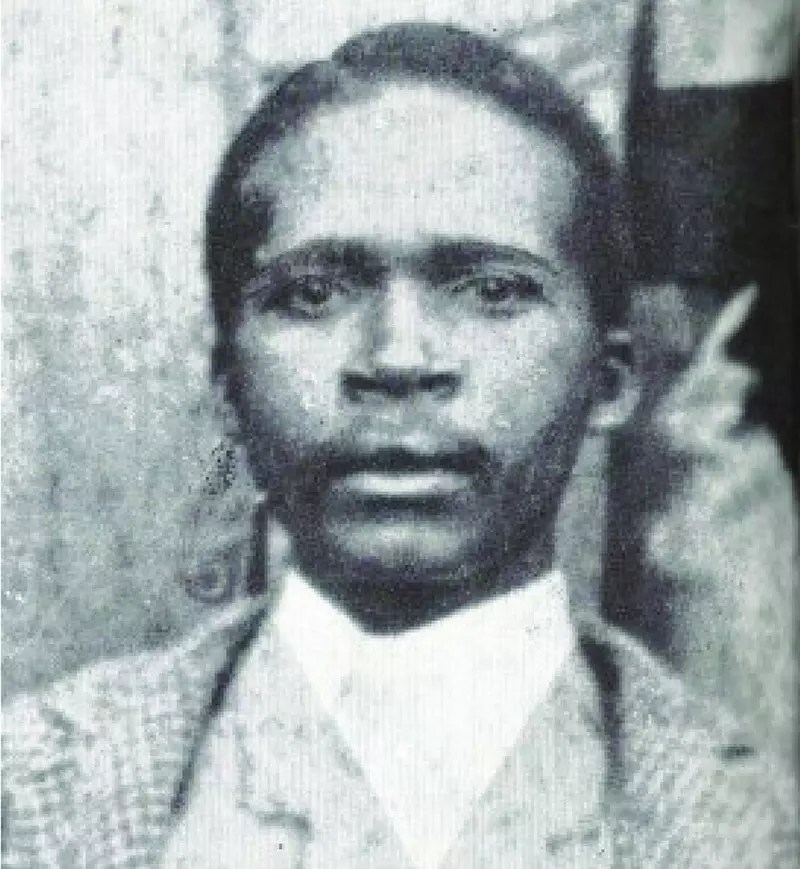
Bernard Mizeki was born in 1861 in what is now Mozambique. He later traveled to Cape Town, South Africa, where he came into contact with Anglican missionaries. He converted to the Christian faith and became a catechist in the church. He then obeyed the Great Commission and went out proclaiming. Many came to believe through his work, but in the end, some of those he was seeking to bring the message of God’s love to killed him, for they failed to understand the Good News.
Perhaps, when we ponder certain questions, we should not be overly concerned with “Who is in and who is out?” Perhaps our concern should be for souls. Who can we, like Bernard, proclaim the Good News of Jesus Christ to? From there, the work is and always has been God’s.
 Candle in a Cave