
(or “How I had a Hankering for Ramen and Ended Up at the Munch”
The title says it all. For whatever reason, the appetite wanted Ramen. Typed it in, found a good place, and discovered that it was only a block from the Munch Museum. So I crossed the Akrobaten (‘the acrobat’), a 206-meter long pedestrian bridge…
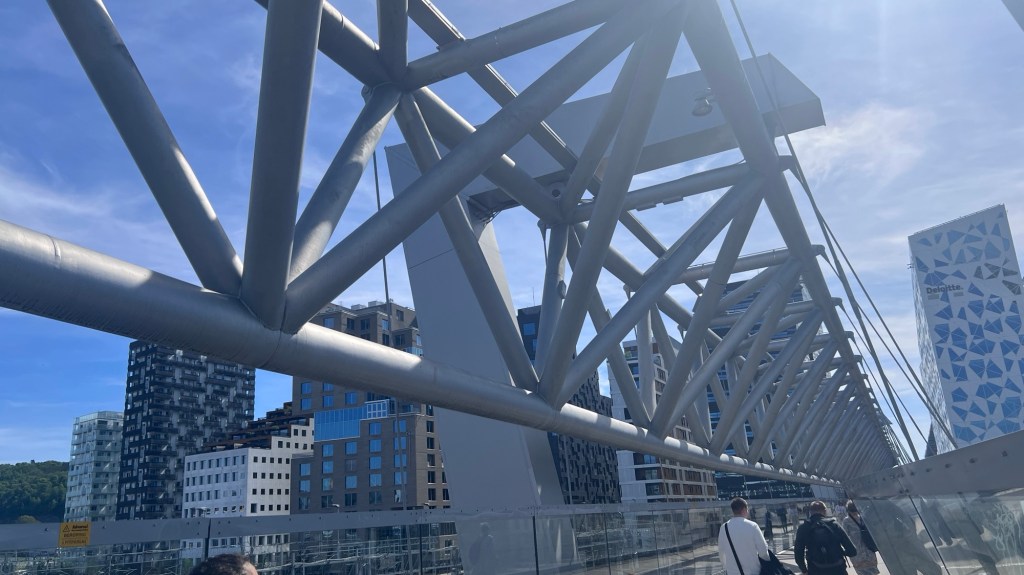
… and made my way to the museum.

Edvard Munch (1863-1944) is a local boy, so clearly, they are proud of him here. You’ll know him from The Scream, but he was a very prolific painter, who also worked as a sculptor and photographer.
As I entered, I was not skeptical, but did not have him marked up as one of my favorites. I left thinking quite differently.
A bit about his technique.
ON THE SURFACE: What are we really looking at when we look at a painting? Something that resembles reality, or just colours and shapes arranged on a physical surface? Could it be both? From the start of his artistic career, Munch was interested in everything that lay on the surface of a painting, and he allowed the very process of painting to come to light. The brushstrokes themselves were part of telling the story. This meant that his paintings could also look like unfinished drafts. Munch would scrape and add to the painting many times. Sometimes, he squeezed thick paint directly from the tube, or thinned it out so that it ran down the picture. His pictures were no longer just recognizable motifs, but also told the story of the action behind them – the act of painting.
Warning: a lot of pictures to follow.
The first I saw that caught my eye—why I don’t know—was Attraction, which perhaps spoke of the remainder of my tour.
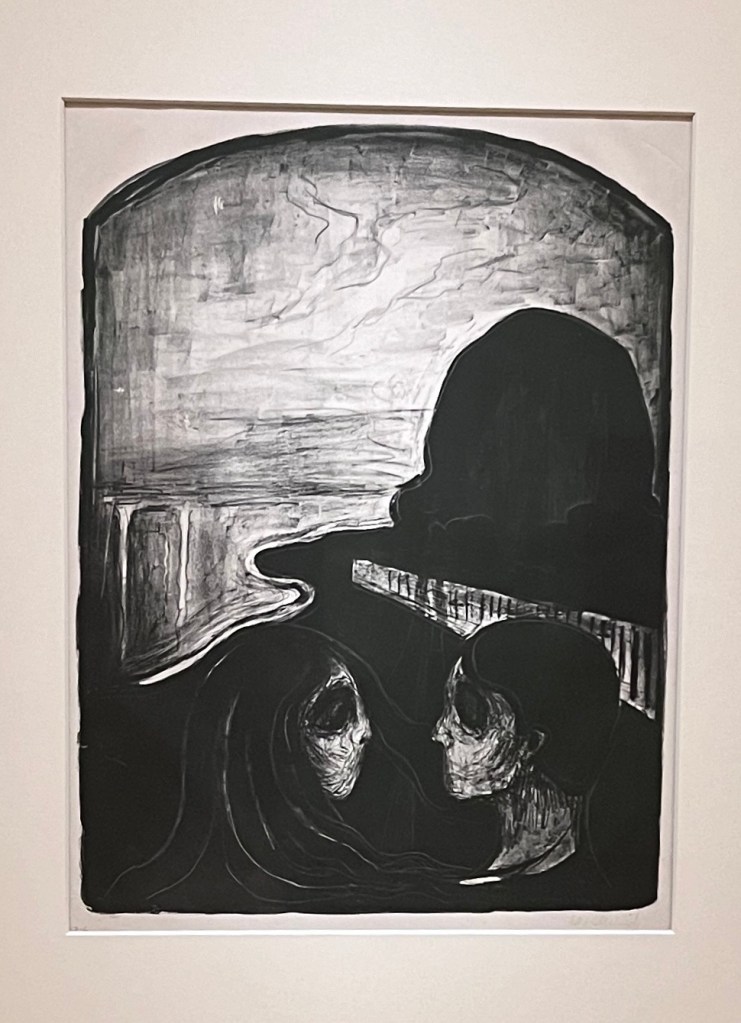
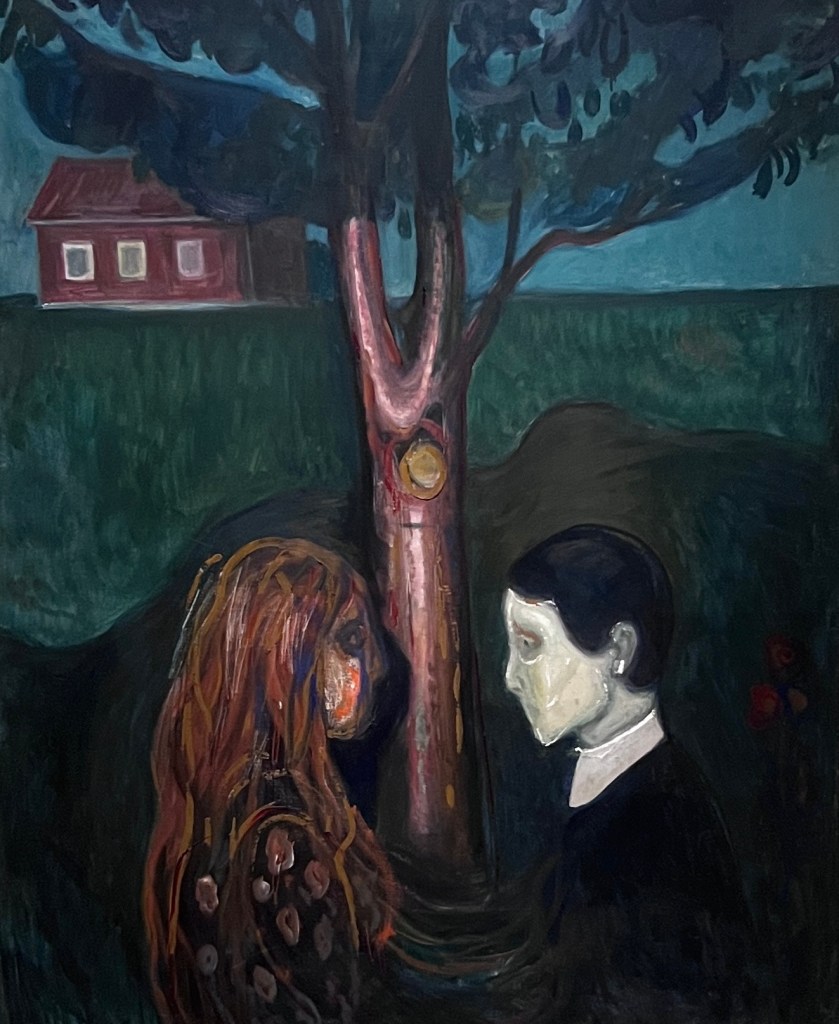
Munch was one who would return to certain themes and even images and rework them. So, where Attraction was painted in 1896, Eye in Eye (below) was painted in 1899-1900. Easy to see the similarities.
Another example of various time periods and media is found here / Crying Girl.
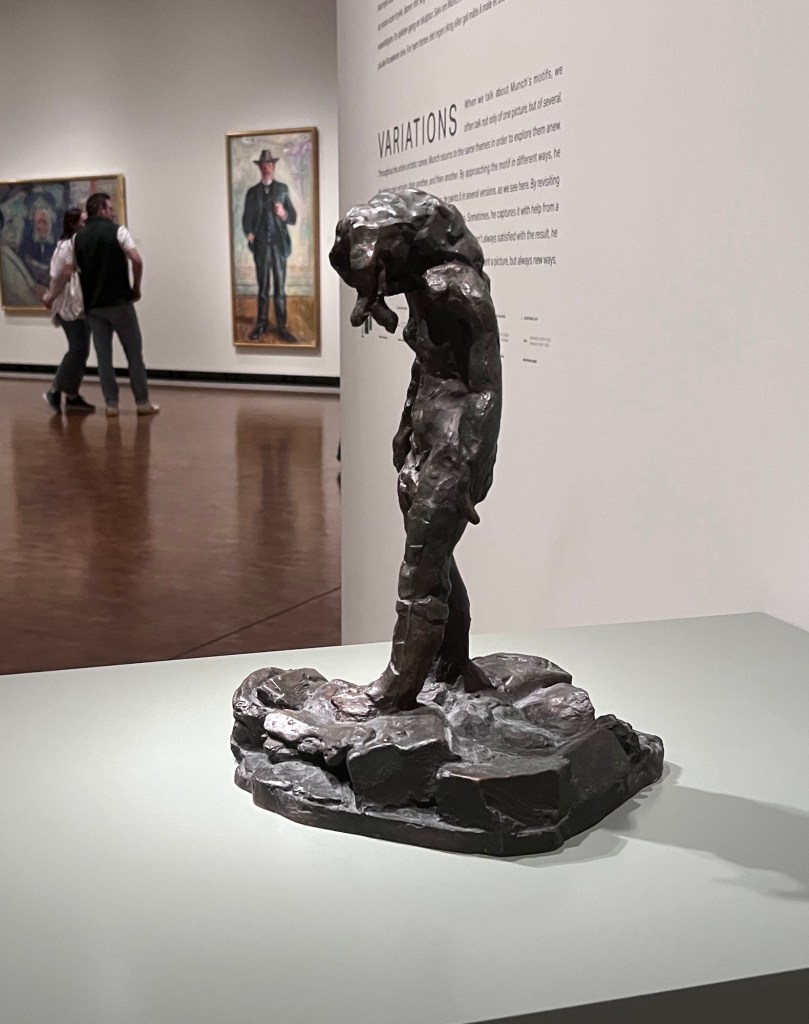

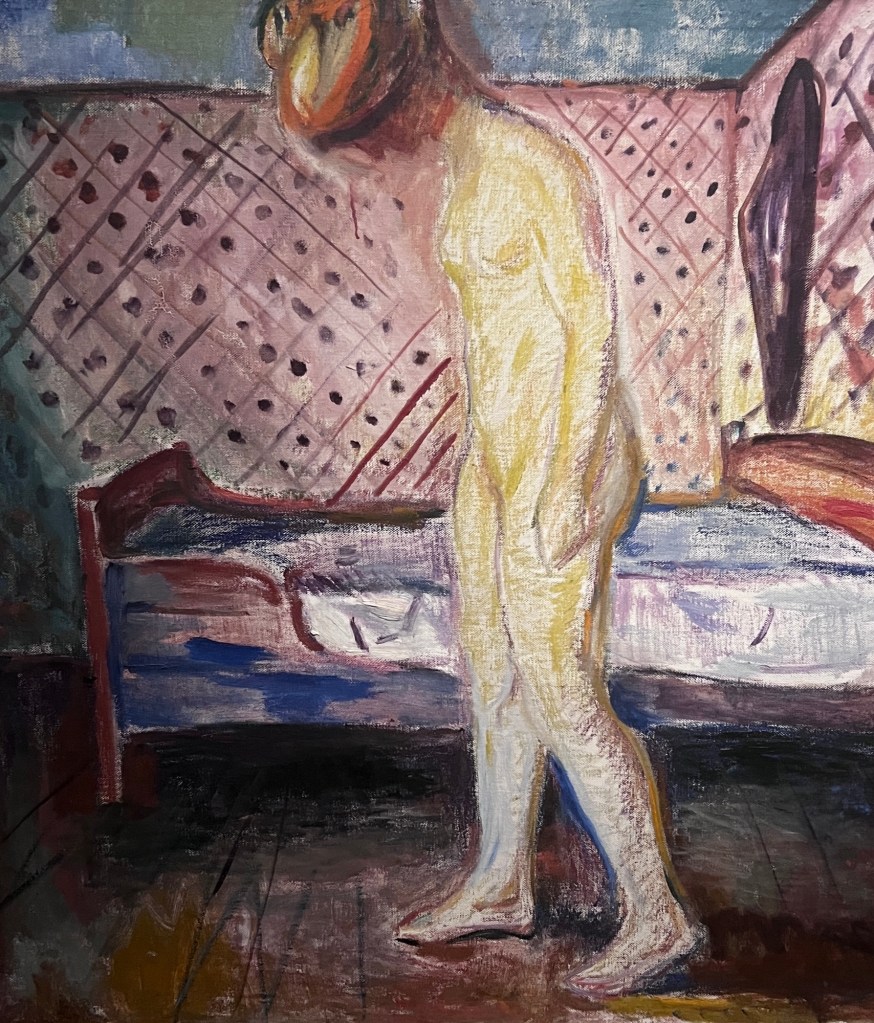
And here / The Human Mountain.
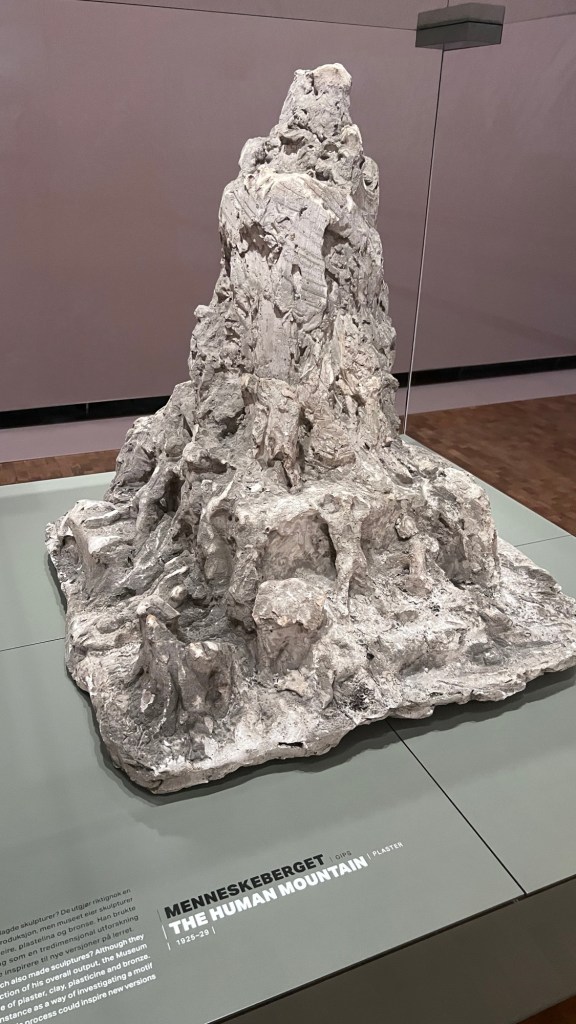
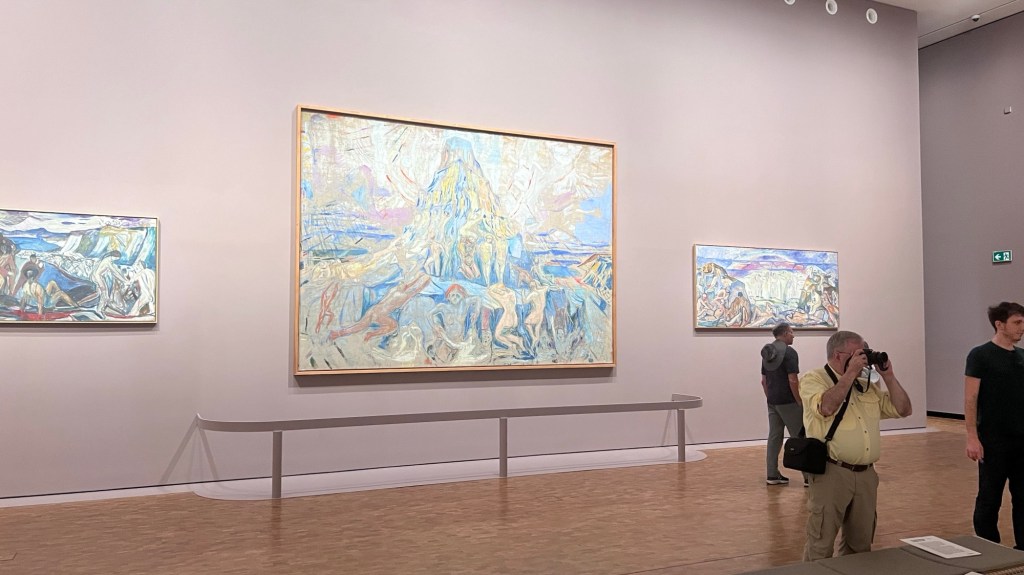
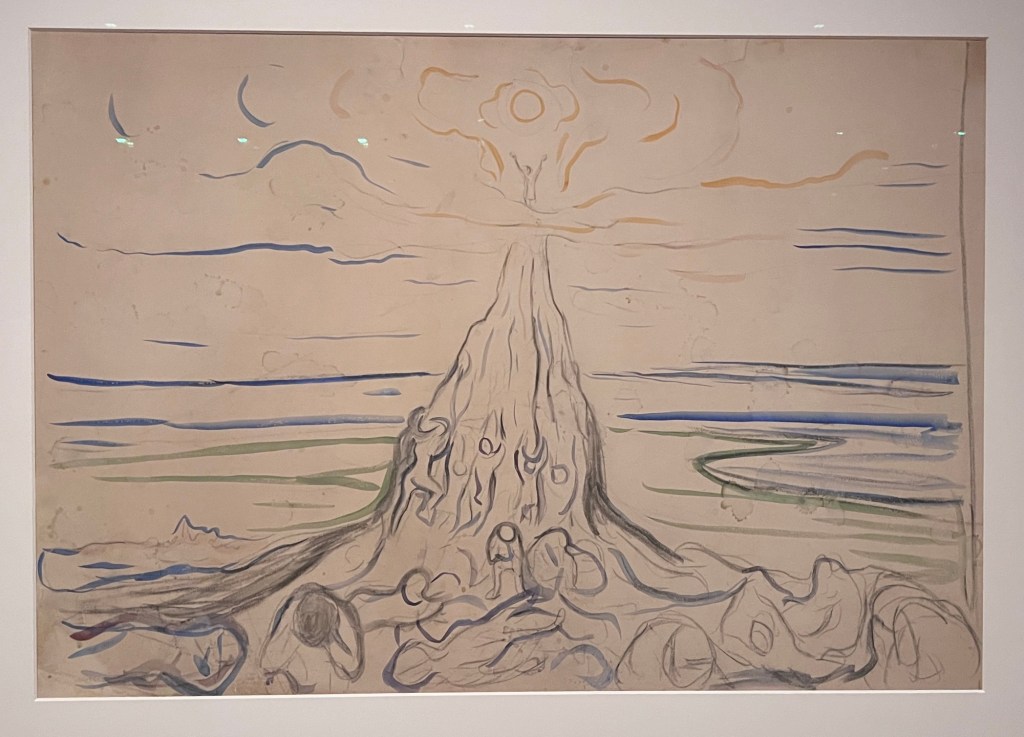
And here / Sick Child
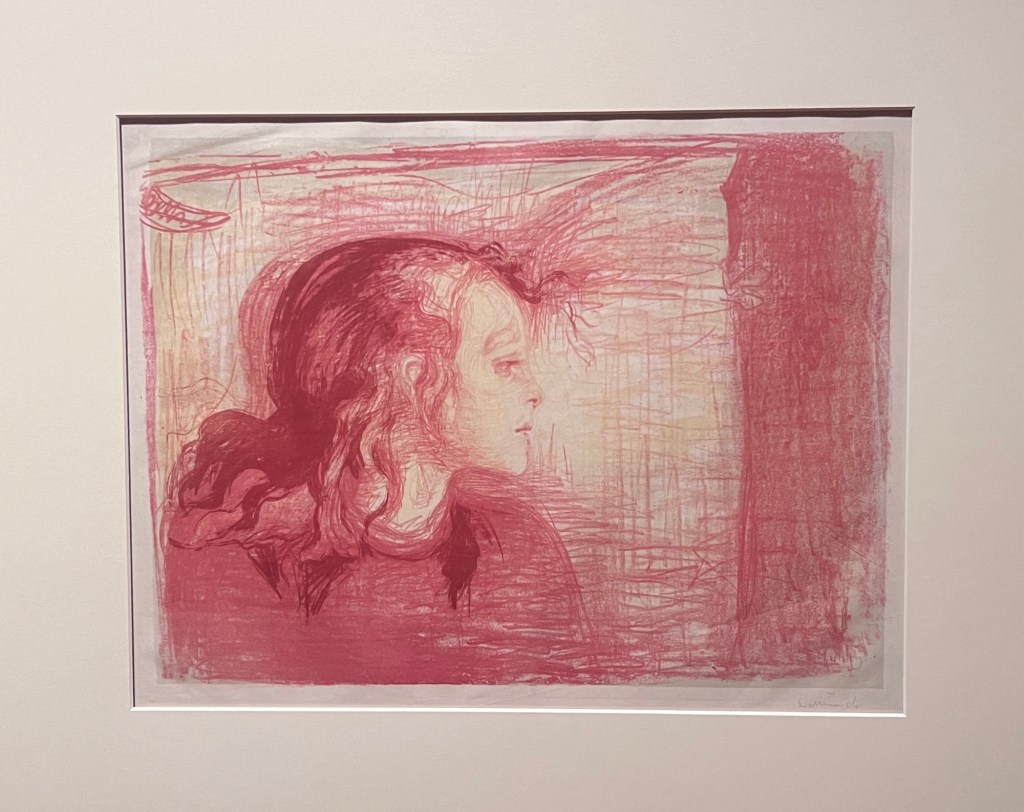
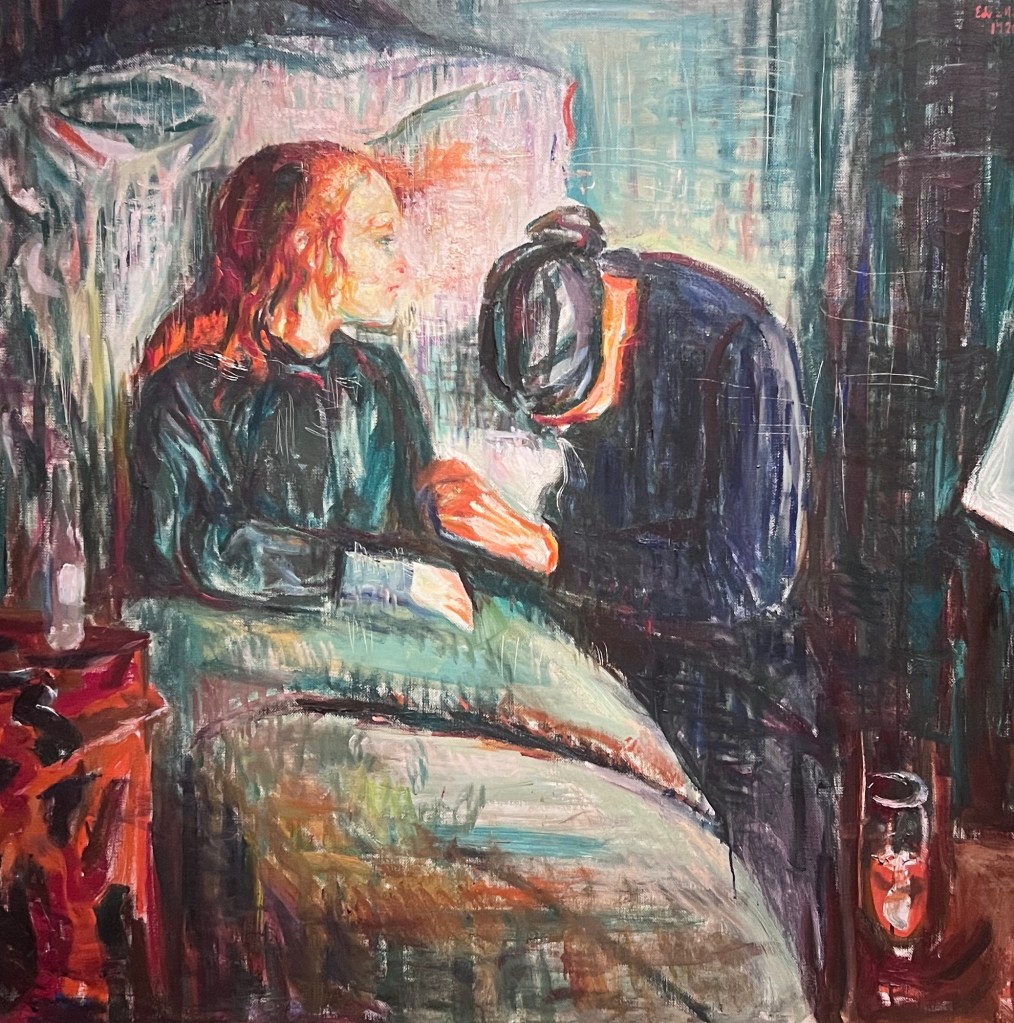
He was fascinated with philosophy, religion, and the natural sciences—how all things worked together—which led to his “belief” in Crystallisation.
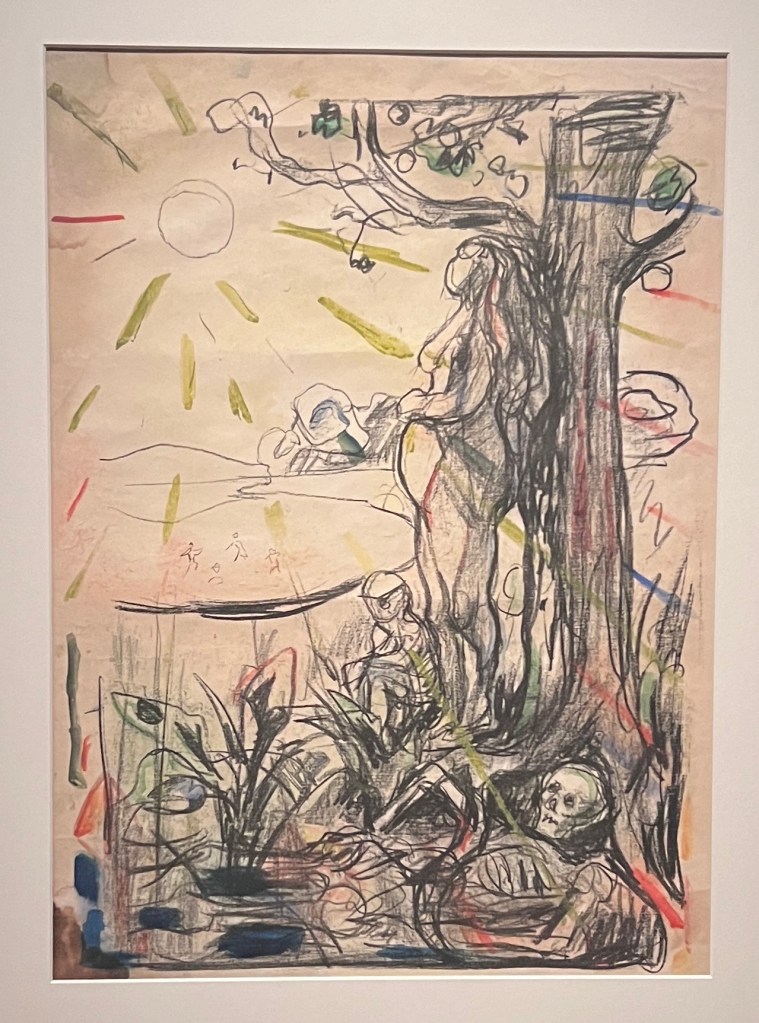
‘Crystallisation’ was one of the processes that occupied Munch. This was a pseudo-scientific theory which proposed that life forms and develops from inorganic material. For Munch, this process represented a factual, spiritual and philosophical belief in the life cycle. The divisions between humans and nature, plants and minerals, are wiped out: we are not separate from nature but a part of it.
This cycle can be found in much of his art, from the cycle of relationships to the cycle of nature. I believe these illustrate it as a whole.

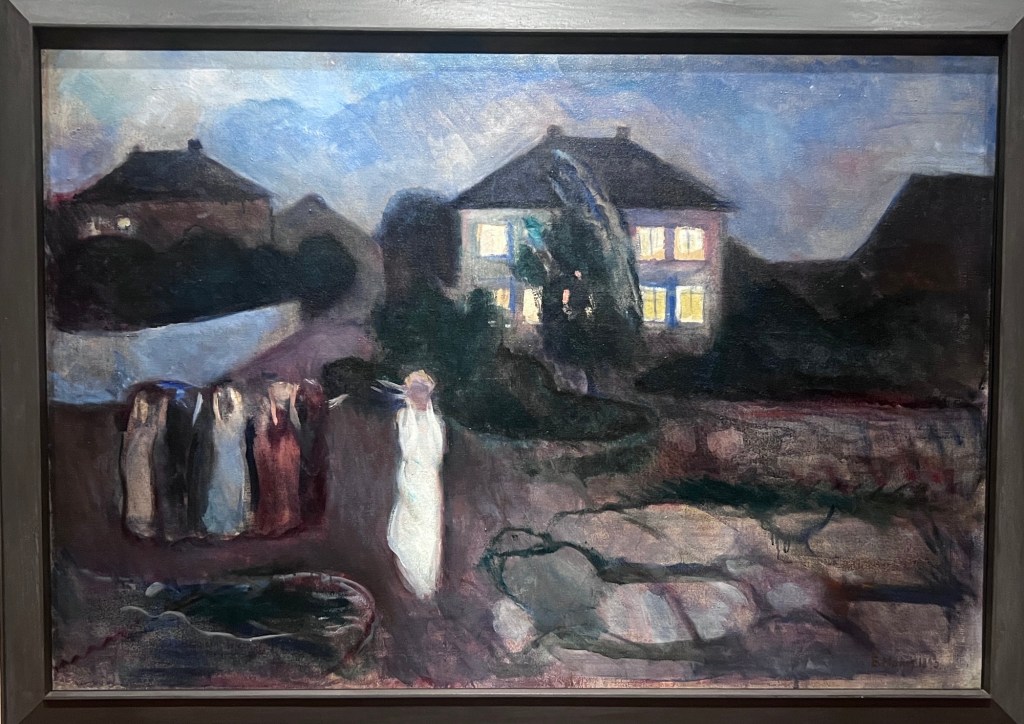
Some other pieces that I enjoyed.
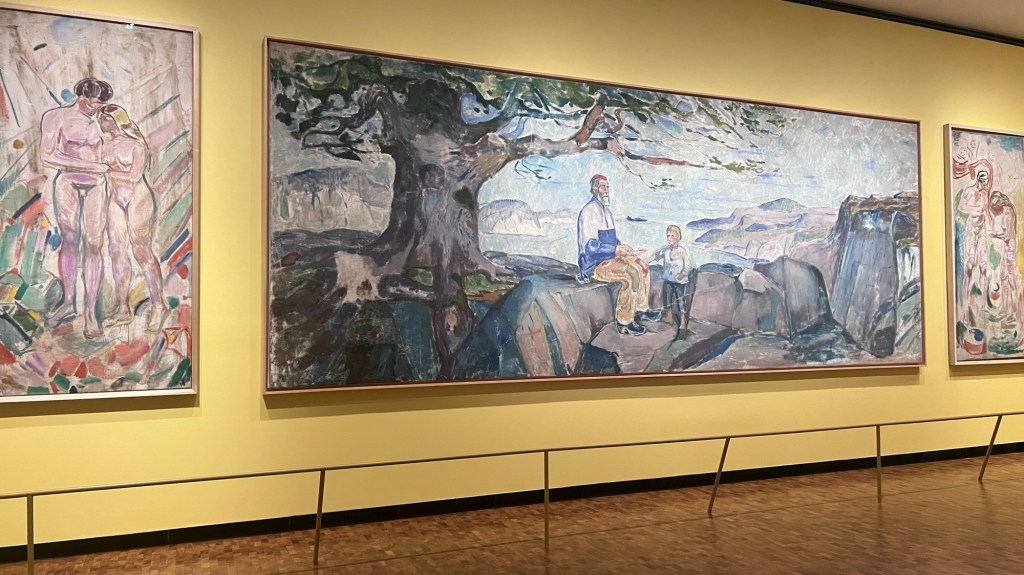

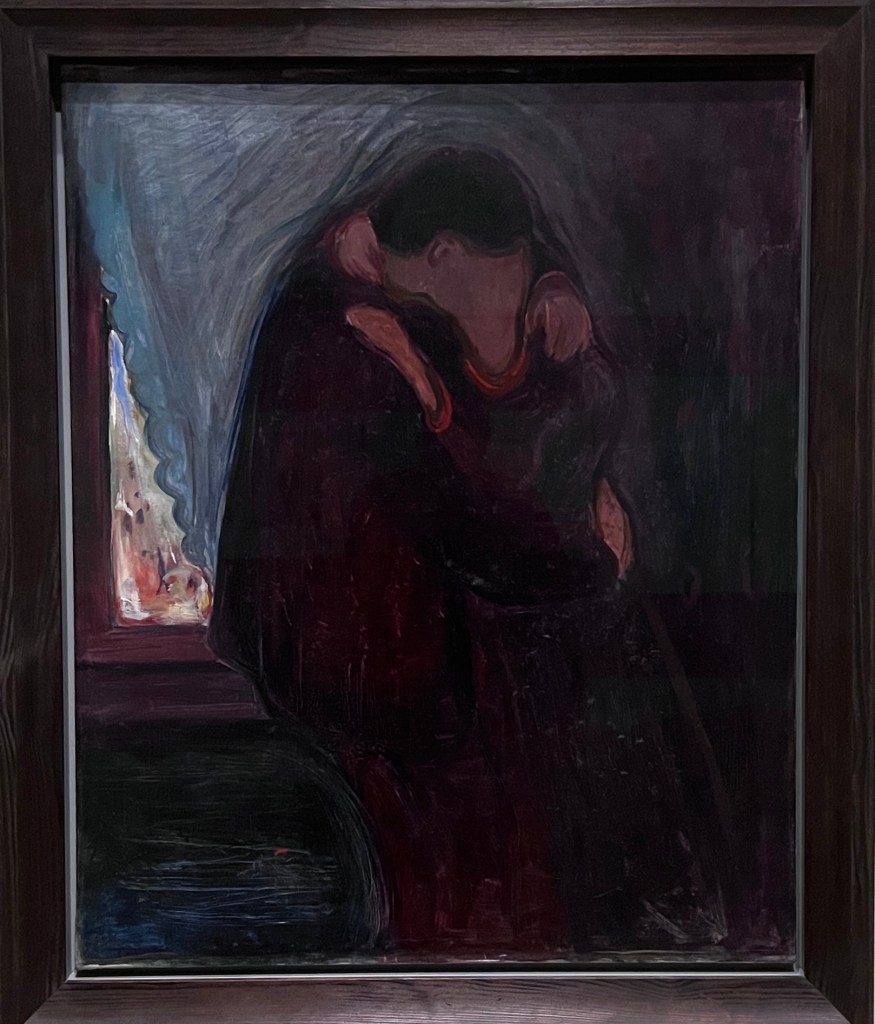
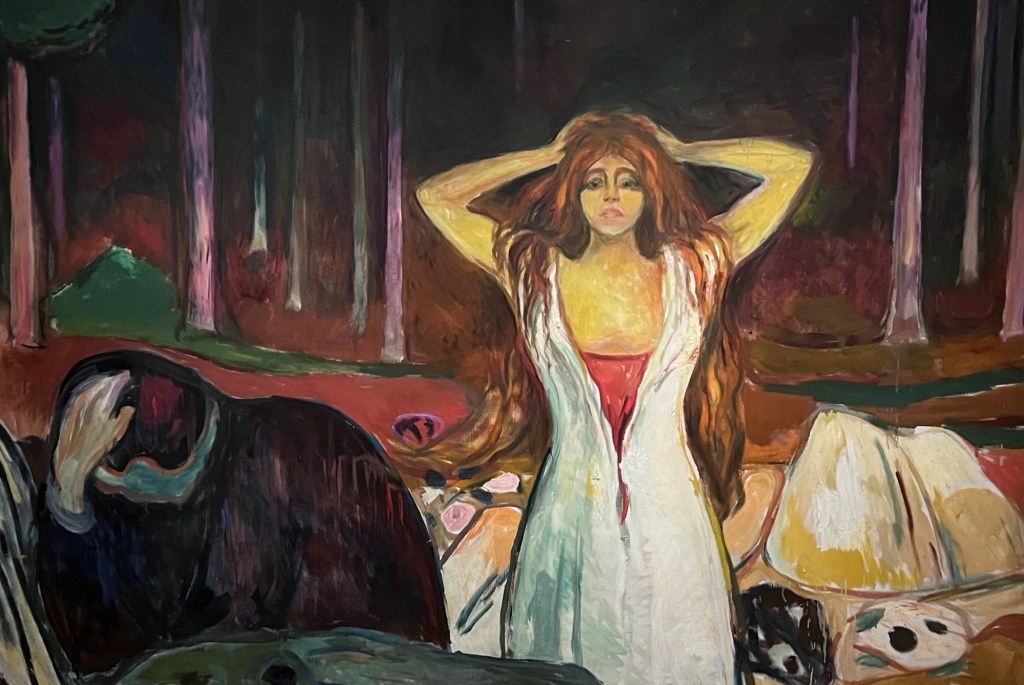
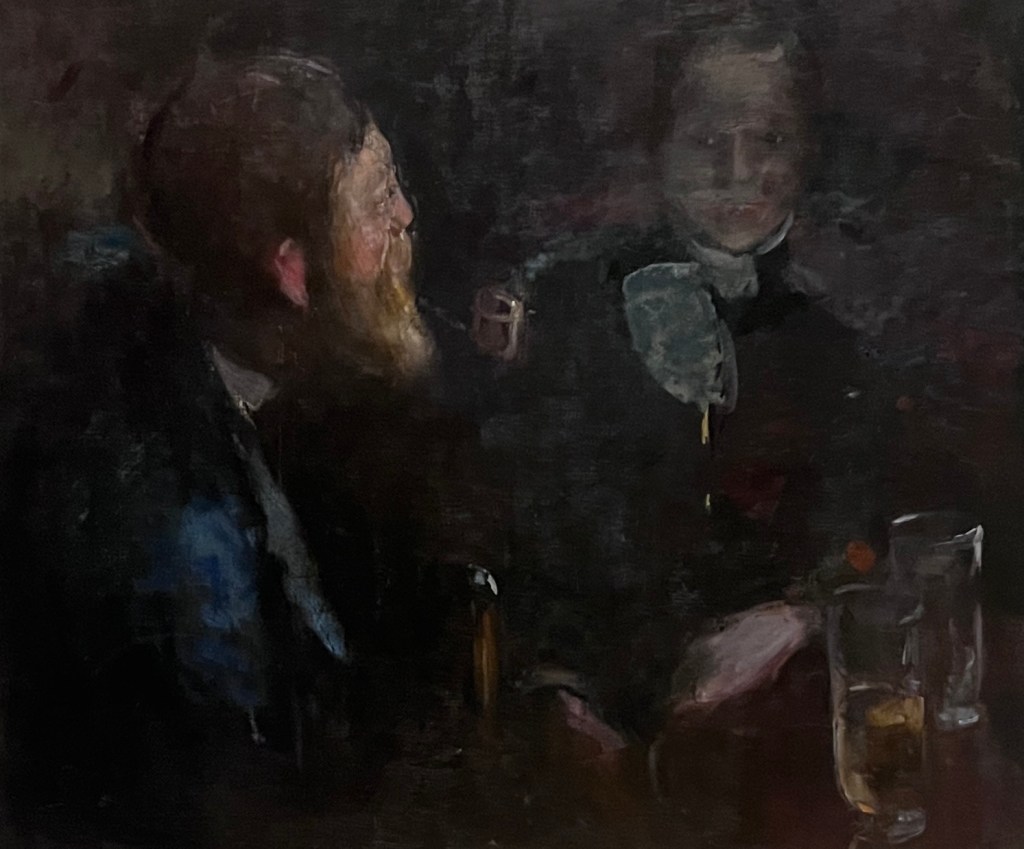
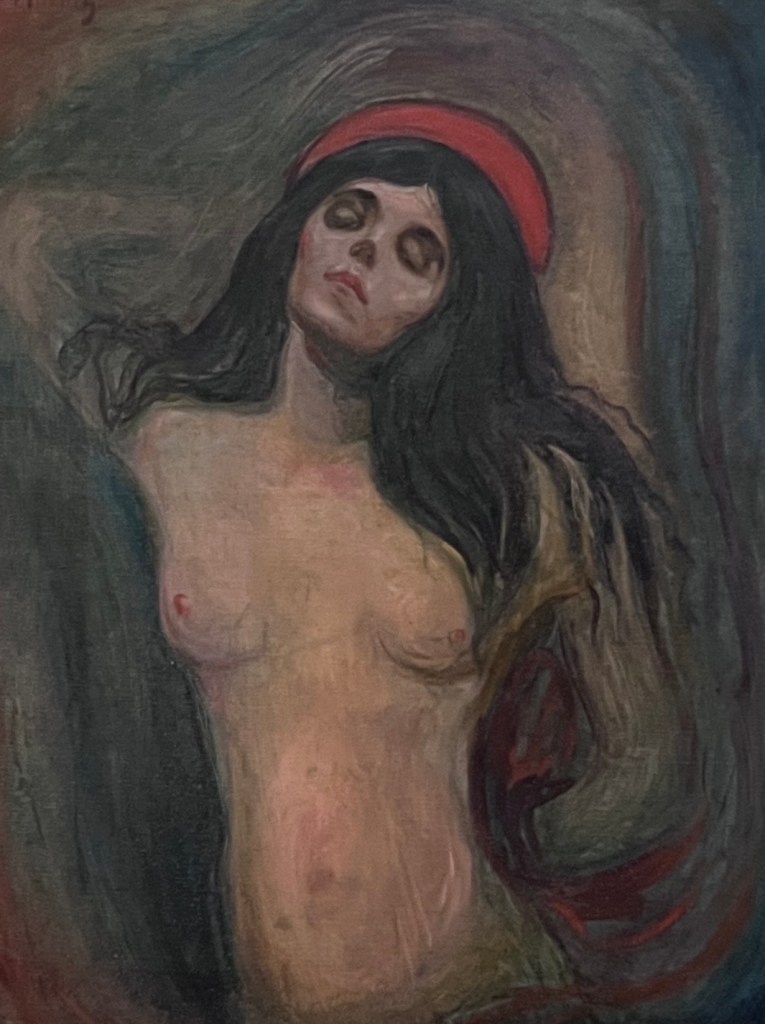
Of his more famous works, Madonna is a close second to The Scream.
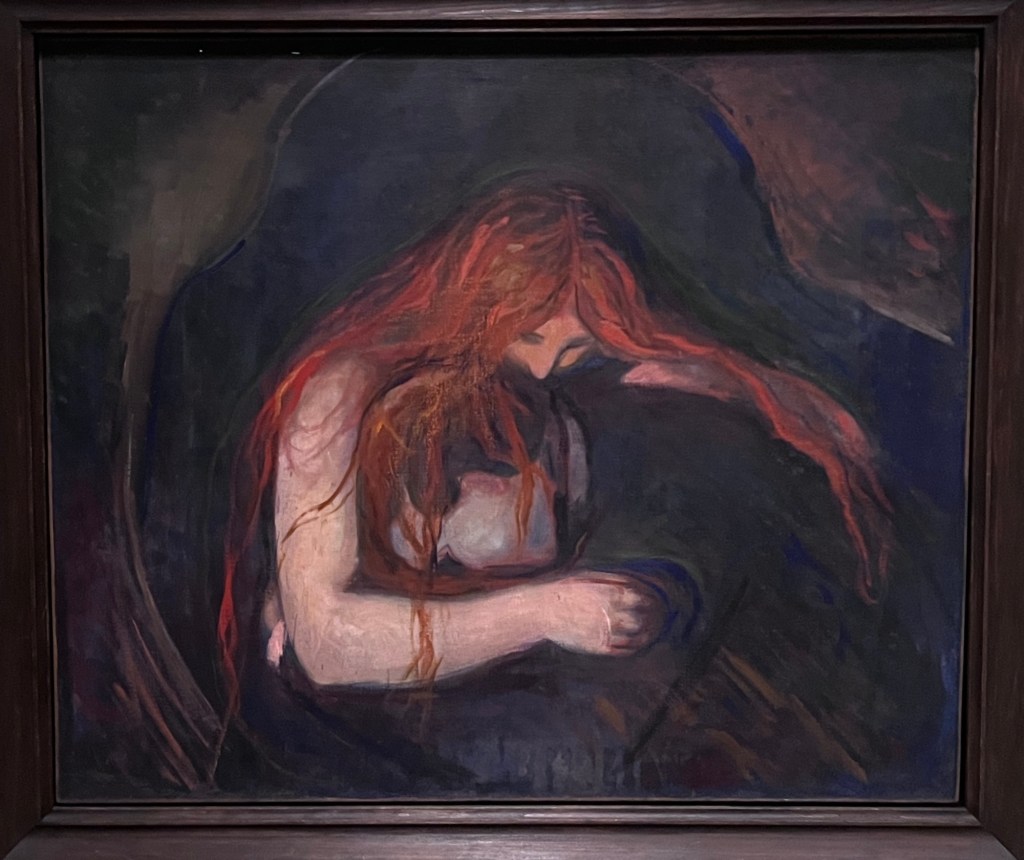
And a crowd favorite is affectionately titled, Vampire, although it is only a woman kissing a man’s neck.
I could do this for quite a while longer, so I’ll stop here with my favorite. It was a drawing—Death and the Woman.
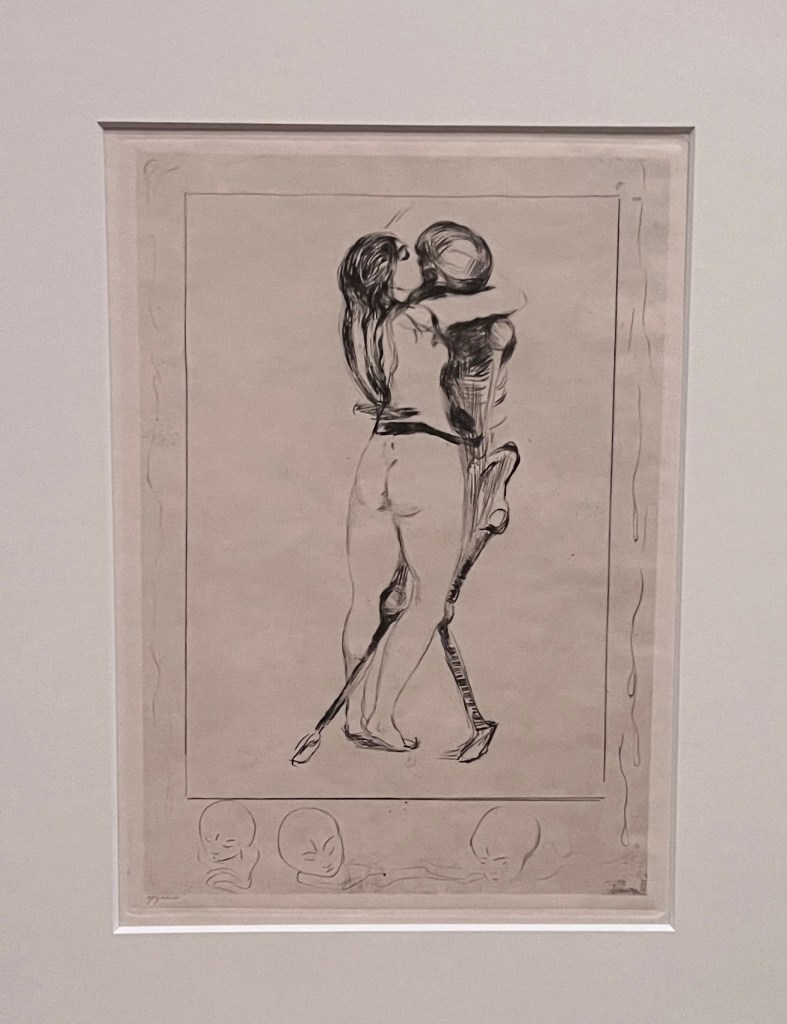
Not sure why I like it so much, but it made me smile. Maybe it indicates that a woman will be the death of me.
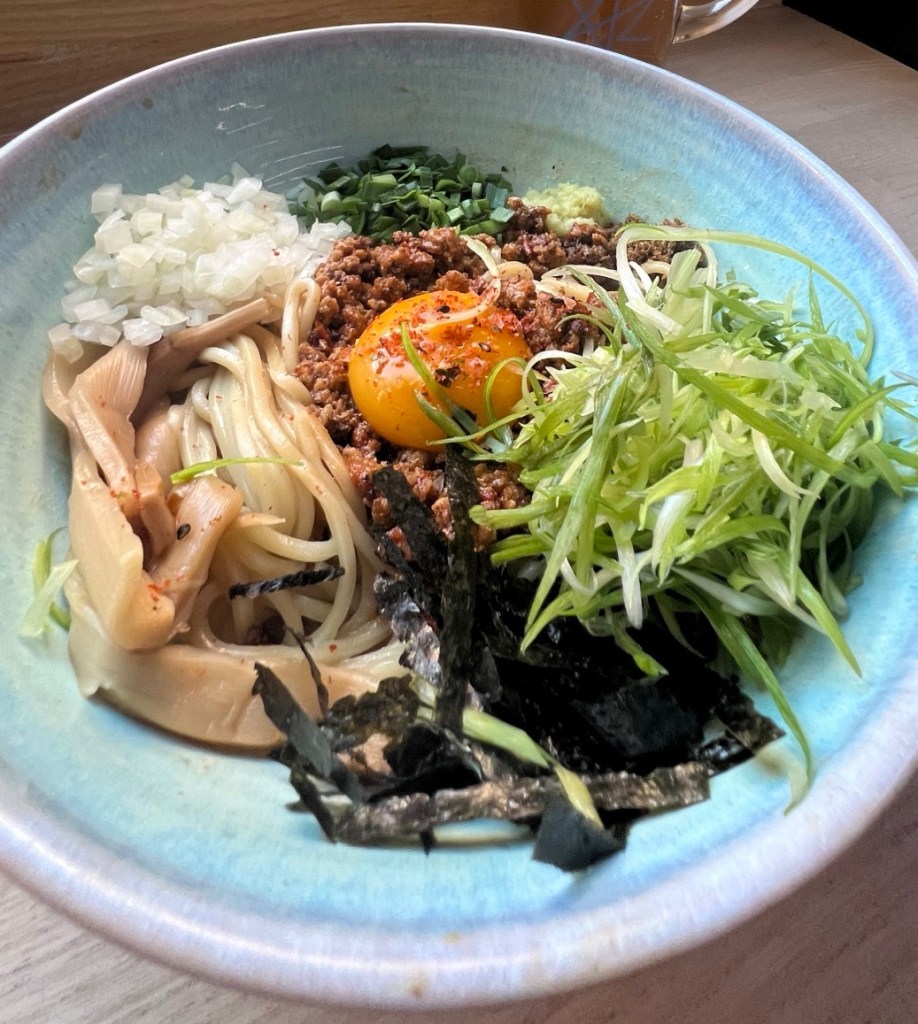
After all that, I remembered the reason I got out in the first place. I’ll give 4/5 ⭐️s for Koie Ramen.
Tomorrow is my last full day in Oslo and I’ll probably spend most of the day doing laundry and getting ready for the next leg of the journey. Where to next? You’ll just have to stay tuned.
 Candle in a Cave
I never realized this about the paintings. How fascinating! I’ll have to delve into this more. Thanks for sharing.
<
div>
<
div dir=”ltr”>Sent from: Deac
I’ve decided that when I get home, I’m going to learn more about him and his art. The more you see and learn, the more fascinating it becomes.