
Mark’s Gospel tells us, “Then [Jesus] came to Capernaum. And when He was in the house He asked [the disciples], ‘What was it you disputed among yourselves on the road?’ But they kept silent, for on the road they had disputed among themselves who would be the greatest.”
Then there’s that little episode in Matthew’s Gospel: “Then the mother of Zebedee’s sons came to Him with her sons, kneeling down and asking something from Him. And He said to her, ‘What do you wish?’ She said to Him, ‘Grant that these two sons of mine may sit, one on Your right hand and the other on the left, in Your kingdom.’”
Like the kings of the Gentiles that Jesus spoke of in our Gospel reading or anyone else for that matter, including the disciples, given half the opportunity and the means to do it, many will seek to hold power, whether for good or evil, so that they can hold reign over others. Still, in looking at this issue of power, I came across a recent study completed by three major universities, which states an even deeper root behind certain individuals’ desire for power. Not only do they want to rule over others, but they also want autonomy. They want no one to rule over them. The study’s authors write: “Power as influence is expressed in having control over others, which could involve responsibility for others. In contrast, power as autonomy is a form of power that allows one person to ignore and resist the influence of others and thus to shape one’s own destiny.” (Source) When individuals seek power, yes, perhaps they seek to rule over others, but in many cases, they desire that no one rule over them.
Not only did Jesus tell his disciples that they should not be the ones desiring to rule over others, but he also told them that they should be the servants of all, not seeking their own will, but the will of the Father: “Thy kingdom come… thy will be done.”
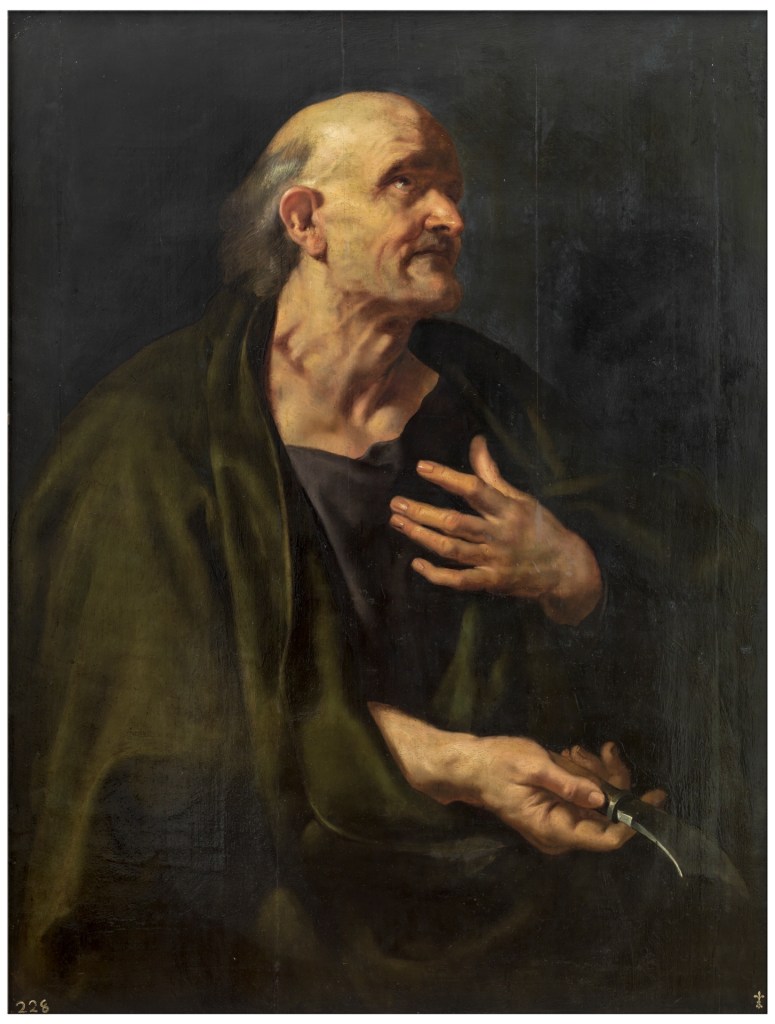
That may sound unfair, but it is precisely what Christ did: “Not my will but Yours.” As the Apostle Paul wrote to the church at Philippi, “Have this attitude in yourselves which was also in Christ Jesus, who, although He existed in the form of God, did not regard equality with God a thing to be grasped, but emptied Himself, taking the form of a bond-servant, and being made in the likeness of men.” That is our goal as well, and as it is the Feast of St. Bartholomew, we can see that it was his also. After witnessing the death and resurrection of Jesus, Bartholomew gave up his life, being first skinned alive and then beheaded. He did so for the sake of the Gospel.
Our loyalty to Jesus is not about the power we can gain or wield over others. Instead, it is about His power working in us so that we, through sacrifice, might transform the world around us.
The prayer of St. Theodore the Studite attests to this sacrifice and obedient submission of Bartholomew, so I’ll close with it.
Let us pray: “Hail, O blessed of the blessed, thrice-blessed Bartholomew! You are the splendor of Divine light, the fisherman of holy Church, expert catcher of fish which are endowed with reason, sweet fruit of the blooming palm tree! You wound the devil who wounds the world by his crimes! May you rejoice, O sun illumining the whole earth, mouth of God, tongue of fire that speaks wisdom, fountain ever flowing with health! You have sanctified the sea by your passage over it; you have purpled the earth with your blood; you have mounted to heaven, where you shine in the midst of the heavenly host, resplendent in the splendor of undimmable glory! Rejoice in the enjoyment of inexhaustible happiness! Amen.”
 Candle in a Cave
May you be quadrupled blessed!