Iglesia del Crucifijo de Puente la Reina

From the sign in front: The primitive temple of Santiago was Romanesque, exactly from the 12th century.

The Rev. Dr. John Toles
Iglesia del Crucifijo de Puente la Reina
From the sign in front: The primitive temple of Santiago was Romanesque, exactly from the 12th century.
Church of San Ignacio Chapel of Perpetual Adoration. The Blessed Sacrament was on the altar, and so had a time of adoration as well. 
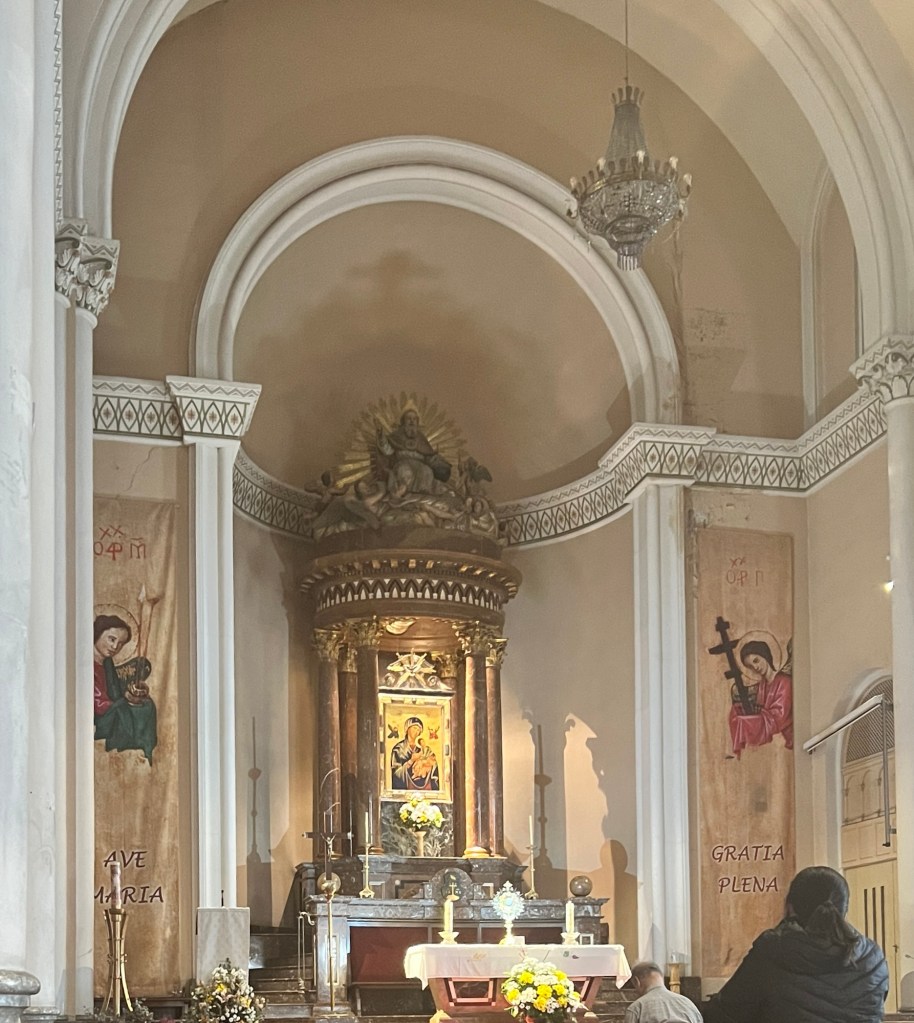
Basílica de la Trinidad de Arte. I actually stopped about an hour before I arrived at my final location. This church was built in the 12th century, although it has been renovated extensively since then. It’s quite small but beautiful. It was also about 20° cooler in there than it was outside.
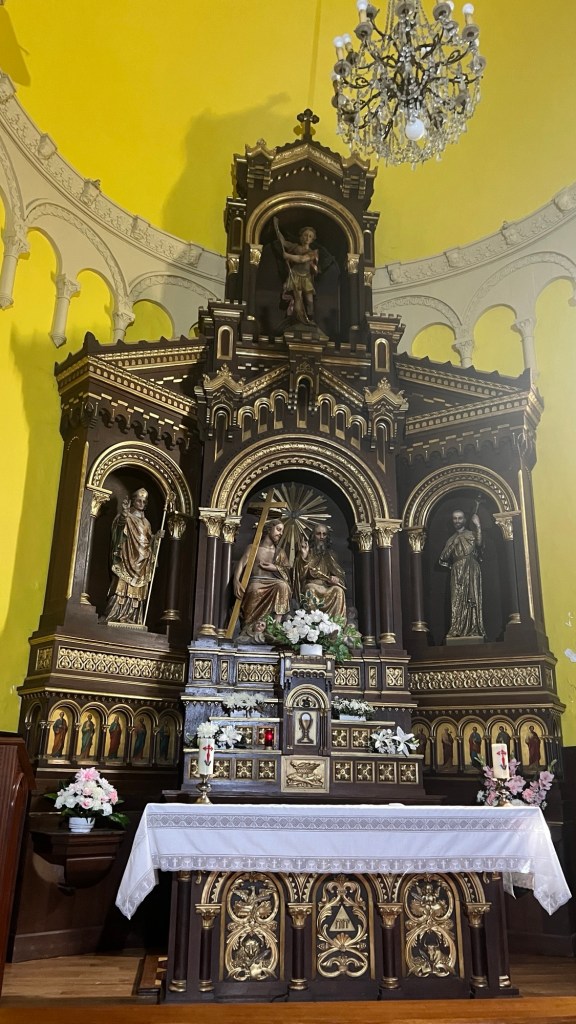
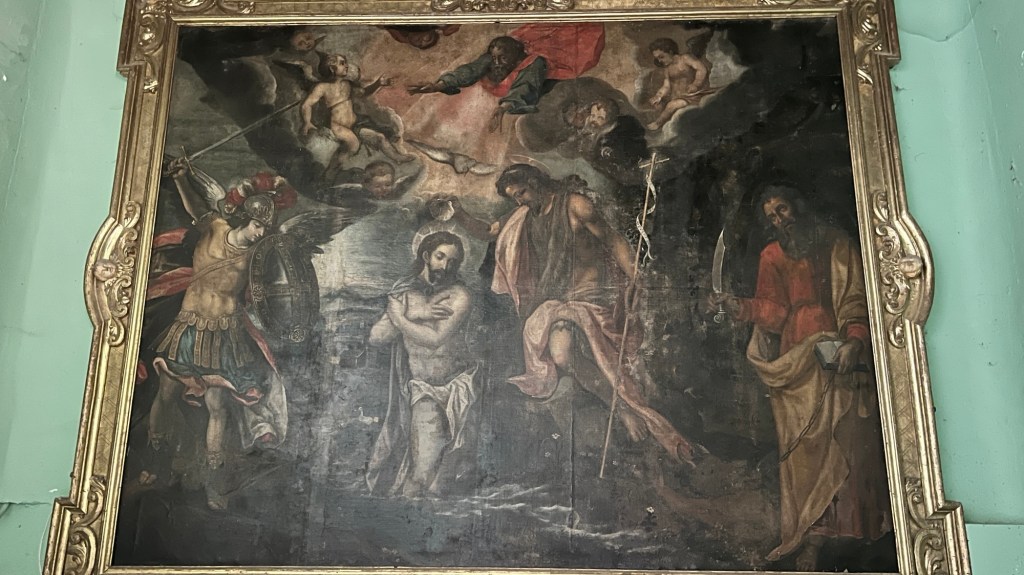
The picture is not mine, but there is a bridge that crosses the river right there at the church.
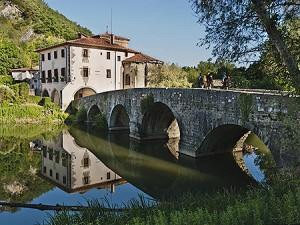
The backyard. I did find the church, but it was closed. There was really nowhere nearby to pray, so I came back to my room and sat in the backyard. There’s worse things that could happen.

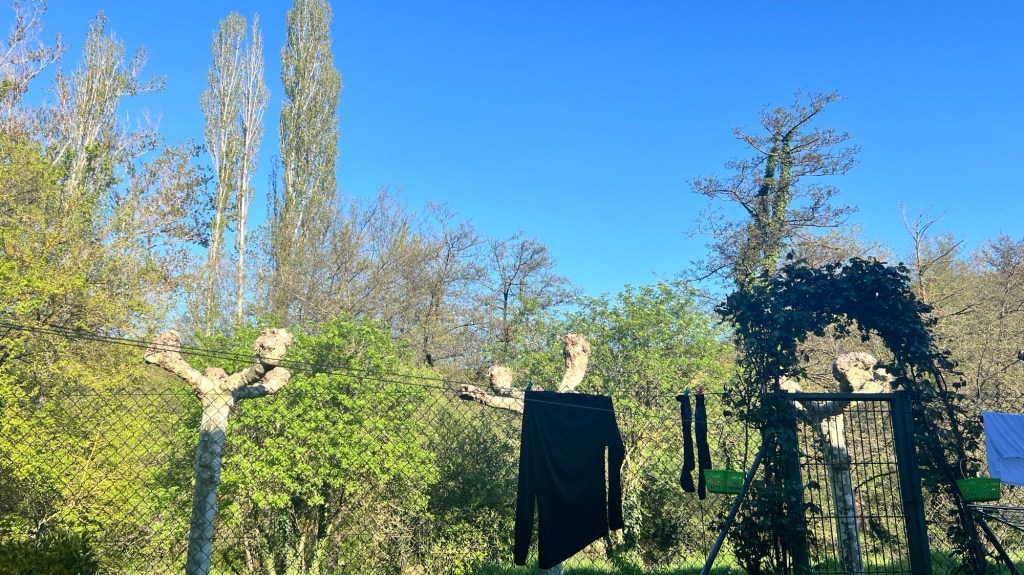
Real Colegiata de Santa María de Roncesvalles

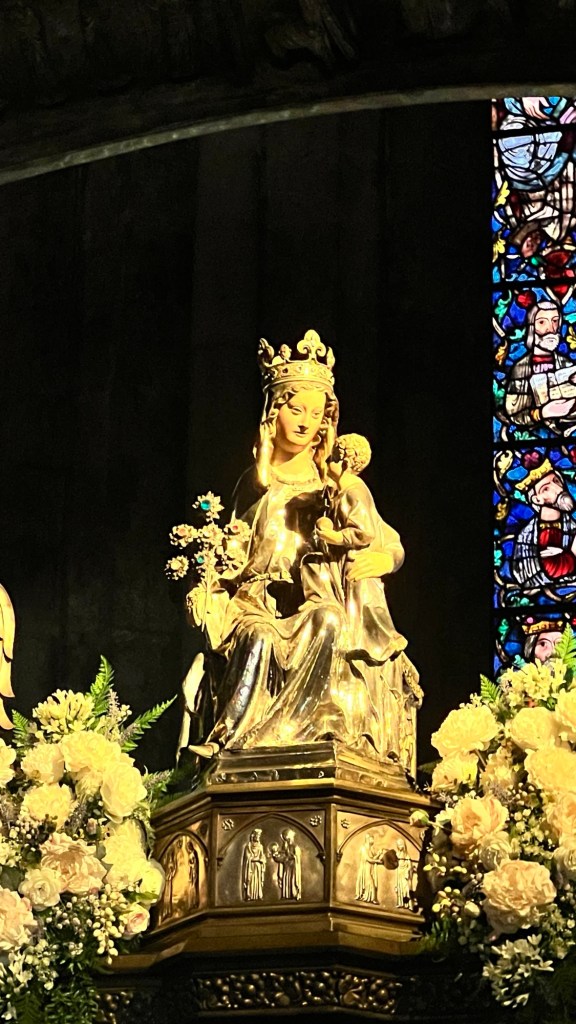

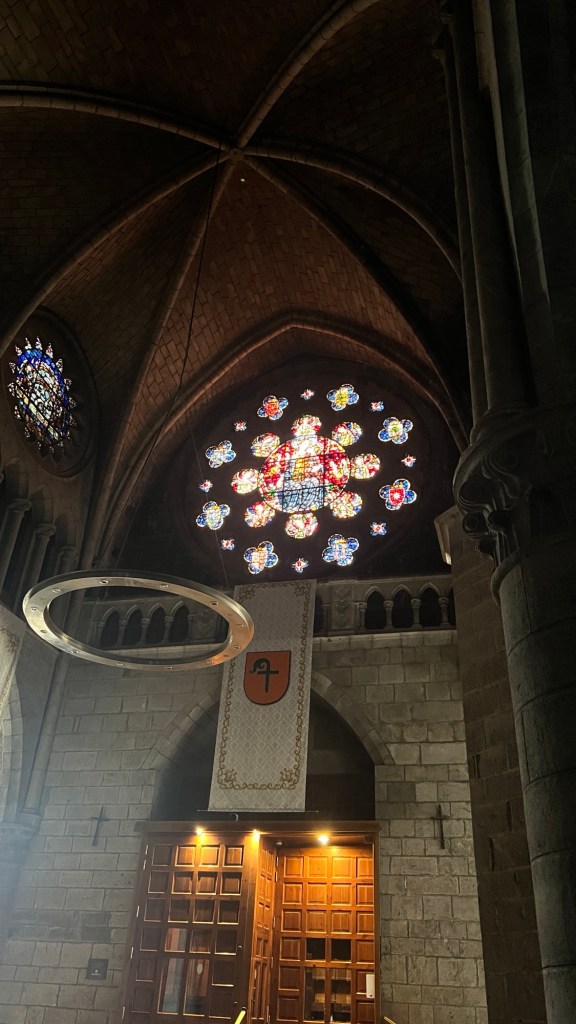
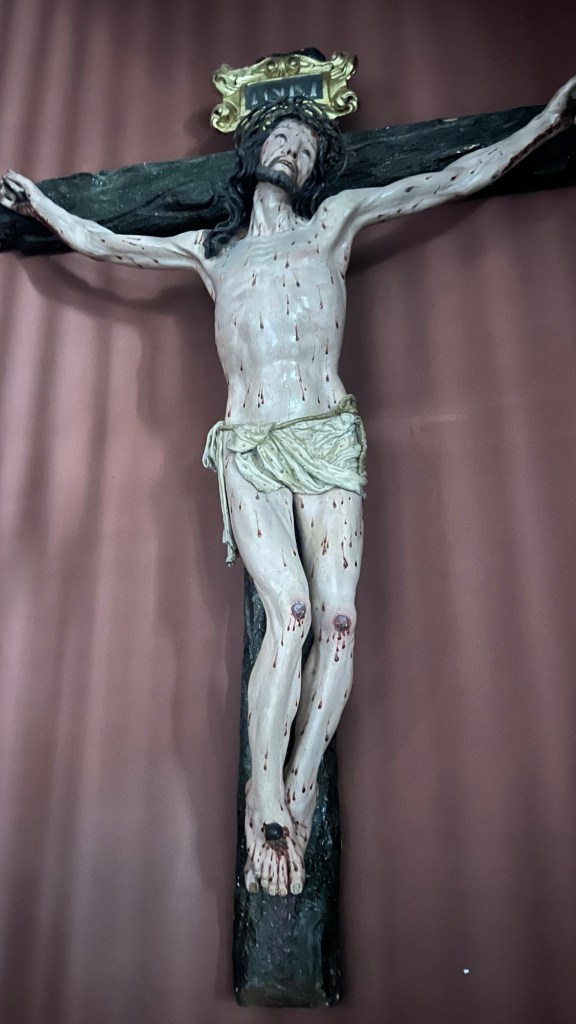
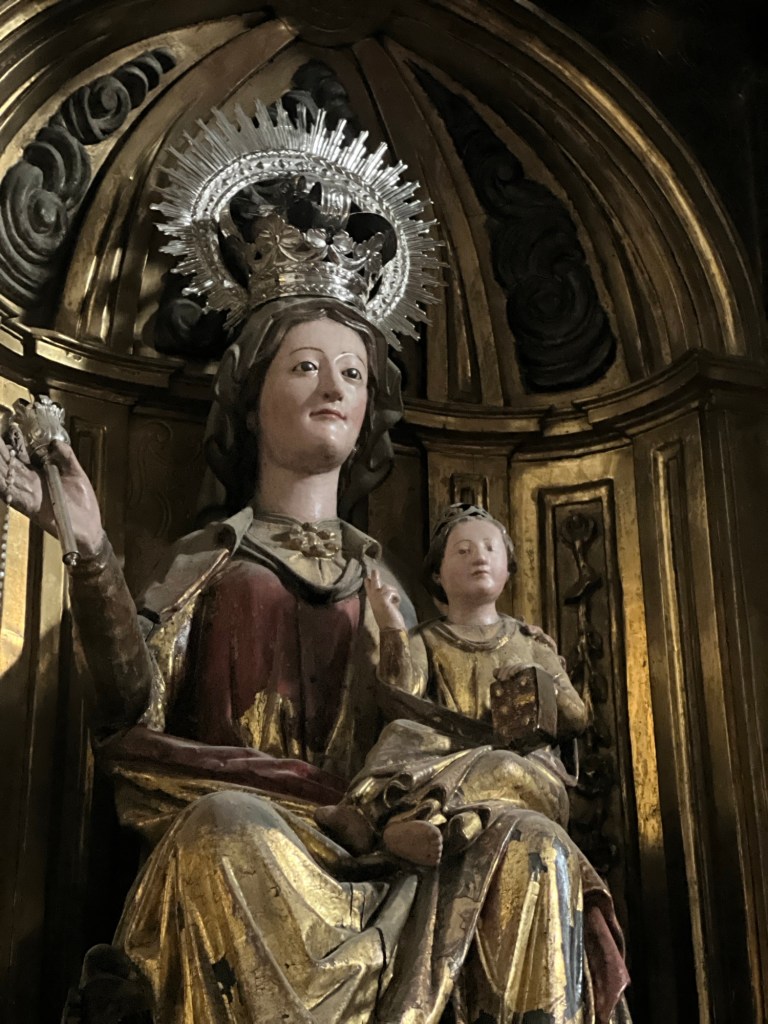
From the website: “The high altar of the temple is watched over by the Imagen de Santa María of Roncesvalles (Image of St. Mary of Roncesvalles), dating from the 14th century, a superb Gothic sculpture in silver-covered wood and decorated in gold.” St. James is there with her as is her crucified Son.
Parroquia De Santiago
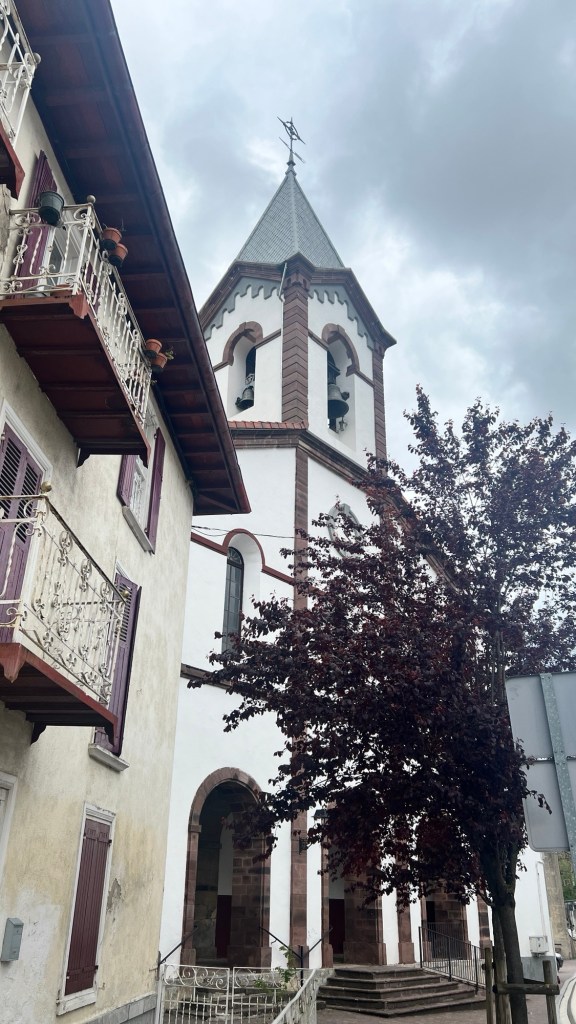
It is difficult to find a church that is open. I suspect most of the problem is related to the shortage of clergy and the decline of Christianity in Europe. it did not stop me from praying. I sat outside and enjoyed the cool breeze.

Église paroissiale de l’Assomption de la Vierge
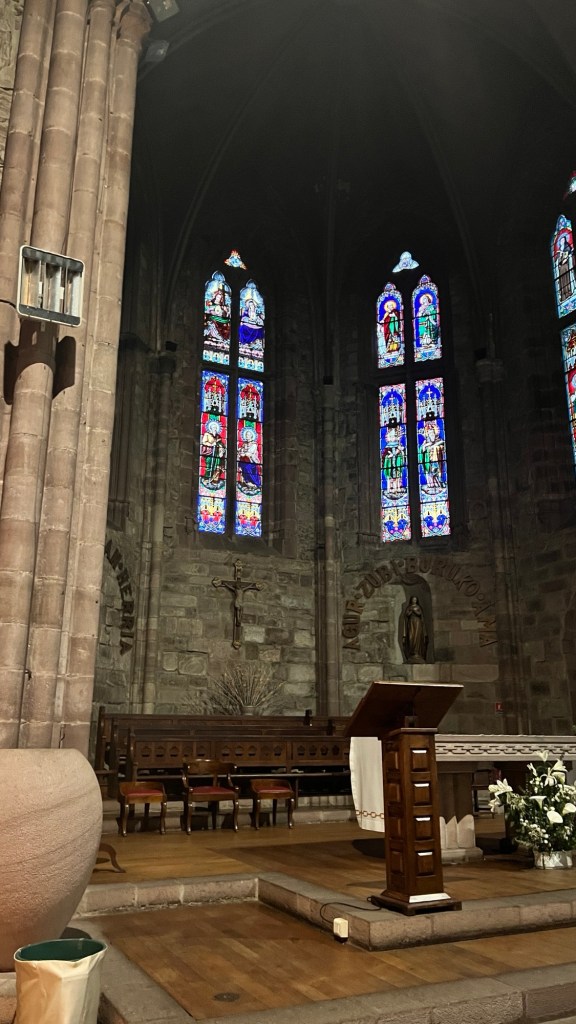
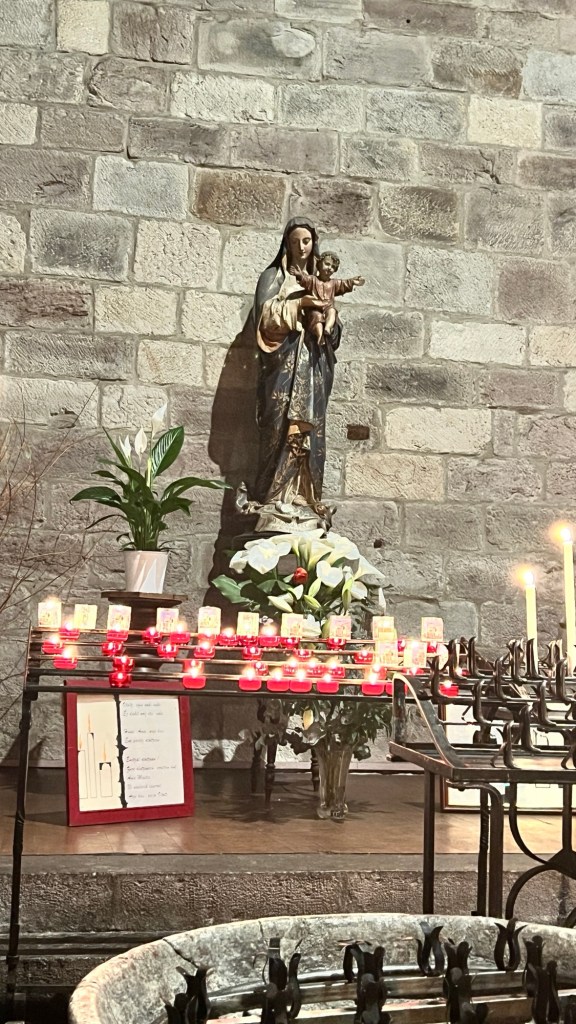

A lady was out hitting all the local garage sales when she came across an old needlepoint picture that read, “Prayer Changes Lives.” She bought it, took it home, and began to look for just the right place to hang the new picture. Finally, she decided it went well in the dining room over the table.
She admired her garage sale discovery with great pride and could hardly wait to show it to her husband. That evening when her husband arrived home from work, she showed him the picture, but he did not indicate his likes or dislikes of the new picture.
The next day as the lady was cleaning the house, she discovered that the new picture was gone. While cleaning the house, she found the picture behind a bookcase. She thought, “That’s strange,” and re-hung the picture in its original location. The next day, to her dismay, she discovers the picture gone again and again finds it behind the bookcase.
When the husband arrives home, she confronts her husband and asks him if he is displeased with the art of the needlepoint, to which he responds, “No, not at all; it is a great work of art.”
She continues, “Is it the place? Do you not like the place it is hung?” He says, “No, not at all. It is in a great location.”
She concludes that it must be the message, and she asks him if it’s the message that he doesn’t like. He says, “No, not at all; the message is great.”
Finally, she says, “Then what’s the problem?” He says, “I just don’t like change.”
Have you ever been on a prayer walk? It is the practice of going to a particular place, be it a school campus, neighborhood, or even a mall, and as you walk, pray for those concerns you see and the people you encounter or who live there. It helps you get out of your head and your own concerns and see the needs of others. Maybe try it the next time you go to the grocery store—each person you pass, say a prayer for them. You’ll never know how God answers your prayer, but you do know that God heard your prayer and that your prayers affected change.
I also know others who will pray as they walk. The rhythm of the walking, like breathing, brings about a more meditative state, allowing them to focus more clearly on their prayers—just don’t get so wrapped up in your prayers that you forget to look both ways before crossing the street!
Today in our Gospel, we are told of the two disciples walking the road to Emmaus. Although not a prayer walk, their walk does tell us much about prayer and even the liturgy of the Church.
The distance from Jerusalem to Emmaus is seven miles, so even if they were walking slowly, it would have taken them no more than three hours. Along the way, they talk about everything that has happened—hopes, dreams, fears, disappointments. We are told that when Jesus first encountered them, they were “looking sad.”
Hopes, dreams, fears, disappointments, and maybe even looking sad—does that sound like you when you settle in for your prayers?
As these two disciples talked, Jesus came alongside them even though they did not recognize Him. He began to speak to them in such a way that their hearts began to burn within them. He opened up to them the nature of God’s plan and explained the “Why?” behind so many of their questions. He lifted the heavy burdens they had been carrying. When it appeared that He was going to leave them, they asked Him to stay. They invited Him in, and He remained with them.
In our prayers, when the Lord begins to speak to us, making things more clear and calming our souls, we also invite Him to stay so that we may be near Him.
“But wait,” you say. “Jesus disappeared right after breaking bread with the disciples.”
Yes, He did, and He didn’t. Jesus walked the earth two thousand years ago, yet he was limited to one geographical location just as we are limited to one. Jesus could have remained with the two disciples, but He made it possible to be with all God’s people anywhere and at any time.
“When [Jesus] was at the table with them, he took bread, blessed and broke it, and gave it to them. Then their eyes were opened, and they recognized him, and he vanished from their sight.” Jesus vanished from their sight, but He remained with them in the bread, just as He is truly present to us, {Hold up priest host} in the bread.
Those two disciples lived out a prayer. They had all this “stuff” going on inside them; they spoke to one another about it, then they spoke to God about it. In the process, they encountered the Risen Lord, who revealed understanding and Himself, and they were changed. Afterward, they immediately turned from the direction they were going—the direction of disappointment and fear and separation—and returned to the others who had remained in Jerusalem. They returned to the Body of believers.
Sound familiar? From the Baptismal Covenant: “Will you continue in the apostles’ teaching and fellowship, in the breaking of bread, and in the prayers?” “I will with God’s help.” (BCP 304)
The road to Emmaus is a map for understanding prayer and, therefore, also represents the liturgy of the Church—we come together, we walk together, and we bring our concerns and hopes, joys, and disappointments with us. As Jesus opened up the Word of God to the two on the road, through our readings and preaching, we also open up the Word of God. It all leads to an encounter with the Risen Lord in the breaking of bread, the Holy Eucharist, where Christ Jesus is truly made present to us and to all who come seeking. This prayer and this encounter then changes us so that Christ may be revealed in us and that we might do the work of God and His Church.
Mother Teresa said, “I used to pray that God would feed the hungry, or do this or that, but now I pray that he will guide me to do whatever I’m supposed to do, what I can do. I used to pray for answers, but now I’m praying for strength. I used to believe that prayer changes things, but now I know that prayer changes us, and we change things.”
This morning’s Psalm (116) summed up this Road to Emmaus, this road of prayer. Verses 1- 3:
“I love the Lord because he has heard the voice of my supplication,
because he has inclined his ear to me whenever I called upon him.
The cords of death entangled me;
the grip of the grave took hold of me;
I came to grief and sorrow.
Then I called upon the Name of the Lord:
‘O Lord, I pray you, save my life.’”
He answered his own question by saying,
“I will lift up the cup of salvation…
I will fulfill my vows…
O Lord, I am your servant…
I will offer you the sacrifice of thanksgiving…
I will fulfill my vows to the Lord.”
A quote you’ve probably heard is from a pamphlet on reform written by Leo Tolstoy, “Everyone thinks of changing the world, but no one thinks of changing himself.”
“A lady was out hitting all the local garage sales when she came across an old needlepoint picture that read, ‘Prayer Changes Lives.’” That is true, but perhaps a more accurate statement would be, “Prayer Changes You.”
We are still in the Easter Season, and that change that occurs in you through prayer is the work of the Resurrection. Don’t be afraid of the changes that come when you walk the road of prayer.
A prayer from that great Dominican theologian, St. Thomas Aquinas—Let us pray: “Grant us, O Lord our God, a mind to know you, a heart to seek you, wisdom to find you, conduct pleasing to you, faithful perseverance in waiting for you, and a hope of finally embracing you. Amen.”
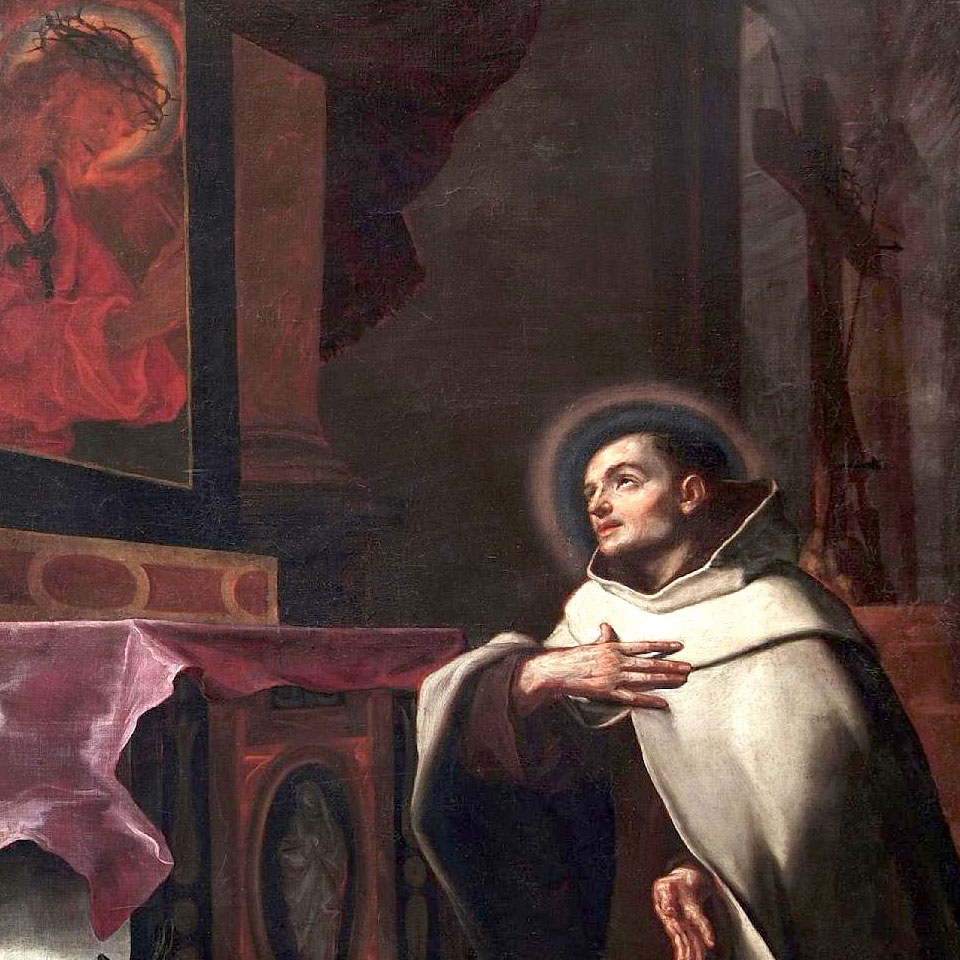
St. John of the Cross died on this day in 1591 at the age of 49. He was a true friend and contemporary of Teresa of Avila. Together, they worked to reform the Carmelite order, which they were a part of, enforcing a much stricter application of the rule. All did not appreciate that enforcement, and John was persecuted and eventually imprisoned by—not the authorities, but by fellow monks who disagreed with him.
His life is an example to us, but the writings he left behind are perhaps his greatest gifts. Of these, he is best know for, Dark Night of the Soul. It began with the writing of a poem, but then he was asked by fellow monks—those who did not want to throw into prison—to write a commentary explaining the work. The commentary of the first three stanzas of eight is all that remains (if there ever was more) and is practical in its approach to prayer.
Today, I would like to share the poem with you. Many translations are available; I’m not sure who gave us this one. When reading the poem, think of prayer. Think of entering into a place of darkness where without light, the fire burning in your heart is your guide that leads you to union with God. Once with God, it is not about speaking to Him but being with him.
Into the darkness of the night
With heart ache kindled into love,
Oh blessed chance!
I stole me forth unseen,
My house being wrapped in sleep.
Into the darkness, and yet safe
By secret stair and in disguise,
Oh gladsome hap!
In darkness, and in secret I crept forth,
My house being wrapt in sleep.
Into the happy night
In secret, seen of none,
Nor saw I ought,
Without, or other light or guide,
Save that which in my heart did burn.
This fire it was that guided me
More certainly than midday sun,
Where he did wait,
He that I knew imprinted on my heart,
In place, where none appeared.
Oh Night, that led me, guiding night,
Oh Night far sweeter than the Dawn;
Oh Night, that did so then unite
The Loved with his Beloved,
Transforming Lover in Beloved.
On my blossoming breast,
Alone for him entire was kept,
He fell asleep,
Whilst I caressed,
And fanned him with the cedar fan.
The breeze from forth the battlements,
As then it tossed his hair about,
With his fair hand
He touched me lightly on the neck,
And reft me of my senses in a swoon.
I lay quite still, all mem’ry lost,
I leaned my face upon my Loved One’s breast;
I knew no more, in sweet abandonment
I cast away my care,
And left it all forgot amidst the lilies fair.
Jesus said, “I still have many things to say to you, but you cannot bear them now. When the Spirit of truth comes, he will guide you into all the truth; for he will not speak on his own, but will speak whatever he hears, and he will declare to you the things that are to come.” If we are to hear and know those things the Spirit would teach us, then in prayer, we must follow the flame of our heart, which will guide us into that union with God where we can learn even more about our Savior.

