Sermon: Proper 25 RCL C – “Truthfulness”


On a Sunday afternoon, an elderly man sat on the back porch of the parsonage, talking to the young priest, and said, “Father, Iโ€™ve got something to tell you. Iโ€™ve never told this to a soul; itโ€™s extremely difficult to tell you now, but my wife and I have had a fight almost every day for the past 30 years of our marriage.โ€

The priest was surprised and looked away. He nervously sipped his coffee, unsure of what to say. The young priest asked, “Every day?” “Yes, just about every day.” “Did you fight today before coming to church?” “Yes.” “How did it end?” “She came crawling to me on her hands and knees.” โ€œMy goodness, what did she say?” “Come out from under that bed, you coward, and fight like a man!”

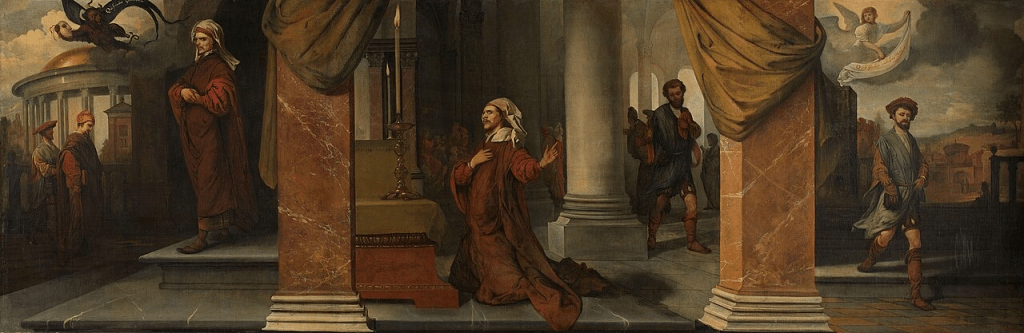
Jesus tells a parable about two men who โ€œwent up to the temple to pray, one a Pharisee and the other a tax collector.โ€ The Pharisee was very knowledgeable about God’s teachings. The tax collector, not so much. Plus, the tax collector was generally seen as a plague on society. So, after their prayer, you might think the Pharisee would be the one justified before God, but that’s not the case. When he prays, he believes he knows the mind of God, how things workโ€”heโ€™s not just on the team, heโ€™s the star quarterback, so he is all puffed up. When he prays, he says to God, โ€œYou know me and I know you. Weโ€™re tight, and thank heaven Iโ€™m not like that poor schmuck over there. You and me, weโ€™re good.โ€ He sees himself as a righteous dude because he thinks God views him as a righteous dude.

On the other hand, the tax collector could not even look up toward heaven when he prayed. In the temple, he stayed as far away as possible, keeping his head bowed. He didnโ€™t consider himself worthy, so he prayed, โ€œGod, be merciful to me, a sinner!โ€ And Jesus said, โ€œI tell you, this man went down to his home justified rather than the other; for all who exalt themselves will be humbled, but all who humble themselves will be exalted.โ€

What was the key difference between the two? If I had to pick one word, I would say truthfulness โ€” not with the world around them or even with God, but truthfulness with themselves.

In The Brothers Karamazov, Fyodor Dostoevsky writes, โ€œAnd, above allโ€”don’t lieโ€ฆ Above all, don’t lie to yourself. The man who lies to himself and listens to his own lie comes to such a pass that he cannot distinguish the truth within him, or around him, and so loses all respect for himself and for others.โ€

The tax collector, despite feeling miserable about himself and his sins, was at least honest with himself. He had no illusions about being a good man, so instead of trying to justify himself before God, he cast his soul on Godโ€™s mercy. He prayed, โ€œGod, be merciful to me, a sinner.โ€

As for the Pharisee, he couldn’t see past his own self-deception to repent for any wrongdoing. He stood before God, having lied to himself so completely that, in Dostoevsky’s words, he could not โ€œdistinguish the truth within him, or around him.โ€

Unfortunately, I believe that more people are like the Pharisee than the tax collector. They deceive themselves into thinking they are justified and righteous before God. Why? Several reasons come to mind.

First, looking inward and facing the truth about ourselves can sometimes be quite painful. For example, if you have a long work history, jumping from one job to another, itโ€™s easy to blame others. โ€œWell, the boss didnโ€™t like me.โ€ โ€œAt this job, they didnโ€™t appreciate me.โ€ โ€œThere, the employees were always after me.โ€ Each of those statements could be true and reason enough to leave, but if you are honest with yourself and those circumstances, you might ask, โ€œWhat is the common denominator? What do each of those positions have in common?โ€ The answer: you. That doesnโ€™t mean you were the problem, but itโ€™s a question you need to ask. If, in asking that question honestly and realizing it was you, well, that can be a painful revelation, and we donโ€™t like painโ€”whether physical, emotional, or spiritualโ€”which leads to another reason for self-deception: fear of change.

In those jobs you held, you were honest with yourself, you discovered that you were the one who was the issue, and even though it was a painful revelation, you still must make a choice. Will you remain the same, or will you work to change and improve yourself? Everyone talks about how change is a good thing, and I believe that it is, right up to the point where Iโ€™m the one who has to do the changing; then change is very, very bad.

If we choose to overcome the pain and change, we must also face another part of being honest with ourselvesโ€”letting others see and understand who we truly are and that we were wrong. Oh, the humanity! Pride is a harmful trait.

In the end, if we overcome these and other fears of being truthful with ourselves and with God, I believe there is one more reason why we will continue to deceive ourselves: we donโ€™t believe we have the capacity or the tools to do anything about it. We say, โ€œI am who I am, and thereโ€™s nothing to be done about it in Heaven or on Earth.โ€ O woe is me, but that is just another lie we tell ourselves so we donโ€™t have to do the work.

The Psalms we read on Sundays are usually very pleasant and easily consumed. From the Psalm today, praising the Lord.

โ€œHappy are they who dwell in your house!โ€จthey will always be praising you.โ€

However, if you explore the Psalms beyond our Sunday readings, you will notice there is quite a focus on enemies. Take Psalm 63, for example. When we read it, we see verses one through eight. It begins,

โ€œO God, you are my God; earnestly I seek you;
my soul thirsts for you;
my flesh faints for you,
as in a dry and weary land where there is no water.โ€

Nice and comforting, but when we only read verses one through eight, we never get to verses nine and ten.

โ€œBut those who seek to destroy my life
shall go down into the depths of the earth;
they shall be given over to the power of the sword;
they shall be a portion for jackals.โ€

Hoorah! But who are these enemies that seek my life? Who is it that will be put down by the sword and fed to jackals?

Some may have a person or group they consider an โ€œenemyโ€ (I would suggest you rethink that), but what if, instead of a person or group, we interpret the enemies in Psalms as the self-deceptions and sins within us? What if we see the enemies as those parts of our lives that we need to rid ourselves of, to fight so that we can conquer, in order that we might change and be transformed into the image of God? What if we say we must defeat the pain and fear of change and put the pride under our feet? Think about these ideas and consider them in the context of a portion of Psalm 118.

For who is God, but the Lord?โ€ฆ
He trains my hands for war,
so that my arms can bend a bow of bronze.
You have given me the shield of your salvation,
and your right hand supported me,
and your gentleness made me great.
You gave a wide place for my steps under me,
and my feet did not slip.
I pursued my enemies
โ€”I pursued my sin and self-deceptionโ€”
and overtook them,
and did not turn back till they were consumed.
I am running a few minutes late; my previous meeting is running over.
I thrust them through, so that they were not able to rise;
they fell under my feet.
For you equipped me with strength for the battle;
you made those who rise against me
โ€”those enemies withinโ€”
sink under me.
You made my enemies turn their backs to me,
and those who hated me I destroyed.
They cried for help, but there was none to save;
they cried to the Lord, but he did not answer them.
I beat them fine as dust before the wind;
I cast them out like the mire of the streets.

What if, like the Psalmist, when our enemies come against us, we don’t crawl under the bed, but instead say, โ€œBring it!โ€โ€”trusting completely in the words of the Lord, โ€œNo weapon that is fashioned against you shall succeedโ€ (Isaiah 54:17a).

If we will, then we know that we can and must stand against the enemies and self-deception, so that when we come before the Lord, we donโ€™t pretend as though nothing is wrong. We donโ€™t stand there like a Pharisee saying, โ€œOh, look how perfect I am,โ€ but instead, we are in a place where we can humbly pray, โ€œGod, be merciful to me, a sinner!โ€ And in doing so, like the tax collector, be justified, be made right before the Lord. Jesus said, โ€œAll who exalt themselves will be humbled, but all who humble themselves will be exalted.

In his first epistle, the Apostle John wrote, โ€œIf we say we have no sin, we deceive ourselves, and the truth is not in us. If we confess our sins, he is faithful and just to forgive us our sins and to cleanse us from all unrighteousness (1 John 1:8-9).โ€ If we will humble ourselves by being truthful with ourselves and with God, then we will be justified in Godโ€™s eyes.

Let us pray: God, the author of peace and lover of concord, to know you is eternal life and to serve you is perfect freedom: Defend us, your humble servants, in all assaults of our enemies; that we, surely trusting in your defense, may not fear the power of any adversaries; through the might of Jesus Christ our Lord. Amen.


Sermon: Proper 24 RCL C – “Faithful in Prayer”


The Western Wall, also known as the Wailing Wall, is a part of the wall that surrounded the Temple in Jerusalem. It is the holiest site in Judaism, and this section of the wall is especially significant because it was closest to the Temple itself.

A young woman journalist assigned to the Jerusalem bureau has an apartment overlooking the Wailing Wall. At certain times every day, when she looks out her window, she sees an old bearded Jewish man praying solemnly, his lips moving and his eyes closed. Certainly, he would be a good interview subject, so the journalist walks down to the Wall and introduces herself to the old man after his prayers.

She asks, “You come every day to the Wall; how long have you been doing this, and what are you praying for?โ€

The old man replies, “I have come here to pray every day for 25 years. In the morning, I pray for my family and the brotherhood of man. I go home, have lunch, and in the afternoon, I come back and pray for the broader concerns of the world.โ€

The journalist is moved to silence, so humbled is she by the sincerity of this old man. Then she remembers her training and asks her second question.

“So,โ€ she asks, โ€œhow does it feel to come here every day for 25 years and pray for these wonderful things? Whatโ€™s it like?โ€

The old man shrugs his shoulders and replies, “Like talking to a wall.โ€

Our Gospel today tells about the unjust judge, who is described as a man with no concern except for himself. He cares nothing for God or the people. Also, in the parable, there is the widow, who has been wronged in some way and has come to the judge seeking justice. The judge refuses to rule on the case, but this does not stop the widow from repeatedly coming and pleading her case. Eventually, the judge says to himself, โ€œIf I donโ€™t do what this widow is asking, she’s going to drive me up the wall with all her nagging.โ€ So, he is forced to make a ruling because of the constant pressure she was applying.

Through the parable, Jesus is saying, โ€œIf this widow could change the mind of the unjust judge simply by coming to him repeatedly, how much more will our Father in Heaven, who loves us, hear the prayers of His people? Jesus says, โ€œWill He delay long in helping them? I tell you, He will quickly grant justice to them.โ€ 

As I studied this lesson, I kept returning to that sentence: โ€œGod will quickly grant justice and answer our prayers.โ€ Does He? I donโ€™t know if youโ€™ve ever experienced this, but have you ever prayed and not received an answer, or what you were seeking? Iโ€™m not talking about praying to win the lottery or get a date with Scarlett Johansson, nothing like that. Iโ€™m talking about praying for something that was truly on your heartโ€”someone was sick, a relationship was faltering, a job was needed, or becoming unbearable? You earnestly prayed but were met with only silence. Night after night, day after day, you wrestle with God, but end up with no results. Everybody, nod your head.

Jesus makes some interesting statements about prayer. โ€œWhich of you, if your son asks for bread, will give him a stone? Or if he asks for a fish, will give him a snake? If you, then, though you are evil, know how to give good gifts to your children, how much more will your Father in heaven give good gifts to those who ask him!โ€ โ€œTruly I tell you that if two of you on earth agree about anything they ask for, it will be done for them by my Father in heaven.โ€ โ€œI will do whatever you ask in my name, so that the Father may be glorified in the Son. You may ask me for anything in my name, and I will do it.โ€ I can possibly understand why I wouldnโ€™t get the date with Scarlett, but what about a mother with a sick child? What about a mother who gave birth to a beautiful little girl only to discover that the child was born with cancer? Cancer running all through the childโ€™s body. And what if that mother prayed with all her heart for that child to be healed, but before the little girl reached her first birthday, she died? Jesus said, โ€œAsk for anything and I will do it,โ€ so why didnโ€™t he heal the little girl? What are we to conclude? Did Jesus not mean what he said? Letโ€™s take a closer look at this mom and her daughter.

Did I mention that the mom got pregnant outside of marriage? The child was โ€œconceived in sin,โ€ so shouldnโ€™t we really expect the child to be sick? Is there any reason why God should listen to the momโ€™s prayers? After all, she is a sinner. Thereโ€™s one possible reason the baby wasnโ€™t healed.

You know, Jesus says, โ€œIf you have faith as small as a mustard seed, you can say to this mountain, โ€˜Move from here to there,โ€™ and it will move. Nothing will be impossible for you.โ€ So, maybe the mother just didnโ€™t have enough faith, and thatโ€™s why the baby died.

Possibly the mom didnโ€™t add โ€œin Jesus’ nameโ€ at the end of her prayers, so of course, we canโ€™t expect God to answer that prayer.

Or did you notice that the babyโ€™s skin was much darker than her motherโ€™s, a clear sign that the father was of a different race? Well, we all know that can only end in sickness.

Now, you might be looking at me with disgust and thinking that no one would ever say such things and that Iโ€™m a monster for even considering them. But what if I told you that these are comments Iโ€™ve actually heard in very similar situations? I believe they are all disgusting, completely erroneous, unfounded, and unbiblical. So, if Iโ€™m right and these explanations to the question are wrong, then why does it seem like God does not answer prayers the way He says He will?

Iโ€™m not smart enough to come up with an answer, so I did my research to find someone who could answer the question. I can either double the length of this sermon and dive into the research with you or just share my findings. Iโ€™ll go with sharing my findings. Why does it seem that God doesnโ€™t answer prayers as He promises? Answer: I donโ€™t know, and I donโ€™t think anyone else does. But I will tell you what I do know.

I know that it happened to King David when he prayed for his son’s lifeโ€”the child died. (2 Samuel 12:15-19) I know it happened to St. Paul regarding the โ€œthornโ€ in his fleshโ€”โ€œโ€˜Three times I pleaded with the Lord about this, that it should leave me. But he said to me, โ€˜My grace is sufficient for you, for my power is made perfect in weakness.โ€™โ€ (2 Corinthians 12:8-9) Paul prayed for relief, and the Lord essentially told him, โ€œDeal with it. The suffering is good for you.โ€ I also know it happened to Godโ€™s own Son. On the night before he was crucified, Jesus prayed, โ€œMy Father, if it is possible may this cup be taken from me.โ€ We know the result.

In each of these situations, it appears as though evil wins, but we know better. While preaching on Holy Saturday, the day between Good Friday and Easter Sunday, Pope Francis said, โ€œThe prayer that Jesus addresses to the Father in Gethsemane also seems to go unheard. โ€œMy Father, if it be possible, let this cup pass from me.โ€ It seems that the Father does not listen to Him. The Son must drink fully from the chalice of the Passion. But Holy Saturday is not the final chapter because, on the third day, Sunday, is the Resurrection. Evil is lord of the penultimate day. Remember this well. Evil is never the lord of the last day.โ€

โ€œRemember this well. Evil is never the lord of the last day.โ€ In our unanswered prayers, we believe evil has won, but it is not the last day. On the last day, the Lord our โ€œGod will wipe away every tear from [our] eyes, and death shall be no more, neither shall there be mourning, nor crying, nor pain anymore, for the former things have passed away.โ€ (Revelation 21:4) โ€œBehold,โ€ the Lord says, โ€œI am making all things new.โ€ (Revelation 21:5)

When you pray, it may sometimes feel like you’re talking to a wall, and you might want to scream at God. Be faithful. Keep praying. Do not lose heart. When you pray, the thorn in your side might stay, or you might have to drink fully from the chalice set before you. Be faithful. Keep praying. Do not lose heart. When you pray, remember that โ€œEvil is never lord of the last day.โ€ Be faithful. Keep praying. Do not lose heart. God will grant justice to those who call on Him.

Let us pray: Lord, we pray for the grace and the strength to remain faithful to Your teachings and to the sacramental life of the Church. Help us to persevere in the commitments and promises we have made to You and to one another, and help us to persevere in prayer and confidence in You so that we may live our lives in accord with Your will. In Jesus’ name we pray. Amen.

Sermon: Proper 14 RCL C – “O My Jesus…”


A father reports that he used to have trouble getting his son to clean his room. The father would insist that he, โ€œDo it now,โ€ and the son would always agree to do so, but then he wouldnโ€™t follow throughโ€”at least not right away. After high school, the son joined the Marine Corps. When he came home for leave after basic training, his father asked him what he had learned.

โ€œDad,โ€ he said, โ€œI learned what โ€˜nowโ€™ means.โ€

For me, when it comes to cleaning house, โ€œNowโ€ generally means the day or a few hours before I expect company; otherwise, thereโ€™s a good chance that there will be dirty dishes in the sink, dirty socks on the floor, a pile of clean laundry waiting to be folded on the dining room table, and if the cat got sick on my desk, it would be in better shape than it is now. I guess I agree with Phyllis Diller and Erma Bombeck when it comes to housework. Phyllis says, โ€œHousework won’t kill you, but then again, why take the chance?โ€ And Erma writes, โ€œMy theory on housework is, if the item doesn’t multiply, smell, catch fire, or block the refrigerator door, let it be. No one else cares. Why should you?โ€ 

Iโ€™m guessing they werenโ€™t real keen on the word โ€œNowโ€ when it comes to housework, either. 

The Bureau of Labor Statistics reports that, on average, we spend 2.01 hours per day on household chores, and yes, women spend more time than menโ€”1.67 hours for men and 2.34 for women. (Source) Clearly, theyโ€™ve never been to my house. I eventually get everything nice and clean, but it doesn’t last. Give it a few days, and the dishes will start to stack up again, and the dirty socks will be on the floor. Before you know it, the whole place needs a solid napalm strike to clear it all up.

In our Gospel reading, Jesus talks about the servants in a house who remain awake and alert, and the owner of the house who guards against the thief. The servants fulfill their duties for the Masterโ€”taking care of his needs and propertyโ€”and the owner protects against the thief who wishes to break in and steal. In both cases, we understand that the home Jesus is speaking about is our soulโ€”the dwelling place for the Holy Spirit of God. As Godโ€™s children, we are to take care of our souls, keeping them pure and free of sin, and we need to guard them so that the devil cannot come in and destroy them. But for me, sometimes the inside of my soul looks a bit like my houseโ€”a little messy.

On July 13, 1917, Our Lady of Fatima appeared for the third time to the three childrenโ€”Lucia dos Santos, Jacinta Marto, and Francisco Marto. During the visitation, she gave them a brief but terrifying vision of hell. Lucia wrote, โ€œShe opened Her hands once more, as She had done in the two previous months. The rays of light seemed to penetrate the earth, and we saw as it were a sea of fire. Plunged in this fire were demons and souls in human form.โ€ She then goes on to describe what they saw.

It was so terrifying, she later wrote, โ€œHow can we ever be grateful enough to our kind Heavenly Mother, who had already prepared us by promising, in the first Apparition, to take us to Heaven. Otherwise, I think we would have died of fear and terror.โ€ 

During this same visitation, the Virgin Mary gave the children a prayer that we now know as the Fatima Prayer or O My Jesus.ย 

โ€œO my Jesus, forgive us our sins, save us from the fires of hell; lead all souls to heaven, especially those most in need of thy mercy.โ€

Mary asked that the children share with the world her desire for this prayer to be said at the end of each decade of the Rosary. It is also prayed just before starting the first decadeโ€”the Our Father and the first ten Hail Marys. 

When I pray my Rosary, it is during those opening prayers that I beginโ€”or at least tryโ€”to gain some sort of focus, and on one particular day, it was the same. I recited the Creed, prayed the Our Father, the first three Hail Marys, and the Gloria Patri, and then began the Fatima Prayer, โ€œO my Jesusโ€ฆโ€ I stopped. The next word, โ€œforgive,โ€ simply would not come out. I tried again. โ€œO my Jesusโ€ฆโ€ I couldnโ€™t go any further. Why?

There was a story circulating when I was in seminary. It told of a young man who had a vision of himself entering a room. Inside the room were all these small filesโ€”row after row of them. The drawers seemed to be large enough to hold a piece of paper no bigger than a note card. As he got closer, he saw that each of the file drawers had labels. These included such things as โ€œBooks I Have Readโ€ and โ€œTelevision Programs I Have Watched.โ€ There were othersโ€”โ€œLies I Have Toldโ€ and โ€œComfort I Have Given.โ€ There was one that read โ€œThings Done in Angerโ€ and one right next to it, โ€œThings I Have Said in Anger.โ€

He pulled that one out just to see what was inside, and to his horror, he found that written on each card was something he had said in anger. Then he realized he was standing in the record room of his life. Every single event, from the very best to the most sinful, had been recorded and filed. 

As he examined more of the file drawer labels, he became absolutely convinced that no oneโ€”not anyone!โ€”should be allowed to see what was written here. But, of course, there was One who would see, and that One, Jesus, was suddenly present, standing before the man. 

Without a word spoken, and instinctively, Jesus went to the drawer that held the cards depicting the most horrible of sins, pulled it out, and began to read each card. The man was horrified and heartbroken. He collapsed in shame, but as he watched, he witnessed the most remarkable thing: on each of the cards, Jesus wrote His Name, covering the sin. 

There I was, trying to pray my Rosary, โ€œO my Jesusโ€ฆ,โ€ but unable to ask for forgiveness. Why? Well, itโ€™s a bit like my house. When my house gets messy, it’s nothing new. Itโ€™s always the same mess. Dirty dishes, dirty socks, a messy desk, etc. My soul ends up the same way. When Jesus has to come in and go through the files of my life, itโ€™s not like He pulls out a card and says, โ€œWow, didnโ€™t see that coming,โ€ or โ€œHey, thatโ€™s original.โ€ No. Itโ€™s the same thing each and every time. Entire file drawers dedicated to my life with the same thing written time and time again, and Jesus signing over it again and againโ€ฆ O my Jesus. I found myselfโ€”not out of disobedience, but out of shame and frustrationโ€”simply unwilling to ask Him once more to forgive me for the same damn thing I asked Him to forgive me for the day or week before. O my Jesus.

I could imagine Him standing there, pen in hand, poised and ready to sign, and there I wasโ€ฆ O my Jesus.

In our Gospel reading, Jesus said, โ€œBe dressed for action and have your lamps lit; be like those who are waiting for their master to return from the wedding banquet, so that they may open the door for him as soon as he comes and knocks.โ€ Yet, Iโ€™m sitting there in the middle of a very dirty house, knowing I must do something but unable to act.

Joshua said, โ€œChoose you this day whom you will serve.โ€

Quoting what the Lord said to the Prophet Isaiah, Paul wrote, โ€œIn a favorable time I listened to you, and in a day of salvation I have helped you.โ€ Then Paul added, โ€œBehold, now is the favorable time; behold, now is the day of salvation.โ€ (2 Corinthians 6:2)

โ€œSon, what did the Marines teach you?โ€ 

โ€œDad, I learned what โ€˜nowโ€™ means.โ€

And I prayed, โ€œO my Jesus, forgive us our sins, save us from the fires of hell; lead all souls to heaven, especially those most in need of thy mercy.โ€

Iโ€™ll share something you might find hard to accept, but itโ€™s true: no matter how much effort you put in, your soul will get dirty. You can’t keep it clean; once it becomes dirty, you wonโ€™t be able to clean it with your own strength and power. So, when the Master comes backโ€”when Jesus returnsโ€”He will walk into the house of your soul and He will see the mess. Your only recourse is to say to Him todayโ€”right nowโ€”โ€œO my Jesus, forgive.โ€ And John tells us, โ€œIf we confess our sins, he is faithful and just to forgive us our sins and to cleanse us from all unrighteousness.โ€ (1 John 1:9) If we confess our sins, Jesus will sign His name on the card and cover our sins.

The Psalmist writes, โ€œFor you, O Lord, are good and forgiving, abounding in steadfast love to all who call upon you.โ€ Jesus stands ready to forgive all those who call on Him. Whatever reasons or excuses you may haveโ€”pride, shame, ignorance, stubbornness, or anything elseโ€”set it aside and humbly come before your God and King.

Let us prayโ€ฆ would you repeat after me: O my Jesus, forgive us our sins, save us from the fires of hell; lead all souls to heaven, especially those most in need of thy mercy. Amen.

Sermon: Mary and Martha


If you were in church a few Sundays back, youโ€™ll recall we discussed the many facets of this story of Mary and Martha. Well, this is a look at one of them, and it begins with a poem by Virginia Brasier written in 1949โ€”Time of the Mad Atom.

This is the age
Of the half-read page.
And the quick hash
And the mad dash.

The bright night
With the nerves tight.
The plane hop
With the brief stop.

The lamp tan
In a short span.
The Big Shot
In a good spot.

And the brain strain
The heart pain.
And the cat naps
Till the spring snaps

โ€”And the funโ€™s done!

Time. It consists of moments, minutes, hours, days, decades, and stretches into eternity. There are many wonderful quotes about time. How does it pass? The Wisdom of Solomon states that โ€œour time is like a passing shadow.โ€ How do we spend it? Susan Ertz wrote, โ€œMillions long for immortality who do not know what to do with themselves on a rainy Sunday afternoon.โ€ Do we want more? Queen Elizabeth I’s dying words were, โ€œAll my possessions for a moment of time.โ€

Without humankind, there really is no such thing as time, for as one Jewish commentary wrote, โ€œWithout man, time is meaningless.โ€ So what is it then? What is time? For me, it is Henry Longfellow who has the best answer. He writes, โ€œThe shadow on the dial, the striking of the clock, the running of the sand, day and night, summer and winter, months, years, centuries — these are but arbitrary and outward signs, the measure of Time, not Time itself. Time,โ€ he says, โ€œis the Life of the soul.โ€ Time is the life of the Soul.

If we were to compile a list of everything we need to accomplish with our time today, I suspect it would be quite long: jobs, caring for children or others, volunteering, studying, leisure, family time, and so on. A lengthy list. Many of these activities can be seen as serving God because we are helping others as He has commanded. However, we can become so caught up in our service to God that we neglect our relationship with Him. Even as a priest, I can get so busy writing sermons, preparing newsletters, attending meetingsโ€”everything for the Churchโ€”that I forget to make time for God and the life of the soul. Mary and Martha help us see this trap more clearly.

Jesus is visiting their home. Martha is busy running around to take care of everyone, while her sister, Mary, is sitting and listening to Jesus. Finally, frustrated, Martha says to Jesus, Donโ€™t you care that Iโ€™m doing all this work and my sister is just sitting there like a bump on a log? While not condemning Martha for her work, Jesus responds, โ€Martha, Martha, you are worried and distracted by many things; there is need of only one thing. Mary has chosen the better part, which will not be taken away from her.โ€ Mary has chosen the better part. Marthaโ€™s work is good, but Mary has chosen the better part; she is tending to the life of her soul by engaging with her Lord.

This is indeed the time of โ€œthe quick hash and the mad dash.โ€ Therefore, we must learn to serve as Martha served, but we also need to take time like Mary to tend to the life of our souls by stepping back from our busy service and by engaging in our relationship with God. After all, it is God who is the center that holds everything else together. โ€œSeek first the Kingdom of Heaven.โ€ Seek first those opportunities to sit at the feet of Jesus, as Mary did, then go forth in the Name of Christ to serve Him with gladness and singleness of heart.

Sermon: Proper 12 RCL C – “The Lord’s Prayer”


President Jimmy Carter once told a joke during a speech in Japan that made the audience burst into laughter. Impressed, he asked how the interpreter managed to get such a big reaction. The interpreter admitted to saying, โ€œPresident Carter told a funny story. Everyone must laugh.โ€

Translating from one language to another isn’t always easy. When I travel, Iโ€™ve learned to use Google Translate, but Iโ€™ve also learned that the other person doesn’t always receive the same message you’re seeing because of translation issues. Some companies might have learned this lesson when entering new markets. 

Kentucky Fried Chicken: You know it and you love it. It is โ€œFinger-licking good,โ€ except in China, where it translates to โ€œEat your fingers off.โ€

Clairol: Some of you ladies may know of the curling iron named โ€œMist Stick.โ€ All is well and good in the USA, but in Germany, it translates as โ€œManure Stick.โ€ Also known as, How to End the Date Early.

Coors Beer: In the 1970s and 80s, they had an ad campaign with the slogan, โ€œTurn it loose.โ€ Sounds like fun, unless you’re in Spain, because it translates to โ€œSuffer from Diarrhea.โ€

Translating isn’t always an exact science, especially considering the complexity and nuances of the English language, so it’s best to consult those who might know a bit more than even Google Translate.  

True for marketing campaigns and also for the Bible.

Today, in our Gospel, we read the Lordโ€™s Prayer:

Father, hallowed be your name.
Your kingdom come.
Give us each day our daily bread.
And forgive us our sins,
for we ourselves forgive everyone indebted to us.
And do not bring us to the time of trial.

Question: When you heard that, how many of you thought, โ€œThatโ€™s not the Lordโ€™s Prayer I know. Seems they missed a few words.โ€ What about โ€œYour will be done on earth as it is in Heavenโ€ or โ€œdeliver us from evilโ€? Those are pretty important bits to just leave out.

I thought the same thing, and it got me to thinking about how the Gospels came through history to us. This is one of those technical lessons, so if you start to glaze over, Iโ€™ll try and wrap it up quickly.

First, how many Gospels are there? Four? Nope. There are actually over thirty books or parts of books that claim to be Gospels. Thereโ€™s the Gospel of Thomas, the Gospel of Mary Magdalene, The Gospel of Truth, and even one called the Gospel of Judas. But over time, the Church studied these closely and decided only four could be called true Gospelsโ€”Matthew, Mark, Luke, and John. Since Matthew, Mark, and Luke are so similar, theyโ€™re called the Synoptic Gospels, meaning they can be viewed together.

The Church has always believed that John was written independently of the others; however, itโ€™s generally thought that the authors of the synoptic Gospels copied parts of each otherโ€™s and then added their own original material. How does that work?

Initially, it was believed that Matthew was written first. This is known as the Primacy of Matthew. This view states that both Mark and Luke used Matthew as a guide for writing their Gospels. However, most scholars now believe this isnโ€™t correct and agree on the Primacy of Mark.

This is known as the Four-Source Hypothesisโ€”a hypothesis, it is, and itโ€™ll help if you have the diagram on the insertโ€”says that Mark was written first, and Matthew and Luke used it as a guide. Thereโ€™s a lot of reasoning behind it, which can cause you to glaze over, but Luke had a copy of Mark, then added some of his own material, which is known as โ€œL.โ€ Matthew also had a copy of Mark, and added his own material, known as โ€œM.โ€ Matthew and Luke were written independently of each other, but both contain similar sayings of Jesus (that are not included in Mark), which introduces a truly hypothetical document know as โ€œQ,โ€ which stands for the German word Quelle, meaning source. Q is said not to contain many of the stories of Jesus, but is primarily a collection of his sayings.

Putting all that together: if you take the Gospel of Mark, add L material, and then add Q, you end up with the Gospel of Luke. Clear as mud? It gets a lot more complicated, but we wonโ€™t go there today.

As I said, hypothetical Q is said to contain the sayings of Jesus. These sayings would includeโ€”the Beatitudes, Love Your Enemies, the temptation in the desert, andโ€”you guessed itโ€”the Lordโ€™s Prayer. The Lordโ€™s Prayer is only found in Lukeโ€™s and Matthewโ€™s Gospels, not in Mark or John. The version of the Lordโ€™s Prayer we read today is from the Gospel of Luke. What we are most familiar with is the version from the Gospel of Matthew. In other words, using the hypothesis we put forth, Luke may have only used Q material, but Matthew would have used Q plus some of his own M material to write his version. Why would they be different? Another theory here: Matthew was with Jesus, while Luke was not. Luke only had access to Q, but Matthew had access to Jesusโ€”he had been with Jesus. Perhaps Matthew heard the expanded version and included it in his Gospel. Ultimately, we donโ€™t really know.

What makes this even more confusing is that if you look at an older version of the Bible, such as the King James Version, youโ€™ll discover that the Lordโ€™s Prayer in Matthew and Luke is exactly the same. Why? A little thing called harmonization. At some point, someone decided they should be the same, and so, presto, they made it so.

Do you really need all this theory to pray the Lordโ€™s Prayer? Nope, but since the Bible contains so much of what we know and understand about God, itโ€™s important to have some knowledge of how it all works. More importantly, though, is knowing how to apply it to our lives. N.T. Wright provides us with a brief guide. He says, โ€œJesus intended this sequence of thoughtโ€”that is, the Lordโ€™s Prayerโ€”to act more like the scaffolding than the whole building, though of course the prayer is used as it stands by countless Christians every day.โ€ (Matthew for Everyone, Part One, p.58)

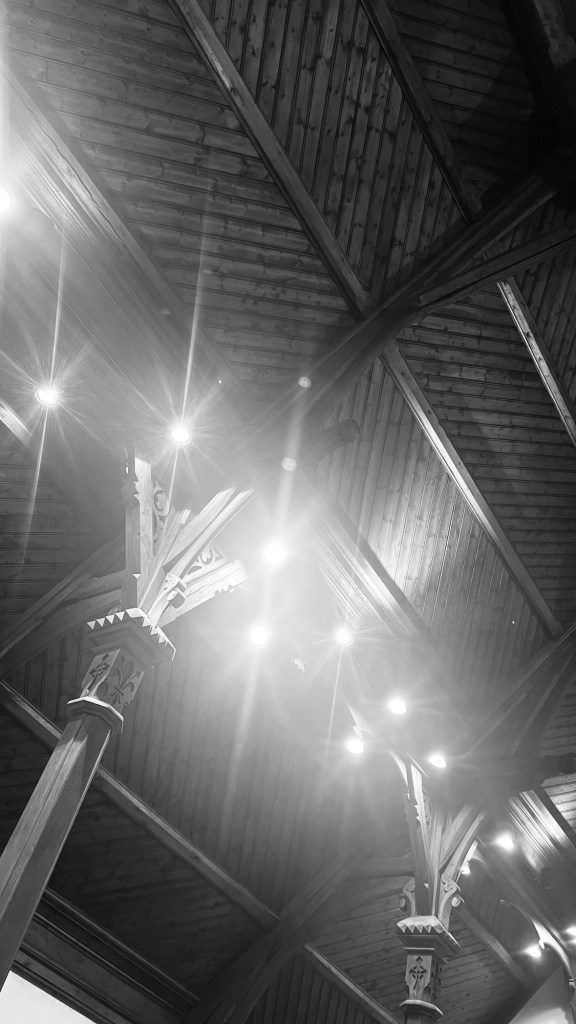
If the Lordโ€™s Prayer is like scaffolding, then itโ€™s truly the place where the work can take place. If I look up at the cross beams of this church building, I know they arenโ€™t the roof, but the means by which the roof can stand. The same is true with the Lordโ€™s Prayer. Itโ€™s an excellent prayer on its own, but itโ€™s also just the beginning of prayer. We need look no further than the very first wordโ€”Ourโ€”to realize that this is much bigger than a personal petition. Itโ€™s not just about me. In fact, nothing in the prayer is spoken in the singular; itโ€™s always in the plural. That one wordโ€”Ourโ€”tells us that when we pray, we are praying in the company of all Godโ€™s children, both the living and the dead, and those to comeโ€”the Church. Our gathers my prayers and your prayers together and brings them all into the very throne room of God, so that those prayers may be offered before the One who loves us and made us for Himself. Our binds us together as members of the very Body of Christ. Our is so much more, and itโ€™s only the first word. Itโ€™s one piece of the scaffolding, and from it, we build our prayer. 

I once heard it said that if we pray the Lordโ€™s Prayer rightly, then it should take us all day. Itโ€™s easy to see how true that is when we consider it as the scaffolding from which all our prayers flow.

Dietrich Bonhoeffer dedicates a chapter of his book, The Cost of Discipleship, to the Lordโ€™s Prayer, breaking down each line and explaining its significance. He also provides a summary of the prayer. โ€œJesus told his disciples not only how to pray, but also what to pray. The Lord’s Prayer is not merely the pattern prayer, it is the way Christians must pray. If they pray this prayer, God will certainly hear them. The Lord’s Prayer is the quintessence of prayer. A disciple’s prayer is founded on and circumscribed by it. Once again Jesus does not leave his disciples in ignorance; he teaches them the Lord’s Prayer and so leads them to a clear understanding of prayer.โ€ (Macmillan, 1979, p.184)

It can be a fun exercise to explore the more technical aspects of Scripture, but that might not be for everyone. However, learning to hear Godโ€™s voice through them and further understanding how to apply those words is a lifelong practice for us all. When you pray the Lordโ€™s Prayer, take time to meditate on the individual words and petitions, and enter into a richer prayer life.

Let us pray:

Our Father, who art in heaven,
hallowed be thy name;
thy kingdom come;
thy will be done;
on earth as it is in heaven.
Give us this day our daily bread.
And forgive us our trespasses,
as we forgive those who trespass against us.
And lead us not into temptation;
but deliver us from evil.
For thine is the kingdom,
the power and the glory,
for ever and ever.
Amen.

Sermon: Presentation of Our Lord RCL C – “Prayers and Actions”

I have one woman at home who rules my lifeโ€”the Queen (a 9.2-pound feline)โ€”but I also have two women who work for me 24/7. One is Alexa, and the other is Siri. Siri takes care of my personal life. She sets my calendar, wakes me in the morning, sends messages, and makes phone calls. She’s quite handy. Essentially, she runs my life (Iโ€™m very thankful that The Queen has not yet learned how to add to my calendar). The other woman is Alexa. Alexa is the house workhorse. She takes care of security, lights, temperature, and things of that nature. If I need to know what’s on my calendar for tomorrow, I ask Siri. If I need to know if the front door is locked, I ask Alexa.

At night, I donโ€™t want any light in my room, so I donโ€™t even have a clock. When I want to know what time it is, I ask, โ€œAlexa, what time is it?โ€ Sheโ€™s always happy to tell me.

However, one night last year, I woke up and wanted to know the time. I said, โ€œAlexa, what time is it?โ€ But she did not answer me. I thought, OK, maybe I didn’t say it loud enough, so I said again, โ€œAlexa, what time is it?โ€ Still no answer. She was definitely falling down on the job. I said it one more time very loudly and in a kind of rude way (and let me just say that I’m not disrespectful to my AI helpers because I want to be on their good side when they take over the world). Still, I said it kind of loudly. โ€œAlexa, what time is it?โ€ No answer. I opened my eyes and discovered the problem. I was in Norway. Siri travels with me, Alexa does not.

As I laughed to myself about that, I wondered if, when we pray, do we treat God in a similar manner. โ€œHey God, I need you to take care of .โ€ We wait a little while, and when there’s no answer, we say again, โ€œHey God, I need you to take care of .โ€ When there is still no answer, we get up on our high and mighty and loudly pray, โ€œGod, I need you to take care of _.โ€ When we wise up and open our eyes, we quickly realize that He is God and we are not. We need to remember our place in this relationship.

We must also remember that when we believe our prayer is not answered, God may simply be saying, โ€œNo. Not going to happen.โ€ Even so, there are many times when we persist, and the more we want something, the louder and more frustrated our prayers become. It is that frustration that can lead us into trouble. How so?

Peaky Blinders. It is a TV show. Iโ€™ve never seen it, but I came across a quote from one of the episodes. I had to sit down and think about it. One of the characters says, โ€œSomeone once said to me, โ€˜The devilโ€ฆ he listens to your prayers too. Doesn’t always come with horns, you know. Sometimes, he looks like everything you ever wanted.โ€™ That stuck.

You see, mate, the devilโ€™s clever, yeah? He donโ€™t come banginโ€™ on your door wearinโ€™ horns, screaminโ€™, โ€˜Iโ€™m here to ruin ya life.โ€™ Nah, heโ€™s subtle. Slips in quiet, dressed up like all your hopes, all your bloody dreams. Makes you believe heโ€™s the answer youโ€™ve been waitinโ€™ for. But hereโ€™s the thing, right? The devil donโ€™t take what you ainโ€™t already offered. Itโ€™s a trade, innit? A shiny deal with the kind of cost you donโ€™t see till itโ€™s too late. So, be careful, yeah? โ€™Cause not every smile is salvation. Some are the first step to destruction.โ€

There is some debate on whether the devil actually hears our prayers, but all agree that he cannot do anything about them. Iโ€™m not swayed either way, but I am firmly convinced he can do nothing about them. However, when we become frustrated, our prayers can fall outside the realm of prayer and into the category of our will instead of Godโ€™s Will. These prayers originate from our more base passionsโ€”wants, desires, lusts. When this happens, I do believe the devil hears us and says, โ€œNow, thatโ€™s something I can work with.โ€

Perhaps you get a new job. You give thanks for this job and pray that you will do it well. Over time, you begin to think, โ€œIโ€™m good at this; maybe Iโ€™ll get a raise or promotion?โ€ At first, you pray rightly that youโ€™ll do a good job and that, if it is Godโ€™s will, you will see a reward, but each time you are up for review, nothing happens. You continue to pray but then add, โ€œWell, perhaps if I put in more hours, Iโ€™ll get noticed.โ€ And guess what? It works. A raise and a promotion. Are you satisfied? Happy with where you are? For a time, but thenโ€ฆ โ€œI could make more money ifโ€ฆ?โ€ And the cycle repeats.

By the worldโ€™s standards, you are successful. Youโ€™ve got a good position making good money. However, in that scenario, there may be some questions you need to ask. When was the last time you spent quality time with your wife? Your children? Have you found yourself wanting more and more, never satisfied with what you have and how fat your bank account is? Are the people you associate with the type who encourage your life with Christ Jesus, or do you no longer have time for that sort of thing? You made a trade. You got a shiny deal, but you never stopped to consider the hidden costs.

Where did you go wrong? You prayed, yes, but you added a bit that wasnโ€™t really a prayerโ€” โ€œWell, perhaps if I put in more hours, Iโ€™ll get noticed.โ€ The devil couldnโ€™t do anything about your prayer, but that last bitโ€ฆ that last bit, the devil said, โ€œNow, thatโ€™s something I can work with.โ€

Today is the celebration of the Presentation of Our Lord in the Temple, a fixed feast day forty days after Christmas. Why forty days? The Mosaic Law dictated that the firstborn should be dedicated to the Lord (Exodus 13:2), and after a woman gave birth, she was not to โ€œtouch anything sacred nor enter the sanctuary till the days of her purification are fulfilled.โ€ (Leviticus 12:2-8) As part of our remembrance of these events, we light our candles to symbolize God’s Light coming into the world. As Simeon said,

โ€œA Light to enlighten the nations,โ€จย and the glory of your people Israel.โ€

In our readings, what struck me the most was Simeon and Anna’s faithfulness and prayer.

Simeon was devout, for the Holy Spirit rested on him. He watched day and night for the consolation of Israel. He prayed, and he believed God would fulfill what had been promised. He added nothing of his own. He gave the devil nothing to work with, and He witnessed the coming of the Lordโ€™s salvation. He said,

โ€œLord, you now have set your servant freeโ€จย to go in peace as you have promised; โ€จFor these eyes of mine have seen the Savior,โ€จย whom you have prepared for all the world to see.โ€

The Prophetess Anna was at the Temple day and night, never ceasing in her worship and prayer. She sought God and watched for Him to fulfill His promises to the nations. She gave the devil nothing to work with but placed her cares in the hands of the One she knew to be faithful. She was not disappointed and proclaimed to all that redemption had come.

Their examples teach us that the coming, redemption, and salvation from Jesus should be at the center of our prayers. We pray this for all and also specifically for our lives. Instead of giving the devil something to work with from our passions, we remain focused on the One who knows our needs before they are even spoken. As King David wrote,

โ€œEven before a word is on my tongue,โ€จย behold, O Lord, you know it altogether.โ€ (Psalm 139:4)

Therefore, going back to our example of the new job, in your prayers, instead of placing emphasis on doing a good job so that you can get a raise or a promotion, emphasize doing a good job so that you can bring glory to God. By doing so, you donโ€™t give the devil anything to work with. St. James says we โ€œought to say, โ€˜If the Lord wills, we will live and do this or thatโ€™โ€ (James 4:15), and not just give that lip service, but truly practice it, not adding on any of those more base practices.

Like Anna and Simeon, in all things, in all endeavors, and all prayer, โ€œseek first the kingdom of God and his righteousness, and all these things will be added to you.โ€ (Matthew 6:33)

When you light the candles that were blessed today, may their light be a reminder to you of the Light that has come into the world and your task of raising it high so that it may be seen and known by all. And, Deo volenteโ€”God willing. May our prayers, in accordance with the divine will of God, bring Him glory in all we do.

Let us pray:
The light of God surrounds us,
The love of God enfolds us,
The power of God protects us,
The presence of God watches over us,
Wherever we are, God is,
And where God is, all is well.
Amen.

Sermon: Ignatius of Loyola

Ignatius of Loyola (as Superior General) by Francisco de Zurbarรกn

Born in 1491, Ignatius of Loyola began his life as a privileged young man.  In his autobiography, he writes, โ€œUp to his twenty-sixth year, he was a man given over to the world’s vanities and special delight in the exercise of arms with a great and vain desire of winning glory.โ€ That great desire for glory nearly cost him his life as he was severely injured in the battle of Pamplona in 1521. During this time of healing, he had a great spiritual awakening and understood that his life must be dedicated to the work of Jesus. No longer would he be a knight in the battles of the world, but he would become Christโ€™s knight in the battle for souls.

This dedication led him to write his Spiritual Exercises, a collection of prayers and exercises practiced over 30 daysโ€”a rather intense spiritual retreat if practiced fully. Next, following his education, he formed the Society of Jesus, the Jesuits, and became their first Superior General.

His prayers are some of the most beautiful. For example, to maintain his dedication to Christ, he wrote:

O my God, teach me to be generous,
teach me to serve you as I should,
to give without counting the cost,
to fight without fear of being wounded,
to work without seeking rest,
to labour without expecting any reward,
but the knowledge that I am doing your most holy will.

In our Gospel reading, we are told of one coming to Jesus and saying, “I will follow you, Lord; but let me first say farewell to those at my home.” Jesus told him, “No one who puts a hand to the plow and looks back is fit for the kingdom of God.”

I imagine it is the same with our modern farming equipment as it was with oxen in the time of Jesus: If you keep turning to look where you have been instead of where you are going, you will have rows as crooked as Louisiana politicians. You must stay focused on what is ahead, not behind.

The same is very true when Christ calls someone into his service. He calls us to abandon our former way of life and turn to him. Focus on him and him alone. If we are constantly looking back, wondering what we might have done, thinking of the temptations of our old life, or even dwelling on past sins that God has long since forgiven, thenโ€”as Jesus states later in Lukeโ€™s Gospelโ€”one like this cannot be my disciple.

For us, Ignatius of Loyola is one who put his hand to the plow and appears to have never even considered looking back. He is an example to us of what unwavering faith and dedication to Christ and his Church can accomplish. May we learn from him and emulate his life in keeping our focus on the Master.

A few prayers are near to my heart: Ave Maria/Hail Mary, The prayer to St. Michael the Archangel, and the Anima Christi, Soul of Christ, by Ignatius. Iโ€™ll conclude with it. Let us pray:

Soul of Christ, sanctify me.
Body of Christ, save me.
Water from the side of Christ, wash me.
Passion of Christ, strengthen me.
Good Jesus, hear me.
Within the wounds, shelter me.
From turning away, keep me.
From the evil one, protect me.
At the hour of my death, call me.
Into your presence lead me
to praise you with all your saints.
Forever and ever.
Amen.

Prayed todayโ€™s Rosary atโ€ฆ

Room 2108, the brown chair.

Just for the record, I donโ€™t go out every day to a church to pray my rosary, but I do pray every day. The location does not affect the intention or effectiveness of prayer๏ฟผ. It is nice though to be in holy places where the saints of God have been praying ๏ฟผ for centuries. ๏ฟผ

Travel: Oslo 7

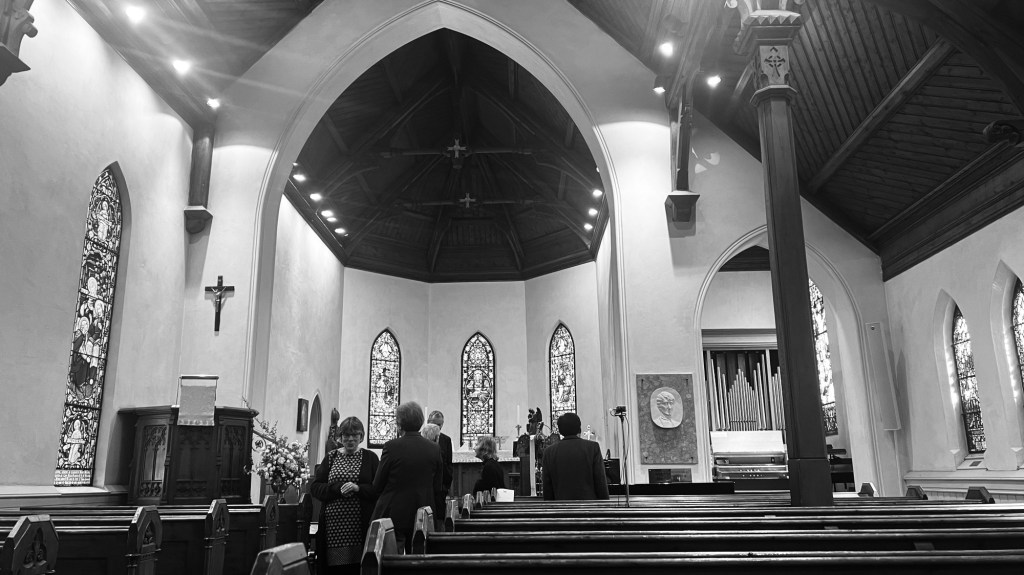
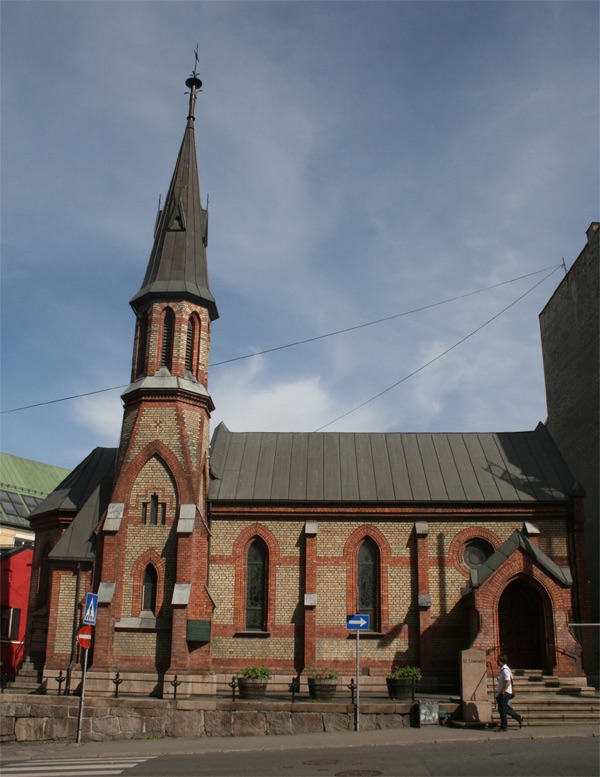
Today, I attended St. Edmundโ€™s Church (Church of England). The Rt. Rev. Dr. Robert Innes, Bishop of the Diocese of Europe was the Celebrant with Confirmations. It appeared to be a very special day for the congregation. I had a minute to visit with the Chaplain, The Rev. Canon Joanna Udal.

The service was in English and similar to ours, but with a different order for some parts.

Bishop Innes doing bishopy things. It took a few seconds to realize that it is a map of Europe on his miter.

There was so much construction out front, that it was difficult to get a good picture, so I stole this one from the web.

At the end of June, they will be celebrating their 140th anniversary, so by European standards, it is a very new congregation/church.

The walk to the church this morning was lonely business. Very little movement on the streets. It is my experience that most European cities are trashed on Sunday mornings with garbage everywhere.