This isn’t necessarily a sermon; it may be better categorized under the heading, “Things to Ponder.”
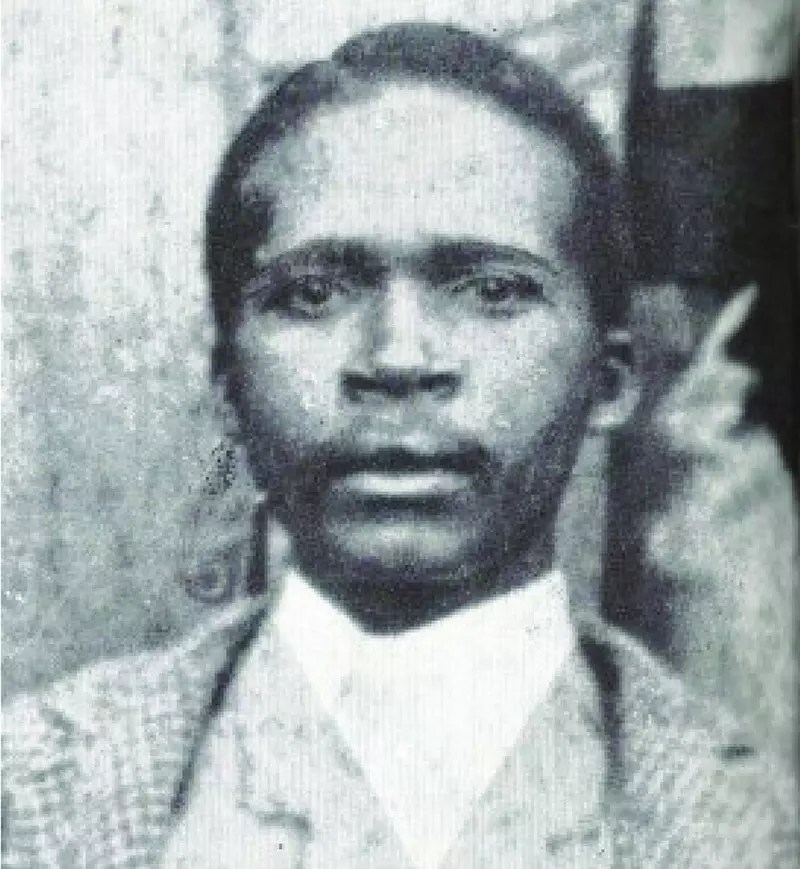
Our saint for today, Bernard Mizeki, was from Africa. In my readings about his life, I was reminded of the writings of another African clergy person, Bishop Desmond Tutu.
Bishop Tutu wrote a rather inflammatory book as far as some Christians are concerned—God is Not a Christian: Speaking Truth in Times of Crisis—a collection of sermons and lectures.
From a lecture in 1992, Bishop Tutu says, “Is God dishonoured that Mahatma Gandhi was a Hindu? Shouldn’t we be glad that there was a great soul who inspired others with his readings of satyagraha, who inspired the Christian Martin Luther King Jr in his civil rights campaign? Do we really have to be so ridiculous as to assert that what Mahatma Gandhi did was good, but it would have been better had he been a Christian? What evidence do we have that Christians are better? Isn’t the evidence often overwhelming in the opposite direction?
“Don’t we have to be reminded too that the faith to which we belong is far more often a matter of the accidents of history and geography than personal choice? If we had been born in Egypt before the Christian era, we would have been perhaps worshippers of Isis, and had we been born in India rather than in South Africa, the chances are very, very considerable that we would have ended up being Hindu rather than Christian.” (p.15)
I believe in an omnipotent God, and I believe His word. The Psalmist declares,
“Your eyes [Lord] saw my unformed body; all the days ordained for me were written in your book before one of them came to be.”
(Psalm 139:16)
I believe the Lord knew us and our lives even before He began the act of creating; therefore, I believe He knew that I was going to be born in Louisiana and into a Christian upbringing. He knew that I would try to follow Him, and that, if it is His will, I will attain salvation through His Son, Jesus. I believe these things. However, with that said, does it also mean that I believe Gandhi was a really great guy and teacher, but because he was Hindu instead of Christian, he cannot attain salvation? That he is damned for eternity? There are plenty who will say, “Yes. He’s going to hell.” As for me, the answer is above my pay grade, but I do know that on the day of judgment, I do not want to be next in line behind Gandhi.
Jesus gave us the Great Commission: “All authority in heaven and on earth has been given to me. Therefore go and make disciples of all nations, baptizing them in the name of the Father and of the Son and of the Holy Spirit, and teaching them to obey everything I have commanded you. And surely I am with you always, to the very end of the age.” (Matthew 28:18-20) If we have one “job” on this planet, it is that; however, what happens to those we don’t reach with that message? What about those who lack the benefit of a Christian upbringing or any access to the Gospel of Jesus Christ? Is it their fault or ours, or did God simply choose who would be saved and who would not? I don’t have answers to these questions, but they are worth pondering, even if they may make us uncomfortable.
Bernard Mizeki was born in 1861 in what is now Mozambique. He later traveled to Cape Town, South Africa, where he came into contact with Anglican missionaries. He converted to the Christian faith and became a catechist in the church. He then obeyed the Great Commission and went out proclaiming. Many came to believe through his work, but in the end, some of those he was seeking to bring the message of God’s love to killed him, for they failed to understand the Good News.
Perhaps, when we ponder certain questions, we should not be overly concerned with “Who is in and who is out?” Perhaps our concern should be for souls. Who can we, like Bernard, proclaim the Good News of Jesus Christ to? From there, the work is and always has been God’s.
The story is told of Franklin Roosevelt, who often endured long receiving lines at the White House. He complained that no one truly paid any attention to what was said. One day, during a reception, he decided to conduct an experiment. To each person who passed by and shook his hand, he murmured, “I murdered my grandmother this morning.” The guests responded with phrases like, “Marvelous! Keep up the good work. We are proud of you. God bless you, sir.” It was not until the end of the line, while greeting the ambassador from Bolivia, that his words were actually heard. Nonplussed, the ambassador leaned over and whispered, “I’m sure she had it coming.”
A recent article stated that 96% of people believe they are good listeners. The article also stated, “The bad news is that there’s a massive disconnect between the confidence in our listening and our actual abilities.”
There are several reasons for this: we are more interested in what we will say than in listening to what the other person is actually saying; we drift off—tune out because we aren’t interested, or we are more interested in something else. Another article stated, “In the act of listening, the differential between thinking and speaking rates means that our brain works with hundreds of words in addition to those that we hear, assembling thoughts other than those spoken to us. To phrase it another way, we can listen and still have some spare time for thinking.” (Source)
Your brain works much faster than a person can speak, although I have known some individuals who can put the words out there at a remarkable pace. In between the spoken words, our brain processes not only what we hear but all sorts of other information. What does this mean? How do I respond? Can this person really be this thick? Did I remember to start the dishwasher? I wonder who just texted me? Oh, heck, I’m going to be late!
There are things we need to hear, but there is so much more information coming at us. “Scientists have measured the amount of data that enter the brain and found that an average person living today processes as much as 74 GB in information a day (that is as much as watching 16 movies), through TV, computers, cell phones, tablets, billboards, and many other gadgets. Every year, it’s about 5% more than the previous year. Only 500 years ago, 74 GB of information would be what a highly educated person consumed in a lifetime, through books and stories.” (Source) That was written in 2012, and if you were listening, you know that the amount of information increases by 5% a year. I’ll let you do the math as to how much information there is now, because I didn’t listen so good in math class, but it is a massive amount of information.
So, when you’re having a conversation with someone and they tell you the time and place of a particular event, and ten minutes later you can’t even remember who you were talking to, much less what the conversation was about… blame it on that 74 GB of information pouring into your head along with your own desire to speak and your general lack of attention.
“Jesus said to the disciples, ‘I still have many things to say to you, but you cannot bear them now. When the Spirit of truth comes, he will guide you into all the truth; for he will not speak on his own, but will speak whatever he hears, and he will declare to you the things that are to come.’” And we all respond, “I’m sorry, JC, what was that?”
The Holy Spirit of God will guide us and speak to us what He hears from Jesus and the Father. Yet, in this noisy world, how easy do you think it will be to truly hear what God is saying to His people? Perhaps if He sent His words out in an email or text message, we might take the time to read them; however, His words are communicated to us far more softly. We must learn to listen, and what is spoken will not always be displayed in flashing neon messages.
You know, I went on vacation to Japan. It was a wonderful trip, but the language barrier is real. While in Osaka, I went to the Doguyasuji Arcade, a large outdoor covered mall filled with hundreds of small and large restaurants. It is also wall-to-wall people, mostly teenagers. At the time of day or the day I visited, I was very much in the minority, and I was surrounded by all these young, energetic Japanese teens, who were all speaking Japanese. In addition, all the signs were in Japanese, and even Google Maps was messing up and showing everything in Japanese, leaving this particular older Caucasian a bit lost. However, as I walked along, there was one thing I briefly heard—two people walking in the opposite direction speaking English. In the midst of that cacophony of noise, language, lights, signs, and information, I could isolate one soft voice that I could hear and understand.
When I lived in Montana, I had some friends who owned a small ranch that was located down in a narrow valley. They kept about seventy cattle, and the second quarter of each year was calving season. One year, they wanted to take a week away and asked if I would watch the ranch. No problem. I had done it before and enjoyed it. Only a few mommas hadn’t calved, and they weren’t expected to that week while I was on duty. To keep me company, other than the cows, there was Bear. Bear was a great big ol’ fluffy mixed-breed of a dog, and Bear never barked—never—unless he spotted a coyote.
One evening, it is about nine o’clock, I’m sitting inside watching TV. I start to hear a dog barking, but I live in town and am accustomed to hearing dogs bark. For probably fifteen minutes, I didn’t think much of it. Dogs are always barking, but then it clicked. I jumped up and ran, stopping only long enough to grab a shotgun on my way out the door. One of the mommas had calved, the coyotes had smelled it and came down into the valley, and Bear, who never barked, was raising a fuss. I was so accustomed to hearing barking dogs that I had almost become deaf to one when it really mattered.
One more story, also from adventures in Japan. Japan is an incredibly clean country. Truly. There is literally no garbage on the streets and no graffiti on the buildings. Shopkeepers are out every day, sweeping up leaves and any other debris. Cement trucks, eighteen-wheelers, and dump trucks—all of them, even though in use, look like they just drove off the showroom floor, spotless and shiny. Additionally, Japan is as safe as it is clean; the crime rate is almost non-existent.
I’m in Tokyo, and I’ve no idea where I am, but I’m safe and I’m exploring. I turn onto one street and then another. There are a lot fewer people. I see someone sitting on a curb, drinking from a bottle. That was very unusual. Next, for the only time I’m in Japan, someone approaches me and offers to sell me drugs. Wow, I think, this is so weird. I look down, and it strikes me, there’s garbage on the street. It is exceptionally rare and quite small, but I have managed to find the bad side of Tokyo. If I had been paying a little closer attention, I would have picked up on these subtle changes long before I ended up where I shouldn’t have been.
You know how a dog will cock its head when it’s listening, trying to understand and hear more clearly? That should be us as we practice listening to the Holy Spirit. Listening in this way implies a sense of bending or leaning our body or mind toward a source. Since the Holy Spirit isn’t providing God’s word to us through neon signs, we must learn to isolate the Spirit’s voice from the cacophony of voices that surrounds us, knowing that the Spirit’s voice is the voice of truth. We must not become so accustomed to listening to all the other voices and the incessant flow of information that we grow deaf to the voice of the Spirit, ignoring it when it truly matters. We must also open our eyes, paying attention to the subtle changes around us and acknowledging that these changes may very well be the Spirit’s voice warning us of potential dangers.
In these and many other ways, God speaks His truth to us, speaks His word to us, and guides and teaches us. We may get by with truly hearing only 50% of what other people may say to us, but we can ill afford to listen to only 50% of what God tells us.
When the Lord wanted to speak to the young Prophet Samuel, Eli the priest instructed the boy to say, “Speak, Lord, for your servant is listening.” This must be our prayer as well: “Speak, Lord, for your servant is listening—listening in all the many ways You may speak to Your people—so that I may grow in Your ways, know Your truth, and follow where You lead.”
Let us pray: Come, Holy Spirit, Creator blest, and in our souls take up Thy rest; come with Thy grace and heavenly aid to fill the hearts which Thou hast made. O comforter, to Thee we cry, O heavenly gift of God Most High, O fount of life and fire of love, and sweet anointing from above. Amen.
In chapter four of the Acts of the Apostles, we find the following passage: “There was a Levite, a native of Cyprus, Joseph, to whom the apostles gave the name Barnabas (which means “son of encouragement”). He sold a field that belonged to him, then brought the money, and laid it at the apostles’ feet.” This is the first of many references to Barnabas, the saint we celebrate today.
We know he was the one who introduced Paul to the other disciples and that he accompanied Paul on a missionary journey to Asia Minor. When the two entered the city of Lystra, they encountered a man who could not walk, so Paul healed him. Seeing this, the people declared, “‘The gods have come down to us in human form!’ Barnabas they called Zeus, and Paul they called Hermes, because he was the chief speaker. The priest of Zeus, whose temple was just outside the city, brought oxen and garlands to the gates; he and the crowds wanted to offer sacrifice.” Of course, Paul and Barnabas were horrified at this and proclaimed to them the Good News of the One True God, but such an event speaks to the charismatic appeal of both these men of God. Later, Barnabas went to Cyprus with Mark and is honored as the founder of the church there. According to tradition, due to his success in converting the people, he kindled the wrath of the Jewish religious leaders, who had him dragged outside the city and stoned to death.
There are many fascinating details about Barnabas’ life, but that moment of courage during his first encounter with Paul speaks of his great faith. As you may recall, the Apostle Paul was not always a believer in Christ. He was present at the stoning of Stephen and even describes himself as someone who persecuted Christians: “I persecuted this Way—that is the Christians—up to the point of death by binding both men and women and putting them in prison, as the high priest and the whole council of elders can testify about me.” For this reason, the Christians were very afraid of Paul, but as I mentioned, it was Barnabas who brought Paul to the other disciples in Jerusalem so that Paul might plead his case. So what convinced Barnabas that Paul had truly converted and wasn’t just playing some charade to get to the leaders of the Christians?
In our Gospel reading today, Jesus said, “See, I am sending you out like sheep into the midst of wolves; so be wise as serpents and innocent as doves.” When we hear this passage, we often think that we as Christians must be on our guard against those who wish to bring us harm or destroy our faith. While that is true, we sometimes get so caught up in hearing that part of the message that we miss the “innocent as doves” piece. The “wise as serpents” reminds us how to interact with the world, but the “innocent as doves” tells us that we are also to be like Jesus. We are to be on our guard, but we can never escape the fact that in the midst of it all—good and evil—we are to be like Jesus, willing to sacrifice it all for the sake of the Gospel.
Barnabas understood Paul’s reputation. He had good reason to fear him and what he might do, but he also knew Jesus and his message: “Your sins are forgiven.” By accepting Paul, Barnabas extended the same grace that he knew he had received himself.
Like Barnabas, we must be “wise as serpents,” but like him, we should never forget to be “innocent as doves.” Through this virtue, we reflect the nature of Christ.
There was a blind girl who hated herself because she was blind. In fact, she disliked everyone, except her loving boyfriend, who was always there for her. She used to tell her boyfriend, “If I could only see the world, I would marry you.”
One day, someone donated a pair of eyes to her. When the bandages came off, she was able to see everything, including her boyfriend, for the first time.
He asked her, “Now that you can see the world, will you marry me?”
The girl looked at her boyfriend and saw that he was blind. The sight of his closed eyelids shocked her. She hadn’t expected that. The thought of looking at them the rest of her life led her to refuse to marry him.
Her boyfriend left her in tears and days later wrote a note to her saying: “Take good care of your eyes, my dear, for before they were yours, they were mine.”
We have so many different ways of communicating these days—in person, via text messaging, through video calls, emails, and more. When you think about it, you realize that each form of communication involves some aspect of time, which can be summed up in that workplace complaint, “I survived another meeting that should have been an email.” If you have time, an in-person or video call is fine, but if you are rushed, then fire off a quick email or text message. This applies not only to work but also to our personal relationships.
I remember watching a movie where one of the ladies said, “If I want to spend an hour with my husband, I have to call his secretary and make an appointment.” Maybe it was a book, but some character requested an hour of someone’s time. The response was, “No one gets an hour.”
We’re so busy these days that no one gets an hour, and if they do, they’re going to have to make an appointment and pay for it.
Perhaps it’s not all that bad, but there are days that seem like it. Days when, even though you live in the same house with someone, the best you can hope for is to wave at each other as you come and go.
Given these circumstances, which I believe are true for many, it got me to wondering about the phrase, “I love you.” No one gets an hour. No one gets that much of our time, so when we say, “I love you,” to someone—be they our children, spouses, etc.—when we say, “I love you,” what do we mean? What message are we trying to convey, or is it just a nice way to conclude the interactions we have with one another as we pass each other in our comings and goings?
Text message: “Don’t forget to pick up eggs. Thanks. I love you.” In that message, what is more important—the eggs or the love?
Don’t get me wrong. I’m not saying you don’t mean it when you say, “I love you,” but do you actually think about it when you say it? Is it something that grabs you down here in your gut, or is it an afterthought at the end of the day?
Today, in our Gospel reading, Jesus said, “I give you a new commandment, that you love one another. Just as I have loved you, you also should love one another. By this everyone will know that you are my disciples, if you have love for one another.” Three times: love one another. Love one another. Love for one another.
Maybe I’m just making an observation, or I could be completely off base. But if this is true, if no one gets an hour and we are just shouting out “I love yous” as we pass one another, then how do we, as a community of believers, express love to one another as Jesus has called us to? Put another way, Jesus said, “Everyone will know that you are my disciples, if you have love for one another.” Will those around us know that we are Jesus’ disciples based on what they witness between us?
A story is told about a pastor traveling with a Brazilian seminary student studying in the US. Along the way, the pastor asked the student if he would like to stop for a cup of coffee. The student said, “I would be honored.” So the pastor swung into a Starbucks and went through the drive-thru.
Once on their way again the student was very quiet and when pressed about his silence he said, “I thought you were asking me to be your friend. I thought we were going to sit together and share life.” (From a sermon by Monty Newton, The Making of a Compelling Christian Community)
If the world is to know that we are Jesus’ disciples, then it is more than a coffee on the go. We must sit together and share life. We must be committed to one another. I’m not saying that you are not already doing this, but like the “I love you” tagline at the end of a text message can become something that is just said but doesn’t really carry much weight, so can our commitment to one another in a Christian community. We may be there in our minds, but do our relationships reflect it?
St. John wrote in his first epistle, “Beloved, let us love one another, for love is from God, and whoever loves has been born of God and knows God. Anyone who does not love does not know God, because God is love…. Beloved, if God so loved us, we also ought to love one another.” (1 John 4:7-8, 11)
Reflecting on this passage, N.T. Wright said, “The Christian faith grows directly out of, and must directly express, the belief that in Jesus the Messiah the one true God has revealed himself to be-love incarnate. And those who hold this faith, and embrace it as the means of their own hope and life, must themselves reveal the self-same fact before the watching world. Love incarnate must be the badge that the Christian community wears, the sign not only of who they are but of who their God is.” (The Early Christian Letters, p.169)
To be committed to one another and to be that community of believers requires more than simply waving at each other on Sunday mornings. We like to wear our shirts with little alligators or polo players stitched on them, but we must exhibit our love for one another even more boldly. How do we accomplish this?
The Abbot of the monastery wanted the community he led to be much more committed to one another. Needing advice on the subject, the Abbot visited his good friend Jeremiah, a wise old Jewish rabbi. After hearing the Abbot, Jeremiah asked if he could share an experience. “Please do,” responded the Abbot. “Anything you can offer.”
Jeremiah told the Abbot that he had received an important vision: the Messiah was among the ranks of the monks. The Abbot was flabbergasted. One among his own, living in the monastery, was the Messiah! The Christ! Who could it be? He knew it wasn’t himself, but who? He raced back to the monastery and shared this exciting news with his fellow monks.
The monks grew silent as they looked into each other’s faces. Was this one the Messiah? Or that one? From that day forward, the atmosphere in the monastery changed. No one wanted to miss the opportunity to be with the Messiah. If harm was done, they immediately sought forgiveness. The monks began serving one another in ways they had never considered, looking out for opportunities to assist and seeking healing and companionship.
As travelers found their way to the monastery, word soon spread about the remarkable spirit of the place. People took the journey to the monastery and found themselves renewed and transformed. All because those monks knew the Messiah was among them. All because the visitors recognized that those monks were true disciples of Jesus. All because those monks were loving one another as Christ had loved them.
Please don’t think that I’m saying you are not committed to one another. I believe you are committed in a rather remarkable way, but we must always seek ways to strengthen the bonds between us and to bring others into our community. Not so that we can have a bigger church, but so that we can have a stronger, more faithful, and more committed church. So that everyone will know that we are Jesus’ disciples. So that everyone will know that Jesus is in our midst.
Dietrich Bonhoeffer stated in Life Together, “We must be ready to allow ourselves to be interrupted by God. God will be constantly crossing our paths and canceling our plans by sending us people with claims and petitions.”
Love one another by allowing God to interrupt you. Give each other an hour. Sit together and share life. Along the way, you will discover that the Messiah is among the members of our church. Along the way, you will love one another as Christ loves us.
Let us pray:
Heavenly Father,
look upon our community of faith
which is the Church of your Son, Jesus Christ.
Help us to witness to his love
by loving all our fellow creatures without exception.
Today is a feria, which is a weekday when there are no feast day celebrations. In such cases, we go back to the readings we heard this past Sunday—the fourth Sunday of Easter.
The Gospel lesson we read comes at the end of what is known as the Good Shepherd Discourse. It gets its name from a passage a few verses before what we read—Jesus said, “I am the good shepherd. I know my own and my own know me, just as the Father knows me and I know the Father; and I lay down my life for the sheep.” (John 10:14-15)
As I mentioned on Sunday, the Shepherd has long been understood in the context of Holy Scripture and among the Israelites as one who guides the people in their daily activities and leads them in battle. We can understand this person to be someone who is obligated to perform these duties, but in truth, the Good Shepherd fulfills these duties out of love for the sheep. That love means the Shepherd will go to any extent to save the sheep. This saving does not always involve some great and terrible battle, but more often than not, it is a struggle that only the singular sheep and the Shepherd are aware of.
A member of a certain church who had previously attended services regularly stopped going. After a few weeks, the pastor decided to visit him. It was a chilly evening, and the pastor found the man at home alone, sitting before a blazing fire.
Guessing the reason for his pastor’s visit, the man welcomed him, led him to a large chair near the fireplace, and waited. The pastor made himself comfortable but said nothing. In the grave silence, he contemplated the dance of the flames around the burning logs.
After a few minutes, the pastor took the fire tongs, carefully picked up a brightly burning ember, and placed it to one side of the hearth all alone. Then, he sat back in his chair, still silent. The host watched all this in quiet fascination.
As the lone ember’s flame faded, a momentary glow appeared, and then its fire was no more. Soon, it became cold and dead.
Not a word had been spoken since the initial greeting.
Just before the pastor was ready to leave, he picked up the cold, dead ember and placed it back in the center of the fire. Immediately, it began to glow once more with the light and warmth of the burning coals around it.
As the pastor reached the door to leave, his host said, “Thank you so much for your visit and especially for the fiery sermon. I shall be back in church next Sunday.” (Source: Unknown)
Taking up a little child in His arms, Jesus said, “What do you think? If a man has a hundred sheep, and one of them has gone astray, does he not leave the ninety-nine on the mountains and go in search of the one that went astray? And if he finds it, truly, I say to you, he rejoices over it more than over the ninety-nine that never went astray. So it is not the will of my Father who is in heaven that one of these little ones should perish.” (Matthew 18:12-14)
The Good Shepherd—“He revives my soul and guides me along right pathways for his Name’s sake.” (Psalm 23:3)
I’ll close with a prayer. Thomas Merton wrote it on one of those days when he was struggling to stay on track. Let us pray: Good Shepherd, You have a wild and crazy sheep in love with thorns and brambles. But please don’t get tired of looking for me! I know You won’t. For You have found me. All I have to do is stay found.
Johnny Carson would begin one of his bits by saying something like, “Its so hot…,” and before he could fill in the blank, the audience would shout back, “How hot is it?” Carson would then fill in the rest. With that in mind, “I’m so confused…”
I’m more confused than an Amish electrician.
I’m more confused than a vegan at a BBQ.
I’m more confused than a goat on astroturf.
I’m more confused than a chameleon in a bag of Skittles.
And I’m also hoping you don’t feel that confused by the time I’m done with this sermon.
I’ve told you before that those who wrote Holy Scripture didn’t write fluff. When they communicate something, even the smallest detail carries significance and plays a role in our understanding of the passage. Today’s Gospel reading is no different.
The first two sentences we read: “At that time the festival of the Dedication took place in Jerusalem. It was winter, and Jesus was walking in the temple, in the portico of Solomon.”
Initially, the verse seems to only tell us that a Jewish festival was occurring in Jerusalem and that Jesus was present at the Temple. However, for a Jewish listener at the time it was written, those two sentences were like a bomb with the fuse lit—a bomb that was first constructed some six hundred years prior and spoken by the Prophet Daniel.
In the Book of Daniel, an angel of the Lord speaks to Daniel and tells of a day to come. A day when an enemy will rise up against God’s people. According to the words of the angel, “Forces sent by [this leader] shall occupy and profane the temple and fortress. They shall abolish the regular burnt offering and set up the desolating sacrilege.” (Daniel 11:31) About 450 years later, in 147 BC, this prophecy was fulfilled.
Antiochus IV, one of the Syrian kings, conquered Jerusalem. First Maccabees picks up the story: “Now on the fifteenth day of Chislev, in the one hundred forty-fifth year, [the enemy] erected a desolating sacrilege on the altar of burnt offering. They also built altars in the surrounding towns of Judah and offered incense at the doors of the houses and in the streets.” (1 Maccabees 1:54-55) Antiochus brought the sacrificial system of the Jews to an end, built a statue of Zeus inside the Temple of God, and then proceeded to sacrifice pigs on the altar (in the eyes of Jewish people, the pig is a filthy animal—unclean). This is the original Abomination of Desolation—an event that is detestable in the eyes of God and brings about great ruin.
Antiochus remained and began forcing the Israelites to worship the Syrian gods and to make sacrifices to them. However, when Daniel made the prophecy, he also said, “The people who are loyal to their God shall stand firm and take action.” (Daniel 11:32) Three years after the Abomination of Desolation, this part of the prophecy was fulfilled.
Antiochus’ men arrived in the town of Modein and were forcing the citizens to make sacrifices to the false gods. This is when they encountered Mattathias, a man zealous for God’s covenant and Law. He refused the orders to sacrifice and rebelled. It wasn’t long after that he died, but with his dying words, he said to his sons, “Now, my children, show zeal for the law and give your lives for the covenant of our ancestors.” (1 Maccabees 2:50) They did, led by one of Mattathias’ sons, Judas Maccabeus.
It took several years, but the Maccabeans were eventually able to retake Jerusalem and the Temple. They cleansed the Temple, tore down the profaned altar, and built another one. They then prepared all the sacred vessels and instruments so that the worship of the One True God could again take place. The only problem was that the sacred lampstand, the Menorah, required a specially prepared oil that took eight days to make ready, and they only had one day’s worth. Not wanting to delay the right worship of God by another minute, they began anyway, and the oil that was to last only one day lasted eight, until the new oil had been prepared—the Miracle of Light. Those eight days we know as Hanukkah. The word Hanukkah means dedication.
Put all of this together—the Maccabeans revolted against an occupying army, recaptured the Holy City, and rededicated the Temple of God. They celebrated with a great festival that lasted eight days. This celebration is known as Hanukkah, and is also known as the Festival of the Dedication. Our Gospel reading began, “At that time the festival of the Dedication took place in Jerusalem. It was winter, and Jesus was walking in the temple, in the portico of Solomon.”
Throughout the Scriptures, a shepherd is one who leads the people. All the way back to the Book of Numbers, we hear this. Moses asked the Lord, “Let the Lord, the God of the spirits of all flesh, appoint a man over the congregation who shall go out before them and come in before them, who shall lead them out and bring them in, that the congregation of the Lord may not be as sheep that have no shepherd.” (Numbers 27:16-17) The phrase “lead them out and bring them in” expresses the Hebrew idea of a person who manages the daily affairs of the people and leads them in battle. Judas Maccabeus was one who did just that; he was a shepherd for the people.
Now, during the Festival of Dedication, Jesus claims to be the Good Shepherd. He is claiming that He will lead the people and help them conquer their enemies. So, how do you think those who hear these words will respond?
I find it interesting that our Gospel reading ended with John, chapter 10, verse 30. In verse 30, Jesus said, “I and the Father are one,” but it is in verse 31 that we learn how those who heard Jesus’ words responded. “The Jews—[the religious leaders]—picked up stones again to stone him.” But why?
Jesus has already cleansed the Temple of the moneychangers, having done so in chapter 2 of John’s Gospel. Now, claiming to be the Good Shepherd, He declares that He will wage a battle against those who are now oppressing God’s people. You would have thought it would be the Romans, who were then occupying the land, that would become angry with Jesus, but no. It is the religious leaders. Why? Because they knew that Jesus was not talking about the Romans; he is talking about them—the religious leaders—and they don’t much like it.
Why is Jesus talking about the religious leaders? Because they have erected another Abomination of Desolation. It is detestable in the eyes of God and is bringing about great ruin. What is it? The religious leaders themselves and their application of God’s Law. “Woe to you, scribes and Pharisees, hypocrites! For you lock people out of the kingdom of heaven…. you tithe mint, dill, and cumin and have neglected the weightier matters of the law: justice and mercy and faith.” Shortly before this confrontation, Jesus had said to them, “You are of your father the devil, and your will is to do your father’s desires. He was a murderer from the beginning, and does not stand in the truth, because there is no truth in him. When he lies, he speaks out of his own character, for he is a liar and the father of lies.” (John 8:44) Jesus is saying to the religious leaders, ‘You are lying to the people. Through your application of God’s Law, you are driving the people from God and bringing ruin upon them all, and this is detestable to the Father.’
It seems that the Abomination of Desolation is a single event in the history of God’s people. However, it also appears that a “spirit” of the original Abomination of Desolation continued to work in the world during the time of Jesus. Therefore, the question we must ask ourselves today is: does this same spirit continue to work in our world? Is there an agent around us that is detestable to God and seeks to bring ruin? To make it personal, is there a spirit at work in your life doing the same?
I can think of several instances of this spirit working in the world, but then this would just turn into a commentary of sorts. But only you can identify and name the spirit working in you.
St. Paul wrote, St. Paul wrote, “Do you not know that your bodies are temples of the Holy Spirit, who is in you, whom you have received from God? You are not your own; you were bought at a price.” (1 Corinthians 6:19-20) So, if today were the Festival of Dedication and Jesus were walking through the temple of your body, what would He see? Would He see something that is bringing ruin to your life? Something that needs to be torn down and cast out? What would He see?
Allow Jesus to be the Good Shepherd who leads and guides you. If there is a spirit other than His working in you, ask Him to do battle with it, so that you may be set free from the one who seeks to separate you from God and bring you to ruin.
There is a time to sing, “Jesus loves me,” but there is also a time to roll up our sleeves and go to work. Jesus does love you, but don’t forget there’s still a battle taking place.
Let us pray: Holy Michael, the Archangel, defend us in battle. Be our safeguard against the wickedness and snares of the devil. May God rebuke him, we humbly pray; and do you, O Prince of the heavenly host, by the power of God cast into hell Satan and all the evil spirits who wander through the world seeking the ruin of souls. Amen.
There is a song by the Beatles—A Day in the Life—and one of the stanzas begins, “I read the news today, oh boy” (Hopefully the tune won’t be stuck in your head all day). To that, I can just say, I also read the news today and… Oh, boy! It is no wonder that so many folks are on antidepressants! (So much so that there are traces of Prozac in our drinking water and even the fish! Given the state of things, that might not be such a bad thing.) But between the news and life in general, there are a good many walking around all day, wondering how it could possibly all work out. Then, in light of this state of affairs, we have someone come along like Julian of Norwich, the patron saint of this chapel, who says something that seems to be absolutely ridiculous—most of you can quote it: “All shall be well, and all shall be well, and all manner of things shall be well.”
Those are actually words that Jesus spoke to Julian, and they are also proof texting—pulling out that bit that makes you happy. You see, in Julian’s thirteenth revelation in her Revelations of Divine Love, she reveals that she wondered, “why, in his great foreseeing wisdom, God had not prevented the beginning of sin.” Why doesn’t God stop all this craziness in the world and the harm that people do? It is here that Jesus spoke the “all shall be well” message, but the complete message was, “Sin is befitting, but all shall be well, and all shall be well, and all manner of things shall be well.” Folks use that message without the “Sin is befitting” bit as some sort of mantra for everything that goes wrong in their lives, even down to a bad hair day, when in truth, it speaks about sin—our sins and the sins of others, both great and small; things that are heard about worldwide and those things that only you know about. But if that is the case, then why would Jesus say sin is befitting?
Julian explains that it was revealed to her that the crucifixion of Jesus was the greatest possible sin, evil, and harm that had ever occurred or would ever occur. However, sin is befitting because, as the Lord told her, “I have turned the greatest possible harm into good, it is my will that you should know from this that I shall turn all lesser evil into good.” Jesus overcoming the greatest of all sins, which was committed against Him, shows us that he is capable of overcoming all other evil in the world. Hence, all shall be well. The state of the world is, at times, wretched, but… all shall be well.
There is a second reason that sin is befitting, however, if my understanding of what Julian is saying is correct, the Lord tells her that knowing this second reason is above her pay grade.
Regardless, in this thirteenth revelation, the Lord sums up for Julian and for us what the “all shall be well” statement ultimately means: “I [the Lord] am keeping you very safe.” “I am keeping you very safe.” Therefore, as St. Paul taught us in our lesson, “Let us hold fast to the confession of our hope without wavering, for he who has promised is faithful.”
Dame Julian of Norwich, a 14th-century anchoress (one who withdraws from society), provides us with many beautiful glimpses of our Lord.
A prayer from Julian—Let us pray: God, of thy goodness, give me Thyself; for Thou art enough for me, and I can ask for nothing less that can be full honor to Thee. And if I ask anything that is less, ever Shall I be in want, for only in Thee have I all. Amen
Jesus withdrew in a boat to a deserted place by himself. But when the crowds heard it, they followed him on foot from the towns. When he went ashore, he saw a great crowd, and he had compassion for them and cured their sick. When it was evening, the disciples came to him and said, “This is a deserted place, and the hour is now late; send the crowds away so that they may go into the villages and buy food for themselves.” Jesus said to them, “They need not go away; you give them something to eat.” They replied, “We have nothing here but five loaves and two fish.” And he said, “Bring them here to me.” Then he ordered the crowds to sit down on the grass. Taking the five loaves and the two fish, he looked up to heaven and blessed and broke the loaves and gave them to the disciples, and the disciples gave them to the crowds. And all ate and were filled, and they took up what was left over of the broken pieces, twelve baskets full. And those who ate were about five thousand men, besides women and children.
In 1996, Linda Ellis wrote a poem. If you look at the cover of your program, you’ll see what the poem is about. It appears right there between 1935, the year of Paul’s birth, and 2025, the year of his death. It is the dash, which is the name of the poem. Ultimately, the poem asks the question, “What does that dash represent and say about your life? How did you live your life?”
I remembered that poem as I considered the dash on the front of the program, which represents Paul’s life, and I came to the conclusion that Paul’s dash represents much, but that it should have an asterisk after it, directing us to a footnote. In the footnote, we would not find more details of his life; instead, there would be this list, these guiding principles that essentially formed a pillar upon which Paul’s life stood. As his priest, what delighted me was that at the base, the foundation of everything he said or did was God and his faith in Jesus.
“A good Life to me is as follows: Keeping God and Jesus in our minds often.”
Having known Paul for over ten years, I know that these words weren’t just lip service. He didn’t write this list expecting others to one day find it, and so he said to himself, “Oh, I’d better put God first so that when everyone reads this, they’ll believe I was a righteous dude.” No, I don’t believe that for a second. After many long conversations with him about his faith, I know, without hesitation, he believed that Jesus was his Savior and that it was only through God that he was able to accomplish anything. Therefore, I can say to you without hesitation that he has made his eternal home in that Heavenly Kingdom with his Savior, and has been reunited with his beloved Joan and son David, along with his mom and dad.
On that note, if I may speak to Paul directly… “I told you so!”
Anyhow, in our reading from Matthew, when the disciples told Jesus to send the people away because there was nothing to eat, Jesus replied, “They need not go away; you give them something to eat.” It doesn’t take a close scrutiny of Paul’s life to realize that he lived as though the Lord Jesus had spoken those words directly to him. Like this ballpark, there are countless public reminders of his works, but I would wager that for every known act of kindness, there are literally hundreds that you will never hear about. For Paul, it was never about the recognition. It was always about the serving—living out the true spirit of the Lord’s words. And I am quite certain he would encourage us to do the same. For as Pope Francis once noted, “Life is of no use if not used to serve others.”
For each of us, a day will come when a dash separates two dates. What will your dash say about you? And if there is an asterisk directing to a footnote, what will the reader discover as your guiding principles? If you are still trying to sort all that out, I believe Paul would encourage you to put the Lord Jesus first and know that every good gift flows from Him.
One such gift from God is a good friend. Doug Frantz, one of Paul’s friends, will now share with us what that means to him.
I take no credit for this one. Mike Goodwin, a young Black man, is a comedian, speaker, and leadership coach. You can find plenty of his videos online; that’s where I discovered this story he shares about his grandmother.
Mike says, “My grandmother says there are only two things in your life that you have to worry about: whether you’re healthy or whether you’re sick. If you’re healthy, you ain’t got nothing to worry about. But if you’re sick, you’ve got two things to worry about: whether you’re gonna get better or whether you’re gonna get worse. If you get better, you’ve got nothing to worry about. But if you get worse, you’ve got two things to worry about: whether you’re going to live or whether you’re going to die. If you live, you’ve got nothing to worry about. If you die, you’ve got two things to worry about: whether you go to heaven or whether you go to hell. If you go to heaven, you’ve got nothing to worry about. If you go to hell, you’ve got two things to worry about: crispy or extra crispy.”
For many, a life with God has much to do with Heaven and Hell. For them, this is how the conversation of God begins: “Do you want to go to Heaven?” With that question, the opposite is implied: “Do you want to go to Hell?” So, if I approach someone and ask, “Do you want to go to Heaven?”, who do you imagine is going to say, “No, I’m good with Hell.” When the one asking the question, “Do you want to go to Heaven?” receives confirmation, “Yes, I want to go to Heaven,” the next question will be, “Do you accept Jesus as your Lord and Savior?” If the person responds affirmatively, “Yes, I accept Jesus as my Lord and Savior,” you have what is known as “the Moment of Salvation.”
This Moment of Salvation has a great deal to the sorrow and repentance of sin, the turning to Jesus, and making amends for wrongs done. Again, not a thing in the world wrong with any of this; however—my dear Protestant leaning friends, please don’t shoot the teacher, just presenting the history here—this idea of a Moment of Salvation didn’t really come about until the Great Awakening of the 17th and 18th centuries. Prior to this, salvation was more a journey than a moment, and that journey began when you heard the words of Jesus, “Follow me.”
“Follow me” implies not a moment of salvation but a journey of salvation and a lifetime of sanctification—the process of discipleship, that is, each day becoming more of a follower of Jesus. In following, we begin to live the life He calls us to—a life where we believe in Him and His word, a life of denying ourselves, a life of taking up our cross, a life of being a servant, a life of proclaiming the Good News, all of which is a life that cannot be sustained by only wanting to avoid Hell and go to Heaven. Therefore, Jesus never asked anyone if they wanted to go to Heaven. Jesus asked, “Do you love me?”
Peter denied Jesus three times on the night before the crucifixion; therefore, to restore him, Jesus asked Peter three times, “Do you love me?” However, this question to Peter wasn’t only about restoring him. It was also about the journey and sanctification through discipleship. In asking, “Do you love me?” Jesus was also asking, “Will you follow me? Do you believe in me? Will you deny yourself? Will you take up your cross? Will you be a servant? Will you lay down your life as I have laid down Mine? Will you do all these things and more because this is what it means to love Me?” In light of that, “Do you want to go to Heaven?” is a child’s question, a “no-brainer.” However, the answer to the question, “Do you love me?” is not. It isn’t about a moment of salvation or a moment in time. The answer to the question, “Do you love me?” is a lifetime.
Remember when Jesus said, “Not everyone who says to me, ‘Lord, Lord,’ will enter the kingdom of heaven, but only the one who does the will of my Father in heaven. On that day many will say to me, ‘Lord, Lord, did we not prophesy in your name, and cast out demons in your name, and do many mighty works in your name?’ Then I will declare to them, ‘I never knew you; go away from me, you who behave lawlessly.’” (Matthew 7:21-23) How could such a thing happen? Why is that? Because there are many who will say they want to go to Heaven, but not all are willing to give up their lives for Jesus. Not all can say they love Jesus as He calls us to.
What’s also interesting about this exchange with Peter is that Jesus did not say, “I love you, Peter, do you love me?” Why? As we said last week, Jesus proved His love on that hill outside of Jerusalem where He was crucified. If Peter didn’t understand that then, and we don’t understand that now, then we are not paying attention. Jesus’ crucifixion and death on the Cross declared in no uncertain terms, “God so loved the world that He gave His only begotten Son.” Now Jesus, now God asks us, “Do you love me?”
When asked which was the greatest commandment, Jesus said, “‘You shall love the Lord your God with all your heart and with all your soul and with all your mind.’ This is the greatest and first commandment.” (Matthew 22:37-38)
When Jesus asked Peter, “Do you love me?” he was asking Peter, “Do you agree with this? Will you love Me with all that you are?”
When Peter said, “Yes, Lord, you know that I love you,” Jesus told Peter, “Then go, feed my sheep, and fulfill the second greatest commandment—‘Love your neighbor as yourself.’” (Matthew 22:39)
When you die, you’ve got two things to worry about: whether you go to heaven or whether you go to hell. If you love God, if you love Jesus in the way He calls us to… you’ve got nothing to worry about.
Let us pray: God, our Father, may we love You in all things and above all things. May we reach the joy which You have prepared for us in Heaven. Nothing is good that is against Your Will, and all that is good comes from Your Hand. Place in our hearts a desire to please You and fill our minds with thoughts of Your Love, so that we may grow in Your Wisdom and enjoy Your Peace. Amen.








 Candle in a Cave