Sermon: Lent 4 RCL B – “Into the Light”

Photo by Matthew Henry on Unsplash

Ol’ Boudreaux had been out carousing all night, so he decided it might be best to go to confession before going home to Clotile. It had been many years since his last confession, so he was a bit surprised when he stepped into the confessional. On one wall was a fully stocked bar with Guinness on tap. A dazzling array of the finest cigars and chocolates was on the other wall. Boudreaux here’s the priest come in on the other side and says, “Father, forgive me, for it’s been a very long time since I’ve been to confession, but I must admit that the confessional box is much more inviting than it used to be.”

The priest responds, “Get out! You’re on my side.”

The Israelites had been set free from their bondage in Egypt, and they passed through the parted waters of the Red Sea, but through their sin, they ended up wandering around for forty years. At one point, they came to Mount Hor, about forty miles south of the Dead Sea. As it was difficult in the land, they again complained against the Lord, so the Lord sent the serpents to punish them. Many died from being bitten by the poisonous snakes. When the people came to their senses, they confessed to Moses—“We have sinned by speaking against the Lord and against you; pray to the Lord to take away the serpents from us.” The Lord heard their cries for mercy, so He said to Moses, “‘Make a poisonous serpent, and set it on a pole; and everyone who is bitten shall look at it and live.’” So Moses made a serpent of bronze, and put it upon a pole; and whenever a serpent bit someone, that person would look at the serpent of bronze and live.” They named the bronze snake Nehushtan, and later in Israel’s history, they’ll turn it into a god and worship it, but that’s for another day. In today’s lesson, the people sinned, and death entered in the form of the serpents. When the people confessed their sins, the Lord provided a way for them to live—look upon the serpent that has been raised up, and you will live.

In our Gospel reading this morning, Jesus said, “Just as Moses lifted up the serpent in the wilderness, so must the Son of Man be lifted up, that whoever believes in him may have eternal life.”

In the time of Moses, the people sinned, and death came upon them. So they confessed their sin, and if they looked up at the bronze snake, they would live.

Today, we know that “all have sinned and fall short of the glory of God” (Romans 3:23) and that “the wages of sin is death.” (Romans 6:23) However, we also know that “If we confess our sins, [God] is faithful and just to forgive us our sins and to cleanse us from all unrighteousness.” (1 John 1:9) In confessing and repenting, we are not looking up at a bronze snake, but within our souls, we are looking up to our crucified Lord, and by doing so, by believing in the sacrifice He made on our behalf, we have eternal life.

Within the teachings of the Old Testament and the New, we know that there is sin and death, as well as forgiveness and life. However, between those two paths lies confession. 

There is the general/private confession we make almost every time we gather, and there is auricular confession. Auricular relates to the ear, meaning to be heard, so it is our confession to a priest.

Is the general/private confession just as good as auricular confession? Yes, in that forgiveness of sin is assured. No, in that sometimes, you need to confront and speak a sin—you need to make it real—not for God’s sake, but for yours, so that, as we say in The Exhortation, “you may receive the benefit of absolution, and spiritual counsel and advice; to the removal of scruple and doubt, the assurance of pardon, and the strengthening of your faith.” And there’s one more reason to speak your sins to another that the Prayer Book will not mention—it is humbling, and there are times when we need to be humbled. It is not a pleasant experience, far from it, but it is a cleansing one. 

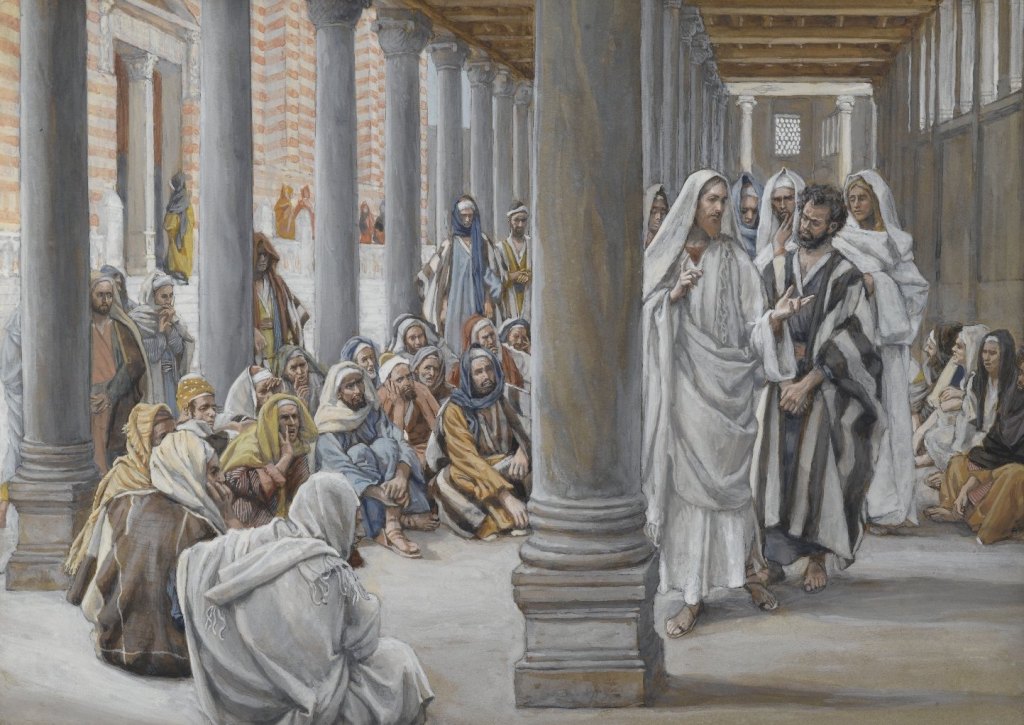
Think of what Jesus said, “All who do evil hate the light and do not come to the light, so that their deeds may not be exposed. But those who do what is true come to the light, so that it may be clearly seen that their deeds have been done in God.” The confession of sin is the hauling out into the light those things we would prefer to keep hidden. It is the recognition that as much as we would like to think otherwise, we are not always good little boys and girls. In my heart, I can speak to God about my unrighteousness, and God says, “Yeah, I know.” However, when I speak to the image of Christ in another person, when I make my sin real, then I also genuinely know of my fallenness. No longer can I deceive myself into thinking that I’ve confessed when I come before another. In Life Together, Dietrich Bonhoeffer writes, “Our brother breaks the circle of self-deception. A man who confesses his sins in the presence of a brother knows that he is no longer alone with himself; he experiences the presence of God in the reality of the other person.” (p. 116) When we confess, we come into the light with all that is dark within us and allow God’s Light to reveal and cleanse us of that darkness.

I know that we always have fun when the topic of confession comes up, but I do believe in its ability to heal, so, all fun aside, I want you to know about it. Do I expect there to be a line on Wednesday for those of you seeking to make confession? Nope. But I do ask you to consider it, and if nothing else, the next time you make a general confession, don’t just say the words. Instead, bring the burden of your sins before God, and seek to make amendment of life, not just with words, but in actions as well. And then—and this is the other half and perhaps the more difficult aspect of confession—receive the absolution. Know in your soul, without hesitation or doubt, that you have been forgiven. You don’t have to carry the weight of your sins. As St. John tells us, “If we walk in the light, as he is in the light, we have fellowship with one another, and the blood of Jesus his Son cleanses us from all sin.” (1 John 1:7) Jesus was lifted up on the cross that you might receive forgiveness of sin. Receive that forgiveness and know that you have been made acceptable to God. From the Book of the Prophet Isaiah,

“Come now, let us reason together, says the Lord:
though your sins are like scarlet,
    they shall be as white as snow;
though they are red like crimson,
    they shall become like wool.”

(Isaiah 1:18)

Today, I’ll close with a portion of Psalm 32,

Blessed is the one whose transgression is forgiven,
whose sin is covered.
Blessed is the man against whom the Lord counts no iniquity, and in
whose spirit there is no deceit.
For when I kept silent, my bones wasted away
through my groaning all day long.
For day and night your hand was heavy upon me;
my strength was dried up as by the heat of summer.
I acknowledged my sin to you,
and I did not cover my iniquity;
I said, “I will confess my transgressions to the Lord,”
and you forgave the iniquity of my sin. (Psalm 32:1-5)

The Word of the Lord.

Thanks be to God.

Sermon: “Salt Farmers”


In the far west of India, near the coast of the Arabian Sea, is the Rann of Kutch. For a few months out of the year, it is a marsh submerged underwater, but for the most part, it is a barren wasteland. Even so, some 40,000 families migrate out into this wasteland every year for seven to ten months and call it home. They are the Agariya people, and they have been farming this land for centuries. Not for wheat, corn, or some other crop we typically think of, but for salt, harvesting 76% of the salt produced in India.

I recently watched a documentary on these families, My Name is Salt. It was fascinating. The conditions are harsh. Temperatures can range from 40° to 104°, and the people suffer from various illnesses due to the salt. The average lifespan is only 60. It is a fantastic story, and even more so is how the salt is farmed.

It is a fairly extensive process, but they form “beds” where groundwater is pumped up. Through evaporation, the salt is rendered from these “beds.” To initiate the crystalization process, they lay small branches on the surface of the beds, and the salt begins to form crystals along the branches. When those crystals are large enough, they come along and beat them off the branches, and they continue to grow—you’ll have to watch the documentary to see—but in the end, they have mountains of beautifully white salt.

Today’s Gospel reading from Matthew is a part of the Sermon on the Mount, and what we heard follows closely after the Beatitudes. In the three verses between the Beatitudes and our verses today, Jesus said, “You are the salt of the earth. But if the salt loses its saltiness, how can it be made salty again? It is no longer good for anything, except to be thrown out and trampled underfoot.” Jesus then speaks of light in a similar way, and then then our verses for today.

Taken out of context, the verses we heard seem to indicate that we are in error by not following the Law as prescribed by Moses. But in the context of the Beatitudes and with this idea of being the “salt of the earth,” we begin to understand that Jesus had something else in mind, which is why I thought of those salt farmers.

God gave the Law to Moses. We know the top ten, but there are 613 laws in the Law of Moses. Everything from “Thou shall not murder” to “don’t eat bacon.” There are so many laws, and they are so intricate, that only a very few could remember it all, and none could follow. To remedy this, God sent His one and only Son, Jesus, to “harvest” the Law—to reduce it down to its purest nature, which Jesus did: “Teacher, which is the greatest commandment in the Law?” Jesus replied [with what we know as the Summary of the Law]: “‘Love the Lord your God with all your heart and with all your soul and with all your mind.’ This is the first and greatest commandment. And the second is like it: ‘Love your neighbor as yourself.’ All the Law and the Prophets hang on these two commandments.”

Jesus “harvested” the Law and reduced all there was down to those few statements, and ultimately to one word—love—and “not one letter, not one stroke of a letter, will pass from the law until all is accomplished.”

Like Jesus, we are called upon today to harvest this salt of God’s love. We are to take this beautifully white “salt” of God’s love and season everything we touch with it and then share it. There will be days filled with joy and days when the conditions are harsh, but we are “salt farmers,” and sharing God’s love is what we do.

Sermon: Holy Name

Photo by Gift Habeshaw on Unsplash

Question: How does your name make you feel? Do you like it? Do you wish your parents had been a bit more creative? Turns out, our names impact who we are, how we perceive ourselves, and how others perceive us.

“The psychology of names in the context of humans is a rich and complex subject that touches upon culture, identity, and perception. Names are not just words; they are the essence of who we are, representing our heritage, values, and aspirations. They have the power to shape our self-identity and influence how others see us. In a world of diverse cultures and traditions, names are a reminder of the beauty of human individuality and the shared bonds that connect us across generations.”

John is a relatively common name; it is the third most popular name in the last 100 years. As of 2022, I share the name John with 4,354,502 others. That said, I like it. It seems to fit my vocation as a priest, and when I think of it in those terms, I feel more related to John the Baptist than the Apostle John—although they both influence how I understand myself.

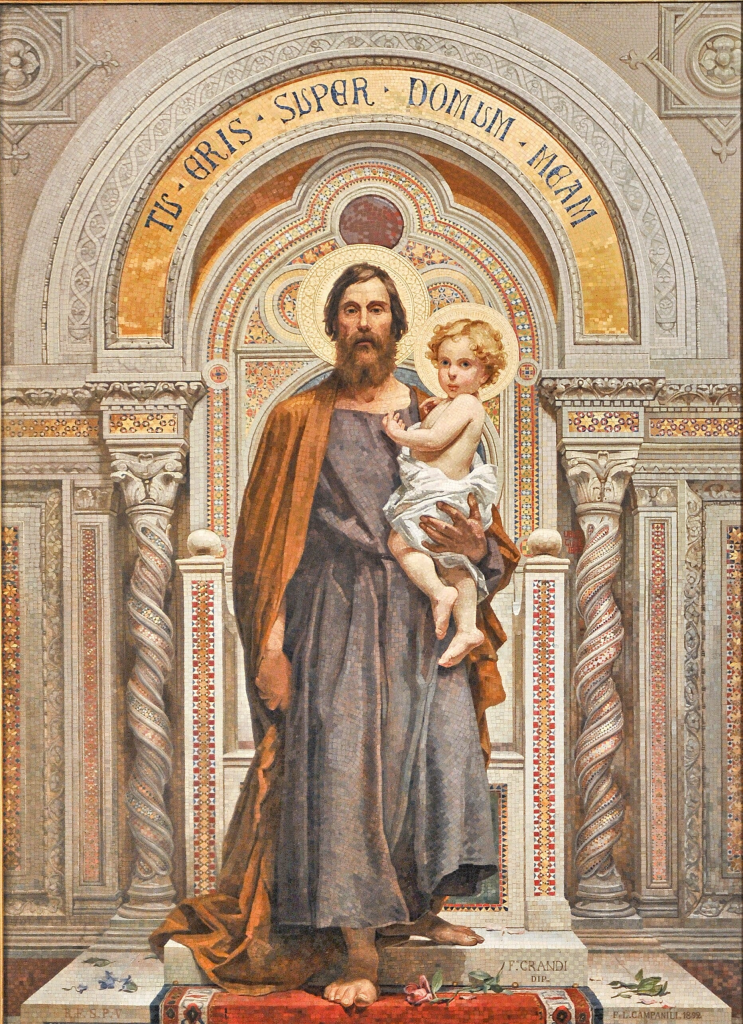
Today, however, we celebrate a different name—the Holy Name of Jesus. (Officially celebrated on Monday.) The name “Jesus” is from the Hebrew Joshua, or Yehoshuah, meaning “Yahweh is salvation” or “Yahweh will save.” It was the name given to Jesus by his Father. As we read in St. Paul’s letter to the Philippians:

Therefore God also highly exalted him
  and gave him the name
  that is above every name,
so that at the name of Jesus
  every knee should bend,
  in heaven and on earth and under the earth,
and every tongue should confess
  that Jesus Christ is Lord,
  to the glory of God the Father.

The name Jesus is interesting and has wildly varying effects on people. It can cause some to give thanks and others to rage. It is a name that can bring peace and ravaging wars. It is truly the name above all names, but why so much division? Why so much discord when it is spoken? There are many different answers, but one thing is for sure: we can either contribute to the rancor or help bring about greater peace, for in the same way that people recall the name of an Ernest Hemingway novel when they hear my last name—For Whom the Bell Tolls—they will or will not recall the name of Jesus when they hear yours. Consider a Stradivarius violin.

Stradivarius is the name associated with the finest violins in the world. This is true because Antonius Stradivarius insisted that no instrument constructed in his shop be sold until it was as near perfection as human care and skill could make it. Stradivarius observed, “God needs violins to send His music into the world, and if any violins are defective, God’s music will be spoiled.” His philosophy was summed up in one sentence: “Other men will make other violins, but no man shall make a better one.”

Each violin was unique in itself, but each was the finest instrument of its kind. If not, Stradivarius would not attach his name to it. If he had, then the instruments he attached his name to would not have been considered of such great value, and in turn, his name would have been smeared and his influence forgotten.

In a similar manner, as the Christian people, the name of Jesus is attached to us, and if we are not viewed as the holy instruments of our God, then we tarnish the name of Jesus. In the process, we drive people away from the Truth and, in many cases, make them enemies of God.

You bear the most holy name in history: Jesus. When people speak your name, may the name they also recall in their minds be that name: Jesus, because, through you, they have experienced Him.

Sermon: Easter 4 RCL C – “Light”


There was a very poor Christian man living in the countryside of China.  When it came time for his prayers, he always wanted to make a sacrificial offering to God so, because food was scarce, he would place a dish of butter on the window sill.  One day his cat came along and ate the butter and then went on to develop the habit of eating the butter, the offering to God.  To remedy this, before his time of prayer, the man leashed the cat to the bedpost.  This man was so revered for his piety that others joined him as disciples and worshipped as he did. Generations later, long after the holy man was dead, his followers continued to place an offering of butter on the window sill during their time of prayer and meditation.  And, in addition, with no idea why, each one bought a cat and leashed it to the bedpost.

Traditions.  Sometimes our traditions make sense and sometimes it seems we’re all just tying the cat to the bedpost.  (For the record: The Queen would not appreciate this tradition.)  When it comes to the traditions of the Church there are some who see our traditions as an integral part of our worship and others who see them as baggage from a superstitious past.  I for one am a firm believer in traditions because worship of our God should involve the entire person and all the senses.   G.K. Chesterton writes, “Tradition means giving votes to the most obscure of all classes, our ancestors.  It is the democracy of the dead.  Tradition refuses to submit to the small and arrogant oligarchy of those who merely happen to be walking about.”  Tradition is not just about what we think ought to be done, but what we as a Christian people collectively throughout the history of the Church believed should be done.  Not simply for the sake of doing them—tying the cat to the bedpost—but doing them because they give greater depth and meaning to our faith.  Many of our traditions are not only Christian but Jewish as well.  From the practice of the Last Supper that evolved out of the Passover Meal, to the celebration of Pentecost, which was originally the feast of Shavuot in Judaism.

Our Gospel reading today provides another example: “At that time the festival of the Dedication took place in Jerusalem.  It was winter, and Jesus was walking in the temple, in the portico of Solomon.”  For us, we read that as just one of the many Jewish Feast days, but for the Jewish people it is tradition, and if we look a bit more closely, we discover that it is about our tradition as well.

We know that the Israelites had been taken into captivity on a few occasions and we also know that the land of the Israelites was occupied by various foreign armies.  A couple of hundred years before the birth of Christ, the occupying armies were the Greeks.  At first, things were at least peaceful.  The Jews were allowed to continue their worship of the One True God, but then along came Antiochus Epiphanes who changed everything, which included the profaning of the Temple and trying to force the Israelites to worship the Greek gods.  This didn’t go over so well and eventually led to rebellion against the Greeks with the family of Maccabees/Israelites leading the fight.  The Maccabees prevailed and afterward, they worked tirelessly to restore and rededicate the Temple and the worship that took place there.  

As part of that first Dedication, all the ornaments that God originally prescribed had to be in place, one of which was the Golden Lampstand that we learn about in Exodus, chapter twenty-five: “You shall make a lampstand of pure gold… six branches going out its sides… you shall make seven lamps for it.”  And this light was to signify the very presence of God.  A bit further on in chapter twenty-seven we are told about the oil for the lamp, “pure beaten olive oil”, which took eight days to prepare.  However, this left the Maccabees in a quandary.  They wanted to dedicate the Temple as quickly as possible, but they only had enough oil for one day.  They could use what they had, but the lamp would go out before the end of the festival or they could use regular oil, which would have worked but would have been against God’s law or they could just wait until the proper oil was ready.  We find their decision in the Talmud (the Rabbinic oral tradition) Shabbat 21b: “And there was sufficient oil there to light the candelabrum for only one day.  A miracle occurred and they lit the candelabrum from it eight days.  The next year the Sages instituted those days and made them holidays.”  Tradition.  The tradition is known as the Festival of Lights or… Hanukkah.  Hanukkah means, dedication.  As you know, the eight-day festival is celebrated every year in the winter, generally near Christmas and all this places our Gospel reading into context: “At that time the festival of the Dedication took place in Jerusalem. It was winter, and Jesus was walking in the temple, in the portico of Solomon.”

With that in mind (some may mark this up as a happy coincidence but I’m more in favor of calling it a God-incidence): what did John tell us in the prologue to his Gospel?  John wrote, “In the beginning was the Word, and the Word was with God, and the Word was God….  In him was life, and the life was the light of men.  The light shines in the darkness, and the darkness has not overcome it…. The true light, which gives light to everyone, was coming into the world.”  In the chapters leading up to our Gospel, Jesus has saved the woman whom the Pharisees were going to stone to death for adultery, He has told them that He speaks for the Father and that He speaks the truth, He has told them that before Abraham, “I am” (he was), He gave sight to the man born blind, and declared Himself the Good Shepherd but before all this, what did Jesus say about Himself?  Jesus said, “I am the light of the world. Whoever follows me will not walk in darkness, but will have the light of life.”

Now, put that all together…

“At that time the festival of the Dedication—the Festival of Lights—the miracle of light—took place in Jerusalem—the very City of God. It was winter—it was the coldest and darkest time of the year, and Jesus—the Light of the World, the light that the darkness will not overcome has—is walking in the temple, in the portico of Solomon—he is walking in the very place where God commanded the Israelites to continuously burn a light to signify His presence.”  On the day we are reading about in our Gospel, the True Light of God, Jesus, has entered the Temple, God’s “home” on earth and it is this light, the light of Jesus, that still burns today, but what does that have to do with us and our traditions?

The Golden Lampstand was in the Temple in Jerusalem, but as we know the Temple was eventually destroyed in 70 a.d., so in order to demonstrate the light of God’s presence an eternal lamp/light is hung over the tabernacle (the niche for the Torah scrolls) in every synagogue.  This eternal light is known as the Ner Tamid.  Its use is based on the exact same texts as those used for the Golden Lampstand.  And we continue this tradition with the Sanctuary Lamp that burns above our Tabernacle/Aumbry but our Sanctuary Lamp is not just a cat tied to the bedpost.  It signifies to us the very Real Presence of God, of Jesus in this place… but wait, there’s more!  That Sanctuary Lamp also reminds us of who we are: “You are the light of the world. A city set on a hill cannot be hidden.  Nor do people light a lamp and put it under a basket, but on a stand, and it gives light to all in the house.  In the same way, let your light shine before others, so that they may see your good works and give glory to your Father who is in heaven.”

God gave the Israelites a commandment to have an eternal flame signifying his presence in the world and so they built a lampstand and filled it with oil just as he prescribed.  Yet the light that this lampstand emitted was only a sign of God’s presence.  At the feast of the Dedication when Jesus arrived at the Temple, the Light of God, the very presence of God was truly there.  And now, just as the Israelites were given a commandment, so are you, “Let your light shine” for it is indeed the light of Christ and it is a light that the darkness still seeks to overcome but through your faithfulness and perseverance it will burn ever brighter.

Let us pray:
The light of God surrounds us,
The love of God enfolds us,
The power of God protects us,
The presence of God watches over us,
Wherever we are, God is,
And where God is, all is well.
Amen.

Sinner/Son

Photo by Fabio Sangregorio on Unsplash

Had this crazy idea this morning: what if we created a Place where we didn’t add labels to one another but had true fellowship, where we could come together and break bread and support each other?  What if in that Place we didn’t seek to point out the sins of others but looked to ourselves and identified those errors in our own lives and then sought to turn from those errors?  What if this Place was where we could grow and learn and demonstrate to others that there is another Way?  What if in this Place we chose to love one another instead of hating and degrading everyone we disagree with?  And what if in this Place we worked for true justice and peace and respected the dignity of every person regardless of any and all differences?  

Can we create such a Place?

We can, with God’s help.

I will set a Table in this Place and prepare the meal. 

I identify as sinner/Son.  All sinners/Daughters and Sons are invited.  

Place = God’s House & God’s Rule.  

God’s Rule = Love one another as I have loved you.

Sermon: Epiphany 7 RCL C – “Forgive”


I’ve been working on my mind reading skills.  Let’s see how I’m doing (you may want to grab a pen if you need help with some light math.  I know I do!): 

1. Pick a number from 1-10. Any number.

2. Multiply it by 2.

3. Add 8 to that number.

4. Divide it by 2.

5. Subtract. Current number – Original Number. Take your time to do it right.

6. Match that number to an alphabet letter. For example 1-A, 2-B, 3-C and so on… Got the letter?

7. Think of an European country that starts from that letter

8. Take second letter from that country and what is the first animal you think of that starts with that animal?

9. Now think of the color of that animal

Ready?  Ok… let me read your mind… If you are thinking of a grey elephant, please raise your hand.

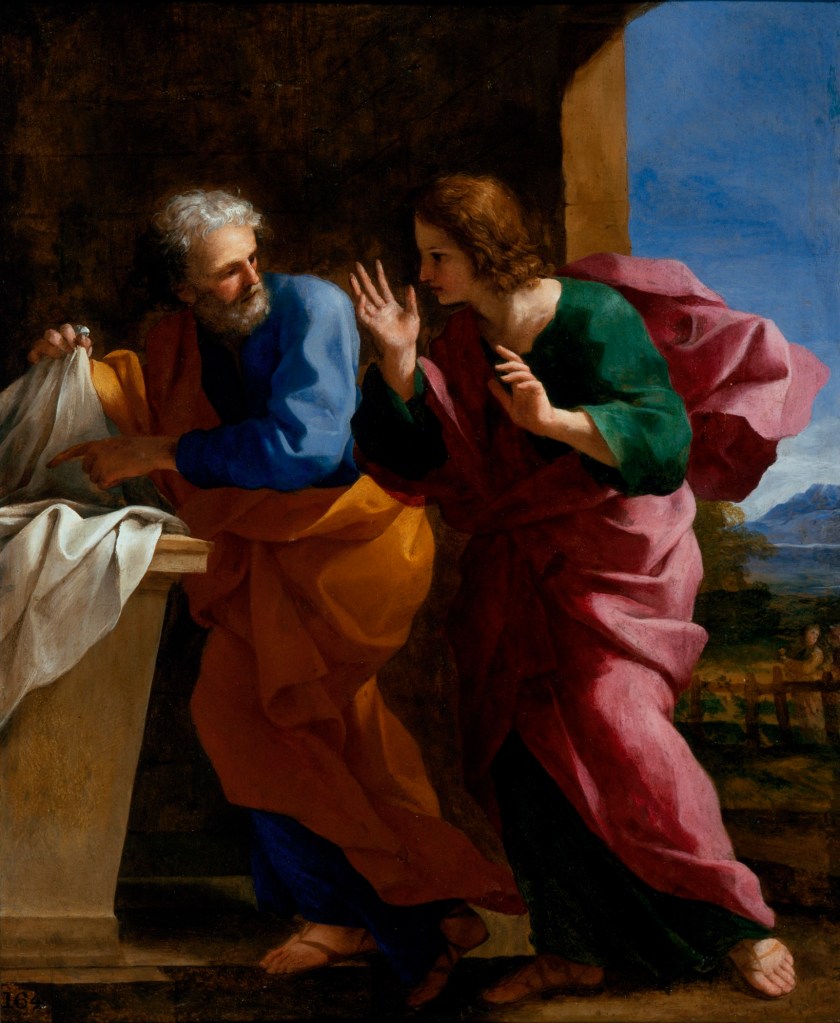
Why are we concerned with mind readers this morning?  Because, after reading that first sentence of our Old Testament lesson, I figured many would need to be a mind reader in order to know what the heck was going on: “Joseph said to his brothers, ‘I am Joseph. Is my father still alive?’ But his brothers could not answer him, so dismayed were they at his presence.”  What in the world is this all about?  Some will know (and a bit later on I look forward to covering the story in more detail during our Sunday school lessons on the Patriarchs) but maybe we could all use bit of a refresher.

In our study, we know that Abraham was the father of Issac and Issac was the father of Jacob (who will later be named Israel).  Jacob will have four wives and twelve sons.  His favorite wife was Rachel and his favorite son was Rachel’s first child (and Jacob’s eleventh son), Joseph.  Joseph’s younger brother, by Rachel, was Benjamin.

Because Jacob showed favoritism toward Joseph, the ten older brothers did not like him.  When Jacob made Joseph a coat of many colors, the ten liked him even less.  When Joseph had two dreams demonstrating that his brothers and father would eventually bow down before him… things just got nasty.

One particular day, the older brothers were out tending the flocks and Jacob sent Joseph out to find them.  When the older boys saw him coming, one said, “Here comes this dreamer.  Come now, let us kill him and throw him into one of the pits. Then we will say that a fierce animal has devoured him, and we will see what will become of his dreams.”  They did not end up killing him, but sold him as a slave and Joseph ended up in Egypt.  They took Joseph’s colorful coat, covered it in blood, and holding it out to Jacob, their father, told him that Joseph had been killed by wild animals.  

Now, fast forward through twenty-two years and many adventures: then a great famine settles in the land.  Jacob and his family need food, so Jacob sends those same ten brothers who sold Joseph to Egypt to trade for their needs.  In order to receive the food, the ten must go and ask it of the man who in Egypt was second only to Pharaoh.  They did not know it, but that man was their brother, Joseph.  We are told, “Joseph recognized his brothers, but they did not recognize him.”  Eventually, there is the great reveal and Joseph makes himself known.  The brothers, seeing Joseph who they had treated so badly, are greatly disturbed by their actions, yet Joseph says to them… insert our lesson from today: “I am Joseph. Is my father still alive?’ But his brothers could not answer him, so dismayed were they at his presence.”  He said to them, “Do not be distressed, or angry with yourselves, because you sold me here; for God sent me before you to preserve life.”  In other words, Joseph forgave his brothers and said, all that has happened is a part of God’s plan, so that we might be in a position to save God’s people.

Joseph had every reason to hate his brothers; and he was one of the most powerful people in the world, so he could have done whatever he liked to them, from sending them away empty handed, to placing them into slavery, to putting them to death, but he chose another path.  A path that led to reconciliation. 

With that understanding, hear again the words of Jesus from our Gospel lesson: Jesus said, “I say to you that listen, Love your enemies even if they sell you into slavery, do good to those who hate you even if they think of killing you, bless those who curse you because they do not understand how God is working, pray for those who abuse you, because you may win them back as a brother or sister. If anyone strikes you on the cheek or throws you into a pit, offer the other also and allow God to work his purposes; and from anyone who takes away your coat, even if it is a technicolor coat, do not withhold even your shirt or your life. Give to everyone who begs from you even if that person has done you very wrong; and if anyone takes away your goods, do not ask for them again, for they were God’s goods to begin with. Do to others as you would have them do to you, regardless of how they’ve treated you in the past…. Do not judge, and you will not be judged; do not condemn, and you will not be condemned. Forgive, and you will be forgiven; give, and it will be given to you.’”

I’ll tell you a story that I know I’ve told you before, but like any good story, it doesn’t hurt to hear it again: it takes place in Spain.  A father and son got into a tremendous heated argument, which led to the son running away.  Almost immediately the father felt remorse over what he had said and so he went in search his son.  He searched for months, but he could not find him. Finally, in a last frantic endeavor to find him, the father put an ad in a Madrid newspaper. The ad read: “Dear Paco, meet me in front of this newspaper office at noon on Saturday. All is forgiven. I love you. Your Father.” On that Saturday, 800 boys named Paco showed up, looking for forgiveness and love from their father.

You don’t need to be a mind reader to know that if there is one thing this world needs, it is forgiveness.  We need to be forgiven by God. We need to be forgiven by others and we need to forgive those who have hurt us.  So we need to stop judging over who may or may not be right.  We need to stop condemning and being so stubborn because we simply don’t want to let something go.  We need to start forgiving and being forgiven.  In that last phrase, Jesus says, “Give, and it will be given to you.”  I suppose we could think of that in terms of some sort of material gift: goods, money, etc., but in this context, I don’t think that is what Jesus is asking us to give.  I think Jesus is asking us to give love.  Love.  For in not judging or condemning and by forgiving, we are truly loving; and by loving in such a manner, we are becoming more like Jesus, because that is exactly how he loved us.  

“Good nature and good sense must ever join;
To err is human; to forgive, divine.”
(An Essay on Criticism: Part 2 by Alexander Pope)

In your relations with others, strive for the divine.

Let us pray: 

God, our Father,
You redeemed us
and made us Your children in Christ.
Through Him You have saved us from death
and given us Your Divine life of grace.
By becoming more like Jesus on earth,
may we come to share His glory in Heaven.
Give us the peace of Your kingdom,
which this world does not give.
By Your loving care protect the good You have given us.
Open our eyes to the wonders of Your Love
that we may serve You with a willing heart.

Amen.

Sermon: Proper 23 RCL B – “I”

Photo by fikry anshor on Unsplash

Boudreaux and his wife Clotile would go to the state fair every year, and every year Boudreaux would tell his beloved, “Clotile, I’d like to ride in that helicopter.”

Clotile always replied, “I know Boudreaux, but that helicopter ride is fifty bucks, and fifty bucks is fifty bucks!”

One year Boudreaux and Clotile went to the fair, and Boudreaux said, “Clotile, I’m 75 years old. If I don’t ride that helicopter, I might never get another chance.”

To this, Clotile replied, “Boudreaux, that helicopter ride is fifty bucks, and fifty bucks is fifty bucks.”

The pilot overheard the couple and said, “Folks I’ll make you a deal. I’ll take both of you for a ride. If you can stay quiet for the entire ride and not say one word I won’t charge you a penny! But, if you say just one word then it will cost you the fifty dollars.”

Boudreaux and Clotile agreed and up they went. The pilot did all kinds of fancy maneuvers, but not a word was heard. He did his daredevil tricks over and over again, but still, not a word.

When they landed, the pilot turned to Boudreaux and said, “By golly, I did everything I could to get you to yell out, but you didn’t. I’m impressed!”

Boudreaux replied, “Well, to told you the truth, I almost said something when Clotile fell out, but you know, fifty bucks is fifty bucks!”

Money has a way of making people crazy. For some, if they don’t have it, they’ll do just about anything to get some. For others, if they have more than enough, they’ll do anything to get more. It makes people blind to others in their pursuit for more money.

In the time of Jesus, if a person was wealthy, it was assumed that they were blessed by God and if they were poor, it was a sign of being cursed, but Jesus—as we know—likes to turn things on their head and today he does not let us down: “It is easier for a camel to go through the eye of a needle than for someone who is rich to enter the kingdom of God.” Why would he say this? Because some who are rich do not feel the need for God. Why would I need God when I can go out and get it / buy it for myself? They feel as though they can put their trust in themselves and not in God. Not only that, but in their pursuit of more for themselves, they don’t see or simply ignore the needs of others. But let me ask you this? This not seeing and ignoring, is this only the problem of the rich? Is not relying on God a problem only associated with the wealthy? No. I believe that Jesus was pointing out a specific trap that those who are wealthy can fall into, but I believe he was making a larger point that is applicable to us all.

Shortly after the cousin graduated from college, the two of us got in the car and made a thirteen day driving tour of the west. Dallas to the Grand Canyon, Las Vegas, Salt Lake City… all the way up to Vancouver, British Columbia, then back down and across Montana and South Dakota and home. If I remember correctly, it was about 5,000 miles. Crazy, but fun. This was pre-audio book times, so I drove and the cousin read aloud. The book that got us to Salt Lake City was Anthem, by Ayn Rand.

A dystopian novel about the elimination of the individual and the word “I” has been removed from the vocabulary. Only “we” can exist. Even the names of individuals have been stripped away, so the main character is known as Equality 7-2521. However, over the course of the novel, this character discovers the lost word “I” and then goes on to understand its meaning, but then it takes a bad turn. Equality 7-2521 gives himself a name, Prometheus (the Greek god that brought fire/light to humans), and says:

“Many words have been granted me, and some are wise, and some are false, but only three are holy: ‘I will it!’… I am a man. This miracle of me is mine to own and keep, and mine to guard, and mine to use, and mine to kneel before!” He concludes, “And now I see the face of god, and I raise this god over the earth, this god whom men have sought since men came into being, this god who will grant them joy and peace and pride. This god, this one word: ‘I’.”

For him, the collective “we” must be abolished, saying, “The word ‘we’ is as lime poured over men, which sets and hardens to stone, and crushes all beneath it, and that which is white and that which is black are lost equally in the grey of it.”

I agree with him in that the taking of the “we” to its ultimate end is bad. The individual should always have rights—“We hold these truths to be self-evident, that all men are created equal, that they are endowed by their Creator with certain unalienable Rights”—but when “I” becomes the god we kneel before and worship, then things fall apart and the centre cannot hold.

In our Gospel, Jesus was pointing out a specific trap that the wealthy can fall into, but the teaching is applicable to us all, because the problem with wealth and for us all is seeking to serve the “I” without any concern for others and by making it a god that even the One True God must become subject to.

This teaching of Jesus came about because the rich young man came to Jesus and asked, “‘What must I do to inherit eternal life?’ Jesus told him, ‘You lack one thing; go, sell what you own, and give the money to the poor, and you will have treasure in heaven; then come, follow me.’ When he heard this, he was shocked and went away grieving, for he had many possessions.”

The young man lacked one thing. I suspect that we all have “one thing”—if not more than one—that prevents us from following Jesus as we should and I also suspect, if we will examine ourselves, that at the source, the center of that “one thing” we will discover “I”. An “I” that is not about individual rights, but an “I” that is selfish and greedy. An “I” that we say even God must be subject to. “This is just who I am and what I want, so God’ll just have to deal with it.” Which only shows all the more that it must be dealt with. And, as with the rich young man, the healing of that dis-ease may cause you a certain amount of grieving. It might even be painful, but if we will root it out, we will find that we are able to follow Jesus much more closely. Is this possible? Can you do this on you own? Short answer: no. You can’t, but “for God all things are possible.”

Turn from the god of “I” to the One True God, and allow him to work in you, bringing about in you what is well pleasing in his sight.

Let us pray: God, our Father, may we love You in all things and above all things. May we reach the joy which You have prepared for us in Heaven. Nothing is good that is against Your Will, and all that is good comes from Your Hand. Place in our hearts a desire to please You and fill our minds with thoughts of Your Love, so that we may grow in Your Wisdom and enjoy Your Peace. Amen.

Journal: August 20, 2021

My question for today: exactly when did they start using super glue to seal up the single serve string cheese? I can only imagine these things going in some small child’s lunchbox. I finally broke out a knife and slit it along the side and there may have been a few choice words along the way. Now that I’ve got that off my mind…

Movies: started several, finished none. Oy. Next.

I continue the Camino prep / exercise. After going at it strong for a week I gained two pounds. Rrr. Ok. Fine. I’ll just keep at it knowing that the process works. Exercise and burn more calories than you take in. That’s how it is supposed to work, although it can be as frustrating as opening a single serve string cheese! Each day I have to tell myself the Nike slogan and then put on my Brooks and do it. I will definitely get there.

When Christians fight one another: a disgrace. As Charles Spurgeon wrote, “Satan greatly approves of our railing at each other, but God does not.” There are more than enough studies out there showing that the Church is in decline and there are also several studies that show one of the greatest contributing factors is the way Christians treat other Christians. Yep. That’s right. The greatest harm to the Church is not from the outside, but from within. Think about it: you see fighting in your home, at work, on the TV, in social media and you think to yourself, “I’ll go to church, because there I will find peace and unity.” But instead of finding peace and unity, you find more upheaval, more of the same, more of the world. Who needs that?! Not me. “The greatest single cause of atheism in the world today is Christians who acknowledge Jesus with their lips and walk out the door and deny Him by their lifestyle. That is what an unbelieving world simply finds unbelievable.” — Brennan Manning.

The Christian is to remain humble. The Christian is to see themselves as the greatest of all sinners and their brothers and sisters as souls to be loved. The Christian is to build up and not tear down. The Christian does not wave a flag, the Christian carries a Cross (a Cross that is for you to be crucified upon so that you might die with Christ and Rise with Christ.) The Christian is a candle in a dark cave, seeking out the lost and showing the way to freedom, fresh air, and The True Light.

“Finally, brothers (that includes you sisters, too!), whatever is true, whatever is honorable, whatever is just, whatever is pure, whatever is lovely, whatever is commendable, if there is any excellence, if there is anything worthy of praise, think about these things. What you have learned and received and heard and seen in me (I was going to delete that bit, because it is not always what you see in me) practice these things, and the God of peace will be with you.” (Philippians 4:8-9)

My goodness! He went and got all preachy on us.

What I learned today (and have known, but wanted to say): I also believe in miracles.

Thought for the day:

StTeresa of Calcutta

“These are the few ways we can practice humility:
To speak as little as possible of one’s self.
To mind one’s own business.
Not to want to manage other people’s affairs.
To avoid curiosity.
To accept contradictions and correction cheerfully.
To pass over the mistakes of others.
To accept insults and injuries.
To accept being slighted, forgotten and disliked.
To be kind and gentle even under provocation.
Never to stand on one’s dignity.
To choose always the hardest.”

Journal: August 14, 2021

Last night: I have not watched The Matrix since I left seminary. This is a phenomenal movie and highly entertaining. Top on the list of cooldom are the phones (well, not top, because let’s face it… this is an awesome movie.) No. Not the old rotary dial gizmos. Yes. I’ve used one. Had to deal with the finger slipping and the wrong number dialed… lost my place and gotten one hole more than I should… etc… but we’re not talking about those kinds of phones. We’re talking about the Nokia 8110. This is design. This is cooldom. This is the phone we all want, but what we have are designless unimaginative coasters. Yes… they do all sorts of fun things and have more computing technology than the lunar landers, but…

Need I say more? No. That said… I would even trade the Nokia 8110 for my old Blackberry 8100 Pearl. That was a sweet phone. That was last night.

This morning: I slept in. Beautiful to sleep in. Had a few chores around the house that I knew I could get done… no worries. First chore: unloading the dishwasher. Half way done… the phone rings.

Phone message… phone message… I didn’t get to it while it was ringing, so I went about my business. My business was so important. Don’t you just hate it when the dishes in the dishwasher are supposed to be dry, but the little depression in the bottom of the glasses always holds the water. Then, if you don’t get to them in time (at least here in Enid) the hard water leaves a white ring / film on the bottom of the glass…. phone message… just let me finish with this one chore and I’ll get to it….

… it was his mom. He couldn’t call… he had died in his sleep. He was three years younger than me. God knows I hate myself sometimes. She couldn’t speak. I knew. I rushed. I put on the collar. I drove across town. Who the hell do I think I am? The prayers. The words. More words. He’s still gone and mom’s still… shit.

I came home. Took off the collar. Petted and loved on the Queen… then… then I finished unloading the dishwasher. Managed to run a knife deep into my hand in the process… it wasn’t intentional.

I should delete this, but I won’t. This is me.

What I learned today: “You do not know….” We all know that one. I don’t need to repeat it.

Thought for the day: May his soul and the souls of all the faithful departed, through the mercy of God, rest in peace. Amen.