Many are familiar with the story of Adolf Hitler being rejected from the Academy of Fine Arts Vienna twice. There is no way to know, and many other factors were involved, but might world history have been different if he had been accepted?
One small action, and the result affected everyone on the planet. There are many such stories.
At the Paris Peace Conference in 1919, President Woodrow Wilson received a petition and letter from someone who worked at the Ritz Hotel in France, asking that France withdraw from Vietnam. Another hugely complicated issue, however, it is believed by many that the hotel employee was a young Vietnamese man named Ho Chi Minh. One little thing might have changed much.
Little actions, leading to tremendous results.
Our story from the Old Testament is the beginning of the Exodus and traces the transformation that unfolded in Egypt over many years. When Joseph’s brother came to him, Joseph was held in very high esteem by Pharaoh; however, over time that relationship was forgotten, and the Israelites had become so numerous that Pharaoh and the Egyptians feared them. To weaken the Israelites, they were ruthlessly oppressed.
To further decrease their numbers, two midwives, Shiphrah and Puah, were summoned by Pharaoh. Why them? Scripture does not say. Perhaps they were the ones in charge of others. Whatever the case, they were instructed to kill all male children of the Israelites as soon as they were born.
Unlike Prissy from Gone with the Wind, who didn’t know nothin’ ‘bout birthin’ no babies, these two were professionals. They, like all other midwives, were important members of the community and would have worked day and night, caring for mothers and babies. However, when Pharaoh commanded them to kill the male babies, there was one thing he failed to factor in—these two women feared God more than they feared him. Therefore, they found a way to disregard Pharaoh’s orders. Whether by deception or flat-out lying, they allowed the male children to live. When his covert plan to deal with the Israelites failed, Pharaoh simply demonstrated his own ruthlessness and ordered all male Israelite babies to be thrown into the Nile River—to be murdered.
As the story proceeds, a woman becomes pregnant. We don’t learn her name here, but it is Jochebed. (Exodus 6:20) Jochebed is a woman who is living in very harsh conditions. She is a slave and greatly oppressed. Her child is born, and it’s a boy. Knowing that Pharaoh decreed that all male children be killed, she hides her child for three months. When it becomes apparent that she can no longer hide him, she comes up with a plan.
In English, we read that she made a basket and covered it in pitch. In Hebrew, she made a tevah. The word tevah is used only once elsewhere in Scripture. It is what Noah was told to build—an ark. Jochebed makes an ark for her baby, places the child in it, seals it with pitch, and, in a way, following the command of Pharaoh, casts the ark into the waters of the Nile.
The baby’s sister is also not named here, but we learn it later. She is called Miriam. If Jochebed’s life was hard, Miriam’s was even more so. In the story, she watches to see what happens, as any loving big sister would. She watches the course of her brother’s ark.
The ark and the baby float down the Nile and are seen by Pharaoh’s daughter. We never learn her name, but among all the women in Egypt, she is at the highest point of society. Unlike the midwives, Jochebed, and Miriam, she has everything. She is daddy’s little girl. When she sees the baby in the ark, she immediately knows he is a Hebrew child, but unlike Daddy, she does not see a nemesis or someone to be feared. She sees a child, one to be pitied. Even knowing that Pharaoh has commanded all male Hebrew babies be killed, she finds a way to save this child. Seeing this, Miriam runs over and says she can find someone to nurse the child. Pharaoh’s daughter agrees, and the baby is returned to where he began—in the arms of his mother, Jochebed.
Who was the baby? Moses.
So often, when we read the story of the Exodus, we become so focused on the central characters, God and Moses, that we fail to see the part everyone else played. However, in this part of the story, Moses does only four things: he rides in a basket, he eats, he sleeps, and he poops. That’s it. However, if it hadn’t been for the work of the others, the story would have ended very quickly, and Moses would have drowned in the Nile River.
You are familiar with Saint Paul’s teaching to the Romans that we read today. He says, “As in one body we have many members, and not all the members have the same function, so we, who are many, are one body in Christ, and individually we are members one of another.” He will later expand on this idea, but here he continues by saying, “We have gifts that differ according to the grace given to us: prophecy, in proportion to faith; ministry, in ministering; the teacher, in teaching; the exhorter, in exhortation; the giver, in generosity; the leader, in diligence; the compassionate, in cheerfulness.”
The list is short, but the categories are very broad. It could have easily included midwives—those who care for the poor and the innocent. Those who are willing to stand up against injustice. Those who give of themselves so others might have life.
The list could’ve included the Jochebeds of the world. Those who faithfully fulfill their calling as a mother, father, or guardian, and who, after doing all that is required of them, entrust the work to God.
Paul’s list could also include those like Miriam, who watch and discern. Who know when to speak and what to say. Who know how to put the pieces together so that God’s work moves forward.
The list can include individuals like Pharaoh’s daughter. Those who can use their position and resources to save and care for the less fortunate. Those who can see not a problem to be dealt with, but a child of God made in His image—a human being who deserves the opportunity to survive and to thrive.
The story of Exodus is not just the story of Moses. Instead, it is the story of God and the individuals He endowed with specific gifts so that His will might be accomplished in their lives and in the world. And that is not only the story of the Exodus; it is also the story of the Church.
Each person seated here today has been endowed with a particular grace, a specific gift that can be used in the church and in the fulfillment of God’s purposes. As Paul said, we do not all serve the same function, but together as the body, we serve God.
The gospel reading today is known as the Confession of Saint Peter. Jesus first asks, “Who do the people say that the Son of Man is?” The disciples answer, “Some say this, others say that.” Jesus then makes the question personal: “But who do you say that I am?” Peter answers with his confession, “You are the Messiah, the Son of the living God.” Jesus responds, “Peter, you get the gold star,” but then Jesus does something interesting—He tells Peter who he is: “I tell you, you are Peter, and on this rock I will build my church, and the gates of Hades will not prevail against it.”
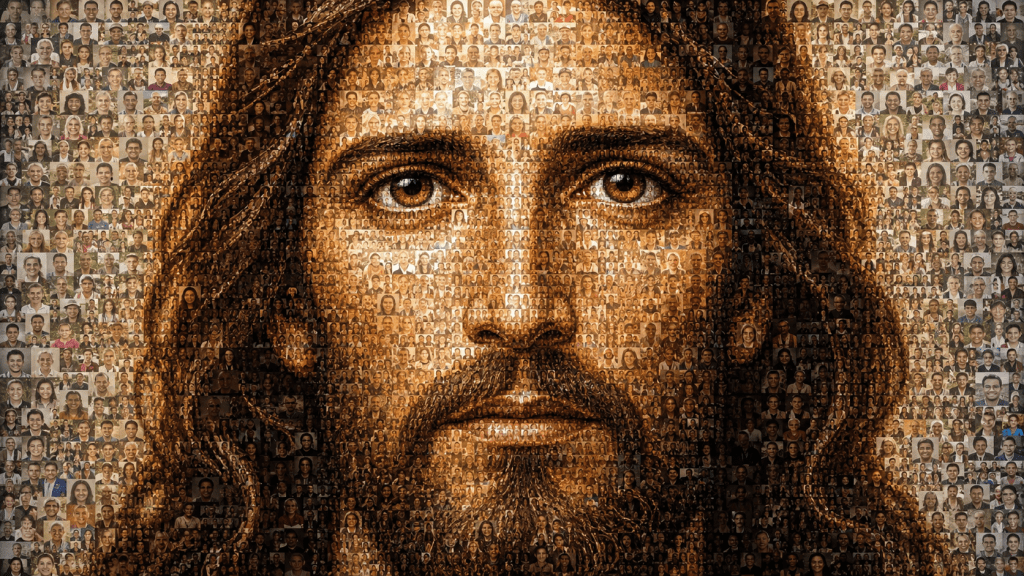
Paul tells us that we each have a part to play in God’s kingdom, but sometimes we may not know what that part is. One way to find out is to turn Jesus’ question back to Him. Jesus asks, “Who do you say that I am?” So ask Him the same question. “Lord, who do you say that I am?” Like Peter, you may hear Him come straight up and tell you, or, like Moses, you may encounter a burning bush. However, it is more likely He will say to you, “Open your eyes and look around. What do you see?”
When you do, like Jochebed, you might see those who are vulnerable and in need of nurturing so they can be prepared to go out into the world. Like the midwives, you might see a specific need that must be met for God’s work to continue. Like Miriam, you may be one who has the gift of discernment, organizing others to accomplish the work. Like Pharaoh’s daughter, you may have the resources and compassion to help those less fortunate.
God is funny like that. He’s not going to look at you and say, “You’re a mighty fine brain surgeon, so I’m going to make you a carpenter.” No. God says, as He did with Peter, “You’re a mighty good fisherman, so I’m going to change what you’re fishing for. Instead of fish, it will be people.” If we allow it, God will take our natural gifts and give us opportunities to use them for holy purposes. When we do this, it is called ministry, where a little action can have tremendous results. You may only see one small part. You may not be able to see the wider scope of what is taking place. However, you may see that one piece, that one little thing, that completes the greater work.
Pray, “Lord, who do you say that I am?” Then open your eyes. He will show you. When He shows you, don’t just sit on it. Pick up your call and fulfill your purpose.
Let us pray: Lord Jesus, You call all your people to be your Church, and you give each of us gifts to share. Look with love upon those who serve as lay ministers in your house. May their work build up your kingdom on earth and bring your light to the world. Keep them close to you in daily prayer, and let their lives reflect your great love. We ask this in your holy name. Amen.