Sermon: Wednesday in Holy Week

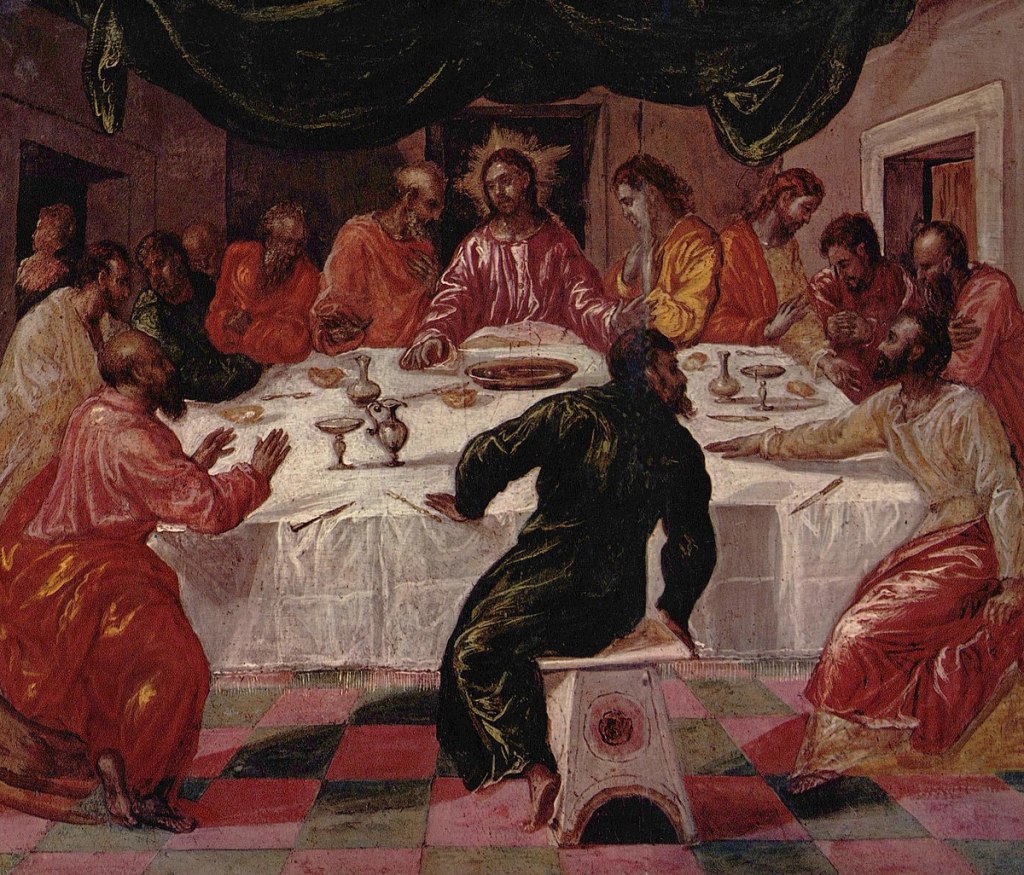
The Last Supper by El Greco

Throughout the Gospels, the disciples struggled to grasp who Jesus truly was, along with the significance of his actions and words. 

The disciples and Jesus are out on the sea when a storm rolls in, and the disciples fear they will drown. Jesus calms the storm, yet the disciples are even more afraid. He asks them, “Why are you so afraid? Do you still have no faith?”

Jesus had fed the 5,000, and he and the disciples were out on the boat, but the disciples had forgotten to bring anything to eat. Jesus said to them, “Watch out—beware of the yeast of the Pharisees and the yeast of Herod.” How did the disciples respond? They said to one another, “It is because we have no bread.” Jesus then asked them, “Why are you talking about having no bread? [Ya nitwits! — Fr. John’s commentary] Do you still not perceive or understand? Are your hearts hardened?  Do you have eyes and fail to see? Do you have ears and fail to hear?”

Jesus tells the disciples that he must die, leading to that unfortunate scene with Peter and the “Get behind me, Satan!” business. And then there is today. 

They are gathered in the upper room for their last supper together. Jesus says, “Very truly, I tell you, one of you will betray me.” Peter wants to know what he means, but seems afraid to ask, so he tells John to ask Jesus, “Who is it that will betray you?” John asks, and Jesus responds, “It is the one to whom I give this piece of bread when I have dipped it in the dish.” Jesus then dips a piece of bread into the dish and hands it to Judas Iscariot, saying to him, “Do quickly what you are going to do.” Scripture then states, “Now no one at the table knew why he said this to him. Some thought that, because Judas had the common purse, Jesus was telling him, ‘Buy what we need for the festival’; or that he should give something to the poor. So, after receiving the piece of bread, he immediately went out.”

Jesus just said, whoever I give this piece of bread to will be the one who betrays me! He dips the bread into the dish and hands it to Judas. Why then do the disciples not understand? Why, instead of saying that Judas went out to do the deed, does scripture not say, “The disciples understood that it was Judas who would betray Jesus, so they pounced on him and beat the living daylights out of him!” Come on, fellas! Seriously? 

Why did the disciples fail to grasp who Jesus truly was, the things He did, and what He said? Answer: for the same reason we don’t fully comprehend who Jesus truly is, the things He does, and the things He says. “For now we see in a mirror, dimly, but then we will see face to face. Now I know only in part; then I will know fully, even as I have been fully known.”

Much of who Jesus—God—is was hidden from the disciples, just as He is hidden from us. Coming into the full knowledge of God would be like walking into the core of the sun. It is beyond our current condition to fathom.

Such knowledge is too wonderful for me;
    it is so high that I cannot attain it.

Instead of understanding everything, God tells us, “Understand this,” and He stretches out His arms upon the hardwood of the cross. You don’t need to understand how it works, what happened, the nature of sin, the Holy Trinity, or why the disciples allowed Judas to walk out and betray Him. You only need to understand the “Why?” behind it all. What is the answer to “Why?” You. 
Anamnesis and Holy Week

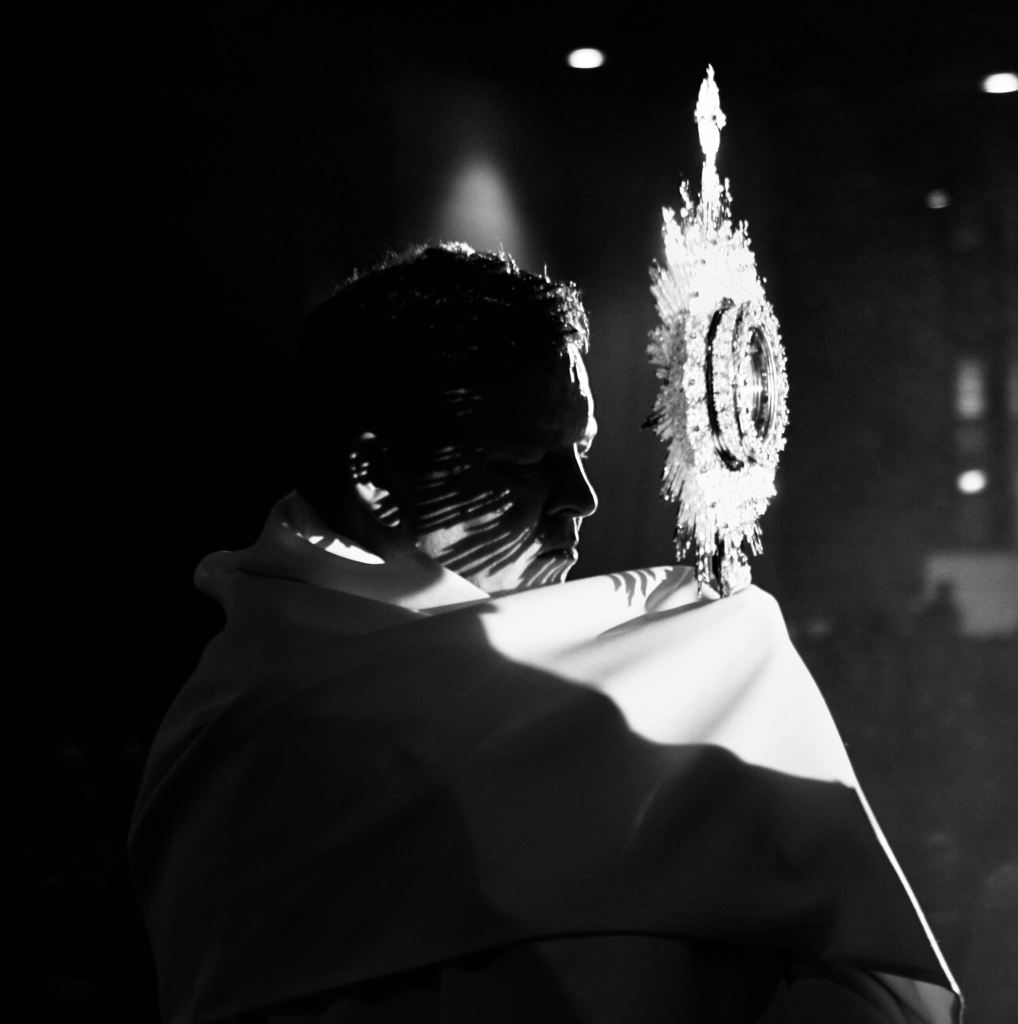
Photo by Eric Mok on Unsplash

Article for the local paper.

During the Mass, the priest recites the words Jesus spoke at the Last Supper, “Do this in remembrance of me.” (Luke 22:19) For us, the word “remembrance” is most often defined as recollecting or bringing to mind. However, when Jesus spoke those words, He had something very specific in mind, and it was far more than a simple remembrance. 

The word remembrance is from the Greek word anamnésis (ἀνάμνησις). The word is somewhat nuanced, but what Jesus had in mind was for us to not only remember Him and His words, deeds, and actions but also to make Him present. “Do this in remembrance of me… Do this and make me present.” Truly present in the bread and the wine. It is this understanding of remembrance that we should apply to Holy Week—Palm Sunday through the Sunday of the Resurrection. What would this look like?

Take, for example, Palm Sunday. On this day, we remember Jesus’ triumphal entry into the Holy City of Jerusalem. The Gospel of Luke tells us that as Jesus rode along on the donkey, the people laid their cloaks before Him, waved palm branches, and shouted, “Blessed is the King who comes in the name of the Lord! Peace in heaven and glory in the highest!” (Luke 19:38) 

To simply remember this day is to read or hear the words and to see the scene unfold before you as though you were standing above it and watching it from above. To remember—anamnésis—is to be one who is standing alongside the road, crying out the words yourself, laying down your cloak, breathing in the stirred-up dust of all those people welcoming and worshipping the King. To anamnésis is to be one who reaches out and touches the King of Kings as He passes, truly in His presence.

This Holy Week, do more than be an observer of those great events that took place over 2,000 years ago. Be a part of them. Engage with them in such a way that you are in the upper room with Jesus, on the hill outside Jerusalem when He is lifted up, there when He is placed in His tomb and overjoyed as you stand with Mary Magdalene and the other Mary, staring into the empty tomb.

Remember Jesus. Make Him present to you today.

Sermon: Great Vigil of Easter RCL A – “Ghost!”

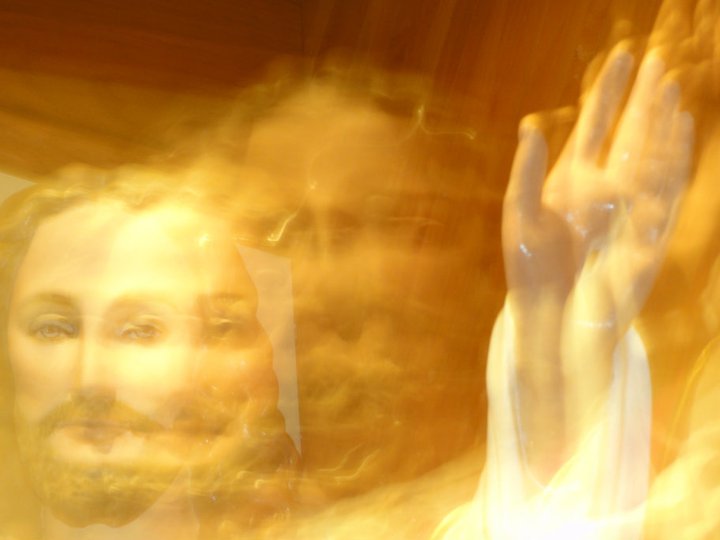
Jesus blurI like for my television programming to be intellectually stimulating. I like to constantly be stretching and growing my mind, so I stay away from things on the History Channel or the Learning Channel and go straight for the meat and potatoes: America’s Funniest Home Videos with an occasional episode or two of Friends. I do watch other things as well that are equally as stimulating. For a while I was on Mythbusters then I moved over to Miami Ink – especially when Kat Von D was on for a while, followed by Deadliest Catch. However, I’ve found one show that I’ve been absolutely hooked on for a while: Ghost Adventures, with my buddies Zak, Nick, and Aaron. Zak is the front man with the weird hair, Nick is the serious one, and Aaron is the one who acts a bit like Shaggy in Scooby Doo.

They’ve got all this really great equipment too for detecting ghosts: digital recorders to capture EVPs – that’s Electronic Voice Phenomenon for you non-ghost believers – night vision cameras, infrared imaging, the works. What is so tragic is that so often the ghosts drain the energy of their cameras, so just when they are about to capture something good like a full body apparition on tape – the camera dies! So they just have to tell you about it instead of showing it to you – I’m so disappointed for them.

The reason I mention this is because of our Gospel reading tonight. Jesus has been dead and in his tomb for three days, yet now he is appearing to the living. Is he a ghost? Is this the full body apparition that Zak, Nick, and Aaron are always talking about, or is it something all together different? The gospel writers are very careful about helping us to understand that what these women are seeing in tonight’s gospel – and for that matter at all the appearances of Jesus following his resurrection – is not a ghost.

For example our Gospel from today said, “Suddenly Jesus met them and said, ‘Greetings!’ And they came to him, took hold of his feet, and worshiped him.” “They took hold of his feet.” All ghost adventuring aside, even the folks in the time of Jesus knew that you could not touch a ghost. In later appearances we are told that others touched him, some walked down the road with him and broke bread with him, and there is the time when he will meet with the disciples on the shore of the sea and have breakfast with them. All of these things occurred after his death and resurrection; and the Gospel writers use these examples to help the reader understand that the Risen Jesus is not a ghost. He is alive.

Following his resurrection we know that he ascended into heaven so that we can no longer see him as he was and for many their response to that event is, “Well isn’t that convenient.” A bit like the Ghost Adventurers’ cameras going dead just as the ghost shows up, leaving only someone’s word that something actually took place. I think the lawyers would say that its all circumstantial evidence.

Perhaps more folks would believe that Jesus is in fact the risen Lord if they could take hold of his feet or have breakfast with him on the shore of the sea. We read in our Gospel tonight, Jesus told Mary, “Tell my brothers to go to Galilee; there they will see me.” Many today would ask, “Where is my Galilee that I might see Him?” You know how I respond to that? Open your eyes. He is all around you. As St. Patrick wrote:

Christ beside me, Christ before me;
Christ behind me, Christ within me;
Christ beneath me, Christ above me;
Christ to right of me, Christ to left of me;
Christ in my lying, my sitting, my rising;
Christ in heart of all who know me,
Christ on tongue of all who meet me,
Christ in eye of all who see me,
Christ in ear of all who hear me.

Open your eyes. You won’t see a ghost. You’ll see the Risen Lord. You’ll see Jesus.