Sermon: Epiphany 5 RCL A – “Conform”


A fable passed down for generations tells of an elderly man traveling with a boy and a donkey. As they walked through a village, the man led the donkey, and the boy walked behind. The townspeople called the old man a fool for not riding, so to please them, he climbed onto the animal’s back. When they reached the next village, the people said the old man was cruel to let the child walk while he rode. So, to please them, he got off, set the boy on the animal’s back, and continued on his way. In the third village, people accused the child of being lazy for making the old man walk, and someone suggested they both ride. So the man climbed on, and they set off again. In the fourth village, the townspeople were indignant at the cruelty to the donkey because he was made to carry two people. The frustrated man was last seen carrying the donkey down the road.

In the 1950s, the Polish-American psychologist Solomon Asch conducted a series of conformity experiments. The tests were simple, but the results were profound. Since then, the tests have been replicated numerous times. What doesn’t change are the results.

The test was administered to college men and billed as a vision/eyesight test, but it was much more.

Asch created an image with three vertical lines of varying length and labeled them A, B, and C. He then brought in a group of individuals and asked which of the three lines was the longest. Simple enough, but there was a twist. If there were eight individuals in the room being tested, seven of them—known as confederates—were in on the experiment. The odd man out was the subject. The questioning would then begin. “Which of the three lines is the longest?” The confederates always answered first, and the subject last.

At first, the confederates would give the correct answer, but after a few rounds, they would all intentionally choose the wrong answer.

You’ve got lines A, B, and C. A is the longest, and everyone chooses A. All is well. Then you are shown a new set of lines in which C is the longest, but all seven confederates say B is the longest. When it’s the subject’s turn to answer, and he plainly sees that C is the longest, how will he answer? Will the subject be truthful, regardless of what everybody else has said, and choose C (the longest), or will he cave to social pressure and go along with the confederates’ choice of B? Remember, the subject thinks this is a vision test, so there’s no pressure to “get along.” Nothing high-stakes about the choice. Yet, of all the subjects tested, only about 25% never conformed, giving in to social pressure. 75% conformed at least some of the time, and 33% gave in to peer pressure 100% of the time, even though the answer was clearly wrong.

The big question then is “Why?” Asch concluded there were several factors—a desire to be accepted, fear of being different, and conflict avoidance. People would rather be wrong than be ostracized.

Because the experiment was conducted on college students, Asch concluded, “The tendency to conformity in our society is so strong that reasonably intelligent and well-meaning young people are willing to call white black. This is a matter of concern. It raises questions about our ways of education and about the values that guide our conduct.”

He made that statement about young people, but I would be willing to make a substantial wager that it applies to us all. True? I believe so. Ever go along with something you didn’t feel was right, but participate because everybody else was doing it? Yeah. Everybody nod your head.

Social conformity exerts great pressure on us all, leading us to conform to the person others expect us to be rather than the person we truly are. This is a good thing when it comes to taking a bath or brushing your teeth. However, in other situations, it can take a very bad turn. Consider what happened to the average German citizen during the 1930s and the rise of Nazism.

A week or so ago, I came across a quote but was unable to identify the author. I liked it enough to include it in my journal. It is on the New Age side of things, but bear with me. It reads, “You will never be free until you realize this. It was never about what they think. It was always about whether you listen to yourself. We spend so much of life chasing approval, fitting into shapes that were never ours, walking paths paved by other people‘s expectations. But have you noticed? The more you chase what pleases them, the further you drift from what fulfills you. The universe gave you a compass, not in your pocket but in your chest. Your intuition is the echo of the cosmos whispering through you. And yet, how often do we trust our fear more than we trust that quiet knowing? Do not fear walking alone. Do not fear growing alone. Because to stand in your own light is to remember the truth.”

It sounds like Asch. We chase approval, fit into shapes that are not our own, and follow paths that are not ours—we conform. We chase or believe in things that don’t fulfill us, and have nothing to do with who we want to become, yet we do it to get along. Mustn’t go against the grain. However, within us is a voice that speaks truth. A voice that will guide us along a path that will fulfill us and even transform us into the person we were created to be.

Today, we read from St. Paul’s first letter to the Corinthians. He said, “For what human being knows what is truly human except the human spirit that is within? So also no one comprehends what is truly God’s except the Spirit of God. Now we have received not the spirit of the world, but the Spirit that is from God, so that we may understand the gifts bestowed on us by God.”

Paul is saying that no one can truly know another person simply by looking at them or even by being in relationship with them. A part remains hidden, perhaps even from themselves. Since that is true, if we can’t even know another person, then knowing God is even less possible, unless—and there is the key—unless we have the Spirit of God within. Through the Spirit, God chooses to reveal Himself to His children. Still, we live in the world, and the spirit of the world can influence our lives. It is this spirit that wants us to conform, to chase approval, walk paths that are not our own, and turn from God. Therefore, in his letter to the Romans, Paul writes, “I appeal to you therefore, brothers, by the mercies of God, to present your bodies as a living sacrifice, holy and acceptable to God, which is your spiritual worship. Do not be conformed to this world, but be transformed by the renewal of your mind, that by testing you may discern what is the will of God, what is good and acceptable and perfect.” (Romans 12:1-2)

Paul implores us not to listen to the spirit of this world but to look to the Compass within our chest, our soul, and to listen to the whisperings of God’s Holy Spirit. Such actions may bring on the feelings Asch described in his experiment, primarily fear of being different and of being ostracized, but “Fear not,” Jesus says. “You will not have to walk alone, for I am with you.”

Jesus says, “Don’t be afraid to be different. Why? Because I created you to be different. I created you to be the salt of the Earth. I set you on a path not to be conformed to this dark world but to be the light of the world. Therefore, ‘let your light shine before others, so that they may see your good works and give glory to your Father in heaven.’”

Will such a life make a difference?

In his experiments, Asch introduced a variable. What if one of the confederates dissented and chose the truth? In almost every case, the subject, seeing an ally—someone they could stand with—chose the truth. The truth doesn’t need a majority, just company.

If you become the light, you will give others the courage to do the same. You may or may not be able to change the world around you, but by living out the truth, by shining the light of Christ, by not conforming, by not ending up carrying the stupid donkey, and ultimately by living according to the Spirit of God, you will fulfill the will of God in your life (which, by the way, is far more important than winning the battle).

The author of Proverbs writes,
“The way of the wicked is like deep darkness;
    they do not know over what they stumble.”
“But the path of the righteous is like the light of dawn,
    which shines brighter and brighter until full day.”
(Proverbs 4:19 & 18)

Walk the path of righteousness and be that light. It is why God, in His infinite wisdom, created you.

Let us pray (Hymnal 1982 #656 by John Keble):
Blest are the pure in heart,
for they shall see our God;
the secret of the Lord is theirs,
their soul is Christ’s abode.

The Lord, who left the heavens
our life and peace to bring,
to dwell in lowliness with us
our pattern and our King;

He to the lowly soul
will still himself impart and
for his dwelling and his throne
will choose the pure in heart.

Lord, we thy presence seek;
may ours this blessing be;
give us a pure and lowly heart,
a temple fit for thee.

Sermon: Epiphany 4 RCL A – “God’s Wisdom”


The study of wisdom in Scripture is fascinating, and I’d like to delve into it more deeply, but at its core is the fact that wisdom is a grace given to us by God in order to live according to God’s will. However, wisdom is only knowledge until it is applied. For example, “Knowledge is knowing that a tomato is a fruit. Wisdom is knowing not to put it in a fruit salad.” As author Terry Pratchett noted, “Wisdom comes from experience. Experience is often a result of a lack of wisdom.”

Our readings for today provide an excellent lesson on the application of wisdom and its absence, beginning with our Old Testament lesson. I’ll share with you a different translation of the lesson from Micah, as it will help clarify what is being said. The Lord says,

“Come, present [My] case before the mountains,
And let the hills hear you pleading.
Hear, you mountains, the case of the LORD
You firm foundations of the earth!
For the LORD has a case against His people,
He has a suit against Israel.
“My people!
What wrong have I done you?
What hardship have I caused you?”

Why is God pleading a case against His people, accusing them? Micah has outlined three major offenses elsewhere: social injustice and the oppression of the poor, the corruption of religious and political leaders (who were essentially the same people), and the worship of false gods. Micah cries out against all these sins, all of which arise from the people looking to their own understanding and wisdom and choosing what they believe is better over the wisdom of God and what God said is better. Therefore, God is not happy, and He is making a case against His people. At this point, God even challenges the people to make a case against Him, but before they attempt such a foolish endeavor, He reminds them of what He has already done for them, saying,

“Testify against Me.
In fact,
I brought you up from the land of Egypt,
I redeemed you from the house of bondage,
And I sent before you
Moses, Aaron, and Miriam.
‘My people,
Remember what Balak king of Moab
Plotted against you,
And how Balaam son of Beor
Responded to him.
[Recall your passage] From Shittim to Gilgalb—
And you will recognize
The gracious acts of the LORD.’”

We are familiar with the events in Egypt—how the Israelites were held in captivity for 400 years. Yet when God heard the cries of His people, He came to their rescue. He sent them “Let My People Go, Moses.” There were the ten plagues, the release, and the parting of the Red Sea. Then, at Mount Horeb, God gave them the Law, He gave them His wisdom, so they would know how to live and do so without excuse. This was God’s wisdom spelled out for the people; however, they sinned because they still relied on worldly wisdom, which cost them dearly, and they spent the next 40 years wandering in the desert. Finally, God allowed them into the Promised Land.

As they were going, they encountered many obstacles, including King Balak and the Moabites that Micah mentioned.

Balak had witnessed the Israelites’ progress through the lands and seen how they conquered all, and he was terrified. In an attempt to defeat them, he applied his version of wisdom and sent emissaries to Balaam. Balaam was a sorcerer of sorts, renowned for his ability to bless and to curse. Although not an Israelite, he could speak to God.

The emissaries of Balak came to him and asked him to curse the Israelites so that Balak’s armies could defeat them. Balaam spoke to the Lord, but the Lord said, “Don’t even think about it.” Two more times the emissaries asked Balaam to curse, and two more times God said, “No.” However, wanting to get paid and relying on his own wisdom, Balaam set out anyway, riding his donkey, to see these Israelites. It turned out the donkey was far wiser than Balaam.

As they were going, the donkey saw an angel of the Lord holding a sword that blocked their path, and the donkey turned aside. Balaam, unable to see the angel, beats the animal. After the third time and the third beating, donkey turns to Balaam and, impersonating Eddie Murphy, says to Balaam, “I just know that before this is over, I’m gonna need a whole lot of serious therapy.” (Shrek, 2001)

No, that’s not it. The donkey essentially says, “Fool, can’t you see that angel standing right there?” At which point the angel reveals himself. Long story short, Balaam blesses the Israelites instead of cursing them. He wises up for at least a moment. It is believed that Balak was later killed in battle, and we know that Balaam was executed for his treachery.

In His case against the Israelites, the Lord makes one final appeal to His wisdom and the good it brings when He says the people should remember what happened at their passage from “Shittim to Giglgal.” This is a reference to the miraculous crossing of the Jordan River, when the waters backed up, and the people crossed into the Promised Land on dry ground.

God accused the people because, using their own wisdom, they oppressed the poor, their religious and political leaders were corrupt, and the people worshiped false gods. God furthered His case by showing how good He had been to them by defeating those who would hold them captive, attempt to conquer them, or curse them. God demonstrated the foolishness of the “wisdom”—the wickedness—of these mortal kings and the people by showing how He had loved and protected them. How His way was so much better. Yet, the people were disobedient and sinned against Him and one another. The wisdom of God far exceeded the wisdom of the Israelites and their enemies, but the people were not obedient.

All this was a demonstration of what Paul, quoting Isaiah, said to the Corinthians. “I will destroy the wisdom of the wise, and the discernment of the discerning I will thwart.” Note that Paul is being sarcastic about the wisdom of the wise and the discerning. He is laughing at the “wise” who apply earthly wisdom instead of God’s.

So Paul asks, “Where is the one who is wise? Where is the scribe? Where is the debater of this age? Has not God made foolish the wisdom of the world?” Paul answers his own question by telling us that God has flipped the script. Those who think they are wise, He shows to be fools. “God chose what is foolish in the world to shame the wise; God chose what is weak in the world to shame the strong; God chose what is low and despised in the world, things that are not, to reduce to nothing things that are.” Just as He has always done, God is turning things upside down.

God chose a young peasant girl instead of the Emperor’s daughter. God chose a baby in a manger instead of a king in a palace. God chose 12 men—tax collectors, fishermen, ordinary sinners—instead of scholars to be His disciples. Finally, God chose to be enthroned on a cross instead of a throne of gold lined with soft cushions. God chose the foolish, the weak, the lowly, and the despised. The greatest act of foolishness was when God chose a Cross to defeat all His enemies. And, to the world around us, it is the greatest insanity when we do the same, choosing the cross so that we can defeat those who come against us, seeking to separate us from our God. How do we persevere in the face of this opposition? Micah explains,

“He has told you, O man, what is good,
And what the LORD requires of you:
Only to do justice
And to love goodness,
And to walk modestly with your God;
Then will your name achieve wisdom.”

We achieve true wisdom when we choose the wisdom of God, when we choose the Cross and the ways of God, as exemplified in Jesus Christ. This is not the wisdom of the world or our own. In fact, it is quite the opposite. For it is not the way of the rich, the fat and happy, or the powerful. No. The wisdom of the Lord says,

“Blessed are the poor in spirit, for theirs is the kingdom of heaven.
“Blessed are those who mourn, for they will be comforted.
“Blessed…” and wise are those who live by these words of God.

“The message about the cross is foolishness to those who are perishing, but to us who are being saved, it is the power of God.” We are blessed when we live according to the wisdom of God.

Today, where do you find wisdom? In other words, what or who do you trust and place your faith in?

Do you place your faith in people—political or religious leaders? The Lord says,

“Cursed is he who trusts in man,
Who makes mere flesh his strength,
and turns his thoughts from the Lord.”
(Jeremiah 17:5)

Do you put your faith in this world? Jesus says, “Do not lay up for yourselves treasures on earth, where moth and rust destroy, and where thieves break in and steal” (Matthew 6:19).

How about those idols of your own creation—your strength, your resources, position, talents? Jonah said,

“Those who pay regard to vain idols
    forsake their hope of steadfast love.” (Jonah 2:9)

You get the point. Blessed are the poor, the meek, the peacemaker. Blessed are those who seek and follow the wisdom of God. Jeremiah says,

“Blessed is the man who trusts in the Lord,
    whose trust is the Lord.
He is like a tree planted by water,
    that sends out its roots by the stream,
and does not fear when heat comes,
    for its leaves remain green,
and is not anxious in the year of drought,
    for it does not cease to bear fruit.” (Jeremiah 17:7-8)

The world may view your trust and the wisdom you live by as foolishness, but it is the wisdom of God, given only to His beloved children. “Do not swerve to the right or to the left; turn your foot away from evil” (Proverbs 4:27), and choose the wisdom of God. It takes time to learn, but it is not hidden from anyone who seeks it. As St. James tells us, “If any of you lacks wisdom, let him ask God, who gives generously to all without reproach, and it will be given him.” (James 1:5)

Let us pray: (from St. Thomas Aquinas)
Grant us, O Lord our God,
a mind to know you,
a heart to seek you,
wisdom to find you,
conduct pleasing to you,
faithful perseverance in waiting for you,
and a hope of finally embracing you.
Amen.

Sermon: Epiphany 3 RCL A – “Talk or Fish?”


Someone asked me why I don’t tell Boudreaux jokes anymore. Answer: There are only so many of them, and the ones remaining aren’t necessarily suitable for church. Which leaves me today with having to tell you one I’ve already told you, but it is in my top five.

One summer, no one living along the bayou could catch any fish except old Boudreaux. Knowing Boudreaux, the game warden thought something might be up, so he asked him how he did it. Boudreaux told the game warden he would take him fishing the next day and show him. Once they got to the middle of the lake, Boudreaux took out a stick of dynamite, lit it, and threw it into the water. After the explosion, fish started floating to the surface. Boudreaux took out a net and started scooping them up. When he had them all gathered, he looked back at the game warden, who was just sitting there with his mouth open, too stunned to even speak. Finally getting his wits back, the game warden started hollering at Boudreaux, “You can’t fish like that. It is so illegal that I’m hauling you into jail this very moment.” Boudreaux sat there for a moment, then he took out another stick of dynamite, lit it, and handed it to the game warden, asking, “You gonna fish or you gonna talk?”

Today, we read about Peter and some of the other fellas out fishing, but I’m guessing they weren’t prepared for what happened either. How their lives could be so radically changed and so quickly. Perhaps, as they were hauling in the day’s catch, they were making plans for a family outing after Synagogue on Saturday or thinking they needed to renegotiate the price of fish due to the increased fishing tax. Whatever they were thinking, I can’t imagine it included hearing the words, “Follow me,” and then following after some itinerant rabbi.

When you consider those events, can you imagine doing the same? The Gospel says they “immediately” followed him. One second you are a fisherman, and the next you are a disciple, crisscrossing the country, living rough, snatching a piece of grain from a field you are passing to have something to eat, and going through a pair of sandals every week. Sure, you are meeting new people, and there are the miracles—my goodness, the miracles—and you are listening to teachings that, for the first time in your life, allow you to come to an understanding of God. But there are also the more difficult parts. Some truly hate the rabbi you are following. After a while, there is even talk among some of them about finding a way to have him arrested or even put to death. After all, they did try to throw him off the cliff that one time. Then there was the time you thought you were going to die out on the sea when that great storm came up out of nowhere. As you huddled in fear, the rabbi slept in peace. When you cried out to him in your fear, he chastised you, then he chastised the storm, and the seas were calm. Thinking back on the day you met him and he said, “Follow me,” probably more than once a day, you ask yourself, “What the heck was I thinking?”

Years later, after witnessing his death and resurrection, you find yourself in prison, awaiting your execution. In the hours leading up to it, you reflect once again on those first words, “Follow me,” but you no longer wonder what you were thinking. Instead, you know within your very soul why you were chosen, why you were called: to serve His purposes. To be a fisher of men and to assist in ushering in the very Kingdom of God.

If you think back on your life, many of you probably remember the time when Jesus spoke those same words, “Follow me,” to you. For many, including me, we don’t know why we responded as we did, immediately dropping our old life and following him. For me, I don’t remember the date and time, but I remember the moment, and I have no way to describe it. Yet—in the twinkling of an eye—I stopped everything and followed him.

Like you and those first disciples, I have seen miracles—oh, yes, I have—I have seen lives transformed, and I have begun to learn more deeply about the things of God. But things weren’t always so good, and then I stuck with you lot. There are still days when I ask myself, “What the heck were you thinking?” (I also direct that question to God!) But I still remember the moment he said, “Follow me,” and I’m still amazed that he chose me.

What does all this have to do with today? As I thought about those first disciples and us, I was reminded of how similar we are to them in our lives and experiences. Individually and together, we experience times of great joy and great sadness, times of need and times of abundance, faith and doubt. Through faith and the knowledge imparted to our souls, we sit on the hillside listening to Jesus teach. We look over His shoulder as He reaches out to bring life where there was death. We see those who love Him and those who deride Him. We witness His brutal death, and we wait in the upper room with the other disciples for those three days, then rush to the tomb after Mary Magdalene tells us He has risen. In all these ups and downs, we may once again ask, “What was I thinking?” But then we remember: we have been chosen and we have a purpose. “You are a chosen race, a royal priesthood, a holy nation, God’s own people, in order that you may proclaim the mighty acts of him who called you out of darkness into his marvelous light.” (1 Peter 2:9) We have been chosen for this time and this place to be the Church and to be His witnesses. Today, I ask you to remember that all we do is because we have been chosen to follow Jesus and to be a great light in the darkness. We are the Church, and we have all been called to be fishers of men to assist in ushering in the very Kingdom of God.

Take some time to consider this: Jesus said to you, “Follow me.” If you’re listening to me today, there is a very good chance you did just that. So if that is the case, why did He call you? To what purpose have you been called into service in the Kingdom of God? When you begin to discern that calling, engage with it. Live it. St. Paul said in his letter to the Ephesians, “We are his workmanship, created in Christ Jesus for good works, which God prepared beforehand, that we should walk in them.” (2:10) And again, he says in his letter to the Philippians, “It is God who works in you, both to will and to work for his good pleasure.” (2:13)

Thomas Merton said, “If you want to identify me, ask me not where I live, or what I like to eat, or how I comb my hair, but ask me what I am living for, in detail, ask me what I think is keeping me from living fully for the thing I want to live for.”

You have been called by Jesus. You have responded that you will follow. Now ask yourself, “What am I living for in Christ Jesus and His Kingdom?” Are you going to fish or talk? In the words of the Captain of the Starship Enterprise, Jean-Luc Picard, “Engage.” Start fishing.

Let us pray: O Lord, our God, You called Your people to be Your Church. As they gather in Your Name, may they love, honor, and follow Your Son to eternal life in the Kingdom He promised. Let their worship always be sincere, and help them to find Your saving Love in the Church and its Sacraments. Fill with the Spirit of Christ those whom You call to live in the midst of the world and its concerns. Help them, by their work on earth, to build up Your eternal Kingdom. May they be effective witnesses to the Truth of the Gospel and make Your Church a living presence in the midst of the world. Increase the gifts You have given Your Church so that Your faithful people may continue to grow in holiness and in imitation of Your Beloved Son. In His name we pray. Amen.

Sermon: Christmas 1 RCL A – “Light”

Photo by Denny Müller on Unsplash

A group of women was talking together. One woman said, “Our congregation is sometimes down to 30 or 40 on a Sunday.”

Another said, “That’s nothing. Sometimes our congregation is down to six or seven.”

A maiden lady in her seventies added her bit, “Why, it’s so bad in our church on Sundays that when the minister says ‘dearly beloved,’ it makes me blush.”

With today being a low Sunday—especially after the wedding last night—I’m delighted to see you all here. Hopefully, you won’t regret your decision after hearing a few verses of this poem by Lord Byron. The title: Darkness.

I had a dream, which was not all a dream.
The bright sun was extinguish’d, and the stars
Did wander darkling in the eternal space,
Rayless, and pathless, and the icy earth
Swung blind and blackening in the moonless air;
Morn came and went—and came, and brought no day,
And men forgot their passions in the dread
Of this their desolation; and all hearts
Were chill’d into a selfish prayer for light.

It goes on from there, and I can assure you it doesn’t get any cheerier. It describes a post-apocalyptic world where the sun and stars have “gone out,” and humanity consumes everything in an attempt to create light, but all is despair. In the dim light of their fires, famine overcomes them. The last remaining survivors come together and build a fire so they can see one another, but they die of fright when they do because of the horror they have become.

In the end,

The world was void,
The populous and the powerful was a lump,
Seasonless, herbless, treeless, manless, lifeless—
A lump of death—a chaos of hard clay.
(Source)


Can I just say “Merry Christmas”?

I’m not sure where Byron was in his head when he wrote that one, but the words of our Gospel kept coming to me as I read it. “The light shines in the darkness, and the darkness has not overcome it.”

In the days leading up to the birth of Jesus, the world’s inhabitants lived in spiritual darkness. We know that there had not been a prophet in the land for over 400 years, and the oppression of the Roman legions was steadily increasing. It seemed that all of God’s promises had proved false. The Prophet Isaiah writes,

“Justice is far from us,
    and righteousness does not overtake us;
we hope for light, and behold, darkness,
    and for brightness, but we walk in gloom.
We grope for the wall like the blind;
    we grope like those who have no eyes;
we stumble at noon as in the twilight,
    among those in full vigor we are like dead men.”
(Isaiah 59:9-10)

The people were horrified by what had become of their lives and their dreams. Just as in the poem, a famine plagued the earth—the people were starving for God, for a Redeemer, a Savior. So they prayed, they prayed for the light to come.

And so it was, on a dark night, over the region of Judea above the City of David, which is called Bethlehem, that God once more said, “Let there be light,” and the Light of the World was given to us. It was God giving Himself to us in the form of a Babe, lying in a manger and wrapped in swaddling clothes.

“In him was life, and the life was the light of men. The light shines in the darkness, and the darkness has not overcome it…. The true light, which gives light to everyone, was coming into the world.”

As we declare in the Nicene Creed, “For us and for our salvation he came down from heaven, by the power of the Holy Spirit he became incarnate from the Virgin Mary and was made man.”

The birth of Jesus, the Incarnation of God, was what this dark world had been waiting and praying for. Yet we often make the mistake of limiting the Incarnation of our Lord to a historical event—something that happened 2,000 or so years ago—and we fail to understand its power in this present dark world and in our lives. However, it is an error to limit the Incarnation to a specific time and place. The light that first shone in the world on that first Christmas still shines as brightly today as it did then. It still has the power to dispel the darkness and to bring about our redemption through the forgiveness of sins.

St. Paul confirms this in his second letter to the Corinthians: “For God, who said, ‘Let light shine out of darkness,’ has shone in our hearts to give the light of the knowledge of the glory of God in the face of Jesus Christ.” Through this shining into the darkness, God has qualified us—that is, enabled us—to share in the inheritance of the saints in light. He has delivered us from the domain of darkness and transferred us to the kingdom of his beloved Son, in whom we have redemption, the forgiveness of sins.” (Colossians 1:12-14) And, as St. John tells us, all who believe this and call on Jesus’ Name are given the right by God to become His children.

However, even with this understanding, we are still left with one very important question: Why? Why has God rescued us? Why has He forgiven us? Why has He given us power to become His children?

Why did God become incarnate? Holy Scripture gives one answer to these questions: “Because of his great love for us.” (Ephesians 2:4) Scripture says, “In this the love of God was made manifest among us, that God sent his only Son into the world, so that we might live through him. In this is love, not that we have loved God but that he loved us and sent his Son to be the propitiation for our sins.” (1 John 4:9-10) God loves us so much that He sent His one and only Son into the world to die for us.

As we enter these celebratory times of the year, our hearts are lifted, we experience the joy of God, and this is a wonderful blessing from Him. Still, we can never separate the birth of Christ, His incarnation, from His crucifixion. It was for this reason—this ultimate expression of God’s radical love—that Christ the Savior was born.

In a sermon, St. Augustine said,
“The Lord was born in order to die;
he died in order that we might live.
The wood of the crib was a sign of the wood of the cross;
the narrow manger foreshadowed the narrow tomb.” (Sermon 196)

An elderly priest tells a story from his youth. He says, “I thought Christmas Day would never come, as it seemed like eternity, but the day finally arrived. After a night of tossing and turning, I awoke early in the morning, then ran to the tree and looked under it to see what was there. As I looked, I found nothing under the tree, so I turned to my Father and asked, ‘Where is the gift that you said you gave me?’ He told me that my gift was not under the tree but on it.” The priest reports, “As I looked up, I heard these words, ‘Father, forgive them, for they know not what they do.’ The gift was Jesus, looking down on me from that old rugged tree, the Cross, with love in his eyes.”

On a dark night, over the region of Judea above the City of David, which is called Bethlehem, God once more said, “Let there be light,” and through the Blessed Virgin Mary, the Light of the World was given to us. Mary wrapped him in swaddling cloths and laid him in a manger. For us, for our salvation, and for our sake, and because of his great love, God became one of us.

Give thanks, for the true light, which gives light to everyone, has come into the world.

Let us pray: God of love, Father of all, the darkness that covered the earth has given way to the bright dawn of your Word made flesh. Make us a people of this light. Make us faithful to your Word, that we may bring your life to the waiting world. Grant this through Christ our Lord. Amen.

Sermon: Christmas Day RCL A


The first words of the Bible are “In the beginning God created the heavens and the earth,” and then, in very poetic language, the account of creation follows: light and darkness, the sun, moon, and stars, earth, land and sea, plants, animals, and finally humankind. This is God’s creation.

The Gospel of John begins with a similar phrase: “In the beginning…” However, it is not the creation account that follows, but what was before even that — “In the beginning was the Word.” Then comes another poetic passage about who the Word is and what he does.

But why do we hear these verses today? It becomes clear when we read, “And the Word became flesh and dwelt among us.” These words point to the child in the manger. They reveal who this newborn child truly is—a human child, but not only that. His origins go back further and deeper than ours. We are people begotten of men, but Jesus is “God from God, Light from Light,” as the Nicene Creed states. He is God’s own Son, who has become man, taken on flesh, our mortal humanity, and become one of us.

God became man; this is what we say about the Christ Child in the manger. That is the focus of today’s Gospel. When God became man, He brought with Him the divine light that shines in the darkness—a light that brightens every shadow and dark corner as brightly as the noonday sun.

Why? Because He knows that we often wander in darkness—darkness of sin, death, sickness, war, and much more. We can become lost in a harsh world we don’t understand. We seek answers even when we don’t know the questions. That is why the Word became flesh, why God became man. So He could shine His divine light into the darkness of this world and our hearts, so that we might know joy and so that we all might find our way home to Him.

History records for us an interesting footnote. It was during the dark winter of 1864 at Petersburg, Virginia, where Robert E. Lee’s Confederate army faced the Union divisions led by General Ulysses S. Grant. The war, now three and a half years old, had transitioned from glorious charges to the muddy realities of trench warfare. Late one evening, Major General George Pickett, one of Lee’s generals, received news that his wife had given birth to a healthy baby boy. Throughout the line, Southerners lit large bonfires to celebrate the event. These fires did not go unnoticed in the Northern camps, prompting a cautious Grant to send a reconnaissance patrol to investigate. The scouts returned with news that Pickett had a son, and that the fires were celebratory. Interestingly, Grant and Pickett had been classmates at West Point and knew each other well. To mark the occasion, Grant also ordered bonfires to be built. 

What a strange night it was. Fires blazed on both sides of the lines for miles. No gunshots, no shouts, no fighting. Just light celebrating the birth of a child. But that didn’t last long. Soon, the fires died out, and darkness took over again—both of the night and of the war. 

The good news of Christmas is that in the midst of great darkness, there came a light, and the darkness was not able to overcome the light. It was not just a temporary flicker; it was an eternal flame. We need to remember that. There are times, in both world events and our personal lives, when we feel the light of the world will be snuffed out. But the Christmas story affirms that no matter what happens, the light still shines.

The theologian Robert Alden wrote, “There is not enough darkness in all the world to put out the light of even one small candle.” That being true, then the divine light born in a manger in Bethlehem is more than adequate to dispel the darkness of this world eternally.

Sermon: Christmas Eve RCL A


In 1946, the first car phone service was launched. It was big, clunky, and expensive. In 1964, Ma Bell rolled out a newer generation. It wasn’t until 1973 that the first truly mobile phone call was made. Martin Cooper of Motorola called Joel Engel, his rival at Bell Labs, to say, “Joel, I’m calling you from a cell phone… a real handheld portable cell phone.” Yet, it wasn’t until October 13, 1983, that the first mobile phone network went online. The phone was the Motorola DynaTAC 8000X. It weighed 2.5 pounds, took ten hours to charge, and provided 30 minutes of talk time.

Today, 348 million people live in the United States, and it is reported that 331 million of us have a cellphone, which we use to watch countless millions of cat videos every day. I suppose none of us really knows all that those little devices can do, but one interesting feature comes to us from Uncle Sam—Wireless Emergency Alerts, or WEA. 

Once or twice, we’ve had it alert during a service. It gives the government the power to send a message to every cellphone in a selected geographic location. It’ll override the silent features and everything else with a loud, blaring horn. I’m sure you know it. With this feature, the US government can send a message to every cellphone in the country (unless it is turned off), and, on average, almost all 331 million cellphones will receive it within two minutes. Why am I thinking on this?

In Holy Scripture, the image of the shepherd represents faithful leadership. The Psalmist says, “The Lord is my Shepherd, I shall not want.” Jesus says, “I am the Good Shepherd, my sheep know the sound of my voice.” However, the image of the shepherd in Holy Scripture is dramatically different from how the shepherd was perceived in society.

They were viewed as thieves, uneducated outsiders with little to no synagogue attendance, and were considered equal in depravity to dice-throwers, pigeon-racers, and tax collectors. They were ritually unclean because of their work with animals, and their testimony should never be trusted. Scripture speaks highly of them, but for the most part, they were seen as some of the lowest of the low. So, why, of all people, would the angels first announce the birth of the Messiah to shepherds, and why were they chosen as the first visitors to this newborn King? 

It may not have been as efficient as the system we have today, but in Rome, there was one who could have quickly spread the message across the known world—Caesar Augustus.

Caesar Augustus is widely considered the greatest ruler of the Roman Empire. He came to power in 27 BC and ruled for forty years. Under his reign, there was the Pax Romana—the Peace of Rome, a period of almost two centuries of relative peace under Roman rule, and it was at its height under Caesar Augustus. 

During his reign, the Romans had 250,000 miles of roads, 62,000 of which were paved to support the rapid deployment of military troops and trade. Sure, you had slavery, high taxation, and suppression, but what a small price to pay for Caesar and his cronies to live in comfort.

Caesar considered himself the son of God and the savior of the people, but let’s say he, instead of those dirty shepherds, heard the angel’s message, went to the manger, saw, and believed. Jesus could have been swept out of that dump and given a royal palace, servants, and everything He would ever want or need. The whole crucifixion business could have been dispensed with. How?

Caesar, using his own version of the Wireless Emergency Alert system, could have used those 250,000 miles of roads and the messengers, who were constantly running to and fro, to spread the word of this new King while keeping Jesus safely cloistered away. Within two months of Jesus’s birth and Caesar’s visit to the manger, the message would have been broadcast to the entire empire. Not as fast as we could today, but a heck of a lot faster and more efficient than a couple of untrustworthy shepherds with no means of communicating to the rest of the world. 

The words of Judas Iscariot in the rock opera Jesus Christ Superstar,
“Why’d you choose such a backward time in such a strange land?
If you’d come today you could have reached a whole nation.
Israel in 4 BC had no mass communication.”

Not only could Caesar have communicated the message more quickly, but he could have commanded and put into law that Jesus was the true Son of God, that there would be no other gods but the Father, and that anyone stupid enough to disagree could be put to death. How great is that?

Here, we’ve been trudging along for 2,000 years to make Jesus known and loved, but if the angels had gone to Caesar Augustus, the world would have become Christian almost overnight and would have remained so until 476 AD, when the Roman Empire fell. That’s when whoever rose to power would have ushered in a new god, required everyone to worship it, and put to death those who disagreed. And the world would have fallen into step with little to no resistance. Why?

God chose shepherds when he came into the world because Jesus would not be managed by politicians and used to further agendas. That type of system is always doomed to failure. Instead, Jesus came so that hearts would be changed. This does not happen with commands and dictates. It doesn’t happen with power and threats. It happens when the humble and meek, the lowly and despised—the shepherds—hear the angels’ message and submit themselves, body and soul, to the One who calls them into His presence and reveals Himself to them.

In a sermon preached in the early fifth century, St. Augustine said, 

“Shepherds were watching their flocks by night.
Shepherds—simple men, humble men, poor men—were watching, and the angel of the Lord stood by them.
Not to kings, not to scribes, not to the wise of this world was the birth of Christ announced, but to shepherds.

Why shepherds?
Because they were humble; because they were vigilant; because they were keeping watch.
Pride does not keep watch; humility does.”

Jesus had no desire to conquer worldly empires. He came to conquer sin and death, so that those who believe in Him and call on His Name might receive forgiveness of sins and eternal life. This could never be accomplished by the dictates of Caesar. St. Leo the Great said, “Truth sought not the halls of kings, but the hearts of the humble.” Starting with shepherds has taken longer, but through those very humble beginnings, the world has never been the same.

This evening, we are the shepherds gathered in this place. We came not by compulsion or command, but because we too have had our hearts changed, made new. Somewhere within our souls, the angels spoke, saying to us as they did to the shepherds, “Do not be afraid; for see—I am bringing you good news of great joy for all the people: to you is born this day in the city of David a Savior, who is the Messiah, the Lord.” We have heard those words, and like the shepherds, we visit the manger, kneel before our infant King, and believe. In his sermon, St. Augustine went on to say, 

Let us imitate the shepherds.
Let us keep watch over what has been entrusted to us.
Let us guard Christ in our hearts.
Let us proclaim Him by our lives.

Our God and King has drawn near, come, let us adore Him.

Let us pray (also from St. Augustine): Let the just rejoice, for their justifier is born. Let the sick and infirm rejoice, for their Savior is born. Let the captives rejoice, for their Redeemer is born. Let slaves rejoice, for their Master is born. Let free men rejoice, for their Liberator is born. Let all Christians rejoice, for Jesus Christ is born. Amen.

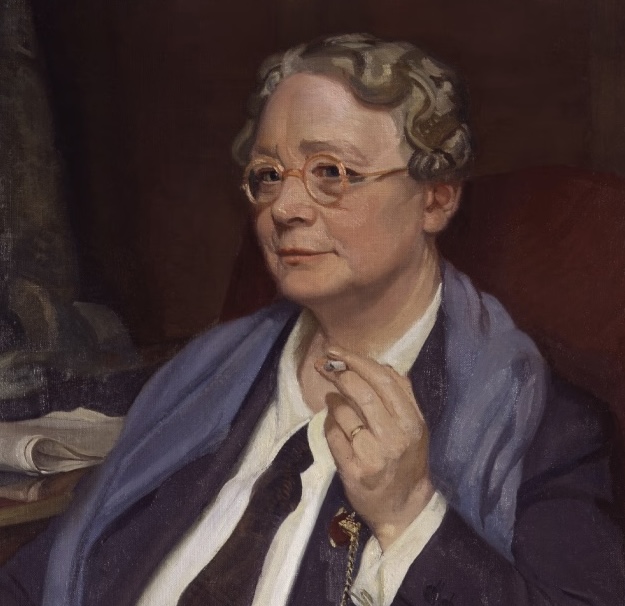
Sermon: Dorothy Sayers


Dorothy Sayers is not one of those capital “S” saints, but she is on the Episcopal/Anglican Church calendar for her contributions to writing. 

Her father was an Anglican priest, so she knew the church arena well, and she had a talent for conveying the Christian message in ways that made it more understandable for the general public. One of these writings was the radio play The Man Born to be King.

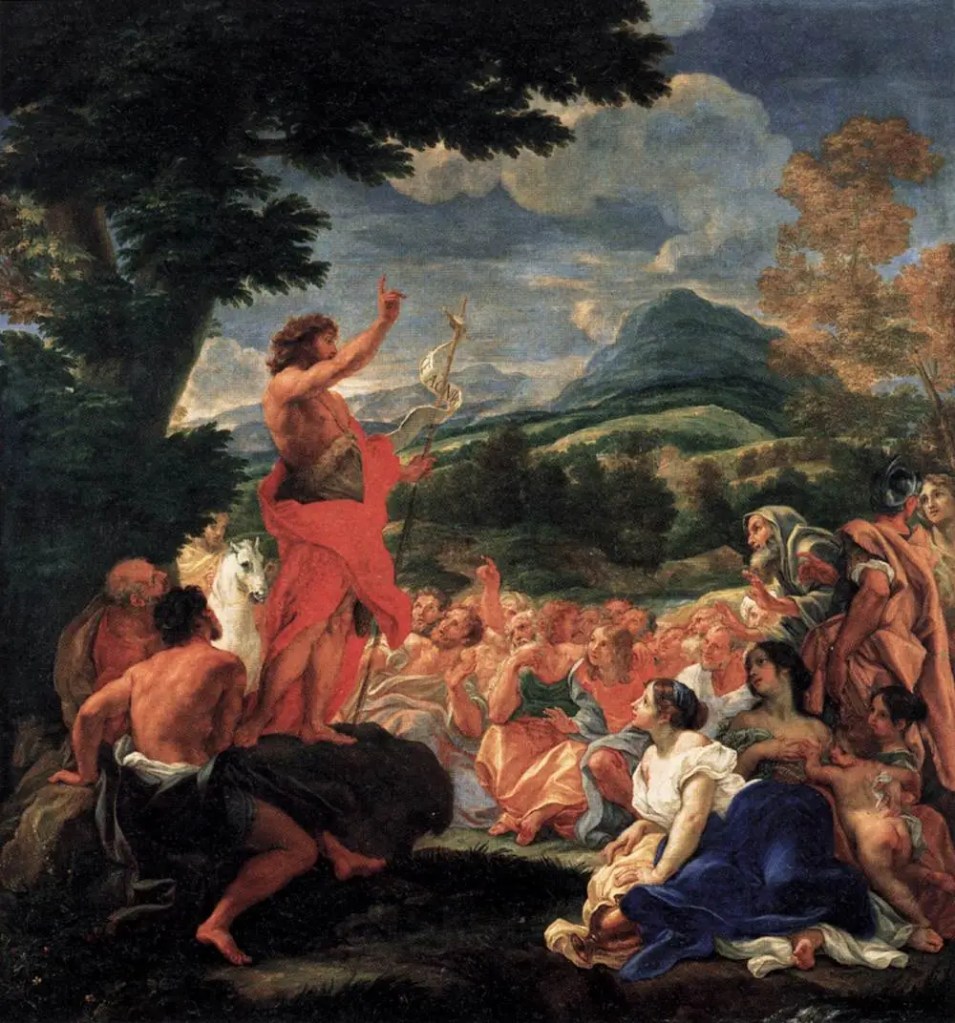
In one scene, she has a family driving out to see this new prophet in the land, John Baptist. There’s quite a bit of interaction from the crowd, but I’ll mostly share with you the words of John.

JOHN BAPTIST: Men and women of Israel! Once more, once more I call you to repent. And quickly. For God’s Kingdom is coming as the Prophets foretold. Not in some distant future. Not a year or a week hence. Not tomorrow. But now… Are you ready for it? You know very well you are not. For years, you have been saying, “Some day, some day the tide will turn. Someday, someday Messiah will come, and all will be well with Israel.” But your hour is upon you-Messiah is at your very gate—and what will he find when he comes? I see a worldly priesthood, a worldly ruler, a worldly people—a nation of shopkeepers and petty bureaucrats, their hearts fixed on cash and credit, and deaf and blind to righteousness. Sackcloth and ashes! Sackcloth and ashes! The Kingdom is at hand, and you are not prepared. Now, now repent of your sins and the sins of the whole nation. Now let God wash away your guilt in the clear waters of Jordan. Wash and be clean, that you may be fit for the task that is laid upon you, for the great and terrible day of the Lord is at hand.

The Religous leaders show up. 

JOHN BAPTIST: Some of you, I see, are Pharisees. Religious men, keepers of the Law, patterns of respectable piety, what are you doing here? (with sudden violence) Hypocrites, humbugs, brood of vipers! Who warned you to flee from the vengeance to come?

CROWD (indignant murmurs): “Well, I never.. insolence. Upon my word,” etc. (mingled with) “That’s right! Give it to ‘em hot… confounded lot of prigs.”

JOHN BAPTIST: Yes, I know what you will say: “We need no repentance. We keep the Law. We are the privileged children of Abraham. God will look after us, whatever happens.” Don’t flatter yourselves. God doesn’t depend on you. He can find His children everywhere. He could raise them out of these desert stones, which are no harder than your hearts. You too will be lost if you don’t repent and do better. Messiah is coming like a woodman with his axe, and all the rotten trees, all the barren trees, will be cut down at the roots and thrown into the fire. All of them.

When the crowd asks what they must do to be saved, JOHN BAPTIST says,

Be generous. Do more than the Law demands. You, there, with the good coat—you don’t need a cloak as well. Give it to the naked beggar beside you. And you with the picnic basket, how about sharing it with some of these poor children! (his voice rising harshly again) Renounce the world—weep, wail, and beat your breasts—and await the Kingdom in fear and trembling.

When the religious leader asked who he was, JOHN BAPTIST says,

JOHN BAPTIST: I am the herald of God’s Kingdom. I baptise, but only with the water of repentance. There is a far greater man coming soon. I shan’t be worthy so much as to tie his shoe-laces. He will baptise you with spirit and with fire.

CROWD: Where is he? Show us the Messiah! Show us the Christ!

JOHN BAPTIST: Christ will come among you like a man thrashing corn. He will gather the grain and burn the chaff. There will be a great purging of Israel… Make ready to meet him. Draw near, confess your sins, and be baptised in Jordan. (Source)

When it first aired, the atheist got all bent out of shape because the BBC was promoting Christianity on the radio, and the conservative Christians got all bent out of shape because she hadn’t used the traditional King James Bible version. However, the general public loved it, with students being let out of school early to catch the latest installment. And, for added credibility, if needed, C.S. Lewis told Sayers that every year, he used the print version of the play for his Lenten Devotional. That’s good enough for me.

Sermon: Advent 3 RCL A – “Yes”


When it comes to daily devotional books that you might read as part of a spiritual practice, we most often think of ones that are uplifting and joyful. Something to give a good start to the day. I’ve come across several that I quit pretty quickly, but some I get very involved with. Few are specific for priests, but there are a couple, and one that I discovered several months back is The Dignity and Duties of the Priest, by St. Alphonsus Liguori. 

In the first few pages, I thought it would be inspiring and uplifting. There was a quote by St. John Chrysostom that was setting the tone—“Priests should be so holy that all may look to them as models of sanctity; because God has placed them on earth that they may live like angels, and be luminaries and teachers of virtue to all others.” I read that and began to feel good about my calling, but then it took a turn. A couple of pages later—“In a word, [the priest] that is not holy is unworthy to approach the altar, because by the stains that he brings with him, he contaminates the sanctuary of God. Let him not approach the altar, because he has a blemish, and he must not defile my sanctuary.” On the next page, a quote from Saint Augustine further illumines this: “To the Lord is more pleasing the barking of dogs than the prayer of such priests.”  

It was such a wonderful book—and I mean that—but there were mornings when I would look at it and say, “You’ll get your turn. Give me a minute.” Then I would read and get smacked again—“At present, says the holy church, I am not persecuted by the pagans, for the tyrants have ceased, nor by the heretics, because there are no new heresies; but I am persecuted by the [priest], who by his scandals robs me of many souls.” For such a priest, Liguori tells us, “The end shall be, first, abandonment of God, and then the fire of hell.” 

I kept reading—it actually changed my understanding of the priesthood—but I kept wanting him to throw me a bone. Give me some sign of hope, because there were times I felt convinced I had no chance of heaven.

Now imagine you are Jewish and living during the time leading up to the birth of Jesus. You attend synagogue every Sabbath. You understand the teachings of the Torah and sincerely want to follow them, but you find that every turn, you stumble over one aspect of the Law or another. The only way to enter God’s Kingdom is if you are without sin, but no sooner have you made the appropriate sacrifices at the Temple for the forgiveness of sins, you fall into another pit. You want to be holy, but there seems to be no hope.

Now, imagine you’re living in the small city of Nazareth. One night, after a long, hard day, you’re making your way home. As you walk, you recall all the times you’ve failed God, and you understand the consequences of those failures. Yet, until you can return to the Temple again to make the necessary sacrifices, your salvation remains in question. In your fear and frustration, you stop along the way and lean against a wall just to have a moment of quiet. Then, you see a strange light begin to shine out of the window of the house you’re leaning against. Just as you’re about to move on, you hear the sweetest voice begin to speak, and it stops you in your tracks. You have no choice but to listen.

“Greetings, O favored one, the Lord is with you!” There’s a brief pause, then you hear, “Do not be afraid, Mary, for you have found favor with God. And behold, you will conceive in your womb and bear a son, and you shall call his name Jesus. He will be great and will be called the Son of the Most High. And the Lord God will give to him the throne of his father David, and he will reign over the house of Jacob forever, and of his kingdom there will be no end.”

Another pause, then you hear a young woman’s voice, “How will this be, since I am a virgin?”

The response comes immediately: “The Holy Spirit will come upon you, and the power of the Most High will overshadow you; therefore, the child to be born will be called holy—the Son of God. And behold, your relative Elizabeth in her old age has also conceived a son, and this is the sixth month with her who was called barren. For nothing will be impossible with God.”

Imagine you’re listening outside the window as all this happens. You realize that it is an angel of the Lord speaking to the girl. What he offers is not only salvation for the girl, but for the whole world—yourself included. The angel is offering the hope you are so desperately seeking. You know that through the Son of God, whom the angel is speaking about, you will receive forgiveness of sin, you will be given the freedom to serve and worship God without fear, and that you will be set free from the sting of death. In that moment, you understand all of this, but you also realize that everything depends on one thing—the young woman’s response.

St. Bernard of Clairvaux wrote in a sermon about that moment—a moment when all of creation held its breath, waiting for Mary to speak: “You have heard, O Virgin, that you will conceive and bear a son; you have heard that it will not be by man but by the Holy Spirit. The angel awaits an answer; it is time for him to return to God who sent him. We too are waiting, O Lady, for your word of compassion; the sentence of condemnation weighs heavily upon us…. Tearful Adam with his sorrowing family begs this of you, O loving Virgin, in their exile from Paradise. Abraham begs it, David begs it. All the other holy patriarchs, your ancestors, ask it of you, as they dwell in the country of the shadow of death. This is what the whole earth waits for.”—Mary, what is your answer? On one side is condemnation and death, and on the other is the forgiveness of sins and life eternal.

As I read Liguori’s book, I kept asking, “Is there any hope?” And for you, standing outside the window, listening to the angel’s words, you’ve asked the same question: “Is there any hope?” Yes, there is. The greatest of all hope. Why? Because “Mary said: Behold the handmaid of the Lord; be it done to me according to thy word.” Mary said yes, and Hope Incarnate, the very Word of God, the Son of God, Christ Jesus the Lord, was conceived in the Virgin’s womb.

There is often confusion about why the Blessed Virgin Mary is held in such high esteem, but the answer lies in those few words of hers, for all of salvation—ours, the world’s, all of creation—hinged on her response.

That great Archbishop of Canterbury from the 11th century, St. Anselm, said, “To Mary God gave his only-begotten Son, whom he loved as himself. Through Mary, God made himself a Son, not different but the same, by nature Son of God and Son of Mary. The whole universe was created by God, and God was born of Mary. God created all things, and Mary gave birth to God. The God who made all things gave himself form through Mary, and thus he made his own creation. He who could create all things from nothing would not remake his ruined creation without Mary.”

If I could accomplish one thing today, it would be to increase your devotion to the Blessed Virgin Mary. Our salvation is through Christ Jesus alone—no one comes to the Father except through Him—however, it was through Mary and her yes that Christ took on our flesh and, through that same flesh, was able to give us hope. As I’ve told you before, this hope we possess is not mere wishful thinking. Our hope in Christ Jesus is an unshakable knowledge and expectation of what the Father has promised all along. What is that promise? We read it in the:

“He has shown the strength of his arm,
he has scattered the proud in their conceit.

He has cast down the mighty from their thrones,
and has lifted up the lowly.

He has filled the hungry with good things,
and the rich he has sent away empty.

He has come to the help of his servant Israel,
for he has remembered his promise of mercy,

The promise he made to our fathers,
to Abraham and his children for ever.”

The Father has promised that we will be with Him in His Kingdom, where there will be no end, and it all started with Mary’s “Yes.”

Mary’s life is devoted to guiding us to her Son, our Savior, Jesus Christ. Offer your devotion to her. Respect her as Queen and mother, and through her intercessions, you will be drawn deeper into your relationship with the One True God.

Let us pray: Hail, holy Queen, Mother of mercy, hail, our life, our sweetness and our hope. To thee do we cry, poor banished children of Eve: to thee do we send up our sighs, mourning and weeping in this vale of tears. Turn then, most gracious Advocate, thine eyes of mercy toward us, and after this our exile, show unto us the blessed fruit of thy womb, Jesus, O merciful, O loving, O sweet Virgin Mary! Amen.

Pray for us, O Holy Mother of God, that we may be made worthy of the promises of Christ.

Sermon: Advent 2 RCL A – “Prophet’s Call”


The American Film Institute has several “Top 100” lists: 100 best movies, 100 best musicals, 100 best heroes and villains, and so on. They also have the “100 top movie quotes.” Way down in the 80s, we have lines like, “Yo, Adrian,” and “My Precious.” Moving up into the 40s, there is “Shane. Shane. Come back,” and “Stella! Hey, Stella!” Then breaking into the top ten, there are “Go ahead, make my day,” and “I’m gonna make him an offer he can’t refuse.” Number one on the list, you’ve got to love Rhett Butler—“Frankly, my dear, I don’t give a….” However, the one I’m thinking of today comes in at number ten, spoken by Travis Bickle, played by Robert De Niro, in Taxi Driver. The line: “You talkin’ to me? You talkin’ to me!?” (Source)

In our Gospel reading, when John the Baptist confronts the Pharisees and Sadducees, I can picture them glancing at each other, then at John, and in their best Robert De Niro impression, asking, “You talkin’ to me?!” And then John firing back with number forty-four on the AFI list, “I see dead people.” Okay. Enough of that. 

As we know, John’s criticism didn’t stop with the religious leaders. He was an equal-opportunity rebuker, and later, he would criticize Herod for marrying his brother’s sister, which landed him in jail and eventually led to his beheading. Yet for the prophets, including John the Baptist, they were almost always upsetting someone and finding themselves in danger.

In the Acts of the Apostles, the first deacon was Stephen. He said to the religious leaders, “You stiff-necked people, uncircumcised in heart and ears, you always resist the Holy Spirit. As your fathers did, so do you. Which of the prophets did your fathers not persecute? And they killed those who announced beforehand the coming of the Righteous One.” (Acts 7:51-52) They then proceeded to stone him to death.

Despite the dangers of the job, the prophet’s role is to stir up the people and point out their errors, hoping they will return to God. In fact, they are responsible for the souls of the people before God. Speaking to Ezekiel, the Lord said, “So you, son of man, I have made a watchman for the house of Israel. Whenever you hear a word from my mouth, you shall give them warning from me. If I say to the wicked, O wicked one, you shall surely die, and you do not speak to warn the wicked to turn from his way, that wicked person shall die in his iniquity, but his blood I will require at your hand. But if you warn the wicked to turn from his way, and he does not turn from his way, that person shall die in his iniquity, but you will have delivered your soul.” (Ezekiel 33:7-9)

Prophet: a dangerous job before the people and before God, yet God calls those He chooses. The Prophet Jeremiah said, “The Lord put out his hand and touched my mouth. And the Lord said to me,
‘Behold, I have put my words in your mouth.
See, I have set you this day over nations and over kingdoms,
to pluck up and to break down,
to destroy and to overthrow,
to build and to plant.’”
(Jeremiah 1:9-10)

The Lord chooses and sends His prophets to speak His words, not their own. Knowing this, you might think they—dare I say, “We”?—would respond accordingly, but it was said, “The Lord, the God of their fathers, sent persistently to them by his messengers, because he had compassion on his people and on his dwelling place. But they kept mocking the messengers of God, despising his words, and scoffing at his prophets, until the wrath of the Lord rose against his people, until there was no remedy.” (2 Chronicles 36:15-16)

The same was true with John the Baptist. The people heard what was said, but they did not respond according to the will of God. Instead, they became angry with these messengers and persecuted them, often putting them to death. Thank goodness we are not like them. We accept criticism and correction very well. When someone offers Godly corrections to us, we don’t get angry. No, sir. We might get even, but we don’t get angry! Right?

Let me ask you this: you hear John the Baptist crying out, “Repent, for the kingdom of heaven has come near.” How do you respond? The human thing to do is to look at everyone around you and say, “Darn tooting! Y’all need to repent! Get right with the Lord!” The whole time, thinking John the Baptist couldn’t possibly be talking to you. Or what about this: Christian groups love to quote this one from 2nd Chronicles: “If my people who are called by my name humble themselves, and pray and seek my face and turn from their wicked ways, then I will hear from heaven and will forgive their sin and heal their land.” (2 Chronicles 7:15) What’s the first thing to go through your head? “If those left-wingers or the fascist right (I too am an equal opportunity rebuker) would just learn to pray and follow Jesus, then this whole thing could be sorted out overnight!” Can I get an “Amen”? Why do we think this way? Isn’t it obvious? This call to turn from wicked ways is about them, and has nothing to do with me! 

However, the prophet confronts us and says, “Oh, yes, it is. It is all about you. You are the one who needs to get right with God.” Like everyone else, we don’t much like hearing it, but we must be willing to listen to the words of John the Baptist—“Repent, for the kingdom of heaven has come near.”—and allow those words to be spoken to us personally and as the Church. We must let God correct us so we are not the ones provoking His wrath. Through this process of correction, we are allowing him to perfect us. As the Lord told the church in Laodicea, “Those whom I love, I reprove and discipline, so be zealous and repent.” (Revelation 3:19)

How can we let the prophets’ words speak to us and correct us? There is a powerful phrase from Martin Luther: “The Cross tests everything.”  

If we test our thoughts, actions, and deeds the same way the Pharisees and Sadducees evaluated theirs, we respond like they did—“You talking to me?” However, if we test those same thoughts, actions, and deeds by the Cross, we may discover a different outcome. It might not be what we want to hear, but it will be God’s truth.

I wonder, if we are willing and brave enough to look closely, which part of ourselves, our lives, our being would we hesitate to put to the test of the Cross? I suspect there are aspects of all our lives that are much safer tucked away in their own personal niches, their own special places of worship within our souls, even illuminated with one of those little votive candles—areas that are far too cherished by the Great “I” to be put to such a test. Yet, if we did, if we nailed those silly notions to that most sacred tree, the Cross, well, they would likely scream out in protest and blasphemy, just like the wicked thief did who was crucified with Jesus. But in the end, we would be set free from those things that bind us.

The prophets deliver messages to a world that is broken, but their messages are also for us. Jesus says, “He who has ears, let him hear.” (Matthew 13:9) I pray that if you hear in your soul John the Baptist calling you to repentance, don’t be like those who become proud and angry. Instead, submit to the call of repentance and accept the forgiveness of sins; for as St. John tells us, “If we confess our sins, [God] is faithful and just to forgive us our sins and to cleanse us from all unrighteousness.” (1 John 1:9)

Let us pray: 

O God,
You raised up St. John the Baptist
to prepare a perfect person for Christ.
We call upon St. John’s intercession
to properly prepare us with a true
sense of repentance to receive Your
grace and salvation.
Make us faithful to Truth and justice,
as You did Your servant,
John the Baptist, herald of Your Son’s
birth and death. Lord, may You increase
Your life within us.
Amen.