
The Princess Bride—a brilliant film. There are several outstanding characters, one of which is Vizzini. Short, mostly bald, and thinks he’s much more intelligent than everyone else. At one stage, Vizzini gets into an argument with the Man in Black (aka the Dread Pirate Roberts and our hero in disguise.) Attempting to strike fear into the heart of the Man in Black, Vizzini says,
Vizzini: I can’t compete with you physically, and you’re no match for my brains.
Man in Black: You’re that smart?
Vizzini: Let me put it this way. Have you ever heard of Plato, Aristotle, Socrates?
Man in Black: Yes.
Vizzini: Morons.
However, Vizzini has a favorite word—inconceivable. He uses it all the time and under many different circumstances. While traveling with Inigo Montoya (he’s looking for the six-fingered man who killed his father), Vizzini says, “Inconceivable,” for the umpteenth time, and Inigo Montoya has had enough. Looking at Vizzini, he says, “You keep using that word. I do not think it means what you think it means.”
Today is the Confession of St. Peter, that is, Peter, declaring that Jesus is “the Messiah, the Son of the living God.” However, when you and I hear those words, well, “I do not think it means what we think it means.”
Since the time of the Prophets, Israel had been eagerly waiting and searching for the Messiah—the king who would lead them into a new era.
When Peter declares that Jesus is the Messiah, the Son of the Living God, he does not understand Jesus as the Son of God as we understand it—as the second person of the Holy Trinity. Instead, Peter is saying that Jesus is this long-awaited Messiah—Jesus is the anointed one (much like a priest or king would be anointed) who is in a special relationship with God as God’s representative to lead the people.
For Peter and the people, this anointed one, this king, would not only rule over some small Mediterranean country but would bring all the world under his dominion. Therefore, Peter’s confession was a hugely political statement. It was a threat to Herrod, who ruled in Palestine, and a threat to Caesar in Rome, who also claimed to be the son of God. Peter’s statement is a declaration of war, which is why Jesus strictly forbade them from telling anyone that He was the Christ. It was not yet the time, for we know what Peter and the others did not. Jesus was not declaring war on Caesar. Jesus was declaring war on sin and death, and He did not want the earthly “powers” to interfere until all was ready.
Following the death and resurrection of Jesus, the Disciples would come to fully understand the implications of Peter’s Confession, but for now, it was a foreshadowing of that greater truth. However, there was one who recognized Jesus as the True Son of God, and it was the least likely of all people.
Luke’s Gospel tells us of the death of Jesus. In the end, “Jesus cried out again with a loud voice and yielded up his spirit.” Luke then tells us, “And behold, the curtain of the temple was torn in two, from top to bottom. And the earth shook, and the rocks were split. The tombs also were opened. And many bodies of the saints who had fallen asleep were raised, and coming out of the tombs after his resurrection they went into the holy city and appeared to many. When the centurion and those who were with him, keeping watch over Jesus, saw the earthquake and what took place, they were filled with awe and said, ‘Truly this was the Son of God!’”
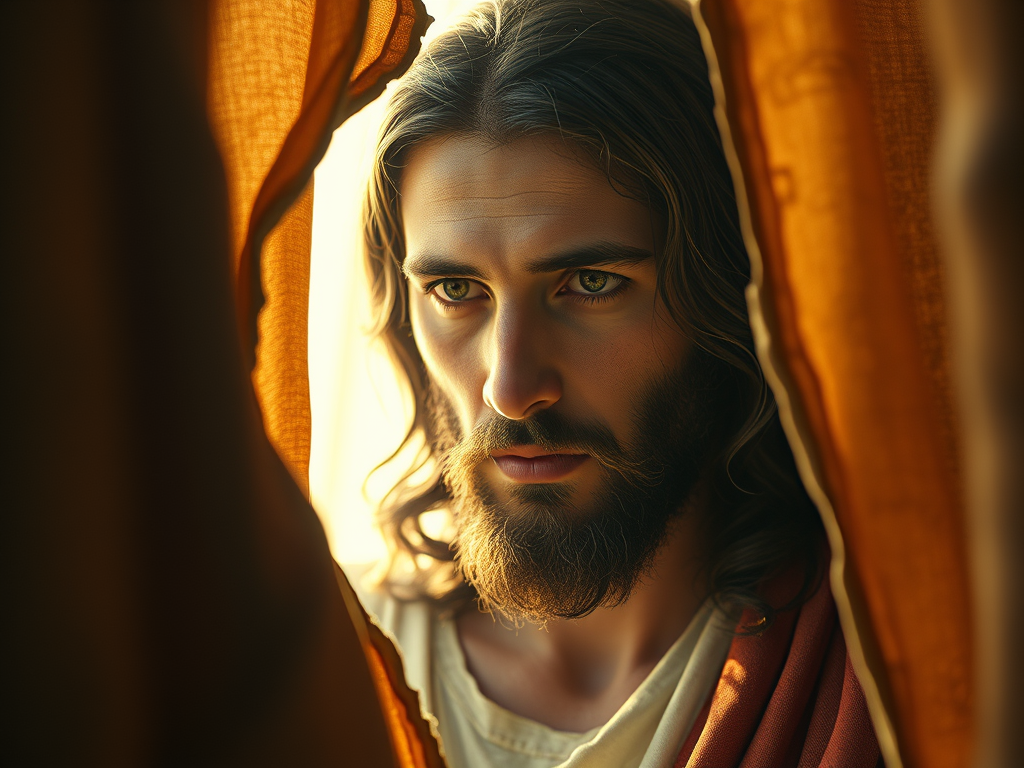
Just as the curtain of the temple was torn in two, the Lord God tore in two the curtain covering the centurion’s eyes and allowed him to truly see—the first of many—who Jesus was. Why, a centurion, of all people, I don’t know, but what Jesus strictly forbade the Disciples from telling is now being freely declared—Jesus is the Messiah. Jesus is the One True Son of God. Now, the whole world knows what that means.





 The following quote w
 Candle in a Cave