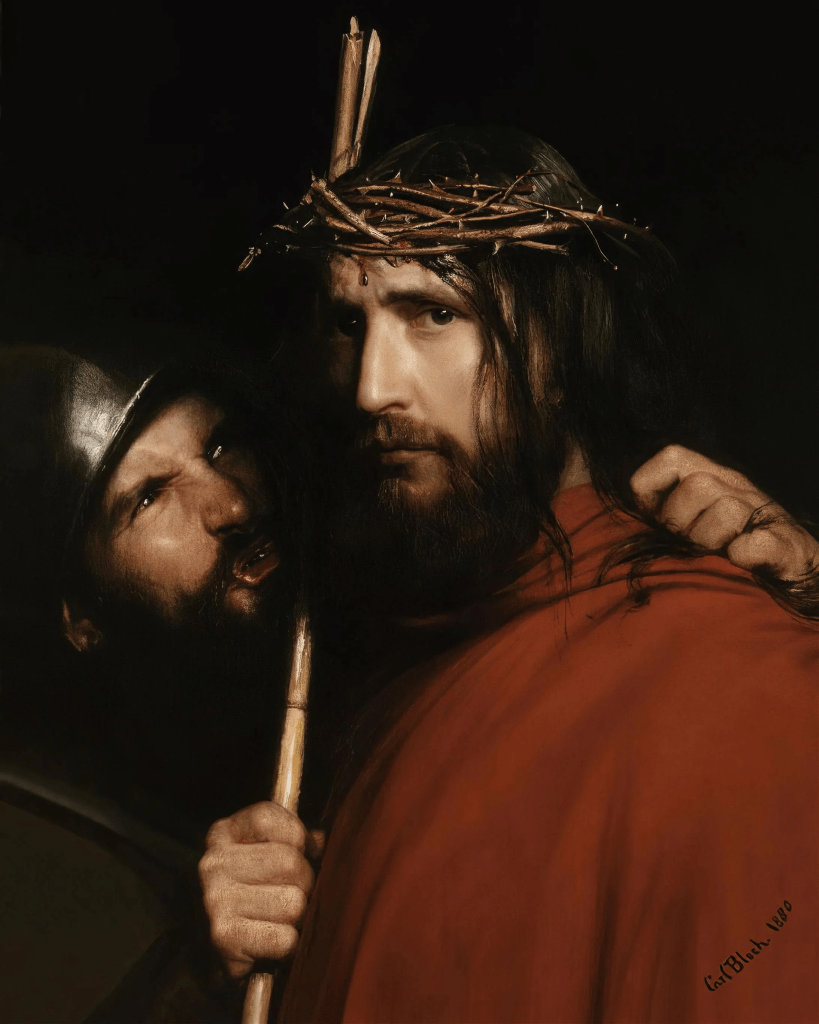
Sermon: Christmas 1 RCL C – “Being Light”


A young girl once consulted with her priest. “I cannot stick it out any longer. I am the only Christian in the factory where I work. I get nothing but taunts and sneers. It is more than I can stand. I am going to resign.”

“Will you tell me,” asked the priest, “where lights are placed?”

“What has that to do with it?” the young Christian asked him rather bluntly.

“Never mind,” the priest replied. “Answer my question: Where are lights placed?”

“I suppose in dark places,” she replied.

Speaking of Jesus, John wrote in the Prologue of his Gospel, “What has come into being in him was life, and the life was the light of all people. The light shines in the darkness, and the darkness did not overcome it…. The true light, which enlightens everyone, was coming into the world.”

It speaks of Jesus, but it also speaks of the illuminating light of Jesus. A light that seeks out others and enlightens them in the ways of God. Jesus says toward the beginning of the Sermon on the Mount: “You are the light of the world. A city set on a hill cannot be hidden. Nor do people light a lamp and put it under a basket, but on a stand, and it gives light to all in the house. In the same way, let your light shine before others, so that they may see your good works and give glory to your Father who is in heaven.”

Jesus is the light, but he has shared His light with us so that we might also become beacons of hope and love in the darkness.

What does such light look like? 

Desmond Tutu was born in 1931, and he died on December 26, 2021. He was also one of ours—a South African Anglican bishop and theologian known for his work against apartheid and for human rights.

In 1940, Desmond’s mother worked as a cook in a hospital for women. The story tells that Desmond—he was nine years old at the time—and his mother were walking down the street, and a white man in a dark suit was walking toward them. The rules of apartheid dictated that Desmond and his mother step into the gutter, bow their heads, and allow the white man to pass. However, before they had the opportunity to do so, the white man stepped off the street first and, as they passed, tipped his hat to Desmond’s mother. After a time, Desmond asked his mother why the white man would do that, to which his mother replied, “He is a man of God.” The white man was Trevor Huddleston, Bishop in the Anglican Church.

Bishop Huddleston not only could have but should have ignored them; instead, he ignored the societal expectations and norms and honored the Image of God that was within them. He became a light in a dark world.

Tutu said much later, “I couldn’t believe my eyes, a White man who greeted a Black working-class woman.”  This one event was a great deal of the inspiration for Desmond becoming an Anglican priest.

What does it look like to be the light in the darkness? It is not necessarily something big and grand. Sometimes, it is nothing more than a tip of the hat, but that tip of the hat can speak volumes of the work of God.

Later, Bishop Tutu would say, “So often when people hear about the suffering in our world, they feel guilty, but rarely does guilt actually motivate action like empathy or compassion. Guilt paralyzes and causes us to deny and avoid what makes us feel guilty. The goal is to replace our guilt with generosity. We all have a natural desire to help and to care, and we simply need to allow ourselves to give from our love without self-reproach. We each must do what we can. This is all that God asks of us.” 

How will you be the light? You don’t have to look far, and you don’t have to come up with some grand scheme. All that is required is that you be faithful to God’s calling to love one another as He has loved us.

Let us pray (a prayer from Blessed John Henry Cardinal Newman that we can each make our own):  Dear Jesus, help me to spread Your fragrance everywhere I go. Flood my soul with Your spirit and life. Penetrate and possess my whole being so utterly that my life may only be a radiance of Yours. Shine through me, and be so in me that every soul I come in contact with may feel Your presence in my soul. Let them look up and see no longer me but only Jesus! Stay with me, and then I shall begin to shine as You shine, so to shine as to be a light to others; the light, O Jesus, will be all from You; none of it will be mine; it will be you, shining on others through me. Amen.

Sermon: Christmas 2 RCL C (Matthew 2:13-15, 19-23) – “Squirrels”


He had semi-cameo roles in Monsters, Inc., and Ratatouille and won the coveted Palm Dog Award at the Cannes Film Festival, but he is best known for his role in the movie Up. Of course, we are talking about the one and only Dug (aka: Dug the talking dog.) 

Dug is a Golden Retriever who can talk via a unique collar created by his master, Charles Muntz. The collar can read Dug’s thoughts and then translate them into English. Famous Dug lines:

“My name is Dug. I have just met you, and I love you.”

“My master is good and smart.”

And, “I do not like the cone of shame.” 

However, Dug’s most famous line is, “Squirrel!”

For those who do not know the meaning, it occurs when you are on task and getting things done, and something irrelevant to the task and often inconsequential catches your attention. (For the record, we like letting squirrels loose in vestry meetings because they frequently generate some of the best ideas.) So, some squirrels are good, while others affect us negatively. 

A study was conducted on office workers and screen time to track attention spans. The researchers would watch and time how long someone stayed on a particular task. For example, you pull up a document and begin reading/writing. How long do you continue doing this before switching to something like viewing email? In 2004, workers averaged two-and-a-half minutes. I don’t know if that is good or bad, but by 2012, the time had been reduced to seventy-five seconds. These same researchers say that today, the average attention span is forty-seven seconds.

That’s office workers; however, in the real world, the average attention span of a human is 8.25 seconds, which means you’ve dropped in and out of this sermon multiple times, and I’m just getting started. 8.25 seconds sounds pretty sad, but what makes it even more pathetic is the fact that a goldfish has an attention span of 9 seconds. Bottom line: we have a lot of squirrels running loose in our heads. I suppose that’s not so bad if we are watching TV or scrolling social media, but it does become problematic when we are trying to do things like driving or studying.

The squirrels will lead us straight into a ditch if we are not careful.

In our Gospel reading, we read about the Holy Family’s flight to Egypt. Joseph had a dream that Herod would try and kill Baby Jesus, so he quickly fled Israel with Mary and Jesus and went to Egypt, where they lived for a few years. Then, another dream tells Joseph it is safe to return to their homeland, so leaving Egypt, they eventually settle in Nazareth. In telling this story, Matthew reminds his readers of something the Prophet Hosea had said, “Out of Egypt I have called my son.” (Hosea 11:1) However, Hosea wasn’t thinking of Jesus when he said this. Instead, Hosea is referring to the Israelites’ escape from 400 years of enslavement in Egypt. The “son” Hosea is speaking of is all the people. The Lord has brought all His people out of Egypt and out of slavery.

Following their escape, the Israelites passed safely through the Red Sea, and their enemy was destroyed when the waters crashed back down. They wandered in the desert for all those years but eventually came to the Jordan River. With the Ark of God going before them, they made the miraculous crossing of the Jordan River—the river was caused to be stopped up, and they crossed on dry land. They entered the Promised Land and began the fulfillment of God’s plan. 

Some might say that God’s plan for the Israelites was to conquer the land they had been given and have a home of their own. This is true to an extent, but that was not their primary purpose. We read of it in the Book of the Prophet Isaiah what this was.

“Thus says God, the Lord,
    who created the heavens and stretched them out,
    who spread out the earth and what comes from it,
who gives breath to the people on it
    and spirit to those who walk in it:

‘I am the Lord; I have called you in righteousness;
    I will take you by the hand and keep you;
I will give you as a covenant for the people,
    a light for the nations,

    to open the eyes that are blind,
to bring out the prisoners from the dungeon,
    from the prison those who sit in darkness.’”

(Isaiah 42:5-7)

The Israelites were to be the Light of the Nations, but… “Squirrel!” They lost their focus. Their attention was drawn away from God. “Wow. That’s a pretty girl. Kinda looks like Scarlett Johansson. Who cares if she is a Gentile, and who cares if God said we weren’t to marry Gentiles? She’s the goil for me.” “Our crops failed this year, but all the Gentiles’ crops did great. It must be the gods they worship that did the trick. We’ll worship Yahweh on the Sabbath, but we’ll worship these other gods the rest of the week.” “Ever heard the expression, ‘When in Rome?’ Well, we aren’t in Rome, but if we want to get along with all our new neighbors, we better start acting like them.” “But God said we can’t.” “Yeah, well, God forgot to mention their goils look like Scarlett Johansson!” 

They were called out of Egypt to be the bearers of God’s light, but all these squirrels kept drawing their attention away from God. This led to their disobedience, and they ended up looking like everybody else, wandering around in darkness. 

So, out of Egypt, God called another Son. But this One is His True Son—Jesus. As we read today, like the Israelites, Jesus was called out of Egypt. Like the Israelites, Jesus passed through the waters of the Jordan River at His baptism. Like the Israelites, Jesus was to be a light to the nations. Unlike the Israelites, Jesus accomplished this great work of the Father. Jesus is the light that shines in the darkness, and the darkness… the squirrels did not overcome Him.

On Christmas Eve, we talked about baptism and understood that Jesus did not need to be baptized by John the Baptist because He was without sin. However, Jesus humbled Himself and submitted to the baptism of John so that He might show us the way to become sons and daughters of God.

Jesus was “called out of Egypt,” and in a spiritual sense, to be “called out of Egypt” is to be called out of slavery to sin. Jesus was “called out of Egypt,” not because He was a slave to sin but, like His baptism, He was called out of Egypt so He could go before us, lead us, and again show us the way out of Egypt where we were enslaved. 

Now, through the work of the Cross, we have been delivered through the waters of the Jordan River at our baptism and placed in the Promised Land. We are to be this light to the nations, calling all of creation out of Egypt so they, too, might participate in God’s Kingdom. However, we can only accomplish this great work if we don’t lose our focus. We can’t allow our attention to be drawn away from God by all the silly squirrels that bounce around us.

St. Paul teaches us, “Seek the things that are above, where Christ is, seated at the right hand of God. Set your minds on things that are above, not on things that are on earth.” (Colossians 3:1-2) 

There are all sorts of squirrels that can be fun to chase around and see where they lead. However, when it comes to our relationship with God, we must let them go. We can’t be drawn away from God’s righteousness, but we must keep our eyes on the narrow path that leads to Him. 

Let us pray:
Father in Heaven,
You made us Your children
and called us to walk in the Light of Christ.
Free us from darkness
and keep us in the Light of Your Truth.
The Light of Jesus has scattered
the darkness of hatred and sin.
Called to that Light,
we ask for Your guidance.
Form our lives in Your Truth,
our hearts in Your Love.
Through the Holy Eucharist,
give us the power of Your Grace
that we may walk in the Light of Jesus
and serve Him faithfully.
Amen.

Sermon: Christmas Eve RCL C (III) – “The Manger is You”


West of the Denver suburbs is the community of Indian Hills, home of the Indian Hills Community Center. The Center had a sign out front, but in 2012, they asked a volunteer, Vincent, if he could build them a larger one. 

The sign had the typical information you would expect from a sign until April Fools Day, which is when Vincent decided to have a bit of fun. I suppose the first message wouldn’t mean anything to those outside Indian Hills, but that community found it hysterical—“Indian Hills annexed by Morrison slow down.”

After that first message, the sign took on a life of its own, being changed regularly, and the punny messages became a town favorite. “Of course, I’m an organ donor. Who wouldn’t want a piece of this?!” “I’ll take the high road; you take the psycho path.” “Past, present, and future walked into a bar. It was tense.” “It’s easy to get back on your feet. Just miss two car payments. “My relationship with whiskey is on the rocks.” And my Stephen King favorite, “If clowns attack, go for the juggler.” The sign now has a Facebook page and many followers.

Signs are everywhere. Some are more complicated than others, but many have been used so much that we no longer need words to tell us what they mean. They have become simple symbols. You see a red octagon, and you know it means stop (unless, of course, you live in Enid, then it is a suggestion to stop). You see a cigarette with a red circle around it and a red slash, the prohibition symbol; you know it means no smoking. And, if you were to replace the cigarette with a penguin, you would know that you can’t take your pet penguin along.

Just as there are many signs around us, there are just as many symbols. The more complicated symbols are those that point to something beyond themselves. Take, for example, the American flag.

In some respects, the American flag is a simple symbol—it represents the United States. Easy enough, but when you ask people what that flag means, it takes on greater meaning—patriotism, honor, freedom, and so on. However, if you were to ask someone outside of the United States what the American flag represents, you would likely get a very different answer—opportunity, wealth, hope—but not all those who see it would have such positive responses. Others would see the American Flag as a symbol of oppression, imperialism, greed, the Great Satan, and more.

The American flag is, therefore, a simple symbol, but it is also very complex and nuanced. It points to something beyond itself—an idea.

Within our life with God and in Holy Scriptures, there is another kind of symbol—the prophetic or religious symbol. We can find many examples in both the Old and New Testaments. 

In the Book of Jeremiah, there was a time when the Lord was angry with the people for their disobedience. To demonstrate how angry He was, God told Jeremiah to get a clay pot and go before the leaders and inhabitants of Jerusalem. Jeremiah is then to say, “Hear the word of the Lord… I am bringing such disaster upon this place.” Then Jeremiah is to take the clay pot and throw it to the ground. The Lord, speaking through Jeremiah, says, “Thus says the Lord of hosts: So will I break this people and this city, as one breaks a potter’s vessel, so that it can never be mended.”

The clay pot was used as a religious symbol. It is a symbol that points beyond itself, but it is a religious symbol because a) it points to an action of God that b) will affect the people and change them in some way.

From there, the religious symbol can become even more—a sacrament. Water is one such symbol.

Sometimes, water is just water, but throughout Scripture, water can be so much more. In the beginning, the Spirit of God hovered above the waters. With Noah, the earth was again covered by water, destroying almost all God had created. The people, being led by Moses, were saved through the waters of the Red Sea when the waters were parted, and all passed through safely, but then those same waters crashed down on the Egyptian army, killing both horse and rider. The waters are home to the great sea monster, the leviathan.

All together, this tells us that the waters are not necessarily a safe place. In fact, the water became a religious symbol of chaos and death. Then, along came Jesus, who stood before John the Baptist and was baptized by him. Jesus was pressed into the water, the chaos and death, and then pulled back up. Jesus did not need to be baptized, but He gave the water and these actions to us as a religious symbol, a sacrament. Together, they signify to us that at our baptism, we go into the waters, we go into chaos and death, but we come back up, washed, cleaned, restored, and once again made holy in the eyes of God. As St. Paul tells us, “Do you not know that all of us who have been baptized into Christ Jesus were baptized into his death? We were buried therefore with him by baptism into death, in order that, just as Christ was raised from the dead by the glory of the Father, we too might walk in newness of life.”

Water, a symbol that became a religious symbol, which, through Jesus, became a Sacrament. It is partly how we gained our definition of a Sacrament in the Catechism—“The sacraments are outward and visible signs of inward and spiritual grace, given by Christ as sure and certain means by which we receive that grace.”

Our Gospel reading from John begins with the words, “In the beginning was the Word, and the Word was with God, and the Word was God. He was in the beginning with God.” In that statement, the Word is more than a person; yet, it is also speaking, in part, of the person of Jesus, so we can say, “In the beginning was Jesus, and Jesus was with God, and Jesus was God. Jesus was in the beginning with God.”

Jesus confirms this later in John’s Gospel. One of the Disciples, Philip, says to Jesus, “Lord, show us the Father, and it is enough for us.” Jesus answers him, “Have I been with you so long, and you still do not know me, Philip? Whoever has seen me has seen the Father.”

In the beginning, Jesus was with God, and Jesus was God. Jesus says to Philip, ‘If you see Me, you see God the Father.” Jesus is not just a religious symbol of the Father. Jesus is the Sacrament—the outward and visible sign—of God the Father. Jesus’ nature shows us the very nature of God. For example, one aspect of God’s nature is love. Jesus said, “Just as I have loved you, you also are to love one another.” Jesus’ love for us is an outward and visible sign of God the Father’s love for us, for “God is love.” 

Jesus is the Sacrament of God. 

If it ended there, we could all go home, but there is one more step. Remember, a religious symbol is pointing to an action of God that will affect the people and change them in some way. Therefore, John told us, “To all who received [Jesus], who believed in his name, he gave power to become children of God, who were born, not of blood or of the will of the flesh or of the will of man, but of God.”

If you receive the Sacrament of God, Jesus, He gives you the power to become like Him—a child of God. In other words, if you receive Jesus, you become a Sacrament of Jesus—an outward and visible sign of God’s inward and spiritual grace.

On a night like tonight, we are surrounded by symbols. The star which beckons us. The angels that call us. The shepherds who seek Him. Mary, who said “Yes” to Him, and Joseph, who is obedient and faithful. However, perhaps the symbol that most represents this night is the manger, where Jesus is to be born. Like all other religious symbols, the manger is a symbol pointing to something more, and in this case, and on this night, it is pointing to you. 

Within each of us is a manger. It can remain commonplace, storing all parts of an ordinary life. Or we can clear it out and make a place for the Christ Child to be born. A place where the Sacrament of God—Jesus—can be born in us and affect such change in our lives. The transformation of the commonplace into a holy and extraordinary place. A place where not only is Christ Jesus born but also where we are reborn as children of God—ourselves becoming sacraments—Sacraments of Jesus.

On this night, allow Christ Jesus to be born within the manger of your entire being and become a Sacrament—an outward and visible sign to all those around you of God’s great love for His Children.

Let us pray: Almighty God, you have given your only-begotten Son to take our nature upon him, and to be born of a pure virgin: Grant that we, who have been born again and made your children by adoption and grace, may daily be renewed by your Holy Spirit; through our Lord Jesus Christ, to whom with you and the same Spirit be honor and glory, now and for ever. Amen.

Sermon: Nino


Legend has it that a Jewish Rabbi named Elias was in Jerusalem when Jesus was crucified.  Following the crucifixion, he found the soldier who had won Jesus’ robe through the casting of dice and bought it from him.  He then returned to his own country in Georgia, where he took the robe.  Later, the robe would find its home in the crypt at the Orthodox Cathedral in Mtskheta.  It is brought out on October 1st every year and celebrated as the Robe of Christ.

Around the year 300, a young girl, Nino, was born in Cappadocia, Turkey.  When she was twelve, her family moved to Jerusalem, where Nino would eventually become an orphan.  She was taken in by an older Christian woman who told her the stories of Christ, including the history of the Robe.  Hearing this, Nino desired to be found worthy to travel to Georgia to venerate the relic, so she began to pray to the Theotokos, the Mother of God. 

Her prayer was answered, and the Virgin Mary spoke to her, “Go to the country that was assigned to me by lot and preach the Gospel of our Lord Jesus Christ. He will send down His grace upon you, and I will be your protector.”

Nino did not believe she could carry out such a task. “How can I, a fragile woman, perform such a momentous task, and how can I believe that this vision is real?”  In her vision, she was given a cross made out of grapevine, and the Theotokos said to her, “Receive this cross as a shield against visible and invisible enemies!”  When she woke up, the cross was in her hands.  She relayed the words of Mary to the Patriarch of the church, her uncle, who prayed.  “O Lord, God of Eternity, I beseech Thee on behalf of my orphaned niece: Grant that, according to Thy will, she may go to preach and proclaim Thy Holy Resurrection. O Christ God, be Thou to her a guide, a refuge, and a spiritual father. And as Thou didst enlighten the Apostles and all those who feared Thy name, do Thou also enlighten her with the wisdom to proclaim Thy glad tidings.” (Source)

A series of events eventually led Nino to the people of Georgia, where she converted the Queen and King, solidifying the Christian faith in that country.  

The Church that was initially established by the preaching of the Apostle Andrew and later built up by Nino still exists today, and the people of the Russian Orthodox Church and others still revere Nino.  

Naaman came to Elisha to be healed of his leprosy, so Elisha instructed him to go and bathe in the river. Naaman thought that to be too simple of a task. He wanted to earn his cleansing, but his servant said, “Father, if the prophet had commanded you to do something difficult, would you not have done it? How much more, when all he said to you was, ‘Wash, and be clean’?”

To do God’s will, some are called to go and preach the Gospel, while others are called to simply wash and be clean. When God calls a person to the fulfillment of His will, it is not about whether or not the task is simple or challenging. Instead, it is about our obedience in submitting and following through. 

Whatever God is calling you to, be obedient. When you are uncertain or even unmotivated, obedience will see you through.

Sermon: Advent 3 RCL C – “Expression of Love”


Lucy approaches Charlie Brown and says, “Merry Christmas, Charlie Brown. ’Tis the season of peace on earth and good will toward men. Therefore, I suggest we forget all our differences and love one another.”

Charlie Brown is totally taken aback by this change of spirit. His face lights up, and he replies, “That’s wonderful, Lucy. I’m so glad you said that. But tell me, do we have to love each other only at this season of the year? Why can’t we love each other all year long?”

Lucy retorts, “What are you, a fanatic or something?”

In an interview, C.S. Lewis states, “Love is not affectionate feeling, but a steady wish for the loved person’s ultimate good as far as it can be obtained.” (God in the Dock, p.37) Bishop Robert Barron is always reminding us that to love is to “consistently will and choose the good of the other.” It would seem that both of these are taking their understanding of love from St. Thomas Aquinas, who said, “To love is to will the good of the other.” 

So, love is partly about the funny feeling you get in your stomach, but more importantly, it is sacrificial. It is giving yourself, without regard for yourself, to another. What makes love so colorful and broad is how this, willing the good of the other, is expressed. That expression of love can take many forms, even some that seem to be any and everything other than love.

One of my favorite books is The Stand by Stephen King. In the beginning, one of the characters, Larry Underwood, finds himself in a bit of trouble out in California, so he heads to New York, where he spends some time with his mom. 

The relationship between these two has some interesting dynamics. His mom, Alice, is quite reserved and stoic, and Larry is a bit selfish. The day after he arrived, he slept in while his mother got up and went to work, but before she did, she took care of a few things for Larry and left a note. 

She had gone out and purchased all the foods he liked—canned ham, roast beef, Coke, peach ice cream. In the bathroom, there’s a new toothbrush, disposable razors, shaving cream, and even a bottle of Old Spice cologne. Of the cologne, he remembers her saying, “Not fancy but smelly enough for the money.” 

Larry saw all these things but then reflected on the note she had left. At the beginning, there was no “Dear Larry,” at the end, there was no “Love, Mom.” “Just a new toothbrush, new tube of toothpaste, new bottle of cologne. Sometimes, [Larry] thought, real love is silent as well as blind.” (p.104)

However, there are times when love looks even more different than what we expect.

As I sat in my office at home, reading the lessons for this week, I startled the cat because the sequence and the contrast of the lessons made me laugh.

Our first reading from Zephaniah began,

“Sing aloud, O daughter Zion;
shout, O Israel!

Rejoice and exult with all your heart,
O daughter Jerusalem!”

Our canticle, The First Song of Isaiah, concluded with the words, 

“Cry aloud, inhabitants of Zion, ring out your joy,
for the great one in the midst of you is the Holy One of Israel.”

Paul told the Philippians, “Rejoice in the Lord always; again I will say, Rejoice.”

And then we get to the Gospel lesson. “John [the Baptist] said to the crowds that came out to be baptized by him, ‘You brood of vipers! Who warned you to flee from the wrath to come?’”

Sing aloud! Rejoice and exult! Rejoice! You brood of vipers!

I laughed, but then I wondered why. Why was John so angry?

Within our psyche, some emotions are categorized as primary. These can include fear, anger, joy, sadness, disgust, contempt, and surprise. However, anger can also be categorized as a secondary emotion—a mask for a true emotion. In some cases, anger is the mind’s way of hiding fear. One specialist notes, “The brain moves us very quickly from these primary emotions to anger. It can happen so fast that we hardly even notice the switch.” (Source)

Parents probably often experience this. Think of a time when you thought your child was in danger or doing something stupid. At first, you experience fear and concern, but as soon as the incident is resolved, you might say, “Now, I’m gonna kill ‘em.” In such circumstances, fear led to anger, but why did you fear for them in the first place? For the same reason John the Baptist called those coming to him a brood of vipers—love. 

You were afraid and angry because you love your children. John was also afraid for those coming to him, and his fear made him angry. John loved those coming to him because he loved them as God loved them. He feared what would happen to them if they did not turn from evil. He would have been like Jonah if he hadn’t cared about them. Remember him?

The Lord told Jonah, “Arise, go to Nineveh, that great city, and call out against it, for their evil has come up before me.” Jonah is to tell the people to repent, but instead of obeying, he flees in the opposite direction, which ends with him being swallowed by the great fish. After three days, he is spit back out on the dry land and again told by the Lord to go to Nineveh. This time, he obeys. He cries out against Nineveh, telling them the Lord will destroy them unless they repent. Miracles of miracles, the people repent, and the Lord does not destroy them. What was Jonah’s response? Jonah said, “O Lord, is not this what I said when I was yet in my country? That is why I made haste to flee to Tarshish; for I knew that you are a gracious God and merciful, slow to anger and abounding in steadfast love, and relenting from disaster. Therefore now, O Lord, please take my life from me, for it is better for me to die than to live.” 

Kill me now, Lord, because I’m so angry. Not angry because I feared for Nineveh, but angry because I don’t like them. They deserved to be wiped out, but no, you’ve got to be all sweet and lovey-dovey and save them.

Jonah did not want the people to be saved, but John did. John’s anger was not a sign of his contempt for the people. John’s anger was a sign of his love for them—the steady wish for their ultimate good, a willing for their good and salvation.

There are many ways love is expressed. “Love is patient and kind; love does not envy or boast; it is not arrogant or rude. It does not insist on its own way; it is not irritable or resentful; it does not rejoice at wrongdoing, but rejoices with the truth. Love bears all things, believes all things, hopes all things, endures all things.” Love can be blind and revealed in silent acts, but it can, at times, be revealed even in anger. However it is manifested, “Love never ends,” and “God is love.”

Charlie Brown said, “Why can’t we love each other all year long?” Lucy responded, “What are you, a fanatic or something?” When it comes to love, God is a fanatic. 

So, here’s a question: How much do you love those around you? Do you wish for and work toward their ultimate good? Is your love for them like a sappy Hallmark card, or is your love for them a John the Baptist kind of love—a fanatic kind of love? And if you say it is fanatic love, does that extend to their soul? Like John the Baptist, do you love them enough to share your faith and call them to God? Do you love them enough to care about their life today, but also their eternal life? 

Sing aloud! Rejoice and exult! Rejoice! You brood of vipers! God loves you. Don’t keep it a secret. Go out and share God’s fanatic love with others.

Let us pray: Stir up your power, O Lord, and with great might come among us; and, because we are sorely hindered by our sins, let your bountiful grace and mercy speedily help and deliver us; through Jesus Christ our Lord, to whom, with you and the Holy Spirit, be honor and glory, now and for ever. Amen.

Sermon: Advent 2 RCL C – “Song of the Soul”


A violinist noticed that his playing had a hypnotic effect on his audience. They sat motionless as though they were in a trance. He found he had the same impact on his friends’ pets. Dogs and cats would sit spellbound while he played. Wondering if he could cast the same spell over wild beasts, he went to a jungle clearing in Africa, took out his violin, and began to play. A lion, an elephant, and a gorilla charged into the clearing stopped to listen, and sat mesmerized by the music. Soon, the clearing was filled with every kind of ferocious animal, each one listening intently. Suddenly, another lion charged out of the jungle pounced on the violinist, and killed him instantly.

The first lion, bewildered, asked, “Why did you do that?”

The second lion cupped his paw behind his ear. “What?”

If you ask the experts, they will tell you that a digital recording produces better sound quality than a vinyl record. If you ask me, I’ll tell you vinyl produces better quality. Why? For whatever reason, I can hear it better, and for someone who does not hear so well, that is reason enough to spend a few more dollars on the music I genuinely enjoy. 

When you look at a record, you can see it has grooves/lines that the needle settles into. However, when you put a vinyl record under a microscope, it looks like a mountain range: ridges, valleys, bumps, wiggles, and all. When you play a CD, it is reading a digital code made up of ones and zeroes. When you play a vinyl record, the needle (stylus for all you aficionados) reads all those ridges, valleys, bumps, and wiggles, converting them into electrical signals that are then played through the speakers. If all goes well… beautiful music, but you have to take care of records.

A scratch on a CD may or may not damage the sound quality, but even minor scratches on a vinyl record will produce a popping sound. Why? You’ve added a new element to the ridges and valleys, and the needle reads it. It may pop, but if the scratch is bad enough, the needle may jump out of the groove and skip part of the song.

Today, our Gospel reading begins with a list of who’s who. Luke, by providing all these details, isn’t dropping names. Instead, he is setting the timeframe for those who would read his Gospel. So, with the info provided, we know it is about 29/30 AD. (FYI: many believe that AD means “after death,” referring to the death of Jesus. However, it is an abbreviation for Anno Domini, meaning “the year of our Lord.”) What is Luke setting the timeframe for? The ministry of John the Baptist.

John, we are told, went about the region surrounding the Jordan River “proclaiming a baptism of repentance for the forgiveness of sins.” Luke then states, “as it is written in the book of the words of the prophet Isaiah.” In other words, Luke tells us that John’s ministry is a fulfillment of prophecy. 

“The voice of one crying out in the wilderness:

‘Prepare the way of the Lord,
make his paths straight.’”

That is Isaiah 4:3, but who is speaking those words? To learn this, we have to read the first two verses of Isaiah 40.

“Comfort, comfort my people, says your God.

Speak tenderly to Jerusalem,
    and cry to her
that her warfare is ended,
    that her iniquity is pardoned,
that she has received from the Lord’s hand
    double for all her sins.”

“Comfort, comfort my people, says your God.” Isaiah records the words, but it is as though he is sitting in the room with God, for it is God Himself speaking. God is calling for the comfort of His people. Why? 

You’ll remember from last week, we discussed the Babylonian Captivity—when the Israelites were taken slaves in Babylon following the sacking of Jerusalem. God is speaking comfort because that captivity is nearing its end. The people will soon be set free and allowed to return home, and it is God who will lead them. A few verses on, the Lord says,

“He will tend his flock like a shepherd;
    he will gather the lambs in his arms;
he will carry them in his bosom,
    and gently lead those that are with young.”

(Isaiah 40:11)

So, putting that all together, the Lord says that He will lead his people out of captivity and that the way ahead shall be made ready and made easy. As though calling on His Holy Angels, the Lord says to them, 

“Prepare the way of the Lord,
make his paths straight.
Every valley shall be filled,
and every mountain and hill shall be made low,
and the crooked shall be made straight,
and the rough ways made smooth.”

So, if Isaiah was talking about the release of captivity from Babylon, why then was Luke applying this passage to the ministry of John? Answer: the people are still being held captive. However, this time, it is not by some foreign adversary (although the Romans occupy the land); instead, they are being held captive by their sins.

John  came “proclaiming a baptism of repentance for the forgiveness of sins.” The call to “Prepare the way of the Lord” is not about preparing smoother roads. It is about preparing the soul. 

You were created in the Image of God, an image that is perfection. An image that was never meant to decay or even know death. People will say that “death is natural.” No, it is not. It is the most unnatural thing we do. We were created for life eternal, but through sin, death entered in—the Image of God that is within us became distorted.

Our bodies and souls were created to play the most beautiful music. Music that was in perfect harmony with our Creator. Yet, through the sin of Adam and Eve, we received our first “scratch.” Over time, and through our disobedience, we became even more damaged so that the music we now play contains discord—pops, skips, and missing pieces; therefore, John’s proclamation for repentance is still valid. Luke’s call to fill in the valleys and smooth the rough ways is a way of saying we need to repair the scratches so that we may again play beautiful music. How do we do this? 

Isaiah told those in captivity that God would lead them. Remember his words: “He will tend his flock like a shepherd.” God will also lead us. God, the Good Shepherd—Jesus—will lead us. It is He who leads us out of the captivity of our sins and restores the Image of God within us. In the next chapter of Luke, we hear Jesus also quote Isaiah.

“The Spirit of the Lord is upon me,
    because he has anointed me
    to proclaim good news to the poor.
He has sent me to proclaim liberty to the captives
    and recovering of sight to the blind,
    to set at liberty those who are oppressed,

to proclaim the year of the Lord’s favor.

And he rolled up the scroll and gave it back to the attendant and sat down. And the eyes of all in the synagogue were fixed on him. And he began to say to them, ‘Today this Scripture has been fulfilled in your hearing.’” (Luke 4:18-21)

Jesus will restore the image of God within, but just as we must protect and care for a vinyl record, we must also protect and care for our souls. This is not because Jesus will get tired and just quit repairing the scratches. Through grace, He never will, but to sin is to willingly place ourselves back into the captivity we were set free from. St. Paul also asked this same question.

“What shall we say, then? Shall we go on sinning so that grace may increase? By no means! We are those who have died to sin; how can we live in it any longer?” A few verses on, he says, “Sin shall no longer be your master, because you are not under the law, but under grace… Thanks be to God that, though you used to be slaves to sin, you have come to obey from your heart the pattern of teaching that has now claimed your allegiance. You have been set free from sin and have become slaves to righteousness.” (Romans 6:1-2, 14, 17-18) 

We are not those who willingly submit ourselves to captivity and the slavery of sin. Sin shall not be our master and defile the beautiful song of our souls. Instead, we submit ourselves to God and allow His ways to rule in our lives so that the song of our souls may once again be in harmony with the Lover of our souls.

St. James tells us, “Submit yourselves, then, to God. Resist the devil, and he will flee from you. Come near to God and he will come near to you…. Humble yourselves before the Lord, and he will lift you up.” (James 4:7, 10)

Submit yourself to God so that the Image of God within you may be restored.

Let us pray: Merciful God, who sent your messengers the prophets to preach repentance and prepare the way for our salvation: Give us grace to heed their warnings and forsake our sins, that we may greet with joy the coming of Jesus Christ our Redeemer; who lives and reigns with you and the Holy Spirit, one God, now and for ever. Amen.

Sermon: John of Damascus

Text: Sailing amid the tumult of the cares of life, I founder with
the ship of sin and am cast to the soul-destroying beast;
yet like Jonah I cry to Thee, O Christ; Lead me up from
the deadly abyss!

The second of the top ten: “You shall not make for yourself an idol of any kind, or an image of anything in the heavens above, on the earth beneath, or in the waters below. You shall not bow down to them or worship them; for I, the LORD your God, am a jealous God, visiting the iniquity of the fathers on their children to the third and fourth generations of those who hate Me.” (Exodus 20:4-5)  For the Jew and the Muslim, there remains a rigorous prohibition against images of any kind that would depict God. Still, within Christianity, the interpretation of this passage has a gray area: the use of icons.

Legend has it that St. Luke the Evangelist ‘wrote’ the first icon, but from there, the history of these windows into heaven becomes foggy.  Whatever the case, in the 8th century, the iconoclast pushed for the removal of all images, but there were some who pushed back.  Sounds like a little church fight, but this one issue resulted in over 100,000 individuals being killed or injured in the battles that ensued.  Eventually, those in favor of icons would win the day.  

Pope John Paul II, in 1999, wrote his “Letter to Artists,” stating, “The decisive argument to which the bishops appealed in order to settle the controversy was the mystery of the Incarnation.”  

The bishop who made the greatest case that John Paul refers to is our saint for the day: St. John of Damascus or St. John Damascene.  He writes, “I do not worship matter, I worship the God of matter, who became matter for my sake (speaking of the Incarnation of Jesus) and deigned to inhabit matter (his body), who worked out my salvation through matter (the cross). I will not cease from honoring that matter (icons) which works for my salvation. I venerate it (the icon), though not as God.”

How might we pray with or venerate a window into heaven?  Consider our icon of Julian of Norwich in this chapel named after her.  Julian writes: “And in this he showed me a little thing, the quantity of a hazel nut, lying in the palm of my hand, as it seemed. And it was as round as any ball. I looked upon it with the eye of my understanding, and thought, ‘What may this be?’ And it was answered generally thus, ‘It is all that is made.’ I marveled how it might last, for I thought it might suddenly have fallen to nothing for littleness. And I was answered in my understanding: It lasts and ever shall, for God loves it. And so have all things their beginning by the love of God.  In this little thing I saw three properties. The first is that God made it. The second that God loves it. And the third, that God keeps it.”

Now consider this: in her vision/showing, Julian understood that what she held, the size of a hazel nut, was all of creation: earth, planets, sun, stars, galaxies, universe… everything.  And she was also a part of it.  And God showed this to her, lying in the palm of her hand.  For us, praying with the icon, we can visualize our smallness, but then again… how great is our God that he can hold it all, and how comforting to know that he loves it.

Imagine that you were one of the peasants living in the 8th century with no understanding of theology.  You would never have read or heard the words of the Bible in a language you could understand.  But what if someone told you that this little hazelnut is all of creation, and this is how God holds and loves you?  John of Damascus understood this: these windows point us all to a deeper understanding of God and his love for us.

Sermon: Advent 1 RCL C – “Liminal Space”

Photo by ANTIPOLYGON YOUTUBE on Unsplash

A man approached a little league baseball game one afternoon. He asked a boy in the dugout what the score was. The boy responded, “Eighteen to nothing—we’re behind.”

“Boy,” said the spectator, “I’ll bet you’re discouraged.”

“Why should I be discouraged?” replied the little boy. “We haven’t even gotten up to bat yet!”

In the year 605 BC, Nebuchadnezzar (five points if you can spell it correctly) became King of Babylon, and Babylon was a force to be reckoned with. Through a series of battles, Judah, with Jerusalem as its capital, became a vassal state of Babylon. In other words, as long as Judah did what the Babylonians told them, Judah could pretend it was a sovereign country. 

The Babylonian grip on Judah held for several years, but then Egypt defeated the Babylonians in a significant battle, so everyone began to think that Egypt was the rising power, including the King of Judah. So, he cast off the shackles of Babylon and took up the shackles of the Egyptians. This did not go over well with the Babylonians, who stormed back on the scene and put everyone back in their proper place. In addition, Nebuchadnezzar handpicked the next King of Judah, Zedekiah. 

Zedekiah was a good boy for a while but then became too big for his britches. He rebelled against the Babylonians. At this point, Old Nebuchadnezzar had had enough of this troublesome fly and again laid siege to Jerusalem. Enter the Prophet Jeremiah.

Jeremiah begins to prophesy against Zedekiah. In his first message, Jeremiah says, “Thus the Lord said to me: ‘Make yourself straps and yoke-bars, and put them on your neck.’” (Jeremiah 27:2) Straps and yoke-bars were signs of people being carried off into slavery. Through Jeremiah, the Lord then says, “Now I have given all these lands into the hand of Nebuchadnezzar, the king of Babylon, my servant, and I have given him also the beasts of the field to serve him. All the nations shall serve him and his son and his grandson, until the time of his own land comes.” (Jeremiah 27:6-7a) The Lord is saying that unless Zedekiah and the Israelites repent of their sins, He is going to use Nebuchadnezzar and the Babylonians to punish them. How did it end? Zedekiah “did what was evil in the sight of the Lord his God. He did not humble himself before Jeremiah the prophet, who spoke from the mouth of the Lord.” (2 Chronicles 36:12) Zedekiah did not obey, and Jerusalem was sacked, and the Temple of God, the First Temple, was destroyed. In addition, the Israelites were taken as slaves of the Babylonians. (This is known as the Babylonian Captivity.) 

Fortunately, the Babylonians would not have the last word. Jeremiah will prophesy again. We heard it in our first reading. “The days are surely coming, says the Lord, when I will fulfill the promise I made to the house of Israel and the house of Judah. In those days and at that time I will cause a righteous Branch to spring up for David; and he shall execute justice and righteousness in the land. In those days Judah will be saved and Jerusalem will live in safety.” (Jeremiah 33:14-16a) The Lord is saying to His people, “Don’t be discouraged. We haven’t even gotten up to bat yet!”

I told you once before that when I first really began reading the Bible, I started with the Book of Revelation. I don’t remember exactly why, but I do remember that even to begin to understand parts of what is being said, you more or less have to read the entire Bible. Perhaps because of that first read, I enjoy going back through it, not trying to sort out the end of the world. I find it fascinating. I’ve just about completed another read through it and have been doing so with the help of a commentary by Bishop N.T. Wright. You get passages of incredible beauty and passages that are straight-up Stephen King. That latter bit draws in most readers, but you quickly realize that most of the imagery is beyond our understanding. I am of the opinion that when the things spoken of in Revelation begin to occur, anyone and everyone will be able to say, “So, that’s what it means.”

As we read through it, we discover dragons, falling stars, cups of God’s wrath, and plagues upon humanity. Many believe Christian believers will not endure any suffering during that time. I say, read it again. Perhaps the believers won’t have to endure the plagues, but there is more than enough persecution going on that will affect everyone. It is one catastrophe after another, and they are horrifying. And, in reading the messages and prophecies, many say they are being fulfilled today. Perhaps they are, but keep in mind, since Revelation was written, there have been those who believe what is being spoken occurred in their lifetime.

Without going into the argument for or against, the Gospel reading we have today from Luke is something of a two-paragraph summation of all that John reports in Revelation.

Jesus said, “There will be signs in the sun, the moon, and the stars, and on the earth distress among nations confused by the roaring of the sea and the waves. People will faint from fear and foreboding of what is coming upon the world, for the powers of the heavens will be shaken. Then they will see ‘the Son of Man coming in a cloud’ with power and great glory.” That is all in Revelation; just expanded there.

Jesus says there will be great signs in the heavens and on the earth. People will be terrified. Revelation tells us that they will be under so much duress and fear they will beg for death, but it will not come to them. Then Jesus says, “Now when these things begin to take place, stand up and raise your heads because your redemption is drawing near.” Jesus says, “Stand up. Pay attention. It is our turn to go to bat.”

It is fascinating, yet for many, their response is, “I hear you, Father John, but to be honest, I got my own problems. There may be wars and rumors of wars, but have you been to my house lately? There’s a few wars going on there, too. There may be signs in the heavens, but there’s a sign on a piece of mail I just got, and it reads, ‘Past Due.’ How does all this apply to me today?” 

My time on social media goes in spurts. Sometimes, I’ll scroll too much; other times, I forget it is out there. When I scroll, I have a few favorite pages, one of which has to do with liminal spaces. One article defines liminal spaces.

“Liminal spaces are transitional or transformative spaces that are neither here nor there; they are the in-between places or thresholds we pass through from one area to another.

“These spaces often evoke feelings of eeriness or discomfort because they are not meant for staying, but rather for passing through, such as empty parking lots at night, hallways, stairwells and abandoned malls.” (Source)

Think of it as passing through a doorway from one room to the next. The liminal space is the doorway, the threshold. That is where we are in the unfolding of God’s plan—standing in the doorway. Through His death and resurrection, Jesus has already won the victory, but it is not yet His turn to bat, so we are in the space in between. At times, it is disorienting and uncomfortable. At times, we still experience the pain and anxiety of the room we just left. The next room is our true home, but we are not there yet, which is why Jesus gives us very specific instructions as we stand waiting in the doorway.

“Be on guard so that your hearts are not weighed down with dissipation and drunkenness and the worries of this life, and that day catch you unexpectedly, like a trap. For it will come upon all who live on the face of the whole earth. Be alert at all times, praying that you may have the strength to escape all these things that will take place, and to stand before the Son of Man.”

The Season of Advent, which we begin today, is approximately four weeks long, ending with the celebration of the Birth of Jesus. However, the Spirit of Advent is one that we live every day. It is a Spirit of patience and perseverance, of being alert and watching, of knowing the victory has been won but not yet complete. You and I stand on the threshold of the very Kingdom of God—the new Heaven and Earth. “Stand up and raise your heads, because your redemption is drawing near.”

Let us pray:Almighty God, give us grace to cast away the works of darkness, and put on the armor of light, now in the time of this mortal life in which your Son Jesus Christ came to visit us in great humility; that in the last day, when he shall come again in his glorious majesty to judge both the living and the dead, we may rise to the life immortal; through him who lives and reigns with you and the Holy Spirit, one God, now and for ever. Amen.

Sermon: Christ the King RCL B – “Shadow”


I’ve no idea how I’ve ended up in the world of old radio programs—last week, it was Orson Welle’s broadcast of War of the Worlds—and this week, I’ve found another one. It began on July 31, 1930, as the Detective Story Hour radio program. Each episode starts with the narrator stating, “Who knows what evil lurks in the hearts of men? The Shadow knows!” Each episode concludes, “As you sow evil, so shall you reap evil! Crime does not pay…The Shadow knows!”

Later episodes reveal that Kent Allard is The Shadow but goes by many different aliases. His best-known alias is Lamont Cranston, a bit of a Batman/Bruce Wayne character. Living in New York, he is a vigilante with a vast network of assistants and informants and a trusty .45 Colt pistol that aids him in fighting crime. Through these, he can gain the information he needs to defeat the criminals. He is also where we get the phrase, “Only the Shadow knows.” (I actually had no idea what that meant until I started reading about it this week. It was just one of those things you said.)

In the end, The Shadow learned and knew what others did not. 

In our Saints Book Club this past week, we discussed Saint Catherine of Siena: Mystic of Fire—Preacher of Freedom. I think we all walked away, wanting to know more about her. Although uneducated and not learning to read or write until a later age, she was one who advised paupers and Popes. Very remarkable. In her writing, she also speaks of a shadow. Like the radio character, her shadow also learns and knows what others do not, but instead of it being about others, her shadow knows about herself. 

Catherine says, “Never leave the knowledge of yourself!” (p.41) What she is saying is that we need to know the shadow, our inner selves intimately, so that we can begin, in the words of St. Paul, to “work out [our] own salvation with fear and trembling, for it is God who works in [us], both to will and to work for his good pleasure.” (Philippians 2:12-13) 

How does it work? Someone can tell me, “You’re so kind and loving.” I can believe that and go on my merry way, but if I look at the shadow within, I know that is not really true. As David says in the Psalms,

“For I know my transgressions,
    and my sin is ever before me.” (Psalm 51:3)

Understanding your shadow means knowing yourself and rooting out even the slightest transgressions. This helps us temper the praise of others, which can build our ego to unmanageable levels and also keeps us from believing the lies we tell ourselves. It also keeps us humble and compassionate, for by recognizing our faults and weaknesses, we begin to understand the struggles that others are facing in their own lives. However, knowing your shadow comes with a warning.

When you discover the shadow within, those ugly bits about yourself, you start to believe what it says about you. Catherine writes, “[W]hen notions come into the heart that say, ‘What you are doing is neither pleasing nor acceptable to God; you are in a state of damnation.’ And little by little, after these notions have caused discouragement, they infiltrate the soul and point out a way disguised as humility, saying, ‘You can see that because of your sins you aren’t worthy of many graces and gifts’—and so the person stays away from communion and from other spiritual gifts and practices. This is the devil’s trick, the darkness he causes.” (p.60)

We can come to believe we are all that and a bag of chips based on what others say about us, but by understanding our shadow and the sinfulness within, we can also come to believe the devil, who tells us we are completely lost and outside of God’s redeeming work. Through self-condemnation, we become discouraged and may eventually walk away from God entirely, believing we will never be good enough. That is a lie of the devil, but what is the solution? The solution is recognizing that the shadow only distorts the image within you. The shadow is not who you truly are. To see the true you, you must look in what Catherine calls “the Gentle Mirror of God.” 

“In the gentle mirror of God,” Catherine writes, the believer when at prayer “sees her own dignity: that through no merit of hers but by his creation she is the image of God.” (p.47) 

The image of God within can reveal itself in a multitude of ways—how we give, how we serve, how we sacrifice ourselves—but for Catherine, all of these can be summed up in one word: fire.

Today, in our first lesson, Daniel relates a vision.

As I watched,
thrones were set in place,
 and an Ancient One took his throne,
his clothing was white as snow,
 and the hair of his head like pure wool;
his throne was fiery flames, 
and its wheels were burning fire.
A stream of fire issued
and flowed out from his presence.
(Daniel 7:9-10a)

Catherine is very much aware of the shadow within herself, but as she looks in the gentle mirror of God, she begins to understand the nature of God and, in so doing, understands her own nature, which is the image of God within her. Speaking to God, who she refers to as boundless Love, she says, “In your nature, eternal Godhead, I shall come to know my nature. And what is my nature, boundless Love? It is fire, because you are nothing but a fire of love.” (p.47) St. John says, “God is love, and whoever abides in love abides in God, and God abides in him.” (1 John 4:16b) God is love, and for Catherine, this love is revealed as fire. A fire that reveals the defects of the shadow and a fire that, through its love, restores us to the true Image of God.

She writes, “For just as you can better see the blemish on your face when you look at yourself in the mirror, so the soul who in true self-knowledge rises up with desire to look at herself in the gentle mirror of God… sees all the more clearly her own defects because of the purity she sees in him.” (p.47) 

This is not an easy process. It can be painful at times because recognizing the defects of your own shadow is recognizing the not-so-nice bits about yourself. However, it is also “sweet” because by identifying the defects of the shadow, you can begin to do something about them.

Today is Christ the King Sunday. The day we celebrate the Kingship of our Lord. Liturgically, this is the last Sunday of the Church year. Next Sunday we begin the Season of Advent, which will lead up to the birth of the Christ Child. Much like the Season of Lent, the Season of Advent is a time of preparation. In Advent, we prepare our hearts, minds, and souls to receive the great gift of our salvation given to us through the birth of Jesus. One of the ways that we can prepare is by doing as Catherine encourages—knowing the shadow within as revealed by the fire we see in the gentle mirror of God.

You can stop there, but there are times when it must be spoken to release a thing’s power. Catherine says, “When [evil] thoughts or strong temptations regarding some specific thing (no matter how ugly) come into your heart, never keep them inside, but reveal them to the father of your soul…. We mustn’t be afraid, but must reveal our every infirmity to the doctor of our soul.” (p.92) Don’t shoot the messenger, but she is talking about confession. There are times when, in order to release the power of sin, the sin must be spoken, and the Church provides the Sacrament of Reconciliation/Confession for this specific purpose.

The Book of Common Prayer teaches us, “[I]f, in your preparation, you need help and counsel, then go and open your grief to a discreet and understanding priest, and confess your sins, that you may receive the benefit of absolution, and spiritual counsel and advice; to the removal of scruple and doubt, the assurance of pardon, and the strengthening of your faith.” (BCP 317) No. Confession is not the Church’s way of learning about all the ugliness of your shadow. Instead, it is the Church’s way of helping the fire of God’s love within you burn away sin so that you might be set free. It is as simple as that.

“Only the Shadow knows.” The shadow within you knows your inner self. Get to know it, then get to work on it. Allow the fire of God… allow Jesus to set you free, which is true freedom. For as Jesus teaches, “If the Son sets you free, you will be free indeed.” (John 8:36)

Let us pray: (Prayer 12: My Nature Is Fire)

In your nature, eternal Godhead,
I shall come to know my nature.
And what is my nature, boundless love?
It is fire,
because you are nothing but a fire of love.
And you have given humankind
a share in this nature,
for by the fire of love you created us.
And so with all other people
and every created thing;
you made them out of love.
O ungrateful people!
What nature has your God given you?
His very own nature!
Are you not ashamed to cut yourself off from such a noble thing
through the guilt of deadly sin?
O eternal Trinity, my sweet love!
You, light, give us light.
You, wisdom, give us wisdom.
You, supreme strength, strengthen us.
Today, eternal God,
let our cloud be dissipated
so that we may perfectly know and follow your Truth in truth,
with a free and simple heart.
God, come to our assistance!
Lord, make haste to help us!

Amen.