Sermon: Bernard of Clairvaux

Born in the year 1090, Bernard of Clairvaux would grow to become a force to be reckoned with. Not only did he establish a monastery at Clairvaux, but through his teaching, sixty other monasteries would be founded and associated with Clairvaux. That in itself would be a great enough accomplishment, but he was also a poet and hymn writer, preacher of the Crusades, priest to the Knights Templar, and counselor to popes and kings. “By 1140, his writings had made him one of the most influential figures in Christendom.”

In his writings, particularly those to Pope Eugenius III, Bernard stressed moderation in all things. He wrote to the overburdened Pope, “As the Lord says, ‘What does it profit you to gain the whole world, but lose yourself alone?’ Now since everyone posses you, make sure that you too are among the possessors.” Yes, Bernard is saying, give yourself completely to the work the Lord has called you to, but do not forget the Lord or yourself in the process. However, if there was one area where Bernard would not preach such moderation, it would be in the act of “love,” for when it comes to love, Bernard knows no limits. For Bernard, this understanding of love comes partly from his meditations on our Gospel reading.

Jesus said, “If you abide in me, and my words abide in you, ask for whatever you wish, and it will be done for you.” Bernard understood, “in me,” in God, to mean, in love with God. To be in God is to be in love with God. He believes that we are called to be in love with God and were in fact created to do so, writing, “God hath endowed us with the possibility of love.” When someone asked him “Why should we love God?”, his answer was similar to the one we heard a few Sunday’s ago: “You want me to tell you why God is to be loved and how much. I answer, the reason for loving God is God himself; and the measure of love due to him is immeasurable love.” He concludes by asking, “Is this plain?” A more modern translation of “Is this plain?” could be something like, “Duh!”

Not only is our love to be extended to God, but also to one another. Perhaps one of his more famous quotes states, “Love me, love my dog.” If you are going to be in a relationship with someone, then you have to love everything about them, including the goofy dog with fleas and bad breath and all other unfortunate and annoying aspects of their character.

In living such a life of moderation and love, Bernard fulfilled his own definition of a holy person: “seen to be good and charitable, holding nothing for himself, but using every gift for the common good.”

Centuries later, St. Josemaría Escrivá wrote, “Lord: may I have due measure in everything… except in Love.” Escrivá wasn’t speaking directly of Bernard, but those words articulate clearly the pattern of life that Bernard of Clairvaux would call us each to: a life of moderation and perpetual, unrestrained love.

Sermon: “Friend of Mom’s”

The main place of worship at Nashotah House is The Chapel of St. Mary the Virgin. Perhaps this is why so many of the graduates of the House have such a love for the Blessed Virgin, myself included, to such an extent that there are even jokes about it.

One joke tells of a priest that dies and finds himself standing before Peter at the Pearly Gates. The priest tells Peter who he is, but Peter says that he’s not on the list. “What do you mean. I faithfully served the Church for over 50 years! Please check again.” Peter checks, but comes up with nothing. “Would you please go get Jesus, so that I can talk with him?” Peter obliges, but even Jesus says he’s not on the list. The priest protests again, giving a litany of the things he has accomplished in service to the Lord, hoping something will spark a memory. At one point he says, “I went to Nashotah House,” at which point Jesus holds up and his hand and smiles. Jesus says, “That explains everything! Come on in. Your a friend of Moms.”

For the most part, except for the high churchmen of the Episcopal / Anglican church, the Blessed Virgin Mary is politely forgotten. The more Protestant churches during the Reformation basically demonized her. Statues of her were burned or hacked to pieces after they had been paraded through brothels. Question: “Why?” As Martin Luther stated, “Mary suckled God, rocked God to sleep and prepared broth for God to eat,” but for the most part she has been pushed aside. As one theologian put it, “We drag Mary out at Christmas and then pack her safely back in the crèche box for the rest of the year.” However, Holy Scripture is a testament as to why this shouldn’t be:

The Annunciation
The visitation that we read about today
The nativity and the visitation of the Magi
Present at the dedication with Simeon and Anna
Present at the first miracle
She found Jesus in the temple
She was at the foot of the Cross with John

The list is impressive.

From these events and the related scriptures, it is very clear that Mary’s role and position is being elevated, not only by Scripture and the Church, but by God. I don’t press anyone into believing this, but I have to ask the question, “If Mary appeared in the Gospels so many times and was so significant to the life of Our Lord, then shouldn’t she also be important and significant in our own lives?”

Consider this, at the foot of the cross when Jesus was crucified scripture says, “When Jesus saw his mother there, and the disciple whom he loved standing nearby, he said to his mother, “Dear woman, here is your son,” and to the disciple, “Here is your mother.” Many scholars agree that in saying to John, “Here is your mother,” that Jesus was speaking to us all and declaring his mother, Mary, to be the Mother for all believers.

I’m not naive enough to believe that we are all of the same opinion on the significance of the role of Mary, but I do believe that we should be able to recognize in her something worth aspiring to and should also see her as one, like all the other saints, who can assist us in our daily lives.

She is known as the Mother of God, Queen of Heaven, Bride of Christ, Mother of Mercy and by so many other heavenly titles. Today is one of many feast days that the Church sets aside to celebrate her, so I encourage you to consider her not only as an example to follow, but as the mother of us all. She is full of compassion and mercy. It is good to speak to her and to call out to her as one of her children, for in the time of your deepest need, she will embrace you in the same manner that she embraced the very Son of God.

Sermon: Sts. Philip and James

PandJJames Lloyd Breck, his feast day is celebrated on April 2nd, was known as the Apostle to the Wilderness. In the very early days of the church he traveled to foreign countries like Wisconsin and California. In 1842 with two classmates, and under the direction of Bishop Jackson Kemper, he founded Nashotah House and was truly one of the great missionaries.

Many years later, on a gray autumn day in October of 1897, the missionary council of the Episcopal Church gathered at Nashotah House to lay to rest the remains of James Lloyd Breck. In attendance were the students of the House, clergy, and several Bishops including, Bishop Daniel Sylvester Tuttle, the first missionary Bishop of Montana, and Bishop Francis Key Brooke, the first Missionary Bishop of Oklahoma. It was Bishop Tuttle that spoke the words at the graveside following Communion in St. Mary’s Chapel. Bishop Tuttle said:

There was a Grecian race in which the runners were charged to care not for themselves, nor indeed for each other, but for the torch they bore. As one and another, wearied and overcome fell by the way, he held aloft his torch, handing it to a comrade who seized it quickly and sped on. So with the torch borne by the Christian man. It has a triple flame, God’s truth, Christ’s love, men’s good. We are to hold it up and pass it on. One or another of us is soon to fall in the hard-trodden, dusty path. But never mind us, it is dust to dust, though it may be sacred dust that falls, and God will take care of it. Do not mind us; seize the torch, we pray you, and push on to the blessed goal.

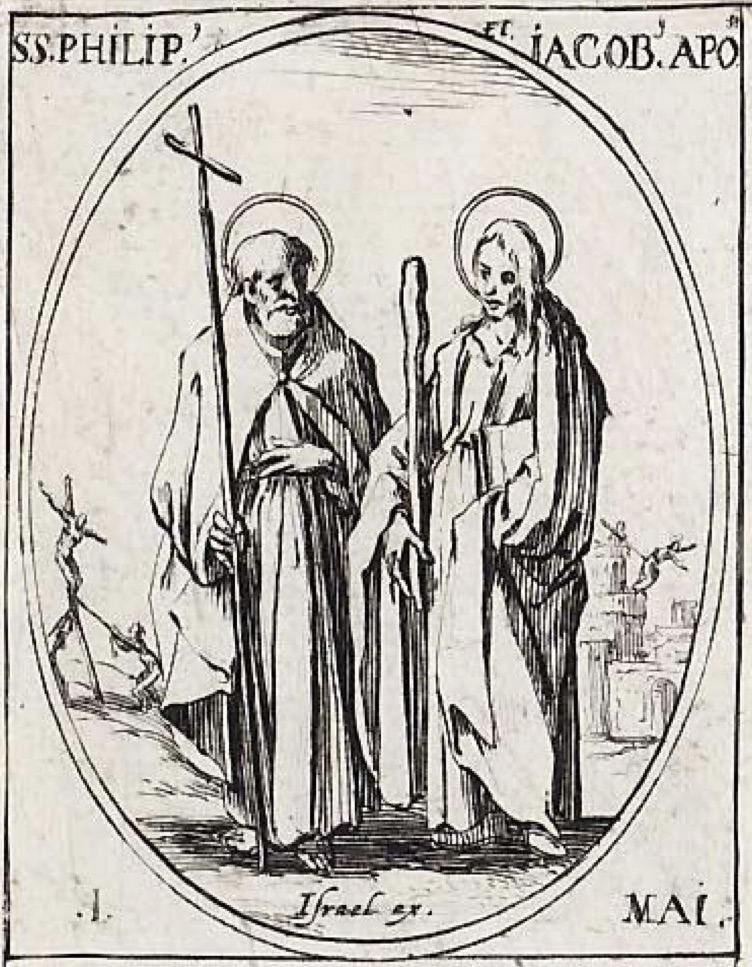
Now, at this point you might be thinking to yourself, I thought we were celebrating the feast of Saints Philip and James not James Lloyd Breck the Apostle to the Wilderness, and you would be correct. However, this statement of Bp. Tuttle seems to speak perfectly to these two. James, known as James the Lesser, distinguishes him from James the son of Zebedee and “the brother of Our Lord,” and Philip, is unknown other than a few statements made by him in John’s Gospel. After that, it’s all legend and speculation. I have to wonder though, if this anonymity doesn’t please them immensely.

James and Philip were men who recognized that their lives were not their own. They belonged entirely to God and the work of his Church. They knew that it was not about them. As Tuttle said, it was about the torch, the gospel message of Jesus Christ, and the blessed goal.

We should all be of this mindset, because it is not about us either – those made of that sacred dust – instead it is about the torch with its triple flame: God’s truth, Christ’s love, and men’s good. We must learn to set aside our own agendas, desires and plans and to take up this torch that has been passed on from all the James and Philips, Marys and Theresas, and Brecks and Tuttles. If we do so, then one day they will look back to us and say that we also seized the torch, held it high, and pushed on to the blessed goal.

In our Gospel reading Philip said to Jesus, “Lord, show us the Father, and we will be satisfied.” He would eventually understand that in seeing Jesus, he had seen the Father, and would take part in carrying the message of that revelation into all the world.

Throughout our very busy lives, let us also remember our first love and calling: to carry the torch and allow the light of Christ illumine our every step and the world around us.

Sermon: St. Alphege, Archbishop of Canterbury, and Martyr (1012 a.d.)

img-Saint-Alphege-of-WinchesterThe Psalmist writes:

“Why should I be afraid in evil days,
when the wickedness of those at my heels surrounds me?”

Alphege became Archbishop of Canterbury in 1005 amidst a longstanding war between the Anglo-Saxons and the Danes. Like most such wars, peace often seems to have won the day, when one or the other party does something remarkably stupid that ignites the conflict once again. And it was in 1011 that the battle stirred again.

This time, Canterbury came under siege and fell less than a month later. In the mayhem that followed, Alphege was taken captive. Many of those that were taken captive with Alphege were released after a ransom was paid for their lives, but Alphege refused to pay the ransom himself and refused to allow the members of his church to pay. He believed that they were overburdened as it was and would not allow them to add to it on his behalf.

Despite the fact that he worked tirelessly for the good of his captors, treating their illnesses and proclaiming the Gospel, after seven months he would be tortured and eventually put to death.

The Psalmist asked, “Why should I be afraid of evil days?” And Jesus stated in our Gospel, “I tell you, my friends, do not be afraid of those who kill the body and after that can do no more.” Alphege seems to be one that clearly heard these words.

Fear is not always a bad thing. Fear often prevents us from doing stupid things or from getting into trouble. But fear can also be an inhibitor. Fear of being hurt prevents us from loving another. Fear of failure prevents us from trying. Fear of rejection prevents us from reaching out. The Psalmist, Jesus, and the life of Alphege also say to us that the fear of death, prevents us from fully serving God.

We should not allow our fear of death to constrain us to such an extent that we aren’t willing to risk ourselves for the sake of the Gospel. No, that’s not saying go out and throw yourself in front of a bus to see if God will save you or drink the funny Kool-Aid, but it does say that we understand, as did Alphege, that death does not have the final say in our lives. That is the Easter message.

We hear that message clearly in Paul’s first letter to the Corinthians, “When this perishable body puts on imperishability, and this mortal body puts on immortality, then the saying that is written will be fulfilled:
‘Death has been swallowed up in victory.’
‘Where, O death, is your victory?
Where, O death, is your sting?’”

Therefore, you may have a fear of bungie jumping, but the fear of death should be far less.

St. Josemaría Escrivá tells the story of seeing himself as a little bird. “I see myself like a poor little bird, accustomed only to making short flights from tree to tree, or, at most, up to a third floor balcony… One day in its life it succeeded in reaching the roof of a modest building, that you could hardly call a skyscraper.

“But suddenly our little bird is snatched up by an eagle, who mistakes the bird for one of its own brood. In its powerful talons the bird is borne higher and higher, above the mountains of the earth and the snow—capped peaks, above the white, blue and rose—pink clouds, and higher and higher until it can look right into the sun. And then the eagle lets go of the little bird and says: Off you go. Fly!”

Do not be afraid. Off you go. Fly!

Sermon: Wednesday in Holy Week

darknessA riddle for you. See if you know the answer:
“It cannot be seen, cannot be felt,
Cannot be heard, cannot be smelt,
It lies behind stars and under hills,
And empty holes it fills,
It comes first and follows after,
Ends life, kills laughter.”

Bilbo Baggins, in The Hobbit, knew the answer: Dark.

Bad things can happen in the dark. You can stump your toe on the coffee table, step on the dog, and even be attacked by the monster under the bed. So we naturally reach for anything to dispel the darkness. If not the flip of a switch, then there are candles, flashlights, or the glow of a cellphone.

Yet, even though we do not like the darkness in the physical world, there are times that we prefer it in the spiritual. There are times when we try to hide in the recesses of our souls and minds, believing that we are safe from any observation.

In his Gospel, John uses the analogy of a physical darkness to point to this far worse spiritual darkness. Writing in chapter three, John says, “And this is the judgment, that the light has come into the world, and people loved darkness rather than light because their deeds were evil. For all who do evil hate the light and do not come to the light, so that their deeds may not be exposed.”

It is this darkness, both physical and spiritual, that we see in our Gospel reading today. Judas received the piece of bread from Jesus and it is then that Satan enters him. Following this, John wrote, “after receiving the piece of bread, [Judas] immediately went out.” It seems to simply be indicating the time of day, but John adds, “And it was night.”

Judas, following the path of his own choosing, turned from God and entered the night, the darkness of his own soul. He believed that God was unaware, yet Jesus’ statement to him demonstrates that nothing was hidden, “Do quickly what you are going to do.”

We can deceive ourselves in a similar manner. We can wander off into the dark recesses of our souls, thinking that our deeds and thoughts are hidden from the eyes of God, yet, as the Psalmist says:

If I say, “Surely the darkness shall cover me,
and the light around me become night,”
even the darkness is not dark to you;
the night is as bright as the day,
for darkness is as light to you.

God has separated the darkness from the light. The darkness is no place for the children of God. We must allow the full light of Christ to shine on all our thoughts and works, revealing those hidden things that cause us to stumble.

St. Paul writes to the Ephesians, “For once you were darkness, but now in the Lord you are light. Live as children of light— for the fruit of the light is found in all that is good and right and true.”

You are children of light. Allow that light to shine on all your thoughts and deeds.

Sermon: Perpetua and Her Companions

taking-a-stand_t_nv-687x515On the coast of the Mediterranean in northern Africa, a young woman and her companions were put to death because of their faith in Jesus Christ. Their murderers were barbaric and their deaths are too brutal to describe. Sound familiar? Sound like something you may have read in the papers or seen on the news? Unfortunately, the answer is “yes,” but these murders that I’m referring to took place 1,700 years ago. It is the martyrdom of Perpetua and her companions.

At the time, Emperor Septimius Severus ruled and he decreed that all living in the empire should make sacrifices to the divinity of the emperor. This was not something that a Christian could do without denying their faith and Perpetua and her companions were among them.

Following their arrest Perpetua had a dream where she realized that she was not battling the evils of this world, but was instead battling the devil. She wrote, “And I awoke, understanding that I should fight, not with beasts, but with the Devil.”

He father came and pleaded with her to renounce the faith. Her response to him and others was quite simple, but carried the wait of her convictions, “I am a Christian.” I am a Christian. Soon afterward she was thrown in the pit with the wild beasts. She cried out to her companions, “Stand fast in the faith and love one another. And do not let what we suffer be a stumbling block to you.”

I made the mistake of watching one of the videos showing the atrocities that are taking place in the same part of the world where Perpetua and her companions were put to death. It has haunted me ever since. I can assure you I won’t be making that mistake again. However, I wondered ever since then, as I’m sure many others have, how would I respond? Could I have stood alongside Perpetua – or those today – or would I have fallen?

What Jesus said has proven to be true time and time again: “They will hand you over to be tortured and will put you to death, and you will be hated by all nations because of my name. Then many will fall away, and they will betray one another and hate one another.”

Then many will fall away… Could we stand or would we fall?

The answer is, “Yes,” we can stand firm; however, we must be prepared, and the day of preparation is not then, but now. The Apostle Paul wrote in his letter to the Ephesians, “Finally, be strong in the Lord and in his mighty power.  Put on the full armor of God, so that you can take your stand against the devil’s schemes.  For our struggle is not against flesh and blood, but against the rulers, against the authorities, against the powers of this dark world and against the spiritual forces of evil in the heavenly realms.  Therefore put on the full armor of God, so that when the day of evil comes, you may be able to stand your ground, and after you have done everything, to stand.”

Hear that last part again, “…put on the full armor of God, so that when the day of evil comes, you may be able to stand your ground…”

My favorite 14th century monk and one you will hear me speak of quite often, Thomas à Kempis, said, “The present is very precious; these are the days of salvation; now is the acceptable time.”

Could you stand with Perpetua and her companions? Yes you can, but to face that day of trial – that day of evil – you must prepare today. We may never have to face something so horrible, but by being prepared in Christ Jesus, we will have no fear. We will stand with Perpetua and say, “I am a Christian.”

Sermon: “Servant”

The story in this sermon is one that probably every preacher in America has told at least once.  I still like it and hope that you enjoy this Wednesday Sermon.

Lent Devotional

Brennan Manning states, “The greatest single cause of atheism in the world today is Christians, who acknowledge Jesus with their lips and walk out the door, and deny Him by their lifestyle. That is what an unbelieving world simply finds unbelievable.” And it was D. L. Moody who wrote, “Of one hundred men, one will read the Bible; the ninety-nine will read the Christian.”

Bill has wild hair, wears a T-shirt with holes in it, jeans and no shoes. This was literally his wardrobe for his entire four years of college. He is brilliant. Kinda esoteric and very, very bright. He became a Christian while attending college.

Across the street from the campus is a well-dressed, very conservative church. They want to develop a ministry to the students, but are not sure how to go about it. One day Bill decides to go there. He walks in with no shoes, jeans, his T-shirt, and wild hair. The service has already started and so Bill starts down the aisle looking for a seat.

The church is completely packed and he can’t find anywhere to sit. By now people are looking a bit uncomfortable, but no one says anything. Bill gets closer and closer and closer to the pulpit and when he realizes there are no seats, he just squats down right on the carpet. (Although perfectly acceptable behavior at a college fellowship, trust me, this had never happened in this church before!) By now the people are really uptight, and the tension in the air is thick.

About this time, the minister realizes that from way at the back of the church, a deacon is slowly making his way toward Bill. Now the deacon is in his eighties, has silver-gray hair, a three-piece suit, and a pocket watch. A godly man, very elegant, very dignified, very courtly.

He walks with a cane and as he starts walking toward this boy, everyone is saying to themselves, You can’t blame him for what he’s going to do. How can you expect a man of his age and of his background to understand some college kid that looks like a rag-a-muffin sitting on the floor in the middle of the aisle?

It takes a long time for the deacon to reach the boy. The church is utterly silent except for the clicking of the cane. All eyes are focused on the deacon. You can’t even hear anyone breathing. The people are thinking, The minister can’t even preach the sermon until the deacon does what he has to do. And now they see this elderly man drops his cane on the floor.

With great difficulty he lowers himself and sits down next to Bill and worships alongside him so he won’t be alone. After a minute of stunned silence, the minister says, “What I’m about to preach, you will never remember. What you have just seen, you will never forget.”

In our Gospel, Jesus said, “The greatest among you will be your servant. All who exalt themselves will be humbled, and all who humble themselves will be exalted.”

One of the true signs of the Christian life is the person who humbles themselves and becomes the servant of all. As Jesus said, “I am among you as one who serves.” Of one hundred men, one will read the Bible; the ninety-nine will read the Christian. When they read us, let them read the story of those who were not afraid to get out of the pews and sit on the floor. When they read you, let them read the story of one who became like Jesus.

Paul wrote in his letter to the Philippians, “Do nothing from selfish ambition or conceit, but in humility regard others as better than yourselves.  Let each of you look not to your own interests, but to the interests of others.  Let the same mind be in you that was in Christ Jesus,

who, though he was in the form of God,
did not regard equality with God
as something to be exploited,

but emptied himself,
taking the form of a slave,
being born in human likeness.
And being found in human form,

he humbled himself
and became obedient to the point of death—
even death on a cross.”

Sermon: “Image”

imageAfter church on Sunday morning, Little Johnny suddenly announced to his mother, “Mom, I’ve decided I’m going to be a minister when I grow up.” “That’s okay with us,” his mother said, “But what made you decide to be a minister?” “Well,” Little Johnny replied, “I’ll have to go to church on Sunday anyway, and I figure it will be more fun to stand up and yell at folks than it will be to sit still and listen.”

When we were kids, we all had some image of what we wanted to be when we grew up. The Apostle Paul writes, “When I was a child, I talked like a child, I thought like a child, I reasoned like a child.” As children and even as adults we have dreams and aspirations of who we want to be, but Paul adds, “When I became a man, I put the ways of childhood behind me.” That does not mean that we set aside that childlike faith that Scripture speaks of, but it does mean we grow in our understanding of who God is, so that His image may increase in us.

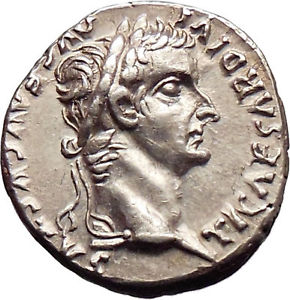
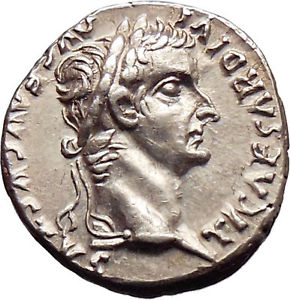
In our Gospel reading today the Pharisees had come to Jesus questioning as to whether or not a person should pay taxes. They wanted to trick him by either getting him into trouble with the people or the Romans. Jesus didn’t fall for it. Instead, he asked to see one of the coins that was in use at the time that was minted with the image of the Emperor stamped on it. Why? Because it was ultimately the Emperor’s coin. His image stamped on the coin was a claim to his ownership. Therefore, when questioned on whether or not to pay taxes, Jesus says, “Give therefore to the emperor the things that are the emperor’s, and to God the things that are God’s.” It’s Caesar’s coin, so give it to him, but also give to God what is God’s.

It’s one of those parables that can speak to us on many levels. It speaks to us about our relationship to the government, taxes, and even of stewardship, but it also speaks to us about those images we hold of ourselves. That coin had Caesar’s image on it. It represents him and so it represents the world. There are aspects of our lives – of our image – that are representative of the world. We live in it; therefore, we have to live and work with it. Because of this reality, there is really no escaping giving to Caesar what is Caesar’s, but in doing so, we do not want to exchange our Godly image for a worldly one. As Paul teaches to the Romans, “Do not conform to the pattern of this world, but be transformed by the renewing of your mind” into the image of Christ Jesus.

St. Bonaventure declares, “In all your deeds and words you should look upon this Jesus as your model. Do so whether you are walking or keeping silence, or speaking, whether you are alone or with others. He is perfect, and thus you will be not only irreprehensible, but praiseworthy.” You were created in the image of God; therefore, give to God what is His and you will be praiseworthy.

When God created you He stamped you with his image, so just as the coin that bears the image of the Emperor belongs to Emperor, you who bear the image of God belong to God, not in the sense a slave belongs to a master, but as a child belongs to a loving Father.

Yes, give unto Caesar what is Caesar’s, but give to God what is God’s. Bear His image in your life.

Sermon: “God’s Desire”

denariusDesmond Tutu was once asked why he became an Anglican rather than joining some other denomination. He replied that in the days of apartheid, when a black person and a white person met while walking on a footpath, the black person was expected to step into the gutter to allow the white person to pass and nod their head as a gesture of respect. “One day” Tutu says, “when I was just a little boy, my mother and I were walking down the street when a tall white man, dressed in a black suit, came toward us. Before my mother and I could step off the sidewalk, as was expected of us, this man stepped off the sidewalk and, as my mother and I passed, tipped his hat in a gesture of respect to her! I was more than surprised at what had happened and I asked my mother, ‘Why did that white man do that?’ My mother explained, ‘He’s an Anglican priest. He’s a man of God, that’s why he did it.’ When she told me that he was an Anglican priest I decided there and then that I wanted to be an Anglican priest too. And what is more, I wanted to be a man of God.”

It is quite easy today for us to determine a person’s worth based on color of skin, the clothes they wear, level of education, size of house, income, and so on. Like the whites in South Africa during apartheid, they looked at the color of the skin and declared in their hearts, “I am worth more than you.” What struck Desmond Tutu so about the priest was the fact that the priest, by his actions said, “No. This is not true. We are equal.”

The parable of the generous landowner is curious in how it ends – a standoff. You can see the steward standing with hand extended offering the upset worker his denarii and the worker glaring back in his anger. Jesus does not tell us what happens next because he wants us to figure it out on our own. What we must figure out is that the parable is not about the amount of work an individual worker has done. Instead, the parable is about what the landowner and the steward are doing. The parable is about God the Father, God the Son, and the work they are accomplishing.

The landowner kept going to town looking for more workers, just as God the Father keeps coming to us, pursuing us – pursuing his children that we might return to him. The steward, Jesus, pays for each of us. He places that denarii, that coin in our hands and that coin is our salvation. Whether you come early in life or late, the same reward is made available to you. Why is God doing this? Because it is God’s desire that all return to Him.

As Paul states in his first letter to Timothy, “This is right and is acceptable in the sight of God our Savior, who desires everyone to be saved and to come to the knowledge of the truth.” Or as Peter says in his second epistle, the Lord “is patient with you, not wanting any to perish, but all to come to repentance.” We have this tendency to judge others by how we perceive their worth. God, on the other hand, sees all as his beloved children and he desires that all should be saved. To what extent will God go to save His children? You need only to look to the cross to know the answer.