Sermon: Thomas

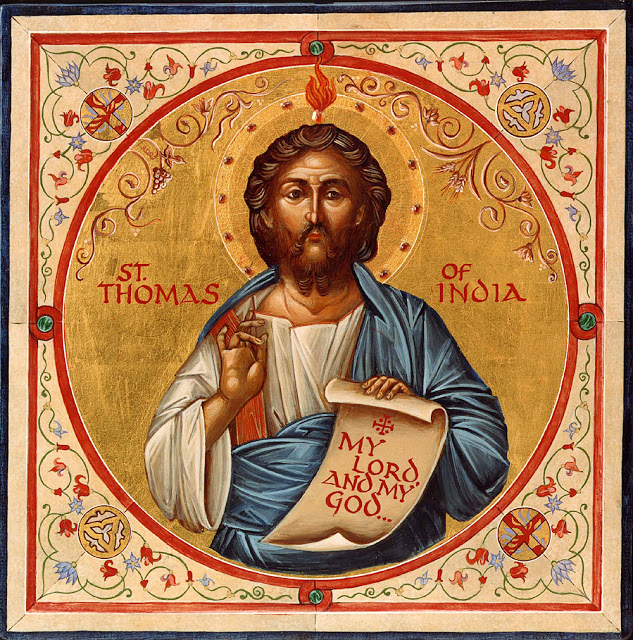
Tradition tells us that following the Ascension of Jesus, the twelve apostles drew straws to determine where they would go to proclaim the Gospel. The Apostle Thomas, who we celebrate today, drew India.

Scott Wesley Brown wrote the lyrics to a rather humorous song. He says things like, “I’ll see that the money is gathered / I’ll see that the money is sent / I’ll volunteer for the nursery / I’ll usher, I’ll deacon , I’ll go door to door / Just let me keep warming this seat,” and the chorus kicks in, “Please don’t send me to Africa.” Continue reading “Sermon: Thomas”

Sermon: Alfred the Great

I will preface this sermonette on Albert the Great by telling you I have two long quotes. Longer than I should read, but too good to omit. One describes Alfred and other is a prayer he wrote.

In 849, Alfred was the fourth son born to the West Saxons’ king. Being the fourth son, he was never expected to rise to the throne; however, during his father’s life and his own, there was an ongoing war with the Vikings, which led to the death of his father and brothers, eventually leading to Alfred ascending the throne. Off the battlefield – and even on for that matter – he was a very devout man and did much good for his people, but it was in 886 that he accomplished what no other king in England had ever done: he united England. Continue reading “Sermon: Alfred the Great”

Sermon: Wednesday / Feria

Have you ever read this parable and simply responded, “Huh?” “Then the master commended the dishonest steward for his prudence.” Something just does not seem to be making sense here.

Julian the Apostate, a forth century Roman emperor wrote that this parable, “Showed the inferiority of the Christian Faith and its founder [Jesus]” by promoting such evil. Yet, a closer examination demonstrates that Jesus is not commending the steward for lying and stealing, but instead for being shrewd, for thinking. Remember Jesus says, “Behold, I send you out as sheep in the midst of wolves. Therefore be wise as serpents and harmless as doves.” Continue reading “Sermon: Wednesday / Feria”

Sermon: Silas

Wilbur the pig asked Charlotte the spider, “Why did you do all this for me? I don’t deserve it. I’ve never done anything for you.”

“You have been my friend,” replied Charlotte. “That in itself is a tremendous thing.” (Charlotte’s Web) Continue reading “Sermon: Silas”

Sermon: Simple

She had watched her husband bite his fingernails for years and even though it did her no harm, it made her crazy. She tried all sorts of remedies to get him to stop – wearing gloves, getting a manicure, foul tasting fingernail polish, yelling and screaming – but nothing worked. Given to such trials, she would often complain to her friends, but one day she happily reported: “I’ve cured my husband of biting his nails.”

The friend asked, “How did you manage to do that?” Continue reading “Sermon: Simple”

Sermon: Justin Martyr

Do something new in the church for the first time and everyone thinks that it is a novel idea. Do something twice in a church and you have established a firm tradition. Do something three times in a church and you have created an event so sacred, that should you alter it in anyway, you’ll have a church fight on your hands.

Just a few weeks ago we talked about the Book of Common Prayer and how it has been handed down to us. The first was in 1549. Yet, even Thomas Cranmer and the other contributors were not simply making it up as they went along, because many of the traditions of the liturgy had been handed down to them. Continue reading “Sermon: Justin Martyr”

Sermon: “That They May be One”

In the six hundredth year of Noah’s life, on the seventeenth day of the second month—on that day all the springs of the great deep burst forth, and the floodgates of the heavens were opened. And rain fell on the earth forty days and forty nights. And every living thing that moved on the earth perished, except those who were saved through the ark.

The story of Noah’s ark is probably one of the first Bible Stories that children learn. It takes place in chapters 7-10 of the book of Genesis. Beginning with chapter 11 we learn of the tower of Babel. All the people of the earth had the same language, they came together to make a name for themselves, and built a great city. In this city they decided to build a tower that would reach the heavens. God comes down, takes a peek, and says, “This will not do.” He scatters them by introducing the various languages into the world. Continue reading “Sermon: “That They May be One””

Sermon: “Do You Love Me?”

A sales rep had been struggling to meet the sales projections in his appointed region, so the manager called him in for a meeting. After a lengthy discussion the manager and the rep stood looking at a map on which colored pins indicated the company representative in each area. The manager finally said, “I’m not going to fire you, Wilson, but I’m loosening your pin a bit just to emphasize the insecurity of your situation.”

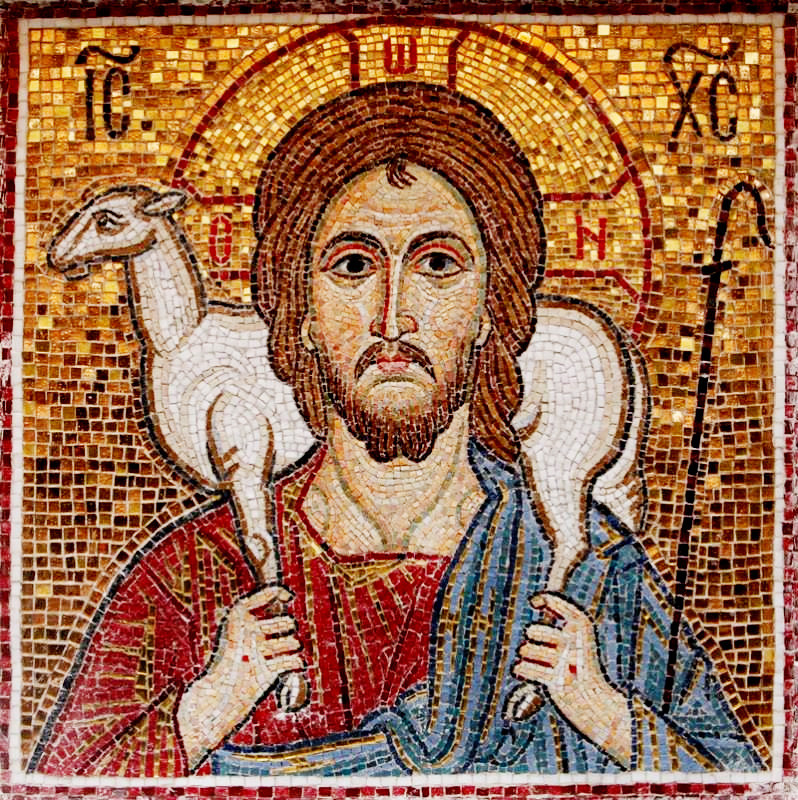
In Chapter 10 of John’s Gospel, Jesus says, “I am the good shepherd. The good shepherd lays down his life for the sheep.  The hired hand, who is not the shepherd and does not own the sheep, sees the wolf coming and leaves the sheep and runs away—and the wolf snatches them and scatters them.  The hired hand runs away because a hired hand does not care for the sheep.  I am the good shepherd.”

We also know that, on the night before he was crucified, Peter denied Jesus three times. In a way, he acted like the hired hand. The wolf came, there was trouble, and he spiritually fled from Jesus out of fear for his own life. We can’t criticize Peter for his actions, because that could have just as easily been anyone of us in a similar situation. But for Peter, by today’s standards, he would have had is pin pulled out of the map and ground to dust. Yet Jesus responded in a different way.

Today, we have Peter and Jesus walking alone. Peter denied him three times and we know that Jesus is now restoring him by asking him three times, “Do you love me?” Peter responds, “Yes, Lord; you know that I love you,” “Yes, Lord; you know that I love you,” and finally, “Lord, you know everything; you know that I love you.” Jesus doesn’t say, “OK. Good answer.” Instead, Jesus says, “Feed my lambs,” “Tend my sheep,” and finally, “Feed my sheep.”

Jesus is the Good Shepherd and by today’s standards, Peter should have been fired, but instead Jesus makes Peter a shepherd. Jesus is the Good Shepherd, but he is asking Peter to now share in this ministry of caring for God’s people, and he concludes by saying to Peter, “Follow me.” Do what I have been doing and don’t be afraid any longer.

What is Peter’s reward for obedience? Again, from the world’s perspective, it is a real winner: “‘Very truly… when you grow old, you will stretch out your hands, and someone else will fasten a belt around you and take you where you do not wish to go.’ (He said this to indicate the kind of death by which he would glorify God.)” Jesus is saying, “Be a shepherd of God’s people, follow me, and your reward will be that you shall die a most violent death.” Tradition holds that Peter was crucified upside down in Rome. And to that we all say, “Sign me up!” However, in saying to Peter, “Follow me,” Jesus is also saying, follow me in caring for the children of God, but also follow me through death, for death has been conquered once and for all. Follow me, for there is nothing to fear.” — “I tell you, my friends, do not fear those who kill the body, and after that can do nothing more.” (Luke 12:4)

The one that denied and should have been fired has been given a roll in the ministry and eternal life. That was then, this is now, but the task and reward are the same. Jesus says to each of us, “Feed my sheep. Follow me.” Without hesitation or fear, we are called to be like Peter. Care for the children of God and follow Jesus. We have been commissioned. Fear not.

Sermon: The Annunciation

For the record, it is only 268 days until Christmas, so today we consider the Annunciation.

After the presentation of Jesus in the temple, Mary and Joseph encounter the prophet Simeon. Simeon blesses God for allowing him to see the Savior and from his words we have the Song of Simeon, which begins: “Lord, you now have set your servant free to go in peace as you have promised.” Following this, Simeon speaks directly to Mary, “Behold, this Child is destined for the fall and rising of many in Israel, and for a sign which will be spoken against (yes, a sword will pierce through your own soul also), that the thoughts of many hearts may be revealed.”

“… and a sword will pierce through your own heart.” Your own soul. We see Mary kneeling at the foot of the cross while watching her son die and we understand that this is what Simeon was speaking. Yet this sword piercing her heart is also speaking of the great faith that Mary must have.

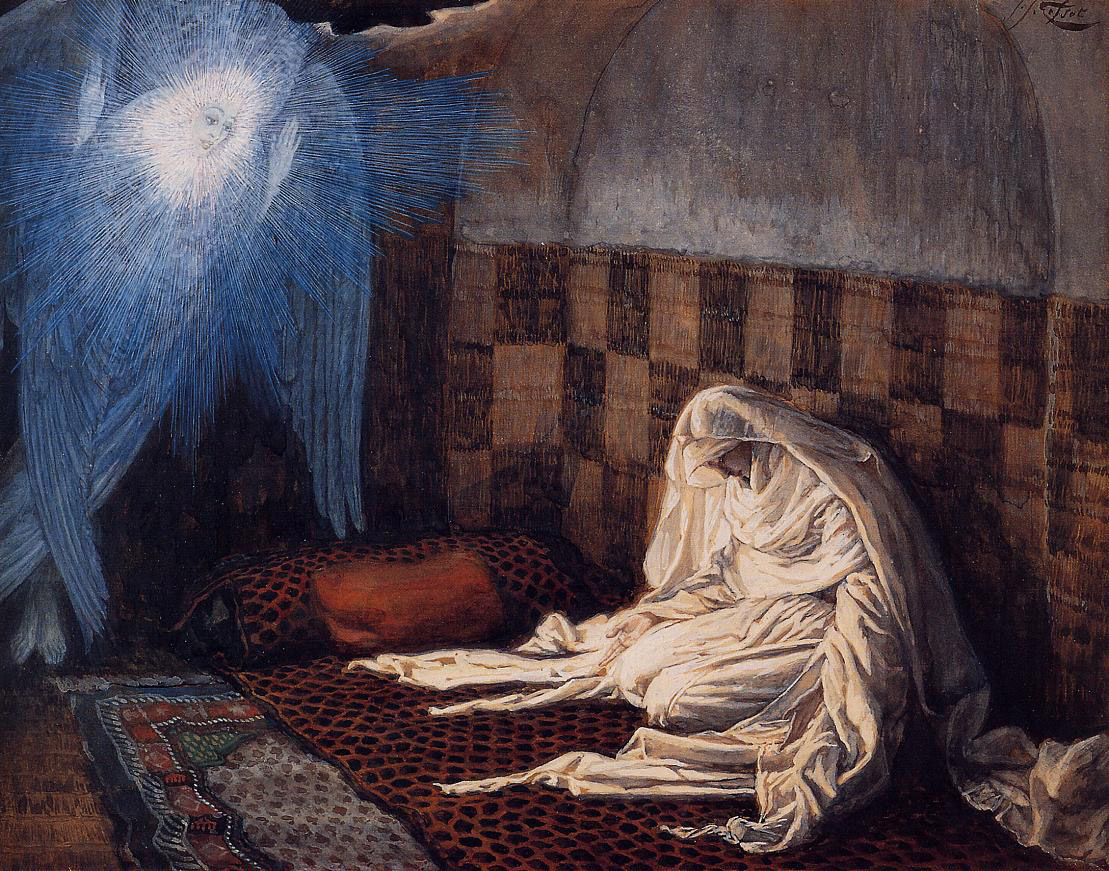
At the Annunciation when the angel Gabriel spoke to Mary and told her that she would bear the Son of God, her response was simple, “Behold the maidservant of the Lord! Let it be to me according to your word.” Through her great faith Mary continued to repeat these words for each step the Lord called her to: “Yes, Lord, let it be done to me. Let your Son be conceived in me. Let them hate me because they think I’m an adulteress. Let me go to Bethlehem. Let me flee to Egypt. Let me return to Galilee and raise Him. Let the sword pierce my soul as I watch him die.”

Mary had faith that allowed the sword to pierce her own heart because she realized that the claims of God on her Son were far greater than any other human claim or attachment. That piercing would be the pain that her motherly love had to experience in order to surrender to God.

Karl Rhaner, a 20th century German theologian, writes that the piercing sword is the way of faith. He says, “Faith is like a sword that pierces and divides as it penetrates to the center of the believer’s heart. Faith is the enduring of this sword. Faith is the readiness to live on in hope when conflict threatens and allows us to entrust ourselves unconditionally to God. It is faith when we accept the blow of the sword in our existence, the sword of the question that finds no answer; the sword that all life in pain ends in death; the sword that not even love dissolves all contradictions in this life; the sword of the leave-takings, disappointments, sickness and isolation.”

And it was this sword, this faith that Mary demonstrated while she knelt at the foot of the cross and watched her son die. What is this faith? There really is no simple definition, because it involves many things. It is the beginning our of salvation. It is that internal light that guides us to God. Faith requires understanding – we must deepen our knowledge in order to deepen our faith.

Faith is also a human act – not only is our intellect involved, but so is our will. A free will that decides to conform to the life God has chosen for us.
Finally, and more importantly than any of these, faith is a grace given to us by God. Before the internal light first shines. Before we begin to seek understanding. Before we study, act, or choose, God through the power of the Holy Spirit must be moving in us. Before any of it, God’s grace must be born in us. And grace incarnate, grace in human form came in the person of Jesus Christ.

We live out this faith when we stand alongside Mary at the Annunciation and declare with her, “Let it be done to me according to your word,” because in those words we take our life and hand it to God as Mary did.