Sermon: Easter 5 RCL B – “Twenty Minutes”

A very young management consultant had an interview with the president of large corporation. The young woman had been recommended to him by one of his employees who had seen the consultants work and thought she had something to offer. The young woman was nervous. At that stage in her career, it wasn’t very often that she got to talk to the president of a company. The appointment was at 10:00 a.m., for one hour. She arrived early. Promptly at 10, she was ushered into a large and airy room, with furniture upholstered in bright yellow. The president had his shirtsleeves rolled up and a mean look on his face, ”You’ve only got 20 minutes,” he barked. The young woman sat there, not saying a word. “I said, you’ve only got 20 minutes.” Again, not a word. “Your time’s ticking away. Why aren’t you saying anything?” “They’re my 20 minutes,” the young woman replied, “I can do whatever I want with them.”

A few months ago I saw the movie “Lucy.” I enjoyed it enough that recently I went out and bought the BluRay. Aside from the fact that it has Scarlett Johansson in it (can I just say, “Huba huba!”) it is a really great film. The premise is based on the fact that humans only use about 10% of their brains. It then asked the question, “What if we use more?” This of course is played out in the life of Lucy, Scarlett Johansson.

In the movie, the groundwork for establishing the premise is laid out by Professor Norman, played by Morgan Freeman. One of the conclusions he draws as to why we humans use only 10% of our brains caught my attention. He stated, “We humans are more concerned with having than with being.”

This life that God has gifted you with is your 20 minutes. You are free to do with them whatever you like. So what are you going to use them for? Having or being?

From a Christian perspective, one who is concerned with “having” is primarily one who is concerned with self. They are solely motivated with improving their own situation and have little or no concern for the greater good.

One who is concerned with “being” is looking to be a disciple, one who is like Jesus, doing the things that he did. Sacrificing themselves.

Jesus said, “I am the vine, you are the branches. Those who abide in me and I in them bear much fruit, because apart from me you can do nothing…. If you abide in me, and my words abide in you, ask for whatever you wish, and it will be done for you. My Father is glorified by this, that you bear much fruit and become my disciples.”

In the time of Jesus and in Palestine, wine was the number one export, so grapes were one of the most important crops for sustaining the economy. Therefore, those that cared for the vineyards held important jobs, and the pruning of the vines was a very specialized skill. Its not like pruning a tree that we might have in our yard.

The plant is made of the trunk or vine. From the vine grow the branches and growing from the branches are what are known as canes, the long spindly parts of the plant. It is from the canes that the grapes grow. There is also new growth called renewal spurs, which will be the one year old canes next year. So why is pruning a grapevine so specialized?

A grape will only grow on a cane that is one year old. If the cane is two years or older, no grapes. If the cane is new, one of the renewal spurs, no grapes. If you prune out all the renewal spurs, no grapes next year. If you leave too many one-year-old canes to produce this years fruit, then you have too much growth for the plant to support and no grapes. The one who prunes has to know exactly what they are doing.

Jesus says that he is the “true vine,” he is the trunk of the plant from where everything else grows and gets its life. God the Father is the vine grower, the one who prunes the plant. You and I are the branches. From us grow the canes that produce the fruit.

When God the Father prunes us, He is literally cutting out the old canes that produce no fruit and he is thinning out the excess, so that we will not be overburdened. In other words, God the Father is perfectly forming us to produce good fruit. But understand, when he prunes he is cutting out the canes, he is not lopping off the entire branch, unless it produces no canes that produce the fruit. If the branch does not produce fruit, then it is cut off and is “thrown into the fire, and burned.”

Back to the question: This life that God has gifted you with is your 20 minutes. You are free to do with them whatever you like. So what are you going to use them for? Having or being?

Having, self-serving, produces no fruit. Being, sacrificing ones self, living as a disciple of Jesus, produces much fruit.

Sitting in church on a Sunday morning, we all want to shout, “Being! I will be a disciple of Jesus.”

The visiting preacher was really getting the congregation moving. Near the end of his sermon he said this church has really got to walk to which someone in the back yelled, “let her walk preacher” The preacher then said if this church is going to go it’s got to get up and run to which someone again yelled with gusto, “let her run preacher.” Feeling the surge of the church, the preacher then said with even louder gusto, “if this church is going to go it’s got to really fly” and once again with ever greater gusto, someone yelled, “let her fly preacher, let her fly.” The preacher then seized the moment and stated with even greater gusto, “if this church is really going to fly it’s going to need money” to which someone in the back yelled, “let her walk preacher, let her walk.”

We all want to be a disciple of Jesus. We understand that this will require sacrifice on our part and we are prepared to do it, but then we hit something of a spiritual wall when the sacrifice becomes too great. Instead of freely giving of ourselves, we begin to quantify that giving. “I went to church this week. Twice! I’ve prayed every day. I’m tithing. I’ve helped those in need. Etc. I’ve produced some good fruit. Surely it’s enough.”

A young man found a beautiful pearl for sale in a shop. He says to the clerk, “I want this pearl. How much is it?”

“Well,” the seller says, “it’s very expensive.”

“But, how much?”

“Well, a very large amount.”

“Do you think I could buy it?”

“Oh, of course, everyone can buy it.”

“But, didn’t you say it was very expensive?”

“Yes.”

“Well, how much is it?”

“Everything you have,” says the seller.

He makes up his minds, “All right, I’ll buy it,” we say.

“Well, what do you have?” the seller wants to know. “Let’s write it down.”

“Well, I have ten thousand dollars in the bank.”

“Good- -ten thousand dollars. What else?”

“That’s all.. That’s all I have. Well, I have a few dollars here in my pocket.”

“How much?”

He starts digging. “Well, let’s see–thirty, forty, sixty, eighty, a hundred, a hundred twenty dollars.”

“That’s fine. What else do you have?”

“Well, nothing. That’s all.”

“Where do you live?” He’s still probing.

“In my house. Yes, I have a house.”

“The house, too, then.” He writes that down.

“You mean I have to live in my camper?”

“You have a camper? That, too. What else?”

“I’ll have to sleep in my car!”

“You have a car?”

“Two of them.”

“Both become mine, both cars. What else?”

“Well, you already have my money, my house, my camper, my cars. What more do you want?”

“Are you alone in this world?”

“No I have a wife and two children…..”

“Oh, yes, your wife and children, too. What else?”

“I have nothing left! I am left alone now.”

Suddenly the seller exclaims, “Oh, I almost forgot! You yourself, too! Everything becomes mine–wife, children, house, money, cars–and you too.”

Are you more interested in having or being a disciple? Jesus says, “I am the vine, you are the branches.” You are nothing without Jesus. You don’t even exist without him. Be the disciple he is calling you to be, sacrificing everything including your very life in order for Him to produce good fruit through you.

Believe it or not, I know what you’re thinking, “Fr. John, if I say ‘Yes,’ I’ll end up naked and alone in the world?”

At the end of the transaction, the seller of the pearl said to the young man who purchased it, “Now listen–I will allow you to use all these things for the time being. But don’t forget that they are mine, just as you are. And whenever I need any of them you must give them up, because now I am the owner.”

You’ll end up naked and alone? No. Jesus said, “Strive first for the kingdom of God and his righteousness, and all these things will be given to you as well.”

Sermon: Sts. Philip and James

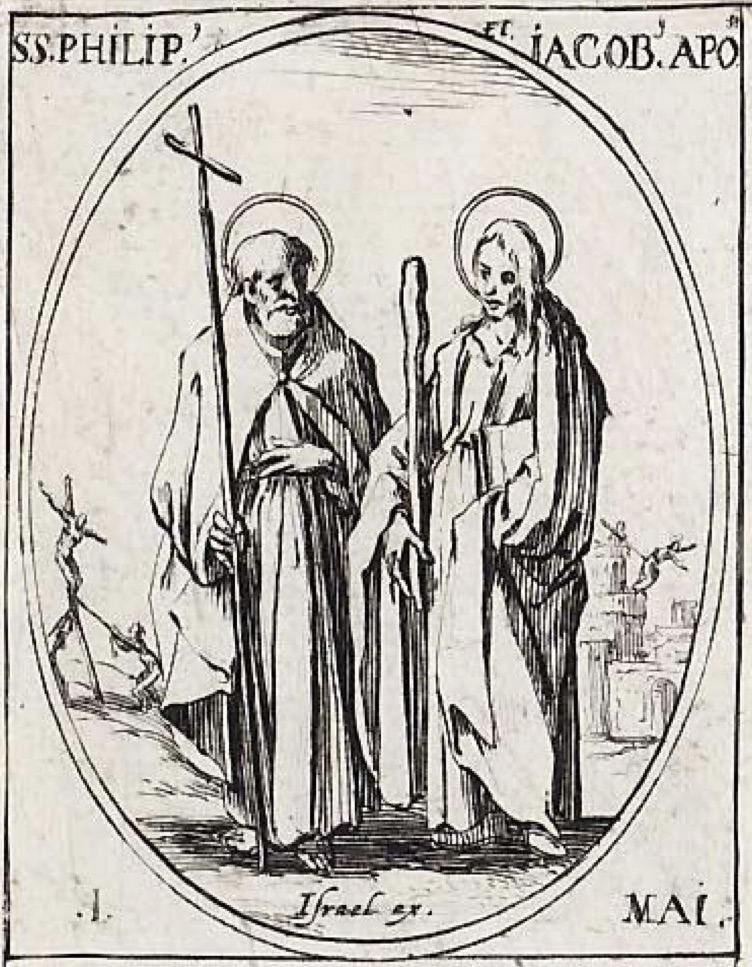
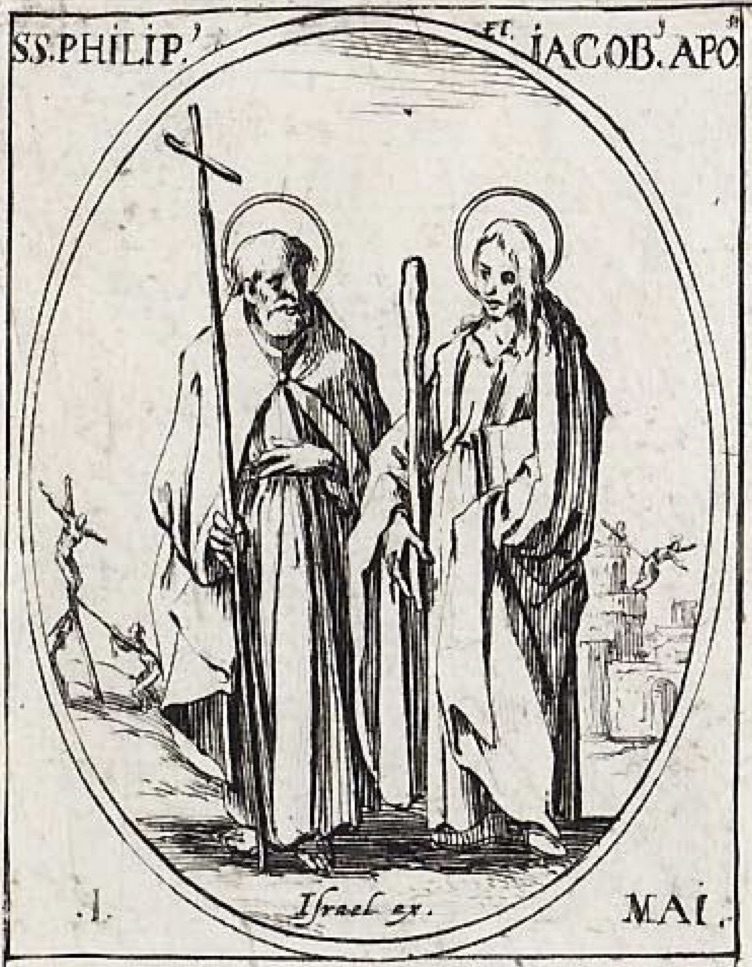
PandJJames Lloyd Breck, his feast day is celebrated on April 2nd, was known as the Apostle to the Wilderness. In the very early days of the church he traveled to foreign countries like Wisconsin and California. In 1842 with two classmates, and under the direction of Bishop Jackson Kemper, he founded Nashotah House and was truly one of the great missionaries.

Many years later, on a gray autumn day in October of 1897, the missionary council of the Episcopal Church gathered at Nashotah House to lay to rest the remains of James Lloyd Breck. In attendance were the students of the House, clergy, and several Bishops including, Bishop Daniel Sylvester Tuttle, the first missionary Bishop of Montana, and Bishop Francis Key Brooke, the first Missionary Bishop of Oklahoma. It was Bishop Tuttle that spoke the words at the graveside following Communion in St. Mary’s Chapel. Bishop Tuttle said:

There was a Grecian race in which the runners were charged to care not for themselves, nor indeed for each other, but for the torch they bore. As one and another, wearied and overcome fell by the way, he held aloft his torch, handing it to a comrade who seized it quickly and sped on. So with the torch borne by the Christian man. It has a triple flame, God’s truth, Christ’s love, men’s good. We are to hold it up and pass it on. One or another of us is soon to fall in the hard-trodden, dusty path. But never mind us, it is dust to dust, though it may be sacred dust that falls, and God will take care of it. Do not mind us; seize the torch, we pray you, and push on to the blessed goal.

Now, at this point you might be thinking to yourself, I thought we were celebrating the feast of Saints Philip and James not James Lloyd Breck the Apostle to the Wilderness, and you would be correct. However, this statement of Bp. Tuttle seems to speak perfectly to these two. James, known as James the Lesser, distinguishes him from James the son of Zebedee and “the brother of Our Lord,” and Philip, is unknown other than a few statements made by him in John’s Gospel. After that, it’s all legend and speculation. I have to wonder though, if this anonymity doesn’t please them immensely.

James and Philip were men who recognized that their lives were not their own. They belonged entirely to God and the work of his Church. They knew that it was not about them. As Tuttle said, it was about the torch, the gospel message of Jesus Christ, and the blessed goal.

We should all be of this mindset, because it is not about us either – those made of that sacred dust – instead it is about the torch with its triple flame: God’s truth, Christ’s love, and men’s good. We must learn to set aside our own agendas, desires and plans and to take up this torch that has been passed on from all the James and Philips, Marys and Theresas, and Brecks and Tuttles. If we do so, then one day they will look back to us and say that we also seized the torch, held it high, and pushed on to the blessed goal.

In our Gospel reading Philip said to Jesus, “Lord, show us the Father, and we will be satisfied.” He would eventually understand that in seeing Jesus, he had seen the Father, and would take part in carrying the message of that revelation into all the world.

Throughout our very busy lives, let us also remember our first love and calling: to carry the torch and allow the light of Christ illumine our every step and the world around us.

Sermon: Easter 3 RCL B – “God Bearer”

plant in handsIn the Far East the emperor was growing old and knew it was time to choose his successor. Instead of choosing one of his assistants or his children, he decided to do something different. He called young people in the kingdom together one day. He said, “”It is time for me to step down and choose the next emperor. I have decided to choose one of you.” The children were shocked, but the emperor continued. “I am going to give each one of you a seed today–one very special seed. I want you to plant the seed, water it, and come back here one year from today with what you have grown from this one seed. I will then judge the plants that you bring, and the one I choose will be the next emperor.”

One boy, named Ling, was there that day and he, like the others, received a seed. He went home and excitedly, told his mother the story. She helped him get a pot and planting soil, and he planted the seed and watered it, carefully. Everyday, he would water it and watch to see if it had grown. After about three weeks, some of the other youths began to talk about their seeds and the plants that were beginning to grow. Ling kept checking his seed, but nothing ever grew. Three weeks, four weeks, five weeks went by, still nothing. By now, others were talking about their plants, but Ling didn’t have a plant and he felt like a failure. Six months went by–still nothing in Ling’s pot.

He just knew he had killed his seed. Everyone else had trees and tall plants, but he had nothing. Ling didn’t say anything to his friends, however. He just kept waiting for his seed to grow. A year finally went by and all the youths of the kingdom brought their plants to the emperor for inspection. Ling told his mother that he wasn’t going to take an empty pot. But his mother asked him to be honest about what happened.

Ling felt sick at his stomach, but he knew his mother was right. He took his empty pot to the palace. When Ling arrived, he was amazed at the variety of plants grown by the other youths. They were beautiful–in all shapes and sizes. Ling put his empty pot on the floor and many of the other children laughed at him. A few felt sorry for him and just said, “Hey, nice try.”

When the emperor arrived, he surveyed the room and greeted the young people. Ling just tried to hide in the back. “My, what great plants, trees, and flowers you have grown,” said the emperor. “Today one of you will be appointed the next emperor!”

All of a sudden, the emperor spotted Ling at the back of the room with his empty pot. He ordered his guards to bring him to the front. Ling was terrified. He thought, “The emperor knows I’m a failure! Maybe he will have me killed!”
When Ling got to the front, the Emperor asked his name. “My name is Ling,” he replied. All the kids were laughing and making fun of him. The emperor asked everyone to quiet down. He looked at Ling, and then announced to the crowd, “Behold your new emperor! His name is Ling!”

Ling couldn’t believe it. Ling couldn’t even grow his seed. How could he be the new emperor?

Then the emperor said, “One year ago today, I gave everyone here a seed. I told you to take the seed, plant it, water it, and bring it back to me today. But I gave you all boiled seeds that would not grow. All of you, except Ling, have brought me trees and plants and flowers. When you found that the seed would not grow, you substituted another seed for the one I gave you. Ling was the only one with the courage and honesty to bring me a pot with my seed in it. Therefore, he is the one who will be the new emperor!”

Jesus said, “Thus it is written, that the Messiah is to suffer and to rise from the dead on the third day, and that repentance and forgiveness of sins is to be proclaimed in his name to all nations, beginning from Jerusalem. You are witnesses of these things.” You are witnesses. You are the ones who proclaim repentance and forgiveness of sins.

The Apostle Paul said to Timothy in his second later, “Hold to the standard of sound teaching that you have heard from me, in the faith and love that are in Christ Jesus.  Guard the good treasure entrusted to you, with the help of the Holy Spirit living in us.”

You are witnesses to that proclaim repentance and forgiveness of sins and you are to guard this treasure that has been entrusted – that has been planted – in you. Question: How’s that working out? Are you guarding what God has planted in you or have you substituted it with something else?

In the beginning, God created the heavens and the earth. On the sixth day of creation “God said, ‘Let us make humankind in our image, according to our likeness.’” From this we have the Latin phrase that refers to humankind, Imago Dei, Image of God. That in itself should be enough to keep us near to God, constantly seeking His face and His will. However, I recently came across another Latin phrase that raised the bar considerably.

St. Ignatius of Antioch: his death is placed somewhere between the year 98 and 117. Legend holds that he was one of the children blessed by Jesus and the 4th century historian Eusebius records that he was a student of the Apostle John and later became the third bishop of Antioch; Peter was the first.

Toward the end of his life there began, under the Emperor Trajan, another persecution of Christians and eventually Ignatius would be arrested and transported to Rome for trial. Along the way, he wrote seven letters that we still have today. He signed the letters, Ignatius Theophorus. Theophorus – God-bearer. Ignatius, one who carries God within himself.

St. Paul wrote to the Galatians, “I have been crucified with Christ; and it is no longer I who live, but it is Christ who lives in me.” Christ lives – notice, that’s not in the past tense – Christ lives in me. Through our baptism, Christ also lives in us.

We are Imago Dei, in the image of God; but we are also Theophorus, God bearers, for God lives in us. We are all Theophorus, God-bearers.

Back to the question: How’s that working out? Are you guarding what God has planted in you, Himself – Christ. Are you bearing Him or have you substituted Him with something else?

Jesus calls us to be witnesses of the truth, repentance and the forgiveness of sins, but if something else has taken root in our souls, then we are no longer witnesses to that truth. Instead, we are witnesses to something foreign and of our own creation and it is not of the One True God.

Did you know that in the world today, it is estimated that there are approximately 41,000 different Christian denominations: Catholic, Episcopal, Baptist, etc.? 41,000! Did you know that it is estimated that the number increases by about 270 every year? About 5 new denominations every week.

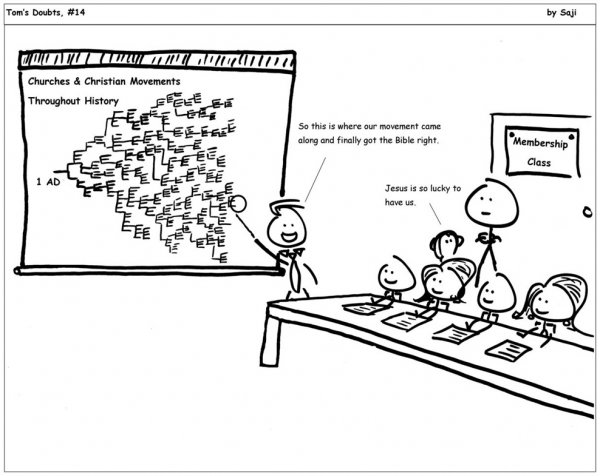
luckyOne of those fun cartoons made the rounds awhile back: a pastor has made a diagram. It looks a bit like a family tree of all the denominations. Starts out with one church on the far left and on the far right is this string of various denominations. One of them is circled in red, and pointing at the one the pastor declares, “And this is where our movement came along and finally go the Bible right.” One of the students shouts with joy, “Jesus is so lucky to have us!”

Remember the day that Ling showed up before the Emperor. All the pots with trees, plants, and flowers that had been grown; however, there was only one that was of the Emperor. Only one was bearing, was witness to the truth. 41,000 denominations. Five new every week. Do they all bear the Truth?

We are the Episcopal Church. “Jesus is so lucky to have us!” We are the Episcopal Church and we’ve got more problems than Oklahoma has earthquakes, but that doesn’t mean that we as individuals aren’t called to be witnesses to the Truth.

St. Josemaría Escrivá wrote, ”One ought to be able to apply to every Christian the name that was used in the early ages: Theophorus, Bearer of God. Your actions should be such that you really deserve to be called by that wonderful name.”

There are thousands upon thousands of books and pages that have been written as to what the Truth of Jesus truly is; however, the message is not that difficult. A child can be a witness to it and proclaim it: “The saying is sure and worthy of full acceptance, that Christ Jesus came into the world to save sinners.” “You shall love the Lord your God with all your heart, and with all your soul, and with all your strength, and with all your mind; and your neighbor as yourself.”

This is what we as individuals and the Church are called to be witnesses to. This is the message of the one in whose image we are made and whom we bear in ourselves.

As you go from here to there – wherever “there” may be – allow that Truth to be what flourishes in you. In doing so, you will be a faithful witness to Jesus and you will bear Him into the world that needs this Truth. That needs Him.

Sermon: St. Alphege, Archbishop of Canterbury, and Martyr (1012 a.d.)

img-Saint-Alphege-of-WinchesterThe Psalmist writes:

“Why should I be afraid in evil days,
when the wickedness of those at my heels surrounds me?”

Alphege became Archbishop of Canterbury in 1005 amidst a longstanding war between the Anglo-Saxons and the Danes. Like most such wars, peace often seems to have won the day, when one or the other party does something remarkably stupid that ignites the conflict once again. And it was in 1011 that the battle stirred again.

This time, Canterbury came under siege and fell less than a month later. In the mayhem that followed, Alphege was taken captive. Many of those that were taken captive with Alphege were released after a ransom was paid for their lives, but Alphege refused to pay the ransom himself and refused to allow the members of his church to pay. He believed that they were overburdened as it was and would not allow them to add to it on his behalf.

Despite the fact that he worked tirelessly for the good of his captors, treating their illnesses and proclaiming the Gospel, after seven months he would be tortured and eventually put to death.

The Psalmist asked, “Why should I be afraid of evil days?” And Jesus stated in our Gospel, “I tell you, my friends, do not be afraid of those who kill the body and after that can do no more.” Alphege seems to be one that clearly heard these words.

Fear is not always a bad thing. Fear often prevents us from doing stupid things or from getting into trouble. But fear can also be an inhibitor. Fear of being hurt prevents us from loving another. Fear of failure prevents us from trying. Fear of rejection prevents us from reaching out. The Psalmist, Jesus, and the life of Alphege also say to us that the fear of death, prevents us from fully serving God.

We should not allow our fear of death to constrain us to such an extent that we aren’t willing to risk ourselves for the sake of the Gospel. No, that’s not saying go out and throw yourself in front of a bus to see if God will save you or drink the funny Kool-Aid, but it does say that we understand, as did Alphege, that death does not have the final say in our lives. That is the Easter message.

We hear that message clearly in Paul’s first letter to the Corinthians, “When this perishable body puts on imperishability, and this mortal body puts on immortality, then the saying that is written will be fulfilled:
‘Death has been swallowed up in victory.’
‘Where, O death, is your victory?
Where, O death, is your sting?’”

Therefore, you may have a fear of bungie jumping, but the fear of death should be far less.

St. Josemaría Escrivá tells the story of seeing himself as a little bird. “I see myself like a poor little bird, accustomed only to making short flights from tree to tree, or, at most, up to a third floor balcony… One day in its life it succeeded in reaching the roof of a modest building, that you could hardly call a skyscraper.

“But suddenly our little bird is snatched up by an eagle, who mistakes the bird for one of its own brood. In its powerful talons the bird is borne higher and higher, above the mountains of the earth and the snow—capped peaks, above the white, blue and rose—pink clouds, and higher and higher until it can look right into the sun. And then the eagle lets go of the little bird and says: Off you go. Fly!”

Do not be afraid. Off you go. Fly!

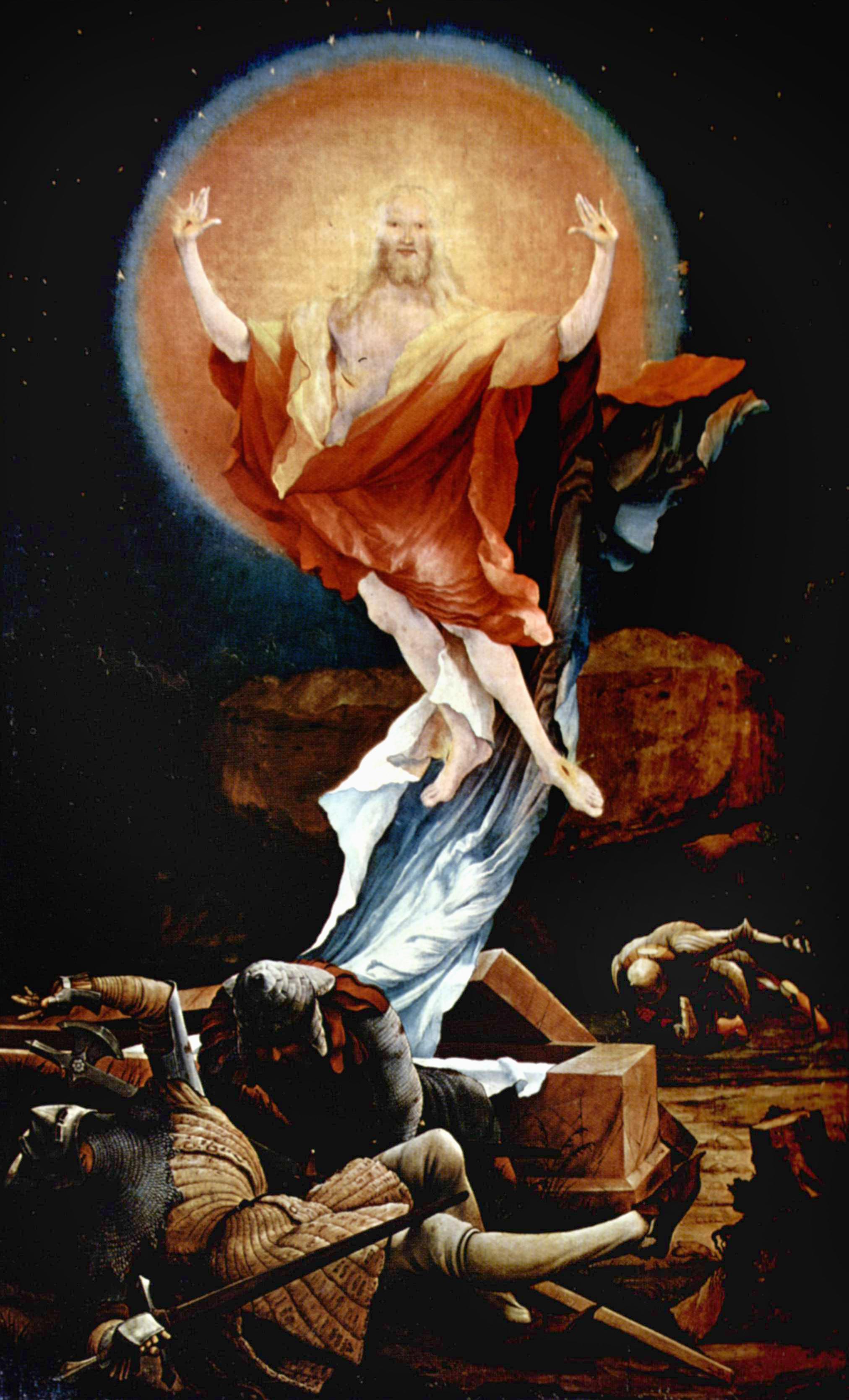
Sermon: The Sunday of the Resurrection

the_isenheim_altarpiece__resurection_-_grunewald1365450883643

5-year old Johnny was in the kitchen as his mother made supper. She asked him to go into the pantry and get her a can of tomato soup, but he didn’t want to go in alone. “It’s dark in there and I’m scared.” She asked again, and he persisted. Finally she said, “It’s OK–Jesus will be in there with you.” Johnny walked hesitantly to the door and slowly opened it. He peeked inside, saw it was dark, and started to leave when all at once an idea came, and he said: “Jesus, if you’re in there, would you hand me that can of tomato soup?” It really would be helpful if Jesus would show up like that.

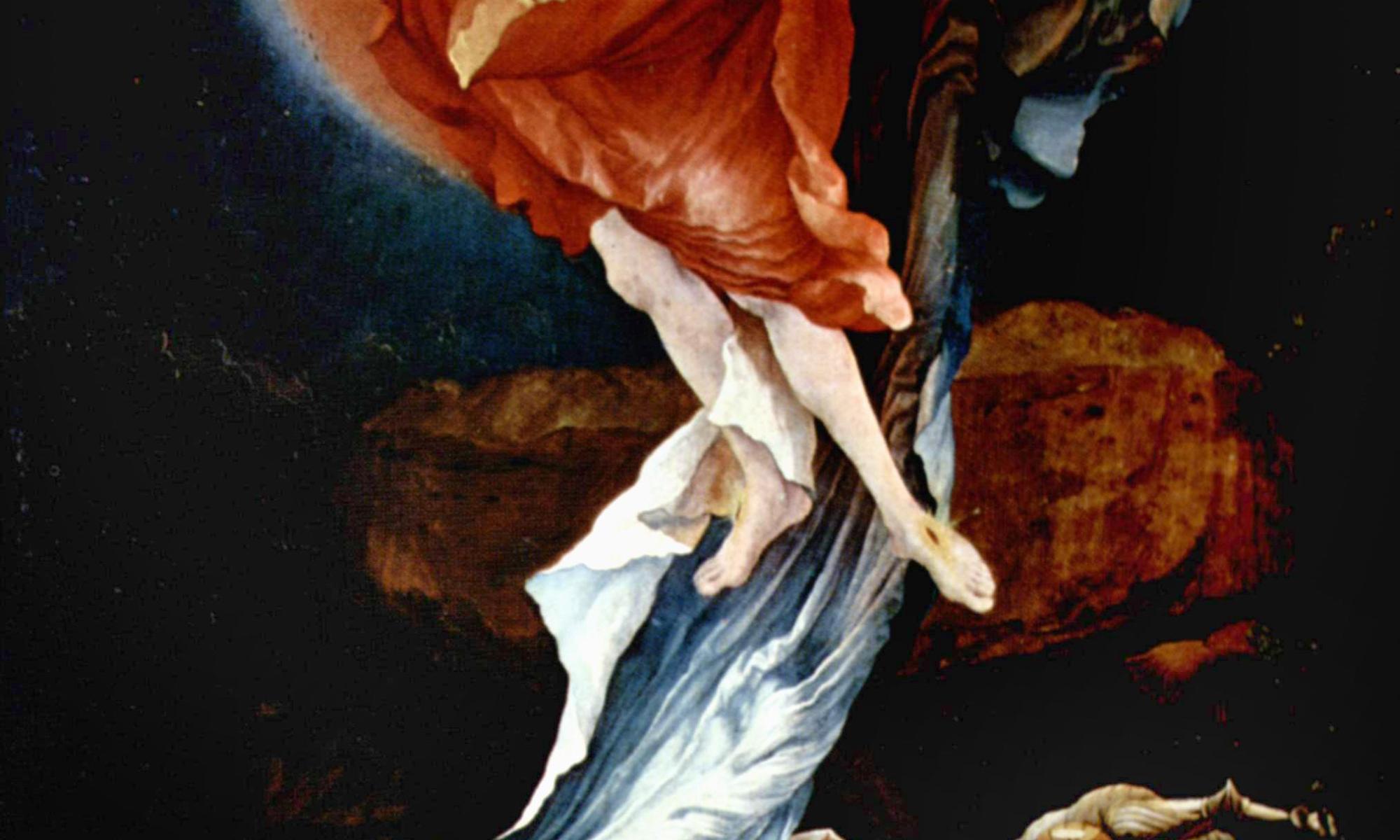
This week and over the course of the next several weeks we are going to be reading about Jesus’ appearances following the resurrection. This week, he appears to Mary Magdalene in the garden near the tomb, she says, “I have seen the Lord.” Next week there’s going to be the episode of Jesus appearing in the upper room and Thomas’ doubting. Later, he is going to appear to his disciples next to the Sea of Galilee and have breakfast with them, and then there will be the two disciples who encounter him on the Road to Emmaus. Forty days from today he is going to appear again just before the ascension.

I don’t know about you, but every now and then, I think it would be nice if he would make an appearance these days. It wouldn’t have to be much, maybe just passing the tomato soup from a dark closet or waving from a mountain. Surely someone would record it on their cellphone and upload the event to YouTube.

Judas, in the musical Jesus Christ Superstar, made a good point, “Now why’d you choose such a backward time and such a strange land? If you’d come today you could have reached a whole nation. Israel in 4 BC had no mass communication.” Today, Jesus’ face appears on a piece of toast and everyone goes nuts, but can you imagine what would happen if someone posted a picture on Instagram of him walking across Grand Lake of the Cherokees? Back when I had a real job I worked for a marketing firm, and I can tell you, something like that will sell.

I think on his appearances to the disciples and others and I wonder, Where’s my garden or upper room experience where I can see him? Why won’t he have breakfast with me? Just once would do. A few weeks ago we read of the Greeks who came to Philip with one small request: “Sir, we would see Jesus.” And I think to myself, “Yes sir, we would.”

A man was walking home late one night when he saw another searching under a street light on hands and knees for something on the ground.

“Sir, what are you looking for?” he asked.

“The key to my house,” answered the other.

“I’ll help you look,” the man said.

Soon, both men were down on their knees under the street light, looking for the key.

After a number of minutes, the man asked, “Where exactly did you drop it?”

Waving off in the direction of a dark alley he said, “Over there, in the alley.”

The first man jumped up. “Then why are you looking for it here?”

“Because there is more light over here.”

We want to see Jesus, to have that encounter with him, but did you ever stop to consider that maybe – just maybe – we aren’t looking for him in the right place.

Look to the person on your left and if there is no one on your left, then look to the person on your right. Think about the person you saw walking down the street on your way here or the person you saw sitting in the car next to you. In all those people you’ve seen Jesus.

You look back to the person on your left and say, “Fr. John, that ain’t Jesus! That’s just Bob and Bob ain’t Jesus.” And on the night before he was crucified, Jesus prayed, “I ask … that they may all be one. As you, Father, are in me and I am in you, may they also be in us… I in them and you in me, that they may become completely one.” That may just be Bob or Myrtle or a complete stranger or an enemy, but Jesus is in them – whether you or they like it or not.

You know St. Patrick’s words:
Christ with me, Christ before me, Christ behind me,
Christ in me, Christ beneath me, Christ above me,
Christ on my right, Christ on my left,
Christ when I lie down, Christ when I sit down,
Christ in the heart of everyone who thinks of me,
Christ in the mouth of everyone who speaks of me,
Christ in the eye that sees me,
Christ in the ear that hears me.

And Mary Magdalene said, “I have seen the Lord.” And so have you.

A child in Sunday school was drawing a picture. When asked what she was drawing, she replied, “God.” The teacher said, “Nobody can draw a picture of God. Nobody knows what God looks like.” The child replied, “Well, they will in a minute!”

You want to see Jesus? Open your eyes. He is all around you.

The young girl who checked you out at the grocery store. The one that’s scraping by as a single Mom. Working two jobs and trying desperately to raise her litter girl. When you looked at her, you saw Jesus.

The bank executive you saw driving the fancy car, whose life is all together, who seems to be living the perfect life, and hasn’t thought of Jesus since he was in grade school. When you looked at him, you saw Jesus.

And when you turned to your left and there sat Bob. Well, you saw Jesus then too.

When you go to seminary they’re supposed to teach how to preach. All these books you have to read on good preaching. A few nights ago, I shared George Burns advice on good preaching: a good beginning, a good ending, and the two parts being as close together as possible. But all the books say you should have a few good points and an action item. Well, I’m breaking the rules this morning, so on your way home you’ll all probably say to one another, “Well there’s an hour and half I’ll never get back.” But instead of leaving you with an action item, I’m going to leave you with a few questions.

What if it’s true? What if that young single mom is Jesus? What if that rich banker is Jesus? What if Bob is Jesus? How would the way you engage with them change? Would you look at them differently? Would you love them in the same way that Jesus loved you?

Mary Magdalene said, “I have seen the Lord.” I have seen the Risen Lord.

So have you.

Sermon: Great Vigil

e226b79c7249e39ed4b9dc696fb6ba27

Not a sermon, but a sermonette…

One of my favorite stories of the Desert Fathers – those men who lived in the deserts of North Africa during the 300s and dedicated their lives to God – tells of the time Abba Lot went to see Abba Joseph and said to him, ‘Abba as far as I can I say my little office, I fast a little, I pray and meditate, I live in peace and as far as I can, I purify my thoughts. What else can I do?’ then the old man stood up and stretched his hands towards heaven. His fingers became like ten lamps of fire and he said to him, ‘If you will, you can become all flame.’ You can become all flame.

“The light of Christ.” Those were the words I chanted this evening as the Paschal candle was processed in. Robert Alden, a minister in the Congregational Church, wrote, “There is not enough darkness in all the world to put out the light of even one small candle.” However, this evening, we did not leave this work of defeating the darkness to just one candle. As the candle was processed up the aisle, you each lit your own candle, further pushing out the darkness.

Those flames of our candles represent to us the light of Christ that burns in each one of us, demonstrating that as we go about the work of Christ, we begin to spread that flame to the world around us. We become instruments of His grace in a world that desperately needs it. Therefore, we must guard and nurture the flame that within us. We must care for it, seeing to it that it is not allowed diminish or flicker out.

Little Jane had listened to a sermon on “Let Your Light Shine.” The only part she remembered was the text, but she didn’t understand what it meant until her mother explained in terms she could understand, “It means being good, obedient, and cheerful.” In the afternoon there was trouble in the nursery, and Jane excused herself for being naughty by saying, “I’ve blowed myself out.”

Don’t blow yourself out and don’t let the world around you suffocate the light that is within you. Instead become all flame and set the world on fire.

Sermon: Good Friday

4cc7b2805f4d08537f1474463af42a12

And God held in his hand a small globe.
Look, he said.
The son looked.
Far off, as through water, he saw a scorched land of fierce color.
The light burned there, crusted buildings cast their shadows
a bright serpent, a river uncoiled itself, radiant with slime.
On a bare hill a bare tree saddened the sky.
Many people held out their thin arms to it,
as though waiting for a vanished April to return to its crossed boughs.
The son watched them.
Let me go there, he said.

That is the poem “The Coming” by R.S. Thomas. It speaks of Jesus’ willingness to come to this world in order to save the people of God and it expresses a love that goes beyond our ability to comprehend. It also sets the stage of where we are today.

I can give you the details of the crucifixion, the process of nailing Jesus to the cross and all that. The blood. The agony. The cruelty of the crowd that gathered to watch. But today, instead of looking, I want you to listen to the sounds surrounding that event.

There would be the voices of all those gathered: the guards, people moving around, some weeping, the groans of those crucified alongside Jesus. But the only sound I want you to hear is the heavy labored breathing of Jesus as he hangs upon his cross. And then he speaks one last time, “It is finished.” Then there is a great silence.

Although it is painful, we must remember that it was the sins of the world, including ours, that put Jesus on the cross. We are as responsible as the ones who hammered the nails.

So, I want you to imagine when Jesus breathes his last and that great silence falls, you suddenly hear a voice. Even though there are many gathered around you, you know that voice is speaking to you and it is the voice of God the Father.

In that moment and in that silence, knowing that you are responsible for the death of Jesus, what would you imagine the voice of God saying to you?

I think that it would be easy to hear anger in that voice: “Look what you have done!” “What have you got to say for yourself?” “I’m so disappointed in you.”

I believe there would be such sadness. The horrible screams of a parent who has lost a child: “My son. My son.”

Finally, I can imagine words of rejection, “Get out of my sight!” “You make me sick!” “I never want to see you again.”

I can imagine these responses, because they are very human responses. They are the words that come from our mouths in times of great anger and sadness, but the voice of God that speaks in the silence of your heart after the death of his one and only son never even thinks, much less says, anything of this nature.

Instead, God the Father would speak words of comfort: “Everything is going to be OK now.” “This had to happen just as I planned.” “Don’t be afraid.” “Remember what my son said, ‘In three days this temple will be raised.’”

There would also be words of love and acceptance: “This act of obedience by my son has bridged the gap between you and I.” “My love for you extends beyond eternity.” “We will be together forever. I will be your God and you will be my child.”

Scripture records no such words from God at that moment when the silence fell, but no words needed to be spoken. The cross and the lifeless body of Jesus declared it all. “For God so loved the world….”

In just a few minutes, as we approach the veneration of the cross, allow yourself to hear the voice of God speaking to you. Understand that the cross is not brought before you as a means of beating you into submission or of making you feel guilty. It is brought in, venerated, and adored because it is God’s way of speaking and showing his love for you. It is the means by which true joy came into the world, for as the closing words of the anthem will declare, “We venerate your Cross, O Lord: and praise and glorify your holy Resurrection: for by virtue of the Cross joy has come to the whole world.”

Sermon: Community Good Friday Service

Crucifixion_019A popular monk in the Middle Ages, revered by all the townspeople, was known for his godliness and his love. One morning He said, This evening at vespers I’m going to preach on the love of God. The townspeople were excited. As the sun began to set, the people gathered at the great cathedral. They came to hear the monk preach the love of God. The last rays of sunlight glistened through the stained glass windows. Darkness began to creep into every corner. Total darkness engulfed the cathedral and the people were still waiting for the monk. Then they saw candlelight, a tiny little light came from the side room. It was the monk–He walked over to the great crucifix. The old monk held the candle and put it to the forehead where the artist had painted in red the symbol of the blood. The monk didn’t say a word and the people waited. Then he brought the candle down to the torn hands that symbolized love. He still didn’t say a word. They waited. The candle moved to the soiled feet. Finally, he brought the candle to Christ’s side. The artist had captured torn flesh of the Savior’s side. There wasn’t a sound, except for soft crying. The old monk then said, “This is my sermon on the love of God. In His head, in His hands, in His feet and in His side. For God so loved the world that He gave His only begotten Son that who so ever believeth in Him shall not perish, but have everlasting life.” He concluded by saying, “This is my sermon on the love of God.”

The Gospels are much easier to read when we hear about the events surrounding Jesus’ birth with the manger and angels or with the feeding of the five thousand or the healing of the sick. These events bring us joy and give us a sense of awe. However, when the message turns from a cute little baby to the brutality of the Cross, we tend to want to turn away. But like those folks who watched as the monk illumined each of the wounds, we too are witnesses to these same wounds of Christ.

As we contemplate these events, we are often so overwhelmed that we fail to understand what is taking place, but the wise old monk helps us to see more clearly.

We hear that the side of Jesus was pierced and in our minds we see death. We hear that the curtains of the Temple were torn in two and we witness the anger of God and the destruction of His holy place. However, by being consumed with the horror of these images we miss the greater point, for both of these events point to God’s great love for his people.

In the shedding of his blood Jesus declares, “I love you enough to die for you.” In the curtains of the temple being torn, God the Father declares, “I will no longer limit access to my love, but will instead pour it out on all flesh, so that you may be a part of me and I might be a part of you.”

These mighty events show us how far God – the Creator of the Heavens and Earth – will go in order to love us. Therefore, if this is how far God is prepared to go to love us, what must we do in return? There must be something. Some type of payback.

Maybe we should make sacrifices? Isaiah 1:11 – “What to me is the multitude of your sacrifices?,” says the Lord; “I have had enough of burnt offerings of rams and the fat of fed beasts; I do not delight in the blood of bulls, or of lambs, or of goats.”

Maybe, then, we should keep the law? Romans 3:20 – “For ‘no human being will be justified in his sight’ by deeds prescribed by the law, for through the law comes the knowledge of sin.”

So what must we do? Pray more? Give more? Try harder?

In No Man is an Island, Thomas Merton wrote, “The wise man has struggled to find You in his wisdom, and he has failed. The just man has striven to grasp You in his own justice, and he has gone astray.

But the sinner, suddenly struck by the lightning of mercy that ought to have been justice, falls down in adoration of Your holiness: for he had seen what kings desired to see and never saw, what prophets foretold and never gazed upon, what the men of ancient times grew weary of expecting when they died. He has seen that Your love is so infinitely good that it cannot be the object of a human bargain.”

So again, what must you do in order to receive God’s love? The love he poured out on all flesh? The answer: accept it. That’s it. All you have to do is accept it. If you refuse, this is all in vain. Accept the love of God. It is what makes this Friday good.

Sermon: Wednesday in Holy Week

darknessA riddle for you. See if you know the answer:
“It cannot be seen, cannot be felt,
Cannot be heard, cannot be smelt,
It lies behind stars and under hills,
And empty holes it fills,
It comes first and follows after,
Ends life, kills laughter.”

Bilbo Baggins, in The Hobbit, knew the answer: Dark.

Bad things can happen in the dark. You can stump your toe on the coffee table, step on the dog, and even be attacked by the monster under the bed. So we naturally reach for anything to dispel the darkness. If not the flip of a switch, then there are candles, flashlights, or the glow of a cellphone.

Yet, even though we do not like the darkness in the physical world, there are times that we prefer it in the spiritual. There are times when we try to hide in the recesses of our souls and minds, believing that we are safe from any observation.

In his Gospel, John uses the analogy of a physical darkness to point to this far worse spiritual darkness. Writing in chapter three, John says, “And this is the judgment, that the light has come into the world, and people loved darkness rather than light because their deeds were evil. For all who do evil hate the light and do not come to the light, so that their deeds may not be exposed.”

It is this darkness, both physical and spiritual, that we see in our Gospel reading today. Judas received the piece of bread from Jesus and it is then that Satan enters him. Following this, John wrote, “after receiving the piece of bread, [Judas] immediately went out.” It seems to simply be indicating the time of day, but John adds, “And it was night.”

Judas, following the path of his own choosing, turned from God and entered the night, the darkness of his own soul. He believed that God was unaware, yet Jesus’ statement to him demonstrates that nothing was hidden, “Do quickly what you are going to do.”

We can deceive ourselves in a similar manner. We can wander off into the dark recesses of our souls, thinking that our deeds and thoughts are hidden from the eyes of God, yet, as the Psalmist says:

If I say, “Surely the darkness shall cover me,
and the light around me become night,”
even the darkness is not dark to you;
the night is as bright as the day,
for darkness is as light to you.

God has separated the darkness from the light. The darkness is no place for the children of God. We must allow the full light of Christ to shine on all our thoughts and works, revealing those hidden things that cause us to stumble.

St. Paul writes to the Ephesians, “For once you were darkness, but now in the Lord you are light. Live as children of light— for the fruit of the light is found in all that is good and right and true.”

You are children of light. Allow that light to shine on all your thoughts and deeds.