Sermon: Christ the King

A medieval astrologer prophesied to a king that his favorite mistress would soon die. Sure enough, the woman died a short time later. The king was outraged at the astrologer, certain that his prophecy had brought about the woman’s death.

He summoned the astrologer and commanded him: “Prophecy, tell me when you will die!”

The astrologer realized that the king was planning to kill him immediately, no matter what answer he gave. “I do not know when I will die,” he answered finally. “I only know that whenever I die, the king will die three days later.”

Henry Randall said that Henry VIII was a “lying, greedy and idiotic king, an beetle and a pile of dung, the spawn of a snake, a chicken, a lying toad mixed all together by Satan’s spawn.” He may have said it, but I would wager a lifetimes salary that he would never have said it to Henry’s face. Whether king or queen, history tells us that the monarchs have always gotten what they wanted. Disappointing the monarch could cost you everything. Angering the monarch could cost you your life.

Jesus is correct when he says, “The kings of the Gentiles lord it over them; and those who exercise authority over them call themselves Benefactors.”

The monarchs of this earth – with a few exceptions – have mostly proven to be scoundrels and if it were not for their bloodlines that allowed them to ascend the throne – or dare I say, their ability to win an election – we would likely want nothing to do with them.

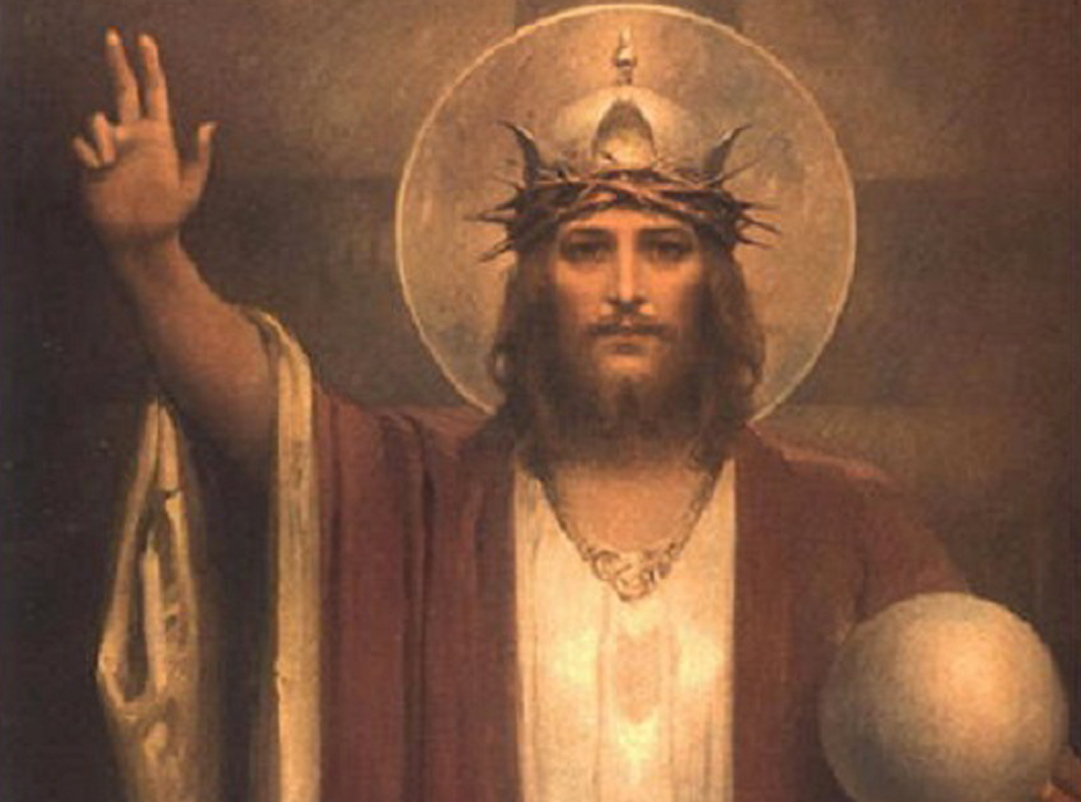
Today, however, we celebrate our King. His titles are numerous: King of Kings, Lord of Lords, Alpha and Omega, The Light of the World, The Word of God, The Bright Morning Star, The Great I Am. The list goes on, but simply, our King is the Messiah, the Christ – Jesus, and today we celebrate his Reign and Kingship.

In our Gospel, “Pilate asked him, ‘So you are a king?’ Jesus answered, ‘You say that I am a king. For this I was born, and for this I came into the world, to testify to the truth.’” Jesus confirms that he is a King, but also states, “My kingdom is not from this world. If my kingdom were from this world, my followers would be fighting to keep me from being handed over to the Jews. But as it is, my kingdom is not from here.” Following this exchange, Pilate finds no basis for a charge against Jesus and seeks to release him, but as we know, Jesus will eventually be turned over to be crucified.

So we have Jesus confirming the fact that he is a King and in our hearts, by following him, we confirm that he is our King, our Lord and Master. As his followers, we declare ourselves his disciples, but to be a disciple of Jesus is more than a declaration – “I will follow you!” – anyone can do that. It is also more than just learning what He teaches, because even the devil has accomplished that. To declare ourselves disciples of Jesus, we must be like him every respect. We must have his Spirit within us, we must have his flesh as our flesh, guiding our every step and thought. That might seem easy at first glance. He’s a king and it is good to be king. Yet, as the Lord spoke through the Prophet Isaiah:

“For My thoughts are not your thoughts,
Nor are your ways My ways,” says the Lord.
“For as the heavens are higher than the earth,
So are My ways higher than your ways,
And My thoughts than your thoughts.”

And Jesus confirms this, for as he states, “The kings of the Gentiles lord it over them… But… but you are not to be like that. Instead, the greatest among you should be like the youngest, and the one who rules like the one who serves. For who is greater, the one who is at the table or the one who serves? Is it not the one who is at the table? But I am among you as one who serves.”

The passage “one who serves” is from the Greek διάκονος, where we get the word “deacon.” We often think of “one who serves” as one who waits on another person, but a broader understanding is to say, “one who ministers.” One who attends to the needs of others, and the “need” that Jesus was attending to by serving us was the need for the salvation of our souls. That serving, as we know, led to the cross on Calvary and our Kings’ death. And as His true disciples, we are to be like him every respect.

The life and death Jesus calls us to is not for weaklings. It’s not just about the exterior – “I didn’t kill anyone today, so I must be in good shape.” It is not about a list of do’s and don’ts. It is not just about looking the part, for anyone can do that.

A priest tells the story of the time during the 70’s that he was living in a monastery in New York. It seems that while living there he had numerous millionaire friends who enjoyed his company and would invite him out. He recalls on one occasion being invited to a swank restaurant and a Broadway play. During the intermission, he and his friends went out for some fresh air and engaged in a rather highbrow conversation regarding the play.

As he was going about trying to impress his friends with his intellectual savvy he noticed someone walking toward him who was “not one of the beautiful people.” Her clothes were a bit tattered, her shoes worn, and her nylons had holes. As she approached he also noticed that she was peddling the Variety magazine for $0.75, so in a gesture of extreme generosity he handed her a dollar and casually waved her away, eager to wow his friends a bit more.

And then she said, “Father?” The priest writes, “In those days, I knew I couldn’t distinguish myself by my virtues, so I distinguished myself by my clothing; I always wore the collar, ‘Father, could I talk to you a minute?’ I snapped, ‘What? Can’t you see I’m busy? Do you make a habit of interrupting people in the middle of a conversation? Wait over there and I’ll speak to you when I’m done.’ She whispered, ‘Jesus wouldn’t talk to Mary Magdalene like that.’ And then she was gone.”

Later, he wondered what this young woman would have thought if she had wandered into his church the following Sunday to hear him preach on the love of God. He asked, “How could she believe in the love of a God she can’t see when she couldn’t find even a trace of love in the eyes of a brother wearing a clerical collar whom she could see?” He noted, “A shriveled humanity has a shrunken capacity for receiving the rays of God’s love.” (From The Furious Longing of God, Brennan Manning)

There are many who come up to us everyday and ask, “Could I talk to you a minute?” They ask it verbally and nonverbally. They ask it with their lips and they ask it with their tears. And when they ask, they are not asking us to tell them to do this and to not do that. When they ask, they are asking us to see them as one made in God’s image, and perhaps for only a few moments, to love them.

As his disciples, Jesus calls us to serve as he served and to minister as he ministered. It is a call to live the life of a king. The King of Kings. St. Josemaría Escrivá writes, “How little a life is to offer to God!” Offer your life to the King and enter his courts, for the words the Psalmist spoke of the Lord are true:

A day in your courts is better
than a thousand elsewhere.
I would rather be a doorkeeper in the house of my God
than live in the tents of wickedness.
For the Lord God is a sun and shield;
he bestows favor and honor.
No good thing does the Lord withhold
from those who walk uprightly.
O Lord of hosts,
happy is everyone who trusts in you.

Serve the King as the King served you, and walk in His eternal courts.

“To him who loves us and freed us from our sins by his blood, and made us to be a kingdom, priests serving his God and Father, to him be glory and dominion forever and ever. Amen.”

The Imitation of Christ Project: Bk. 3, Ch. 11

Screen Shot 2015-11-18 at 11.35.40 AM

THE LONGINGS OF OUR HEARTS MUST BE EXAMINED AND MODERATED –

THE VOICE OF CHRIST

MY CHILD, it is necessary for you to learn many things which you have not yet learned well.

THE DISCIPLE

What are they, Lord?

THE VOICE OF CHRIST

That you conform your desires entirely according to My good pleasure, and be not a lover of self but an earnest doer of My will. Desires very often inflame you and drive you madly on, but consider whether you act for My honor, or for your own advantage. If I am the cause, you will be well content with whatever I ordain. If, on the other hand, any self-seeking lurk in you, it troubles you and weighs you down. Take care, then, that you do not rely too much on preconceived desire that has no reference to Me, lest you repent later on and be displeased with what at first pleased you and which you desired as being for the best. Not every desire which seems good should be followed immediately, nor, on the other hand, should every contrary affection be at once rejected.

It is sometimes well to use a little restraint even in good desires and inclinations, lest through too much eagerness you bring upon yourself distraction of mind; lest through your lack of discipline you create scandal for others; or lest you be suddenly upset and fall because of resistance from others. Sometimes, however, you must use violence and resist your sensual appetite bravely. You must pay no attention to what the flesh does or does not desire, taking pains that it be subjected, even by force, to the spirit. And it should be chastised and forced to remain in subjection until it is prepared for anything and is taught to be satisfied with little, to take pleasure in simple things, and not to murmur against inconveniences.

Sermon: Proper 28 / Pentecost 25 RCL B – “Signs of the End”

On a road through a desert in Arizona, a preacher named Nathaniel Evans walked every day, preaching to the many people who roared past in their cars. “Repent, the End of the World is Nigh!” was his constant theme. One day, as he was walking, he came to a big lever in the middle of nowhere, just by the side of the road. ‘Pull this to end the world’ said the sign attached to it. Now Nathaniel saw this as the perfect spot for him to preach, and soon many automobiles were parked nearby, the people all swayed by his powerful preaching. All was well, until there were so many people, and so many cars, that the road was nearly blocked. Then a big 18-wheel rig came down the highway, and couldn’t stop in time. The driver had a choice: run over Nathaniel, or run over the Lever. As the driver explained to the Highway Patrol later, he actually had no choice. Pointing to Nathaniel’s lifeless body, he said “Better Nate than Lever.”

You know we can laugh about the end of the world now, but it wasn’t so funny on December 21, 2012 when it seems everyone was worried that Mayans may have been right with their calendar. Or in 2011, 1995, and 1994 when Harold Camping predicted the end of the world and had people quitting their jobs. Or in 1975, 1974, 1943, and 1936 when Herbert Armstrong predicted the second return of Christ. Oh, wait though. You may have been thinking about Nazim Al-Haqqani’s 2000, 1988, and 1980 predictions that the world would end.

Folks have been waiting for the end of the world for a long time and no one has ever predicted it correctly, but that hasn’t stopped them from trying or from attempting to scare us in the process. There are even some that try to profit off the end of the world. For example, the following advertisement once appeared in a Christian magazine: BE PREPARED FOR THE END TIMES! Our Deluxe Survival Kit includes enough long-lasting, freeze-dried food to supply a family of four for three months, fifty gallons of pasteurized water, a completely stocked medical case, and a .357 magnum revolver in case your neighbors attempt to take advantage of your Christian foresight. — Tribulations Outfitters, Inc., Lawing, Utah. I’m a firm believer in protecting yourself, but I’m hoping nobody accidentally shoots the Lord with their brand new .357 Magnum when he returns.

This may all sound a bit crazy, but as a Christian people we do believe that Christ will return and when he does he will set all things right. The old shall pass away and the Lord will create all things new. And it is in our Gospel that Jesus provides the events that will signify his return? So the big question is: Have they come to pass? Is the time near? Let’s break down this Gospel a bit and see.

First, Jesus speaks of the temple in Jerusalem where He and the all the other Jews came to worship. It was a magnificent structure with some of the stones of the wall weighing up to 360 tons. Jesus says that it will be destroyed. In the year 70 AD the Romans came in, wiped out Jerusalem, and completely destroyed the temple. Today, all that remains is the western wall, known as the Wailing Wall.

Other signs: false prophets will come in Jesus name declaring “I am he.” I am the Messiah, the one who can save you. I’m not sure who is still in, but there are at least a dozen individuals running for president who tell us that they, and only they, can save us. There are many others who, for a small fee, promise us wealth, health, and eternal happiness. Watch TV commercials and you will see advertisements that will tell you all about how you can take this drug or that one and live forever (provided you don’t succumb to one of the side effects such as death). I don’t know that the one drug that will make your eyelashes grow longer will make you live longer, but at least during your lifetime you won’t be shamed for having short eyelashes.

What about the wars and insurrections. Syria. Afghanistan. Pakistan. Sudan. Presently there are almost 30 active wars in the world with ten of them classified as “high intensity conflicts” because there are more than 1,000 causalities per year. That also pretty much covers nation rising against nation and kingdom against kingdom.

There will be great earthquakes. Can you say, “Oklahoma.” Famines – most of Africa presently suffers from famine. Plagues? Have you had your flu shot? Dreadful portents and great signs in the heavens? Just toss in a good dose of global warming, increased sun spots, and the occasional UFO and by golly we are batting a 1000.

As far as being arrested in Jesus name, it happens all over the world, and 1,000s of Christians are put to death every year for their faith.

We look at all this and more and we have a complete fulfillment of the signs that Jesus spoke of in our Gospel. So today we can say with 100% confidence, “The End is Near.”

Or is it? Hasn’t it been like this all along? Haven’t there been wars, plagues, earthquakes, etc.? Of course there have. That’s why all those people I mentioned earlier kept predicting the date.

I’m not making light of the end of days. That time will come. As we say every week, “Christ has died. Christ has risen. Christ will come again.” Thanks be to God! Yet as we look at these signs, we have a tendency to think of them as the main event, but this is just not the case. The main event is what Jesus has accomplished and provided to us. What is that main event?

Jesus says, “Your Father in heaven is not willing that any of these little ones should perish.” Jesus says, “For God so loved the world that he gave his one and only Son, that whoever believes in him shall not perish but have eternal life. Jesus says, “I give them eternal life, and they shall never perish; no one will snatch them out of my hand.” St. Peter writes, “Praise be to the God and Father of our Lord Jesus Christ! In his great mercy he has given us new birth into a living hope through the resurrection of Jesus Christ from the dead, and into an inheritance that can never perish, spoil or fade.”

If you place your hope in the world around you, the world that will pass away, you will always be disappointed! If you place your hope in the next greatest politician or miracle drug, you will also always be disappointed! If you place your hope in “imagining world peace” you will be severely disappointed.

In the novel, Cat’s Cradle by Kurt Vonnegut, an important book comes to light. It’s title “What Can a Thoughtful Man Hope for Mankind on Earth, Given the Experience of the Past Million Years?” The chief character is anxious to read it. But when he does, he finds that it doesn’t take long. The whole book consists of one word: “Nothing.” What can man hope for from the world? “Nothing.” But as a Christian people our hope is not of this world. Our hope is in the Living God. Our hope is in the one who declares. “I am resurrection and I am life.” Our hope tells us that not a hair on our head will perish. We have eternal life through Christ Jesus.

There is a wonderful George Iles quote, “Hope is faith holding out its hand in the dark.” When you hold out your hand in this dark and oftentimes scary world with its signs and portents, you can know within your very soul that God will be there to take it, to lead you, to guide you, and to give you peace. Jesus says, “When the world looks like it is going to heck in a hand basket, know that I will be there in the dark to take your hand and see you through.”

There will always be wars and rumors of wars, plagues, famines, and all the rest. But even in the most dreadful of times, there is hope. There is Jesus, and in Him, we are saved.

Let us pray: Jesus, magnificent Fountain of Hope, in times of happiness and despair, you are the motivation of our hearts, our hopes of greater things to come. Our consciousness is obsessed with You; we hunger for the day we will meet, when our longings will become a reality. Transmit to our souls daily reminders to always hope for greater things. For without hope, life is futile. Hope is a spiritual pillar of faith, containing many rewards of its own! Amen.

Sermon: Proper 27 / Pentecost 24 RCL B – “Selfless”

There was a boat way out in the Pacific ocean that encountered a horrendous storm in the middle of the night and the boat ended up being capsized. Near by was an island and when day break came there were two men lying on the beach – the only survivors. As they pulled themselves together they discussed what they should do and concluded that they should pray – go figure.

However, the first man got the idea that perhaps one of them might be more righteous than the other and that God might hear the prayers of one over the other, but maybe not both if they stayed together, so the first man devised the plan where they would split the island and each was to stay on his side without coming on the others. The second man calmly agreed, they shook hands, and went their separate ways.

On the first night, the first man prayed for something to eat. The following morning he came into the most remarkable grove of fruit trees imaginable, everything a person needed to keep alive. Not only that, a small cove on his side of the island provided an abundance of fish that he easily caught with his bare hands. For the second man there was nothing. He did find an old piece of nearly rotten fruit on the beach that he managed to choke down, but it was hardly enough to keep him alive.

Several weeks later the first man decided that he did not want to be alone on the island, so he prayed that the Lord would send him a wife. That night there was another shipwreck and the lone survivor was a beautiful woman that washed up on the shore. They were perfect companions and got along famously. For the second man, again nothing. He couldn’t even find a volleyball that he could name Wilson. Perfectly dreadful were his conditions.

The months went by and the first man and his wife decided they might try and pray to be rescued and wouldn’t you know it, the following morning a boat floated up in the cove. It was all gassed up and ready to go, so they swam out to it, fired it up, and headed off. Suddenly there was a voice from heaven, “Are you going to leave the other man behind?” “Sure,” said the first man, “Look at him. He is obviously some heathen. Here I have prayed and received everything I asked for and he has received nothing. He must be some great sinner to be in such rotten shape. I see no need to save him.” “On the contrary, he has also had everyone of his prayers answered, even though he prays the same thing everyday, and if it weren’t for his prayers – none of yours would have been answered.” “Oh,” says the first man, “what was his prayer?” “He prayed that all your prayers would be answered.”

These days, with regard to self, we hear many terms. There is of course the selfie, but there are things like self-care, self-esteem, and self-love, but a “self” word that I heard while growing up seems to have fallen out of favor, because it means taking any of these “self” concepts too far, and these days much seems to be about doing just that. The word is “selfish.” It occurs when self, I, becomes the most important object of our affections and actions. There is nothing wrong with loving self – “Love your neighbor as you love yourself” – but it seems we can sometimes forget that first part of loving our neighbor and become selfish, where we always place our own needs, not only ahead of those of others, but instead of the needs of others.

Today, we read the end of the Book of Ruth, when Ruth takes Boaz as her husband and by doing so cares – yes, for herself – but also for Naomi, her mother-in-law. Yet the story does not have a happy beginning.

Due to a famine in the land, Naomi, her husband, and two sons moved from Israel to Moab. The sons married Moabite (gentile) women, Orpah and Ruth. Yet, Naomi’s husband and two sons died, leaving the women with no real way to care for themselves. So Naomi told her daughter-in-laws to return to their people where they could find new husbands and be cared for. (Sorry, ladies, at the time, a woman needed a husband in order to care for her.) Orpah returned, but Ruth said to Naomi, “Do not urge me to leave you or to return from following you. For where you go I will go, and where you lodge I will lodge. Your people shall be my people, and your God my God.  Where you die I will die, and there will I be buried. May the Lord do so to me and more also if anything but death parts me from you.”

Those are words that you may sometimes hear at a wedding, but here Ruth is vowing herself to Naomi and is looking outside of her own needs to those of another. Orpah was not being selfish by returning to her people, but Ruth was being selfless, by considering how her actions would effect Naomi.
Through her selfless actions and love of Naomi, Ruth was able to gain a husband, Boaz, and provide for the needs of them both.

In Matthew’s Gospel, we are provided with the genealogy of Jesus, and there are very few women mentioned, but Ruth is one of them, as she is the great-grandmother of King David, whom Jesus descended from. Ruth is memorialized and plays a part in the salvation of us all because of her selfless act.

Today in our Gospel, Jesus is witness to another selfless act, as the widow places all she has in the temple treasury. Jesus said of her, “Truly I tell you, this poor widow has put in more than all those who are contributing to the treasury. For all of them have contributed out of their abundance; but she out of her poverty has put in everything she had, all she had to live on.”

At the time in the Temple complex, there were thirteen jars used for collecting various offerings. Some were for the upkeep of the temple, others were to pay for sacrifices, and still others were used for alms, money used for the care of others. The context of our Gospel seems to imply that the woman gave not for herself, but for others. Not only did she give, but she gave selflessly everything she had. Although not named like Ruth, the widow with her two copper pennies is also memorialized for her selfless act.

A young brother and sister both have a very rare blood type. It is determined that the sister will need an operation and will likely need a transfusion. Because of the rare blood type, they turn to the young boy and ask him if he would be willing to give blood for his sister. He thinks about it for only a moment and agrees. As the procedure begins the young boy is nervous, but brave. Because of his age the doctors keep a close eye on him and notice that he is quietly crying. When asked if he is in pain, he says, “No.” But then asked, “How soon before I die.”

Jesus said, “This is my commandment, that you love one another as I have loved you.  Greater love has no one than this, that someone lay down his life for his friends.  You are my friends if you do what I command you.”

There are many ways to “lay down ones life,” but all of them require that we first lay ourselves down to lay down and set aside our own needs for the needs of others and to allow the Word of God to work through us. In The Imitation of Christ, Thomas à Kempis writes, “He does much who loves much. He does much who does a thing well. He does well who serves the common good rather than his own interests.”

As we seek to serve Christ, let us learn to be selfless in our giving and look to the common good. St. Francis of Assisi writes, “Above all the grace and the gifts that Christ gives to his beloved is that of overcoming self.” Ask for this gift, this grace, so that you may love, not just self, but all.

Let us pray: O Dearly beloved Word of God, teach us to be generous, to serve You as You deserve, to give without counting the cost, to fight without fretting at our wounds, to labor without seeking rest, to spend ourselves without looking for any reward other than that of knowing that we do Your holy will. In Jesus Name we pray. Amen.

Sermon: Proper 25 / Pentecost 22 RCL C – “Perseverance”

Legend has it that one day Socrates and Plato were walking down the beach, deep in conversation and Plato had expressed to Socrates his desire to gain the wisdom and knowledge that Socrates had.  Socrates didn’t answer him, but instead said, “Walk with me into the ocean.”  So, they turned and walked into the sea together.

Now, in your imagination, picture that happening: Student and teacher, two of the greatest philosophers of history, striding into the surf side by side.

The water started out around their ankles, then rose up to their knees. As the water got higher Plato wondered to himself, “What is the lesson my master is trying to teach me?”

When the water was shoulder height, Socrates asked Plato, “What is it exactly you want from me?” “Knowledge,” Plato answered, at which point Socrates abruptly grabbed Plato’s head and pushed him down under the water. After a half a minute or so Socrates let Plato up and asked him again, “What is it you want?” “Knowledge,” was again Plato’s answer, at which point Socrates shoved him back down under the water.

After a time, when Plato ran out of air, he began to struggle to get his head above the surface. He punched and kicked and grabbed to get free, but Socrates was a strong man and held him down. At the last moment before Plato blacked out, Socrates let him up and asked that same simple question, “What is it you want?” Plato coughed and spluttered finally responding, “Air! I need air!” Socrates calmly stated, “When you desire knowledge as much as you desired a breath of air, then you shall have it.”

Another story. This one has built up around the life of Blind Bartimaeus.

He was very young when he lost his sight and although his life was difficult, he was able to get married, have a daughter, and support them through begging. He had a small lamb that was very much like a seeing eye dog that would lead him to the city gates of Jericho where he would spend the day begging for coins. Like so many others who were unable to earn a living, he found a gimmick that would at least provide some entertainment to those who supported him through their generosity. He had two turtledoves that would remain with him and on command, perform summersaults on the small patch of ground in front of him.

One evening, after spending the day at the city gates, Bartimaeus came home to find his wife quite ill. They said she was dying, so Bartimaeus prayed to the Lord, “If you will spare my wife, I will take the two turtledoves and give them to the priest at the temple for a sacrifice.” The following day, his wife fully recovered and Bartimaeus did not hesitate. He took the two doves and had them sacrificed as a thanksgiving to the Lord.

However, only a few weeks later, Bartimaeus’ daughter also became very ill. And again Bartimaeus prayed to God, this time offering God the only thing he had left, the lamb. As he approached the temple, a priest asked where he was going and when Bartimaeus told him, the priest said he could do no such thing, the lamb was his eyes, so the priest offered Bartimaeus money to go and buy another lamb to sacrifice to God, but Bartimaeus told the priest, “I did not promise the Lord just any lamb. I promised the Lord this lamb. Also,” Bartimaeus said, “if I keep my promise to God, God will provide a lamb for Bartimaeus’ eyes.”

Jesus and his disciples came to Jericho. As he and his disciples and a large crowd were leaving Jericho, Bartimaeus son of Timaeus, a blind beggar, was sitting by the roadside. When he heard that it was Jesus of Nazareth, he began to shout out and say, “Jesus, Son of David, have mercy on me!”

The people told him to hush, but Bartimaeus was persistent, and called even more loudly, “Son of David, have mercy on me!”

When Jesus heard his cries, he had Bartimaeus brought to him and asked, “What do you want me to do for you?” The blind man said to him, “My teacher, let me see again.” Jesus said to him, “Go; your faith has made you well.” Immediately he regained his sight and followed him on the way.

In the midst of so many troubles, so many obstacles, Bartimaeus persevered and remained faithful to God, offering all he had including his little lamb, firmly believing that God would send another lamb to help him. And behold, the Lamb of God spoke, and Bartimaeus, through faith was made well.

These past weeks we have been reading about Job. We know his troubles. He has lost everything except his life. Yet, Job remained faithful and never cursed God. He persevered in the face of so many troubles. His only complaint was that he wanted to ask God why all these things had happened. In last week’s reading, God answered him, “Who do you think you are in questioning me?” A hard answer, but we’ve come to understand that there is mystery surrounding the actions of God, and in today’s reading, so did Job. He says to the Lord, “I had heard of you by the hearing of the ear, but now my eye sees you.” In the end, the Lord restored all Job’s fortunes and blessed his days. He ended up with vast wealth, handsome sons and the most beautiful daughters.

During a Monday night football game between the Chicago Bears and the New York Giants, one of the announcers observed that Walter Payton, the Bears’ running back, had accumulated over nine miles in career rushing yardage. The other announcer remarked, “Yeah, and that’s with somebody knocking him down every 4.6 yards!”

Plato persevered, wanting knowledge as much as he needed air and became one of the greatest philosophers. Bartimaeus persevered in faith and in calling on Jesus regained his sight. Job persevered, never cursing God and ended up living in Garrison Keillor’s Lake Wobegone “Where all the women are strong, all the men are good-looking, and all the children are above average.” And Walter Payton persevered, 4.6 yards at a time, to become one of the greatest running backs of all time.

What do those examples say to you? What do they prove? Answer: Absolutely nothing. I played football all through grade school and when I got to the eighth grade I tried out. I persevered and did fair right up until they weighed us in. I weighed 99 pounds. They laughed. I made water boy.

I know of many who have persevered in faith and after overcoming some great trial end up experiencing an even greater trial. I’ve known people who have persevered in faith all their lives and who have also been blind all their lives. And I know some folks who think they are wise, but will turn to you and say, “Hold my beer” and go do something incredibly stupid.

Perseverance does not imply success. Perseverance has more to do with a state of mind. It means standing in the face of adversity and continuing forward – or maybe even backwards – but continuing. And that is our goal as a Christian people. Contrary to popular belief, life is not a game that you set out to win. Life is about following Jesus as his disciples, seeking not our greatest good, but instead seeking His. In Mere Christianity, C. S. Lewis wrote, ”God knows our situation; He will not judge us as if we had no difficulties to overcome. What matters is the sincerity and perseverance of our will to overcome them.”

There will be trials, obstacles, or in the case of Bartimaeus, blindness, and we are not going to overcome them all. There will be times when we fail. Lewis is saying we will not be judged based on whether or not we overcame those obstacles, whether or not we were able to see when we were physically blind. We will not be judged on whether we win or fail, but we will be judged on whether or not we were passionate and persevered in faith.

Job and Bartimaeus, these are not examples of winning some temporary prize. These are examples of perseverance. Of what it means to stand in faith in good times and bad and from the heart of your being, to call on God – in full expectation that he will hear you and answer you – but regardless of the outcome, loving him and knowing that you are loved as only God can, for the “prize” we seek is not temporary, but eternal life with him.

Let us Pray: Father, keep us from vain strife of words. Grant to us constant profession of the Truth! Preserve us in a true and undefiled Faith so that we may hold fast to that which we professed when we were baptized in the Name of the Father, Son and Holy Spirit — that we may have Thee for our Father, that we may abide in Thy Son and in the fellowship of the Holy Spirit. Through Jesus Christ, Our Lord. Amen.

Sermon: Proper 24 / Pentecost 21 RCL B – “High Priest”

Trevor Huddleston was a white man living in South Africa during the times of apartheid. A black South African tells of the time, when he was only nine years old, that he encountered Huddleston for the first time.

The young boy and his mother were walking down a foot path when they encountered a tall white man dressed in a black suit. In the days of apartheid, when a black person and a white person met while walking on a footpath, the black person was expected to step into the gutter to allow the white person to pass and nod their head as a gesture of respect. But this day, before the young boy and his mother could step off the sidewalk the white man stepped off the sidewalk and, as he and his mother passed, the white man tipped his hat in a gesture of respect to the mother.

The white man was Trevor Huddleston, an Anglican priest who was bitterly opposed to apartheid. The nine year old boy was Desmond Tutu and that event changed his life. When his mother told him that Trevor Huddleston had stepped off the sidewalk because he was a man of God, Tutu found his calling. Many years later during an interview, Tutu says that when my mother, “told me that he was an Anglican priest I decided there and then that I wanted to be an Anglican priest too. And what is more, I wanted to be a man of God.”

I suppose, at one time or another, we’ve all got the wrong impression about a person or group. Sometimes it turns out that they are not the sort we should have anything to do with, but at other times, they turn out to be quite remarkable. For whatever reason, those first impressions lead us to make mistakes about a person’s character and if we are unwilling to investigate further we may miss out on some extraordinary opportunities.
Not only do we make those mistakes about people, but we can fall into the same error when it comes to God. We get to thinking He is defined by certain actions or inactions and use those events to define his character. Consider Job, who we were discussing last week.

You’ll recall that the devil came prancing before God and more or less challenged God regarding Job. Job was a righteous man and served God, but the devil said that if God would remove his protection from Job, then Job would end up cursing God. Therefore, God said, “Very well, he is in your power; only spare his life.” From that, we know of all the trouble that befell Job. He lost everything, but did not curse God.

Last week, we had reached the point in the narrative where Job’s three friends had come to him and were pointing out what they believed were his faults, yet Job continued to protest his innocence and stated all he wanted was to be able to lay his case of innocence before the Lord:

“I would lay my case before him,
and fill my mouth with arguments.
I would learn what he would answer me,
and understand what he would say to me.”

Today, the Lord answered Job:

“Who is this that darkens counsel by words without knowledge?
Gird up your loins like a man,
I will question you, and you shall declare to me.

“Where were you when I laid the foundation of the earth?

“Who has the wisdom to number the clouds? Or who can tilt the waterskins of the heavens.”

God’s response to Job’s complaint, “Who are you to question me?”

God turned him over to the devil’s control and allowed the devil to inflict all sorts of harm on Job, but when Job said that all he wanted was to ask God “Why?”, God said, “Who do you think you are?”

Some read that and want to say to God, “Who do you think you are?”

Ever see the movie Bruce Almighty? Jim Carrey. Very funny. Bruce gets fired from his job and complains to his girlfriend. She tells him everything happens for a reason and Bruce responds, “That I don’t need. That is a cliché. That is not helpful to me. A bird in the hand is worth two in the bush. I have no bird. I have no bush. God has taken my bird and my bush.” Finally getting frustrated she tells him to stop playing the martyr and he fires back, “I am not being a martyr. I’m a victim. God is a mean kid sitting on an anthill with a magnifying glass, and I’m the ant. He could fix my life in five minutes if he wanted to, but he’d rather burn off my feelers and watch me squirm!”

God responds to Job’s questioning by asking, “Who are you to question me?” In that one response, we think we’ve got this God of ours all figured out. Like Desmond Tutu and the white man, we see God coming and we know we had better step off the path and bow our heads or he will knock us off the path and crush our heads. He’s just that mean little kid who likes to wind us up and watch us squirm. But is He really?

Jesus stretched out his hand, touched the leper, and healed him.
Jesus took the bread and fish, blessed it and they all had enough to eat.

Jesus called, out “Lazarus!” And the dead man walked out of the tomb alive.

Jesus wrapped a towel around his waist, knelt down before them, and washed their feet.

Jesus said, “This is my body. This is my blood.” And gave it to them for the life of the world.

James and John came to Jesus and asked for the seats at his left and right when he came into his Kingdom, and Jesus said to them that those were not his to give, and went on to say to them, “You know that among the Gentiles those whom they recognize as their rulers lord it over them, and their great ones are tyrants over them. But it is not so among you; but whoever wishes to become great among you must be your servant, and whoever wishes to be first among you must be slave of all. For the Son of Man came not to be served but to serve, and to give his life a ransom for many.”

We hear God ask Job, “Who do you think you are?” and we get this idea that we’ve got God all figured out as a mean little kid, but then Jesus tells us he has come to serve. He offers his life, so that we might live. And we must reconsider everything we think we know about God, because we know that they are both one in the same, for it is Jesus who says to us, “Whoever has seen me has seen the Father… Believe me that I am in the Father and the Father is in me.” Even so, how are the two reconciled? How can the God that allowed those things to happen to Job be the same God that died upon the cross for the salvation of the world?

We ask these questions and God responds:

“Where were you when I laid the foundation of the earth? Tell me, if you have understanding.
Who determined its measurements– surely you know!”

I’m afraid that this will leave you less than satisfied, but the answer is not for us to know. In this, we are like Job. God did not answer him and God will not answer us. However, we are different than Job, because we have what he did not.

Job was not allowed to stand before God and question him, but we have a high priest who can, for Jesus stands before the throne of grace on our behalf and intercedes for us, just as the priest stood in the temple and interceded on behalf of the people. As Paul wrote in his letter to the Hebrews:

“In the days of his flesh, Jesus offered up prayers and supplications, with loud cries and tears, to the one who was able to save him from death, and he was heard because of his reverent submission. Although he was a Son, he learned obedience through what he suffered; and having been made perfect, he became the source of eternal salvation for all who obey him, having been designated by God a high priest according to the order of Melchizedek.”

We cannot stand alone before God and live; therefore, we must stand with and in God’s Son. Jesus. As our Great High Priest, Jesus alone – God Incarnate – stands before the the Father on our behalf and through his sacrifice we are made worthy.

The ways of God are mystery, but at the center of the mystery is Truth, is Jesus. We don’t have understand all the mysteries in order to receive the reward. We must only know the truth, which is Jesus.

Sermon: Proper 23 / Pentecost 20 RCL B – “Friends?”

A lady of society was gazing upon an image she had never seen before in the city’s art museum. “My dear fellow,” she said condescendingly to the Curator, “I have never seen this painting before. I find the image shallow, lacking in imagination, portraying a mean countenance, and rather crude in appearance. What do you call it?” The curator answered without giving the slightest expression, “That madam, is a mirror.”

You’ll remember from last week that the angels, both good and evil, came before God, Satan being one of them. God asked him, “Where have you come from?” Satan answered, “From roaming throughout the earth, going back and forth on it.” Going back and forth tormenting those who lived there, causing them great pain and enticing them to turn from God. So God says, “Have you considered my servant Job? There is no one like him on the earth, a blameless and upright man who fears God and turns away from evil.” Satan says to God, “Well of course he’s holy and righteous, you protect him. You give him everything he wants, but if you take your protection away, he will curse you.” God says, “Fine, I will remove my protection, but you can’t kill him.” Well, Satan doesn’t kill Job, but he does kill everything and everyone around him.

The oxen and the donkeys were stolen, and the servants killed. Fire came from heaven and killed all the sheep and the shepherds. The camels were also stolen and those servants were put to the sword. All of Job’s children and their family were in a house together, when a strong wind came up destroying the house and killing everyone inside. Job loses everything. But did Job shake his fist at heaven and curse God because of all this? Scripture says:

At this, Job got up and tore his robe and shaved his head. Then he fell to the ground in worship and said:

“Naked I came from my mother’s womb,
and naked I will depart.
The Lord gave and the Lord has taken away;
may the name of the Lord be praised.”

In all this, Job did not sin by charging God with wrongdoing.

But Satan was not done with Job. Job is cursed with a skin disease, so he breaks a pot and uses one of the sharp edges to scratch himself. His wife then came to him and said, “Are you still maintaining your integrity? Curse God and die!” Job replied, “You are talking like a foolish woman. Shall we accept good from God, and not trouble?” Job continues to hold strong.

Into this mess strolls Job’s three friends. At first, they only sit with him, for seven days, not saying anything, but giving him fellowship in his misery, but then the advice begins. Each taking his turn, they tell him what he has done wrong and what it is he needs to do in order to be made right with God. His friend Elphaz says to him:

“Is it for your piety that he rebukes you
and brings charges against you?
Is not your wickedness great?
Are not your sins endless?

Therefore, he tells Job to repent, but as scripture has said, Job is a righteous man, he has not sinned. His only problem is that he can’t understand why God is doing this to him. And that is where we find him in our reading today. He is saying to his friends that if he could only speak to God, reason with God, he could prove to God that he was indeed a faithful servant, but because he can’t he makes his lament to God:

“If I go forward, he is not there;
or backward, I cannot perceive him;
on the left he hides, and I cannot behold him;
I turn to the right, but I cannot see him.
God has made my heart faint;
the Almighty has terrified me;
If only I could vanish in darkness,
and thick darkness would cover my face!”

Like Job, there are days and seasons when the world or the devil comes against us. These trials can be physical, emotional, spiritual, or a combination of them all. Regarding God, we say with Job, “I cannot perceive Him. He is not there. I’m doing as He asked me to, but he is nowhere to be found.” And it is in the midst of these times and trials that our friends come to us. They too sit quietly for awhile, keeping us company in our misery, but when things near the bottom, they speak.

One of those friends will remind you of something you did decades before and say, “It is because of that incident that the Lord has abandoned you.” And another will say, “If you had only tried harder, prayed more, gone to church twice a week, this would not have happened.” And another friend comes along and says, “It really has nothing to do with any of that, the problem is, you’re just not good enough. You’re just a hypocrite and you know it.”

“If only I could vanish in darkness,
and thick darkness would cover my face!”

We all have friends like these. They are with us everywhere we go. These friends are like the wild bulls of Bashan that we read about in Psalm 22, circling us and waiting to destroy or the ravaging lions or the wild dogs that wait to feed on us. I call them friends, but they are not our friends. But I call them friends, because we allow them to remain so close to us. We let them speak to us when we refuse to hear anyone else, including God, but these are not our friends.

These are our own personal “demons.” And we let them hang around when we feel abandoned by God and those around us. Why? Because we have looked in the mirror and we know the reality of the person reflected back at us. They are shallow, lacking in imagination, portraying a mean countenance, and rather crude. That person in the mirror fully deserves all the misery that befalls them. They’ve earned it and it is no wonder that God has abandoned them. You see, these friends of our have a very specific purpose, they cannot steal our salvation, that was a victory that Christ won once and for all, but they can rob us of our joy and of our peace. They cause us to doubt Our Father and even question His love. And you know what? We let them. Instead of rebuking them, we allow them to whisper in our ears, and by listening, we forget the promises of God. What are we to do? The solution is not found by vanishing into darkness.

Hear again those words from Paul’s letter to the Hebrews, “We have a great high priest who has passed through the heavens, Jesus, the Son of God, let us hold fast to our confession. For we do not have a high priest who is unable to sympathize with our weaknesses, but we have one who in every respect has been tested as we are, yet without sin. Let us therefore approach the throne of grace with boldness, so that we may receive mercy and find grace to help in time of need.”

Will you experience weakness in your life? Yes. Will you stumble along the way? Yes. Will you be sinful. Oh, yes. Will you be tested in trials both great and small? Guaranteed. But during these times, do not sink into darkness or step in front of that mirror and listen to your friends as they spout their lies and deceive you into agreeing with with them. Instead, boldly come before the throne of Grace, before the throne of the living God and receive mercy and grace.

The state of our soul can be very much like Oklahoma weather. Hot and dry, beautiful and sunny, cold, windy, damp, pouring rain, and the occasional tornado thrown in to keep you on your toes, but even in the worst of it, we can find mercy and grace. We can find joy in and through the Resurrected Lord.

Hear this: You are loved by God. You are loved by God. Rebuke these so called friends of yours and remind them that you are a friend – a child! – of God Most High. Come before His Throne of Grace and know that you are loved by God.

Let us pray:
Gracious and Holy Father,
Please give us:
intellect to understand you,
reason to discern you,
diligence to seek you,
wisdom to find you,
a spirit to know you,
a heart to meditate upon you,
ears to hear you,
eyes to see you,
a tongue to proclaim you,
a way of life pleasing to you,
patience to wait for you
and perseverance to look for you.
Grant us a perfect end,
your holy presence,
a blessed resurrection
and life everlasting. Amen.

Sermon: Proper 21 / Pentecost 18 – “Stumbling Blocks”

To begin with today I would like to give you a quiz based on some old sayings. I’ll give you the first half of the line and we’ll see if you can complete it. However, in order to get these right you’ll need the wisdom of a first grader. Ready?

It’s better to be safe than… “Sorry”… Punch a 5th grader.
Strike while the… “iron is hot”… Bug is close.
Don’t bite the hand… “that feeds you”… that looks dirty.
A penny saved… “is a penny earned”… is not much.
If at first you don’t succeed… “try again”… get new batteries.

You have failed! I wonder how you would do against a fifth grader?

The Good Lord probably knew what he was doing by not giving me any children, but that does not mean I do not think they are wonderful. We are also fond to say in the Church, “The children are our future.” That may be a cliché to some, but it is true. When there are no children here on a Sunday morning, then we are in real trouble.

Jesus often spoke of children in his messages to the people. Last week, for Heritage Sunday, we read the lessons for the Feast of St. Matthew, but in the lessons appointed for that Sunday, the disciples had been arguing over who was the greatest, and Jesus said to them, “Whoever wants to be first must be last of all and servant of all.” Then he took a little child and put it among them; and taking it in his arms, he said to them, “Whoever welcomes one such child in my name welcomes me, and whoever welcomes me welcomes not me but the one who sent me.”
Our reading for today picked up from there when Jesus said, “If any of you put a stumbling block before one of these little ones who believe in me, it would be better for you if a great millstone were hung around your neck and you were thrown into the sea.”

Jesus greatly elevated the importance of a child and placed a significant responsibility, not just on biological parents, but all of us who are responsible for the care of children. Consider the question we will all answer in a few minutes at the baptism: “Will you who witness these vows do all in your power to support this child in her life in Christ?” The response, “We will.” We, not only the parents and Godparents, but all of us as the Body of Christ, are making a vow to support the child as they grow in the Christian faith and life. But do we always live up to that or do we sometimes throw stumbling blocks before them?

A woman invited some people over for dinner. At the table she turned to her six-year-old daughter and said, “Would you like to say the blessing?” The girl replied, “I wouldn’t know what to say.” “Just say what you heard Mommy say,” the mother answered. The daughter thought for a moment, bowed her head, and said, “Lord, why on earth did I invite all these idiots to dinner?”

Do we put stumbling blocks before the children God has called on us to support? Unfortunately, yes. Sometimes it is unintentional, but other times blatant. There are the little things like cursing in front of them or at them to the more hurtful cases of abuse. By doing these things, we are placing stumbling blocks before them, because not only are they confronted with poor behavior, but they are also learning and may go onto commit the same offenses. You all know these things.
So did Jesus, but we also know that the teachings of Jesus often applied to many areas and not just the obvious and the same is true in this case. In this instance, the “little ones” we cause to stumble are not always young children, they can also be young Christians, those that are new to the faith or those who may only be asking questions about it.

Paul provides a perfect example of this works in is first letter to the Corinthians. He begins, Hence, as to the eating of food offered to idols, we know that “an idol has no real existence,” and that “there is no God but one… However, not all possess this knowledge. But some, through being hitherto accustomed to idols, eat food as really offered to an idol; and their conscience, being weak, is defiled.  Food will not commend us to God. We are no worse off if we do not eat, and no better off if we do. Only take care lest this liberty of yours somehow become a stumbling block to the weak.

What was the issue? Throughout the city of Corinth, there were all these pagan idols that the people would give offerings to. Sometimes, those offerings came in the form of meat that was placed on the fire. After it was there for a while, the pagan priest would remove it and the then cooked meat was sold.

Paul was saying that some look on that meat as evil, because it was offered to a false god, while others look on it as a tasty ribeye. In his view, there was no harm in eating it, it was just a tasty bit of meat, but he also understood that someone who was new to the faith might look at eating that meat as being sinful, because they did not fully understand the nature of the One True God. Therefore, he said to the people, “Don’t eat it. Not because it’s bad, but because it may hurt a fellow Christian who does not understand. Don’t eat it, because you may throw a stumbling block before them and harm their soul,” just as you and I today may harm the soul of a child by our behavior. Paul concludes, “Therefore, if food is a cause of my brother’s falling, I will never eat meat, lest I cause my brother to fall.” He is truly asking members of the church to make a sacrifice and set aside their own personal views and opinions for the greater good, so that others will not stumble.

That is a lesson that very much applies to us today. We are The Episcopal Church and are considered a broad church, that is, we hold a wide range of beliefs within our church. There are all sorts of ways to categorize those beliefs – liberal, conservative, orthodox, progressive, etc., etc., etc. – but it is often those categories that are stumbling blocks to many. If you throw down one of those stumbling blocks before someone and they fall, that is, if they walk away, then I can guarantee you, you will never have the opportunity to share with them the Gospel message. You will never have the opportunity to share with them the love of God. They will not listen to you and they will not hear the message that leads to eternal life in Christ Jesus, and to that Jesus says, “It would be better for you if a great millstone were hung around your neck and you were thrown into the sea.”

I know that is a pretty hard message – for all of us – but those categories do no justice as to who we are. They do not define what we believe.

We believe in one God, the Father, the Almighty.
We believe in one Lord, Jesus Christ, the only Son of God.
We believe in the Holy Spirit, the Lord, the giver of life.
We believe in one holy catholic and apostolic Church.

Descartes was one of those philosophers that if you think too hard about what he wrote, he’ll make your brain hurt: I don’t claim to fully understand everything he said, but at one point he describes how we as human-beings are caught in a kind of middle ground between God and nothingness.  Meaning we lack the absolute truth of God, yet because we are made in the image of God we can still catch glimpses of truth.  St. Paul put it into words I can more fully understand, “Now we see but a poor reflection as in a mirror; then we shall see face to face.  Now I know in part; then I shall know fully, even as I am fully known.”

None can claim perfect clarity on the things of God (if they do, run fast and far); therefore, instead of being instructed by our limited and often fuzzy knowledge of what we believe to be God’s truth, we should instead be guided by what our Savior has commanded: “‘Love the Lord your God with all your heart and with all your soul and with all your mind.’  This is the first and greatest commandment.  And the second is like it: ‘Love your neighbor as yourself.’”  To that I’ll add, until you figure out how to do those two things, leave the details alone. On the last day, God will sort out the sheep from the goats, the wheat from the chaff, the righteous from the unrighteous. That is His job, not ours. Our job is to follow his commands.

Embrace the “little ones” in our midst, supporting them with all your power in their life in Christ.

Let us pray: We pray You, O almighty and eternal God! Who through Jesus Christ hast revealed Your glory to all nations, to preserve the works of Your mercy, that Your Church, being spread through the whole world, may continue with unchanging faith in the confession of your name. Amen.

Sermon: Sergius – Abbot of Holy Trinity, Moscow

In the year 1206 the great Mongolian Empire began under the rule of Genghis Khan. Over the next century and a half, the Mongol armies conquered much of Asia including most of what is now Russia. For years the Mongols oppressed the people, but there was certain resistance along the way. Before one battle, the Prince of Moscow, Dmitry Donskoy, came and sought the advice of Sergius, the Abbot of the Monastery of the Holy Trinity in Moscow. Sergius encouraged him. As the battle commenced, a great and miraculous sandstorm blew up in the face of the Mongols and gave Donskoy the opportunity to go onto achieve a great victory, which “laid the foundation of his people’s independent national life.”

Abbot Sergius’ support of the prince and his love of the Russian people led him to be highly revered and he is still known as “The Spiritual Father of Russia.” “The Modern historian Klutchévski declared that the entire Russian people owe their whole freedom and liberation to the moral education and spiritual influence of one man: Sergius of Moscow.”

Professor Klutchévski wrote, “There are historical names which escape the barriers of time and whose work profoundly influences subsequent generations, because the figure of a personality is transformed into an idea. Such is the case with St. Serguis.”

The figure of a personality being transformed into an idea. John F. Kennedy, perhaps another of those personalities transformed into an idea, said during a speech in 1963, “A man may die, nations may rise and fall, but an idea lives on. Ideas have endurance without death.” In such cases, the idea is not the light bulb over the head moment, but is instead the desired outcome where everything is laid on the line in order to achieve success. The life of St. Sergius may have transformed into such an idea, but he was working from an idea that had been put forth centuries before: “The kingdom of heaven is like a net that was thrown into the sea and caught fish of every kind; when it was full, they drew it ashore, sat down, and put the good into baskets but threw out the bad.”

Jesus planted this idea of being fishers of men in the minds of his disciples. That idea survived the death of the disciples and centuries later Sergius continued to put everything on the line, just as the disciples did, in order to achieve the desired outcome. He took that one idea and cast a net over the people of Russia and also became a fisher of men.

Following the example of St. Sergius, illuminated in the light of God, keep this idea that Christ established set firmly before you, and cast your net. Join the disciples, Sergius and so many others by becoming fishers of men. How? You don’t have to catch an entire nation, thousands, or even hundreds. “I tell you, there is rejoicing in the presence of the angels of God over one sinner who repents.” By simply sharing your story of God with one person or inviting one person to church, you are casting the net and doing the work of Christ.