“Please Mister Postman…”


The Rev. Dr. John Toles
The podcast can be found here.

A young man named John received a parrot as a gift. The parrot had a bad attitude and an even worse vocabulary. Every word out of the bird’s mouth was rude, obnoxious and laced with profanity.
John tried and tried to change the bird’s attitude by consistently saying only polite words, playing soft music and anything else he could think of to “clean up” the bird’s vocabulary.
Finally, John was fed up and he yelled at the parrot. The parrot yelled back. John shook the parrot and the parrot got angrier and even ruder.
John, in desperation, threw up his hands, grabbed the bird and put him in the freezer. For a few minutes the parrot squawked and kicked and screamed. Then suddenly there was total quiet. Not a peep was heard for over a minute. Fearing that he’d hurt the parrot, John quickly opened the door to the freezer.
The parrot calmly stepped out onto John’s outstretched arms and said “I believe I may have offended you with my rude language and actions. I’m sincerely remorseful for my inappropriate transgressions and I fully intend to do everything I can to correct my rude and unforgivable behavior.”
John was stunned at the change in the bird’s attitude. As he was about to ask the parrot what had made such a dramatic change in his behavior, the bird continued, “May I ask what the turkey did?”
There are many things that cause us to change our behavior. I specifically recall the phrase, “Do I need to get the belt,” being a real motivator for me. The term for a change of behavior that Jesus, John the Baptist, and all those before them used was “repent.” I would wager that repentance falls in the top five topics of all preaching. Why? Well, for starters, it’s kind of fun! “You brood of vipers! Who warned you to flee from the coming wrath? Produce fruit in keeping with repentance.” All ya’ll goin’t hell! That’s good stuff right there.
It is this call of repentance with angry fiery rhetoric and with cajoling and tears that has been preached from a thousand pulpits, but this understanding of repentance – turning from evil – is only half of the act of repentance.
The Spanish Philosopher, Unamuno, in the year 109 a.d. tells of the great Roman aqueduct in Segovia. It carried water from the mountains into the city and did so for over 1,800 years. However, after sixty generations, it was decided that the best means to preserve the ancient structure was to stop using it. The government – and that should give you a good clue that this story isn’t going to work out well – the government decided, “This aqueduct is so great a marvel that it ought to be preserved for our children, as a museum piece. We shall relieve it of its centuries-long labor.” So they laid modern pipe and rerouted the water away from the structure. It was then, after 1,800 years of use, that the aqueduct began to deteriorate. The sun beating on the dry mortar caused it to crumble. The bricks and stone sagged and threatened to fall. What ages of service could not destroy idleness disintegrated.
Jesus said, “When an impure spirit comes out of a person, it goes through arid places seeking rest and does not find it. Then it says, ‘I will return to the house I left.’ When it arrives, it finds the house swept clean and put in order. Then it goes and takes seven other spirits more wicked than itself, and they go in and live there. And the final condition of that person is worse than the first.”
Turning from evil is only half the act of repentance, for in turning from the evil, we must turn to something else, otherwise through idleness, the evil practices will return and the decay will begin again. Therefore, the second half of repentance, after turning from evil, is turning to God and that which was empty is filled with the presence of God, and the final condition of that person is not worse, but is instead made holy in the eyes of God—and that is the Good News. From our Gospel today: After John was arrested, Jesus came to Galilee, proclaiming the good news of God, and saying, “The time is fulfilled, and the kingdom of God has come near; repent, and believe in the good news.” In the person of Jesus, God has drawn near to us. The waiting is over; therefore, turn from evil, turn to God, and follow him, believing firmly the words of God, “Never will I leave you; never will I forsake you.” And it sure would be nice if it ended there…
Do you remember Joshua’s big speech to the Israelites after they had crossed the Jordan? The part where he says to them “Choose for yourselves this day whom you will serve.” And the Israelites say to him, we choose the one true God. They said, “We will serve the Lord our God and obey him.” How did that work out? Yeah. Not so good. The same is true for us. We repent. We turn to God. We will serve and obey him always. And how did that work out for you? Yeah. Not so good. That old hymn speaks truth:
Prone to wander, Lord, I feel it—
Prone to leave the God I love
It was a bright Sunday morning in 18th century London, but a particular young fella’s mood was anything but sunny. All along the street there were people hurrying to church, but in the midst of the crowd the man was desperately lonely. The sound of church bells reminded him of years past when his faith in God was strong and the church was an integral part of his life. It had been years since he set foot in a church—years of wandering, disillusionment, and gradual defection from the God he once loved. That love for God—once fiery and passionate—had slowly burned out within him, leaving him dark and cold inside.
As he walked, he heard the clip-clop, clip-clop of a horse-drawn cab approaching behind him. Turning, he lifted his hand to hail the driver. But then he saw that the cab was occupied by a young woman dressed in finery for the Lord’s Day. He waved the driver on, but the woman in the carriage ordered the carriage to be stopped.
“Sir, I’d be happy to share this carriage with you,” she said to him. “Are you going to church?” The man was about to decline, then he paused. “Yes,” he said at last. “I am going to church.” He stepped into the carriage and sat down beside the young woman.
They exchanged a few pleasantries, then the lady went back to her book of devotions. After a short while she looked up, excited about a bit of poetry she had just read and wanted to know what he thought. He consented to listen and she read him:
Come, Thou Fount of every blessing,
Tune my heart to sing Thy grace’
Streams of mercy, never ceasing,
Call for songs of loudest praise.
When she looked up, she saw that the man was crying.
“What do I think of the poetry?” he asked. “I’m Robert Robinson. I wrote it. But now I’ve drifted away from him and can’t find my way back.
“But don’t you see” the woman said gently, “The way back is written right here in the third line of your poem: “Streams of mercy, never ceasing,” she said, “and those streams are flowing even this morning.”
That day Robinson renewed his relationship with Christ.
Repent: turn from evil and turn to God. It is not always a once and done. In many cases, it is a rinse and repeat. As the Apostle Paul wrote, “a thorn was given me in the flesh, a messenger of Satan to torment me, to keep me from being too elated. Three times I appealed to the Lord about this, that it would leave me, but he said to me, ‘My grace is sufficient for you, for power is made perfect in weakness.’” Does that mean we give up? Absolutely not. If anything, it should point us to a renewed determination and to a deeper understanding of our need for a Savior and a greater love for Him.
“The time is fulfilled, and the kingdom of God has come near; repent, and believe in the good news.” If you should fall, then consider the words of St. Josemaría Escrivá: “How low you have fallen this time! Begin the foundations from down there. Be humble… God will not despise a contrite and humble heart” And again he writes: “Don’t forget that the saint is not the person who never falls, but rather the one who never fails to get up again, humbly and with a holy stubbornness.” You have fallen. Humbly repent and with a holy stubbornness… rinse and repeat.
Let us pray:
Father in Heaven,
ever-living source of all that is good,
keep us faithful in serving You.
Help us to drink of Christ’s Truth,
and fill our hearts with His Love
so that we may serve You in faith
and love and reach eternal life.
In the Sacrament of the Eucharist
You give us the joy of sharing Your Life.
Keep us in Your presence.
Let us never be separated from You
and help us to do Your will. Amen.
The podcast can be found here.

Raymond’s patience for crossing New York City on foot finally ran out so he flagged down a cab and crawled in. Once they got underway, Raymond tapped the driver on the shoulder to give him the address. The driver screamed, snatched the wheel, sideswiped a bus, went up on the sidewalk, and stopped inches from a store window.
Both men sat in the quiet taxi cab for a few seconds catching their breath. The driver finally broke the silence by shouting, “Look mister, don’t ever do that again! You scared me half to death!”
Raymond apologized to the driver and said he didn’t realize that a little tap could scare someone so much.
The driver calmed in an instant and sheepishly replied, “You’re right. I’m sorry, sir. Actually, it’s not your fault. Today is my first day as a cab driver. I’ve been driving a hearse for the last 25 years.”
The Israelites went to wandering in the desert and eventually came to Mount Horeb. God told Moses to come up the mountain where they would meet and the people were to remain below. However, scripture tells us that Moses delayed in returning and the people began to think that perhaps he was dead, so they said to Aaron (number two in charge), “Come, make gods for us, who shall go before us; as for this Moses, the man who brought us up out of the land of Egypt, we do not know what has become of him.” From this request, Aaron makes for them the golden calf. Jewish scholars do not believe that it was Aaron’s intent that the Israelites worship the golden calf, for after it was made, he said to the people, “Tomorrow shall be a festival to the Lord.” In other words, here is a golden calf, but tomorrow we will worship the one true God. So if worshiping the calf is not what he intended, then what was going on?
You’ll recall from a few weeks ago we talked about the Ark of the Covenant (think Indiana Jones) with the two cherubim on the lid, their wings outstretched and touching one another’s. The space between and above the cherubim’s wings was called the Mercy Seat and it was the place where the presence of God resided. In a similar manner, Jewish scholars believe that Aaron created the golden calf to represent and replace Moses, not God. And when Aaron declared to the people, “This is your god, O Israel, who brought you out of the land of Egypt!”, he was not referring to the calf as their god, but – like the mercy seat – he was referring to the space above the golden calf as the dwelling place or the presence of the One True God. In creating the golden calf, the scholars believe that Aaron was simply creating a ‘visible’ seat or chair for the Living God. However, the people did not understand and, in violation of God’s Commandment, they made an idol out of the calf and worshiped it instead of God.
As the Psalmist declared, “They exchanged the glory of God for the image of an ox that eats grass.”
They would make a similar mistake later on. This time, they were being troubled by serpents that would bite and kill them, so the Lord said to Moses, “‘Make a poisonous serpent, and set it on a pole; and everyone who is bitten shall look at it and live.’ So Moses made a serpent of bronze, and put it upon a pole; and whenever a serpent bit someone, that person would look at the serpent of bronze and live.” It worked, but years later, when Hezekiah was King over Israel, we are told, “He broke in pieces the bronze serpent that Moses had made, for until those days the people of Israel had made offerings to it; it was called Nehushtan.” They had taken the bronze snake and made a god out of it and worshiped it.
This practice of worshiping false gods continues through Israel’s history and was one of the reasons for the exile that was to come. In condemning the practice, God spoke through the Prophet Jeremiah and stated:
Their idols are like scarecrows in a cucumber field,
and they cannot speak;
they have to be carried,
for they cannot walk.
Do not be afraid of them,
for they cannot do evil,
nor is it in them to do good…
They are both stupid and foolish;
the instruction given by idols
is no better than wood!…
They are the work of the artisan and of the hands of the goldsmith;
their clothing is blue and purple;
they are all the product of skilled workers.
And some of you may be saying, I know where he’s going with this one: he’s about to tell us we make false gods and worship them. That would be legitimate, we do have a tendency to make gods out of many things, but I don’t believe you would be here if you were actively serving some other false god. You wouldn’t be here if you were not seeking the one true God, but even though we are, we can sometimes treat the Living God as though he were one of those dead idols, made of wood or gold. We can polish him up and dress him up, and then set him on a shelf, never really giving him much thought afterwards, unless of course we need something.
When we first encounter God, we are a bit like that taxi driver. God taps us on the shoulder and gets our attention. Scares the daylights out of us, but then we become accustomed. We know he’s back there, but over time, it no longer excites us. It no longer motivates us. He taps us on the shoulder, but over time if we don’t just learn to ignore it, that tapping can become an annoyance. Not a calling to return to God, but a guilt that can turn to anger. ‘Look God, I know you want something, but I’m busy with my own life. I know what I’m doing here.’ Even so, we still like the idea of God. We want him to be on our side, so instead of worshiping him, we nurture the ‘idea’ of God and we worship it. We practice a religion, but we have exchanged the living God for a golden calf, a bronze snake, something made of wood, or stained glass. Why? Because gold, bronze, wood, stained glass, these things require nothing of us. They are easy to serve. We can go about our daily lives and never have to give them a second thought. But you see, our God is not interested in being a… nativity scene. He’s not interested in being pulled out once a year, polished and dressed up, and put on display for a month only to be put away again. Our God is one who calls us into relationship with Him.
He called Samuel out of slumber. He called Matthew out of riches. James and John he called out of the ordinary into the extraordinary. Lazarus he called out of death. And when he called Nathanael out from under the fig tree, Nathanael responded, “Rabbi, you are the Son of God! You are the King of Israel!” Nathanael responded, “You know me for who I am and for what I am. As the Psalmist wrote, ‘Lord, you have searched me out and known me; you know my sitting down and my rising up; you discern my thoughts from afar.’” Nathanael said, “You are my God. You are my King and I will follow you.”
Our relationship with God is not like the relationship the Israelites and others had with the gods of gold and wood. Nor is our relationship with God an idea, that we pay homage to. Instead, our relationship with God is active and ongoing and involves a true encounter.
The Apostle Paul concludes his first letter to the Ephesians by saying: May the God of peace himself sanctify you entirely; and may your spirit and soul and body be kept sound and blameless at the coming of our Lord Jesus Christ. The one who calls you is faithful, and he will do this.
The one who calls you has called you out of darkness into his marvelous light. He has called you by name and he is faithful. His call to you is a reminder that you are a son, a daughter of the Living God and he will accomplish in you His work of sanctification, of making you holy. Don’t ignore the tap on your shoulder. Actively follow Him in his glorious Way, which leads to eternal life.
Let us pray: Father in Heaven, You made us Your children and called us to walk in the Light of Christ. Free us from darkness and keep us in the Light of Your Truth. The Light of Jesus has scattered the darkness of hatred and sin. Called to that Light, we ask for Your guidance. Form our lives in Your Truth, our hearts in Your Love. Through the Holy Eucharist, give us the power of Your Grace that we may walk in the Light of Jesus and serve Him faithfully. Amen.
The podcast can be found here.

The Top 10 New Years Resolutions that I should actually be able to keep:
As I’m sure you have, I have thought long and hard about my resolutions for the coming year. I have three: 1) Next year at this time, I will look like one of those shirtless fellas on the cover of a romance novel. 2) Next year at this time, I will have doubled the size of this congregation. 3) Next year at this time, I will be like one of those great saints of God who were so focused in their prayers, that they had to be dragged away from the blessed sacrament and reminded to eat. Next year at this time, I will not be, nor will I have accomplished any of the above.
Here we are. One week after celebrating the birth of our Savior, and we’re already setting ourselves up for failure. Hoorah! What idiot came up with this disillusioning ritual? And why do we walk into it every year with our eyes wide open?
Asking someone what their New Year’s resolution is is akin to asking someone what they’re giving up for Lent. So often, both are only exercises in will power. Will I go to the gym enough times and eat right so that I come out in twelve months looking like Fabio? Will I be in prayer so much that I have callouses on my knees? If so many of these resolutions end in failure, then why do we persist?
Brother Isaac Augustine Morales, O.P. (Dominican) discussed this in an article. He writes, “At the root of the practice of New Year’s resolutions is a dissatisfaction with who we are. Though there are certainly unhealthy kinds of dissatisfaction, in and of itself dissatisfaction is not a bad thing. Only the most arrogant person lacking even an ounce of self-knowledge would actually believe that he has no room for improvement. Making resolutions reminds us that we are not finished products—and breaking them makes this even more obvious.”
The resolution reminds us that we are a work in progress, however, Morales goes on to ask, “But what’s the point of resolutions if we’re fairly certain we’re not going to keep them? Is there anything to be gained by them?” (source) For me, I am very well aware of the fact that I need improvement, so why go through the exercise?
In his autobiography, Benjamin Franklin writes about a particular project: “I conceiv’d the bold and arduous Project of arriving at moral Perfection. I wish’d to live without committing any Fault at any time; I would conquer all that either Natural Inclination, Custom, or Company might lead me into.” The project included thirteen virtues that he intended to focus on, such as: temperance, moderation, and frugality. (Originally it had only twelve, but a Quaker friend pointed out to him that he seemed prideful to many, so Franklin added “Humility,” the description of which was, “Imitate Jesus and Socrates.”) He made a book with a grid system, setup in thirteen weeks. Each week he would focus solely on one of the virtues and for every time he failed at keeping the virtue, he would make a small dot on the page. He noted in his autobiography, “I was surpris’d to find myself so much fuller of Faults than I had imagined, but I had the Satisfaction of seeing them diminish.” He did see improvements, but there were still failures, so much so, that he had intended to reuse the little book, but over time, the pages had holes in them from the number of dots he had to erase.
What’s the point of resolutions? What is to be gained? Brother Morales writes, “Perhaps the most important thing about resolutions is not following through with them perfectly, but rather the determination to start over every time we fail.”
Star Wars: Episode V – The Empire Strikes Back: Luke Skywalker has been training with Yoda. Yoda gives Luke what appears to be an impossible task. Luke does not believe he can do it, but eventually concedes and says, “All right, I’ll give it a try.” Yoda responds: “Do… or do not. There is no try.”
Another great movie—Elizabeth: the Golden Age: the Spanish Armada is on the way. Elizabeth and her troops gathered at Tilbury. Elizabeth rallies the troops by saying to them, “My loving people. We see the sails of the enemy approaching. We hear the Spanish guns over the water. Soon now, we will meet them face-to-face. I am resolved, in the midst and heat of the battle, to live or die amongst you all. While we stand together no invader shall pass. Let them come with the armies of Hell; they will not pass! And when this day of battle is ended, we meet again in heaven or on the field of victory.” Do… or do not. There is no try.
If, along the way, you should fail, then remember that no one can take away your birthday and then recall the words from Proverbs: “Though [the righteous] fall seven times, they will rise again.” (Proverbs 24:16) On the day that you fail, make another firm resolution to get up, erase the marks from the page, and begin again.
This same principle holds true in our walk with Christ. The fact that we say “The Confession” each week should be a clear indicator of that one. We get down on our knees and we confess our sins and repent of any wrong doing. We hear the words of absolution and receive the forgiveness and grace that comes from God. We go to one another, extending the hand of peace to those we love and those we have injured or offended and to those who have injured or offended us. And then we go out into the world, fully intending, fully resolving to live in holiness and righteousness all the days of our lives, but no sooner have we driven out the parking lot—if we even make it that far—and we find ourselves once again stumbling. Falling. The light of God shines into the darkness of our lives, exposing every blemish. And it is then that we have two options: remain face down in the dust or get to our knees and begin again. Do… or do not. There is no try.
With that in mind, what are my resolutions for 2018?
Next year at this time, I really would like to look like one of those shirtless fellas on the cover of a romance novel – at least have a little of their hair – but the truth is, unless I can take a pill for it, its not going to happen, because I’m not really all that interested in looking like one of the shirtless fellas on the cover of a romance novels. That said, I am interested in my collars not being so tight. I resolve to work on that one.
Next year at this time, I would like for our church to have doubled in attendance so that we have to start figuring out where to put everybody, but the truth is, we can add numbers, but not depth. We can be a church that is a mile wide and an inch deep. That said, instead of chasing some number, I resolve to chase souls. To reach as many as the Lord places before me with the Good News of His Son, Jesus. I resolve to work on that one.
Next year at this time, I would like to be like one of those great saints of prayer, who spent so much time praying before the blessed sacrament, that they had to be pulled away and reminded that they needed to eat, but the truth is, I’m not that obedient and I’m great at finding other things to keep me “busy.” That said, I resolve to spend some time each day in sincere prayer, seeking my God, and hoping to draw at least one step closer to Him. I resolve to work on that one, too.
To this list, I will add one more resolution. A resolution for me as your priest. Saint Paul said it in his first letter to the Corinthians: I resolve to know nothing while among you except Christ Jesus, and him crucified. (cf. 1 Cor. 2:2)
Whatever your resolutions may be, resolve to love God more and to love your neighbor more. When you fail at either, get to your knees and begin again.
The following is a prayer by Francis Brienen, a minister in the Reformed Church. Let us pray:
God of all time,
who makes all things new,
we bring before you the year now ending.
For life full and good,
for opportunities recognized and taken,
for love known and shared,
we thank you.
Where we have fallen short,
forgive us.
When we worry over what is past,
free us.
As we begin again
and take our first steps into the future,
where nothing is safe and certain,
except you,
we ask for the courage of the wise men
who simply went and followed a star.
We ask for their wisdom,
in choosing to pursue the deepest truth,
not knowing where they would be led.
In the year to come, God of all time,
be our help and company.
Hold our hands as we journey onwards
and may your dream of shalom,
where all will be at peace,
be our guiding star. (source)
Amen.
The podcast can be found here.

Little Johnny was having a tough day in his fourth grade math class which ended with him standing toe-to-toe with his teacher who did not look at all pleased. Behind them was the blackboard covered with math problems that Johnny hadn’t been able to answer. The teacher stared down at Johnny with angry disappointment written across her face and declared, “Johnny, you are an underachiever.” With rare perception Johnny said, “I’m not an underachiever, you’re an overexpecter!”
On any given day you can read the news and discover that our world is fascinated with folks who are the famous and infamous. We want to know who the OKC Thunder are going to sign next to which celebrity is caught up in the latest scandal to what color Meghan Markle’s dress will be at the reception following the next royal wedding.
Unlike these news makers, the average man, woman or child simply fade into the background. The fella who put in the fifty hour work week, paid his bills on time, loved his wife, played with the kids, and helped with housework never makes the news. The single mom that works two jobs, sees to it that her child gets to school on time and has what they need is never going to be a story on CNN. And the fact that Little Johnny, after months of hard work, finally got that passing grade in math will never make the headlines.
We look at the world around us and we say that these folks up here are the ones that matter and these down here—that is, the rest of us—are not so significant in the great scheme of things. We don’t live in big cities, there are no paparazzi trying to take our pictures, and most likely, if we are going to have a seven digit income we are going to have to count the two numbers after the decimal point.
Unfortunately we have a tendency to look at our life with God in the same way. We look at the folks like St. Francis and Mother Teresa, the Popes and the Bishops, those rare saintly priest, and we think that as far as the things of God are concerned, those are the ones that really matter. As far the rest of us… we’re not so significant in the eyes of God. If God is going to move, to reveal himself it will be through one of them, not through one of us.
“In that region there were shepherds living in the fields, keeping watch over their flock by night. Then an angel of the Lord stood before them, and the glory of the Lord shone around them…” The angel of the Lord did not come to kings, presidents, Lady Gaga or any other celebrities. The angel did not come to the Emperor, the Roman governor, the Temple leaders, or any of the movers and shakers during that time to announce the birth of the Lord. The angel of the Lord came to sheep herders. Sheep herders! The Mishnah—the interpretation of Jewish law—refers to shepherds as incompetent and goes on to say that you are not obligated to save one if you see that they’ve fallen into a pit. “To buy wool, milk or a kid from a shepherd was forbidden on the assumption that it would be stolen property.” There status was the equivalent of a tax collector, which—to show you how low that was—was equivalent to those whose job it was to sweep up the dung in the streets. This is who the birth of the Lord was announced!
What do we know about this Jesus who these sheep herders went to see? He was born in an obscure village in an obscure country. The child of a peasant woman, he grew up in another small village. He worked as a carpenter for most of his life with only three years as an itinerant preacher. He never wrote a book, had an office, or even a cell phone. He never had a family or owned a home. Never went to college or to a big city. For that matter he never traveled more than two hundred miles from where He was born. Yet the world has never been the same.
Dietrich Bonhoeffer wrote, “God becomes human out of love for humanity. God does not seek the most perfect human being with whom to be united, but takes on human nature as it is.” As it is.
During this season of Advent we have been talking about the Incarnation. God becoming flesh. And we have talked about living Incarnational lives, that is, continually putting flesh on God in this world. Making Him known through word and actions. But so often we mistakenly think that in order to do this we must be some kind of super Christian, leading the perfect, sinless life, but that’s not the case. God used a young girl. A Carpenter. Shepherds. Fishermen. Tax collectors. Prostitutes. For crying out loud God even used a dead guy – Lazarus. These were ordinary people living ordinary lives and they too changed the world. The baby lying in the manger was not born for ivory towers and silver tea sets. He was born for hearts like theirs. He was born for a heart like yours.
The angel of the Lord said to the shepherds, “Do not be afraid; for see—I am bringing you good news of great joy for all the people… for all people!… to you is born this day in the city of David a Savior, who is the Messiah, the Lord. This will be a sign for you: you will find a child wrapped in bands of cloth and lying in a manger.” The manger where Christ was born existed 2,000 years ago and it exists today, but today that manger is not in some far off land. Today, that manger is within you. It is within each and everyone of you… as you are.
Scripture says, “One day the Pharisees asked Jesus, ‘When will the Kingdom of God come?’ Jesus replied, ‘The Kingdom of God can’t be detected by visible signs. You won’t be able to say, ‘Here it is!’ or ‘It’s over there!’ For the Kingdom of God is within you.’” The Kingdom of God, the manger, the place where God desires to be born is within you. It is within you so that he might be made known to you and to the world.
We may never be the movers and shakers of the world who change the course of history, but in the eyes of God we are worth so much more. In the eyes of God, we are worth more than life itself and He desires to be joined to us… born within you. There was no room for him at the inn, but there is a manger within your heart? Allow the Christ Child to be born there.
Let us pray: Lord Jesus, Master of both the light and the darkness, send your Holy Spirit upon our preparations for Christmas. We who have so much to do seek quiet spaces to hear your voice each day. We who are anxious over many things look forward to your coming among us. We who are blessed in so many ways long for the complete joy of your kingdom. We whose hearts are heavy seek the joy of your presence. We are your people, walking in darkness, yet seeking the light. To you we say, “Come Lord Jesus!” Amen.
2017 Favorites: As an Episcopal priest it was a real treat to be able to visit the “home office” – The Cathedral Church of Saint Peter and Saint Paul (Washington National Cathedral) – and take my first trip to Washington DC to visit a good friend.
A BLESSED CHRISTMAS TO YOU ALL!
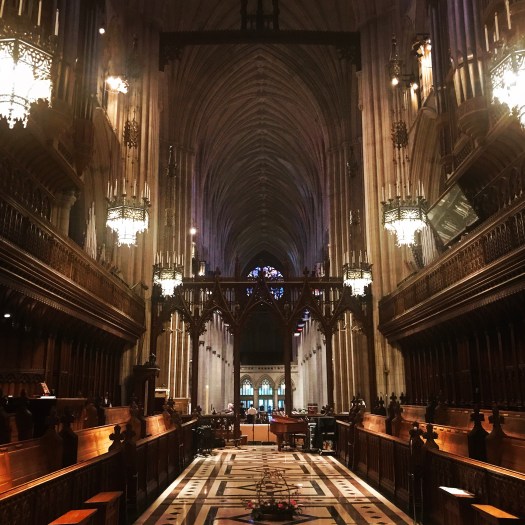

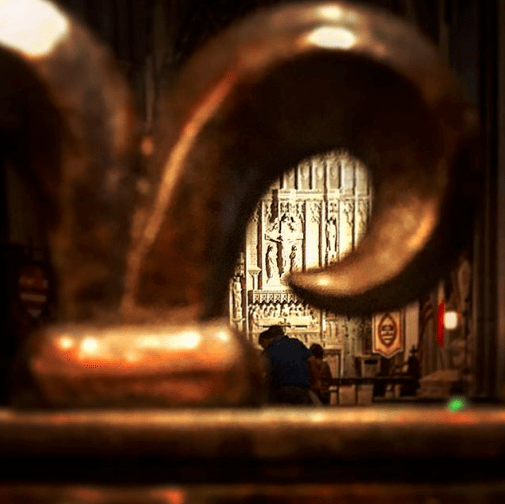
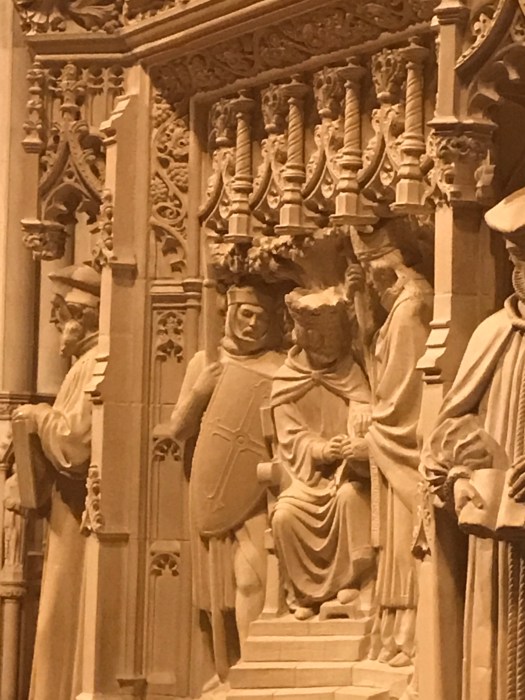
The podcast can be found here.

St. Francis was in Spoleto and a man afflicted with a horrible disfiguring facial cancer came to him seeking prayers. When he met Francis he was about to throw himself at his feet, but Francis prevented him and then kissed the man’s face, which was immediately healed of the cancer. Remarking on this event, St. Bonaventure writes, “I know not which I ought to wonder at, such a cure or such a kiss.” Reflecting on Bonaventure’s comment, author Michael D. O’Brien writes, “Which was the greater miracle, the suspension of natural law for the sake of physical healing, or the conversion of the human heart by absolute love?”
These past few weeks we have been speaking of the incarnation—God becoming man—so that he could first, wrap his arms of love around us and draw us to himself and second, so that we could become like him, that we might be with him where he is. However, becoming like Christ is not only about some future event, it is also about today, which means that because of the incarnation, we are to live incarnational lives. That means that not only do we become what he is, but we do those things he did. To live incarnationally means that we are to reveal God’s very nature to the world, not just in words and sentiments, but in deeds and actions. St. Augustine writes, “You are the Body of Christ. In you and through you the work of the incarnation must go forward. You are to be taken. You are to be blessed, broken and distributed, that you may be the means of grace and vehicles of eternal love.”
The incarnation is God wrapping his arms of love around you and helping you take one faltering step after another, but he created you in his image so that you—living incarnationally—will wrap your arms of love around another and help them to do the same. The incarnation was God redeeming all flesh, but you are his messengers, the bringers of the Good News.
Dietrich Bonhoeffer writes, “A truth, a doctrine, or a religion need no space for themselves. They are disembodied entities. They are heard, learnt, and apprehended, and that is all. But the incarnate son of God needs not only ears or hearts, but living people who will follow him. That is why he called his disciples into a literal, bodily following, and thus made his fellowship with them a visible reality. Having been called they could no longer remain in obscurity, they were the light that must shine, the city on the hill which must be seen.”
God calls on us—like He did Francis—to live incarnationally, to be the ones who kiss the diseased face of humanity and to love unconditionally and without fear.
God became what we are, so that we could become what he is; therefore, we must be transformed. We must go from being holy observers of the world around us to incarnational disciples intentionally putting flesh on God? I like what my friend St. Josemaría Escrivá writes, “Don’t fly like a barnyard hen when you can soar like an eagle.” That is not easy. It takes courage, but that courage is within you. As Escrivá also writes, “Courage! You can! Don’t you see what God’s grace did to that sleepy, cowardly Peter, who had denied him to that fierce, relentless Paul, who had persecuted him?” To go from observer to incarnational disciple requires that we repeat the words of the Blessed Virgin Mary, the words that she spoke on the day that the angel of the Lord came and visited her, “Here am I, the servant of the Lord; let it be with me according to your word.” But we must not only speak those words, we must also allow them to breathe new life into us—a life filled with the Holy Spirit of God, so that we might transform the world around as we have been transformed.
I’m not preaching works—what we do for God—over faith, but there must be action behind our words. As the Apostle James writes, “I by my works will show you my faith.” We are not saved by our works, but our works are a testimony to our faith. Brennan Manning says in The Rabbi’s Heartbeat, “The Christian commitment is not an abstraction. It is a concrete, visible, courageous, and formidable way of being in the world forged by daily choices consistent with inner truth. A commitment that is not visible in humble service, suffering discipleship, and creative love… ‘a life that is not living incarnationally’ – is an illusion. Jesus Christ is impatient with illusions, and the world has no interest in abstractions.” Therefore, allow the Father to wrap his loving arms around you, become what he is, and then go, courageously performing the work he has given to you.
Let us pray: Lord Jesus, Master of both the light and the darkness, send your Holy Spirit upon our preparations for Christmas. We who have so much to do seek quiet spaces to hear your voice each day. We who are anxious over many things look forward to your coming among us. We who are blessed in so many ways long for the complete joy of your kingdom. We whose hearts are heavy seek the joy of your presence. We are your people, walking in darkness, yet seeking the light. To you we say, “Come Lord Jesus!” Amen.
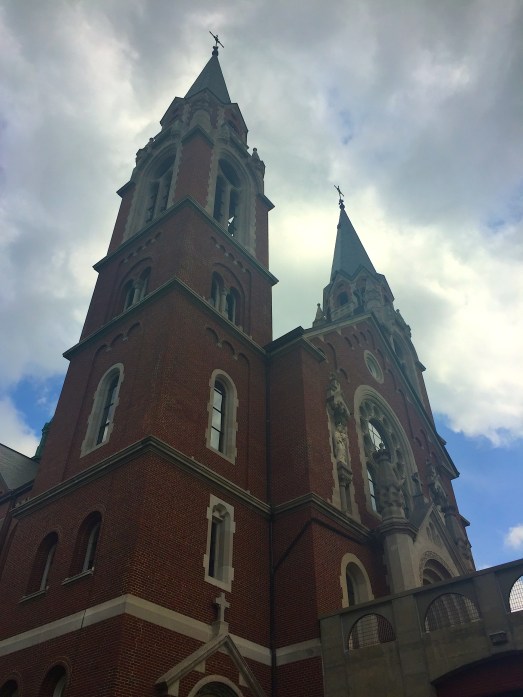
The podcast can be found here.

Mrs. Adeline LaRoux would often speed excessively as she drove between New Orleans and Lafayette, but it wasn’t until she was 95 years old that she got stopped for speeding for the first time. A Louisiana State Trooper stopped her doing 87 in a 75. The Trooper was a bit shocked to see her age, but even more so when he noticed that she held a concealed weapon carry permit. He asked her, “Got any guns with you today, Ma’am?” She answered, “Yes, Sir. I have a 45 Smith & Wesson in the glove compartment.” “Is that so,” he asked with a smile, “any other.” “Well, since you asked, I’ve got a 357 Magnum in the console and a 38-Special in my purse.” Shaking his head, the trooper said, “Mrs. LaRoux, what are you scared of?” Turning slightly in her seat and looking up at him sweetly, she replied, “Why, not a dang thing!”
There are all sorts of interesting folks in this world. Not all, but most are worth meeting. They have great stories, interesting adventures, some make you laugh, and others warm your heart. There are folks who are quick to lend a hand or an ear and still others that would give you the shirt off their backs if you were in need, and there are a few grandmothers who pack a little bit more than Juicy Fruit Gum in their purses; but in all your dealings with the world—meeting those that cross your path—have you ever come across Jesus? Ever caught a glimpse of him out of the corner of your eye or saw him in on a crowded street, only to lose him around the next corner? Would you like to come face-to-face with Him? Not everyone wants to, but if you do, then why?
We are told in John’s Gospel, “Now there were some Greeks among those who went up to worship at the festival. They came to Philip, who was from Bethsaida in Galilee, with a request. ‘Sir,’ they said, ‘we would like to see Jesus.’” Why did they want to see him? People have always wanted to see Jesus, to talk to him, ask questions, but mostly it was—and still is—to see what he can do. And not only what He can do, but what He can do for them. It seems that so often people want to see Jesus, to have contact with him, not for who he is, but instead they want to see him for what he can do for them.
I remember Herod’s Song from Jesus Christ Superstar:
Jesus, I am overjoyed to meet you face to face.
You’ve been getting quite a name all around the place.
Healing cripples, raising from the dead.
And now I understand you’re God,
At least, that’s what you’ve said.
So, you are the Christ, you’re the great Jesus Christ.
Prove to me that you’re divine; change my water into wine…
So, you are the Christ, you’re the great Jesus Christ.
Prove to me that you’re no fool; walk across my swimming pool.
The fact that folks were always wanting something from him was no big secret to Jesus either. He knew why most of the people were coming after him. After the feeding of the 5,000 Jesus went to the other side of the lake and they searched him out: “When they found him on the other side of the lake, they asked him, ‘Rabbi, when did you get here?’ Jesus answered, ‘Very truly I tell you, you are looking for me, not because you saw the signs I performed but because you ate the loaves and had your fill.’” You looked for me not because of who I am, but for what I can do for you.
Now if I were to meet Jesus I would not be so trivial as to ask him to turn water into wine. No. We would have some great theological discussion on the real presence in the Eucharist, the Holy Trinity, atonement theories, and the likes. We would spend hours together in silent contemplative prayer, writing new Psalms, and accurately translating the original Greek and Hebrew texts of the Bible. Who am I kidding – I would probably ask him what the winning numbers of the Powerball Lottery were going to be and why do dogs eat grass.
I still contend that when we read the Bible we are all pretty much like the Pharisee in the story of the Pharisee and the tax collector in the Temple. They were both praying, and the Pharisee says, “I’m so glad I’m not like that poor schmuck,” and the poor schmuck says, “I’m not worthy.” We think we would never act like those individuals in the Bible: the people clamoring around for healings, food, miracles. We say with the Pharisee, I’m glad I’m not like them, but in truth… we are. We sometimes do the same things. We want him around for the tricks. If there is a God, then let him do something about all the wars, cancer, divorce, terrorism, the Oklahoma state budget? Why does he allow the pedophiles to roam the streets and the children to die of starvation? Why won’t he do something about all this? And that’s just the world around us, what about me? I could use a better job. Heck, I could use a job. Heal me. Feed me. Give me just one thing I ask for.
The Incarnation of God—God becoming man—has a Name, and that Name is Immanuel. “The virgin will conceive and give birth to a son, and they will call him Immanuel” (which means “God with us”). Immanuel—God with us—not God with us to do all the stuff we ask Him to do. If God appeared to you while you were standing in front of the lottery machine, told you to enter the numbers to win, and you ended up winning umpteen million dollars, would you love Him more? Or would you go about the business of spending umpteen million dollars? If God fed you breakfast, would you go away satisfied with a thankful heart or would you be trying to figure out where he would be serving lunch? If God saved you in the face of imminent death, would you—for the rest of your life—would you spend more time in prayer and study of His Holy Word or would you say, “Phew! That was a close one,” and go about your business?
Jesus was born in a stable, not with umpteen million dollars stuffed in a mattress, but straw that may or may not have been completely sanitary. Jesus spent forty days and nights in the desert with no food, not being handed everything on a silver platter, and being tempted by the devil. Jesus faced imminent death and died upon the cross at the age of thirty-three and no one saved him. These things tell us that the Incarnation is not about God paving the paths we walk in gold.
So, if we say that the Incarnation is not about God becoming man so that he can give us what we want, then why? The Incarnation, God becoming Man, Immanuel, is God with us “always, even unto the end of the age.” It is God with us in our poverty—poverty of flesh and poverty of spirit. It is God with us nourishing our souls with His Body and Blood even when our stomachs may rumble with hunger. It is God with us as we walk through the valley of the shadow of death and come out on the other side in His glorious Kingdom. St. Paul writes, “Christ Jesus came into this world to save sinners,” so that we might be with him eternally and so that we might be like him; or as St. Athanasius writes, God “became what we are, so that we might become what He is.”
Imagine, every time you took a picture of yourself—a selfie—duck lips, tongue out, whatever… but every time you took a selfie, you got a picture of Jesus instead. Imagine someone takes a picture of you with your family or friends and when the picture is developed, all your family and friends are there, but where you were standing or sitting is Jesus.
Last week we said that the Incarnation is a mystery, but it is God becoming man so that he might wrap his arms of love around you and hold you to Himself. To that we add, the Incarnation is God becoming man, not to give us all we ask for and think we need, but so that we might become what He is.
There are all sorts of interesting people in this world and God desires to be incarnated in each of them. He desires to be born in you, so that he may be one with you—He in us and we in Him.
Let us pray: Lord Jesus, Master of both the light and the darkness, send your Holy Spirit upon our preparations for Christmas. We who have so much to do seek quiet spaces to hear your voice each day. We who are anxious over many things look forward to your coming among us. We who are blessed in so many ways long for the complete joy of your kingdom. We whose hearts are heavy seek the joy of your presence. We are your people, walking in darkness, yet seeking the light. To you we say, “Come Lord Jesus!” Amen.
 Candle in a Cave