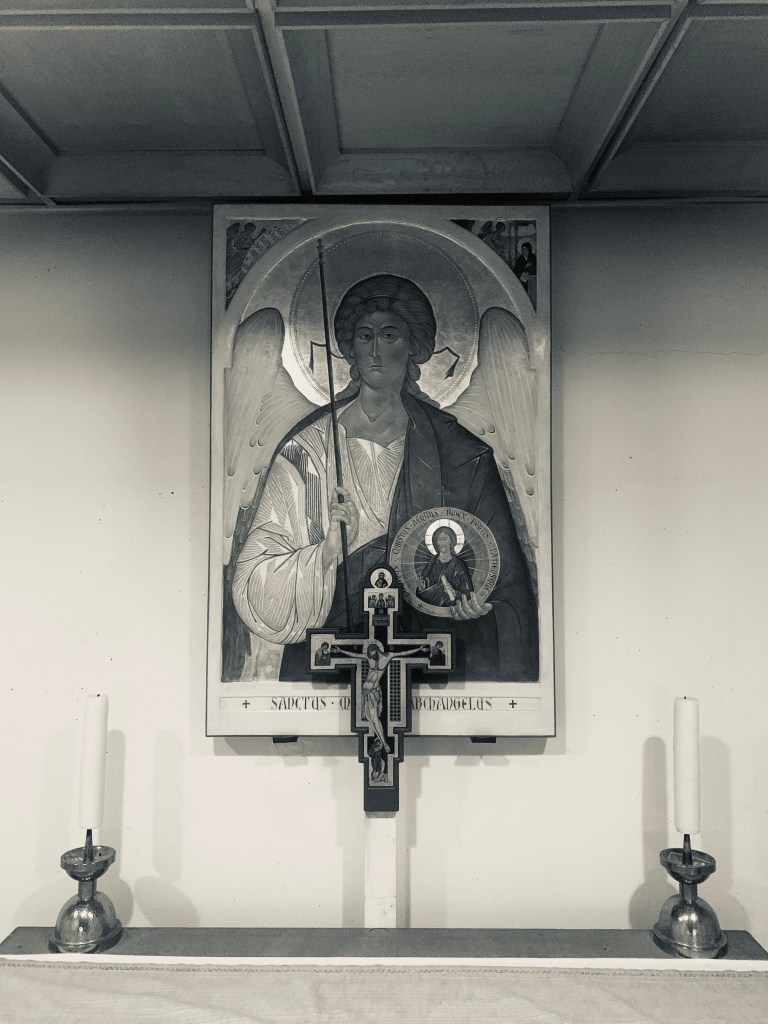
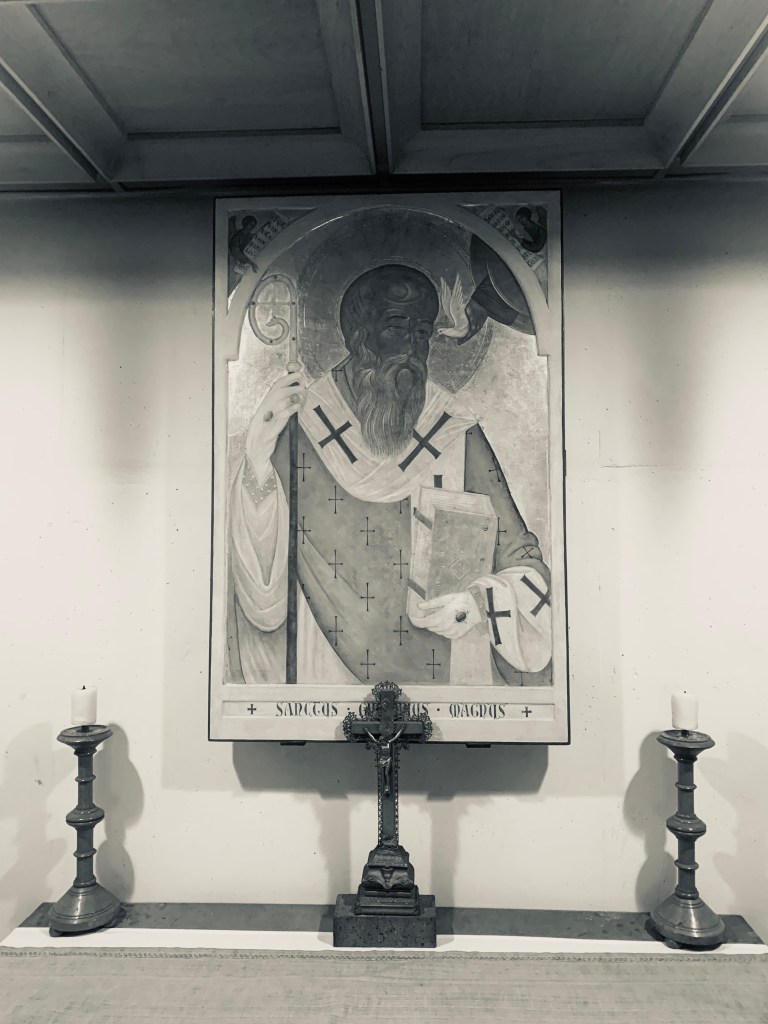
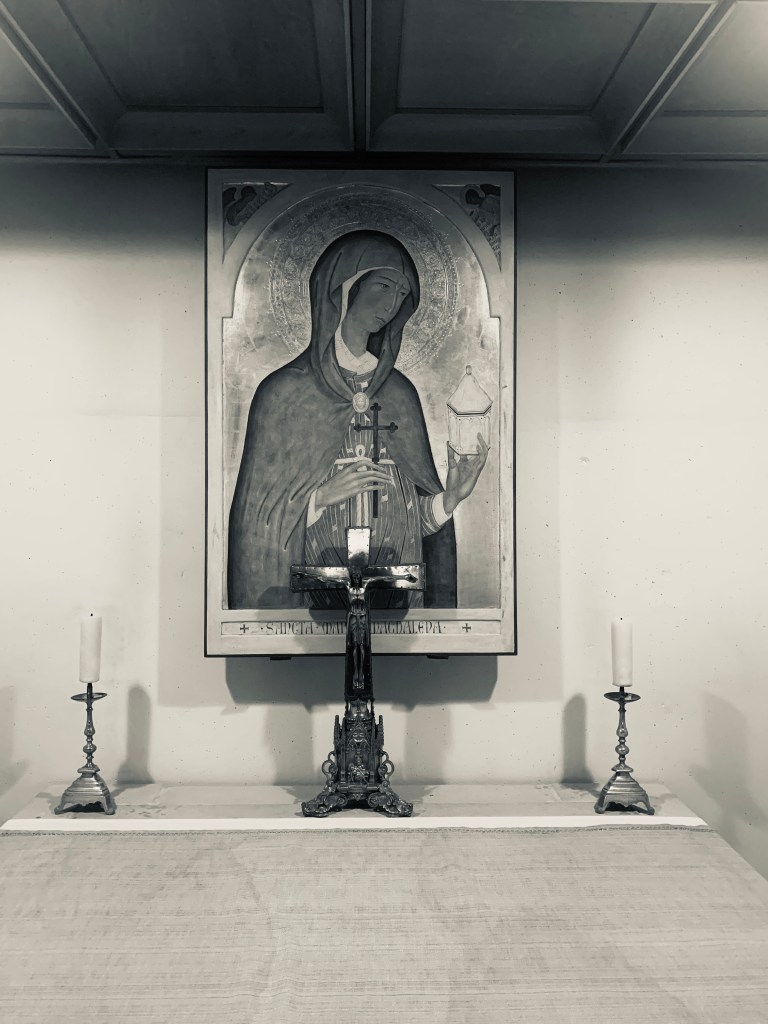
Sermon: John of the Cross

The podcast is available here.


He stood at only four feet ten inches tall, but John of the Cross was a powerhouse.  A penitent writes, โ€œSomething shone through him or this witness saw something of God in him, lifting her eyes as it were beyond herself to look at and listen to him.  Looking at him she seemed to see in him a majesty beyond that given to men of this world.โ€ (Source, p.144)  And our friend Teresa of รvila said of him, he was โ€œvery spiritual and has great experience and learning.โ€  She declared him to be โ€œthe father of my soul.โ€   And writing to another nun, she says, โ€œHe is a divine, heavenly man.  I assure you, my daughter, since he left us I have not found another like him in the whole of Castile, nor anyone else who inspires souls with such fervor to journey to Heaven.  You would never believe how lonely I feel without him.โ€ (Source, p. 145-6)  

Much of Johnโ€™s writings and work deal with the progress of the soul toward perfection, so it is only fitting that our Gospel reading spoke of the Holy Spirit: Jesus said, โ€œI still have many things to say to you, but you cannot bear them now. When the Spirit of truth comes, he will guide you into all the truth; for he will not speak on his own, but will speak whatever he hears, and he will declare to you the things that are to come.โ€

It is the Holy Spirit that guides us into all truth, but what we must also remember is that Christianity exists within the community.  So, with regard to learning the things of God and the work of the Holy Spirit, when St. Paul tells us to โ€œtest everything,โ€ (1 Thessalonians 5:21) he is not suggesting that we test everything against our own knowledge and understanding, but that we instead test it in the context of scripture, tradition and reason.  We test things within the context of the Church.  If we try and go it alone, if we try to practice our faith outside of the Church, then we are likely to deceive ourselves and fall into error.  That is something that John of the Cross understood.  He writes, โ€œThe virtuous soul that is alone and without a master, is like a lone burning coal; it will grow colder rather than hotter. Those who fall alone remain alone in their fall, and they value their souls little since they entrust it to themselves alone. If you do not fear falling alone, do you presume that you will rise up alone? Consider how much more can be accomplished by two together than by one alone.โ€ 

This then points to the fact that attending church is not something we do when it is convenient or when we donโ€™t have anything else going on.  For the safety of our soul, attending church and participating in corporate worship are essential.  It is also the fulfillment of the first promise we make at our baptism and confirmation: โ€œWill you continue in the apostlesโ€™ teaching and fellowship, in the breaking of bread, and in the prayers.โ€

At the moment, Iโ€™m preaching to the choirโ€”you are all here, but this is something that we must all be reminded of and remind others of.ย  Billy Sunday said, โ€œGoing to church doesn’t make you a Christian any more than going to a garage makes you an automobile.โ€ย  That is a true statement, but going to Church will at least get you in the place where you might just encounter God, who will then accomplish the rest.ย 


Sermon: Thomas Merton

The podcast is available here.


When he was fifty-one years old, he had romance with a nineteen year old nursing student who most authors simply refer to as โ€œM.โ€  He also enjoyed sneaking off with friends and going out drinking.  Only problem: at the time of these events, he was a Trappist monk living in monastery.  Thomas Merton was not always as saintly as we would like to think and I do not believe that my friends Josemarรญa Escrivรก or Thomas ร  Kempis would approve of his life, but what draws me to him, is thatโ€”unlike those two friendsโ€”I can relate to the humanness of Merton and the very real struggle that exists for us all.  That is, the struggle between our desire to follow God and our desires to experience the joys of being alive, which often appearโ€”and most likely areโ€”sinful.

We are currently reading the autobiography about Mertonโ€™s early life: The Seven Storey Mountain.  He wrote another autobiography which most are not so familiar with: The Other Side of the Mountain.  There are some who say, because of the sins of his later life and his studies into eastern religions, that we should not study anything that he has writtenโ€”he was clearly not the person he led us to believe, while others simply excuse him, and still others attempt to understand what happened.  Mark Shaw falls into that latter group.  Shaw wrote Beneath the Mask of Holiness: Thomas Merton and the Forbidden Love Affair that Released Him.  During an interview, Shaw said of Merton,

โ€œBecoming a monk was supposed to cleanse him of these sins, but from his own private journals, I knew this was not true. Instead, Mertonโ€™s failure to understand what loving, and being loved were all about caused him frustration, turmoil, and even depression. Beneath the mask of holiness, the plastic saint image promoted by the Catholic Church, was a sunken man who yearned for love while realizing he could never truly be one with God until he found it. Then, as I wrote in the book, the skies opened up and there was a gift, the love of a woman. It is no wonder Merton grabbed the chance to experience love despite the risks involved. And [โ€œMโ€] taught him about loving, and being loved, opening up a path to freedom Merton never knew existed.โ€ (Source)

I will never look for ways to justify my sins or anyone elseโ€™s, but Iโ€™m also not going to sit in Godโ€™s chair.  He is the One who judges and he will judge us all.  As Jesus said, โ€œNow is the judgment of this world; now the ruler of this world will be driven out. And I, when I am lifted up from the earth, will draw all people to myself.โ€  In judgment, either for eternal life or eternal death, Jesus will draw all people to himself, but what we have to remember is that even for those who are judged for eternal life, the path by which they traveled is never straight, not even for the greatest of saints.

So, what are we to make of this sinful saint and his not so straight path?ย  In 1999, Nelson Mandela spoke at Rice University.ย  โ€œFollowing his speech, Mandela took questions from the audience, including one from a 12-year-old who asked him how he wants to be remembered.ย  Mandela responded, โ€˜I never wanted to be regarded as an angel. I am an ordinary man with weaknesses.ย  I am not a saint, unless you think of a saint as a sinner who keeps trying.โ€™โ€ (Source)ย  Based on what I know of Thomas Merton, I think he would say, โ€œYes.ย  Thatโ€™s me too.โ€ย  I also think that it is the best we can say of ourselvesโ€ฆ but never use that as an excuse to sin.ย  Keep aiming to be a saint.


Sermon: Advent 2 RCL A – Holy Fear

The podcast is available here.


Fear. Jerry Seinfeld says, โ€œAccording to most studies, people’s number one fear is public speaking. Number two is death. Death is number two. Does that sound right? This means to the average person, if you go to a funeral, you’re better off in the casket than doing the eulogy.โ€

Fear is one of those excellent motivators. For most (not all), fear of losing your job is a motivator to work harder or at least update the resumรฉ. Fear of being caught and punished is motivation enough for most to obey the law. Fear of not passing is a motivator for students to study. The list goes on. For others, fear / or a rush, motivates folks to go bungee jumping or perform dangerous stunts. However, I think most of us would like to limit our fear to a scary movie and not find ourselves or put ourselves in a position where true fear is a possibility.

Throughout history, there have been a number of individuals who have struck fear in the hearts of many. From Genghis Khan to Dracula, these individuals have wreaked havoc on peopleโ€™s blood pressure. Paul Harvey, that great voice of radio, also tells us of another who struck fear in the masses. In fact, this oneโ€™s name was enough to do the trick. Harvey tells:

โ€œHe was a professional thiefโ€ฆ He terrorized the Wells Fargo stage line for thirteen years, roaring like a tornado in and out of the Sierra Nevadaโ€™s, spooking the most rugged frontiersmen. In journals from San Francisco to New York, his name became synonymous with the danger of the frontier. During his reign of terror between 1875 and 1883, he is credited with stealing the bags and the breath away from twenty-nine different stagecoach crews. And he did it all without firing a shotโ€ฆ Black Bart. A hooded bandit armed with a deadly weapon. What was his deadly weapon? One word, it was FEAR!โ€

The funny bit about Black Bart, is that he was nothing to be afraid of. According to Harvey, โ€œWhen the authorities finally tracked down the thief, they didnโ€™t find a bloodthirsty bandit from Death Valley; they found a mild-mannered druggist from Decatur, Illinois. The man the papers pictured storming through the mountains on horseback was, in reality, so afraid of horses he rode to and from his robberies in a buggy. He was Charles E. Boles โ€“ the bandit who never once fired a shot, because he never once loaded his gun.โ€ (Paul Harveyโ€™s The Rest of the Story, p. 117)

So, if weโ€™re smart, weโ€™ll be afraid of the right things and work to avoid them, or if weโ€™re a bit goofy weโ€™ll go looking for a certain amount of fear, and on occasion, the boogie man we all fear turns out to be a mild-mannered druggist from Illinois. Meanwhile, thereโ€™s God. St. Paul writes, to the Hebrews, โ€œFor we know him who said, โ€˜Vengeance is mine; I will repay.โ€™ And again, โ€˜The Lord will judge his people.โ€™ It is a fearful thing to fall into the hands of the living God,โ€ yetโ€”and this is the crazy bitโ€”we may be afraid of getting a speeding ticket, but weโ€™re no more afraid of being judged by the Creator of the heavens and the earth than we are of being afraid of a puppy. Why is that?

Michael Yaconelli, in his book Dangerous Wonder, provides us with a bit of insight into why: โ€œWe have become comfortable with the radical truth of the gospel; we have become familiar with Jesus; we have become satisfied with the church. The quick and sharp Bible has become slow and dull; the world-changing church has become changed by the world; and the life-threatening Jesus has become an interesting enhancement to modern life.โ€ (p.113)

Take our Gospel reading from today: โ€œYou brood of vipers! Who warned you to flee from the wrath to come?โ€ฆ Do not presume to say to yourselves, โ€˜We have Abraham as our ancestorโ€™โ€ฆ the ax is lying at the root of the trees; every tree therefore that does not bear good fruit is cut down and thrown into the fireโ€ฆ.
He will baptize you with the Holy Spirit and fireโ€ฆ. he will clear his threshing floor and will gather his wheat into the granary; but the chaff he will burn with unquenchable fire.โ€ Does that spark in fear in your soul? No. Iโ€™m guilty of it. I listen to those words, think how much I like John the Baptistโ€™s style, and go home; never giving, โ€œHe will baptize you with the Holy Spirit and fire,โ€ a second thought. โ€œIt is a fearful thing to fall into the hands of the living God.โ€ Cool.

Iโ€™m not saying that we need the kind of fear that drives us to go running through the streets like weโ€™re being chased by some rabid clown straight out of a Stephen King novel, but I do think we need to more closely consider who it is we serve. Once, Hugh Latimer had to preach to King Henry VIII and he reports that he said to himself, โ€œLatimer! Latimer! Remember that the king is here; be careful what you say.โ€ After considering this, he said to himself, โ€œLatimer! Latimer! Remember that the King of kings is here; be careful what you do not say.โ€

Granted, as we draw closer to Jesus, it does seem that we should in fact be more comfortable with God, but consider the time that the disciples and Jesus were out on the sea when the great storm came up. The disciples feared for their lives, but Jesus was asleep in the bow of the boat. They cried out to him, โ€œTeacher, do you not care that we are perishing?โ€ They feared for their lives, so they called to Jesus, and Markโ€™s Gospel tells us that Jesus โ€œawoke and rebuked the wind and said to the sea, Peace! Be still!โ€™ And the wind ceased, and there was a great calm. He said to them, โ€˜Why are you so afraid? Have you still no faith?โ€™ And they were filled with great fear and said to one another, โ€œWho then is this, that even the wind and the sea obey him?โ€ Jesus calmed the storm and the disciples โ€œwere filled with great fear.โ€ They were with him, they knew him, they walked and ate with him, but they had not become comfortable with this Jesus and the things he did. They loved him and they knew that he loved them, and they would go on to follow himโ€”literallyโ€”to their dying breath, but there was always this holy fear of what this Jesus, this God would do. And maybe, that points us to the real problem. Maybe we do fear God, but not with a holy fear. Maybe weโ€™re simply afraid to wake him, because we are afraid of what he might do. Weโ€™re afraid of how he may change us and our lives. Weโ€™re afraid of what it will look like if we give ourselves to Him. Weโ€™re afraid of who weโ€™ll become, which means we are afraid of being transformed into the person God created us to be.

Iโ€™m fairly certain it was the final installment of the Calvin and Hobbes comic strip: the scene is a blanket of heavy snow, Calvin is all bundled up, and Hobbes the tiger is carrying the sled. Calvin says, โ€œWow, it really snowed last night! Isnโ€™t it wonderful?โ€ Hobbes replies, โ€œEverything familiar has disappeared! The world looks brand-new.โ€ โ€œA new yearโ€ฆ a fresh clean start!โ€ Calvin adds and then, โ€œItโ€™s a magical world, Hobbes, olโ€™ Buddyโ€ฆ letโ€™s go exploring!โ€

What if in our relationship with God we let go of the familiar and entered into the words of Jesus, โ€œBehold, I make all things new.โ€ What if, in union with and in holy fear of our God, we went exploringโ€ฆ what if we went boldly into the world in anticipation and wonder of what our God might do? What if, during this season of Advent, as we read about the Son of God coming into the world we actually allowed him to come into our lives and transform us? What ifโ€ฆ

Let us pray: Father, in the wilderness of the Jordan you sent a messenger to prepare people’s hearts for the coming of your Son. Help us to hear his words, so that we may clearly see the way to walk, the truth to speak, and the life to live for Him, our Lord Jesus Christ. Amen.

Photo by Marina Vitale on Unsplash

The Imitation of Christ Project: Bk. 3, Ch. 28

Photo byย Nick Fewingsย onย Unsplash

STRENGTH AGAINST SLANDER 

THE VOICE OF CHRIST

MY CHILD, do not take it to heart if some people think badly of you and say unpleasant things about you. You ought to think worse things of yourself and to believe that no one is weaker than yourself. Moreover, if you walk in the spirit you will pay little heed to fleeting words. It is no small prudence to remain silent in evil times, to turn inwardly to Me, and not to be disturbed by human opinions. Do not let your peace depend on the words of men. Their thinking well or badly of you does not make you different from what you are. Where are true peace and glory? Are they not in Me? He who neither cares to please men nor fears to displease them will enjoy great peace, for all unrest and distraction of the senses arise out of disorderly love and vain fear.

Sermon: Advent 1 RCL A – “Awake! Alert!”

The podcast is available here.


Boudreaux, Thibodeaux, and Hebert were sitting around talking one afternoon after enjoying a little crawfish boil, and the conversation turned to what they would like to have people say about them if they suddenly died. Hebert says, โ€œMe, if I could hear what dey are saying while I’m laying in my casket is dat I was a great doctor and a good family man.โ€ Thibodeaux says, โ€œMe, I would like to hear dem say dat I was a good husband and a great teacher, and made a difference in de lives of hundreds of childrens.โ€ Boudreaux thinks for a minute and says, โ€œMais, me, I would like to hear somebody say, โ€˜Look, he’s moving!โ€™โ€

Iโ€™ve been working through a book recently, Dangerous Wonder, by Michael Yaconelli. It is one of those books you could easily read in a day, but Iโ€™ve been taking my time, because it seems that each chapter takes awhile to work into the system. During this Season of Advent, youโ€™ll likely hear me reference it and talk about it more than once. In one of the early chapters, Yaconelli quotes Juan Carlos Ortiz who is an evangelist and pastor from Argentina. Ortiz writes, โ€œThe living Jesus is a problem in our religious institutions. Yes. Because if you are having a funeral, a nice funeral, and the dead person starts to move, there goes the funeral! And dear brothers and sisters, Jesus is moving!โ€

This is the first Sunday of Advent, the church new year. During these Sundays of Advent, we hear about the second coming of Jesus and his first coming. There are readings that call for us to be aware and to be awake. However, as we look for his second coming, we must also be aware of his current presence. Sounds a bit confusing, but we know that even though Jesus is coming again, he is also with us until the very end of the age, so in order for us to know him then, we must also know him now, for as he says, โ€œThe kingdom of God is within youโ€ฆ the kingdom of God is now.โ€ Therefore, it seems that when Jesus says to us, โ€œKeep awakeโ€ and โ€œBe ready,โ€ he is not only talking about being awake and ready for the great and terrible day of the Lord, but that he is also talking about being awake and being ready for this and everyday. Unfortunately, for any number of reasons our faith can become dry and sterile, and our daily lives with God and our corporate and personal worship of the Creator of the Heavens and the Earth begins to more closely resemble a funeral than it does a celebration. God becomes a backup plan and our worship is a job, something to check off the to do list. In his own life, Yaconelli tells us that it was because he was working so hard for God that he fell into this trap and forgot to see, to encounter God, and he realized this when he visited Lโ€™Arche Daybreak Retreat Center, the same place that Henri Nouwen went to live when he decided to give up all the writing and speaking and the โ€œworkingโ€ for God.

Lโ€™Arche is a place where severely mentally and physically handicapped individuals are sent, and in many cases, abandoned. Those who work there care for these individuals, whereโ€”due to the limitations of the individualโ€”a small breakfast can take quite some time. Yaconelli tells that soon after his arrival he met Robert, a young man whose vocabulary was limited to a couple of hundred words. The first thing Robert said to Michael was a question: โ€œBusy?โ€ Michael responded, โ€œYes, Robert. Iโ€™m very busy.โ€ โ€œToo Busy,โ€ Robert asked. โ€œYes, Robert. Iโ€™m too busy,โ€ Michael answered. Robertโ€™s questions and his answers got Michael to thinking: why am I so busy? He concluded: โ€œWhy was I so busy? Because I still was hanging on to the belief that Godโ€™s affection for me was measured by my activity for Him. The more things I did for God, the more He would love me.โ€ Michael said that he had this โ€œneed to prove to God I was worth loving.โ€

Here is someone whose entire life was dedicated to the work of the Kingdom of God, but he could never truly experience God, because he was so caught up in trying to convince God to love him. If someone like Yaconelli can fail to truly see and encounter God, then it is no wonder that any of the rest of us, for any number of reasons, can and will do the same.

Jesus said, โ€œYou also must be ready, for the Son of Man is coming at an unexpected hour.โ€ We cannot encounter God today, because we keep thinking that the โ€œunexpected hourโ€ is off in the distance, when in fact, it is now. What did Paul say to the Romans in our reading? โ€œYou know what time it is, how it is now the moment for you to wake from sleep. For salvation is nearer to us now than when we became believers; the night is far gone, the day is near.โ€ The time is nowโ€ฆ

T-ball or baseball for younger children. Prop the ball up on the jumbo golf tee and let the kids swing away. Everyone plays and everyone is a winner, but not all of them are athletes. Enter Tracy. She is described as as โ€œnot very good. She had coke-bottle glasses and hearing aids on each ear. She ran in a loping, carefree way, with one leg pulling after the other, one arm windmilling wildly in the air.โ€ At bat, she might generate enough air around the ball that it fell off the tee or she would hit the tee and send the ball rolling forward, but she never got a proper hit until the last game of the season when the stars aligned perfectly. It wasnโ€™t just a hit. She apparently clobbered it, sending the ball sailing over heads and then rolling between legs.

She windmilled her way to first base and the coach waved her on (by then, the entire opposing team was in the outfield, chasing the ball.) When she got to second, the third base coach called her on, so she ran some more. The ball finally made it back into play, but for some reason ended up along the first base line. At this point, the entire stadium of parents, on both sides, were going wild cheering for Tracyโ€”this was going to be a home run for the girl who never even got a hit. The third base coach waved Tracy on and she was headed to home plate โ€œand then it happened. During the pandemonium, no one had noticed the twelve-year-old geriatric mutt that had lazily settled itself down in front of the bleachers five feet from the third-base line. As Tracy rounded third, the dog, awakened by the screaming, sat up and wagged its tail at Tracy as she headed down the line. The tongue hung out, mouth pulled back in an unmistakable canine smile, and Tracy stopped, right there. Halfway home, thirty feet from a legitimate home run. She looked at the dog. Her coach called, โ€œCome on, Tracy! Come on home!โ€ He went to his knees behind the plate, pleading. The crowd cheered, โ€œGo, Tracy, go! Go, Tracy, Go!โ€ She looked at all the adults, at her own parents shrieking and catching it all on video. She looked at the dog. The dog wagged its tail. She looked at her coach. She looked at home. She looked at the dog. Everything went to slow motion. She went for the dog!โ€ The crowd went completely silent, then broke into cheers of approval, as Tracy knelt down and hugged the dogโ€ฆโ€ฆ Please do not tell the Bishop that Fr. John said Jesus was a twelve-year-old geriatric mutt with a goofy grin, but what if we had that the same spirit about encountering Jesus today as Tracy had in encountering that silly dog? What if, in the midst of all the worldโ€™s shouting, expectations, opportunities for success, even the encouragement of well intentioned individualsโ€ฆ we put a stop to it all and embraced Jesus instead?

Jesus is coming, but the body is moving and Jesus is now. Seek him today, while he wills to found.

Our Collect of the Day read: Almighty God, give us grace to cast away the works of darkness, and put on the armor of light, now in the time of this mortal life in which your Son Jesus Christ came to visit us in great humility; that in the last day, when he shall come again in his glorious majesty to judge both the living and the dead, we may rise to the life immortalโ€ฆ but to close, I would like to change that bit, because we can cast away the darkness and put on the armor of light, not just on the last day, but today as well, for this is indeed a day that the Lord hath madeโ€ฆ

Let us pray: Almighty God, give us grace to cast away the works of darkness, and put on the armor of light, now in the time of this mortal life in which your Son Jesus Christ came to visit us in great humility; so that not only will we be raised with him on the last day, but so that we may be surprised by him today when we encounter him in the face of family, friends and strangers, that we may know him as we journey toward the manger, and that we will have the courage, despite the encouragement of world, to stop all our running and embrace him, even if he is standing along the third base line. This we pray in His Name. Amen.

Sermon: Proper 28 RCL C – Endure

The podcast is available here.


Photo byย Marylou Salonย onย Unsplash

It seems that kids are getting creative when they donโ€™t know the answer on a test. Examples:

โ€œWhat did Mahatma Gandhi and Genghis Khan have in common?โ€ โ€” Unusual names.

โ€œName six animals which live specifically in the Arctic?โ€ โ€” Two polar bears and threeโ€ฆ four seals.

โ€œWhat is the highest frequency noise that a human can register?โ€ โ€” Mariah Carey

โ€œWhat is a fibula?โ€ โ€” A little lie.

โ€œWhat is a vibration?โ€ โ€” There are good vibrations and bad vibrations. Good vibrations were discovered in the 1960s.

Finallyโ€ฆ โ€œBriefly describe what hard water is.โ€ โ€” Ice.

All this goes to prove that the answer you are expecting may not necessarily be the one you get.

Today, we read, โ€œSome were speaking about the temple, how it was adorned with beautiful stones and gifts dedicated to God.โ€ The temple. It was a magnificent structure. We know, they are still there today, that some of the stones that made up the walls and other structures, weighed up to 160,000 poundsโ€”eighty tons! It was impressive in size and beauty. There are several descriptions of its beauty, one of which comes to us from the historian Josephus, who would have actually seen it. He writes, โ€œThe exterior of the building lacked nothing to astonish either the soul or the eyes. For being covered all over with massive plates of gold, as soon as the sun was up, it radiated to a fiery beam of light that it forced those straining to look at its emanations to turn away their eyes, as if from solar rays. To approaching strangers it appeared from a distance like a snow-clad mountain; for all that was not overlaid with gold was of the purest white.โ€

Yet, as those with Jesus are gazing upon this beautiful structure, โ€œJesus said, โ€˜As for these things that you see, the days will come when not one stone will be left upon another; all will be thrown down.โ€™โ€

And so they asked him a question, โ€œTeacher, when will this be, and what will be the sign that this is about to take place?โ€™โ€ Iโ€™m guessing that the answer they received was not the one they expected: โ€œBeware that you are not led astrayโ€ฆ The time is near!โ€ฆ Nation will rise against nation, and kingdom against kingdomโ€ฆ they will arrest you and persecute you.โ€ And, of course, it all came to pass.

The Israelites had been in rebellion against Rome and controlled the Jerusalem for four years and in 70 a.d., the Romans had finally had enough. They laid siege to Jerusalem and on August 30, 70 a.d. broke through the walls and sacked the city. Not only did they destroy the city, but, as Jesus prophesied, set fire to the temple and destroyed it. Josephus records the events: โ€œAs the flames shot into the air the Jews sent up a cry that matched the calamity and dashed to the rescue, with no thought now of saving their lives or husbanding their strength; for that which hitherto they had guarded so devotedly was disappearing before their eyes.โ€ (Source) The description of what occurred next is not suitable for a Sunday morning, suffice it to say, those who tried to fight the fire were put to the sword by the Romans soldiers.

The only thing that I think would really compare to this for you and I is the bombing of the World Trade Center in New York. We all stopped. We all watched. We were all horrified. And there was nothing to be done about it.

Following what we heard today in our Gospel reading, Jesus continues with his discourse on the horrors to come: โ€œWhen you see Jerusalem being surrounded by armies, you will know that its desolation is near. Then let those who are in Judea flee to the mountains, let those in the city get out, and let those in the country not enter the city.โ€ There is talk of signs in the heavens and all sorts of other calamities. What makes this relevant for us today, is that not only do we understand these words of Jesus to be speaking about the destruction in 70 a.d., but we also understand him to be speaking about the end of days, when he shall come again. These eventsโ€”destruction, end of days, wars, signs, persecutionโ€”these events are going to occur again, and just as the Israelites could not prevent them in their day, there is nothing we can do to prevent them from occurring in ours. People say that the world is in a terrible mess, that it canโ€™t get much worse, and I just want to say, โ€œYour kidding, right? Have you read about what is to come?โ€ But hereโ€™s the thing: we can get in this mindset, many do, about looking for these signs and we can fall into a place of depression, fear, and dread. Why? This sermon is a perfect example of why. We get so focused on โ€˜all thisโ€™, that we miss the words spoken of our salvation. We hear of insurrections, death, earthquakes, persecutions, but in listening to these words of Jesus, did you hear of your salvation? It was right at the end: โ€œBut not a hair of your head will perish. By your endurance you will gain your souls.โ€

Yes. The teachings about the end are important and we should pay close attention to them. On hearing these words, as our collect for the day said, we should “hear them, read, mark, learn, and inwardly digest them,โ€ but not so that we can fall into that place of dread, but so โ€œthat we may embrace and ever hold fast the blessed hope of everlasting life.โ€ So that in the midst of the ugliness, we might endure.

Jack Canfield tells about a young high school student whose father was a horse trainer. Because the family had to follow the horse-racing season, the young boy had to change schools throughout the year. During his senior year he was asked to write a paper about what his dreams for the future were. His paper described his dream of owning a 200-acre horse ranch with stable and tracks, and a 4,000-square-foot home. He even drew a diagram of the property and the design of his house. He turned the paper inโ€ฆand two days later it came back with an โ€œFโ€ on the front and note to see the teacher. After class, the teacher explained to the boy that his dream was โ€œunrealistic.โ€ The teacher said that if the boy rewrote the paper with a much more realistic dream, he would reconsider the grade. The boy went home and asked his father what to do. โ€œItโ€™s your decision,โ€ said the father. Dad knew this was a very important decision. The boy kept the paper for a week and then returned it to his teacher after class. โ€œHereโ€ the boy said, โ€œyou can keep the โ€˜Fโ€™ and Iโ€™ll keep my dream.โ€ (Source, p.25-26)

We as a Christian people can become so jaded and discouraged by the world around us. We look at the world and see all its failures and we understand what is to come, we watch others suffer and we experience our own pain and loss, we see the temple standing in all its glory and we visualize the final destruction, we see the โ€œFโ€ on the page and we wonder what is to be done. It is then that Our Father in Heaven tells us, โ€œItโ€™s your decision. I have told you that not a hair of your head will perish eternally, so you can either drown in the ugliness that is or you can hold onto the dreamโ€ฆ the promises I have made to you.โ€ What are those promises? Jesus said, โ€œDo not let your hearts be troubled. You believe in God; believe also in me. My Fatherโ€™s house has many rooms; if that were not so, would I have told you that I am going there to prepare a place for you? And if I go and prepare a place for you, I will come back and take you to be with me that you also may be where I am.โ€ As we learned in our study of Romans: โ€œThose who are led by the Spirit of God are the children of God. The Spirit you received does not make you slaves, so that you live in fear again; rather, the Spirit you received brought about your adoption to sonship. And by him we cry, ‘Abba, Father.โ€™โ€

When the world begins to question you, โ€œIsnโ€™t all this a waste of time? Is there any real sense carrying on?โ€ Give them an answer they donโ€™t expect: โ€œYou can keep your failures and your ugliness and Iโ€™ll keep my dream. Iโ€™m holding to the promises of my God, my Abba, my Father, who is faithful and true. He is making all things new.โ€

Let us pray:
Father in Heaven,
ever-living source of all that is good,
keep us faithful in serving You.
Help us to drink of Christ’s Truth,
and fill our hearts with His Love
so that we may serve You in faith
and love and reach eternal life.
In the Sacrament of the Eucharist
You give us the joy of sharing Your Life.
Keep us in Your presence.
Let us never be separated from You
and help us to do Your Will.
Amen.