St. Leo the Great said that the Transfiguration revealed to the disciples โthe excellence of [Jesusโ] hidden dignity.โ That is, it revealed Jesusโ true nature. St. Paul mentioned in his first letter to the Corinthians, โFor now we see in a mirror, dimly, but then we will see face to face.โ Seeing Jesus outside of the Transfiguration, it was as if the disciples saw Him dimly, but in that moment, they saw Him fully; however, He is not the only one called to be transfigured, because when the Lord says, โYou shall be holy, for I am holy,โ He is calling for all of us to be transfigured into His likeness.
Anglican Bishop, Brook Westcott writes, โThe Transfiguration is the revelation of the potential spirituality of the earthly life in the highest outward form. Such an event, distinct in its teaching from the resurrection, and yet closely akin to it, calls for more religious recognition than it receives. Here the Lord, as Son of Man, gives the measure of the capacity of humanity, and shows that to which he leads all those who are united with him.โ
The Transfiguration revealed to us our potential and our fullest capacity as children of God. Achieving this potential, at least in part, makes the saints we study on Wednesdays so extraordinary. They become light to us, radiating Christ. What is the outcome?
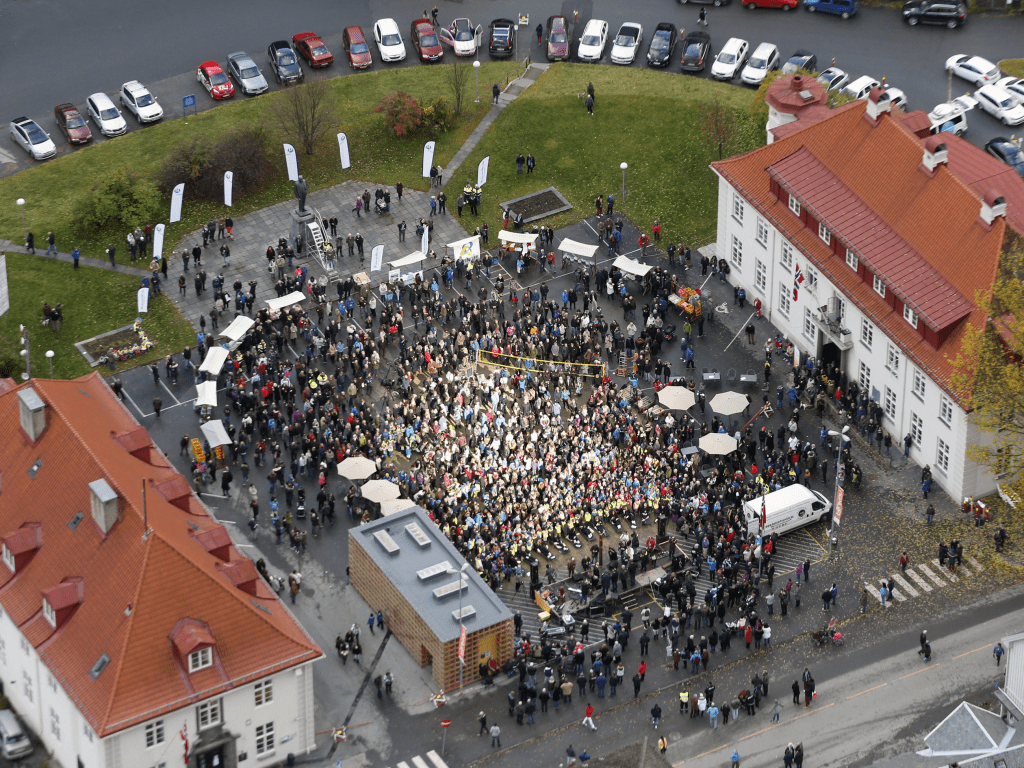
In south-central Norway, nestled in a mountain range (the name I wonโt even attempt to pronounce), is the small community of Rjukan. The valley where the town is located is so narrow and the mountains so tall that, for six months each year, the town receives no direct sunlight; however, that changed in November 2013. Large mirrors were installed on one of the mountain peaks, and a computer tracks the sun’s movement and adjusts the mirrors’ angles so that a concentrated beam of light shines into the town square, creating a 6,500-square-foot patch of sunlight.
On the day the light started shining, one resident said, “People have been sitting there and standing there and taking pictures of each other. The town square was totally full. We are not that big of a town, so I think almost all the people in the town were on the town square.” She added, “It’s not very big, but it is enough when we are sharing.โ (Source)
The saints we study are like mirrors, radiatingโnot their own lightโbut the light of Christ into the darkness of the world. As we say in the preface during the Eucharist on certain saintsโ days, we give thanks to the Father, โFor the wonderful grace and virtue declared in all your saints, who have been the chosen vessels of your grace, and the lights of the world in their generations.โ
It is this same light that we also seek to reflect. We accomplish this by setting ourselves aside and putting on Christ, working on our salvation with โfear and trembling,โ and striving for sanctification in our daily lives. Like all the capital โSโ Saints, there will be days and seasons of failure, but each day we start fresh until we are clothed in the robes of white and standing eternally before our Father in Heaven, fully transfigured into his glory.
The article defines the issue: “This is ‘purpose anxiety’ โ the gnawing sense that oneโs life should have an overarching purpose, but itโs unclear how to discover it.” It then goes on to further explore the issue and point to possible solutions. However, in my opinion, the article clearly identifies the root cause, without noting any correlation to the problem.
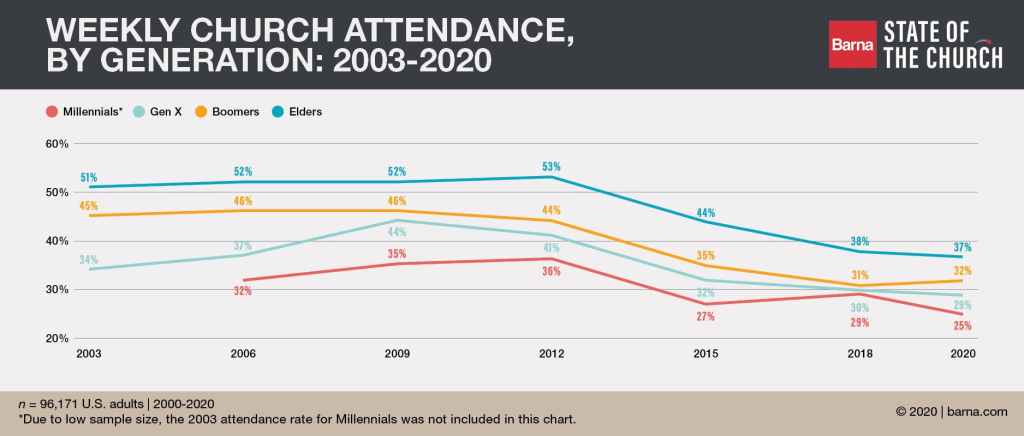
Religion, for instance, often offered purpose and meaning to believers. But those who identify as religious has dropped significantly over the years (although that appears to beย leveling offย recently according to a 2025 survey by the Pew Research Center).
What do the numbers show?
I am smart enough to know that anxiety and depression have other causes and that there are multiple variables involved. That said, I think it would be quite interesting to see the anxiety/depression numbers for those who have found their purpose in God.
Three individuals are about to be executed, put to death before the firing squad. One is a Japanese fella, one is from Oklahoma, and the third is a crazy Cajun named Boudreaux. The guard brings the Japanese fella forward, and the executioner asks if he has any last-minute requests. He replies, โNo, I do not,โ so the executioner sets him up and then turns and shouts to the firing squad: โReady! Aimโฆโ Suddenly, the Japanese fella yells out: โTsunami! Run run run.โ While everyone is distracted and panicked, the Japanese fella runs away and escapes. The guard brings the next prisoner alongโthe Oklahoman. The executioner asks if he has any last-minute requests. He answers, โI have nothing to sayโ, so the executioner gets him ready, then barks his order to the firing squad: โReady! Aim…โ Suddenly, the Oklahoman yells as loud as he can: โTornado! Run run run!!!โ Everyone is again distracted, and the Oklahoman makes his getaway. By now, olโ Boudreaux has got it all figured out. The guard escorts him forward and asks if he has any last-minute requests. Boudreaux replies, โNo,โ but has a grin on his face. The executioner turns sharply to the firing squad and shouts: โReady! Aim…โ And Boudreaux hollers out: โFire!โ
I do not believe the firing squad was distracted, Boudreaux.
When I drive, Iโm not a speederโmaybe three or four miles over at most. Iโll set the cruise, and then I donโt have to worry about it. The other day, as I was driving down the road, cruise set, I was listening to a book. Iโm not sure which one, but I was fairly well engrossed. As I was going along, someone came up and passed me going at least 20-25 mph faster than me. I wished him well, but then another car came up on me pretty quick, and before you know it, there are about four cars behind me. I look in the rearview mirror and say, โIโm not getting a ticket for you folks, so just go around.โ At which point, I look at my speedometer. I had set the cruise as I was leaving the last town, but I was involved with my book. Unfortunately, when I set the cruise, I was in a 45 mph zone, but now I was in a 70. Iโm not sure how many miles I had putted along at that speed, but Iโm certain those stuck behind me were quite pleased when I figured it out.
When it comes to accidents, being distracted is the number one cause. Iโll try to do better.
Merriam-Webster defines distraction as: โan object that directs one’s attention away from something else.โ Sometimes those distractions are not of our own making: youโre sitting quietly reading your book, and a meteor crashes through the ceiling and obliterates the coffee table, sending the cat into a maniacal frenzy. Not your fault or your doing. At other times, you are supposed to be studying for an exam, but you choose to be distracted by playing video games.
Why do we do such things? It might be out of compulsion, a lack of discipline, or simply because sometimes we just arenโt all that bright. Any number of reasons, but ultimately, weโre looking for that one thing that will make us happy in the moment and distract us from what we should be focusing on.
Qoheleth is the author of the book of Ecclesiastes. In the third verse of chapter one, he writes, โWhat does man gain by all the toil at which he toils under the sun?โ (1:3) In this context, the word โtoilโ refers to all human efforts, whether they are noble, common, necessary, silly, or anything else. In our first lesson today, he discussed the toil of wisdom: โI applied my mind to seek and to search out by wisdom all that is done under heaven.โ (1:13) His goal was to discover the worth of gaining wisdom in his life. Similarly, he explores the meaning behind the toil of gaining wealth, possessions, honor, pleasure, and labor. He did all, apparently knowing no limits.ย
He concluded his discussion of each pursuit by declaring their purpose and value to be, “Utterly senseless, everything is senseless!” “Meaningless of meaninglessness! All is meaningless!” “Futility of futilities, all is futile.โ “Absolutely pointless! Everything is pointless.โ “Vanity of vanities, all is vanity.โ All of our wealth, wisdom, possessions, honor, pleasure, laborโall of our toils and distractions are nothing. Are you depressed yet? โThanks, Father John, so glad I came to church today for this uplifting and edifying message. Iโll be sure to sleep in next Sunday.โ If we left it there, we would all be more than a bit depressed, but Qoheleth does not leave it there, and neither shall we.
To work and seek only wealth and possessions solely for oneself is vanity and meaningless; however, building up treasures in heaven offers lasting and abundant rewards. Pursuing pleasure purely for pleasureโs sake is the height of selfishness, but truly loving as Christ loved us and finding joy in God and others are among the many blessings of creation. Iโm certain you see the difference. The issue is that we often seek these things apart from God, and anything apart from God is defined in one simple word: sin.
This is part of the message from the parable we read this morning. The man has worked hard, he has toiled year after year, and has become wealthy. Now, he has a bumper crop, and in his vanity, he decides that he is set and only needs to build barns large enough to hold everything. He thinks he can be done with all this toiling. Yet God says to him, โYou fool! This very night your life is being demanded of you. And the things you have prepared, whose will they be?โ And Jesus adds, โSo it is with those who store up treasures for themselves but are not rich toward God.โ The man became so distracted by earthly riches and toilโโVanity of vanities, all is vanityโโthat he lost sight of what he should have been focused on.
In the end, Qoheleth tells us, โThe end of the matter; all has been heard. Fear God and keep his commandments, for this is the whole duty of man.โ (12:13) What should we focus on, and not let distractions steer us away? The fear of God and His commandments. What does it mean to fear God? Charles Spurgeon answers that for us. โBy this we do not mean the servile fear which worketh dread and bondage, but that holy fear which pays reverence before the majesty of the Most High, and has a high esteem of all things sacred, because God is great, and greatly to be praised.โ (Sermon: Obadiah; or, Early Piety Eminent Piety) If that is the fear of God, what are His commandments? You know the answer; we talked about it a few weeks back: โA new commandment I give to you, that you love one another: just as I have loved you, you also are to love one another.โ (John 13:34) (I can assure you that I know more Bible verses than this, but I do not know of any that are more important.)
Qoheleth tells us that everything is vanity, meaningless, pointless, and futile except to remain in awe of God and His majesty and to love one another, and we know that loving one another is, in fact, loving God.
You have heard of Aleksandr Solzhenitsyn. In 1945, he was imprisoned for speaking out against the Soviet regime. After his release, he spent from 1958 to 1968 writing The Gulag Archipelago, a nonfiction book about life in a Soviet prison or gulag. As I studied these verses from Ecclesiastes, I was reminded of one of Solzhenitsynโs conclusions. He wrote,
โWhat about the main thing in life, all its riddles? If you want, I’ll spell it out for you right now. Do not pursue what is illusoryโproperty and position: all that is gained at the expense of your nerves decade after decade, and is confiscated in one fell night. [He is thinking of his arrest when he lost everything.] Live with a steady superiority over lifeโโdonโt be afraid of misfortune, and do not yearn after happiness;โฆ whom should you envy? And why? Our envy of others devours us most of all. Rub your eyes and purify your heartโand prize above all else in the world those who love you and who wish you well. Do not hurt them or scold them, and never part from any of them in anger; after all, you simply do not know: it might be your last act before your arrest, and that will be how you are imprinted in their memory!โ (p.591-592)
We must work to care for ourselves and our families. We have possessions for the same reasons. We seek entertainment to bring joy, and even Qoheleth tells us this is from God. He says, โThere is nothing better for a person than that he should eat and drink and find enjoyment in his toil. This also, I saw, is from the hand of God, for apart from him who can eat or who can have enjoyment?โ (2:24-25) Still, none of these things should take priority over or distract us from our fear of God and our love for one another.
Do not sin. Keep in awe and fear of God, and love one another. From Jesus to Qoheleth to Solzhenitsyn to many others, there is no greater or nobler meaning to life.
Let us pray: Most holy Trinity, Godhead indivisibleโFather, Son, and Holy Spiritโour first beginning and our last end, You have made us in Your own image and likeness. Grant that all the thoughts of our minds, all the words of our tongues, all the affections of our hearts, and all the actions of our being may always be conformed to Your holy Will. Thus, after we have seen here below in appearances and in a dark manner by means of faith, we may finally come to contemplate You face-to-face In the perfect possession of You forever in heaven. Amen.
If you were in church a few Sundays back, youโll recall we discussed the many facets of this story of Mary and Martha. Well, this is a look at one of them, and it begins with a poem by Virginia Brasier written in 1949โTime of the Mad Atom.
This is the age Of the half-read page. And the quick hash And the mad dash.
The bright night With the nerves tight. The plane hop With the brief stop.
The lamp tan In a short span. The Big Shot In a good spot.
And the brain strain The heart pain. And the cat naps Till the spring snaps
โAnd the funโs done!
Time. It consists of moments, minutes, hours, days, decades, and stretches into eternity. There are many wonderful quotes about time. How does it pass? The Wisdom of Solomon states that โour time is like a passing shadow.โ How do we spend it? Susan Ertz wrote, โMillions long for immortality who do not know what to do with themselves on a rainy Sunday afternoon.โ Do we want more? Queen Elizabeth I’s dying words were, โAll my possessions for a moment of time.โ
Without humankind, there really is no such thing as time, for as one Jewish commentary wrote, โWithout man, time is meaningless.โ So what is it then? What is time? For me, it is Henry Longfellow who has the best answer. He writes, โThe shadow on the dial, the striking of the clock, the running of the sand, day and night, summer and winter, months, years, centuries — these are but arbitrary and outward signs, the measure of Time, not Time itself. Time,โ he says, โis the Life of the soul.โ Time is the life of the Soul.
If we were to compile a list of everything we need to accomplish with our time today, I suspect it would be quite long: jobs, caring for children or others, volunteering, studying, leisure, family time, and so on. A lengthy list. Many of these activities can be seen as serving God because we are helping others as He has commanded. However, we can become so caught up in our service to God that we neglect our relationship with Him. Even as a priest, I can get so busy writing sermons, preparing newsletters, attending meetingsโeverything for the Churchโthat I forget to make time for God and the life of the soul. Mary and Martha help us see this trap more clearly.
Jesus is visiting their home. Martha is busy running around to take care of everyone, while her sister, Mary, is sitting and listening to Jesus. Finally, frustrated, Martha says to Jesus, Donโt you care that Iโm doing all this work and my sister is just sitting there like a bump on a log? While not condemning Martha for her work, Jesus responds, โMartha, Martha, you are worried and distracted by many things; there is need of only one thing. Mary has chosen the better part, which will not be taken away from her.โ Mary has chosen the better part. Marthaโs work is good, but Mary has chosen the better part; she is tending to the life of her soul by engaging with her Lord.
This is indeed the time of โthe quick hash and the mad dash.โ Therefore, we must learn to serve as Martha served, but we also need to take time like Mary to tend to the life of our souls by stepping back from our busy service and by engaging in our relationship with God. After all, it is God who is the center that holds everything else together. โSeek first the Kingdom of Heaven.โ Seek first those opportunities to sit at the feet of Jesus, as Mary did, then go forth in the Name of Christ to serve Him with gladness and singleness of heart.
President Jimmy Carter once told a joke during a speech in Japan that made the audience burst into laughter. Impressed, he asked how the interpreter managed to get such a big reaction. The interpreter admitted to saying, โPresident Carter told a funny story. Everyone must laugh.โ
Translating from one language to another isn’t always easy. When I travel, Iโve learned to use Google Translate, but Iโve also learned that the other person doesn’t always receive the same message you’re seeing because of translation issues. Some companies might have learned this lesson when entering new markets.
Kentucky Fried Chicken: You know it and you love it. It is โFinger-licking good,โ except in China, where it translates to โEat your fingers off.โ
Clairol: Some of you ladies may know of the curling iron named โMist Stick.โ All is well and good in the USA, but in Germany, it translates as โManure Stick.โ Also known as, How to End the Date Early.
Coors Beer: In the 1970s and 80s, they had an ad campaign with the slogan, โTurn it loose.โ Sounds like fun, unless you’re in Spain, because it translates to โSuffer from Diarrhea.โ
Translating isn’t always an exact science, especially considering the complexity and nuances of the English language, so it’s best to consult those who might know a bit more than even Google Translate.
True for marketing campaigns and also for the Bible.
Today, in our Gospel, we read the Lordโs Prayer:
Father, hallowed be your name. Your kingdom come. Give us each day our daily bread. And forgive us our sins, for we ourselves forgive everyone indebted to us. And do not bring us to the time of trial.
Question: When you heard that, how many of you thought, โThatโs not the Lordโs Prayer I know. Seems they missed a few words.โ What about โYour will be done on earth as it is in Heavenโ or โdeliver us from evilโ? Those are pretty important bits to just leave out.
I thought the same thing, and it got me to thinking about how the Gospels came through history to us. This is one of those technical lessons, so if you start to glaze over, Iโll try and wrap it up quickly.
First, how many Gospels are there? Four? Nope. There are actually over thirty books or parts of books that claim to be Gospels. Thereโs the Gospel of Thomas, the Gospel of Mary Magdalene, The Gospel of Truth, and even one called the Gospel of Judas. But over time, the Church studied these closely and decided only four could be called true GospelsโMatthew, Mark, Luke, and John. Since Matthew, Mark, and Luke are so similar, theyโre called the Synoptic Gospels, meaning they can be viewed together.
The Church has always believed that John was written independently of the others; however, itโs generally thought that the authors of the synoptic Gospels copied parts of each otherโs and then added their own original material. How does that work?
Initially, it was believed that Matthew was written first. This is known as the Primacy of Matthew. This view states that both Mark and Luke used Matthew as a guide for writing their Gospels. However, most scholars now believe this isnโt correct and agree on the Primacy of Mark.
This is known as the Four-Source Hypothesisโa hypothesis, it is, and itโll help if you have the diagram on the insertโsays that Mark was written first, and Matthew and Luke used it as a guide. Thereโs a lot of reasoning behind it, which can cause you to glaze over, but Luke had a copy of Mark, then added some of his own material, which is known as โL.โ Matthew also had a copy of Mark, and added his own material, known as โM.โ Matthew and Luke were written independently of each other, but both contain similar sayings of Jesus (that are not included in Mark), which introduces a truly hypothetical document know as โQ,โ which stands for the German word Quelle, meaning source. Q is said not to contain many of the stories of Jesus, but is primarily a collection of his sayings.
Putting all that together: if you take the Gospel of Mark, add L material, and then add Q, you end up with the Gospel of Luke. Clear as mud? It gets a lot more complicated, but we wonโt go there today.
As I said, hypothetical Q is said to contain the sayings of Jesus. These sayings would includeโthe Beatitudes, Love Your Enemies, the temptation in the desert, andโyou guessed itโthe Lordโs Prayer. The Lordโs Prayer is only found in Lukeโs and Matthewโs Gospels, not in Mark or John. The version of the Lordโs Prayer we read today is from the Gospel of Luke. What we are most familiar with is the version from the Gospel of Matthew. In other words, using the hypothesis we put forth, Luke may have only used Q material, but Matthew would have used Q plus some of his own M material to write his version. Why would they be different? Another theory here: Matthew was with Jesus, while Luke was not. Luke only had access to Q, but Matthew had access to Jesusโhe had been with Jesus. Perhaps Matthew heard the expanded version and included it in his Gospel. Ultimately, we donโt really know.
What makes this even more confusing is that if you look at an older version of the Bible, such as the King James Version, youโll discover that the Lordโs Prayer in Matthew and Luke is exactly the same. Why? A little thing called harmonization. At some point, someone decided they should be the same, and so, presto, they made it so.
Do you really need all this theory to pray the Lordโs Prayer? Nope, but since the Bible contains so much of what we know and understand about God, itโs important to have some knowledge of how it all works. More importantly, though, is knowing how to apply it to our lives. N.T. Wright provides us with a brief guide. He says, โJesus intended this sequence of thoughtโthat is, the Lordโs Prayerโto act more like the scaffolding than the whole building, though of course the prayer is used as it stands by countless Christians every day.โ (Matthew for Everyone, Part One, p.58)
If the Lordโs Prayer is like scaffolding, then itโs truly the place where the work can take place. If I look up at the cross beams of this church building, I know they arenโt the roof, but the means by which the roof can stand. The same is true with the Lordโs Prayer. Itโs an excellent prayer on its own, but itโs also just the beginning of prayer. We need look no further than the very first wordโOurโto realize that this is much bigger than a personal petition. Itโs not just about me. In fact, nothing in the prayer is spoken in the singular; itโs always in the plural. That one wordโOurโtells us that when we pray, we are praying in the company of all Godโs children, both the living and the dead, and those to comeโthe Church. Our gathers my prayers and your prayers together and brings them all into the very throne room of God, so that those prayers may be offered before the One who loves us and made us for Himself. Our binds us together as members of the very Body of Christ. Our is so much more, and itโs only the first word. Itโs one piece of the scaffolding, and from it, we build our prayer.
I once heard it said that if we pray the Lordโs Prayer rightly, then it should take us all day. Itโs easy to see how true that is when we consider it as the scaffolding from which all our prayers flow.
Dietrich Bonhoeffer dedicates a chapter of his book, The Cost of Discipleship, to the Lordโs Prayer, breaking down each line and explaining its significance. He also provides a summary of the prayer. โJesus told his disciples not only how to pray, but also what to pray. The Lord’s Prayer is not merely the pattern prayer, it is the way Christians must pray. If they pray this prayer, God will certainly hear them. The Lord’s Prayer is the quintessence of prayer. A disciple’s prayer is founded on and circumscribed by it. Once again Jesus does not leave his disciples in ignorance; he teaches them the Lord’s Prayer and so leads them to a clear understanding of prayer.โ (Macmillan, 1979, p.184)
It can be a fun exercise to explore the more technical aspects of Scripture, but that might not be for everyone. However, learning to hear Godโs voice through them and further understanding how to apply those words is a lifelong practice for us all. When you pray the Lordโs Prayer, take time to meditate on the individual words and petitions, and enter into a richer prayer life.
Let us pray:
Our Father, who art in heaven, hallowed be thy name; thy kingdom come; thy will be done; on earth as it is in heaven. Give us this day our daily bread. And forgive us our trespasses, as we forgive those who trespass against us. And lead us not into temptation; but deliver us from evil. For thine is the kingdom, the power and the glory, for ever and ever. Amen.
Giovanni Battista Pittoni – The Penitent Magdalene
Throughout history, there have been some epic searches. Some have searched for the Garden of Eden, and others for the Fountain of Youth. Later, there would be a great quest for the Holy Grail (thankfully, Dan Brown uncovered that one for us). Then there was the Titanic (James Cameron sank it and found it). And, of course, Jimmy Hoffa, who everyone thought was buried under the Giants Stadium in New Jersey, but Hoffa was a no-show following the demolition. Amelia Earhart and the Devilโs Triangleโthose two might be connectedโAtlantis and Cleopatraโs tomb are all things weโve searched for and continue to do so.
In our personal lives, we also search. We search for happiness, love, security, and much more. That actually probably depends on the day or even the hour, but we do search. Perhaps the greatest search in our lives is the search for meaning. Physician Viktor Frankl, author of Manโs Search for Meaning, writes: โMan’s search for meaning is the primary motivation in his life and not a โsecondary rationalizationโ of instinctual drives [those being security, food, etc]. The meaning is unique and specific in that it must and can be fulfilled by him alone, only then does it achieve a significance which will satisfy his own will to meaning.โ He is postulating that there is a unique meaning to each personโs life, so your meaning of life may not be fulfilling to someone else.
Frankl continues, โIt is a peculiarity of man that he can only live by looking to the futureโsub specie aeternitatis. And this is his salvation during the most difficult moments of his existence, although he sometimes has to force their mind to the task.โ (Source) He points to those who survived the concentration camps in Nazi Germany. Many of the survivors found some meaning in their lives, no matter how small, and that meaning gave them the strength and will to live for something and ultimately survive.
What is the connection between all of this and Mary Magdalene, whom we celebrate today?
Mary Magdalene stood weeping outside the tomb. One of the two angels said to her,โโWoman, why are you weeping?โ She said to them, โThey have taken away my Lord, and I do not know where they have laid him.โ When she had said this, she turned around and saw Jesus standing there, but she did not know that it was Jesus. Jesus said to her, โWoman, why are you weeping? Whom are you looking for?โโ
โWhom are you looking for?โ What are you searching for? Mary was searching for meaning and purpose in her life that would bring fulfillment. She believed she had found it in the person of Jesus, but then she saw Him so violently stretched out on the cross, and then she saw Him breathe His last. Her meaning in life had died. Then He called her name, and she saw the Resurrected Lord, at which point, her life took on even greater meaning, for she went and proclaimed to the disciples, โI have seen the Lord.โ
The Lord has given us all meaning and purpose in our lives. He has seen fit to allow us to search for and find those things and people that bring us happiness. I believe it brings Him great joy to see us realizing our goals and fulfilling our purposes; however, these meanings and purposes, outside of the Resurrected Jesus, are dead. They are vain searches designed to satisfy our egos, and so, even when fulfilled, they leave us unsatisfied. St. Augustine was correct when, in the first paragraph of his Confessions, he wrote, โTo praise you is the desire of manโฆ You stir man to take pleasure in praising you, because you have made us for yourself, and our heart is restless until it rests in you.โ
Jesus said, โSeek first the kingdom of God and his righteousness, and all these things will be added to you.โ (Matthew 6:33) Search first for Jesus, our Resurrected Lord, and, like Mary Magdalene, in finding Him, you will find fulfillment in Him, and in all your lifeโs endeavors.ย
A woman decided to have her portrait painted. She said to the artist, โPaint me with diamond rings, a diamond necklace, emerald bracelets, a ruby brooch, and a gold Rolex.โ
โBut you are not wearing any of those things,โ the artist replied.
โI know,โ she said. โItโs in case I should die before my husband. I’m sure he will remarry right away, and I want his new wife to go crazy looking for the jewelry.โ
The Golden Jubilee Diamond is the world’s largest cut and faceted diamond. It weighs 545.67 carats and is roughly the size of a golf ball. Its market value ranges from $4 million to $12 million, depending on the market. However, due to its color and clarity, it is not the most expensive diamond. That honor belongs to the Pink Star Diamond, which weighs 59.6 carats and sold for $71.2 million. Both diamonds were cut to maximize their carat weight.
When it comes to cutting diamonds, the round brilliant cut offers the most sparkle, with 57 or 58 facets. 57 if the bottom tip remains pointed, and 58 if the point is cut away. These facets are added to help the stone reflect and refract light, creating, in diamond terms, scintillation.
Perhaps a lot of unnecessary detail, but the point is that our Gospel reading todayโthe story of Mary and Marthaโappears only in Lukeโs Gospel and, when studied, proves to be scintillating in all its facets. There are many ways to interpret it, most of which are true, while some are just silly.
One facet, and perhaps the most apparent one, is the difference between the busy and the prayerful life. Martha is rushing around, taking care of all the chores, while Mary sits at Jesus’ feet, listening to His words. Jesus says that Mary has chosen the better way, so we might say that a contemplative life is preferable to a busy one. It’s a good message, and I have preached it before. However, it does not capture the fullness of what is transpiring.
To start with, if we claim that life is all about the contemplative, then no work gets done. We end up sitting around all day singing Kum ba Yah, letting someone else handle everything. That was similar to what happened in the time of Paul. Do you know what he said? โIf anyone is not willing to work, let him not eat.ย For we hear that some among you walk in idleness, not busy at work, but busybodies.ย Now, such persons we command and encourage in the Lord Jesus Christ to do their work quietly and to earn their own living.โ (2 Thessalonians 3:10-12) When Jesus says that Mary chose the better, heโs not saying that Martha chose the wrong. Something more is happening.
Another facet has us viewing this through a feminist lens, and Iโm not being disrespectful when I say that. During the time of Jesus, within the Jewish home, there were only two places where men and women would mingle: outside or in the marital bedroom. The main public roomโthink of it as the living roomโwas the gathering place for visitors, but it was for men only. It was in this public room that Jesus was speaking. Yet, even though it was reserved for men, Mary was there, sitting with the menโthe little hussy. She is not fulfilling her duty as a woman by cooking and cleaning. Not only that, she is also sitting in the place of a man. Yet, when Martha complains, Jesus says that Mary has chosen the better part. For some, this interpretation highlights how Jesus leveled the playing field for men and women. It can be viewed as a type of liberation for women, placing them on equal ground with men. Another good sermon, and one Iโve preached before, but even though it makes a good point, it doesn’t capture the bigger picture.
Another facet would be to take this same idea and apply it to how Jesus crossed all boundaries. By making the Gospel accessible to Mary and speaking to her so openly, it can go further to suggest that Jesus is willing to cross all boundariesโethnic, social, political, cultural, and moreโin order to bring the message of Godโs love and redemption to everyone. An excellent point, and Iโm sure at some point, Iโve preached it.
The ideas of elevating women or crossing boundaries are both valid understandings and teachings, but they are both lacking because they donโt address all aspects of what is happening.
One of the silly interpretations comes from some who suggest that Martha and Mary were deeply in love with Jesus, and that Martha’s jealousy stemmed from Mary’s physical closeness to Jesus. Just for the record, that is not a facet, I havenโt preached it, and Iโm never going to.
As you examine these events, youโll discover various other facets, but they are simply that, facets. So, this week, as I kept trying to grasp the message, I never felt truly satisfied with my understanding. I kept focusing on the individual charactersโMary, Martha, Jesus, the disciplesโand realized I had been approaching it all wrong. Instead of seeking understanding through the facets, I needed to pull back and view the diamond as a whole.
I believe that this is what Luke was pointing to in the opening sentence: โAs Jesus and his disciples went on their way, Jesus entered a certain village, where a woman named Martha welcomed him into her home.โ To understand, we donโt focus on the individual characters; instead, we consider the home and what is inside.
There is Jesus, our King and Redeemer. Like Mary, we are called to sit at His feet, learn from Him, and allow Him to guide our lives. At the same time, we are to be like Martha โ tending to our individual callings, whether that means being a homemaker, a priest, a clerk, a nurse, or whatever else Jesus has assigned us. In doing so, we find balance. Too much work and we neglect time with Jesus. Although sitting with Jesus is the best choice, we can’t spend all our lives just sitting; we must also do the work. Does that mean weโve abandoned Jesus? No. He is still in the house. He is still available to us. He is working alongside us.
In the Gospel of John, at the Last Supper, Jesus speaks to the disciples and says, โWhoever has my commandments and keeps themโฆโ (John 14:21). Clarification: What are Jesus’ commandments? He gave them to the disciples just a few minutes earlier: โA new commandment I give to you, that you love one another: just as I have loved you, you also are to love one another. By this all people will know that you are my disciples, if you have love for one another.โ (John 13:34-35)
So, โโWhoever has my commandments and keeps themโthat is, whoever lovesโhe is the one who loves me. And he who loves me will be loved by my Father, and I will love him and manifest myself to him.โย Judas (not Iscariot) said to him, โLord, how is it that you will manifest yourself to us and not to the world?โย Jesus answered him, โIf anyone loves me, he will keep my word, and my Father will love him, and we will come to him and make our home with him.โโ (John 14:21-23)
The events that occur in Marthaโs home are an embodiment of Jesusโ words in the Gospel of John.
Our bodies and our souls are a home. Within our home, we work, play, rest, and pray. We live. If we keep the commandment of Jesus to love one another, He and the Father, that is, the Holy Spirit, will come to us and become part of our home. There, guided by the very Spirit of God, we will live a life that is pleasing to Him.
Pitting Mary against Martha is the wrong approach when admiring this diamond. The former archbishop of Turin expressed it well: โIn our house, there is room for Martha and room for Mary, and we must occupy both places. We must be Mary because we are welcoming the Word, and we must be Martha because we are receiving the Son of Man.โ We need to be Mary to learn about God’s love, and we need to be Martha to express that love to others. Itโs not Mary or Martha, but Mary in Martha (cf. Sanctify Your Daily Life by Stefan Cardinal Wyszynski, p.100), and vice versa, with the Holy Spirit working in both.
When inviting the Holy Spirit into your home, donโt just give it access to the โspiritualโ aspects of your life, but instead, allow it to roam freely throughout every room, so you will have access to and benefit from this Gift from God.
Let us pray: Come, O Divine Spirit, fill our hearts with Your heavenly fruits: charity, joy, peace, patience, long-suffering, kindness, goodness, faith, meekness, modesty, self-control, and chastity, so that we may never grow tired in serving God. Through continued faithful submission to Your inspiration, may we be found worthy to be united forever with You in the love of the Father and the Son. Amen.