As has been pointed out, online journaling may not be all that wise, seeing as how yesterday I posted about spending ten minutes in an airport bathroom stall just so I wouldn’t have to wear my mask, but… here we find ourselves.
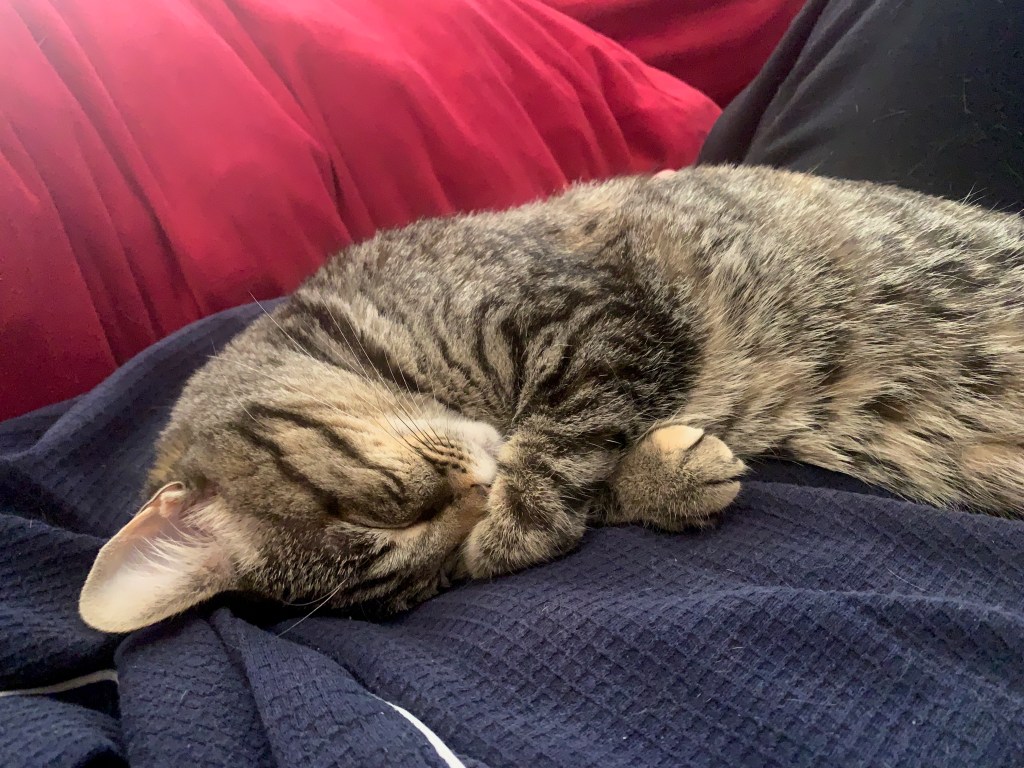
The Queen at rest…
This is the last day of my two week vacation and the Queen and I have spent it together doing just about what you see her doing here. Besides, she was laying in my lap and it would have been quite rude of me to disturb her. Yesterday, after I picked her up, she was a hissing spitting alley cat, but she has remembered that I am her faithful servant, forgiven me, and is once again deigning to allow me to scoop her poop (which has no stink… naturally.)
I have had some guilt about not working today and responding to emails, but I have managed to overcome those feelings with a nap of my own. Interesting that we need vacations, take vacations, and feel guilty for not working on vacations. I keep reminding myself that St. Matthew’s survived 120 some odd years without me and they’ll be just fine whether I’m gone for another a day or forever. Yet, I enjoy them and I enjoy being their priest, so perhaps it’s not so much me feeling guilty as it is me ready to get back in the mix doing the work…. it is a good work. Even so, I can’t help but think of this song…
Don’t forget to dance, even if you have two left feet.
Thought for the day: love is neither a verb or noun. Love is a person.
I’ve decided to give something a try: online journaling. On the main journal page you will read….
A place to wander and think. Not sure how long this will last or how often I will post in this category. It is an experiment. Feel free to ignore, comment, etc… just don’t argue. It is a place for thinking and all my thunking might not agree with your thunking, but that really is OK. Perhaps between the two of us, we’ll figure something important out or at least enjoy a bit of time together. If you have a place where you like to think, share that and I’ll join you along the thinking journey.
That’s pretty much it for the official notice. Please feel free to unsubscribe if you’ve signed up for email notifications of blog posts and just don’t want to receive this much information.
Arrived at the airport in Helena, Montana around 6 p.m…. yesterday! Flight left an hour or so later. Arrived in Salt Lake City and hung about for an hour or so, then at 11 p.m. caught the red eye to Atlanta. Why Atlanta, you ask: because I’m headed to Oklahoma City. Oh, wait… we just passed it and I’ve got to turn around and fly another couple of hours to get back to it. Well, such is the life of one on vacation: you occasionally have to pay for it.
To the confession: I’ve been wearing a mask the entire time. I am tired of the mask. I get the mask, but… so, as I’m walking the never ending concourses of the Atlanta airport, I see a fella has just finished cleaning the “Men’s”. No one else is around and I’m a rebel. I find myself a nice clean smelling stall, lock the door, rip off my mask, and just sit there for about ten minutes breathing eye-watering disinfected air free of my mask. It was brilliant! Please! No one tell the CDC.
It is now 5:52 a.m., “Dirty Laundry” is playing loudly in some closed up bar, and I’m in search of coffee, because I’ve also learned that as long as you are holding something to eat or drink, you can legally keep the mask off. My coffee may be as cold as a divorce lawyer, but I won’t be setting that cup down until it’s time to board.
Here’s hoping you have a mask free day from one living on the edge in toilet stalls across America.
Hearken to my voice, O Lord, when I call; have mercy on me and answer me. You speak in my heart and say, “Seek my face.” Your face, Lord, will I seek.
I love to read, but I’ll occasionally go through a phase when I don’t even want to pick up a book, so I’ll end up binge watching something on the TV for a few weeks. Then I’ll get tired of that and go back to a book. It’ll happen with other things as well, but… the Psalmist said, “You speak in my heart and say, ‘Seek my face.’ Your face, Lord, will I seek.” Have you ever gone through a phase when you just didn’t feel like seeking His face? I’m not going to ask you to raise your hand if you have, because that is not the kind of thing that good Christian folk like to confess, but do you occasionally find yourself a bit tired of seeking him, wondering about His will, and all that? As I said, I won’t ask you to confess, but if you said you’ve never experienced those types of feelings then I would say you need to go to confession for fibbing. It is something that we all experience at times and it is those times where our faith is truly demonstrated.
A mature Christian will continue on with their faith and their practices, knowing that these are times of wilderness, but not abandonment by God. However, others will begin to drift away and perhaps one of the first things to go is prayer. When it just seems like we’re filling the air with words that are unheard and accomplish nothing, then why bother, but it is the prayers in the wilderness that will see us through, because it is through them that we maintain the relationship with the Father.
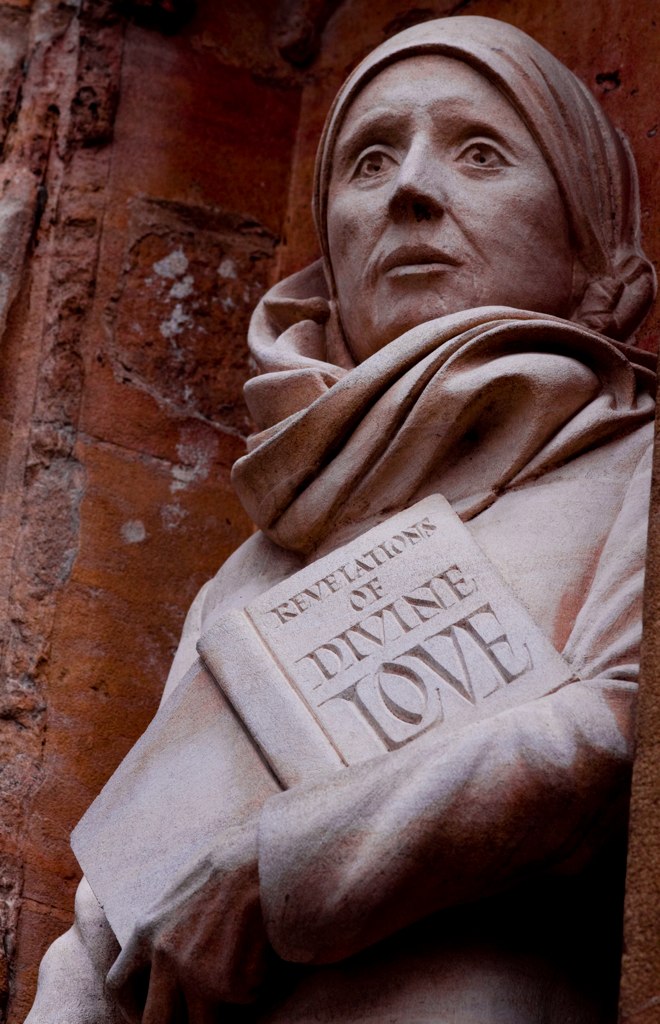
Julian of Norwich, who we celebrate today, spoke about this in the second part of her fourteenth revelation that is contained in her Revelations of Divine Love. “Our Lord is very glad and happy that we should pray, and he expects it and wants it… for this is what [the Lord] says, ‘Pray earnestly even though you do not feel like praying, for it is helping you even if you do not feel it doing you any good, even if you see nothing, yes, even if you think you cannot pray; for in dryness and in barrenness, in sickness and weakness, then your prayers give me great pleasure, even if you feel that they are hardly pleasing to you at all. And it is so in my sight with all your trustful prayers.’” Julian says, “God accepts the good intentions and the effort of those who serve him, whatever we are feeling.” (p.100)
To us, it may seem fruitless, but in a time of barrenness, that feeling of the absence of God, to stop praying is to break off from the relationship, so regardless of how we feel, we must stay engaged, because it is through our faithfulness and this engagement that we will once again feel the presence of God.
If you say, “I just don’t feel like praying. I don’ t have anything to say,” then take that good advice of Archbishop Michael Ramsey, “Pray that you could pray,” but don’t stop praying.
Little Johnny was getting ready for his first day of school and was a little bit nervous. Of course his parents were nervous too – their little boy, all grown up.
Johnny’s mother and father both went to pick him up at school, eager to find out how his first day of school was.
“So Johnny, how was your first day of school?” his father asked. “What did you learn?”
Johnny responded. “Not enough. Because apparently I have to go back tomorrow!”
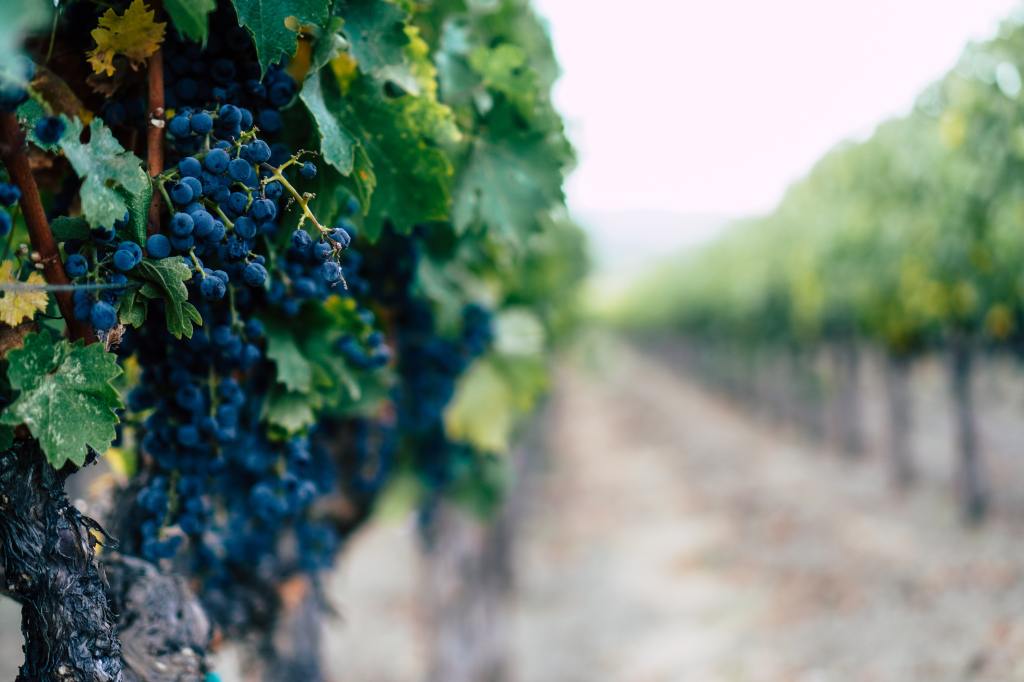
Let’s talk wine! As many of you know, I’ve started making my own wine. As some of you know… it ain’t all bad. Now, I don’t do the Lucille Ball thing of stomping out my own grape juice, that part is already prepared, but I do mix in the yeast, oak chips, and other vintner secret ingredients. It’s just fun to take the time putting it all together, watching it ferment and then waiting to see how things work out. There is a good bit of science behind the making of the wine, but there is also a good bit of science in growing the grape.
Here’s a bit of trivia for you (and it really depends on the region, type, etc. and who you ask), but how many average size grapes does it take to make a glass of wine? Answer: 75-100, which is about the number of grapes on each cluster of grapes on a vine. Given that each vine produces about 40 clusters means that a single vine can produce about 10 bottles of wine, which tells us that a lot goes into producing all the wine that is consumed worldwide on an annual basis. How much wine would that be? About 40 billion bottles a year. Given that there are only 7.8 billion people on the planet tells me that some of you are doing more than your fair share of consumption! It takes a lot of land, people and other resources in order to keep up with such demand, and a great deal of care must be given to the vine: acidity of soil, amount of moisture, sunlight, etc. Growing takes the longest amount of time, but second to that and perhaps the most labor intensive part is the pruning of the vine, which must be done each year for optimal production and flavorful grape.
There are many different parts of the actual vine, but it is only the branches that are one year old that produce grapes, so if not properly pruned, the vine just gets bigger, but produces little to no fruit. As it is a vine, it will continue to grow, but will become much more thin, fragile and susceptible to disease. At that point, all the energy is going into producing vine and little is left for producing grapes. And, if there are too many branches and too many leaves, then the sunlight can’t reach the grapes that do manage to mature, preventing them from ripening.
The bottom line is that there is a very fine balancing act that is taking place so that the vine is able to be the most productive. Left to its own, it becomes wild and unmanageable, producing little and what it does manage to produce is low quality. Pruned improperly, cutting off too much, and there is nothing that remains in order to grow the fruit. Done properly with expert skill, and it does seem counterintuitive, but the pruning—up to 90% of the vine—will actually produce a healthier more productive vine than when left to its own. Therefore, for his or her part, the vinegrower, the one who prunes, must know the plants very well. Where are they in their production? How and where were they pruned the previous year? What diseases are they susceptible to? What type of fertilizer is required? All this and so much more the vinegrower must know in order to properly care for the vines.
At this point, you may be thinking I’ve spent a great deal of time this morning talking about wine and winemaking, but the truth is, we haven’t really been talking about wine at all and you know that.
For the most part, during the time of Jesus, Israel was a very agrarian culture and grapes—wine—were a staple. It was safer to drink the wine than it was the water, so wine was livelihood and life. Therefore, Jesus speaking about vines and pruning would have made perfect sense to the disciples. When Jesus said to his disciples, “I am the true vine, and my Father is the vinegrower. He removes every branch in me that bears no fruit. Every branch that bears fruit he prunes to make it bear more fruit,” the disciples would have clearly understood the imagery that Jesus was using. We just had to do a bit of homework in order for it to me made more clear for us.
It is through Jesus that we have life and it is through the care given by the vinegrower, the Father, that we are given those things and tended in such a way that allow for and cause fruitful lives. Jesus, as the vine, provides us with the nourishment we need through word and sacrament, and the Father oversees it all.
In this image, we are the branches that come from the vine and it is the branch that produces the fruit. So what is the fruit? Jesus actually tells us in the very next verses that were not included in this week’s Gospel lesson: “As the Father has loved me, so I have loved you; abide in my love.” And a few verses on, “This is my commandment, that you love one another as I have loved you.” St. John reiterated this point in our Epistle lesson this morning: “Those who say, ‘I love God,’ and hate their brothers or sisters, are liars; for those who do not love a brother or sister whom they have seen, cannot love God whom they have not seen. The commandment we have from him is this: those who love God must love their brothers and sisters also.” The fruit that we are to produce begins with the relationships we have with God and with one another. Everything else is a product of those relationships, that love. As John states, it is not enough to say, “I love God,” because you must also be able to say, “I love my enemy.” Have you reached that level of perfection in your life?
There are many things that prevent us from progressing towards this, but at the heart of it all is our pride. Our need to be right or to get even or to simply hold a grudge. Before we can make progress in love, we must allow God to prune away the pride that holds us back, so that we make room for new and fruitful growth.
I’ve been reading Love in the Time of Cholera by Gabriel Garcia Marquez. When an uncle found himself angry with his nephew for not following through in a job, the uncle found peace. Marquez writes, the uncle “allowed himself to be swayed by his conviction that human beings are not born once and for all on the day their mothers give birth to them, but that life obliges them over and over again to give birth to themselves.” Jesus said, that we must be “born again… of water and spirit.” Perhaps Little Johnny said it the simplest when asked what he learned at school: “Not enough. Because apparently I have to go back tomorrow!”
If we have not learned to love God, our neighbor, and our enemies, then we apparently have to go back to school again tomorrow and be pruned a bit. Fortunately, I do not believe that the God who created us will completely prune us out of the vine as long as we are ever striving to fulfill his commandments, however, we must learn to allow God to prune out those parts that prevent us from producing good fruit. It is then that we can make progress in our relationship with God and with one another.
Let us pray: Come Holy Spirit, fill the hearts of your faithful and kindle in them the fire of your love. Send forth your Spirit and they shall be created. And You shall renew the face of the earth. Amen.
Catherine of Siena was born in 1347, the twenty-fourth of her parents twenty-five children. At the age of seven, she vowed her life to Christ. At the age of fifteen, she cut her hair in disobedience to her parents who were fighting for her to be married. At the age of eighteen she became a part of the Dominicans. At the age of twenty-one she had a mystical experience where she became spiritually espoused to Christ. Those events alone are enough, but through her work and particularly her writings, she became a force in her community and elsewhere and even with Popes.
In her letters and her Dialogue, perhaps the greatest of her writings, she recounts a souls journey through the mystical experience of God. There is much we can discuss about her writings, so I’ll just focus on one idea: she writes out a prayer to Christ, speaking to him about his great love for God’s people and asking him what could drive the Creator of all to pursue his creation so recklessly.
“O priceless Love! You showed your flamed desire when you ran like a blind and drunk man to the opprobrium [the disgrace] of the cross. A blind man can’t see and neither can a drunk man when he is fast drunk. And thus he [Christ], almost like someone dead, blind and drunk, lost himself for our salvation.” Continuing this theme of drunkenness in her Dialogue, she says, “O mad lover! Why then are you so mad? Because you have fallen in love with what you have made! You are pleased and delighted over her within yourself, as if you were drunk for her salvation. She runs away from you and you go looking for her. She strays and you draw closer to her. You clothed yourself in our humanity, and nearer than that you could not have come.”
Continuing elsewhere, she writes, “O unutterable love, even though you saw all the evils that all your creatures would commit against your infinite goodness, you acted as if you did not see and set your eye only on the beauty of your creature, with whom you fell in love, like one drunk and crazy with love. And in love you drew us out of yourself giving us being.”
I am certain that we’ve all been in love before, or at least thought we were, and in that state I feel certain we have all done some pretty stupid things. I’m also fairly certain that most have overly partaken of some intoxicating beverage and done some rather stupid things then as well. If you have had the fortune (or misfortune) of being both in love and intoxicated, then the level of stupidity can reach even higher levels, but that is how Catherine says that Jesus loves us, as though he was drunk and in stupid love with us. That may sound crazy and, to some, irreverent if not blasphemous, but how would you describe a love that lays down his life for you? Logic can’t explain it. Duty doesn’t come close. I suppose we could just say he was crazy, but if we have faith, if we believe that it is the Father’s desire that all should be saved even if we are wicked, then we must at least consider that Catherine was onto something: a love that appears to be a drunken insanity, but which is in fact pure and true.
You don’t have to agree with Catherine’s images of God’s love for us, but take some time to think on that love. Jesus was not intoxicated on wine, but how would you describe and explain his actions? You might just discover that a crazy drunken lover is the best you can do.
A group of Americans were on a tour of Israel and as they travelled through the countryside they passed a large herd of sheep. The shepherd was out front and the sheep were following. The guide explained to the tourists that the shepherd did not follow the sheep, pushing them along, but instead led them and they followed the sound of his voice. As Jesus said, “The sheep hear [the shepherd’s] voice, and he calls his own sheep by name and leads them out.”
There were some in the tour group who doubted this and snickered and they believed their doubts were confirmed when a short time later they saw a man behind a herd of sheep pushing them along by poking and prodding them with a stick. One of the tourist called out to the guide, “I thought you said the shepherds here always lead the sheep. Why is that man walking behind and driving them forward?” The guide looked over to see what was taking place, then answered, “That man isn’t the shepherd. He’s the butcher.”
We know that the Judges, like Deborah and Gideon, ruled over Israel prior to the kings, and we know that one day the people came to the Prophet Samuel and said, “We want a king like everybody else.” It was then that Samuel said, “You don’t really want one, but if you insist…,” but before giving them the king, he warned them why it was a bad idea: the king will take your sons and daughters from you to serve him, he’ll take the best of everything you have and then some, he’ll send you off to die in wars, it’ll be a real mess, but the people persisted and God gave them what they asked for.
The first king was Saul. Saul was a bit on the crazy side and that didn’t work out so well. When Saul died, the people came to David—as in David and Goliath—and proposed to make him their king. They said to him, “Behold, we are your bone and flesh. In times past, when Saul was king over us, it was you who led out and brought in Israel. And the Lord said to you, ‘You shall be shepherd of my people Israel, and you shall be prince over Israel.’” You shall be shepherd / prince, you shall be king. This is the first time in scripture that the word shepherd was used as a way of referring to the king, but it is one that endured throughout.
David was better at the job than Saul, but he wasn’t without his faults. Following him were both good and bad kings, but ultimately, after roughly 500 years, it declined to such a state that God was infuriated, so he called on the Prophet Ezekiel to prophesy against the kings, against the shepherds: “Ah, shepherds of Israel who have been feeding yourselves! Should not shepherds feed the sheep? You eat the fat, you clothe yourselves with the wool, you slaughter the fat ones, but you do not feed the sheep. The weak you have not strengthened, the sick you have not healed, the injured you have not bound up, the strayed you have not brought back, the lost you have not sought, and with force and harshness you have ruled them.” Everything Samuel said the kings would do, they did. The people were lost and scattered and sent into exile. The kings were not the shepherds of the people, leading them along with their voice and their words. The kings were the butchers, poking and prodding the people and leading them to their deaths.
However, the Lord may punish the shepherds, but he had no plans to forsake his people, the sheep, for he also said through Ezekiel, “Behold, I, I myself will search for my sheep and will seek them out… I will feed them with good pasture, and on the mountain heights of Israel shall be their grazing land. There they shall lie down in good grazing land, and on rich pasture they shall feed on the mountains of Israel…. I will seek the lost, and I will bring back the strayed, and I will bind up the injured, and I will strengthen the weak, and the fat and the strong I will destroy. I will feed them in justice.”
In those words, did you hear Psalm 23?
The Lord is my shepherd… He makes me lie down in green pastures… [He] guides me along right pathways… [He spreads] a table before me in the presence of those who trouble me…
In those words, did you hear the feeding of the 5,000, when with just a few loaves of bread and a couple of fish, Jesus fed the multitude?
In those words of Ezekiel, did you hear Jesus saying, I will “bind up the brokenhearted” and “For the Son of Man came to seek and to save the lost.”
Today, in our Gospel, Jesus said, “I am the good shepherd. The good shepherd lays down his life for the sheep.” Today, in our Gospel, Jesus said, “I am the good King. The King lays down his life for his people.” By his life and death, Jesus fulfilled Ezekiel’s prophecy and became the true shepherd and our King.
Today, we have many shepherd kings that surround us. Some are actual leaders in various capacities, but they also come in other forms. These may be our goals and ambitions, whether they be for our health or wealth or jobs, and still others might be for recognition or perfection in some area. They are people and aspects of our lives that seek to guide and, in some cases, control us. This does not make them bad, per se, but whatever they might be, we should examine them and ask ourselves, “In pursuing _, am I hearing and following the voice of the Good Shepherd King or am I being deceived and being poked and prodded along by the butcher?” Ask yourself that question and also see where it leads you. Through your involvement, are you experiencing the promises of God? Put into the words of our readings today: do you experience the green pastures and still waters or does it bring hardship and pain? Ask yourself those questions and put those parts of your life to the test. In doing so, you will either discover the Good Shepherd King leading you or the butcher that should be removed from your life.
The Lord is my shepherd. The Lord is my King. In all things, allow his leading voice to be what rules in your life.
Let us pray: Sovereign God, ruler of all creation, you sent Jesus to testify to the truth: that you alone are the Lord of life. Help us to listen always to his voice so that we may proclaim his realm of justice, peace, and endless love; through Christ, who reigns forever. Amen.





 Candle in a Cave