Dominicans: AD Questions – Chapter One

Chapter One

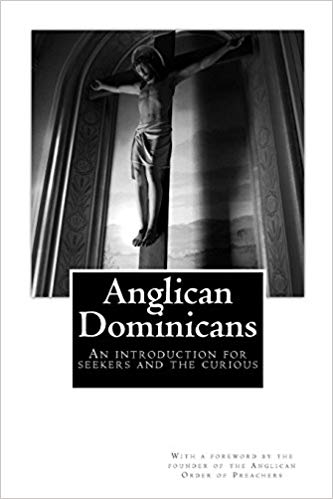
  • Is the concept of a denomination other than the Roman Catholic Church being โ€œCatholicโ€ new or familiar to you?

Twenty years ago, this was a new idea other than, โ€œWe believe in one holy catholic and apostolic church.โ€  As one of the four notes of the Church, I simply understood the word โ€œcatholicโ€ to mean universal.  Following my studies, I understood the concept in a much broader sense, not only in the way we practice our faith through ritual, but also our understanding of a more ancient church.

  • What is the argument Anglican Dominicans make in claiming that their Church is an expression of Catholic Christianity?

Anglican Dominicans argue that there was โ€œthe existence a primitive or early Catholicism (distinct from Roman Catholicism) that existed for the first one thousand years of Christianity,โ€ (p. 5) which was later folded into the Anglican Church.  John Henry Newman, one of the Tractarians would fully support this argument.  โ€œIn his tracts on the Church of England he claimed that it was truly and purely catholic, based on the customs of the Apostolic Church and the teaching of the Fathers, and corrupted neither by Romanism nor by Protestantism.โ€ (The History of the Church in England, p. 341)

  • While drawing upon the Catholic tradition of Christianity, the Anglican Dominicans also draw upon the Protestant tradition. What elements of the Protestant Reformation are particularly important to Anglican Dominicans?

St. Paul says to Timothy, โ€œI charge you in the presence of God and of Christ Jesus, who is to judge the living and the dead, and by his appearing and his kingdom: preach the word; be ready in season and out of season; reprove, rebuke, and exhort, with complete patience and teaching.  For the time is coming when people will not endure sound teaching, but having itching ears they will accumulate for themselves teachers to suit their own passions, and will turn away from listening to the truth and wander off into myths.โ€ (2 Timothy 4:1โ€“4)  Preach the word: โ€œThe Protestant Reformationโ€ฆ brought back into the mainstream of Christian life and practice: evangelization, preaching, and the centrality of the Word of God as found in the pages of Holy Scriptureโ€ฆ. [which] began to shift the emphasis of priestly office away from the altar and toward the pulpit.โ€ (p. 6, 7)  

The state of preaching today is lacking.ย  Mark Galli (Christianity Today), recently wrote a series of articles under the title, โ€œThe Elusive Presenceโ€ (they are brilliant).ย  In โ€œThe Elusive Presence: And Now, the Star of the Showโ€ฆ,โ€ Galli writes, โ€œPreaching is one time in the week when we have the opportunity to hear about something other than ourselves, other than the horizontal. Itโ€™s the time to hear about God and the wonder and mysteries of his love, of what heโ€™s done for us in Christ. But more and more, evangelical preaching has become another way we talk about ourselves, and in this case, to learn about the preacher.โ€ (Source)ย  This is one of the great appeals of the Anglican Dominicans, they understand the significance of sound and learned preaching and teaching that is focused not on self, but on the Word.ย  The Reformers got this one right.

  • How is Anglican Christianity a middle way between Roman Catholicism and Protestantism?

G.K. Chesterton is reported to have said/written, โ€œThe Reformer is always right about what’s wrong. However, he’s often wrong about what is right.โ€  As was noted in Anglican Dominicans, the reformers threw the baby out with the bath water; however, in pre-Reformation Roman Catholicism, the priest had become a poorly educated sacramentalist, with little or no emphasis placed on the Word of God.  It was about the ritual and not the Person behind it all.  As was noted above in answer #3, the reformers brought back the Word, the Tractarians (answer #2) brought back the theology/understanding of the ancient Church, and later the ritual, and from this, the Via Media was born: the โ€œbridgeโ€ Church, being both Catholic and Protestant.

  • What period of church history is particularly important for Anglicans in determining acceptable beliefs and practices?

The 19th century and the Oxford Movement, that I attempted to describe in answer #4.  This was a time of accepting some of the corrections of the reformers, without destroying the practices and piety of the Catholic Church, in the process, creating a reformed Anglican expression of the Catholic Church.

  • So far, what do you find interesting or appealing about the Anglican Dominicans?

โ€œAnglican Dominicans recognize this trend (the pastoral office centered almost exclusively on sacramental functions) is still dangerously present in the Christian Church today and believe the foundational mission is vigorous Gospel proclamation.โ€ (p.7)  This is very appealing.  With the decline of mainline denominations, we see so many gimmicks being employed to increase attendance and the Gospel is abandoned as โ€œold fashioned.โ€  In addition, many preachers sound more like CNN/Fox News commentators than they do proclaimers of the Good News.  However, at the ordination of a priest, the bishop asks, โ€œWill you endeavor so to minister the Word of God and the sacraments of the New Covenant, that the reconciling love of Christ may be known and received.โ€ (BCP p.532)  In this, Dominic demonstrated to us how to fulfill this vow: “Wherever the Master was, he always spoke either to God or about God.”


The Imitation of Christ Project: Bk. 3, Ch. 23


Photo byย Vasily Kolodaย onย Unsplash

FOUR THINGS WHICH BRING GREAT PEACE 

THE VOICE OF CHRIST

MY CHILD, I will teach you now the way of peace and true liberty.

Seek, child, to do the will of others rather than your own.

Always choose to have less rather than more.

Look always for the last place and seek to be beneath all others.

Always wish and pray that the will of God be fully carried out in you.

Behold, such will enter into the realm of peace and rest.

THE DISCIPLE

O Lord, this brief discourse of Yours contains much perfection. It is short in words but full of meaning and abounding in fruit. Certainly if I could only keep it faithfully, I should not be so easily disturbed. For as often as I find myself troubled and dejected, I find that I have departed from this teaching. But You Who can do all things, and Who always love what is for my soul’s welfare, give me increase of grace that I may keep Your words and accomplish my salvation.

A PRAYER AGAINST BAD THOUGHTS

O Lord my God, be not far from me. O my God, hasten to help me, for varied thoughts and great fears have risen up within me, afflicting my soul. How shall I escape them unharmed? How shall I dispel them?

“I will go before you,” says the Lord, “and will humble the great ones of earth. I will open the doors of the prison, and will reveal to you hidden secrets.”

Do as You say, Lord, and let all evil thoughts fly from Your face. This is my hope and my only comfort — to fly to You in all tribulation, to confide in You, and to call on You from the depths of my heart and to await patiently for Your consolation.

Dominicans: AD Questions – Introduction

OK, blog friends, three posts in a day is a bit excessive… sorry. Just getting things done on a restful ‘non-laboring’ Labor Day.


As part of the postulancy program, I will be reading Anglican Dominicans and answering questions. The plan is to post these by chapter. Below are the questions from the ‘Introduction’ and the answers I submitted. The remaining chapters are where the fun begins.


Introduction

  • Prior to reading this book, had you ever heard of Roman Catholic or Anglican Dominicans?

Yes.  Nashotah House, where I attended seminary, is based on the Benedictine rule.  There were many times in various classes (church history, spiritual theology, etc) that the different orders, including Dominican, were discussed.  In addition, we would have members of various religious orders visit the campus.  I confess, at first, I believed they were Roman and just happened to be visiting.  It was later that I learned of the religious orders within the Anglican Communion and that I began researching the various orders.  As Nashotah is Benedictine, that was my original interest, but the more I learned of the Dominican Order, the more I understood this was perhaps the place for me.

  • Prior to reading this book, were you aware that there are religious orders in the Anglican Communion?

More or less answered this above, however, while in the Diocese of Montana, it was the Anamchara Fellowship that was promoted and supported.  Although a worthy organization, I did not feel a call in that direction.  In my readings on Anglican Dominicans, I was delighted to learn that there is collegiality and friendship with the RC Dominicans.

Dominicans: A Beginning

What’s with the pooch?

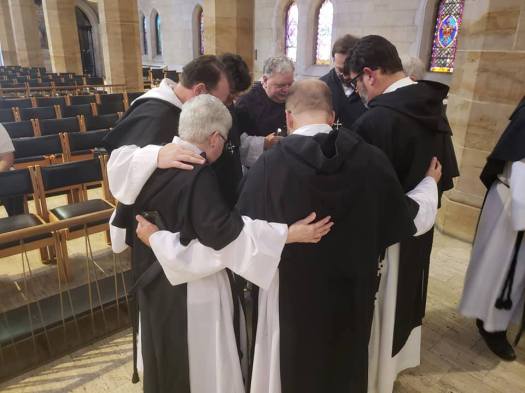
Discernment to the priesthood is not something that ends once you’re ordained, and for sometime, I’ve been discerning mine. My conclusion: I need to go deeper. I need to stop playing around and pretending. I need to further commit my life to the Gospel. With that in mind, after prayer and consultation with my Bishop, I have decided to ‘try’ and become a member of the Anglican Order of Preachers (a.k.a. Dominicans). No. I’ve no plans to leave my current church (unless they kick me out). In fact, this calling into the Dominicans seems to be drawing me even closer to them.

Who are the Anglican Dominicans? From their website:

The Anglican Order of Preachers is an apostolic religious community inspired by the spiritual tradition founded by Saint Dominic de Guzman in the thirteenth century. It was not until the last years of the twentieth century that an expression of Dominican spirituality and life could be found outside of the Roman Catholic Church. The Order is composed of men and women from around the world and various provinces of the Anglican Communion and her sister Churches.

The mission of the order is the proclamation of the Gospel of Jesus Christ, with a particular emphasis on proclamation ministries of evangelism and discipleship. The brothers and sisters surrender their entire lives to an apostolic lifestyle dedicated to God. This lifestyle, inspired by the lives of the first apostles and Saint Dominic, is lived out within the ordinary challenges of life, so that all people in all places can hear the Gospel.

The community is scattered, with brothers and sisters living across the world; by themselves, with their families or in small groups. They support themselves and the order by their work, either within the Church or the world. Brothers and sisters take vows of marriage or vows of celibacy. In everything members are encouraged to live out the words of Saint Dominic, “to speak with God or about God.” You can learn more here.

I’m currently only in the area of discernment, which is known as postulancy. Following this period of time, if accepted, I will become a novice and the novitiate will last for two years. If all goes well, I will make life vows and become a fully professed member.

The purpose of this new page, “Dominicans”, is to document the journey and post the writings that are required throughout this process and other info and pictures. I ask for your prayers.

O Lord Jesus Christ, you became poor for our sake, that we
might be made rich through your poverty: Guide and sanctify,
we pray, those whom you call to follow you under the vows
of poverty, chastity, and obedience, that by their prayer and
service they may enrich your Church, and by their life and
worship may glorify your Name; for you reign with the Father
and the Holy Spirit, one God, now and for ever. Amen.

Sermon: Proper 17 RCL C – The Lowest Chair

The podcast is available here.


Photo by Daria Nepriakhina on Unsplash. ย 

Following morning prayers at the monastery, an older monk prostrates himself before the altar, and cries out, “O God. Before You, I am nothing!”

A second monk is so moved by this demonstration of piety that he immediately follows suit, throwing himself to the floor beside his brother and crying, “O God! Before you, I am nothing!โ€

In the ensuing silence, a shuffling is heard in the back of the chapel. A third monk jumps from his seat, prostrates himself in the isle and cries, “O God! Before You, I am nothing!โ€

Seeing this, the the first monk turned to the second and whispers, โ€œSo, look who thinks he’s nothing?โ€

Just when you thought you were being humbleโ€ฆ you humiliate yourself.

Like all of Jesusโ€™ teachings, todayโ€™s Gospel is like pitching a stone into a pond: the ever expanding ripples speak to more and more people, until we find ourselves caught up in the message.

At first glance, the parable of those jostling for the best seat appears to be about table etiquette and humility, but this is not a new teaching, especially to the religious leaders who were gathered around the table.  Knowing the scriptures, they would have immediately recalled Proverbs 25:6-7:

Do not put yourself forward in the king’s presence

    or stand in the place of the great,

for it is better to be told, โ€œCome up here,โ€

    than to be put lower in the presence of a noble. 

Good advice and etiquette.  Got it.  And wouldnโ€™t you hate to have been the guy that pushed his way to the front so that he could have the best seat at this particular dinner party.  Jesusโ€™ words might have stung that person a bit, but given the context and the audience, everyone would have felt a sting, because they all knew that just a short time before this gathering Jesus has said, โ€œWoe to you Pharisees! For you love the best seat in the synagogues and greetings in the marketplaces.โ€ (Luke 11:43)  Not only were the religious leaders pushing themselves forward in the eyes of others, but they also pushed themselves forward in the eyes of God.  As we learn in the Gospel lesson we hear on Ash Wednesday: the religious leaders like to sound the trumpets to make a show of their giving, they pray loudly in the synagogue and on the street corners, when they fast, they make a big show of their โ€˜misery.โ€™  All of this to say, โ€˜Look at me world, look at me God, and see how special I am.  I deserve a seat of honor at the table.โ€™  But the sting of this teaching does not stop there.  It takes in even more.

We know that following Jesusโ€™ resurrection and ascension, Christianity began to spread, however, it was primarily a sect within Judaism, but in the Acts of the Apostles we see how it began to spread among the Gentiles.  As more and more Gentiles became believers, the Jewish Christians began to ask themselves, โ€˜What are we going to do with them?โ€™  There were many arguments over whether or not these Gentile converts needed to practice the Mosaic Law, be circumcised and so on.  We know how it worked out in the endโ€”Paul became the great Apostle to the Gentiles and even Peter came to understand that the faith was open to all, but initially, the Jewish Christians thought they were โ€˜betterโ€™ than the rest.  After all, they were first.  They were the Chosen People, therefore, they should have the seat of honor.  So Paul would have to teach: โ€œThere is neither Jew nor Greek, there is neither slave nor free, there is no male and female, for you are all one in Christ Jesus.โ€ (Galatians 3:23)  There is no seat of honor, you are all honored because of Christ Jesus.

It is a good thing that we are not like this.  We never see ourselves deserving of the seat of honor above others.  How does it go?  “The Church of England: Loving Jesus with a Slight Air of Superiority Since 597 a.d.โ€  Iโ€™m pretty sure the same can be said of Episcopalians, just change the year to 1789.

We push to have ourselves ahead of others and to have the seat of honor, but, in all this, there was one question that kept coming up in my mind: whatโ€™s so bad about the lowest seat?  That one thatโ€™s in the back of the banquet hall next to the bathroom door that squeaks every time someone goes in or out.  No, perhaps it is not the best seat in the house, but why canโ€™t we be happy with it?

Some of you will likely roll your eyes at the fact that Iโ€™ve never read or heard of this guy before: David Brooks.  He is a commentator that writes for the New York Times.  In 2014, he participated in a Christian forum, The Gathering, and gave a talk titled, โ€œHow to be Religious in the Public Square.โ€  He says, โ€œIn 1950, the Gallup organization asked high school seniors, โ€˜Are you a very important person?โ€™ And at that point 12 percent said yes. They asked the same question in 2005 and 80 percent said, โ€˜Yes, I am a very important person.โ€™โ€  He goes on to say that there is this โ€œgreat desire for fame. Fame used to be low on a value. Now fame is the second-most desired thing in young people.  They did a study, โ€˜Would you rather be president of Harvard or Justin Bieberโ€™s personal assistant, a celebrityโ€™s personal assistant?โ€™ And of course by 3 to 1 people would rather be Justin Bieberโ€™s personal assistant.โ€  He adds, โ€œThough to be fair I asked the president of Harvard, and she would rather be Justin Bieberโ€™s personal assistant.โ€  His conclusion, โ€œThis is an achievement culture. A culture of people striving and trying to win success.โ€  A culture of people striving and trying to win the seat of honor.

Brooks then goes on to discuss the book Lonely Man of Faith, by Rabbi Joseph Soloveitchik, who talks about two opposing natures, referring to them as Adam One and Adam Two (not to be confused with Adam 12).  The Rabbi states, โ€œAdam One wants to conquer the world. Adam Two wants to obey a calling and serve the world. Adam One asks How things work. Adam Two asks why things exist and what weโ€™re here for.  Adam One wants to venture forth. Adam Two wants to return to roots.  Adam Oneโ€™s motto is โ€˜Success.โ€™  Adam Twoโ€™s motto is โ€˜Charity. Love. Redemption.โ€™โ€ (Source)  In the context of our Gospel reading, Adam One wants to sit at the head of the table, next to the guest of honorโ€ฆ No.  Thatโ€™s wrong.  Adam One wants to be the guest of honor, to be famous and only if that fails, will Adam One be satisfied with being in near proximity of fame and perceived honor, i.e. Justin Bieberโ€™s personal assistant.  Adam Two doesnโ€™t care much for Justin Bieber and will happily take a seat anywhere. 

What is the difference between the two?  The obvious answer (and a correct one) is humility.  From the book of Proverbs: 

The fear of the Lord is instruction in wisdom,

    and humility comes before honor. (Proverbs 15:33) 

Where does humility begin?  With God.  Humility is a grace from God that allows us to submit our lives to the Lord.  Most pray for such a grace everyday, although we may not recognize it as such: โ€œThy will be done.โ€  Humility begins by submitting your will to the will of God and saying with Jesus, โ€œNot my will, but yours, be done.โ€ (Luke 22:42)  It comes, as humbling as it may sound, by recognizing that perhaps Godโ€™s will, at this stage in your life, is for you to be at the table next to the bathroom door.  

Adam Two seeks only the will of God.  Adam Two recognizes their place in the worldโ€”and understand this isnโ€™t about societal status, money (or the lack there of), things of that nature, but is about being comfortable in your own skinโ€”Adam Two finds happiness in who they are and where they are, whether being served in the seat of honor or in the kitchen, standing over the sink and eating leftovers.  My friend Thomas ร  Kempis writes about this.  Speaking to God the Father, he says, โ€œAnyone who loves You โ€ฆ would be as peaceful and satisfied in the last place as in the first, and as willing to be despised, unknown and forgotten, as to be honored by others and to have more fame than they. He should prefer Your will and the love of Your honor to all else.โ€ (Imitation of Christ, Bk. 3, Ch. 22)  Put another way: Adam Two, doesnโ€™t care where he sits, heโ€™s just happy to have been invited and heโ€™s delighted to see you, whether youโ€™re sitting next to him or at the head table.  The joy and happiness comes in recognizing that no matter what table you are sitting at, the Guest of Honor, Jesus, is sitting next to you.

Donโ€™t worry about the seats of honor, instead, humble yourself so that you may seek, know, and follow the will of God.  In Godโ€™s will is wisdom, peace, and the true happiness you are searching for.

Let us pray: Lord, if what we seek be according to your will, then let it come to pass and let success attend the outcome. But if not, let it not come to pass. Do not leave us to our own devices, for you know how unwise we can be. Keep us safe under your protection Lord, and in your own gentle way, guide us and rule us as you know best.ย  Amen.

Sermon: Augustine of Hippo

The podcast is available here.


In the year 313 a.d., the Roman emperor, Constantine, issued the Edict of Milan.ย  In it was stated, โ€œThe Christians and all others should have liberty to follow that mode of religion which to each of them appeared best; so that that God, who is seated in heaven, might be benign and propitious to us, and to every one under our government.โ€ (source) ย  From then on, Christians enjoyed a much easier time throughout the Roman Empire and Christianity would go on to be recognized as the official religion.ย  Eventually the Empire would begin to crumble and in the year 410 a.d., the Visigothโ€™s, a Germanic tribe, would invade Italy and conquer Rome.ย  Who did the people blame for the fall?ย  Why the Christians of course.ย  The complaint: if we had been able to keep the old gods, none of this would have happened.

Sixteen years later in 426 a.d., St. Augustine of Hippo published a response to the allegations: The City of God.  โ€œTwo cities have been formed by two loves: the earthly by the love of self, even to the contempt of God; the heavenly by the love of God, even to the contempt of self. The former, in a word, glories in itself, the latter in the Lord. For the one seeks glory from men; but the greatest glory of the other is God, the witness of conscience. The one lifts up its head in its own glory; the other says to its God, โ€˜Thou art my glory, and the lifter up of mine head.’ In the one, the princes and the nations it subdues are ruled by the love of ruling; in the other, the princes and the subjects serve one another in love, the latter obeying, while the former take thought for all.โ€ (source)

St. Augustine, who we celebrate today, wanted the people then to understand that the first city is the City of Man, where humankind rules and worships it own image and creations, and that the second city is the City of God, the city to come and the city of those who believe, helping Christians to understand that even though Rome has fallen, their future in the City of God is still assured and should be their greatest concern.

It would be nice to see how weโ€™ve changed.  That the vision of St. Augustineโ€™s City of Man no longer exists and that we are ushering in the City of God, but we know that is not the case.  This City of Man seems to be circling the drain more and more rapidly each day.  With that being the case, we could become discouraged, wonder why we put up any effort or resistance at all, but, as with those in the time of Augustine, itโ€™s not over.  In the face of so much upheaval, remember the words of the Lord, โ€œBe strong and courageous. Do not be frightened, and do not be dismayed, for the Lord your God is with you wherever you go.โ€ (Joshua 1:9)

St. Augustine died on this day in the year 430 a.d.ย  He was perhaps the greatest theologian to have ever lived and is responsible for much of what we believe and understand about our faith.ย  In The City of God, he would have us know and understand that our hope is not in humankind, it is in God alone. ย โ€œSo,โ€ as the Apostle Paul writes, โ€œwe do not lose heart. Though our outer self is wasting away, our inner self is being renewed day by day. ย For this light momentary affliction is preparing for us an eternal weight of glory beyond all comparison,ย as we look not to the things that are seen but to the things that are unseen. For the things that are seen are transient, but the things that are unseen… including the City of God… are eternal.โ€ (2 Corinthians 4:16-18)

Sermon: Proper 16 RCL C – “Wow!”

The podcast is available here.


Photo by Danielle MacInnes on Unsplash

You all are very kind when it comes to comments about the sermon (at least the ones you say aloud!)  However, thatโ€™s not always the case with every preacher.  A parishioner came up to Jason Spears and said, โ€œComing from my other church and my former pastor to here listening to you is like going from filet mignon to ground beef hamburger meat.โ€  Following the comment, he said, โ€œUnfortunately, in my youthful insecurity, the next week I handed her a small bottle of A1 steak sauce and encouraged her to go back if she saw fit.โ€

Sometimes, preachers just arenโ€™t sure as to how to take a comment:  Jeff Chandler reports, โ€œI was new to my first church and someone said: โ€˜Youโ€™re not like most pastors; when you say that you sin โ€“ we believe you.โ€™โ€  And Vince Torres said, โ€œA guy in my church approached me after what must have been a personally convicting sermon and said, โ€˜Great teaching.  But donโ€™t you ever talk to me like that again.โ€™โ€  However, it was a comment made to Dan Donahue that got me to thinking.  A parishioner told him, โ€œI saw a documentary on Hell and thought of you.โ€

As Iโ€™ve shared with you in the past, Iโ€™ll go back and review sermons to see where weโ€™ve been, so I took a look at these last few weeks, and although Iโ€™ll stick with the things Iโ€™ve said, thereโ€™s been a lot of talk about the โ€œSon of Man coming as judge,โ€ โ€œBe prepared so that your not found lacking,โ€ โ€œThe last day,โ€ โ€œGood soldier,โ€ and so on.  All true, but really just a round about way of telling you to get your act together or youโ€™re going to Hell.  Now, there are some of you that need to hear that on a regular basis (Iโ€™m not naming names, _____), but our Gospel reading today says that there is also a need for โ€œthe rest of the story.โ€

On the surface, we have a story of healing.  Jesus sees a woman walking in the synagogue who has been crippled, bent over for the past eighteen years.  So, Jesus, without being approached by anyone and asked to help, takes the initiative and says to her “Woman, you are set free from your ailment.โ€  He then laid hands on her and she was healed, stood up straight and praised God.  We are never told why she was bent over, but what happens next helps us to understand the larger point Jesus was making.

The president of the synagogue becomes angry with Jesus for healing the woman on a Sabbath, or put another way, he was angry with Jesus for working on a Sabbath which was against the Mosaic Law.  Jesus responds to the accusation by saying to the president, โ€œYou as the religious leaders place huge burdens on the people.  You weigh them down with all your rules and threats.  You show more mercy to your animals than you do the children of God.โ€  All you do is tell them that theyโ€™ve got it all wrong and they need to change or else theyโ€™re going to hell.  Youโ€™ve weighed them down, bent them over, and youโ€™ve forgotten to tell them the rest of the story.  And what is the rest of the story?  The same one that Jesus demonstrated to the woman and confirmed with his words: You have been shown mercy.  โ€œYou are set free.โ€

Consider these passages of Scripture: Hosea 6:6 – โ€œI desire mercy, not sacrifice, and acknowledgment of God rather than burnt offeringsโ€; and James 2:13 – โ€œJudgment without mercy will be shown to anyone who has not been merciful. Mercy triumphs over judgment.โ€ย  The problem is that we can get so caught up in judgment and what to do in order to avoid hell, that our faith becomes about our actions instead of Godโ€™s actions; and Godโ€™s actions demonstrated and expressed by Jesus are all about mercy.

In The Name of God is Mercy, Pope Francis writes, โ€œPius XII, more than half a century ago, said that the tragedy of our age was that it had lost its sense of sin, the awareness of sin. Today we add further to the tragedy by considering our illness, our sins, to be incurable, things that cannot be healed or forgiven. We lack the actual concrete experience of mercy. The fragility of our era is this, too: we donโ€™t believe that there is a chance for redemption: for a hand to raise you up; for an embrace to save you, forgive you, pick you up, flood you with infinite, patient, indulgent love; to put you back on your feet. We need mercy.โ€  We need mercy because so much weighs us down that we live spiritually bent over lives, unable to stand up straight and give God glory.  We become so bound up in our work to avoid hell that we no longer experience the freedom that comes through Godโ€™s mercy.  Yes.  We need mercy and the freedom that comes from it to live into the joy of the Lord.  What is this freedom?

H&H is the short way of referring to the third oldest music society in the United States.  It stands for Bostonโ€™s Handel and Haydn Society, founded in 1815.  In May of this year, the Boston Symphony was performing the H&H season finale concert, which was being recorded.  Iโ€™ve never been there, but looked at pictures and the symphony hall itself, built in 1900, is magnificent.  On that particular day, there were approximately 2,500 in attendance. As part of the program, Mozartโ€™s Masonic Funeral Music was played.  It was a special day for everyone in attendance, but what made it even more so, was when that particular piece of music ended.  In the silence between the last note and the time the audience begins to applaud, there was a very audible, โ€œWow!โ€  It was clearly a child.  The audience burst into laughter and applause.  David Snead, President and CEO of H&H said, โ€œIt was one of the most wonderful moments Iโ€™ve experienced in the concert hall.โ€ (Source) โ€œThe Handel and Haydn Society, Americaโ€™s oldest performing arts organization, has been performing in Boston for 204 years and we can safely say that this was a first.โ€ (Source)

The โ€œWow!โ€ was such a sensation that the orchestra went in search of who the child was and eventually, through social media, discovered that it was nine year old Ronan Mattin, which makes the story even more fun.  It turns out that Ronan is autistic.  His mother says, โ€œI can count on one hand the number of times that [heโ€™s] spontaneously ever come out with some expression of how heโ€™s feeling,โ€ (Source) 

What is this freedom that comes from mercy?  It is the freedom to spiritually walk into one of the most prestigious symphony halls in the United States, during the recording of the season finale concert, put on by a 200 year old music society, listen to piece of music composed by a master, and in the silence that follows, say โ€œWow!โ€

The freedom that comes from mercy is to understand that you are a deeply loved child of God.  A child who the Creator of Heaven and Earth desires to open to you all the joys of Heaven.  Jesus tells us, โ€œThe Kingdom of God is now,โ€ which means we donโ€™t have to live hunched over, crippled in this life.  Like the woman, we can stand straight and tall and give praise and glory.

Will there be a judgment day when the Son of Man returns unexpectedly?  Yes.  Yes there will be.  Will we each of us be judged on that day?  Yes we will be.  Do we need to guard and care for our souls.  Absolutely.  But donโ€™t get bogged down in Hell.  You have been set free to live, to dance, to experience joy.  You have been set free to say, โ€œWow!โ€

Let us pray:
Lord, we believe in you: increase our faith.
We trust in you: strengthen our trust.
We love you: let us love you more and more.
We are sorry for our sins: deepen our sorrow.

We worship you as our first beginning,
We long for you as our last end,
We praise you as our constant helper,
And call on you as our loving protector.

Guide us by your wisdom,
Correct us with your justice,
Comfort us with your mercy,
Protect us with your power.
Amen

The Imitation of Christ Project: Bk. 3, Ch. 22

Photo byย Priscilla Du Preezย onย Unsplash

The Twenty-Second Chapter

REMEMBER THE INNUMERABLE GIFTS OF GOD 

THE DISCIPLE

OPEN my heart, O Lord, to Your law and teach me to walk in the way of Your commandments. Let me understand Your will. Let me remember Your blessings — all of them and each single one of them — with great reverence and care so that henceforth I may return worthy thanks for them. I know that I am unable to give due thanks for even the least of Your gifts. I am unworthy of the benefits You have given me, and when I consider Your generosity my spirit faints away before its greatness. All that we have of soul and body, whatever we possess interiorly or exteriorly, by nature or by grace, are Your gifts and they proclaim Your goodness and mercy from which we have received all good things.

If one receives more and another less, yet all are Yours and without You nothing can be received. He who receives greater things cannot glory in his own merit or consider himself above others or behave insolently toward those who receive less. He who attributes less to himself and is the more humble and devout in returning thanks is indeed the greater and the better, while he who considers himself lower than all men and judges himself to be the least worthy, is the more fit to receive the greater blessing.

He, on the other hand, who has received fewer gifts should not be sad or impatient or envious of the richer man. Instead he should turn his mind to You and offer You the greatest praise because You give so bountifully, so freely and willingly, without regard to persons. All things come from You; therefore, You are to be praised in all things. You know what is good for each of us; and why one should receive less and another more is not for us to judge, but for You Who have marked every man’s merits.

Therefore, O Lord God, I consider it a great blessing not to have many things which human judgment holds praiseworthy and glorious, for one who realizes his own poverty and vileness should not be sad or downcast at it, but rather consoled and happy because You, O God, have chosen the poor, the humble, and the despised in this world to be Your friends and servants. The truth of this is witnessed by Your Apostles, whom You made princes over all the world. Yet they lived in this world without complaining, so humble and simple, so free from malice and deceit, that they were happy even to suffer reproach for Your name and to embrace with great affection that which the world abhors.

A man who loves You and recognizes Your benefits, therefore, should be gladdened by nothing so much as by Your will, by the good pleasure of Your eternal decree. With this he should be so contented and consoled that he would wish to be the least as others wish to be the greatest; that he would be as peaceful and satisfied in the last place as in the first, and as willing to be despised, unknown and forgotten, as to be honored by others and to have more fame than they. He should prefer Your will and the love of Your honor to all else, and it should comfort him more than all the benefits which have been, or will be, given him.

Sermon: Proper 15 RCL C – “Loyalty”

The podcast is available here.


A German Shepherd, Doberman and a cat have died. All three are faced with God who wants to know what they believe inโ€ฆ. The German shepherd says: “I believe in discipline, training, and loyalty to my master.โ€โ€ฆ โ€Good,” says God. “Then sit down on my right side. Doberman, what do you believe in?โ€โ€ฆ The Doberman answers: “I also believe in loyalty and the love, care, and protection of my master.โ€โ€ฆ Ah,โ€ said God. “You may sit to my left.โ€ Then he looks at the cat and asks, “And what do you believe in?โ€โ€ฆ The cat answers: “I believe you’re sitting in my chair.โ€

Dogs are always marked up as the loyal four legged companion, but even modern science contends that cats are also loyal, they just have a funny way of showing it. Whatever the case, whether it has to do with our four legged companions or the two legged ones, loyalty is a highly prized attribute.

Throughout Scripture, we hear much about faithfulness. There is Godโ€™s faithfulness to us: โ€œKnow therefore that the Lord your God is God, the faithful God who keeps covenant and steadfast love with those who love him and keep his commandments, to a thousand generations.โ€ (Deuteronomy 7:9) โ€œIf we confess our sins, he is faithful and just to forgive us our sins and to cleanse us from all unrighteousness.โ€ (1 John 1:9) There is also the call for us to be faithful to God: Jesus said to the Church in Smyrna found in Johnโ€™s Revelation, โ€œBe faithful until death, and I will give you the crown of life.โ€ (Revelation 2:10) However, the idea of โ€œfaithfulnessโ€ encompasses many different aspects of Godโ€™s relationship to us and ours with God. Things such as obedience, perseverance, service, etc., so today, instead of trying to explore them all, I would like to look at one particular aspect of faithfulness and that is loyalty. Particularly, we know that Jesus is loyal to usโ€”โ€œeven unto death on a crossโ€โ€”but are we loyal to him?

We all have an idea what loyalty is, but to get us all with the same understanding: the Merriam-Webster Dictionary defines loyal as โ€œunswerving in allegiance,โ€ so loyalty is the act of unswerving allegiance. We can be loyal to more than one thing: brands/stores, sports teams, people, etc., and I would like to say that we only break our loyalty when trust is broken or we lose faith in the object of our allegiance, howeverโ€ฆ Iโ€™ll let you decide for yourself if this is a true statement: Niccolรฒ Machiavelli, author of The Prince, wrote, โ€œOf mankind we may say in general they are fickle, hypocritical, and greedy of gain.โ€ I would like to say it is not true of me, but we all know that would be hypocritical. Therefore, when it comes to our relationship with God, I sincerely believe that we all desire to be loyal, but since the very beginning, we as the human race have struggled.

There was the issue of the apple, then the Cain and Abel incident, canโ€™t forget the Tower of Babel or Sodom and Gomorra. The Golden Calf, Bathsheba, Baal worship, just to name a few, and thatโ€™s just the Old Testament. With Jesus there were the followers who couldnโ€™t take the teaching, a matter of thirty pieces of silver, and something to do with a rooster crowing three times. Again, I sincerely believe that we desire to be loyal, but our allegiance does take a swerve or two, not because God has broken trust or faith with us, but because we have such a difficult time withโ€ฆ 90โ€™s band, โ€œThe Theโ€ (that was their name) – lyrics from: True Happiness this Way Lies.

โ€œBaby! (it is not a real song unless it says, โ€œBabyโ€)
Babyโ€ฆ I’ve got my sight set on you
And somedayโ€ฆ you’ll come my way.
But when you put your arms around me
I’ll be looking over your shoulder for something new.โ€

We want to be loyal to God, but there is always something new. Something shiny. Something distracting. So, what does it take to snap us back, to reaffirm our loyalty to God? Sometimes it is a moment of clarity: what the heck am I doing, Iโ€™ve drifted from my God; but in many cases, it takes a crisis, which brings us to our Gospel today.

Each Sunday for the past few weeks, weโ€™ve had to have a review, because weโ€™ve been in the middle of a single teaching from Jesus, and today is no different. What have we heard so far: Jesus, as the Son of Man, will act as our judge on the last day, so we must be vigilant in the care of our soul. We canโ€™t just give it a quick dusting once a month and think all will be well. It needs our daily attention and nurturing. We are building a mansion for our King, so that when he returns he will find a home worthy of his glory. โ€œWhy?โ€ is the question for today.

Some of you will remember the events of July 6, 1994 on Storm King Mountain in Colorado. It had been a hot dry summer and lightning strikes were causing all sorts of fires. When those fires pop up in remote areas, hot shots or smoke jumpers parachute in and fight them. This particular fire had been burning for a few days and had reached an area of twenty-nine acres. Not large, but big enough to do something about. Fifty firemen and women went in. Four hours later, fourteen of them were dead. At some point, the fire blew up and moved up the mountain at a pace of eighteen miles an hour. The flames reached 300 feet high and the temperature soared to 2,000 degrees. The blow up took less than twenty minutes to consume that side of the mountain and kill the fire fighters.

Jesus said, “I came to bring fire to the earth, and how I wish it were already kindled!โ€ Sts. Ignatius, Origen, and Didymus all record a saying of Jesus that is not found in the Gospels. Whether he said it or not, if feels true: Jesus said, โ€œHe who is near me is near the fire.โ€ Why are we to be vigilant in the care of our souls? Because there is a refining fire that is coming. A fire that purifies gold, a fire that purifies the people of God. A fire that is the saving message of the Gospel. A fire that will bring division, and when that dividing occurs, we must decide where our loyalties lie. If we have not been vigilant, alert, awakeโ€ฆ remember: โ€œIf the owner of the house had known at what hour the thief was coming, he would not have let his house be broken into. You also must be ready, for the Son of Man is coming at an unexpected hour.โ€ If we are not ready when that unexpected hour comes, if we have not been loyal to Jesus all along, then on that day, the day of judgment, our souls may be found lacking.

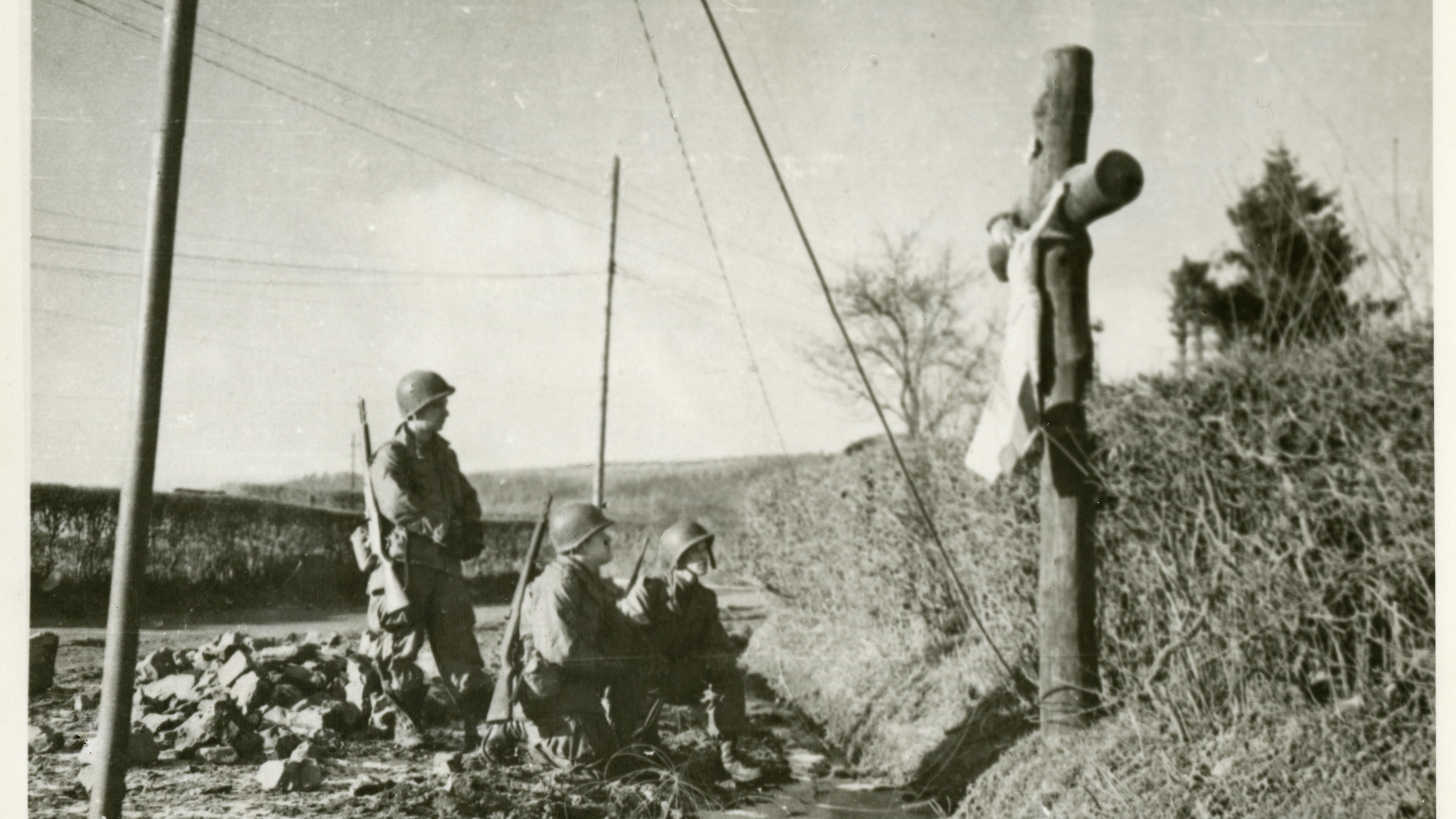
Consider what St. Paul says to Timothy: โ€œShare in suffering as a good soldier of Christ Jesus. No soldier gets entangled in civilian pursuits, since his aim is to please the one who enlisted him.โ€ (2 Timothy 2:3-4)

That great soldier, General George Patton stated, โ€œIt is a proud privilege to be a soldier โ€“ a good soldier โ€ฆ [with] discipline, self-respect, pride in his unit and his country, a high sense of duty and obligation to comrades and to his superiors, and a self confidence born of demonstrated ability.โ€

We are to be those soldiers of Christ Jesus. Sharing in his suffering and not getting entangled in civilian pursuits, that is, not confusing our loyalties, having an unswerving allegiance to our King so that we might please him and so that on the day of judgment he will say to us, โ€œWell done, good and faithful servant.โ€

My friend, St. Josemarรญa Escrivรก, writes, โ€œThe Lord, the teacher of Love, is a jealous lover who asks for all we possess, for all our love. He expects us to offer him whatever we have, and to follow the path he has marked out for each one of us.” (The Forge, #45) Therefore, be vigilant in guarding your soul, so that your loyalty to Jesus will remain unswerving.

Let us pray: Father in Heaven, ever-living source of all that is good, keep us faithful in serving You. Help us to drink of Christ’s Truth, and fill our hearts with His Love so that we may serve You in faith and love and reach eternal life. In the Sacrament of the Eucharist You give us the joy of sharing Your Life. Keep us in Your presence. Let us never be separated from You and help us to do Your Will. Amen.