Sermon: For Richard Roark

I don’t normally post the sermons I write for funerals, but I’ve decided that I would like to start because it is my way of remembering these individuals, so I suppose these types of posts will be more for me…

Archbishop Fulton Sheen said, “The rosary is the book of the blind, where souls see and there enact the greatest drama of love the world has ever known; it is the book of the simple, which initiates them into mysteries and knowledge more satisfying than the education of other men; it is the book of the aged, whose eyes close upon the shadow of this world, and open on the substance of the next. The power of the rosary is beyond description.”

During our online Morning Prayer services, when someone makes a comment, I see what they are saying. And almost without fail, there would a “Good morning” from Richard. That was always nice, but it was in the Zoom Rosary service that I could actually see him and for the last twenty months or so, almost every Tuesday at noon, Richard and I would meet and pray the Rosary together. We would occasionally have others join us, but most of the time it was just the two of us. We would visit for a few minutes about life and he would always ask if I thought anyone else would join us (he never quite understood why no one else did), and then we would get down to the work at hand. Sometimes we would pray a Rosary with special intentions, but mostly… we just got together and prayed those ancient words, meditating together on the life of our Savior.

We can read and hear about Richard’s life, which will tell us something about him, but it was this faithfulness in prayer that tells me all I really need to know. The Psalmist says,

You speak in my heart and say, “Seek my face.”
Your face, LORD, will I seek.

And that was Richard. Doesn’t make him perfect, but in his life of prayer, he sought the face of the Lord, which tells me that he did the same in his life. Seeking the face of the Lord in the faces of those he encountered.

Job said,

I know that my Redeemer lives
and that at the last he will stand upon the earth.
After my awaking, he will raise me up;
and in my body I shall see God.
I myself shall see, and my eyes behold him
who is my friend and not a stranger.

Richard sought the face of the Lord and now his eyes do behold the face of his Redeemer, who receives him as a friend and a beloved child. The inheritance and reward of his faithfulness, an inheritance and reward that awaits all who call on the name of the Lord. This is our joy and our hope and the fulfillment of God’s promise to us all.

The Salve Regina or Hail, Holy Queen is the final prayer of the Rosary. I prayed it with Richard a few hours before he died: “Hail, holy Queen, mother of mercy, our life, our sweetness, and our hope. To thee do we cry, poor banished children of Eve. To thee do we send up our sighs mourning and weeping in this valley of tears. Turn then, most gracious advocate, thine eyes of mercy toward us, and after this our exile show us the blessed fruit of thy womb, Jesus. O clement, O loving, O sweet Virgin Mary. Pray for us, O Holy Mother of God. That we may be made worthy of the promises of Christ.”

“… and after this our exile show us the blessed fruit of thy womb, Jesus.” And on this day, for Richard, she has. I am thankful to know that when I pray a Rosary down here, Richard will pray with me from his new home in the Heavenly Jerusalem.

Sermon: Proper 25 RCL B – “Faith and Faith”

Photo by Matt Sclarandis on Unsplash

A well known Israeli rabbi had a call in radio program on Israeli radio. One day a lady called it and, crying, said, “Rabbi, I was born blind, and I’ve been blind all my life. I don’t mind being blind but I have some well meaning friends who tell me that if I had more faith I could be healed.”

The Rabbi asked her, “Tell me, do you carry one of those white canes?”

“Yes I do,” she replied.

“Then the next time someone says that, hit them over the head with the cane,” the Rabbi said. “Then tell them, ‘If you had more faith that wouldn’t hurt!’”

I wonder how you would respond if we went around the room and each of answered the question: “What is faith?” I know I’ve thought about faith, but I don’t know that I’ve really ever sat down and tried to think through what it is. If you asked me, my answers would along the same lines of many other folks, they just say it much better.

G.K. Chesterton: “Faith means believing the unbelievable. Hope means hoping when everything seems hopeless.”

Voltaire: “Faith consists in believing what reason cannot.”

Dan Brown (he’s an authority, DaVinci Code and all that): “Faith ― acceptance of which we imagine to be true, that which we cannot prove.”

C.S. Lewis: “You can’t know, you can only believe – or not.”

And then there is St. Paul: “Now faith is the assurance of things hoped for, the conviction of things not seen.” (Hebrews 11:1)

This morning during Sunday school, we also talked about an incident of faith. Abraham and Sarah are childless, so one night , Abraham is asking God how he will be the father of many nations if he has no children. So the Lord directed Abraham to go outside and then said, “‘Look toward heaven, and number the stars, if you are able to number them.’ Then he said to him, ‘So shall your offspring be.’  And he believed the Lord, and he counted it to him as righteousness.” Abraham believed the Lord. He had faith that what the Lord had spoken was true.

And then in our Gospel we have Jesus’ encounter with blind Bartimaeus (we also just finished hearing this passage in our Wednesday night study on discipleship). Jesus said to Bartimaeus, “‘What do you want me to do for you?’ The blind man said to him, ‘My teacher, let me see again.’ Jesus said to him, ‘Go; your faith has made you well.’ Immediately he regained his sight and followed him on the way.” Through faith, he regained his sight.

Again, I hear these definitions and examples of faith and they fit my understanding, but with that understanding, my faith has a certain dependency on me. Consider this one: Jesus said, “For truly, I say to you, if you have faith like a grain of mustard seed, you will say to this mountain, ‘Move from here to there,’ and it will move, and nothing will be impossible for you.” In my way of understanding faith, I have to believe to such a degree—although small—that I can move a mountain, but my ability to do this seems to rely on me and what is inside.

I suppose that a part of this is true, but it turns out, this is only one “type” of faith. In the Greek, it would called pistis. As with any type of faith, it is a gift from God and can best be defined as Gods’ divine persuasion. God has gifted me with a belief that this or that is true. Apparently, this is a very Christian understanding of faith. However, it is through the writings of Martin Buber, a Jewish theologian, that we learn of another kind of faith: emunah, the type of faith we read about in the Hebrew Bible—the Old Testament. This is a faith, based not in my actions of belief, but in a person, specifically, God. So let’s see how it works itself out in the examples from above.

Abraham: he believed God in that his descendants would be as numerous as the stars in the sky. pistis says that Abraham believed because God said it, then he—Abraham—would be able to accomplish it. Emunah says that Abraham believed God would accomplish it. Bartimaeus: pistis says that if Bartimaeus had enough faith in God, then he would receive his sight. Emunah says that Barimaeus believed that Jesus could give him his sight. It sounds a bit like I’m splitting hairs this morning, but for me, faith has always placed a part of the burden on me, but from a Jewish perspective—and don’t forget that Jesus was Jewish!—faith is not only about my abilities or state of mind or actions. Faith is about my relationship with God. And so, faith from this point of view is not, do I have enough belief to move the mountain, but is instead, if the mountain needs to be moved, God can and will move it. See the difference?

And that’s all well and good and probably too academic. In the end, we all probably have a faith that is a combination of these two types, but what does it mean for us in our daily walk with God?

I won’t speak for you—even though I know that it is true for all of us—but for me, there are days when, through faith, I feel like I could move a mountain. I mean, it is like I’m this giant of faith and can make anything come to pass if it is according to God’s will. And then, there are days that my faith feels like I couldn’t move a grain of sand even if I flicked it with my finger. Most days are somewhere in between those two extremes, but what I forget, is that my faith is not dependent upon how I feel. My faith is not dependent upon me. Instead, my faith is dependent upon the one who “is the same yesterday and today and forever.” My faith is in God, based on my relationship with Him. And what is my relationship with God? I am his son. We are his daughters and sons, grafted in… adopted into God’s own family through the death and resurrection of His Son, Christ Jesus our Lord.

We have been given the grace to have faith and to believe, but even when our faith wains or fades, we have a God that is always and forever and who dearly loves his children with an unwavering love. As the Psalmist writes (Ps 136):

Give thanks to the Lord, for he is good,
for his steadfast love endures forever.
Give thanks to the God of gods,
for his steadfast love endures forever.
Give thanks to the Lord of lords,
for his steadfast love endures forever.

Let us pray: 

God our Father,
you conquer the darkness of ignorance
by the light of your Word.
Strengthen within our hearts
the faith you have given us;
let not temptation ever quench the fire
that your love has kindled within us.
We ask this through our Lord Jesus Christ, your Son,
who lives and reigns with you and the Holy Spirit,
one God, for ever and ever. AMEN

Sermon: Proper 24 RCL B – “The Cross at the Center”

Photo by Wim van ‘t Einde on Unsplash

Albert Einstein dies and goes to heaven, only to be informed that his room is not yet ready. “I hope you will not mind waiting in a dormitory. We are very sorry, but it’s the best we can do and you will have to share the room with others,” he is told by the doorman.

Einstein says that this is no problem at all and that there is no need to make such a great fuss. So the doorman leads him to the dorm. They enter and Albert is introduced to all of the present inhabitants. “See, here is your first roommate. He has an IQ of 180!”

“That’s wonderful!” says Albert. “We can discuss mathematics!”

“And here is your second roommate. His IQ is 150!”

“That’s wonderful!” says Albert. “We can discuss physics!”

“And here is your third roommate. His IQ is 100!”

“That’s wonderful! We can discuss the latest plays at the theater!”

Just then another man moves out to capture Albert’s hand and shake it. “I’m your last roommate. I’m sorry, but my IQ is only 80.”

Albert smiles back at him and says, “So, you want to talk politics?”

Today, it is very beneficial to know what is happening just before and after our Gospel reading so that we can more clearly understand what is taking place. Just prior to it we read from Mark’s Gospel: “They [Jesus and the disciples] were on the road, going up to Jerusalem, and Jesus was walking ahead of them. And they were amazed, and those who followed were afraid. And taking the twelve again, he began to tell them what was to happen to him, saying, ‘See, we are going up to Jerusalem, and the Son of Man will be delivered over to the chief priests and the scribes, and they will condemn him to death and deliver him over to the Gentiles.  And they will mock him and spit on him, and flog him and kill him. And after three days he will rise.’”

It is then we have our Gospel from today: James and John, the sons of Zebedee, came forward to Jesus and said to him, “Teacher, we want you to do for us whatever we ask of you.” And so on.

Where were they headed on the road as they had this discussion? First they would make a brief stop in Jericho and then continue on to Jerusalem. What happened when they entered Jerusalem? It was the triumphal entry, what we celebrate on Palm Sunday. Knowing this tells us that Jesus would be crucified in less than ten days and so when Jesus was talking about his death, the disciples were talking about politics: who is going to get to be boss? I suspect that the other ten, when they get angry at James and John, are really just angry with themselves for not thinking to ask Jesus for the seat of power first.

None of them are understanding what is about to happen even though Jesus just told them plainly he would be killed. (It is very easy to wonder at how dense these disciples could be, but the truth is, we wouldn’t have done any better.) When Jesus told them about all that was to take place, perhaps they didn’t want to hear it or believe or maybe they were hearing it as just another parable. “Maybe all this talk about being arrested and condemned and death is just another parable and how many times have we not understood those… this is just another example. He doesn’t really mean he’s going to die.” For whatever reason they failed to understand the climax that Jesus was bringing them to, so instead of truly hearing and comprehending, James and John catch up to Jesus and say, “Hey, JC, let’s talk about how we’re going to govern this place once the new boss is in town.” They want to sit on Jesus’ left and right when he comes into his glory, but what they don’t understand is that Jesus will come into his glory when he is lifted up on the cross and those who are chosen to be at his left and his right are two thieves who would be crucified with him!

No. Jesus is not going up to Jerusalem to simply replace the current political system with another. This has been tried time and time again and each—no matter how good they are to begin with—are eventually corrupted. Jesus is about to do something new and far more radical. Jesus is about to love the world in a way that it has never been loved before—”Greater love has no one than this, that someone lay down his life for his friends.”—Jesus is about to die, to become the servant of all, so that we might be ransomed from death and the devil. Jesus’ words and action were and are very political, but not in the simple and small ways we think of politics. They are words and actions that transcend all others, for they are not about temporal politics, but eternal politics, and the political parties involved are heaven and hell. And, like James and John, when we attempt to make Jesus about anything… anything… other than that, then we are attempting to co-opt him for our own benefit.

So with that in mind, how do we live out lives that express the love of Christ on the cross? Saint Paul, in his first letter to the Corinthians said that when he came to see them that he “decided to know nothing… except Jesus Christ and him crucified.” Can we do the same when we are out and among others and in our daily lives? Can we place the cross, that great love of Jesus, at the center of everything we do? Is it possible for us to subject our wills and plans and desires to that one singular event? How do we do this? Well… this is where this sermon may become a disappointment, because I don’t have an answer. I can say to you, “Put the cross of Jesus at the center of your life,” but that’s not going to help you. It wouldn’t help me either, because I’m still trying to learn what that means for myself. So today, I’m really just asking you to think about something: think about how in this world of ours you individually and we corporately can live out the death and resurrection of Jesus. How can we live out a life that is as radical as his? And, in thinking on that, what are your concerns or fears in doing so? Can you overcome those obstacles? Are they even real? Finally, in trying to answer these questions, remind yourself that it isn’t about you. It is about God. Remind yourself that within you, you cannot accomplish it, but with God all things are possible. Remind yourself of the words from that first “hymn”you ever learned:

“Jesus loves me! This I know,
For the Bible tells me so;
Little ones to Him belong,
They are weak but He is strong.”

Remind yourself that this is about love and nothing else.

I believe that God wants to move in this place. I’m asking for your faithfulness, prayers, and help in discerning how that is. How I am going to love like Jesus loved. How you are going to love like Jesus loved. How we are going to love like Jesus loved.

Let us pray: We offer You, Lord, our thoughts: to be fixed on You; our words: to have You for their theme; our actions: to reflect our love for You; our sufferings: to be endured for Your greater glory. We want to do what You ask of us: in the way You ask, for as long as You ask, because You ask. Amen.

Sermon: Proper 23 RCL B – “I”

Photo by fikry anshor on Unsplash

Boudreaux and his wife Clotile would go to the state fair every year, and every year Boudreaux would tell his beloved, “Clotile, I’d like to ride in that helicopter.”

Clotile always replied, “I know Boudreaux, but that helicopter ride is fifty bucks, and fifty bucks is fifty bucks!”

One year Boudreaux and Clotile went to the fair, and Boudreaux said, “Clotile, I’m 75 years old. If I don’t ride that helicopter, I might never get another chance.”

To this, Clotile replied, “Boudreaux, that helicopter ride is fifty bucks, and fifty bucks is fifty bucks.”

The pilot overheard the couple and said, “Folks I’ll make you a deal. I’ll take both of you for a ride. If you can stay quiet for the entire ride and not say one word I won’t charge you a penny! But, if you say just one word then it will cost you the fifty dollars.”

Boudreaux and Clotile agreed and up they went. The pilot did all kinds of fancy maneuvers, but not a word was heard. He did his daredevil tricks over and over again, but still, not a word.

When they landed, the pilot turned to Boudreaux and said, “By golly, I did everything I could to get you to yell out, but you didn’t. I’m impressed!”

Boudreaux replied, “Well, to told you the truth, I almost said something when Clotile fell out, but you know, fifty bucks is fifty bucks!”

Money has a way of making people crazy. For some, if they don’t have it, they’ll do just about anything to get some. For others, if they have more than enough, they’ll do anything to get more. It makes people blind to others in their pursuit for more money.

In the time of Jesus, if a person was wealthy, it was assumed that they were blessed by God and if they were poor, it was a sign of being cursed, but Jesus—as we know—likes to turn things on their head and today he does not let us down: “It is easier for a camel to go through the eye of a needle than for someone who is rich to enter the kingdom of God.” Why would he say this? Because some who are rich do not feel the need for God. Why would I need God when I can go out and get it / buy it for myself? They feel as though they can put their trust in themselves and not in God. Not only that, but in their pursuit of more for themselves, they don’t see or simply ignore the needs of others. But let me ask you this? This not seeing and ignoring, is this only the problem of the rich? Is not relying on God a problem only associated with the wealthy? No. I believe that Jesus was pointing out a specific trap that those who are wealthy can fall into, but I believe he was making a larger point that is applicable to us all.

Shortly after the cousin graduated from college, the two of us got in the car and made a thirteen day driving tour of the west. Dallas to the Grand Canyon, Las Vegas, Salt Lake City… all the way up to Vancouver, British Columbia, then back down and across Montana and South Dakota and home. If I remember correctly, it was about 5,000 miles. Crazy, but fun. This was pre-audio book times, so I drove and the cousin read aloud. The book that got us to Salt Lake City was Anthem, by Ayn Rand.

A dystopian novel about the elimination of the individual and the word “I” has been removed from the vocabulary. Only “we” can exist. Even the names of individuals have been stripped away, so the main character is known as Equality 7-2521. However, over the course of the novel, this character discovers the lost word “I” and then goes on to understand its meaning, but then it takes a bad turn. Equality 7-2521 gives himself a name, Prometheus (the Greek god that brought fire/light to humans), and says:

“Many words have been granted me, and some are wise, and some are false, but only three are holy: ‘I will it!’… I am a man. This miracle of me is mine to own and keep, and mine to guard, and mine to use, and mine to kneel before!” He concludes, “And now I see the face of god, and I raise this god over the earth, this god whom men have sought since men came into being, this god who will grant them joy and peace and pride. This god, this one word: ‘I’.”

For him, the collective “we” must be abolished, saying, “The word ‘we’ is as lime poured over men, which sets and hardens to stone, and crushes all beneath it, and that which is white and that which is black are lost equally in the grey of it.”

I agree with him in that the taking of the “we” to its ultimate end is bad. The individual should always have rights—“We hold these truths to be self-evident, that all men are created equal, that they are endowed by their Creator with certain unalienable Rights”—but when “I” becomes the god we kneel before and worship, then things fall apart and the centre cannot hold.

In our Gospel, Jesus was pointing out a specific trap that the wealthy can fall into, but the teaching is applicable to us all, because the problem with wealth and for us all is seeking to serve the “I” without any concern for others and by making it a god that even the One True God must become subject to.

This teaching of Jesus came about because the rich young man came to Jesus and asked, “‘What must I do to inherit eternal life?’ Jesus told him, ‘You lack one thing; go, sell what you own, and give the money to the poor, and you will have treasure in heaven; then come, follow me.’ When he heard this, he was shocked and went away grieving, for he had many possessions.”

The young man lacked one thing. I suspect that we all have “one thing”—if not more than one—that prevents us from following Jesus as we should and I also suspect, if we will examine ourselves, that at the source, the center of that “one thing” we will discover “I”. An “I” that is not about individual rights, but an “I” that is selfish and greedy. An “I” that we say even God must be subject to. “This is just who I am and what I want, so God’ll just have to deal with it.” Which only shows all the more that it must be dealt with. And, as with the rich young man, the healing of that dis-ease may cause you a certain amount of grieving. It might even be painful, but if we will root it out, we will find that we are able to follow Jesus much more closely. Is this possible? Can you do this on you own? Short answer: no. You can’t, but “for God all things are possible.”

Turn from the god of “I” to the One True God, and allow him to work in you, bringing about in you what is well pleasing in his sight.

Let us pray: God, our Father, may we love You in all things and above all things. May we reach the joy which You have prepared for us in Heaven. Nothing is good that is against Your Will, and all that is good comes from Your Hand. Place in our hearts a desire to please You and fill our minds with thoughts of Your Love, so that we may grow in Your Wisdom and enjoy Your Peace. Amen.

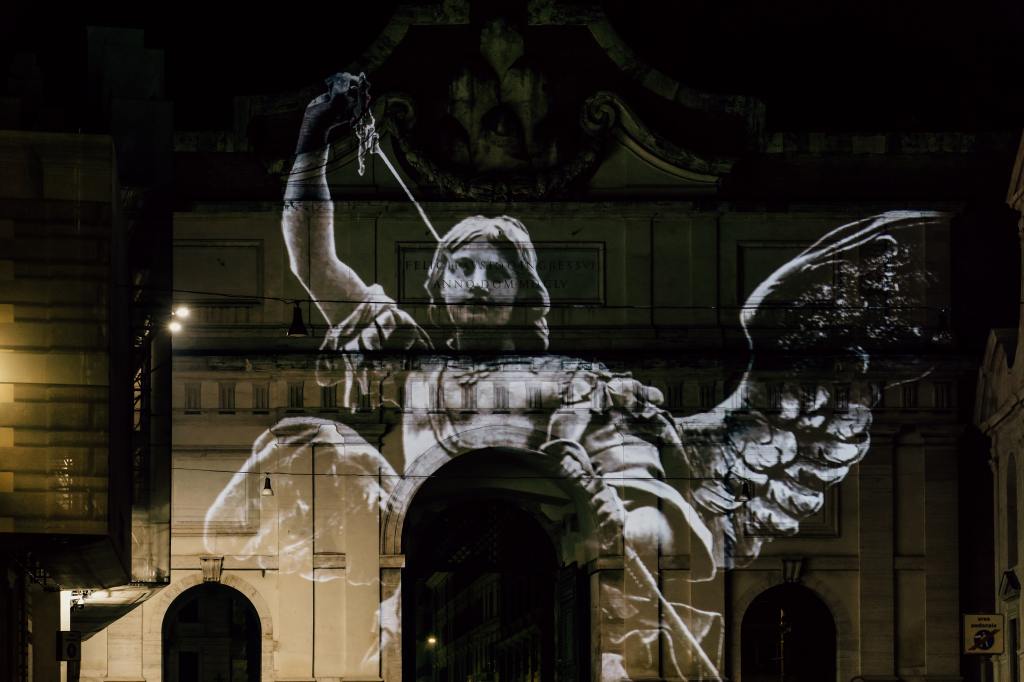
Sermon: St. Michael and All Angels


On the Feast of Michael and all Angels, also known as Michaelmas, we give thanks for the many ways in which God’s loving care watches over us, both directly and indirectly, and we are reminded that the richness and variety of God’s creation far exceeds our knowledge of it.

The Holy Scriptures often speak of created intelligences other than humans who worship God in heaven and act as His messengers and agents on earth. We are not told much about them, but Jesus speaks of them rejoicing over penitent sinners and elsewhere in a statement that has been variously understood, He warns against misleading a child, because their angels behold the face of God.

In the Hebrew Scriptures, it is occasionally reported that someone saw a man who spoke to them with authority, and who they then realized was no mere man, but a messenger of God. All this leads us to understand that there are super-human rational created beings, either resembling men in appearance or taking on human countenance when they are to communicate with us and are referred to as “messengers of God,” or simply as “messengers.” The word for a messenger in Hebrew is malach and in Greek, angelos, which is where we get the word “angel.”

By the time of Jesus, Jewish popular belief included many specifics about angels, with names for many of them, including the seven archangels: Gabriel, Michael, Raphael, Uriel, Raguel, Remiel and Saraqael.

What is the value to us in remembering the Holy Angels? They are the ones who fight the unseen battles and wars. From the Book of Revelation, “War broke out in heaven; Michael and his angels fought against the dragon. The dragon and his angels fought back, but they were defeated, and there was no longer any place for them in heaven. The great dragon was thrown down, that ancient serpent, who is called the Devil and Satan, the deceiver of the whole world– he was thrown down to the earth, and his angels were thrown down with him.”

Michael and his angels fought against the dragon and the other rebellious angels and they were defeated and cast out.

You only need to turn on the TV to see images of war and it seems that we are now constantly at war with someone. Bombing here. Invasions there. They will mount a camera on a missile so that you can watch it as it leaves the plane to when it hits it’s target. Spend anytime on the internet and you will come across images of war that are so horrible that they seer themselves onto your brain. In the midst of all this, it is easy to forget that there is another war taking place around you. And it is Michael and his angels, those that fought that great rebellion in Heaven, that continue the fight in this war. However, this war is not over control or real-estate. This war is for your soul. Therefore, we celebrate Michael and the angels for their constant vigilance in the spiritual realm protecting us against those enemies we cannot see and for assisting us in those times of trouble. They are the messengers of God and the play a very active, though unseen, role in our lives.

I’ll close with a prayer that we should all know and frequently pray:

St. Michael the Archangel,
defend us in battle.
Be our defense against
the wickedness and snares of the Devil.
May God rebuke him, we humbly pray,
and do thou,
O Prince of the heavenly hosts,
by the power of God,
thrust into hell Satan,
and all the evil spirits,
who prowl about the world
seeking the ruin of souls. Amen.

Journal: September 26, 2021

Two weeks!!! How the time flies when you are so busy doing preasty things that you can’t write about the preasty things you do. Sermons. Bible Studies. Last Rites. Kids (what a riot they are!), services, confession (not really… I like to pretend that people still come), and generally walking around in all black spreading the cheer and love of the Lord. I’ll take it. And I love it.

I just want to take a minute here to say how ridiculous newspaper / news websites headlines are. About 50% of the time I’ve no idea what the article is going to be about. Is that the trick? Fool with the headline so they’ll take a peek and we can hit them with more advertising so that we can afford to hit them with more nonsense? I don’t know, but when Britney Spears’ wrestling with papa is a top new story, I’m one who is wondering what they buried back on page 27c! Know what I mean…. yes you do. They all work for the Ministry of Truth and they are out to deceive us so that we’ll look at pictures of kittens and forget about the annihilation of entire races. Rant. Rant. Rant. Thus endeth the rant.

Lisbeth Salander

Movies: we are definitely back to the golden oldies here. The Swedish version of Stieg Larson’s Millennium Series and the 1978 version of The Stand. Both make me immensely happy and at least I don’t have to worry about them being stupid. Speaking of which… books!

I’m on a hardback edition of my favorite books and some new ones. Recently completed A Man Called Ove (which is a new one for me, buy have also added The Stand and 11/22/63 (yes… yes… both by Stephen King) to the stack. These last two are behemoths of a book and that’s just the way I like them. For the Saints Book Club at the church, we will be reading The Hawk and the Dove by Penelope Wilcock (book one in the trilogy). It is a short read, but promises to be a powerful story… keep you posted.

One thing I don’t like about myself when it comes to my vocation (there are several, but this one is sticking out these last two weeks): Last Rites… Ok, I’m supposed to be the professional, which means (at least to me) that I can walk into an emotionally tense situation and be the calming presence. I keep my cool, in hopes that it will bring a sense of calm and peace to those who are grieving. These last two weeks… my goodness… They told us in seminary that after a number of years in the same parish you would have to start burying your friends. This has been happening, but last week… Dang. I don’t want to be that cold distant a-hole of a priest, but wow… living on that emotional edge is an interesting place to be that I’m not entirely use to.

God: now this is the good stuff! God… I’m going to need someone I can sort this out with, but recently I’ve been discovering the lack of boldness in by prayer life… I mean, my prayer life for as long as I’ve had a prayer life! I’m going to need to think on this some, but…. yeah. Maybe I’ll keep this one to myself for a bit until I work it out.

What I’ve learned: My friend Heidi always said that being a priest would be whole lot easier if we just didn’t give a shit. Unfortunately, the longer I am…. yeah. (And I wouldn’t trade it for anything!!) She does too… more than any priest I know.

Thought for the day: Room 217… If you ain’t a Stephen King fan, then that won’t mean a thing, but if you are…. sometimes you’ve got to stroll on up in there, open that door, look the hag in they eye, and give her what for. Ain’t none of it real anyhow (unless you live in SK’s world.)

The Lord bless you all.

P.S. To all my blogging friends: I hope to get caught up on your writings over the next week. I miss your thoughts!

Sermon: Proper 21 RCL B – “Cup of Water”

Photo by Joseph Greve on Unsplash

There was once a king who was very sick and whose wise men told him that if he covered himself with the shirt of a contented man, he would be healed. He sent his emissaries throughout the length and breadth of the country looking for a contented man. At last, several months later, they returned empty-handed. “Was there no-one in my realm who is contented?” asked the king. “Yes, Your Majesty,” they replied. “Then where is the shirt?” asked the king. “Your Majesty, he had no shirt.”

The human body is about 60% water, which is why we often hear the importance of drinking enough water.  We must stay hydrated, because dehydration can cause all sorts of problems within our physical systems.  But our bodies are smart and most of the time, when our bodies need more water, we will become thirsty; however, by the time this sensation kicks in, we are already entering the stages of dehydration.  You see, there are sensors within our body that tell our brains when the salt level in our blood is too high, which is an indicator of dehydration, so it sends a signal to the brain that the water levels have dropped and the brain initiates the sensation of thirst that we experience.  What’s even more amazing is that the brain can detect and determine how much fluid we’ve consumed so that the thirst sensation can be turned off almost immediately.  The brain is literally regulating the level of water in our system to keep the body physically satisfied or contented.  Not too much and not too little.  Amazing.  If only the brain could work that way in other areas of our lives.

Last week I read South of the Border, West of the Sun by Haruki Murakami.  It is an interesting little story, but toward the end, one of the characters describes the west of the sun part of the title and it has to do with farmers in the Siberian tundra.  She tells about how the farmer gets up everyday and goes out into the fields and plows the gardens.  As the farmer plows, he can see nothing in either direction as far as the horizon.  Just the fields.  His day consists of getting up each morning, having his breakfast, plows until noon, has lunch, then back to plowing until the sun sets in the west.  It happens day after day except in the winter when he works on indoor jobs.  However, one day as he is plowing, something breaks and dies inside the farmer’s spirit.  At that point, the farmer tosses the plow to the side and starts walking toward the west.  Headed to the land west of the sun, thinking there must be something more out thee.  Like someone possessed, the farmer walks day after day, not eating or drinking until he collapses on the ground and dies.

We can lead such lives as this.  Lives that are never contented, causing us to always be searching for something west of the sun.  Never satisfied.  Always thirsty.  It can occur in so many areas of our life.  Relationships: having a solid and loving relationship, but always looking for something that might be better.  Being invited to the prom by someone known to be good and kind, but waiting to give them an answer to see if someone better might ask. Having a job that provides for every need, but thinking there are others that provide more prestige.  This is a terrible state to be in, but it is not limited to our worldly pursuits.  It occurs in our faith as well.  We experience a dryness in our faith.  We don’t believe that God hears our prayers.  We become discontent in our relationship with Him.  Like the Psalmist, we call out:

O God, you are my God; earnestly I seek you;
    my soul thirsts for you;
my flesh faints for you,
    as in a dry and weary land where there is no water.

But instead of realizing that he is the source of all our souls desires, we stop what we’ve been doing and we start searching for what is west of the sun.  Something we believe will be more fulfilling or entertaining or less challenging.  We go in search of something that does not involve the cross that we are called to carry or the sacrifices that must be made.  In that search for more, our souls become dehydrated and we become disoriented and confused, we lose our strength and our vision becomes cloudy, we can no longer walk or even stand.  Left in such a state, we will die, but in such a state, we can no longer care for ourselves.  We are in desperate need of someone giving us a cup of water for our souls.

John said to Jesus, “Teacher, we saw someone casting out demons in your name, and we tried to stop him, because he was not following us.” But Jesus said, “Do not stop him; for no one who does a deed of power in my name will be able soon afterward to speak evil of me. Whoever is not against us is for us. For truly I tell you, whoever gives you a cup of water to drink because you bear the name of Christ will by no means lose the reward.”

What does that cup of water look like?  Is it an attempt to solve the issue for them, by telling them what to do?  “You need to drink more water.  You need to do this or that.”  No.  That’s not what they need.  Do they need a piece of your mind?  “If I’ve told you once I’ve told you a thousand times… etc.”  That’s not what they need either.  If their soul is thirsty, do they need you to quote scripture to them?  “You know, Jesus says, ‘If anyone thirsts, let him come to me and drink.  Whoever believes in me, as the Scripture has said, ‘Out of his heart will flow rivers of living water.’  So, what you need is Jesus.  That’ll solve your issue.”  Truth is, that’s not it either.  What they need, in most cases, is for someone to simply bring them a glass of cool water; and what we are saying is… they need—more than anything else—is to be loved and to know they are loved and to be shown they are loved.

I believe that people go searching west of the sun in search of fulfillment because they are dying of a spiritual thirst.  They are dying because they do not feel loved and we can be the ones who give that love to them.  

Let us pray: Dear Jesus, help us to spread the fragrance of your love everywhere we go. Flood our souls with Your spirit and life. Penetrate and possess our whole being so utterly that all our life may only be a radiance of Yours. Shine through us and be so in us that every soul we come in contact with may feel Your presence in our souls. Let them look up and see no longer us but only You!  Amen.

Sermon: Matthew

The Calling of Saint Matthew by Michelangelo Merisi da Caravaggio

A man on vacation was strolling along outside his hotel in Acapulco, enjoying the sunny Mexican weather. Suddenly, he heard the screams of a woman. Rushing to help, he found the woman cradling a young boy.

The man knew enough Spanish to determine that the child had swallowed a coin and was choking. He grabbed the child by the heels, held him up, gave him a few firm swats on the back, and an American quarter dropped to the sidewalk.

“Oh, thank you sir!” cried the woman. “You seemed to know just how to get it out of him. Are you a doctor?”

“No, ma’am,” replied the man. “I’m with the United States Internal Revenue Service.”

I am sure we could find one, but I doubt there are many other individuals who are more universally disliked than the tax man. Even when our tax dollars are spent for good reasons, it just irks us to give them up and a person who’s job it is to collect them… they’re just not all that appreciated. Our Saint for the day and the patron of our congregation, St. Matthew, was one such person.

In the time of Jesus, the tax collectors were known as publicans and the tax organization sounds like a multilevel marketing scheme. You’ve got the guy at the top, then another level below him/her, and each of them has a level below them. In the case of taxes, the ones on the bottom are doing most of the collecting. What they collect is then passed up the food chain to the head person, who then passes it all onto the government. Only catch: everyone in the chain, from the lowest to the highest is going to make sure they get a cut, so instead of simply charging the taxed amount, they charge more to insure they get their piece of the pie. (By the way, we still do things like this: see the $600 hammer.) Our St. Matthew was on the bottom rung, but he was still hated by both Gentiles and Jews.

He was hated by the Gentiles because he was a tax man and they knew he was overtaxing them and he was hated by the Jews for the same reason, but even more so, because he himself was a Jew that was working for the occupying Romans. He had no friends except for other tax collectors. Of all the candidates that could have been selected to proclaim the Kingdom of God, this Matthew was the least likely, yet Jesus did what we have seen God do on a number of occasions. As we’ve been learning in our Sunday morning study, he chose Abraham who wasn’t even a believer to begin with, he chose Jonah who wanted absolutely nothing to do with those apostate Ninevites, he chose David who would be an adulterer and murderer, he chose Mary who was just a young girl. Matthew and all the rest aren’t the odd ones out when it comes to being called into God’s service. They are the norm!

We believe that God can only use those who are holy and righteous, but as Jesus tells us, “Those who are well have no need of a physician, but those who are sick…. For I have come to call not the righteous but sinners.” Why would that be? Because someone who is healthy can give a good testimony, but someone who is sick and is then healed can become a powerful witness, which is why Jesus called a tax collector named Matthew and why he called each of us. Like Matthew and the others, we were all once sick in our sin, but now we are the ones who can give witness to the mercy and healing power of our God.

Like Matthew, live your life as a witness to the Good News and the merciful healing of our God.