Sermon: Advent 4 RCL C – “Walk with Her”

Photo by Marites Allen on Unsplash

Over the last several years I’ve told you so many silly stories that I can’t remember when or where I told them, but in my opinion, a good joke is worth repeating and sometimes they can’t be helped. As I know I’ve told you, if I hear the word “unique”, then that stupid joke immediately pops in my head and it is a struggle not to tell it: “How do you catch a unique rabbit? You ‘neek up on him.” All that to say, as this is a day when our readings focus on the Blessed Virgin Mary, then I have to tell / re-tell this one…

The main place of worship at Nashotah House is The Chapel of St. Mary the Virgin. Perhaps this is why so many of the graduates of the House have such a love for the Blessed Virgin, myself included.

The joke tells of a priest that dies and finds himself standing before Peter at the Pearly Gates. The priest tells Peter who he is, but Peter says that he’s not on the list. “What do you mean. I faithfully served the Church for over 50 years! Please check again.” Peter checks, but comes up with nothing. “Would you please go get Jesus, so that I can talk with him?” Peter obliges, but even Jesus says he’s not on the list. The priest protests again, giving a litany of the things he has accomplished in service to the Lord, hoping something will spark a memory. Finally, having exhausted all other options, he blurts out, “I went to Nashotah House,” at which point Jesus holds up his hand and smiles. Jesus says, “That explains everything! Come on in. You’re a friend of Moms.”

I’m hoping that I can get into heaven because I’m on the list and Jesus knows me, but if necessary, it will not be beyond me to have his momma talk to him.

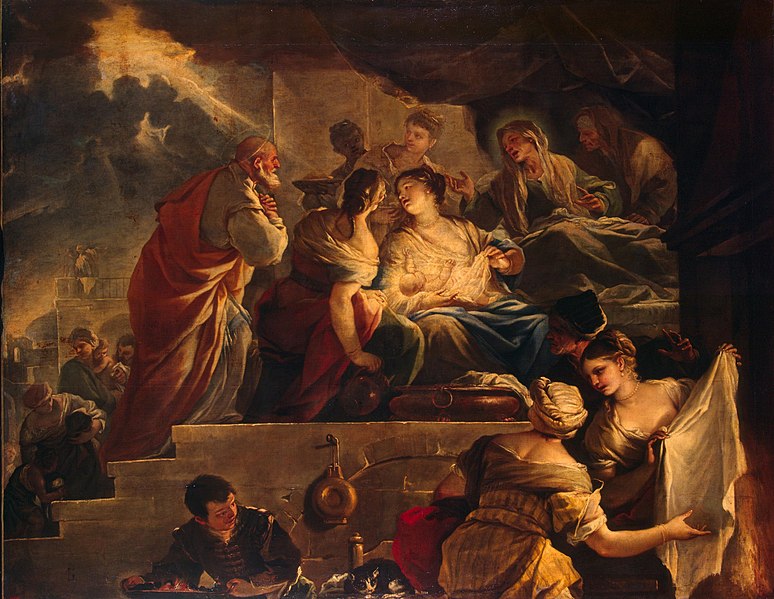
Today in our Gospel we read about Mary going to visit her cousin Elizabeth who was also pregnant with the forerunner of Jesus, John the Baptist. Elizabeth said to Mary, “Why has this happened to me, that the mother of my Lord comes to me? For as soon as I heard the sound of your greeting, the child in my womb leaped for joy.” Why did John leap in his mother’s womb? St. John Chrysostom tells us that in Mary, “The Lord is present, so [John] cannot contain himself or wait for nature to run its course; he wants to break out of the prison of his mother’s womb and he makes surefire he witnesses to the fact that the Savior is to come.” (From a sermon recorded by Metaphrastrus) Mary has brought Jesus very near and through the power of the Spirit, John recognizes that he is in the presence of his Lord, so even though he cannot speak, he proclaims the Savior by leaping for joy, just as David leapt for joy and danced before the Lord when the Ark of the Covenant was returned to Israel.

This all points to the most important role of Mary for us all: to bring us into the very presence of God, by bringing us to her son, Jesus. What can such an encounter look like?

I know of a man who, while praying the Rosary, had a vision of the Blessed Virgin Mary.

He had been walking along a country road. On one side of the road was a piney forest and on the other was a field and a pond. As he was walking, he had been searching for the Virgin, but unable to find her. Then in the distance, he saw her walking toward him down the road. He quickly turned and ran to meet her, but—and this is probably funny—the closer she got, the bigger she got so that when they finally met, she was able to reach down and pick him up and put him in her pocket.

He tried to see through the weave in the fabric of her dress to see the outside world and determine where she was taking him, but was unable to. Not only that, but the further they went, the darker it became until all was dark. Yet as the light had lessened, he had been able to detect something new: a sound. At first, it sounded like the soft beating of a drum, but a short distance on, the sound was unmistakable: it was the beating of a heart. He began to not only hear the heartbeat, but to also feel it in his entire body. Each beat was like a loving embrace. It was then the man realized that Mary had done what she had always done: she had brought him to Jesus. You see, it was not her pocket that she had placed the man into. No. Mary had placed the man in the wound in Jesus’ side so that the man could be near the beating loving heart of the Risen Lord. There the man learned even more of the great love of Jesus. He had been allowed to remain in that place for a short time and then was sent on his way to try and fulfill the Lord’s will.

There is always much confusion surrounding the role of Mary in the Church and in the life of God’s people, but that confusion only arrises when people fail to understand her purpose. The Venerable Fulton Sheen (I do like him) says, “Devotion to the Mother of our Lord in no way detracts from the adoration of her Divine Son. The brightness of the moon does not detract from the brilliance of the sun, but rather bespeaks its brilliance.” Because of who she is, Mary receives our devotion, but she never seeks to be worshipped. Instead, she seeks to draw people to herself so that she can then lead them or even take them to her Son. So that she can place them near His heart that they might know of His great salvific love for them.

I encourage you all to take a quiet walk with Mary. You may think that she is simply spending time with you, which she is, but when the walk is over, just like John, you will find yourself in the presence of the Lord, and your soul (if not your body as well) will leap with joy.

Father, source of light in every age,
the virgin conceived and bore Your Son
Who is called Wonderful God,
Prince of Peace.
May her prayer,
the gift of a mother’s love,
be Your people’s joy through all ages.
May her response,
born of a humble heart,
draw Your Spirit to rest on Your people.
Grant this through Christ our Lord.
Amen.

Sermon: Advent 3 RCL C – “Resting on Our Laurels”

Photo by okeykat on Unsplash

The Greek god Apollo is the is the supposed god of many things, including archery. So, one day, when he encountered Eros, the god of love, Apollo teased Eros about his bow and how it wasn’t really fit for anything. Eros became angry at being teased and devised a plan. He created two arrows, one of gold and the other lead. He then shot Apollo with the gold one, causing Apollo to fall desperately in love with the beautiful river nymph, Daphne, and want to marry her. Eros then shot Daphne with the lead arrow, causing her to hate everything about Apollo. Daphne had no desire to marry anyone, especially Apollo, but when it became evident that Apollo was going to catch her and force her, she called out to her father to save her. As much as it hurt her father, he consented and Daphne was turned into a tree: Laurus Nobilis—a Laurel tree. However, that did not stop Apollo from loving her, saying, “Always my hair will have you, my lyres will have you, my quivers will have you, laurel tree.” And so, after declaring the Laurel tree sacred, Apollo, cut off a branch and made a crown of Laurel leaves and wore it to show his love.

In the second century a coin was minted showing the head of Apollo wearing the crown. From there, the crown of Laurels became a symbol of great success and the winners of the Pythian Games (Olympics) was awarded a Laurel crown for their victory. In later centuries, the phrase, “repose / rest on your Laurels”, became a way of saying that a person, after achieving victory, could rest and enjoy their fame and fortune, but along about the 19th century, the world became more hard-charging and enough was never enough, so instead of being a positive, “resting on your laurels”, the phrase became a negative. It speaks of laziness or an unwillingness to achieve more, thinking you’ve reached your peak.

An example of someone modern “resting on their Laurels” would be Nolan Bushnell. Nolan was the founder of Atari, the creator of those early video games. He was also the founder of Chucky Cheese, that place of loud screaming and birthday parties. He’s done pretty well. Today he is worth about $50 million. However, two young fellas he worked with at Atari, Steve Jobs and Steve Wozniak, had been tinkering around with a few parts from the Atari and created a personal computer, but they needed a bit of start up cash, so they came to their buddy, Nolan Bushnell, and asked him for $50,000. Nolan, who said, “I thought I could do no wrong and I got really sloppy,” turned down the offer. He didn’t think Atari should be making computers. He rested on his success. He rested on his laurels. What would his $50,000 have purchased him? One-third of Apple. Today, one-third of Apple is worth approximately $800 billion. Nolan says, “I was so smart, I said no, and It’s kind of fun to think about that, when I’m not crying about it.”

Today, in our Gospel reading, we read, “John [the Baptist] said to the crowds that came out to be baptized by him, ‘You brood of vipers! Who warned you to flee from the wrath to come? Bear fruits worthy of repentance. Do not begin to say to yourselves, ‘We have Abraham as our ancestor’; for I tell you, God is able from these stones to raise up children to Abraham.’”

We’ve been studying the life of Abraham during our Sunday school lesson and we know that God made His covenant with him. The covenant was the promise to Abraham that through him a great nation would be born. A nation that would be established for all eternity. He was promised by God that his offspring would be more numerous than the stars in the sky or the sand on the sea shores. Through this covenant, the Jewish people became God’s chosen people. Knowing such a thing can change a person. It can create within them a desire to do great things and to live into that promise or it can cause a person to become proud and lazy, thinking they have nothing more to do.

“Hey. I’m God’s chosen, so phooey on you.” “Hey, I’m God’s chosen, so I’m getting into heaven no matter what.” “Hey, I’m God’s chosen, so I can do whatever I like.” “Hey, I’m God’s chosen, so I don’t have to do anything else.” John the Baptist came along and said, “Do not begin to say to yourselves, ‘We have Abraham as our ancestor.’” John the Baptist said, “Hey, I’m God’s Prophet, so don’t be resting on your laurels! That’s not going to save you! So get over yourself and repent.”

That’s what happened to some of the Jewish people. They were cut off. What’s interesting, is that we as a Christian people can fall into the same trap of resting on our Laurels. “Hey, I’ve got Jesus, I’m on the inside.” “Hey, I go to church, so I’m good to go.” “Hey…” and so on. That is the equivalent of saying, “We have Abraham as our ancestor”, but what did Jesus say, “Not everyone who says to me, ‘Lord, Lord,’ will enter the kingdom of heaven, but the one who does the will of my Father who is in heaven.”

St. Paul, using the analogy of an olive tree, speaks to all of this in his letter to the Romans: “If some of the branches were broken off, and you, although a wild olive shoot, were grafted in among the others and now share in the nourishing root of the olive tree, do not be arrogant toward the branches… do not become proud, but fear.  For if God did not spare the natural branches, neither will he spare you.”

Jesus said, “Everyone to whom much was given, of him much will be required, and from him to whom they entrusted much, they will demand the more.” We have received so much from this child that was born in the manger: forgiveness of sins, unity with God, eternal life, the very Kingdom of God. These are gifts from God that we can never earn or repay, but let us try. Let us live as though we could, not resting on our laurels, but ever striving to become those who reflect God’s light and love into the world.

Let us pray: Almighty God, give us grace to cast away the works of darkness, and put on the armor of light, now in the time of this mortal life in which your Son Jesus Christ came to visit us in great humility; that in the last day, when he shall come again in his glorious majesty to judge both the living and the dead, we may rise to the life immortal; through him who lives and reigns with you and the Holy Spirit, one God, now and for ever. Amen.

Sermon: Advent 2 RCL C – “The Quiet”


Little Johnny got on the elevator in the Empire State Building in New York City with his father. They started going to the top. Little Johnny watched the signs flashing as they went by the floors: 10, 20, 30, 40, 50, 60, 70.

They kept going, and Johnny started getting nervous. He took his dad’s hand and said, “Dad, does God know we’re coming?”

New York City: O. Henry says, “It’ll be a great place if they ever finish it.” Christopher Morley referred to it as “the nations Thyroid gland” and Ralph Waldo Emerson, who did not care for the Big Apple, called it a “Sucked orange.” There are so many songs about it that it’s hard to pick just one, so I’ll go with Lou Reed: “New York City’s the place where they said, ‘Hey, babe, Take a walk on the wild side.’” The one description that resonated with me was given my Kurt Vonnegut. He called New York City, “Skyscraper National Park.”

As some of you are aware, this past week, I was a complete tourist in that particular national park. Rockefeller Christmas Tree to the Empire State Building and I know that I saw only a fraction of one percent that is offered. It is a mass of people, lights sounds, vehicles, buildings and assaulting smells. It is impossible to take in even one block without being awed.

My hotel was a block off time square and my room was on the 39th floor. From there I could see it all and what I discovered, even that high up, is that you could still hear the birds and other animals that roamed below in that Skyscraper National Park. Oh, yes. There was one bird that cried out all night {siren} and one particular animal that absolutely never stopped calling night or day {honk}. I could see the streets below and the river of cars never stopped flowing and the people… it may be a cliché, but it truly is a place that never sleeps. Will I go again? Absolutely. Would I live there? Absolutely not. Not a place that suits my nature. Why?

In our Saint’s Book Club, we’ve been reading The Hawk and the Dove. I took it with me and read the entire thing on the way home (it helped having a three hour delay in one of the airports). Truly a brilliant little book. I won’t spoil it, but it is about a mother telling her daughter stories about a monastery that existed some 700 years prior. At the end of one particular hectic and noisy day with her several children, the mother and her oldest are sitting by the fire having tea and mother says, “Peace. Oh, this is nice. It’s nice when you feel peaceful inside, and you can curl up by the fire in a peaceful house. Too much racket in the house and it frays you at the edges a bit….” I couldn’t live in New York City because I think it would be a bit like living in a house with too much racket and my nerves would be more than a bit frayed. I’m sure that it is something you eventually become accustomed to—or something that drives you crazy—but as it is, the Queen can at times get a bit too noisy for me. However, after speaking about a noisy house, mother goes on to say, “but if you lose the peace on the inside of you, you could be in the quietest place on earth and your nerves would still jangle.” And that’s just it, you could live in a vacuum, absent of all noise, and there would still be this great racket going on in your soul. Like New York City, the soul can become this overwhelming cacophony where there is no rest or peace. What are we to do?

There are those who will attempt to provide us with all sorts of escapes, all of which are costly in one way or another. I can run through a litany of them here, but you all know your “drug” of choice. That one thing you hope will give you some respite from the noise, but in the end, you know you’ll still end up with some variety of a hangover. Surprisingly, the answer doesn’t lie in adding something to our lives. The answer to the noise lies in setting it all aside.

In the words of Isaiah that were quoted in our Gospel, we are told that John was, “The voice of one crying out in the wilderness.” That immediately tells us that in order for our souls to clearly hear that calling voice, we must take the time to set aside the things of this world, we need to get out of the noise of the city and not only that, we need to get out of the noise of our own heads and enter into a place of quiet.

Brennan Manning, in The Ragamuffin Gospel said, “We must go out into a desert [a wilderness] of some kind,” and he says, “your backyard will do.” When the world is so loud on the exterior or in the interior, we must seek out those wilderness places of quiet. It is there that we can once again see the straight path that is laid before us. And it is there that the rough mountains of our lives are made low and the deep valleys are filled. As Manning would go onto say, when we enter the wilderness, that place where we can hear the voice of God calling to us, then we “come into a personal experience of the awesome love of God.” What is so beneficial is that this awesome love of God is not something that abandons us when leave the quiet, but instead goes with us as we re-enter the noise, and instead of feeling frayed, we maintain that peace that can come only from above. Like a fish that has to be returned to the water, we too have to return time and time again until we are fully perfected in Christ, but we can know that God’s love is inexhaustible and always available to us.

During this season of Advent, we celebrate the coming of our Lord and look with joyous anticipation towards his second coming, but do not forget that the Kingdom of God is now and that you have access to it if you will seek Him in the wilderness, in the quiet, where He can be found.

Let us pray:
Father of Heaven and earth,
hear our prayer and show us the way to peace.
Guide each effort of our lives
so that our faults and our sins
may not keep us from the peace You promised.
May the new life of grace You give us
through the Eucharist and prayer
make our love for You grow
and keep us in the joy of Your Kingdom.
Amen

Sermon: Advent 1 RCL C – “The Raging Seas”

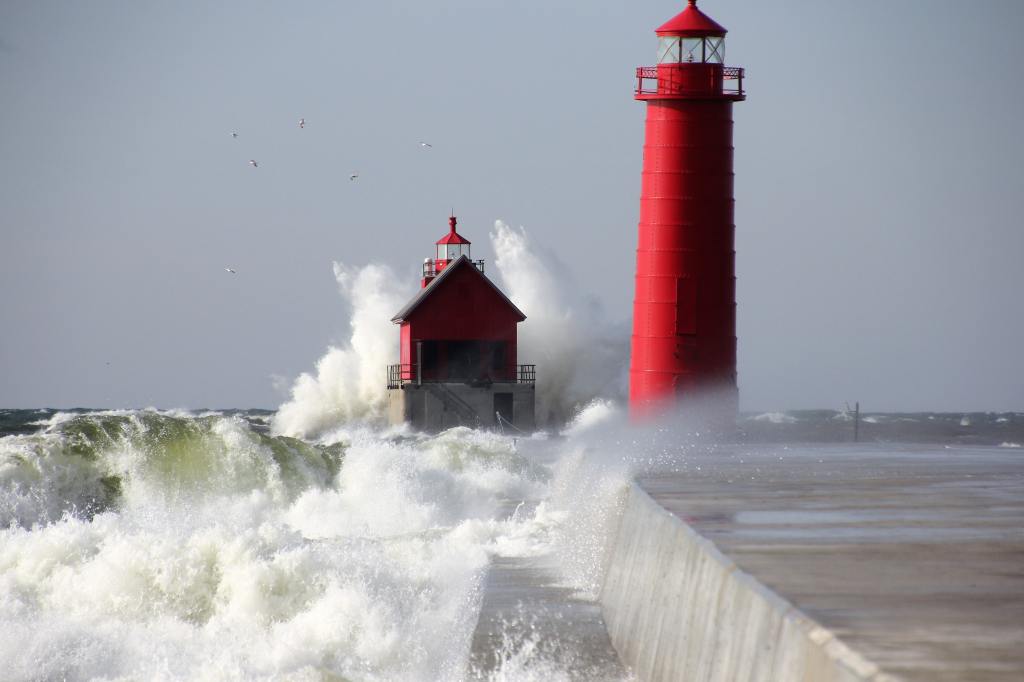
Photo by James Peacock on Unsplash

I’ve never quite figure out how the various newspapers come up with headlines, because some of them are so confusing that you don’t know if should read the article or not. The really confusing ones are known as “Crash Blossoms”, a phrase coined in 1985 from a news headline that read, “Violinist Linked to JAL Crash Blossoms.” It sounds like the violinist was somewhat responsible for the crash, but as it turns out, the violinist’s father was killed in the crash. Others include: “Police Can’t Stop Gambling.” “Blind Bishop Appointed To See.” “Kids Make Nutritious Snacks.” Then there are some headlines that are just stupid: “Homicide Victims Rarely Talk to Police.” “Federal Agents Raid Gun Shop, Find Weapons.” “One Armed Man Applauds the Kindness of Strangers.” “Woman Missing Since She Got Lost.” “Something Went Wrong in Jet Crash, Expert Says.” What’s this all got to do with anything?

I have a fairly set routine most mornings: roll out, make the coffee, poach the eggs, maybe have a banana with peanut butter, sit down at the computer and read some devotionals, then to the news. I have a couple of sources for my news (not any of the networks), but what I have discovered is that I have unintentionally added another element to my routine. It follows reading the headlines and some of the stories. The new element: speaking the words, “The world has lost its dang mind!” (Depending on how bad those headlines are, the word “dang” may be replaced with other language.) You understand what I’m talking about.

What’s even more fun than that is to have just enough biblical education to know that some of these headlines fit in real nice with warnings of the end of days, like what we had in our Gospel reading this morning: “There will be signs in the sun, the moon, and the stars, and on the earth distress among nations confused by the roaring of the sea and the waves. People will faint from fear and foreboding of what is coming upon the world, for the powers of the heavens will be shaken.” Read the headlines and check items off the list: signs in the sun, the moon, the stars, the raging of the oceans—check to all that. Further on, Jesus also talks about dissipation / debauchery, drunkenness, worries—we’ve got plenty of those as well. Yes. The world has lost its dang mind and all the calamities and chaos only go to prove the point. Just to add to the fun, not only can what Jesus said be taking literally, but it can also be seen as imagery. Take that the bit about “the roaring of the sea and the waves.”

In the past, we’ve talked about how the waters represent the chaos of the world. To go into the waters is to go down to the abyss, the home of that great leviathan and the place of death, but the roaring seas also have other meanings. In particular, they can be referring to the nations of the earth. Since we’re having fun with end times, Revelation 17:1, the angel of the Lord says to John, “Come, I will show you the judgment of the great prostitute who is seated on many waters,” and a bit further in v.15 the angels says, “The waters that you saw, where the prostitute is seated, are peoples and multitudes and nations and languages.” So the waters and the raging of the seas that Jesus spoke about in our Gospel are not only disturbances in the natural world, but also disturbances in society and the raging of the nations. We hope that as a Christian people, we will be able to avoid these things, but Jesus says that these things “will come upon all who live on the face of the whole earth.” If we dwell on them, these things can terrify us. We’ll be the ones that are fainting with fear. Will the earth be hit by a giant meteor? Will Covid Omicron or Unicorn or Caption Tripps take us all out? Will the Doomsday Clock finally strike midnight? And yet, Jesus also said, “Which of you by being anxious can add a single hour to his span of life?” (Luke 12:25) And, “Do not be anxious about tomorrow, for tomorrow will be anxious for itself. Sufficient for the day is its own trouble.” (Matthew 6:34) And again, “Peace I leave with you; my peace I give to you. Not as the world gives do I give to you. Let not your hearts be troubled, neither let them be afraid.” (John 14:27)

On one side we’ve got the raging of the abyss, the leviathan, and the nations of the world in an uproar and on the other side we’ve got, be at peace and don’t be anxious or worry about tomorrow. What are we to do? How are we to respond? Jesus did not leave us to guess or to try and figure these things out for ourselves. He told us the answer in our lesson today, “When these things begin to take place, stand up and raise your heads, because your redemption is drawing near.” When these things truly begin to take place—and they will not be hidden from anyone on the planet! It is not going to be a secret and only a select few see his coming, but when you see these things taking place… rejoice! for the salvation of God is here, with the inauguration of his Kingdom being played out before you. In the meantime, Jesus also tells us what to do: “Be on guard so that your hearts are not weighed down… Be alert at all times, praying that you may have strength.”

That truly is what this Season of Advent is all about. It is a reminder that no matter how obscure or threatening the headlines are, our God is the one who is writing the story and therefore, we as a Christian people are to live, not just for these four weeks of the Church year, but every day of our life in joyful anticipation of His return. Not afraid or coward by the raging seas, but by going about the work that God has placed before us: helping into the boat, the ark, into the Church and God’s family, those who are being tossed about in the waters. As the Lord said to Isaiah,

Fear not, for I am with you;
    be not dismayed, for I am your God;
I will strengthen you, I will help you,
    I will uphold you with my righteous right hand.

(Isaiah 41:10)

Yes. It can be scary at times and the world is losing its dang mind, but as long as you are alert and on your guard, praying and doing the work of a disciple, you can have peace in your heart and joy for the final things that are to come.

Let us pray: Father of our Lord Jesus Christ, ever faithful to your promises and ever close to your Church: the earth rejoices in hope of the Savior’s coming and looks forward with longing to his return at the end of time. Prepare our hearts and remove the sadness that hinders us from feeling the joy and hope which his presence will bestow, for he is Lord for ever and ever. Amen.

Contemporary Koinonia

For about the last year, my friend and colleague, The Rev. Sean Ekberg and I have been working on a journal for The Episcopal Church and today it went live. It includes interviews with Bishops in the church, a seminary dean, ministry stories, and more. If you would like to know the bright side of The Episcopal Church, then you’re going to want to take some time reading through the articles. It is not a quick read, but it is well worth the time. There is much that is good happening. If you’ve been wondering where I’ve been spending my extra time… here you go. I believe, if you click the image below, it will take you to the Issuu edition.


Sermon: Christ the King Sunday RCL B – “What have you done?”

Photo by Pro Church Media on Unsplash

Boudreaux’s entire family was gathered and looking over his momma’s shoulder as she flipped through an old photo album. She eventually came across a picture of her holding baby Boudreaux in one hand and a coconut cream pie with a mile high meringue in the other.

“My pride and joy,” momma said, smiling.

Boudreaux almost got weepy until his momma said, “Won the blue ribbon at the state fair pie cook-off.”

I suppose when some folks remember us, we’ll always be in second place in their life—if not further back—to a blue ribbon pie or something less, but hopefully there will be a few that remember us a bit more fondly. But have you ever wondered what your younger self would remember and think of you today? One person who did was Elie Wiesel.

Elie died in 2016 at age eighty-seven, having as a boy survived the Nazi concentration camps. His parents and one of his sisters did not survive. He would emigrate to the United States and become a writer and professor, promoting human rights and was a great advocate for the Jewish people. In 2003, the Los Angeles Times declared him, “the most important Jew in America”. Earlier, in 1986 he won the Nobel Peace Prize. During his acceptance speech, he made the following remarks about those early days in Germany.

I remember: it happened yesterday or eternities ago. A young Jewish boy discovered the kingdom of night. I remember his bewilderment, I remember his anguish. It all happened so fast. The ghetto. The deportation. The sealed cattle car. The fiery altar upon which the history of our people and the future of mankind were meant to be sacrificed.

I remember: he asked his father: “Can this be true?” This is the twentieth century, not the Middle Ages. Who would allow such crimes to be committed? How could the world remain silent?

And then he wondered what his younger self would ask. He said, And now the boy is turning to me: “Tell me,” he asks. “What have you done with my future? What have you done with your life?”

Although our own lives may not have been as hard and difficult as Elie’s, we can speak of the events of our lives in a similar way. I remember when difficult things happened in my life, but I also remember the good: from the day I was ordained a priest to the day I gave last rites to a four year old little girl. So many different events in between, good and bad. And I know that you all can tell of similar events. I also know, as with Elie, the young boy or girl within us turns to us and says, “Tell me. What have you done with my future? What have you done with your life?”

As for Jesus, think of the things he could remember. I remember calling the first of the disciples and the beheading of John the Baptist. I remember the temptations in the wilderness and I remember the look on the people’s faces as they were fed with a few loaves of bread and a couple of fish. I remember how I was arrested in the garden and I remember the blind man seeing for the first time in his life. But for Jesus, it was not the little boy within him who asked, What have you done with your life. Instead, it was Pilate.

As we read in our Gospel: Pilate asked Jesus, “Are you the King of the Jews?” Jesus answered, “Do you ask this on your own, or did others tell you about me?” Pilate replied, “I am not a Jew, am I? Your own nation and the chief priests have handed you over to me.” And then Pilate asks, “What have you done?” What have you done with your life that has brought you to this point?

How any of us answer those types of questions communicates our legacy. How we will be remembered by our friends and family.

Elie Wiesel, says that he answers the little boy in himself by telling him, “I have tried. That I have tried to keep memory alive, that I have tried to fight those who would forget. Because if we forget, we are guilty, we are accomplices.”

As for myself, it depends on the day. On some days I tell my younger self that I have tried to make a difference. That I tried to follow God to the best of my abilities. That I tried to be true to my calling. Other days, the devil shouts me down.

As for Jesus, Pilate went onto say to him, “So you are a king?” Jesus answered, “You say that I am a king. For this I was born, and for this I came into the world, to testify to the truth. Everyone who belongs to the truth listens to my voice.”

Jesus, what have you done with your life that has brought you to this point? And Jesus answers, “I came into this world and I have testified to the truth. For I am the way and the truth and the life. I came into this world that God’s people might have life and have it abundantly.”

Today is Christ the King Sunday. It is the last Sunday of the Church year. Next Sunday, The First Sunday of Advent, we begin the story again. Over the last twelve months, we have added another year to how we can answer the young child in us: what have you done with my future? What have you done with your life? For each of us, there will be moments that we are proud of and moments we regret, successes and failures, but each of us, through our faith in our One True King, can report to our younger selves that if nothing else, we have secured our eternal future in the Kingdom of our God. A Kingdom where our remembered lives are redeemed and our past sins are forgiven. A Kingdom where we are allowed entry, not because of what we have done, but because of what Jesus has done.

Today, I invite you to take a deep breath and to let it out slowly and begin again. As we learned a few weeks ago in our Wednesday night study: for the Christian person, each new day is the Genesis story being written anew. The first words of that history are, “In the beginning God created…” and today God is creating, re-creating you better than you were yesterday. This day is a new Genesis, so—now that I think about it—those questions our younger selves ask should’t be asked in the past tense: “What have you done with my future? What have you done with your life?” Those questions from our younger selves should be asked in the future tense: “What will you do with my future? What will you do with your life?”

Would you please turn to page 93 in your Book of Common Prayer. To close today, I would like for us to say together canticle 19, The Song of the Redeemed, would you please stand:

O ruler of the universe, Lord God,
great deeds are they that you have done, *
surpassing human understanding.
Your ways are ways of righteousness and truth, *

O King of all the ages.
Who can fail to do you homage, Lord
and sing the praises of your Name
for you only are the Holy One.
All nations will draw near and fall down before you
because your just and holy works have been revealed.

Glory to the Father, and to the Son, and to the Holy Spirit
as it was in the beginning, is now, and will be for ever. Amen.