Mark Twain writes, โI do not like work even when someone else is doing it.โ That probably sums up how many people feel about work. There are those who are completely content not working, even if it means someone else will have to pay their way, but for the Christian person, work is not something that should be shunned, because, through our work, we are participating in the work of God.
Cardinal Stephan Wyszynski (the head of the Catholic Church in Poland for thirty-two years) wrote Sanctify Your Daily Life, with the subtitle, How to Transform Work Into a Source of Strength, Holiness, and Joy. He says, โEverything in the universe acts by God’s power. If God were to deny His power to the world, even for an instant, it would all be plunged into lifelessness and the shadow of death.
โEverything that lives is bound up with this work [of God]; everything is dependent on it for existence. It is worthwhile keeping this picture before one’s eyes so as not to overestimate the fruits of one’s own work. Man creates nothing; he merely transforms God’s ready-made giftsโฆ. Yet [God] entrusts the details of His design to man, to a rational being who, with the help of prudence, must play his part in bringing all creation to the fulfillment of the whole plan intended by God.
โChristianityโฆ brought about the elevation of work [but now]โฆwork is often regarded as a sad necessity to be gotten through for the sake of earning a living, Christianity continues to link it with God. From this linkage flows the whole blessing of work. โFor thou shalt eat the labors of thy hands: blessed art thou, and it shall be well with theeโ (Ps. 127:2).โ (p.14, 17, 21)
The Spirit of Human Labor, also by Cardinal Wyszynski, was first published in 1948 and became widely known in the 50s and 60s through multiple translations primarily because of the work of our Saint for the day, Josemarรญa Escrivรก. Escrivรก would give copies of it to those he led in spiritual direction. Given that, although I donโt have proof of it, I would say it is safe to say that Wyszynski contributed to Escrivรกโs understanding of work, which is one of the main focuses of Escrivรกโs teachings and the organization he founded, Opus Dei (The Work of God).
Escrivรก writes, โWork is manโs original vocation. It is a blessing from God, and those who consider it a punishment are sadly mistaken. The Lord, who is the best of fathers, placed the first man in Paradise ut operaretur, so that he would work.โ (The Furrow #482)
Today, in our Gospel, Peter and the others have been fishing all night and caught nothing, but when the Lord told them to try again, they caught more than they could haul in. Work for workโs sake can be fruitless, but work done in cooperation with God can produce great fruit, sometimes materially, but always spiritually.
Understand your work as being in cooperation with the work of God so that no matter what, the work you do is sanctified. In doing so, even when it is mundane and repetitive, you will experience the love and joy of God.
Shot of Jesus standing with his hand outstretched on a bare landscape
Peppermint Patty is talking to Charlie Brown and says, โGuess what, Chuck? The first day of school, and I got sent to the principalโs office. It was your fault, Chuck.โ
Surprised, Charlie Brown responds, โMy fault? How could it be my fault? Why do you say everything is my fault?โ
To which she declares, โYouโre my friend, arenโt you, Chuck? Then you should have been a better influence on me.โ
Influence. Merriam-Webster has multiple definitions for influence with the first summing up the rest: โthe power or capacity of causing an effect in indirect or intangible ways.โ That can apply to everything from how gravity affects an object in motion to howโlike in the case of Peppermint Pattyโa person can have influence over another, for good or bad. So, who influences us and the lives we live?
I told you that while I was in Italy I saw some absolutely remarkable places and works of art and everywhere there were people trying to take the perfect picture of what they were seeing. In addition to the tourist, such as myself, there were also the โsocial media influencersโ who were not trying to take the perfect picture of what they were seeing, instead, they were trying to take the perfect picture of themselves.
What are social media influencers? These are individuals who build up large numbers of followers on social media platforms such as TikTok, YouTube, Facebook, Instagram, and all the rest. Once you get a large enough following, then you can start making large money by throwing your support behind products and travel locations and so on, and by having advertisers. For example, Khaby Lame is now number one on TikTok and he has almost 150 million people following his antics. If youโre trying to sell โBoudreauxโs Beauty and Huntingโ products, then you can quickly advertise your latest product to 150 million people simply by placing an ad on Lameโs internet feed. Last year he earned about $6 million for his efforts. Thatโs not bad work for someone who less than two years ago was a machinist just learning to speak English. Now, I did not see him while in Italy, but I did see many wannabes.
Generally, it would be two girls but occasionally it would be a combination. One of the girls, all dolled up would stand in the middle of a piazza with a gorgeous fountain or building (even the Vatican) in the background, then she would go about striking ridiculous poses while the other clicked away. They would then run together, review the photos, and, if satisfied, switch places, repeat, and then dash off to the next exotic locale. Whatโs interesting is that if you were to see those photos online, you would not be seeing the real world. Why? Because with the proper angle, cropping, and photoshopping, you can edit out the masses of people that were around you, you can cover up the blemish on your nose, the smell that can at times almost be seen is lost, and in the end, it appears that you had all of Rome to your beautiful sexy self. We, on the receiving end of all their efforts, think to ourselves, โIโve got to go there and see that! And by the way, where did he get that fantastic hat? Iโve got to have it!โ Social media influencers and we are influenced.
Back to Merriam-Webster, influence is โthe power or capacity of causing an effect in indirect or intangible ways.โ Some would like to argue that there is a difference between power and influence: power is the ability to command or force, whereas influence involves a more democratic approach, but the truth is, if someone can influence you, then they have power over you. Why? Because you are no longer thinking for yourself. You are allowing them to do all the heavy lifting while you just go along for the ride.
In our lesson from First Kings, Elijah has been up on the mountain of the Lord. Heโs just discovered the voice of the Lord, not in the wind or an earthquake or a fire, but in a whisper and now the Lord is giving him instructions, the last of which is, โanoint Elishaโฆ as prophet in your place.โ
Elijah sets out and does as the Lord commanded and he finds Elisha. We are told, โThere were twelve yoke of oxen ahead of [Elisha], and he was with the twelfth. Elijah passed by him and threw his mantle over him. He left the oxen, ran after Elijah, and said, โLet me kiss my father and my mother, and then I will follow you.โ Then Elijah said to him, โGo back again; for what have I done to you?โโ There is no indication that Elijah and Elisha knew each other prior to these events, but Elijahโs mantle, his cloak would have been an indicator to Elisha as to who this person was. How so?
There are several instances throughout the Old Testament that the mantle of the prophet would have been distinctive and made of animal skin, and we see it again in the New Testament with John the Baptist: โJohn wore a garment of camel’s hair and a leather belt around his waist.โ Elisha would have known that Elijah was the prophet of God and by having the mantle placed upon him, would have known that he had been chosen as an apprentice. In recognizing this, Elisha ran to Elijah and said, โLet me kiss my father and my mother, and then I will follow you.โ To which Elijah responds, โGo back again; for what have I done to you?โ Elijah is saying, โGo think for yourself. I have no power over you. I am not trying to influence you to do one thing or another. I am only a messenger. You must decide how you will respond. How it is you will live.โ
Elisha did just that and when he reached his conclusion, which does not seem to have taken long, he took his livelihood (his oxen) and slaughtered them, then used the plow and yoke as fuel for the fire to cook them. He then gave away the food and โset out and followed Elijah, and became his servant.โ
Elishaโs responseโโLet me kiss my father and my mother, and then I will follow you.โโsounds similar to the responses that so many were giving Jesus when he was calling themโโLet me say goodbye.โ โLet me bury my father.โโbut the difference was sincerity. Those who were speaking to Jesus never really intended to follow him. They were being influenced by all that was going on around them and answering without really thinking. They were like a grain of wheat sown on rocky ground. They sprang up quickly but had no roots, so when the heat came, they withered. On the other hand, Elisha heard the call of God and when he understood what it meant, without hesitation and without holding anything back, he followed.
If I tell you that you must do ABC and you must not do XYZ otherwise youโll go to hell, then I am simply trying to influence you by fear. If I tell you that if you get it all right and live a certain kind of life, you will be allowed entry into the Kingdom of Heaven, then I am only trying to influence you by offering you a reward. Either way, by observing your life from the outside, it may appear that my work was successful, but really all weโve done is cropped and photoshopped your life, because if we pull back from the closely arranged photo, all the mess, garbage, smells, etc are all still there.
Elijah, placing his mantle upon Elisha, was not Elijah saying to Elisha, โFollow me.โ It was Elijah saying to Elisha, โFollow God.โ In order to accomplish this calling, Elisha had to do more than where the prophetโs mantle, he had to think for himself, to decide for himself how he would live. That decision was whether or not to be transformed, by following God, into a new creation.
When Jesus says to us, โFollow me,โ he is asking nothing less, therefore, like Elisha, we must count the cost, willing to sacrifice our life for the life he will lead us into. God is not interested in influencing us. Godโs desire is our transformation.
Today, Jesus places his mantle upon you.
Let us pray: Father of love, hear our prayer. Help us to know Your Will and to do it with courage and faith. Accept the offering of ourselves, all our thoughts, words, deeds, and sufferings. May our lives be spent giving You glory. Give us the strength to follow Your call, so that Your Truth may live in our hearts and bring peace to us and to those we meet, for we believe in Your Love. Amen.
If youโve ever read any of the Old Testament, you know that early on it speaks a good bit about the sacrificial system during the time of the Temple in Israel. The rules were very specific on how, when, who, and other details. One part of certain sacrifices was the โlibation offering.โ In Exodus, for a specific sacrifice, the people were to offer two lambs; furthermore, it says, โAnd with the first lamb a tenth measure of fine flour mingled with a fourth of a hin of beaten oil, and a fourth of a hin of wine for a drink offering.โ So with this offering of the lamb, you would also include about a quart of oil and a quart of wine. Why? Scripture seems to indicate that these additions of oil and wine would make an aroma that was pleasing to God. Having done a bit of cooking myself, I would have to agree.
Today, we read in Paulโs second letter to Timothy, โAs for me, I am already being poured out as a libation, and the time of my departure has come.โ Paul is alluding to the libation offering in the Old Testament. His life has been poured out with the sacrifice, the sacrifice of Jesus, and is even now rising, as an aroma that is pleasing to God.
As we celebrate two of the greatest apostles of Jesus, Peter and Paul, we can see in them both, lives that were poured out for the purpose of the Gospel, that were sacrificed to God, and in a spiritual sense, rose as an aroma pleasing to God.
Question: Is the โaromaโ of your life pleasing to God? Is your life mingled with the sacrifice of Jesus and poured out upon the altar of God? If it is do you think your part, especially when compared to that of the Peters and Pauls of this world, as insignificant? Maybe a flash in the skillet, but definitely nothing that any would take notice of or get excited about?
During World War II, England needed to increase its production of coal. Winston Churchill called together labor leaders to enlist their support. At the end of his presentation, he asked them to picture in their minds a parade that he knew would be held in Picadilly Circus after the war.
First, he said, would come the sailors who had kept the vital sea lanes open. Then would come the soldiers who had come home from Dunkirk and then gone on to defeat Rommel in Africa. Then would come the pilots who had driven the Luftwaffe from the sky.
Last of all, he said, would come a long line of sweat-stained, soot-streaked men in minerโs caps. Someone would cry from the crowd, โAnd where were you during the critical days of our struggle?โ And from ten thousand throats would come the answer, โWe were deep in the earth with our faces to the coal.โ
My grandaddy was one like that. They wouldnโt call him up to serve because he had a vital job working in a paper mill. We all have these purposes, ordained by God, and the work we do – great or small, noticed by the world or ignored by allโas one of my seminary professors said, โSometimes the work God calls us to just isnโt all that sexyโโbut if done for the Fatherโs glory is beautifully fragrant to Him. For by pouring out our lives in service to His purpose, we are feeding His lambs and tending His sheep. By pouring out our lives for His purposes, we are answering the question that, three times, Jesus asked Peter: Do you love me? The libation offering of our lives, our lives poured out in His service, answers that question by saying, “Yes, Lord; you know that I love you.”
Clotile and Boudreaux are having one of their regular arguments. But this time, the shouting gets louder and louder until Clotile just can’t take it anymore. She screams at Boudreaux, “That’s it. Go! Get out of this house right now. I can’t stand the sight of you anymore.โ
The truth is, Boudreaux was quite happy to obey. He starts to walk towards the front door. But as he does Clotile shouts at him an insult that one day she would no doubt regret, “I hope you experience a long, slow and excruciatingly painful death.โ
Boudreaux stops in his tracks, turns around, looks at Clotile, and says, โFor crying out loud, make up your mind already. So now you want me to stay?โ
You will have to be a fan of 80s music (the only truly great music) to know of the punk rock band The Clash and to further know that in 1981 they had a great song: Should I stay or should I go now? The chorus:
โShould I stay or should I go now? If I go, there will be trouble And if I stay it will be double So come on and let me know Should I stay or should I go?โ
If you are a fan of 80s music, that song is now stuck in your head for the rest of the day, but I think olโ Boudreaux would have also been singing it as he waited for Clotileโs answer on whether he should stay or go.
Today, in our Gospel, we have Jesus and the disciples crossing the Sea of Galilee and coming to the land of the Gerasenes on the northeast shore of the Sea. This is a land of Gentiles. We know this because of the region and by the fact that there are herds of pigs roaming around (in the eyesโ of the Jewish people, the pig is a filthy animal). There, Jesus and the disciples encounter the demon-possessed man. There are many demons within him, thus the โspokesdemonโ refers to them all as Legion. In the time of Jesus, a legion was a military term and consisted of 6,826 soldiers, so it is safe to assume that there were more than just a few demons possessing the man. These demons recognize Jesus for who he is and are terrified of what they know he can do to them: cast them back into the abyss (FYI: that should tell us something about the abyss if the demons donโt even want to return to it), so Jesus has compassionโfor lack of a better wordโon them and does as they request: he casts them out of the man and sends them into a large herd of pigs. The pigs go crazy and fling themselves off a nearby cliff and were drowned in the sea. When the swine herders saw this, they became afraid, ran back to town, and reported what they had seen. โThen all the people of the surrounding country of the Gerasenes asked Jesus to leave them; for they were seized with great fear. So he got into the boat and returned.โ
The demons were terrified of Jesus which is understandable, but what is not understandable is why the people from the nearby town were โseized with great fearโ and asked Jesus to leave.
Most commentators note that there would have been a certain amount of fear from the people because Jesus had brought about the death of the pigs, which would have been a large loss of income, but that was perhaps not the more significant reason.
John Calvin, who Iโm not always a big fan of writes, โPower strikes men with terror, makes them fly from the presence of God, and drives them to a distance from Him: but goodness draws them gently, and makes them feel that nothing is more desirable than to be united to God.โ The townspeople knew nothing of the teachings of Jesus and his goodness. They had only witnessed the power of God and it was this power that they were afraid of. Commenting on this same incident, R.C. Sproul writes, โWhen the Holy One is manifest in the midst of unholy people, the only appropriate human response is dread.โ Even those who worshipped pagan gods knew that it was always best to keep the gods at a distance and they likely thought of Jesus as one of these gods, but the gods can be unpredictable and they are never safe, so do you really want one meddling in your life. It is best for them to stay away. That is until you need them. Consider our Psalm for today.
Today, we began with verse 18, but we are all familiar with the opening lines of Psalm 22: โMy God, my God, why have you forsaken me? and are so far from my cry and from the words of my distress.โ We know these as the words that Jesus cried out from the Cross, but it was David who originally penned them. In writing them, David was feeling pinned down by his enemies and there are indications that he was in physical pain as well. As we read today, David says,
Be not far away, O Lord; โจ you are my strength; hasten to help me. Save me from the sword, โจ my life from the power of the dog. Save me from the lion’s mouth, โจ my wretched body from the horns of wild bulls.
These are the words of someone who wants God to come to them and to stay with them. To save them from all their troubles. Amidst an unholy people, the power of God brings on dread, but amongst a people that are holy, it is the goodness and nearness of God that are most desired.
The holy and the unholy. The goodness and the dread. Two very opposing positions and I can assure you that I stand firmly in one of those categoriesโฆ depending on the circumstances. And please donโt pretend that Iโm alone.
For each of us, there are circumstances when we want God firmly on our side, guiding, protecting, loving, merciful, etc., and then there are circumstances when we would prefer it if He would just โgo awayโ. There are days when we desire his goodness and there are days when we dread His eyes upon us and so on those latter days, like the Gerasenes, we invite Him to leaveโat least for a little while. Until we need Him again.
When we ask him to go, it would make things easier if he would just slap us on the back of the head and say, โDonโt be stupid, Johnโ, but Jesus will allow us to make the decision. Remember, when the Gerasenes were afraid and asked Jesus to leave, he got back in the boat he arrived on and went back home. He allowed them free will and he will do the same for us. Instead of slapping us on the back of the head, he says, โShould I stay or should I go? Itโs your call.โ
St. Paul said to us in his letter to the Galatians, โTherefore the law was our disciplinarianโฆ the law was the slap on the back of the head, the dread of Godโs powerโฆ until Christ came, so that we might be justified by faith. But now that faith has come, we are no longer subject to a disciplinarian, for in Christ Jesus you are all children of God through faith. As many of you as were baptized into Christ have clothed yourselves with Christ.โ Through our faith and our baptism, we have clothed ourselves in Christ Jesus. Letโs not be fickle like those who change clothes according to our circumstances or those things that suit their desires, but instead, let us stay firmly wrapped in the clothing of Christ, always desiring to be the holy ones who live in his goodness and mercy.
Let us pray: Breathe in us, Holy Spirit, that our thoughts may all be holy. Act in us, Holy Spirit, that our work, too, may be holy. Draw our hearts, Holy Spirit, that we love only that which is holy. Strengthen us, Holy Spirit, to defend all that is holy. Guard us, then, Holy Spirit, that we always may be holy. Amen.
The dictionary defines wisdom as: โThe quality of having experience, knowledge, and good judgment.โ Therefore, wisdom is the intelligent application of knowledge gained through study and life. Knowledge tells me that my tongue will stick to a metal pole when it is -16 degrees. Wisdom tells me, โDonโt be an idiot and try it.โ
When it comes to God, Proverbs 1:7 teaches us, โThe fear of the LORD is the beginning of knowledge.โ In this case, โfear,โ is not defined as reading The Shining by Stephen King while youโre home alone, but is more accurately defined as reverence and awe, a recognition of who God is. So, a rewording of the Proverb could say, โThe recognition of who God is brings knowledge.โ The true wisdom that proceeds from this knowledge and is then put into practice is made evident in the life and teachings of Jesus. As we read in the Book of Wisdom โShe [Wisdom] is a reflection of eternal light, a spotless mirror of the working of God, and an image of his goodness.โ True Wisdom, the spotless reflection of God, is Jesus.
So how do we go from knowledge of God to wisdom through Jesus? It requires contemplation of God, and it is the deeper contemplation of God that is often referred to as mysticism.
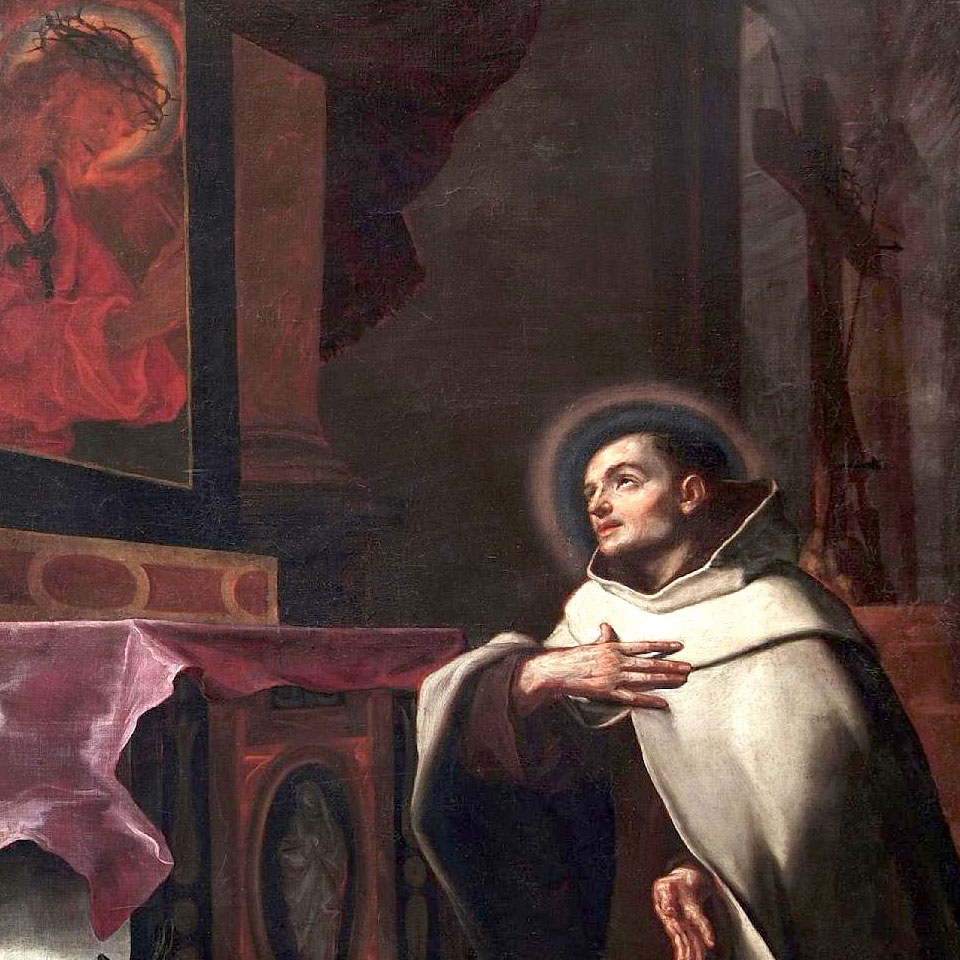
The word mysticism from a negative perspective is seen as a new-age hocus pocus and from a positive perspective as something that is only achieved by some of the greater Saints, such as Teresa of Avila or John of the Cross. However, Evelyn Underhill, whom we celebrate today, teaches that the mystical life is attainable to anyone who nurtures such a life. In The Spiritual Life, she writes, โa spiritual life is simply a life in which all that we do comes from the centre, where we are anchored in God.โ She teaches that a contemplative life, a mysticโs life is available to anyone who would place God at the center and strive for a deeper understanding of Him. Such a teaching is in line with what many others have said. For example, in Life and Holiness, Thomas Merton writes, โThe spiritual life is not a life of quiet withdrawal, a hothouse growth of artificial ascetic practices beyond the reach of people living ordinary lives. It is in the ordinary duties and labors of life that the Christian can and should develop his spiritual union with God.โ (Introduction)
Jesus said, โGod is spirit, and those who worship him must worship in spirit and truth.โ Jesus was saying, it is not about where you worship or how you worship; instead, worship is about spiritual union with God. Evelyn Underhill teaches that this union is available to us all, ifโlike anything else we want to be successful atโwe dedicate ourselves and practice. Through practice, we can gain wisdom about the things and nature of God.
Take the knowledge you have of GodโGod is love, faithful, merciful, etc.โand by intentionally contemplating that knowledge, allow it to draw you into greater union with Him.
The first copy of a particular comic strip arrived in my email inbox on Saturday, May 28th while I was still in Italy. Iโm guessing it was in the paper that morning. It was from Jean Mc. and it was a copy of the Hagar the Horrible comic strip. As you probably know, Hagar is the Viking that finds himself in various circumstances. In this instance, Hagar is visiting his doctor and says, โGuess where Iโve been for the last month!โ The doctor replies, โItaly!โ Hagar responds, โGreat guess! Did I pick up an accent?โ To which the doctor replies, โNo, you picked up fifteen pounds!โ
As I said, Jean was the first to send this to me but they just kept coming for the rest of the day. It got to the point that I was wondering if you all were trying to tell me something!
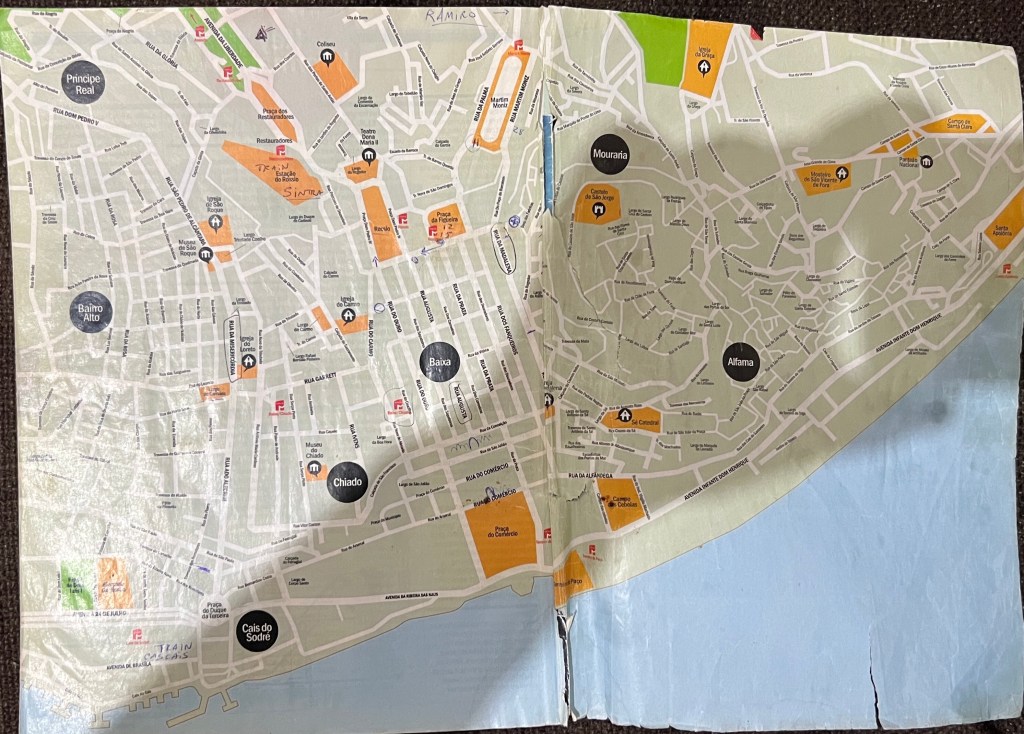
I spent a week in Florence and a week in Rome. There is truly something very special about Florence, but from many respects, Rome truly does feel like the center of the world.
Charles Dickens in Pictures from Italy writes, โIt is a place that ‘grows upon you’ every day. There seems to be always something to find out in it. There are the most extraordinary alleys and by-ways to walk about in. You can lose your way (what a comfort that is, when you are idle!) twenty times a day, if you like; and turn up again, under the most unexpected and surprising difficulties. It abounds in the strangest contrasts; things that are picturesque, ugly, mean, magnificent, delightful, and offensive, break upon the view at every turn.โ And that is so very true.
You can be walking down a very narrow street that the sun might find its way to shine down on for an hour a day and then walk out into a sun-filled piazza with a bubbling fountain at one end and a cathedral towering above you at the other. Across the street from a gelato shop, you will find the ruins, many feet below the current street level, of the courtyard where Caesar was assassinated. And then you can walk into some obscure church and find some of the greatest works of art ever created. In the end, you are so overwhelmed by it all that youโre more exhausted than you are awed.
My advice to anyone who walks through these magnificent places: donโt forget to look up! The ceilings are as impressive (if not more so) as the surrounding walls and it was on one of the ceilings that I saw the one work of art that stopped me cold.
It was on the second floor of the Papal Palace in the Hall of Constantine, Constantine being the first Roman Emperor to legalize and convert to Christianity. The walls depict scenes in the life of Constantine and the Church, but the ceiling depicts another hall. In it stands a pedestal and on the pedestal is a crucifix. On the ground below and broken into many pieces is a statue of one of the old Roman gods. The fresco, by Tommaso Laureti, is called, The Triumph of Christianity. Not today, but youโre going to have to hear a sermon on that, but the point is that all of your senses are bombarded from every angle with light, color, sounds, smellsโฆ everything and it is amazing. Yet for me, all of that I was seeing was not what truly moved me. Letโs go back to Charles Dickens and his travels through Italy.
Dickens and his companions travel outside the old city walls to the Church of St. Sebastian. There they are met by a โgaunt Franciscan friar, with a wild bright eyeโ who was their guide through the catacombs that lie below the church. These catacombs have almost seven miles of tunnels where, in the early years, some 65,000 people were buried and of them, Dickens writes, โGraves, graves, graves; Graves of men, of women, of their little children, who ran crying to the persecutors, ‘We are Christians! We are Christians!’ that they might be murdered with their parents; Graves with the palm of martyrdom roughly cut into their stone boundaries, and little niches, made to hold a vessel of the martyrs’ blood.โ It is at this point that Dickenโs Franciscan guide stops and says to them, โThe Triumphs of the Faith are not above ground in our splendid Churches. They are here! Among the Martyrs’ Graves!โ The faith of so many is not found in the vast buildings and treasures of art. Instead, the faith is found in the souls of Godโs people, both the living and the dead, and I tell you about Dickenโs experience in this place because I also had the opportunity to walk through those very same catacombs. (I just finished reading Misery by Stephen King. The crazy lady in the book is Annie Wilkes and when Annie wants to say something is disgusting or creepy, she says it is โOogy.โ) Well, some may think this โoogyโ, but as I was walking through those catacombs, I couldnโt help but trace my fingers through the niches where the bodies of the Saints once lay. I couldnโt stop from running my fingers along the walls touching what had been touched by so many faithful Christians who had come before me.
All the painted ceilings, great vaulted ceilings, domes, and masterpieces of art were truly overwhelming, but what truly moved my spirit was being so very near to these holy people and understanding that all that was above is built upon the foundation of those who were below.
I had the blessed opportunity to pray the Rosary at the tomb of one of my greatest heroes of the faith: St. Josemarรญa Escrivรก. I touched this little medal of mine against his tomb, but as inspiring as it was to be in that place, it was so much more about being near to him and to greater holiness.
I had the opportunity to spend about thirty minutes in the Sistine Chapel. Before arriving, our guide helped us to understand what we were seeing and all that went into creating it. Amazing, but as I sat along the side staring up at the ceiling and the surrounding walls, I couldnโt help but think of all the great Saints that throughout the centuries had passed through this one place.
I saw the burial place of St. Paul and I saw a small niche in the catacombs below the Vatican above which, in Greek, was written, ฮ ฮฮคฮกฮฮฃ ฮฮฮ: โPeter is withinโ and in the niche was a small ossuary containing twenty-two bones of St. Peter. I confess, I cried, but it wasnโt just that place and those bones, it was more about being so near to one who had spoken to and learned from Jesus. One who had touched Jesus. So very close to the holy.
As Dickenโs Franciscan monk said, โThe Triumphs of the Faith are not above groundโฆโ they are here below, and itโs what is below that forms the foundation.
There was Escriva, but he was built upon the foundation of the martyrs at St. Sebastian and those like them, who were built upon the foundation of those greats who had passed through the Sistine Chapel, who were built upon the foundations of St. Peter and St. Paul. And what does Paul teach us about ourselves in his letter to the Ephesians? โYou are no longer strangers and aliens, but you are fellow citizens with the saints and members of the household of God, built on the foundation of the apostles and prophets, Christ Jesus himself being the cornerstone in whom the whole structure, being joined together, grows into a holy temple in the Lord.โ And St. Paul goes on to say, speaking to that church then and this church today, โIn himโฆ In Christ Jesusโฆ you also are being built together into a dwelling place for God by the Spirit.โ
Today is the celebration of the Holy Trinity and for me, all that I saw and experienced defined that last sentence and the workings of the Holy Trinity: the living and the dead who are in Christ Jesus are being built together into a church, the dwelling place of Godโphysically represented by the beautiful structures we build of marble and wood and bricks and spiritually represented by the communion of all the saintsโand knit together by the very Spirit of God. Who we are is not only about what happened 2,000 years ago, but it is also about this building and the knitting together of all the saints including us today, and our role as a Christian people is to continue to build and form the foundation upon which others will build in the future, so that they might look upon our works and say, โThe Triumphs of the Faith are here, found in those who built upon the solid foundation upon which we stand.โ
Of all the greatest masterpieces and cathedrals, it is this foundation, this building, this cornerstoneโChrist Jesusโwhich is the crowning jewel and you are one of the myriads of facets reflecting the light and glory of God: Father, Son, and Holy Spirit.
Let us pray: We pray You, almighty and eternal God! Who through Jesus Christ has revealed Your glory to all nations, to preserve the works of Your mercy, that Your Church, being spread throughout the whole world, may continue with unchanging faith in the confession of your name. Amen.
The religious community on the island of Iona was established in 563 a.d.
From Numbers 35: โThe Lord spoke to Moses, saying: Speak to the Israelites, and say to them: When you cross the Jordan into the land of Canaan, then you shall select cities to be cities of refuge for you, so that a slayer who kills a person without intent may flee there. The cities shall be for you a refuge from the avenger, so that the slayer may not die until there is a trial before the congregation.โ
This idea of a city or place of sanctuary has been quite common throughout the ages, eventually leading to the legal establishment of churches becoming sanctuaries for those who had committed crimes. So, a criminal who is being pursued could run to the church and seek asylum within, which could last up to 40 days. To forcibly remove someone who is in a sanctuary could lead to excommunication from the church.
As good Episcopalians, you probably already know this, as it is the red doors of our church that signify this church as a place of sanctuary, no longer against legal pursuit, but as a sign of spiritual asylum, away from the terrors of the world that continue to pursue us.
In the year 561, the friend of a monk sought out asylum in a monastery, a legal sanctuary, in Ireland for an accidental murder that he had committed. However, the kingโs men who pursued the young man disregarded the right of sanctuary, went into the monastery and tore him from the arms of the monk who was assisting him, took him outside the walls, and put him to death. This event angered the monk to such an extent that he went out and raised an army of his own and attacked the kingโs men, a battle that led to the death of 3,000 soldiers.
For his actions, the monk was to be excommunicated but instead was sent into exile, where his penance was to save the soul of one individual for every soldier that was killed. He and twelve of the others got into a boat and let it go where it would. It landed on an island that was twelve miles off the coast of Scotland. The island was three miles long and one mile wide. It is called Iona. The monk was Columba. He had some rough beginnings but would go on to be great, a lover of both men and animals.
Even though only a priest, many bishops and kings sought him out for advice, and the island of Iona became known as a sacred place. It is the burial place of 48 kings of Scotland, four kings of Ireland, and eight kings of Norway.
The last verse of Johnโs Gospel: โBut there are also many other things that Jesus did; if every one of them were written down, I suppose that the world itself could not contain the books that would be written.โ With regards to Columba and Iona, I suppose we could write enough books, but there are far too many events to discuss today.
In remembering the works of Columba, think about what the Prophet Isaiah wrote: โThe spirit of the Lord God is upon me, because the Lord has anointed me.โ Those words were written for Isaiah, for Jesus, for those like Columba, and for us as well, for the Spirit of the Lord is upon us and He has anointed us to go forth into the harvest, like those before us, to produce good fruit.
I arrived back in Oklahoma late in the evening on Tuesday and have been processing all that I was able to see and do while in Italy (Florence/Rome). It was my first time out of the country (other than Canada and I don’t really count that one), so it took me a few days there just to get past the initial travel jitters. Afterward, I settled in and enjoyed it all. Funny, in all the pics and photos that I posted and that generated the most comments, etc, it was The Hat that generated the greatest conversation.
I do like the hat and it has now found a prominent home in my house. A great reminder of a wonderful experience.
I haven’t decided where I’ll go next, although the church has a pilgrimage to Israel in the works for next year, I’m thinking I would really like to visit Sweden/Norway. Not sure why other than to go up to the northern parts of those countries to try and see the trolls (an excellent documentary on the trolls can be found here.) There’s also India and that has been pulling at me for a long time.
For now, I’m working on getting back to normal. Nothing bad on the jetlag issue, but I have been waiting on the plumber to show up for the last three days to fix a leaky main leading into the house. Yep. You can go on vacation for as long as you like but the pipes are still going to break and the world is going to continue to revolve, and that’s OK too. I’ll be back at it for real on Monday but for now, I’m going to continue in vaca mode, which included bottling up the new vintage: Lucrezia (as in Borgia).
A very tasty, bright, and light, Chardonnay.
Finally, this morning, The Queen knocked over half a cup of coffee onto the book/manuscript I’ve been trying to write for the last couple of years: The Marble Finger (the second of the Fr. Anthony Savel mysteries). I figure that it was her way of telling me to get on with it or get it off the desk so that she’ll have more room to lay down. It is time. Actually, it is past time: let the murdering begin!
Yesterday began with a walk the Church of Santo Spirito in Sassia (Divine Mercy Sanctuary in Rome) a Roman Catholic Church with Mass in English. When in Romeโฆ yeah. The liturgy was beautiful and the sermon was fine.
Following the service they had announcements and I thought they were talking about a service in the church (my Italian is still zero), but Heidi kept asking if I wanted to go. I said I was fine either way, but she kept insisting, so I eventually said I was good with it if they wanted to attend. This is when she said, โJohn, the Pope is going to bless the crowd and religious objects. Donโt you want to go?โ Well, DUH! Mark another one up for bad hearing, but you couldnโt have stopped me at that point. We stood in the sun in St. Peterโs Square for over an hour and when he arrived, he was a little white speck in a window six stories up, but it was Pope Francis and I was there. The icing on the cake of this entire trip, which has been remarkable.
I scoured the YouTube video of the service and found myself, Heidi and Scott on Vatican TV.
From there, after a quick bite of lunch, we made our way to the Archbasilica Cathedral of the Most Holy Savior and of Saints John the Baptist and John the Evangelist in the Lateran. Long name for a significant church. It was the first Vatican and the original church was built in the late 4th century. These churches that are off the main tourist routes are generally not very crowded, but are definitely worth the time to seek out.
We were looking for one more church, but it was closed when we found it, so we made our way back home and got cleaned up for supper.
Supper: Iโve never been to a Michelin rated restaurant until last night and did not know what it meant until I Googled it. Bottom line: really great food, service, and atmosphere. I would say that the Casa Coppelle met all the requirments.
Scott and Heidi
On the way back to the apartment we strolled through Piazza Navona where a street musician was doing a fine job of some old Pink Floyd tunes. It was lights out after this.
Today is our last full day in Rome/Italy, so we made a few necessary stops picking up items that were being altered, took our pre-flight COVID tests (weโre all negativeโฆyay!), and had one final meal at Mimi & Coco, which is only a few blocks from the apartment. A truly fantastic place to eat.
Now it is time to pack and get ready for the trip home. We leave for the airport at 8 a.m.
Of all that Iโve seen, the one image that has stayed with me is one that was painted on the ceiling in the Hall of Constantine in one of the first Papal apartments: The Triumph of Christianity by Tommaso Laureti. It was completed in 1582. Perhaps Iโm supposed to be more humble, but this painting makes me feel proud and alive and with great purpose. Anything we decide to put on that pedestal other than Christ Jesus and Him crucified will be broken.
I hope you all have enjoyed my little travel blog and seeing a few of the sights. I look forward to reconnecting with you all when Iโm on the other side of the pond.