The Second Father Anthony Savel Mystery is now available on Amazon. Click on the cover image to be directed to the Amazon page.
Wannabe junior detective Father Anthony Savel and the congregation of St. Matthew’s Cathedral have recovered from the shocking murder of the Dean of the Cathedral that occurred a year ago. All is returning to normal except for the upcoming election of a new Bishop for the Diocese. Father Anthony, Miss Avery, Detective Stavlo, and Zekey the wonder poodle could have all remained in peace had it not been for a crash of thunder, a tripped-up acolyte, and another dead body in the cathedral. Church can be murder, and when the pointy hat, purple jeweled ring, and big stick (all signs of the bishop) are up for grabs, no one is safe.
A must-read for fans of the Fr. Brown, Mitford, and Cadfael series.
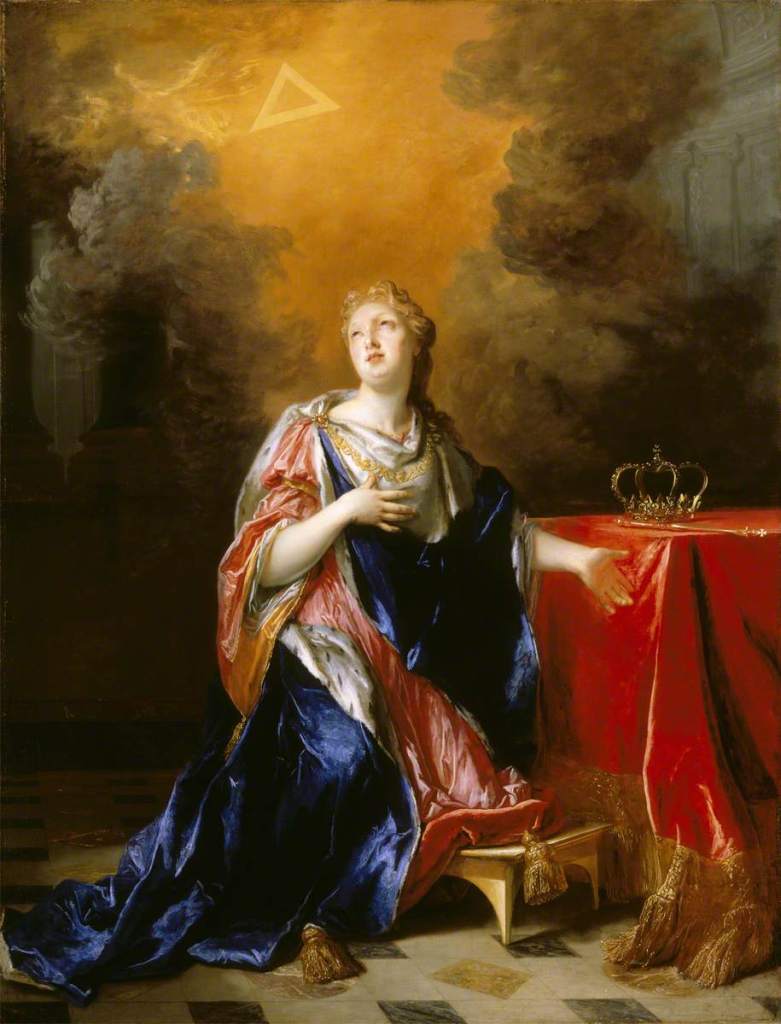
Saint Margaret, Queen of Scotland by Nicolas de Largilliere
Margaret of Scotland was an English princess born in Hungary as her father, Edward, was in exile. As kingdoms rise and fall, it appeared that Edward could return from exile to be crowned king, but no sooner had he arrivedโฆ he died. The family was at the mercy of those who would continue to rule. Eventually, Margaret and her family were forced to run for their lives, so they decided to return to Hungary. However, a storm blew their ship north, where it wrecked on the shores of Scotland.
Margaret had hoped to become a religious, but once in Scotland, she was noticed by the King of Scotland, Malcolm. Malcolm was smitten. From the Anglo-Saxon Chronicle:
Then began Malcolm to yearn after the childโs [Edgar] sister, Margaret, to wife; but he and all his men long refused; and she also herself was averse, and said that she would neither have him nor anyone else, if the Supreme Power would grant, that she in her maidenhood might please the mighty Lord with a carnal heart, in this short life, in pure continence. The king, however, earnestly urged her brother, until he answered Yea. And indeed he durst not otherwise; for they were come into his kingdom โฆ The prescient Creator wist long before what he of her would have done; for that she would increase the glory of God in this land, lead the king aright from the path of error, bend him and his people together by a better way, and suppress the bad customs which the nation formerly followed: all which she afterwards did. The king therefore received her, though it was against her will, and was pleased with her manners, and thanked God, who in his might had given him such a match. (Source)
Did she succeed in leading the king aright and bending the people away from their evil customs? The short answer: yes. With King Malcolm, she helped bring reform to the Scottish church, built schools and hospitals, and participated in rebuilding the monastery on Iona. In addition, they established a Benedictine monastery in Dunfermline. In her piety and desire to serve as Christ served, she would not sit down to eat her own meal until she had fed her nine orphan children and twenty-four other paupers. During Advent and Lent, she and Malcolm would feed and serve 300 of the poor in their kingdomโnot only did they serve the meal on the royal dishes, but they served them on their knees.
She died in 1093, four days after her husband was killed in a battle with the English. Her final words, โO Lord Jesus Christ who by thy death hast given life to the world, deliver me from all evil?โ She was forty-seven.
Our friend, John Reneau, gave us a different understanding of the parables that we read in our Gospel today: Jesus said, โThe kingdom of heaven is like treasure hidden in a field, which someone found and hid; then in his joy he goes and sells all that he has and buys that field.โ John said he always understood himself as the man who found the treasure, but that he had read in a commentary that Jesus is that man and that we are the treasure Jesus seeks, and that Jesus gave up everything to have us with him.
Jesus also said, โAgain, the kingdom of heaven is like a merchant in search of fine pearls; on finding one pearl of great value, he went and sold all that he had and bought it.โ With the understanding John provided: Jesus is the merchant, we are the pearl, and Jesus gave up all to have us with him. When it comes to Margaret of Scotlandโฆ I like Johnโs understanding of the parable, for Margaret of Scotland is also known as The Pearl of Scotland.
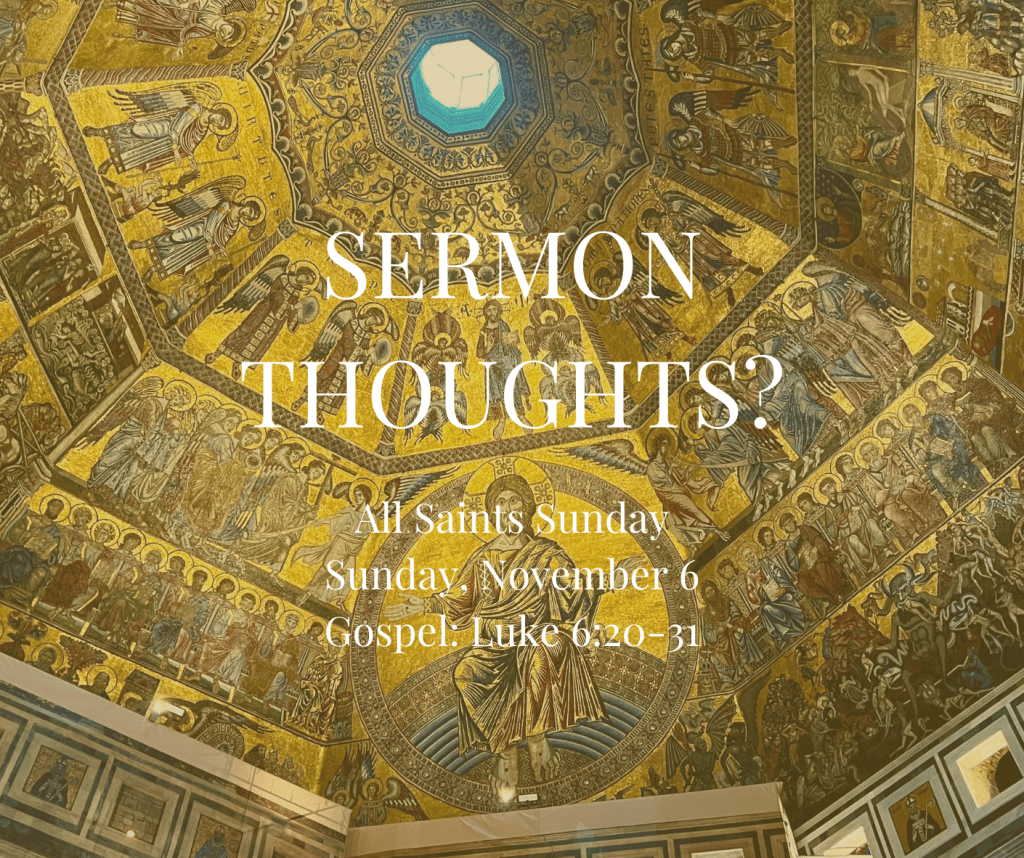
A picture I took while in Florence, Italy, of the ceiling in The Baptistery of St. John at the Duomo
Irish History: Stingy was a miserable, old drunk who liked to play tricks on everyone: family, friends, his mother, and even the Devil himself. He once invited the Devil to have a drink with him. True to his name, Stingy didn’t want to pay for his drink, so he convinced the Devil to turn himself into a coin he could use to buy their drinks. Once the Devil did so, Stingy decided to keep the money and put it into his pocket next to a silver cross, which prevented the Devil from changing back into his original form. He eventually freed the Devil under the condition that he would not bother him for one year.
As the story goes, Stingy, one day, tricked the Devil into climbing up an apple tree. Once the Devil climbed up the apple tree, Stingy hurriedly placed crosses around the trunk of the tree. The Devil was then unable to get down the tree. Stingy made the Devil promise not to take his soul when he died. Once the devil promised not to take his soul, Stingy removed the crosses and let the Devil down.
When Stingy finally died many years later, he went to the pearly gates of Heaven and was told by Saint Peter that he was too mean and cruel and had led a miserable and worthless life on earth. He was not allowed to enter heaven. He then went down to Hell and the Devil. The Devil kept his promise and would not allow him to enter Hell. Stingy was scared and had nowhere to go but to wander about forever in the darkness between heaven and hell. He asked the Devil how he could leave as there was no light. The Devil tossed him an ember from the flames of Hell to help him light his way. Stingy placed the ember in a hollowed-out turnip, one of his favorite foods he always carried around whenever he could steal one. From that day onward, Stingy (a.k.a. Stingy Jack) roamed the earth without a resting place, lighting his way as he went with his โJack OโLantern.โ
On all Hallow’s eve, which would have been this past Monday, the Irish hollowed out turnips, rutabagas, gourds, potatoes, and beets. They placed a light in them to ward off evil spirits and to keep Stingy Jack away. These were the original Jack O’Lanterns. In the 1800s, Irish immigrants came to America and quickly discovered that Pumpkins were bigger and easier to carve out.
This past week we celebrated All Saintsโ/Hallows Eve, All Saintsโ Day, and All Soulโs Day. In other words, we celebrated all the saintsโcapital โSโ and lowercase โsโโwho carried the bright light of the faith. The idea of caring for the soul isโas you knowโone that has been ruminating in my mind for several months now. I suppose it comes with the territory, but this past week I wondered if our souls were happy, content, sad, angry, peaceful, or something else. And, of course, the answer depends on the person, but for all of us, we must consider: is our soul in such a condition to allow us into Heaven or, like Stingy Jack, whether will we be denied admittance?
The Lord has constantly been providing the information we need to remain on the path that leads to Him, yet no matter how hard he tries, we, as his ultimate creation, have a difficult time staying on that path.
The first attempt was the Garden of Eden: โYou may surely eat of every tree of the garden, but of the tree of the knowledge of good and evil you shall not eat, for in the day that you eat of it you shall surely die.โ One rule: donโt eat the apple. That didnโt work out, so God gave Moses The Law: โThou shall have none other Gods but meโฆ no graven imagesโฆ keep the Sabbath Holyโฆ donโt steal or murder or commit adultery.โ You know them all. Right?
God provided these laws not to keep us under his thumb but to keep us safe. To protect our souls and to save us from sin, and by golly, we break them at every opportunity. So the condition of our soul comes into question once again. Are we headed to heaven or hell? Yet, out of his great love for us, God makes another way available: Jesus. Romans 10:13โโEveryone who calls on the name of the Lord will be saved.โ We hear that and think, โThatโs the ticket. Bought and paid for.โ We respond, โAmen. Iโll take it!โ
No more of the โThou shall notโ business. Instead, we get โblessed are the poor, the meek, the merciful, the peacemaker, and so on.โ We think, โItโs all good!โ The beatitudes present the very heart of Jesus; however, the catch is that the beatitudes are not an abolishing of the โThou shall notโs.โ Jesus is not making things easier! He is intensifying the Ten Commandments and taking them to their most radical end. How?
โThou shall not kill.โ Fine. I havenโt killed anyone (yet).. but I havenโt! However, Jesus said, โYou have heard that it was said to those of old, โYou shall not murder; and whoever murders will be liable to judgment.โ But I say to you that everyone who is angry with his brother will be liable to judgment; whoever insults his brother will be liable to the council; and whoever says, โYou fool!โ will be liable to the hell of fire.โ I thought I was golden with not killing, but as it turns out, Iโm not even close.
โThou shall not steal.โ You donโt take from others but go back to what we talked about a few weeks back: things done and left undone. There are sins of commission and sins of omission. โThou shall not steal.โ You did not take when you were not supposed to, but โThou shall not stealโ also means, did you give when you were supposed to give? Not stealing is the bare minimum.
How far would we fall short if we began to analyze, โBlessed are the pure in heart for they shall see Godโ in the same manner? Iโll let you do that alone because Iโm not brave enough to do it for myself. Yet, even though I am not courageous enough and seem unable to fulfill the calling God places on my lifeโฆ the calling is still the truth. It is the one path that Christ calls us to in order to be his disciples. Could we soften it? Make it less difficult?
Lee is the cook and housekeeper for the Trask family in John Steinbeckโs East of Eden. In one scene, Lee is talking to Adam Trask and says, my father said, โThereโs more beauty in the truth even if it is dreadful beauty. The storytellers at the city gate twist life so that it looks sweet to the lazy and the stupid and the weak, and this only strengthens their infirmities and teaches nothing, cures nothing, nor does it let the heart soar.โ The Beatitudes are the path that Christ Jesus has set for us. They are the truth we must come to grips with so that our hearts and souls may soar. So how do we fulfill them?
Speaking on The Beatitudes in a 2015 sermon, Pope Francis said, โThis is the way of holiness, and it is the very way of happiness. It is the way that Jesus traveled. Indeed, He himself is the Way: those who walk with Him and proceed through Him enter into life, into eternal life. Let us ask the Lord for the grace to be simple and humble people, the grace to be able to weep, the grace to be meek, the grace to work for justice and peace, and above all the grace to let ourselves be forgiven by God so as to become instruments of his mercy.
โThis is what the Saints did, those who have preceded us to our heavenly home. They accompany us on our earthly pilgrimage, they encourage us to go forward. May their intercession help us to walk on Jesusโ path, and to obtain eternal happiness.โ (Source)
The Beatitudes are beauty, but they are Steinbeckโs โdreadful beautyโ in that they are the truth and path of our life with God, but the truth and path that we fall so dreadfully short of. However, failure does not mean we quit. As Francis encouraged us, we pray for the grace to follow the path and the grace of forgiveness when we fail. As my friend, St. Josemarรญa Escrivรก, said, โYou โ be convinced of it โ cannot fail. You haven’t failed; you have gained experience. On you go!โ Guided by the Saints, get back to the path litโnot by some ember in a gourd, but by the very light of Christ, soโฆ On you go! We have work to do.
Let us pray: Almighty God, you have knit together your elect in one communion and fellowship in the mystical body of your Son Christ our Lord: Give us grace so to follow your blessed saints in all virtuous and godly living, that we may come to those ineffable joys that you have prepared for those who truly love you; through Jesus Christ our Lord, who with you and the Holy Spirit lives and reigns, one God, in glory everlasting. Amen.
Join the conversation on St. Matthew’s Facebook page.
William-Adolphe Bouguereau (1825-1905) – The Day of the Dead (1859)
President Harry Truman popularized the statement, โIf you canโt convince โem, confuse โem!โ Another politician added, โIf you canโt convince โem, confuse โem: if you canโt confuse โem, scare โem.โย It seems to work these days, but my goal is to do neither.ย If I do, please forgive me.
October 31st, November 1st, and 2nd mark three holy days in a row, all with very similar names: All Saintsโ Eve (a.k.a. All Hallows Eve and Halloween), All Saintsโ Day, and All Soulsโ Day. They are similar but distinct.
At least 2,000 years ago, Celtic pagans settled on November 1st as the beginning of winter, and according to Celtic beliefs, the day before was when the spirits of those who had died may come back and seek revenge against those who had harmed them. Folks would go to great lengths to protect themselves from the marauding spirits, including dressing up in costumes to scare off the evil that might come their way.
Later, the Christians would establish November 1st as the day to celebrate all the known capital โSโ Saints, including the vast number of martyrs. We celebrate Saints almost every week, but these days are reserved only for the biggies. There arenโt enough days in the year to celebrate all the rest, so the Church combined the celebration of all these other Saints and designated November 2nd as the day for everybody else. It works, but to incorporate the pagan holiday of October 31st, the Church extended the feast of All Saintsโ Day to two days.
Now, as for today, November 2nd is All Soulsโ Day, which is really about the souls in purgatory and everybody who is not a capital โSโ Saint.ย Purgatory came about partly because of the understanding of I Corinthians 3:11-15: โFor no other foundation can anyone lay than that which is laid, which is Jesus Christ. Now, if anyone builds on the foundation with gold, silver, precious stones, wood, hay, stubbleโeach manโs work will become manifest; for the Day will disclose it because it will be revealed with fire, and the fire will test what sort of work each one has done. If the work which any man has built on the foundation survives, he will receive a reward. If any manโs work is burned up, he will suffer loss, though he himself will be saved, but only as through fire.โ
These verses indicate that a soul, not destined for Hell but still in need of additional purification, would go through a period of cleansing or purging before entering Heaven. The placeโPurgatory. Whether we believe in Purgatory or not, All Soulsโ Dayโtodayโis the day that we remember not only the Saints who have died but all who have died, in hope and faith that they will be made acceptable to God and made worthy to enter the Kingdom of Heaven. It was the teaching of the Church that through the prayers of the living, we could assist these souls in Purgatory to more speedily attain the glory of Heaven, so each Mass, we pray for those who have died.
Is this teaching true or false? Iโll let you decide, but should I die before you, please pray for my soulโฆ just in case.
Little Johnnyโs mom was working in the kitchen, listening to her young son play with his new electric train in the living room that his father had purchased for his birthday. Mom heard the train stop, and Little Johnny said, “All of you sons of guns who want off, get the heck off now, ’cause this is the last stop! And all of you sons of guns who are getting on, get your behinds in the train ’cause we’re going down the tracks.โ
Mom was shocked. “Johnny! We don’t use that kind of language in this house. Now I want you to go to your room and stay there for two hours. You may play with your train when you come out, but I want you to use nice language.โ
Two hours later, Little Johnny came out of the bedroom and resumed playing with his train. Soon the train stopped, and mom heard Johnny say, “All passengers who are disembarking from the train, please remember to take all your belongings with you. We thank you for riding with us today and hope your trip was a pleasant one. We hope you will ride with us again soon.” Johnny continues, “For those just boarding, we ask you to stow all your hand luggage under your seat. Remember, there is no smoking on the train. We hope you will have a pleasant and relaxing journey with us today.โ
As mom smiled, Johnny added, “For those who are annoyed about the two-hour delay, please see the bossy lady in the kitchen.”
I traveled back and forth to seminary by train: The Empire Builder along the high line, but more recently, my travels have all been by plane, and perhaps, because I donโt travel all that much, I donโt mind the delays. Iโll find a quiet place to read or watch the people, but the delay greatly annoys others. Folks get angry at the airlines, short-tempered with the stewardess, and cranky with traveling companions. If airlines were the only place we encountered delays, I suppose most wouldnโt care, but as we all know, delays are everywhere. Traffic. Doctors office. Rain delays at sporting events. Thatโs just a few. We see the delay as an infuriating inconvenience and a personal attack on our happiness. But what if we saw this timeโnot as wasted or an annoyanceโbut as a blessing? An opportunity?
Zaccheus was a wee, little man, And a wee, little man was he. He climbed up in a sycamore tree, For the Lord he wanted to see.
โJesus entered Jericho and was passing through it. A man was there named Zacchaeus; he was a chief tax collector and was rich.โ
At the time of Jesus, Jericho was a significant city. As the Scripture says, Zacchaeus lived there, was a tax collector and was wealthy; therefore, Zacchaeus was a busy little man in a busy little city. And into his busy little life comes Jesus. There is a moment when he thinks he would like to stop and see this Jesus, yet Zacchaeus is on his way to pay a visit to a certain wealthy merchant who owes big, and he canโt afford to waste any time along the way. So instead of stopping, Zacchaeus pushes his way through the crowded street, grumbling over the rabble in his way and angry at this itinerant preacher for the inconvenience he is causing. Finally making his way through the crowd, he finds the wealthy merchant and begins haranguing him for an extra one percent because Zacchaeus just bought a winter home down in the Sinai that needs a new roof.
Meanwhile, Jesus passes on to Jerusalem, and salvation never comes to that wee little man, and he dies wealthy in his winter home in the Sinai, but alone and hated by all. There was a moment when life could have changed so dramatically for him, but he could not be delayed. He was so worried about everything else that he missed the moment altogether.
A moment changes everything, but unless you are willing to take that moment and to allow it to change you and the course of your life, it is nothing more than a bit of smoke on a breeze. We most likely miss those moments, not by intentionally brushing them away, but by being so trapped in the past or worried by the future that we donโt even see them in the now.
Blaise Pascal writes, โLet each one examine his thoughts, and he will find them all occupied with the past and the future. We scarcely ever think of the present, and if we think of it, it is only to take light from it to arrange the future. The present is never our end. So we never live, but we hope to live; and, as we are always preparing to be happy, it is inevitable we should never be so.โ Why do we not live in the present? Pascal answers: โThe present is generally painful to us. We conceal it from our sight, because it troubles us; and if it be delightful to us, we regret to see it pass away.โ
We are nearing the end of the church year, which means we will begin the Season of Advent soon. That is the season when we consider Jesusโ first comingโthe pastโand when we look ahead to the future, anticipating his second coming. It seems that we, as a Christian people, are falling into Pascalโs mistake, being occupied with the past and the future and completely disregarding the present. However, that is not the message of Jesus. A few chapters before our Gospel reading today, we read of an encounter Jesus had with the Pharisees: โOnce Jesus was asked by the Pharisees when the kingdom of God was coming, and he answered, โThe kingdom of God is not coming with things that can be observed; nor will they say, โLook, here it is!โ or โThere it is!โ For, in fact, the kingdom of God is among youโฆ the kingdom of God is within you.โโ What does that mean? Jesus came once, and he will come again, but โthe kingdom of God is among youโ clearly says that the kingdom of God is now, in this very moment. Jesus ushered it in at his first coming, and he will bring it to its eternal and glorious fruition when he comes again, but it is also now. Jesus said, โI am with you alwaysโI am with you now!โeven to the end of the age.โ
Yes, I do know that sometimes the present moment can be unpleasant, it can be painful, and full of trials, but I also know that God is present even then and that those times contain something good.
A university professor tells of being invited to speak at a military base in the month of December, and while there meets an unforgettable soldier named Ralph. Ralph had been sent to meet him at the airport, and after they had introduced themselves, they headed toward the baggage claim. As they walked down the concourse, Ralph kept disappearingโonce to help an older woman whose suitcase had fallen open, once to lift two toddlers up to where they could see Santa Claus, and again to give directions to someone who was lost. Each time he came back with a big smile on his face. “Where did you learn to do that?โ The professor asked. “Do what?โ Ralph responded. “To be so helpful and considerate to others.โ โOh,” Ralph said, โduring the war, I guess.โ Then he told the professor about his tour of duty in Vietnam, how it was his job to clear minefields, and how he watched his friends blow up before his eyes, one after another. โI learned to live between steps,โ he said. โI never knew whether the next one would be my last, so I learned to get everything I could out of the moment between when I picked up my foot and when I put it down again. Every step I took was a whole new world, and I guess I’ve just been that way ever since.โ
Don’t fret over the delays. The Kingdom of God is now. Jesus is coming your way; he may even be sitting in the pew across from you or be your waiter at lunch. It is possible that you will see him in the face of an enemy or a stranger. In all of these instances, it is as though Jesus were saying to Zacchaeus, โHurry and come down, for I must stay at your house today.” Live between the steps, recognize the gifts and blessings of God that are right here, and be happy to welcome Jesus into your life in all the many forms that he makes his presence known in every moment.
Let us pray: Most Loving Father, we spend so much time reliving yesterday or anticipating tomorrow that we lose sight of the only time that is really ours, the present moment. You give today one moment at a time. That is all we have, all we ever will have. Give us the faith which knows that each moment contains exactly what is best for us. Give us the hope which trusts You enough to forget past failings and future trials. Give us the love which makes each moment an anticipation of eternity with You. We ask this in the name of Jesus Who is the same yesterday, today and forever. Amen.
Join in the sermon discussion on St. Matthew’s Facebook page.
A rural middle school in Northwest Florida was recently faced with a unique problem. A new fad arose amongst the 8th-grade girls with the use of lipstick. They began bringing, sharing, and trading with their friends to try out all the latest styles and shades. The gathering point for this activity was one specific bathroom at the school. That was fine, but after they tried out all of these lipsticks, they would press their lips to the mirror, leaving dozens of lip prints every day.
Every night the custodian had to clean them off, but the next day the girls would put more lip prints on the mirror. Finally, the principal decided that something had to be done. So class by class, the principal paraded 8th-grade girls to the bathroom to meet with the custodian.
She explained that all these lip prints were causing a major problem for the custodian who had to clean the mirrors every night. To drive the point home, she asked the custodian to demonstrate to the girls what a pain it was for him to clean the mirrors. He took out a long-handled squeegee, dipped it in the toilet, and began cleaning off the lipstick. After repeating the process a few times, the mirror was clean. There was no more lipstick problem.
You have probably noticed that weโve been remodeling the bathrooms. Many thanks to Sharon, Dora, Jackie, Gina, and Michael for all the work theyโve put in on this. There are a few more things to be done, but weโre close now. One of the last items will be the mirrorsโone may be in the main womenโs but not yet in the others. I told Gina the other day, โIt may be a vanity thing, but it seems rather odd to walk into a bathroom and not have a mirror.โ Itโs not like I stand there preening, but itโs nice to make sure thereโs nothing stuck in the teethโI would say check the hair but not much of a problem there.
The odd thingโand perhaps youโve experienced it alsoโis that I can look at myself in a mirror and think, โNot too bad,โ but then I see a picture of myself, and itโs, โWho in the worldโฆ?โ As it turns out, there is a bit of science behind it.
The most familiar image we have of ourselves is the one we see in the mirror. The only problem is that the image in the mirror is reversed, so when we see a picture of our faces, something seems to be a bit โoff.โ There are differencesโalthough often minorโbetween the left side of our faces and the right. So, perhaps not consciously, but subconsciously our minds say, โThereโs something not right,โ and so we end up disliking the pictures of us. You can all run home and try this: take several selfiesโsmiling, laughing, etc.โthen take the same pictures of yourself in the mirror. See which ones you like best. Bottom line: the mirror is a distorted view of what you actually look like to others, but the photograph isnโt the real you eitherโthrough the mechanics of photography, distortions appear there also. It is true; the camera adds ten pounds (in my case, about forty!) What it all comes down to is that we really do have a distorted image of ourselves. The person we see is not the person others see.
โTwo men went up to the temple to pray, one a Pharisee and the other a tax collector. The Pharisee, standing by himself, was praying thus, โGod, I thank you that I am not like other people: thieves, rogues, adulterers, or even like this tax collector. I fast twice a week; I give a tenth of all my income.โโ
In a spiritual sense, the Pharisee looked at himself in the mirror and saw a distorted image of himself. On the other hand, โthe tax collector, standing far off, would not even look up to heaven, but was beating his breast and saying, โGod, be merciful to me, a sinner!โโ In a spiritual sense, the tax collector did not rely on what he saw in the mirror. Instead, he looked within and saw his true selfโa sinner. Ultimately, it wasnโt what either thought of themselves but what God thought of them. Jesus said, โI tell you, this manโthe tax collectorโwent down to his home justified rather than the other.โ The Pharisee was not likely a bad person, but he had fallen into a trap: God had bestowed upon him a great gift, yet instead of always viewing it as a gift, he came to view it as a possession. God had gifted him righteousness and holiness, and the Pharisee came to believe that this righteousness and holiness was hisโof himself and not of God.
Luke Timothy Johnson, an outstanding theologian, writes, โWhat comes from another can so blithely be turned into self-accomplishmentโฆ The [Pharisee] is all convoluted comparison and contrast; he can receive no gift because he cannot stop counting his possessions. His prayer is one of peripheral vision. Worse, he assumes Godโs role of judge: not only does he enumerate his own claims to being just, but he reminds God of the deficiency of the tax-agent, in case God hadnโt noticed.โ (Sacra Pagina: The Gospel of Luke, p.274)
A gift does become a personโs possession, but regardless, it remains a gift. Take a child playing with their toys. Another child comes along and picks one of them up. What does the first child shout out? โMine!โ Yes. That is a true statement. It is theirs, but in the case of a child, it was a gift from a parent or someone else. The child had no means to gain the gift on their own. God gave the Pharisee the gift of righteousness and holiness, and the Pharisee cried out, โMine!โ In doing so, he created a distorted image of his spiritual self, but God would not be fooled. God saw the true person and was not pleased with what He saw.
We can look in the spiritual mirror and think weโre doing pretty good. In the words of Stuart Smalley, we declare, โI’m good enough, I’m smart enough, and doggone it, people like me,โ when we should instead be standing with our heads bowed in prayer, repeating the words of the tax collector, โGod, be merciful to me, a sinner!โ Iโm not saying youโre all a bunch of heathen destined for thousands of years in purgatory, but we must step away from the mirror and look within instead of looking out. How do we do this?
Most weeks, we use the Confession of Sin found on page 360 of the Book of Common Prayer. It begins, โMost merciful God, we confess that we have sinned against you in thought, word, and deed, by what we have done and by what we have left undone.โ When we use Form VI of the Prayers of the People, we use the confession on page 393: โHave mercy upon us, most merciful Father; in your compassion, forgive us our sins, known and unknown, things done and left undone.โ These are considered general confessions. A general recognition that we have sinned, but there are times when we need to make a particular confession, that is, for example, not just saying we have sinned in things left undone, but spending time identifying those times when we chose not to act or speak when we should have. This is what is known as an examination of conscience. It is a very deliberate time when you look within, not to beat yourself up for what you see as shortcomings or failings, but to identify those areas of your life where you can improve so that you can make a particular confession, not just one in general; and then, through the amendment of life, seek to make the necessary changes of character. In doing so, we will again recognize the holiness and righteousness we have in our lives as a gift from God, and the image that is revealed is the image of the One who created us: the image of God.
Let us pray: Almighty God, Eternal Father, from the fullness of our souls, we adore You. We are deeply grateful that You have made us in Your image and likeness and that You ever hold us in Your loving embrace. Direct our lives so that we may love You with all our hearts, with all our souls, and with our whole minds, so that we may love all Your children as we love ourselves. Amen.
A young lady who occasionally walked through the park after work stopped on a particular day to have her picture taken. She was very excited about the whole idea. The photographer charged $5 and used one of the Polaroid instant cameras (the picture slides out and develops in a few minutes.) As she walked out of the park, the picture was fully developed, so she stopped and took a moment to review her purchase. She was not pleased with what she saw, so she turned and headed back to the photographer. When she got to him, she raised her voice and barked: โThis is not right! This is not right! I would like my $5 back. You have done me no justice! No justice whatsoever!โ
The photographer looked at the picture and then looked at her. Then, returning the picture and her money, he said, โMiss, you donโt need justice. What you need is mercy.โ
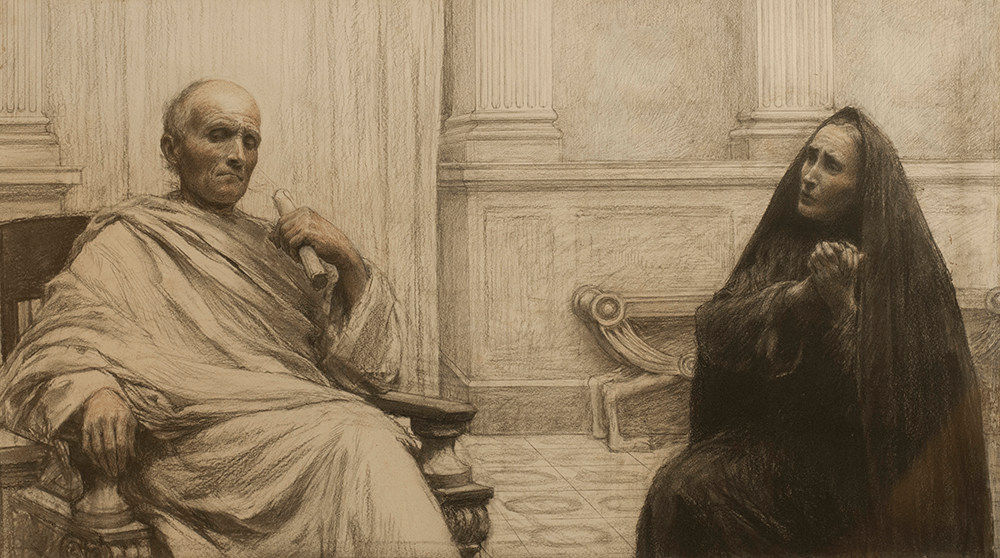
Today is the parable of the unjust judge. The judge doesnโt care what people or God thinks; he does what he wants when he wants. Along comes a widow seeking justice over some matterโwe are not told what. At first, the judge ignores her, but she keeps coming. Finally, the judge says to himself, โSheโs never going to give me peace, and sheโs making me look foolish in the eyes of everyone, so Iโll do what she wants to get her out of my hair.โ To those listening, Jesus says, โListen to what the unjust judge says. And will not God grant justice to his chosen ones who cry to him day and night? Will he delay long in helping them? I tell you, he will quickly grant justice to them. And yet, when the Son of Man comes, will he find faith on earth?โ
Jesus says, โIf this unjust judge will do what she asks, then imagine how much more your Father in Heaven, who loves you dearly, will do for you.โ From this excerpt, we can come to understand that Jesus is speaking about how we can go to the Father in prayer. It ties back very nicely to what Jesus said in chapter seven: โWhich one of you if his son asks him for bread, will give him a stone? Or if he asks for a fish, will give him a serpent? If you then, who are evil, know how to give good gifts to your children, how much more will your Father who is in heaven give good things to those who ask him!โ All this makes for a good lesson on prayerโI hope so because it is one Iโve preached. The woman is asking for justice. In seeing it as a parable about prayer, we can replace the word โjusticeโ with whatever our petition might be. It works, but in doing so, weโve missed the point Jesus was making, and we did so by pulling the parable out of context. The parable is about prayer, but it is about praying for one specific thing. That one specific thing is what the widow was asking for: justice. The story began in chapter seventeen when some Pharisees came to Jesus and asked when the Kingdom of God would come.
Jesus began by saying to them, โThe kingdom of God is not coming in ways that can be observed, nor will they say, โLook, here it is!โ or โThere!โ for behold, the kingdom of God is in the midst of you.โ He then goes on to speak about some believers who would desire Godโs Kingdom and who would experience great suffering before it came. He also tells them that it will be like in the days of Noah before the flood. There will be eating and drinking, buying and sellingโฆ people will be going about their daily lives, oblivious to what is coming, which is the judgment of Godโthe end of days when Godโs justice is poured out. A justice that will right all the wrongs. The Prophet Isaiah said, โIn that day the Lord with his hard and great and strong sword will punish Leviathan the fleeing serpent, Leviathan the twisting serpent, and he will slay the dragon that is in the sea.โ Jesus is saying the same thing: On the last day, the Lord will punish the enemies of Godโs people and restore them to Himself. Then, with that in mind, Jesus tells them the parable of the unjust judge and the widow who cried out for justice. Her cry is a prayer that runs throughout scripture.
In the sixth chapter of Johnโs Revelation, the angel of the Lord begins to break the scroll’s seven seals. The first four seals release the four horsemen of the apocalypse, and when the fifth seal is broken, John says, โI saw under the altar [in the throne room of God] the souls of those who had been slain for the word of God and for the witness they had borne. They cried out with a loud voice, โO Sovereign Lord, holy and true, how long before you will judge and avenge our blood on those who dwell on the earth?โโ The widow’s prayer is the same as these souls: justice. It is also the same one-word prayer of St. Paul that he spoke at the end of his first letter to the Corinthians: MaranathaโโOur Lord, come!โ Or โCome, Lord Jesus!โ Come, Lord, with your justice. All these and others are crying out for God to exact his justice on the nations. Yet, over time, that cry and that zeal have faded.
Youโve probably figured out by now that Iโm not much of a sports person, so I seldom use illustrations from sporting events, butโand this one is going to sting a little for some of youโhow about that Texas vs. OU game last week? Forty-nine to Zero. That had to hurt. Anyhow, if you were (maybe you still are) an OU fan, you could have been one that traveled down to Texas for the game, had a tailgate party beforehand, participated in all the bluster, thereโs the kickoff and all the cheering. Youโre still feeling positive when Texas scores first and maybe even still cheering and excited at the half, even though your team is down twenty-eight to zip. Then in the second half, the writing on the wall becomes quite clear. By the fourth quarter, Texas is likely using their fifth-string quarterback and has put in the water boy as a running back to try and keep from running the score up too much. If you’re even still at the gameโyou may have gone home and found something better to do with your timeโif youโre still there, youโre likely sitting glumly and murmuring to yourself: disheartened, disappointed, and depressed. No more cheers. No more bluster. No more hope. After such a shellacking, you may give up on them all together and never watch another game.
The widow cried out for Godโs justice. Those souls in Heaven cry out for justice. So many have cried out for Godโs justice to be poured out, but it’s been 2,000 years since Jesus walked the earth, and weโre still waiting; many, like at that football game, have become disheartened, disappointed, and depressed. Some remain, but many have lost their zeal, and many more have simply walked away. What we read this morning from Paulโs letter to Timothy is being fulfilled, โFor the time is coming when people will not put up with sound doctrine, but having itching ears, they will accumulate for themselves teachers to suit their own desires, and will turn away from listening to the truth and wander away to myths.โ And it is into that very set of circumstances that Jesus speaks the last sentence of our Gospel reading: โAnd yet, when the Son of Man comes, will he find faith on earth?โ The cry for the Lordโs return and zeal for his justice has faded.
As followers of Jesus, we must remember that Christianity is not a faith of immediate gratification. Instead, it is a lifetime of faith and of hope, in good seasons and in bad. Jesus said, โThe one who endures to the end will be saved.โ Therefore, regardless of current circumstances or perceived loss, be the one who, with great zeal and joy, perseveres until the end. How do you persevere? What is the secret to perseverance? My friend St. Josemarรญa Escrivรก answers that one: โLove. Fall in Love, and you will not leave him.โ (The Way #999) Fall in love with God and there will be nothing that dampens your spirit or desire to be with him. In the end, be one who can say with St. Paul, โI have fought the good fight, I have finished the race, I have kept the faith. Henceforth there is laid up for me the crown of righteousness, which the Lord, the righteous judge, will award to me on that day, and not only to me but also to all who have loved his appearing.โ (2 Timothy 4:7-8)
Let us pray (a prayer of St. Thomas Aquinas): Grant us, O Lord our God, minds to know you, hearts to seek you, wisdom to find you, conduct pleasing to you, faithful perseverance in waiting for you, and a hope of finally embracing you. Amen.
The Golden Fistula(new cover art coming soon) is available on Amazon and has had 1,000+ edits to correct the grammar. The Journey is also out there. All this is in preparation for the release of The Marble Finger (the second Father Anthony Savel Mystery). If you are interested in following, connect with one of these social media outlets (FYI: I don’t do much on Twitter) or follow this blog.
Weary of constantly picking clothes up from the floor of little Johnnyโs room, his mother Rachel finally laid down the law: each item of clothing she had to pick up would cost Johnny 25 cents.
By the end of the week, Johnny owed his mother $1.50, and she placed the โbillโ on his bed. Surprisingly, mom quickly received $2 along with a note: โThanks, Mom. Keep up the good work, and keep the change!”
With all the technology available, you would think we would no longer need a pen and paper. Weโve got electronic calendars that will ding us and tell us when weโre supposed to be somewhere, apps and other electronics that provide notifications, and even my dentist now has an electronic service that will call me no less than four times to remind us of an appointment (a bit annoying actually, but Iโm told that there are still plenty of folks that forget their appointment.) All that, yet even though I make use of them, I still sit down at night and write out the next day’s events and tasks. With the planner I have, The Monk Manual, in addition to a calendar and task list, some questions allow you to review the day: โWays to improve tomorrow,โ โWhen was I at my best,โ and โWhen did I feel unrest.โ Thereโs also a place for journaling and things Iโm looking forward to. Finally, thereโs a box where I list three things that I am grateful for, but why would a daily journal ask me to include things Iโm grateful for? Thereโs actually science behind it.
An author for Psychology Today writes, โGratitude, or an intentional focus on appreciating the `positive aspects of life, is strongly and causally related to both physical and psychological well-being. Thereโs also growing evidence that simple gratitude meditations done on a daily basis can improve our mental health, and that cultivating gratitude can even strengthen our immune functioning. As we shift our focus towards what is positive in our lives, or reframe painful experiences in ways that allow us to grow, gain wisdom and compassion, and deepen our empathy with others, we also dial down our stress response, lessening the flow of stress-related hormones through our bodies.โ (Source)
The science says it is good for us to be grateful, and my daily planner allows three small spaces to list what Iโm grateful for. There are a few days when the only thing I can come up with is โcoffee,โ but most days, Iโm able to fill the box. However, I suppose the real question for me would be: why canโt I fill an entire journal with everything I should be grateful for in a single day? To answer that, I need a better definition of gratitude.
A secular answer comes from a Harvard Medical School journal (please note: I do not sit around reading psychology and medical journals. I Google and then search for good sources. Anyhowโฆ)โthe journal states, โThe word gratitude is derived from the Latin word gratia, which means grace, graciousness, or gratefulness (depending on the context). In some ways, gratitude encompasses all of these meanings. Gratitude is a thankful appreciation for what an individual receives, tangible or intangible. With gratitude, people acknowledge the goodness in their lives. People usually recognize that the source of that goodness lies at least partially outside themselves.โ (Source)
โThe source of that goodness lies at least partially outside of themselves.โ That source can be found in relationships, good fortune, opportunities given, and so on, but ultimately, the source is The Sourceโit is God. Today in our Gospel reading, I suspect all ten lepers recognized the source of their good fortune, but that is not all there is to gratitude. The journal stated, โWith gratitude, people acknowledge the goodness in their lives.โ Recognizing and acknowledging are two separate things. For these feelings of joy and happiness to be genuine gratitude, they must first be recognized and acknowledged.
Finally, there may be an innate sense of gratitude in us all, but for the most part, it is something that must be practiced and cultivated. If you walk around all day moping and complaining, then if you win the lottery, you might exhibit gratitude, but for the remainder of the timeโฆ youโll just be moping and complaining. Gratitude must be practiced and cultivatedโit must be intentional.
At this point, you may be saying, โWell, Father John, this is a nice talk for a psychology class, but what does it have to do with the Gospel of Jesus Christ?โ The answer: everything.
1 Chronicles 16:34 โ Oh give thanks to the Lord, for he is good; for his steadfast love endures forever!
1 Thessalonians 5:16-18 โ Rejoice always, pray without ceasing, give thanks in all circumstances; for this is the will of God in Christ Jesus for you.
Colossians 3:15 โ And let the peace of Christ rule in your hearts, to which indeed you were called in one body. And be thankful.
I do not know this for a fact, the scriptures do not say it, but it would not surprise me if the one leper who came back and gave thanks to Jesus was one who, whether intentionally or unintentionally, practiced gratitude. Even though it may not have appeared, there were reasons for him to be grateful. He was an outcast, but he had a community. He was sick, but he was still alive. He was required by the law to wear rags, but he still had something to cover his body with. He was required to cry out, โUnclean! Unclean!โ anytime someone approached, but he still held in his heart the hope of one day being clean. He could have spent all his time moping and complaining about his misfortune, circumstances, the unfairness of it all, the people he was with, everything, but he could have also seen all the goodness in those difficulties.
Time and time again, the scriptures call upon us to be thankful. Why? The reasons are innumerableโeven in the worst of circumstancesโbut if for no other reason, we are called to be grateful because we were once the lepers. We were the ones living outside the community of God. We were the ones who had to cry out, โUnclean! Unclean!โ We were the ones who stared at death and decay all day long, but through Jesus, we have been redeemed and given new life. Like with the one leper that returned, Jesus has said to us, โGet up and go on your way; your faith has made you well.โ Thatโs a simple enough phrase, but it is powerful because the words โget upโ are also translated be resurrected. Even in the most difficult of situations, we are grateful because Jesus has said to us, โGet up, you are resurrectedโgiven new and eternal lifeโso go on your way and be thankful; your faith has made you well.โ
Practice your gratitude and cultivate it. Keep a small journal and daily write down those good things you recognize and acknowledge them. Take time in your prayers to not just lay out the laundry list for God but also allow time to give him thanks, even in the most difficult of times, for the goodness he has shown you. Go to the person who showed you the goodness of God and acknowledge them as a conduit from God to you, telling them how much you appreciate them in your life. Finally, spend a little time meditating on that most extraordinary gift of all: the salvation and eternal life you have received through Jesus, and realize how truly blessed you are. As the Psalmist declared:
Hallelujah! I will give thanks to the Lord with my whole heart, in the assembly of the upright, in the congregation.
And a few verses further:
He sent redemption to his people; he commanded his covenant for ever; * holy and awesome is his Name.
He sent redemption: let that be the beginning, then let your heart overflow in thanksgiving and gratitude for the goodness of our God.
As a concluding prayer, please turn to page 837 in your Book of Common Prayer.
Let us give thanks to God our Father for all his gifts so freely bestowed upon us.
For the beauty and wonder of your creation, in earth and sky and sea.
We thank you, Lord.
For all that is gracious in the lives of men and women, revealing the image of Christ,
We thank you, Lord.
For our daily food and drink, our homes and families, and our friends,
We thank you, Lord.
For minds to think, and hearts to love, and hands to serve,
We thank you, Lord.
For health and strength to work, and leisure to rest and play,
We thank you, Lord.
For the brave and courageous, who are patient in suffering and faithful in adversity,
We thank you, Lord.
For all valiant seekers after truth, liberty, and justice,
We thank you, Lord.
For the communion of saints, in all times and places,
We thank you, Lord.
Above all, we give you thanks for the great mercies and promises given to us in Christ Jesus our Lord;
To him be praise and glory, with you, O Father, and the Holy Spirit, now and for ever. Amen.