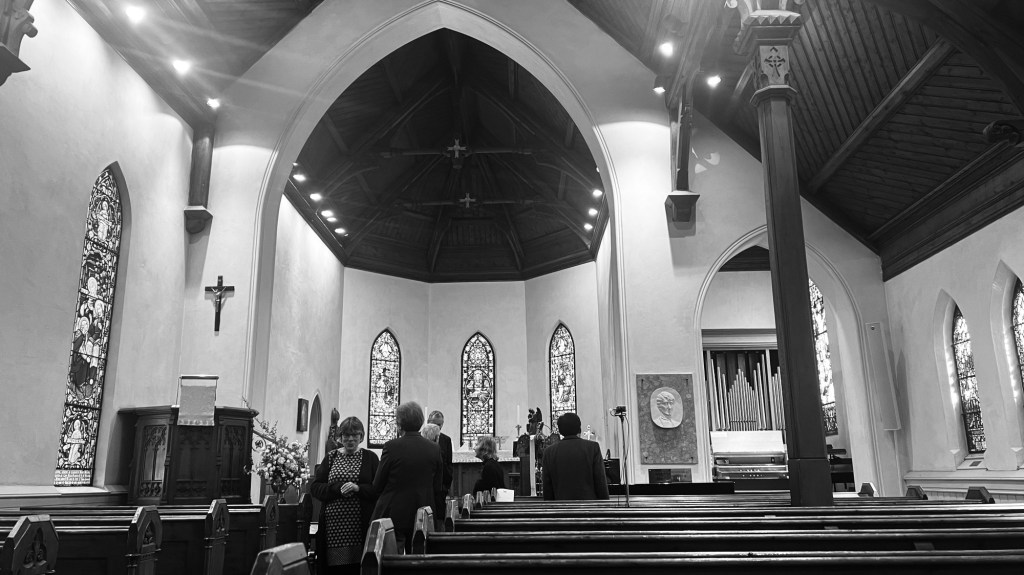
Sermon: Great Vigil

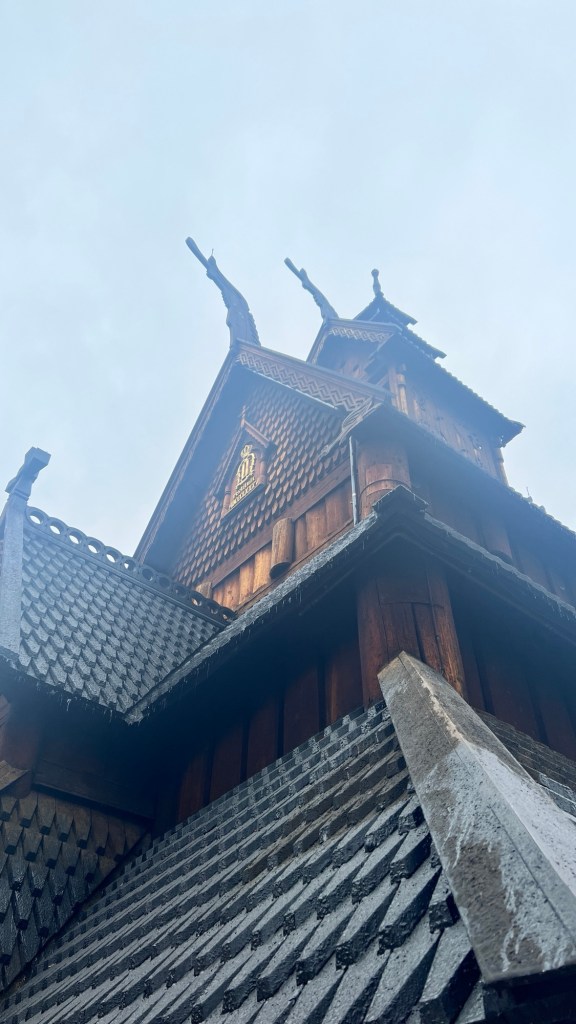
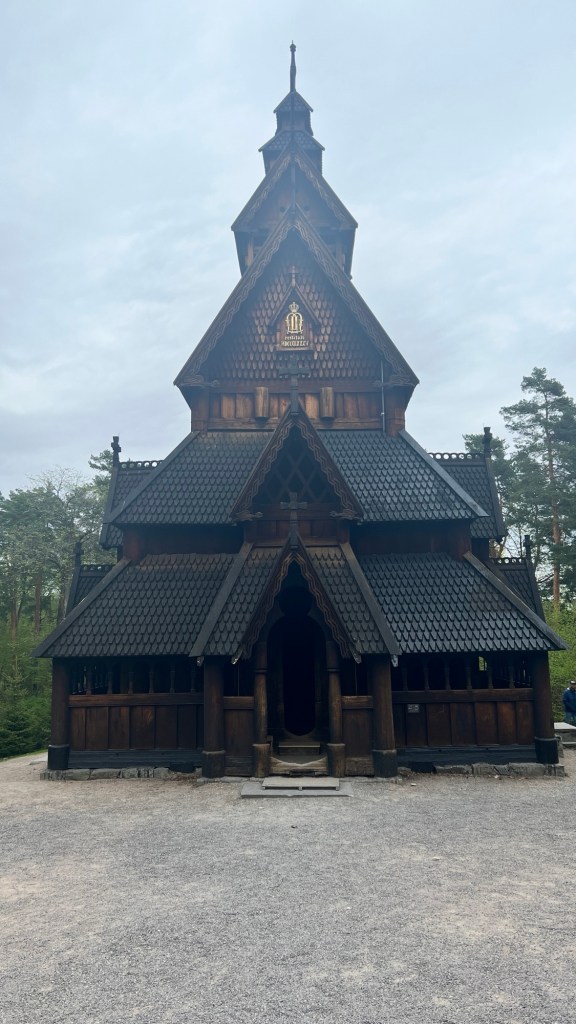
Photo by zhang kaiyv on Unsplash

The words of the Exsultet, โ€œThis is the night, whenโ€ฆโ€

This is the night when the Church attempts to read all of Holy Scripture in one sitting.

This is the night when the choir and organist threaten to go on strike if I add one more piece of music.

This is the night when the parish administrator double-dog dares me to make one more change to the bulletin.

This is the night when the congregation asks, โ€œAre we there yet?โ€

This is the night, the eve of our salvation when we enter into the darkness of the tomb and create a spark that becomes a flame that sets the whole world ablaze with the Light of Christ.  

This is the night when we baptize Nolan, and Crawford receives his first communion.

From the song, December, 1963, by Frankie Valli and the Four Seasons, โ€œO, what a night!โ€

Of all the liturgies throughout the church year, this is the highest and most grand. It is the culmination of all the other days and festivals, from the Incarnation to the Transfiguration to Good Friday to Easter. On this night, we remember all that God has done for His people, we give thanks for what He has done for us, and we celebrate the bringing into the Kingdom those new members who receive the cleansing that comes through Baptism and the participation of others in Christโ€™s body by becoming one with Jesus through receiving the Holy Sacrament. O, what a night.

Tonight is a reminder that we are not alone in this world. It is a reminder that the Church Triumphantโ€”those who have gone before usโ€”and the Chruch Militantโ€”we todayโ€”are bound together in love through baptism into Christโ€™s death and resurrection. That through Jesusโ€™ giving of Himself, we truly become one with Him and each other.

I will not be long-winded tonight because everything you see and hear is a sermon. So, Iโ€™ll encourage you to be one in Christ Jesus. So many things seek to divide us, but the bonds of love are stronger than any of these, and the only way those bonds can be severed is if we intentionally cut them ourselves. 

You are Christโ€™s one holy catholic and apostolic Church. Let us receive Nolan into our family through her baptism and then participate with Crawford in his first communion. O, what a night.

โ€œThe candidate for Holy Baptism will now be presented.โ€ BCP p.301.

Sermon: Easter Sunday 2024


Doc Pierre decided that he wanted to get into the ranching business, so he went out and purchased himself a bunch of cows and put them out on the pasture. He also knew he would need a bull, so he called up one of his hands, Olโ€™ Boudreaux, and gave him the plan. 

โ€œBoudreaux,โ€ he says, โ€œIโ€™m going out to find the bull. Once Iโ€™ve purchased one, you hook the trailer to that pick โ€˜em up truck of yours and come fetch it.โ€

โ€œHow will I know?โ€ Bou asks.

Doc Pierre says, โ€œIโ€™ll send a telegram,โ€ and it was all set.

Doc Pierre goes out searching for the bull with $5,000 in his pocket. He finds one for exactly $5,000. Hoping to lower the price, he asks the rancher if that is the best offer. โ€œWell, I suppose I could let it go for $4,999.โ€ Doc Pierre thinks itโ€™s a good deal and takes him up on it. Then, he heads to Western Union to send the telegram to Boudreaux, but it is there that he learns itโ€™ll cost him $1 per word, and all heโ€™s got left is a $1. He thinks on it a moment, then writes out a one-word message to Boudreaux.

The telegraph operator looks at it questioningly, then back up to Doc Pierre. Doc Pierre nods in understanding and explains, โ€œBoudreaux donโ€™t read so good, so heโ€™ll have to sound it out first. Heโ€™ll get the message.โ€ The telegraph operator said OK and sent the one-word telegram: โ€œComfortable.โ€

About an hour later, Boudreaux showed up with the pick โ€˜em up truck and trailer.

Doc Pierre sent, โ€œComfortable,โ€ and Boudreaux had to sound it out, โ€œCome.. forโ€ฆ daโ€ฆ bull.โ€

Have you heard of response latency? It is defined as โ€œThe interval of time elapsing between a stimulus and a response.โ€ (Source) You may not have heard of it, but you may have just experienced it. I told you what I hoped was a good joke, and hopefully, you laughed! However, there was a short period of time between the punch line and you getting the joke and laughing. The time between is the response latency. It is the time when you have all the necessary information, but not quite yet understanding. It is the time leading up to a moment of clarity or an โ€œAha!โ€ moment or epiphany. Response latency.

Our Gospel reading this morning tells us that Mary Magdalene went to the tomb of Jesus, found the stone rolled away, and ran back and told Peter and John. Hearing this, the two disciples take off. John outruns Peter and arrives first. John stands just outside the tomb, but Peterโ€”never really one for restraintโ€”goes barging in. After gaining his courage, John follows. There, they discover the linen shroud that had covered Jesusโ€™ body and the veil that had been over his face, but the body of Jesus is not there. 

The image on the front of your bulletin depicts the scene. The painting St. John and St. Peter at Christโ€™s Tomb (c.1640) is by the Italian artist Giovanni Francesco Romanelli. Peter, on the left, is pointing at the shroud and seems to be staring off, trying to understand, but for John,  the response latency is ending. The pieces are falling into place. It is like he is holding up his hands to tell Peter to be quiet so that he can think. The reading tells us that the disciple whom Jesus loved, John, โ€œsaw and believed.โ€ Romanelli captured that moment.

The reading then tells us that the two returned home, but Mary, who must have followed behind the footrace, remained. She leaned into the tomb and saw and spoke to the angels, then turning, she saw the gardener, not knowing it was Jesus. 

Now, this is an interpretation on my part, but the gardener was there all along, watching. Maybe he was out of sight, or maybe, in all the excitement and rushing about, all three saw him but more or less dismissed him. Either way, I believe the gardener, Jesus, was there watching this entire scene unfold. And I believe Jesus anxiously anticipated the end of Johnโ€™s response latency when all the pieces came together. When they did, Jesus smiled and said to Himself, โ€œThatโ€™s my boy.โ€ Working behind Johnโ€™s understanding is Godโ€™s grace.

St. John later tells us, โ€œWe love because he first loved usโ€ (1 John 4:19), and St. Paul tells us, โ€œFor by grace you have been saved through faith. And this is not your own doing; it is the gift of Godโ€ (Ephesians 2:8). Believing in Jesus is a graceโ€”a gift from God. Jesus anxiously anticipated all the pieces falling together for John to believe, but the reason this could happen for John was because God first loved Johnโ€”Godโ€™s grace was given to John so that he might believe.

Today, we are the ones standing in the tomb. We are the ones seeing the shroud and other linen. Like John, we have all the teachings of the Prophets and all the words and deeds of Jesus at our disposal. In addition, we have the teachings of the Apostles, the Saints, and the Church. We have all the information. Question: have they fallen into place for you, or are you still in that time of response latency? If yes, if theyโ€™ve fallen into place, then have a passion for souls and pray that others may receive the light of the Gospel. If not, then pray for Godโ€™s grace, so that He might give you understanding.

โ€œEarly on the first day of the week, while it was still dark,โ€ and before Mary Magdalene arrived at the tomb, Jesus rose from the deadโ€”He is โ€œthe firstborn from the dead.โ€ (Colossians 1:18) He did this out of His great love for us and accomplished it so that you and I might also be given eternal life with Him. 

This is your first day of the week. The empty tomb is before you. Pray that all the pieces, all the information falls into place and that Godโ€™s grace pours out upon you that you might believe and live.

In 1917, the Virgin Mary appeared six times to three young children near Fatima, Portugal. On the second appearance, she gave them a prayer that she asked to be added to the end of each decade of the Rosary. Whether you pray the Rosary or not, it is a prayer worth learning. It is known as the Fatima Prayer.

Let us pray: โ€œOh, my Jesus, forgive us our sins. Save us from the fires of Hell and lead all souls to Heaven, especially those in most need of Thy mercy. Amen.โ€

Sermon: Holy Saturday

Christ’s Descent into Limbo by Andrea Mantegna and studio, c. 1470

Jesus โ€œdid not count equality with God a thing to be grasped. He emptied himself freely accepting death on a cross.โ€ So, if Jesus died, where is He on this day? You know the words of the Creed: โ€œHe suffered under Pontius Pilate, crucified, died, and was buried. He descended into hell.โ€ Thatโ€™s why this Church seems so strangely empty. The one for whom it was built, whose presence draws us on Sunday, is not here. 

Crucified, he died and was buried; he descended into hell. Nineteenth-century Methodists removed that portion of the Creed, claiming it unbiblical. But itโ€™s not. The First Epistle of Peter speaks of Christโ€™s descent into hell, called by the Church โ€œThe Harrowing of Hell.โ€ Harrowing is a military term meaning to “make predatory raids or incursions.โ€ Therefore, after Christโ€™s burial yesterday and through today, Satanโ€™s territory is being invaded by the One who yesterday died upon the cross.

Following His death, when he breathed his last, Jesus descended to hell. Having preached to us, the living, he descended to the dead and is there proclaiming the Good News to those who lived and died before his coming. 

It is inconceivable that only those who lived during Jesus’s time and afterward would benefit from the salvation He brought to the world, and all those who died before His coming would be excluded from that salvation. So, everyone who died before He came, all the way back to Adam and Eve, had the opportunity to receive His word of salvation.

He is there, doing what He does so well: preaching, teaching, touching, relentlessly seeking, persuading, inviting, healing, and announcing God’s love and mercy. As the Psalmist says, โ€œThou wilt not leave my soul in hell.โ€ Even Byzantine art depicts Jesus in the jaws of hell, giving a hand to those who had died, lifting them out of the darkness.

And though He is down there and, therefore, not here, there is something to be said to those of us He has temporarily left behindโ€”Because I am there, descended into the deadly darkness, confronting the enemy on the enemyโ€™s turf, you have hope. 

If He is there, literally fighting for the souls in Hell, then we can know with all certainty that there is no darkness, sorrow, or pain we can experience that His loving presence cannot enter into. If He is willing and able to risk it all, to wade deep into the death we so fear and avoid, then what might He risk for us? 

Do you remember the stories Jesus told about God and the kingdom of Heavenโ€”the good Shepherd who forever seeks the one lost sheep, the faithful father who awaits the return of the one lost son, and the relentless woman who does not rest until she finds the one coin? Jesus meant those things when He said them. He is willing to fight for our souls today and for the righteous souls who departed this world before His first coming.

On that first Saturday before the resurrection, the disciples, Mary, and the rest mourned the loss of their Savior, but He had not truly left them. He had only gone to continue His Fatherโ€™s work.

Sermon: Good Friday


Pilate said to the Jews, โ€œHere is your King!โ€ They cried out, โ€œAway with him! Away with him! Crucify him!โ€ Pilate asked them, โ€œShall I crucify your King?โ€ The chief priests answered, โ€œWe have no king but the emperor.โ€  So the soldiers took him to be crucified.  It took Jesus six hours to die; then he breathed his last.

All this time, the people were gathered around or passing by.  Yes, there were a few followers, but mostly, it was the soldiers, the religious leaders, and those who had called out, โ€œCrucify him!โ€  Thomas ร  Kempis describes this mass of unbelievers:

โ€œLike mad dogs they huddled together to attack your innocence. With their mouths they barked like dogs, they gnashed their teeth like lions, and with their tongues they hissed like snakes. They cursed with their lips and their faces they turned into sneers; they clapped with their hands, their feet danced, and their hearts rejoiced, all because they saw you nailed to a Crossโ€”one whom they did not want to see die without first being mocked and jeered. Those who passed by shook their heads like crazed, drunken men, and filled with bitterness, arrogance, and ill will, they shouted: Ah, there’s the man who destroys God’s Temple and rebuilds it in three days.โ€ (On the Passion of Christ: According to the Four Evangelists, p. 91)

Creation itself shuddered and wept at the crucifixion of Our Lord, but those gathered around gawked, laughed, insulted, cheered.  All creation wept, but those passing by may have given a quick glance, but they didnโ€™t linger, too afraid to be caught up in these upheavals.  All creation wept, but his clothes they gambled for were worth more than his life.  All creation wept, but for a few still gathered at his feetโ€”who listened for one last word, who desired one last touch, who refused to let go, even when all appeared lost and without hope.  

On that day, two very distinct groups gathered around the cross. Today, those same two groups exist. Be a part of the smaller oneโ€”those listening and desiring a touch from the King of Heaven. Christ is upon the cross. Be one who is still hoping. 

Sermon: Palm Sunday – “Romance”

Photo by Tim Mossholder on Unsplash

Most of you are aware that not only do I enjoy reading a good story, but I also like trying to write them. Like with any endeavor, it can be helpful to read how others work, and fortunately, some of my favorite authors have written books on writing. Neil Gaiman, author of Caroline, Good Omens, and other books, in the introduction to his book, Fragile Things: Short Fictions and Wonders, Gaiman talks about stories. He writes,

โ€œStories, like people and butterflies and songbirds’ eggs and human hearts and dreams, are also fragile things, made up of nothing stronger or more lasting than twenty-six letters and a handful of punctuation marks. Or they are words on the air, composed of sounds and ideasโ€”abstract, invisible, gone once they’ve been spokenโ€”and what could be more frail than that? But some stories, small, simple ones about setting out on adventures or people doing wonders, tales of miracles and monsters, have outlasted all the people who told them, and some of them have outlasted the lands in which they were created.โ€ 

Stories, whether fictitious or factual, hold our attention and mold our perception of the world. Whether a believer or not, the story we hear on this day has long outlasted the people who told it and has been changing peoplesโ€™ views for over 2,000 years. No other story has affected the world more. My question for you today is this: What kind of story is it?

Most of us can agree that it is non-fiction, but even in that category, we can classify it as a particular genre. Some might say it is history, while others might categorize it as a thriller or even a horror story. There are good arguments for all these, but the one category that probably would not come to mind when reading the Passion Narrative is romance.

In their definition of a romance novel, the RWA, Romance Writers of America, says, โ€œTwo basic elements comprise every romance novel: a central love story and an emotionally satisfying and optimistic ending.โ€ (Source) In the reading of the Passion Narrative, do you hear anything of a love story? Is there an optimistic ending? 

โ€œFor God so loved the world that he gave his one and only Son, that whoever believes in him shall not perish but have eternal life.โ€ (John 3:16) 

What we read on this day is the greatest romance, the greatest love story ever writtenโ€”ever lived out. What we read today is Jesus looking down at you from the Cross and saying, โ€œI love you. I love you and am enduring this so that you may be with me in My Fatherโ€™s house for all eternity.โ€ The Passion of Our Lord is many things, but at the heart, it is pure romance.

Today, I invite you to experience this romance, this love of God. To not only hear the story but to write yourself into it and become a child of Godโ€”the beloved of God. 

Sermon: Joseph


Joseph learned that Mary was pregnant, and since they were not yet married, he decided to put her away quietly, but the angel of the Lord came to him in a dream: โ€œโ€˜Joseph, son of David, do not be afraid to take Mary as your wife, for the child conceived in her is from the Holy Spirit.  She will bear a son, and you are to name him Jesus, for he will save his people from their sins.โ€™โ€ฆ When Joseph awoke from sleep, he did as the angel of the Lord commanded him; he took her as his wife.โ€

From here, we have a few other accounts of Joseph: the manger, when Jesus was presented in the temple as a baby, the flight to Egypt when they were fleeing Herod, and our scene today when Jesus became separated from him and Mary during the festival in Jerusalem.  Outside of these events, we know very little of Joseph, the one who was called on by God the Father to raise his one and only son.  If you think your kids got/get into mischief, what do you think it would have been like raising the Son of God?

Weโ€™ve talked about the โ€œInfancy Gospelsโ€ before.  These are writings outside the canon of Scripture, which – although fun to read – are not considered God inspired, and many are classified heretical, one of which is the Gospel of Pseudo-Matthew.  It is not the Bible, but it is fun, and the stories tell of Jesus as a boy.  Hereโ€™s a taste:

โ€œOn the first of the week, when Jesus was playing with the children on the roof of a certain house, it happened that one of the children pushed another down from the roof to the ground, and he was killed. And the parents of the dead boy, who had not seen this, cried out against Joseph and Mary, saying: Your son has thrown our son down to the ground, and he is dead. But Jesus was silent, and answered them nothing. And Joseph and Mary came in haste to Jesus; and His mother asked Him, saying: My lord, tell me if thou didst throw him down. And immediately Jesus went down from the roof to the ground, and called the boy by his name, Zeno. And he answered Him: My lord. And Jesus said to him: Was it I that threw thee down from the roof to the ground? And he said: No, my lord. And the parents of the boy who had been dead wondered, and honoured Jesus for the miracle that had been wrought.โ€

The boy falls off the roof and dies, so in order to defend himself, Jesus raises the boy from the dead and asks him for the truth.  True or false?  I donโ€™t know (the church would have me tell you, โ€œNo.โ€) Regardless, can you imagine what it must have been like to raise Jesus?  However, as God the Father knew who to select as his mother, God the Father also knew the perfect man to choose as his earthly father: a humble carpenter named Joseph.

In the shadow of Jesus, Mary, the disciples, and the others, Joseph is almost forgotten by us, but as the head of the Holy Family, his role is significant.

St. Bernard of Clairvaux writes: โ€œSt. Joseph was chosen among all men, to be the protector and guardian of the Virgin Mother of God; the defender and foster-father of the Infant-God, and the only co-operator upon earth, the one confidant of the secret of God in the work of the redemption of mankind.โ€

There is no doubt that Jesus called Joseph his father. Therefore, there is no reason why we shouldnโ€™t call on him as well. He responds in faith and protects not only the Son of God and Mother of God but also us, for we, too, are the sons and daughters of God.

Sermon: Lent 5 RCL B – “Camino Sunday”


In a conversation with C.S. Lewis, J.R.R. Tolkien said, โ€œWe have come from God, and inevitably the myths woven by us, though they contain error, will also reflect a splintered fragment of the true light, the eternal truth that is with God.โ€ Within our legends and myths, there is a certain amount of truth. The same is true with what I would like to share todayโ€”a combination of facts, myths, and legends, and it all begins in the year 43 B.C. We can read about it in the Acts of the Apostles.

โ€œHerod the king laid violent hands on some who belonged to the church. He killed James the brother of John with the sword, and when he saw that it pleased the Jews, he proceeded to arrest Peter also.โ€ (Acts 12:1-3a) The Apostle James, brother of John and son of Zebedee, was martyred by beheading. It is from there that our legend begins.

Following his death, his followers, wanting to provide a proper burial for him but also wanting his body to be kept safe, took it to the coast, where they boarded a stone boat. The boat had no rudder or sail but was guided by an angel, which took it on a long journey across the Mediterranean, through the Strait of Gibraltar, and up to the northwest corner of Spain.

At this same time, a father was throwing a huge wedding party for his son. There was food, drinks, dancing, and games. One of the games played was abofardarโ€”the men, riding horses, would take a spear and hurl it into the air as high and far as they could, then, charging forward, they would attempt to catch the spear before it hit the groundโ€”very safe. The groomโ€™s turn came, and he gave the spear a mighty throw. However, he was so focused on the spear that he paid little attention to where his horse was going, and he plummeted into the sea and disappeared. There was high tension as the crowd watched and waited for him to surface. Finally, he did. A way out from shore, the groom and horse popped up. Fortunately for them, there was a boat directly beside them. It was the stone boat carrying the body of the Apostle James. 

After rescuing the groom and the horse, it was discovered that they were both covered in scallop shells. The followers of James on the boat saw this as a miracle, so the scallop shell became a symbol of all who were saved by coming to St. James. 

Following these events, the body of St. James was secretly buried and essentially lost for almost 800 years until a hermit, Pelayo, noticed strange lights in the sky. Following the lights, Pelayo came to a field where he discovered the hidden tomb. He informed his Bishop, who, with several others, went to investigate and were able to determine that it was, in fact, the remains of the Apostle. A church was built over the tomb, and later a cathedral. The city that grew up around it that supported the pilgrims who came to venerate the saint was named Santiago de Compostella. Santiago is translated as St. James, and Compostella means โ€œfield of lights.โ€ For the last 1,200 years, saints and sinners, lay people and clerics, rich and poor, popes and kings, have made the pilgrimage to pray before the remains of St. James the Greatโ€”one who was so very close and dear to Jesus.

The pilgrimage is called the Camino de Santiago, the Way of St. James, and the starting point for many is Saint-Jean-Pied-de-Port, which means St. John at the Foot of the Passโ€”the pass is the one that takes you over the Pyrenees Mountains, from France into Spain. On April 10th of this year, I will rename this town Jean-Pied-de-Portโ€”John at the Foot of the Pass (unless, of course, Iโ€™m sainted in the next month, then Iโ€™ll keep it the same.) The French Way, the route I will be taking, is the most popular and the one pilgrims have walked for 1,200 years.

Iโ€™ll take more time and make more stops, but there are traditionally 31 stops along the way, and early on, pilgrims would make the journey there and back, so with the Cathedral counting as their destination, you would have 63 stops. As they did not have the benefit of GPS and a well-marked trail, early pilgrims relied on various maps, one of which was created by the Templars. That early map has evolved into a game still played today (and one our kids will have the opportunity to play while Iโ€™m away)โ€”The Royal Game of the Goose. Thus enter Albert the Goose. Why a goose?

It was the Templars who were charged with protecting pilgrims as they made the pilgrimage, and so it was the Templars who made the original map. Looking at our game board, you will see many of the squares have symbols in them. The meaning of most of the symbols is lost. Still, the labyrinth could represent physical and spiritual growth, a well might represent a lousy day, and a bridgeโ€”although it may be a specific bridgeโ€”can also represent a spiritual crossing. And then there is the goose. For the Templars, the goose represented wisdom, and throughout the Camino, if you keep your eyes open, you will see a goose carved in the base of a statue or a distinctive goose track in various locations. There are also towns with โ€œGooseโ€ in their names: Villafranca de Montes de Oca, Castrojeriz (city of geese), El Ganso, Ocรณn, Puerto de Oca, Manjarรญn (man of geese). (Source) While Iโ€™m away, Albert will also be traveling, and you may find him at your front door looking for a place to rest.

In the very early days of the Camino, there were tens of thousands of pilgrims, but the numbers waned due to wars and other issues. Eventually, it nearly fell out of use, and in 1979, only twelve people completed the walk. However, popularity has increased dramatically. Last year, which was considered a holy year, over 442,000 individuals walked a Camino.

To officially walk a Camino, you must walk at least 100km (62 miles). From St-Jean, where Iโ€™ll start, it is 800km (500 miles), and last year, of the 442,000, about 23,000 made that distance. For each, regardless of the distance, the shellโ€”like the one attached to the groom and his horseโ€”has become the symbol of the Camino de Santiago. It is what designates a pilgrimโ€”they attach one to their pack or hatโ€”and it is what marks The Way, with signposts, wayfaring markers, and various marks in the road.

Finally, the Camino de Santiago is a physical exerciseโ€”putting one foot in front of the other for 500 milesโ€”but more than that, it is a spiritual exercise. It is a journey of the soul. It is a way of letting go of all except the most necessary and, hopefully, along The Way, discovering that all you truly need is God and a few items you can carry on your back. As I walk, I hope to declutter my mind and my soul, and just as I might leave some gear that I donโ€™t use along the way, I hope to leave the clutter and discover that life is far simpler than we make it.

I will be on the Camino for 60 days, and Iโ€™ll be out for fourteen weeks. I will be very out of touch, but I will pray for you every day. As Iโ€™ve told several people, St. Matthewโ€™s was around for 125 years before I got here, so I know youโ€™ll be just fine and in very capable hands. I encourage you to participate in the events and activities that have been planned. In the process, you might just discover the spirit of the Camino and find The Way opening up before you.
Let us pray (this is the traditional pilgrimโ€™s prayer that was written in the 12th century):

O God, who brought your servant Abraham
out of the land of the Chaldeans,
protecting him in his wanderings,
who guided the Hebrew people across the desert,
we ask that you watch over us, your servants,
as we walk in the love of your name.

Be for us our companion on the walk,
Our guide at the crossroads,
Our breath in our weariness,
Our protection in danger,
Our refuge on the Camino,
Our shade in the heat,
Our light in the darkness,
Our consolation in our discouragements,
And our strength in our intentions.

So that with your guidance we may arrive safe and sound
at the end of the Road
and enriched with grace and virtue
we return safely to our homes filled with joy.
In the name of Jesus Christ our Lord, Amen.

St. James the Greater, pray for us.
Holy Mary, Mother of God, pray for us.

Buen Camino!

Sermon: “Now”


A few years back, The Netherlandish Proverbs, a painting by Pieter Brueghel, sold for $9M at Christieโ€™s Auction House in London. Painted in 1559, it depicts seventy-six proverbs, many of which we still say today, or at least a version. A man with his hand over his face, peering through his fingers, is โ€œTo look through oneโ€™s fingersโ€ or to turn a blind eye. Another, โ€œWhen the gate is open, the pigs run through the wheat,โ€ is for us; when the cat is away, the mice will play. Some are far more obscure, and one of these caught my attention. 

A woman is carrying a bucket of water in her left hand and a set of tongs with a hot coal in the other. The proverb: โ€œShe carries fire in one hand and water in the otherโ€ means to be two-faced and stir up trouble. It also means to hold two contradictory views. That is not a good thing, and it is a claim that many make about Holy Scripture. It was that issue that I was confronted with this week as I read through the last two verses of our Gospel lessonโ€”โ€œDo not be astonished at this; for the hour is coming when all who are in their graves will hear his voice and will come outโ€”those who have done good, to the resurrection of life, and those who have done evil, to the resurrection of condemnation.โ€ (John 5:28-29) What is the problem?

The last word, โ€œcondemnation,โ€ immediately brought to mind our Gospel reading from Sunday. It begins with that most famous of verses, John 3:16, โ€œFor God so loved the world that he gave his only Son, so that everyone who believes in him may not perish but may have eternal life.โ€ So far, so good. Jesus continued, โ€œIndeed, God did not send the Son into the world to condemn the world, but in order that the world might be saved through him.โ€ Even more good news, good news that St. Paul will confirm in his letter to the Romans when he writes, โ€œThere is therefore now no condemnation for those who are in Christ Jesus.โ€ (Romans 8:1) Everything is coming up roses until you arrive at those verses from today, how some will experience the โ€œresurrection of condemnation.โ€ 

I thought Jesus said we were past all that condemnation bit. Is this a contradiction in Holy Scripture? Not at all. It only requires that we read the passage from John 5 more closely. It is easy to miss, but before speaking of condemnation, Jesus said, โ€œThe hour is coming.โ€ Coming. Not yet. John 3 is speaking of Jesusโ€™ first coming. John 5 is speaking of Jesusโ€™ second coming. No contradiction. 

We are now living in the time when โ€œeveryone who believes in [Jesus] may not perish but have eternal life.โ€ However, there is an end dateโ€”a time when judgment will come, and for those who do not believe, it is a judgment of condemnation; therefore, the time to choose is not then but now.

In the first verse of our reading from Isaiah, the Lord said, โ€œIn a favorable time I listened to you, and in a day of salvation I have helped you.โ€ St. Paul quotes this verse in his second letter to the Corinthians: โ€œIn a favorable time I listened to you, and in a day of salvation I have helped you.โ€ Then Paul adds, โ€œBehold, now is the favorable time; behold, now is the day of salvation.โ€

There is no confusion or contradiction; now is the time to come to God. Now is the day. For all of you sitting here, I believe you have, but who do you know that has not? How might you guide them and share your faith with them so that on the last day, they too will be judged and receive the resurrection of lifeโ€”life eternal with our God?

We are “The Capitol”

I’m a firm believer in Israel’s right to defend. If what happened to them happened to us, we would have dusted off the nukes. I know that we will send billions to help rebuild when it is over. I know that this is not the only aid that will be sent. I know… I know… I know… but…

The tug boat is towing a barge of food to Gaza, which I also firmly believe we should be doing. However, I could only imagine those on the Virgin cruise looking down on it and thinking, “Aren’t we good people for helping out.”

I can’t help but think that this is how we support the world when we could do so much more. We live in The Hunger Games, and we are The Capitol.

This from the hypocrite who is going to Spain to take a walk.