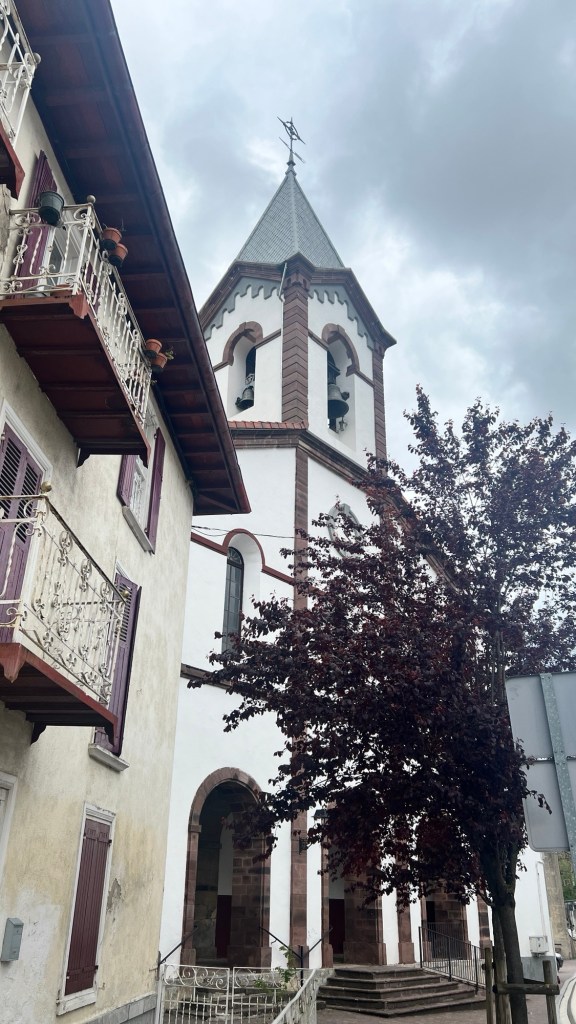
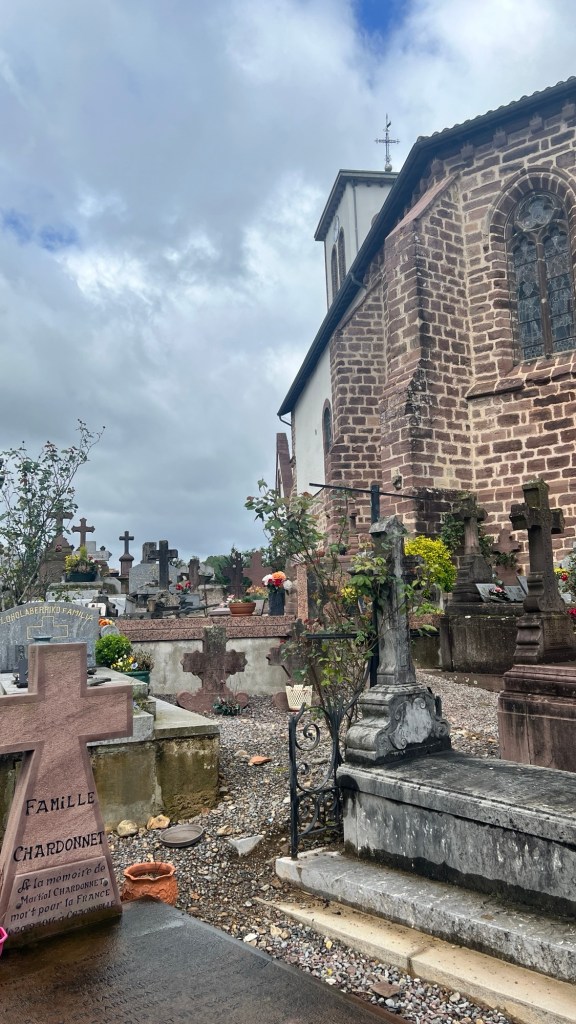
It is difficult to find a church that is open. I suspect most of the problem is related to the shortage of clergy and the decline of Christianity in Europe. it did not stop me from praying. I sat outside and enjoyed the cool breeze.
11:45am. Arrived in Arnéguy. 5.5 miles. Be very careful of traffic for that first mile coming out of SJPDP. At times, there is no shoulder and many fast moving cars. If not for the kindness of strangers, I would currently be climbing a steep hill, only to have to backtrack. Instead, I’m having a brief rest, café, and lite second breakfast (Nutella filled croissant.) Less than three miles to Valcarlos. A good portion of this section will be off road.
1:53pm. Valcarlos. The last hill coming in is penance for a multitude of sins.
The backpack is designed so that the belt across the waist places much of the weight on the hips. That way you are not carrying the weight on your shoulders. It’s a good thing. The only problem is that as a 59-year-old male… well… I ain’t got no hips.
I do believe that all of my preparation and walking leading up to this has prepared me nicely for about 95% of the Camino. However, it did not prepare me for today which means I will definitely not be prepared for tomorrow. I’ll sort it out, but I do confess that I had one of those “What the hell was I thinking?” moments. I somehow suspect that it will not be my last.
In my humble opinion, prep all you want, but nothing gets you ready for the Pyrenees.
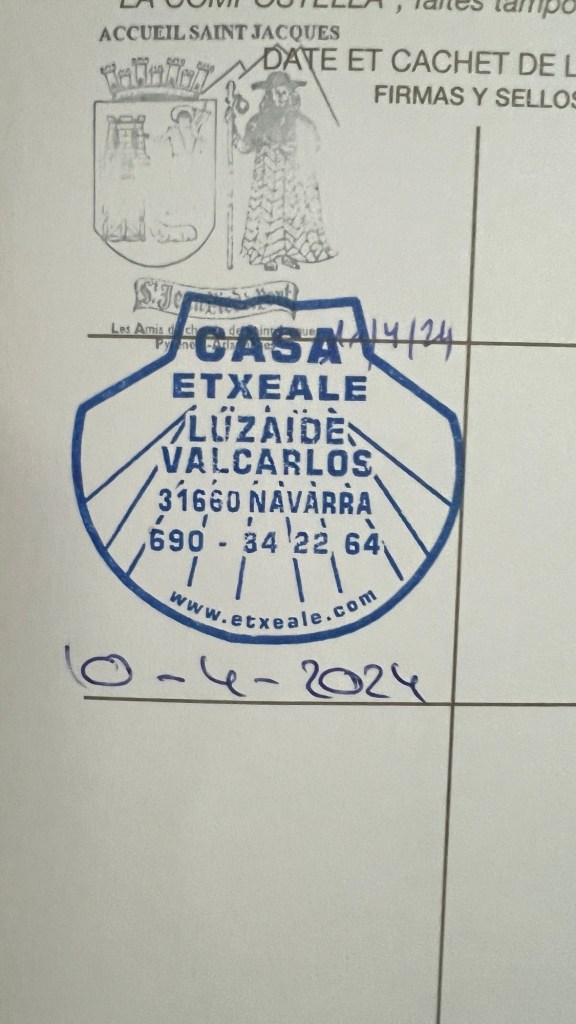
Went for a short walk here in town and found a nice glass of wine. Afterward I went and prayed my rosary and then returned to my room. The hostess, Alejandra, here at Etexeale is listening to Aguas de Março (feat. Fernanda Takai). I asked Siri to identify the song for me. It was brilliant. I feel like I’m in some foreign movie and I love those. She is also cooking and I don’t know what’s for supper tonight, but it smells absolutely brilliant. The long and arduous walk up today is almost forgotten. My body seems to be remembering it a little bit and may remind me of it in the morning, but for now… Right as rain.
For the record, I did hire a service to carry the pack to Roncesvalles. It was just too intimidating. The distance is about the same as today, but the climb… Oy! It was a great relief to make that decision.
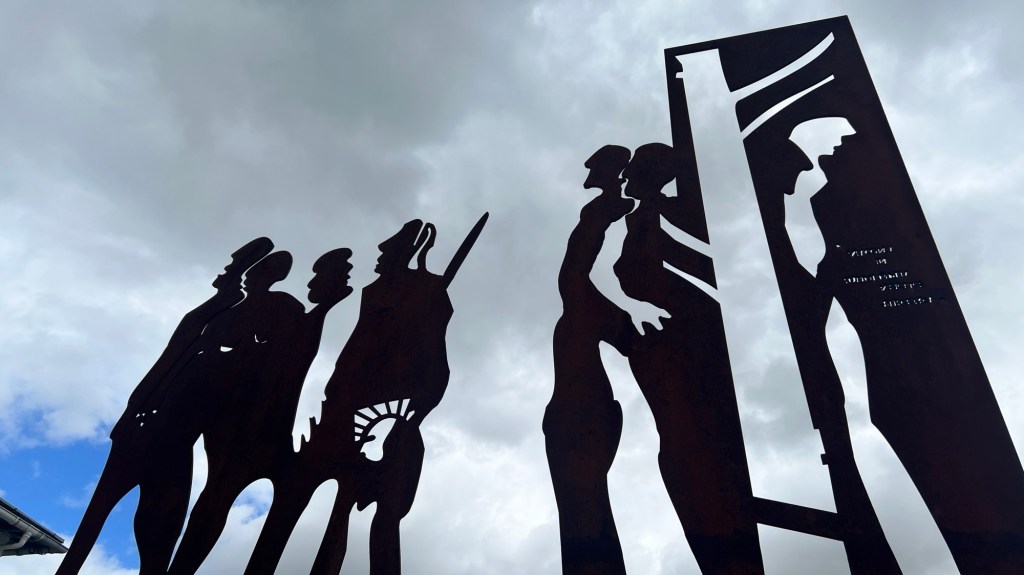
In my walking about I came across a little bit of local history. This is a Basque thing.
“To the Basque People who fought their Liberty here and emerged victorious over Charlemagne.”
Not for to go now…😳
Dinner is almost ready. We’re now being serenaded by La Maison Près / De La Fontaine.
I cannot recommend this place enough. Dinner: a salad with pickled carrots and onions on a bed of lettuce with her own balsamic olive oil dressing. Followed by a traditional Spanish stew of potatoes, artichokes, and sausage and a light tomato sauce. Dessert consisted of a slice of hard French cheese (almost crunchy), a thin slice of a thick Quince jelly, and walnuts–Membrillo. A traditional Spanish dessert. If I had known this meal was waiting at the end of the road today, the road would have been much shorter.
It’s time for a shower, and to put my feet up for a little while. I hope you all have a blessed evening.
It is 43° F and raining. Any other time and place, that would be a perfect excuse to stay at home and stay warm. However, being here, that’s really not an option. Today I can sleep late, but tomorrow they are going to kick me out come rain or shine. Though nuanced with gray clouds, the perfectly blue sky is still out there. Time to go enjoy it and live a life. FYI: cod stew makes for some very wild dreams.
Flashback to trip to Lisbon… I washed clothes last night and with great apprehension, I felt them today. No hairdryer required.
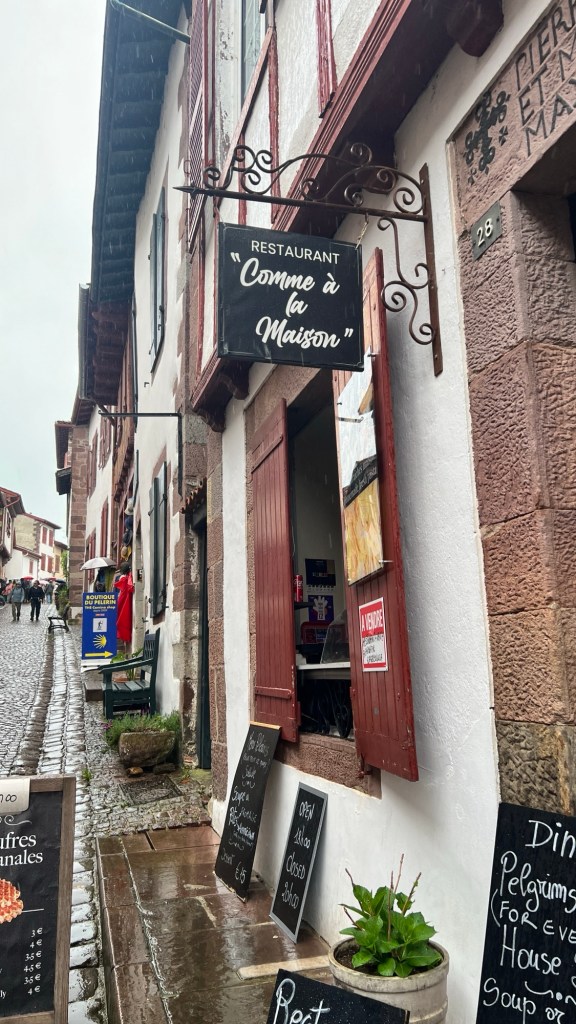
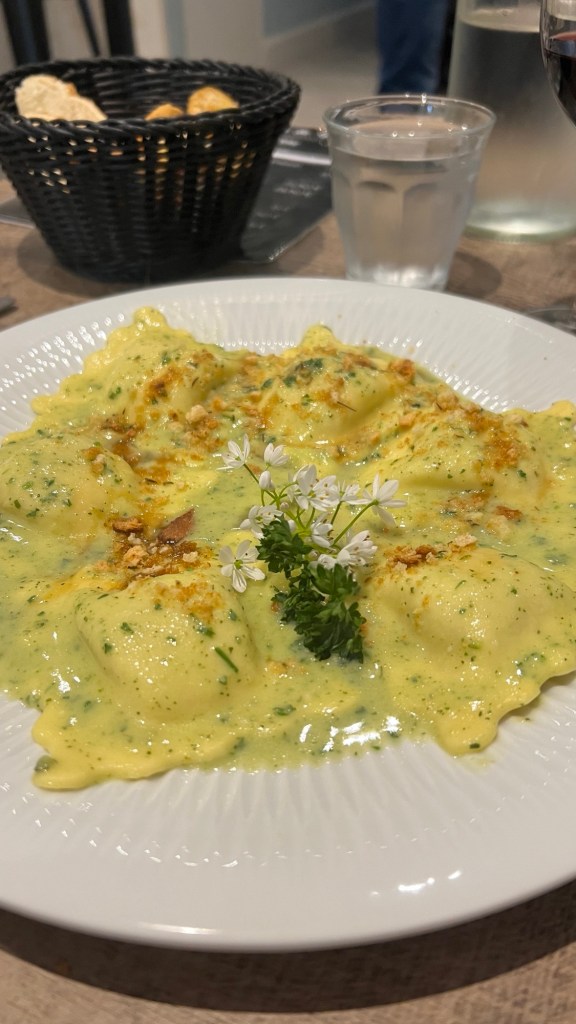
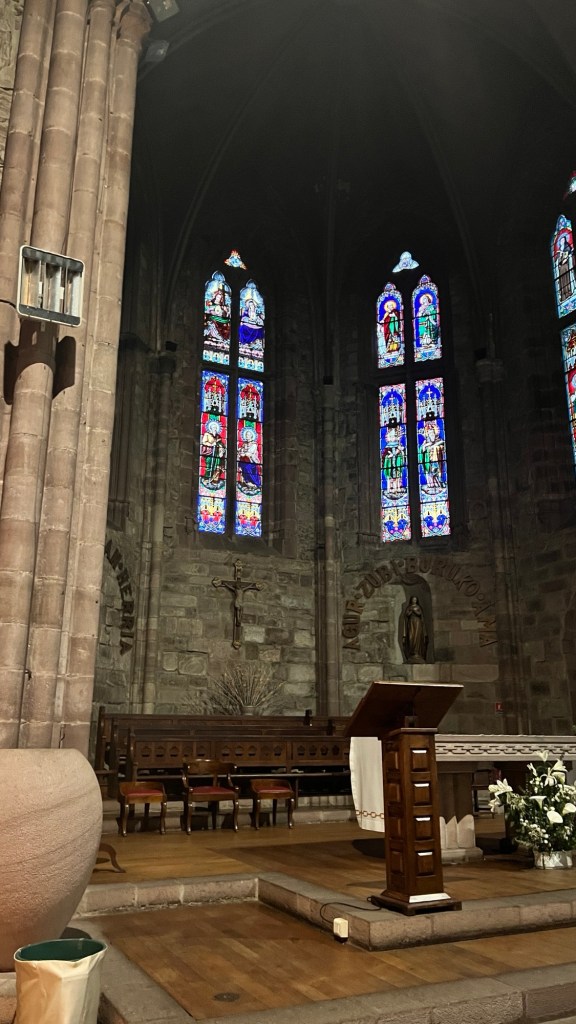
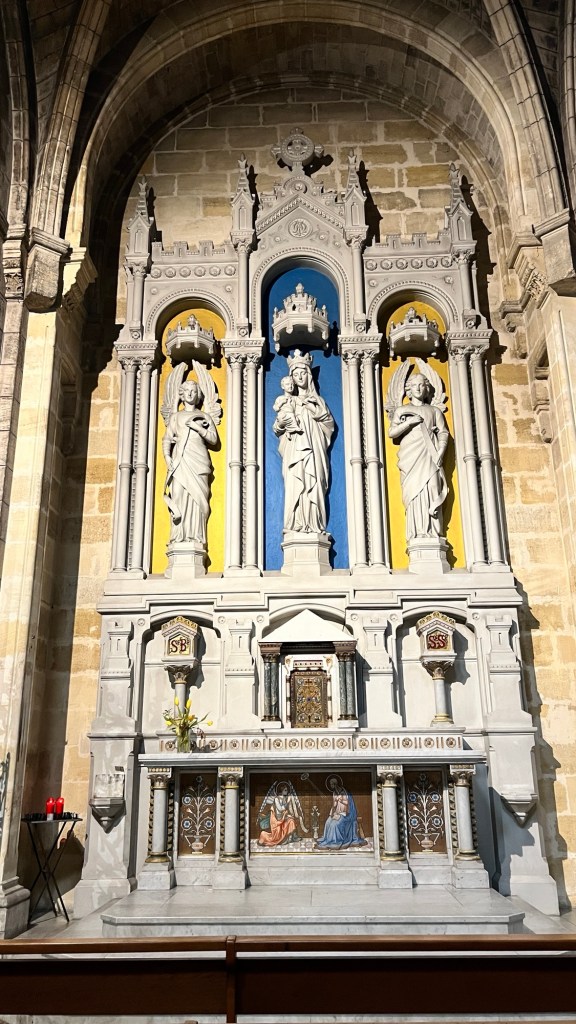
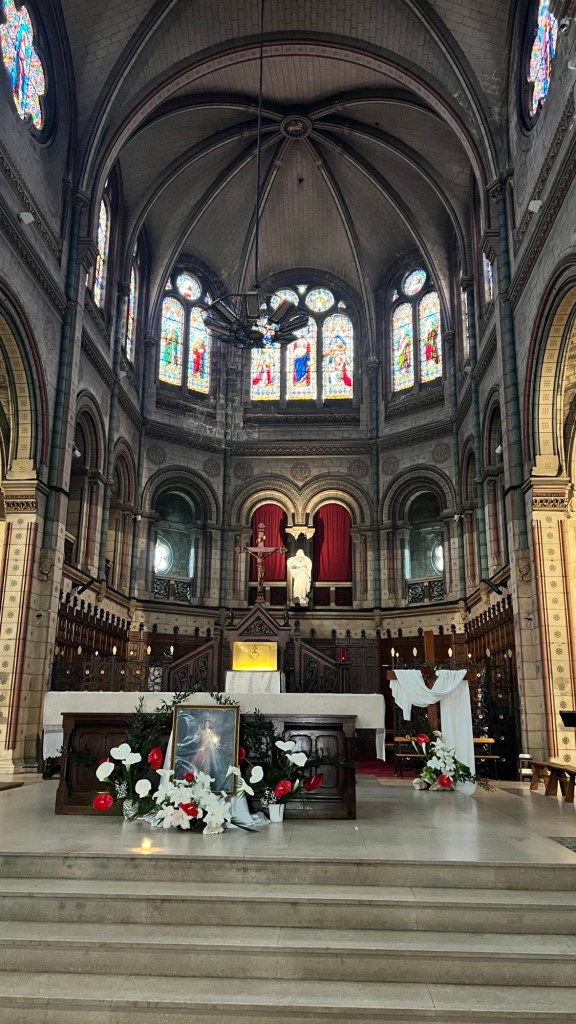
I have spent the day walking around. It rained most of the morning and part of the afternoon but the sun is trying to come out now. I prayed my rosary at a beautiful church, and then had a delicious lunch at Comme à la Maison. Very quaint little restaurant. Five stars in my book.
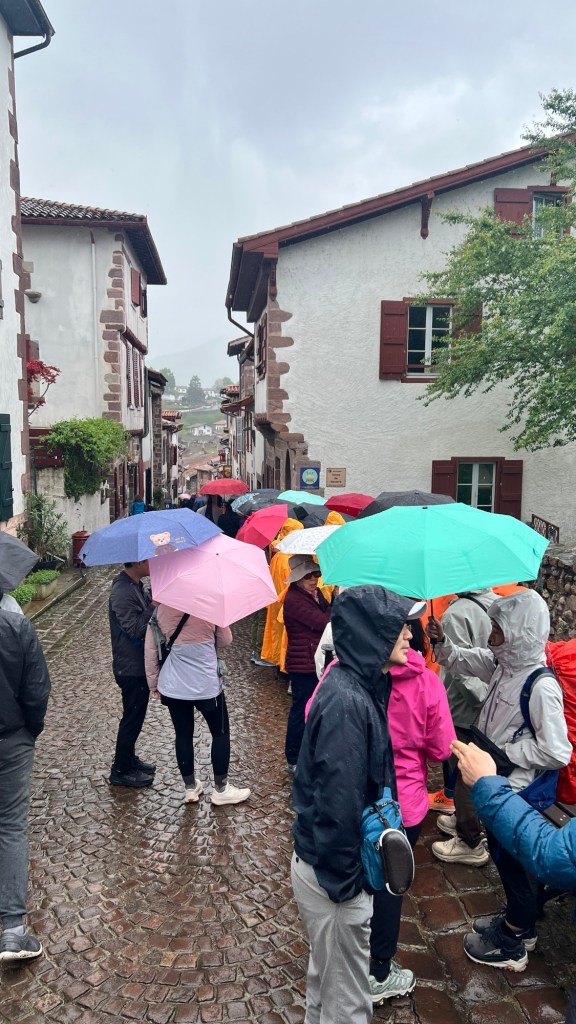
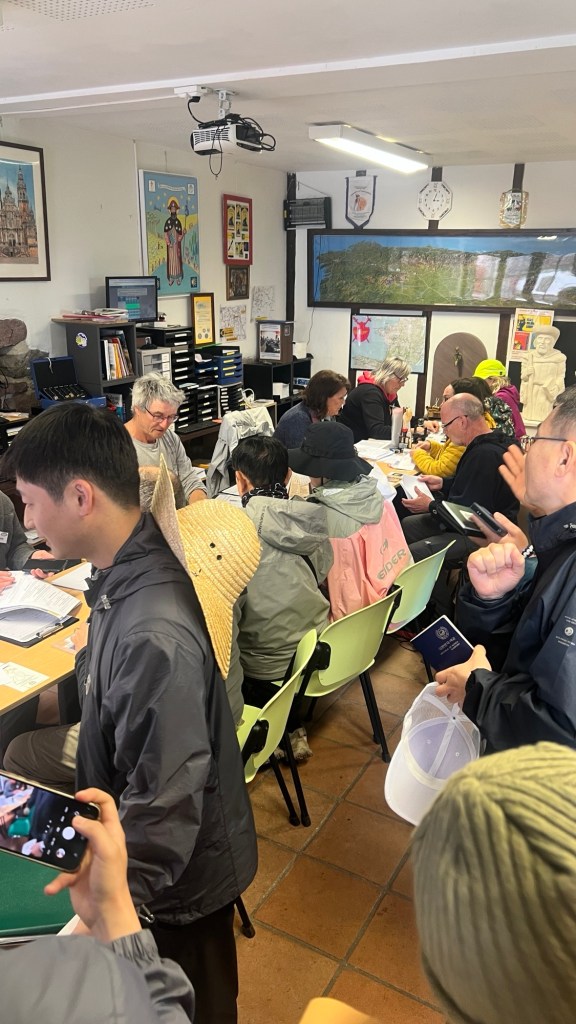
Afterwards I made my way up the hill a short ways to the pilgrims office. Had to wait in line for about half an hour, but it was a cheerful place. As large group from South Korea in front of me. Everyone was quite excited.
I then made my way indoors…
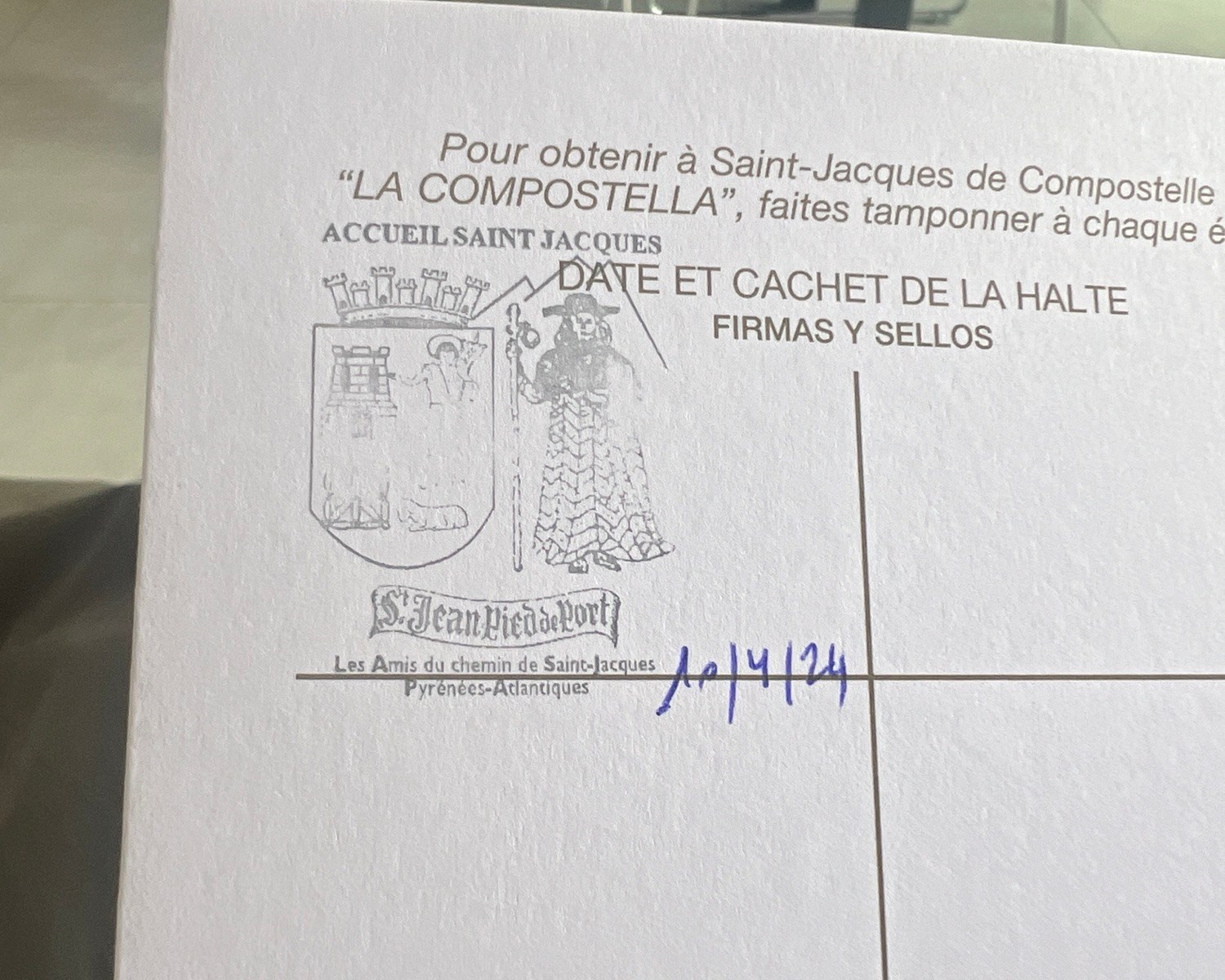
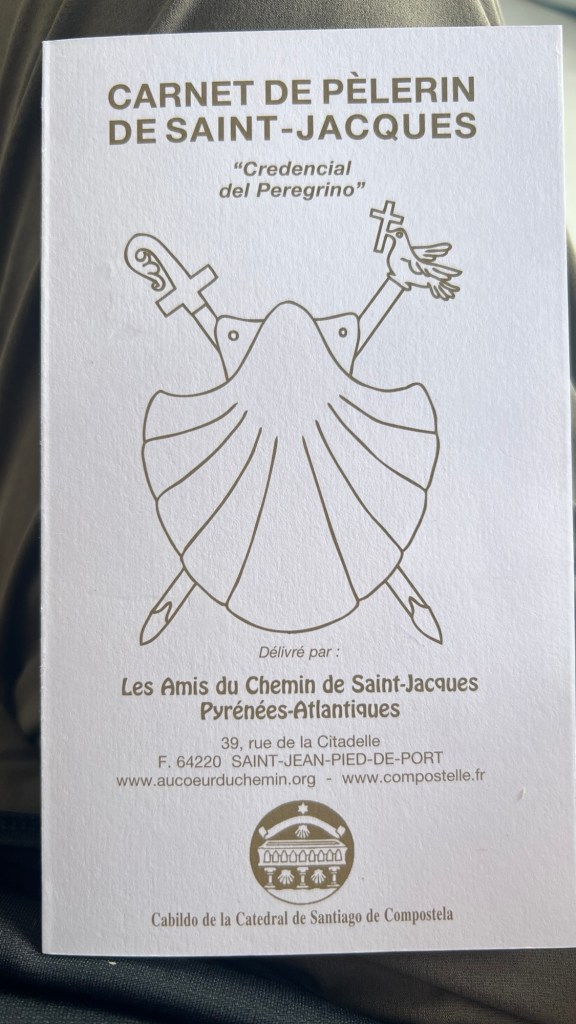
And there it is. My first stamp.
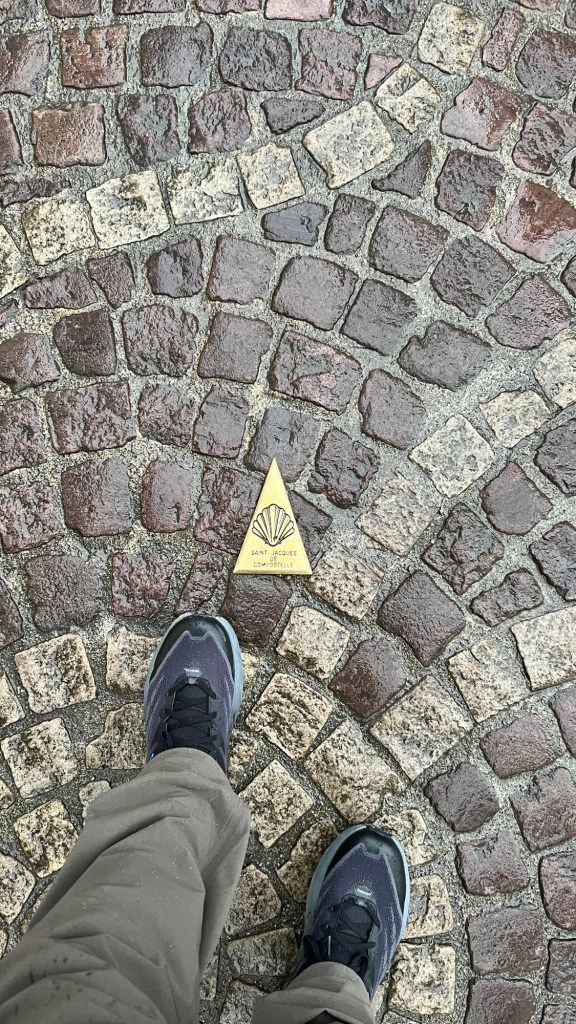
Each day on the Camino, a pilgrim must receive a stamp in their “Credencial del Peregrino” as proof they have been there. it is the pilgrims passport. Note to self: don’t lose it!
I’m going to be still and quiet for the rest of the day. Tomorrow morning I start walking. My first stop isn’t too far and not that difficult—Valcarlos— about 7 miles. It will be one of my shorter days, but Thursday is all uphill. There is no need to worry about that today though. 
I did not know I was tired until I slept and I did not know I was hungry until I ate. What a good night. I spent the night in the Mercure hotel in Bordeaux. A delightful place. The staff were very kind, even though I don’t speak a lick of French. Maybe they all roll their eyes after I turned away but I didn’t see it. I also did not sense it. Which I think is even more important. Check out is not until noon but I think I’ll pack things up here and head over to the train station. What better place to watch humanity. More later.
11:34 a.m. I am at the train station. I’m looking for pilgrims, but I have not seen one yet. I suppose in one way or another we are all pilgrims, but I’m looking for some very specific ones. I would like to wish someone, Buen Camino.
11:41 a.m. and as I stand here, I just remembered Blaine the Mono. Stephen King fans unite!
12:19 p.m. I have met my first pilgrim, although she walked it two years ago. She saw the Cross of St. James on my pack (thank you, Dana, for sewing them on—I haven’t forgotten our deal!) I am smiling. Becoming more real.
1:10 p.m. I just began The Road to Daybreak by Henri Nouwen. The first two sentences: “This is the first day of my new life! Though it sounds melodramatic, I cannot avoid feeling that something significant is starting today.” Ummm…..
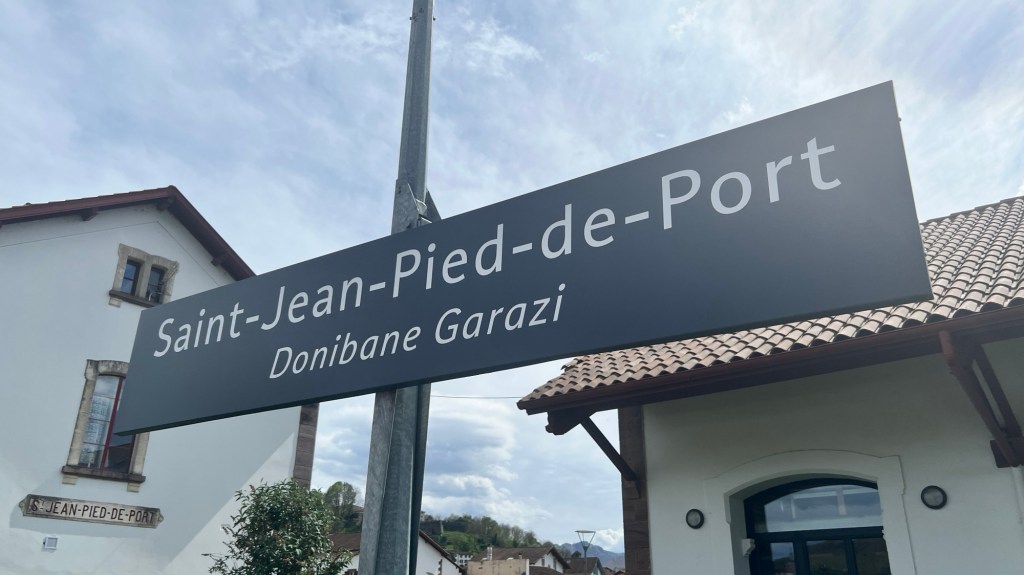
2:23 p.m. on the train to Saint-Jean-Pied-de-Port. Many pilgrims.
3:24.
4:21 p.m. Arrived at my apartment for the next two nights. It is lovely—Gîtes Vue Montagne St-Jean-Pied-de Port. Five stars and I haven’t even checked out the bed.
7:53 p.m. I walked back into town to find a bite to eat and a few groceries for the next couple of days. Not much. Just a few eggs and bread. I’ll go back in tomorrow for a bigger meal.
As I walked, I was thinking about the pilgrims I met… no, “met” is the wrong word… encountered or bumped into along the way today. *WE* were all still caught up in our normal lives. We were rushing and pushing and jostling. We were not good pilgrims (I don’t even know that we are pilgrims yet.) We were our normal selves. Always in a hurry. Always checking the clock. Always believing that our journey is of utmost importance. Not true Young Grasshoppa. This—in my no miles on the Camino, yet, opinion—is not the Way of St. James.
St. James was guided by an angel to his final resting place in Santiago. Perhaps, instead of guiding our own path, we allow God’s holy angels to guide us… is that a statement or a question?
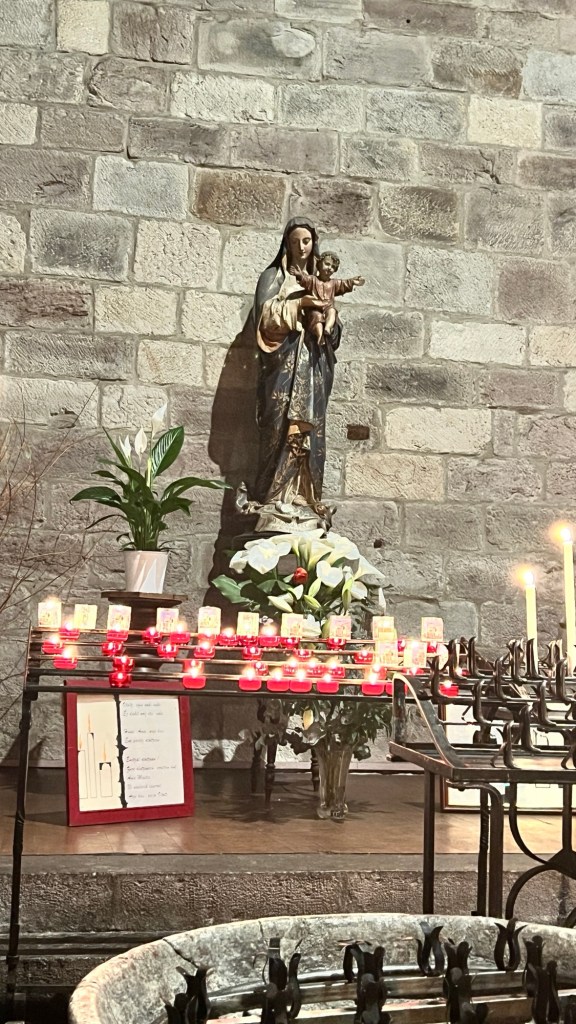
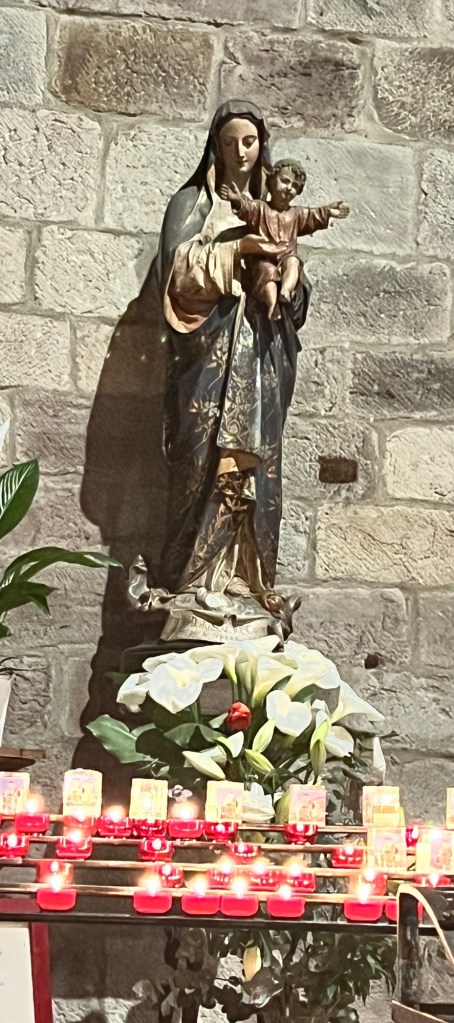
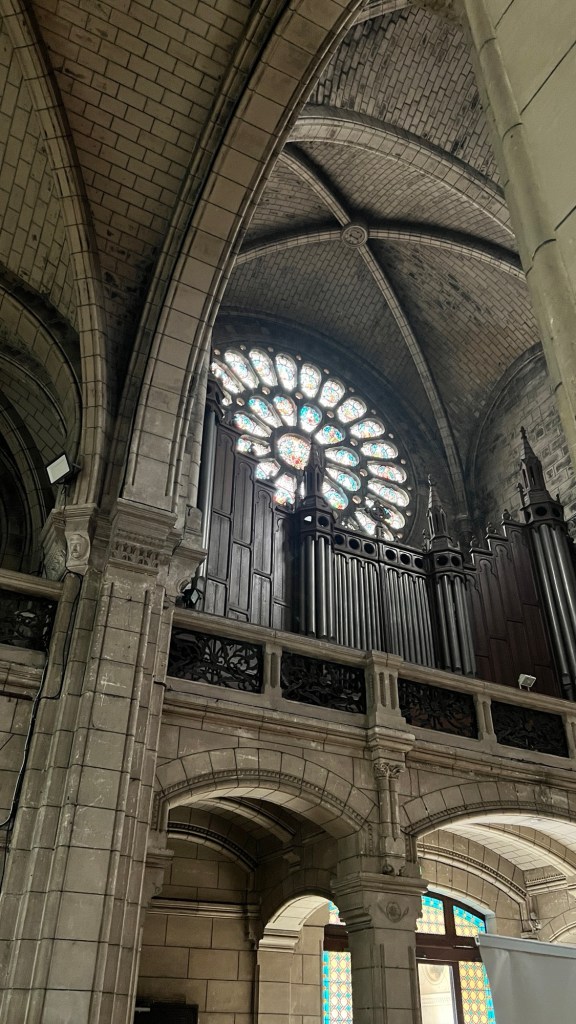
I prayed the Rosary today in a beautiful church. I understood that I was at the foot of the cross with Mary. I had my left hand on Jesus foot and Mary had a hand on mine. Mary had her right hand on Jesus’ other foot and I had my other hand on hers. We stood side by side. At first, I was distracted by the others coming and going, but Mary said for me not to listen to them. She said that I was to listen for His voice—that He would speak to me along the way. I will listen.
I lit a candle and asked her to pray for me along The Way. She will.
Please comment below. When I return, we’ll combine some of your journal entries with mine and produce a printed journal of our adventure.
WEEK ONE PROMPT
Walking the Camino de Santiago is about letting go and relying on God’s grace and the kindness of others. “The Camino provides” is a common expression for those on the way. How do you turn your life over to God’s grace and the kindness of others? In what ways do you not only receive grace and kindness but also express it toward others?
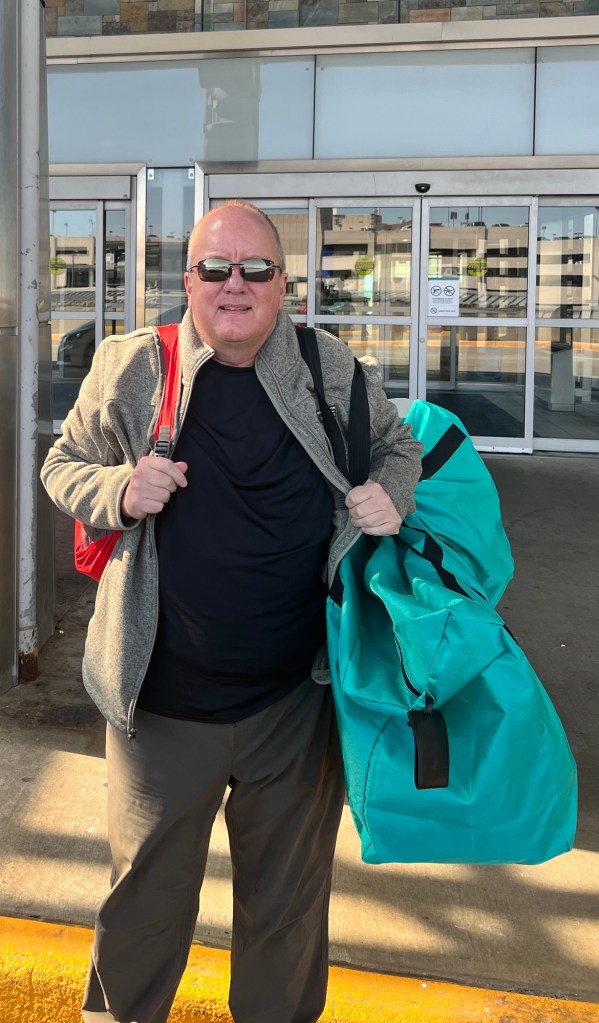
It is 11:09 AM and I am in the airport in Oklahoma City. My flight doesn’t leave for a couple more hours so I stopped for some breakfast. It was Andy who drove me to the airport and he took a before photo.
The next leg of the journey will take me from here to DFW, where I have another short layover before heading out to Paris.
The flight to Dallas was uneventful and short. I am hopeful that the next flight will at least be uneventful! It will be long…. about 10 hours/5,231 miles. I hope to sleep which is something I can never do on a plane. Don’t take that as complaining! I get to do this thing. Having a few French fries before boarding because you never really know about what will be served.
It is 12:02 Paris time and we are taxing to the runway at DFW.
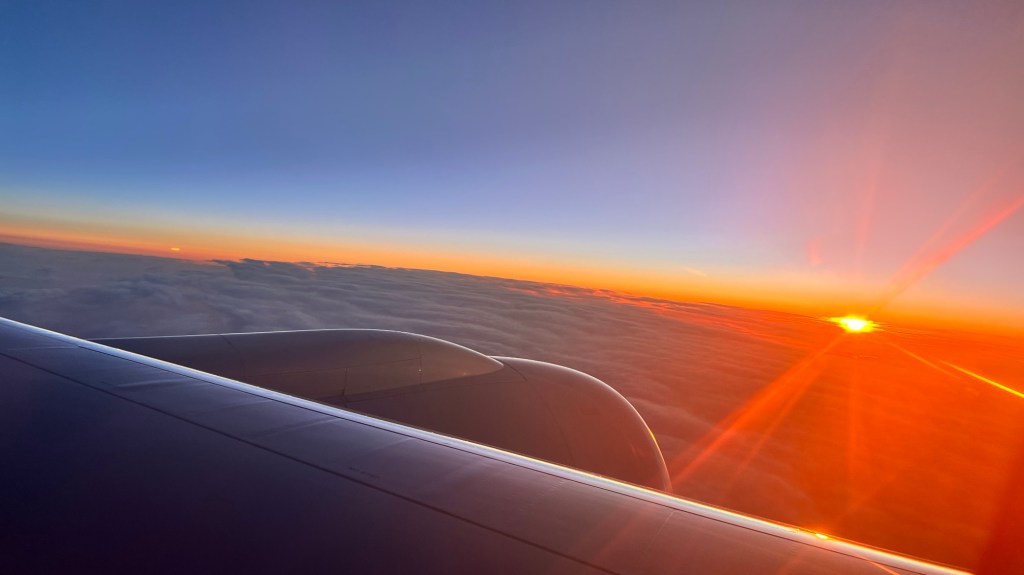
Sunrise at 37,000 feet. About an hour out from Paris.
Arrived in Paris without any trouble. Only was able to sleep for about an hour or so. I wish I could learn to do that. Sleep on the plane that is. Took a taxi to the Montparnasse train station, and then waited on the train.
Arrived in Bordeaux. 24 1/2 hours after I left. Long trip but not a complaint. I see sleeping in Babyland in my future.
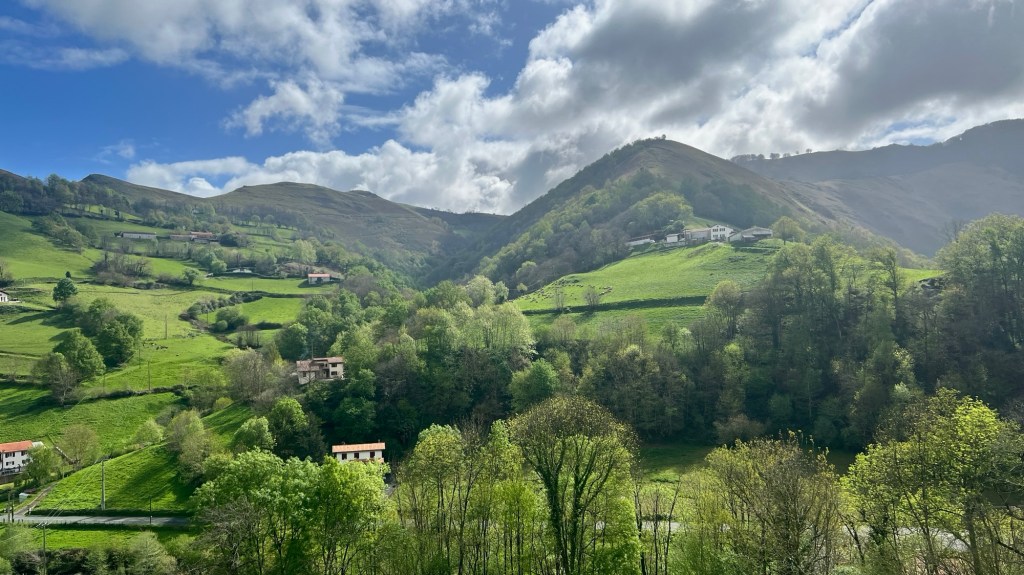
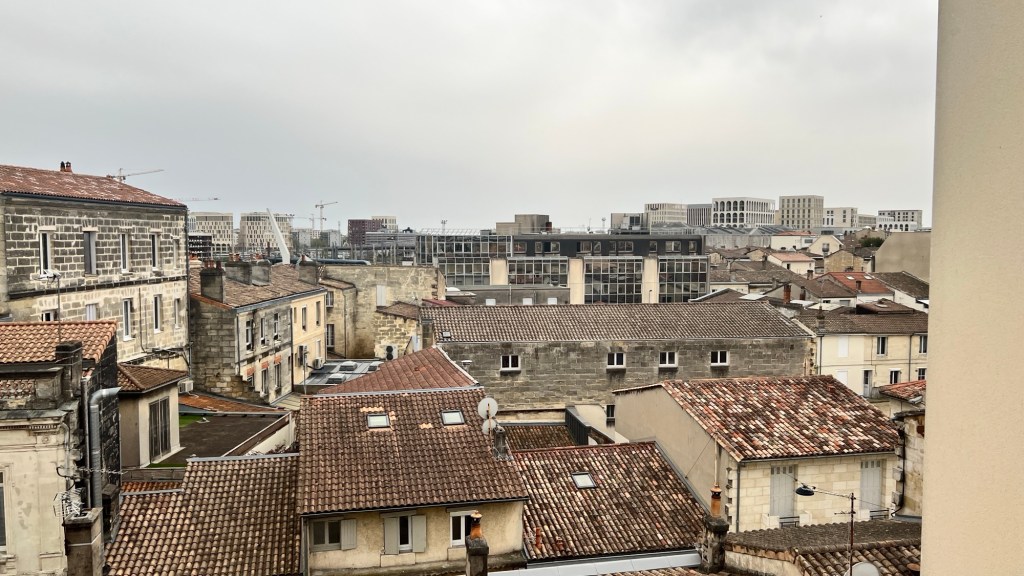
A room with a pretty nice view.
I have two trains tomorrow, but really a pretty easy day. Only about three hours of traveling and then I will be at Saint-Jean-Pied-de-Port. I have two nights there, which I’m really looking forward to. Not only will it give me the opportunity to rest up from the trip, but I can also explore the town at a leisurely pace.







 Candle in a Cave