Vision is entirely a creative faculty: it uses the body and the mind as the navigator uses his instruments. Open and alert, it matters little whether one finds a supposed short cut to the Indies-or discovers a new world. Everything is begging to be discovered, not accidentally, but intuitively. Seeking intuitively, one’s destination is never in a beyond of time or space but always here and now. If we are always arriving and departing, it is also true that we are eternally anchored. One’s destination is never a place but rather a new way of looking at things. Which is to say that there are no limits to vision. Similarly, there are no limits to paradise. Any paradise worth the name can sustain all the flaws in creation and remain undiminished, untarnished.
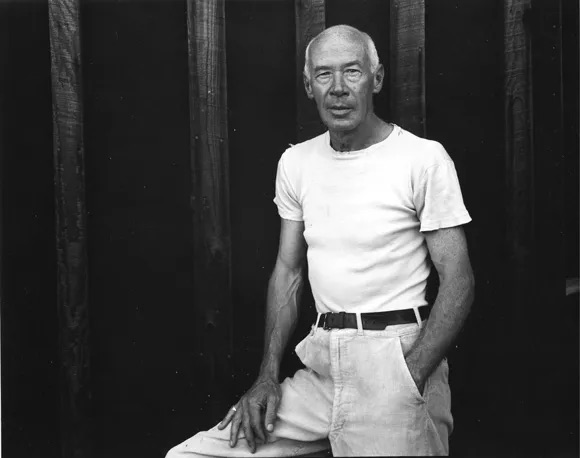
Henry Miller / Big Sur and the Oranges of Hieronymus Bosch
The list: USA, Italy, Spain, France, Ireland, Norway, Japan. Not an extensive list, but respectable. I still hope to add at least India to it.
Now, don’t think I’m slipping over the edge here. Just having a think is all…
In the places I’ve visited and the resources required to experience them, have any of them made me happier/a better person/more wise/etc/etc/etc, than 2426 Sherwood Drive with The Queen in my lap and a good book in my hands? The short answer: no.
To see the beauty of God’s creation and those things created by His creation is a gift and a delight. To have walked through the halls of the Sistine Chapel, to have gazed out over the Grand Canyon, to have been a total tourist and ridden the elevator to the top of Tokyo Tower—I know that I am blessed (and spoiled) to have had these opportunities. I would not trade the experiences, but to write sermons and preach the Gospel, sit with friends and play Uno, write silly blog posts, are (I was going to say “equally” as enjoyable, but..) far more enjoyable and life giving/experiencing.
My friend, Mr. Miller, said, One’s destination is never in a beyond of time or space but always here and now. If we are always arriving and departing, it is also true that we are eternally anchored. One’s destination is never a place but rather a new way of looking at things.
In this life, your destination is where you are at this very moment. You can choose the place where you will experience those moments, but the place is not your life. The place is the backdrop.
The end of the matter; all has been heard. Fear God and keep his commandments, for this is the whole duty of man. For God will bring every deed into judgment, with every secret thing, whether good or evil.
Today was a much quieter day. I had to check out of the hotel by 11 AM and make my way to Osaka. I had a late breakfast, packed up, and headed to the station for a one-hour train ride. It was not one of the bullet trains, but it was still quite pleasant.
After dropping my bags at The Gala Hotel Umeda (check-in was not available until 3 p.m.), I spent some time sitting in the lobby, reading, and wandering around fairly close to the hotel.
Along the way, I came across what looked like a very interesting restaurant, Minori, where I could get a snack.
The restaurant had probably enough room to seat 15 people. It was about half full when I arrived, and I was the only guy in the building. It was filled with happy chatting young Japanese women. What was served? Açai bowls.
What exactly is açai?
Açai is actually a small, dark purple berry, which comes from a palm tree in the Amazon rainforest.
“Similar to blueberries, acai is high in antioxidants and fiber,” says Melissa Keeney, RDN, clinical nutrition manager at St. Vincent’s Medical Center. “Grown in the rainforest, they’ve long been used in medicine – but have recently become popular around the world for their benefits with immune health.”
Like broccoli, avocado and sweet potatoes, açai is considered a superfood, meaning it’s packed with nutrients and linked to countless health benefits. (Source)
That’s the official description. My unofficial description is that it’s a bit like a mullet. Business up front, and party in the back! All that healthy stuff is on top, and then all that delicious goodness is below. I was convinced that it had some Nutella mixed in there. I will probably have to stop by there at least once more before I leave.
Afterward, I came back to the hotel and sat out in the lobby to read my book, and then I remembered… Books. Not just any book, either. A very special book. A quick search in Google Maps found me a bookstore about a half mile away. I started walking.
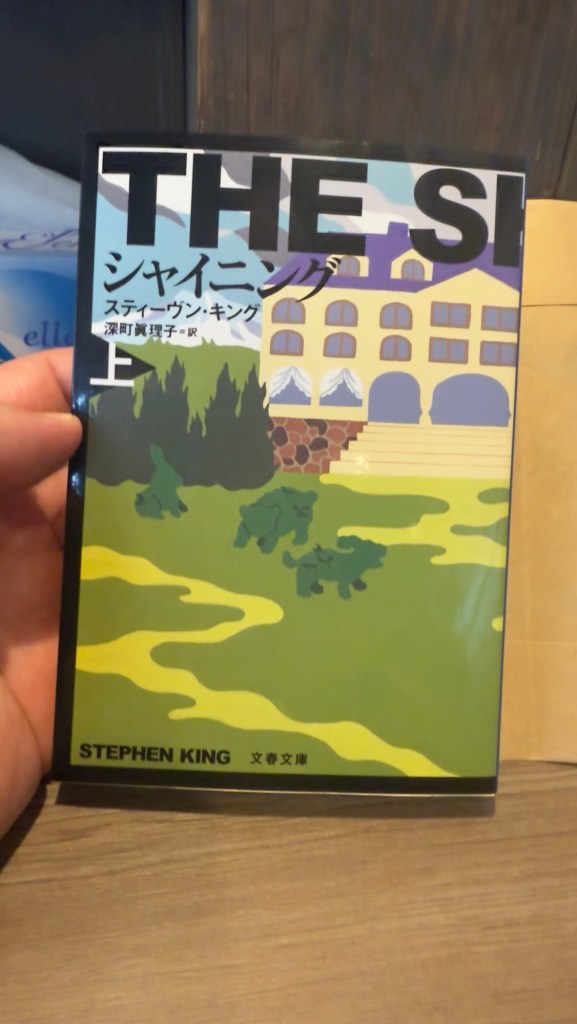
I typed out my request in Google Translate and handed it to a clerk on the second floor. They read my request and immediately directed me to the third floor. The clerk there brought me to the correct section, but these were English language books. This will not do. Back to the clerk, and I revise my request. The clerk had an “Aha” moment. He brought me back down to the second floor, and there they all were. I can’t read a word of it, but it’s my favorite souvenir so far! A Japanese version of The Shining by Stephen King!
And for the record… I am not a nerd! I smiled all the way back to the hotel (not The Overlook!) and then some. It’ll go next to my Norwegian version of Carrie.
Tomorrow, I don’t plan to go far. I’ll step out for a bite to eat and all that, but I will take a day of rest and enjoy not moving too much.
I hope you all have a good day and that you are well. Thank you for following along on my adventures in Japan. I hope you are enjoying these block posts because I enjoy writing them.
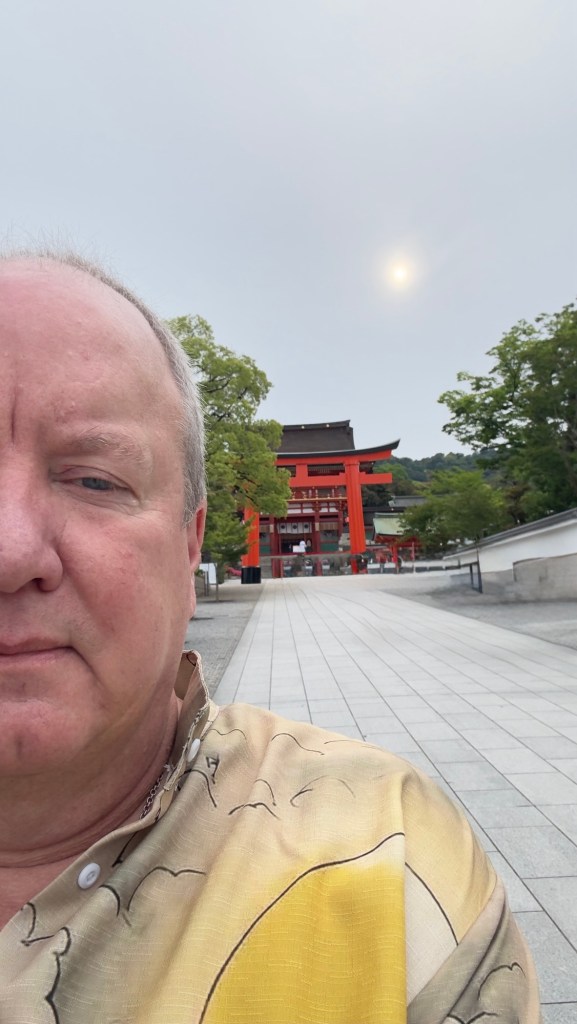
Everything I read said that if you want to beat the crowds, you’ll want to get there early. I was up at 5:15 AM and moving, and there was still a pretty good crowd when I arrived. I can only imagine what it would be like during prime time. That said, it was quite amazing.
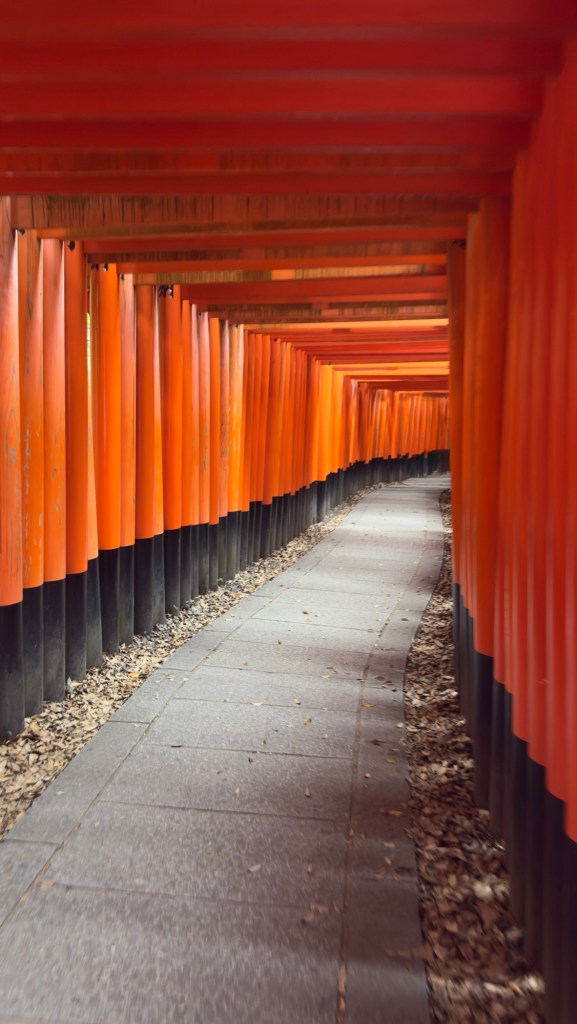
Fushimi Inari Shrine (伏見稲荷大社, Fushimi Inari Taisha) is an important Shinto shrine in southern Kyoto. It is famous for its thousands of vermilion torii gates, which straddle a network of trails behind its main buildings. The trails lead into the wooded forest of the sacred Mount Inari, which stands at 233 meters and belongs to the shrine grounds.
Fushimi Inari is the most important of several thousands of shrines dedicated to Inari, the Shinto god of rice. Foxes are thought to be Inari’s messengers, resulting in many fox statues across the shrine grounds. Fushimi Inari Shrine has ancient origins, predating the capital’s move to Kyoto in 794.
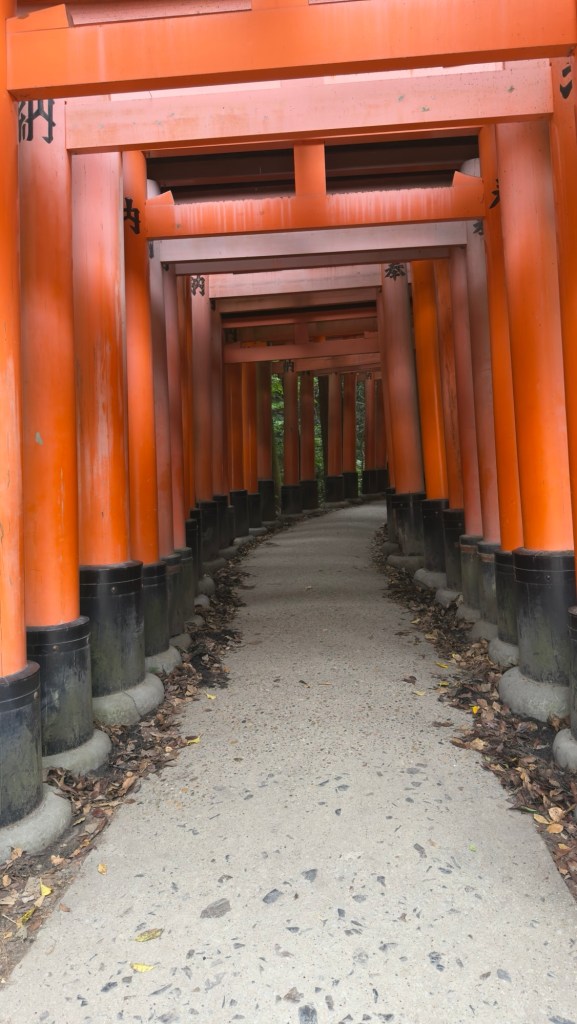
The torii gates represent a transition from the mundane to the sacred. They are places where spirits are said to pass through. Each gate is sponsored by individuals or organizations. There are thousands of them on these grounds.
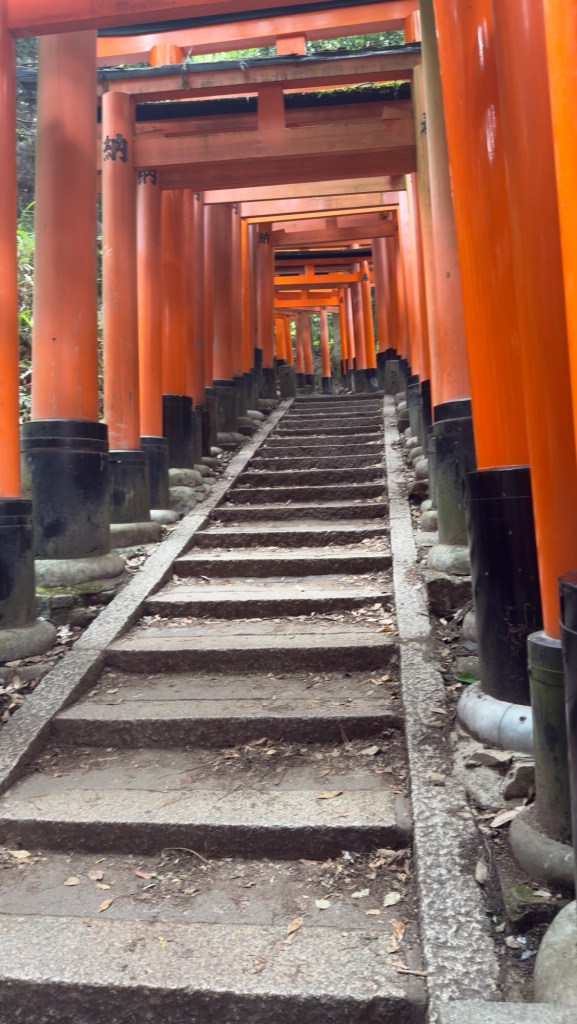
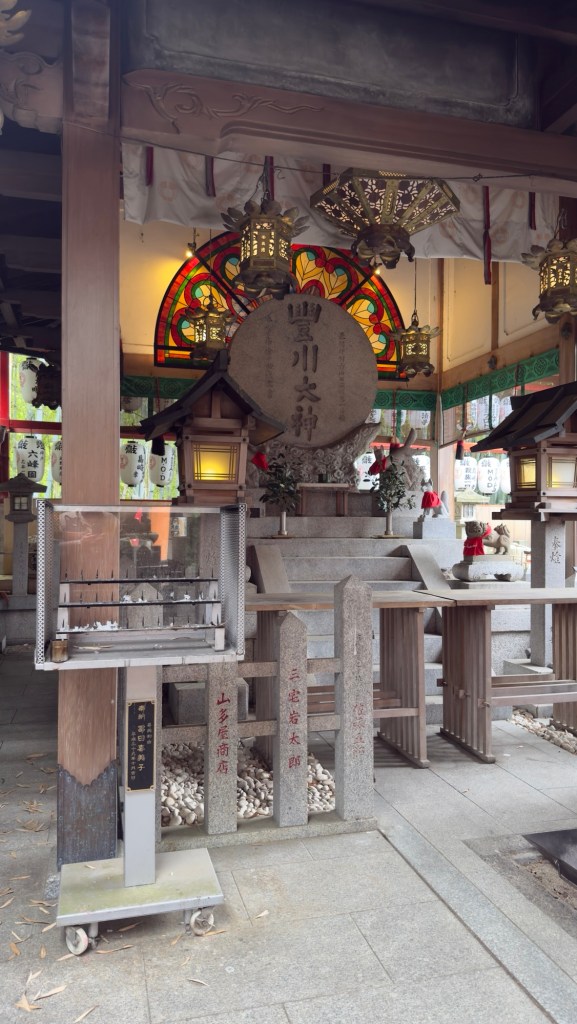
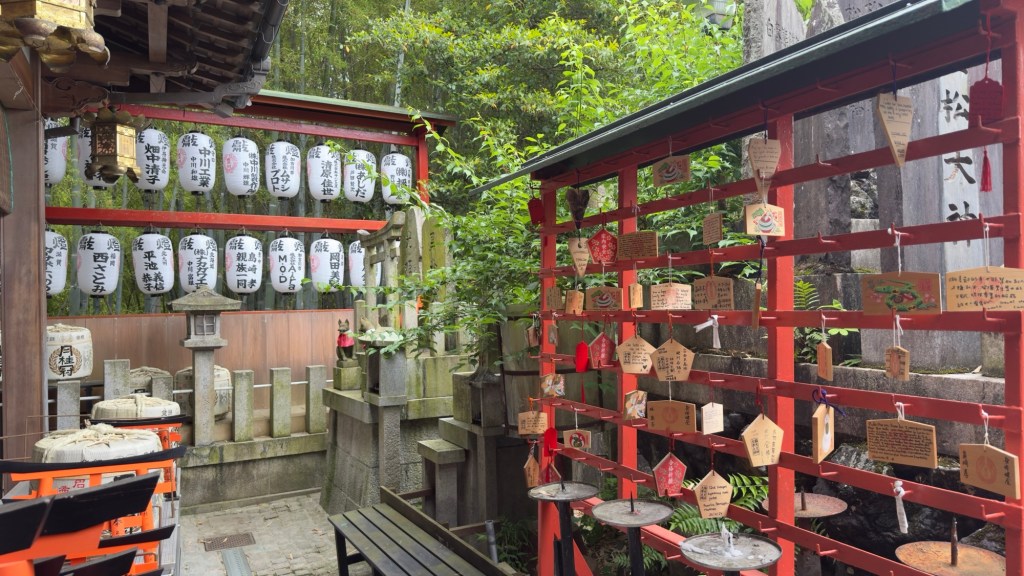
I did not make it all the way to the top, but that was not in the plan. Along the way, there are also many shrines.
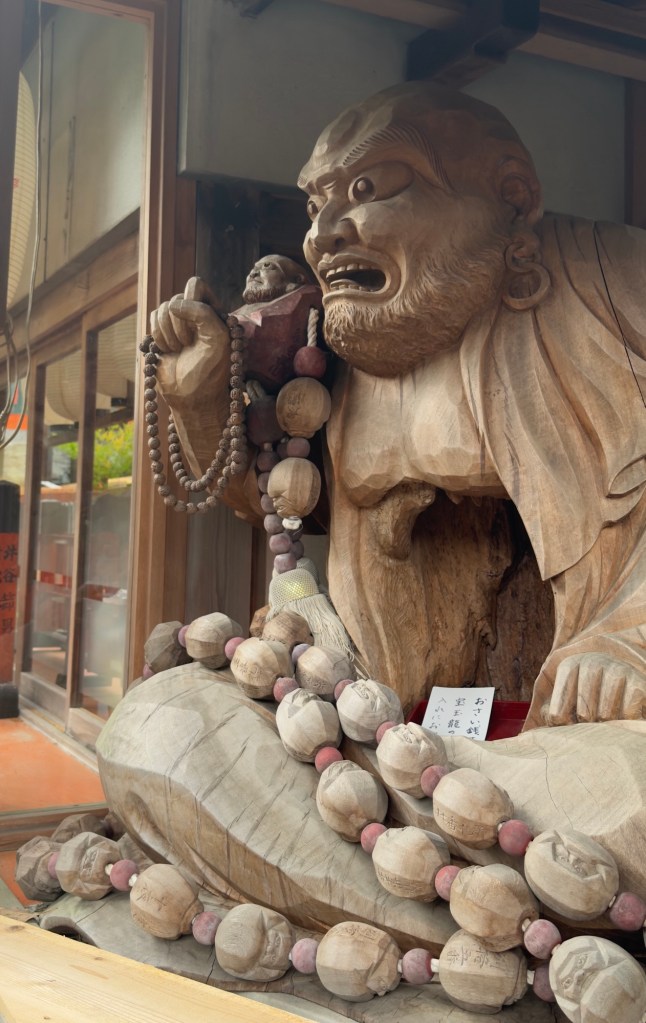
After climbing so many stairs, I had a sneaking suspicion that I looked like this guy. If me saying that is disrespectful, I do apologize. I suspect he is one of the many gods.
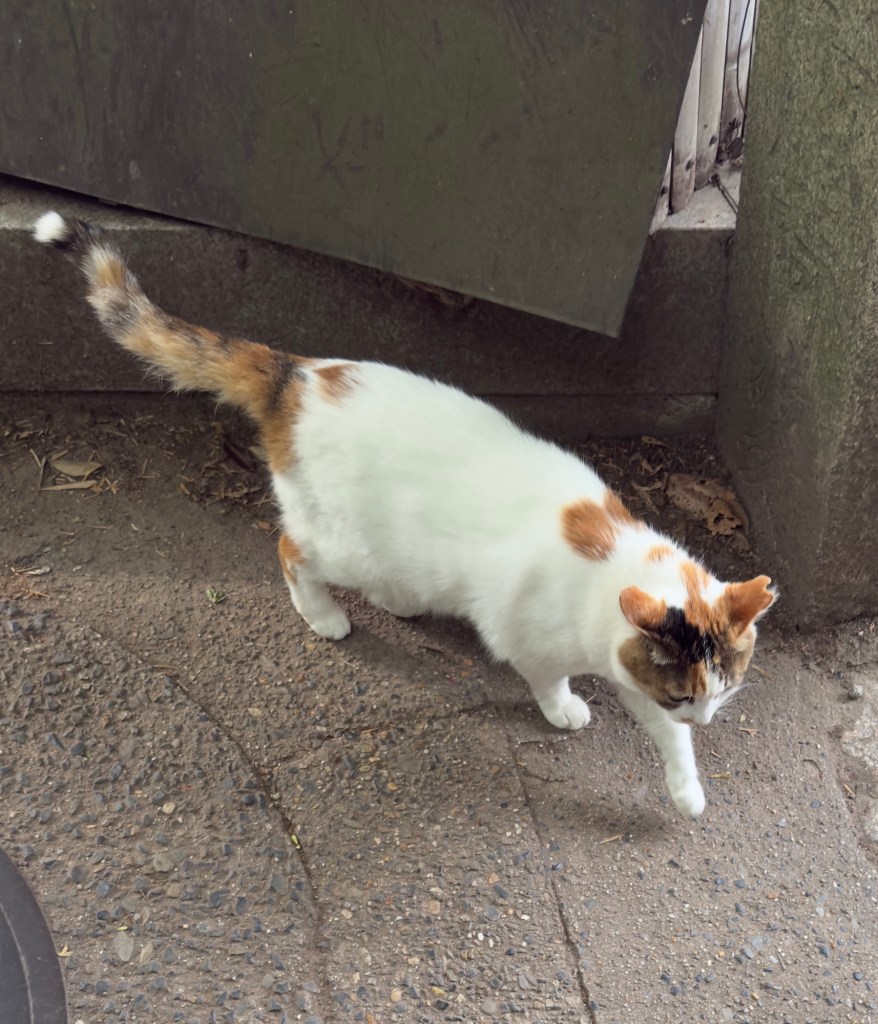
At one particular shrine, there were a number of cats. This one was on an errand, but he was kind enough to give me a leg bump as he moved past.
Of course I’m in Kyoto, Japan and I will stop to pet the cat and take its picture! What do you think I am, some kind of barbarian?!
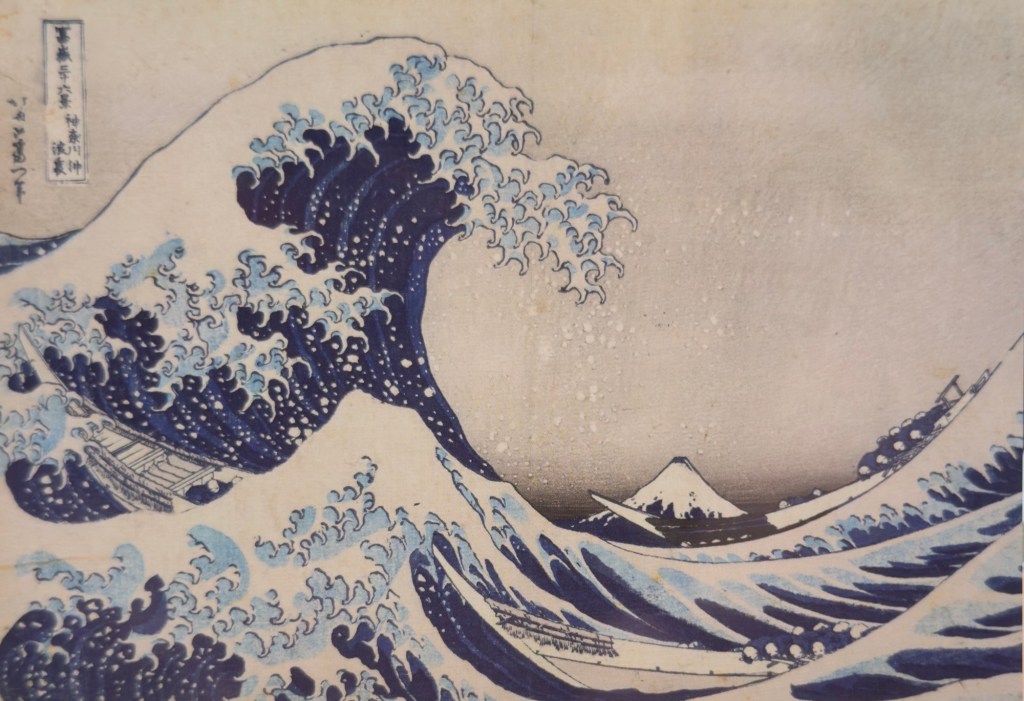
I took a short train, and a very crowded one because it was rush hour, and made my way to my next stop. I had planned on going to one place but ended up going to another. I saw all these people lined up waiting to get in and thought that was my line, so I got in line with them. It turns out I was in line for a special exhibit at the Kyoto Museum. They don’t let you take pictures, so I didn’t. (I know, I took pictures at the church when I wasn’t supposed to take pictures at the church, yada yada ya) However, I bought a book of pictures so I would have them because one was a painting we are all familiar with.
“Under the Wave off Kanagawa” from the Series Thirty-six views of Mount Fuji By Katsushika Hokusai (1760 – 1849) Edo period, 19th century.
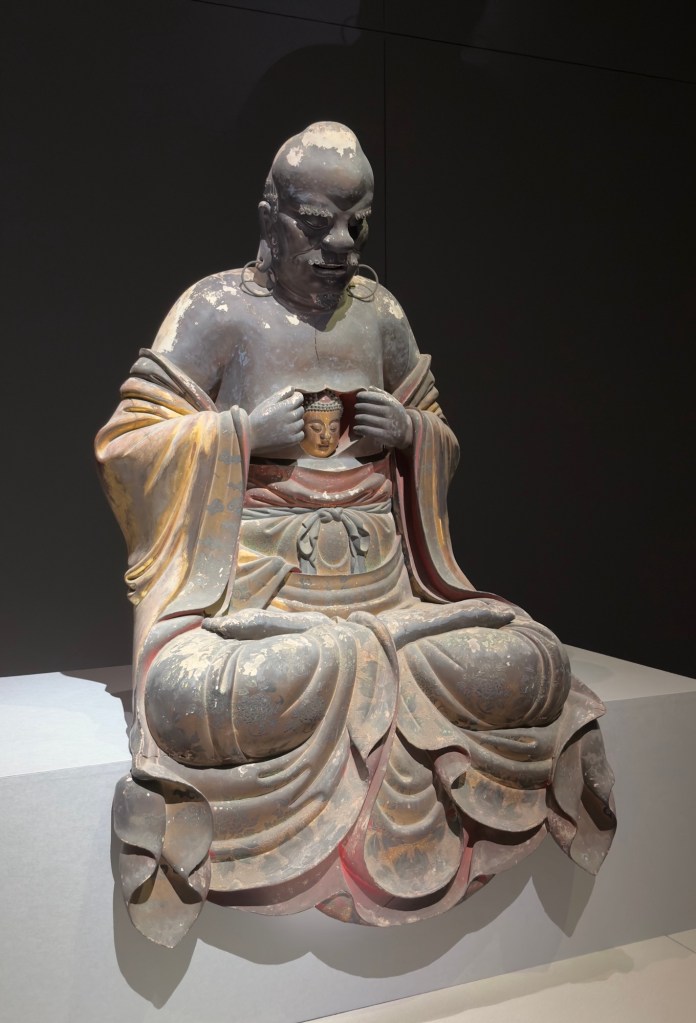
They allowed us to take pictures of one item. It has to do with the revealing of the Buddha within. I will not try to explain it. This is not my department, but it is an interesting idea.
I then made my way to my originally planned destination, which was right across the street.
Sanjūsangen-dō is a buddhist temple of the Tendai sect.
The temple was founded in 1164 by Taira no Kiyomori for the cloistered Emperor Go-Shirakawa. It is officially known as Rengeō-in (蓮華王院, hall of the Lotus King) and belongs to the Myōhō-in temple complex.
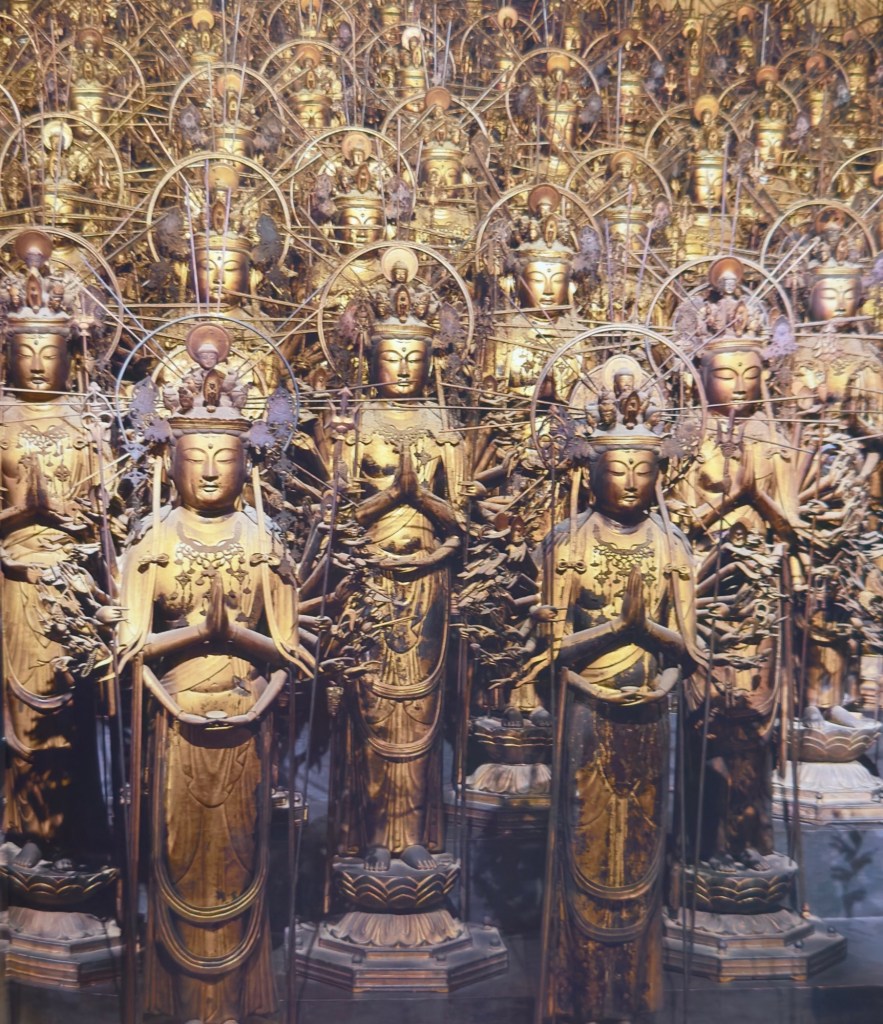
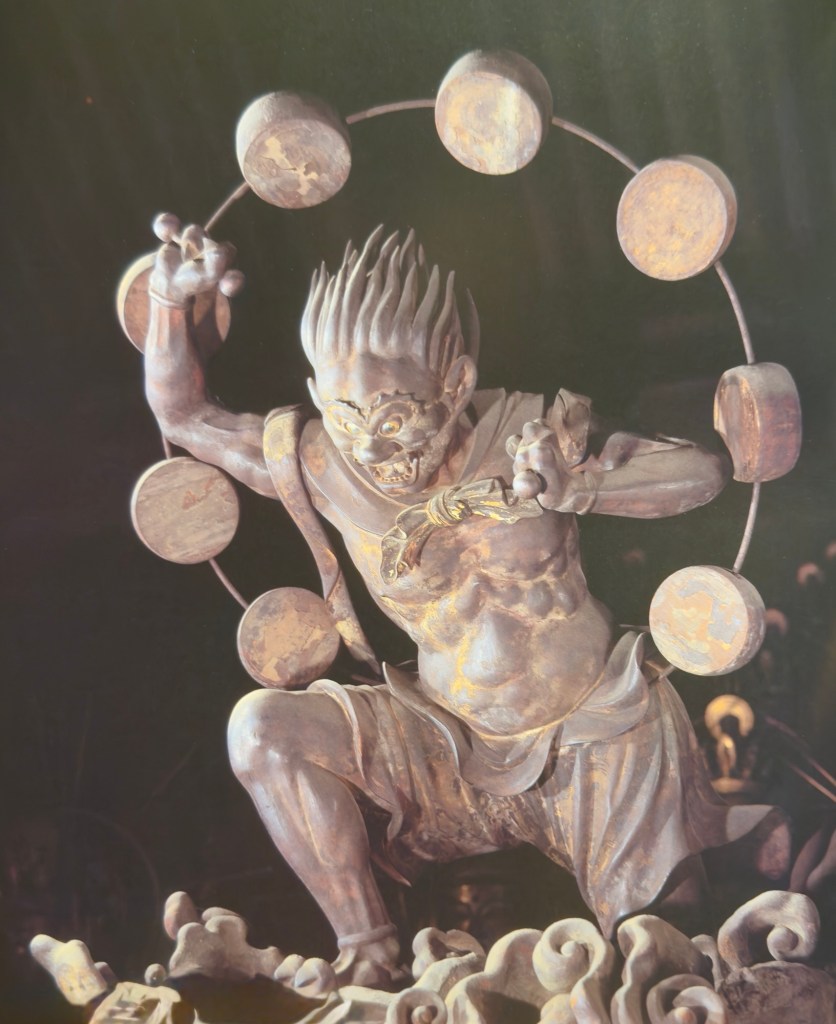
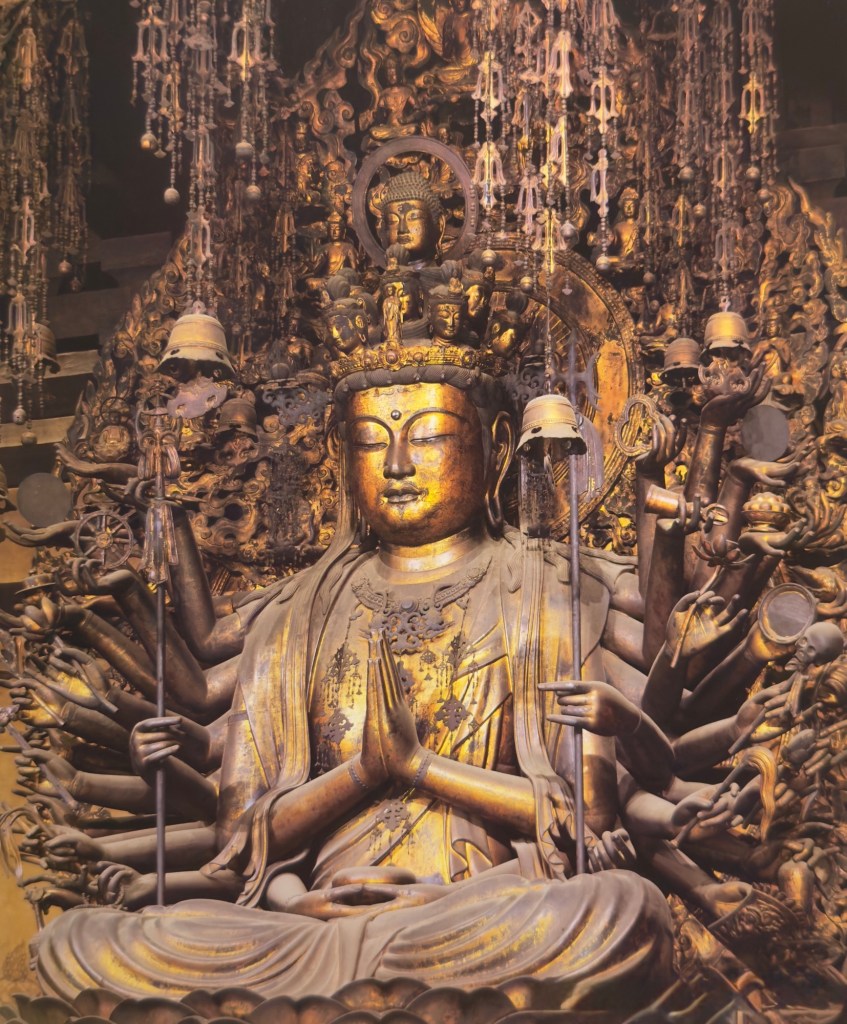
Sanjūsangen-dō is most famous for its massively long hondō (main hall) dating from 1266 (Kamakura period) and designated a National Treasure of Japan, and the collection of sculptures it houses, including 1001 standing Thousand-armed Kannon, 28 standing attendants, a statue of Fūjin and a statue of Raijin, and the principal image of the temple, a big seated statue of Thousand-armed Kannon, all of them designated National Treasures in the category of sculptures, most of them dating to the Heian to Kamakura periods.
In case you didn’t read all of that, there are 1001 statues! Again, you can’t take pictures of it, so I bought a picture book and took pictures of the pictures in the picture book.
god of thunder
When I left the hotel this morning, I had anticipated being back in time for breakfast. Because I made that extra side trip, that didn’t happen, so by this time, I was done for a little while. I headed back to the hotel to freshen up and then find some lunch.
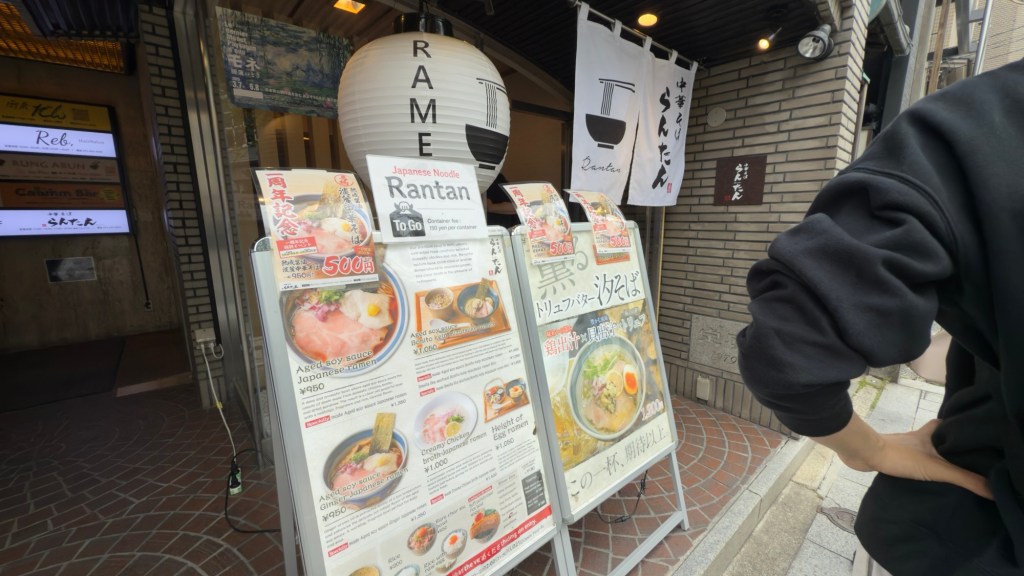
I was hungry enough that I forgot to take pictures of my lunch, but there was a line to get in. It was ramen noodles—not the kind you get at Jumbo’s grocery—and very tasty. I had the one in the bottom right-hand corner of the picture.
Seeing as I had no idea what I ordered, it came with something round and yellow with green flex in it, a bit like a coin, on top. I thought it was a tasty morsel. I popped it in. It was a big ol’ pat of butter! I discreetly removed it from my mouth and got it back in the bowl, where it did melt.
When it comes to eating Ramen noodles, the key is to slurp. I have been raised my entire life not to slurp my food. I would get smacked for slurping my food. I don’t know how to slurp food! I try. I watch the others and see how they do it. I cannot slurp. I have a slurping deficiency. I was afraid I’d slurp it right down and choke on it, and then that would’ve been bad. Nobody seemed to care, and I managed just fine.
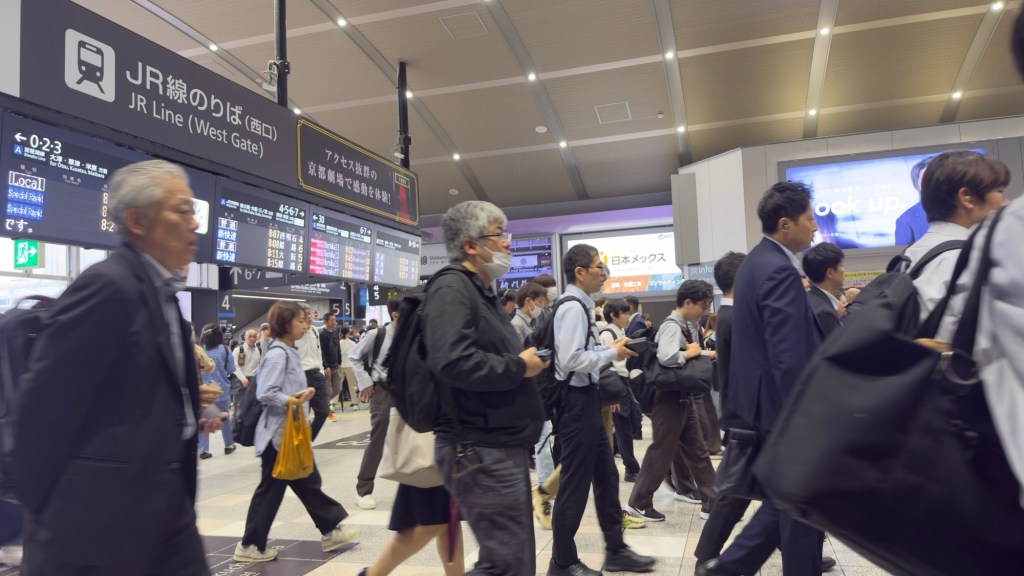
I have discovered that you don’t want to be out during rush hour or lunch hour. These people are busy; they have places to go, and they really don’t want the big dumb American in their way.
This is turning into the day that I want to go here, and I really didn’t mean to go there, but since I am here I guess I will see what’s happening, and then I’ll go to where I wanted to go. Confused? It’s easy to get that way.
So, after lunch, I returned to my room and propped up my feet. My feet were very happy.
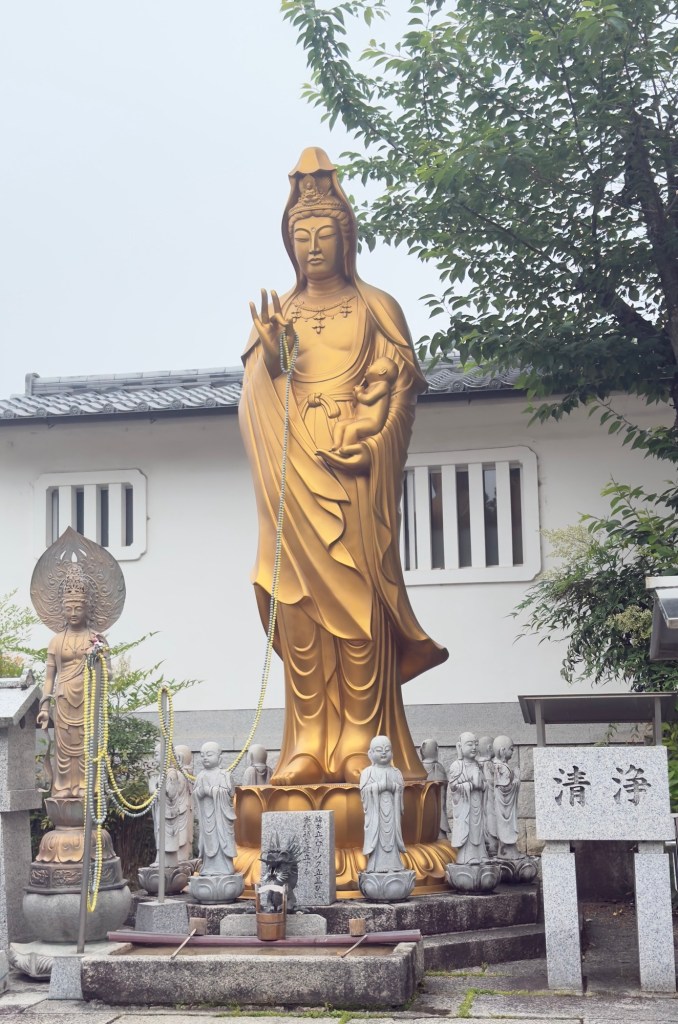
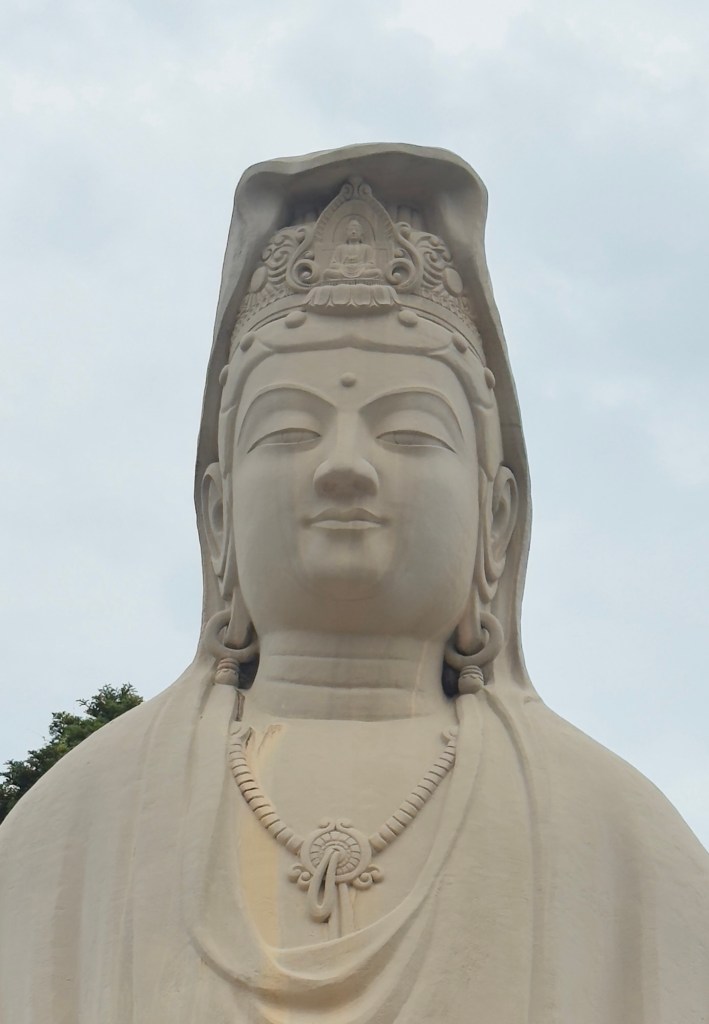
Another bus ride brought me to what I thought was the bamboo forest, but it was, in fact, a temple. At the temple was a very big statue—a statue of a very big happy lady.
She’s 500 tonnes of concrete and steel but Buddhist lore says Kannon’s a real softie. As she is compassionate to all living things, this temple is a memorial for many forgotten souls. Underneath the statue you’ll find a memorial for the 2 million Japanese lives lost in the Pacific War. But as Kannon does not discriminate, there is also another memorial hall for the unknown soldiers of World War 2. These were the foreign soldiers who died while protecting their countries. Built 10 years after the end of WWII, it’s clear to see that Japan was still reflecting on the devastating effects of the war. (Source)
After my visit there, I did find my desired location, which was actually right next-door.
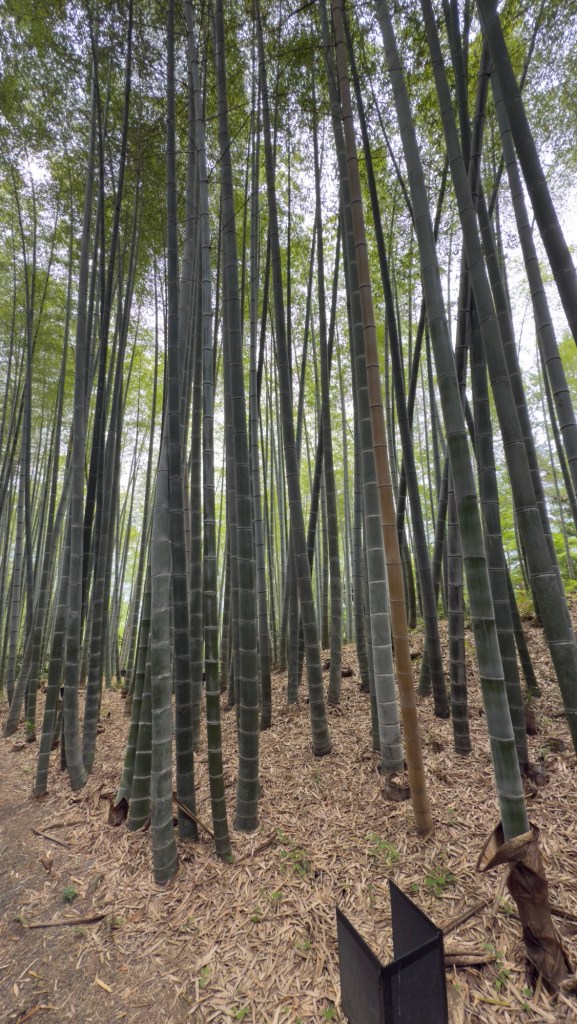
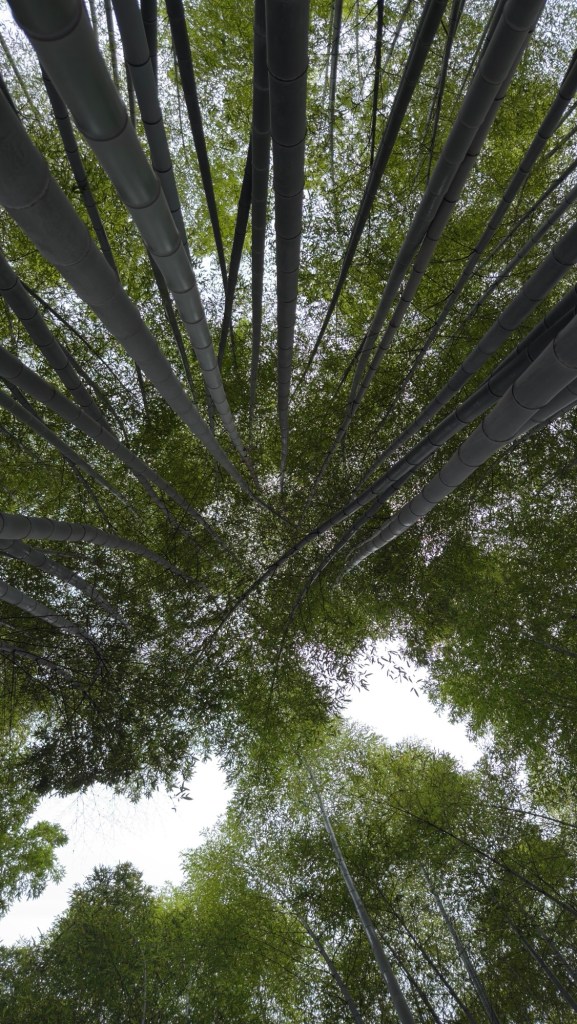
The Bamboo Forest, Arashiyama Bamboo Grove, or Sagano Bamboo Forest is a natural bamboo forest in Arashiyama, Kyoto, Japan. It consists mostly of mōsō bamboo.
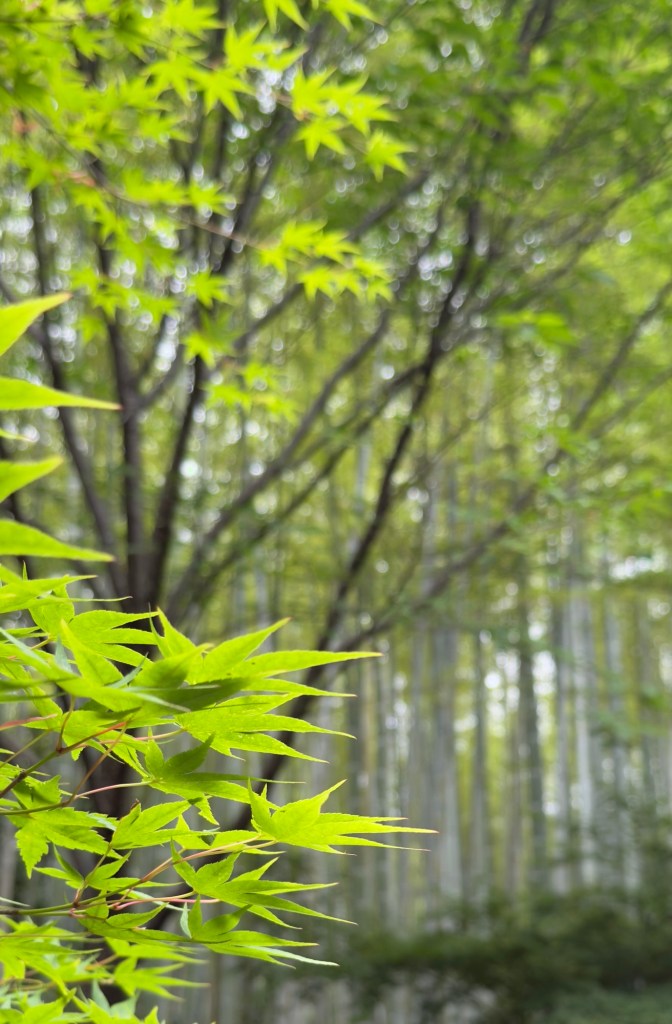
And my favorite photo of the day…
After leaving the serenity of the forest, the beauty of the psithurism, and fighting my way through several thousand schoolchildren, I decided that I would like an ice-cold beer. Some very happy fellas with twirling signs directed me into a location that was very near my hotel. I did not know what I was getting myself into. I REALLY did not know what I was getting myself into. It was a karaoke bar! And there were people singing!
At this point, I finished my beer and had a whiskey.
That is it, for now, my karaoke-loving friends. I’m going out tonight for supper. It’s a very special place, and there are only six seats available—that’s the whole restaurant. If I get in, I will have a supplemental post; otherwise, I will wander down after a bite of supper somewhere and see my friend Uno, whom I met last night, and let him know that I did get to the temple he wanted me to see.
Tomorrow is another travel day. We will be off to Osaka sometime around 11 AM. It’s about an hour on one of the slower trains. Osaka is my last station before coming home. What a trip.
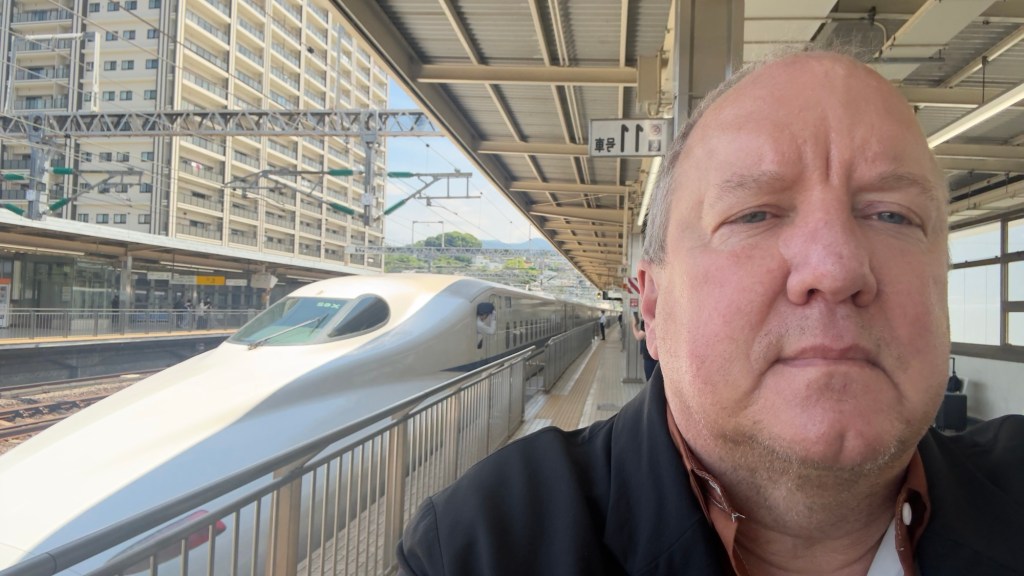
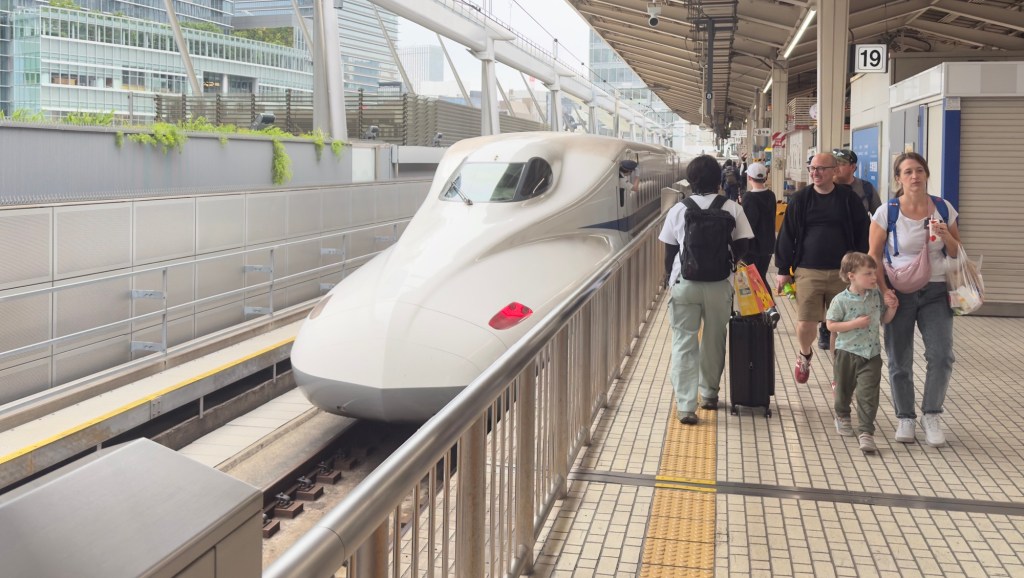
Today was another travel day, and you don’t always expect travel days to be that exciting, but today was really kind of great. In the picture above, you should say if it was really kind of great, then you should be smiling, but as fast as that train moves, you can either take a picture or smile. It’s going pretty fast.
My travels today consisted of a 20-minute bus ride to the train station and then a three-hour train ride to Kyoto. It was peaceful and not crowded.
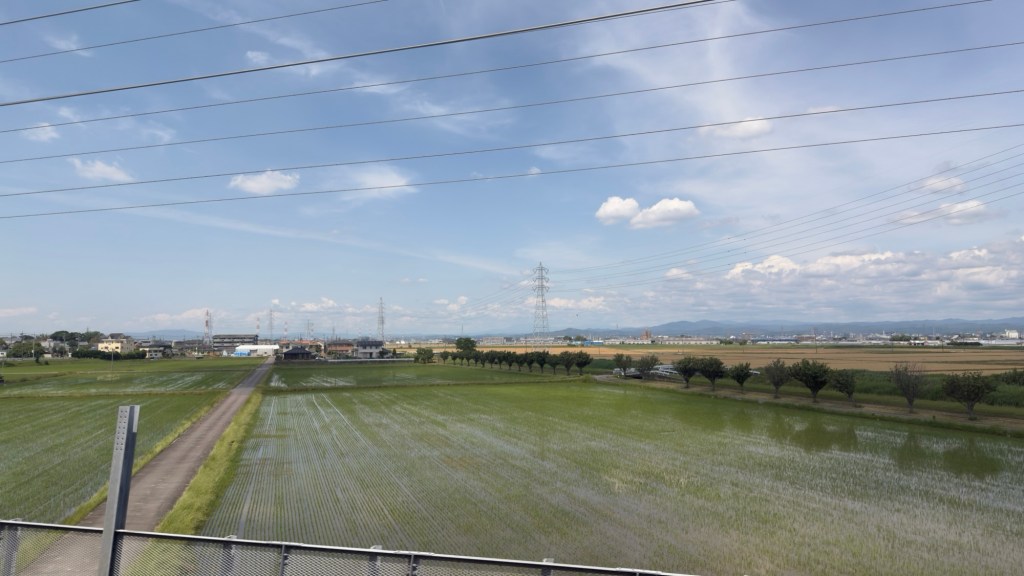
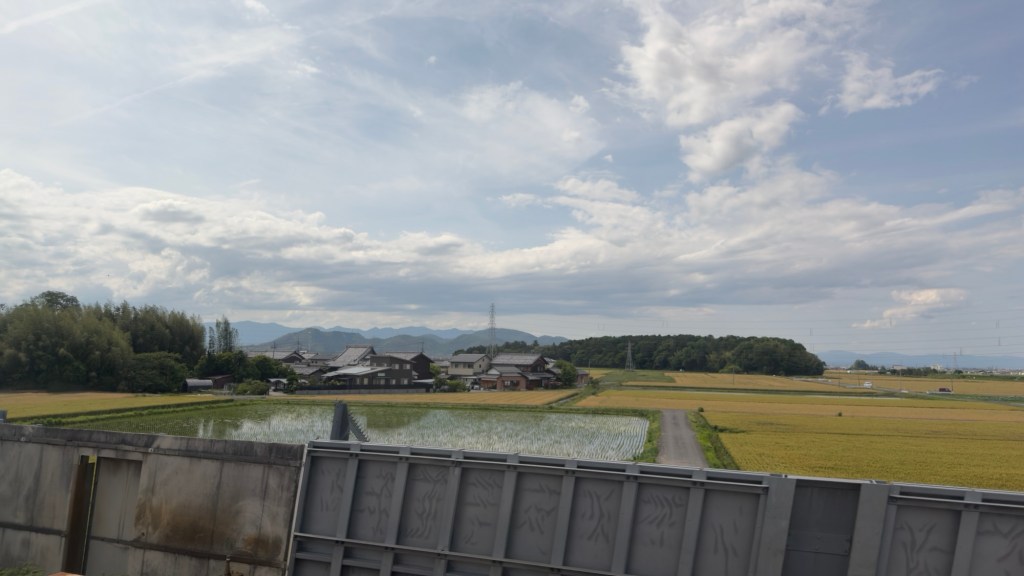
What strikes me about the countryside is that it is very much like Oklahoma. The only difference is that instead of growing wheat, they are growing rice. On any flat piece of ground, if there is not a building on it, there will be a garden, and in most cases, that garden will be growing rice.
Look familiar? If you’re from Oklahoma, it most certainly does. Although they have a lot more water than we do.
After arriving in Kyoto, I took another bus to my hotel. I read the reviews about this hotel, and there were some complaints about the rooms being too small. However, given the fact that land is at a premium in this country, I don’t think you can expect to have a sprawling room with lots of wasted space. Everything you need is right here, only a step away. I find the rooms to be absolutely delightful. The staff is very kind… Oh, I’m at the Hotel Resol Kyoto… it’s in the middle of everything, and there’s nothing that you are without. So, you can complain if you want, but this is a lovely place.
Besides, you have traveled 13 1/2 hours to be in Japan and an additional four hours to get to Kyoto from Tokyo, and you’re going to complain about the size of the room?! Get out and see the world, for crying out loud. You came this far. You are here. You are blessed and fortunate.
And then we hit the bucket list jackpot! Now we have discussed sushi, and you know that I am quite fond of the raw fish. Anytime I have the opportunity, I will try to eat my weight in the raw fish. I find fish, whether it be raw, broiled, fried, boiled, baked, canned, poached, etc., etc., etc., to be absolutely amazing. You know this. However, my all-time favorite is the sushi, and tonight I found the sushi conveyor belt. You pay based on the color of the plate. It goes round and round and round, and you just pick up what you want and eat it.
I kept saying to myself, “John, don’t embarrass yourself. John, don’t embarrass yourself.“ I reached a point when I just didn’t care! It was good, and I was happy. I was in a sushi-eating frenzy.
Look at all that loveliness go rolling by! It desires to fulfill it’s purpose in life by being eaten by me! 
Oh, don’t judge me! The yellow ones are beer. LOL. 
Afterward, I wasn’t quite ready to return to the hotel, so I wandered up and down the street for a bit, eventually ending up in a very small basement cocktail lounge. I was the only one there, along with the bartender, Uno. What a fantastic conversation we had. I understood most of what he said, and he understood most of what I said. We talked about Oklahoma, red beef, the differences between the big cities and the smaller towns, and, of all things, Pink Floyd.
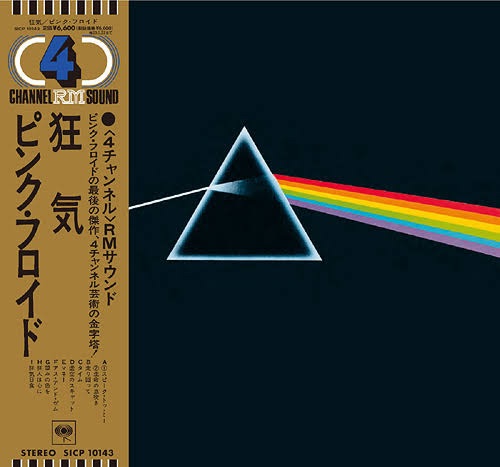
My new friend, Uno, plays guitar. He’s a fan of Deep Purple but had never been introduced to Pink Floyd. He pulled up a track from The Dark Side of the Moon, and he’s hooked forever.
He gave me several recommendations on local restaurants that I need to check out, and I’ll do just that. He’s only about two doors down from my hotel, so I told him after my day was done tomorrow that I would swing by and let him know how things went. He seemed quite pleased with that.
What a good day.
Tomorrow is looking to be an exceptional day as well, including the fact that tomorrow’s blog post will include the word psithurism. One of the other spots I planned to visit means that I will need to get up early to beat the other tourists. Considering how I’ve been doing that every day, tomorrow should not be a problem.
That’s all I know for today. I pray your day has been good. Sleepy time in Kyoto. 
It was a travel day, but I still had the opportunity to see a little bit more of the world.
After breakfast, I left my hotel in Tokyo and took a cab to the station, where I caught Kodama721, a Shinkansen (bullet train) to Odawara.
As we sped along, I saw a mountain in the distance and wondered if it was Mount Fuji, but no. I believe that it was Mount Oyama.
The entire trip took exactly 30 minutes, whereas if I had traveled on a regular train, it would have taken a little over two hours. Go fast! From there, I rode the local train to Hakone.
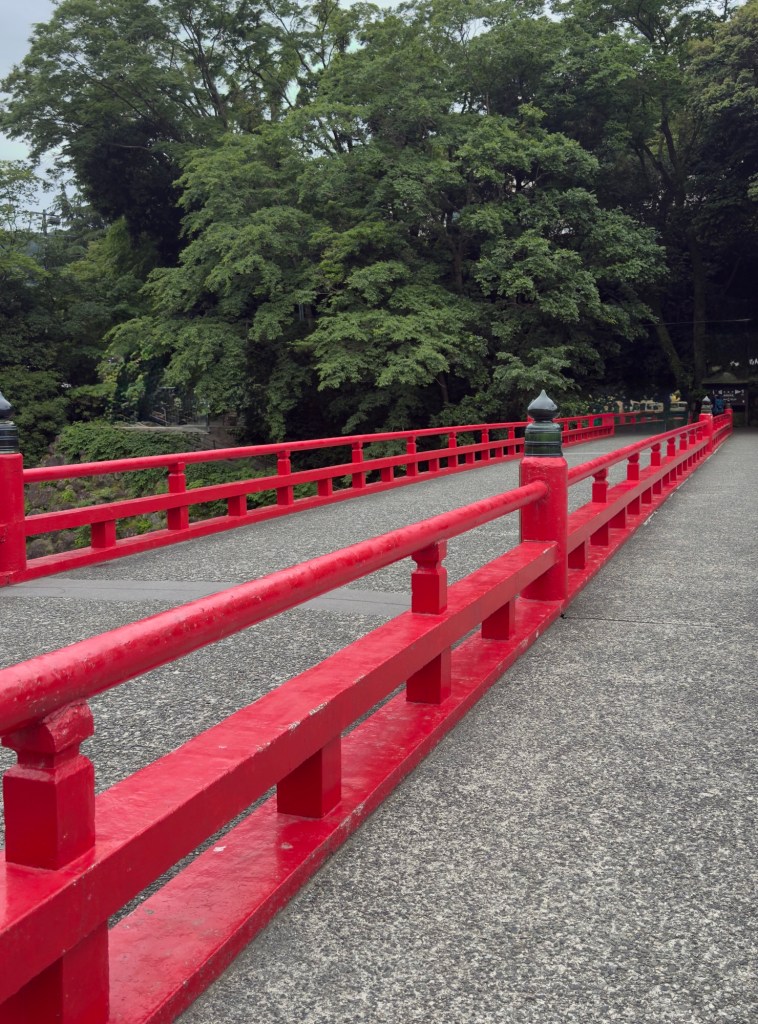
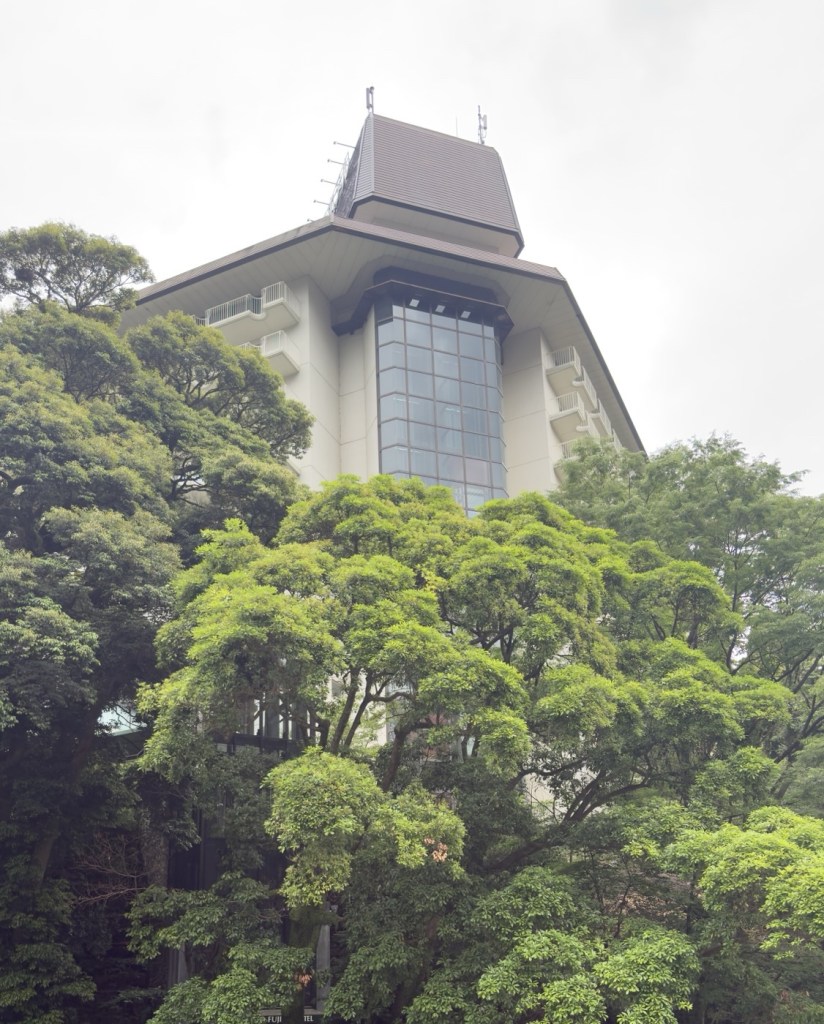
Hakone is a bit of a resort town, and my hotel meets that requirement. I didn’t plan that; I just happened to get lucky. I’ll take lucky whenever I can get it! There is a beautiful bridge crossing over to the hotel from the train station.
You know what I had for breakfast (and it was tasty), but I did not see lunch coming. I had some time before I could check in and after perusing the menus of the three restaurants that are here, I picked one thing that I was not likely to find anywhere else, except in Japan—shark fin soup. It does not taste like chicken. It’s quite good with a very thick gravy.
Afterward, I went for a walk. I strolled through town, which is just one restaurant after another, and then found my way to a trail I just happened to come across. I walked up for several hundred yards and reached a dead end. I turned around and headed back towards the hotel when I saw a Y in the path, so I decided to go in that direction. I figured I needed to do penance for my shark fin soup.
At this stage, Fat Boy should have turned around when he hit the first switchback, but I kept going—switchback after switchback, climbing, climbing, climbing. I saw that there was a temple at the top and thought that could be fun. I will pay for this walk tomorrow, but it was worth it.
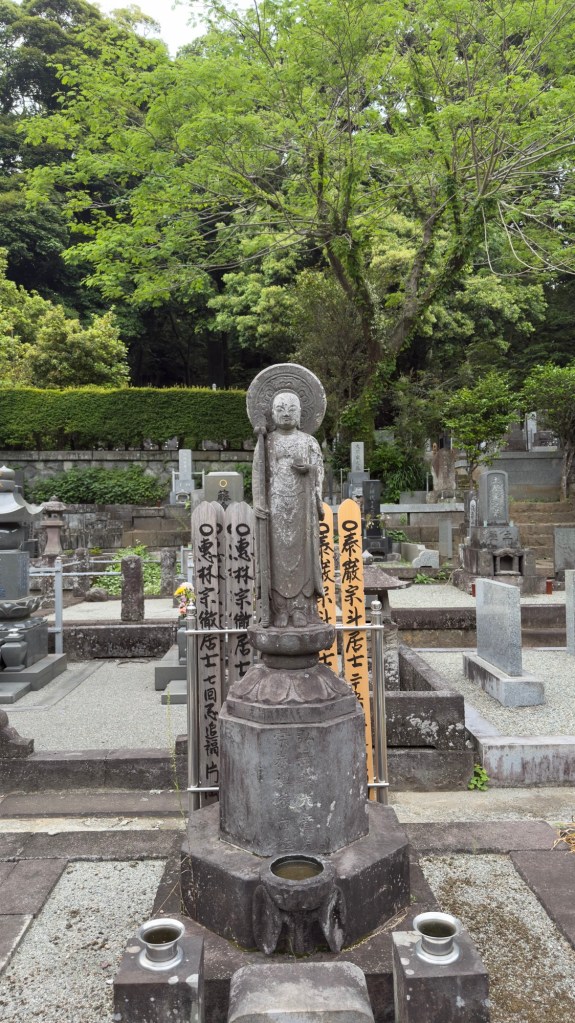
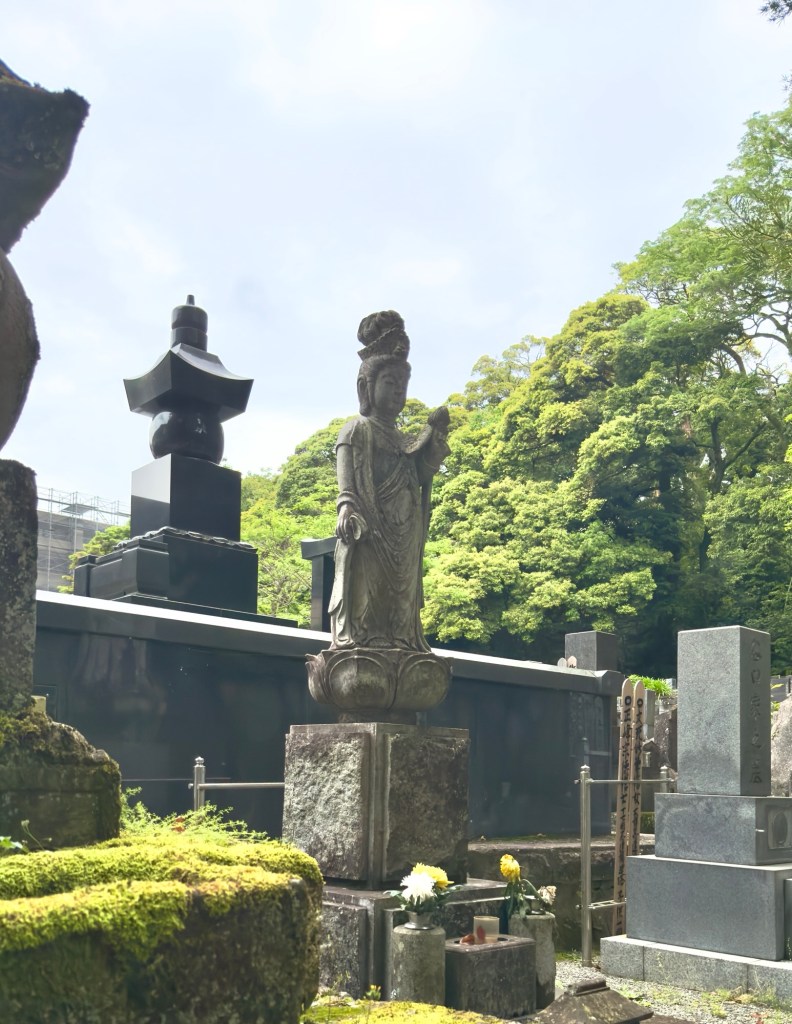
The first thing I saw as I came down the mountain was a Buddhist cemetery. Seems appropriate as I thought a couple of times during the climb I was going to need a cemetery. There is something very humbling about walking among the dead. It’s a good reminder. I’m serious. We only really think about it during the Season of Lent, so the occasional unannounced reminder is good for the soul.
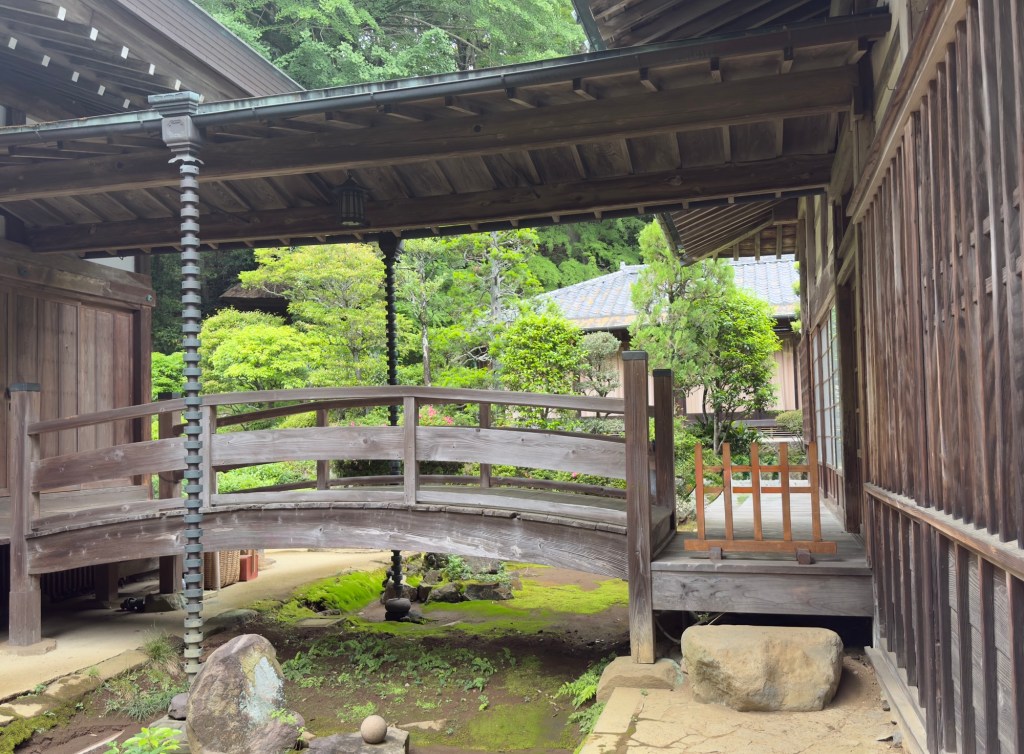
As luck would have it, the temple was closed. However, the grounds are beautiful, and I spent some time just looking around.
It was a 15-minute walk back to the hotel, and it was definitely time to prop my feet up and take a nice cool shower. It seems that this place is famous for its Onsen (public bath.) Can I just say that’s not going to happen. It’s definitely the thing to do while in Japan, but I’m just a little too private for that one. I’ll spare everyone from having to look at this sexy beast. Instead, I’ll see what kind of Japanese whiskey they have in the bar. I still haven’t had the opportunity to say “Kanpai!”
I’m only here for the night. Tomorrow, we’re off to Kyoto. I’ll spend about three days there. It’s a place I really want to see. I suspect that it will be quite different from Tokyo.
I pray you all are doing well. Thanks for traveling along with me. Say a prayer that I’m smart enough to avoid the switchbacks in the very near future. 
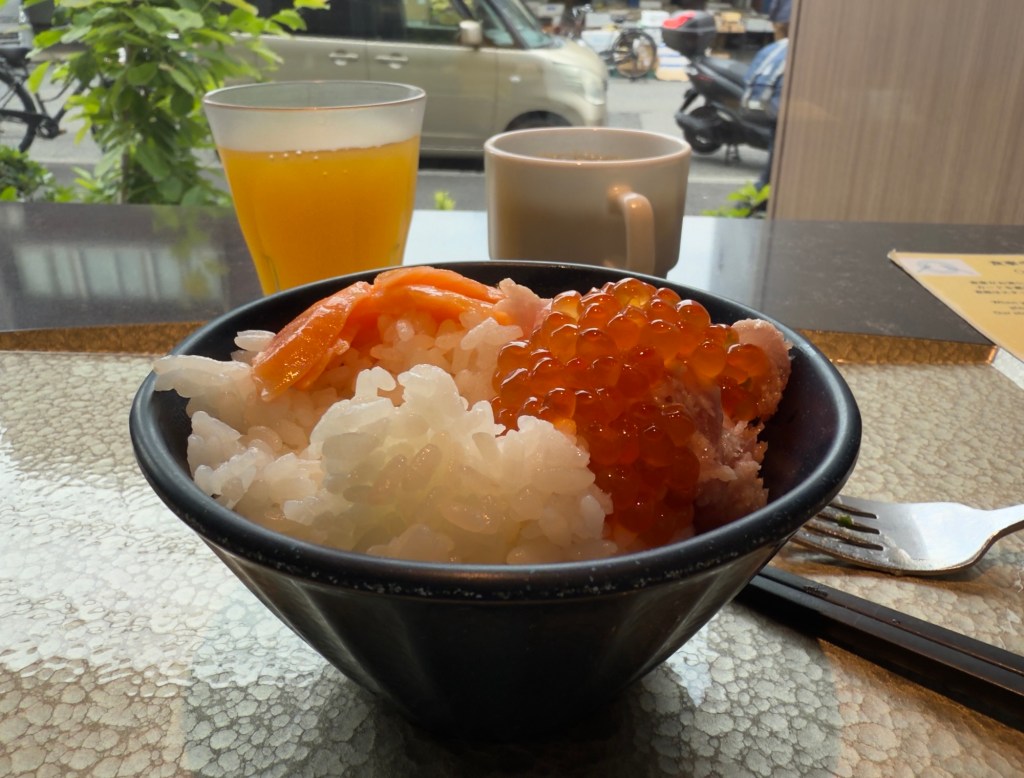
I’ve grown accustomed to having my breakfast downstairs at the restaurant here in the hotel. (I think I forgot to mention that I am staying at the Tosei Hotel Cocone. As this is my only experience with a hotel in Japan, I would have to give this one five stars. Very comfortable, very clean, and the people are very kind.) The breakfast is buffet style, and I generally make two trips. Round one is typically breakfast food with a few unusual items, including Ramen noodles with grilled mackerel and onion. Round two… Now that’s something very different.
What we have here is a bowl of rice with three types of sushi: salmon, salmon roll, and fatty tuna. It just makes me happy. Never what I have thought of having sushi for breakfast, but they offer it and I eat it. I get plenty of protein, so I have plenty of energy to see me through the day.
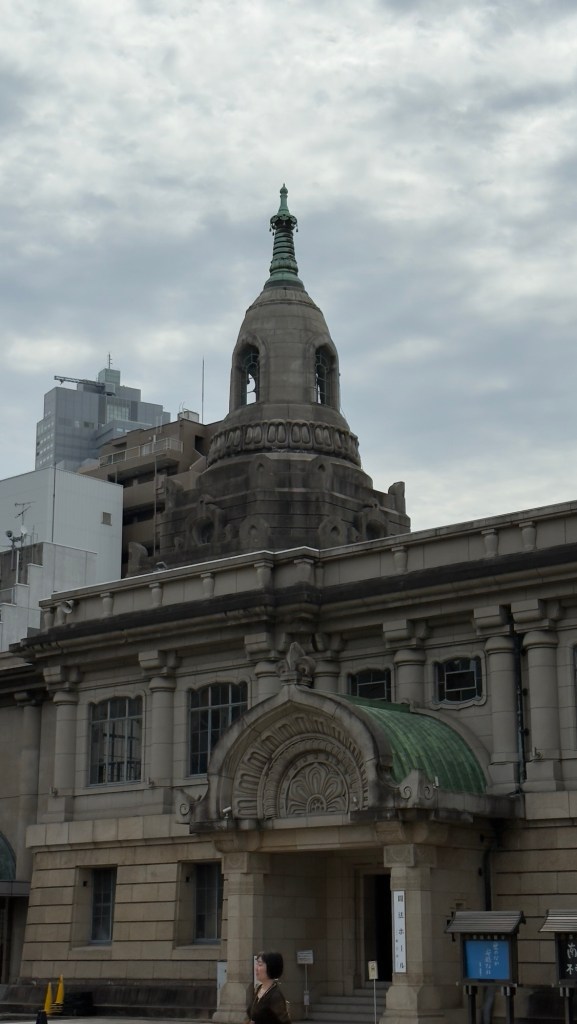
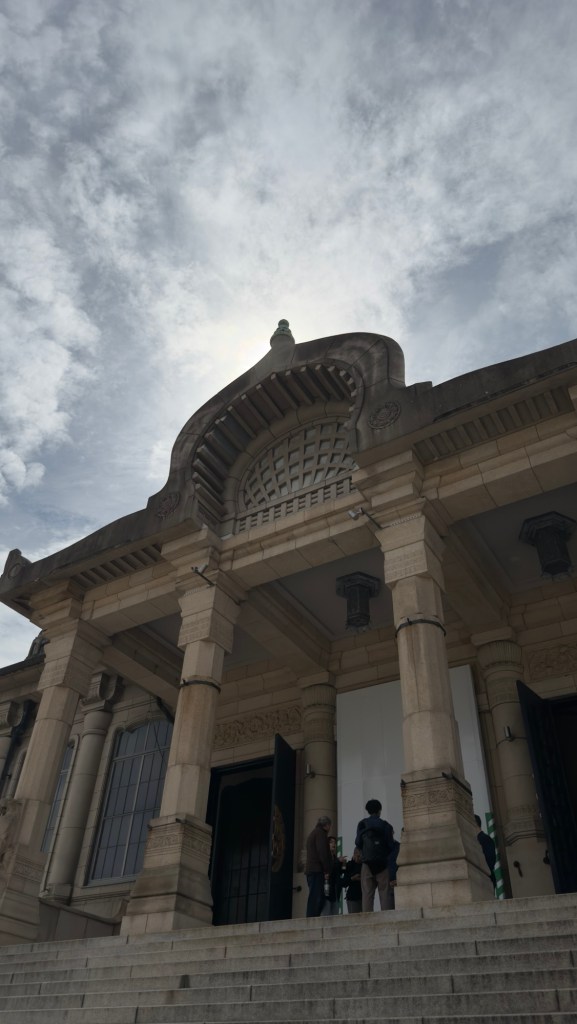
It was only a five-minute walk to the first stop of the day, the Tsukiji Hongan-ji Buddhist Temple.
Tsukiji Hongwanji is a Buddhist temple belonging to the Jodo Shinshu Hongwanji-ha denomination, also known as Shin Buddhism, which was founded by the monk Shinran (1173-1263) and whose head temple is Hongwanji (Nishi Hongwanji) in Kyoto.
The temple has been destroyed by fire or earthquake several times, and the current structure was built in 1934.
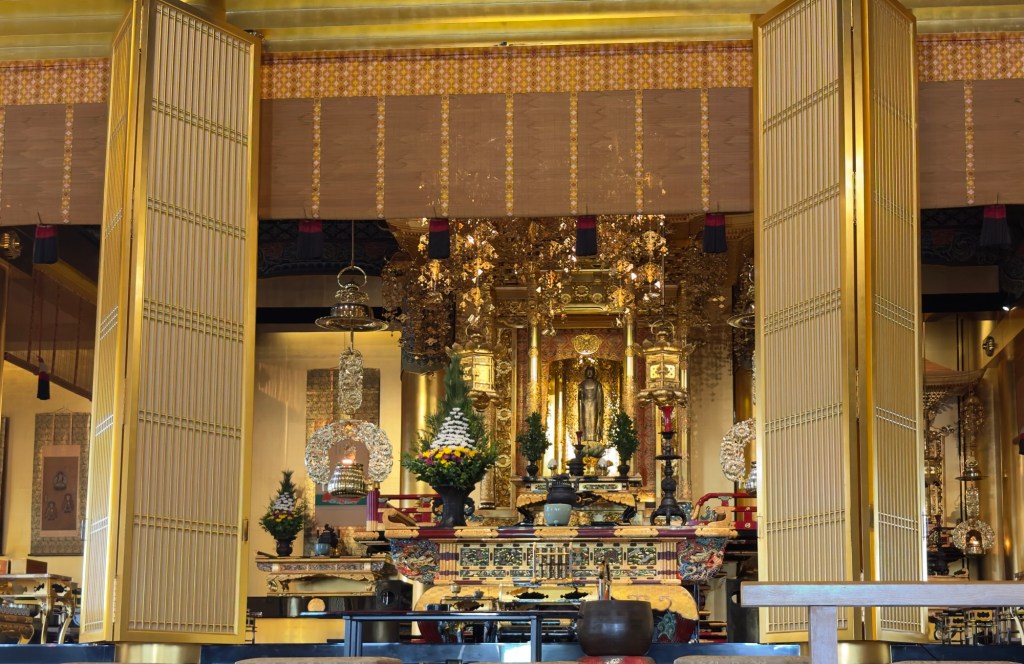
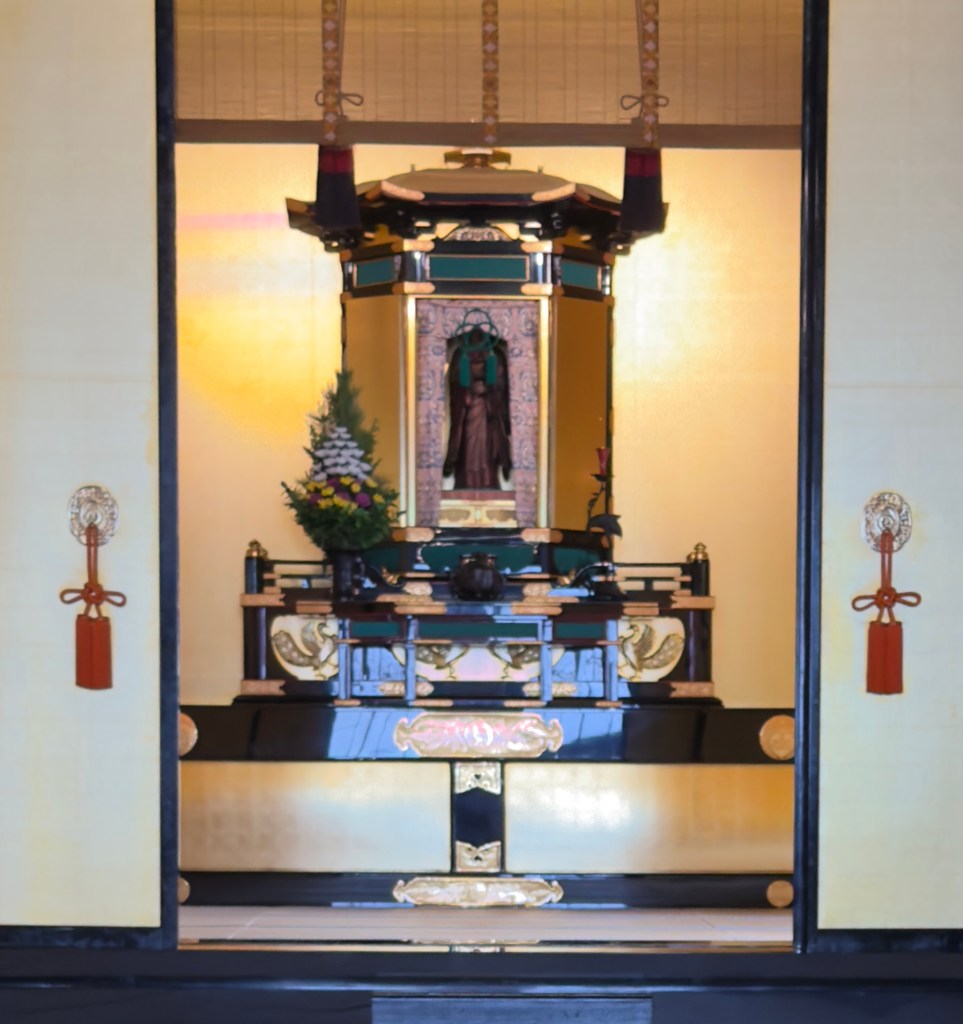
The interior is rather magnificent and ornate. The photographs are not great as you are not allowed to get very close.
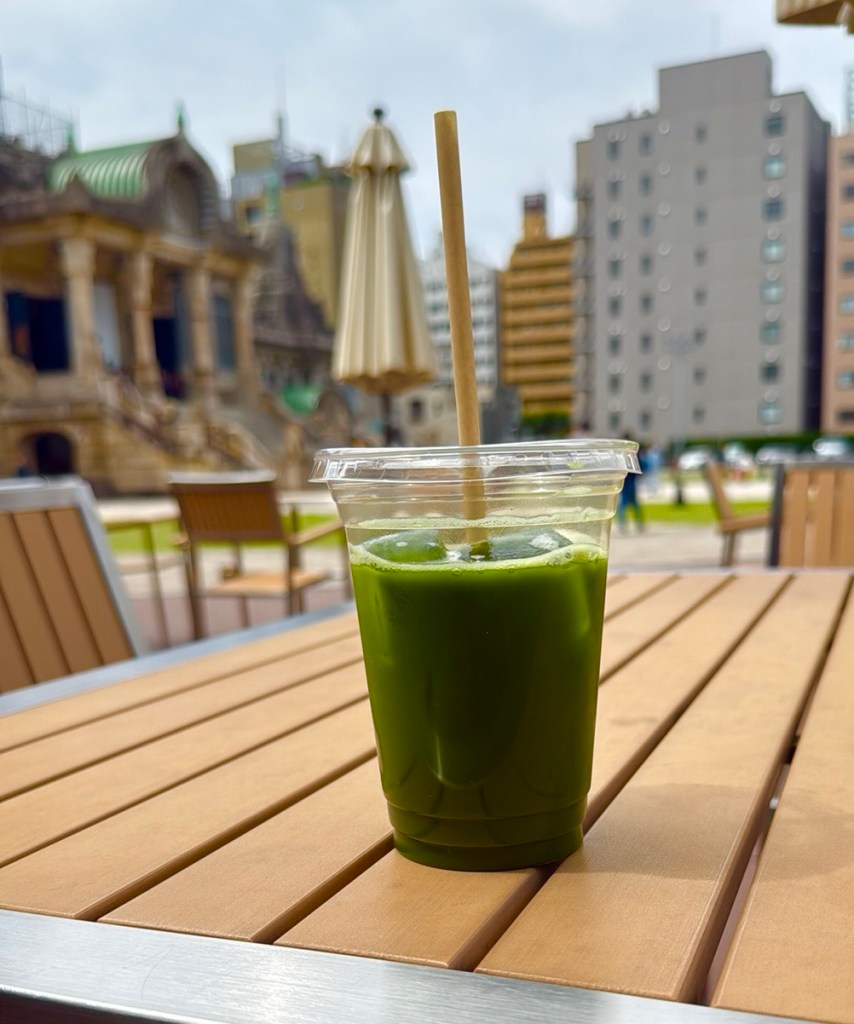
I’m sure some will mark this up as my Christian bias, but I just didn’t “feel” all that much while I was there. I got a sense of the peace and the calm (with the exception of all the construction that was going on) yet it did leave my spirit wanting. Am I really so narrow-minded? No. As I am certain they believe Buddha leads to the path of enlightenment; I believe that Jesus leads to the path of life. That’s an argument for another day, so I shall end this discussion with a nice glass of iced, VERY green tea.
It was really good, but I did get the impression that someone had gone out and mowed the grass and made tea from it. 
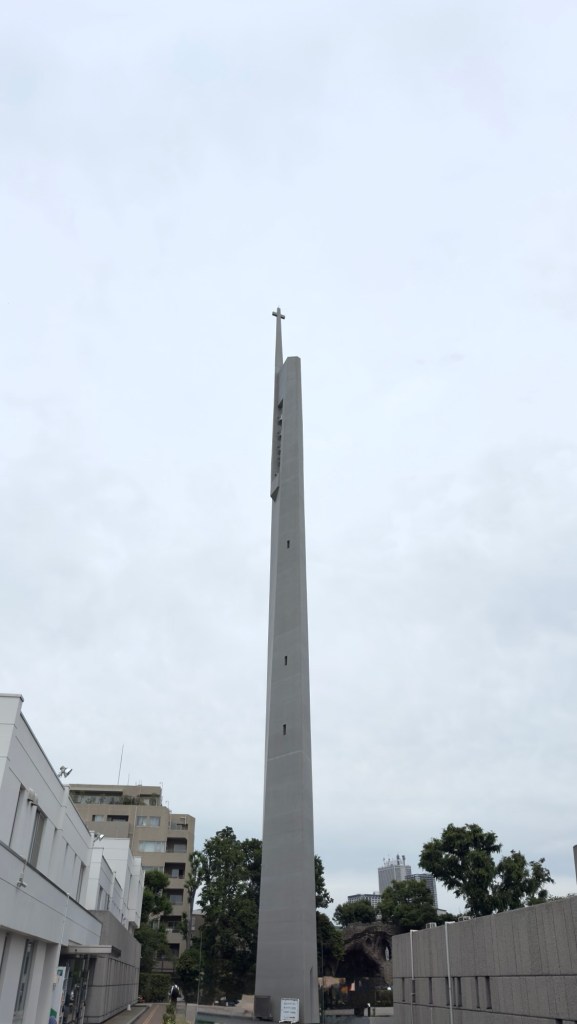
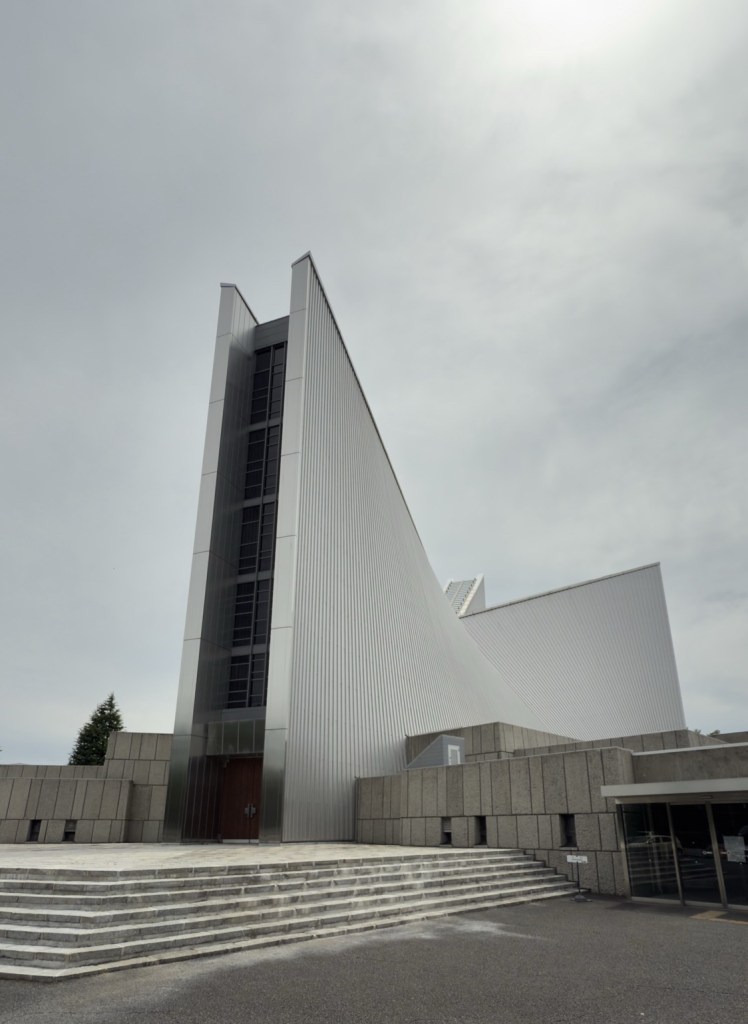
It was time for my longer excursion, which took me about an hour. It was only one train ride, but it included 15 minutes of walking on both ends. All this took me to St. Mary’s Cathedral—the cathedral church of the Archdiocese of Tokyo. This is the church I mentioned in yesterday‘s post. I saw pictures of it both on the outside and the inside and wanted to visit.
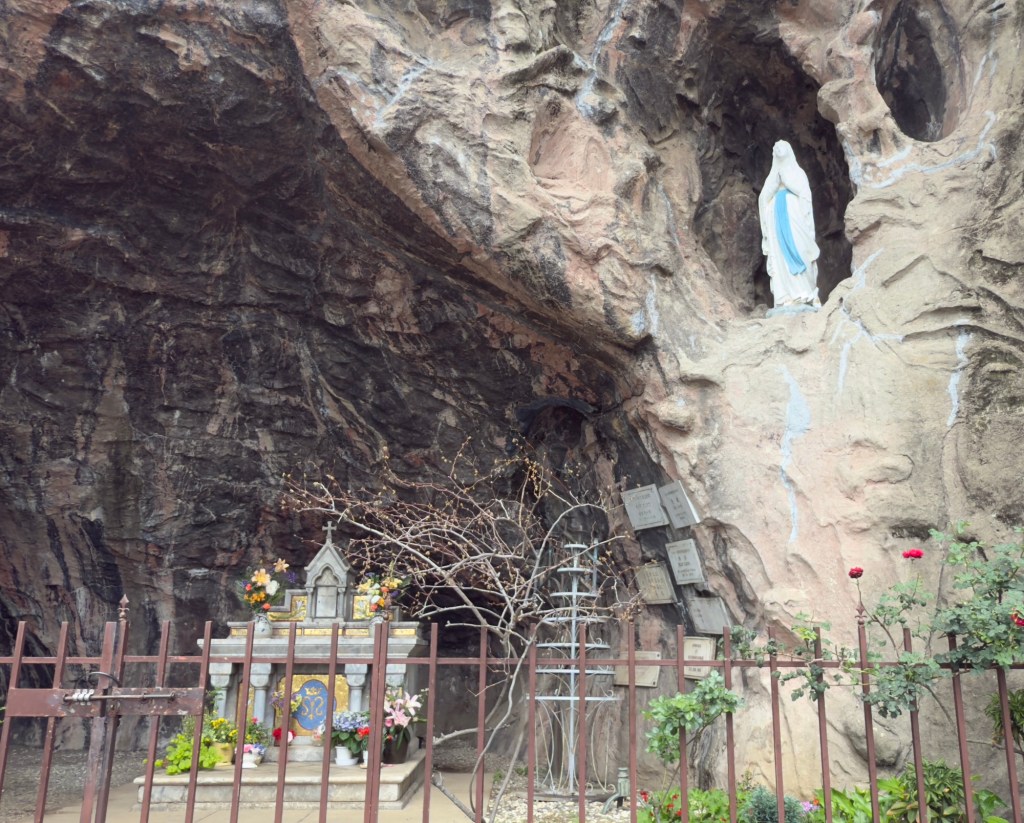
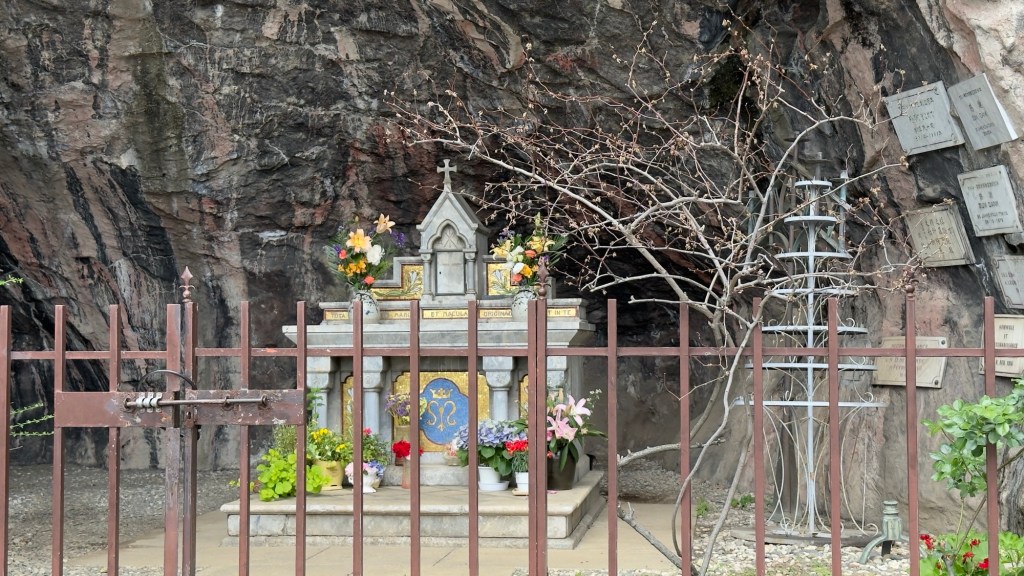
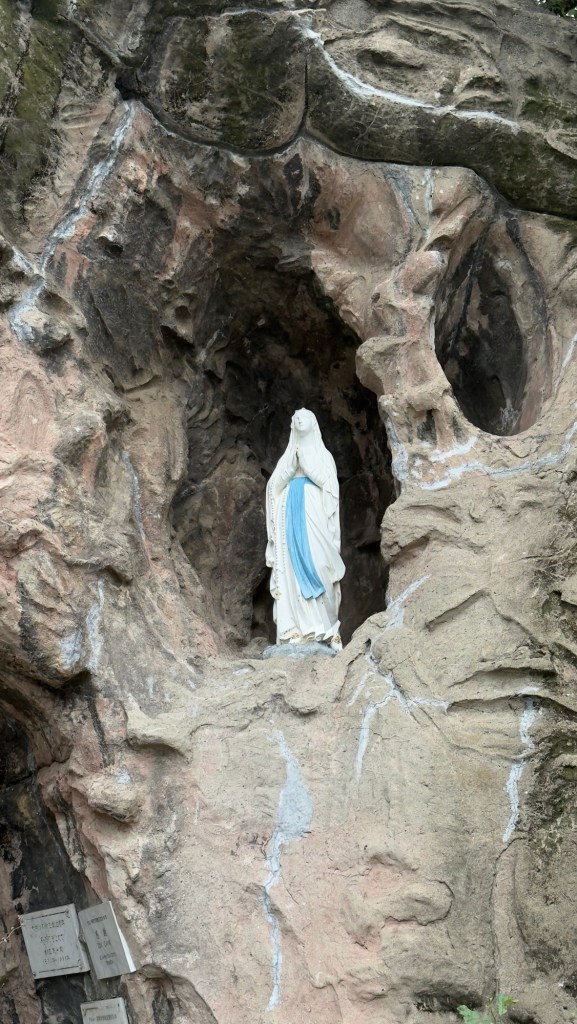
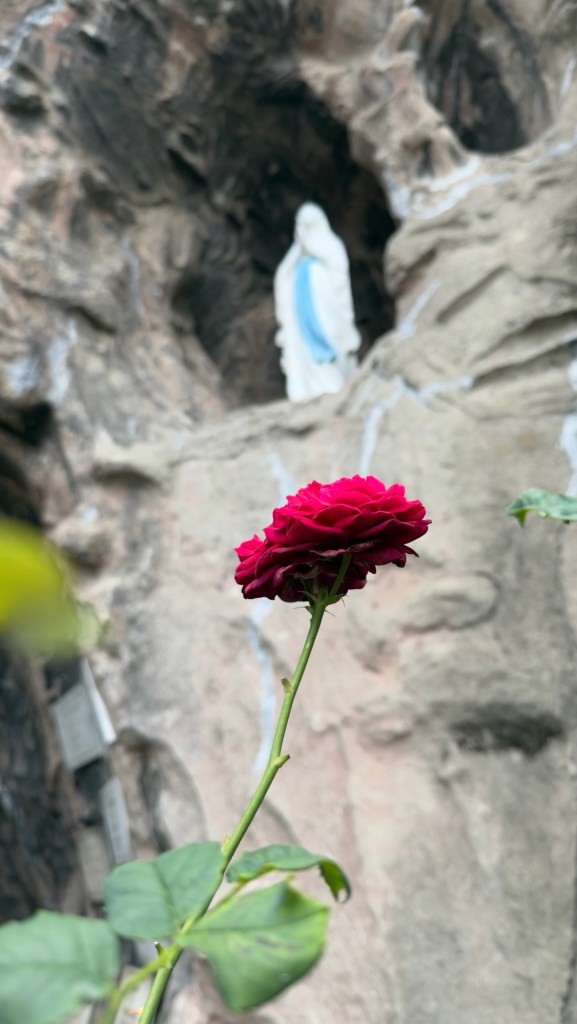
When I arrived, a service was taking place, so there was time before I could enter. Fortunately, on the church grounds, there is a recreation of the grotto at Lourdes. I made good use of my time and prayed my rosary.
I really like this one…
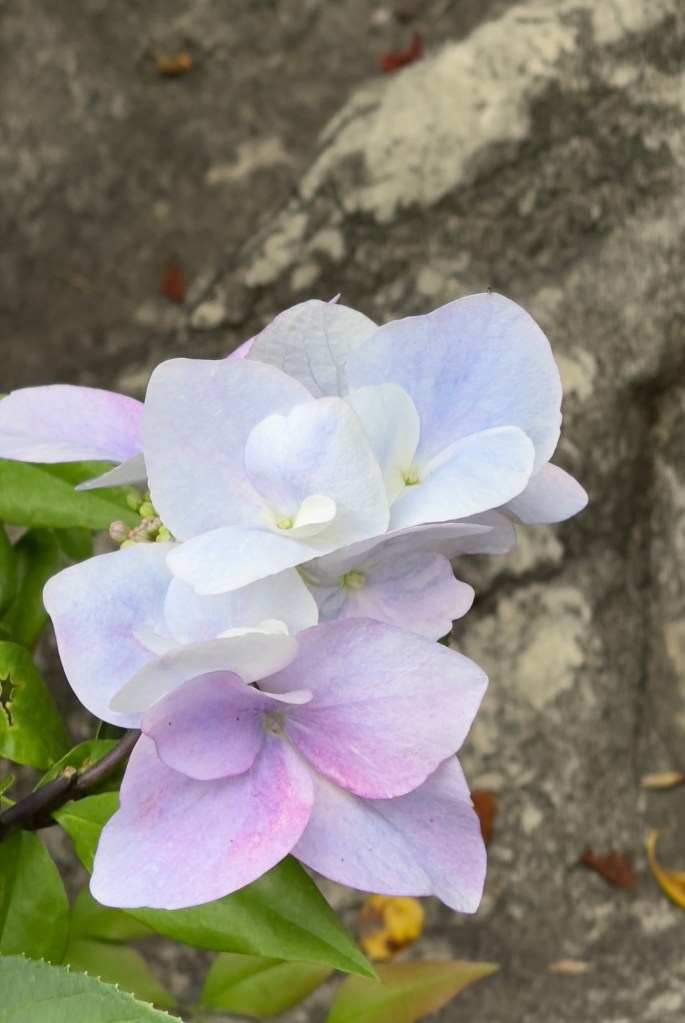
I don’t know what kind of flower this is, but it was beautiful.
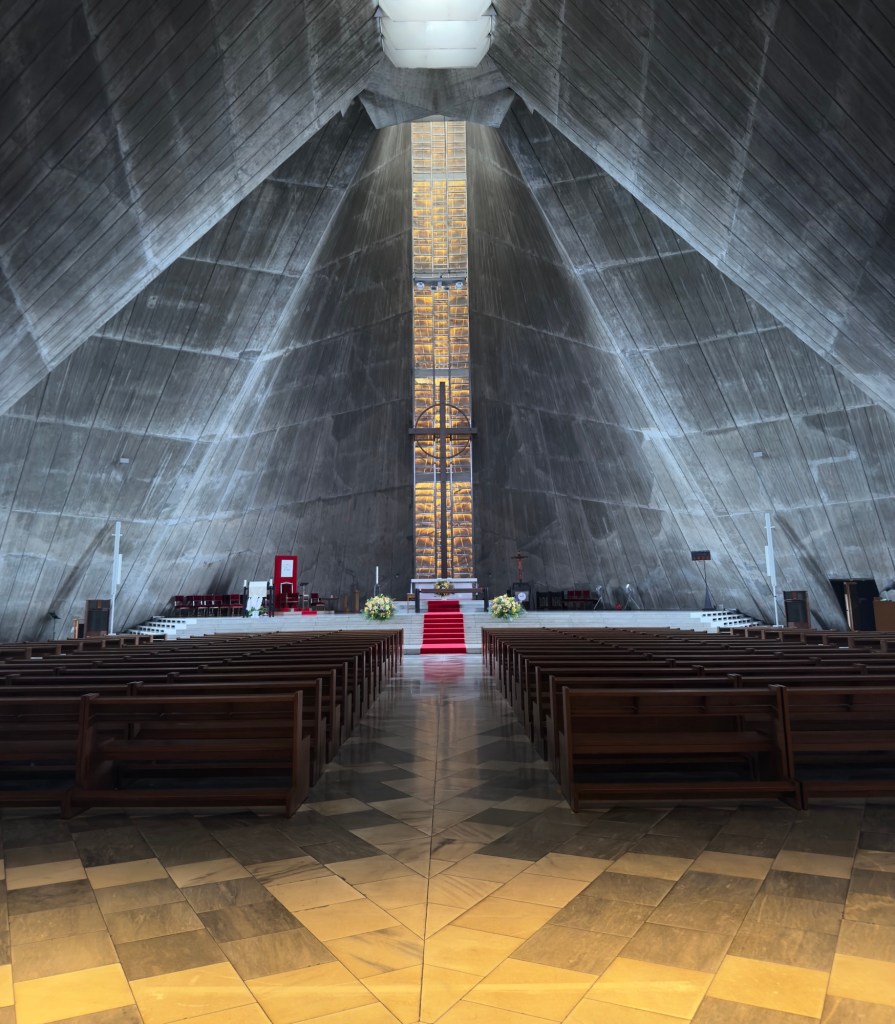
Following the service, I was allowed to enter the church and spend some time. This is where I will make confession and tell you that I am a bad person. There was a sign that said no pictures inside the cathedral, and of course, everyone there was taking pictures… very discreetly.
The building was designed by the famous Japanese architect Kenzo Tange (1913-2005). From an article…
For his Tokyo Cathedral of Saint Mary, he visited several medieval Gothic examples. “After experiencing their heaven-aspiring grandeur and ineffably mystical spaces,” he says, “I began to imagine new spaces, and wanted to create them by means of modern technology.”
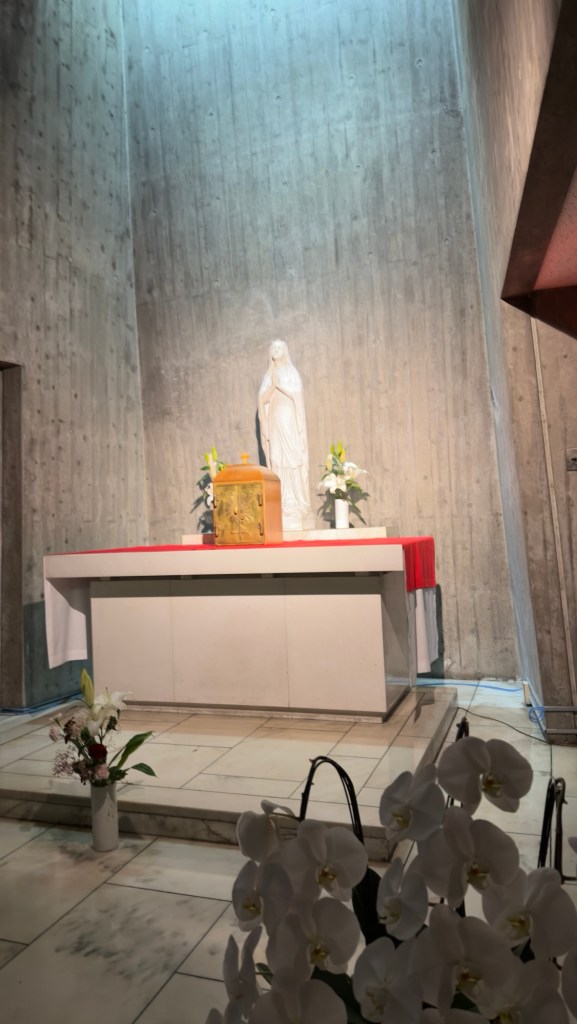
I still do not know the architecture type, but I would classify it as brutalist/modern. It provides a very clear message that declares, in no uncertain terms, “The Lord is my rock!”
That is the altar at the top of the red stairs. Maybe that gives you an idea of how large the sanctuary is. If I were given the opportunity to build a church, oh yeah…
The Mary Chapel to the left of the high altar.
Following my time at the cathedral, I headed back to the hotel. Today is my last full day in Tokyo, and I must check out my 10 AM tomorrow. What this means is that today is laundry day. For those of you who remember Portugal, this will not be me doing laundry in the sink and drying it with a hair dryer. There’s a good and proper washing machine/dryer downstairs available to hotel guests. It did take me a while to figure out how to use it, but once I put my glasses on, the instructions made a bit more sense. After that’s all sorted out, I may have to go and find myself a bit more sushi. I may turn into a fish before this is over with, but it’s so darn good!
Tomorrow, we ride the bullet. The bullet train, that is! I hear it goes a little over 200 mph. That oughta be fun! I’ll keep you posted.
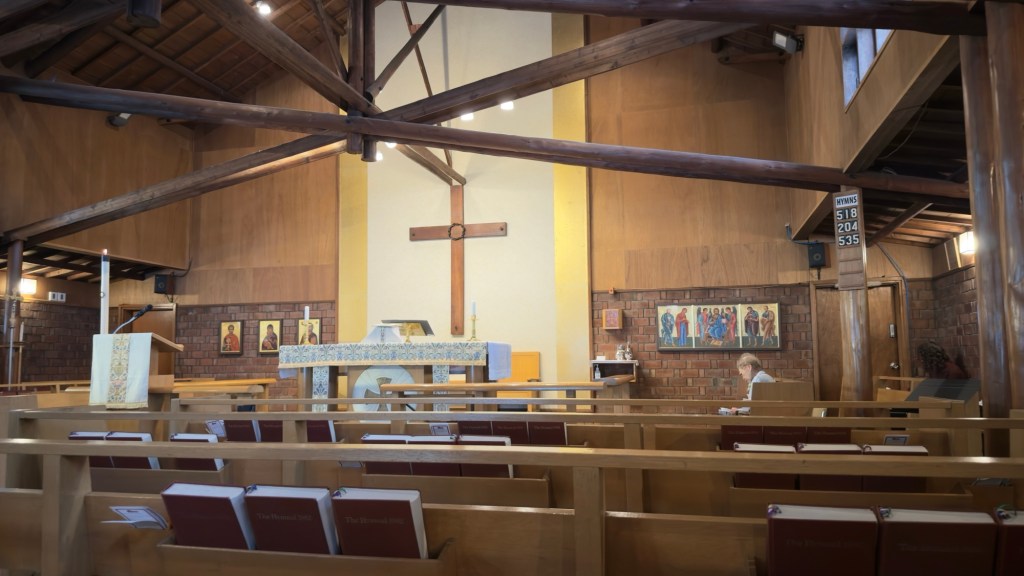
How do we begin to describe this day? Well, given that it is the Lord‘s day we went to church. Saint Albans Episcopal Anglican Church in Tokyo. It was about a 30 minute train ride and I made all my connections. Arrived early and was able to pray my rosary before the service began. A very small church in size but it seemed to be a vibrant congregation. I would say that half the members were African.
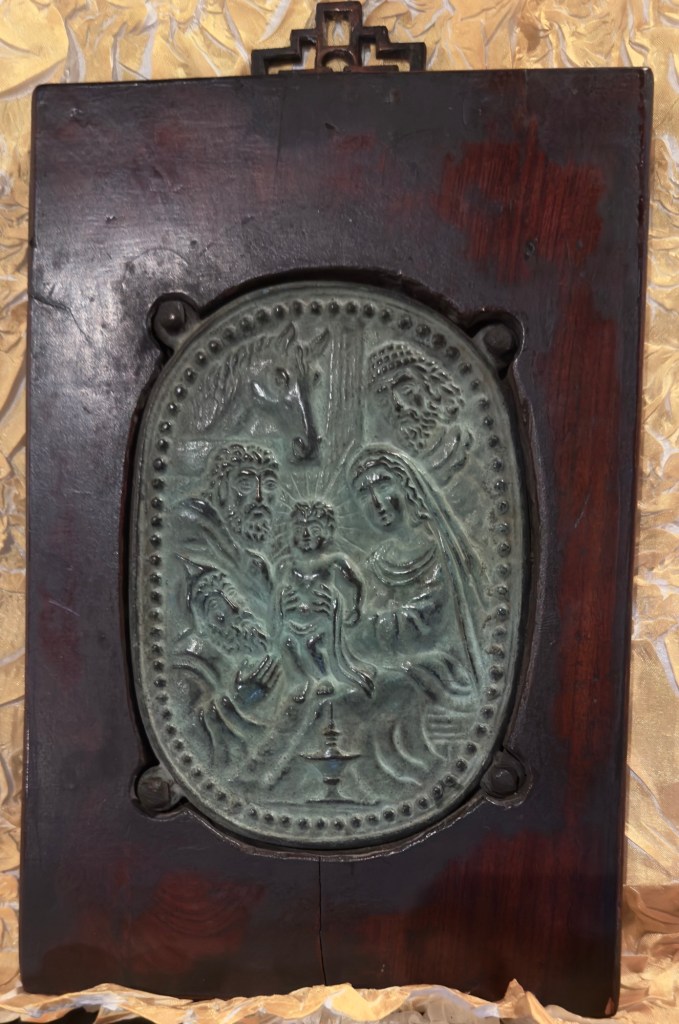
The service was straight out of the Book of Common Prayer. Very few deviations. I like that in a service. The sermon was good however following the sermon (the priest was a graduate of Nashotah House) the former priest to the church (also a graduate of Nashotah House) gave a small presentation on a gift that he had received and that he was now giving to the diocese. The gift was a FUMIE.
A fumi-e (踏み絵, fumi “stepping-on” + e “picture”) was a likeness of Jesus or Mary to which the religious authorities of Japan required suspected Christians to step, in order to demonstrate that they were not members of the outlawed Christian religion. If they refused, they were put to death and a most horrible way.
The priest who gifted the fumie to the diocese provided us with a detailed description of how they were put to death. I’m not going to go into that here. They were the Martyrs of Japan. It’s worth reading up on.
During the announcements, they invited the visitors to tell who they were and where they were from. Yours truly spoke up and gave a loud shout out for Enid, Oklahoma! Funny thing, that was not my only connection with Oklahoma for the day.
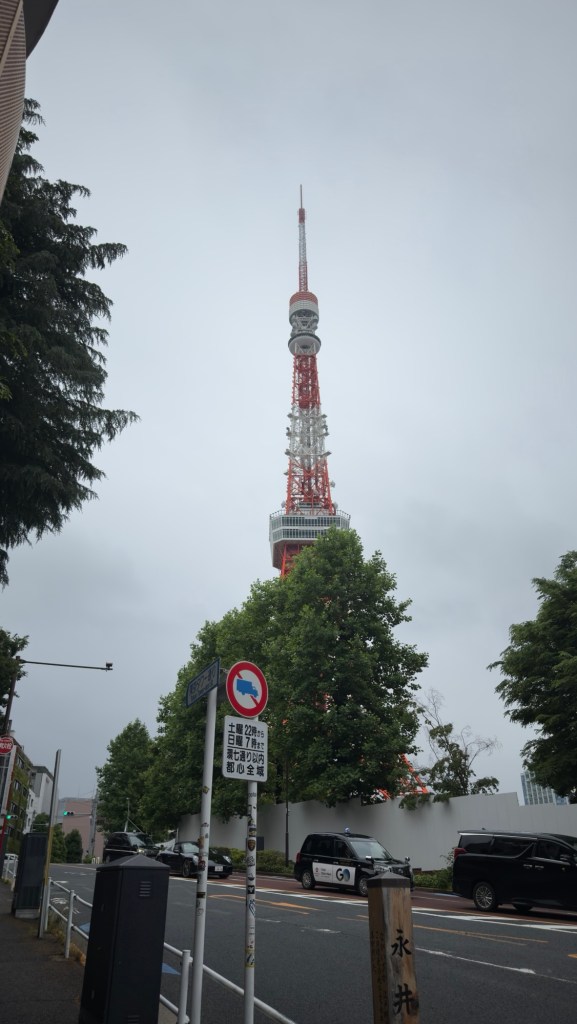
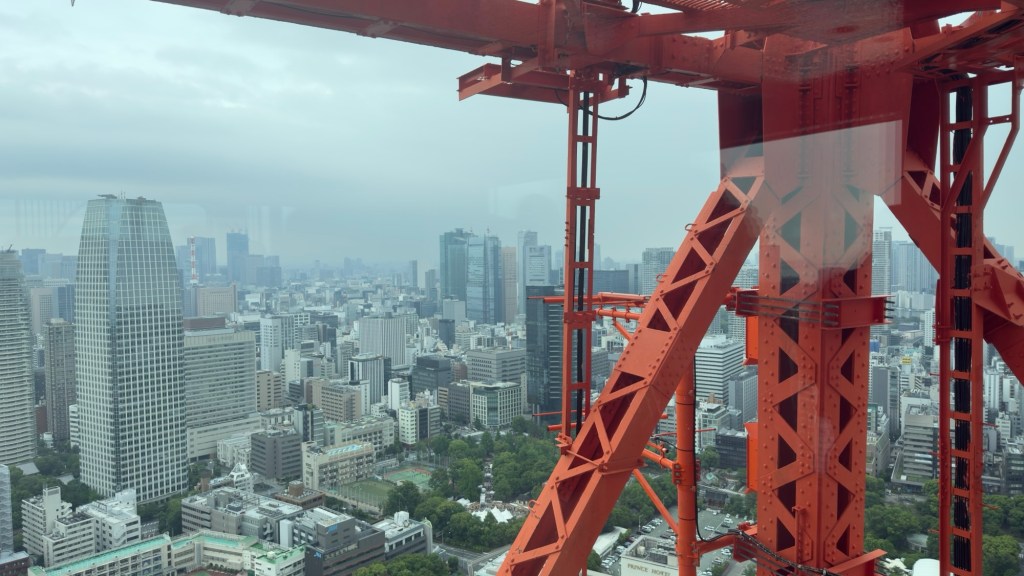
Following the service, the day turned into a bit of a tourist outing. As I turned the corner on the street that leads up to the church I saw the Tokyo Tower.
I said to myself, “Self, you’ve got to get up there!” Both self and I were of the opinion that we would not be climbing the stairs, but we took the elevator. What a ride. It goes up and up and up.
Standing 1,092 feet high in central Tokyo, Tokyo Tower (東京タワー) is the world’s tallest, self-supported steel tower and 10 feet taller than its model, the Eiffel Tower. A symbol of Japan’s post-war rebirth as a major economic power, Tokyo Tower was the country’s tallest structure from its completion in 1958 until 2012 when it was surpassed by the Tokyo Skytree. In addition to being a popular tourist spot, Tokyo Tower serves as a broadcast antenna.
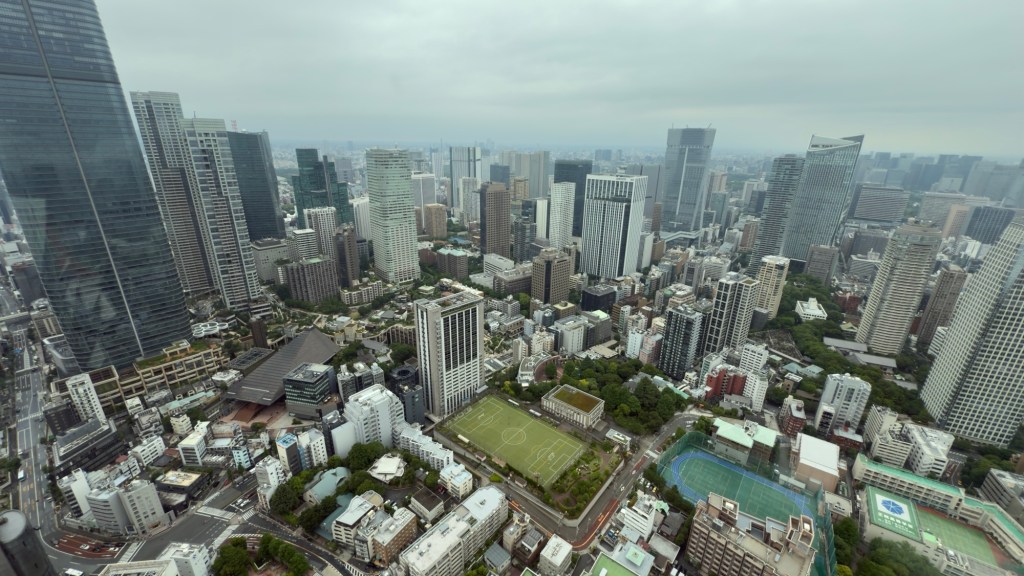
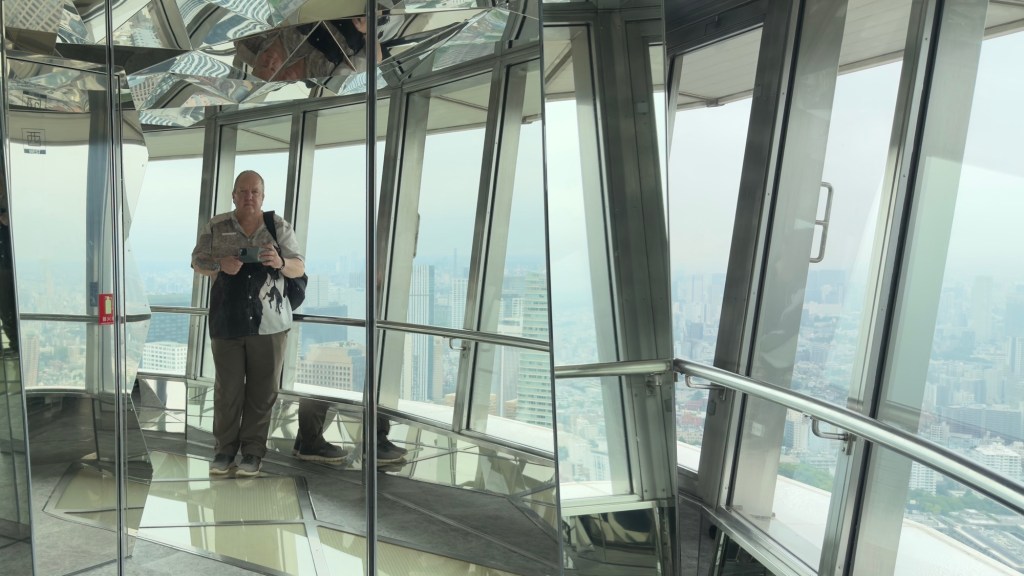
820 feet up is the top observation deck. Yours truly wrote the elevator all the way there. I can honestly say I felt a bit woozy at times, but what a view.

Selfie of the day.
What goes up must come down…
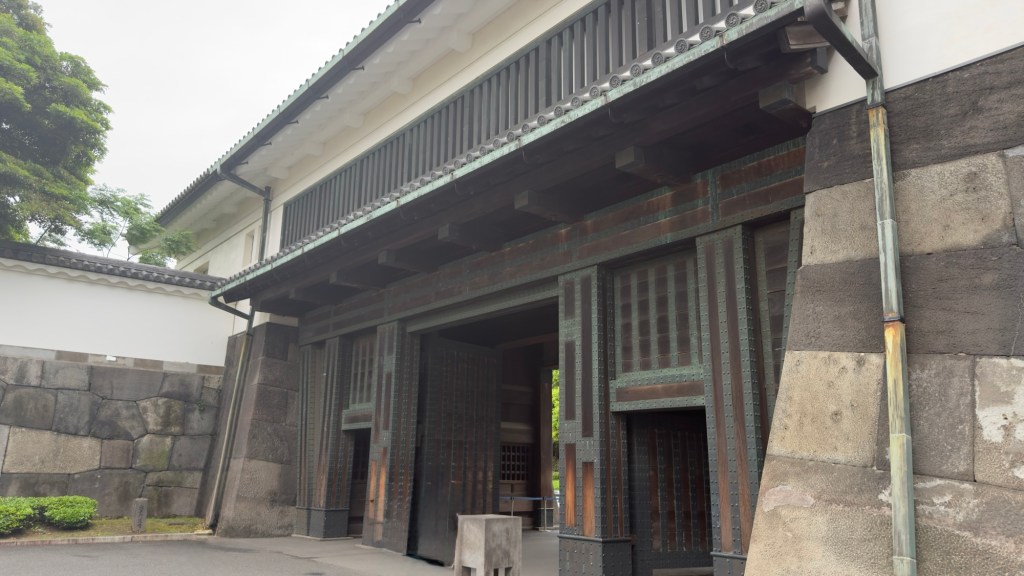
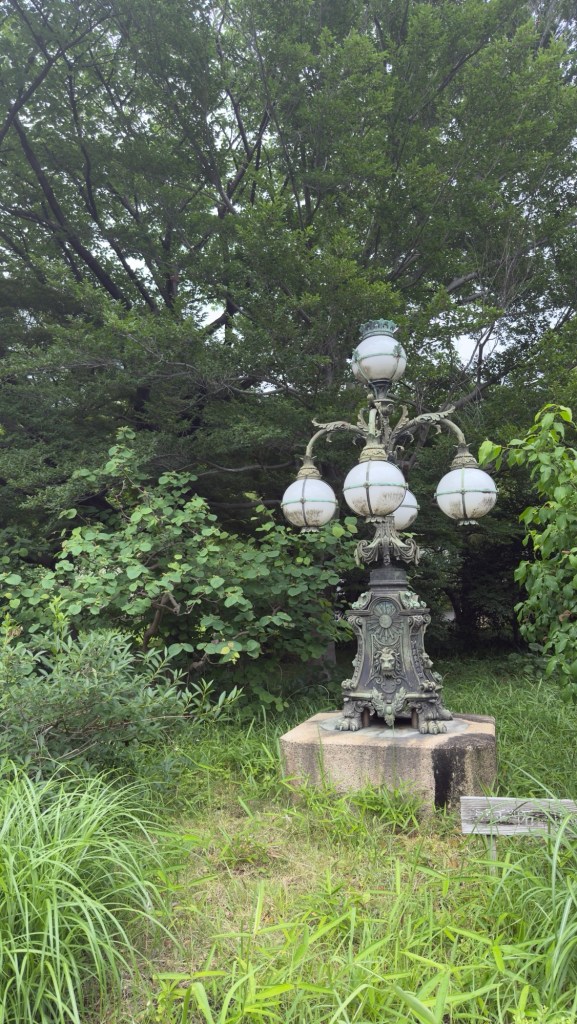
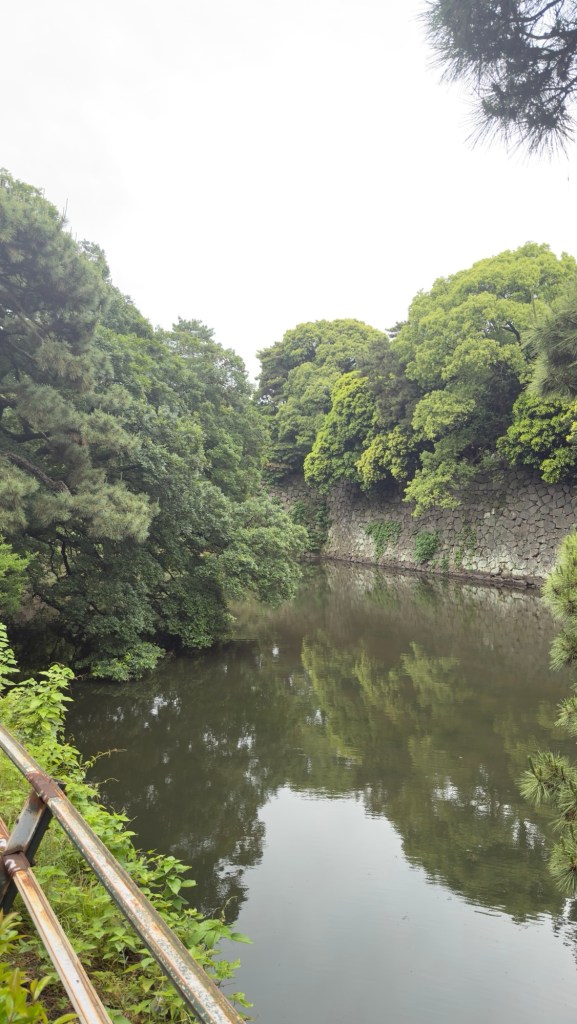
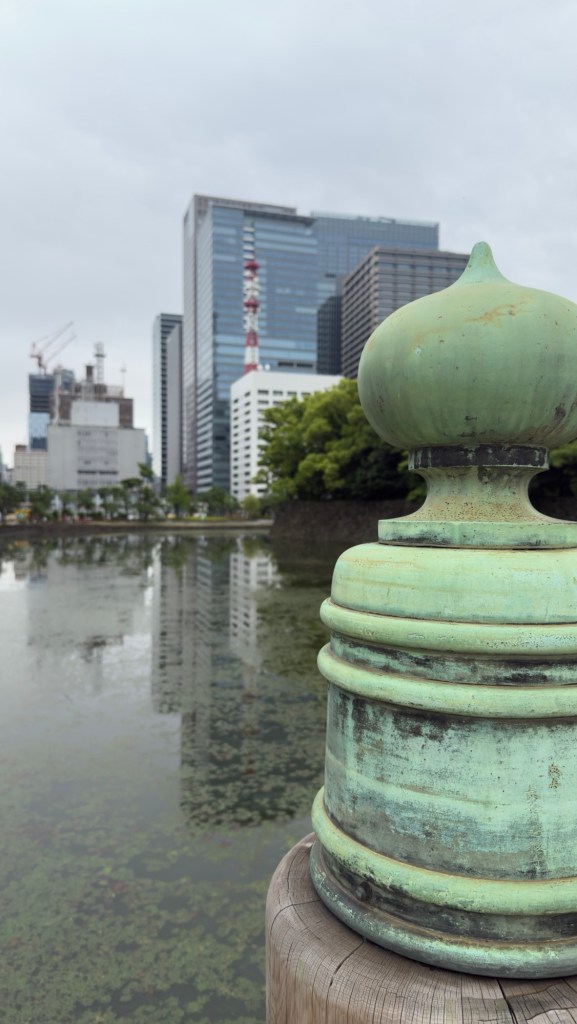
To get my feedback on the ground, I traveled to the Imperial Gardens. Most everything has bloomed except for the azaleas. The variations of green were fantastic though.
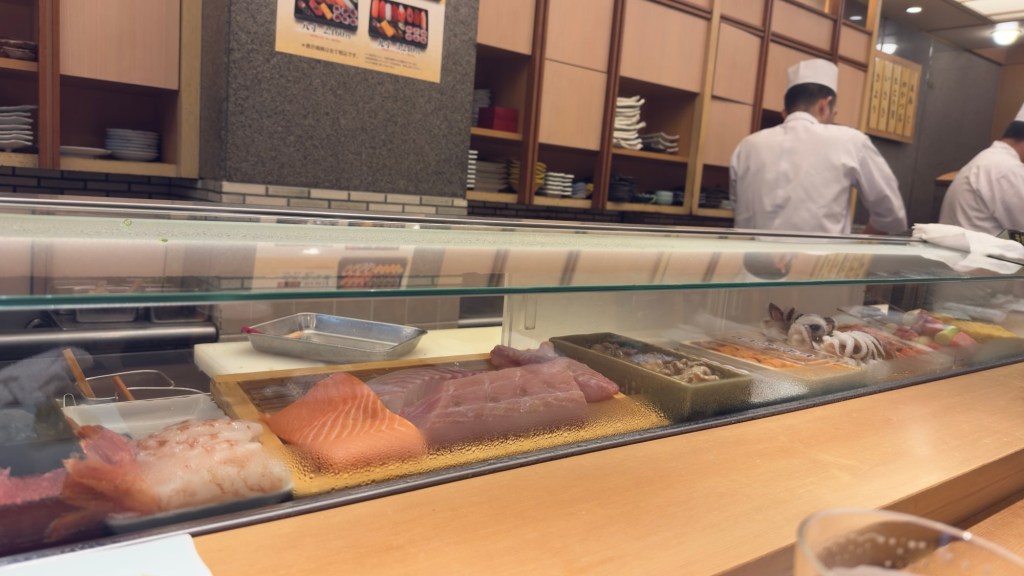
At this point, I had been on the go for about eight hours and I had not eaten since breakfast. I was hungry. I took two trains to get back to the general area of my hotel, and then found a sushi bar. I ate my weight in sushi. I also had four very tasty beers. I had the salmon, shrimp, eel, salmon roe, tuna, mackerel, shrimp… and when all that was done, I looked at the guy and said, “I’ve never had sea urchin before. I think I need to try that.” I did. Salty and earthy. I would eat it again, but it’s not on the top of the list. I topped all that off with a salmon skin roll garnished with salmon roe. Dang! Good eats for sure!
Now, when I ordered the sea urchin, I noticed the two girls at the end of this bar about three seats away from me. They were very friendly and we chatted a bit. But they watched me eat that sea urchin, and then we discussed it. Come to find out, they were from Stillwater, Oklahoma. They both work at OSU. We had a really good laugh about that. They have one more day here and then they’re on their way home. How strange is that? There are over 14 million people living in Tokyo and I happen to run into two people from Oklahoma. A very good day.
Tomorrow, I have absolutely no idea what’s on the agenda, but I do believe that I’m going to go and visit some more of the churches that are here. I don’t know what the architectural style is but I have not seen it before. More on that tomorrow.
I pray you all are well. My cat sitter extraordinaire sent a picture of The Queen. She seems to be doing well.
Silly photos…
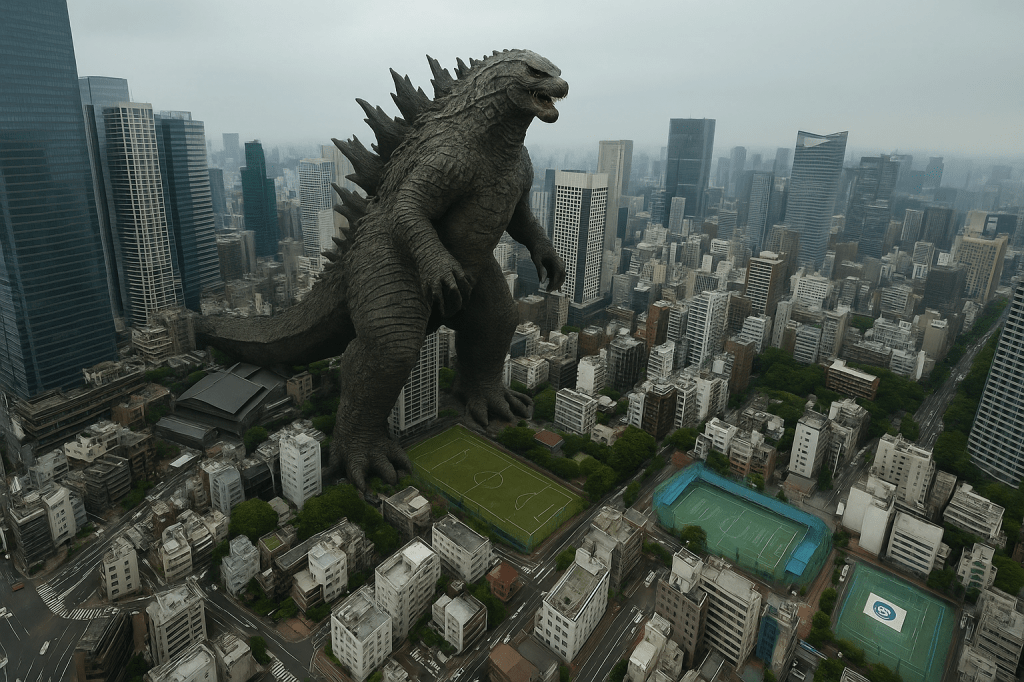
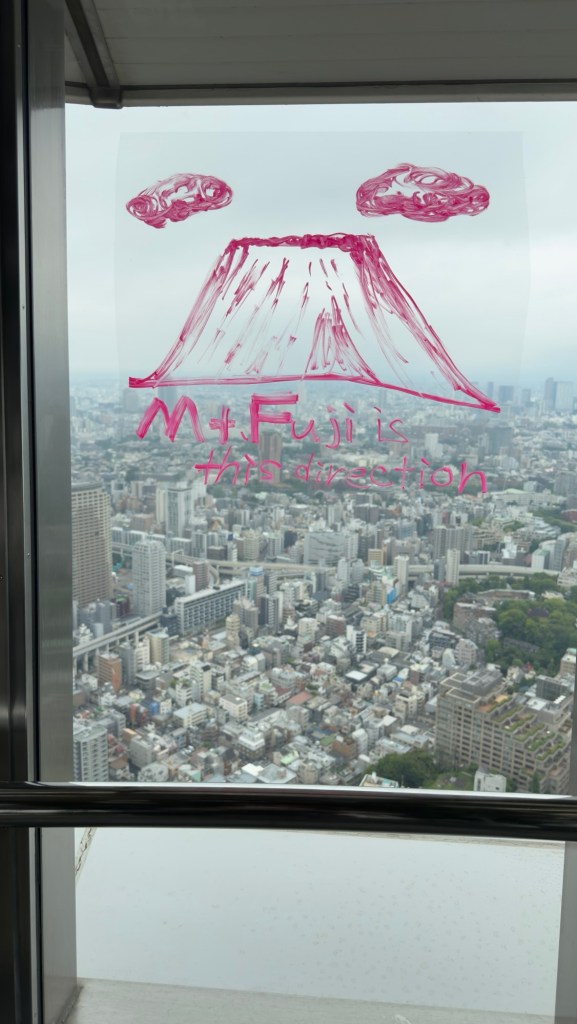
Of course, Godzilla had to make an appearance!Too cloudy to see it, but it’s in that general vicinity. 
I left Oklahoma City sometime yesterday with a layover in Dallas and then a 13 1/2-hour flight to Tokyo. I’m not gonna complain about that flight because I got to come to Japan, but I will say… Dang! It’s a long flight. I flew American Airlines and they did pretty good. I fly Japan Airlines on the way home. 
I arrived at my hotel intending to get out and explore the neighborhood. That didn’t happen. I got to the hotel about 5:30 PM and I was out like a light by 7:30 PM. I don’t sleep real well on airplanes, but I slept good last night. I woke up at about 5:30 AM Tokyo time and started the day at 6:30 AM with a nice cup of coffee. Breakfast at seven… Now that was fun. I have no idea what I ate to be perfectly honest with you. I know there were some eggs involved and possibly some toast but after that, I really don’t know. There was some kind of fish there were noodles and some very tasty morsels that I said to myself, you’re here,  you might as well try them.
I was traveling by 7:30 AM and exploring the city. It’s crazy here! There are people everywhere. My first destination and the one place on the list that I wanted to see was the Gotokuji Temple, also known as the cat temple, but it is temporarily closed because of a certain festival that is going on. I don’t think I’m going to get to see it as it will be closed for three days. I’ll keep watching the schedule to see if it opens up. When that didn’t work out, I jumped on another train… Speaking of trains.
The trains go everywhere. They are color-coded. For the most part, the trains are all underground. You spend a lot of time underground in this city. I’m slowly figuring it out, but I will say that I have gotten on the wrong train more than once and gone in the wrong direction several times. It starts to make sense after a while and all I can say is thank goodness for Google Maps. It keeps you going in more or less the right direction.
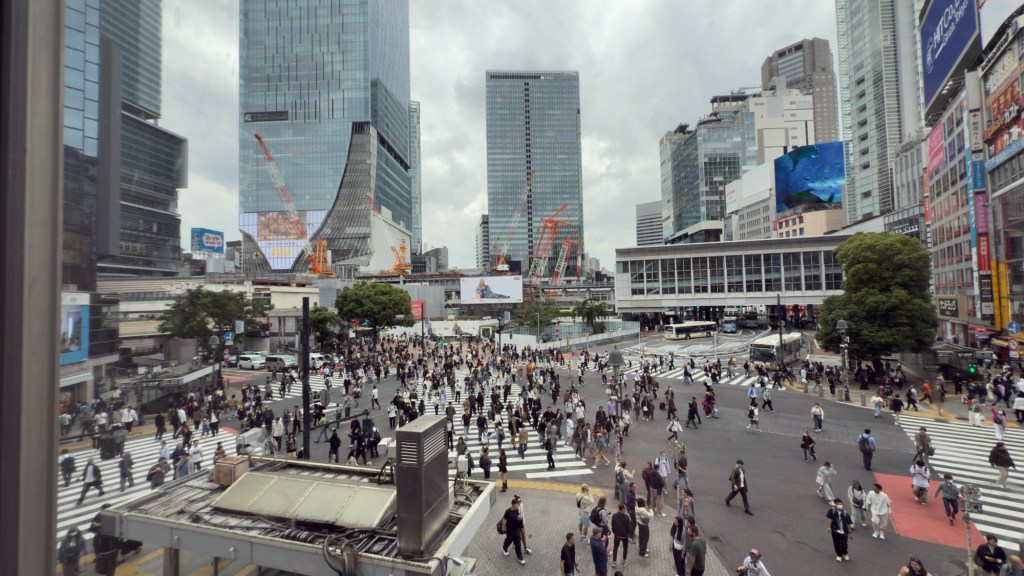
My next stop was the Shibuya Scramble Crossing which is pictured above. It’s a place where everything comes together. It was fun to see, and I did cross it several times (a couple of those times were because I was going in the wrong direction.) Everyone gathers at the crosswalk waiting for the green go-ahead, and then you just start walking in the direction you want to  go. It’s marked off but basically, folks go wherever they wanna go. It is highly recommended that you not go when you’re not supposed to go. It’s a good way to get run over. After such madness, I decided I needed a little bit of calm and made my way to the Meiji Jingu Shrine, which is a Shinto shrine dedicated to the deified spirits of Emperor Meiji and his wife, Empress Shōken.
Shinto is the indigenous religion of Japan, deeply rooted in its culture and history. It’s a polytheistic religion with no founder, sacred text, or dogma, emphasizing a sense of harmony with nature and veneration of the “kami,” spirits or deities believed to reside in all things. Shinto practices include visiting shrines, offering prayers, and observing festivals, often intertwined with everyday life and traditions.
OTORITHE GRAND SHRINE -GATE) this is the biggest wooden “Torii” of the Myõjin  style in Japan, rebuilt and dedicated via pious benefactor on December 23, 1915 and model both inform and size exactly after the original built in 1920. The material wood is “Hinoki” (Japan Cypress). 1500 years old from Mount Tandai-san Taiwan.Sake
During the Meiji Era, Emperor Meiji, whose divine soul is enshrined here at Meiji Jingu, led the industrial growth and modernization of Japan by encouraging various industries and supporting technological development.
Due to their grace and virtue, Emperor Meiji and his consort, Empress Shoken, the beloved mother of our nation whose soul is also enshrined here, are held in the highest esteem by the Japanese people.
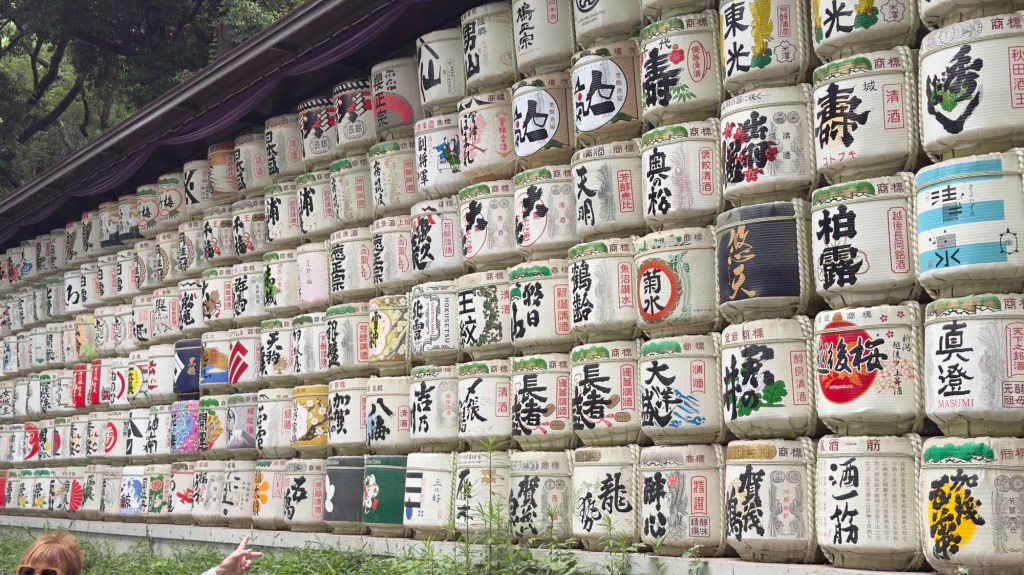
These sake barrels are offered every year to the enshrined deities by members of the Meiji Jingu Zenkoku Shuzo Keishinkai (Meiji Jingu Nationwide Sake Brewers Association) including the Kotokai, which has made offerings of sake for generations, as well as other sake brewers around Japan wishing to show their deep respect forthe souls of Emperor Meiji and Empress Shoken.
In addition to stating our humble gratitude to all of the brewers who have so graciously donated their sake, we also pray for the continuous prosperity of the sake brewing industry and all the other industries maintaining Japan’s traditional culture.
Just on the other side of the street are barrels of wine!
The barrels of wine to be consecrated at Meiji Jing have been offered by the celebrated wineries of Bourgogne in France on the initiative of Mr. Yashiko Sata, Representative, House of Burgundy in Tokyo, Honorary Citizen of Bourgogne and owner of the Chateau de Chailly Hotel-Golf. Profound gratitude is due to the winemakers who have so generously contributed to this precious gift to be consecrated here to the spirit of world peace and amity, with the earnest prayer that France and Japan will enjoy many more fruitful years of friendship.
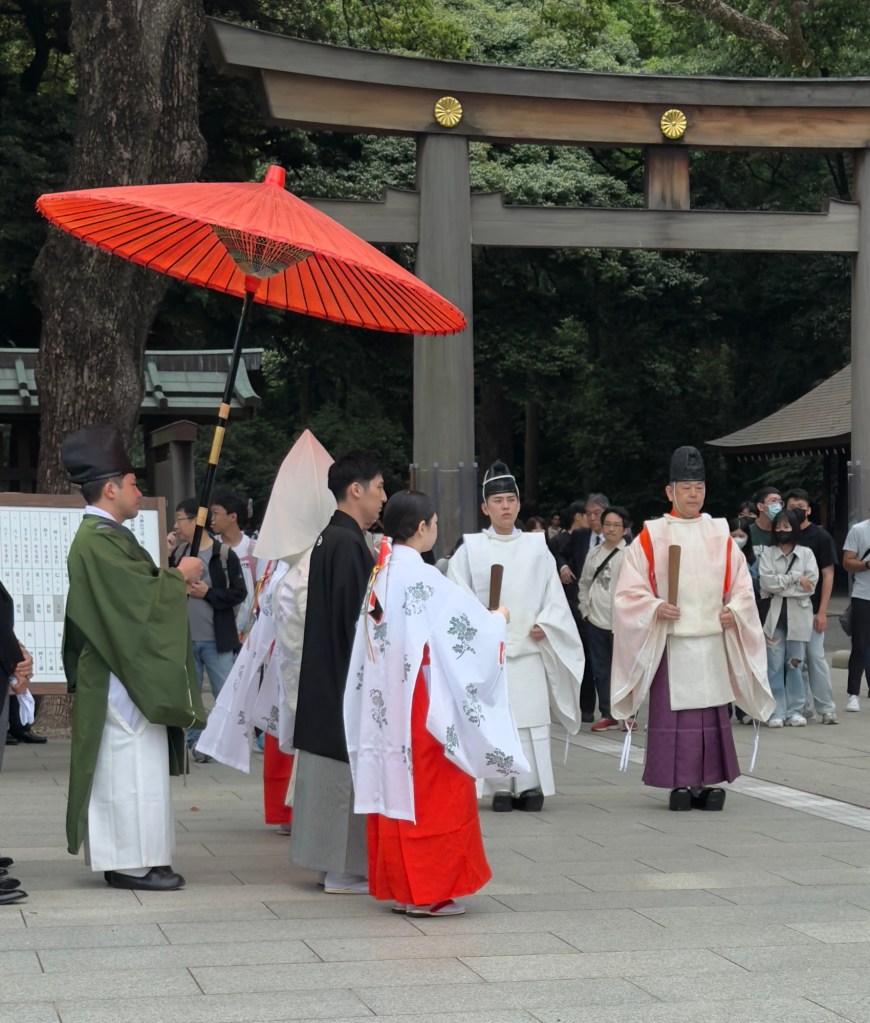
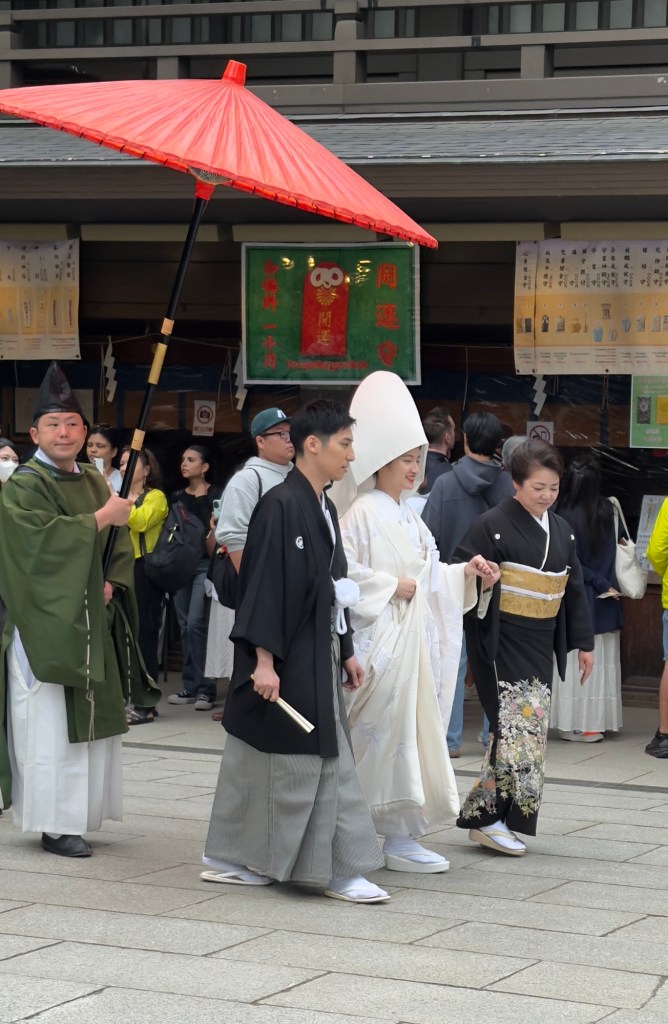
Once you arrive inside the shrine, they ask you to not take pictures. However, just outside of the shrine was a wedding party. The bride was all smiles.
I then made my way across town (after getting lost on the train a little bit) to the big 3-D cat billboard. It’s just one of those things you got to see! Everybody was standing around with their phones pointed up towards it.
This was followed by a stroll around the city. I came to a wildly popular place that was jammed up with people.
Can you see Godzilla?
This is where I learned an important lesson: Japan is a very clean city. You will very rarely see any garbage on the ground or in the gutters. IF you begin to see garbage on the ground and the place gets a bit smelly, you are in the wrong part of town! You need to turn around and go back. You will be offered all sorts of things as you pass through this area. I don’t feel like it was unsafe, but it was definitely not somewhere you want to linger.
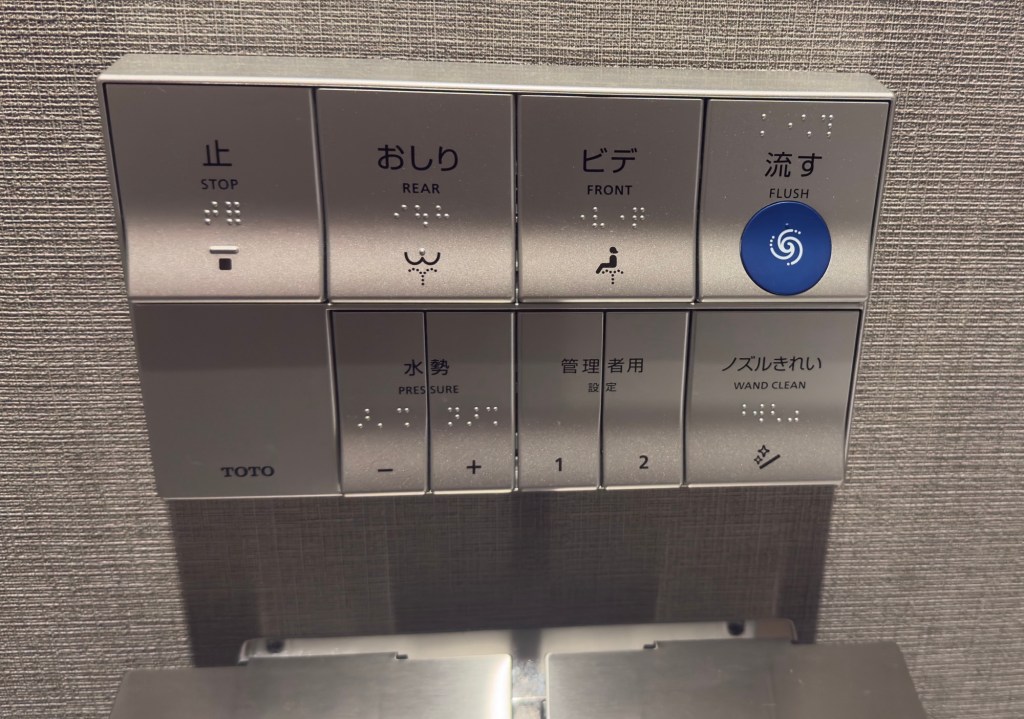
From there, I found a nice little restaurant and enjoyed a bit of lunch. I also reached the point where I was hot and tired after going for about eight hours. I took a couple of trains and actually made the right connection on the first try and arrived back at my hotel, which reminds me… Not nearly as confusing as the train, but still requiring a certain amount of study is the toilet. 
If all goes as planned, I’ll be at church tomorrow at Saint Albans Episcopal – Anglican Church. See you then.
The big trip of 2025 begins tomorrow morning at approximately 8 AM. I will be catching a flight from Oklahoma City to Dallas Fort Worth. There will be a three hour layover and then I bought a 13 1/2 hour flight to Tokyo. It would seem that a person would complain about a 13 1/2 hour flight but I cannot do it. I am so very excited to be able to take this trip. I will be visiting Tokyo, Hakone, Kyoto, and Osaka. There are many different things. I’m excited to see, from that busy crosswalk in Tokyo to the temples out in the country. I’m also looking forward to the food… Let’s be honest… It’s gonna be good! While in Tokyo, I do plan on getting up around 3 AM and following Anthony Bourdain‘s recommendation and visiting the fish market. I know it sounds like a crazy idea but it looks like something I need to do. Apparently, they have fish on sale there that you have never seen before. In addition, you get to eat some of them. That’ll be my favorite part.
I will try to post something tomorrow, but I don’t know that I will have any luck from the airplane. I arrive in Tokyo at around 3:30 PM on Friday. We will see what happens. I don’t even know how to set my watch right now. It’s 16 hours ahead in Japan, so if you happen to call me, there’s a really good chance I’m not going to answer. I’ll be sleeping with the do not disturb on.
Someone asked me, “Why are you going to Japan?” There are a lot of reasons and a lot of answers to that question but I’m looking forward to experiencing a new culture. Even when I was traveling in Norway, it still felt like I was in the west. I want something different. I want to understand a little bit about how the rest of the world thinks and operates. I’m certain that it will help me gain perspective.
Not only all that, it is a vacation! V.A.C.A.tion! I’m truly looking forward to the opportunity to simply be and be at peace. I’ll be sharing my experiences in my pictures along the way. I hope you’ll follow along. If you know of something that I absolutely must see and must do while here, please leave a comment and I’ll give it a shot. No promises because the agenda is kind of full already, but you never know. I preached on Sunday about how we should be prepared to be interrupted by God. I suppose that could happen while on vacation as well. Let’s see what He wants to show me. Thanks for coming along.