“Why should I be afraid in evil days,
when the wickedness of those at my heels surrounds me?”
Alphege became Archbishop of Canterbury in 1005 amidst a longstanding war between the Anglo-Saxons and the Danes. Like most such wars, peace often seems to have won the day, when one or the other party does something remarkably stupid that ignites the conflict once again. And it was in 1011 that the battle stirred again.
This time, Canterbury came under siege and fell less than a month later. In the mayhem that followed, Alphege was taken captive. Many of those that were taken captive with Alphege were released after a ransom was paid for their lives, but Alphege refused to pay the ransom himself and refused to allow the members of his church to pay. He believed that they were overburdened as it was and would not allow them to add to it on his behalf.
Despite the fact that he worked tirelessly for the good of his captors, treating their illnesses and proclaiming the Gospel, after seven months he would be tortured and eventually put to death.
The Psalmist asked, “Why should I be afraid of evil days?” And Jesus stated in our Gospel, “I tell you, my friends, do not be afraid of those who kill the body and after that can do no more.” Alphege seems to be one that clearly heard these words.
Fear is not always a bad thing. Fear often prevents us from doing stupid things or from getting into trouble. But fear can also be an inhibitor. Fear of being hurt prevents us from loving another. Fear of failure prevents us from trying. Fear of rejection prevents us from reaching out. The Psalmist, Jesus, and the life of Alphege also say to us that the fear of death, prevents us from fully serving God.
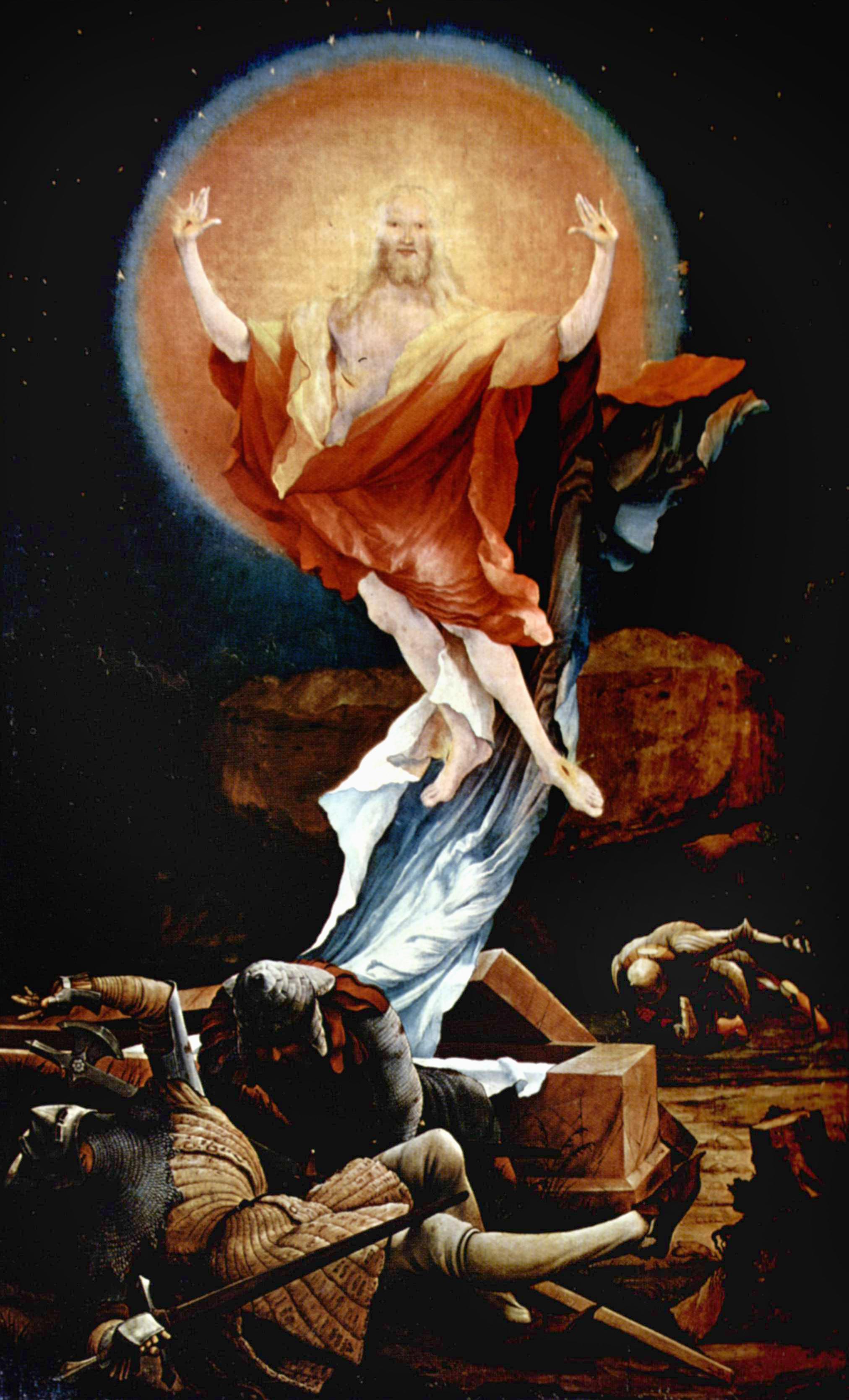
We should not allow our fear of death to constrain us to such an extent that we aren’t willing to risk ourselves for the sake of the Gospel. No, that’s not saying go out and throw yourself in front of a bus to see if God will save you or drink the funny Kool-Aid, but it does say that we understand, as did Alphege, that death does not have the final say in our lives. That is the Easter message.
We hear that message clearly in Paul’s first letter to the Corinthians, “When this perishable body puts on imperishability, and this mortal body puts on immortality, then the saying that is written will be fulfilled:
‘Death has been swallowed up in victory.’
‘Where, O death, is your victory?
Where, O death, is your sting?’”
Therefore, you may have a fear of bungie jumping, but the fear of death should be far less.
St. Josemaría Escrivá tells the story of seeing himself as a little bird. “I see myself like a poor little bird, accustomed only to making short flights from tree to tree, or, at most, up to a third floor balcony… One day in its life it succeeded in reaching the roof of a modest building, that you could hardly call a skyscraper.
“But suddenly our little bird is snatched up by an eagle, who mistakes the bird for one of its own brood. In its powerful talons the bird is borne higher and higher, above the mountains of the earth and the snow—capped peaks, above the white, blue and rose—pink clouds, and higher and higher until it can look right into the sun. And then the eagle lets go of the little bird and says: Off you go. Fly!”
Perhaps you’ve seen the letter. It is to Jesus from Jordan Management Consultants.
It would seem that Jesus used these consultants to help identify potential leaders from his followers. The letter states that JMC has done extensive research on the candidates and then provides it’s recommendations:
Simon Peter is emotionally unstable and given to fits of temper. Andrew has absolutely no qualities of leadership. The two brothers, James and John, the sons of Zebedee, place personal interest above company loyalty. Thomas demonstrates a questioning attitude that would tend to undermine morale.
We feel that it is our duty to tell you that Matthew has been blacklisted by the Greater Jerusalem Better Business Bureau. James, the son of Alphaeus, and Thaddaeus definitely have radical leanings, and they both registered a high score on the manic depressive scale.
One of the candidates, however, shows great potential. He is a man of ability and resourcefulness, meets people well, has a keen business mind and has contacts in high places. He is highly motivated, ambitious, and responsible. We recommend Judas Iscariot as your controller and right-hand man.
Did you ever notice how easy it is to pull a snippet out of a person’s life and from then on judge and label them according to that snippet. We hear the stories of many of the characters in the Bible and do the same thing.
In the Old Testament Abraham lied, David was an adulterer, Moses argued with God, Jonah was flat disobedient, and those are only a few. Those in the New Testament aren’t any better. The apostles questioned the methods of Jesus. They argued amongst themselves. They wanted to call down fire from heaven and destroy cities (I actually kind of like that one). They abandoned Christ in his time of need. They denied him and so on.
And then there is poor old Thomas. It is easy to understand why grade schoolers think his last name was Thomas and his first name was “Doubting.” Doubting Thomas. To tell you the truth, I think he gets a bad wrap, so today I would like to try and remedy that a bit.
Thomas is mentioned in all four gospels and the Acts of the Apostles, but it is John’s gospel where he receives the most attention.
In John’s gospel, he is first mentioned as Jesus is making plans to return to Judea where he would later raise Lazarus from the dead. The disciples are concerned because it was in Judea that the Jews had tried to stone Jesus just a short time earlier. Despite their concerns, Jesus says, “Let us go to Lazarus.”
Have you seen The Lord of the Rings? Great films. Gimli is a main character and a dwarf. There is a huge battle about to take place where the chance of victory is slim, so there is an argument on what they should do. Stand and fight or flee and possibly fight another day. Gimli settles the argument when he states, “Certainty of death, small chance of success- what are we waiting for?”
When Jesus said, “Let us go to Lazarus,” even though there was the possibility of death and everyone else wanted to stay put, Thomas said, “Let us also go, that we may die with him.”
Note to the wise: if you can find a friend like this, don’t let them go. Thomas in this situation demonstrates bravery, loyalty, and dedication. When the rest were “doubting,” Thomas is prepared to lay down his life for the Lord.
In a later event Jesus would cryptically explain to the disciples that he would be killed and be going to the Father. He goes on to tell them that they know the way to where he is going, yet Thomas says, “Lord, we don’t know where you are going, so how can we know the way?” Jesus goes on to explain that he is “the way and the truth and the Life.”
No one else understood either, but Thomas demonstrates simple honesty in that he did not pretend to understand what Jesus was trying to tell them.
Brave, loyal, dedicated, honest, and now from today’s text – doubting.
When Jesus first appeared to the disciples ten were there who saw and believed. Thomas was not.
Some have suggested that Thomas’ greatest mistake was not his doubting, but his absence. After the death of Jesus, instead of remaining in the Christian community, it is postulated that he withdrew and sought out loneliness. In isolating himself from the community of faith he failed to witness the appearance of Christ.
Whatever the case, Thomas doubts. The Lord appears again and Thomas is present. It is at this appearance that Thomas redeems himself from his initial doubt, because after laying eyes and possibly even his hands on the Risen Lord, he makes a confession of faith regarding Jesus. This confession is greater than what all the rest have said to this point. Thomas declares, “My Lord and my God.”
A football game has been described as eleven men in desperate need of a rest being criticized by thousands in need of some exercise.
Sitting on the sidelines it is easy to criticize Thomas, but it seems that his doubting was brought on by his need for facts. Once certainty was attained, Thomas commits himself fully to Jesus, declaring him to be Lord and God.
Brave Loyal Dedicated Honest Doubting Fully Committed. That’s a better first name than just “doubting”.
The beginning of the Acts of the Apostles records the last appearance of Jesus to the apostles, and Jesus’ final words to them were, “You will be my witnesses in Jerusalem, and in all Judea and Samaria, and to the ends of the earth.” It is clear from the remaining text of Acts that several of the apostles did just as Jesus had commanded them; however, we don’t hear about them all, Thomas being one that scripture is silent on.
There is however what is known as the New Testament Apocrypha. It is not considered scripture or even true, but included in this work is a book titled “The Acts of Thomas.” According to this book, with regard to being “witnesses to the end of the earth,” we learn that the apostles divided up the earth and went out into the world to spread the Gospel message as Jesus had commanded. Thomas, as the legend tells, was assigned to the area we know as India.
When he arrived in India he was enslaved, but it came to the attention of Gustafor, an Indian king, that Thomas was a carpenter. Learning this, Gustafor commanded Thomas to build him a palace. The king gave Thomas a considerable amount of money to buy the materials and pay the workers; however, every time the king gave him money Thomas gave it all the way to the poor. The king finally got suspicious, so he sent for Thomas and asked him, “Have you built my palace?” Thomas answered, “Yes” The king asked when he could go and see this palace and Thomas replied, “You cannot see it now, but when you depart this life, then you will see it.” Thomas was building for the king a palace in heaven through good works. At first, the king was furious and Thomas was nearly put to death, yet through this situation Thomas was able to win the Indian king to Christ. Legend has it that this is how Christianity came to India.
True or false? It’s hard to say, but here’s a fact: to this day, the Church in India traces its roots back to the apostle we refer to as Doubting Thomas.
What can we gain from this apostle with the unfortunate first name? One theologian wrote, “What this church needs is what every church needs a man who knows God at more than second hand knowledge.”
When Jesus first appeared, Thomas wasn’t willing to take the other apostles’ word for it. He didn’t want second hand knowledge. He wanted proof for himself. He wanted to see and hear and lay his own hands on the risen Lord.
That is what we should all want. Jesus does say to Thomas, “Have you believed because you have seen me? Blessed are those who have not seen and yet have come to believe.” It is true. Faith is believing in the things we cannot see, but to bounce along in an unsubstantiated faith is foolish, for when the trials come, that type of faith can abandon us.
Therefore, we must also lay hold of the Risen Lord and we can do so through prayer, study of Holy Scripture, meditation, our own experiences of the Risen Lord, and the witness of others. It is then that the roots of our faith will be grounded in the Rock who is our Lord and our God. Then, when the trials blow through our lives, they may knock us around a bit, but we will not be uprooted. Like Thomas, we will learn to never doubt the one who saves us.
BLESSED is he who appreciates what it is to love Jesus and who despises himself for the sake of Jesus. Give up all other love for His, since He wishes to be loved alone above all things.
Affection for creatures is deceitful and inconstant, but the love of Jesus is true and enduring. He who clings to a creature will fall with its frailty, but he who gives himself to Jesus will ever be strengthened.
Love Him, then; keep Him as a friend. He will not leave you as others do, or let you suffer lasting death. Sometime, whether you will or not, you will have to part with everything. Cling, therefore, to Jesus in life and death; trust yourself to the glory of Him who alone can help you when all others fail.
Your Beloved is such that He will not accept what belongs to another — He wants your heart for Himself alone, to be enthroned therein as King in His own right. If you but knew how to free yourself entirely from all creatures, Jesus would gladly dwell within you.
You will find, apart from Him, that nearly all the trust you place in men is a total loss. Therefore, neither confide in nor depend upon a wind-shaken reed, for “all flesh is grass”[12] and all its glory, like the flower of grass, will fade away.
You will quickly be deceived if you look only to the outward appearance of men, and you will often be disappointed if you seek comfort and gain in them. If, however, you seek Jesus in all things, you will surely find Him. Likewise, if you seek yourself, you will find yourself — to your own ruin. For the man who does not seek Jesus does himself much greater harm than the whole world and all his enemies could ever do.
5-year old Johnny was in the kitchen as his mother made supper. She asked him to go into the pantry and get her a can of tomato soup, but he didn’t want to go in alone. “It’s dark in there and I’m scared.” She asked again, and he persisted. Finally she said, “It’s OK–Jesus will be in there with you.” Johnny walked hesitantly to the door and slowly opened it. He peeked inside, saw it was dark, and started to leave when all at once an idea came, and he said: “Jesus, if you’re in there, would you hand me that can of tomato soup?” It really would be helpful if Jesus would show up like that.
This week and over the course of the next several weeks we are going to be reading about Jesus’ appearances following the resurrection. This week, he appears to Mary Magdalene in the garden near the tomb, she says, “I have seen the Lord.” Next week there’s going to be the episode of Jesus appearing in the upper room and Thomas’ doubting. Later, he is going to appear to his disciples next to the Sea of Galilee and have breakfast with them, and then there will be the two disciples who encounter him on the Road to Emmaus. Forty days from today he is going to appear again just before the ascension.
I don’t know about you, but every now and then, I think it would be nice if he would make an appearance these days. It wouldn’t have to be much, maybe just passing the tomato soup from a dark closet or waving from a mountain. Surely someone would record it on their cellphone and upload the event to YouTube.
Judas, in the musical Jesus Christ Superstar, made a good point, “Now why’d you choose such a backward time and such a strange land? If you’d come today you could have reached a whole nation. Israel in 4 BC had no mass communication.” Today, Jesus’ face appears on a piece of toast and everyone goes nuts, but can you imagine what would happen if someone posted a picture on Instagram of him walking across Grand Lake of the Cherokees? Back when I had a real job I worked for a marketing firm, and I can tell you, something like that will sell.
I think on his appearances to the disciples and others and I wonder, Where’s my garden or upper room experience where I can see him? Why won’t he have breakfast with me? Just once would do. A few weeks ago we read of the Greeks who came to Philip with one small request: “Sir, we would see Jesus.” And I think to myself, “Yes sir, we would.”
A man was walking home late one night when he saw another searching under a street light on hands and knees for something on the ground.
“Sir, what are you looking for?” he asked.
“The key to my house,” answered the other.
“I’ll help you look,” the man said.
Soon, both men were down on their knees under the street light, looking for the key.
After a number of minutes, the man asked, “Where exactly did you drop it?”
Waving off in the direction of a dark alley he said, “Over there, in the alley.”
The first man jumped up. “Then why are you looking for it here?”
“Because there is more light over here.”
We want to see Jesus, to have that encounter with him, but did you ever stop to consider that maybe – just maybe – we aren’t looking for him in the right place.
Look to the person on your left and if there is no one on your left, then look to the person on your right. Think about the person you saw walking down the street on your way here or the person you saw sitting in the car next to you. In all those people you’ve seen Jesus.
You look back to the person on your left and say, “Fr. John, that ain’t Jesus! That’s just Bob and Bob ain’t Jesus.” And on the night before he was crucified, Jesus prayed, “I ask … that they may all be one. As you, Father, are in me and I am in you, may they also be in us… I in them and you in me, that they may become completely one.” That may just be Bob or Myrtle or a complete stranger or an enemy, but Jesus is in them – whether you or they like it or not.
You know St. Patrick’s words:
Christ with me, Christ before me, Christ behind me,
Christ in me, Christ beneath me, Christ above me,
Christ on my right, Christ on my left,
Christ when I lie down, Christ when I sit down,
Christ in the heart of everyone who thinks of me,
Christ in the mouth of everyone who speaks of me,
Christ in the eye that sees me,
Christ in the ear that hears me.
And Mary Magdalene said, “I have seen the Lord.” And so have you.
A child in Sunday school was drawing a picture. When asked what she was drawing, she replied, “God.” The teacher said, “Nobody can draw a picture of God. Nobody knows what God looks like.” The child replied, “Well, they will in a minute!”
You want to see Jesus? Open your eyes. He is all around you.
The young girl who checked you out at the grocery store. The one that’s scraping by as a single Mom. Working two jobs and trying desperately to raise her litter girl. When you looked at her, you saw Jesus.
The bank executive you saw driving the fancy car, whose life is all together, who seems to be living the perfect life, and hasn’t thought of Jesus since he was in grade school. When you looked at him, you saw Jesus.
And when you turned to your left and there sat Bob. Well, you saw Jesus then too.
When you go to seminary they’re supposed to teach how to preach. All these books you have to read on good preaching. A few nights ago, I shared George Burns advice on good preaching: a good beginning, a good ending, and the two parts being as close together as possible. But all the books say you should have a few good points and an action item. Well, I’m breaking the rules this morning, so on your way home you’ll all probably say to one another, “Well there’s an hour and half I’ll never get back.” But instead of leaving you with an action item, I’m going to leave you with a few questions.
What if it’s true? What if that young single mom is Jesus? What if that rich banker is Jesus? What if Bob is Jesus? How would the way you engage with them change? Would you look at them differently? Would you love them in the same way that Jesus loved you?
Mary Magdalene said, “I have seen the Lord.” I have seen the Risen Lord.
One of my favorite stories of the Desert Fathers – those men who lived in the deserts of North Africa during the 300s and dedicated their lives to God – tells of the time Abba Lot went to see Abba Joseph and said to him, ‘Abba as far as I can I say my little office, I fast a little, I pray and meditate, I live in peace and as far as I can, I purify my thoughts. What else can I do?’ then the old man stood up and stretched his hands towards heaven. His fingers became like ten lamps of fire and he said to him, ‘If you will, you can become all flame.’ You can become all flame.
“The light of Christ.” Those were the words I chanted this evening as the Paschal candle was processed in. Robert Alden, a minister in the Congregational Church, wrote, “There is not enough darkness in all the world to put out the light of even one small candle.” However, this evening, we did not leave this work of defeating the darkness to just one candle. As the candle was processed up the aisle, you each lit your own candle, further pushing out the darkness.
Those flames of our candles represent to us the light of Christ that burns in each one of us, demonstrating that as we go about the work of Christ, we begin to spread that flame to the world around us. We become instruments of His grace in a world that desperately needs it. Therefore, we must guard and nurture the flame that within us. We must care for it, seeing to it that it is not allowed diminish or flicker out.
Little Jane had listened to a sermon on “Let Your Light Shine.” The only part she remembered was the text, but she didn’t understand what it meant until her mother explained in terms she could understand, “It means being good, obedient, and cheerful.” In the afternoon there was trouble in the nursery, and Jane excused herself for being naughty by saying, “I’ve blowed myself out.”
Don’t blow yourself out and don’t let the world around you suffocate the light that is within you. Instead become all flame and set the world on fire.
And God held in his hand a small globe.
Look, he said.
The son looked.
Far off, as through water, he saw a scorched land of fierce color.
The light burned there, crusted buildings cast their shadows
a bright serpent, a river uncoiled itself, radiant with slime.
On a bare hill a bare tree saddened the sky.
Many people held out their thin arms to it,
as though waiting for a vanished April to return to its crossed boughs.
The son watched them.
Let me go there, he said.
That is the poem “The Coming” by R.S. Thomas. It speaks of Jesus’ willingness to come to this world in order to save the people of God and it expresses a love that goes beyond our ability to comprehend. It also sets the stage of where we are today.
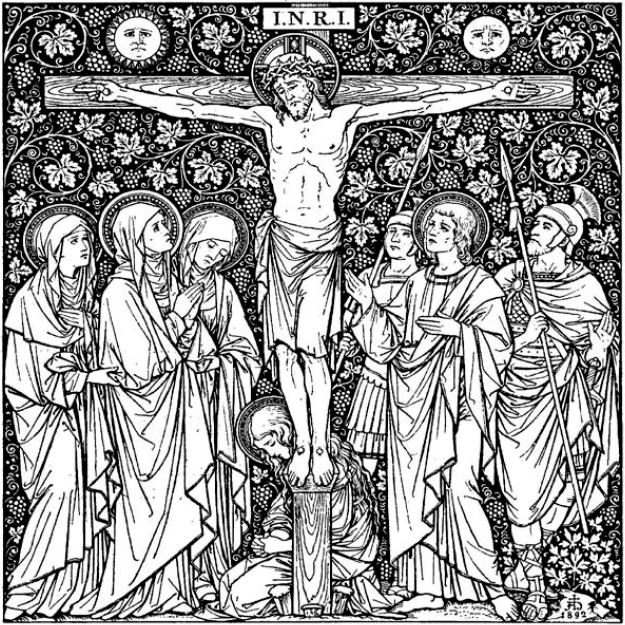
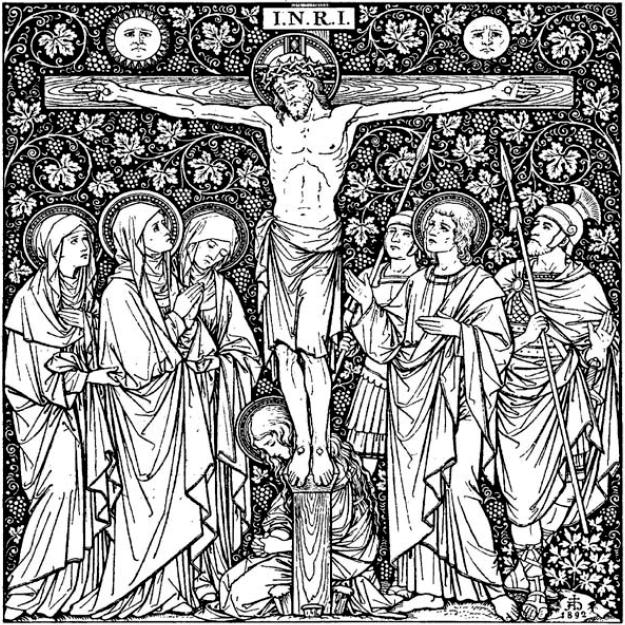
I can give you the details of the crucifixion, the process of nailing Jesus to the cross and all that. The blood. The agony. The cruelty of the crowd that gathered to watch. But today, instead of looking, I want you to listen to the sounds surrounding that event.
There would be the voices of all those gathered: the guards, people moving around, some weeping, the groans of those crucified alongside Jesus. But the only sound I want you to hear is the heavy labored breathing of Jesus as he hangs upon his cross. And then he speaks one last time, “It is finished.” Then there is a great silence.
Although it is painful, we must remember that it was the sins of the world, including ours, that put Jesus on the cross. We are as responsible as the ones who hammered the nails.
So, I want you to imagine when Jesus breathes his last and that great silence falls, you suddenly hear a voice. Even though there are many gathered around you, you know that voice is speaking to you and it is the voice of God the Father.
In that moment and in that silence, knowing that you are responsible for the death of Jesus, what would you imagine the voice of God saying to you?
I think that it would be easy to hear anger in that voice: “Look what you have done!” “What have you got to say for yourself?” “I’m so disappointed in you.”
I believe there would be such sadness. The horrible screams of a parent who has lost a child: “My son. My son.”
Finally, I can imagine words of rejection, “Get out of my sight!” “You make me sick!” “I never want to see you again.”
I can imagine these responses, because they are very human responses. They are the words that come from our mouths in times of great anger and sadness, but the voice of God that speaks in the silence of your heart after the death of his one and only son never even thinks, much less says, anything of this nature.
Instead, God the Father would speak words of comfort: “Everything is going to be OK now.” “This had to happen just as I planned.” “Don’t be afraid.” “Remember what my son said, ‘In three days this temple will be raised.’”
There would also be words of love and acceptance: “This act of obedience by my son has bridged the gap between you and I.” “My love for you extends beyond eternity.” “We will be together forever. I will be your God and you will be my child.”
Scripture records no such words from God at that moment when the silence fell, but no words needed to be spoken. The cross and the lifeless body of Jesus declared it all. “For God so loved the world….”
In just a few minutes, as we approach the veneration of the cross, allow yourself to hear the voice of God speaking to you. Understand that the cross is not brought before you as a means of beating you into submission or of making you feel guilty. It is brought in, venerated, and adored because it is God’s way of speaking and showing his love for you. It is the means by which true joy came into the world, for as the closing words of the anthem will declare, “We venerate your Cross, O Lord: and praise and glorify your holy Resurrection: for by virtue of the Cross joy has come to the whole world.”
A popular monk in the Middle Ages, revered by all the townspeople, was known for his godliness and his love. One morning He said, This evening at vespers I’m going to preach on the love of God. The townspeople were excited. As the sun began to set, the people gathered at the great cathedral. They came to hear the monk preach the love of God. The last rays of sunlight glistened through the stained glass windows. Darkness began to creep into every corner. Total darkness engulfed the cathedral and the people were still waiting for the monk. Then they saw candlelight, a tiny little light came from the side room. It was the monk–He walked over to the great crucifix. The old monk held the candle and put it to the forehead where the artist had painted in red the symbol of the blood. The monk didn’t say a word and the people waited. Then he brought the candle down to the torn hands that symbolized love. He still didn’t say a word. They waited. The candle moved to the soiled feet. Finally, he brought the candle to Christ’s side. The artist had captured torn flesh of the Savior’s side. There wasn’t a sound, except for soft crying. The old monk then said, “This is my sermon on the love of God. In His head, in His hands, in His feet and in His side. For God so loved the world that He gave His only begotten Son that who so ever believeth in Him shall not perish, but have everlasting life.” He concluded by saying, “This is my sermon on the love of God.”
The Gospels are much easier to read when we hear about the events surrounding Jesus’ birth with the manger and angels or with the feeding of the five thousand or the healing of the sick. These events bring us joy and give us a sense of awe. However, when the message turns from a cute little baby to the brutality of the Cross, we tend to want to turn away. But like those folks who watched as the monk illumined each of the wounds, we too are witnesses to these same wounds of Christ.
As we contemplate these events, we are often so overwhelmed that we fail to understand what is taking place, but the wise old monk helps us to see more clearly.
We hear that the side of Jesus was pierced and in our minds we see death. We hear that the curtains of the Temple were torn in two and we witness the anger of God and the destruction of His holy place. However, by being consumed with the horror of these images we miss the greater point, for both of these events point to God’s great love for his people.
In the shedding of his blood Jesus declares, “I love you enough to die for you.” In the curtains of the temple being torn, God the Father declares, “I will no longer limit access to my love, but will instead pour it out on all flesh, so that you may be a part of me and I might be a part of you.”
These mighty events show us how far God – the Creator of the Heavens and Earth – will go in order to love us. Therefore, if this is how far God is prepared to go to love us, what must we do in return? There must be something. Some type of payback.
Maybe we should make sacrifices? Isaiah 1:11 – “What to me is the multitude of your sacrifices?,” says the Lord; “I have had enough of burnt offerings of rams and the fat of fed beasts; I do not delight in the blood of bulls, or of lambs, or of goats.”
Maybe, then, we should keep the law? Romans 3:20 – “For ‘no human being will be justified in his sight’ by deeds prescribed by the law, for through the law comes the knowledge of sin.”
So what must we do? Pray more? Give more? Try harder?
In No Man is an Island, Thomas Merton wrote, “The wise man has struggled to find You in his wisdom, and he has failed. The just man has striven to grasp You in his own justice, and he has gone astray.
But the sinner, suddenly struck by the lightning of mercy that ought to have been justice, falls down in adoration of Your holiness: for he had seen what kings desired to see and never saw, what prophets foretold and never gazed upon, what the men of ancient times grew weary of expecting when they died. He has seen that Your love is so infinitely good that it cannot be the object of a human bargain.”
So again, what must you do in order to receive God’s love? The love he poured out on all flesh? The answer: accept it. That’s it. All you have to do is accept it. If you refuse, this is all in vain. Accept the love of God. It is what makes this Friday good.
Have mercy on me, O God,
according to your unfailing love;
according to your great compassion
blot out my transgressions.
Wash away all my iniquity
and cleanse me from my sin.
For I know my transgressions,
and my sin is always before me.
Against you, you only, have I sinned
and done what is evil in your sight,
so that you are proved right when you speak
and justified when you judge.
Surely I was sinful at birth,
sinful from the time my mother conceived me.
Surely you desire truth in the inner parts;
you teach me wisdom in the inmost place.
Cleanse me with hyssop, and I will be clean;
wash me, and I will be whiter than snow.
King David had been out on the roof of his house looking out on the city around him and the country that he ruled. As his eyes scanned the scenery he spotted a woman on the roof of her house – Bathsheba – who was naked and bathing. As King David watched, he began to desire her, and even though she was married he devised a plan to have her.
Her husband, Uriah, was one of his soldiers, so he had him sent to the front lines of a fierce battle where he would certainly be killed. He was and after the appropriate time of mourning, David had Bathsheba brought to him and married her.
The Lord saw David’s wickedness and sent Nathan the prophet to rebuke him of his sin. David confessed and it is believed that David wrote the Psalm I shared with you during his time of penance. He cried out to the Lord, “Wash me, and I will be whiter than snow.”
From the very beginning of human history when Adam and Eve were banished from the Garden of Eden, this cry has crossed the lips of all God’s children: “Wash me. Wash me from my sins so that I might be whiter than snow. So that I might be cleansed of my sins.”
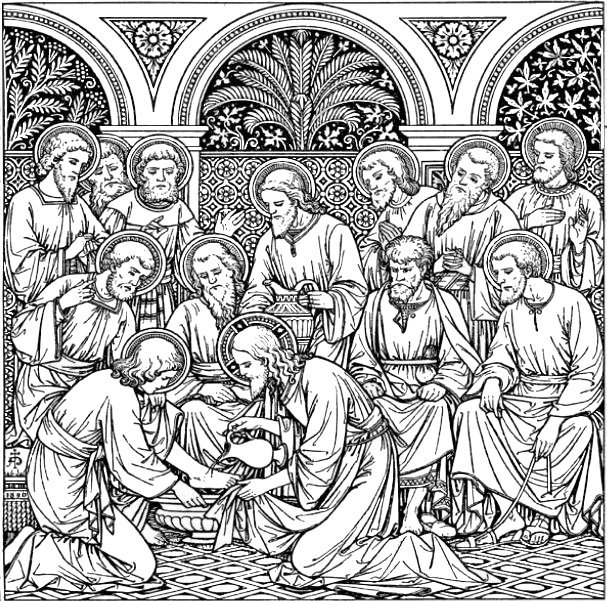
It’s always been this way; however, on the day, ordained by God, Jesus opened the gates to another way. On that day, Jesus began by taking on the role of a slave and washed the disciples’ feet. Peter objected, but Jesus insisted, “If you are to be a part of me, if you are to be where I am going, then you must allow me to wash your feet. You must allow me to cleanse you.”
Following the foot washing, scripture says, “While they were eating, Jesus took bread, gave thanks and broke it, and gave it to his disciples, saying, ‘Take and eat; this is my body.’ Then he took the cup, gave thanks and offered it to them, saying, ‘Drink from it, all of you. This is my blood of the covenant, which is poured out for many for the forgiveness of sins.’”
It is fair to say that the disciples failed to understand the significance and the relation of these two events, but after his crucifixion they would come to understand that the foot washing was symbolic of the washing of their souls through the body and blood of Christ.
Jesus – God – humbled himself to the role of a slave and washed their feet so that they might be outwardly clean. Jesus – God – humbled himself to death upon a cross so that their souls might be cleansed.
Today we celebrate the gift of the most Holy Eucharist. The symbolism of the washing of the feet points to the washing of our souls, and it is the answer to our cry, “Wash me, Lord. Wash me and I will be whiter than snow.”
A riddle for you. See if you know the answer:
“It cannot be seen, cannot be felt,
Cannot be heard, cannot be smelt,
It lies behind stars and under hills,
And empty holes it fills,
It comes first and follows after,
Ends life, kills laughter.”
Bilbo Baggins, in The Hobbit, knew the answer: Dark.
Bad things can happen in the dark. You can stump your toe on the coffee table, step on the dog, and even be attacked by the monster under the bed. So we naturally reach for anything to dispel the darkness. If not the flip of a switch, then there are candles, flashlights, or the glow of a cellphone.
Yet, even though we do not like the darkness in the physical world, there are times that we prefer it in the spiritual. There are times when we try to hide in the recesses of our souls and minds, believing that we are safe from any observation.
In his Gospel, John uses the analogy of a physical darkness to point to this far worse spiritual darkness. Writing in chapter three, John says, “And this is the judgment, that the light has come into the world, and people loved darkness rather than light because their deeds were evil. For all who do evil hate the light and do not come to the light, so that their deeds may not be exposed.”
It is this darkness, both physical and spiritual, that we see in our Gospel reading today. Judas received the piece of bread from Jesus and it is then that Satan enters him. Following this, John wrote, “after receiving the piece of bread, [Judas] immediately went out.” It seems to simply be indicating the time of day, but John adds, “And it was night.”
Judas, following the path of his own choosing, turned from God and entered the night, the darkness of his own soul. He believed that God was unaware, yet Jesus’ statement to him demonstrates that nothing was hidden, “Do quickly what you are going to do.”
We can deceive ourselves in a similar manner. We can wander off into the dark recesses of our souls, thinking that our deeds and thoughts are hidden from the eyes of God, yet, as the Psalmist says:
If I say, “Surely the darkness shall cover me,
and the light around me become night,”
even the darkness is not dark to you;
the night is as bright as the day,
for darkness is as light to you.
God has separated the darkness from the light. The darkness is no place for the children of God. We must allow the full light of Christ to shine on all our thoughts and works, revealing those hidden things that cause us to stumble.
St. Paul writes to the Ephesians, “For once you were darkness, but now in the Lord you are light. Live as children of light— for the fruit of the light is found in all that is good and right and true.”
You are children of light. Allow that light to shine on all your thoughts and deeds.


 The Psalmist writes: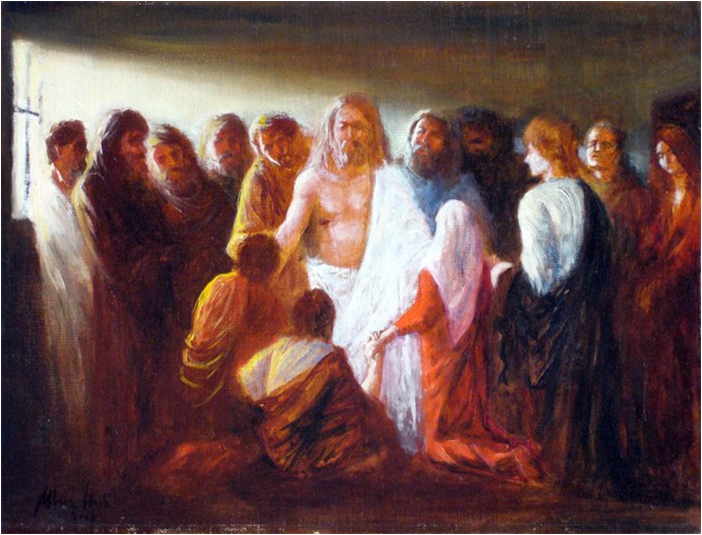








 Candle in a Cave